

The verdict
A struggling subcompact suv, strong on ownership and held back by performance.
The 2026 Venue is the cheapest new vehicle sold in America at $22,150 delivered, and it puts that money where a budget buyer will notice: a 5-year/60,000-mile bumper-to-bumper warranty, a 10-year/100,000-mile powertrain warranty, 31 MPG on regular gas, and wireless Apple CarPlay and Android Auto even on the base SE. The trade-off is that 121 horsepower, front-wheel drive only, and 18.7 cubic feet of cargo make it the smallest and slowest vehicle sold as an SUV. Adaptive cruise control isn't offered at any price, and the volume halogen headlights rate only Marginal with the IIHS. It's an excellent city car or first car, but it struggles with family luggage, towing, and long interstate drives.
Jump to scoresStrengths
- The lowest price of any new vehicle
- The best warranty in the mainstream market
- Cheap to fuel on regular gas
What holds it back
- Slow, and loud when pushed
- The smallest cargo area in its class
- No AWD and no towing
Top alternatives
Cars shoppers cross-shop with the Hyundai Venue 1.21D
1.21D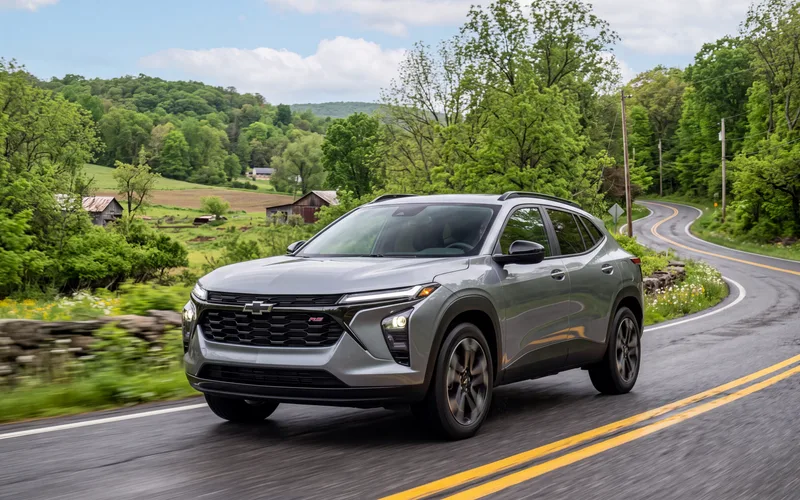 Chevrolet TraxSubcompact SUVBetter at: Cargo space
For close to the same money, the Trax gives you a turbocharged engine and much more room for passengers and cargo.
Compare 1.56D
1.56D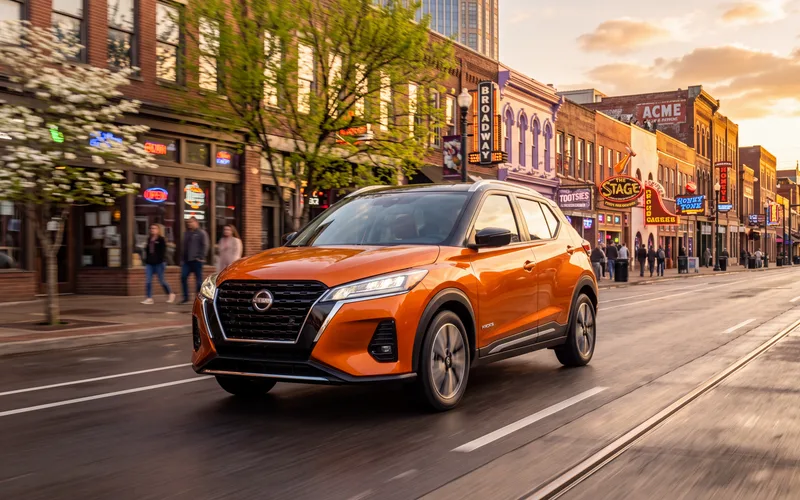 Nissan KicksSubcompact SUVBetter at: AWD availability
The Kicks offers all-wheel drive, which the Venue doesn't at any price, while staying in the budget subcompact range.
Compare 1.52D
1.52D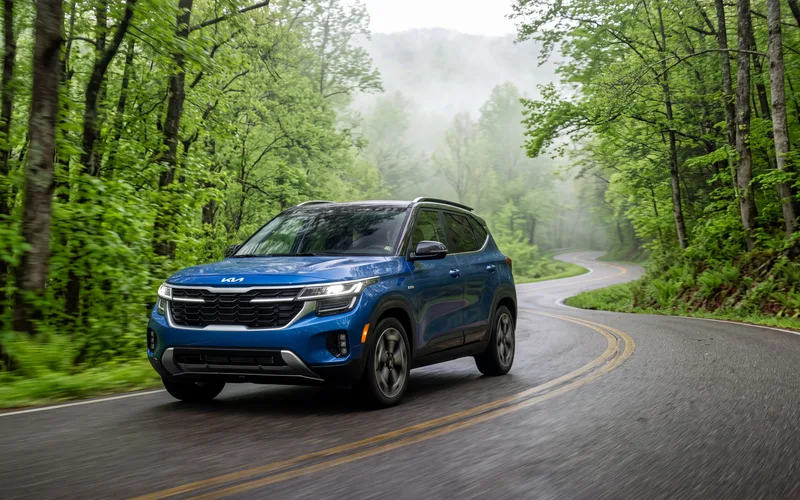 Kia SeltosSubcompact SUVBetter at: Versatility
If you can stretch the budget, the Seltos adds AWD, a turbo option and adult-sized rear seats, with the same Hyundai-Kia warranty.
CompareHow it's evolved
7 scored model years · 2020–2026
Subject scores by year
Hover or tap a score to see what moved it versus the year before. A corner mark flags a big swing.
| Year | Performance | Efficiency | Safety | Space | Cost | Reliability | Tech | Use-case | Driving | Value |
|---|---|---|---|---|---|---|---|---|---|---|
| 2026 | 14 | 67 | 46 | 35 | 92 | 70 | 56 | 44 | 61 | 61 |
| 2025 | 14 | 66 | 45 | 34 | 95 | 73 | 51 | 45 | 61 | 60 |
| 2024 | 14 | 67 | 46 | 34 | 89 | 68 | 53 | 45 | 60 | 62 |
| 2023 | 14 | 67 | 49 | 34 | 90 | 69 | 50 | 45 | 60 | 62 |
| 2022 | 14 | 67 | 49 | 34 | 91 | 67 | 49 | 45 | 60 | 62 |
| 2021 | 14 | 68 | 48 | 34 | 92 | 67 | 48 | 44 | 61 | 62 |
| 2020 | 15 | 71 | 48 | 33 | 92 | 66 | 45 | 44 | 61 | 64 |
Compare two years
Best fit & conditions
Higher scores mean a better fit for that use case. Learn more about use-case fit →
Subject profile
Academic Probation · NHTSA safety recalls
Jun 27, 2022Seat belts: front · Seat belts: pretensionerIn the event of a crash, the front driver-side and/or passenger-side seat belt pretensioners may explode upon deployment.
Defect
Hyundai Motor America (Hyundai) is recalling certain 2020-2022 Venue vehicles. In the event of a crash, the front driver-side and/or passenger-side seat belt pretensioners may explode upon deployment.
Risk
An exploding seat belt pretensioner can project metal fragments into the vehicle, strike vehicle occupants, and result in injury.
Remedy
Dealers will secure the seat belt pretensioners with a cap, free of charge. Owner notification letters were mailed October 25, 2022. Owners may contact Hyundai customer service at 1-855-371-9460. Hyundai's number for this recall is 231. This recall expands and replaces NHTSA recall number 21V-796 for Venue vehicles. Venue vehicles previously repaired under 21V-796 will need to have the new remedy completed.
NHTSA campaign 22V458000 ↗Manufacturer no. 23172,142 vehicles potentially affected (all models in the campaign)Owners notified Oct 25, 2022Filed by Hyundai Motor AmericaFiled as VENUE
2 recalls on other model years of the Venue (2021, 2024)
May 1, 2024Engine and engine cooling: exhaust system: emission control: gas recirculation valve (egr valve)An electrical short circuit may occur in the exhaust gas recirculation (EGR) valve assembly, which can result in a loss of drive power.
Defect
Hyundai Motor America (Hyundai) is recalling certain 2024 Elantra, Venue, and Kona vehicles. An electrical short circuit may occur in the exhaust gas recirculation (EGR) valve assembly, which can result in a loss of drive power.
Risk
A loss of drive power increases the risk of a crash.
Remedy
Dealers will replace the exhaust gas recirculation valve assembly, free of charge. Owner notification letters were mailed June 28, 2024. Owners may contact Hyundai customer service at 1-855-371-9460. Hyundai's number for this recall is 260.
NHTSA campaign 24V308000 ↗Manufacturer no. 26013,511 vehicles potentially affected (all models in the campaign)Owners notified Jun 28, 2024Filed by Hyundai Motor AmericaFiled as VENUEOct 13, 2021Seat belts: front · Seat belts: pretensionerIn the event of a crash, the front driver-side and/or passenger-side seat belt pretensioner(s) may explode upon deployment.
Defect
Hyundai Motor America (Hyundai) is recalling certain 2021 Elantra, Elantra HEV, Venue, Genesis GV80 and 2022 Genesis GV70 vehicles. In the event of a crash, the front driver-side and/or passenger-side seat belt pretensioner(s) may explode upon deployment.
Risk
An exploding seat belt pretensioner could project metal fragments into the vehicle, striking vehicle occupants and resulting in injury.
Remedy
Dealers will replace the seat belt pretensioners, free of charge. Owner notification letters were mailed February 10, 2022. Owners may contact Hyundai customer service at 1-855-371-9460. Hyundai's numbers for this recall are 211 and 009G. This recall is replaced by NHTSA recall numbers 22V-354 for Elantra and Elantra HEV vehicles, 22V-458 for Venue vehicles, and 23V-094 for Genesis vehicles. Elantra, Elantra HEV, Venue, and Genesis vehicles already repaired under this recall will need to have the new remedies completed.
NHTSA campaign 21V796000 ↗Manufacturer no. 211/009G978 vehicles potentially affected (all models in the campaign)Owners notified Feb 10, 2022Filed by Hyundai Motor AmericaFiled as VENUE
Source: NHTSA Office of Defects Investigation recall database, model years 2020–2026. Recalls are listed by model year as the manufacturer filed them; whether a specific car is affected depends on its VIN — check a VIN at nhtsa.gov ↗. NHTSA model names matched to this page: VENUE.
Detailed scoring by subject
1Performance & PowertrainThe Venue's lowest-graded category.0.00F
The 2026 Venue is a carry-over year of the 2020-launched first generation, with a single 1.6-liter naturally aspirated four making 121 hp on both SE and SEL; there is no upgrade engine anywhere in the lineup.
Peak torque is 113 lb-ft from the same 1.6L four, unchanged for 2026 and well short of the turbocharged rivals in the subcompact pool.
Published 2026 reviews put the run at roughly 8.7 seconds, consistent with the 8.5–9.4 s spread of instrumented tests across this unchanged generation.
Throttle response is smooth and the engine is unobtrusive around town, but there is no torque reserve — the cabin fills with buzzy engine noise whenever the 1.6 is worked, and freeway merging requires planning. Slightly better mannered than the Kicks' base four, well short of turbocharged subcompacts like the Trailblazer or Bronco Sport.
Hyundai's IVT (a CVT with synthesized step ratios) is one of the better-behaved units in the class — smooth tip-in and programmed 'shifts' that limit drone — though it still flares under hard acceleration.
Hyundai assigns the US-market Venue no trailer tow rating and offers no tow package; aftermarket hitch ratings are third-party equipment figures, not a manufacturer capacity.
Front-wheel drive is the only drivetrain on every 2026 Venue trim — AWD is not offered at any price, unlike rivals such as the Kona, Crosstrek, Trailblazer and HR-V. SEL's Snow drive mode is a software substitute, not a driven rear axle.
Purely pavement-oriented: about 6.7 inches of ground clearance, FWD only, road tires, no skid plates, no terrain modes beyond Snow and no off-road trim.
One engine, one transmission, one drivetrain across the range — 1.6L/121 hp, IVT, FWD — with no turbo, hybrid, PHEV or EV variant, and the 2026 lineup narrowed to SE and SEL.
2Efficiency & RangeOne of the Venue's strongest categories.2.53C+
The 2026 Venue has a single 1.6L four / IVT / FWD configuration, so EPA's 31 MPG combined applies to the whole lineup — strong for a gas-only subcompact SUV.
29 MPG city from a 121-hp 1.6L with no electric assist — near the top of the gas SUV band.
33 MPG highway on both remaining trims (SE and SEL) after the Limited was dropped for 2026.
Good economy paired with a very small 11.9-gallon tank nets only about 369 miles of combined range, so the Venue needs filling more often than larger-tanked rivals.
Updated from a hand-computed ~$2,050 to EPA's own published figure of $2,100 a year — low in absolute terms, but mid-band because hybrids and EVs undercut it substantially.
87-octane regular on every trim from a naturally aspirated engine with no premium recommendation, no diesel/E85 complication and no charging needs; held just under the top because the small tank means frequent stops.
3SafetyGrades below the middle of the scale.1.08D
NHTSA rates the Venue 4 of 5 stars overall — five stars in side impact but only four in frontal and rollover (14.3% rollover risk), typical of a light, short-wheelbase subcompact. NHTSA has no separate 2026 record yet; the 2026 is a carry-over of the same 2020-on generation, so the latest tested year stands.
The 2026 Venue earns no IIHS award and is only partly evaluated under current criteria — Good in driver- and passenger-side small overlap front, but the updated side and updated moderate overlap (rear-passenger) tests are not rated, so second-row protection is unverified. It is absent from Hyundai's 2026 TOP SAFETY PICK winners.
Forward Collision-Avoidance Assist with pedestrian detection, Lane Keeping Assist, Driver Attention Warning, High Beam Assist and Rear Occupant Alert are standard on every trim, but blind-spot and rear cross-traffic warning require the SEL, and adaptive cruise control is unavailable at any price — a suite with a permanent hole in it, not merely a trim-walk.
Standard Forward Collision-Avoidance Assist rates Advanced in IIHS's daytime vehicle-to-pedestrian evaluation (Superior only with the older optional system), but the Venue has no result under IIHS's updated vehicle-to-vehicle test or the nighttime pedestrian test, so after-dark and higher-speed capability is unproven — adequate daytime performance and little more.
Blind-Spot Collision Warning and Rear Cross-Traffic Collision Warning are alert-only and locked to the SEL — the base SE goes without either, in a body whose thick rear pillars most need them. No active steering/braking intervention and no safe-exit assist.
Lane Keeping Assist is standard on every trim, but reviewers flag the driver aids as over-eager, with alerts that fire early enough to become a nuisance rather than smooth, trusted assistance; without adaptive cruise there is no integrated highway lane-centering mode.
The Venue offers no adaptive cruise control on any 2026 trim — fixed-speed cruise only, with no stop-and-go capability and no integrated highway assist. This is the largest safety-content gap in the car and is not a trim-level fix.
No hands-free highway driving system is offered for the Venue; it lacks even adaptive cruise, the prerequisite for one.
IIHS rates the halogen projector headlights fitted to the volume SE (and base SEL) Marginal for inadequate visibility on curves; only the LED projectors that come with the SEL Premium package step up, and even those rate just Acceptable. High Beam Assist is standard, but no configuration earns a Good rating. Previous score overstated the LED result as Good and ignored the halogen rating.
The tall, boxy greenhouse and short overhangs give good forward and side sightlines and make the Venue easy to place in traffic, but thick rear roof pillars hamper the over-the-shoulder view and camera compensation stops at a standard rearview camera — no 360-degree system is offered.
IIHS rates the Venue's LATCH hardware Acceptable — lower anchors sit too deep in the seat bight — with two complete positions and a third tether-only. Workable for one or two seats, but the subcompact rear bench and 99.2-inch wheelbase leave little front-seat room once a rear-facing seat is in.
4Space & ComfortOne of the Venue's weakest categories.0.30F
The Venue is a strictly two-row subcompact SUV with a 60/40 rear bench; every 2026 trim (SE, SEL, SEL w/2-Tone Roof) seats five.
The boxy roofline is the Venue's best packaging trait — front headroom is mid-pack for the class despite the tiny footprint. Figure is the no-sunroof measurement per the item definition.
Front legroom sits at the low end of the SUV band but reviewers call the front 'surprisingly roomy' thanks to the upright seating position.
The tall, square body pays off most in the second row — 38.6 in of rear headroom is genuinely good for a subcompact and beats several larger crossovers.
34.3 in is tight — fine for kids or short adult trips, cramped behind a tall driver. The 99.2 in wheelbase is among the shortest in the segment and the rear bench does not slide.
The Venue has no third row and no third-row option in any market or trim — a strict two-row, five-seat subcompact SUV. Scored in the low band per the item's rule for two-row SUVs rather than omitted.
18.7 cu ft behind the second row is the smallest cargo hold in the subcompact SUV class and falls below the bottom of the SUV normalization band — closer to a compact hatchback than to a crossover.
Even with the rear bench folded the Venue tops out at 31.9 cu ft — roughly half what most subcompact SUVs manage and well under the band floor.
Sensible rather than clever: a dual-level adjustable cargo floor with stowable cover, a low load height and wide hatch opening, a phone cubby ahead of the shifter, a passenger-side shelf and in-door bottle holders. The center console is shallow and nothing here is a segment innovation.
Front seats strike a reasonable cushion/support balance — the SEL w/2-Tone Roof's cloth/H-Tex seats are 'slightly stiff but comfortable' with decent bolstering — but adjustment is manual-only with no power or lumbar control and the rear cushion is flat and short on thigh support.
Nudged up on 2026 drive reviews that find the ride comfortable and compliant around town and free of the cheap-car floatiness, but the 99.2-in wheelbase and torsion-beam rear still make it choppy over broken pavement compared with larger subcompacts like the Seltos or Taos.
Quiet enough around town but noisy at highway speed — road noise on anything but fresh pavement, persistent wind rush, and a 121-hp 1.6L/CVT that turns intrusive under load. No acoustic glass or active noise cancellation.
SEL adds heated front seats, heated mirrors, automatic climate control and a sunroof, and the SEL w/2-Tone Roof gets cloth/H-Tex leatherette upholstery — but no 2026 Venue offers ventilated seats, a heated steering wheel or rear vents, and the SE goes without heated seats entirely.
5Cost of OwnershipThe Venue's best-graded category.4.00A+
The 2026 Venue SE is the least expensive new vehicle sold in the United States, landing well below the subcompact-SUV normalization floor even with destination included.
SEL is the volume trim for 2026 and absorbs the deleted Limited's content (wireless charging, heated front seats, heated mirrors), yet still delivers for under $25k.
A 121-hp naturally aspirated 1.6L with a CVT and no AWD hardware is about as simple as a modern crossover gets, and industry cost estimates land below the subcompact-SUV band floor.
The Venue holds value better than the subcompact-SUV average — a cheap, in-demand entry point keeps used-market pricing firm relative to its already-low MSRP.
Hyundai's 5-year/60,000-mile basic coverage is the longest in the mainstream market and tops the normalization band; it also transfers to a second owner.
The signature Hyundai 10-year/100,000-mile powertrain warranty is unchanged for 2026 and sits at the top of the band, though it applies to the original owner only.
2026 is the first model year with no free scheduled maintenance — Hyundai ended its 3-year/36,000-mile program for MY2026 and beyond, leaving roadside assistance as the main included perk. Roadside is class-leading at 5 years/unlimited miles and Bluelink+ is free for original owners, but Hyundai notes certain Venue trims do not offer Bluelink+ at all.
$24,425 volume-trim price minus its estimated resale value after 5 years (64% retained, or about $15,632) leaves about $8,793 in depreciation. Add the projected $2,565 in 5-year maintenance and repairs, and owning this vehicle for 5 years costs about $11,358 in total.
6Reliability & QualityOne of the Venue's strongest categories.2.72B-
J.D. Power rates the 2026 Venue 86/100 for quality & reliability — inside the 81-90 'Great' band — while Consumer Reports expects only about-average reliability off thin 2023-2025 data plus Hyundai brand scores. Strong on one source, average on the other, so held just below the top band.
Hyundai is solidly upper-mid-pack rather than top-5: Consumer Reports places it 8th among brands for 2026, while J.D. Power's 2026 Vehicle Dependability Study leaves it below sister brand Kia's 9th-place finish. Consistent, not elite.
No campaign has been filed against the 2026 model year, but the generation's record is not spotless: the 2020-2022 seat-belt pretensioner recall (pretensioners could explode and throw metal fragments, 72k units, first remedy superseded) is a serious safety-system defect, alongside the 2024 EGR-valve loss-of-drive-power recall and a 2020-2022 IVT service campaign. Lowered from 76 because the earlier score left the pretensioner campaign out; still typical rather than systemic, and nothing recurs on current builds.
The carryover 1.6L Smartstream naturally aspirated port-injected four (121 hp / 113 lb-ft) is a simple, low-stress design with no turbo or GDI carbon-fouling history, but the IVT belt-and-pulley CVT bolted to it is the weak link — owner reports of judder, hesitation and power loss, and a 2024 federal class action covering 2020+ gas Hyundais including the Venue.
Reviewers are consistent that hard, dark plastics dominate every touch point — even the door armrests are unpadded — and that material quality trails rivals at similar money while the cabin looks dated next to newer Hyundais. Sensible layout and decent grain keep it off the bottom of the band.
Assembly quality is the Venue's standout: it ranked highest in the Small SUV segment of the J.D. Power 2026 U.S. Initial Quality Study, and owner feedback shows very few build-related complaints. Cheap materials are a separate issue from how well the car is put together.
Coverage is not the problem — roughly 861 US franchised dealers puts a Hyundai service bay within reach almost anywhere — but service satisfaction is: the brand has historically sat near the bottom of J.D. Power's Customer Service Index and is mid-way through a corrective overhaul.
Running costs are among the cheapest in the segment — components are shared across the high-volume Hyundai/Kia parts bin and the mechanical package is simple — with 10-year maintenance-and-repair projections beating the SUV average. Short of the top band because Hyundai's brand-average annual repair cost still runs above the industry norm.
7Technology & InfotainmentMid-pack among this car's ten categories.1.73C-
The 2026 Venue carries an 8.0-inch center touchscreen on both SE and SEL; there is no larger screen offered anywhere in the lineup, which puts it at the bottom of the SUV normalization band.
Small but well-executed: 2026 reviewers find the 8-inch unit bright, responsive and very easy to use, with physical knobs for volume and climate rather than burying them in the touchscreen — the ergonomic upside of a system that does little beyond radio and phone projection.
Wireless Apple CarPlay and wireless Android Auto are standard on both SE and SEL for 2026 — unusual at this price and the single strongest tech point on the car. Held below the top of the band only because the SE lacks the wireless charging pad that makes wireless projection practical day to day.
Voice control is the basic button-prompted Hyundai/Bluetooth voice recognition, not a natural-language assistant. The SE has no embedded navigation; Cars.com lists navigation among SEL additions while Capital One's SEL equipment list omits it, and the car is clearly designed around phone projection for maps.
A six-speaker system is standard on both trims and there is no branded or premium upgrade available at any price — no Bose, no Harman Kardon. Reviewer opinion on the base system splits between adequate and thin.
A 4.2-inch TFT info display sits between conventional analog gauges on both trims; no full-digital cluster is offered even on the SEL, where segment rivals such as the Kona and Seltos now put a 12.3-inch panel.
Hyundai supports over-the-air ECU/safety updates for the life of the supporting network plus map and multimedia OTA through Bluelink, so the Venue clears the infotainment/maps-OTA bar — but there is no history of feature-adding whole-vehicle updates on this model, and map/multimedia OTA becomes subscription-gated after three years.
Bluelink+ covers remote start with climate, remote lock/unlock, vehicle locate, diagnostics and SOS, and it is complimentary for the original owner rather than a paid subscription — strong value. Held out of the top band because Digital Key (phone-as-key) is not offered on the Venue and Bluelink is tied to the upper trim rather than standard across the range.
The SE gets two front USB ports and nothing for rear passengers; the SEL adds dual second-row USB-C and a wireless charging pad. No household AC outlet or onboard power of any kind — adequate for the price, unremarkable in absolute terms.
The volume SEL has proximity entry and push-button start standard, but the SE still uses a twist key with no proximity entry — and no Venue offers phone-as-key or a hands-free power liftgate. Squarely mid-band: proximity on most (not all) trims, remote start via Bluelink only.
A single rear-view monitor with parking guidelines is the entire parking suite — no surround-view camera on any trim, no front or rear parking distance sensors, and no parking automation. The camera itself is low-resolution by 2026 standards.
No head-up display is offered on any 2026 Venue trim, including the top SEL with 2-Tone Roof — expected for the cheapest SUV sold in the US, but a zero-band outcome all the same.
8Use-Case FitOne of the Venue's weakest categories.0.96F
Two full LATCH sets, a tall upright body with wide-opening rear doors and a low 61.6-in roofline make buckling a kid easy for such a small vehicle, but 34.3 in of rear legroom will not clear a large rear-facing seat behind a tall driver, and 18.7 cu ft is the smallest cargo hold in the subcompact SUV class for stroller-plus-groceries duty.
Forward Collision-Avoidance Assist with pedestrian detection, Lane Keeping Assist, Driver Attention Warning, High Beam Assist and Rear Occupant Alert are standard on the $22,150 SE, which is real value for families, but crash credentials are mid-pack (NHTSA 4 stars overall, no IIHS award for 2026) and blind-spot warning plus rear cross-traffic alert require the SEL.
A four-person trip is where the Venue runs out of car: no rear air vents at any trim, rear USB-C only on the SEL, 34.3 in of rear legroom, and 18.7 cu ft of cargo that cannot swallow four people's luggage — the seats have to come down, which defeats the point.
The Venue's core competence: light steering, an upright greenhouse with excellent outward visibility, a small footprint and a CVT that is smooth in stop-and-go traffic. It loses points for the 121-hp engine going buzzy under any real throttle and for the total absence of adaptive cruise, which is exactly the feature that makes a congested commute effortless.
Cheap to buy and cheap to feed: 31 MPG combined on regular fuel, roughly $2,050/yr in gas, about $513/yr in maintenance, and small 15-inch tires that cost little to replace. It falls short of an 80+ only because 31 MPG combined is merely good, not exceptional — a hybrid subcompact or an EV commuter beats it on cost per mile.
Best-in-class urban usability: at 159.1 in long it is one of the shortest SUVs on sale in the US, the 16.7-ft curb-to-curb turning radius is exceptional, and the boxy upright glasshouse gives genuinely good sightlines out of every corner. Held below 90 only by thin parking hardware — a basic rearview camera with no 360-degree view and no front sensors.
Not meaningfully work-capable by any measure: no tow rating at all, 121 hp through a CVT to the front wheels only, no bed, and 18.7 cu ft of cargo behind the rear seats.
The mechanicals are the simple, low-stress kind that survive neglect — a naturally aspirated 1.6L four with no turbo, and cloth seats over wipe-down hard plastics — backed by a 10-yr/100,000-mi powertrain warranty. But it is a light unibody econobox with no commercial or fleet track record and no heavy-duty provisions, so it earns no credit for proven toughness under abuse.
Beyond a genuinely useful two-position adjustable cargo floor with underfloor storage and basic tie-down hooks, there is essentially nothing here for work: no roof side rails on either 2026 trim, no factory hitch, no bed, no 110V outlet, and no upfit ecosystem.
A mediocre mile-eater. Range is adequate at roughly 369 miles, but the 121-hp engine works audibly hard on grades and at merge speeds, wind and road noise intrude at highway pace, and — the biggest penalty for interstate fatigue — there is no adaptive cruise or lane centering with stop-and-go on any trim.
Pavement-bound with almost no outdoor utility: front-wheel drive only with AWD unavailable at any price, 6.7 in of ground clearance, no tow rating for a small trailer or toy hauler, and no standard roof rails to carry bikes or a box. A Snow drive mode and the tall body are the only nods to bad weather.
The packaging is smart for the size — 60/40 split-folding rear seats, a dual-level adjustable load floor with underfloor storage, a square hold, and a wide low-lift hatch opening — but the raw numbers are the class floor, and there are no roof rails or hitch to move the overflow outside the cabin.
9Driving ExperienceMid-pack among this car's ten categories.2.09C
Genuinely nimble around town thanks to a 159-in length, 99.2-in wheelbase and short overhangs, with body motions better controlled than the soft-riding norm in this class, but grip and outright composure are limited by narrow eco-focused tires and a torsion-beam rear axle. Rates just below the Kona and roughly with the HR-V/Trailblazer set, above the floatier Kicks and Trax.
Electric assist is deliberately light and quick off-center — an asset for parking and city work — but weighting builds little with speed and there is minimal road feedback. Cars.com found it more communicative than expected for the price, which keeps it out of the vague band, but it is still tuned for ease rather than precision.
Stopping power is adequate and pedal feel is linear and easy to modulate in traffic, but the instrumented 70-0 mph distance is mid-pack-to-long for a vehicle this light, reflecting low-rolling-resistance tires rather than the brake hardware. No fade concerns at the speeds a 121-hp Venue reaches.
The carryover 1.6L four (121 hp / 113 lb-ft) with the IVT continuously variable transmission is smooth and shudder-free at light throttle with simulated steps that mask rubber-banding, but response is the weak point: kickdown at highway speed is slow, passing demands planning, and 0-60 mph takes roughly 8.9-9.4 seconds. Nothing changed mechanically for 2026 — the only lineup change is the deletion of the Limited trim, with its content folded into SEL.
The biggest refinement penalty of the cheapest SUV in America: with the CVT holding revs under load the engine drones, and there is very little sound insulation to contain it. Vibration through the controls is not a problem, but the noise character under acceleration is coarse and buzzy, worse in Sport mode.
Class-leading maneuverability and the Venue's signature dynamic trait — tighter than the 34-ft floor of the SUV normalization band. Identical across SE and SEL (FWD-only layout).
A strong point relative to price: upright SUV seating with a high hip point, thin pillars and a boxy greenhouse give excellent outward visibility for parking, and Hyundai keeps physical climate knobs and hard buttons rather than burying them in the touchscreen. Held back by a 6-way manual driver's seat with no power adjustment or lumbar on any trim and a modest footwell for taller drivers.
There is real character here — it is light, eager to change direction, and reviewers consistently find it likeable in city driving — but 121 hp through a CVT with a droning soundtrack caps the enjoyment well short of anything an enthusiast would seek out. Pleasant rather than memorable.
10Value & Market PositionMid-pack among this car's ten categories.2.08C
At $20,550 base the SE already includes an 8-inch touchscreen with wireless Apple CarPlay/Android Auto, six-speaker audio and the full Hyundai SmartSense suite (forward collision avoidance with pedestrian detection, lane keeping and following, driver attention warning, high-beam assist). For 2026 the volume SEL absorbs the deleted Limited's wireless charging, heated front seats and heated mirrors at $22,825.
The Venue is the cheapest new vehicle in America for 2026 (~$22,150 delivered, fully loaded under $24,500), and content per dollar is strong in absolute terms. It is held back on capability: 121 hp from the 1.6L with a CVT, front-wheel drive only at any price, and a small cargo hold.
For 2026 Hyundai dropped the Limited, leaving two grades — SE and SEL, plus an SEL With 2-Tone Roof appearance variant. There is one powertrain, one transmission and no all-wheel-drive option, so buyers cannot configure up in capability the way Crosstrek, Trailblazer or Seltos buyers can.
Final 2025 numbers show the Venue up 21% to 29,805 units, an annual record — a genuine upward trajectory, raised from the prior score that worked off partial-year data. Volume is still far behind segment leaders like the Trax and Kicks, so it remains a steady mid-pack seller.
Hyundai's image is strong — class-leading warranty and award-winning products elsewhere in the range (Palisade, Ioniq 5, Kona took 2026 KBB Best Buy awards) lend the entry Venue credibility. Brand resale is only average at roughly 54.6% after five years.
Hyundai still carries no cash-back rebate on the Venue; buyers get 5.49% financing, the usual $500 military/first-responder/grad and $1,000 mobility bonuses, and $0-down leases that run a high $359–$388/month for a car this cheap. Little help beyond the low sticker itself.
2026 is the seventh model year of the first-generation Venue (US launch 2020, facelift 2023) and is a carry-over apart from the trim reshuffle, so the platform and tech are dated next to a second-generation Venue already sold overseas. Raised slightly because the 2027 US model is confirmed as another carry-over, so 2026 buyers are not facing an imminent US redesign that would instantly outdate their car.
Reviewers treat the Venue as an acceptable budget pick rather than a class contender: Edmunds scores it 6.2/10 and CarGurus advises spending up, while value-weighted outlets are kinder (US News 8.4/10, finalist for 2026 Best Subcompact SUV for the Money). It has never won a comparison test, and Hyundai's 2026 KBB subcompact honors went to the Kona.