

The verdict
A struggling subcompact suv, strong on ownership and held back by performance.
The 2024 Venue is one of the cheapest new SUVs you could buy, at about $21,300 delivered for the SE and $23,275 for the volume SEL. It gets 31 MPG combined and carries Hyundai's 10-year/100,000-mile powertrain warranty. It is really a city car with a tall roof: 121 hp, front-wheel drive only, no adaptive cruise, and just 18.7 cu ft of cargo space, the smallest in the class. If you want a cheap, easy-to-park runabout it is very good value. If you want a do-everything family crossover, you will find it too small and too slow.
Jump to scoresStrengths
- Rock-bottom price and ownership cost
- Class-leading warranty and free maintenance
- Strong fuel economy on regular gas
What holds it back
- Slow, with no engine upgrade
- Smallest cargo hold in the class
- No AWD and no towing
Top alternatives
Cars shoppers cross-shop with the Hyundai Venue 1.21D
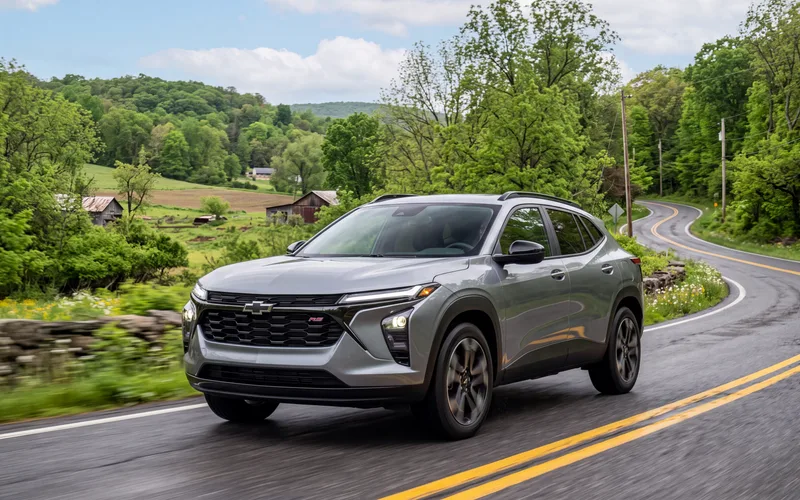 Chevrolet TraxSubcompact SUVBetter at: Cargo space
For close to the same money, the Trax gives you a turbocharged engine and much more room for passengers and cargo.
Compare 1.56D
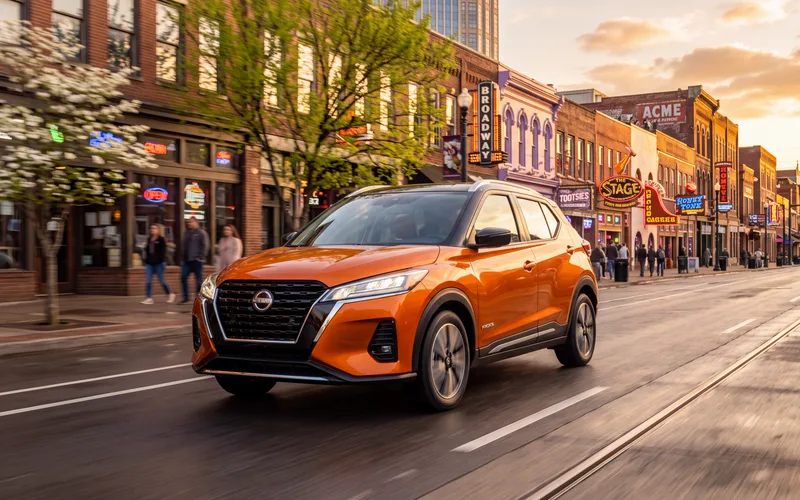 Nissan KicksSubcompact SUVBetter at: AWD availability
The Kicks offers all-wheel drive, which the Venue doesn't at any price, while staying in the budget subcompact range.
Compare 1.52D
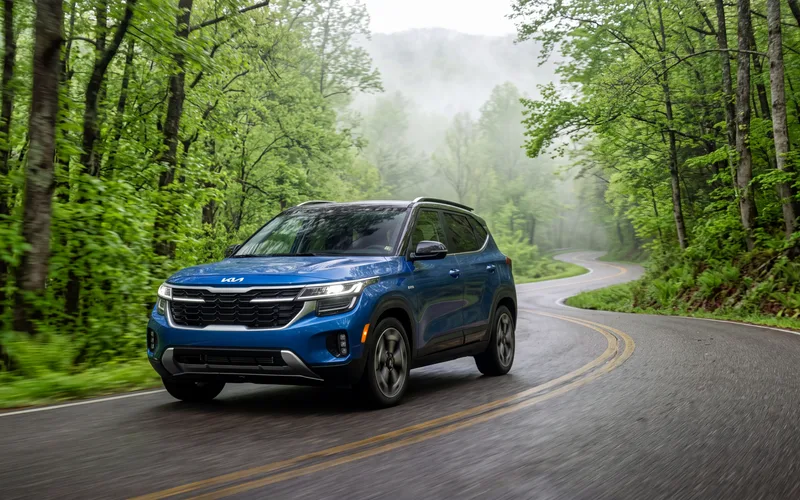 Kia SeltosSubcompact SUVBetter at: Versatility
If you can stretch the budget, the Seltos adds AWD, a turbo option and adult-sized rear seats, with the same Hyundai-Kia warranty.
CompareHow it's evolved
7 scored model years · 2020–2026
Subject scores by year
Hover or tap a score to see what moved it versus the year before. A corner mark flags a big swing.
| Year | Performance | Efficiency | Safety | Space | Cost | Reliability | Tech | Use-case | Driving | Value |
|---|---|---|---|---|---|---|---|---|---|---|
| 2026 | 14 | 67 | 46 | 35 | 92 | 70 | 56 | 44 | 61 | 61 |
| 2025 | 14 | 66 | 45 | 34 | 95 | 73 | 51 | 45 | 61 | 60 |
| 2024 | 14 | 67 | 46 | 34 | 89 | 68 | 53 | 45 | 60 | 62 |
| 2023 | 14 | 67 | 49 | 34 | 90 | 69 | 50 | 45 | 60 | 62 |
| 2022 | 14 | 67 | 49 | 34 | 91 | 67 | 49 | 45 | 60 | 62 |
| 2021 | 14 | 68 | 48 | 34 | 92 | 67 | 48 | 44 | 61 | 62 |
| 2020 | 15 | 71 | 48 | 33 | 92 | 66 | 45 | 44 | 61 | 64 |
Compare two years
Best fit & conditions
Higher scores mean a better fit for that use case. Learn more about use-case fit →
Subject profile
Academic Probation · NHTSA safety recalls
May 1, 2024Engine and engine cooling: exhaust system: emission control: gas recirculation valve (egr valve)An electrical short circuit may occur in the exhaust gas recirculation (EGR) valve assembly, which can result in a loss of drive power.
Defect
Hyundai Motor America (Hyundai) is recalling certain 2024 Elantra, Venue, and Kona vehicles. An electrical short circuit may occur in the exhaust gas recirculation (EGR) valve assembly, which can result in a loss of drive power.
Risk
A loss of drive power increases the risk of a crash.
Remedy
Dealers will replace the exhaust gas recirculation valve assembly, free of charge. Owner notification letters were mailed June 28, 2024. Owners may contact Hyundai customer service at 1-855-371-9460. Hyundai's number for this recall is 260.
NHTSA campaign 24V308000 ↗Manufacturer no. 26013,511 vehicles potentially affected (all models in the campaign)Owners notified Jun 28, 2024Filed by Hyundai Motor AmericaFiled as VENUE
2 recalls on other model years of the Venue (2020–2021, 2026)
Jun 27, 2022Seat belts: front · Seat belts: pretensionerIn the event of a crash, the front driver-side and/or passenger-side seat belt pretensioners may explode upon deployment.
Defect
Hyundai Motor America (Hyundai) is recalling certain 2020-2022 Venue vehicles. In the event of a crash, the front driver-side and/or passenger-side seat belt pretensioners may explode upon deployment.
Risk
An exploding seat belt pretensioner can project metal fragments into the vehicle, strike vehicle occupants, and result in injury.
Remedy
Dealers will secure the seat belt pretensioners with a cap, free of charge. Owner notification letters were mailed October 25, 2022. Owners may contact Hyundai customer service at 1-855-371-9460. Hyundai's number for this recall is 231. This recall expands and replaces NHTSA recall number 21V-796 for Venue vehicles. Venue vehicles previously repaired under 21V-796 will need to have the new remedy completed.
NHTSA campaign 22V458000 ↗Manufacturer no. 23172,142 vehicles potentially affected (all models in the campaign)Owners notified Oct 25, 2022Filed by Hyundai Motor AmericaFiled as VENUEOct 13, 2021Seat belts: front · Seat belts: pretensionerIn the event of a crash, the front driver-side and/or passenger-side seat belt pretensioner(s) may explode upon deployment.
Defect
Hyundai Motor America (Hyundai) is recalling certain 2021 Elantra, Elantra HEV, Venue, Genesis GV80 and 2022 Genesis GV70 vehicles. In the event of a crash, the front driver-side and/or passenger-side seat belt pretensioner(s) may explode upon deployment.
Risk
An exploding seat belt pretensioner could project metal fragments into the vehicle, striking vehicle occupants and resulting in injury.
Remedy
Dealers will replace the seat belt pretensioners, free of charge. Owner notification letters were mailed February 10, 2022. Owners may contact Hyundai customer service at 1-855-371-9460. Hyundai's numbers for this recall are 211 and 009G. This recall is replaced by NHTSA recall numbers 22V-354 for Elantra and Elantra HEV vehicles, 22V-458 for Venue vehicles, and 23V-094 for Genesis vehicles. Elantra, Elantra HEV, Venue, and Genesis vehicles already repaired under this recall will need to have the new remedies completed.
NHTSA campaign 21V796000 ↗Manufacturer no. 211/009G978 vehicles potentially affected (all models in the campaign)Owners notified Feb 10, 2022Filed by Hyundai Motor AmericaFiled as VENUE
Source: NHTSA Office of Defects Investigation recall database, model years 2020–2026. Recalls are listed by model year as the manufacturer filed them; whether a specific car is affected depends on its VIN — check a VIN at nhtsa.gov ↗. NHTSA model names matched to this page: VENUE.
Detailed scoring by subject
1Performance & PowertrainThe Venue's lowest-graded category.0.00F
Every 2024 Venue trim (SE, SEL, Limited) uses the same naturally aspirated 1.6-liter four rated at 121 hp. There is no upgrade engine, so it sits at the very bottom of the subcompact SUV pool on output.
Peak torque is 113 lb-ft from the 1.6L four, unchanged from the 2020 launch. That is below the SUV torque floor and well short of the turbocharged rivals in the class.
The 2024 powertrain is the same as every year since 2020. Car and Driver's instrumented tests of this generation range from 8.5 s to 9.4 s, averaging about 8.8 s, which makes it one of the slowest crossovers on sale.
Throttle response is smooth and the engine is quiet around town. However, there is no torque reserve: the 1.6 turns buzzy when worked hard, and highway merging and passing take planning. It is slightly better mannered than the Kicks' base four but trails turbocharged rivals like the Trailblazer and Seltos 1.6T.
Hyundai's IVT, a CVT with simulated step ratios, is one of the better-behaved CVTs in the class. Tip-in is smooth and the simulated shifts limit drone, though it still flares under full throttle. The 2024 lineup offers no manual transmission.
Hyundai publishes no trailer tow rating for the US-market Venue, and the owner's manual advises against towing with it. Aftermarket hitch ratings are third-party equipment figures, not a manufacturer capacity.
Front-wheel drive is the only drivetrain on every 2024 Venue trim. Rivals like the Kona, Trailblazer, HR-V and Crosstrek offer AWD. Upper trims get a Snow drive mode, but that is a traction-control setting, not a driven rear axle.
The Venue is built for pavement only. It has about 6.7 in of ground clearance, FWD, road tires, no underbody protection, no terrain modes beyond Snow, and no off-road trim.
There is one engine, one transmission and one drivetrain across all three 2024 trims: a 1.6L/121 hp four with the IVT and FWD. No turbo, hybrid, PHEV or EV variant is offered.
2Efficiency & RangeOne of the Venue's strongest categories.2.53C+
The 2024 Venue has a single configuration: a 1.6L four with the IVT and FWD. Its EPA rating is 31 MPG combined across the SE, SEL and Limited, which is strong for a gas-only subcompact SUV.
29 MPG city with no electric assist is among the best of the gas-only subcompact crossovers.
33 MPG highway is solid. The low-output engine and small frontal area help, but the boxy shape and short gearing hold it below the class's best highway figures.
Good economy is offset by a very small 11.9-gallon tank, giving only about 369 miles of combined range. That means more frequent fill-ups than rivals with larger tanks.
EPA estimates about $2,100 a year in regular gas. That is low for a gas crossover, but hybrids and EVs cost noticeably less to run.
Every trim runs on 87-octane regular, with no premium recommendation and no charging hardware needed. Held just below the top because the small tank means frequent stops and there is no flex-fuel option.
3SafetyGrades below the middle of the scale.1.06D
NHTSA rates the 2024 Venue 4 of 5 stars overall — five stars in side impact but four in frontal crash and rollover, the frontal result holding the overall rating below five stars.
Good in driver- and passenger-side small overlap and the original moderate overlap test, but the 2024 Venue earned no IIHS award: the updated side and updated moderate overlap (rear-passenger) tests that the 2024 criteria require were not rated, and its headlights are Marginal/Acceptable. The 2022–23 Venue's TSP came under older criteria.
Every 2024 Venue gets forward collision-avoidance with pedestrian detection, lane-departure warning, lane-keeping assist, driver attention warning and rear-seat reminder, but blind-spot and rear cross-traffic alerts require the SEL or Limited, and adaptive cruise is not offered on any trim.
Standard Forward Collision-Avoidance Assist rates Advanced in IIHS daytime pedestrian testing and the Limited's cyclist-capable version rates Superior, but there is no nighttime pedestrian result and no current vehicle-to-vehicle result on the 2024 page.
Blind-Spot Collision Warning and Rear Cross-Traffic Collision Warning are alert-only and absent from the base SE; available on SEL and Limited. No active intervention or safe-exit assist.
Lane-departure warning and Lane Keeping Assist are standard on every trim; sources conflict on whether camera-based Lane Following Assist centering is included, and reviewers describe the Venue as lacking semi-autonomous steering aids, so this is functional keeping rather than trusted centering.
No adaptive cruise control on any 2024 Venue trim — conventional cruise only, no stop-and-go, no Highway Driving Assist.
No hands-free driving system is offered; the Venue lacks even adaptive cruise, the prerequisite for one.
The halogen projectors on the volume SE and SEL rate Marginal; only the SEL Premium package's LED projectors improve, and only to Acceptable. High-beam assist is standard, but no configuration earns Good.
Tall, boxy greenhouse gives good forward and side sightlines, but thick rear pillars limit the over-the-shoulder view, and camera help stops at a rearview camera — the blind-spot monitor that offsets it isn't on the SE.
IIHS rates LATCH Acceptable, with two complete LATCH positions; the subcompact rear bench and short wheelbase make multiple or rear-facing seats tight.
4Space & ComfortOne of the Venue's weakest categories.0.25F
Every 2024 Venue trim (SE, SEL, Limited) is a two-row five-seater with a 60/40 split rear bench; no other seating configuration is offered.
The boxy roofline gives mid-pack front headroom for the class despite the tiny footprint. Figure is the no-sunroof measurement, per the item definition.
Front legroom sits near the bottom of the SUV band but is adequate for most adults; the upright seating position helps.
The tall, square body pays off most in the second row: 38.6 in of rear headroom is good for a subcompact.
34.3 in is tight. It works for kids or short adult trips but is cramped behind a tall driver, and the rear bench does not slide.
The Venue has no third row on any trim. It is scored in the low band per the item's rule for two-row SUVs rather than omitted.
18.7 cu ft behind the second row is the smallest cargo hold in the subcompact SUV class. That is below the SUV band floor and closer to a compact hatchback than a crossover.
With the rear bench folded the Venue tops out at 31.9 cu ft, roughly half what most subcompact SUVs manage and well under the band floor.
The storage is sensible rather than clever: a dual-level adjustable cargo floor, a low load height and wide hatch, a phone cubby ahead of the shifter, and door bottle holders. The center console is shallow and nothing here is a segment innovation.
The front seats balance cushion and support reasonably well, but adjustment is manual-only with no power or lumbar on any trim. The rear cushion is flat and short on thigh support. Fine for commuting, mediocre for long hauls.
The 99.2-in wheelbase and torsion-beam rear make for a short, choppy ride over broken pavement. It is composed on smooth roads and never punishing, but busier than larger subcompacts.
It is quiet around town but noisy at highway speed, with tire roar, wind rush and CVT drone from the 121-hp 1.6L under load. There is no acoustic glass or active noise cancellation.
The volume SEL gets automatic climate control and a sunroof but no heated seats. Heated front seats arrive only on the Limited, and no trim offers ventilated seats, a heated steering wheel or rear vents.
5Cost of OwnershipThe Venue's best-graded category.4.00A+
The 2024 Venue SE was among the cheapest new SUVs in the US, below the subcompact-SUV band floor even with destination included.
The SEL is the volume trim, adding 17-inch wheels and rear disc brakes over the SE, and it still delivers for well under $25k.
A naturally aspirated 1.6L with a CVT and no AWD hardware keeps costs low; Edmunds' 2024-specific projection is back-loaded into years 4–5 once complimentary maintenance ends.
Sources disagree: Edmunds' 2024-specific projection implies roughly half the value retained, while model-level residual data from CarEdge and iSeeCars puts the Venue above the subcompact-SUV average; the midpoint is used.
Hyundai's 5-year/60,000-mile basic coverage is the longest in the mainstream market and tops the normalization band.
The 10-year/100,000-mile powertrain warranty sits at the top of the band, though it applies to the original owner only (5 yr/60k for later owners).
As a 2024 model the Venue still came with Hyundai Complimentary Maintenance (3 years/36,000 miles of oil changes, tire rotations and inspections) plus 5-year/unlimited-mile roadside assistance — better than most subcompact rivals. Connected-service perks are thin: Bluelink+ is not offered on certain Venue trims.
$23,275 volume-trim price minus its estimated resale value after 5 years (58% retained, or about $13,499) leaves about $9,776 in depreciation. Add the projected $4,395 in 5-year maintenance and repairs, and owning this vehicle for 5 years costs about $14,171 in total.
6Reliability & QualityOne of the Venue's strongest categories.2.62C+
J.D. Power gives the 2024 Venue 85/100 for predicted reliability, inside its 81-90 'Great' band, while Consumer Reports calls the 2024 about average against other same-year cars. Strong from one source and average from the other, so it sits at the top of the mixed-signals band rather than in the top tier.
In 2024 Hyundai was a consistent upper-mid-pack brand: it made Consumer Reports' top 10 but only just, and it has generally beaten the J.D. Power VDS industry average without being a perennial top-5 finisher.
The 2024 model year has one recall, and it is a serious one: an EGR-valve short circuit that can cause loss of drive power. Earlier years of this generation had a seat-belt pretensioner recall and a 2020-2022 IVT service campaign. Complaint volume is still low, so the record counts as typical, not systemic.
The 1.6L Smartstream port-injected four (121 hp) is simple and low-stress, with no turbo or GDI carbon issues. The IVT belt-type CVT paired with it is the weak point: owners report judder and hesitation, and there is a 2024 class action over 2020+ gas Hyundais. The 2024 EGR-valve power-loss recall also touches this powertrain.
Reviewers consistently note hard plastics on nearly every surface, including unpadded armrests. That is acceptable at the Venue's entry price, but it trails rivals such as the Kia Seltos and Mazda CX-30. The layout is sensible and assembly is tidy.
Assembly is solid. The 2024 model year logs few complaints, and owners rate it highly. The Venue later ranked highest in its J.D. Power Initial Quality segment on the same carryover build, which supports how well it is put together.
About 860 US dealers make service easy to reach almost anywhere. Hyundai dealer-service satisfaction, however, has historically sat near the bottom of J.D. Power's Customer Service Index.
Maintenance and repair costs are among the lowest in the segment. The Venue uses common Hyundai/Kia parts and a simple mechanical package, and its 10-year cost projections beat the SUV average.
7Technology & InfotainmentGrades below the middle of the scale.1.52D
Every 2024 Venue uses an 8-inch center touchscreen; no larger screen is offered anywhere in the lineup.
The screen is small but well executed: bright and responsive, with a simple menu structure and physical climate, volume and tuning controls retained.
Wireless Apple CarPlay and Android Auto are standard on the SE and the volume SEL, which is strong at this price. However, the top Limited's navigation head unit reverts to wired-only projection.
Embedded navigation is offered, but only on the Limited. Voice control is Hyundai's basic button-prompted system, and SE/SEL owners rely on phone projection for maps.
For 2024 a six-speaker system became standard on every trim, up from four on the SE. No branded or premium audio upgrade is available.
The cluster is analog gauges flanking a 4.2-inch color TFT info display, upgraded from 3.5 in for 2023. No full-digital cluster is offered on any 2024 trim.
Hyundai offers Bluelink-based map/multimedia OTA, but on the Venue that applies mainly to the Limited's navigation unit. There is no history of feature-adding whole-vehicle OTA on this model.
Bluelink covers remote lock/unlock, locate and diagnostics, and Bluelink+ (Limited) adds remote start with climate, complimentary for the original owner on 2024-and-newer models. Phone-as-key is not offered, and the richest features are tied to the top trim.
New for 2024, the SEL and Limited add dual rear-seat USB ports. Wireless charging remains Limited-only, the SE has front ports only, and there is no AC outlet.
Proximity entry with push-button start became standard on the volume SEL for 2024, and the Limited has it too. The SE keeps a twist key, and no trim offers phone-as-key or a power liftgate.
The parking suite is a rear-view camera with guidelines. There is no surround view, no parking distance sensors and no parking automation; blind-spot and rear cross-traffic warnings are SEL/Limited only.
No head-up display is offered on any 2024 Venue trim.
8Use-Case FitOne of the Venue's weakest categories.0.97F
Two full LATCH sets, a tall body and wide rear doors make buckling a child easy for the size. But 34.3 in of rear legroom struggles with a large rear-facing seat, and 18.7 cu ft is a tight hold for stroller-plus-groceries duty.
Forward collision-avoidance with pedestrian detection, lane-keeping and rear-seat reminder are standard on the SE. However, crash credentials are mid-pack (4-star NHTSA overall, no 2024 IIHS award, Marginal halogen headlights), and blind-spot/cross-traffic warnings require the SEL.
A four-person trip is where the Venue runs out of car: no rear vents, tight rear legroom, and 18.7 cu ft of cargo that cannot take four people's luggage. Rear USB ports (new for 2024 on SEL/Limited) are the only rear amenity.
This is the Venue's core competence: light steering, excellent outward visibility, a small footprint and a CVT that is smooth in stop-and-go traffic. It loses points for a buzzy engine under throttle and for having no adaptive cruise.
It is cheap to buy and to run: 31 MPG combined on regular fuel, a sub-$20K starting MSRP and small, inexpensive tires. It misses 80+ because a hybrid or EV commuter beats it per mile.
Urban usability is best in class: 159.1 in long, a roughly 33-ft turning circle and an upright glasshouse with good sightlines. Thin parking hardware (rear camera only, no sensors or 360 view) keeps it below 90.
It is not meaningfully work-capable: there is no tow rating, 121 hp goes through a CVT to the front wheels only, and cargo is the smallest in the class.
The simple naturally aspirated 1.6L and wipe-clean plastics are low-stress, and a 10-yr/100k-mi powertrain warranty backs them. But it is a light econobox with no fleet record or heavy-duty provisions.
Beyond a two-position adjustable cargo floor and basic tie-down hooks there is little for work: no factory hitch, no AC outlet and no upfit ecosystem.
Range is adequate at about 370 highway miles, but the engine works audibly hard on grades, and wind and road noise intrude. There is no adaptive cruise on any trim to reduce interstate fatigue.
It is pavement-bound: FWD only, about 6.7 in of ground clearance and no tow rating. Snow mode and the tall body are the only nods to bad weather.
The packaging is smart for the size, with a 60/40 fold, a dual-level load floor and a wide low-lift hatch. But the raw volumes are the class floor and there is no factory hitch to carry overflow outside.
9Driving ExperienceMid-pack among this car's ten categories.2.06C
It is nimble around town thanks to a 159-in length and short overhangs, with body motions better controlled than the class's soft norm. Narrow eco tires and a torsion-beam rear limit grip.
The steering is light and quick off-center, which is good for parking, but it builds little weight with speed and offers minimal feedback.
Pedal feel is linear and easy to modulate, but the 70–0 mph distance is mid-pack to long for so light a car, which reflects its low-rolling-resistance tires.
The 1.6L (121 hp / 113 lb-ft) with Hyundai's IVT is smooth and shudder-free at light throttle, with simulated steps. Response is the weak point: kickdown is slow and passing takes planning. The powertrain is unchanged for 2024.
With the CVT holding revs under load the engine drones, and there is little sound insulation to contain it. Vibration through the controls is not an issue.
Maneuverability is class-leading and tighter than the 34-ft floor of the SUV band; it is identical across trims.
The upright seating, thin front pillars and boxy greenhouse give good visibility, and climate and audio keep physical controls. It is held back by a manual-only driver's seat with no lumbar and thick rear pillars.
It is light, eager to change direction and likeable in the city, but 121 hp through a droning CVT caps the enjoyment. Pleasant rather than memorable.
10Value & Market PositionMid-pack among this car's ten categories.2.19C
The $19,900 SE comes standard with an 8-inch touchscreen with smartphone integration and the core Hyundai SmartSense suite (forward collision avoidance, lane keeping, driver attention warning). But heated seats, LED lighting and wireless charging are reserved for the $23,150 Limited, so comfort features cost a trim walk.
Among the cheapest SUVs in America for 2024 (about $21,300–$24,500 delivered) with Hyundai's warranty and free maintenance, the content per dollar is strong. Capability caps it: 121 hp, CVT, front-drive only, and a small cargo hold.
Three well-spaced trims (SE, SEL, Limited) span about $3,250, but there is one powertrain, one transmission and no AWD anywhere in the lineup, so buyers can't configure up in capability.
US sales fell from 28,009 in 2023 to 24,607 in 2024 — steady entry-level volume, but well behind segment leaders like the Trax, Kicks and HR-V.
Hyundai's image is strong on the back of its warranty and award-winning products elsewhere in the range, which lends the entry Venue credibility. Brand-level resale is only average, and budget models sit at the low end of it.
Thin margins on Hyundai's cheapest SUV leave little room for cash. Incentives on the Venue in 2024 were occasional and modest, usually subvented financing rather than rebates, and transaction prices sat close to MSRP.
MY2024 is the fifth year of the first-generation Venue (US launch MY2020) and the second year after the MY2023 facelift: current, but on an aging platform with a successor already in development.
Reviewers like the 2024 Venue as a budget pick: Edmunds 7.4/10, U.S. News 8.5/10, The Car Connection 5.8/10. It wins no comparison tests, and Hyundai's subcompact honors went to the Kona.