

The verdict
A struggling subcompact luxury suv, strong on technology and held back by ownership.
The 2026 Jaguar E-PACE is a subcompact luxury SUV that feels like a leftover — Jaguar pulled it from the US market after 2023 and its projected reappearance for 2026 comes with the same aging platform, single 246-hp turbo-four, and no electrified option while the brand pivots to EVs. Cramped rear seats, class-trailing 24.2 cu ft cargo, 23 MPG combined on required premium fuel, and Jaguar's weak reliability and resale reputation make it a hard sell against fresher rivals like the BMW X1 and Audi Q3. Its best pitch is a nicely equipped tech package, class-leading 5-year/60,000-mile warranty, and the deep dealer discounts that a slow-selling, discontinuing model attracts.
Jump to scoresStrengths
- Genuinely modern tech and infotainment
- Best-in-class basic warranty
- Standard AWD with real light off-road ability
What holds it back
- Cramped interior and class-trailing cargo
- Poor fuel economy on required premium gas
- Brutal depreciation and weak market demand
Top alternatives
Cars shoppers cross-shop with the Jaguar E-PACE 2.65C+
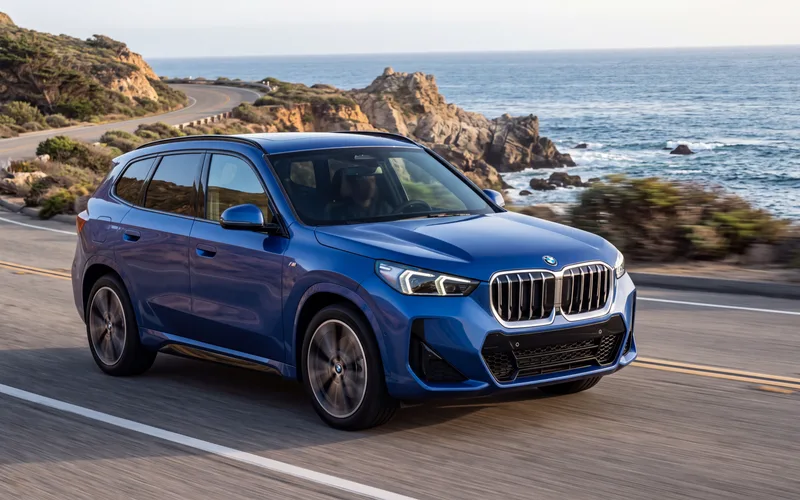 BMW X1Subcompact Luxury SUV
The BMW X1 xDrive28i is quicker, more efficient (~28 hwy MPG), noticeably roomier in the second row and cargo hold, and boasts substantially better projected resale.
Compare 2.43C+
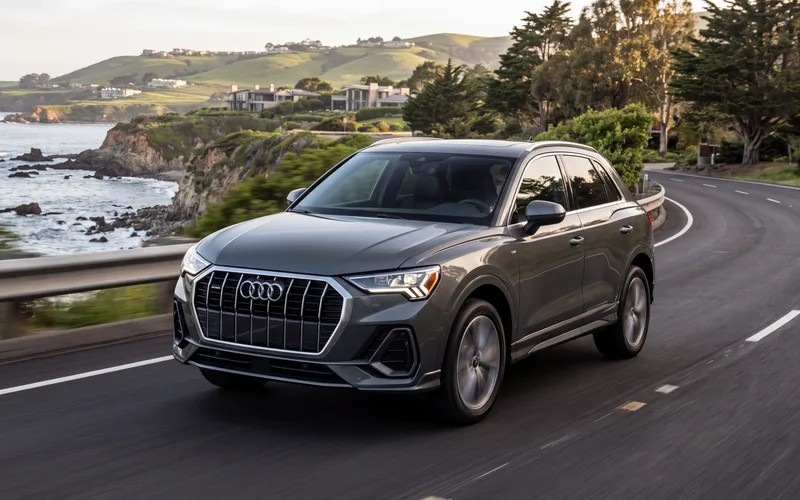 Audi Q3Subcompact Luxury SUV
The Audi Q3 offers a fresher interior, more standard tech per dollar, and better cargo flexibility, with a stronger dealer network and residuals.
Compare 2.26C
2.26C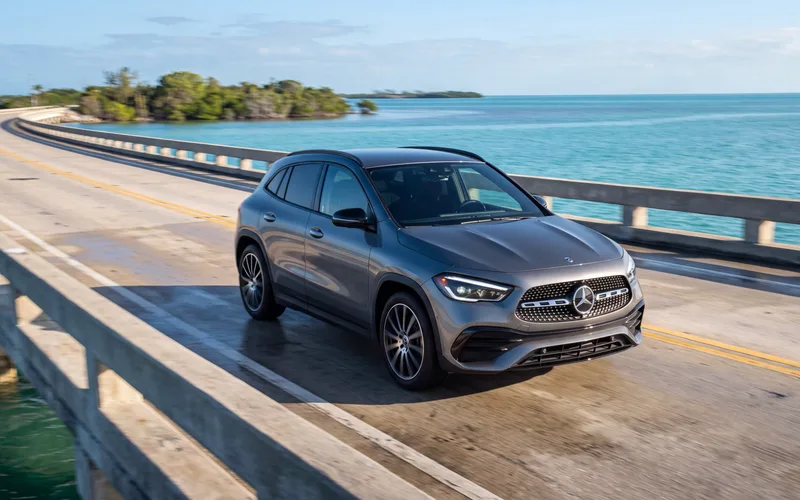 Mercedes-Benz GLASubcompact Luxury SUV
The Mercedes GLA 250 4MATIC delivers a modern MBUX interior, 32 highway MPG, and stronger brand cachet, though rear space is similarly tight.
CompareHow it's evolved
7 scored model years · 2018–2024
Subject scores by year
Hover or tap a score to see what moved it versus the year before. A corner mark flags a big swing.
| Year | Performance | Efficiency | Safety | Space | Cost | Reliability | Tech | Use-case | Driving | Value |
|---|---|---|---|---|---|---|---|---|---|---|
| 2024 | 47 | 36 | 55 | 39 | 31 | 49 | 76 | 64 | 68 | 51 |
| 2023 | 44 | 35 | 47 | 38 | 53 | 49 | 68 | 47 | 66 | 48 |
| 2022 | 45 | 33 | 40 | 40 | 55 | 47 | 69 | 54 | 67 | 53 |
| 2021 | 45 | 33 | 40 | 40 | 54 | 47 | 71 | 55 | 66 | 54 |
| 2020 | 46 | 39 | 38 | 37 | 55 | 49 | 53 | 52 | 65 | 53 |
| 2019 | 45 | 39 | 37 | 36 | 55 | 48 | 49 | 52 | 64 | 59 |
| 2018 | 45 | 39 | 37 | 37 | 53 | 45 | 44 | 51 | 64 | 60 |
Compare two years
Best fit & conditions
Higher scores mean a better fit for that use case. Learn more about use-case fit →
Subject profile
Academic Probation · NHTSA safety recalls
Sep 17, 2026Electrical system: propulsion system: dc/dc converterThe DC-DC converter may malfunction due to an electrical overload that can occur during high power demand. Additionally, a software error can cause the DC-DC converter to stop functioning at vehicle start-up under certain circumstances. Failure of the DC-DC converter will result in the loss of 12-Volt system charging and can lead to complete loss of drive power and exterior lighting.
Defect
Jaguar Land Rover North America, LLC (Land Rover) is recalling certain 2019-2024 Land Rover Range Rover Sport, 2020-2024 Land Rover Range Rover Evoque, Land Rover Range Rover, Land Rover Discovery Sport, Land Rover Defender, 2021-2024 Land Rover Range Rover Velar, Jaguar E-Pace, F-Pace, and Land Rover Discovery vehicles. The DC-DC converter may malfunction due to an electrical overload that can occur during high power demand. Additionally, a software error can cause the DC-DC converter to stop functioning at vehicle start-up under certain circumstances. Failure of the DC-DC converter will result in the loss of 12-Volt system charging and can lead to complete loss of drive power and exterior lighting.
Risk
A loss of drive power increases the risk of a crash.
Remedy
Dealers will update the vehicle software, free of charge. Interim letters notifying owners of the safety risk are expected to be mailed November 13, 2026. Additional letters will be sent once the final remedy is available. Owners may contact Land Rover's customer service at 800-637-6837. Land Rover's number for this recall is E008. This recall expands previous NHTSA recall number 26V248.
NHTSA campaign 26V599000 ↗Manufacturer no. E00823,677 vehicles potentially affected (all models in the campaign)Filed by Jaguar Land Rover North America, LLCFiled as E-PACEJul 11, 2025Air bags: passenger side frontal: cushionThe passenger air bag may tear during deployment.
Defect
Jaguar Land Rover North America, LLC (Jaguar) is recalling certain 2021-2024 E-Pace vehicles. The passenger air bag may tear during deployment.
Risk
A torn air bag may not adequately protect an occupant in a crash, increasing the risk of injury. Additionally, a torn air bag may allow hot gases to escape, which can cause a burn injury.
Remedy
Dealers will replace the passenger air bag module, free of charge. Owner letters were mailed February 6, 2026. Owners may contact Jaguar's customer service at 1-800-452-4827. Jaguar's number for this recall is H552.
NHTSA campaign 25V466000 ↗Manufacturer no. H5521,436 vehicles potentially affected (all models in the campaign)Owners notified Feb 2, 2026Filed by Jaguar Land Rover North America, LLCFiled as E-PACEMar 14, 2024Service brakes, hydraulicThe brake pad wear warning light may not appear on the instrument cluster as intended, failing to warn the driver that the brake pads are worn out. As such, these vehicles fail to comply with the requirements of Federal Motor Vehicle Safety Standard number 135, "Light Vehicle Brake Systems."
Defect
Jaguar Land Rover North America, LLC (Jaguar) is recalling certain 2021-2024 E-Pace vehicles. The brake pad wear warning light may not appear on the instrument cluster as intended, failing to warn the driver that the brake pads are worn out. As such, these vehicles fail to comply with the requirements of Federal Motor Vehicle Safety Standard number 135, "Light Vehicle Brake Systems."
Risk
Driving with worn brake pads can reduce braking ability, increasing the risk of a crash.
Remedy
Dealers will update the car configuration file software, free of charge. Owner notification letters were mailed May 7, 2024. Owners may contact Jaguar customer service at 1-800-452-4827. Jaguar's number for this recall is H481.
NHTSA campaign 24V201000 ↗Manufacturer no. H4812,842 vehicles potentially affected (all models in the campaign)Owners notified May 7, 2024Filed by Jaguar Land Rover North America, LLCFiled as E-PACE
4 recalls on other model years of the E-PACE (2018, 2021–2023)
Apr 17, 2026Electrical system: propulsion system: dc/dc converterInsufficient electrical load balancing during times of high demand can lead to a current overload condition and malfunction of the DCDC converter. A failure of the DC-DC converter will result in a loss of 12-Volt system charging and can lead to complete loss of drive power and exterior lighting.
Defect
Jaguar Land Rover North America, LLC (Land Rover) is recalling certain 2021-2024 Land Rover Range Rover Velar and Land Rover Discovery, 2020-2023 Land Rover Range Rover Evoque, 2019-2024 Land Rover Range Rover Sport, 2020-2024 Land Rover Range Rover, 2020 Land Rover Discovery Sport, 2020-2024 Land Rover Defender, 2021-2024 Jaguar F-Pace, and 2021-2022 Jaguar E-Pace mild-hybrid electric vehicles (MHEVs). Insufficient electrical load balancing during times of high demand can lead to a current overload condition and malfunction of the DCDC converter. A failure of the DC-DC converter will result in a loss of 12-Volt system charging and can lead to complete loss of drive power and exterior lighting.
Risk
A loss of drive power increases the risk of a crash.
Remedy
Dealers will update the central software, free of charge. Interim letters notifying owners of the safety risk were mailed June 17, 2026. Additional letters will be sent once the final remedy is available. Owners may contact Land Rover's customer service at 800-637-6837. Land Rover's numbers for this recall are D126 and H575.
NHTSA campaign 26V248000 ↗Manufacturer no. D126 H575170,169 vehicles potentially affected (all models in the campaign)Filed by Jaguar Land Rover North America, LLCFiled as E-PACEApr 18, 2024Air bagsThe passenger air bag may tear during deployment.
Defect
Jaguar Land Rover North America, LLC (Jaguar) is recalling certain 2021-2023 E-Pace vehicles. The passenger air bag may tear during deployment.
Risk
A torn air bag may not adequately protect an occupant in a crash, increasing the risk of injury. Additionally, a torn air bag may allow the escape of hot gases which can burn an occupant.
Remedy
Dealers will replace the passenger air bag module, free of charge. Owner notification letters were mailed August 30, 2024. Owners may contact Jaguar customer service at 1-800-452-4827. Jaguar's number for this recall is H491.
NHTSA campaign 24V278000 ↗Manufacturer no. H4912,409 vehicles potentially affected (all models in the campaign)Owners notified Aug 30, 2024Filed by Jaguar Land Rover North America, LLCFiled as E-PACEMar 1, 2018Service brakes, hydraulic: foundation components: hoses, lines/piping, and fittingsThe brackets that secure the front brake hoses may not have been installed properly, allowing the front brake hoses to contact the tires, possibly resulting in a brake fluid leak.
Defect
Jaguar Land Rover North America, LLC (Jaguar) is recalling certain 2018 Jaguar E-Pace vehicles. The brackets that secure the front brake hoses may not have been installed properly, allowing the front brake hoses to contact the tires, possibly resulting in a brake fluid leak.
Risk
A brake fluid leak can lengthen the distance needed to stop the vehicle, increasing the risk of a crash.
Remedy
Jaguar will notify owners, and dealers will inspect the front brake hose brackets, replacing any that do not provide sufficient clearance, free of charge. The recall began on April 16, 2018. Owners may contact Jaguar customer service at 1-800-452-4827. Jaguar's number for this recall is H074.
NHTSA campaign 18V140000 ↗Manufacturer no. H07441 vehicles potentially affected (all models in the campaign)Owners notified Apr 16, 2018Filed by Jaguar Land Rover North America, LLCFiled as E-PACEFeb 2, 2018Fuel system, gasoline: fuel injection system: fuel railThe fuel rail end caps may leak, possibly resulting in fuel vapor or liquid fuel leaking into the engine bay.
Defect
Jaguar Land Rover North America, LLC (Jaguar) is recalling certain 2018 Jaguar XE, XF, E-PACE, F-PACE and F-TYPE vehicles equipped with a 2.0L gasoline engine. The fuel rail end caps may leak, possibly resulting in fuel vapor or liquid fuel leaking into the engine bay.
Risk
A fuel leak in the presence of an ignition source such as hot engine or exhaust components can increase the risk of a fire.
Remedy
Jaguar will notify owners, and dealers will replace the fuel rail, free of charge. The recall began on March 8, 2018. Owners may contact Jaguar customer service at 1-800-452-4827. Jaguar's number for this recall is H081.
NHTSA campaign 18V090000 ↗Manufacturer no. H08110,073 vehicles potentially affected (all models in the campaign)Owners notified Mar 8, 2018Filed by Jaguar Land Rover North America, LLCFiled as E-PACE
Source: NHTSA Office of Defects Investigation recall database, model years 2018–2024. Recalls are listed by model year as the manufacturer filed them; whether a specific car is affected depends on its VIN — check a VIN at nhtsa.gov ↗. NHTSA model names matched to this page: E-PACE.
Detailed scoring by subject
1Performance & PowertrainGrades below the middle of the scale.1.13D
P250 Ingenium 2.0L turbo I4 with 48V MHEV puts the E-PACE on the low end of subcompact luxury SUV output, where rivals typically start near 200 hp and stretch past 300 hp.
Peak torque of 269 lb-ft is competitive for a 2.0T subcompact luxury SUV but below the segment's turbo-six and PHEV options.
Manufacturer-claimed 6.6 s for the P250 with 9-speed automatic and standard AWD is squarely mid-pack among subcompact luxury SUVs.
Reviewers have consistently flagged the Ingenium 2.0L turbo-four as coarse under load with noticeable low-rpm turbo lag and a gritty note at higher revs, though the 48V MHEV smooths stop-start transitions.
The ZF-derived 9-speed automatic shifts smoothly in normal driving but can be indecisive with slow kickdowns and occasional gear-hunting when pushed.
3,968 lbs braked tow rating is respectable for a subcompact luxury SUV and matches most European rivals' small-hitch capability, though well below body-on-frame or larger PHEV crossovers.
AWD is standard across every US-market E-PACE trim, with an on-demand active driveline and Jaguar's Adaptive Surface Response terrain-mode logic (JaguarDrive Control).
Reasonable ~8.3 in ground clearance and Adaptive Surface Response give light off-pavement ability, but there is no dedicated off-road trim, low range, or locker — it is pavement-oriented like most subcompact luxury SUVs.
US market gets a single gas powertrain (P250 2.0T MHEV) — the P300e PHEV variant offered in Europe has never returned to the US lineup, leaving buyers no electrified or higher-output alternative.
2Efficiency & RangeOne of the E-PACE's weakest categories.0.35F
EPA-rated 23 MPG combined for the volume P250 AWD (2.0L Ingenium turbo I4, 246 hp, 8-speed auto, AWD standard). The hotter P300 R-Dynamic drops to 22 combined. No hybrid assist puts the E-PACE well behind electrified subcompact luxury rivals like the Lexus UX Hybrid (~42 combined) and Volvo XC40 mild-hybrid.
EPA city rating of 21 MPG for the volume P250 AWD. Without a hybrid stop-start system beyond conventional auto-stop, the E-PACE loses the biggest efficiency gains its Lexus UX Hybrid and Volvo XC40 mild-hybrid rivals capture in stop-and-go traffic.
EPA highway rating of 27 MPG for the volume P250 AWD — adequate for a ~4,000 lb AWD luxury crossover but well behind the Audi Q3 40 TFSI quattro (28 hwy) and Mercedes-Benz GLA 250 4MATIC (32 hwy) using more modern tech.
A 15.5-gallon (58 L) fuel tank combined with 23 MPG combined yields roughly 356 miles between fills — behind larger-tank rivals like the BMW X1 (~380 mi) and well behind hybrid competitors that clear 500 mi. Modest range is typical of the subcompact luxury segment but does not help offset the premium-fuel cost.
EPA estimated annual fuel cost sits at the high end of the subcompact luxury SUV band because the E-PACE requires premium gasoline and returns only 23 MPG combined. Roughly $600–$900/yr more than the Lexus UX Hybrid or an efficient EV rival, and modestly above the BMW X1 xDrive28i (~$2,350).
Premium unleaded (91 octane minimum) is required across the E-PACE lineup — no regular-fuel option, no flex-fuel, no diesel, and no PHEV/EV variant to soften the fuel bill with cheap home charging. Owners pay the full premium-fuel surcharge on top of merely average consumption.
3SafetyGrades below the middle of the scale.1.69D
NHTSA has not published overall crash ratings for the E-PACE; estimated at 4 stars based on low-volume luxury subcompact SUV segment norms and prior-generation results.
E-PACE holds no current IIHS Top Safety Pick or TSP+ award; prior-generation testing showed mostly Good with Acceptable driver-side small-overlap and moderate-overlap results, and the current generation has not been fully retested to updated protocols.
Standard suite covers AEB, lane-keep assist, driver-condition monitor and traffic-sign recognition; adaptive cruise, blind-spot assist, rear cross-traffic and 360-degree camera require the optional Driver Assist Pack or upper R-Dynamic trims.
Front AEB is standard but IIHS front-crash-prevention results for the current E-PACE are not published at the Superior/Advanced level; system is basic vehicle-to-vehicle with limited pedestrian and night performance validation.
Blind-spot Assist and Rear Traffic Monitor bundle into the Driver Assist Pack rather than being standard on the base trim, with alert-only intervention; coverage matches segment mid-pack once optioned.
Lane-Keep Assist is standard but is a corrective torque nudge rather than true centering; reviewers note the system is functional but noticeably less refined than BMW/Mercedes/Volvo peers.
Adaptive cruise is optional via Driver Assist Pack with full-speed range including stop-and-go, but Jaguar does not offer a combined highway assist that fuses ACC with lane centering the way German rivals do.
Jaguar offers no hands-free highway driving system (no BlueCruise, Super Cruise, Drive Pilot, or equivalent) on the E-PACE or any other model.
Standard LED headlamps deliver acceptable range; Matrix LED headlights with adaptive high-beam are optional/standard only on upper R-Dynamic and HSE trims, so the volume trim lags Good-rated peer benchmarks.
Reasonably upright greenhouse for the class gives decent forward and side sightlines; thick C-pillars and a rising beltline limit rear three-quarter view but a 360-degree camera is available to compensate.
Two lower-anchor LATCH positions with tether anchors on all three rear seats work adequately, but the tight rear-door opening and modest rear-seat width make installing rear-facing seats or three-across cramped versus segment leaders.
4Space & ComfortOne of the E-PACE's weakest categories.0.61F
Standard two-row 5-seat layout across all E-PACE trims; no third-row option. Carried forward from the current generation as Jaguar has not restyled the E-PACE for 2026.
Mid-pack front headroom for a subcompact luxury SUV; the panoramic roof (available/standard on upper trims) trims roughly 1.4 in.
Front legroom is short for the class — below the 40-in bottom of the SUV normalization band and a well-documented E-PACE weakness noted by Car and Driver and Edmunds.
Second-row headroom is competitive for the segment despite the sloping roofline.
Rear legroom is tight for the class — trails direct rivals like the Audi Q3, Mercedes GLA/GLB, and Volvo XC40, and is a consistent E-PACE criticism in reviews.
E-PACE is a strict two-row SUV with no third-row option — scored low per rubric for 'no third row'.
Cargo volume behind the second row is at the bottom of the segment — below the 25 cu ft floor of the SUV normalization band. Well-documented E-PACE packaging weakness driven by short overall length and sloping roofline.
Max cargo with seats folded also falls below the 55 cu ft floor of the SUV band. Class-trailing utility versus Audi Q3 (~48–58) and Mercedes GLA (~50).
Everyday storage is competent but unremarkable: modest center console, small door pockets, no standout innovations. Reviews (Car and Driver, Edmunds) note small-item space is average at best.
Jaguar-typical well-bolstered front seats with good long-haul comfort; rear seats are firm and packaging is tight, which caps the score.
Sport-tuned suspension delivers good body control but the ride is firm and can be busy on broken pavement, especially with the larger optional wheels. Composed but not plush by luxury standards.
Highway noise levels are average for a subcompact luxury SUV; some road and wind noise intrusion on coarse surfaces, though the turbo-four is well isolated at cruise.
Heated front seats and steering wheel are widely available; ventilated seats, heated rear seats, and configurable ambient lighting available on upper trims. Rich for a subcompact luxury SUV but not standard across the board.
5Cost of OwnershipThe E-PACE's lowest-graded category.0.04F
E-PACE was discontinued in the US market after MY2023 (last base P250 S AWD was $47,875 with destination); projected MY2026 base carries ~6% cumulative inflation adjustment. If Jaguar reintroduces the E-PACE nameplate as part of its EV pivot, pricing would likely shift materially.
R-Dynamic S with the P250 AWD powertrain was the best-selling E-PACE configuration; 2023 MSRP was $50,875 as equipped. Projected MY2026 estimate applies ~6% inflation carry.
Jaguar consistently ranks near the bottom of RepairPal/CarEdge maintenance-cost tables. The E-PACE's turbocharged Ingenium four with 48V mild-hybrid, premium fluids, and thinning US dealer network push scheduled and unscheduled costs well above the luxury-subcompact-SUV mean.
Jaguar has among the weakest residuals in the industry, and the E-PACE is doubly disadvantaged as a discontinued gasoline model orphaned by the brand's EV pivot — depreciation accelerates as parts and dealer support thin out.
Jaguar EliteCare provides a 5-year/60,000-mile new-vehicle limited warranty — tops the luxury field, matching Genesis and beating BMW/Audi/Mercedes (4/50k).
Jaguar's powertrain coverage matches the basic warranty (no separate extended powertrain term), so it sits at the bottom of the powertrain-warranty band even though the 5-year headline reads well.
Jaguar EliteCare includes 5-year/60k roadside assistance and InControl Remote & Protect connected services, but Jaguar phased out complimentary scheduled maintenance around 2020 — buyers pay for services. Solid perks but no free oil changes puts it below Genesis/BMW-tier packages.
$53,900 volume-trim price minus its estimated resale value after 5 years (39% retained, or about $21,021) leaves about $32,879 in depreciation. Add the projected $8,800 in 5-year maintenance and repairs, and owning this vehicle for 5 years costs about $41,679 in total.
6Reliability & QualityGrades below the middle of the scale.1.26D
Jaguar has consistently placed near the bottom of Consumer Reports predicted reliability and J.D. Power VDS rankings, and the E-PACE inherits those brand-wide issues without a distinguishing dependability story of its own.
Jaguar has ranked in the bottom five of J.D. Power VDS and Consumer Reports brand reliability for several consecutive years, one of the weakest track records among luxury marques.
The current-generation E-PACE has drawn multiple NHTSA recalls (fuel pump, brake vacuum pump, transmission control software, seatbelt) plus assorted TSBs, but nothing catastrophic or fire-related on the scale of the industry's worst offenders.
The Ingenium 2.0L turbo-four has documented long-term issues (timing-chain tensioner wear, oil dilution, coolant leaks) and the ZF 9HP 9-speed automatic has a mixed reputation for smoothness and durability under JLR calibration.
Windsor leather, contrast stitching, and upscale switchgear on higher trims lift the ambience, but reviewers routinely call out hard plastics in lower cabin zones and dated-feeling secondary controls versus the Audi Q3 and Volvo XC40.
JLR fit and finish trails German luxury benchmarks in J.D. Power Initial Quality Study, with owner complaints of trim rattles, inconsistent panel gaps, and squeaks documented across the E-PACE generation.
Jaguar operates roughly 150 US retailers — sparse next to BMW (~340) and Mercedes-Benz (~380) — and J.D. Power CSI scores for Jaguar service have hovered near the bottom of the premium segment.
Jaguar parts are largely dealer-only with limited independent-shop and aftermarket support, and RepairPal/Edmunds cost-to-own data place E-PACE maintenance and repair spend well above class average.
7Technology & InfotainmentThe E-PACE's best-graded category.3.14B
The refreshed E-PACE runs Pivi Pro on the 11.4-inch curved-glass HD touchscreen shared with the rest of the Jaguar SUV lineup; no larger display is offered.
Pivi Pro is a big generational leap over the old InControl — quick boot, tile-based home screen, retained physical HVAC knobs. Reviewers still note occasional lag and menus that trail class benchmarks (BMW iDrive, Mercedes MBUX).
Wireless Apple CarPlay and Android Auto are standard on every 2026 E-PACE trim.
Pivi Pro includes natural-language voice control and cloud-connected navigation with what3words integration; competent but most owners still default to phone projection.
Base Jaguar Sound System is modest for the segment, but an optional Meridian 380W 11-speaker and top-tier Meridian 3D Surround 825W 15-speaker system elevate premium configurations well above class norms.
12.3-inch Interactive Driver Display (full-digital, configurable including full-screen map) is standard across the range.
Pivi Pro supports Software-Over-The-Air (SOTA) updates across dozens of vehicle modules including infotainment and connected-nav data — broader than infotainment-only, though cadence and scope trail Tesla/Rivian.
Jaguar Remote app offers remote lock/unlock, locate, climate preconditioning, and status; solid basics but no phone-as-key and connected features require an ongoing subscription after the included trial.
USB-C ports front and rear plus a 12V outlet; wireless phone charging is available on higher trims. Provisioning is adequate but sparser than newer segment rivals, with no household AC outlet.
Keyless Entry with push-button start standard on all trims; power gesture tailgate available; unique Activity Key waterproof wristband offered as a factory option. No smartphone-as-key.
Rear camera and front/rear parking sensors are standard; 3D Surround Camera with ClearSight is available on R-Dynamic and higher trims. No self-parking automation.
Full-color HUD is offered but limited to upper R-Dynamic trims with the appropriate option pack — not standard on volume configurations.
8Use-Case FitOne of the E-PACE's strongest categories.2.35C+
Subcompact luxury footprint yields a tight rear bench with modest legroom (~36 in) and a narrow rear door opening that makes loading rear-facing car seats awkward; behind-seats cargo is only ~24 cu ft, tight for stroller-plus-gear duty.
Standard AEB, lane keep, adaptive cruise and driver-condition monitor across trims, but blind-spot assist, 360 camera, and rear-cross-traffic still ride behind option packages on the base trim; IIHS/NHTSA have not published full 2026 crash results and the platform is aging.
Front seats are supportive and quiet at highway speed, but the rear bench is snug for three across, has no dedicated climate zone or USB-C on lower trims, and cargo shrinks quickly once four passengers' luggage joins the load area.
Light-effort steering, smooth 9-speed ZF automatic, refined 2.0T with mild-hybrid assist and standard AWD make it easy to modulate in stop-and-go, but low-speed shift hesitation and the aging infotainment (Pivi Pro) add minor daily annoyances.
EPA combined ~22 mpg on required premium fuel puts real per-mile fuel cost above segment average, and Jaguar dealer/service costs plus premium consumables (tires, brakes) further inflate the commuting bill vs. Audi/Volvo peers.
Compact 173-in length and tight turning circle plus good outward sightlines make it easy in city garages; a 360° camera with ClearSight rear-view mirror is available (standard on R-Dynamic SE and above) but not standard fleet-wide.
Rated tow of ~3,968 lb (1,800 kg) with the optional tow package is respectable for a subcompact luxury CUV and enough for small utility or jet-ski trailers, but payload and cargo are modest and no bed/pickup utility exists.
Luxury-oriented cabin with soft trim, sensitive electronics and a below-average Jaguar reliability track record from Consumer Reports/JD Power make it a poor fit for hard-use fleet work.
Minimal work provisions: four load-anchor points, no onboard 120V power, no factory roof-rack rail ecosystem beyond basic accessory bars, and no upfitter interface — clearly aimed at private buyers, not tradespeople.
Quiet cabin, supportive seats and adaptive cruise + lane keep make it a competent tourer, but ~22 mpg from a 16.6-gal tank yields ~365-mile highway range that trails hybrid luxury peers, and rear-seat comfort limits stints for tall adults.
Land Rover-derived Terrain Response, standard AWD with Active Driveline, ~8.2 in ground clearance and a 500-mm wading depth give it more genuine light off-road ability than most subcompact luxury CUVs, a real strength for the segment.
60:40 split fold, standard roof rails, powered tailgate on higher trims and a hitch option cover typical gear needs, but 52.7 cu ft max cargo is mid-pack and there's no frunk, no underfloor bin of note, and no factory ski pass-through on base trim.
9Driving ExperienceOne of the E-PACE's strongest categories.2.60C+
E-PACE handles securely with well-controlled body motions but reviewers note it feels heavier and less agile than the BMW X1 or Audi Q3; grip is respectable thanks to standard AWD.
Electric power steering is accurate with linear weighting, but feedback is modest and lighter than the Alfa Romeo Tonale or BMW X1; typical Jaguar tuning is precise-but-numb in the E-PACE.
Brakes offer secure stopping power with a firm, consistent pedal; no notable fade issues reported, though stopping distances are middle-of-pack for the segment.
The 2.0L Ingenium turbo-four paired to the ZF 9-speed can exhibit occasional low-speed hesitation and abrupt tip-in; MHEV assist smooths stop/start but the powertrain still trails segment benchmarks for polish.
Ingenium 2.0L turbo is audible and slightly coarse under hard throttle, though pleasantly quiet at cruise; not as isolated as Mercedes GLA/Lexus UX under load.
Jaguar-published curb-to-curb turning diameter of ~12.14 m converts to about 39.8 ft — average for the subcompact luxury SUV class.
Elevated 'sports car meets SUV' seating with wide adjustment range and a chunky wheel is well-liked; forward sightlines are good but the high beltline and thick pillars compromise rear/three-quarter visibility.
Despite the PACE badge and Jaguar heritage, enthusiast reviews consistently find the E-PACE pleasant rather than engaging; it lacks the sharpness of the F-PACE or the character of an Alfa Tonale.
10Value & Market PositionGrades below the middle of the scale.1.42D
E-PACE historically bundles panoramic roof, leather-effect upholstery, and Meridian audio into upper trims, but base spec trails newer rivals like the BMW X1, Audi Q3, and Volvo XC40 on tech and driver assists relative to price.
Priced in line with or above fresher subcompact luxury rivals (X1, Q3, XC40, GLA, Tonale) while offering an older platform, less standard tech, and a single 2.0T powertrain — poor content-per-dollar unless discounted.
Simplified lineup with essentially one gas powertrain and a handful of R-Dynamic trims — adequate but narrow versus rivals offering multiple powertrains (mild-hybrid, PHEV, EV) and broader appearance/performance packages.
One of the slowest sellers in the subcompact luxury SUV segment — US volume has trended in the low thousands annually, a fraction of X1, Q3, GLA, or XC40 numbers, with the generation clearly winding down.
Jaguar retains premium British-luxury cachet but current brand momentum is weak — reliability reputation lags German rivals and the announced pivot to an EV-only reinvention has left the ICE lineup, including E-PACE, feeling like an afterthought.
Slow-selling, aging model on a discontinuing lineup — dealers typically offer substantial discounts, subsidized lease and finance programs, and negotiable pricing well below MSRP, a clear buyer benefit.
Current generation launched for 2018 on the JLR D8 platform (2015 origins) with a mid-cycle refresh for 2021 — by 2026 it is one of the oldest offerings in the segment, with Jaguar's shift to an EV-only future signaling imminent end-of-life.
Reviewers consistently place the E-PACE in the lower half of comparison tests, praising styling and steering feel but citing tight rear space, dated infotainment, poor value, and mediocre efficiency — no major awards (10Best, MT SUV of the Year, Wards) in this generation.