

The verdict
A struggling subcompact luxury suv, strong on driving and held back by space.
The 2018 E-PACE was the launch year of Jaguar's smallest SUV. It has handsome styling, standard AWD, a class-leading 3,968-lb tow rating and handling that feels sportier than most crossovers this size. Against that, it was never crash-tested by NHTSA or IIHS, it has no Apple CarPlay or Android Auto, it needs premium fuel at 24 MPG combined, and it carries Jaguar's bottom-tier reliability record in its first, most complaint-heavy year. Buy one only with a clean service history, a pre-purchase inspection and a price that reflects its steep depreciation. Most shoppers will be better served by a German or Swedish rival, or by a later E-PACE.
Jump to scoresStrengths
- Tows more than its size suggests, with AWD standard
- Long warranty and five years of free maintenance
- Genuinely enjoyable to drive
What holds it back
- Never crash-tested in the US
- Worst year of an unreliable model
- Thirsty, and it needs premium fuel
Top alternatives
Cars shoppers cross-shop with the Jaguar E-PACE 2.65C+
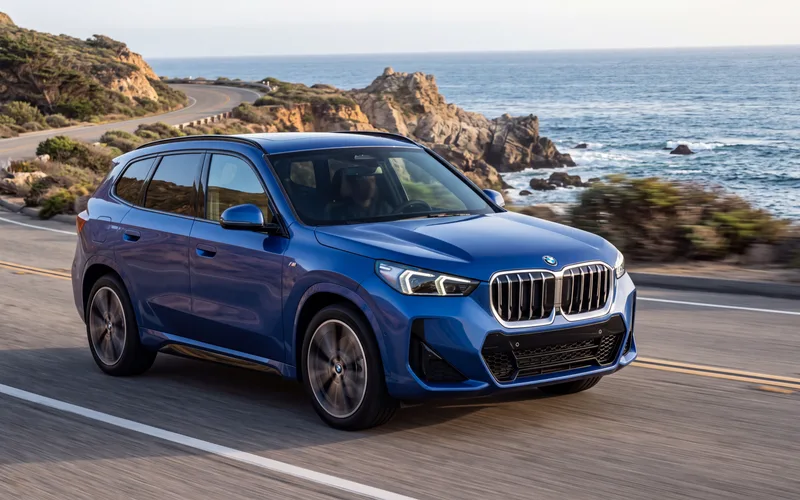 BMW X1Subcompact Luxury SUV
The BMW X1 xDrive28i is quicker, more efficient (~28 hwy MPG), noticeably roomier in the second row and cargo hold, and boasts substantially better projected resale.
Compare 2.43C+
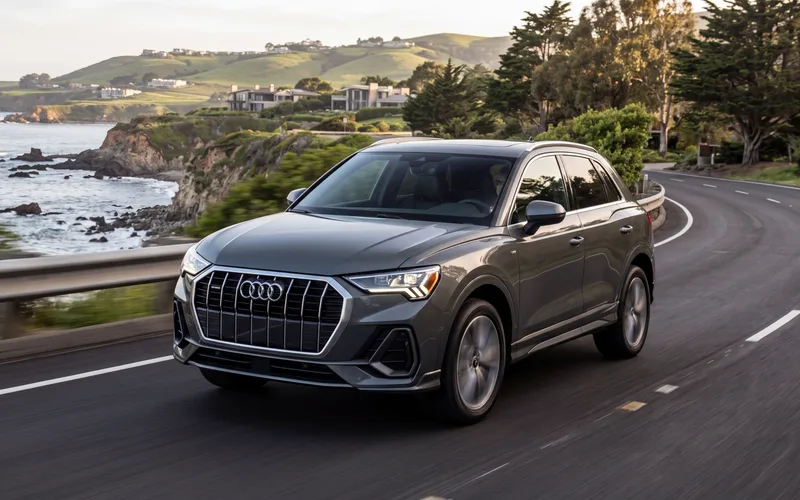 Audi Q3Subcompact Luxury SUV
The Audi Q3 offers a fresher interior, more standard tech per dollar, and better cargo flexibility, with a stronger dealer network and residuals.
Compare 2.26C
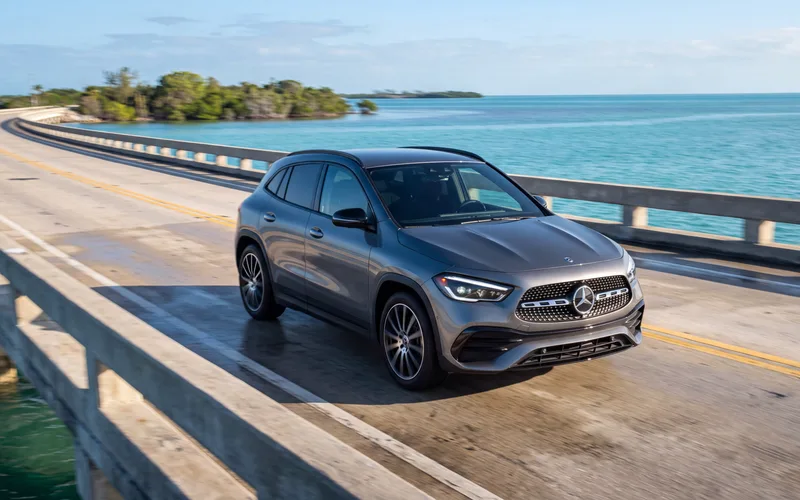 Mercedes-Benz GLASubcompact Luxury SUV
The Mercedes GLA 250 4MATIC delivers a modern MBUX interior, 32 highway MPG, and stronger brand cachet, though rear space is similarly tight.
CompareHow it's evolved
7 scored model years · 2018–2024
Subject scores by year
Hover or tap a score to see what moved it versus the year before. A corner mark flags a big swing.
| Year | Performance | Efficiency | Safety | Space | Cost | Reliability | Tech | Use-case | Driving | Value |
|---|---|---|---|---|---|---|---|---|---|---|
| 2024 | 47 | 36 | 55 | 39 | 31 | 49 | 76 | 64 | 68 | 51 |
| 2023 | 44 | 35 | 47 | 38 | 53 | 49 | 68 | 47 | 66 | 48 |
| 2022 | 45 | 33 | 40 | 40 | 55 | 47 | 69 | 54 | 67 | 53 |
| 2021 | 45 | 33 | 40 | 40 | 54 | 47 | 71 | 55 | 66 | 54 |
| 2020 | 46 | 39 | 38 | 37 | 55 | 49 | 53 | 52 | 65 | 53 |
| 2019 | 45 | 39 | 37 | 36 | 55 | 48 | 49 | 52 | 64 | 59 |
| 2018 | 45 | 39 | 37 | 37 | 53 | 45 | 44 | 51 | 64 | 60 |
Compare two years
Best fit & conditions
Higher scores mean a better fit for that use case. Learn more about use-case fit →
Subject profile
Academic Probation · NHTSA safety recalls
Mar 1, 2018Service brakes, hydraulic: foundation components: hoses, lines/piping, and fittingsThe brackets that secure the front brake hoses may not have been installed properly, allowing the front brake hoses to contact the tires, possibly resulting in a brake fluid leak.
Defect
Jaguar Land Rover North America, LLC (Jaguar) is recalling certain 2018 Jaguar E-Pace vehicles. The brackets that secure the front brake hoses may not have been installed properly, allowing the front brake hoses to contact the tires, possibly resulting in a brake fluid leak.
Risk
A brake fluid leak can lengthen the distance needed to stop the vehicle, increasing the risk of a crash.
Remedy
Jaguar will notify owners, and dealers will inspect the front brake hose brackets, replacing any that do not provide sufficient clearance, free of charge. The recall began on April 16, 2018. Owners may contact Jaguar customer service at 1-800-452-4827. Jaguar's number for this recall is H074.
NHTSA campaign 18V140000 ↗Manufacturer no. H07441 vehicles potentially affected (all models in the campaign)Owners notified Apr 16, 2018Filed by Jaguar Land Rover North America, LLCFiled as E-PACEFeb 2, 2018Fuel system, gasoline: fuel injection system: fuel railThe fuel rail end caps may leak, possibly resulting in fuel vapor or liquid fuel leaking into the engine bay.
Defect
Jaguar Land Rover North America, LLC (Jaguar) is recalling certain 2018 Jaguar XE, XF, E-PACE, F-PACE and F-TYPE vehicles equipped with a 2.0L gasoline engine. The fuel rail end caps may leak, possibly resulting in fuel vapor or liquid fuel leaking into the engine bay.
Risk
A fuel leak in the presence of an ignition source such as hot engine or exhaust components can increase the risk of a fire.
Remedy
Jaguar will notify owners, and dealers will replace the fuel rail, free of charge. The recall began on March 8, 2018. Owners may contact Jaguar customer service at 1-800-452-4827. Jaguar's number for this recall is H081.
NHTSA campaign 18V090000 ↗Manufacturer no. H08110,073 vehicles potentially affected (all models in the campaign)Owners notified Mar 8, 2018Filed by Jaguar Land Rover North America, LLCFiled as E-PACE
5 recalls on other model years of the E-PACE (2021–2024)
Sep 17, 2026Electrical system: propulsion system: dc/dc converterThe DC-DC converter may malfunction due to an electrical overload that can occur during high power demand. Additionally, a software error can cause the DC-DC converter to stop functioning at vehicle start-up under certain circumstances. Failure of the DC-DC converter will result in the loss of 12-Volt system charging and can lead to complete loss of drive power and exterior lighting.
Defect
Jaguar Land Rover North America, LLC (Land Rover) is recalling certain 2019-2024 Land Rover Range Rover Sport, 2020-2024 Land Rover Range Rover Evoque, Land Rover Range Rover, Land Rover Discovery Sport, Land Rover Defender, 2021-2024 Land Rover Range Rover Velar, Jaguar E-Pace, F-Pace, and Land Rover Discovery vehicles. The DC-DC converter may malfunction due to an electrical overload that can occur during high power demand. Additionally, a software error can cause the DC-DC converter to stop functioning at vehicle start-up under certain circumstances. Failure of the DC-DC converter will result in the loss of 12-Volt system charging and can lead to complete loss of drive power and exterior lighting.
Risk
A loss of drive power increases the risk of a crash.
Remedy
Dealers will update the vehicle software, free of charge. Interim letters notifying owners of the safety risk are expected to be mailed November 13, 2026. Additional letters will be sent once the final remedy is available. Owners may contact Land Rover's customer service at 800-637-6837. Land Rover's number for this recall is E008. This recall expands previous NHTSA recall number 26V248.
NHTSA campaign 26V599000 ↗Manufacturer no. E00823,677 vehicles potentially affected (all models in the campaign)Filed by Jaguar Land Rover North America, LLCFiled as E-PACEApr 17, 2026Electrical system: propulsion system: dc/dc converterInsufficient electrical load balancing during times of high demand can lead to a current overload condition and malfunction of the DCDC converter. A failure of the DC-DC converter will result in a loss of 12-Volt system charging and can lead to complete loss of drive power and exterior lighting.
Defect
Jaguar Land Rover North America, LLC (Land Rover) is recalling certain 2021-2024 Land Rover Range Rover Velar and Land Rover Discovery, 2020-2023 Land Rover Range Rover Evoque, 2019-2024 Land Rover Range Rover Sport, 2020-2024 Land Rover Range Rover, 2020 Land Rover Discovery Sport, 2020-2024 Land Rover Defender, 2021-2024 Jaguar F-Pace, and 2021-2022 Jaguar E-Pace mild-hybrid electric vehicles (MHEVs). Insufficient electrical load balancing during times of high demand can lead to a current overload condition and malfunction of the DCDC converter. A failure of the DC-DC converter will result in a loss of 12-Volt system charging and can lead to complete loss of drive power and exterior lighting.
Risk
A loss of drive power increases the risk of a crash.
Remedy
Dealers will update the central software, free of charge. Interim letters notifying owners of the safety risk were mailed June 17, 2026. Additional letters will be sent once the final remedy is available. Owners may contact Land Rover's customer service at 800-637-6837. Land Rover's numbers for this recall are D126 and H575.
NHTSA campaign 26V248000 ↗Manufacturer no. D126 H575170,169 vehicles potentially affected (all models in the campaign)Filed by Jaguar Land Rover North America, LLCFiled as E-PACEJul 11, 2025Air bags: passenger side frontal: cushionThe passenger air bag may tear during deployment.
Defect
Jaguar Land Rover North America, LLC (Jaguar) is recalling certain 2021-2024 E-Pace vehicles. The passenger air bag may tear during deployment.
Risk
A torn air bag may not adequately protect an occupant in a crash, increasing the risk of injury. Additionally, a torn air bag may allow hot gases to escape, which can cause a burn injury.
Remedy
Dealers will replace the passenger air bag module, free of charge. Owner letters were mailed February 6, 2026. Owners may contact Jaguar's customer service at 1-800-452-4827. Jaguar's number for this recall is H552.
NHTSA campaign 25V466000 ↗Manufacturer no. H5521,436 vehicles potentially affected (all models in the campaign)Owners notified Feb 2, 2026Filed by Jaguar Land Rover North America, LLCFiled as E-PACEApr 18, 2024Air bagsThe passenger air bag may tear during deployment.
Defect
Jaguar Land Rover North America, LLC (Jaguar) is recalling certain 2021-2023 E-Pace vehicles. The passenger air bag may tear during deployment.
Risk
A torn air bag may not adequately protect an occupant in a crash, increasing the risk of injury. Additionally, a torn air bag may allow the escape of hot gases which can burn an occupant.
Remedy
Dealers will replace the passenger air bag module, free of charge. Owner notification letters were mailed August 30, 2024. Owners may contact Jaguar customer service at 1-800-452-4827. Jaguar's number for this recall is H491.
NHTSA campaign 24V278000 ↗Manufacturer no. H4912,409 vehicles potentially affected (all models in the campaign)Owners notified Aug 30, 2024Filed by Jaguar Land Rover North America, LLCFiled as E-PACEMar 14, 2024Service brakes, hydraulicThe brake pad wear warning light may not appear on the instrument cluster as intended, failing to warn the driver that the brake pads are worn out. As such, these vehicles fail to comply with the requirements of Federal Motor Vehicle Safety Standard number 135, "Light Vehicle Brake Systems."
Defect
Jaguar Land Rover North America, LLC (Jaguar) is recalling certain 2021-2024 E-Pace vehicles. The brake pad wear warning light may not appear on the instrument cluster as intended, failing to warn the driver that the brake pads are worn out. As such, these vehicles fail to comply with the requirements of Federal Motor Vehicle Safety Standard number 135, "Light Vehicle Brake Systems."
Risk
Driving with worn brake pads can reduce braking ability, increasing the risk of a crash.
Remedy
Dealers will update the car configuration file software, free of charge. Owner notification letters were mailed May 7, 2024. Owners may contact Jaguar customer service at 1-800-452-4827. Jaguar's number for this recall is H481.
NHTSA campaign 24V201000 ↗Manufacturer no. H4812,842 vehicles potentially affected (all models in the campaign)Owners notified May 7, 2024Filed by Jaguar Land Rover North America, LLCFiled as E-PACE
Source: NHTSA Office of Defects Investigation recall database, model years 2018–2024. Recalls are listed by model year as the manufacturer filed them; whether a specific car is affected depends on its VIN — check a VIN at nhtsa.gov ↗. NHTSA model names matched to this page: E-PACE.
Detailed scoring by subject
1Performance & PowertrainGrades below the middle of the scale.1.02D
2018 is the launch year of the first-generation X540. The volume P250 trims (base, S, SE) use the 246-hp 2.0L Ingenium turbo four, which sits mid-pack for the subcompact luxury class. The P300 R-Dynamic and the launch-only First Edition make 296 hp.
The P250's 269 lb-ft arrives low in the rev range and is competitive with the German 2.0T rivals.
Jaguar quotes 6.7 seconds for the P250, which is class-average. The roughly 4,000-lb curb weight blunts the turbo four, and instrumented tests have run as slow as 7.8 seconds.
The Ingenium four is gruff when worked hard and shows low-rpm turbo lag and a sluggish step-off given the car's weight. It trails the smoother 2.0T engines from BMW and Audi, and there is no mild-hybrid assist to smooth the stop-start system.
The ZF 9-speed automatic is smooth when cruising but slow to kick down. It hesitates and hunts in stop-and-go traffic, which reviewers flagged especially on early cars.
A 3,968-lb braked rating is strong for the subcompact luxury class, where many rivals are rated at 3,500 lb or below.
AWD is standard on every US 2018 E-PACE and comes with JaguarDrive Control terrain modes. The P300 adds Active Driveline torque vectoring.
About 8 in of ground clearance, Adaptive Surface Response and a 19.7-in wading depth let it handle gravel and snow. There is no low range, no lockers and no off-road trim, so like the rest of its class it is built for pavement.
US buyers get two outputs of the same 2.0L turbo four, the P250 and the P300, with no hybrid of any kind. The diesels sold elsewhere never came to the US, and electrified variants arrived only with the 2021 facelift.
2Efficiency & RangeOne of the E-PACE's weakest categories.0.58F
24 MPG combined is below average for a 2.0T AWD subcompact luxury SUV. The P300 drops to 23.
21 MPG city is weak for the class. The heavy curb weight and standard AWD hurt it in stop-and-go driving.
28 MPG highway is mid-pack but trails rivals such as the BMW X1 xDrive28i, which is rated in the low 30s.
The pre-facelift car's tank of about 18.1 gallons (69 L) offsets the mediocre economy and gives a competitive 430-plus miles per fill.
Premium fuel at 24 MPG combined puts the annual cost near the top of the SUV band. The figure is fueleconomy.gov's current estimate at today's EPA premium-price assumption.
Every US 2018 E-PACE requires premium gasoline. There is no regular-fuel, flex-fuel or plug-in option.
3SafetyOne of the E-PACE's weakest categories.0.46F
NHTSA never published NCAP crash ratings for the 2018 E-PACE, its launch model year. The NHTSA database has no 2018 E-PACE entry at all.
IIHS has never crash-tested the E-PACE, so it holds no TSP/TSP+ award and no US crashworthiness results. The only independent structural data is Euro NCAP's 2017 test (5 stars, 86% adult occupant), which does not substitute for IIHS small-overlap testing.
Every 2018 E-PACE comes standard with forward collision warning, low-speed AEB with pedestrian detection, lane-keep assist, a driver condition monitor, a rear camera and parking sensors. Blind-spot monitoring, rear cross-traffic alert and adaptive cruise were extra-cost options on the volume S/SE trims.
Standard AEB is the low-speed variant: it works up to 50 mph, and pedestrian detection works up to 37 mph. High-speed (to 99 mph) mitigation is optional. IIHS never rated the E-PACE's front crash prevention, so its performance is unverified.
Blind-spot monitoring and rear traffic monitor were optional on most 2018 trims. Blind Spot Assist with active steering intervention came in the optional Drive pack or on top HSE builds.
Lane-keep assist is standard but only nudges the car back, not a centering system. Steering assist comes only with the optional adaptive cruise, and reviewers rate JLR's systems as less polished than German and Volvo rivals.
Stop-and-go adaptive cruise was optional on the 2018 E-PACE. Most cars left the lot with plain cruise control and a speed limiter.
No hands-free highway driving system was offered on the 2018 E-PACE or on any Jaguar. Driver assistance stops at hands-on adaptive cruise with steering assist.
LED headlights were standard on most 2018 trims. Matrix LEDs and auto high beams came on upper trims or as options. IIHS never rated the E-PACE's headlights, so their performance is unverified against rivals with Good-rated lamps.
The coupe-like roofline, thick C-pillars and small rear window restrict the rear three-quarter view. Front/rear parking sensors and a rear camera are standard, and a 360-degree camera was optional.
LATCH anchors on the outboard rear seats plus top tethers are workable. The compact rear seat and modest door openings make rear-facing seats and three-across fitment tight compared with roomier rivals like the GLB and X1.
4Space & ComfortThe E-PACE's lowest-graded category.0.42F
Every 2018 E-PACE is a two-row, five-seat SUV. The X540 never offered a third row.
39.2 in without the panoramic roof is mid-pack for the class, and the roof cuts it to 38.4 in. The body is unchanged across 2018–2020.
40.1 in of front legroom sits at the bottom of the SUV band. KBB still found the front seats accommodating for drivers over six feet.
The measured rear headroom is respectable, but the tapering roofline makes it feel tighter in practice.
35.1 in of rear legroom is tight. KBB says everyone except small children will feel cramped in the second row.
It is a strict two-row SUV with no third-row option on any trim, so it scores in the bottom band by rubric.
24.2 cu ft behind the rear seats is below the SUV band floor. KBB calls it acceptable for a few suitcases.
52.7 cu ft with the seats folded is just below the SUV band floor and trails the class in absolute terms.
The door bins and cubbies are usable, but the launch-year console predates the storage rework Jaguar made for 2020. There is no wireless charging pad and nothing innovative.
The front seats are comfortable even for tall occupants, with 8-way power standard and up to 18-way seats on the First Edition. The cramped rear bench caps the score.
The ride is firm but never harsh on pavement, and it gets jarring off-road and on the larger optional wheels. Most cars run passive dampers.
It is reasonably quiet at cruise, but the Ingenium four is coarse under load, and the pre-facelift car lacks the extra sound deadening added in 2021.
Dual-zone climate is standard. Heated front seats, a heated wheel and ventilated seats are options or upper-trim items, and memory seats are limited to SE/HSE-level cars.
5Cost of OwnershipOne of the E-PACE's strongest categories.1.55D
The 2018 launch-year E-Pace started at $38,600 plus $995 destination for the base P250 AWD. AWD and the 9-speed automatic were standard on every trim.
The P250 S ($41,500 + $995) is taken as the volume configuration. It adds leather, navigation and parking aids over the base car. The SE costs $44,300, the P300 R-Dynamic trims run $47,250–$50,050, and the First Edition is $53,550 before destination.
Jaguar's complimentary scheduled maintenance offsets routine service in the first five years. Jaguar repair costs still run well above the segment average, and Edmunds' used-car cost-to-own projections show large repair and maintenance shares for the E-Pace.
Jaguar models depreciate faster than German subcompact luxury rivals. The 2021 facelift and the model's 2024 discontinuation further weigh on residuals.
Jaguar EliteCare gives the 2018 E-Pace a 5-year/60,000-mile new-vehicle limited warranty, longer than the 4-year/50,000-mile coverage most German rivals offer.
Powertrain coverage runs 5 years/60,000 miles, the same term as the basic warranty, which sits at the bottom of the 5–10-year band.
EliteCare includes 5 years/60,000 miles of complimentary scheduled maintenance and 5 years of 24/7 roadside assistance, plus InControl connected-service trials. This beats most subcompact luxury rivals; BMW's 3-year/36k plan is the next-best.
$42,495 volume-trim price minus its estimated resale value after 5 years (42% retained, or about $17,848) leaves about $24,647 in depreciation. Add the projected $7,500 in 5-year maintenance and repairs, and owning this vehicle for 5 years costs about $32,147 in total.
6Reliability & QualityGrades near the bottom of the scale.0.97F
2018 is the launch year of the X540 E-PACE. Consumer Reports publishes no model-level reliability rating for it, and owner-complaint data ranks 2018 as the worst E-PACE year, mainly for sudden loss of engine power, turbo coolant hose failures and infotainment freezes. First-year teething problems put it below the later pre-facelift years.
Jaguar and its sister brand Land Rover sat in the bottom tier of the J.D. Power VDS and Consumer Reports brand rankings around this model's launch. That is one of the weakest dependability records among luxury makes.
MY2018 carries two NHTSA campaigns. One is a fuel-rail end-cap leak on the 2.0L gas engine with a fire risk, which is the volume powertrain. The other is a small brake-hose bracket campaign. The fire-risk fuel recall pulls the score to the bottom of the typical band.
The volume P250 uses the 2.0L Ingenium turbo-four (246 hp) with a ZF 9HP 9-speed automatic. In its launch year this combination drew complaints about sudden power loss, turbo coolant hose failures and harsh 9-speed shifts, on top of the Ingenium's known timing-chain and oil-dilution issues and the fuel-rail recall.
The cabin has decent upper surfaces, but reviewers widely criticized its hard, cheap-feeling lower plastics and dated switchgear against the Audi Q3, Volvo XC40 and BMW X1. The 2021 facelift targeted exactly this.
This was a launch-year build from Magna Steyr's Graz plant, and JLR initial quality was below the industry average at the time. Early owners reported trim rattles, squeaks and electrical gremlins, and a brake-hose bracket installation defect reached production.
Jaguar has roughly 150 US retailers, a thin network next to BMW (~340) and Mercedes-Benz (~380). Its service satisfaction scores have sat below the premium-segment average.
E-PACE parts are mostly dealer-only, with little aftermarket support. Repair costs run above the class average, and with production ending in 2024, long-term parts support for this low-volume nameplate is uncertain.
7Technology & InfotainmentGrades near the bottom of the scale.0.94F
Every 2018 trim has the 10-inch InControl Touch Pro screen. The 11.4-inch Pivi Pro unit arrived only with the 2021 facelift.
The launch-year Touch Pro behaves like an oversized tablet with a learning curve. It is slow to boot and laggy, and without phone projection to fall back on, owners are stuck with it.
The 2018 E-PACE had no factory Apple CarPlay or Android Auto. JLR introduced the Smartphone Pack as an option for MY2019 Touch Pro cars and made it standard for 2020.
Navigation Pro with voice recognition is fitted from the SE up. The system is slow but is the only mapping option, since there is no phone projection.
The base car has a modest 6-speaker system. Meridian 380-W audio comes on SE and above, with Meridian Surround optional.
Most 2018 cars keep analog dials with a 5-inch center TFT. The 12.3-inch Interactive Driver Display is an option or a top-trim item.
The Touch Pro-era E-PACE has no meaningful over-the-air software capability, so updates are done by the dealer. JLR's SOTA came with Pivi Pro in 2021.
The InControl Remote app covers lock and unlock, location and status, with climate pre-conditioning on Remote Premium. It has no phone-as-key, and the app is widely criticized as slow.
USB ports and 12V sockets are adequate, but there is no wireless charging pad and no AC outlet.
A smart key and push-button start are standard. A power or gesture liftgate and the waterproof Activity Key are optional or upper-trim items, and there is no phone-as-key.
A rear camera and parking sensors are standard. 360-degree cameras and park assist are optional.
A laser head-up display is fitted to the First Edition and is an option on upper trims, but it is not on the volume trims.
8Use-Case FitGrades below the middle of the scale.1.42D
35.1 in of rear legroom, a narrow rear door aperture and 24.2 cu ft of cargo make rear-facing seats and stroller duty a squeeze next to the GLB or XC40.
Neither NHTSA nor IIHS crash-tested the 2018 E-PACE. AEB and lane-keep assist are standard, but blind-spot and adaptive cruise are optional.
The front seats are comfortable, but the rear is cramped, rear amenities are thin, and with no phone projection rear passengers rely on the Touch Pro system. Luggage space fills quickly with four aboard.
It is compact with standard AWD, but turbo lag off the line and the ZF 9-speed's hesitation make stop-and-go traffic less relaxed than in the German rivals.
About 24 mpg combined on premium fuel makes it one of the costlier commuters in the class.
At 173 in long with a roughly 38–39 ft turning circle it is easy to place, but thick C-pillars hurt rear visibility. Sensors and a rear camera are standard.
A 3,968-lb braked tow rating is strong for the class, but the small cargo hold limits real work use.
A luxury interior, a launch-year build and Jaguar's bottom-tier reliability record make it a poor candidate for hard use.
It has basic tie-downs, an optional tow bar and accessory roof bars, but no onboard AC power, no washable floor and no upfit ecosystem.
Comfortable front seats and roughly 430 miles of range help. Adaptive cruise is optional, and the cramped rear and coarse engine limit long trips.
Standard AWD, All Surface Progress Control, about 8 in of clearance and a 500 mm wading depth beat most rivals on gravel and snow. It has no low range.
The folding rear bench, an optional hitch, roof rails and a 3,968-lb tow rating help, but the 52.7 cu ft maximum makes bulky gear a squeeze.
9Driving ExperienceThe E-PACE's best-graded category.2.31C+
Sport-tuned damping lets it dance through corners, and handling is impressive for its weight. At over 4,000 lb it still feels heavier than the X1.
The steering is light but very accurate. It is precise with limited feedback, which is typical of the class.
The brakes are firm and consistent with no fade complaints, but the car's weight keeps stopping distances mid-pack.
Turbo lag before the surge, lazy response off the line and the 9-speed's slow kickdowns keep it behind the German 2.0T rivals.
The Ingenium 2.0T is quiet at cruise but coarse and noisy when worked hard.
A turning circle of about 38 ft is average for an SUV.
The sporty, adjustable driving position suits tall drivers. Base 8-way seats, a poor rear three-quarter view and the fiddly Touch Pro screen detract.
It is agile for a crossover, and the 296-hp P300 R-Dynamic adds character. The volume P250 is pleasant rather than thrilling.
10Value & Market PositionOne of the E-PACE's strongest categories.2.02C
Standard equipment includes AWD, the 246-hp 2.0T, a 9-speed automatic, the 10-inch Touch Pro screen, LED headlights, AEB and lane-keep assist. However, the base car's features are thin for a $39.6k luxury SUV, and items like navigation, leather upgrades and power liftgate push buyers up to the S/SE trims.
It is priced in line with the X1 and Q3, but it weighs roughly 4,000 lb, so its performance and efficiency per dollar trail rivals. Its rear seat and cargo space also fall short of the class. The 5-year maintenance and warranty package partly offsets this.
There are seven US trims: base, S, SE, R-Dynamic S/SE/HSE and a launch-only First Edition. Buyers choose between two engine tunes (P250 246 hp, P300 296 hp) and a deep options list. AWD is standard everywhere, so there is no cheaper FWD entry.
It went on sale in January 2018 and briefly lifted Jaguar's US volume. Even its record year (2019) reached only 4,782 US units, a fraction of the BMW X1's or Audi Q3's volume. Sales later collapsed to a few hundred a year before discontinuation.
Jaguar carries a premium British design image. Its reputation for weak reliability and resale and its small US dealer network drag on it next to BMW, Audi and Mercedes.
Jaguar commonly backed slow-moving models with lease cash, low-APR financing and loyalty/conquest offers. Buyers could routinely negotiate well below the E-Pace's MSRP.
2018 is the launch year of the all-new X540 generation, revealed July 2017, with current infotainment and driver aids. The facelift did not arrive until 2021.
Reviewers praised its styling and handling but repeatedly criticized its heavy curb weight, sluggish base engine, cramped rear seat and fit-and-finish. It did not win major comparison tests or awards against the X1/Q3.