

The verdict
A mixed-report compact luxury suv, strong on technology and held back by ownership.
The 2026 Jaguar F-PACE is a driver's compact luxury SUV in its swan-song year — sharp handling, a proper 395-hp inline-six option, and one of the segment's best warranties (5yr/60,000 mi) set it apart from the German mainstream. But it's aging, thirsty (23 mpg combined, premium required), pricey to keep (Jaguar routinely lands in the reliability cellar), and about to become an ICE orphan as Jaguar goes all-electric. Deep discounts make it tempting today, but expect steep depreciation and expensive service tomorrow. Best as a short-term lease or a heart-over-head buy for someone who wants something different than another X3 or Q5.
Jump to scoresStrengths
- Class-leading warranty coverage
- Genuinely engaging to drive
- Strong tech and audio for the money
What holds it back
- Expensive to fuel and run
- Tough long-term ownership math
- Tight on space for the class
Top alternatives
Cars shoppers cross-shop with the Jaguar F-PACE 2.79B-
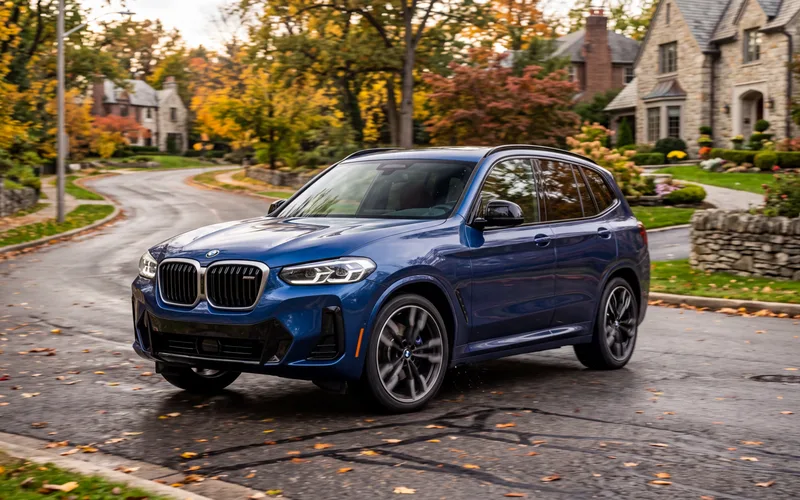 BMW X3Compact Luxury SUV
The X3 is the sharper long-term buy — better fuel economy (33 highway on the xDrive30), stronger residuals, a bigger dealer network, and a fresh new-generation platform for 2025/26.
Compare 2.74B-
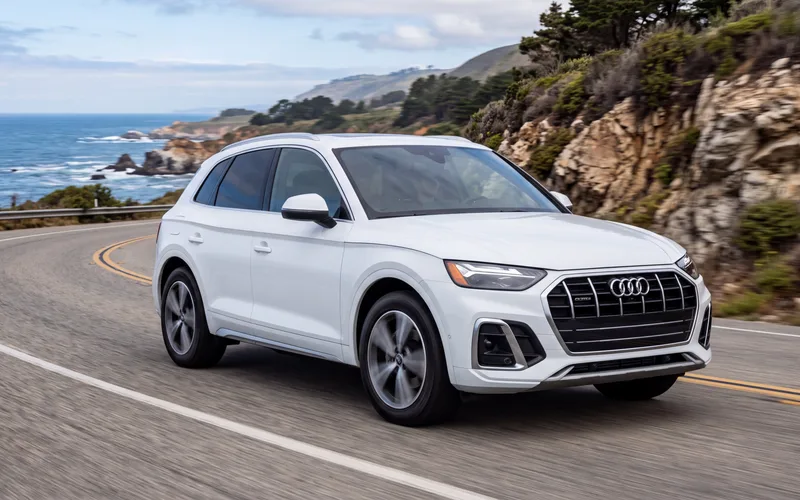 Audi Q5Compact Luxury SUV
The Q5 is roomier inside, more efficient, and holds its value better, plus Audi's MMI infotainment and cabin material quality still edge Jaguar's Pivi Pro in most head-to-heads.
Compare 2.28C
2.28C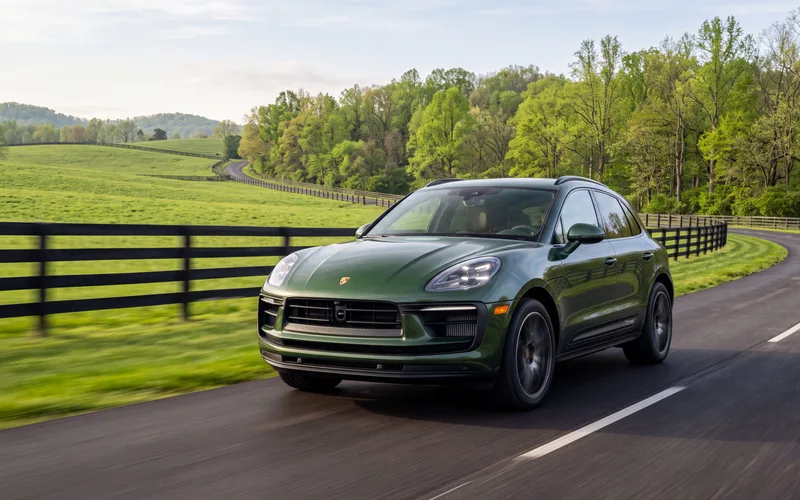 Porsche MacanCompact Luxury SUV
The Macan is the segment's driving benchmark — sharper still than the F-PACE, with better build quality and vastly better resale — but it starts higher, options up ferociously, and its base 4-cylinder trades a Porsche badge for real performance.
CompareHow it's evolved
9 scored model years · 2017–2025
Subject scores by year
Hover or tap a score to see what moved it versus the year before. A corner mark flags a big swing.
| Year | Performance | Efficiency | Safety | Space | Cost | Reliability | Tech | Use-case | Driving | Value |
|---|---|---|---|---|---|---|---|---|---|---|
| 2025 | 65 | 45 | 60 | 45 | 20 | 59 | 76 | 69 | 71 | 58 |
| 2024 | 51 | 46 | 50 | 47 | 29 | 56 | 74 | 65 | 70 | 57 |
| 2023 | 51 | 47 | 47 | 43 | 37 | 54 | 73 | 68 | 71 | 57 |
| 2022 | 51 | 46 | 43 | 42 | 40 | 54 | 70 | 56 | 65 | 59 |
| 2021 | 51 | 47 | 44 | 43 | 40 | 53 | 71 | 67 | 71 | 58 |
| 2020 | 50 | 47 | 40 | 39 | 42 | 53 | 55 | 62 | 68 | 55 |
| 2019 | 51 | 47 | 40 | 40 | 42 | 53 | 51 | 63 | 69 | 58 |
| 2018 | 52 | 47 | 38 | 40 | 45 | 51 | 42 | 60 | 68 | 61 |
| 2017 | 61 | 27 | 36 | 39 | 43 | 50 | 38 | 53 | 70 | 62 |
Compare two years
Best fit & conditions
Higher scores mean a better fit for that use case. Learn more about use-case fit →
Subject profile
Academic Probation · NHTSA safety recalls
No NHTSA safety recall is on record for the 2025 Jaguar F-PACE. Other model years of the F-PACE have 16 — listed below.
16 recalls on other model years of the F-PACE (2017–2024)
Sep 17, 2026Electrical system: propulsion system: dc/dc converterThe DC-DC converter may malfunction due to an electrical overload that can occur during high power demand. Additionally, a software error can cause the DC-DC converter to stop functioning at vehicle start-up under certain circumstances. Failure of the DC-DC converter will result in the loss of 12-Volt system charging and can lead to complete loss of drive power and exterior lighting.
Defect
Jaguar Land Rover North America, LLC (Land Rover) is recalling certain 2019-2024 Land Rover Range Rover Sport, 2020-2024 Land Rover Range Rover Evoque, Land Rover Range Rover, Land Rover Discovery Sport, Land Rover Defender, 2021-2024 Land Rover Range Rover Velar, Jaguar E-Pace, F-Pace, and Land Rover Discovery vehicles. The DC-DC converter may malfunction due to an electrical overload that can occur during high power demand. Additionally, a software error can cause the DC-DC converter to stop functioning at vehicle start-up under certain circumstances. Failure of the DC-DC converter will result in the loss of 12-Volt system charging and can lead to complete loss of drive power and exterior lighting.
Risk
A loss of drive power increases the risk of a crash.
Remedy
Dealers will update the vehicle software, free of charge. Interim letters notifying owners of the safety risk are expected to be mailed November 13, 2026. Additional letters will be sent once the final remedy is available. Owners may contact Land Rover's customer service at 800-637-6837. Land Rover's number for this recall is E008. This recall expands previous NHTSA recall number 26V248.
NHTSA campaign 26V599000 ↗Manufacturer no. E00823,677 vehicles potentially affected (all models in the campaign)Filed by Jaguar Land Rover North America, LLCFiled as F-PACEApr 17, 2026Electrical system: propulsion system: dc/dc converterInsufficient electrical load balancing during times of high demand can lead to a current overload condition and malfunction of the DCDC converter. A failure of the DC-DC converter will result in a loss of 12-Volt system charging and can lead to complete loss of drive power and exterior lighting.
Defect
Jaguar Land Rover North America, LLC (Land Rover) is recalling certain 2021-2024 Land Rover Range Rover Velar and Land Rover Discovery, 2020-2023 Land Rover Range Rover Evoque, 2019-2024 Land Rover Range Rover Sport, 2020-2024 Land Rover Range Rover, 2020 Land Rover Discovery Sport, 2020-2024 Land Rover Defender, 2021-2024 Jaguar F-Pace, and 2021-2022 Jaguar E-Pace mild-hybrid electric vehicles (MHEVs). Insufficient electrical load balancing during times of high demand can lead to a current overload condition and malfunction of the DCDC converter. A failure of the DC-DC converter will result in a loss of 12-Volt system charging and can lead to complete loss of drive power and exterior lighting.
Risk
A loss of drive power increases the risk of a crash.
Remedy
Dealers will update the central software, free of charge. Interim letters notifying owners of the safety risk were mailed June 17, 2026. Additional letters will be sent once the final remedy is available. Owners may contact Land Rover's customer service at 800-637-6837. Land Rover's numbers for this recall are D126 and H575.
NHTSA campaign 26V248000 ↗Manufacturer no. D126 H575170,169 vehicles potentially affected (all models in the campaign)Filed by Jaguar Land Rover North America, LLCFiled as F-PACESep 12, 2024Back over prevention: sensing system: camera · Forward collision avoidance: sensing system: cameraThe Near Field Sensing Module (NFSM) may overheat and cause the 3D surround camera images, including the rearview camera image, not to display.
Defect
Jaguar Land Rover North America, LLC (Jaguar) is recalling certain 2024 F-Pace vehicles. The Near Field Sensing Module (NFSM) may overheat and cause the 3D surround camera images, including the rearview camera image, not to display.
Risk
A rearview camera image that does not display can decrease the driver's visibility, increasing the risk of injury or crash.
Remedy
Dealers will replace the NFSM module, free of charge. Owner notification letters were mailed October 24, 2024. Owners may contact Jaguar customer service at 1-800-452-4827. Jaguar's number for this recall is H516.
NHTSA campaign 24V677000 ↗Manufacturer no. H5165 vehicles potentially affected (all models in the campaign)Owners notified Oct 24, 2024Filed by Jaguar Land Rover North America, LLCFiled as F-PACEJun 24, 2024Engine and engine cooling: cooling system: hoses/lines/piping/fittingsThe oil filter housing can crack and leak oil into the engine compartment.
Defect
Jaguar Land Rover North America, LLC (Jaguar) is recalling certain 2021-2024 F-Pace vehicles. The oil filter housing can crack and leak oil into the engine compartment.
Risk
An oil leak in the presence of an ignition source such as hot engine or exhaust components, can increase the risk of a fire.
Remedy
Dealers will replace the filter housing, oil filter, and o-rings, free of charge. Owner notification letters were mailed June 27, 2024. Owners may contact Jaguar customer service at 1-800-452-4827. Jaguar's number for this recall is H506.
NHTSA campaign 24V451000 ↗Manufacturer no. H506150 vehicles potentially affected (all models in the campaign)Owners notified Jun 27, 2024Filed by Jaguar Land Rover North America, LLCFiled as F-PACEFeb 2, 2023Engine and engine cooling: engine: oil/lubricationThe engine cam carrier oil channel may be blocked, which can lead to an oil leak.
Defect
Jaguar Land Rover North America, LLC (Jaguar) is recalling certain 2023 F-Pace vehicles. The engine cam carrier oil channel may be blocked, which can lead to an oil leak.
Risk
An oil leak in the presence of an ignition source can increase the risk of a fire.
Remedy
Dealers will inspect and replace the engine cam carrier and related components as necessary, free of charge. Owner notification letters were mailed March 29, 2023. Owners may contact Jaguar customer service at 1-800-452-4827. Jaguar's number for this recall is H426.
NHTSA campaign 23V045000 ↗Manufacturer no. H426229 vehicles potentially affected (all models in the campaign)Owners notified Mar 29, 2023Filed by Jaguar Land Rover North America, LLCFiled as F-PACEAug 4, 2022Equipment: electrical: aux audio jack/plugThe vehicles were manufactured without an Audio Amplifier Module (AAM), and therefore will not provide audio safety features, such as seat belt reminders, turn signal sounds, and Advanced Driver Assistance System (ADAS) warnings.
Defect
Jaguar Land Rover North America, LLC (Jaguar) is recalling certain 2022 F-Pace vehicles. The vehicles were manufactured without an Audio Amplifier Module (AAM), and therefore will not provide audio safety features, such as seat belt reminders, turn signal sounds, and Advanced Driver Assistance System (ADAS) warnings.
Risk
Missing audio safety features, such as seat belt reminders, turn signal sounds, and Advanced Driver Assistance System (ADAS) warnings, can increase the risk of a crash or injury.
Remedy
Dealers will install the missing AAM, free of charge. Owner notification letters were mailed September 27, 2022. Owners may contact Jaguar's customer service at 1-800-452-4827. Jaguar's number for this recall is H415.
NHTSA campaign 22V580000 ↗Manufacturer no. H41518 vehicles potentially affected (all models in the campaign)Owners notified Sep 27, 2022Filed by Jaguar Land Rover North America, LLCFiled as F-PACEJul 21, 2022Exterior lighting: tail lights · Exterior lighting: turn signalThe incorrect tail lights may have been installed, resulting in rear turn signals that do not illuminate properly. As such, these vehicles fail to comply to Federal Motor Vehicle Safety Standard (FMVSS) number 108, "lamps, reflective devices, and associated equipment."
Defect
Jaguar Land Rover North America, LLC (Jaguar) is recalling certain 2021-2022 Jaguar F-PACE vehicles. The incorrect tail lights may have been installed, resulting in rear turn signals that do not illuminate properly. As such, these vehicles fail to comply to Federal Motor Vehicle Safety Standard (FMVSS) number 108, "lamps, reflective devices, and associated equipment."
Risk
Improperly illuminated rear turn signals can reduce vehicle visibility to other drivers and increase the risk of a crash.
Remedy
Dealers will inspect and replace the tail lights, as necessary, free of charge. Owner notification letters were mailed September 16, 2022. Owners may contact Jaguar customer service at 1-800-452-4827. Jaguar's number for this recall is H404.
NHTSA campaign 22V525000 ↗Manufacturer no. H4045,297 vehicles potentially affected (all models in the campaign)Owners notified Sep 16, 2022Filed by Jaguar Land Rover North America, LLCFiled as F-PACEJul 21, 2022Seat belts: pretensionerThe driver and front passenger seat belt pretensioners may be damaged, which can cause the seat belts to not properly restrain occupants.
Defect
Jaguar Land Rover North America, LLC (Jaguar) is recalling certain 2022 Jaguar F-Type, F-Pace, and XF vehicles. The driver and front passenger seat belt pretensioners may be damaged, which can cause the seat belts to not properly restrain occupants.
Risk
Improperly restrained occupants have an increased risk of injury during a crash.
Remedy
Dealers will inspect and replace the front seat belt assemblies, as necessary, free of charge. Owner notification letters were mailed September 15, 2022. Owners may contact Jaguar customer service at 1-800-452-4827. Jaguar's number for this recall is H412.
NHTSA campaign 22V524000 ↗Manufacturer no. H412176 vehicles potentially affected (all models in the campaign)Owners notified Sep 15, 2022Filed by Jaguar Land Rover North America, LLCFiled as F-PACEAug 26, 2021Seat belts: front: retractor · Seat belts: rear/other: retractorThe seat belt automatic locking retractors may deactivate early, which can prevent the child restraint system from securing properly.
Defect
Jaguar Land Rover North America, LLC (Jaguar) is recalling certain 2021-2022 F-Type, 2020-2021 F-Pace, and 2021 XF vehicles. The seat belt automatic locking retractors may deactivate early, which can prevent the child restraint system from securing properly.
Risk
An unsecured child restraint system can increase the risk of injury during a crash.
Remedy
Dealers will inspect and replace the seat belt assemblies as necessary, free of charge. Owner letters were mailed October 20, 2021. Owners may contact Jaguar customer service at 1-800-452-4827. Jaguar's number for this recall is H378.
NHTSA campaign 21V667000 ↗Manufacturer no. H3785,146 vehicles potentially affected (all models in the campaign)Owners notified Oct 20, 2021Filed by Jaguar Land Rover North America, LLCFiled as F-PACEFeb 25, 2021Exterior lighting: headlights · Exterior lighting: lighting control module: softwareThe Auto High Beam (AHB) system does not indicate through the instrument cluster when the high beams are illuminated automatically. As such, these vehicles fail to comply with the requirements of Federal Motor Vehicle Safety Standard (FMVSS) number 108, "Lamps, Reflective Devices, and Associated Equipment."
Defect
Jaguar Land Rover North America, LLC. (Land Rover) is recalling certain 2019-2020 Jaguar F-Pace vehicles. The Auto High Beam (AHB) system does not indicate through the instrument cluster when the high beams are illuminated automatically. As such, these vehicles fail to comply with the requirements of Federal Motor Vehicle Safety Standard (FMVSS) number 108, "Lamps, Reflective Devices, and Associated Equipment."
Risk
The driver may be unaware that the high beams are illuminated, reducing visibility for oncoming traffic, and increasing the risk of a crash.
Remedy
Jaguar will notify owners, and dealers will update the vehicle software, free of charge. The recall began April 2, 2021. Owners may contact Jaguar customer service at 1-800-452-4827. Jaguar's number for this recall is H332.
NHTSA campaign 21V118000 ↗Manufacturer no. H332455 vehicles potentially affected (all models in the campaign)Owners notified Apr 2, 2021Filed by Jaguar Land Rover North America, LLCFiled as F-PACEJan 17, 2019Engine and engine cooling: engine: gasoline: belts and associated pulleysThe crankshaft pulley retaining bolt may have been improperly manufactured, possibly causing the crankshaft pulley bolt to fracture, potentially resulting in engine failure.
Defect
Jaguar Land Rover North America, LLC (Jaguar) is recalling certain 2019 Jaguar F-Pace, F-Type, and XJ vehicles equipped with V6 or V8 gasoline engines. The crankshaft pulley retaining bolt may have been improperly manufactured, possibly causing the crankshaft pulley bolt to fracture, potentially resulting in engine failure.
Risk
Engine failure may increase the risk of a crash.
Remedy
Jaguar has notified owners, and dealers will replace the crankshaft pulley center retaining bolt, free of charge. The recall began February 11, 2019. Owners may contact Jaguar customer service at 1-800-452-4827. Jaguar's number for this recall is H181.
NHTSA campaign 19V039000 ↗Manufacturer no. H181443 vehicles potentially affected (all models in the campaign)Owners notified Feb 11, 2019Filed by Jaguar Land Rover North America, LLCFiled as F-PACEFeb 2, 2018Fuel system, gasoline: fuel injection system: fuel railThe fuel rail end caps may leak, possibly resulting in fuel vapor or liquid fuel leaking into the engine bay.
Defect
Jaguar Land Rover North America, LLC (Jaguar) is recalling certain 2018 Jaguar XE, XF, E-PACE, F-PACE and F-TYPE vehicles equipped with a 2.0L gasoline engine. The fuel rail end caps may leak, possibly resulting in fuel vapor or liquid fuel leaking into the engine bay.
Risk
A fuel leak in the presence of an ignition source such as hot engine or exhaust components can increase the risk of a fire.
Remedy
Jaguar will notify owners, and dealers will replace the fuel rail, free of charge. The recall began on March 8, 2018. Owners may contact Jaguar customer service at 1-800-452-4827. Jaguar's number for this recall is H081.
NHTSA campaign 18V090000 ↗Manufacturer no. H08110,073 vehicles potentially affected (all models in the campaign)Owners notified Mar 8, 2018Filed by Jaguar Land Rover North America, LLCFiled as F-PACEJan 12, 2018Electrical system: instrument cluster/panel · Electrical system: softwareThe Instrument Cluster (IC) may intermittently go blank.
Defect
Jaguar Land Rover North America, LLC (Jaguar) is recalling certain 2017-2018 F-Pace vehicles. The Instrument Cluster (IC) may intermittently go blank.
Risk
A blank instrument cluster will not show important information like vehicle speed, increasing the risk of a crash.
Remedy
Jaguar will notify owners, and dealers will update the vehicle software, free of charge. The recall began on February 16, 2018. Owners may contact Jaguar customer service at 1-800-452-4827. Note: This recall expands the scope of vehicles recalled under 17V-678. Jaguar's number for this recall is H056.
NHTSA campaign 18V052000 ↗Manufacturer no. H0563,002 vehicles potentially affected (all models in the campaign)Owners notified Feb 16, 2018Filed by Jaguar Land Rover North America, LLCFiled as F-PACEOct 26, 2017Electrical system: instrument cluster/panelThe instrument cluster (IC) may intermittently go blank.
Defect
Jaguar Land Rover North America, LLC (Jaguar) is recalling certain 2017-2018 Jaguar XF and F-Pace, 2016-2017 Jaguar XJ and 2018 Jaguar XE vehicles. The instrument cluster (IC) may intermittently go blank.
Risk
A blank instrument cluster will not show important information like vehicle speed, increasing the risk of a crash.
Remedy
Jaguar will notify owners, and dealers will update the vehicle software, free of charge. The recall is expected to begin December 19, 2017. Owners may contact Jaguar customer service at 1-800-452-4827. Jaguar's number for this recall is H056.
NHTSA campaign 17V678000 ↗Manufacturer no. H0567,036 vehicles potentially affected (all models in the campaign)Owners notified Dec 15, 2017Filed by Jaguar Land Rover North America, LLCFiled as F-PACEAug 4, 2017Fuel system, gasoline: delivery: fuel pumpJaguar Land Rover North America, LLC (Jaguar) is recalling one 2017 Jaguar F-PACE vehicle equipped with a 3.0L engine. A bolt used to attach the high pressure fuel pump may be too long. As a result, the fuel pump may not be properly secured and the fuel line may crack and leak.
Defect
Jaguar Land Rover North America, LLC (Jaguar) is recalling one 2017 Jaguar F-PACE vehicle equipped with a 3.0L engine. A bolt used to attach the high pressure fuel pump may be too long. As a result, the fuel pump may not be properly secured and the fuel line may crack and leak.
Risk
A fuel line crack may leak fuel into the engine compartment, increasing the risk of a fire.
Remedy
Jaguar will notify the owner, and a dealer will replace both fuel pumps and the associated fuel lines, free of charge. The recall began September 12, 2017. Owners may contact Jaguar customer service at 1-800-452-4827. Jaguar's number for this recall is H039.
NHTSA campaign 17V491000 ↗Manufacturer no. H0391 vehicles potentially affected (all models in the campaign)Owners notified Sep 12, 2017Filed by Jaguar Land Rover North America, LLCFiled as F-PACEMar 9, 2017Power train: driveline: driveshaftThese vehicles may have been built with a rear driveshaft that is too short, potentially resulting the driveshaft separating from the vehicle.
Defect
Jaguar Land Rover North America, LLC (Jaguar) is recalling certain 2017 Jaguar F-PACE vehicles equipped with automatic transmissions. These vehicles may have been built with a rear driveshaft that is too short, potentially resulting the driveshaft separating from the vehicle.
Risk
If the driveshaft detaches, a loss of drive power would result, increasing the risk of a crash.
Remedy
Jaguar will notify owners, and dealers will inspect the driveshafts, replacing any that are incorrect, free of charge. The recall began May 1, 2017. Owners may contact Jaguar customer service at 1-800-452-4827. Jaguar's number for this recall is H009.
NHTSA campaign 17V153000 ↗Manufacturer no. H00925 vehicles potentially affected (all models in the campaign)Owners notified Apr 26, 2017Filed by Jaguar Land Rover North America, LLCFiled as F-PACE
Source: NHTSA Office of Defects Investigation recall database, model years 2017–2025. Recalls are listed by model year as the manufacturer filed them; whether a specific car is affected depends on its VIN — check a VIN at nhtsa.gov ↗. NHTSA model names matched to this page: F-PACE.
Detailed scoring by subject
1Performance & PowertrainMid-pack among this car's ten categories.2.40C+
F-PACE P400 R-Dynamic uses Jaguar's 3.0L Ingenium turbocharged inline-6 with 48V mild-hybrid; base P250 4-cylinder rated at 246 hp where still offered.
P400 3.0L I6 MHEV produces 406 lb-ft; strong mid-range delivery aided by 48V electric assist.
Manufacturer-claimed 0-60 for the P400 R-Dynamic; instrumented tests (C&D, MotorTrend) of prior model years have measured 5.0-5.2 s.
Jaguar's Ingenium I6 with 48V MHEV is widely praised for smoothness, linear delivery, and a rich engine note; base 2.0L I4 is competent but coarser under load, dragging the model-line average down slightly.
ZF 8-speed automatic (8HP) is the class benchmark: crisp, well-timed shifts and intelligent gear selection; paddle response is prompt in Dynamic mode.
Long-standing F-PACE tow rating of 2,400 kg (5,290 lbs) with the optional tow package; competitive within the compact luxury SUV segment.
AWD is standard across the F-PACE lineup with Intelligent Driveline Dynamics and torque-on-demand rear bias, plus Adaptive Surface Response terrain modes; no low-range or locking differentials.
F-PACE is a pavement-oriented luxury SUV: ~8.4 in ground clearance, no dedicated off-road trim or hardware (no skid plates, lockers, or crawl control); Adaptive Surface Response and Hill Descent Control provide only light-duty capability.
US lineup limited to gas mild-hybrid options (P250 I4 and P400 I6); PHEV P400e not offered in the US and no BEV F-PACE (Jaguar's EV pivot is a separate future model line), narrowing electrified appeal.
2Efficiency & RangeOne of the F-PACE's weakest categories.1.00D
EPA-rated 23 MPG combined for the volume P250 AWD (2.0L turbo I4, 247 hp, 8-speed auto). Upper P400 3.0L I6 with 48V mild-hybrid drops to 21 combined. Well below hybrid rivals like the Lexus NX Hybrid and Lincoln Corsair Grand Touring.
EPA city rating of 21 MPG for the volume P250 AWD. No standard hybrid assist means stop-and-go efficiency lags the segment's electrified competitors by 10+ MPG.
EPA highway rating of 27 MPG for the volume P250 AWD. Adequate for a ~4,200 lb luxury SUV but trails the new-generation BMW X3 xDrive30 (33 hwy) and Audi Q5 by a meaningful margin.
A generous 21.7-gallon (82 L) fuel tank paired with 23 MPG combined yields roughly 500 miles between fills for the volume P250 AWD — competitive with the BMW X3 (~499 mi) and better than most premium-fuel compact luxury SUVs.
EPA estimated annual fuel cost is elevated because the F-PACE requires premium gasoline and delivers only 23 MPG combined on the volume P250 AWD. Near the high end of the compact-luxury-SUV segment cost band, above the BMW X3 xDrive30 (~$2,400) and Mercedes-Benz GLC 300 largely because the F-PACE lacks the newer mild-hybrid gains its rivals now bake in as standard.
Premium unleaded (91 octane) is required across the F-PACE lineup — no regular-fuel option, no diesel, no E85, and no PHEV/EV variant to offset with cheap home charging. Owners eat the full premium-fuel surcharge on top of already elevated consumption.
3SafetyMid-pack among this car's ten categories.2.01C
The current-generation F-PACE (X761) received a 5-star NHTSA overall rating in its initial 2017 testing (4-star frontal, 5-star side, 4-star rollover). NHTSA has not retested the vehicle since the 2021 mid-cycle refresh, so a conservative 4-star estimate is used to reflect the aging test data and uncertainty about carryover applicability.
The F-PACE has not been comprehensively tested by IIHS and does not carry a Top Safety Pick award. Jaguar's aluminum-intensive D7a architecture is well regarded structurally, but the absence of current IIHS crashworthiness ratings across small-overlap, moderate-overlap, and side tests limits confidence. Mid-range score reflects untested-with-strong-engineering status.
Standard Jaguar InControl safety pack on the base S trim includes autonomous emergency braking, lane keep assist, lane departure warning, traffic sign recognition, and driver condition monitor. Blind spot assist with rear cross-traffic monitor comes standard from R-Dynamic S upward; adaptive cruise remains part of the optional Driver Assist Pack on lower trims. Coverage is competent but the gating of ACC and BSM behind option packs or higher trims keeps this below best-in-class rivals.
Jaguar's Emergency Braking system uses forward-facing camera and radar with pedestrian detection, and reviewers report adequate real-world response in daylight. Without current IIHS front-crash-prevention certification for vehicle-to-vehicle and pedestrian tests (particularly nighttime), performance is scored at the low end of the Adequate band.
Blind Spot Assist with rear cross-traffic monitor is standard from the R-Dynamic S trim upward and available on base trims via option pack; system provides alerts plus steering intervention on the blind-spot side. No trailer-aware coverage. Alert quality is competitive but availability is not universal across the range.
Jaguar's Lane Keep Assist offers reactive corrective steering when a lane marking is crossed but does not provide true lane centering. Reviews describe the system as functional but late-acting compared with the smoother centering found in BMW, Mercedes, and Volvo rivals. No hands-off tier.
Adaptive Cruise Control with Steering Assist is offered via the Driver Assist Pack and provides stop-and-go plus mild lane-centering when actively steered. Reviewers describe the system as workable but not as polished as BMW Driving Assistant Professional or Audi Adaptive Cruise Assist; occasional late braking is reported. No true highway pilot.
Jaguar does not offer any hands-free highway driving system on the F-PACE; there is no equivalent to Ford BlueCruise, GM Super Cruise, Mercedes Drive Pilot, or Tesla FSD. The most advanced feature is Adaptive Cruise with Steering Assist, which requires hands on the wheel.
LED headlights with auto high beam assist are standard, and Pixel LED (Matrix) headlights with adaptive front lighting are standard on R-Dynamic and HSE trims. Not IIHS-rated for the current model year, but the Pixel LED system is well regarded for beam pattern and glare-free high-beam masking.
F-PACE offers reasonable outward sightlines with a fairly low beltline for the class, though thick D-pillars create rear-quarter blind spots typical of a coupe-influenced SUV profile. 3D Surround Camera is standard on R-Dynamic and above and helps compensate at low speeds; base S has a rear-view camera only.
F-PACE has LATCH lower anchors on the two outboard rear positions and top tethers on all three rear seatbacks. Rear-door opening is average for the compact luxury SUV segment and the bench accommodates two child seats comfortably but is tight for three-across. Anchors are behind seatback covers rather than exposed, which can require some digging.
4Space & ComfortOne of the F-PACE's weakest categories.0.99F
Standard two-row, five-passenger layout across all F-PACE trims; no seven-seat option offered.
Panoramic sunroof is standard across the F-PACE lineup, so the with-roof figure is representative. Replaces placeholder.
F-PACE front legroom sits at the low end of the compact-luxury SUV band; the earlier placeholder overstated it.
Middle of the SUV band with the standard panoramic roof; roof-delete configurations gain modest headroom.
Adequate but not class-leading; F-PACE second row trails Q5 and GLC on published legroom.
F-PACE is a two-row, five-seat SUV — no third row is offered at any trim.
F-PACE cargo behind the rear seats sits at the low end of the compact-luxury SUV cohort; reporting varies slightly by outlet (25–28 cu ft) depending on measurement method.
Rear seats fold 40/20/40 for a modest ~63 cu ft max — below segment leaders like the X3 (~68) and RDX (~79).
Standard center console bin, door pockets, and a modest glovebox — competent but no standout innovations (no frunk, no in-floor bins, no Pro Power-style outlets).
12-way power front seats standard, 14-way with memory on R-Dynamic trims; generally supportive for long stints though some reviewers note firmer bolsters and moderate rear thigh support.
Well-tuned adaptive dampers (Configurable Dynamics on P400) deliver a composed, controlled ride on 19–20-inch wheels; firmer with optional 22s but rarely harsh.
The 2021 refresh added acoustic laminated glass and improved insulation, quieting wind and road noise; not library-silent like an XC60 or GLC but close.
Heated front seats and panoramic roof standard; ventilated seats, heated rear seats, heated steering wheel widely available via Climate Front Comfort Pack on R-Dynamic S and up. No massaging seats or three-zone climate.
5Cost of OwnershipThe F-PACE's lowest-graded category.0.00F
2025 P250 base was $56,975 with destination; 2026 carryover model year expected to see a modest ~3% price bump. F-PACE is in its final run before Jaguar's EV pivot, with a slimmed 2026 lineup.
R-Dynamic S with the P250 AWD powertrain is the best-selling F-PACE configuration; 2025 MSRP was $62,975 as equipped and 2026 estimated near $65k. Range across the lineup runs roughly $59k–$74k.
Jaguar is consistently ranked among the most expensive brands to maintain (RepairPal, CarEdge). F-PACE requires premium fluids, complex AWD service, and the mild-hybrid straight-six (P400) adds electrified-system upkeep. Estimated 5-year maintenance + repair is well above the luxury-SUV mean.
Jaguar has among the weakest residuals in the industry, and the F-PACE will be an ICE orphan as Jaguar transitions to a fully electric lineup — depreciation is expected to accelerate on final-generation gas F-PACEs.
Jaguar EliteCare provides a 5-year/60,000-mile new-vehicle limited warranty — tops the luxury field, matching Genesis and beating BMW/Audi/Mercedes (4/50k).
Jaguar's powertrain coverage matches the basic warranty (no separate extended powertrain term), so it sits at the bottom of the powertrain-warranty band even though the 5-year headline reads well.
Jaguar EliteCare includes 5-year/60k roadside assistance and InControl Remote & Protect connected services, but Jaguar phased out complimentary scheduled maintenance around 2020 — buyers pay for services. Solid perks but no free oil changes puts it below Genesis/BMW-tier packages.
$65,475 volume-trim price minus its estimated resale value after 5 years (41% retained, or about $26,845) leaves about $38,630 in depreciation. Add the projected $9,400 in 5-year maintenance and repairs, and owning this vehicle for 5 years costs about $48,030 in total.
6Reliability & QualityMid-pack among this car's ten categories.2.00C
Consumer Reports has consistently rated the F-PACE with below-average predicted reliability, and J.D. Power quality scores for the model trend below the luxury-SUV average, though the post-2021 generation has stabilized somewhat.
Jaguar has ranked in the bottom third of Consumer Reports brand reliability rankings and near the bottom of the J.D. Power Vehicle Dependability Study for multiple consecutive years, well below the industry average.
The current-generation F-PACE has accumulated multiple recalls over its lifecycle (fuel system, seat belts, rearview camera, brake booster) but nothing catastrophic or fire-related; TSB activity is typical for a European luxury SUV.
The Ingenium 2.0T four-cylinder has documented long-term issues (oil consumption, timing components, coolant pump), while the 3.0 mild-hybrid inline-six is newer with a better early reputation; the ZF 8HP automatic behind both is well-proven.
The 2021 mid-cycle refresh brought substantially upgraded materials, Windsor leather options, and reworked switchgear; reviewers consistently rate the cabin competitive with German rivals at similar price, though some lower-touch plastics still lag class leaders.
Build quality improved with the refresh and Pivi Pro rollout, but reviewers and owners still cite scattered interior rattles, occasional infotainment glitches, and slightly less consistent panel gaps than best-in-class German rivals.
Jaguar's US dealer footprint is small (roughly 150 rooftops, most co-located with Land Rover) and heavily concentrated in major metros, leaving significant service-desert gaps in the interior US and rural regions.
Jaguar parts are expensive, largely dealer-only, and have a limited independent-shop and aftermarket ecosystem; RepairPal and similar sources place Jaguar among the highest-cost brands to maintain out of warranty.
7Technology & InfotainmentThe F-PACE's best-graded category.3.18B
F-PACE runs Pivi Pro on the 11.4-inch curved-glass touchscreen across the range; no larger display is offered.
Pivi Pro is a big generational leap over the old InControl — quick boot, tile-based home screen, retained physical HVAC knobs. Reviewers still note occasional lag and menus that trail the class benchmarks (BMW iDrive, Mercedes MBUX).
Wireless Apple CarPlay and Android Auto are standard on every 2026 F-PACE trim.
Pivi Pro includes natural-language 'Hey Jaguar' voice control and cloud-connected navigation with what3words integration; competent but most owners still default to phone projection.
Base system is a Meridian 380W 11-speaker setup — well above segment norm — and an optional Meridian 3D Surround Sound 825W 16-speaker system is available on upper trims.
12.3-inch Interactive Driver Display (full-digital, configurable including full-screen map) is standard across the range.
Pivi Pro supports Software-Over-The-Air (SOTA) updates across dozens of vehicle modules including infotainment and connected-nav data — broader than infotainment-only, though cadence and scope trail Tesla/Rivian.
Jaguar Remote app offers remote lock/unlock, locate, climate preconditioning, and status; solid basics but no phone-as-key and connected features require an ongoing subscription after the included trial.
USB-C ports front and rear plus a 12V outlet; wireless phone charging is available on higher trims. No household AC outlet, adequate but not class-leading provisioning.
Keyless Entry with push-button start standard on all trims; power gesture tailgate available; unique Activity Key waterproof wristband offered as a factory option. No smartphone-as-key.
Rear camera and front/rear parking sensors are standard; 3D Surround Camera with ClearSight is available on R-Dynamic and higher trims. No self-parking automation.
Full-color HUD is offered but limited to R-Dynamic S with the Cold Climate/Comfort packs and higher trims — not standard on volume configurations.
8Use-Case FitOne of the F-PACE's strongest categories.2.70B-
Rear doors open reasonably wide with LATCH on both outboard seats, but rear legroom (~37 in) and door aperture are middling for the compact luxury SUV set — usable with rear-facing seats but tighter than Q5 or GLC.
Standard AEB, lane-keep, adaptive cruise, and rear-occupant alert are fitted, and NHTSA gave the current generation 5 stars overall, but IIHS has not awarded Top Safety Pick and 360 camera / blind-spot upgrades sit on option packs that push transaction prices well past family-friendly.
Quiet cabin, comfortable seats, panoramic roof and rear vents make this a pleasant long-hauler for four adults, but 27.1 cu ft behind the second row is only average for the class and no rear-seat entertainment is offered.
Refined 8-speed automatic, light steering, and well-damped ride make daily use painless; visibility over the shoulder is compromised by thick C-pillars but front sightlines and low-speed manners are good.
EPA ~23 mpg combined on the P250 (21 mpg on the P400 mild-hybrid I-6) with a premium-fuel requirement makes per-mile running costs expensive; no US hybrid or PHEV variant is offered for 2026 to blunt the gap versus rivals like Lexus NX Hybrid or GLC 350e.
At ~187 in long with a ~38.7 ft turning circle, footprint is on par with Q5/X3/GLC — manageable in the city, and optional 360 camera / park assist help offset the mediocre rear visibility.
Rated up to 5,290 lb tow with the factory tow pack — competitive for a compact luxury SUV and strong enough for a jet-ski, small camper or utility trailer; cargo floor is flat with 40/20/40 rear split.
Below-average Jaguar reliability history and a plush leather-and-veneer interior are not well-suited to repeated hard-use loading; no fleet reputation and no rubber-floor / vinyl-seat option.
Basic tie-down loops and a factory hitch are available but there is no bed, no 120V outlet, no cargo management system, and essentially no aftermarket upfit ecosystem — luxury SUV, not a work tool.
Quiet at highway speed, supportive seats, and standard adaptive cruise / lane-keep make it a genuine mile-eater; ~500 mi tank range from the 21.7-gal fuel tank at combined MPG is solidly average for the class.
Standard intelligent AWD, ~8.4 in ground clearance, Adaptive Surface Response and JLR wading heritage give it more legitimate light-off-pavement chops than most rivals in the segment, though it lacks a low range and skid plates.
40/20/40 rear split, standard power liftgate, roof rails available, 63.5 cu ft with seats folded and a factory hitch cover most road-trip loadouts; underfloor storage is modest and there is no frunk.
9Driving ExperienceOne of the F-PACE's strongest categories.2.83B-
F-PACE remains one of the more athletic compact luxury SUVs, with a rear-biased AWD chassis, aluminum-intensive structure, and taut body control that reviewers routinely rank near the class benchmarks (Macan, Stelvio, X3). Grip is strong on the standard 20-inch tires; adaptive dynamics (available on R-Dynamic S) tightens roll further.
Electrically assisted rack is accurate, quick off-center, and naturally weighted for the segment. Feedback is above average for a modern EPAS system, though the last inch of on-center feel is slightly muted vs. the Porsche Macan.
Standard four-piston front calipers deliver strong, linear pedal feel and short stopping distances (typically 110-115 ft from 60 mph in instrumented tests). Fade resistance is good; no reports of grabby or spongy behavior on the volume P250.
The volume P250 (2.0T Ingenium I4, 247 hp) pairs with the ZF 8-speed automatic - one of the smoothest, quickest-shifting gearboxes in the segment. Tip-in is well calibrated and stop/start is unobtrusive. The 4-cylinder itself has some initial lag before boost builds, and mild vibration under load keeps this below the P400 mild-hybrid I6.
The 2.0T Ingenium is audibly a four-cylinder under hard acceleration and slightly coarse at cold start - the weakest refinement note in an otherwise composed cabin. The optional P400 mild-hybrid I6 is markedly smoother and quieter; volume trim is scored here.
Jaguar's published curb-to-curb turning diameter for the 2026 F-PACE is 39.4 ft (12.0 m) - mid-pack for the compact luxury SUV segment.
Supportive front seats with wide adjustment range (12-way standard, 14/16-way optional heated/ventilated) and a commanding but not lofty hip point. The 11.4-inch curved Pivi Pro touchscreen consolidates most controls; physical volume and climate touchpoints remain. Thick D-pillars and a rising beltline compromise rear-quarter sightlines slightly.
Even in P250 form the F-PACE has a distinct sporting character - quick turn-in, neutral cornering balance, and a communicative chassis - that sets it apart from more comfort-tuned rivals like the Q5 or GLE. The P400 adds real muscle. Enthusiast press consistently list the F-PACE among the more engaging luxury SUVs, close behind the Porsche Macan.
10Value & Market PositionMid-pack among this car's ten categories.1.87C-
Volume P250 R-Dynamic S includes Meridian audio, 11.4-inch Pivi Pro, leather, LED lighting and heated front seats, roughly on par with base BMW X3 and Audi Q5 at similar money. Some ADAS features (adaptive cruise, blind-spot assist) are still bundled in optional packs rather than standard.
MSRPs are broadly competitive with German compact luxury rivals, but weak resale (JLR historically among the weakest 3-yr residuals in the segment per ALG/KBB) and reliability concerns erode the effective content-for-price. Buyers pay Audi/BMW money without matching long-term value.
Lineup has narrowed as Jaguar winds down the F-PACE ahead of its EV pivot: essentially P250 and P400 R-Dynamic S/SE trims, with the halo F-PACE SVR discontinued after 2024. Fewer choices than BMW X3 (sDrive/xDrive30, M50) or Audi Q5 (Premium/Premium Plus/Prestige plus SQ5).
F-PACE US sales have collapsed to a few thousand units per year (roughly 4-6k range) versus 40-70k+ for BMW X3, Audi Q5, Mercedes GLC and Lexus NX. Jaguar's broader wind-down of ICE models has further curtailed demand and dealer stocking.
Jaguar retains genuine British-luxury cachet and a strong heritage image, but current brand uncertainty during the EV pivot and a thinning US dealer footprint dilute its pull versus BMW/Audi/Mercedes/Porsche. Aspirational, but no longer clearly premium in shopper consideration sets.
As a slow-selling, end-of-lifecycle model, F-PACE typically carries significant manufacturer cash, subvented lease/APR programs and heavy dealer discounts to clear inventory — a genuine buyer's market versus MSRP-anchored German rivals. Good for the shopper, even if it signals model weakness.
Current F-PACE launched for 2017 on the D7a aluminum platform and received its major mid-cycle refresh (interior, Pivi Pro, mild-hybrid I6) for 2021 — now among the oldest architectures in the segment. Jaguar's EV rebrand means no ICE replacement is coming, so 2026 buyers face imminent end-of-line status.
Reviews praise the F-PACE's handling, ride quality and exterior styling but consistently knock aging infotainment ergonomics, cramped rear space vs class, and questionable long-term reliability. Rarely wins comparison tests against the newer X3, Q5, GLC or Genesis GV70; early-life 2017 World Car of the Year is now well in the rearview.