
The verdict
A mixed-report compact luxury suv, strong on driving and held back by ownership.
The 2026 Macan is the best-driving compact luxury SUV you can buy and one of the least practical — a Car and Driver 10Best winner for the ninth time that gives you just 17.2 cu ft of cargo space, the tightest rear seat in the class at roughly 35.6 inches of legroom, and a $3,600-a-year premium-fuel habit on the volume 261-hp four-cylinder. This is also the strangest year in the nameplate's history: Porsche sold the 12-year-old gasoline Macan (production ended July 2026) alongside the all-new 800-volt Macan Electric, and the two cars differ enormously in tech, safety equipment and running costs. Buy the gas car for the chassis, the badge and roughly 56% five-year resale, and accept that a $65,400 starting price grows fast once you add the blind-spot monitor ($690) and surround-view camera ($1,200) that rivals include for free. If you need to carry people and gear rather than corner hard, almost anything else in the segment serves you better.
Jump to scoresStrengths
- The best-handling SUV in the class, full stop
- A badge and a reputation that hold their value
- Two completely different powertrains under one name
What holds it back
- The smallest cargo hold and rear seat in the class
- Expensive to buy and expensive to keep
- Fuel economy is dismal for a compact SUV
Top alternatives
Cars shoppers cross-shop with the Porsche Macan 2.79B-
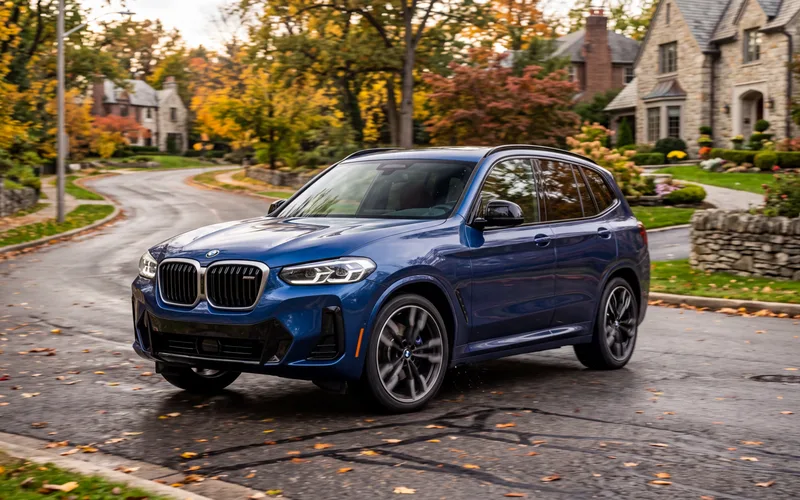 BMW X3Compact Luxury SUVBetter at: Practicality
Nearly as engaging to drive but with a usable back seat, a much larger cargo hold, better fuel economy and actual IIHS and NHTSA crash results.
Compare 2.74B-
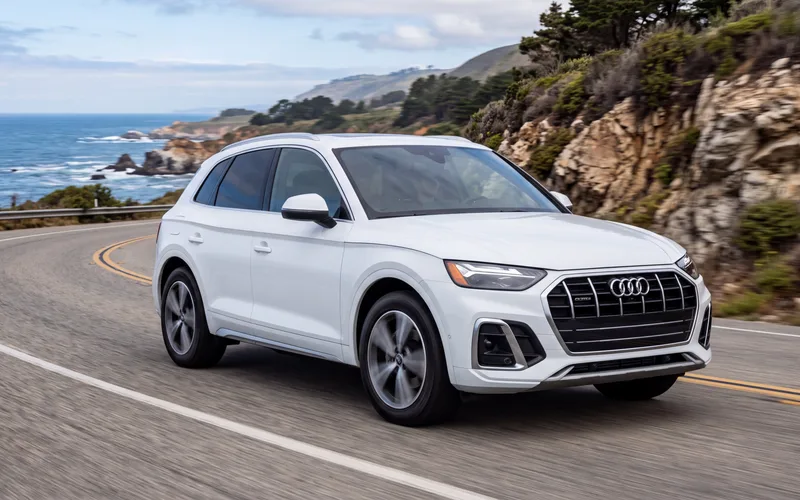 Audi Q5Compact Luxury SUVBetter at: Value
The Macan's platform sibling delivers most of the same car with more rear legroom and cargo room for thousands less, plus the Android Auto the Porsche never got.
Compare 2.60C+
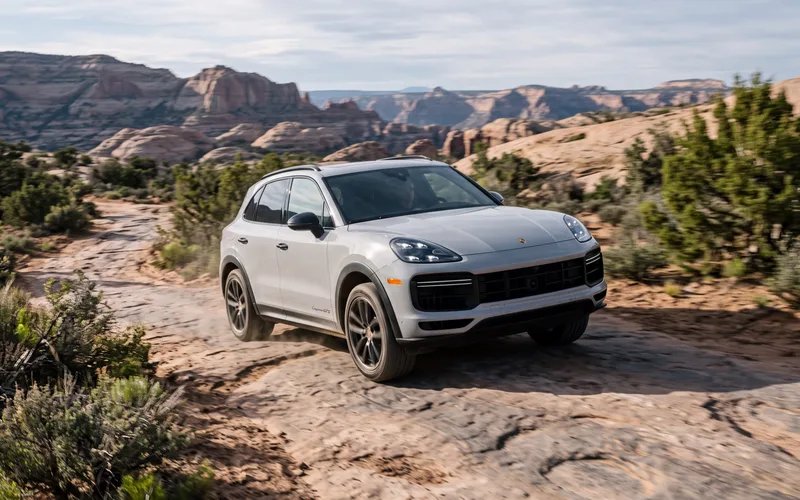 Porsche CayenneMid-Size Luxury SUVBetter at: Space and towing
Same Porsche driving character and badge, but with the rear-seat space, cargo capacity and towing capability the Macan gives up to its sports-car proportions.
CompareProduction history
Best fit & conditions
Higher scores mean a better fit for that use case. Learn more about use-case fit →
Subject profile
Academic Probation · NHTSA safety recalls
No NHTSA safety recall is on record for the 2026 Porsche Macan. Other model years of the Macan have 13 — listed below.
13 recalls on other model years of the Macan (2017–2021, 2024–2025)
Jul 28, 2025Air bags: frontalThe front seat air bags may be improperly secured to the backrest frame, which can prevent the air bags from deploying properly.
Defect
Porsche Cars North America, Inc. (Porsche) is recalling certain 2024-2025 Macan 4 Electric vehicles. The front seat air bags may be improperly secured to the backrest frame, which can prevent the air bags from deploying properly.
Risk
An improper air bag deployment can increase the risk of injury during a crash. In addition, an improperly secured air bag may project loose components into the vehicle, increasing the risk of injury.
Remedy
Dealers will inspect and repair the backrest frame screws as necessary, free of charge. Owner notification letters are expected to be mailed on September 26, 2025. Owners may contact Porsche customer service at 1-800-767-7243. Porsche's number for this recall is ASA7.
NHTSA campaign 25V492000 ↗Manufacturer no. ASA73 vehicles potentially affected (all models in the campaign)Filed by Porsche Cars North America, Inc.Filed as MACAN 4 ELECTRICApr 8, 2025Back over prevention: sensing system: camera · Back over prevention: softwareThe rearview camera may show a blurry image or fail to display. As such, these vehicles fail to comply with the requirements of Federal Motor Vehicle Safety Standard number 111, "Rear Visibility."
Defect
Porsche Cars North America, Inc. (Porsche) is recalling certain 2024-2025 Macan Electric vehicles. The rearview camera may show a blurry image or fail to display. As such, these vehicles fail to comply with the requirements of Federal Motor Vehicle Safety Standard number 111, "Rear Visibility."
Risk
A rearview camera that does not display an image decreases the driver's visibility, increasing the risk of a crash.
Remedy
Dealers will update the control unit software, inspect, and replace the rearview camera as necessary, free of charge. Owner notification letters were mailed May 23, 2025. Owners may contact Porsche customer service at 1-800-767-7243. Porsche's number for this recall is ASA3.
NHTSA campaign 25V220000 ↗Manufacturer no. ASA38,571 vehicles potentially affected (all models in the campaign)Owners notified May 23, 2025Filed by Porsche Cars North America, Inc.Filed as MACAN ELECTRICNov 25, 2024Exterior lighting: lighting control module: softwareThe headlights may be too bright and exceed the maximum light output, which may adversely affect the vision of drivers. As such, these vehicles fail to comply with the requirements of the Federal Motor Vehicle Safety Standard (FMVSS) number 108, "Lamps, Reflective Devices, and Associated Equipment."
Defect
Porsche Cars North America, Inc. (Porsche) is recalling certain 2024-2025 Macan Electric vehicles. The headlights may be too bright and exceed the maximum light output, which may adversely affect the vision of drivers. As such, these vehicles fail to comply with the requirements of the Federal Motor Vehicle Safety Standard (FMVSS) number 108, "Lamps, Reflective Devices, and Associated Equipment."
Risk
Headlights that are excessively bright can reduce visibility for oncoming drivers, increasing the risk of a crash.
Remedy
Dealers will reprogram the headlight control unit software, free of charge. Owner notification letters were mailed January 23, 2025. Owners may contact Porsche customer service at 1-800-767-7243. Porsche's number for this recall is ARC5.
NHTSA campaign 24V889000 ↗Manufacturer no. ARC52,941 vehicles potentially affected (all models in the campaign)Owners notified Jan 23, 2025Filed by Porsche Cars North America, Inc.Filed as MACAN ELECTRICJun 26, 2023Seat belts: rear/other: anchorageThe screw that attaches the lower seat belt anchor to the seat frame on the outboard rear seats may not have been tightened properly.
Defect
Porsche Cars North America, Inc. (Porsche) is recalling certain 2016-2020 Macan S, 2017-2020 Macan, 2017 Panamera Turbo, 2018 and 2020 Macan Turbo and Panamera 4, 2018 Macan Sport Edition, Panamera 4 E-Hybrid, and 2019 Panamera 4 Sport Turismo vehicles. The screw that attaches the lower seat belt anchor to the seat frame on the outboard rear seats may not have been tightened properly.
Risk
An improperly tightened seat belt anchor can detach during a crash, increasing the risk of injury.
Remedy
Dealers will replace and tighten the lower rear outboard seat belt anchor screws, free of charge. Owner notification letters are expected to be mailed August 24, 2023. Owners may contact Porsche's customer service at 1-800-767-7243. Porsche's number for this recall is APA9.
NHTSA campaign 23V443000 ↗Manufacturer no. APA937 vehicles potentially affected (all models in the campaign)Owners notified Aug 14, 2023Filed by Porsche Cars North America, Inc.Filed as MACAN, MACAN S, MACAN SPORT EDITION, MACAN TURBOAug 30, 2022Exterior lighting: headlightsPlease see the recall report for a complete list of all affected models and model years. The caps that cover the low-beam headlight horizontal adjustment screws are missing, which can allow the headlights to be improperly adjusted. As such, these vehicles fail to comply with the requirements of Federal Motor Vehicle Safety Standard number 108, "Lamps, Reflective Devices, and Associated Equipment."
Defect
Porsche Cars North America, Inc. (Porsche) is recalling certain 2003-2020 Porsche Macan, Cayenne, Panamera, and Cayman S, 2001-2004 Boxster, Boxster S, 2004 Boxster 50 JAHRE SPYDER 550 vehicles. Please see the recall report for a complete list of all affected models and model years. The caps that cover the low-beam headlight horizontal adjustment screws are missing, which can allow the headlights to be improperly adjusted. As such, these vehicles fail to comply with the requirements of Federal Motor Vehicle Safety Standard number 108, "Lamps, Reflective Devices, and Associated Equipment."
Risk
Improperly adjusted headlights may not illuminate the road properly, or cause a glare to oncoming drivers, which can increase the risk of a crash.
Remedy
Dealers will inspect the headlights for sealing caps and install missing caps as necessary, free of charge. Owner notification letters were mailed October 28, 2022. Owners may contact Porsche's customer service at 1-800-767-7243. Porsche's number for this recall is ANB4.
NHTSA campaign 22V656000 ↗Manufacturer no. ANB4222,858 vehicles potentially affected (all models in the campaign)Owners notified Oct 28, 2022Filed by Porsche Cars North America, Inc.Filed as MACAN, MACAN SMar 31, 2021Suspension: front: shock absorber · Suspension: rear: shock absorberThe screw connection on the shock absorbers of the front and rear axle might not be tightened properly.
Defect
Porsche Cars North America, Inc. (Porsche) is recalling certain 2021 Porsche Macan, Macan S, Macan GTS, and Macan Turbo vehicles. The screw connection on the shock absorbers of the front and rear axle might not be tightened properly.
Risk
A failed screw connection may cause damage to the braking system, driving instability, and the potential loss of control, increasing the risk of a crash.
Remedy
Owners are advised not to drive their vehicle until the remedy has been performed. Porsche will notify owners, and dealers will rework and tighten the screw connections, free of charge. Owners may contact Porsche's customer service at 1-800-767-7243. Porsche's number for this recall is AMA8.
NHTSA campaign 21V224000 ↗Manufacturer no. AMA810 vehicles potentially affected (all models in the campaign)Owners notified May 7, 2021Filed by Porsche Cars North America, Inc.Filed as MACANMar 3, 2021Air bags: sensor: occupant classification: front passengerThe front passenger seat occupancy sensor mat may degrade and fail to detect a passenger in the front seat.
Defect
Porsche Cars North America, Inc. (Porsche) is recalling certain 2017-2018 Macan, Macan Turbo Kits, Macan GTS, 2015-2018 Macan S, and Macan Turbo vehicles. The front passenger seat occupancy sensor mat may degrade and fail to detect a passenger in the front seat.
Risk
The air bag will not deploy during a crash if a front passenger is undetected, increasing the risk of injury.
Remedy
Porsche will notify owners, and dealers will replace the sensor mat and seat cushion, free of charge. Owner notification letters were mailed October 25, 2021. Owners may contact Porsche customer service at 1-800-767-7243. Porsche's number for this recall is AMA2.
NHTSA campaign 21V131000 ↗Manufacturer no. AMA239,547 vehicles potentially affected (all models in the campaign)Owners notified Oct 25, 2021Filed by Porsche Cars North America, Inc.Filed as MACAN, MACAN GTS, MACAN S, MACAN TURBOFeb 12, 2020Fuel system, gasoline: delivery: fuel pumpThe fuel pump service cover may contact the flow nozzle on the filter flange of the fuel pump, potentially causing cracks and a fuel leak.
Defect
Porsche Cars North America, Inc. (Porsche) is recalling certain 2015-2018 Macan vehicles. The fuel pump service cover may contact the flow nozzle on the filter flange of the fuel pump, potentially causing cracks and a fuel leak.
Risk
Fuel leakage in the presence of an ignition source may increase the risk of a fire.
Remedy
Porsche will rework or replace and apply a protective film to the fuel pump flange. in addition, the fuel pump flange will be inspected and replaced if cracks are present. The recall began April 10, 2020. Owners may contact Porsche customer service at 1-800-767-7243. Porsche's number for this recall is ALA2.
NHTSA campaign 20V077000 ↗Manufacturer no. ALA270,117 vehicles potentially affected (all models in the campaign)Owners notified Apr 10, 2020Filed by Porsche Cars North America, Inc.Filed as MACANNov 28, 2018EquipmentThe ski bag fastening strap may have been sewn with incorrect thread, possibly resulting in the strap seams tearing and the ski bag being unsecured in the event of a crash.
Defect
Porsche Cars North America, Inc. (Porsche) is recalling certain 2017 Porsche Cayenne Turbo S, Cayenne Turbo, Cayenne Plug-in Hybrid, Cayenne GTS, Cayenne Plug-in Hybrid Platinum Edition, Macan Turbo and Macan GTS vehicles, 2017-2018 Cayenne S, Macan, Cayenne Platinum Edition and Macan S vehicles and 2018 Cayenne vehicles equipped with the optional ski bag. The ski bag fastening strap may have been sewn with incorrect thread, possibly resulting in the strap seams tearing and the ski bag being unsecured in the event of a crash.
Risk
If the ski bag detaches during a crash, it can increase the risk of injury.
Remedy
Porsche will notify owners, and dealers will replace the ski bags, free of charge. The recall began January 10, 2019. Owners may contact Porsche customer service at 1-800-767-7243. Porsche's number for this recall is AJ12.
NHTSA campaign 18V844000 ↗Manufacturer no. AJ12142 vehicles potentially affected (all models in the campaign)Owners notified Jan 10, 2019Filed by Porsche Cars North America, Inc.Filed as MACAN, MACAN GTS, MACAN S, MACAN TURBOMay 16, 2018Electrical systemThese vehicles have a control unit that may fail and prevent safety-related functions such as driver display alerts and possibly impair drivability and post-crash functions.
Defect
Porsche Cars North America, Inc. (Porsche) is recalling certain 2018 Porsche Macan S and Macan vehicles. These vehicles have a control unit that may fail and prevent safety-related functions such as driver display alerts and possibly impair drivability and post-crash functions.
Risk
Failure of the control unit may increase the risk of a crash.
Remedy
Porsche will notify owners, and dealers will replace the affected control unit, free of charge. The recall began July 27, 2018. Owners may contact Porsche customer service at 1-800-767-7243. Porsche's number for this recall is AJ05.
NHTSA campaign 18V318000 ↗Manufacturer no. AJ053 vehicles potentially affected (all models in the campaign)Owners notified Jul 27, 2018Filed by Porsche Cars North America, Inc.Filed as MACAN, MACAN SMay 3, 2017Fuel system, gasoline: delivery: fuel pumpThe fuel pump flange on the affected vehicles may crack, allowing fuel to leak.
Defect
Porsche Cars North America, Inc. (Porsche) is recalling certain 2015-2017 Macan S and Macan Turbo vehicles, and 2017 Macan, Macan Turbo with the Performance Package, and Macan GTS vehicles. The fuel pump flange on the affected vehicles may crack, allowing fuel to leak.
Risk
A fuel leak in the presence of an ignition source increases the risk of a fire.
Remedy
Porsche will notify owners, and dealers will inspect the flanges, replacing any that are cracked. Flanges that aren't cracked will have a protective film applied. These repairs will be performed free of charge. The recall began on July 19, 2017. Owners may contact Porsche customer service at 1-800-767-7243. Porsche's number for this recall is AH06.
NHTSA campaign 17V289000 ↗Manufacturer no. AH0651,497 vehicles potentially affected (all models in the campaign)Owners notified Jul 19, 2017Filed by Porsche Cars North America, Inc.Filed as MACAN, MACAN GTS, MACAN S, MACAN TURBOMar 2, 2017Air bags: sensor: occupant classificationThe passenger occupant detection sensor mat may fail in the front passenger seat, deactivating the front passenger air bag. As such, these vehicles fail to comply with the requirements of Federal Motor Vehicle Safety Standard (FMVSS) number 208, "Occupant Crash Protection."
Defect
Porsche Cars North America, Inc. (Porsche) is recalling certain 2015-2016 Macan S and Macan Turbo and 2017 Macan GTS vehicles. The passenger occupant detection sensor mat may fail in the front passenger seat, deactivating the front passenger air bag. As such, these vehicles fail to comply with the requirements of Federal Motor Vehicle Safety Standard (FMVSS) number 208, "Occupant Crash Protection."
Risk
In the event of a crash, if the front passenger air bag does not deploy as intended, the front passenger has an increased risk of injury.
Remedy
Porsche will notify owners, and dealers will replace the sensor mat and seat cushion, free of charge. The recall began June 28, 2017. Owners may contact Porsche customer service at 1-800-767-7243. Porsche's number for this recall is AH02.
NHTSA campaign 17V133000 ↗Manufacturer no. AH0217,871 vehicles potentially affected (all models in the campaign)Owners notified Jun 28, 2017Filed by Porsche Cars North America, Inc.Filed as MACAN GTSSep 20, 2016Suspension: frontIn the affected vehicles, the anti-rollbar connecting links may move out of position allowing the vehicle to oversteer in certain driving conditions.
Defect
Porsche Cars North America, Inc. (Porsche) is recalling certain model year 2017 Macan, Macan S, Macan GTS, and Macan Turbo vehicles. In the affected vehicles, the anti-rollbar connecting links may move out of position allowing the vehicle to oversteer in certain driving conditions.
Risk
Vehicle oversteer may lead to a loss of vehicle control, increasing the risk of a crash.
Remedy
Porsche will notify owners, and dealers will inspect, and as necessary, replace the front anti-rollbar links, free of charge. The recall began January 2017. Owners may contact Porsche customer service at 1-800-767-7243. Porsche's number for this recall is AG06.
NHTSA campaign 16V680000 ↗Manufacturer no. AG06243 vehicles potentially affected (all models in the campaign)Owners notified Nov 7, 2016Filed by Porsche Cars North America, Inc.Filed as MACAN
Source: NHTSA Office of Defects Investigation recall database, model years 2017–2026. Recalls are listed by model year as the manufacturer filed them; whether a specific car is affected depends on its VIN — check a VIN at nhtsa.gov ↗. NHTSA model names matched to this page: MACAN, MACAN 4 ELECTRIC, MACAN ELECTRIC, MACAN GTS, MACAN S, MACAN SPORT EDITION, MACAN TURBO.
Detailed scoring by subject
1Performance & PowertrainMid-pack among this car's ten categories.2.05C
For 2026 Porsche sold two Macans side by side — the first-generation 95B gasoline car (US-only, final model year) and the second-generation XAB electric car — and the volume trim remains the base gas Macan with the 2.0-liter turbo four at 261 hp, the same output it has carried since the 2019 update.
The base EA888-derived 2.0-liter turbo makes 295 lb-ft on a broad plateau, unchanged for the final gasoline model year; the electric variants dwarf it, with the Turbo at 833 lb-ft.
Porsche's own quoted 0–60 for the base gas Macan is 6.0 seconds, falling to 5.8 seconds with the optional Sport Chrono package; the standard configuration is used here as the volume-trim figure, matching the approach taken for the Cayenne.
The 2.0T is quick-witted and tractable in normal driving, but reviewers consistently note a beat of turbo lag off boost and a coarse, strained four-cylinder note when it is worked hard — a clear step below the V6 and V8 Porsches and below the seamless PPE electric variants sold alongside it.
The seven-speed PDK dual-clutch is the benchmark automatic in this class — crisp, quick and decisive, with sensible gear holding in Sport and no highway hunting; the electric variants sidestep the question entirely with single-speed delivery.
For 2026 Porsche raised the electric Macan's rating by 1,100 lbs to 5,500 lbs on the all-wheel-drive 4, 4S and Turbo — the highest figure available in the range; the gasoline cars stay at their long-standing 4,409 lb (2,000 kg) rating.
Every gasoline Macan is all-wheel drive as standard via Porsche Traction Management, and four of the five electric variants are dual-motor AWD with fully variable front/rear torque split plus torque vectoring (a mechanical limited-slip rear differential is standard on the GTS Electric); the gaps are the rear-drive base Macan Electric and the absence of any low-range gearing.
A pavement-first sports crossover: roughly 7.3 in of standard clearance on the electric car, rising to about 8.9 in at the air suspension's highest setting with the Offroad/Gravel drive mode, and an off-road design package adds about 0.4 in — but there is no low range, no locking differential beyond the electronic/LSD hardware, no factory skid plating and no off-road trim.
For 2026 the nameplate spans two entirely separate platforms sold in parallel: the 95B gasoline car with a 2.0-liter turbo four and two states of 2.9-liter twin-turbo V6 (S and GTS), and the 800-volt PPE electric car in five outputs from 355 hp to 630 hp, now including a 563-hp GTS. The only hole is the absence of any hybrid or plug-in hybrid.
2Efficiency & RangeOne of the Macan's weakest categories.0.00F
The 2026 US Macan is sold as two cars under one name — the first-generation 95B gas SUV (final model year, production ends Q3 2026) and the second-generation XAB EV — and gas still made up about two-thirds of US Macan sales in 2025, so the base 2.0-liter turbo four at 21 MPG combined is the representative configuration. That is near the bottom of the SUV band and behind a BMW X3 or Audi Q5 four-cylinder.
With no hybrid assist of any kind on the gas Macan — not even a 48V mild-hybrid system — city driving posts 19 MPG, roughly what a much larger unelectrified luxury SUV returns and far off the electrified compact luxury field.
Highway is the gas Macan's best cycle at 25 MPG, helped by the seven-speed PDK's tall top gears and standard stop-start, but standard all-wheel drive and a performance-biased chassis keep it well short of the segment's efficient entries.
EPA publishes no range figure for gasoline vehicles, so range is the 19.8-gallon tank times the 21 MPG combined rating — about 416 miles, a mid-pack result where a decent tank partly offsets weak economy. The electric Macan is the shorter-legged of the two, topping out at 332 miles.
EPA's $3,600 annual estimate sits above the top of the SUV cost band — 21 MPG combined with a premium-only requirement is an expensive way to run a compact SUV, and EPA scores it at $7,000 more than the average new vehicle over five years.
Premium gasoline is required, not merely recommended, on every gas Macan, with no E85 or diesel alternative — the volume configuration commits the owner to the most expensive pump grade for the life of the car. It scores a few points above an equivalent premium-only rival because the cheap-energy escape hatch here is a fully realized 800-volt EV lineup under the same nameplate rather than one costly top-trim hybrid, and that EV charges fast enough on 800V hardware to make home charging plus occasional DC top-ups genuinely practical.
3SafetyMid-pack among this car's ten categories.2.06C
NHTSA has never crash-tested the Macan in either generation — the agency returns no 2026 or 2025 record at all, and its single 2024 entry is 'Not Rated' across every test. The estimate reflects the segment-typical 4-star showing for untested compact luxury SUVs, consistent with how the equally untested Cayenne and Audi Q8 are treated in this dataset.
IIHS has never rated any Macan, so there is no Top Safety Pick or TSP+ designation and no US crashworthiness result for either the 95B gasoline car or the XAB electric one. The second-generation electric Macan's 2024 Euro NCAP result is genuinely strong under the current protocol — 5 stars with 90% adult and 90% child occupant protection — but it does not transfer to the volume US configuration, which is the final year of an eleven-year-old gasoline structure untested under any modern protocol.
The volume configuration is the $64,600–$65,400 base gasoline Macan, and on it only two of the five benchmark systems are standard: Warn and Brake Assist (FCW plus AEB) and — creditably, unlike the Cayenne — adaptive cruise control, alongside lane departure warning and front/rear ParkAssist. Blind-spot monitoring is a $690 option, active Lane Keep Assist and Surround View are extra-cost, and rear cross-traffic alert is not part of the gasoline car's standard suite at all. The parallel Macan Electric is a different story, with blind-spot monitors, rear cross-traffic alert, exit warning and traffic-sign recognition all standard, but it accounts for only about a third of US Macan sales.
Warn and Brake Assist is standard on every Macan and does include pedestrian and cyclist recognition, escalating from visual and acoustic warnings to a braking jolt and then autonomous braking. Euro NCAP singled the system out on the electric car, noting collisions were avoided outright in several AEB tests, but IIHS has published no front-crash-prevention rating for any Macan, so US daytime-versus-nighttime pedestrian performance is entirely unverified — capable hardware without independent confirmation.
On the volume gasoline Macan, Lane Change Assist is a $690 standalone option or a component of the $3,650 Premium Package Plus, and rear cross-traffic alert is not part of the standard suite — an unusual gap on a $65,000 luxury SUV, and a worse one here than on most rivals because the Macan's over-shoulder sightlines are among the poorest in the class. What coverage exists is alert-only, with no steering or braking intervention. Only the electric variants make blind-spot monitors, rear cross-traffic alert and exit warning standard.
The base gasoline Macan leaves the lot with lane departure warning only — active Lane Keep Assist is an extra-cost item, and true lane centering requires Porsche InnoDrive at roughly $2,000–$3,000. When fitted, InnoDrive is well regarded, holding the car mid-lane with continuous steering that owners describe as human-smooth rather than the ping-pong nudging common in the class. The score reflects the volume configuration's warning-grade assistance, not the capability of the option.
This is the Macan's clearest safety advantage over its own showroom-mate: adaptive cruise control is standard equipment on every 2026 Macan, gasoline and electric alike, where the larger Cayenne still charges for it. The system is full-speed-range with smooth gap-keeping, and InnoDrive layers predictive route data plus lane centering on top. It misses the top band only because the traffic-jam-assist half of the highway-assist story is a separate $800 option and the full InnoDrive package costs thousands more.
Porsche offers no hands-free highway driving on the 2026 Macan in the US — there is no equivalent of Ford BlueCruise, GM Super Cruise or supervised FSD, and no driver-monitoring camera to enable one. InnoDrive with Active Lane Keeping is a hands-on Level 2 system that warns and disengages when the driver lets go of the wheel.
Every Macan gets LED headlights with the Porsche Dynamic Light System as standard, which is respectable hardware, but the upgrades that matter after dark cost extra: PDLS+ with dynamic cornering and auto high beam is a $530 option or part of the $3,650 Premium Package Plus, and matrix-beam LEDs with segment-by-segment high-beam masking are standard only on the Macan Turbo Electric. IIHS has never published a headlight rating for the Macan, so real-world beam performance is unconfirmed either way.
The Macan's sports-car proportions produce genuinely poor sightlines: thick A, B and C pillars, narrow side glass and a high, shallow rear window leave large blind zones that reviewers describe in unusually blunt terms. A reversing camera and front/rear ParkAssist are standard, but the two aids that would actually compensate — the $1,200 surround-view camera and the $690 blind-spot monitor — are both extra cost on the volume trim, so the as-delivered car is worse off here than rivals with those systems standard.
The hardware itself is good — two sets of outboard lower anchors sit behind removable plastic covers that are easy to open and clip into, and three clearly marked tether anchors are within easy reach — and both rear-facing and forward-facing convertible seats install easily and fit well. The compromises are dimensional rather than mechanical: there is no center LATCH position so a middle seat must go in on the belt, a rear-facing infant carrier forces the front passenger seat well forward, and there is little legroom left for a booster-age child behind a tall adult in a second row that is tighter than most compact SUVs'.
4Space & ComfortOne of the Macan's weakest categories.0.66F
For 2026 Porsche sells two Macans side by side — the final model year of the first-generation 95B gas car (US production ends July 2026) and the second-generation electric XAB — and both are strict five-seat, two-row SUVs on a 40:20:40 split rear bench.
Porsche publishes no US-format interior dimensions for the Macan — its own technical data sheets, cars.com, KBB, MotorTrend, JD Power and iSeeCars all list headroom and legroom as N/A — so this is an estimate anchored on the 63.8-in overall height (2.6 in lower than a Cayenne, which measures 40.7 in) offset by the Macan's markedly lower seating position.
Estimated from the platform sibling — the 95B Macan shares its architecture and 110.5-in wheelbase lineage with the Audi Q5 (front legroom 40.9 in) — with no reviewer complaints about front space; the electric Macan's 113.9-in wheelbase gives slightly more.
Estimated from the same package: the coupe-influenced roofline and 63.8-in height leave less second-row headroom than a Cayenne's 38.5 in, and reviewers describe headroom as adequate rather than generous with an awkward, ducking entry.
Derived from TrueCar's Q5-vs-Macan comparison, which puts the Audi 2.2 in ahead on rear legroom; the Q5's published figure is 37.8 in, giving the Macan roughly 35.6 in — a number every review of the car corroborates qualitatively.
No Macan of either generation has ever offered a third row — it is a two-row, five-seat compact SUV, and even the second row is tight, so buyers needing seven seats leave the Porsche SUV range entirely.
The gas Macan's hold is small even for a compact SUV — the framework's SUV band starts at 25 cu ft — and the sloping tailgate limits how tall a load can be; the electric car improves it slightly and adds a frunk the gas car does not have.
Seats-folded capacity sits below the bottom of the SUV band and trails mainstream compact SUVs outright — the Macan is packaged as a sports car with a hatch rather than a hauler, and the electric version gives up several more cubic feet.
The gas Macan's cabin dates to a 2014 architecture with a button-heavy console: small covered bin, modest door pockets, no frunk and no packaging trick, with wireless charging and extra USB-C ports sitting in options; the 40:20:40 split rear seat is the one genuinely useful feature.
Optional 14-way and 18-way adaptive sport seats are excellent for long stints, but the volume base car gets firm 8-way comfort seats with limited adjustment, and the cramped rear bench caps what the car can score overall.
Body control is the segment benchmark and the car never feels harsh, but the Macan rides firmer than its compact luxury rivals in standard steel-sprung form — PASM adaptive dampers and air suspension are options on the volume trim, and big wheels sharpen the impacts further.
Wind and road noise are well contained for a small performance SUV and the cabin is described as quiet on the highway, but the four-cylinder base engine is coarser than the V6 and GTS models add sport exhaust noise on purpose — a step below the larger Cayenne's isolation.
Heated 8-way power front seats are standard and everything else is available — ventilated fronts, heated rears, panoramic roof, four-zone climate, Burmester audio — but on the gas car the desirable items are bundled into a $3,590 Premium Package Plus and other costly options rather than included at a $64,600 base price.
5Cost of OwnershipThe Macan's lowest-graded category.0.00F
For 2026 Porsche sells two Macans side by side — the first-generation 95B gasoline car in its final model year (ICE production ends Q3 2026) and the second-generation XAB Macan Electric — and the cheapest way into the nameplate is the 261-hp base gas Macan at $65,400 plus Porsche's $2,350 delivery, processing and handling fee. That is roughly $2,750 past the top of the SUV normalization band, so the item bottoms out.
The base 2.0-liter gas Macan is the volume trim, but Porsche's options-first sales model means almost nothing leaves a dealer at sticker — 2026 base and T cars on the market list in the mid-to-high $70,000s once the usual paint, wheels, Premium Package and driver-assist options are added (surround view $1,200, blind-spot monitor $690, traffic-jam assist $800 are all extra-cost). Any realistic transaction price sits far beyond the $68,000 top of the SUV band.
The Macan is the cheapest Porsche to service — its dealer-published four-service plan is the lowest in the lineup — but Porsche dealer labor, performance tires and brakes, and out-of-warranty repairs after the 4-year/50,000-mile term still push the five-year figure past the $9,500 ceiling of the SUV band. The midpoint of the Edmunds and KBB estimates is used here.
Retention is the Macan's one genuine ownership-cost strength: the Porsche badge and the ICE car's status as the last of its kind hold value roughly nine points better than the luxury compact SUV average. The figure is pulled slightly below iSeeCars' headline because that number reflects the inflated post-2021 used market, and because the electric variant depreciates far harder.
Porsche's New Vehicle Limited Warranty runs 4 years/50,000 miles, matching the German luxury norm and the Cayenne, and well short of Genesis or the Korean brands' longer terms.
Porsche publishes no extended powertrain warranty — the same 4-year/50,000-mile limited warranty is the drivetrain coverage, so it expires at the very bottom of the 5–10 year normalization band. Only the electric variants carry a longer high-voltage battery term, and the volume trim is the gas four-cylinder.
Only the first scheduled service (1 yr/10,000 mi) is complimentary on the gas Macan, alongside 4-year/50,000-mile Porsche Roadside Response and a 3-year Porsche Connect subscription — a single free service plus basic roadside, squarely mid-band. Buyers of the Macan Electric add one year of complimentary 30-minute Electrify America sessions and Plug & Charge, but that is a shorter perk than the three years Taycan buyers once received and does not apply to the volume gas trim.
$77,000 volume-trim price minus its estimated resale value after 5 years (55% retained, or about $42,350) leaves about $34,650 in depreciation. Add the projected $10,200 in 5-year maintenance and repairs, and owning this vehicle for 5 years costs about $44,850 in total.
6Reliability & QualityOne of the Macan's strongest categories.3.02B
Consumer Reports predicts the 2026 Macan will be MUCH more reliable than the average new car and ranks it 5th of 22 luxury compact SUVs — the best German entry in the class, slotted between the Acura RDX and Lexus NX PHEV. That is a stronger read than its Cayenne sibling gets, but it rests on limited 2023–2025 data and is contradicted by third-party ownership metrics, so it lands high-but-not-top-tier.
Porsche sits near the top of every recent study that measures the brand rather than the model: 3rd overall and 2nd among luxury brands in Consumer Reports' 2026 rankings, #1 of all nameplates in the 2026 J.D. Power Initial Quality Study, and 3rd among premium brands in the 2026 Vehicle Dependability Study. That is a consistent multi-year top-tier standing.
The 2026 Macan carries no NHTSA recalls as of August 2026, and the current-generation record on both sides of the lineup is light. The XAB Macan Electric took three recalls across 2024–2025 — headlights programmed to European brightness limits, a rearview camera that could fail to display, and a small airbag-mounting campaign — all electronics/assembly issues rather than powertrain or fire risk. The 95B gas car has no recent recalls at all; its fuel-flange fire recall is a decade old. Restraint here: 2026 is only part-way through, so a clean sheet is partly a recency artifact, and owner forums report unresolved EV software quirks that TSBs and OTAs are still chasing.
The volume 2026 Macan is still the gas 95B — roughly two-thirds of US Macan sales — running the EA888 Gen 3 2.0L turbo four, a VW Group engine produced in enormous volume with an above-average durability record, or the 2.9L twin-turbo V6 in S/GTS. Both pair to the 7-speed PDK, where catastrophic failure is rare but the gearbox is unforgiving of neglected fluid that Porsche once called lifetime. Known high-mileage weak points are water pump and thermostat-housing leaks, wastegate actuator failure past ~80k, and tolerated oil consumption. The Macan Electric's PPE 800V pack is showing solid hardware but has barely two years of accumulated mileage, so it is unproven rather than suspect.
Materials are genuinely good — supple leather, nicely grained dash and door coverings, optional Race-Tex, sturdy construction — but the Macan does not clear the bar its own price sets the way the Cayenne does. The gas car's cabin dates to the 2019 update and buries functions in a button-dense, piano-black console with no tactile indicators, and reviewers of the Electric call interior quality its most persistent liability, with material choices below expectations at these prices.
Assembly quality out of Leipzig is a real Porsche strength and the initial-quality data supports it: the brand ranked highest of every nameplate in the 2026 J.D. Power IQS with a 50-point year-over-year improvement, and owners single out fit and finish as without equal at the price. It sits below the Cayenne only because the Macan Electric's intermittent software and electronics faults are exactly the kind of defect initial-quality surveys count.
Service satisfaction is the best in the industry — Porsche took the top premium spot in the 2026 J.D. Power Customer Service Index for the second consecutive year, well clear of the industry average. What holds the score down is density: roughly 200 Porsche Centers nationwide leaves owners outside major metros a long drive from a franchised dealer, which matters more for the Electric, whose high-voltage work is not something an independent shop can absorb.
This is the category's clear weak point. Parts are dealer-centric and priced as Porsche parts, and the Macan finishes dead last in its class on every RepairPal ownership metric — annual cost about 1.5x the luxury compact SUV norm, more than double the unscheduled-visit rate, and twice the odds a given repair is a major one. Routine wear items are four-figure events. It scores a few points above the Cayenne only because the Macan's dealer maintenance plan is the cheapest in the Porsche lineup and its EA888-based service work is comparatively affordable.
7Technology & InfotainmentOne of the Macan's strongest categories.2.88B-
Both 2026 Macans — the final-year gasoline 95B and the second-generation electric XAB — use a 10.9-inch central PCM touchscreen, a size the gas car has carried unchanged since the 2019 update and the smallest center screen of any current compact luxury SUV at this price.
A split verdict across one nameplate. The Macan Electric's Android Automotive-based PCM is genuinely class-leading — it took a Wards 10 Best Interior & UX award for 2026 — with fast, sharply rendered graphics and a customizable app layout. The volume gasoline car runs the older 2019-vintage PCM on the same 10.9-inch screen, and reviewers repeatedly criticize its console: a dense field of piano-black touch-capacitive buttons with no tactile indicators that force the driver's eyes off the road.
Wireless Apple CarPlay is standard on every 2026 Macan, gas or electric, and on the Electric it renders Apple Maps in the instrument cluster with climate controls inside the CarPlay screen. Android Auto, however, is only available on the Macan Electric — the gasoline 95B never received the PCM generation that added it, so Android owners buying the volume trim get no phone projection at all.
The Macan Electric is the strong half: for 2026 Porsche gave Voice Pilot an AI layer that handles complex, interrelated follow-up questions and answers owner's-manual queries by voice, with Google Search folded into the assistant and a Charging Planner that now weights preferred charging networks into route planning. The gasoline car's older Voice Pilot and PCM navigation are merely competent, and most owners default to CarPlay.
A three-rung ladder on both powertrains that tops out with one of the best factory systems sold in any SUV. The Electric's Burmester 3D High-End runs 21 speakers and 1,470 watts; the gasoline car's Burmester is the older 16-speaker, 1,000-watt unit, with a 14-speaker Bose in between on both. Held just below the Cayenne only because the gas Macan's standard system is a modest eight-speaker setup and its top-end Burmester is a generation behind the Electric's.
The Macan Electric has one of the best clusters in the class — a fully digital, free-standing 12.6-inch curved display in the driver's sightline, standard, with a classic three-tube layout among its selectable views and an optional 10.9-inch passenger screen beside it. The volume gasoline car is stuck with the 95B's part-analog arrangement: a central analog tachometer flanked by conventional dials and a small color multifunction display, which is charming but is not a configurable digital cluster.
The Macan Electric does receive real over-the-air releases through My Porsche — the 2026 wave added Trained Parking routines, Reversing Assist, Google Search in the voice assistant, 5G optimization and app-based charge-port control — but owners report that many substantive fixes still arrive as dealer campaigns rather than OTA. The gasoline Macan is effectively outside the program: Porsche's own OTA support article scopes online software updates to the Taycan, and the 95B's PCM gets little beyond map and connected-service refreshes.
The My Porsche app covers lock/unlock, status, locate and — on the Electric — climate pre-conditioning, charge scheduling and remote charge-port operation, and for 2026 the Macan Electric gains the Porsche Digital Key: phone-as-key over NFC/BLE/UWB in Apple Wallet or an Android wallet, shareable with up to seven people, with trunk and frunk control from the app. The gasoline Macan gets none of that — no digital key and no remote engine start — which is what keeps this out of the top band.
Four USB-C ports split two front and two rear on both powertrains, plus a cooled wireless charging tray rated at 15 watts — double the 5–7.5 W pads still common in the class — and a standard Wi-Fi hotspot. Short of the top band only because there is no household-style AC outlet or exportable onboard power, even on the Electric.
Push-button start, a power liftgate and proximity keyless entry are on the standard sheet for the base 2026 gas Macan, and the Electric adds foot-gesture tailgate opening plus hand-gesture frunk release and, new for 2026, phone-as-key. Held below the top band because Porsche still packages the hands-free Comfort Access convenience as an extra-cost item on the gasoline car, there is no remote engine start on the combustion Macan, and the Digital Key is reserved for the Electric.
Front and rear ParkAssist is standard on both Macans, and the optional four-camera Surround View is genuinely class-leading on the Electric for 2026, where 3D Surround View with Active Parking Support gained a Transparent Hood view, Trained Parking that records and replays up to five maneuvers, and Reversing Assist that retraces up to 160 feet automatically. The score sits at the low end of the top band because the 360-degree system is a roughly $1,200 option on both powertrains rather than standard equipment at this price.
The volume trim cannot get one at any price — the gasoline 95B Macan has never offered a head-up display in twelve model years. The Macan Electric offers an outstanding augmented-reality unit at roughly $2,530, projecting color AR navigation arrows at an effective 10-meter distance equivalent to an 87-inch image, but it is a paid option on a separate model line, so the nameplate lands in the middle band.
8Use-Case FitGrades below the middle of the scale.1.39D
The seat-installation mechanics are fine — two sets of outboard lower anchors behind easy-open covers and three well-marked tether anchors — but everything around them fights daily family logistics: no center LATCH position, a rear-facing infant carrier that forces the front passenger seat well forward, roughly 35.6 in of rear legroom (the tightest in the compact luxury class), a low roofline that makes buckling a child in a stoop, and just 17.2 cu ft behind the rear seats, which a stroller alone largely consumes.
Neither NHTSA nor IIHS has ever crash-tested a Macan of either generation, so a family buyer has no US crashworthiness credential to weigh. The volume $65,350 gas car does include Warn and Brake Assist (FCW/AEB with pedestrian and cyclist recognition), lane departure warning and — unusually for Porsche — adaptive cruise control as standard, but blind-spot monitoring is a $690 option, rear cross-traffic alert is not in the gas car's standard suite at all, and the surround-view camera is another $1,200. The parallel Macan Electric makes blind-spot, cross-traffic and exit warning standard, but it is about a third of US Macan volume.
The front half of the car travels well — quiet at speed, high build quality, tri-zone climate and four USB ports standard — but the second row is where a family road trip breaks down: the tightest rear legroom in the segment, a fixed bench, and heated rear seats and the panoramic roof sitting inside a $3,650 package with no rear-seat entertainment offered. The decisive limit is luggage: 17.2 cu ft with four aboard is roughly two-thirds of what a Cayenne or an X3 gives, so a family of four packs for a weekend, not a week.
Commuting is one of the two missions the Macan genuinely fits. The seven-speed PDK is decisive and smooth at low speed, Comfort mode keeps the body composed, the cabin is quiet, the footprint is compact, and adaptive cruise is standard rather than a Porsche upcharge as it is on the Cayenne. What keeps it out of the top band is the volume trim's firm 8-way seats with limited adjustment, a ride firmer than its rivals' on steel springs and 19-inch-plus wheels, a beat of turbo lag off boost, and sightlines that make crowded traffic more work than it should be.
The Macan's worst use case. The volume 2.0T returns 21 MPG combined on required premium for an EPA bill of $3,600 a year — $7,000 worse than the average new vehicle over five years — and the maintenance side is worse still: RepairPal ranks the Macan last among luxury compact SUVs with $1,265 in average annual repairs against an $859 class norm and 1.3 unscheduled shop visits a year. It sits a few points above the Cayenne only because it burns marginally less fuel; the cheap-commuting answer under this nameplate is the Macan Electric at roughly $750 a year in electricity, not the car most buyers take home.
The footprint is the easiest thing about the car in town — 186.1 in long on a roughly 39-ft curb-to-curb circle, a full 8 in shorter and much narrower than a Cayenne — and front and rear ParkAssist with a reversing camera are standard. It stops short of the top band because the sports-car glasshouse produces some of the worst over-the-shoulder sightlines in the class, and the two aids that would fix that, the $1,200 surround-view camera and the $690 blind-spot monitor, are both extra cost on the volume trim.
The gas Macan tows 4,409 lbs (2,000 kg) but only with the factory tow package fitted — Porsche publishes no rating without it — and that is roughly half what the Cayenne manages and short of what a work-minded buyer would ask of a $65,000 SUV. Beyond the hitch there is nothing: no bed, negligible payload headroom, and 17.2/53.1 cu ft of cargo that is small even by compact-SUV standards. The 2.0T pulls a light trailer competently; it is a toy-hauler at best, not a work vehicle.
The core hardware is among the more proven things Porsche sells — a VW Group EA888 2.0-liter four and the seven-speed PDK, both with a decade of service in this chassis — but the ownership record around it is poor and the car is built for none of what work duty implies. RepairPal rates it last of eleven luxury compact SUVs with repair frequency and severity both far above average, parts and service are dealer-priced, and there is no wear-friendly interior option, no fleet presence and no rubber-floor spec to fall back on.
The provisions are the luxury-crossover minimum: a standard power liftgate, lashing points in the load floor, and Tequipment luggage nets, liners and a loadspace management kit. There is no onboard AC export power, no washable surfaces, no bed access to speak of, and no commercial upfit ecosystem of any kind — and with 17.2 cu ft behind the seats there is barely room for a toolbox and a stepladder.
The Macan's second real strength. High-speed stability and steering are class benchmarks, the cabin stays quiet on the highway, adaptive cruise is standard, and a 19.8-gallon tank at 21 MPG gives roughly 416 miles between fills. Three things hold it below the top band: the volume car's firm, minimally adjustable 8-way seats are the wrong ones for a ten-hour day (the 14- and 18-way sport seats are options), the fatigue-reducing upgrades — active lane keeping, InnoDrive lane centering, traffic-jam assist — all cost extra, and every stop is a premium-fuel purchase with only 17.2 cu ft of luggage aboard.
Better than its sports-crossover reputation suggests but well short of an adventure tool: all-wheel drive with Porsche Traction Management is standard, there is a genuine off-road button with hill descent control, and steel-sprung cars sit at about 7.8 in of clearance rising to roughly 9.1 in on the optional air suspension's raised setting. Against that, the tow rating for toys is a modest 4,409 lbs, the roof system is capped at 165 lbs and needs factory-fitted roof rails that are themselves an option, and there is no low range, no locking differential, no camping-grade onboard power and no skid plating in the US spec.
The shape and access are good — a square hold, a standard power liftgate, a 40:20:40 split-folding rear seatback, underfloor stowage and floor lashing points — but the raw numbers are the lowest of any compact luxury SUV in this dataset at 17.2 cu ft behind the seats and 53.1 cu ft folded, and the gas car has no frunk to fall back on. Every gear-hauling extension of that space is optional: roof rails, the roof transport system and the tow package are all extra cost.
9Driving ExperienceThe Macan's best-graded category.3.38B+
The Macan is the handling benchmark of the compact luxury SUV class and has been for a decade — Car and Driver named it to 10Best Trucks and SUVs again for 2026, citing chassis composure that defies its ride height, and instrumented cars on summer tires pull close to 1.00 g. Both the final-year 95B gasoline car (scored here as the volume configuration) and the PPE-based Macan Electric share the trait, the Electric adding standard torque vectoring on 4S/GTS/Turbo and optional rear-axle steering.
Porsche's electrically assisted rack remains among the most communicative in any SUV — quick off center, naturally weighted, and consistent as load builds, which is the single trait reviewers most often use to separate the Macan from an X3 or GLC. It stops just short of the very best sports-car racks, and a minority of owners moving from earlier Macans find the newer car's setup slightly more filtered.
Firm, immediately responsive pedal and strong fade resistance on the gasoline car, with optional PSCB and PCCB above the standard system; the Macan Electric's brake-by-wire blending is calibrated to feel linear and hands most ordinary decelerations to regen, though at least one reviewer could feel the handoff to friction braking under hard stops and at the final crawl to a standstill.
The volume base gas Macan's 261-hp 2.0-liter turbo four and 7-speed PDK are well matched once moving, but there is a measurable beat of turbo lag off boost and the dual-clutch can hesitate in low-speed stop-and-go — a long-standing gripe on this platform that the final model year does not fix. The Macan Electric variants are effectively flawless in this respect and would score in the low 90s, which is why the item does not sit lower.
Wind and road isolation are good, but the EA888-derived four sounds coarse and generic when extended and never earns the character the twin-turbo V6 in the S and GTS provides — the clearest way in which the volume gas trim reads as the entry Porsche rather than the full one. The Macan Electric is near-silent and would score far higher.
Middling for a compact SUV — the long-wheelbase, wide-track chassis that makes the Macan handle costs it in parking lots, and only the Macan Electric's optional rear-axle steering brings it back to genuinely tight.
A genuinely low, sports-car-like driving position with a wide seat and wheel adjustment range and excellent bolstering from the optional 18-way sport seats; controls fall to hand and the primary ones stay physical. Marks come off for the aging 95B's touch-sensitive console panel, thick rear pillars, and a cabin that is snug by class standards rather than airy.
The Macan is the car other compact luxury SUVs are measured against for driver enjoyment, and the enthusiast press has said so continuously — 10Best in 2017–2021 and again for 2023 through 2026. Even the base four-cylinder car carries the chassis, steering and brakes; the S, GTS and the electric GTS/Turbo add the drama the base engine lacks.
10Value & Market PositionMid-pack among this car's ten categories.2.34C+
The segment's most à la carte pricing model: at a $65,400 base the gas Macan includes 19-inch wheels, LED headlights, tri-zone climate and 8-way power comfort seats, but head-up display, heated steering wheel, heated rear seats and much of the driver-assist suite remain paid options — content that a Genesis GV70 or Lexus NX bundles in standard for thousands less.
Performance per dollar is real — a 434-hp GTS at $93,250 and the class's best chassis at any price — but content per dollar is poor: the Macan is the priciest compact luxury SUV with the least rear-seat and cargo room, aging infotainment on the gas car, and three tariff-driven US price increases in a single year with all production in Stuttgart.
2026 is the one model year in which both generations are sold side by side, giving nine variants across two powertrains — four gas trims (base/T/S/GTS, all AWD) plus five EV trims (Electric RWD, 4, 4S, new-for-2026 GTS, Turbo) — on top of Porsche's near-unlimited option, color and individualization catalog. Nothing else in the segment offers this spread.
The Macan is Porsche's US volume leader and ~35% of the brand's deliveries, and it grew 8.8% in calendar 2025 — but 2026 volume is down sharply, and in absolute segment terms 27k/year is a fraction of what a BMW X3 or Lexus NX moves. Steady mid-pack seller on a clearly declining trajectory as the gas car winds down.
Porsche is the most aspirational badge available in the compact luxury SUV segment, with 911-derived halo, intense owner loyalty and pricing power that survives even a bad business year — Porsche has pushed three US price increases through in twelve months and buyers have absorbed them. Corporate headwinds (global volume −16%, repeated profit-guidance cuts) are a financial story, not an image one.
A split picture that averages to occasional-and-modest: the Electric carries genuine subvented lease support and transacts a few thousand under sticker, while the gas car has no cash or APR programs and dealers resist discounting factory orders. The loss of the $7,500 federal credit in late 2025 removed the lease-loophole savings that used to make the EV meaningfully cheaper.
The nameplate is half brand-new and half terminal. The Macan Electric is a second-generation (XAB) PPE car launched in 2024 and genuinely updated for 2026 with a new GTS, a 5,500-lb tow rating and upgraded parking/lane-change assist; the gas Macan is a 2014-vintage 95B in its final model year, with production ending July 2026 and no combustion successor before 2028. Buyers choosing the gas car are buying a discontinued design, which pulls the blended score to mid-cycle.
One of the most decorated SUVs on sale: Car and Driver named the Macan a 10Best Trucks and SUVs winner for 2026, its ninth time and a fourth consecutive year, and the Electric took MotorWeek's Best EV Drivers' Choice award. It stops short of a clean sweep because value- and practicality-weighted rankings place it mid-pack — reviewers uniformly praise the chassis and criticize the cabin space, cargo room and gas car's dated infotainment.