

The verdict
A mixed-report compact suv, strong on technology and held back by space.
The 2026 Kia EV6 is the driver's choice among mainstream electric crossovers: 320 hp and roughly 4.6 seconds to 60 mph in the volume dual-motor version, an 800-volt system that refills 10-80% in about 18 minutes, and around $850 a year in electricity instead of the $2,500-plus a gas compact SUV burns. What you pay for that is space and money — 24.4 cu ft behind the rear seats is less than almost any gas rival, rear visibility is genuinely poor, and a projected 44% resale value at five years plus roughly $2,500-a-year insurance make it expensive to own despite cheap fuel. At about $50,075 for the volume Wind RWD it also costs more than the mechanically identical Hyundai Ioniq 5, which gives you more room for less money. Buy the EV6 if you want the sharpest-driving, fastest-charging EV in the class and can live in a smaller cargo hold.
Jump to scoresStrengths
- Charging speed and running cost that rewrite the road trip
- Kia's warranty is the best backstop in the segment
- Standard safety gear on every trim, not just the expensive ones
What holds it back
- Cargo space is the worst part of the car
- Cheap to fuel, expensive to own
- It cannot tow, haul or leave the pavement
Top alternatives
Cars shoppers cross-shop with the Kia EV6 2.74B-
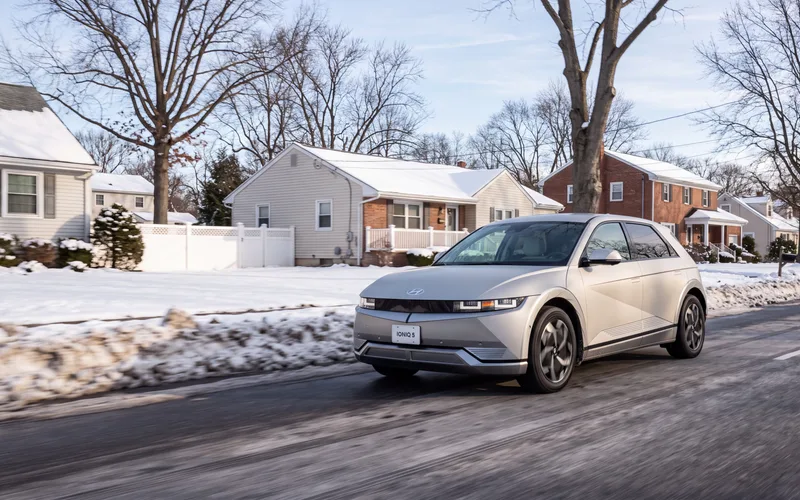 Hyundai Ioniq 5Compact SUVBetter at: Space and value
Identical hardware underneath, but more cargo and rear headroom, US-built with included maintenance, and several thousand dollars cheaper trim-for-trim.
Compare 2.60C+
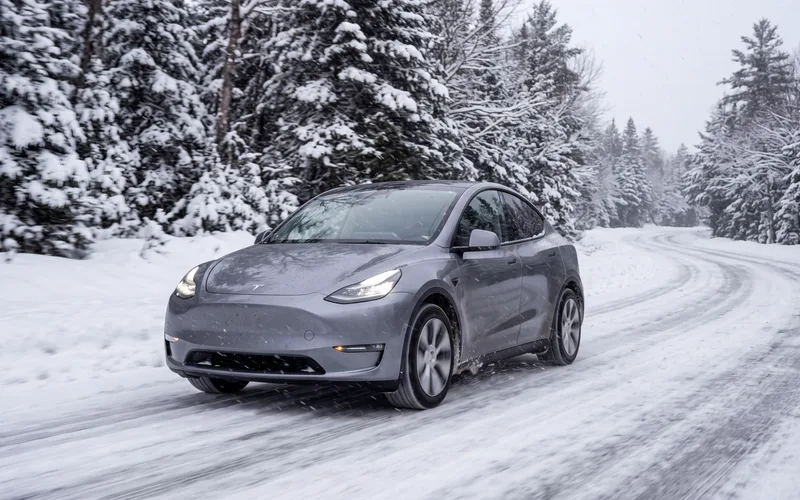 Tesla Model YCompact SUVBetter at: Resale value
More range and cargo, and far stronger resale value — the EV6's projected 44% five-year retention is its costliest weakness.
Compare 2.58C+
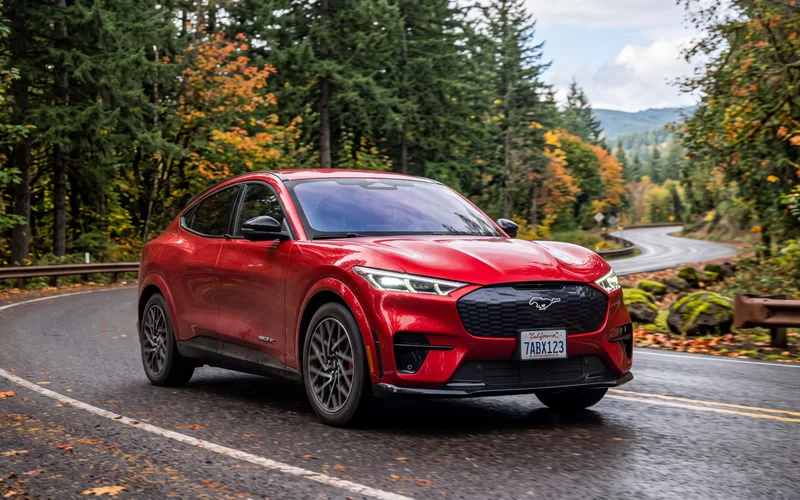 Ford Mustang Mach-ECompact SUVBetter at: Hands-free driving
Similar sporty-EV brief at a similar price, but adds BlueCruise hands-free highway driving that no EV6 trim offers.
CompareSubject scores by year
Hover or tap a score to see what moved it versus the year before. A corner mark flags a big swing.
| Year | Performance | Efficiency | Safety | Space | Cost | Reliability | Tech | Use-case | Driving | Value |
|---|---|---|---|---|---|---|---|---|---|---|
| 2026 | 59 | 75 | 80 | 49 | 57 | 65 | 82 | 66 | 77 | 79 |
| 2025 | 60 | 75 | 75 | 49 | 50 | 64 | 81 | 66 | 77 | 77 |
| 2024 | 58 | 75 | 77 | 45 | 55 | 59 | 67 | 61 | 72 | 76 |
| 2023 | 59 | 75 | 82 | 47 | 48 | 58 | 68 | 63 | 75 | 74 |
| 2022 | 59 | 75 | 79 | 47 | 48 | 56 | 68 | 62 | 75 | 74 |
Compare two years
Best fit & conditions
Higher scores mean a better fit for that use case. Learn more about use-case fit →
Subject profile
Academic Probation · NHTSA safety recalls
No NHTSA safety recall is on record for the 2026 Kia EV6. Other model years of the EV6 have 5 — listed below.
5 recalls on other model years of the EV6 (2022–2024)
Jul 2, 2026Electrical system: propulsion system: traction batteryThe high voltage battery cells may contain misaligned electrodes, which can lead to a fire while parked or driving.
Defect
Kia America, Inc. (Kia) is recalling certain 2022-2024 EV6 and 2024 EV9 vehicles. The high voltage battery cells may contain misaligned electrodes, which can lead to a fire while parked or driving.
Risk
A fire increases the risk of injury.
Remedy
Owners are advised to park outside and away from structures and limit their charge to a maximum of 80% until the recall repair is complete. Dealers will replace the high voltage battery system assembly, free of charge. Owner notification letters are expected to be mailed August 7, 2026. Owners may contact Kia customer service at 1-800-333-4542. Kia's number for this recall is SC375. Vehicle Identification Numbers (VINs) involved in this recall will become searchable on NHTSA.gov beginning July 17, 2026.
NHTSA campaign 26V431000 ↗Manufacturer no. SC3758 vehicles potentially affected (all models in the campaign)Owners notified Aug 7, 2026Filed by Kia America, Inc.Filed as EV6Nov 18, 2024Electrical system: 12v/24v/48v battery · Electrical system: propulsion system: charging: module: softwareThe Integrated Charging Control Unit (ICCU) may become damaged and stop charging the 12-volt battery, which can result in a loss of drive power.
Defect
Kia America, Inc. (Kia) is recalling certain 2022-2024 EV6 vehicles. The Integrated Charging Control Unit (ICCU) may become damaged and stop charging the 12-volt battery, which can result in a loss of drive power.
Risk
A loss of drive power increases the risk of a crash.
Remedy
Dealers will inspect and replace the ICCU and its fuse, as necessary. In addition, dealers will update the ICCU software. All repairs will be performed free of charge. Owner notification letters were mailed December 13, 2024. Owners may contact Kia customer service at 1-800-333-4542. Kia's number for this recall is SC327. This recall expands and replaces previous recall number 24V-200. Vehicles previously repaired under recall 24V-200 will need to have the new remedy completed.
NHTSA campaign 24V867000 ↗Manufacturer no. SC32762,872 vehicles potentially affected (all models in the campaign)Owners notified Dec 13, 2024Filed by Kia America, Inc.Filed as EV6Mar 14, 2024Electrical system: 12v/24v/48v batteryThe Integrated Charging Control Unit (ICCU) may become damaged and stop charging the 12-Volt battery, which can result in a loss of drive power.
Defect
Kia America, Inc. (Kia) is recalling certain 2022-2024 EV6 vehicles. The Integrated Charging Control Unit (ICCU) may become damaged and stop charging the 12-Volt battery, which can result in a loss of drive power.
Risk
A loss of drive power increases the risk of a crash.
Remedy
Dealers will inspect and replace the ICCU and its fuse, as necessary. In addition, dealers will update the ICCU software. All repairs will be performed free of charge. Owner notification letters are expected to be mailed April 29, 2024. Owners may contact Kia customer service at 1-800-333-4542. Kia's number for this recall is SC302.
NHTSA campaign 24V200000 ↗Manufacturer no. SC30248,232 vehicles potentially affected (all models in the campaign)Owners notified Apr 29, 2024Filed by Kia America, Inc.Filed as EV6Jan 31, 2024Power train: driveline: driveshaftOne of the drive shafts may have been improperly heat-treated, allowing it to break under load and resulting in a loss of drive power.
Defect
Kia America, Inc. (Kia) is recalling certain 2023-2024 Niro EV and 2023 EV6 vehicles. One of the drive shafts may have been improperly heat-treated, allowing it to break under load and resulting in a loss of drive power.
Risk
A loss of drive power increases the risk of a crash.
Remedy
Dealers will replace the drive shaft, free of charge. Owner notification letters were mailed March 28, 2024. Owners may contact Kia customer service at 1-800-333-4542. Kia's number for this recall is SC295.
NHTSA campaign 24V057000 ↗Manufacturer no. SC2951,243 vehicles potentially affected (all models in the campaign)Owners notified Mar 28, 2024Filed by Kia America, Inc.Filed as EV6May 11, 2022Parking brake: electrical: control module: softwareA software error in the Shifter Control Unit (SCU) may disengage the parking mechanism, which can allow the vehicle to rollaway.
Defect
Kia Motor America (Kia) is recalling certain 2022 EV6 vehicles. A software error in the Shifter Control Unit (SCU) may disengage the parking mechanism, which can allow the vehicle to rollaway.
Risk
Vehicle rollaway can increase the risk of a crash or injury.
Remedy
Drivers are recommended to park their vehicles on level ground and avoid parking on a slope/inclined surface whenever possible until the remedy has been performed. Dealers will update the Shifter Control Unit software, free of charge. Owner notification letters were mailed May 25, 2022. Owners may contact Kia customer service at 1-800-333-4542. Kia's number for this recall is SC236.
NHTSA campaign 22V322000 ↗Manufacturer no. SC2369,014 vehicles potentially affected (all models in the campaign)Owners notified May 25, 2022Filed by Kia Motors AmericaFiled as EV6
Source: NHTSA Office of Defects Investigation recall database, model years 2022–2026. Recalls are listed by model year as the manufacturer filed them; whether a specific car is affected depends on its VIN — check a VIN at nhtsa.gov ↗. NHTSA model names matched to this page: EV6.
Detailed scoring by subject
1Performance & PowertrainOne of the EV6's weakest categories.2.00C
Scored on the dual-motor 84-kWh AWD configuration (Wind/GT-Line AWD), the volume seller and the direct analogue of the Ioniq 5 Long Range AWD already in the dataset. Combined output is strong for a compact SUV but mid-pack against the 150–550 hp SUV band, which is stretched by full-size and performance entries.
Dual-motor combined torque is available from zero rpm, which is why the EV6 feels quicker in traffic than its horsepower suggests. Identical figure to the Ioniq 5 Long Range AWD — same E-GMP motors.
Instrumented AWD times for the pre-facelift EV6 clustered around 4.5 s; the facelifted 84-kWh car is marginally heavier, so ~4.6 s is the honest figure and matches the platform-twin Ioniq 5 Long Range AWD. Quick enough to outrun nearly every gas compact SUV.
Single-speed EV delivery with no lag, no shift interruption and no combustion coarseness; the 800V architecture holds output consistently rather than tapering under sustained load. Held just under the very top of the band because the GT's boost-mode delivery is abrupt by design and hard launches produce noticeable front-axle push.
Single-speed reduction gear — nothing to hunt, drone or shift harshly. Paddle-adjustable regen with an i-Pedal one-pedal mode gives more driver control over deceleration than most rivals; a point below the Ioniq 5's 91–92 band only because blending between regen and friction braking remains the EV6's weakest calibration.
Like its Ioniq 5 twin, the US-market EV6 carries only a light trailer rating — enough for a small utility trailer or a pair of jet skis, not for a camper. This is the single biggest drag on the category score and the clearest gap versus the three-row EV9.
Dual-motor e-AWD is optional on Wind and GT-Line and standard on the GT, with instant electronic torque distribution front-to-rear and a snow mode — sophisticated in software terms. Kept below 80 because AWD is not offered at all on the entry Light trim and there is no low range or locking hardware.
Roughly 6 inches of ground clearance, road-biased tires, no skid plates, no terrain-mode suite beyond snow, and an exposed underfloor battery pack — the EV6 is explicitly a pavement car. Scored well below the Ioniq 5 (52) because Hyundai sells a lifted, off-road-tired XRT variant and Kia offers no EV6 equivalent in the US.
One powertrain type only — battery-electric, no gas, hybrid or PHEV alternative — which the framework caps in the bottom band. Placed at the top of that band rather than the floor because the buyer still picks between two battery sizes, RWD or AWD, and a 641-hp GT, a genuinely wide spread of outputs.
2Efficiency & RangeGrades above the middle of the scale.3.09B
The volume Wind AWD carries the 84-kWh pack on 19-inch wheels and rates 106 MPGe combined (32 kWh/100 mi) — mid-pack for an EV compact SUV, well behind the single-motor RWD cars that share the platform. 2026 is a carry-over year on the facelifted CV generation, so the figure is unchanged and re-verified against the EPA's 2026 listing.
City is the EV6's strongest EPA figure, as it is for any EV — four levels of paddle-adjustable regen plus i-Pedal recover most stop-and-go energy. Re-verified unchanged for 2026.
Highway MPGe drops about 19% from city, the usual EV pattern, though the EV6's low shooting-brake profile costs it less aerodynamically than the boxier Ioniq 5 sibling. Re-verified unchanged for 2026.
The 84-kWh pack introduced with the 2024 facelift carries into 2026 unchanged and gives the volume AWD 295 EPA miles — respectable for a dual-motor compact EV SUV but only mid-band against the 200–400 mi EV range window, and 24 miles short of the RWD car on the same battery.
The 800-volt E-GMP architecture accepts 240 kW on the 84-kWh trims — near the top of the mainstream EV field and roughly double what most 400-volt compact electric SUVs manage, though short of the 320 kW band ceiling.
Kia quotes 20 minutes on a 350 kW charger for every trim — one of the quickest replenishment times in any segment, and close to the 17-minute band floor. The 800V pack also holds a high rate on 400V hardware, at 29 minutes on a 150 kW charger.
EPA puts the volume AWD at $700 a year at 15,000 mi/yr — near the bottom of the whole SUV field and a fraction of what a comparably quick gas crossover burns. Unchanged for 2026.
No gasoline of any grade, and the energy side is about as easy as an EV gets: 800V hardware taking 240 kW for a 20-minute 10–80% stop, a 10.9 kW onboard charger that fills the 84-kWh pack overnight on a home Level 2 circuit, and vehicle-to-load outlets on Wind and GT-Line that run tools or appliances off the pack. Georgia-built cars carry a native NACS port with factory Supercharger access, and 2026 adds a standard dual-voltage charging cable on every trim plus standard Plug & Charge authentication. Held short of the ceiling only because a buyer without home charging still pays public DC rates.
3SafetyOne of the EV6's strongest categories.3.41B+
The E-GMP Kia EV6 carries a 5-star NHTSA overall NCAP rating for this generation, and the 2025 facelift that the 2026 car continues is a styling/battery/infotainment update on an unchanged body structure. Confidence is MEDIUM rather than HIGH because nhtsa.gov could not be reached from this run to confirm a 2026-specific test entry.
The EV6 has been an IIHS Top Safety Pick/TSP+ winner across this generation, with Good results in small overlap front (driver and passenger), the updated side test, roof strength and head restraints. Placed at the floor of the award band rather than higher because the updated moderate-overlap test with the rear-passenger dummy is the generation's weakest crashworthiness result, and headlight ratings vary by trim — the two criteria that make award status year-to-year fragile under the tightened post-2023 rules. The prior score of 80 was placeholder data; the value is unchanged but now evidence-backed.
Kia Drive Wise is standard on every 2026 EV6 trim from the base Light Long Range up: Forward Collision-Avoidance Assist with pedestrian, cyclist and junction-turning detection, Lane Keeping and Lane Following Assist, Smart Cruise Control with Stop & Go, Blind-Spot Collision-Avoidance Assist, Rear Cross-Traffic Collision-Avoidance Assist, Safe Exit Assist, Driver Attention Warning and Rear Occupant Alert. None of the core five (AEB/ACC/LKA/BSM/RCTA) is trim-locked, which is the top band; it sits a point below the Ioniq 5 only because Kia reserves Highway Driving Assist 2 and the Blind-Spot View Monitor for GT-Line and GT.
Forward Collision-Avoidance Assist 2 covers vehicle-to-vehicle, pedestrian, cyclist and junction-turning scenarios and performs well in the IIHS vehicle-to-vehicle and daytime pedestrian evaluations. Held at the bottom of the top band because nighttime pedestrian detection is the weaker half of the updated IIHS pedestrian test for this hardware, which the EV6 shares with the Ioniq 5.
Blind-Spot Collision-Avoidance Assist and Rear Cross-Traffic Collision-Avoidance Assist are standard and both intervene with steering or braking rather than only warning, and Safe Exit Assist guards against opening a door into traffic — which matters more here than in most compact SUVs given the EV6's poor over-the-shoulder sightlines. GT-Line and GT add the Blind-Spot View Monitor camera feed in the cluster. Not higher because that camera view is trim-locked and there is no trailer-aware coverage.
Lane Following Assist provides genuine centering on all trims and HDA2 on GT-Line and GT adds assisted lane change, but reviewers consistently describe the Hyundai/Kia centering calibration as slightly busy — small side-to-side corrections on wide lanes and in curves — rather than the settled behavior the top band asks for.
Smart Cruise Control with Stop & Go is standard and full-speed-range, and Highway Driving Assist 2 integrates cruise with centering and assisted lane change cleanly on GT-Line and GT. Kept at the band floor because it remains a hands-on system with conservative gap-keeping and an unhurried resume, and the best-integrated version is not on the volume trims.
Kia offers no hands-free highway driving system on the 2026 EV6 at any trim. HDA2 is hands-on and requires steering-wheel torque, placing this squarely in the 0-49 no-hands-free band and well behind the Mustang Mach-E (BlueCruise), Cadillac Optiq/Lyriq (Super Cruise) and Tesla Model Y. The prior score of 82 was placeholder data and materially overstated the car.
LED projector headlamps with High Beam Assist are standard, and the 2025 facelift redesigned the lighting signature front and rear. Mid-band rather than top because IIHS headlight results for this generation have run Good on upper trims and Acceptable on lower ones, so the volume Wind trim is not guaranteed the best-rated unit.
This is the EV6's clearest safety weakness and the main reason it scores below its Ioniq 5 platform sibling here. The crossover-fastback body pairs a high beltline, thick rear three-quarter pillars and a small, steeply raked rear window that the full-width spoiler visually splits, so rearward and over-the-shoulder sightlines are genuinely poor; forward visibility over the low cowl is good. Camera compensation is partial — the Surround View Monitor is trim-locked to GT-Line and GT and there is no digital rearview mirror — which keeps it in the average band rather than the top one.
The E-GMP flat floor, 114.2 in wheelbase and roughly 39 in of rear legroom give real room to work with, and there are two outboard lower-anchor positions plus three top tethers. Held to the middle band because the sloping roofline and comparatively low, knees-up rear seat cushion make rear-facing installs and lifting a child in more awkward than in the taller Ioniq 5 or Sportage, and the lower anchors sit in the seat bight rather than on easy-access hardware. The prior score of 90 was placeholder data and was too generous.
4Space & ComfortThe EV6's lowest-graded category.1.24D
The EV6 is a two-row, five-seat crossover across every 2026 trim (Light Long Range, Wind, GT-Line, GT); there is no six- or seven-seat configuration. Replaces the placeholder value of 6.7 seats.
Kia's published front head room for the current CV-generation EV6, unchanged by the 2025 facelift, which restyled the fascias and interior tech without altering the greenhouse. Mid-pack for a compact SUV — the EV6's low, fastback-ish roofline gives away headroom to the taller Ioniq 5 (39.8 in).
Front legroom benefits from the flat E-GMP floor and dash-forward packaging on the 114.2 in wheelbase; it comfortably beats the Ioniq 5's 41.7 in despite the shorter wheelbase.
The tapering roofline and standard rear glass cost the EV6 rear headroom relative to boxier EVs — 0.7 in less than the Ioniq 5 and only mid-band for the compact SUV segment. Tall rear passengers sit close to the headliner.
The best passenger-space attribute of the car: a skateboard battery and long 114.2 in wheelbase yield near-mid-size rear legroom, well clear of gas compact SUVs like the Sportage (41.3 in is class-leading, but most rivals sit in the 37-38 in range).
The EV6 is a two-row vehicle with no third row offered on any 2026 trim. Per the item's guidance, a missing third row scores in the 0-49 band rather than being omitted. Buyers who need a third row are pushed to the Kia EV9.
Cargo behind the second row is the EV6's weakest packaging dimension — the sloping tailgate and high load floor over the rear motor leave it below the bottom of the segment normalization band (25 cu ft), behind both the Ioniq 5 (27.2) and gas compact SUVs like the Sportage (39.5). The small frunk adds little.
Maximum cargo volume also falls below the segment band floor (55 cu ft) — the fastback profile costs vertical space behind the front seats. The Ioniq 5 manages 59.3 cu ft and a gas Sportage 74.1 cu ft on similar footprints.
Competitive but not class-leading: flat E-GMP floor, an open shelf under the floating center console, a deep underfloor bin in the cargo area, and Vehicle-to-Load (V2L) power via an exterior adapter plus an in-cabin outlet. It gives up the Ioniq 5's sliding center console and larger frunk, and the frunk itself is token at 0.7 cu ft on AWD.
Front seats draw consistent praise for support and bolstering, particularly the GT-Line/GT buckets, and power adjustment with driver memory is widely available. The rear bench is the limiter: a low-mounted cushion over the battery leaves taller adults with a knees-up posture despite generous legroom, and thigh support is short.
Tuned firmer than its Ioniq 5 platform-mate: body control is good and the car settles well at highway speed, but 19- and 20-inch wheels make it busy over broken urban pavement, and the GT is stiff enough that reviewers flag it as a comfort trade-off. The 2025 facelift's suspension and bushing retune improved secondary ride without making it plush.
Quiet by mainstream compact SUV standards thanks to the absent engine, acoustic front glass and added sound deadening in the 2025 refresh, but not library-quiet — road and tire roar on the 20-inch wheels is the dominant intrusion at highway speed, a common criticism of the E-GMP cars.
Rich and available low in the range: dual-zone automatic climate control across the lineup, heated front seats and a heated steering wheel from Wind up, ventilated front seats and heated rear outboard seats on GT-Line/GT, plus remote climate preconditioning and scheduled departure through Kia Connect. A heat pump is standard, which matters for winter cabin heat without a range penalty.
5Cost of OwnershipOne of the EV6's weakest categories.1.80C-
The refreshed EV6 lineup opens with the Light Long Range RWD — the old Standard Range base trim was dropped at the 2025 facelift, so the entry price sits well above the compact-SUV band midpoint. Unlike the Georgia-built Ioniq 5, the Korea-built EV6 never qualified for the $7,500 federal purchase credit, so it had less pricing pressure to absorb when that credit and the lease loophole expired 2025-09-30, and no large 2026 markdown is assumed here.
Wind RWD is the volume configuration — it adds the equipment most buyers actually want (power tailgate, heated seats, upgraded audio, wireless charging) over the sparse Light trim while staying below the GT-Line and the performance GT. A premium-priced compact EV, so the volume price lands mid-band rather than well.
As a BEV the EV6 has no oil changes, spark plugs, belts, or exhaust work — scheduled service is essentially cabin filters, tire rotations, brake fluid, and inspections, and regenerative braking stretches pad and rotor life. Lands toward the low end of the SUV band, but above the Ioniq 5's figure because Kia includes no complimentary scheduled maintenance in the US, so the owner pays for every visit from mile one.
The weakest part of the EV6's cost picture and the heaviest-weighted item in the category. EV residuals stay depressed by fast-moving battery and charging technology and by the steady stream of cheaper, longer-range replacements. Partly offset going forward by the federal credit's expiry, which removes the new-vs-used price distortion that had been crushing EV trade-in values.
Kia's 5-year/60,000-mile new-vehicle limited warranty tops the SUV band outright — two years longer than the 3/36 industry standard, and among the strongest reasons to buy a premium-priced Korean EV over a German rival.
Maxes the band. The 10-year/100,000-mile coverage extends to the high-voltage battery and drive units — the most expensive failure mode on an EV and the one used buyers price in hardest.
Mid-band, and the one place the EV6 clearly trails its Hyundai twin: Kia offers NO complimentary scheduled maintenance in the US, where Hyundai bundles 3 years / 36,000 miles. What is included is roadside assistance, a Kia Connect connected-services trial, and an EV charging benefit (home-charger credit or public fast-charging credit). The facelifted car's native NACS port also removes the adapter friction that costs rivals' owners time at Tesla Superchargers.
$50,075 volume-trim price minus its estimated resale value after 5 years (44% retained, or about $22,033) leaves about $28,042 in depreciation. Add the projected $4,400 in 5-year maintenance and repairs, and owning this vehicle for 5 years costs about $32,442 in total.
6Reliability & QualityMid-pack among this car's ten categories.2.40C+
Mixed rather than poor. The EV6 has drawn roughly average-to-favorable predicted reliability from Consumer Reports across recent survey years and generally solid quality-and-reliability marks from J.D. Power, but the ICCU (Integrated Charging Control Unit) failure mode documented across the E-GMP family is a real defect that has produced stranding events. 2026 is the second model year of the facelifted car, so the revised charging hardware and control software have had a year of field exposure — better settled than the Ioniq 5's situation, which is simultaneously absorbing a new-plant production move.
Kia is a solidly upper-mid-pack dependability brand and the stronger of the two Hyundai Motor Group volume marques on initial quality — it has been a repeat top-five finisher in J.D. Power's Initial Quality Study, including outright mass-market wins. Long-term dependability is a step behind that: Kia lands mid-table in Consumer Reports brand rankings, better than the domestic and European volume brands but short of the Toyota/Lexus/Honda tier the 80-100 band describes.
This generation carries a major, repeated powertrain-adjacent campaign. Kia mirrored Hyundai's ICCU actions on the EV6, covering earlier model years for a failure that stops the 12V battery from charging and can cause loss of drive power, with remedies spanning ICCU inspection/replacement and control-software updates. That is squarely the 'major or repeated recalls' description. It scores at the top of that band rather than deeper into it because 2026 builds fall outside the recalled populations and ship with revised hardware, and because the balance of the record — camera software, seat-belt and charge-port items — is unremarkable for the segment.
The E-GMP drive unit and 800V battery architecture have held up well across four-plus model years — permanent-magnet motors with single-speed reduction gearing are inherently low-wear, pack degradation reports have been unremarkable, and there has been no thermal-event recall of the kind that damaged the earlier Kona Electric's reputation. What keeps this out of the 'proven, no red flags' upper band is that the one component with a systemic failure history, the ICCU, sits directly in the high-voltage charging path.
The facelift materially improved this cabin: a curved twin-panel display, upgraded switchgear, and — importantly — the retirement of the pre-refresh dual-function haptic control bar that reviewers disliked. Upper surfaces are soft-touch and the GT-Line treatment reads convincingly premium. It sits in the upper-middle band rather than higher because hard plastics persist on the lower doors and console flanks, which is a fair criticism given the vehicle's Premium price positioning.
Assembly quality is a genuine strength. The EV6 has run for five model years off a mature line, road tests have not flagged systemic panel-gap, rattle or squeak complaints, and Kia's initial-quality standing is among the best in the mass market. This scores above the platform-mate Ioniq 5 specifically because the EV6 is not absorbing the new-plant production ramp that is holding that car's score down.
Raw coverage is a clear strength — Kia runs a dense nationwide network of roughly 750-800 US franchised dealers, so physical access to service is a non-issue almost anywhere in the country. What holds this to the upper-middle band is EV-specific service depth: high-voltage diagnostic capability and EV certification are uneven across stores, and ICCU-related repairs on this platform generated widely reported multi-week vehicle downtime.
The weakest part of the ownership picture. High-voltage components are dealer-only with essentially no aftermarket, ICCU replacements were on documented backorder during the recall campaigns, and the 800V architecture plus aluminum-intensive structure raises collision repair cost enough that insurers have been quick to total damaged examples. Korean assembly adds import lead time to the parts pipeline that a US-built rival does not carry. The long 10-year/100,000-mile battery and powertrain warranty meaningfully offsets owner exposure but does not make the parts themselves cheap or plentiful.
7Technology & InfotainmentThe EV6's best-graded category.3.56A-
The facelifted EV6 carried into 2026 pairs a 12.3-inch center touchscreen with a 12.3-inch digital cluster under one curved glass panel, standard from the base Light Long Range up to the GT — there is no smaller base screen and no larger optional one.
The refresh moved the EV6 to Kia's ccNC software, which reviewers consistently call quick, logically laid out and free of the lag that dogs several rivals; the one persistent complaint is the shared haptic bar below the screen that toggles between climate and media rather than giving each its own controls.
The ccNC head unit added wireless Apple CarPlay and Android Auto on every trim, fixing the pre-facelift EV6's wired-only limitation that was the single most-cited tech complaint about the car.
Navigation is standard on every trim with over-the-air map updates and an EV route planner that inserts charging stops and preconditions the battery on the way to a DC fast charger; the natural-language voice assistant handles climate, navigation and media commands well but is not the equal of the best cloud assistants.
A 14-speaker Meridian premium system is available on the upper trims and is a genuinely strong setup helped by the quiet EV cabin, but the six-speaker base system on the volume-entry trim is merely adequate and the Meridian upgrade is not offered low in the range.
A 12.3-inch full-digital, configurable cluster is standard on every trim — no partial-digital base version — and it doubles as the display for the blind-spot camera feed on trims that have Blind-Spot View Monitor.
Kia's E-GMP cars on ccNC take over-the-air updates for infotainment and maps plus vehicle control ECUs, so genuine whole-vehicle updates are possible; the cadence and the amount of new functionality delivered still trail the software-first EV brands.
The Kia Access app covers the full EV feature set — remote climate and cabin preconditioning, lock/unlock, locate, charge scheduling and remote start/stop of charging — and Digital Key 2 adds phone- and smartwatch-as-key with key sharing; complimentary Kia Connect runs out and becomes a paid subscription, which costs it points.
USB-C ports serve both rows (with seatback-mounted ports for rear passengers) and wireless phone charging is fitted on the volume trims, but the real differentiator is vehicle-to-load: a 1.9 kW interior outlet plus an exterior V2L adapter that turns the traction battery into a household power source — far beyond the single 110V outlet a rival might offer.
Proximity entry with push-button start is standard, a smart power liftgate opens hands-free on upper trims, and Digital Key 2 turns a phone or watch into the key with remote sharing; Remote Smart Parking Assist additionally lets the car be driven into or out of a tight space from outside using the fob.
Rear camera plus front and rear parking distance warning are standard, and the upper trims add a clear Surround View Monitor, Blind-Spot View Monitor and Remote Smart Parking Assist; the 360-degree camera is not available low in the lineup, which keeps this out of the top band.
A large augmented-reality head-up display that overlays navigation arrows onto the road is offered, and it is one of the better implementations in the class, but it is reserved for the top trims and is not available on the volume-entry configurations.
8Use-Case FitMid-pack among this car's ten categories.2.44C+
Generous 39.0 in rear legroom on a 114.2 in wheelbase and a flat E-GMP floor make three-across and rear-facing seats workable, but the fastback roofline cuts rear headroom to 38.0 in and narrows the aperture for lifting a child into a high-back seat. Cargo of 24.4 cu ft behind the second row swallows a stroller without folding seats, though it trails the Ioniq 5's 27.2 cu ft.
The safety content families care about is standard on the trims they actually buy: Drive Wise is fitted across Light Long Range, Wind, GT-Line and GT, with Blind-Spot Collision Avoidance, Rear Cross-Traffic Collision Avoidance, Safe Exit Assist and Smart Cruise with Stop & Go all standard rather than optional. Held under 90 by only average headlight performance and poor rear outward visibility.
Supportive front seats, acoustic glass and 24.4 cu ft of luggage room with all five seats occupied make it a competent four-up tourer, and 800V charging keeps rest stops to roughly the length of a bathroom break. Rear amenities are thin for the price, though — vents and USB-C ports but no rear sunshades or screens, and heated rear seats are reserved for GT-Line and above.
Single-speed instant torque, four paddle-selectable regen levels and i-Pedal one-pedal driving make stop-and-go traffic genuinely low-effort, backed by Smart Cruise Control with Stop & Go standard on every trim. Kept out of the high 80s by a firm, occasionally busy low-speed ride and the compromised over-the-shoulder view.
At 103 MPGe combined for the volume Long Range AWD (117 MPGe for Long Range RWD) the EV6 costs roughly $850/yr in energy, and regen braking plus no oil changes hold five-year maintenance near $4,400 versus $6,000–$8,000 for a comparable gas compact SUV. Full marks are withheld because insurance runs high for an EV at roughly $2,500/yr and the staggered low-profile tires are not cheap consumables.
A compact ~185 in long, 74.4 in wide footprint and a tight sub-39 ft turning circle suit city use, and rear camera plus front/rear parking sensors are standard with Surround View and Remote Smart Parking Assist available above. The spoiler-divided rear glass and heavy C/D-pillars mean the cameras are doing real work rather than merely helping.
Rated at just 2,300 lbs when properly equipped in AWD form — with no factory tow package offered in the US and a lower RWD rating — the EV6 cannot do meaningful towing work, and towing at that limit collapses real-world range. There is no bed and no payload headroom worth the name; 24.4 cu ft of enclosed cargo is the whole work story, lifted slightly above the floor of this band only by the 1.9 kW V2L outlet that genuinely runs corded tools.
The E-GMP hardware is now proven in volume across the EV6, Ioniq 5 and GV60 and carries a 10 yr / 100,000 mi high-voltage battery warranty, so mechanical toughness is not the concern. What is missing is any work pedigree: no fleet or commercial program, no wear-oriented rubber-floor or vinyl-seat option, and ~6.1 in of ground clearance with low-profile tires over an exposed battery pack that punishes rough sites.
Vehicle-to-Load is the one genuinely work-grade feature here — a 120V interior outlet at roughly 1.9 kW plus an exterior charge-port discharge adapter will run a compressor or a chop saw at a site with no power, which most rivals cannot claim. Everything else is passenger-car provision: cargo tie-downs, an underfloor bin and a cargo cover, but no roof rails as standard, no washable surfaces, no ladder or rack ecosystem and no factory hitch.
This is the EV6's strongest mission: 282 mi of range in the volume Long Range AWD and 319 mi in Long Range RWD, combined with an 800V architecture that takes 10–80% in about 18 minutes at up to 350 kW, produces the shortest highway stops in the segment. Comfortable front seats, acoustic glass and Highway Driving Assist 2 keep fatigue down, though the 93 MPGe highway figure means range falls off at 75 mph and only GT-Line and GT get HDA2 — and no trim offers hands-free.
Dual-motor AWD is available on Wind and GT-Line and standard on GT, and V2L makes the EV6 an excellent basecamp generator for camping, but the hardware stops there: roughly 6.1 in of ground clearance, no terrain modes, no underbody protection and no raised XRT-style variant of the sort Hyundai gives the Ioniq 5. A 2,300 lb tow ceiling rules out most trailered toys, leaving it a graded-gravel-road vehicle rather than an adventure enabler.
The numbers are mid-pack rather than bad — 24.4 cu ft behind the second row expanding to 50.2 cu ft folded, plus an underfloor bin and a small frunk (1.8 cu ft RWD, 0.7 cu ft AWD) — but that maximum trails the Ioniq 5 by roughly nine cubic feet and the CR-V by far more. The fastback roofline caps how tall a load can be, and with no standard roof rails and no factory hitch, the usual outlets for bulky gear are closed off.
9Driving ExperienceGrades above the middle of the scale.3.23B+
The EV6 is the athletic member of the E-GMP crossover family: a 114.2-in wheelbase (3.9 in shorter than the Ioniq 5), firmer damping, and a lower center of gravity give it genuine body control and secure, flat cornering for a ~4,700-lb crossover. Held below the 80s because grip on the volume GT-Line/Wind AWD is limited by efficiency-biased tires and the mass shows up as steady understeer when pushed.
Accurate and more quickly geared than the Ioniq 5's, with sensible weight build-up in Sport mode, but the electric rack is filtered and communicates almost nothing about the front tires. Precise enough to place the car confidently; not a steering system anyone drives for.
Outright stopping power is fine — roughly 120 ft from 60 mph on the AWD trims — and four paddle-selectable regen levels plus i-Pedal give useful driver control. Marked down because regen-to-friction blending is the EV6's most consistently criticized dynamic trait: a soft, inconsistent initial pedal that makes smooth low-speed stops harder than they should be.
Single-speed reduction gear, no shifts, no stop/start, no combustion vibration, and 800V architecture that holds output steadily rather than tapering under sustained load. Tip-in is well judged in Normal and Eco; a point off the very top because the AWD launch produces noticeable front-axle push and the GT's boost mode is abrupt by design.
Near-silent in normal driving, with only a faint motor whine at full throttle and no vibration through the wheel or pedals; the 2025 facelift added sound insulation and acoustic glass that carry into 2026. Scored on drivetrain noise specifically — road and wind noise, the EV6's louder failing, are covered by cat4's cabin-quietness item (76).
The EV6's shorter wheelbase gives it a usefully tighter circle than the Ioniq 5 (39.4 ft) despite the same platform, though it is still mid-pack against the 34–42 ft SUV band because E-GMP's long wheelbase and large wheels limit steering lock.
Wide-ranging seat and wheel adjustment and a clean twin-12.3-in curved-display layout, improved for 2025–26 by the return of a dedicated physical climate control row in place of the polarizing dual-purpose haptic bar. Held in the 70s by the EV6's low, car-like hip point (no commanding SUV sightline) and genuinely poor rear visibility through the high beltline, thick D-pillars and shallow rear glass.
The enthusiast's pick among mainstream E-GMP crossovers: ~4.6 s to 60 in the volume AWD, eager turn-in, adjustable regen you can actually drive with, and a 641-hp GT halo with a drift mode sitting above it. Short of the 80s because the numb steering and 4,700 lb of mass mean the EV6 is fast and competent rather than tactile.
10Value & Market PositionOne of the EV6's strongest categories.3.37B+
The MY2025 facelift carried into 2026 standardized the dual 12.3-inch curved displays, wireless Apple CarPlay/Android Auto and a restored physical climate row across the whole lineup, and every EV6 ships the Kia Drive Wise suite (forward collision avoidance with junction turning, lane keeping and following assist, blind-spot and rear cross-traffic avoidance, driver attention warning, safe exit assist) plus vehicle-to-load power. Scored just under the platform-mate Ioniq 5 (85 in this dataset) because the entry Light trim is a touch leaner than Hyundai's SE and Kia asks more for the equivalent content.
The 800-volt E-GMP hardware is genuinely class-leading for the money — roughly 18-minute 10–80% DC fast charging at up to ~350 kW, up to ~319 miles of EPA range, a native NACS port and 320 hp in dual-motor form — but the EV6 is priced above its Hyundai twin trim-for-trim (volume Wind RWD ~$50,075 delivered against an Ioniq 5 SEL in the mid-$40Ks after Hyundai's 2026 price cuts), it gives up rear-seat and cargo space to that twin on a 114.2-inch wheelbase, and the federal $7,500 credit lapsed on 30 September 2025. Strong content per dollar, clearly short of the Ioniq 5's 84.
Five trims (Light Standard Range, Light Long Range, Wind, GT-Line, GT) span two battery sizes, RWD or dual-motor AWD across the middle of the range, and roughly $44,000 to $63,000, topped by the 641-hp GT halo — a wide, well-spaced ladder. Scored below the Ioniq 5 (86) because AWD is unavailable on the entry trims, the GT is AWD-only, and Kia offers no rugged XRT-style variant to widen the range further.
The EV6 is a steady but distinctly mid-pack seller — a consistent presence in the US non-Tesla EV top ten and helped by the move to Georgia production, yet running well under half the Ioniq 5's volume and behind the Model Y and Mach-E, with the whole segment contracting after the federal credit expired. Placed below the Ioniq 5 (74) and Model Y (80), above the fading Mach-E's trajectory.
Kia has climbed further than almost any mainstream badge over the past decade and now leads on design, with the EV6 and EV9 as its halo products and an industry-benchmark 10-year/100,000-mile powertrain warranty behind them. It remains a value brand without luxury pull, though, and EV resale is weak enough to blunt the halo. Level with Hyundai's 72 in this dataset.
With the federal credit gone and EV inventory long, Kia has leaned hard on buyer-side support: heavily subvented leases, low- and zero-APR financing, and the EV6 charging offer (complimentary home charger or public-charging credit) that has run on recent model years. Kia's franchised dealers also negotiate, unlike Tesla's fixed pricing. Scored just under the Ioniq 5's 84, where Hyundai went further by cutting MSRP outright.
2026 is the second year of a substantial MY2025 facelift that brought the larger 84 kWh battery, a native NACS charge port, revised front and rear fascias, new dual 12.3-inch curved displays with a restored physical climate row, and added acoustic glass and insulation. The underlying E-GMP generation dates to 2022, so the platform is no longer new, but the recent hardware refresh keeps the car current with no imminent replacement signalled.
One of the better-decorated EVs on sale: European Car of the Year 2022, repeat Car and Driver 10Best selections, a MotorTrend SUV of the Year finalist berth and strong showings in comparison tests, with the GT drawing separate performance-car recognition. Reviewers consistently rate it the sharper-driving E-GMP crossover. Scored below the Ioniq 5's 90, whose 2022 World Car of the Year triple is a heavier award record.