

The verdict
A mixed-report compact sedan, strong on ownership and held back by performance.
The 2026 K4 is one of the cheapest and roomiest ways into a new compact sedan: it opens around $23,400 with destination, carries a 12.3-inch touchscreen with wireless CarPlay on every trim, and its 38.0 inches of rear legroom tie the class best — all backed by Kia's 5 yr/60,000 mi basic and 10 yr/100,000 mi powertrain warranty. The catch is what's under the hood. The volume 147-hp 2.0L four needs about 8.8 seconds to reach 60 mph, drones through its CVT, and returns 33 MPG combined at a time when the Civic, Corolla and Elantra all sell hybrids near 50 MPG. Buy the K4 for the space, the screens and the price; if fuel bills or driving enjoyment top your list, the same money buys better elsewhere.
Jump to scoresStrengths
- Lowest entry price in the class, with the longest warranty attached
- A brand-new design that gives you a lot for the money
- Big-screen tech on every trim, including the base car
What holds it back
- The engine most buyers get is slow and loud
- No hybrid at any price — and rivals all have one
- Front-wheel drive only, and strictly a pavement car
Top alternatives
Cars shoppers cross-shop with the Kia K4 2.13C
2.13C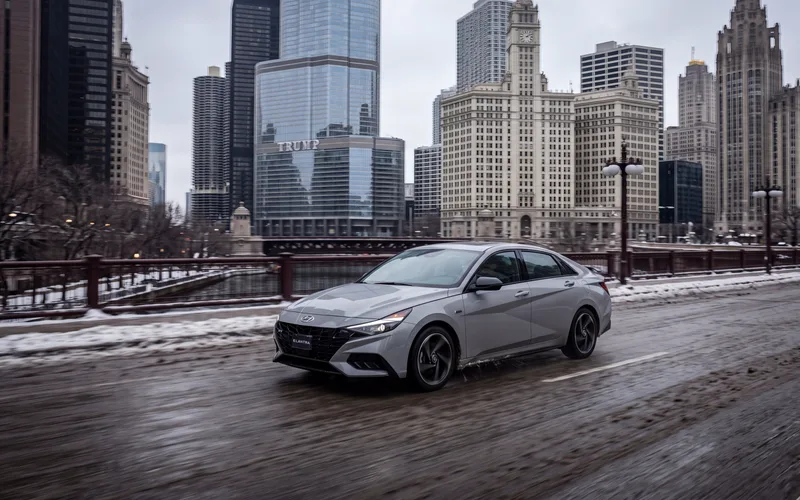 Hyundai ElantraCompact SedanBetter at: Hybrid efficiency
Same mechanicals and identical 38.0-in rear legroom for similar money, but it adds a 54 MPG hybrid, three years of free maintenance and free connected services the K4 charges for.
Compare 2.44C+
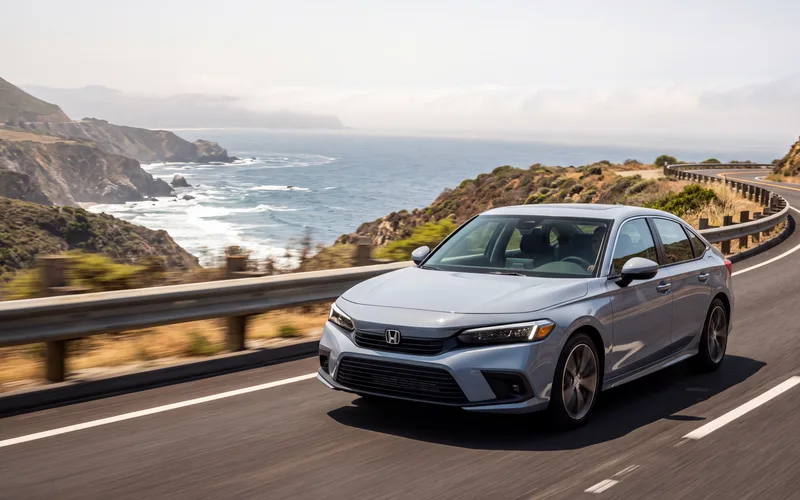 Honda CivicCompact SedanBetter at: Resale value
Costs more up front but drives far better, offers a 49 MPG hybrid and holds roughly ten more points of value after five years.
Compare 2.40C+
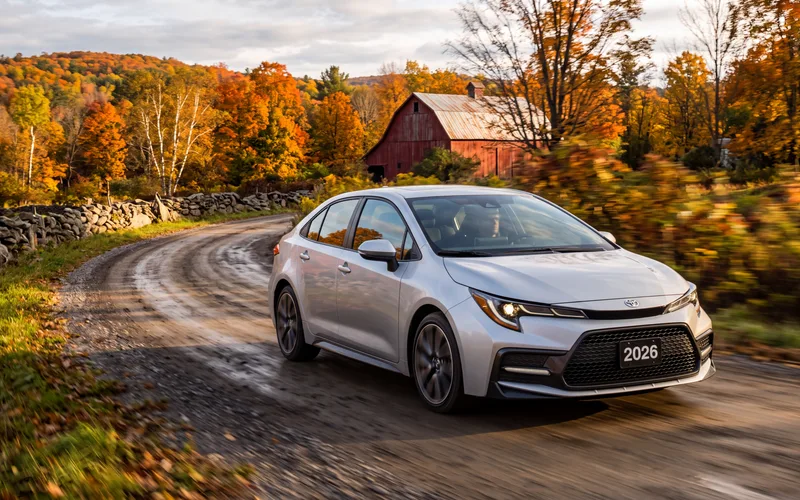 Toyota CorollaCompact SedanBetter at: Reliability
Tighter inside and behind the times on tech, but a 50 MPG hybrid, available AWD and Toyota's dependability record make it the safer long-haul choice.
CompareSubject scores by year
Hover or tap a score to see what moved it versus the year before. A corner mark flags a big swing.
| Year | Performance | Efficiency | Safety | Space | Cost | Reliability | Tech | Use-case | Driving | Value |
|---|---|---|---|---|---|---|---|---|---|---|
| 2026 | 23 | 60 | 71 | 65 | 82 | 72 | 67 | 51 | 62 | 75 |
| 2025 | 23 | 59 | 75 | 65 | 81 | 68 | 67 | 52 | 63 | 76 |
Compare two years
Best fit & conditions
Higher scores mean a better fit for that use case. Learn more about use-case fit →
Subject profile
Academic Probation · NHTSA safety recalls
Mar 6, 2026Seat belts: rear/other: anchorageThe rear center seat belt anchor buckle in the 2026 K4 and the third-row center seat belt anchor buckle in the 2027 Telluride may not latch properly.
Defect
Kia America, Inc (Kia) is recalling certain 2027 Kia Telluride and 2026 Kia K4 vehicles. The rear center seat belt anchor buckle in the 2026 K4 and the third-row center seat belt anchor buckle in the 2027 Telluride may not latch properly.
Risk
A seat belt buckle that is not latched properly can fail to restrain an occupant in a crash, increasing the risk of injury.
Remedy
Dealers will inspect and replace the anchor buckle assembly, as necessary, free of charge. Owner notification letters were mailed May 5, 2026. Owners may contact Kia at 1-800-333-4542. Kia's number for this recall is SC364. Vehicle Identification Numbers (VINs) involved in this recall will become searchable on NHTSA.gov beginning March 20, 2026.
NHTSA campaign 26V135000 ↗Manufacturer no. SC36414,870 vehicles potentially affected (all models in the campaign)Owners notified May 5, 2026Filed by Kia America, Inc.Filed as K4
2 recalls on other model years of the K4 (2025)
Jan 26, 2026Electrical system: instrument cluster/panelDue to a software error, the instrument panel display may fail. As such, these vehicles fail to comply with the requirements of Federal Motor Vehicle Safety Standard (FMVSS) numbers 101, "Controls and Displays" and 138, "Tire Pressure Monitoring System."
Defect
Kia America, Inc. (Kia) is recalling certain 2025 Kia K4, 2025-2026 Sorento, Sorento Hybrid, Sorento Plug-In Hybrid Electric (PHEV), 2026 Sportage, Sportage Hybrid, Sportage PHEV, K5, EV9, Carnival, and Carnival Hybrid vehicles. Due to a software error, the instrument panel display may fail. As such, these vehicles fail to comply with the requirements of Federal Motor Vehicle Safety Standard (FMVSS) numbers 101, "Controls and Displays" and 138, "Tire Pressure Monitoring System."
Risk
An instrument panel display that fails to show critical safety information, such as the speedometer, tire pressure, or warning lights, increases the risk of a crash.
Remedy
The instrument panel display software will be updated over-the-air (OTA) or by a dealer, free of charge. Owner notification letters are expected to be mailed March 26, 2026. Owners may contact Kia Customer Service at 1-800-333-4542. Kia's number for this recall is SC361. Vehicle Identification Numbers (VINs) involved in this recall will become searchable on NHTSA.gov on February 9, 2026.
NHTSA campaign 26V046000 ↗Manufacturer no. SC36142,677 vehicles potentially affected (all models in the campaign)Owners notified Mar 13, 2026Filed by Kia America, Inc.Filed as K4Aug 25, 2025Engine and engine cooling: critical fastenersThe connecting rod bolts in the engine may have been improperly tightened, which can cause a loss of drive power.
Defect
Kia America, Inc. (Kia) is recalling certain 2025 K4 and Sorento vehicles. The connecting rod bolts in the engine may have been improperly tightened, which can cause a loss of drive power.
Risk
A loss of drive power increases the risk of a crash.
Remedy
Dealers will replace the sub engine assembly, free of charge. Owner notification letters are expected to be mailed September 12, 2025. Owners may contact Kia customer service at 800-333-4542. Kia's number for this recall is SC349.
NHTSA campaign 25V548000 ↗Manufacturer no. SC34930 vehicles potentially affected (all models in the campaign)Owners notified Sep 12, 2025Filed by Kia America, Inc.Filed as K4
Source: NHTSA Office of Defects Investigation recall database, model years 2025–2026. Recalls are listed by model year as the manufacturer filed them; whether a specific car is affected depends on its VIN — check a VIN at nhtsa.gov ↗. NHTSA model names matched to this page: K4.
Detailed scoring by subject
1Performance & PowertrainThe K4's lowest-graded category.0.00F
The volume K4 trims (LX/LXS/EX/GT-Line) carry the 2.0-liter naturally aspirated four rated at 147 hp @ 6,200 rpm; only the range-topping GT-Line Turbo steps up to the 1.6-liter turbo at 190 hp. Even that turbo figure sits near the bottom of the sedan normalization band, which spans compact economy cars through 500+ hp luxury sedans.
The 2.0-liter's 132 lb-ft arrives high in the rev range at 4,500 rpm, so real-world thrust is modest and the engine has to be worked to deliver it. The optional 1.6 turbo's 195 lb-ft from 1,500 rpm transforms drivability but is confined to a single trim.
The 2.0-liter/IVT combination needs roughly 8.8 seconds to 60 mph — adequate for merging but among the slower compact sedans, and behind a Corolla (169 hp) or any of the segment's hybrids. The 1.6 turbo cuts about a second and a half off that.
The base 2.0-liter is smooth and predictable at part throttle but grows coarse and vocal when pressed, with the IVT holding revs high under load; there is no turbo lag or hybrid-transition awkwardness to fault, just a plain lack of muscle. The GT-Line Turbo's 1.6 is notably more responsive and better isolated, but it is not the volume configuration.
Kia's IVT is one of the better continuously variable units — a chain-driven design with programmed step points that masks the worst rubber-band feel and drone in normal driving, though it still flares and holds revs during full-throttle runs. The GT-Line Turbo's eight-speed automatic shifts smoothly but can be slow to kick down.
The K4 is front-wheel drive across every trim and both body styles — there is no all-wheel-drive option anywhere in the lineup at any price. That places it firmly in the bottom band, alongside FWD-only compacts like the Civic and Elantra and behind the Mazda3, which offers i-Activ AWD.
Buyers get two gas engines — the 2.0-liter naturally aspirated four and the 1.6-liter turbo — which covers the mainstream economy-to-warm-compact range but stops there. There is no hybrid, plug-in or EV K4, a real gap against the Civic, Corolla and Elantra, each of which offers a hybrid, and no performance halo comparable to the Civic Si or Elantra N.
2Efficiency & RangeOne of the K4's weakest categories.2.01C
The volume 2.0-liter/IVT K4 returns roughly 33 mpg combined — respectable for a non-electrified compact but unremarkable in a sedan band that runs to 60 MPGe, and well behind the hybrid versions of the Civic, Corolla and Elantra that sit at the top of this segment.
City economy near 29 mpg is the K4's weakest efficiency measure — the naturally aspirated 2.0-liter has no electric assist, so it gives up 20-plus mpg to the segment's hybrids in exactly the stop-start driving where they shine.
Highway is where the K4 looks best: tall IVT ratios and modest frontal area deliver roughly 39 mpg at a steady cruise, competitive with non-hybrid compact rivals and the reason its long-trip economy flatters the city number.
A roughly 12.4-gallon tank at 33 mpg combined works out to a little over 400 miles between fills — ordinary for a compact sedan, enough for a comfortable day of driving but short of the 500-plus-mile figures posted by the segment's hybrids.
At EPA's standard 15,000-mile assumption the K4 burns roughly 455 gallons of regular a year, landing near $1,500 — low enough to be a genuine selling point against SUVs and trucks, but several hundred dollars a year more than a compact hybrid costs to feed.
Both K4 engines run on 87-octane regular — the 1.6-liter turbo is tuned for regular rather than requiring premium, so even the quickest trim carries no fuel-grade penalty. Nothing exotic to source, no charging to arrange.
3SafetyGrades above the middle of the scale.2.82B-
The K4 rides on an all-new, longer and stiffer compact structure that replaced the Forte for 2025, and 5-star NHTSA overall is the modal result for current compact sedans (Civic, Corolla, Sentra all 5) — a 4-star overall would require unusually weak frontal and side results for a clean-sheet body.
Placed in the 'mostly Good results, no confirmed current award' band: the K4's structure is expected to grade Good in the legacy crashworthiness battery, but no Top Safety Pick or TSP+ status could be confirmed for the 2026 car, and the tightened updated moderate-overlap (rear-passenger) and updated side tests have cost most Hyundai-Kia compact sedans their awards.
Kia Drive Wise is unusually deep as standard equipment on the K4 — forward collision-avoidance with pedestrian, cyclist and junction-turning detection, lane keeping, lane following (true centering), driver attention warning, high beam assist and stop-and-go smart cruise — with blind-spot and rear cross-traffic coverage on the volume trims; held below the top band because the entry LX is the trim most likely to go without blind-spot monitoring.
Forward Collision-Avoidance Assist covers vehicles, pedestrians and cyclists and adds junction-turning detection, which is ahead of the compact-sedan baseline, but the K4 has no confirmed result in the harder updated IIHS front crash prevention evaluation where nighttime pedestrian and higher-speed performance now separate the class.
From LXS up the K4 gets avoidance-grade blind-spot and rear cross-traffic systems that steer or brake rather than only warn, plus Safe Exit Warning for rear occupants; docked because the entry trim likely goes without and the K4 does not offer the blind-spot camera feed found on larger Kias.
Lane Following Assist — genuine lane centering rather than bounce-off-the-line correction — is standard on every K4 trim, which is ahead of much of the segment; reviewers rate Kia's implementation competent on well-marked highway but note it wanders on faded lines and hands back early in tighter curves.
Smart Cruise Control with Stop & Go is full-speed-range and among the smoother mainstream systems for spacing and resume, and upper trims combine it with Highway Driving Assist for integrated centering-plus-following; short of the top band because HDA is not standard on the volume trim.
No hands-free highway system is offered on the K4 at any trim — Kia's Highway Driving Assist is a hands-on-wheel assist, and the brand has no BlueCruise/Super Cruise equivalent in the US compact-sedan lineup.
LED projector headlights with high beam assist are standard across the K4 range, which avoids the halogen-on-base-trim penalty that sinks some rivals, but no IIHS headlight grade could be confirmed and Kia's compact-car projectors have typically graded Acceptable rather than Good.
The K4's styling works against sightlines — a high beltline, steeply raked rear glass and thick rear pillars leave a real over-the-shoulder blind zone — and camera compensation is limited to the standard rearview camera, with no surround-view system offered to make up the difference.
The K4 grew substantially over the Forte — a 107.1-inch wheelbase and about 38 inches of rear legroom make it one of the roomier compact sedans for rear-facing seats, with wide-opening rear doors; kept mid-band because compact-sedan rear width still makes three-across a stretch and the LATCH anchors sit in seat-bight slots rather than exposed bars.
4Space & ComfortMid-pack among this car's ten categories.2.38C+
The K4 sedan is a conventional five-passenger compact with a 60/40-split folding rear bench on every trim; no 2+2 or bench-front variants exist. Replaces the placeholder 4.2-seat figure, which was not a real configuration.
The K4's tall-shouldered body gives it mid-pack front headroom for a compact sedan — behind the Civic's 39.3 in and well behind the Elantra's 40.6 in, but comfortably clear of the segment floor.
Front legroom is squarely average for the class, a few tenths behind the Civic and Elantra (both 42.3 in) and level with the Corolla.
Rear headroom is a modest strength — slightly ahead of both the Civic (37.1 in) and Elantra (37.3 in) despite the K4's fastback-influenced roofline.
Rear legroom is the K4's headline space advantage and a core reason it replaced the tighter Forte: 38.0 in on a 107.1 in wheelbase ties the class-leading Elantra and clears the Civic by more than half an inch.
A 14.6 cu ft trunk is mid-pack for a compact sedan — larger than the Elantra's 14.2 cu ft, marginally smaller than the Civic's 14.8 cu ft. Buyers wanting real cargo flexibility are steered to the new hatchback body style.
Competitive everyday storage with one genuinely useful touch — the bridge-style center console leaves an open pass-through shelf underneath for bags and tablets — but nothing that rises to segment-leading innovation.
Front buckets are better shaped and better padded than the Forte's and hold up on longer stints; the rear bench benefits from class-tying legroom but sits low, so adult thigh support is only fair. Comfortable for most, not a long-haul standout.
Composed and noticeably better isolated than the Forte it replaced, and a step ahead of the closely related Elantra, but the torsion-beam rear axle on volume trims still gets busy over broken pavement. Only the GT-Line Turbo's independent multilink rear settles fully.
Average for a mainstream compact: wind noise is well managed, but coarse-surface road noise carries into the cabin and the 2.0L four drones under load with the IVT holding revs. No active noise cancellation on volume trims.
A strong trim walk by class standards — heated front seats and a heated steering wheel arrive at EX, and ventilated front seats are available at the top, which the Civic offers on no trim at all. The base LX remains sparse with single-zone manual air conditioning.
5Cost of OwnershipThe K4's best-graded category.3.57A-
The K4 LX is one of the cheapest ways into a new sedan in the US, sitting near the floor of the compact band alongside the Elantra SE and below the Civic LX and Corolla LE. The 2026 figure is the published 2025 launch price plus a typical model-year increase — it was not confirmed against a live 2026 source in this run.
EX is the K4's volume trim — it adds the larger dual-panoramic display, heated front seats and the fuller ADAS set over LX/LXS while staying under $26k, which is where most compact-sedan transactions land. Even the 1.6T GT-Line Turbo at the top of the ladder stays well inside the low half of the segment band, so the whole range prices strongly.
Running costs sit modestly below compact-sedan norms — the 2.0L Smartstream MPI four is a simple, high-volume, naturally aspirated engine with cheap parts and a dense dealer network. It lands slightly above the mechanically-related Elantra only because Kia offers no complimentary scheduled-maintenance plan in the US, so the owner pays for every oil change and rotation from day one.
Residuals are the K4's weakest ownership metric. Kia resale has climbed substantially over the last decade and now beats the all-market average, but heavy incentive and fleet volume in the compact class still costs it roughly eight to ten points of retention against Civic and Corolla. The K4 is also a young nameplate — it replaced the Forte for 2025 — so its residual forecast carries less history than the segment leaders.
Kia's 5-year/60,000-mile basic coverage tops the segment band outright and is worth two full years more than the 3/36 offered by Honda, Toyota, Mazda and VW. The term is brand-wide and stable across the K4 line.
The 10-year/100,000-mile powertrain warranty is the ceiling of the segment band and double what Honda and Toyota provide. It applies to the original owner only — subsequent owners drop to 5 yr/60,000 mi — which matters for buyers planning a short hold, but for the original purchaser it is best-in-class coverage.
This is where Kia gives back much of its warranty advantage: unlike Hyundai's 3 yr/36,000 mi plan or ToyotaCare's 2 yr/25,000 mi, Kia includes no complimentary scheduled maintenance in the US, so the K4 owner pays for the first oil change. What is included is solid but conventional — 5 years/60,000 miles of roadside assistance and a Kia Connect trial covering remote start, vehicle status and safety services — which places it squarely in the 'basic roadside only' band rather than the top tier.
$25,700 volume-trim price minus its estimated resale value after 5 years (52% retained, or about $13,364) leaves about $12,336 in depreciation. Add the projected $4,300 in 5-year maintenance and repairs, and owning this vehicle for 5 years costs about $16,636 in total.
6Reliability & QualityOne of the K4's strongest categories.2.85B-
The 2026 K4 is only the second model year of an all-new nameplate, so there is very little accumulated owner data — but the mechanical risk is far lower than a clean-sheet car normally carries, because the volume powertrain, transmission and much of the underlying hardware are carried over from the Forte and shared with the Hyundai Elantra rather than newly engineered. That combination — proven mechanicals under a new body, electrical architecture and infotainment stack — is the classic profile for an average-to-slightly-above-average predicted-reliability call, clearly ahead of the Sentra but nowhere near the Corolla/Civic tier.
Kia is the strongest of the mainstream Korean badges on quality measures — it has repeatedly finished at or near the top of the mass-market field in J.D. Power's Initial Quality Study and sits at or above industry average in three-year dependability, a better showing than Hyundai's. Consumer Reports places the brand mid-pack rather than top-five, and Kia still carries reputational drag from the Theta II engine campaigns and the no-immobilizer theft wave on older cars, which is what keeps this solidly mid-band instead of in the 80+ top-five tier.
The K4's own record is necessarily short — the generation has only existed since MY2025, so there is no multi-year TSB pattern to read and no systemic defect theme has had time to surface. Working against it: Kia runs a high brand-level recall volume, and second-year cars still commonly collect early-production campaigns that a mature nameplate has already worked through. The genuinely reassuring part is that the K4's mechanicals sit outside the campaigns that damaged Kia most — it uses neither the Theta II engine family nor the pre-2022 immobilizer-free architecture behind the theft wave.
The volume engine is the K4's quiet strength: the 2.0L Smartstream MPi is a low-stress, port-injected Atkinson-cycle four that avoids the intake-valve carbon buildup and high-pressure fuel-system wear that afflict direct-injected rivals, and it has years of high-mileage service in the Forte and Elantra behind it. It also has no relation to the Theta II family. The offset is the transmission — the IVT is a chain-driven CVT, which rates below a conventional planetary automatic on high-mileage durability reputation even with no systemic failure pattern against it. Buyers who step up to the 1.6T actually get a conventional 8-speed automatic, a durability upgrade over the dual-clutch the Elantra Hybrid uses, but that is not the volume configuration.
The K4's cabin is one of the reasons the car reviews well: Kia gave the new nameplate a genuinely ambitious interior for a mainstream compact, with a clean horizontal dash, decent switchgear and an available wide dual-panoramic display arrangement that reads a class above the price. It is a clear step up from the Forte it replaced and from the Elantra's hard, hollow-feeling plastics. What holds it under the Civic is the usual compact-car compromise — the volume lower trims still use hard plastic across the door cards, console sides and lower dash, with cloth and urethane touch points.
Kia's initial-quality record is a real asset here — the brand routinely outperforms its long-term dependability standing in build-quality measures, and there is no widespread rattle or panel-alignment complaint theme attached to the K4. The reason this sits just above the middle rather than higher is timing: a second-year car from a plant that only began building the nameplate in 2024-2025 is still inside the window where early-production assembly variation shows up, and there is not yet enough owner-reported data to confirm the launch went cleanly.
Kia's roughly 775-800 US franchised dealers give solid metro and suburban coverage but a thinner rural footprint than Toyota, Honda, Ford or Chevrolet, and service satisfaction runs around the mainstream average. The industry-leading 10-year/100,000-mile powertrain warranty materially lowers the cost of using that network, but unlike Hyundai, Kia does not include complimentary scheduled maintenance in the US — a small but real ownership-cost difference against its closest corporate sibling, and the reason this lands just under the Elantra.
Mechanically the K4 is cheap to keep: its engine, IVT and most hard parts are shared across one of the highest-volume component families in the US market — Forte, Elantra, Kona, Seltos — so OEM parts are inexpensive and widely stocked, and independent shops already know the mechanicals. The port-injected 2.0 also sidesteps the carbon-cleaning and fuel-system bills that direct-injected rivals accumulate. The deduction is purely about the nameplate's age: body panels, lighting and trim are K4-specific, and with only two model years on the road the salvage supply and aftermarket for those pieces are still thin compared with an Elantra or Civic.
7Technology & InfotainmentMid-pack among this car's ten categories.2.56C+
Kia fits a 12.3-inch center touchscreen across the K4 range rather than reserving the big screen for upper trims, which is unusually generous for a compact sedan and is the single biggest reason this category outscores the Elantra. Carried over unchanged into 2026.
The K4 runs Kia's newer-generation connected-car navigation cockpit software — crisp graphics, quick menu response, and a sensible home-screen layout — and keeps real knobs for volume and tuning. The capacitive dual-mode bar that toggles between climate and audio is the main ergonomic knock and keeps it out of the 80+ band.
Wireless Apple CarPlay and Android Auto are standard across the K4 lineup, including the base LX. This is a clear win over the platform-sibling Elantra, where the large navigation head unit still requires a wired connection, and over the Civic, which gates wireless projection behind the upgraded screen.
Embedded navigation is restricted to the top of the range, so most K4 buyers navigate through phone projection. The connected voice assistant handles destinations, climate and radio commands competently but is not a free-form natural-language system, and its cloud features depend on an active Kia Connect subscription.
A six-speaker non-branded system covers the volume trims and is adequate rather than impressive; the Harman Kardon premium upgrade is available only at the top of the range. Effectively parity with the Elantra's base-six/Bose-on-Limited structure.
EX and above get a full 12.3-inch digital cluster housed with the touchscreen under one curved panoramic glass — larger and better integrated than the Elantra's 10.25-inch equivalent. LX and LXS drop to a 4.2-inch info display between conventional gauges, which keeps this short of the near-standard 80+ band.
Kia Connect delivers over-the-air map and infotainment software updates on the K4, but this is not the whole-vehicle, feature-adding OTA of an EV-native platform — powertrain and chassis control modules are still dealer-flashed. Sits mid-band, marginally ahead of the Elantra on the strength of the newer software platform.
The Kia Access app covers the core set well — remote start with climate, lock/unlock, vehicle locate and status — but service reverts to a paid subscription after the complimentary trial, and phone-as-key is not part of the K4's equipment. That subscription gate is why it lands below the Elantra, where Hyundai includes the equivalent Bluelink+ service at no charge.
USB-C data/charge ports up front with a second pair for rear passengers, and a Qi wireless charging pad from the mid trims upward. There is no household AC outlet, which is normal for the class and caps this below the top band.
Proximity smart key with push-button start and fob remote start covers the mid and upper trims, while the base LX stays on a conventional key. No phone-as-key on any trim keeps this out of the 80+ band; essentially level with the Elantra's SE-versus-SEL split.
A rear-view camera is standard, with rear parking distance warning and a blind-spot view camera feed reserved for the upper trims. No surround-view monitor is offered anywhere in the K4 range, which is the main gap versus a Mazda3 Turbo and holds this to the lower half of the middle band.
No head-up display is offered on any 2026 K4 trim, including GT-Line Turbo. Consistent with the platform-sibling Elantra, which also scores 20 here; the Corolla and Mazda3 are the class outliers that do offer one.
8Use-Case FitOne of the K4's weakest categories.1.45D
Replaces the placeholder with a real assessment: the CL4 K4's 107.1-in wheelbase yields 38.0 in of rear legroom — tied with the Elantra at the top of the compact-sedan class — and the tall, square rear door aperture makes fitting a rear-facing seat and buckling a toddler genuinely easy for the segment. A 14.6 cu ft trunk swallows a full-size stroller, and 60/40 split-folding rear seatbacks are standard on every trim rather than deleted on the base car.
Kia Drive Wise is unusually deep as standard content on the trims families actually buy — forward collision-avoidance with pedestrian, cyclist and junction-turning detection, lane keeping and lane following, driver attention warning and stop-and-go smart cruise all come standard, and rear occupant alert is included. Held out of the top band because no Top Safety Pick could be confirmed for the 2026 K4 and blind-spot monitoring with rear cross-traffic alert is the feature most likely to be missing from the entry LX that anchors the family price point.
Best-in-class rear legroom and a 14.6 cu ft trunk mean four people and their bags travel without negotiation, and rear USB-C charging keeps kids' devices alive on a long haul. What keeps it mid-pack is refinement rather than space: cabin quietness is the K4's weakest comfort measure, the rear bench cushion is short on under-thigh support, and there is no rear-seat entertainment provision of any kind.
The K4 commutes competently — the 2.0L/IVT pairing creeps and shuffles smoothly in stop-and-go, stop-and-go smart cruise is standard, and the dashboard keeps physical climate controls instead of burying them. It sits below the Civic and Corolla because 147 hp through a continuously variable transmission gets loud and strained on a highway merge, and this car's driving position and ergonomics scored poorly in cat9 — the multi-mode touch bar and the low-set seat are real daily annoyances rather than nitpicks.
This is where the K4 gives away the most ground in the segment: there is no hybrid K4 at any price, so the volume car commutes on roughly 33 MPG combined while the Corolla, Civic and Elantra hybrids that dominate this comparison run 49-54 MPG — a difference of several hundred dollars a year for a typical commute. It still scores mid-band because everything other than fuel is cheap: regular unleaded, a simple naturally-aspirated Smartstream four with inexpensive parts, a low purchase price and Kia's 10-year/100,000-mile powertrain warranty.
Manageable in the city but the least nimble of the mainstream compact sedans: at 185.4 in the K4 is the longest car in its class, and its 36.5 ft turning circle is nearly two feet wider than the Elantra's 34.8 ft, which is exactly the kind of gap you feel in a parking structure or a three-point turn. Outward visibility is compromised by the high beltline and thick rear pillars, and camera help is thin — a plain reversing camera on the trims most people buy, with surround-view reserved for the top of the range.
The K4 is not a work vehicle in any meaningful sense — Kia publishes no US tow rating for it, there is no bed and no payload figure, and hauling is limited to a 14.6 cu ft trunk plus a folded rear bench. The 147-hp naturally-aspirated four is tuned for economy and has no headroom for towing or sustained loaded running. The previous 59 was placeholder noise, not an assessment; this replaces it with the segment-appropriate floor.
The mechanical case is decent — the Smartstream 2.0L MPI four is a simple, high-volume, port-injected engine with a cheap parts supply and a 10-year/100,000-mile powertrain warranty behind it, and Kia compact sedans do real rideshare and rental-fleet duty. The case against is that the K4 is a clean-sheet 2025 introduction with no accumulated hard-use record yet, and the body is pure passenger car: low ground clearance, soft interior surfaces and no wear-friendly trim option.
Essentially no work-oriented provisions: no onboard AC power outlet, no factory hitch, no roof rails or rack ecosystem, no washable interior surfaces and nothing beyond a pair of trunk bag hooks for tying anything down. There is no commercial upfit channel for a Kia compact sedan. The prior 73 was a placeholder artifact and badly overstated the car.
A competent tourer rather than a great one. Roughly 400 miles of combined range — closer to 490 at the highway rating — covers a full day's driving, and standard lane following plus stop-and-go smart cruise meaningfully cut fatigue on an interstate. The limits are acoustic and ergonomic: this car's cabin quietness is its weakest comfort score, wind and tire noise build at cruise, and the seats are merely adequate over a long stint.
Pavement-bound. The K4 is front-wheel drive only with no AWD option anywhere in the range — a real deficit against the Corolla, which offers electric AWD on its hybrid grades — and it pairs that with compact-sedan ground clearance, no tow rating for a small trailer or toy hauler, no roof rails and no onboard power for camping. A gravel forest-service road is the practical ceiling.
Among the best of the mainstream compact sedans on pure trunk volume — 14.6 cu ft with a wide, low opening — and 60/40 split-folding rear seatbacks come standard on every trim rather than being withheld from the base car, so long items pass through. It still lands mid-band because a sedan's trunk aperture caps how bulky the gear can be, and there are no roof rails, no factory hitch and no underfloor storage to extend its reach. Buyers who need more should note that Kia added a K4 hatchback body style for 2026 with substantially more cargo room — but that is a different vehicle from the sedan scored here.
9Driving ExperienceMid-pack among this car's ten categories.2.21C
The CL4 K4 rides on a longer 107.1-in wheelbase than the Forte it replaced and feels more planted and settled at speed, but the volume LX/LXS/EX/GT-Line trims use a coupled torsion-beam rear axle that limits body control over broken pavement; only the GT-Line Turbo gets a multi-link independent rear. Secure and predictable rather than engaging — mid-pack for a compact sedan, ahead of the Sentra and level with the Elantra, well behind the Civic and Mazda3.
The K4's column-mounted electric assist is accurate and easy to place but light and effectively feedback-free, with weight that builds artificially rather than in response to grip. Fine for commuting, uninformative when hurried — the same criticism levelled at the mechanically related Elantra.
Ventilated front discs with rear discs give the lightweight K4 adequate stopping power and no fade concerns in normal use, but the pedal is soft and long in initial travel — tuned for smoothness rather than confidence. Stopping distances should sit around the compact-sedan norm given the modest curb weight and all-season tires.
The volume 2.0-liter MPI four (147 hp / 132 lb-ft) paired with Kia's IVT is smooth and shudder-free at part throttle with no turbo lag to manage, but it is slow to answer a demand for real acceleration — the belt-drive CVT flares revs and holds them, and the K4 is heavier than the Forte it replaced. The GT-Line Turbo's 1.6T with a conventional stepped automatic is markedly crisper but confined to one trim.
Cruising refinement is respectable — the K4 added sound insulation over the Forte — but the naturally aspirated 2.0-liter turns coarse and boomy above roughly 4,000 rpm, and the IVT's habit of pinning revs during hard acceleration produces the drone reviewers consistently flag on this drivetrain. Inoffensive at a steady 70 mph, intrusive on an uphill merge.
The K4 is genuinely maneuverable for its size — a near-best-in-class turning diameter on the volume trims' smaller wheels, materially tighter than the Civic's 37.4 ft and matching the Elantra with which it shares a 107.1-in wheelbase. The wider 18-in tires on GT-Line trims cost roughly a foot.
A strength: the K4 seats the driver low with a wide range of seat and tilt/telescope adjustment, and Kia retained physical HVAC controls and a real volume knob below the panoramic display rather than burying them in the touchscreen. The deduction is for sightlines — the high beltline, rising tail and thick C-pillars of the fastback-influenced roofline make rearward visibility the car's clearest ergonomic weakness.
As scored — the volume 2.0L/IVT trim — the K4 is transport: capable, quiet enough, and entirely uninterested in being driven hard, with no engine note worth hearing and a rear axle that discourages commitment. The GT-Line Turbo's 190-hp 1.6T, stepped automatic and multi-link rear make a real difference, but that is a single trim at the top of the range and there is no K4 GT or N-equivalent halo.
10Value & Market PositionOne of the K4's strongest categories.3.09B
The LX opens around $23,400 with destination — the cheapest or near-cheapest way into the compact-sedan class — and still includes LED projector headlights with High Beam Assist, Forward Collision-Avoidance Assist with pedestrian, cyclist and junction-turning detection, lane keeping, lane following, driver attention warning, Smart Cruise Control with Stop & Go on the IVT lineup, 60/40 split-folding rear seatbacks, and the 5yr/60k basic plus 10yr/100k powertrain warranty. Held out of the top band because blind-spot collision-avoidance starts at LXS, heated front seats and dual-zone automatic climate wait for EX, and the headline dual 12.3-inch panoramic display is an upper-trim item while LX makes do with single-zone manual A/C.
Content per dollar is the K4's core argument: class-leading rear legroom (~38 in on a 107.1-in wheelbase), a 14.6 cu ft trunk near the top of the class, big-screen infotainment with retained physical climate and volume controls, a full avoidance-grade ADAS set, and the segment's longest warranty — all from a range that runs roughly $23.4k to $29.6k, undercutting Civic and Corolla trim-for-trim. What keeps it out of the 85+ band is what the money does not buy: there is no hybrid anywhere in the US K4 line, so rivals' hybrids deliver far better running-cost value per dollar, and the volume 2.0L/IVT drivetrain is slow (~8.8 s 0-60) and coarse under load, which is a real capability deficit at any price.
Five well-spaced sedan trims from the fleet-grade LX to the 190-hp GT-Line Turbo, with two genuinely different powertrains and a visual sport trim (GT-Line) available without the turbo, cover the budget range better than most compacts. The ceiling is set by what is missing rather than by the ladder itself: front-wheel drive only, no AWD, no hybrid or plug-in, and no performance halo comparable to the Civic Si or Elantra N. Kia added a K4 hatchback body style for 2026, which widens buyer choice under the nameplate, but it is a separate body style rather than a configuration of the sedan scored here, so it earns only partial credit.
The K4 took over the Forte's slot for 2025 and has been well received in a shrinking but still large compact-sedan class, running as a solid mid-pack seller on an upward trajectory — helped by aggressive entry pricing, Kia's growing US volume, and the hatchback body style broadening the nameplate for 2026. It sits clearly below the class volume leaders (Corolla and Civic each move roughly twice what the compact also-rans do) and below the Elantra, which is why this lands mid-band rather than in the 80+ 'segment leader or fast riser' range.
Kia in 2026 is a genuinely rehabilitated brand — design-led, strong in initial-quality surveys, and carrying real halo from the Telluride and EV9 — which puts it well above the discount-brand perception it had a decade ago and above Nissan or Volkswagen here. It stops short of the Honda/Toyota tier because resale still trails those two, the theft-vulnerability episode continues to weigh on insurance and public perception, and the K4 is an entry compact sedan that sits at the value end of the lineup rather than benefiting from the SUV halo.
Kia is a consistently promotional brand in the compact class — subvented APR and advertised lease programs are close to permanent fixtures, and the K4's low sticker means the discount lands on an already-cheap car, so buyer benefit is real. It is scored below the Elantra because the K4 is still a young nameplate in its second model year with reasonable showroom demand, which keeps dealer discounting lighter than it was on the run-out Forte, and there is no sign of the desperation pricing that would push a car toward the top of this band for the wrong reasons.
The K4 is one of the freshest cars in the compact-sedan class: an all-new nameplate and platform launched for 2025 to replace the Forte, now in only its second model year, and expanded for 2026 with an added hatchback body style rather than left to coast. Current-generation infotainment hardware, current ADAS, and no redesign risk anywhere near the buyer's ownership horizon. It is not at 95+ only because 2026 is a carryover year mechanically — the powertrains and interior architecture are unchanged from the 2025 launch.
Reviewers have been broadly positive on the K4 as a value and packaging story — praise concentrates on rear-seat space, trunk volume, screen-and-switchgear execution, styling ambition and the warranty — but it is rarely the pick of a comparison test. The recurring deductions are the coarse, droning 2.0L/IVT volume drivetrain, unremarkable handling from the torsion-beam volume trims, and poor rearward visibility from the fastback roofline. That is a textbook 'well-reviewed, rarely the winner' profile, placing it above the Corolla and Mazda3 but well below the perennially class-winning Civic.