

The verdict
A mixed-report compact sedan, strong on ownership and held back by performance.
The 2026 Elantra is the value play in the compact sedan class: it opens around $23,300 with destination, comes with the industry's best warranty (5 yr/60,000 mi basic, 10 yr/100,000 mi powertrain) plus three years of free scheduled maintenance, and the Hybrid Blue returns a class-leading 54 MPG combined for roughly $1,150 a year in fuel. It also has the most rear legroom in the segment at 38.0 inches and a tighter 34.8-ft turning circle than a Civic. What you give up is refinement and driving pleasure — the volume 147-hp 2.0L is the weakest base engine in the class and drones through its CVT, the cabin is noisy with hard plastics, and there's no AWD anywhere in the lineup. Buy it for the money and the warranty, not for the way it drives.
Jump to scoresStrengths
- The best warranty and ownership package in the class
- More car per dollar than anything else in the segment
- Cheap to run, and the hybrid is genuinely cheap
What holds it back
- The base engine is the weakest in the class
- Noisy cabin and a busy ride
- Crash-test credentials trail the class leaders
Top alternatives
Cars shoppers cross-shop with the Hyundai Elantra 2.44C+
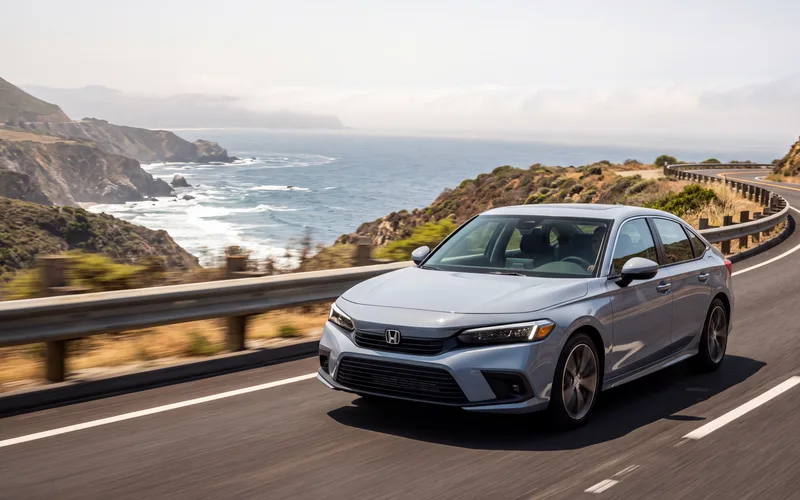 Honda CivicCompact SedanBetter at: Refinement & resale
Costs more but returns it in a quieter, better-built cabin, a Top Safety Pick award and roughly nine more points of five-year resale value.
Compare 2.40C+
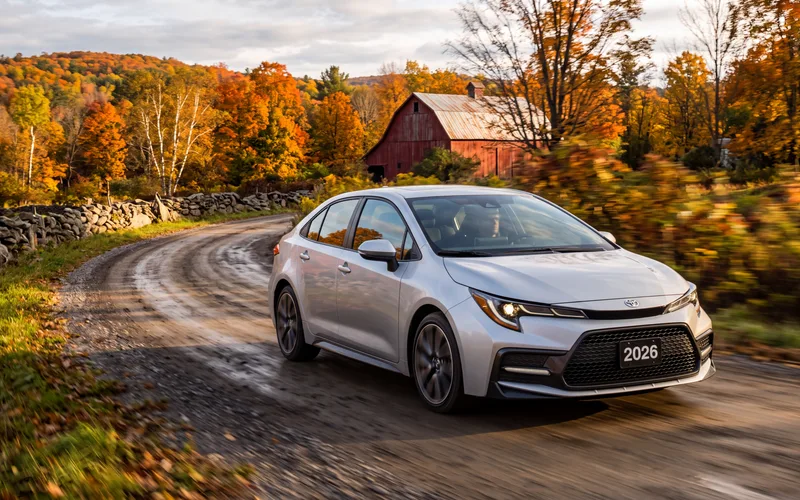 Toyota CorollaCompact SedanBetter at: Reliability & AWD
The safer, more reliable pick with 5-star crash results and the only AWD option in this cross-shop, if you can live with far less rear legroom.
Compare 2.19C
2.19C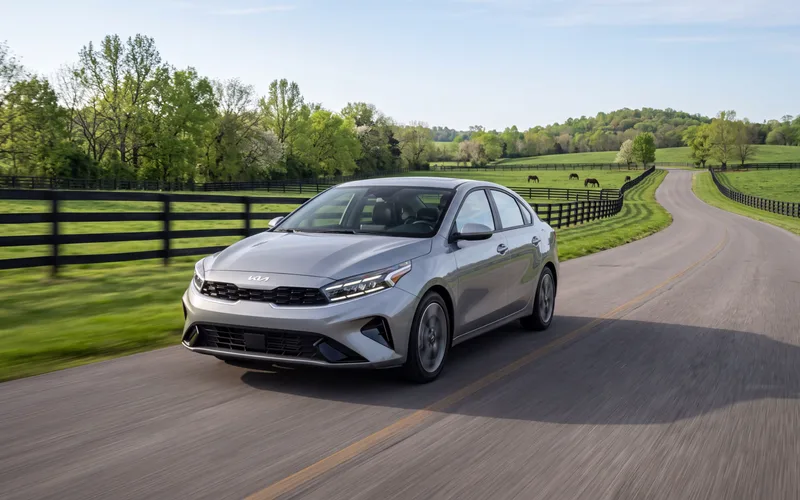 Kia K4Compact SedanBetter at: Fresher design
Same underlying engineering with a newer design and cabin, worth a look if the deal is better — but it has no hybrid to counter the Elantra's 54 MPG.
CompareHow it's evolved
10 scored model years · 2017–2026
Subject scores by year
Hover or tap a score to see what moved it versus the year before. A corner mark flags a big swing.
| Year | Performance | Efficiency | Safety | Space | Cost | Reliability | Tech | Use-case | Driving | Value |
|---|---|---|---|---|---|---|---|---|---|---|
| 2026 | 29 | 66 | 63 | 65 | 87 | 71 | 62 | 53 | 63 | 77 |
| 2025 | 29 | 59 | 77 | 63 | 87 | 68 | 53 | 51 | 63 | 75 |
| 2024 | 29 | 60 | 76 | 63 | 88 | 73 | 56 | 51 | 63 | 75 |
| 2023 | 28 | 60 | 67 | 63 | 88 | 69 | 51 | 46 | 62 | 74 |
| 2022 | 26 | 63 | 66 | 62 | 87 | 69 | 52 | 48 | 60 | 72 |
| 2021 | 28 | 69 | 72 | 64 | 98 | 68 | 52 | 48 | 63 | 82 |
| 2020 | 20 | 64 | 54 | 59 | 92 | 65 | 40 | 46 | 57 | 70 |
| 2019 | 27 | 60 | 54 | 60 | 91 | 69 | 35 | 47 | 57 | 63 |
| 2018 | 22 | 61 | 49 | 59 | 91 | 66 | 33 | 45 | 57 | 67 |
| 2017 | 24 | 60 | 53 | 59 | 81 | 65 | 32 | 45 | 58 | 69 |
Compare two years
Best fit & conditions
Higher scores mean a better fit for that use case. Learn more about use-case fit →
Subject profile
Trims & configurations
6 trimsScores above reflect the volume trim. Per-trim specs and scores are rolling out — the full lineup:
Academic Probation · NHTSA safety recalls
May 14, 2026Electrical system: propulsion system: hybrid management: power control unit/module (hpcu)The hybrid power control unit (HPCU) assembly may overheat.
Defect
Hyundai Motor America (Hyundai) is recalling certain 2024-2026 Elantra Hybrid vehicles. The hybrid power control unit (HPCU) assembly may overheat.
Risk
Overheating in the HPCU increases the risk of a fire.
Remedy
Dealers will update the HPCU software, free of charge. Owner notification letters were mailed July 3, 2026. Owners may contact Hyundai customer service at 1-855-371-9460. Hyundai's number for this recall is 301. Vehicle Identification Numbers (VINs) involved in this recall became searchable on NHTSA.gov on May 16, 2026.
NHTSA campaign 26V308000 ↗Manufacturer no. 30154,337 vehicles potentially affected (all models in the campaign)Owners notified Jul 3, 2026Filed by Hyundai Motor AmericaFiled as ELANTRA HYBRIDApr 20, 2026Air bags: sensor: side impactThe B-pillar impact sensors may have been misassembled, which can delay air bag deployment.
Defect
Hyundai Motor America (Hyundai) is recalling certain 2025 Elantra N, 2026 Tucson, Tucson Hybrid, Tucson Plug-In Hybrid Electric (PHEV), and Elantra vehicles. The B-pillar impact sensors may have been misassembled, which can delay air bag deployment.
Risk
Air bags that do not deploy as intended increase the risk of injury in a crash.
Remedy
Dealers will inspect and replace the impact sensor(s), as necessary, free of charge. Owner notification letters were mailed June 11, 2026. Owners may contact Hyundai's customer service at 855-371-9460. Hyundai's number for this recall is 299. Vehicle Identification Numbers (VINs) involved in this recall became searchable on NHTSA.gov on April 22, 2026.
NHTSA campaign 26V254000 ↗Manufacturer no. 2992,931 vehicles potentially affected (all models in the campaign)Owners notified Jun 11, 2026Filed by Hyundai Motor AmericaFiled as ELANTRA, ELANTRA N
21 recalls on other model years of the Elantra (2017–2024)
Nov 21, 2024Back over prevention: sensing system: cameraDue to a damaged printed circuit board, the rearview camera image may fail to display. As such, these vehicles fail to comply with the requirements of Federal Motor Vehicle Safety Standard number 111, "Rear Visibility."
Defect
Hyundai Motor America (Hyundai) is recalling certain 2021-2022 Santa Fe, Santa Fe HEV, Elantra, Elantra HEV and 2022 Elantra N and Santa Fe PHEV vehicles. Due to a damaged printed circuit board, the rearview camera image may fail to display. As such, these vehicles fail to comply with the requirements of Federal Motor Vehicle Safety Standard number 111, "Rear Visibility."
Risk
A rearview image that does not display reduces the driver's visibility and increases the risk of a crash.
Remedy
Dealers will replace the rearview camera, free of charge. Owner notification letters were mailed January 14, 2025. Owners may contact Hyundai customer service at 1-855-371-9460. Hyundai's number for this recall is 271.
NHTSA campaign 24V879000 ↗Manufacturer no. 271226,118 vehicles potentially affected (all models in the campaign)Owners notified Jan 14, 2025Filed by Hyundai Motor AmericaFiled as ELANTRA, ELANTRA HYBRID, ELANTRA NJul 11, 2024Fuel system, gasoline: delivery: fuel pump: control/drive moduleThe fuel pump may fail, which can result in a loss of drive power.
Defect
Hyundai Motor America (Hyundai) is recalling certain 2019-2022 Veloster N, 2019-2023 Genesis G70, 2022-2023 Elantra N, and Kona N vehicles. The fuel pump may fail, which can result in a loss of drive power.
Risk
A loss of drive power can increase the risk of a crash.
Remedy
Dealers will update engine control module software. In addition, dealers will inspect and replace the fuel pump assembly, as necessary. All repairs will be performed free of charge. Owner notification letters were mailed beginning September 9, 2024. Some interim notification letters, notifying owners of the safety risk, were mailed September 3, 2024. Owners may contact Hyundai customer service at 1-855-371-9460. Hyundai's numbers for this recall are 262 and 023G.
NHTSA campaign 24V528000 ↗Manufacturer no. 262-023G54,647 vehicles potentially affected (all models in the campaign)Owners notified Sep 9, 2024Filed by Hyundai Motor AmericaFiled as ELANTRA NMay 1, 2024Engine and engine cooling: exhaust system: emission control: gas recirculation valve (egr valve)An electrical short circuit may occur in the exhaust gas recirculation (EGR) valve assembly, which can result in a loss of drive power.
Defect
Hyundai Motor America (Hyundai) is recalling certain 2024 Elantra, Venue, and Kona vehicles. An electrical short circuit may occur in the exhaust gas recirculation (EGR) valve assembly, which can result in a loss of drive power.
Risk
A loss of drive power increases the risk of a crash.
Remedy
Dealers will replace the exhaust gas recirculation valve assembly, free of charge. Owner notification letters were mailed June 28, 2024. Owners may contact Hyundai customer service at 1-855-371-9460. Hyundai's number for this recall is 260.
NHTSA campaign 24V308000 ↗Manufacturer no. 26013,511 vehicles potentially affected (all models in the campaign)Owners notified Jun 28, 2024Filed by Hyundai Motor AmericaFiled as ELANTRAAug 18, 2023Electrical system · Vehicle speed controlA software error in the motor control unit may cause unintended vehicle acceleration after the brake pedal is released.
Defect
Hyundai Motor America (Hyundai) is recalling certain 2021-2023 Elantra HEV vehicles. A software error in the motor control unit may cause unintended vehicle acceleration after the brake pedal is released.
Risk
Unintended vehicle acceleration can increase the risk of a crash.
Remedy
Dealers will update the motor control unit software, free of charge. Owner notification letters were mailed September 29, 2023. Owners may contact Hyundai customer service at 1-855-371-9460. Hyundai's number for this recall is 248.
NHTSA campaign 23V589000 ↗Manufacturer no. 24837,997 vehicles potentially affected (all models in the campaign)Owners notified Sep 26, 2023Filed by Hyundai Motor AmericaFiled as ELANTRA HYBRIDJul 27, 2023Power train: automatic transmission: fluid/lubricant: pumpThe electronic controller for the Idle Stop & Go oil pump assembly may contain damaged electrical components that can cause the pump controller to overheat.
Defect
Hyundai Motor America (Hyundai) is recalling certain 2023-2024 Palisade Tucson, 2023 Sonata, Elantra, and Kona vehicles. The electronic controller for the Idle Stop & Go oil pump assembly may contain damaged electrical components that can cause the pump controller to overheat.
Risk
An electric oil pump assembly that overheats increases the risk of a vehicle fire.
Remedy
Owners are advised to park outside and away from structures until the recall repair is complete. Dealers will inspect and replace the electric oil pump controller, as necessary, free of charge. Owner notification letters were mailed starting September 7, 2023. Owners may contact Hyundai customer service at 1-855-371-9460. Hyundai's number for this recall is 246.
NHTSA campaign 23V526000 ↗Manufacturer no. 24652,109 vehicles potentially affected (all models in the campaign)Owners notified Sep 7, 2023Filed by Hyundai Motor AmericaFiled as ELANTRAOct 6, 2022Power train: automatic transmissionThe vehicle's "fail-safe" limited-mobility drive mode may be impaired, when prompted by a transmission oil pump malfunction, which can result in a complete loss of drive power.
Defect
Hyundai Motor Company (Hyundai) is recalling certain 2021-2022 Santa Fe, Sonata, Veloster N, 2022 Santa Cruz, Elantra N, and Kona N vehicles. The vehicle's "fail-safe" limited-mobility drive mode may be impaired, when prompted by a transmission oil pump malfunction, which can result in a complete loss of drive power.
Risk
Loss of drive power increases the risk of a crash.
Remedy
Dealers will inspect and replace the transmission, as necessary. Dealers will also update the transmission control unit software. All repairs will be performed free of charge. Owner notification letters were mailed January 10, 2023. Owners may contact Hyundai customer service at 1-855-371-9460. Hyundai's number for this recall is 236.
NHTSA campaign 22V746000 ↗Manufacturer no. 23656,148 vehicles potentially affected (all models in the campaign)Owners notified Jan 10, 2023Filed by Hyundai Motor AmericaFiled as ELANTRA NAug 18, 2022Air bags: frontalThe emblem on the cover of the driver's front air bag may not have been welded properly, which can result in the emblem detaching upon deployment.
Defect
Hyundai Motor America (Hyundai) is recalling certain 2022 Elantra N and 2022-2023 Elantra vehicles. The emblem on the cover of the driver's front air bag may not have been welded properly, which can result in the emblem detaching upon deployment.
Risk
A detached air bag cover emblem may strike a vehicle occupant, which can increase the risk of injury.
Remedy
Dealers will replace the air bag, free of charge. Owner notification letters were mailed October 14, 2022. Owners may contact Hyundai customer service at 1-855-371-9460. Hyundai's number for this recall is 234.
NHTSA campaign 22V632000 ↗Manufacturer no. 234247 vehicles potentially affected (all models in the campaign)Owners notified Oct 14, 2022Filed by Hyundai Motor AmericaFiled as ELANTRA, ELANTRA NMay 19, 2022Seat belts: front · Seat belts: pretensionerIn the event of a crash, the front driver-side and/or passenger-side seat belt pretensioners may explode upon deployment.
Defect
Hyundai Motor America (Hyundai) is recalling certain 2020-2022 Accent, 2021-2022 Elantra, and 2021-2022 Elantra HEV vehicles. In the event of a crash, the front driver-side and/or passenger-side seat belt pretensioners may explode upon deployment.
Risk
An exploding seat belt pretensioner can project metal fragments into the vehicle, strike vehicle occupants, and result in injury.
Remedy
Dealers will secure the seat belt pretensioner(s) with a cap, free of charge. Owner notification letters were mailed August 28, 2022. Owners may contact Hyundai customer service at 1-855-371-9460. Hyundai's number for this recall is 229. This recall expands and replaces NHTSA recall numbers 21V-796, 22V-069, 22V-218, and 22V-123 for Accent, Elantra, and Elantra HEV vehicles. All Accent, Elantra, and Elantra HEV vehicles already repaired under the previous recalls will need to have the new remedy completed.
NHTSA campaign 22V354000 ↗Manufacturer no. 229230,233 vehicles potentially affected (all models in the campaign)Owners notified Aug 29, 2022Filed by Hyundai Motor AmericaFiled as ELANTRA, ELANTRA HYBRIDApr 1, 2022Seat belts: front · Seat belts: pretensionerIn the event of a crash, the front driver and passenger-side seat belt pretensioners may explode upon deployment.
Defect
Hyundai Motor America (Hyundai) is recalling certain 2021-2022 Elantra and 2020 Accent vehicles. In the event of a crash, the front driver and passenger-side seat belt pretensioners may explode upon deployment.
Risk
Exploding seat belt pretensioners can project metal fragments into the vehicle, strike vehicle occupants, and result in injury.
Remedy
Dealers will replace the seat belt pretensioners, free of charge. Interim notification letters, notifying owners of the safety risk, were mailed on May 31, 2022. A second notice will be sent once remedy parts become available. Owners may contact Hyundai customer service at 1-855-371-9460. Hyundai's number for this recall is 223. This recall is replaced by NHTSA recall number 22V-354. Vehicles already repaired under this recall will need to have the new remedy completed.
NHTSA campaign 22V218000 ↗Manufacturer no. 2236,240 vehicles potentially affected (all models in the campaign)Owners notified May 19, 2022Filed by Hyundai Motor AmericaFiled as ELANTRAMar 3, 2022Seat belts: front · Seat belts: pretensionerIn the event of a crash, the front passenger-side seat belt pretensioner may explode upon deployment.
Defect
Hyundai Motor America (Hyundai) is recalling certain 2022 Elantra and Elantra HEV vehicles. In the event of a crash, the front passenger-side seat belt pretensioner may explode upon deployment.
Risk
An exploding seat belt pretensioner can project metal fragments into the vehicle, striking vehicle occupants and resulting in injury.
Remedy
Dealers will replace the seat belt pretensioners, free of charge. Owner notification letters were mailed May 19, 2022. Owners may contact Hyundai customer service at 1-855-371-9460. Hyundai's number for this recall is 220. This recall is an expansion of NHTSA recall numbers 21V-796 and 22V-069. This recall is replaced by NHTSA recall number 22V-354. Vehicles already repaired under this recall will need to have the new remedy completed.
NHTSA campaign 22V123000 ↗Manufacturer no. 220140 vehicles potentially affected (all models in the campaign)Owners notified May 19, 2022Filed by Hyundai Motor AmericaFiled as ELANTRA, ELANTRA HYBRIDDec 28, 2021Visibility: windshieldDuring manufacturing, the windshield may not have been properly bonded to the vehicle, allowing it to detach in a crash.
Defect
Hyundai Motor America (Hyundai) is recalling certain 2020-2021 Santa Fe, 2021 Sonata, and Elantra vehicles. During manufacturing, the windshield may not have been properly bonded to the vehicle, allowing it to detach in a crash.
Risk
A windshield that detaches from a vehicle during a crash can increase the risk of injury.
Remedy
Dealers will remove and reinstall the front windshield panel, free of charge. Owner notification letters were mailed June 20, 2022. Owners may contact Hyundai customer service at 1-855-371-9460. Hyundai's number for this recall is 216.
NHTSA campaign 21V00M000 ↗Manufacturer no. 21626,413 vehicles potentially affected (all models in the campaign)Owners notified Jun 20, 2022Filed by Hyundai Motor AmericaFiled as ELANTRAOct 13, 2021Seat belts: front · Seat belts: pretensionerIn the event of a crash, the front driver-side and/or passenger-side seat belt pretensioner(s) may explode upon deployment.
Defect
Hyundai Motor America (Hyundai) is recalling certain 2021 Elantra, Elantra HEV, Venue, Genesis GV80 and 2022 Genesis GV70 vehicles. In the event of a crash, the front driver-side and/or passenger-side seat belt pretensioner(s) may explode upon deployment.
Risk
An exploding seat belt pretensioner could project metal fragments into the vehicle, striking vehicle occupants and resulting in injury.
Remedy
Dealers will replace the seat belt pretensioners, free of charge. Owner notification letters were mailed February 10, 2022. Owners may contact Hyundai customer service at 1-855-371-9460. Hyundai's numbers for this recall are 211 and 009G. This recall is replaced by NHTSA recall numbers 22V-354 for Elantra and Elantra HEV vehicles, 22V-458 for Venue vehicles, and 23V-094 for Genesis vehicles. Elantra, Elantra HEV, Venue, and Genesis vehicles already repaired under this recall will need to have the new remedies completed.
NHTSA campaign 21V796000 ↗Manufacturer no. 211/009G978 vehicles potentially affected (all models in the campaign)Owners notified Feb 10, 2022Filed by Hyundai Motor AmericaFiled as ELANTRA, ELANTRA HYBRIDApr 28, 2021Seats: front assembly: reclinerThe driver and front passenger seat back recliners may have been improperly welded.
Defect
Hyundai Motor America (Hyundai) is recalling certain 2021 Elantra vehicles. The driver and front passenger seat back recliners may have been improperly welded.
Risk
An improperly welded seat back recliner could separate from the seat back frame during a crash, increasing the risk of injury.
Remedy
Dealers will inspect and if necessary, replace the seat back frame assembly, free of charge. Owner notification letters were mailed on June 21, 2021. Owners may contact Hyundai customer service at 1-888-371-9460. Hyundai's number for this recall is 204.
NHTSA campaign 21V302000 ↗Manufacturer no. 2041,464 vehicles potentially affected (all models in the campaign)Owners notified Jun 21, 2021Filed by Hyundai Motor AmericaFiled as ELANTRAApr 28, 2021EngineThe piston oil rings may not have been properly heat-treated, which could result in engine damage.
Defect
Hyundai Motor America (Hyundai) is recalling certain 2019-2020 Elantra, 2019-2021 Kona and Veloster vehicles equipped with 2.0L Nu MPI engines. The piston oil rings may not have been properly heat-treated, which could result in engine damage.
Risk
A damaged engine may stall, increasing the risk of a crash. In addition, oil may leak onto hot exhaust components, increasing the risk of a fire.
Remedy
Dealers will inspect and, if necessary, replace the engine, free of charge. In addition, Hyundai will deploy Piston Ring Noise Sensing System (PNSS) software. Owner notification letters were mailed August 24, 2021. Owners may contact Hyundai customer service at 1-855-371-9460.
NHTSA campaign 21V301000 ↗Manufacturer no. 203158,493 vehicles potentially affected (all models in the campaign)Owners notified Aug 24, 2021Filed by Hyundai Motor AmericaFiled as ELANTRAOct 9, 2019Suspension: front: control arm: lower ball jointThe lower control arm ball joint fasteners may have been insufficiently tightened allowing the ball joint to detach from the lower control arm.
Defect
Hyundai Motor America (Hyundai) is recalling certain 2020 Elantra vehicles. The lower control arm ball joint fasteners may have been insufficiently tightened allowing the ball joint to detach from the lower control arm.
Risk
A detached ball joint can cause a loss of vehicle control, increasing the risk of a crash.
Remedy
Hyundai will notify owners, and dealers will inspect and, as necessary, tighten the ball joint fasteners, free of charge. The recall began November 20, 2019. Owners may contact Hyundai customer service at 1-855-371-9460. Hyundai's number for this recall is 185.
NHTSA campaign 19V721000 ↗Manufacturer no. 185744 vehicles potentially affected (all models in the campaign)Owners notified Nov 20, 2019Filed by Hyundai Motor AmericaFiled as ELANTRAOct 9, 2019Wheels: lugs/nuts/bolts/studsThe right-side rear wheel lug nuts may have been insufficiently tightened, allowing the wheel to detach from the vehicle.
Defect
Hyundai Motor America (Hyundai) is recalling certain 2019 Ioniq Hybrid and 2020 Elantra vehicles. The right-side rear wheel lug nuts may have been insufficiently tightened, allowing the wheel to detach from the vehicle.
Risk
A wheel detaching from the vehicle increases the risk of a crash.
Remedy
Hyundai will notify owners, and dealers will inspect and, if necessary, tighten the lug nuts, free of charge. The recall began November 15, 2019. Owners may contact Hyundai customer service at 1-800-251-0871. Hyundai's number for this recall is 184.
NHTSA campaign 19V720000 ↗Manufacturer no. 18448 vehicles potentially affected (all models in the campaign)Owners notified Nov 15, 2019Filed by Hyundai Motor AmericaFiled as ELANTRADec 14, 2018Electrical system · Visibility: sun/moon roof assemblyThe panoramic sunroof motor may be incorrectly programmed, preventing the sunroof from detecting an obstacle while closing.
Defect
Hyundai Motor America (Hyundai) is recalling certain 2018 Hyundai Elantra GT vehicles. The panoramic sunroof motor may be incorrectly programmed, preventing the sunroof from detecting an obstacle while closing.
Risk
If the sunroof does not detect an obstacle while closing and then retract, there could be an increased risk of injury.
Remedy
Hyundai will notify owners, and dealers will inspect the panoramic sunroof, replacing it as necessary, free of charge. The recall began February 5, 2019. Owners may contact Hyundai customer service at 1-855-371-9460. Hyundai's number for this recall is 179.
NHTSA campaign 18V891000 ↗Manufacturer no. 17986 vehicles potentially affected (all models in the campaign)Owners notified Feb 5, 2019Filed by Hyundai Motor AmericaFiled as ELANTRA GTMar 28, 2017Steering: electric power assist systemThe affected vehicles may have a damaged Electronic Power Steering (MDPS) connector resulting in a loss of electric power steering assistance.
Defect
Hyundai Motor America (Hyundai) is recalling certain 2017 Elantra vehicles. The affected vehicles may have a damaged Electronic Power Steering (MDPS) connector resulting in a loss of electric power steering assistance.
Risk
Loss of power steering assist would require higher steering effort, especially at lower speeds, which may increase the risk of a crash.
Remedy
Hyundai will notify owners, and dealers will replace the EPS motor, free of charge. The recall is expected to begin April 28, 2017. Owners may contact Hyundai customer service at 1-800-243-7766. Hyundai's number for this recall 161.
NHTSA campaign 17V213000 ↗Manufacturer no. 16199 vehicles potentially affected (all models in the campaign)Owners notified May 1, 2017Filed by Hyundai Motor AmericaFiled as ELANTRAJan 26, 2017Service brakes, hydraulic: power assist: hydraulicIn the affected vehicles, the brake booster may fail, resulting in a loss of power brake assist.
Defect
Hyundai Motor Company (Hyundai) is recalling certain 2017 Elantra vehicles. In the affected vehicles, the brake booster may fail, resulting in a loss of power brake assist.
Risk
A loss of power brake assist can lengthen the distance needed to stop the vehicle, increasing the risk of a crash.
Remedy
Hyundai has notified owners, and dealers will replace the brake system booster assembly, free of charge. The recall began on February 6, 2017. Owners may contact Hyundai customer service at 1-800-633-5151. Hyundai's number for this recall is 157.
NHTSA campaign 17V063000 ↗Manufacturer no. 15733,803 vehicles potentially affected (all models in the campaign)Owners notified Feb 6, 2017Filed by Hyundai Motor AmericaFiled as ELANTRADec 30, 2016Air bags: frontal: driver side: inflator moduleIn these vehicles, the end seal for the driver's frontal air bag inflator may not have been properly installed, possibly resulting in reduced inflation of the frontal air bag in the event of a crash.
Defect
Hyundai Motor Company (Hyundai) is recalling certain model year 2017 Hyundai Elantra vehicles manufactured April 15, 2016, to September 13, 2016, and Sonata vehicles manufactured May 27, 2016 to September 16, 2016. In these vehicles, the end seal for the driver's frontal air bag inflator may not have been properly installed, possibly resulting in reduced inflation of the frontal air bag in the event of a crash.
Risk
In the event of a crash, an air bag that does not inflate fully increases the risk of injury.
Remedy
Hyundai will notify owners, and dealers will replace the driver's frontal air bag module, free of charge. The recall began February 13, 2017. Owners may contact Hyundai customer service at 1-855-371-9460. Hyundai's number for this recall is 156.
NHTSA campaign 16V956000 ↗Manufacturer no. 156110 vehicles potentially affected (all models in the campaign)Owners notified Feb 13, 2017Filed by Hyundai Motor AmericaFiled as ELANTRAApr 21, 2016Air bags: frontalIn these vehicles, the driver's frontal air bag may be missing a chemical enhancer required for the second stage air bag deployment, resulting in the second stage not deploying in certain crashes. The primary stage will deploy as intended.
Defect
Hyundai Motor Company (Hyundai) is recalling certain model year 2015-2016 Sonata vehicles manufactured May 29, 2014 to February 11, 2016, 2017 Elantra vehicles manufactured January 12, 2016 to February 22, 2016, and one 2016 Sonata Hybrid vehicle manufactured October 15, 2015. In these vehicles, the driver's frontal air bag may be missing a chemical enhancer required for the second stage air bag deployment, resulting in the second stage not deploying in certain crashes. The primary stage will deploy as intended.
Risk
An air bag that does not inflate increases the risk of injury.
Remedy
Hyundai will notify owners, and dealers will replace the driver's frontal air bag module, free of charge. The recall began on May 5,2016. Owners may contact Hyundai customer service at 1-855-371-9460. Hyundai's number for this recall is 144.
NHTSA campaign 16V232000 ↗Manufacturer no. 14433 vehicles potentially affected (all models in the campaign)Owners notified Jun 15, 2016Filed by Hyundai Motor AmericaFiled as ELANTRA
Source: NHTSA Office of Defects Investigation recall database, model years 2017–2026. Recalls are listed by model year as the manufacturer filed them; whether a specific car is affected depends on its VIN — check a VIN at nhtsa.gov ↗. NHTSA model names matched to this page: ELANTRA, ELANTRA GT, ELANTRA HYBRID, ELANTRA N.
Detailed scoring by subject
1Performance & PowertrainThe Elantra's lowest-graded category.0.00F
The volume trim is the SEL with the Smartstream G2.0 MPI naturally aspirated four at 147 hp — the lowest base output among mainstream compact sedans, below both the Civic's 150 hp and the Corolla's 169 hp. The turbocharged N Line and Elantra N sit far above it but are low-volume trims.
The 2.0L peaks at just 132 lb-ft and does so at 4,500 rpm, so there is very little low-end pull — the volume Elantra has to be revved to make progress. The hybrid's 195 lb-ft, available immediately, makes it feel substantially stronger in traffic despite lower rated horsepower.
Instrumented results for the 2.0L car cluster in the mid-to-high 8-second range, with 8.6 s representative of the volume SEL. That is mid-pack for the class — marginally quicker than the Corolla's ~8.7 s and a touch slower than the Civic Sport's ~8.2 s — while the hybrid and turbo trims are meaningfully quicker.
The volume 2.0L is adequate but coarse and audibly strained under load, a long-standing criticism of the base Elantra; the hybrid is markedly smoother because its motor covers the low-rpm gap and it avoids CVT-style rev flare. Scored just above the Corolla (58), whose CVT amplifies the same weakness, and below the Civic (70), whose two-motor hybrid is a genuine segment refinement leader.
Hyundai's IVT on the volume trim is a competent CVT with simulated steps but still drones under sustained throttle and trails Honda's class-leading calibration. The lineup is lifted by real geared automatics elsewhere — the hybrid's 6-speed dual-clutch avoids CVT drone entirely and the Elantra N's 8-speed wet DCT is genuinely well regarded — though DCTs can be hesitant in stop-and-go crawl.
The Elantra is front-wheel drive on every trim and every powertrain — there is no AWD option anywhere in the lineup, not even on the hybrid. That matches the FWD-only Civic (15) and falls well short of the Corolla (46), which at least offers electronic on-demand AWD on hybrid trims, and of the AWD-optional Mazda3.
Per the project registry the Elantra spans four genuinely distinct powertrains — 2.0L NA gas, 1.6L hybrid, 1.6L turbo N Line, and the 276-hp 2.0T Elantra N — covering economy, electrification, warm-sedan and full hot-rod buyers, which is broader than the Civic (72, three powertrains) and much broader than the Corolla (60, two). Held below 80 because there is no PHEV or EV option and no AWD on any of them.
2Efficiency & RangeMid-pack among this car's ten categories.2.47C+
The volume SE runs the 147-hp 2.0L Smartstream four with the IVT continuously variable box for 36 MPG combined — dead level with the Civic LX and a tick ahead of the Corolla LE's 35. Stepping to SEL or Limited costs 2 MPG on the heavier 17-inch wheel-and-tire package.
32 MPG city matches the Civic LX and Corolla LE exactly — respectable but unremarkable, since the naturally aspirated 2.0L has no electric assist in stop-and-go traffic. The hybrid's 51 MPG city is a 19-MPG swing and the strongest case for stepping up.
41 MPG highway is the gas Elantra's best figure and ties the Civic LX and Corolla LE at the top of the non-hybrid compact class. The Hybrid Blue's 58 MPG highway is the outlier here — it beats its own city number, which is rare among hybrids and makes the Elantra Hybrid a genuinely strong road-trip car.
The 12.4-gallon tank and 36 MPG combined work out to roughly 446 miles between fills — mid-pack for a compact sedan and identical to the Civic LX, since the two share the same tank size and combined rating. The Hybrid Blue's ~643 miles is close to best-in-class for anything without a plug.
At EPA's standard 15,000 mi/yr and 55/45 city-highway split on regular gas, the 36-MPG SE lands around $1,750/yr — the same as the Civic LX and Corolla LE. The Hybrid Blue cuts roughly $600/yr, which pays back its price premium in about three to four years at average mileage.
Every mainstream 2026 Elantra — SE, SEL, Limited, N Line and both Hybrid trims — is specified for 87-octane regular unleaded, with no premium requirement, no diesel, and no charging hardware to install. Only the high-output Elantra N asks for premium to reach its rated output, and it is a niche halo trim rather than the configuration most buyers see.
3SafetyMid-pack among this car's ten categories.2.27C
The CN7-generation Elantra has carried a 4-star NHTSA overall rating, held back by 4-star frontal-impact results while side and rollover perform better; 2026 is a carryover year with no structural change that would move the rating.
The Elantra posts Good results in the legacy IIHS crashworthiness battery but has not held a Top Safety Pick award since the institute tightened the side-impact and moderate-overlap (rear-passenger) tests, where it grades below Good.
Hyundai SmartSense is unusually deep as standard equipment — forward collision-avoidance with pedestrian detection, lane keeping, lane following (centering), driver attention warning, high beam assist and stop-and-go adaptive cruise are on every trim including base SE — but blind-spot and rear cross-traffic avoidance still require stepping up from SE.
Forward Collision-Avoidance Assist covers vehicles and pedestrians and performs solidly in daytime testing, with junction-turning detection on upper trims, but the Elantra has not distinguished itself in the harder nighttime-pedestrian and higher-speed front crash prevention evaluations that now separate the class.
From SEL up the Elantra gets active-intervention blind-spot and rear cross-traffic avoidance rather than alert-only, plus Safe Exit Warning, and Limited adds the Blind-Spot View Monitor camera feed — strong coverage for a compact sedan, docked only because base SE goes without.
Lane Following Assist — true lane centering, not just departure correction — is standard on every trim, which is ahead of much of the segment; reviewers rate it competent on marked highways but note it wanders and hands back on faded lines or tight curves.
Smart Cruise Control with Stop & Go is standard rather than trim-locked and is smooth in traffic, and Limited adds Highway Driving Assist to combine it with centering; it stops short of the best-in-class systems on resume crispness and gap management.
No hands-free highway system is offered on the Elantra at any trim — Hyundai's Highway Driving Assist is a hands-on-wheel system, and the brand fields no BlueCruise/Super Cruise equivalent in this class.
LED projector headlights with High Beam Assist are standard after the mid-cycle refresh, but IIHS grading has been uneven across the range — better on upper trims than on the volume-and-below trims, which is part of why the car misses a Top Safety Pick.
Forward and side sightlines are fine, but the fastback roofline, high beltline and thick C-pillars pinch the rear three-quarter view, and camera compensation is thin — a rear camera is standard while the surround-view monitor is reserved for Limited.
Two sets of lower anchors in the outboard rear positions plus three top tethers, with class-competitive rear legroom, but the anchors sit recessed in the seat bight and the compact-sedan door aperture makes installing a rear-facing seat awkward; three across is not realistic.
4Space & ComfortMid-pack among this car's ten categories.2.39C+
The 2026 Elantra is a five-passenger compact sedan across every gas, hybrid, and N trim — the top of the sedan normalization band.
At 40.6 in on non-sunroof trims the Elantra sits at or above the top of the 36–40 in sedan band, a genuine strength of the low-cowl CN7 body.
42.3 in of front legroom is mid-band for a sedan — level with the Civic and slightly ahead of the Corolla, but short of the roomiest compacts.
37.3 in of second-row headroom is mid-band and marginally better than the Civic (37.1 in) despite the Elantra's fastback-influenced roofline.
38.0 in of rear legroom is among the best in the compact sedan class — a byproduct of the CN7's long 107.1 in wheelbase — and beats the Civic (37.4 in) and Corolla (34.8 in).
A 14.2 cu ft trunk is competitive but not class-leading — slightly behind the Civic's 14.8 cu ft, ahead of the Corolla's 13.1 — and it lands low-to-mid in the 10–20 cu ft sedan band. The hybrid keeps full trunk volume, which several rivals do not.
Competent everyday storage — usable center console bin, open shelf ahead of the shifter, wireless charging pad and USB-C ports on most trims, 60/40 folding rear seats — but nothing innovative, and the console tray is shallow next to the Civic's deep bin.
Front seats are supportive enough for most commutes and Limited adds a power driver's seat with lumbar plus leather, but lower trims are manual-only with no lumbar adjustment and reviewers consistently flag flat, thinly padded cushions. The rear bench is roomy for legs yet sits low, leaving taller adults short on thigh support on long trips.
The torsion-beam rear suspension on SE/SEL/Limited and Hybrid trims rides acceptably on smooth pavement but turns busy and abrupt over broken surfaces and expansion joints — a step behind the Civic and Mazda3 in the same class. N Line and Elantra N trade further compliance for body control.
The Elantra's clearest comfort weakness: noticeable tire roar on coarse pavement and wind noise at highway speed, with thinner sound deadening than the Civic or Corolla and no acoustic side glass on volume trims. The 2.0L with the IVT also drones under load.
Typical Hyundai value loading: heated front seats and heated steering wheel arrive on mid trims, Limited adds ventilated front seats, dual-zone automatic climate, and leather, and remote start with climate pre-conditioning via Bluelink is broadly available. Held back from the top band because the base SE is single-zone manual with no heated seats and rear passengers get no dedicated climate controls.
5Cost of OwnershipThe Elantra's best-graded category.3.95A+
The Elantra SE remains one of the cheapest entry points left in the compact-sedan class, sitting near the bottom of the segment band and undercutting both the Civic LX and the Corolla LE. The 2026 figure is carried forward from published 2025 pricing plus a typical model-year increase — it was not confirmed against a live 2026 source in this run.
SEL Convenience is the Elantra's volume trim — it adds the larger dual-screen infotainment, heated front seats and sunroof over the SE while staying under $26k, which is where most Elantra transactions land. Even the hybrid and N Line trims stay well inside the low half of the segment band, so the whole ladder scores strongly on price.
Running costs sit modestly below compact-sedan norms: the 2.0L Smartstream four and the 1.6L hybrid are both simple, high-volume powertrains with cheap parts, and Hyundai's 3-year/36,000-mile complimentary maintenance absorbs most scheduled service across the first half of the window. It lands a touch above the Civic and Corolla, which have deeper parts networks and stronger long-run repair records.
Residuals are the Elantra's weakest ownership metric and the main thing separating it from the Civic and Corolla. Hyundai resale has improved substantially over the last decade and now beats the all-market average, but heavy fleet and incentive volume in the compact class still costs the Elantra roughly eight to nine points of retention against the segment leaders.
Hyundai's 5-year/60,000-mile basic coverage tops the segment band outright and is worth two full years more than the 3/36 offered by Honda, Toyota, Mazda and VW. The term has been stable across the CN7 generation.
The 10-year/100,000-mile powertrain warranty is the ceiling of the segment band and double what Honda and Toyota provide. It applies to the original owner only — subsequent owners drop to 5 yr/60,000 mi — which is a real caveat for buyers planning a short hold, but for the original purchaser it is best-in-class coverage.
Hyundai Complimentary Maintenance covers factory-scheduled oil changes, tire rotations and multipoint inspections for 3 years/36,000 miles — longer than ToyotaCare's 2 yr/25k and something Honda does not offer at all — backed by 5 years of unlimited-mileage roadside assistance. Bluelink+ connected services are included at no charge with no trial expiry, which removes the subscription cliff most rivals hit after year one. It falls short of a perfect score only because there are no fuel or charging credits and the plan excludes wear items.
$25,300 volume-trim price minus its estimated resale value after 5 years (53% retained, or about $13,409) leaves about $11,891 in depreciation. Add the projected $4,100 in 5-year maintenance and repairs, and owning this vehicle for 5 years costs about $15,991 in total.
6Reliability & QualityOne of the Elantra's strongest categories.2.81B-
The 2026 Elantra is a mature point in the seventh-generation (CN7) run — the sixth US model year of the platform and the third year of the 2024 facelift — so the mechanical package has years of accumulated owner data and no late-generation defect wave has emerged. The Elantra has historically been one of Hyundai's stronger predicted-reliability entries, landing average to modestly above average, which places it clearly above the mainstream midpoint but well short of the Corolla/Civic tier that anchors the top of this segment.
Hyundai sits solidly mid-pack on multi-year dependability: at or modestly above industry average in J.D. Power's Vehicle Dependability Study and mid-field in Consumer Reports brand rankings, consistently stronger in initial quality than in three-year dependability. The brand is well clear of the bottom tier but is not a Toyota/Honda peer, and it still carries reputational drag from the Theta II engine campaigns and the 2015-2021 no-immobilizer theft wave.
The CN7 Elantra's recall exposure has come mostly from broad Hyundai-wide campaigns rather than model-specific mechanical defects — most notably the seat-belt pretensioner action covering early CN7 model years — while the preceding generation was swept into the no-immobilizer theft wave that drove insurance refusals and a software remedy. That is somewhat busier than the segment norm, but the Elantra has avoided the ABS-module and trailer-hitch fire campaigns that weigh on Hyundai's SUVs, and nothing systemic attaches to the 2026 car's core mechanicals.
The volume engine is a genuine strength: the 147-hp 2.0L Smartstream MPi is a low-stress, port-injected Atkinson-cycle four that sidesteps the intake-valve carbon buildup and high-pressure fuel-system wear that dog direct-injected rivals, and it is unrelated to the Theta II family that damaged Hyundai's engine reputation. The drag is the transmission on both powertrains — the IVT is a chain-driven CVT, a class of gearbox that rates below a conventional automatic on high-mileage durability even without a systemic failure pattern, and the hybrid's 6-speed dual-clutch is likewise a less durable-by-reputation choice than a planetary hybrid transaxle.
Materials are the Elantra's clearest weak point in this category. The cabin is design-forward — a strongly sculpted wraparound dash and, on upper trims, a twin-screen layout that photographs a class above the price — but reviewers consistently report hard, hollow plastics across the doors, console and lower dash, and cloth-and-urethane touch points on the volume SE and SEL. The result reads cheaper to the hand than the Civic or Mazda3 and is the main thing keeping the interior below the mainstream compact norm.
Assembly quality is a relative Hyundai strength — the brand consistently outperforms its long-term dependability standing in initial-quality measures — and the Elantra carries no widespread rattle or panel-alignment complaint pattern. By 2026 the car is six model years into the generation and three past the facelift, so early-production teething has long been worked through; what holds it below the Civic is panel-gap and switchgear consistency rather than any defect theme.
Hyundai's US network of roughly 800-870 franchised dealers covers metro and suburban markets comfortably but is materially thinner than Toyota, Honda, Ford or Chevrolet, which shows up in rural markets. Service satisfaction runs around the mainstream average, and the industry-leading 10-year/100,000-mile powertrain warranty plus three years of complimentary maintenance meaningfully lower the cost of using the network — though the brand's heavy recall campaign volume has at times strained dealer service capacity.
The Elantra is one of the highest-volume compact cars in the US and shares its engine, IVT and much of its hardware with the Kona, Venue and the Kia K4/Forte family, so OEM parts are cheap and widely stocked, independent shops are comfortable with the mechanicals, and estimated annual repair and maintenance costs sit below the compact-car average. The port-injected 2.0 also avoids the carbon-cleaning and fuel-system bills common on direct-injected rivals. A smaller enthusiast aftermarket than the Civic ecosystem is what keeps this out of the 90s.
7Technology & InfotainmentOne of the Elantra's weakest categories.2.21C
The volume SEL Convenience trim carries the 10.25-inch navigation touchscreen introduced with the MY2024 CN7 facelift and carried into 2026; the base SE keeps an 8.0-inch unit. 10.25 in is the largest center display offered — the Elantra never received the 12.3-inch ccNC screen used in Hyundai's newer models.
Hyundai's menu structure is among the most logical in the mainstream compact class and the Elantra retains real volume/tune knobs plus a dedicated climate row, so common actions never require diving into a menu. It falls short of an 80+ only because the 10.25-inch unit is the previous-generation Hyundai software rather than the faster ccNC stack in the Tucson and Santa Fe.
The Elantra inverts the usual pattern: wireless Apple CarPlay and Android Auto are standard on the base SE's 8.0-inch head unit, but the 10.25-inch navigation system fitted to the volume SEL Convenience and above is wired-only. Buyers moving up a trim lose the wireless feature, which caps this in the middle band.
Built-in navigation is standard with the 10.25-inch system and includes connected traffic and over-the-air map updates via Bluelink, which is more than most compact rivals bundle. Voice control is command-and-control rather than genuine natural language, so most owners default to phone projection for destination entry.
A Bose premium system is available at the top of the range, which is a genuine advantage over compact sedans that offer no branded upgrade at all, but the six-speaker base setup on SE and SEL is merely adequate and the Bose unit is a modest eight-speaker installation rather than a standout.
The volume SEL Convenience and above get a full 10.25-inch digital cluster integrated into the curved panoramic display, which is crisp and reconfigurable and reads a class above the compact-sedan norm. It stops short of the top band because the base SE still uses analog gauges with a small 4.2-inch information LCD, so full digital is not near-standard.
The Elantra supports over-the-air updates for infotainment software and navigation maps through Bluelink, which places it squarely in the middle band. It does not receive the whole-vehicle ECU-level OTA updates Hyundai reserves for its newer ccNC-platform models, so no new vehicle functions arrive after purchase.
Bluelink+ is one of the strongest value propositions in the segment: Hyundai made the connected-services package complimentary rather than subscription-gated, so remote start with climate, remote lock/unlock, vehicle finder, stolen-vehicle recovery and vehicle health reports cost nothing for the life of the car. It misses the top band mainly because phone-as-key is not part of the Elantra's feature set.
The facelifted Elantra moved to USB-C data and charge ports front and rear, and wireless phone charging arrives at the volume SEL Convenience trim rather than being reserved for the top of the range. There is no household AC outlet, which is normal for a compact sedan but keeps it out of the top band.
Proximity entry with push-button start is standard from the volume SEL Convenience trim up, and remote start is available both from the key fob and free through the Bluelink+ app. The base SE still uses a conventional key with remote, and there is no phone-as-key option, so it sits in the upper half of the middle band.
A rear camera is standard and the Limited adds parking distance warning plus Hyundai's Blind-Spot View Monitor, which projects a live camera feed into the cluster when signalling. No surround-view camera and no automated parking are offered at any price, which holds this to the lower half of the middle band.
The Elantra offers no head-up display on any trim, including Limited and N Line, so it lands in the bottom band by definition. This is common among compact sedans — Civic, Corolla and K4 also go without — but the Mazda3 does offer one, so it is a real gap rather than a segment-wide absence.
8Use-Case FitOne of the Elantra's weakest categories.1.53D
The CN7's 107.1 in wheelbase yields 38.0 in of rear legroom — the most in the compact-sedan class — which makes a rear-facing seat genuinely easy to fit behind a normal-height driver, and the 14.2 cu ft trunk swallows a folding stroller. Held back by sedan-inherent compromises: the raked roofline and modest door aperture make lowering a child into a seat awkward, the outboard LATCH anchors sit recessed in the seat bight, and three-across is not realistic.
Hyundai SmartSense is unusually generous on the cheap trims families actually buy — forward collision-avoidance with pedestrian detection, lane keeping, lane following, driver attention warning and stop-and-go adaptive cruise are standard on the base SE, plus rear occupant alert. The crash credentials are what cap it: a 4-star NHTSA overall on 4-star frontal results, and no current IIHS Top Safety Pick since the side and rear-passenger moderate-overlap tests were tightened — a real gap against the Civic and Corolla, both of which carry the award.
Class-leading rear legroom and a full-size trunk that the Hybrid does not sacrifice are the strengths, and rear USB-C charging keeps devices alive. But the second row has no dedicated air vents, the rear cushion sits low and leaves taller passengers short on thigh support over multi-hour stints, and the Elantra's weakest comfort trait — road and wind noise — is exactly what wears on four occupants after three hours.
Light steering, a tight 34.8 ft turning circle, a low cowl with good forward sightlines and a sensibly laid-out cabin with real climate controls make the Elantra easy to live with in traffic. Two things keep it out of the top band: the volume 2.0L makes only 147 hp / 132 lb-ft and needs revving, with audible IVT drone under load, and the torsion-beam rear axle rides busily over broken city pavement. The Hybrid's 195 lb-ft of instant torque fixes most of the drivability complaint.
One of the cheapest cars in America to commute in. The gas SE returns 36 MPG combined on regular fuel for roughly $1,750/yr, and the Hybrid Blue's 54 MPG combined cuts that to about $1,150 — with cheap 16/17 in tires, inexpensive parts, three years of complimentary maintenance and a 10 yr / 100,000 mi powertrain warranty behind it. Short of the very top only because the volume SEL and Limited drop to 34 MPG combined and insurance runs a little above class average.
A 184.1 in footprint and a 34.8 ft turning circle — tighter than the Civic's — make the Elantra genuinely easy to thread and park, and a rearview camera is standard on every trim. It falls short of the best in class because camera and sensor support is thin where it matters: the surround-view monitor is reserved for the Limited, parking sensors are not standard, and the high beltline with thick C-pillars pinches the rear three-quarter view when reversing into a space.
Not a work vehicle in any meaningful sense: Hyundai publishes no US tow rating for the Elantra, there is no bed or payload figure, and hauling is limited to a 14.2 cu ft trunk reached through a sedan aperture. The 147 hp 2.0L has no headroom under load. It scores in the same low band as the Civic and Corolla for the same structural reasons.
The Elantra does see hard rideshare, rental-fleet and delivery duty and generally survives it — the naturally aspirated Smartstream 2.0L is a simple, durable unit, cloth seats on SE/SEL wipe down easily, and cheap parts plus the 10 yr / 100,000 mi powertrain warranty limit the downside. But it is a light unibody compact with a torsion-beam rear axle and soft interior plastics, unproven against sustained load or rough surfaces, and Hyundai's durability reputation still trails Toyota's in this class.
Essentially no work-oriented provisions. There is no onboard AC power outlet, no factory hitch, no roof rails or rack ecosystem, no trunk tie-down system beyond a bag hook, and no washable or rubberized cargo surface. Device power is limited to a 12V socket and USB-C ports intended for phones, not tools.
Range is a genuine strength — roughly 446 mi on a tank for the gas SE and about 643 mi for the Hybrid Blue, so fuel stops are rare — and Lane Following Assist paired with standard stop-and-go Smart Cruise Control takes real strain out of a long interstate day. What stops it being a proper mile-eater is refinement: coarse-pavement tire roar and wind noise at highway speed, flat front cushions with no lumbar adjustment below Limited, and Highway Driving Assist reserved for the top trim.
Pavement-bound. The Elantra is front-wheel drive only with no AWD option anywhere in the range — a real deficit against the Corolla, which offers AWD on the hybrid — and rides on roughly 5.3 in of ground clearance with no underbody protection. There are no roof rails or crossbar provision for bikes or a box, no tow rating for toys, and no camping-oriented features such as an AC outlet or fold-flat seating.
Fine for suitcases, restrictive for anything bulky. The 14.2 cu ft trunk handles four people's luggage and — unusually for the class — the Hybrid gives up none of it because the battery sits under the rear seat, while the standard 60/40 folding seatback opens up length for skis or flat-packed boxes. But the sedan's narrow trunk aperture blocks tall items, there is no underfloor storage, no roof rails and no hitch, so a cargo box or bike rack is aftermarket-only.
9Driving ExperienceMid-pack among this car's ten categories.2.22C
The volume SEL rides on a comfort-biased tune with a coupled torsion-beam rear axle (the independent multi-link rear is reserved for N Line and Elantra N), so it is secure and predictable but rolls early and washes into understeer well before the Civic or Mazda3 run out of grip. Composed enough for commuting, unremarkable on a good road — squarely in the 'secure but unremarkable' band, a step behind Corolla (67.3 cat9) and Civic (71.8 cat9) though ahead of its Kia K4 cousin (54.1).
The volume Elantra uses column-mounted motor-driven power steering, and light, numb, feedback-free steering is the most consistent dynamic criticism levelled at the car. It tracks straight and is accurate enough for everyday use, but there is little build-up of weight off-center and effectively no road texture through the rim.
Four-wheel discs deliver mid-pack stopping distances from 60 mph for the class with no fade issues in normal use, but the pedal is soft and long on initial travel, which makes smooth low-speed stops take practice. The hybrid's regen blending is competent though a clear step behind Toyota's and Honda's calibrations.
The volume 2.0L MPI four paired with Hyundai's IVT is smooth at a steady cruise but soft on tip-in and slow to answer a request for real acceleration — the transmission flares revs and holds them rather than delivering a step of thrust. The hybrid's 1.6L plus 6-speed dual-clutch is the better drivetrain, with genuine gear changes and instant low-speed electric torque, though the DCT can hesitate in stop-and-go creep; blending both leaves the score mid-band.
The 2.0L is coarse and buzzy when worked, and because the IVT holds high revs under load the car drones noticeably on freeway on-ramps and grades — the biggest refinement gap against the Corolla and Civic. It settles down acceptably at a steady cruise, so the noise is intrusive rather than constant.
At 34.8 ft curb-to-curb the Elantra is genuinely tight for a compact sedan on a 107.1-in wheelbase — near the bottom (best) end of the 34–40 ft sedan band and comfortably better than the Civic's 37.4 ft. This is the volume Elantra's clearest everyday-drivability strength.
A low hip point and low cowl give a car-like, well-placed driving position with a clear forward view, and Hyundai has kept physical climate knobs and steering-wheel controls alongside the twin 10.25-in displays on upper trims. Marks come off for the high beltline and thick rear pillars that pinch over-shoulder visibility, and for the base trim's manual driver's seat with limited telescoping range.
As the volume SEL the Elantra is transport rather than entertainment — numb steering, a modest 147-hp naturally aspirated four and a droning IVT give it no reason to take the long way home. The nameplate does offer real enthusiast appeal further up the range in the N Line and especially the 276-hp Elantra N, but those are low-volume trims and not what this scorecard represents.
10Value & Market PositionOne of the Elantra's strongest categories.3.26B+
The base SE opens the segment at roughly $23.9k with an 8-inch touchscreen, wireless Apple CarPlay/Android Auto and the full Hyundai SmartSense suite (forward collision avoidance with pedestrian detection, lane keeping, lane following, driver attention warning, high-beam assist), backed by the class-best 5-year/60,000-mile basic and 10-year/100,000-mile powertrain warranty. Held out of the top band because blind-spot collision avoidance, the dual 10.25-inch display setup, heated seats and sunroof all start at SEL and above, whereas the 2026 Corolla now standardizes blind-spot monitoring across its whole lineup.
Content-for-price is the Elantra's defining strength: it undercuts every mainstream compact rival on entry price while offering a hybrid rated around 50 mpg combined from roughly $27k, a 201-hp turbo N Line near $28k, and a 276-hp Elantra N around $35k — a performance-and-efficiency spread rivals cannot match at these numbers, with the longest powertrain warranty in the class on top. Short of the very top of the band only because interior plastics and the 147-hp base car's CVT drone are recurring reviewer complaints, so the value is in the spec sheet more than the material quality.
Among the widest ladders in the segment — SE, SEL Sport, SEL Convenience, Limited, N Line and Elantra N on the gas side plus Hybrid Blue, Hybrid SEL Sport and Hybrid Limited — covering four distinct powertrains and roughly $24k to $36k, so a buyer can shop economy, efficiency, warm turbo or a genuine hot sedan under one nameplate. Not a perfect score: it is sedan-only in the US (no hatchback since the Elantra GT was dropped) and AWD is not offered anywhere in the range.
The Elantra is the consistent number-three compact car in the US at roughly 180,000-190,000 units a year, holding steady late in its generation and comfortably outselling the Sentra, K4, Jetta and Mazda3. It sits clearly behind the two segment leaders, though, with Corolla near 248,000 and Civic above 220,000 in 2025, which caps it below the top band.
Hyundai has moved from budget alternative to genuinely well-regarded, carried by bold design, the industry's best mainstream warranty, strong initial-quality showings and an Ioniq-led technology halo. It stays in the neutral-to-positive band rather than higher because resale value still trails Toyota and Honda, and the 2021-2023 theft-vulnerability episode left a lingering insurance and reputation drag on the brand even though push-button-start Elantras of this generation shipped with immobilizers.
Hyundai is habitually one of the most incentive-forward mainstream brands and the Elantra is a standing example — subvented and frequently 0% APR offers, cash rebates, aggressive advertised lease payments, plus stackable military and college-graduate programs. That is real buyer benefit on a car that still sells in healthy volume, so it reads as competitive support rather than desperation pricing.
This is the seventh-generation CN7 that launched as a 2021 US model year and received a substantial facelift for 2024 — new front and rear fascias, revised interior and wider dual-screen availability — so 2026 is year six of the generation and year three since the update. Solidly mid-cycle: current enough on tech and safety content, but an eighth-generation redesign is expected around 2027, meaning 2026 buyers are shopping the back half of the cycle.
Well reviewed and decorated but not the class benchmark: this generation took 2021 North American Car of the Year, and the Elantra lands consistently in the top three of compact-sedan rankings at U.S. News, Edmunds and KBB on the strength of value, warranty, fuel economy and standard tech. It rarely wins head-to-head comparisons against the Civic, and reviewers routinely dock it for CVT drone in the base car, a firm ride on N Line trims and hard interior plastics — clearly ahead of the Corolla's mid-pack reception, clearly behind the Civic's 10Best-caliber standing.