
The verdict
A mixed-report mid-size luxury suv, strong on technology and held back by ownership.
The 2026 Range Rover Sport is one of the most desirable objects in the mid-size luxury SUV class and one of the most expensive to live with. You get a 13.1-inch Pivi Pro cabin that genuinely matches the $25K-dearer flagship Range Rover, standard air suspension, 20-way heated and ventilated seats, a 7,716-lb tow rating and real off-road hardware — all from $85,550 with destination, or about $93,500 for the volume Dynamic SE. The bill arrives afterward: 22 MPG combined on required premium ($3,450/yr by EPA's own math), roughly 38% of MSRP left after five years, no complimentary maintenance, and a brand sitting at 274 problems per 100 vehicles in J.D. Power's dependability study. Buy it because nothing else feels like it — and budget for the P460e plug-in hybrid's 51 electric miles or a long warranty extension if the running costs worry you.
Jump to scoresStrengths
- A cabin that shames its price tag
- Technology that lands ahead of the German rivals
- Tows 7,716 lbs and still climbs the trail
What holds it back
- Depreciation, running costs and thin warranty coverage
- Reliability record you have to make peace with
- 22 MPG on premium, and no way around it
Top alternatives
Cars shoppers cross-shop with the Land Rover Range Rover Sport 3.07B
3.07B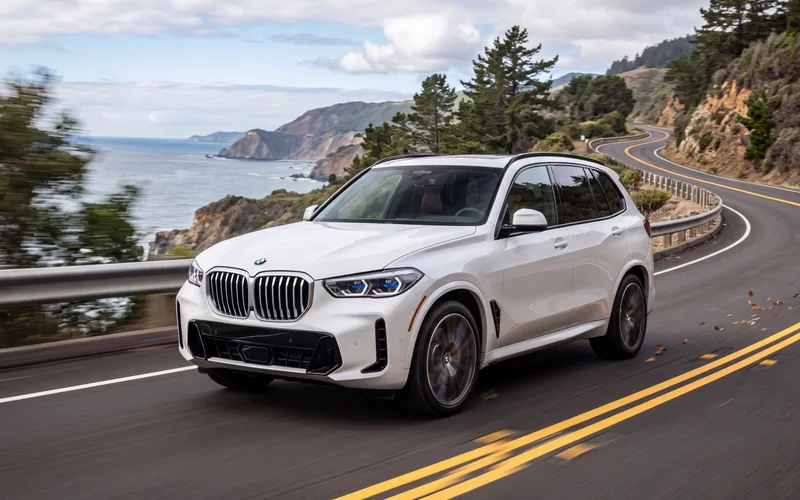 BMW X5Mid-Size Luxury SUVBetter at: Resale value
Nearly everything the Sport does well, plus a third row, 72.3 cu ft of cargo and roughly 13 percentage points better five-year value retention.
Compare 2.45C+
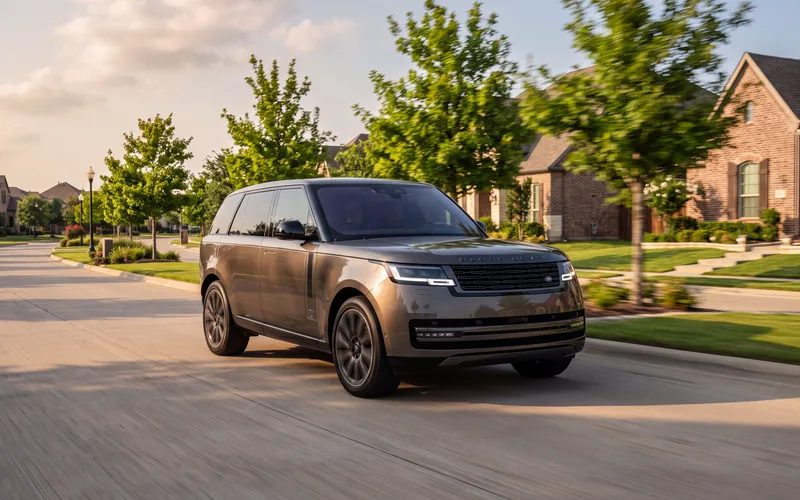 Land Rover Range RoverFull-Size Luxury SUVBetter at: Space and luxury
If the Sport's cabin is the draw, the flagship delivers the same screens and materials with real rear-seat room and an available third row for about $25,000 more.
Compare 2.60C+
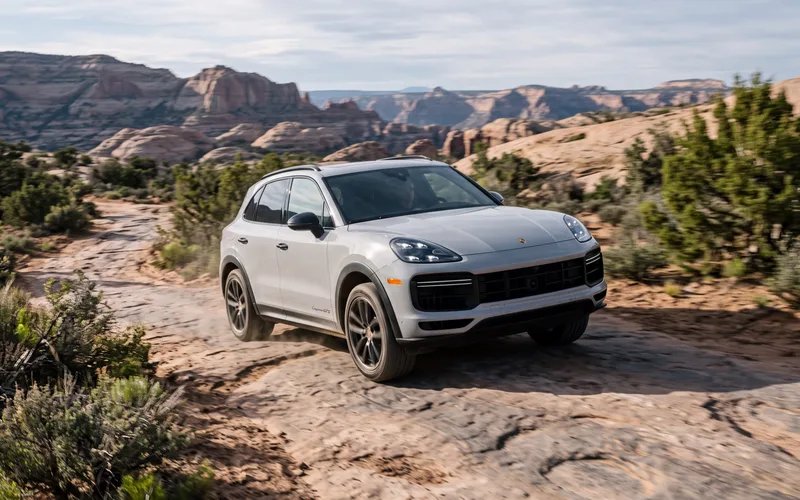 Porsche CayenneMid-Size Luxury SUVBetter at: Driving dynamics
Similar money and presence, but with the steering feel and body control the Sport's numb rack never provides, plus a far better dependability record.
CompareHow it's evolved
10 scored model years · 2017–2026
Subject scores by year
Hover or tap a score to see what moved it versus the year before. A corner mark flags a big swing.
| Year | Performance | Efficiency | Safety | Space | Cost | Reliability | Tech | Use-case | Driving | Value |
|---|---|---|---|---|---|---|---|---|---|---|
| 2026 | 80 | 41 | 67 | 52 | 12 | 44 | 84 | 69 | 71 | 69 |
| 2025 | 80 | 40 | 66 | 52 | 12 | 44 | 83 | 69 | 71 | 72 |
| 2024 | 79 | 36 | 58 | 51 | 12 | 42 | 82 | 67 | 71 | 71 |
| 2023 | 79 | 36 | 58 | 51 | 12 | 41 | 80 | 66 | 71 | 68 |
| 2022 | 78 | 42 | 37 | 51 | 17 | 37 | 53 | 53 | 69 | 51 |
| 2021 | 72 | 42 | 42 | 47 | 16 | 40 | 56 | 57 | 62 | 56 |
| 2020 | 72 | 44 | 38 | 50 | 9 | 39 | 50 | 55 | 66 | 61 |
| 2019 | 71 | 31 | 38 | 49 | 11 | 35 | 55 | 55 | 66 | 60 |
| 2018 | 70 | 32 | 36 | 51 | 17 | 39 | 51 | 52 | 65 | 54 |
| 2017 | 68 | 33 | 38 | 47 | 12 | 32 | 49 | 53 | 63 | 56 |
Compare two years
Best fit & conditions
Higher scores mean a better fit for that use case. Learn more about use-case fit →
Subject profile
Academic Probation · NHTSA safety recalls
No NHTSA safety recall is on record for the 2026 Land Rover Range Rover Sport. Other model years of the Range Rover Sport have 32 — listed below.
32 recalls on other model years of the Range Rover Sport (2017–2025)
Sep 24, 2026Structure: frame and membersCracks may develop in the rear subframe.
Defect
Jaguar Land Rover North America, LLC (Land Rover) is recalling certain 2024-2026 Range Rover Sport vehicles. Cracks may develop in the rear subframe.
Risk
A cracked subframe may have reduced structural integrity, increasing the risk of injury during a crash. A crack may also diminish handling and control, increasing the risk of a crash.
Remedy
Dealers will inspect and replace the rear subframe as necessary, free of charge. Interim letters notifying owners of the safety risk are expected to be mailed November 20, 2026. Additional letters will be sent once the final remedy is available. Owners may contact Land Rover customer service at 1-800-637-6837. Land Rover's numbers for this recall are D165 and D166.
NHTSA campaign 26V613000 ↗Manufacturer no. D165 D1661,073 vehicles potentially affected (all models in the campaign)Filed by Jaguar Land Rover North America, LLCFiled as RANGE ROVER SPORTSep 17, 2026Electrical system: propulsion system: dc/dc converterThe DC-DC converter may malfunction due to an electrical overload that can occur during high power demand. Additionally, a software error can cause the DC-DC converter to stop functioning at vehicle start-up under certain circumstances. Failure of the DC-DC converter will result in the loss of 12-Volt system charging and can lead to complete loss of drive power and exterior lighting.
Defect
Jaguar Land Rover North America, LLC (Land Rover) is recalling certain 2019-2024 Land Rover Range Rover Sport, 2020-2024 Land Rover Range Rover Evoque, Land Rover Range Rover, Land Rover Discovery Sport, Land Rover Defender, 2021-2024 Land Rover Range Rover Velar, Jaguar E-Pace, F-Pace, and Land Rover Discovery vehicles. The DC-DC converter may malfunction due to an electrical overload that can occur during high power demand. Additionally, a software error can cause the DC-DC converter to stop functioning at vehicle start-up under certain circumstances. Failure of the DC-DC converter will result in the loss of 12-Volt system charging and can lead to complete loss of drive power and exterior lighting.
Risk
A loss of drive power increases the risk of a crash.
Remedy
Dealers will update the vehicle software, free of charge. Interim letters notifying owners of the safety risk are expected to be mailed November 13, 2026. Additional letters will be sent once the final remedy is available. Owners may contact Land Rover's customer service at 800-637-6837. Land Rover's number for this recall is E008. This recall expands previous NHTSA recall number 26V248.
NHTSA campaign 26V599000 ↗Manufacturer no. E00823,677 vehicles potentially affected (all models in the campaign)Filed by Jaguar Land Rover North America, LLCFiled as RANGE ROVER SPORTApr 17, 2026Electrical system: propulsion system: dc/dc converterInsufficient electrical load balancing during times of high demand can lead to a current overload condition and malfunction of the DCDC converter. A failure of the DC-DC converter will result in a loss of 12-Volt system charging and can lead to complete loss of drive power and exterior lighting.
Defect
Jaguar Land Rover North America, LLC (Land Rover) is recalling certain 2021-2024 Land Rover Range Rover Velar and Land Rover Discovery, 2020-2023 Land Rover Range Rover Evoque, 2019-2024 Land Rover Range Rover Sport, 2020-2024 Land Rover Range Rover, 2020 Land Rover Discovery Sport, 2020-2024 Land Rover Defender, 2021-2024 Jaguar F-Pace, and 2021-2022 Jaguar E-Pace mild-hybrid electric vehicles (MHEVs). Insufficient electrical load balancing during times of high demand can lead to a current overload condition and malfunction of the DCDC converter. A failure of the DC-DC converter will result in a loss of 12-Volt system charging and can lead to complete loss of drive power and exterior lighting.
Risk
A loss of drive power increases the risk of a crash.
Remedy
Dealers will update the central software, free of charge. Interim letters notifying owners of the safety risk were mailed June 17, 2026. Additional letters will be sent once the final remedy is available. Owners may contact Land Rover's customer service at 800-637-6837. Land Rover's numbers for this recall are D126 and H575.
NHTSA campaign 26V248000 ↗Manufacturer no. D126 H575170,169 vehicles potentially affected (all models in the campaign)Filed by Jaguar Land Rover North America, LLCFiled as RANGE ROVER SPORTFeb 19, 2026Structure: exterior trimThe panoramic sunroof side finisher trim may not be properly secured and can detach.
Defect
Jaguar Land Rover North America, LLC (Land Rover) is recalling certain 2023-2026 Range Rover Sport and Range Rover vehicles. The panoramic sunroof side finisher trim may not be properly secured and can detach.
Risk
A detached panoramic sunroof side trim can become a road hazard, increasing the risk of injury or crash.
Remedy
Dealers will inspect the panoramic sunroof side finisher trim and secure it as necessary, free of charge. Owner letters were mailed June 19, 2026. Owners may contact Land Rover's customer service at 800-637-6837. Land Rover's number for this recall is D095.
NHTSA campaign 26V097000 ↗Manufacturer no. D095178 vehicles potentially affected (all models in the campaign)Owners notified Jun 12, 2026Filed by Jaguar Land Rover North America, LLCFiled as RANGE ROVER SPORTOct 16, 2025Power train: automatic transmission: gear position indication (prndl)Moisture may have entered the gear shift module (GSM) during assembly, which can cause the gear shift position indicator light to fail. As such, these vehicles fail to comply with the requirements of Federal Motor Vehicle Safety Standard (FMVSS) number 101, "Controls and Displays."
Defect
Jaguar Land Rover North America, LLC (Land Rover) is recalling certain 2025 Range Rover, Range Rover Sport, Discovery Sport, and 2026 Range Rover Evoque, and Jaguar F-Pace vehicles. Moisture may have entered the gear shift module (GSM) during assembly, which can cause the gear shift position indicator light to fail. As such, these vehicles fail to comply with the requirements of Federal Motor Vehicle Safety Standard (FMVSS) number 101, "Controls and Displays."
Risk
A gear shift position indicator that fails to illuminate can make it difficult to identify the correct transmission gear position, increasing the risk of a crash.
Remedy
Dealers will replace the GSM, free of charge. Owner letters were mailed December 2, 2025. Owners may contact Land Roverâs customer service at 1-800-637-6837. Land Rover's numbers for this recall are D054 and H566.
NHTSA campaign 25V705000 ↗Manufacturer no. D054 H566293 vehicles potentially affected (all models in the campaign)Owners notified Dec 2, 2025Filed by Jaguar Land Rover North America, LLCFiled as RANGE ROVER SPORTAug 8, 2025Steering: linkages: knuckle: spindle: armThe front suspension upper knuckle joint may crack, which can result in suspension arm detachment.
Defect
Jaguar Land Rover North America, LLC (Land Rover) is recalling certain 2014-2017 Range Rover and Range Rover Sport vehicles. The front suspension upper knuckle joint may crack, which can result in suspension arm detachment.
Risk
Suspension arm detachment can cause a loss of vehicle handling and control, increasing the risk of a crash.
Remedy
Dealers will inspect the front suspension knuckles and install a retaining bracket or replace the knuckle, as necessary, free of charge. Owner notification letters were mailed May 11, 2026. Owners may contact Land Rover's customer service at 1-800-637-6837. Land Rover's numbers for this recall are D019, N759, D041, and D027. This recall expands and replaces previous NHTSA recall number 24V840.
NHTSA campaign 25V514000 ↗Manufacturer no. D019 N759 D041 D027121,509 vehicles potentially affected (all models in the campaign)Owners notified Sep 5, 2025Filed by Jaguar Land Rover North America, LLCFiled as RANGE ROVER SPORTMar 12, 2025Seat belts: rear/other: buckle assemblyThe second-row center seat belt buckle may not latch correctly due to a manufacturing error.
Defect
Jaguar Land Rover North America, LLC (Land Rover) is recalling certain 2025 Range Rover and Range Rover Sport vehicles. The second-row center seat belt buckle may not latch correctly due to a manufacturing error.
Risk
An unlatched seat belt will not properly restrain an occupant, increasing the risk of injury.
Remedy
Dealers will replace the center seat belt buckle and buckle retaining bolt, free of charge. Owner notification letters were April 22, 2025. Owners may contact Jaguar's customer service at 1-800-452-4827. Jaguar's number for this recall is N989.
NHTSA campaign 25V155000 ↗Manufacturer no. N9897,276 vehicles potentially affected (all models in the campaign)Owners notified Apr 22, 2025Filed by Jaguar Land Rover North America, LLCFiled as RANGE ROVER SPORTSep 12, 2024Back over prevention: sensing system: camera · Forward collision avoidance: sensing system: cameraThe Near Field Sensing Module (NFSM) may overheat and cause the 3D surround camera images, including the rearview camera image, not to display.
Defect
Jaguar Land Rover North America, LLC (Land Rover) is recalling certain 2024 Defender, Discovery Sport, Range Rover, Range Rover Evoque, Range Rover Velar, and Range Rover Sport vehicles. The Near Field Sensing Module (NFSM) may overheat and cause the 3D surround camera images, including the rearview camera image, not to display.
Risk
A rearview camera image that does not display can decrease the driver's visibility, increasing the risk of injury or crash.
Remedy
Dealers will replace the NFSM, free of charge. Owner notification letters were mailed October 24, 2024. Owners may contact Land Rover customer service at 1-800-637-6837. Land Rover's number for this recall is N927.
NHTSA campaign 24V678000 ↗Manufacturer no. N927180 vehicles potentially affected (all models in the campaign)Owners notified Oct 24, 2024Filed by Jaguar Land Rover North America, LLCFiled as RANGE ROVER SPORTJun 17, 2024Engine and engine cooling: engine: oil/lubrication: filter/screenThe oil filter housing can crack and leak oil into the engine compartment.
Defect
Jaguar Land Rover North America, LLC (Land Rover) is recalling certain 2023-2024 Defender, 2024 Discovery, Range Rover, Range Rover Sport, and Range Rover Velar vehicles. The oil filter housing can crack and leak oil into the engine compartment.
Risk
An oil leak in the presence of an ignition source such as hot engine or exhaust components, can increase the risk of a fire.
Remedy
Dealers will replace the filter housing, oil filter, and o-rings, free of charge. Owner notification letters were mailed June 27, 2024. Owners may contact Land Rover customer service at 1-800-637-6837. Land Rover's number for this recall is N908.
NHTSA campaign 24V450000 ↗Manufacturer no. N9082,013 vehicles potentially affected (all models in the campaign)Owners notified Jun 27, 2024Filed by Jaguar Land Rover North America, LLCFiled as RANGE ROVER SPORTMay 31, 2024Power train: automatic transmission · Power train: clutch assemblyThe transmission oil pressure may decrease and cause the clutch to shift into neutral gear, which can result in a loss of drive power.
Defect
Jaguar Land Rover North America, LLC (Land Rover) is recalling certain 2024 Range Rover and Range Rover Sport vehicles. The transmission oil pressure may decrease and cause the clutch to shift into neutral gear, which can result in a loss of drive power.
Risk
A loss of drive power can increase the risk of a crash.
Remedy
Dealers will inspect and replace the transmission as necessary, free of charge. Owner notification letters were mailed July 25, 2024. Owners may contact Land Rover customer service at 1-800-637-6837. Land Rover's number for this recall is N903.
NHTSA campaign 24V380000 ↗Manufacturer no. N90320 vehicles potentially affected (all models in the campaign)Owners notified Jul 25, 2024Filed by Jaguar Land Rover North America, LLCFiled as RANGE ROVER SPORTMay 23, 2024Back over prevention: sensing system: cameraWater may enter into the rearview camera, which can cause the rearview camera image not to appear on the display or display a distorted image. As such, these vehicles fail to comply with the requirements of Federal Motor Vehicle Safety Standard number 111, "Rear Visibility."
Defect
Jaguar Land Rover North America, LLC (Land Rover) is recalling certain 2018-2022 Range Rover Sport vehicles equipped with a Surround Camera System. Water may enter into the rearview camera, which can cause the rearview camera image not to appear on the display or display a distorted image. As such, these vehicles fail to comply with the requirements of Federal Motor Vehicle Safety Standard number 111, "Rear Visibility."
Risk
A rearview camera image that does not display can decrease the driver's visibility, increasing the risk of injury or crash.
Remedy
Dealers will inspect the rearview camera for damage. If no damage is found, the camera will be fitted with a new seal. If damage is found, the camera will be replaced and calibrated. Repairs will be performed free of charge. Owner notification letters were mailed July 18, 2024. Owners may contact Land Rover customer service at 1-800-637-6837. Land Rover's number for this recall is N901. These vehicles were previously recalled under 24V-023 for this same issue and will need to have the new remedy completed.
NHTSA campaign 24V364000 ↗Manufacturer no. N90122,268 vehicles potentially affected (all models in the campaign)Owners notified Jul 18, 2024Filed by Jaguar Land Rover North America, LLCFiled as RANGE ROVER SPORTJan 18, 2024Back over prevention: sensing system: cameraWater may enter into the rearview camera, which can cause the rearview camera image not to appear on the display or display a distorted image. As such, these vehicles fail to comply with the requirements of Federal Motor Vehicle Safety Standard number 111, "Rear Visibility."
Defect
Jaguar Land Rover North America, LLC (Land Rover) is recalling certain 2018-2022 Range Rover and Range Rover Sport vehicles equipped with a Surround Camera System. Water may enter into the rearview camera, which can cause the rearview camera image not to appear on the display or display a distorted image. As such, these vehicles fail to comply with the requirements of Federal Motor Vehicle Safety Standard number 111, "Rear Visibility."
Risk
A rearview camera image that does not display while in reverse decreases the driver's visibility, increasing the risk of injury or crash.
Remedy
Dealers will inspect the rearview camera and add a new seal or replace the camera, free of charge. Owner notification letters were mailed to Range Rover owners March 4, 2024. Interim notification letters were mailed to Range Rover Sport owners March 7, 2024. Range Rover Sport owners will receive a second notice once remedy parts become available. Owners may contact Land Rover customer service at 1-800-637-6837. Land Rover's number for this recall is N778.
NHTSA campaign 24V023000 ↗Manufacturer no. N77858,729 vehicles potentially affected (all models in the campaign)Owners notified Mar 4, 2024Filed by Jaguar Land Rover North America, LLCFiled as RANGE ROVER SPORTDec 21, 2023Structure: bodyThe body panels may not be bonded properly, reducing the structural strength of the vehicle.
Defect
Jaguar Land Rover North America, LLC (Land Rover) is recalling certain 2024 Land Rover Range Rover and Land Rover Range Rover Sport vehicles. The body panels may not be bonded properly, reducing the structural strength of the vehicle.
Risk
Reduced structural strength may not adequately protect passengers, increasing the risk of injury. Additionally, the fuel system may be damaged during a crash, causing a fuel leak and increasing the risk of a fire.
Remedy
Dealers will install two rivets and apply sealant, free of charge. Owner notification letters were mailed February 8, 2024. Owners may contact Land Rover customer service at 1-800-637-6837. Land Rover's number for this recall is N837.
NHTSA campaign 23V872000 ↗Manufacturer no. N83729 vehicles potentially affected (all models in the campaign)Owners notified Feb 8, 2024Filed by Jaguar Land Rover North America, LLCFiled as RANGE ROVER SPORTDec 21, 2023Exterior lighting: tail lights · Exterior lighting: turn signalMoisture may accumulate in the right-side tailgate and body mounted lights, which can cause the right-side exterior vehicle lights, including the brake, outer marker, reversing, and turn indicator lights to fail to illuminate.
Defect
Jaguar Land Rover North America, LLC (Land Rover) is recalling certain 2023 Land Rover Range Rover Sport vehicles. Moisture may accumulate in the right-side tailgate and body mounted lights, which can cause the right-side exterior vehicle lights, including the brake, outer marker, reversing, and turn indicator lights to fail to illuminate.
Risk
Exterior lights that fail to illuminate can decrease visibility and increase the risk of a crash.
Remedy
Dealers will replace the right-side tailgate and body mounted lights, free of charge. Owner letters were mailed April 10, 2024. Owners may contact Land Rover customer service at 1-800-637-6837. Land Rover's number for this recall is N830.
NHTSA campaign 23V871000 ↗Manufacturer no. N8304,347 vehicles potentially affected (all models in the campaign)Owners notified Apr 10, 2024Filed by Jaguar Land Rover North America, LLCFiled as RANGE ROVER SPORTMay 4, 2023Latches/locks/linkagesThe second-row seat armrest storage compartment latch may fail, allowing the objects from within to be unsecured in the event of a crash. As such, these vehicles fail to comply with the requirements of Federal Motor Vehicle Safety Standard number 201, "Occupant Protection in Interior Impact."
Defect
Jaguar Land Rover North America, LLC (Land Rover) is recalling certain 2022-2023 Land Rover Range Rover and 2023 Land Rover Range Rover Sport vehicles. The second-row seat armrest storage compartment latch may fail, allowing the objects from within to be unsecured in the event of a crash. As such, these vehicles fail to comply with the requirements of Federal Motor Vehicle Safety Standard number 201, "Occupant Protection in Interior Impact."
Risk
In the event of a crash, unsecured objects from within the armrest compartment may strike the vehicle occupants, increasing their risk of injury.
Remedy
Dealers will replace the locking arm of the second-row armrest storage compartment, free of charge. Owner notification letters were mailed October 3, 2023. Owners may contact Land Rover customer service at 1-800-637-6837. Land Rover's number for this recall is N789.
NHTSA campaign 23V324000 ↗Manufacturer no. N78912,587 vehicles potentially affected (all models in the campaign)Owners notified Oct 3, 2023Filed by Jaguar Land Rover North America, LLCFiled as RANGE ROVER SPORTApr 6, 2023Exterior lighting: tail lightsThe vehicles are equipped with incorrect rear taillights that do not illuminate correctly. In addition, the brake lights may not illuminate correctly. As such, these vehicles fail to comply with the requirements of Federal Motor Vehicle Safety Standard (FMVSS) number 108, " Lamps, Reflective Devices, and Associated Equipment."
Defect
Jaguar Land Rover North America, LLC (Land Rover) is recalling certain 2023 Land Rover Range Rover Sport vehicles. The vehicles are equipped with incorrect rear taillights that do not illuminate correctly. In addition, the brake lights may not illuminate correctly. As such, these vehicles fail to comply with the requirements of Federal Motor Vehicle Safety Standard (FMVSS) number 108, " Lamps, Reflective Devices, and Associated Equipment."
Risk
Taillights and brake lights that do not illuminate correctly can reduce vehicle visibility or cause confusion for other drivers, increasing the risk of a crash.
Remedy
Dealers will inspect and replace the rear taillights, as necessary, free of charge. Owner notification letters were mailed May 25, 2023. Owners may contact Land Rover customer service at 1-800-637-6837. Land Rover's number for this recall is N782.
NHTSA campaign 23V251000 ↗Manufacturer no. N7825 vehicles potentially affected (all models in the campaign)Owners notified May 25, 2023Filed by Jaguar Land Rover North America, LLCFiled as RANGE ROVER SPORTMar 30, 2023Engine and engine cooling: cooling systemThe water pump pulley drive belt may become damaged or detach, which can allow the engine to overheat. An overheated engine can rupture the engine coolant elbow pipe, leaking coolant onto the turbocharger heat shield.
Defect
Jaguar Land Rover North America, LLC (Land Rover) is recalling certain 2019-2021 Land Rover Range Rover PHEV and 2019-2022 Land Rover Range Rover Sport PHEV vehicles. The water pump pulley drive belt may become damaged or detach, which can allow the engine to overheat. An overheated engine can rupture the engine coolant elbow pipe, leaking coolant onto the turbocharger heat shield.
Risk
Coolant leaking onto the turbocharger heat shield inside the engine compartment can increase the risk of a fire.
Remedy
Dealers will replace the engine coolant elbow and the turbocharger feed coolant pipe, free of charge. Owner notification letters were mailed May 19, 2023. Owners may contact Land Rover customer service at 1-800-637-6837. Land Rover's number for this recall is N785.
NHTSA campaign 23V221000 ↗Manufacturer no. N7852,881 vehicles potentially affected (all models in the campaign)Owners notified May 19, 2023Filed by Jaguar Land Rover North America, LLCFiled as RANGE ROVER SPORT PHEVFeb 2, 2023Engine and engine cooling: engine: oil/lubricationThe engine cam carrier oil channel may be blocked, which can lead to an oil leak.
Defect
Jaguar Land Rover North America, LLC (Land Rover) is recalling certain 2019-2023 Range Rover Sport, 2020-2023 Range Rover, Defender, 2022-2023 Discovery, and 2023 Range Rover Velar vehicles. The engine cam carrier oil channel may be blocked, which can lead to an oil leak.
Risk
An oil leak in the presence of an ignition source can increase the risk of a fire.
Remedy
Dealers will inspect and replace the engine cam carrier and related components as necessary, free of charge. Owner notification letters were mailed March 29, 2023. Owners may contact Land Rover customer service at 1-800-637-6837. Land Rover's number for this recall is N763.
NHTSA campaign 23V044000 ↗Manufacturer no. N7636,724 vehicles potentially affected (all models in the campaign)Owners notified Mar 29, 2023Filed by Jaguar Land Rover North America, LLCFiled as RANGE ROVER SPORTJan 26, 2023Back over prevention: warnings: external/pedestrian alert · Electrical system: softwareThe vehicles fail to make sufficient pedestrian warning sounds when stationary and in reverse. As such, these vehicles fail to comply with the requirements of Federal Motor Vehicle Safety Standard number 141, "Minimum Sound Requirements for Hybrid and Electric Vehicles."
Defect
Jaguar Land Rover North America, LLC (Land Rover) is recalling certain 2020-2021 Range Rover PHEV and 2020-2022 Range Rover Sport PHEV vehicles. The vehicles fail to make sufficient pedestrian warning sounds when stationary and in reverse. As such, these vehicles fail to comply with the requirements of Federal Motor Vehicle Safety Standard number 141, "Minimum Sound Requirements for Hybrid and Electric Vehicles."
Risk
A vehicle that fails to make sufficient sound may result in pedestrians being unaware of an approaching vehicle, increasing the risk of a crash.
Remedy
Dealers will update the audio amplifier software, free of charge. Owner notification letters were mailed March 16, 2023. Owners may contact Land Rover customer service at 1-800-637-6837. Land Rover's number for this recall is N742.
NHTSA campaign 23V031000 ↗Manufacturer no. N742868 vehicles potentially affected (all models in the campaign)Owners notified Mar 16, 2023Filed by Jaguar Land Rover North America, LLCFiled as RANGE ROVER SPORT PHEVJul 21, 2022Seat belts: pretensionerThe driver and front passenger seat belt pretensioners may be damaged, which can cause the seat belts to not properly restrain occupants.
Defect
Jaguar Land Rover North America, LLC (Land Rover) is recalling certain 2022-23 Land Rover Defender, Discovery, Discovery Sport and 2022 Range Rover Sport and Range Rover Velar vehicles. The driver and front passenger seat belt pretensioners may be damaged, which can cause the seat belts to not properly restrain occupants.
Risk
Improperly restrained occupants have an increased risk of injury during a crash.
Remedy
Dealers will inspect and replace the front seat belt assemblies, as necessary, free of charge. Owner notification letters were mailed September 16, 2022. Owners may contact Land Rover customer service at 1-800-637-6837. Land Rover's number for this recall is N720.
NHTSA campaign 22V523000 ↗Manufacturer no. N7204,927 vehicles potentially affected (all models in the campaign)Owners notified Sep 16, 2022Filed by Jaguar Land Rover North America, LLCFiled as RANGE ROVER SPORTApr 5, 2022Seat belts: front: retractorThe driver's seat belt emergency locking retractor may not lock as intended. As such, these vehicles fail to comply with the requirements of the Federal Motor Vehicle Safety Standard (FMVSS) numbers 209, "Seat Belt Assemblies" and 208, "Occupant Crash Protection."
Defect
Jaguar Land Rover North America, LLC (Land Rover) is recalling certain 2016-2017 Range Rover and Range Rover Sport vehicles. The driver's seat belt emergency locking retractor may not lock as intended. As such, these vehicles fail to comply with the requirements of the Federal Motor Vehicle Safety Standard (FMVSS) numbers 209, "Seat Belt Assemblies" and 208, "Occupant Crash Protection."
Risk
During hard braking before a crash, the seat belt emergency locking retractor may not lock as intended, increasing the risk of injury.
Remedy
Dealers will inspect and replace the seat belt assembly, as necessary, free of charge. Owner notification letters were mailed July 29, 2022. Owners may contact Land Rover customer service at 1-800-637-6837. Land Rover's number for this recall is N678. This recall replaces NHTSA recall number 19V-350. Vehicles previously inspected under recall 19V-350 that did not receive a replacement seat belt assembly will need to have this new recall remedy performed.
NHTSA campaign 22V219000 ↗Manufacturer no. N67814,812 vehicles potentially affected (all models in the campaign)Owners notified Jul 29, 2022Filed by Jaguar Land Rover North America, LLCFiled as RANGE ROVER SPORTAug 26, 2021Seat belts: front: retractor · Seat belts: rear/other: retractorThe seat belt automatic locking retractors may deactivate early, which can prevent the child restraint system from securing properly.
Defect
Jaguar Land Rover North America, LLC (Land Rover) is recalling certain 2021 Range Rover, 2022 Range Rover Sport, 2020-2021 Range Rover Velar, Discovery Sport, 2020-2022 Discovery, and Defender vehicles. The seat belt automatic locking retractors may deactivate early, which can prevent the child restraint system from securing properly.
Risk
An unsecured child restraint system can increase the risk of injury during a crash.
Remedy
Dealers will inspect and replace the seat belt assemblies as necessary, free of charge. Owner letters were mailed October 20, 2021. Owners may contact Land Rover customer service at 1-800-637-6837. Land Rover's number for this recall is N630.
NHTSA campaign 21V668000 ↗Manufacturer no. N63032,687 vehicles potentially affected (all models in the campaign)Owners notified Oct 20, 2021Filed by Jaguar Land Rover North America, LLCFiled as RANGE ROVER SPORTFeb 25, 2021Exterior lighting: headlights · Exterior lighting: lighting control module: softwareThe Auto High Beam (AHB) system does not indicate through the instrument cluster when the high beams are illuminated automatically. As such, these vehicles fail to comply with the requirements of Federal Motor Vehicle Safety Standard (FMVSS) number 108, "Lamps, Reflective Devices, and Associated Equipment."
Defect
Jaguar Land Rover North America, LLC. (Land Rover) is recalling certain 2018-2020 Range Rover, Range Rover Sport, Discovery, and Range Rover Velar vehicles. The Auto High Beam (AHB) system does not indicate through the instrument cluster when the high beams are illuminated automatically. As such, these vehicles fail to comply with the requirements of Federal Motor Vehicle Safety Standard (FMVSS) number 108, "Lamps, Reflective Devices, and Associated Equipment."
Risk
The driver may be unaware that the high beams are illuminated, reducing visibility for oncoming traffic, and increasing the risk of a crash.
Remedy
Land Rover will notify owners, and dealers will update the vehicle software, free of charge. The recall began April 7, 2021. Owners may contact Land Rover customer service at 1-800-637-6837. Land Rover's number for this recall is N556.
NHTSA campaign 21V117000 ↗Manufacturer no. N55626,805 vehicles potentially affected (all models in the campaign)Owners notified Apr 7, 2021Filed by Jaguar Land Rover North America, LLCFiled as RANGE ROVER SPORTSep 24, 2020Equipment: other: labels · TiresThe tire inflation pressure label and the tire placard label state the incorrect tire pressures for the vehicle. As such, these vehicles fail to comply with the requirements of Federal Motor Vehicle Safety Standard number 110, "Tire Selection and Rims."
Defect
Jaguar Land Rover North America, LLC (Land Rover) is recalling certain 2020-2021 Range Rover Sport vehicles equipped with 19-inch wheels. The tire inflation pressure label and the tire placard label state the incorrect tire pressures for the vehicle. As such, these vehicles fail to comply with the requirements of Federal Motor Vehicle Safety Standard number 110, "Tire Selection and Rims."
Risk
Failure to inflate tires to the correct pressure could lead to loss of vehicle stability and control, increasing the risk of a crash.
Remedy
Land Rover will notify owners, and dealers will apply the correct labels, free of charge. The recall began October 30, 2020. Owners may contact Land Rover customer service at 1-800-369-1000. Land Rover's number for this recall is N491.
NHTSA campaign 20V586000 ↗Manufacturer no. N4911,087 vehicles potentially affected (all models in the campaign)Owners notified Oct 30, 2020Filed by Jaguar Land Rover North America, LLCFiled as RANGE ROVER SPORTSep 24, 2020Electrical system: software · Tires: pressure monitoring and regulating systemsThe Tire Pressure Monitoring System (TPMS) recommended pressure has been set incorrectly in the instrument cluster. As a result, the TPMS warning light will not illuminate when tire pressure reaches 25% below the cold inflation pressure stated on the tire placard. As such, these vehicles fail to comply with the requirements of Federal Motor Vehicle Safety Standard number 138, "Tire Pressure Monitoring Systems."
Defect
Jaguar Land Rover North America, LLC (Land Rover) is recalling certain 2020-2021 Range Rover Sport vehicles equipped with 20-inch, 21-inch, or 22-inch wheels. The Tire Pressure Monitoring System (TPMS) recommended pressure has been set incorrectly in the instrument cluster. As a result, the TPMS warning light will not illuminate when tire pressure reaches 25% below the cold inflation pressure stated on the tire placard. As such, these vehicles fail to comply with the requirements of Federal Motor Vehicle Safety Standard number 138, "Tire Pressure Monitoring Systems."
Risk
Drivers may unknowingly operate the vehicle with low tire pressure, possibly causing tire tread separation, thereby increasing the risk of a crash.
Remedy
Land Rover will notify owners, and dealers will update the instrument cluster software, free of charge. The recall began November 2, 2020. Owners may contact Land Rover customer service at 1-800-369-1000. Land Rover's number for this recall is N494.
NHTSA campaign 20V585000 ↗Manufacturer no. N49411,159 vehicles potentially affected (all models in the campaign)Owners notified Nov 2, 2020Filed by Jaguar Land Rover North America, LLCFiled as RANGE ROVER SPORTAug 15, 2019Back over prevention: sensing system: cameraThe back-up camera system may fail to display the rearview image when the vehicle is in reverse.
Defect
Jaguar Land Rover North America, LLC (Land Rover) is recalling certain 2018 Range Rover and Range Rover Sport vehicles equipped with Continental Surround Camera Systems. The back-up camera system may fail to display the rearview image when the vehicle is in reverse.
Risk
Failure to display the rearview image will reduce the driver's visibility, increasing the risk of a crash.
Remedy
Land Rover will notify owners, and dealers will reprogram the infotainment system software, free of charge. The recall began October 2, 2019. Owners may contact Land Rover customer service at 1-800-637-6837. Land Rover's number for this recall is N367.
NHTSA campaign 19V603000 ↗Manufacturer no. N36714,277 vehicles potentially affected (all models in the campaign)Owners notified Oct 2, 2019Filed by Jaguar Land Rover North America, LLCFiled as RANGE ROVER SPORTMay 9, 2019Seat beltsThe driver's seat belt Emergency Locking Retractor (ELR) may not lock as designed. As such, these vehicles fail to comply with the requirements of the Federal Motor Vehicle Safety Standard (FMVSS) number 209, "Seat Belt Assemblies."
Defect
Jaguar Land Rover North America, LLC (Land Rover) is recalling certain 2016-2017 Range Rover and Range Rover Sport vehicles. The driver's seat belt Emergency Locking Retractor (ELR) may not lock as designed. As such, these vehicles fail to comply with the requirements of the Federal Motor Vehicle Safety Standard (FMVSS) number 209, "Seat Belt Assemblies."
Risk
If the driver brakes prior to a crash, the ELR will not lock at the correct g-force level, increasing the risk of injury.
Remedy
Land Rover will notify owners, and dealers will inspect the seat belt assembly, replacing it if necessary, free of charge. The recall began September 10, 2019. Owners may contact Land Rover customer service at 1-800-637-6837. Land Rover's number for this recall is N333.
NHTSA campaign 19V350000 ↗Manufacturer no. N33316,186 vehicles potentially affected (all models in the campaign)Owners notified Sep 10, 2019Filed by Jaguar Land Rover North America, LLCFiled as RANGE ROVER SPORTJan 17, 2019EngineThe affected vehicles are equipped with V6 or V8 engines whose crankshaft pulley retaining bolt may fracture possibly resulting in engine failure.
Defect
Jaguar Land Rover North America, LLC (Land Rover) is recalling certain 2019 Range Rover, Range Rover Sport, Range Rover Velar and Discovery vehicles. The affected vehicles are equipped with V6 or V8 engines whose crankshaft pulley retaining bolt may fracture possibly resulting in engine failure.
Risk
Engine failure can increase the risk of crash.
Remedy
Land Rover has notified owners, and dealers will replace the crankshaft pulley center retaining bolt, free of charge. The recall began February 12, 2019. Owners may contact Land Rover customer service at 1-800-637-6837. Land Rover's number for this recall is N276.
NHTSA campaign 19V040000 ↗Manufacturer no. N2762,587 vehicles potentially affected (all models in the campaign)Owners notified Feb 12, 2019Filed by Jaguar Land Rover North America, LLCFiled as RANGE ROVER SPORTSep 13, 2018Forward collision avoidance: automatic emergency brakingThe Autonomous Emergency Braking (AEB) system may be disabled without warning the driver that the system is not functional.
Defect
Jaguar Land Rover North America, LLC (Land Rover) is recalling certain 2018 Land Rover Range Rover, Land Rover Range Rover Sport and Land Rover Discovery vehicles. The Autonomous Emergency Braking (AEB) system may be disabled without warning the driver that the system is not functional.
Risk
If the AEB does not intervene when needed, without warning, there would be an increased risk of a crash.
Remedy
Land Rover will notify owners, and dealers will update the vehicle software, free of charge. The recall began October 17, 2018. Owners may contact Land Rover customer service at 1-800-637-6837, Option 9. Land Rover's number for this recall is N227.
NHTSA campaign 18V625000 ↗Manufacturer no. N22786 vehicles potentially affected (all models in the campaign)Owners notified Oct 17, 2018Filed by Jaguar Land Rover North America, LLCFiled as RANGE ROVER SPORTMay 23, 2018Electrical system: software · Fuel system, gasolineThe fuel gauge on these vehicles may indicate that the fuel level is low and illuminate the warning lamp, when the fuel tank actually has more fuel. The engine management software may also cut off the engine when the vehicle has traveled approximately 17 more miles.
Defect
Jaguar Land Rover North America, LLC (Land Rover) is recalling certain 2017 Land Rover Range Rover, Range Rover Sport, and Discovery vehicles. The fuel gauge on these vehicles may indicate that the fuel level is low and illuminate the warning lamp, when the fuel tank actually has more fuel. The engine management software may also cut off the engine when the vehicle has traveled approximately 17 more miles.
Risk
If the engine were to shut off, it can cause loss of power brake assistance. An engine stall would cause a loss of drive power. Both scenarios can increase the risk of a crash.
Remedy
Land Rover will notify owners, and dealers will install a software update to correct the fuel level reading, free of charge. The recall began on June 22, 2018. Owners may Land Rover customer service at 1-800-637-6837. Land Rover's number for this recall is N206.
NHTSA campaign 18V337000 ↗Manufacturer no. N2061,917 vehicles potentially affected (all models in the campaign)Owners notified Jun 22, 2018Filed by Jaguar Land Rover North America, LLCFiled as RANGE ROVER SPORTOct 26, 2017Electrical system: instrument cluster/panelThe instrument cluster (IC) may intermittently go blank.
Defect
Jaguar Land Rover North America, LLC (Land Rover) is recalling certain 2017 Land Rover Range Rover and Range Rover Sport vehicles. The instrument cluster (IC) may intermittently go blank.
Risk
A blank instrument cluster will not show important information like vehicle speed, increasing the risk of a crash.
Remedy
Land Rover will notify owners, and dealers will update the vehicle software, free of charge. The recall is expected to begin December 19, 2017. Owners may contact Land Rover customer service at 1-800-637-6837. Land Rover's number for this recall is N124.
NHTSA campaign 17V679000 ↗Manufacturer no. N12421,998 vehicles potentially affected (all models in the campaign)Owners notified Dec 15, 2017Filed by Jaguar Land Rover North America, LLCFiled as RANGE ROVER SPORTDec 29, 2016Seat belts: pretensionerThe affected vehicles have seatbelt pretensioners that may not function properly in the event of a crash.
Defect
Jaguar Land Rover North America, LLC (Land Rover) is recalling certain model year 2017 Land Rover Discovery Sport vehicles and 2016-2017 Land Rover Range Rover and Range Rover Sport vehicles. The affected vehicles have seatbelt pretensioners that may not function properly in the event of a crash.
Risk
If the front seat seatbelt pretensioners do not function properly, the seat occupants may not be adequately restrained in the event of a crash, increasing the risk of injury.
Remedy
Land Rover will notify owners, and dealers will inspect the front seat belt assemblies, replacing them as necessary, free of charge. The recall began February 20, 2017. Owners may contact Land Rover customer service at 1-800-637-6837. Land Rover's number for this recall is P095.
NHTSA campaign 16V942000 ↗Manufacturer no. P09513,500 vehicles potentially affected (all models in the campaign)Owners notified Apr 24, 2017Filed by Jaguar Land Rover North America, LLCFiled as RANGE ROVER SPORT
Source: NHTSA Office of Defects Investigation recall database, model years 2017–2026. Recalls are listed by model year as the manufacturer filed them; whether a specific car is affected depends on its VIN — check a VIN at nhtsa.gov ↗. NHTSA model names matched to this page: RANGE ROVER SPORT, RANGE ROVER SPORT PHEV.
Detailed scoring by subject
1Performance & PowertrainOne of the Range Rover Sport's strongest categories.3.46B+
The 2026 Range Rover Sport (third-gen L461, a carry-over year mechanically) runs the 3.0L turbocharged Ingenium inline-six with 48V mild-hybrid assist; the volume P400 Dynamic SE is rated 395 hp, with the lineup spanning 355 hp (P360) to the SV's 626-hp 4.4L twin-turbo V8.
The P400's 406 lb-ft peaks from roughly 2,000 rpm on a broad plateau, with the 48V system filling torque below the turbo's threshold — strong for the volume engine in a mid-size luxury SUV, though the PHEV's combined 590 lb-ft is the lineup high.
Land Rover quotes 5.2 s to 60 mph for the mild-hybrid gas P400 — a half-second quicker than the same engine in the heavier full-size Range Rover and genuinely brisk for a 5,100-lb SUV, without matching the V8 or SV variants or the quickest electric rivals.
The inherently balanced Ingenium straight-six plus 48V assist gives near-silent, lag-free delivery — reviewers judge the P400 muscular enough that the V8 above it reads as optional rather than necessary. Held below the 90s because it still lacks the last increment of silkiness of BMW's B58 and the PHEV's engine-start transition is audible.
Every 2026 Range Rover Sport uses the ZF 8HP eight-speed automatic — the class benchmark for shift smoothness and ratio selection, with imperceptible upshifts in normal driving. Not higher because it is tuned for smoothness over urgency and can be slow to kick down at part throttle.
Rated at the 3,500 kg / 7,716 lb homologated maximum on every powertrain, near the top of the SUV normalization band and beaten by few luxury SUVs; Advanced Tow Assist with trailer-reverse guidance is available.
All-wheel drive is standard on every trim with Terrain Response 2, Torque Vector by Braking and an electronic differential; a twin-speed transfer case with 2.93:1 low range and an electronic locking rear differential are available, standard from the P530 Dynamic SE up. A notch below the full-size Range Rover because low range is an option rather than standard and the L461's Active Driveline decouples to rear-wheel drive between about 21 and 100 mph for efficiency.
Real credentials for a road-biased luxury SUV: adaptive air suspension raising ground clearance from 8.5 in to roughly 11 in, about 35.4 in of wading depth with Wade Sensing, Terrain Response 2 and Adaptive Off-Road Cruise Control, plus optional low range and rear locker. Below the Defender and full-size Range Rover because the 20 mm lower, stiffer chassis, shallower angles and volume-fitment 22–23-inch wheels on street tires cap what it will actually attempt.
Three distinct powertrain families and six US outputs for 2026 — P360 and P400 mild-hybrid inline-sixes, P460e and P550e plug-in hybrids with an EPA-estimated 51 miles of electric range, and the P530 and 626-hp P635 twin-turbo V8s. Substantial electrification across the range; short of the 90s only because the promised battery-electric Range Rover Sport is not yet on sale for 2026.
2Efficiency & RangeOne of the Range Rover Sport's weakest categories.0.73F
The volume configuration is the six-cylinder mild hybrid (SE P360 / Dynamic SE P400) — EPA rates both identically at 22 MPG combined, weak for a mid-size luxury SUV but a point better than the larger L460 Range Rover P400.
20 MPG city for the six-cylinder mild hybrid; the 48V system restarts the engine and recuperates but cannot move the car, so stop-and-go economy stays near the bottom of the SUV band.
25 MPG highway is the strongest of the Range Rover Sport's ratings and the reason total range clears 500 miles, but it still trails six-cylinder rivals such as the BMW X5 xDrive40i.
A large fuel tank offsets the mediocre MPG — EPA puts the mild-hybrid six at 524 miles of total range, the longest of any 2026 Land Rover and a genuine strength for road-trip use.
EPA's own $3,450 annual estimate sits above the top of the SUV band because the Range Rover Sport pairs low MPG with a premium-fuel requirement; only the plug-in hybrid, at roughly $1,900/yr, changes that picture.
Every 2026 Range Rover Sport powertrain — I6 MHEV, 4.4 V8 and the PHEV — runs on premium gasoline, with no regular-fuel, E85 or diesel option in the US; the plug-in's home charging is the only route to cheaper energy and it takes a six-figure trim to access it.
3SafetyMid-pack among this car's ten categories.2.50C+
NHTSA has published no 5-Star Safety Ratings for the third-generation (L461) Range Rover Sport: the agency's database returns an entry for 2023 and 2024 with every crash metric marked 'Not Rated', and no entry at all for 2025 or 2026. The estimate anchors on the L461's five-star Euro NCAP result, but a US buyer gets no NCAP star rating to check.
The Range Rover Sport holds no IIHS Top Safety Pick or TSP+ award and has no published IIHS crashworthiness results in any L461 model year, so it cannot be credited above the no-award band. What partially offsets that is a genuine full-protocol crash test of this exact generation abroad — Euro NCAP awarded the L461 five stars with strong occupant protection — which is more than the Discovery or Defender can show, but it is not the small-overlap or updated side test a US buyer would compare against rivals on.
This is the Range Rover Sport's clearest safety strength and it improved for 2026: with the cheap S trim dropped, the range now opens at Dynamic SE ($83,700) and the full core suite ships on every trim — AEB with pedestrian and cyclist detection, lane departure warning, lane keep assist, lane centering, adaptive cruise control with Steering Assist, Blind Spot Assist, rear cross-traffic monitoring, front and rear parking sensors and a 3D surround camera. Nothing safety-critical is paywalled behind an options pack, which is not true of every JLR nameplate.
IIHS has run no front crash prevention test on the Range Rover Sport, so there is no Superior/Advanced rating for either the vehicle-to-vehicle or the pedestrian protocol, and no nighttime pedestrian result at all. The Euro NCAP assessment of this generation is the only hard data: Safety Assist scored a strong 82%, but Vulnerable Road User protection came in at only 69% — a mid-pack result that argues against crediting the system in the top band despite the hardware being standard everywhere.
Blind Spot Assist is standard on every 2026 trim and intervenes with a corrective steering nudge rather than only lighting a mirror icon, which is the behavior the top band asks for. Rear cross-traffic monitoring and a Rear Collision Monitor are also standard, and the 3D surround camera fills in what the sloping rear glass hides. It stops short of the very top because Land Rover publishes no trailer-aware blind-spot coverage on a vehicle rated to tow 7,716 lbs, and safe-exit warning is not called out as standard.
The Range Rover Sport gets real lane centering, not just edge-of-lane correction, because Adaptive Cruise Control with Steering Assist is standard across the 2026 range alongside lane departure warning, lane keep assist and Emergency Lane Keep. Execution is the limiter rather than availability: reviewers single out the steering assist as the weak link in an otherwise well-sorted driver-assist set, so it lands mid-band rather than in the 'reviewers trust it' tier.
Adaptive Cruise Control with Steering Assist is standard on every 2026 trim — a full-speed-range stop-and-go system, so there is no gap in the fundamentals and no trim where a buyer has to pay for it. It scores below the full-size Range Rover because the same hardware draws explicit reviewer criticism for its steering-assist behavior here, which is exactly the 'rough edges' the middle band describes rather than the well-integrated highway assist of the top band.
JLR offers no hands-free highway driving system on any 2026 Range Rover Sport trim, right up to the $180k-plus P635 SV Carbon. Steering Assist is a hands-on lane-centering feature with a torque-sensing wheel, not a mapped hands-off system, so there is no BlueCruise/Super Cruise equivalent at any price — a conspicuous gap against German and American rivals in this segment.
IIHS has published no headlight rating for the Range Rover Sport, so there is no Good/Acceptable/Marginal grade to anchor on. The hardware is strong: Pixel LED units with adaptive high beam are standard from the Dynamic SE volume trim upward (a modest option on the entry car), using a micromirror array to shadow oncoming traffic rather than simply toggling high beams, with Digital LED available higher up the range. Held below the top band only because the standard-across-the-range claim cannot be verified against an independent rating.
The Sport keeps the nameplate's command driving position and a fairly upright windshield, so forward sightlines are good, but it is explicitly the chopped-roof version of the Range Rover: a faster rear screen, higher beltline and thick rear pillars cut the over-the-shoulder and straight-back view compared with the Discovery or the full-size Range Rover. Camera compensation is comprehensive rather than token — a 3D surround view reviewers praise for resolution, ClearSight Ground View that renders the area hidden under the nose, and a ClearSight camera rear-view mirror — which lifts it back above average but does not fully undo the styling penalty.
Standard provision is the segment norm rather than a strength: two complete LATCH sets at the rear outboard positions plus a top-tether anchor for the center seat, and no third row on any trim, so there is no second pair of anchors further back. What works in its favor is the packaging — a wide rear door aperture, a flat floor, generous second-row legroom on the 118-inch wheelbase, and air suspension that can kneel to access height to make lifting a seat in easier. Three-across remains a squeeze given the wide center console and sculpted outboard cushions.
4Space & ComfortGrades below the middle of the scale.1.52D
The third-generation L461 Range Rover Sport is a strictly two-row, five-seat SUV across every 2026 trim (SE through SV) — a third row has never been offered on any Sport generation because of the chopped roofline.
38.8 in front headroom is the US-published figure for the 2026 Sport, measured with the fixed panoramic roof that is standard from the SE trim up — average for a mid-size luxury SUV and a little tighter than the full-size Range Rover's 39.5 in.
40.3 in front legroom sits at the bottom of the SUV band — the L461's 118.0 in wheelbase is generous, but JLR's low-slung seating position and long console eat into the published measurement. Corroborated across US aggregators; Land Rover's own US spec page does not publish interior dimensions.
39.0 in of second-row headroom is strong for the segment and slightly better than up front, since the roofline's taper falls behind the rear passengers' heads rather than over them.
37.8 in of rear legroom is mid-pack — comfortably adequate for two adults but well short of the long-wheelbase full-size Range Rover, and reviewers consistently frame the second row as spacious-but-not-limousine.
There is no third row and none has ever been available on the Range Rover Sport — buyers who need seven seats are pushed to the Discovery, Defender 130, or the long-wheelbase Range Rover. Scored in the low band per the item's no-third-row rule.
31.9 cu ft behind the rear seats is modest for a 194.7-in-long SUV — the sloping tailgate and full-size spare-capable underfloor cost real volume, and it trails the full-size Range Rover and most three-row rivals badly.
53.0 cu ft is the US-convention maximum with the 60/40 split rear bench folded — at or below the bottom of the SUV band and one of the weakest figures among mid-size luxury SUVs. Land Rover's European to-the-roof figure of 1,850 L (65.3 cu ft) is more flattering but is not the measure used here.
Competent but not clever: a deep lidded center console with wireless charging, usable door bins, underfloor loadspace stowage and a standard powered tailgate, plus cabin air purification and multiple USB-C outlets. There is no headline storage trick — no frunk, no giga-console, no hidden cubby of the sort the Discovery builds its interior around — and the style-first packaging leaves less usable space than the Defender or Discovery.
Among the best in the segment: 20-way electrically adjustable, heated and ventilated memory front seats are standard from SE, rising to 22-way with massage on Autobiography and SV, and the rear bench gets heated power recline as standard. Reviewers single out the cushioning and bolstering for long-haul praise front and rear.
Standard air suspension with adaptive dampers and available Dynamic Response Pro active anti-roll bars deliver a plush, well-controlled ride that stays composed even on the optional 22-in wheels; it is deliberately firmer and more tied-down than the full-size Range Rover, which is the only reason it sits just below it.
Acoustic laminated glass and active noise cancellation keep the cabin near the top of the segment at highway speed, with only mild wind and road noise; the mild-hybrid inline-six and the PHEV's EV-mode running are both close to silent. Marked below the full-size Range Rover for the extra tire noise that comes with the sportier wheel-and-tire packages.
Comfort equipment is rich at the entry point, not just on the flagship: heated and ventilated front seats, heated reclining rear seats and a heated steering wheel are standard on the volume SE/Dynamic SE, three- or four-zone climate control is available, cabin air purification with PM2.5 filtration is fitted, and the PHEV adds app-based remote pre-conditioning. Massage seats and hot-stone massage sit on the upper trims.
5Cost of OwnershipThe Range Rover Sport's lowest-graded category.0.00F
The 2026 Range Rover Sport (L461, third generation — a carry-over year within the L461 run) opens at $83,700 for the SE with the 355-hp Ingenium mild-hybrid inline-six, plus $1,850 destination. That is roughly 30% past the $65,000 top of the SUV pricing band, so the item clamps to zero.
The Dynamic SE is the volume trim for 2026 — $90,800 + $1,850 destination = $92,650 before options, with the common comfort/tow packages taking a representative car to about $93,500. Far beyond the $27,000–$68,000 SUV band, so zero.
CarEdge's schedule-driven model puts the first five years at $6,113, but it understates a nameplate RepairPal flags for above-normal repair frequency AND severity — air suspension, active anti-roll and dealer-only electronics are the expensive failures. A blended $8,000 sits between the two methodologies and level with the same-segment German rivals scored here, near the top of the $3,000–$9,500 SUV band.
The Range Rover Sport is a fixture on worst-depreciation lists — a near-six-figure sticker meeting used-market demand suppressed by the brand's reliability and repair-cost reputation the moment the 4-year warranty lapses. Retention lands below the 40% floor of the SUV band, so the item scores zero.
Land Rover's New Vehicle Limited Warranty runs 4 years / 50,000 miles — the luxury norm on term, mid-band, and well short of the transferable long-term coverage Genesis uses to offset exactly this kind of repair-cost risk.
Land Rover publishes no powertrain coverage beyond its bumper-to-bumper term, so engine and driveline protection ends at 4 years / 50,000 miles — below the 5-year floor of the band and a real exposure on a vehicle with this repair-severity record. Only the P550e PHEV traction battery carries longer coverage.
Roadside assistance runs the full 4 years / 50,000 miles and includes emergency towing, trip-interruption benefits and the Retailer Mobile Technician program, alongside a Pivi Pro connected-services data trial — but there is no complimentary scheduled maintenance at all. On a $90,000 SUV with class-worst service pricing that omission is conspicuous, putting this at the bottom of the roadside-only band and behind rivals that include a first service.
$93,500 volume-trim price minus its estimated resale value after 5 years (38% retained, or about $35,530) leaves about $57,970 in depreciation. Add the projected $8,000 in 5-year maintenance and repairs, and owning this vehicle for 5 years costs about $65,970 in total.
6Reliability & QualityOne of the Range Rover Sport's weakest categories.0.90F
Consumer Reports explicitly predicts the 2026 Range Rover Sport will be less reliable than other new cars and cannot recommend it, basing the call on Land Rover's brand history; J.D. Power's model-level data is the counter-signal, rating the current Sport 76/100 for quality & reliability and placing it third in the Upper Midsize Premium SUV segment of the Vehicle Dependability Study. Sources conflict, but the CR below-average call and the brand's dependability record outweigh a segment finish earned by the prior L494 generation.
Land Rover is a perennial bottom-dweller in dependability studies — 274 problems per 100 vehicles in the 2026 J.D. Power VDS against a 151 PP100 study leader, with only Volvo (296) and Volkswagen (301) worse. Electrical and electronic faults plus poor dealership-experience ratings are the recurring drivers, and Consumer Reports ranks the brand in the bottom tier year after year.
The 2026 model year's own three NHTSA campaigns are all minor (incorrect certification-label weight, panoramic sunroof trim that can detach, seat-belt warning chime), but the L461 generation behind it carries a heavy and partly systemic record: six recalls each for 2023 and 2024, including a DC/DC converter failure that causes complete loss of 12V charging, drive power and exterior lighting across 61,616 Range Rover Sports. Taillight water ingress, BISG fail-safe on the mild hybrids and a camera module that overheats round out a pattern of electrical faults rather than one-off defects.
The volume P400's 3.0L Ingenium inline-six is the strong link in JLR's engine family — markedly more robust than the troubled 2.0L four, with better heat management and none of the oil-dilution pattern — but it is still a relatively young unit and the surrounding hardware is less proven: the 38.2 kWh P550e plug-in hybrid system has little high-mileage history, the mild-hybrid belt-integrated starter generator has already been recalled for fail-safe lockout, and the 4.4L twin-turbo V8 in the SV lacks a long durability record in this application. No red flags specific to the I6 itself, which keeps this mid-band rather than low.
Materials are the Range Rover Sport's clearest strength and among the best in the mid-size luxury SUV class — most surfaces match the far pricier flagship Range Rover, with soft leather, real wood and metal inlays, and a minimalist dash that reviewers consistently rate at or above the BMW X5. Even the entry SE avoids cheap-feeling touchpoints, and Autobiography trim moves to genuinely bespoke-grade hides and veneers.
Structural assembly is genuinely good — panel fit and the solidity of the aluminium monocoque draw praise, and Land Rover's larger SUVs place well in J.D. Power's Initial Quality Study (the Range Rover ranked second in initial quality among Large Premium SUVs for 2025). What drags the rating down is electronic quality counted as a defect in these surveys: early L461 cars shipped with freezing and unresponsive Pivi Pro touchscreens at delivery, and infotainment and phantom-warning complaints persist through the generation.
About 202 US retailers spread over 48 states is workable for a luxury brand but noticeably thinner than BMW's or Mercedes' networks, leaving rural and secondary-metro owners with real distance to authorized service — a meaningful gap for a vehicle this dependent on dealer-level diagnostics. Land Rover sells well (2nd among premium brands in J.D. Power's 2025 Sales Satisfaction Index at 838), but the after-sale side is the documented weak point, with poor dealership-experience ratings called out as a contributor to the brand's dependability standing.
This item's three failure modes — expensive, slow, and dealer-only — all apply. RepairPal puts average annual repair cost at $1,179 with above-normal repair frequency and severity and a 51% chance of a major repair inside ten years, while the signature air-suspension failures run roughly $1,700 for a spring to over $4,000 for a system. Parts supply is a chronic JLR problem: warehouse consolidation and a global IT outage have left owners waiting ten weeks and more, with thousands of cars parked at dealers awaiting components and little credible aftermarket to route around it.
7Technology & InfotainmentThe Range Rover Sport's best-graded category.3.69A-
The third-generation L461 Range Rover Sport runs Pivi Pro on a 13.1-inch curved floating-glass haptic touchscreen that is standard across the entire 2026 range — there is no de-contented base screen and no upsell to a bigger one. It is a large panel in absolute terms and a big step over the 11.4-inch unit JLR fits to the Defender and Discovery, but it stops short of the wall-of-glass installations Cadillac, Lincoln and Mercedes now use in this class, which is what holds the normalized score in the low 70s.
Pivi Pro in the L461 is the strongest version of JLR's software: it boots almost instantly off its own always-on power supply, the tile layout is shallow — Land Rover claims 90% of tasks inside two taps — and the Sport keeps physical rotary controls below the screen so climate and drive-mode functions stay off the touch interface. It is capped at 80 because JLR software still draws steady owner complaints on this exact generation: Pivi Pro black screens, freezes and CarPlay/USB dropouts are among the most-reported problems on 2022–2025 L461 cars, some of them arriving with over-the-air releases.
Wireless Apple CarPlay and wireless Android Auto are both standard on every 2026 Range Rover Sport trim, with no trim gating and no subscription attached, and the standard 15W wireless charging pad sits directly under the screen so the phone is not tethered while projecting. Held just under the mid-90s only because owners on this generation report intermittent CarPlay dropouts.
The Sport carries two voice layers: embedded Amazon Alexa that works without a phone once the owner logs into their Amazon account (vehicle controls plus smart-home commands), and the cloud-based "Hey Land Rover" assistant handling natural, conversational speech in up to 31 languages. Connected online navigation with live traffic is standard through the Online Pack. It lands just into the 80s rather than higher because the connected data behind live traffic runs on an included trial that eventually needs a paid renewal, and most owners still default to phone projection for routing.
Audio is a genuine strength. A Meridian Sound System is standard from the SE up, the Autobiography steps to Meridian 3D Surround, and the SV trims get the Meridian Signature system — roughly 1,430W across 29 speakers including four headrest speakers for personal sound zones, backed by next-generation active noise cancellation. Very few vehicles at this price listen better; it sits at 90 rather than the mid-90s because the Signature system is confined to the six-figure SV trims and the Sport's cabin is a touch noisier than the full-size Range Rover's.
A 13.7-inch fully digital Interactive Driver Display is standard across the 2026 range — a large semi-floating HD panel using the same three-panel layout logic as the center screen, configurable to full-width map, media, driver-assist or terrain views rather than a digital skin over fixed dials. It is one of the better clusters in the mid-size luxury class.
JLR's Software Over The Air implementation on the L461 is one of the broadest outside the EV startups: 63 electronic control modules can be updated over the air, served by two embedded eSIMs, so powertrain, chassis, driver-assist and infotainment calibrations can all improve without a dealer visit. It stays out of the 90s because JLR ships these as occasional maintenance-and-refinement releases rather than the publicized feature-adding drops that define the top band — and because on this generation OTA releases have themselves been implicated in infotainment faults.
The Land Rover Remote app covers the expected core set — remote lock/unlock, remote start and cabin preconditioning, vehicle locate and status, Guardian Mode theft alerting, charge scheduling on the P460e/P550e plug-in hybrids, and app-driven Remote Park Assist that parks the car from outside it. It is held to the low 70s by a persistently mediocre reputation for app responsiveness, remote functions that lapse into a paid connected-services subscription after the included term, and the absence of a true phone-as-key of the sort BMW, Mercedes, Genesis and Cadillac now offer in this class — JLR's answer is a UWB smart key and the wearable Activity Key, not a phone credential.
Device power is handled well for a five-seat SUV: US-spec cars carry five charge points (four USB-C plus one USB-A) split between the front console and the rear, a 15W wireless charging pad with an integrated phone signal booster sits under the main screen, and a 230V domestic-style outlet is available. It falls short of the 90s because the Sport has only two rows to serve and the US configuration lands nearer five ports than the seven USB-C the global press kit quotes, so it is well-equipped rather than abundant.
Keyless entry with push-button start is standard, and the Sport adds convenience hardware most rivals do not match: flush deployable door handles, a gesture-operated powered tailgate, soft-close doors on Autobiography and above, the waterproof wearable Activity Key, and for 2026 a ultra-wideband smart key that resists relay theft and links to driver profiles so seats, mirrors, climate and media follow the key. The one clear gap versus the class leaders is the absence of phone-as-key, which is what keeps it out of the 90s.
This is the strongest item in the category. Every 2026 Range Rover Sport gets a 3D Surround Camera stitched from four feeds plus front and rear parking sensors and ClearSight Ground View, which composites a see-through view of the ground under the nose for kerbs and trail obstacles — a feature almost nobody else offers. Maneuvering lights illuminate the ground at low speed, Remote Park Assist parks the car from outside it, and the ClearSight digital rear-view mirror is available in the Technology Pack and standard on Autobiography.
A high-resolution full-colour head-up display projecting speed, navigation and driver-assist status into the driver's eyeline is offered on the Sport, but on the volume SE and Dynamic SE trims it arrives inside the optional Technology Pack rather than as standard equipment; it becomes standard from Autobiography up. Good display, orderable on the trims people actually buy, but a paid box rather than fitted equipment — which is exactly the line between the two top bands.
8Use-Case FitMid-pack among this car's ten categories.2.69C+
The standard air suspension's access mode drops the body roughly 2 inches at the door, which is the single best kid-loading feature in the segment — lifting a toddler into a seat is easier here than in any fixed-height rival. Against that, the L461 is a strictly five-seat, two-row SUV with the segment-standard two outboard LATCH sets and only 31.9 cu ft behind the rear seats, so a double stroller plus a week's family gear is a real squeeze and there is no third row for a third child.
Equipment is not the problem: AEB, blind-spot assist with steering intervention, lane keeping, adaptive cruise with Steering Assist, a 3D surround camera and front/rear sensors are standard on every 2026 trim, so no family has to buy up to get the safety kit. The credential is the problem — NHTSA has published no overall star rating for any L461 model year (every crash metric returns 'Not Rated') and IIHS has run neither a crashworthiness nor a front-crash-prevention test, so a family shopping this against a 5-star, Top Safety Pick+ rival is buying on faith.
For four people this is close to a segment benchmark: heated, ventilated, power-reclining rear seats and three-zone climate with cabin air purification are standard rather than optional, the cabin is among the quietest in the class at highway speed, the air-sprung ride is plush, rear USB-C charging is standard and rear-seat entertainment screens are available. It stops short of the Audi Q7 and Mercedes GLE only because luggage space with all five seats occupied — 31.9 cu ft under a sloping tailgate — is the smallest of any mid-size luxury SUV here.
The volume P400 Ingenium inline-six with 48V assist pulls cleanly from idle with no perceptible lag, the ZF 8HP is among the best-calibrated automatics built, the air suspension isolates broken pavement, and full-speed-range adaptive cruise with Steering Assist is standard so stop-and-go traffic is largely handed off. Held below the top band by Pivi Pro's touch-dependent climate and drive-mode controls, which need a glance where a knob would not, and by the sheer 80.6-in width in lane-splitting city traffic.
The gas commuter case is poor: 22 MPG combined on required premium gives EPA's own $3,450-a-year fuel estimate, and consumables and repairs compound it — RepairPal puts average annual repair cost at $1,179 with above-normal frequency and severity, and the volume car rolls on 21- and 22-inch tires. What lifts it out of the Defender's territory is the P460e/P550e plug-in hybrid, a genuine answer for this use case: 51 miles of EPA-estimated electric range covers a typical round-trip commute on electricity at roughly $1,900/yr equivalent.
Better in tight spaces than its 194.7-in length suggests, because All-Wheel Steering is standard on the volume Dynamic SE and turns the rear wheels up to 7 degrees out of phase, cutting the kerb-to-kerb circle to about 10.95 m (35.9 ft) — tighter than a BMW X5's roughly 40 ft. Standard 3D Surround Camera with ClearSight Ground View effectively shows the ground under the nose. What keeps it out of the top band is 80.6 in of width, among the widest in the class, and the chopped roofline's poor over-the-shoulder view.
For trailer work it is one of the strongest unibody SUVs sold: 7,716 lb braked on every powertrain (not just the V8), a 330 lb tongue rating, Advanced Tow Assist with trailer-reverse guidance, a twin-speed transfer case with 2.93:1 low range and air suspension that squats to meet a hitch or backs a boat down a wet ramp. It is not a work tool beyond that — no bed, a carpeted 31.9 cu ft load bay, five seats and a payload in the ~1,300 lb range that a full crew plus material would consume.
Everything that makes the Sport good makes it a poor candidate for abuse: air springs, active anti-roll hardware, All-Wheel Steering, deployable door handles and a leather-and-wood cabin are all failure points under jobsite use, and the brand record behind them is among the worst sold in the US. Consumer Reports predicts the 2026 Range Rover Sport will be less reliable than other new cars and does not recommend it; there is no fleet-duty reputation to fall back on.
Covers the basics and no more: loadspace tie-down points, a 12V socket in the load bay, a powered gesture tailgate, an available electrically deployable tow bar and Land Rover's usual rubber loadspace liner, cross bars and roof-rail accessories. There is no 120V household inverter, no upfitter switch bank, no washable interior option, and the accessory catalogue for the Sport is lifestyle-oriented — the expedition racks and gear carriers that lift the Defender in this item are not part of its range.
This is what the Range Rover Sport is for. Standard 20-way heated and ventilated front seats (22-way with massage higher up), acoustic laminated glass and active noise cancellation, an air-sprung ride that stays composed on 22-in wheels, and 524 miles of EPA-derived range between fills — the longest of any 2026 Land Rover. Adaptive cruise with Steering Assist is standard, but JLR offers no hands-free highway system on any trim, which is the one thing keeping it off the very top of the item.
Far beyond what a road-biased luxury rival brings: adaptive air suspension lifts ground clearance from 8.5 in to roughly 11 in, wading depth is about 35.4 in with Wade Sensing, and Terrain Response 2 backs a twin-speed transfer case with low range and an electronic locking rear differential. A 220 lb roof load with rails, a 7,716 lb tow rating for boats and toy haulers, and standard AWD round it out. Below the Defender only because the 22-in road tires, low-hanging bodywork and limited approach/departure angles put a real ceiling on how rough the trail can get.
The weakest link in an otherwise strong adventure case. 31.9 cu ft behind the rear seats expanding to just 53.0 cu ft with the 60/40 bench folded is at or below the bottom of the SUV band and well short of the X5 (72.3) and GLE (74.9) — the tapering tailgate costs real volume, and a 60/40 split is less flexible than the 40/20/40 rivals use for skis-plus-two-passengers. Air suspension lowering the load floor, underfloor stowage, a gesture-operated powered tailgate, roof rails and a tow bar keep it from scoring lower.
9Driving ExperienceOne of the Range Rover Sport's strongest categories.2.83B-
Standard dual-chamber air suspension, Adaptive Dynamics and the optional 48V Dynamic Response Pro active anti-roll give the L461 unusually tight body control for a 5,200–6,000 lb SUV, and reviewers consistently rate it more agile than the full-size Range Rover. It still falls short of the BMW X5 and Porsche Cayenne for outright sharpness, and mass is always felt.
Accurate and calm enough to place the car confidently, but every source flags the same weakness: the electric rack is heavily isolated and returns almost no feedback. Sport drive modes add weight without adding information.
Firm, consistently weighted pedal with smooth stops and stout hardware, but the PHEV's regen blending is imperfect — a noted delay disengaging regen after pedal release — and no instrumented 60-0 figure is published for the volume Dynamic SE.
The 3.0L Ingenium inline-six pairs with the ZF 8-speed and the PHEV's e-motor to deliver near-seamless EV-to-engine handoffs and strong, lag-free response — 0-60 in 5.3 s for the P460e. Only the most abrupt inputs expose the transition.
Among the quietest powertrains in the segment: the straight-six is inherently balanced and well isolated, active noise cancellation is fitted, and the PHEV runs silently on its ~53 miles of EV range. Under full throttle the six sounds good rather than coarse.
Land Rover's own 2026 technical specification lists a kerb-to-kerb turning circle of 12.53 m (41.1 ft) on two-wheel-steering cars — near the worst of the SUV band and a genuine everyday annoyance in parking garages. Optional four-wheel steering cuts it to 10.95 m (35.9 ft), but it is bundled in the Stormer Handling Pack and standard only on SV, so the volume Dynamic SE is scored at 41.1 ft.
Commanding sightlines, a wide adjustment range (up to 22-way front seats) and air-suspension access height make it easy to get comfortable and easy to board. The deduction is control layout: nearly every function lives in the 13.1-inch Pivi Pro screen with almost no physical switchgear, which reviewers find distracting on the move.
Real reward in the corners for something this heavy, plus a good-sounding six and effortless PHEV thrust, but the numb steering and two-and-a-half-tonne mass keep it a fast, serene luxury SUV rather than a driver's car. Enthusiasts are still pointed at the X5, Cayenne and Macan.
10Value & Market PositionMid-pack among this car's ten categories.2.67C+
The entry SE arrives genuinely well equipped for a luxury mid-sizer — height-adjustable adaptive air suspension, full-time AWD with Terrain Response, the 13.1-inch curved Pivi Pro touchscreen, Meridian audio and Windsor leather are all standard, and air springs alone are a costly option on a BMW X5 or Audi Q7. Land Rover claws it back with an à-la-carte option sheet where massage seats, head-up display and the upper driver-assist packs remain extras, and the deletion of the 2025 S trim pushed the floor up several thousand dollars.
Against the full-size Range Rover the Sport is the smarter buy — near-identical cabin materials, screens and air-sprung ride for roughly $25K less — but judged on its own the math is unflattering: a volume Dynamic SE lands near $90–95K, options run it past $100K quickly, and the ownership side erodes the rest. Five-year value retention trails the direct rival it is most often cross-shopped against.
One of the widest ladders in the segment: six named trims spanning SE through SV Carbon and five powertrains from the 355-hp P360 six to the 626/635-hp twin-turbo V8 SV, with two plug-in hybrids in between. Personalization goes further than any German rival via SV Bespoke. The only real gap is at the bottom — dropping the S trim removed the affordable rung — and there is no long-wheelbase or third-row configuration the way the flagship offers.
The Sport is Land Rover's US volume leader and has been the brand's best seller for most of its life, with the third generation selling in the high teens of thousands annually — healthy for a $90K SUV. It is still mid-pack in absolute terms, though: the BMW X5 and Mercedes GLE each move roughly triple that volume in the same segment, so this is a steady, established seller rather than a segment driver.
Range Rover is one of the few genuinely aspirational SUV nameplates worldwide, and the Sport carries the full badge equity with a more athletic image than the flagship — it holds status against Porsche and Mercedes cross-shops without discounting its way there. The counterweight is a persistent reputation for poor dependability, which colors owner sentiment and feeds the resale weakness rather than the showroom desire.
Real money is on the table without the model looking desperate — a Welcome Credit plus loyalty cash, with dealers contributing on subvented leases. But the incentives are modest relative to transaction price, and weak residuals mean the savings do not translate into cheap monthly payments: a mainstream lease still runs well north of $1,400. SV variants see no discounting at all.
Squarely mid-cycle. The third-generation L461 was revealed in May 2022 as a 2023 model, making 2026 its fourth year on sale with no facelift yet — a refresh is the nearer prospect than a redesign, so replacement risk for a buyer is low. The MLA-Flex platform and its tech still read current: 13.1-inch Pivi Pro, predictive road-scanning suspension and the 6D Dynamics hydraulic system have not been outclassed, and 2026 adds new SV Black and SV Carbon flagships plus an expanded color palette rather than merely coasting.
Reviewers admire the thing without recommending it. Aggregate scores are respectable and the ride, refinement, off-road hardware and straight-line pace draw consistent praise, but it rarely wins a comparison test against a Cayenne or X5, and the harsher outlets mark it down hard for infotainment quirks, option pricing and predicted reliability. No major 2026 award — no NACTOY, no Car and Driver 10Best — and the spread between the most and least favorable verdicts is unusually wide for the segment.