
The verdict
A mixed-report full-size luxury suv, strong on technology and held back by ownership.
The 2026 Range Rover is the most convincing luxury object in the full-size SUV class and one of the most expensive things you can own after you buy it. Nothing else rides this quietly, looks this assured, or pairs a 7,716-lb tow rating with a low-range transfer case and 35.4 in of wading depth. But the volume SE opens near $111,000, returns 21 MPG combined on premium, seats only five in standard-wheelbase form, and comes from the brand that finishes at or near the bottom of every US dependability study — with a 4-year/50,000-mile powertrain warranty and no free scheduled maintenance to soften the landing. Buy it because you want this specific car, and lease it or budget hard for the years after warranty.
Jump to scoresStrengths
- The quietest, smoothest ride in the class — by a clear margin
- Genuine off-road hardware and 7,716 lbs of towing
- The best interior in the segment, full stop
What holds it back
- Owning it is brutally expensive after the sticker
- Land Rover's reliability record is the worst in the segment
- A four-year powertrain warranty and a thin dealer network
Top alternatives
Cars shoppers cross-shop with the Land Rover Range Rover 2.97B-
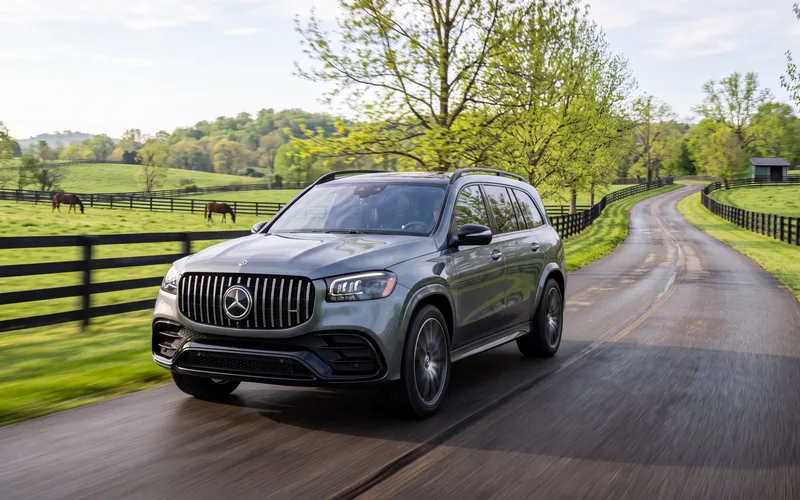 Mercedes-Benz GLSFull-Size Luxury SUVBetter at: Value and seating
Seven standard seats, near-identical fuel economy and tow rating, and roughly $20,000 cheaper with dramatically better dependability and resale — the same brief with the ownership risk removed.
Compare 3.08B
3.08B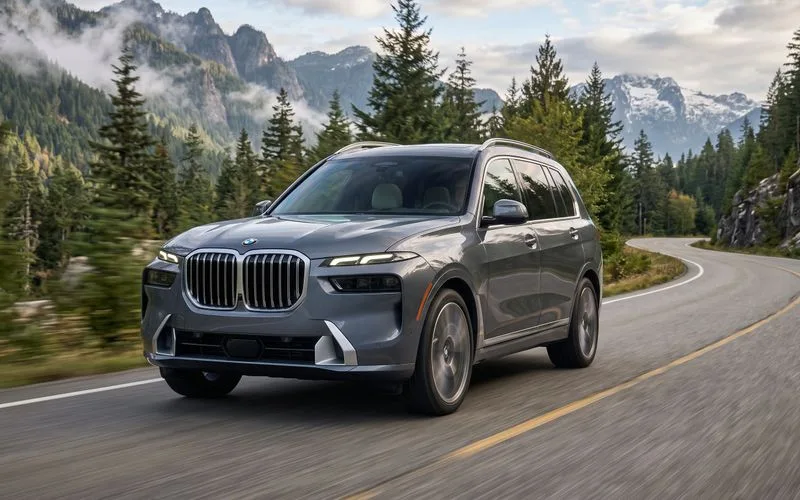 BMW X7Full-Size Luxury SUVBetter at: Price and driving
About $25,000 less for three rows, published IIHS crash results, sharper steering and a far better repair-cost record, giving up only cabin isolation and off-road hardware.
Compare 3.16B
3.16B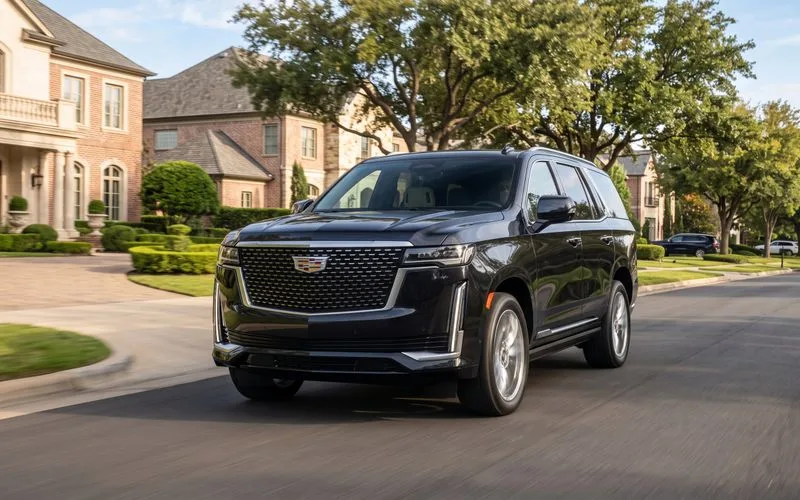 Cadillac EscaladeFull-Size Luxury SUVBetter at: Space and tech
Eight seats, 121 cu ft of cargo and Super Cruise hands-free highway driving for less money, if space and tech matter more than material quality.
CompareHow it's evolved
10 scored model years · 2017–2026
Subject scores by year
Hover or tap a score to see what moved it versus the year before. A corner mark flags a big swing.
| Year | Performance | Efficiency | Safety | Space | Cost | Reliability | Tech | Use-case | Driving | Value |
|---|---|---|---|---|---|---|---|---|---|---|
| 2026 | 79 | 40 | 67 | 63 | 12 | 42 | 83 | 73 | 76 | 70 |
| 2025 | 80 | 35 | 59 | 63 | 11 | 42 | 82 | 71 | 75 | 72 |
| 2024 | 80 | 31 | 59 | 62 | 11 | 41 | 80 | 70 | 75 | 72 |
| 2023 | 79 | 36 | 58 | 62 | 11 | 39 | 77 | 69 | 75 | 71 |
| 2022 | 79 | 38 | 54 | 57 | 16 | 37 | 76 | 60 | 73 | 68 |
| 2021 | 78 | 39 | 42 | 54 | 9 | 29 | 58 | 56 | 62 | 56 |
| 2020 | 69 | 43 | 45 | 54 | 12 | 39 | 58 | 56 | 61 | 58 |
| 2019 | 85 | 26 | 33 | 59 | 12 | 40 | 55 | 58 | 63 | 61 |
| 2018 | 69 | 32 | 33 | 58 | 17 | 39 | 49 | 57 | 65 | 67 |
| 2017 | 71 | 33 | 31 | 57 | 12 | 35 | 51 | 57 | 65 | 57 |
Compare two years
Best fit & conditions
Higher scores mean a better fit for that use case. Learn more about use-case fit →
Subject profile
Academic Probation · NHTSA safety recalls
Jun 12, 2026Air bags: frontalThe driverâs air bag clockspring connector may corrode, which can cause the air bag not to deploy as intended.
Defect
Jaguar Land Rover North America, LLC (Land Rover) is recalling certain 2020-2026 Land Rover Defender, 2021-2026 Discovery, and 2022-2026 Range Rover vehicles. The driverâs air bag clockspring connector may corrode, which can cause the air bag not to deploy as intended.
Risk
An air bag that does not deploy as intended increases the risk of injury in a crash.
Remedy
Dealers will apply a protective lubricant gel to the driverâs air bag connector terminals, free of charge. Owner letters were mailed August 3, 2026. Owners may contact Land Rover's customer service at 800-637-6837. Land Rover's number for this recall is D120.
NHTSA campaign 26V389000 ↗Manufacturer no. D120250,857 vehicles potentially affected (all models in the campaign)Owners notified Jul 31, 2026Filed by Jaguar Land Rover North America, LLCFiled as RANGE ROVERMay 12, 2026Seat belts: front: warning light/devicesThe seat belt warning system may not activate the audible warning chime as intended. As such, these vehicles fail to conform with the requirements of Federal Motor Vehicle Safety Standard number 208, "Occupant Crash Protection."
Defect
Jaguar Land Rover North America LLC (Land Rover) is recalling certain 2026 Land Rover Range Rover Velar, Range Rover Sport, and Range Rover vehicles. The seat belt warning system may not activate the audible warning chime as intended. As such, these vehicles fail to conform with the requirements of Federal Motor Vehicle Safety Standard number 208, "Occupant Crash Protection."
Risk
A seat belt chime that fails to alert occupants that they are unbuckled can increase the risk of injury during a crash.
Remedy
Dealers will replace the audio amplifier, free of charge. Owner letters were mailed July 10, 2026. Owners may contact Land Rover's customer service at 800-637-6837. Land Rover's number for this recall is D105.
NHTSA campaign 26V297000 ↗Manufacturer no. D10576 vehicles potentially affected (all models in the campaign)Owners notified Jul 7, 2026Filed by Jaguar Land Rover North America, LLCFiled as RANGE ROVERFeb 19, 2026Structure: exterior trimThe panoramic sunroof side finisher trim may not be properly secured and can detach.
Defect
Jaguar Land Rover North America, LLC (Land Rover) is recalling certain 2023-2026 Range Rover Sport and Range Rover vehicles. The panoramic sunroof side finisher trim may not be properly secured and can detach.
Risk
A detached panoramic sunroof side trim can become a road hazard, increasing the risk of injury or crash.
Remedy
Dealers will inspect the panoramic sunroof side finisher trim and secure it as necessary, free of charge. Owner letters were mailed June 19, 2026. Owners may contact Land Rover's customer service at 800-637-6837. Land Rover's number for this recall is D095.
NHTSA campaign 26V097000 ↗Manufacturer no. D095178 vehicles potentially affected (all models in the campaign)Owners notified Jun 12, 2026Filed by Jaguar Land Rover North America, LLCFiled as RANGE ROVER
33 recalls on other model years of the Range Rover (2017–2025)
Sep 17, 2026Electrical system: propulsion system: dc/dc converterThe DC-DC converter may malfunction due to an electrical overload that can occur during high power demand. Additionally, a software error can cause the DC-DC converter to stop functioning at vehicle start-up under certain circumstances. Failure of the DC-DC converter will result in the loss of 12-Volt system charging and can lead to complete loss of drive power and exterior lighting.
Defect
Jaguar Land Rover North America, LLC (Land Rover) is recalling certain 2019-2024 Land Rover Range Rover Sport, 2020-2024 Land Rover Range Rover Evoque, Land Rover Range Rover, Land Rover Discovery Sport, Land Rover Defender, 2021-2024 Land Rover Range Rover Velar, Jaguar E-Pace, F-Pace, and Land Rover Discovery vehicles. The DC-DC converter may malfunction due to an electrical overload that can occur during high power demand. Additionally, a software error can cause the DC-DC converter to stop functioning at vehicle start-up under certain circumstances. Failure of the DC-DC converter will result in the loss of 12-Volt system charging and can lead to complete loss of drive power and exterior lighting.
Risk
A loss of drive power increases the risk of a crash.
Remedy
Dealers will update the vehicle software, free of charge. Interim letters notifying owners of the safety risk are expected to be mailed November 13, 2026. Additional letters will be sent once the final remedy is available. Owners may contact Land Rover's customer service at 800-637-6837. Land Rover's number for this recall is E008. This recall expands previous NHTSA recall number 26V248.
NHTSA campaign 26V599000 ↗Manufacturer no. E00823,677 vehicles potentially affected (all models in the campaign)Filed by Jaguar Land Rover North America, LLCFiled as RANGE ROVERAug 13, 2026Steering: linkages: knuckle: spindle: armThe front suspension knuckles may have been replaced with incorrect parts during a prior recall remedy repair.
Defect
Jaguar Land Rover North America, LLC (Land Rover) is recalling certain 2016-2017 Range Rover vehicles. The front suspension knuckles may have been replaced with incorrect parts during a prior recall remedy repair.
Risk
An incorrect suspension knuckle may not perform as expected, possibly resulting in a loss of vehicle handling and control, increasing the risk of a crash.
Remedy
Dealers will replace the front suspension knuckles, free of charge. Owner letters were mailed September 30, 2026. Owners may contact Land Rover's customer service at 1-800-637-6837. Land Rover's number for this recall is D148.
NHTSA campaign 26V527000 ↗Manufacturer no. D14814 vehicles potentially affected (all models in the campaign)Owners notified Sep 23, 2026Filed by Jaguar Land Rover North America, LLCFiled as RANGE ROVERApr 17, 2026Electrical system: propulsion system: dc/dc converterInsufficient electrical load balancing during times of high demand can lead to a current overload condition and malfunction of the DCDC converter. A failure of the DC-DC converter will result in a loss of 12-Volt system charging and can lead to complete loss of drive power and exterior lighting.
Defect
Jaguar Land Rover North America, LLC (Land Rover) is recalling certain 2021-2024 Land Rover Range Rover Velar and Land Rover Discovery, 2020-2023 Land Rover Range Rover Evoque, 2019-2024 Land Rover Range Rover Sport, 2020-2024 Land Rover Range Rover, 2020 Land Rover Discovery Sport, 2020-2024 Land Rover Defender, 2021-2024 Jaguar F-Pace, and 2021-2022 Jaguar E-Pace mild-hybrid electric vehicles (MHEVs). Insufficient electrical load balancing during times of high demand can lead to a current overload condition and malfunction of the DCDC converter. A failure of the DC-DC converter will result in a loss of 12-Volt system charging and can lead to complete loss of drive power and exterior lighting.
Risk
A loss of drive power increases the risk of a crash.
Remedy
Dealers will update the central software, free of charge. Interim letters notifying owners of the safety risk were mailed June 17, 2026. Additional letters will be sent once the final remedy is available. Owners may contact Land Rover's customer service at 800-637-6837. Land Rover's numbers for this recall are D126 and H575.
NHTSA campaign 26V248000 ↗Manufacturer no. D126 H575170,169 vehicles potentially affected (all models in the campaign)Filed by Jaguar Land Rover North America, LLCFiled as RANGE ROVEROct 16, 2025Power train: automatic transmission: gear position indication (prndl)Moisture may have entered the gear shift module (GSM) during assembly, which can cause the gear shift position indicator light to fail. As such, these vehicles fail to comply with the requirements of Federal Motor Vehicle Safety Standard (FMVSS) number 101, "Controls and Displays."
Defect
Jaguar Land Rover North America, LLC (Land Rover) is recalling certain 2025 Range Rover, Range Rover Sport, Discovery Sport, and 2026 Range Rover Evoque, and Jaguar F-Pace vehicles. Moisture may have entered the gear shift module (GSM) during assembly, which can cause the gear shift position indicator light to fail. As such, these vehicles fail to comply with the requirements of Federal Motor Vehicle Safety Standard (FMVSS) number 101, "Controls and Displays."
Risk
A gear shift position indicator that fails to illuminate can make it difficult to identify the correct transmission gear position, increasing the risk of a crash.
Remedy
Dealers will replace the GSM, free of charge. Owner letters were mailed December 2, 2025. Owners may contact Land Roverâs customer service at 1-800-637-6837. Land Rover's numbers for this recall are D054 and H566.
NHTSA campaign 25V705000 ↗Manufacturer no. D054 H566293 vehicles potentially affected (all models in the campaign)Owners notified Dec 2, 2025Filed by Jaguar Land Rover North America, LLCFiled as REDUNDANT RANGE ROVERAug 8, 2025Steering: linkages: knuckle: spindle: armThe front suspension upper knuckle joint may crack, which can result in suspension arm detachment.
Defect
Jaguar Land Rover North America, LLC (Land Rover) is recalling certain 2014-2017 Range Rover and Range Rover Sport vehicles. The front suspension upper knuckle joint may crack, which can result in suspension arm detachment.
Risk
Suspension arm detachment can cause a loss of vehicle handling and control, increasing the risk of a crash.
Remedy
Dealers will inspect the front suspension knuckles and install a retaining bracket or replace the knuckle, as necessary, free of charge. Owner notification letters were mailed May 11, 2026. Owners may contact Land Rover's customer service at 1-800-637-6837. Land Rover's numbers for this recall are D019, N759, D041, and D027. This recall expands and replaces previous NHTSA recall number 24V840.
NHTSA campaign 25V514000 ↗Manufacturer no. D019 N759 D041 D027121,509 vehicles potentially affected (all models in the campaign)Owners notified Sep 5, 2025Filed by Jaguar Land Rover North America, LLCFiled as RANGE ROVERMar 12, 2025Seat belts: rear/other: buckle assemblyThe second-row center seat belt buckle may not latch correctly due to a manufacturing error.
Defect
Jaguar Land Rover North America, LLC (Land Rover) is recalling certain 2025 Range Rover and Range Rover Sport vehicles. The second-row center seat belt buckle may not latch correctly due to a manufacturing error.
Risk
An unlatched seat belt will not properly restrain an occupant, increasing the risk of injury.
Remedy
Dealers will replace the center seat belt buckle and buckle retaining bolt, free of charge. Owner notification letters were April 22, 2025. Owners may contact Jaguar's customer service at 1-800-452-4827. Jaguar's number for this recall is N989.
NHTSA campaign 25V155000 ↗Manufacturer no. N9897,276 vehicles potentially affected (all models in the campaign)Owners notified Apr 22, 2025Filed by Jaguar Land Rover North America, LLCFiled as RANGE ROVERDec 19, 2024Back over prevention: sensing system: cameraWater may enter into the rearview camera, which can cause the rearview camera image not to appear on the display or display a distorted image.
Defect
Jaguar Land Rover North America, LLC (Land Rover) is recalling certain 2022-2023 Range Rover vehicles. Water may enter into the rearview camera, which can cause the rearview camera image not to appear on the display or display a distorted image.
Risk
A rearview camera image that does not display can decrease the driver's visibility, increasing the risk of injury or crash.
Remedy
Dealers will replace the rearview camera, free of charge. Owner letters were mailed April 22, 2025. Owners may contact Land Rover customer service at 1-800-637-6837. Land Rover's number for this recall is N946.
NHTSA campaign 24V947000 ↗Manufacturer no. N94611,961 vehicles potentially affected (all models in the campaign)Owners notified Apr 22, 2025Filed by Jaguar Land Rover North America, LLCFiled as RANGE ROVERSep 12, 2024Back over prevention: sensing system: camera · Forward collision avoidance: sensing system: cameraThe Near Field Sensing Module (NFSM) may overheat and cause the 3D surround camera images, including the rearview camera image, not to display.
Defect
Jaguar Land Rover North America, LLC (Land Rover) is recalling certain 2024 Defender, Discovery Sport, Range Rover, Range Rover Evoque, Range Rover Velar, and Range Rover Sport vehicles. The Near Field Sensing Module (NFSM) may overheat and cause the 3D surround camera images, including the rearview camera image, not to display.
Risk
A rearview camera image that does not display can decrease the driver's visibility, increasing the risk of injury or crash.
Remedy
Dealers will replace the NFSM, free of charge. Owner notification letters were mailed October 24, 2024. Owners may contact Land Rover customer service at 1-800-637-6837. Land Rover's number for this recall is N927.
NHTSA campaign 24V678000 ↗Manufacturer no. N927180 vehicles potentially affected (all models in the campaign)Owners notified Oct 24, 2024Filed by Jaguar Land Rover North America, LLCFiled as RANGE ROVERJun 17, 2024Engine and engine cooling: engine: oil/lubrication: filter/screenThe oil filter housing can crack and leak oil into the engine compartment.
Defect
Jaguar Land Rover North America, LLC (Land Rover) is recalling certain 2023-2024 Defender, 2024 Discovery, Range Rover, Range Rover Sport, and Range Rover Velar vehicles. The oil filter housing can crack and leak oil into the engine compartment.
Risk
An oil leak in the presence of an ignition source such as hot engine or exhaust components, can increase the risk of a fire.
Remedy
Dealers will replace the filter housing, oil filter, and o-rings, free of charge. Owner notification letters were mailed June 27, 2024. Owners may contact Land Rover customer service at 1-800-637-6837. Land Rover's number for this recall is N908.
NHTSA campaign 24V450000 ↗Manufacturer no. N9082,013 vehicles potentially affected (all models in the campaign)Owners notified Jun 27, 2024Filed by Jaguar Land Rover North America, LLCFiled as RANGE ROVERMay 31, 2024Power train: automatic transmission · Power train: clutch assemblyThe transmission oil pressure may decrease and cause the clutch to shift into neutral gear, which can result in a loss of drive power.
Defect
Jaguar Land Rover North America, LLC (Land Rover) is recalling certain 2024 Range Rover and Range Rover Sport vehicles. The transmission oil pressure may decrease and cause the clutch to shift into neutral gear, which can result in a loss of drive power.
Risk
A loss of drive power can increase the risk of a crash.
Remedy
Dealers will inspect and replace the transmission as necessary, free of charge. Owner notification letters were mailed July 25, 2024. Owners may contact Land Rover customer service at 1-800-637-6837. Land Rover's number for this recall is N903.
NHTSA campaign 24V380000 ↗Manufacturer no. N90320 vehicles potentially affected (all models in the campaign)Owners notified Jul 25, 2024Filed by Jaguar Land Rover North America, LLCFiled as RANGE ROVERJan 18, 2024Back over prevention: sensing system: cameraWater may enter into the rearview camera, which can cause the rearview camera image not to appear on the display or display a distorted image. As such, these vehicles fail to comply with the requirements of Federal Motor Vehicle Safety Standard number 111, "Rear Visibility."
Defect
Jaguar Land Rover North America, LLC (Land Rover) is recalling certain 2018-2022 Range Rover and Range Rover Sport vehicles equipped with a Surround Camera System. Water may enter into the rearview camera, which can cause the rearview camera image not to appear on the display or display a distorted image. As such, these vehicles fail to comply with the requirements of Federal Motor Vehicle Safety Standard number 111, "Rear Visibility."
Risk
A rearview camera image that does not display while in reverse decreases the driver's visibility, increasing the risk of injury or crash.
Remedy
Dealers will inspect the rearview camera and add a new seal or replace the camera, free of charge. Owner notification letters were mailed to Range Rover owners March 4, 2024. Interim notification letters were mailed to Range Rover Sport owners March 7, 2024. Range Rover Sport owners will receive a second notice once remedy parts become available. Owners may contact Land Rover customer service at 1-800-637-6837. Land Rover's number for this recall is N778.
NHTSA campaign 24V023000 ↗Manufacturer no. N77858,729 vehicles potentially affected (all models in the campaign)Owners notified Mar 4, 2024Filed by Jaguar Land Rover North America, LLCFiled as RANGE ROVERDec 21, 2023Structure: bodyThe body panels may not be bonded properly, reducing the structural strength of the vehicle.
Defect
Jaguar Land Rover North America, LLC (Land Rover) is recalling certain 2024 Land Rover Range Rover and Land Rover Range Rover Sport vehicles. The body panels may not be bonded properly, reducing the structural strength of the vehicle.
Risk
Reduced structural strength may not adequately protect passengers, increasing the risk of injury. Additionally, the fuel system may be damaged during a crash, causing a fuel leak and increasing the risk of a fire.
Remedy
Dealers will install two rivets and apply sealant, free of charge. Owner notification letters were mailed February 8, 2024. Owners may contact Land Rover customer service at 1-800-637-6837. Land Rover's number for this recall is N837.
NHTSA campaign 23V872000 ↗Manufacturer no. N83729 vehicles potentially affected (all models in the campaign)Owners notified Feb 8, 2024Filed by Jaguar Land Rover North America, LLCFiled as RANGE ROVERNov 22, 2023Engine and engine coolingThe engine mounted oil cooler hoses may not be secured properly, which can result in oil leaking onto the road.
Defect
Jaguar Land Rover North America, LLC (Land Rover) is recalling certain 2024 Land Rover Range Rover vehicles. The engine mounted oil cooler hoses may not be secured properly, which can result in oil leaking onto the road.
Risk
Oil leaking onto the road can cause a hazard for other road users, increasing the risk of a crash.
Remedy
Dealers will inspect and replace the fasteners and the oil cooler hoses, as necessary, free of charge. Owner letters were mailed January 18, 2024. Owners may contact Land Rover customer service at 1-800-637-6837. Land Rover's number for this recall is N845.
NHTSA campaign 23V790000 ↗Manufacturer no. N8451,520 vehicles potentially affected (all models in the campaign)Owners notified Jan 18, 2024Filed by Jaguar Land Rover North America, LLCFiled as RANGE ROVERAug 10, 2023Electrical system: propulsion system: traction batteryJaguar Land Rover North America, LLC (Land Rover) is recalling one 2023 Land Rover Range Rover PHEV vehicle. A bolt for the high voltage battery may not be secured properly, which can result in the high voltage battery sparking and overheating.
Defect
Jaguar Land Rover North America, LLC (Land Rover) is recalling one 2023 Land Rover Range Rover PHEV vehicle. A bolt for the high voltage battery may not be secured properly, which can result in the high voltage battery sparking and overheating.
Risk
A high voltage battery that sparks and overheats increases the risk of a fire.
Remedy
A dealer will replace the high voltage battery, free of charge. An owner notification letter was mailed October 5, 2023. Owners may contact Land Rover customer service at 1-800-637-6837. Land Rover's number for this recall is N786.
NHTSA campaign 23V568000 ↗Manufacturer no. N7861 vehicles potentially affected (all models in the campaign)Owners notified Oct 5, 2023Filed by Jaguar Land Rover North America, LLCFiled as RANGE ROVER PHEVJun 1, 2023Exterior lighting: tail lightsThe rear taillight link may be damaged, which can cause exterior vehicle lights, including the rear light mounted in the body, taillights, brake lights, and turn signals to fail to illuminate.
Defect
Jaguar Land Rover North America, LLC (Land Rover) is recalling certain 2022-2023 Land Rover Range Rover vehicles. The rear taillight link may be damaged, which can cause exterior vehicle lights, including the rear light mounted in the body, taillights, brake lights, and turn signals to fail to illuminate.
Risk
Exterior lights that fail to illuminate can decrease visibility and increase the risk of a crash.
Remedy
Dealers will inspect and replace or repair the rear lights as necessary, free of charge. Owner notification letters were mailed July 25, 2023. Owners may contact Land Rover customer service at 1-800-637-6837. Land Rover's number for this recall is N784.
NHTSA campaign 23V394000 ↗Manufacturer no. N78412,922 vehicles potentially affected (all models in the campaign)Owners notified Jul 25, 2023Filed by Jaguar Land Rover North America, LLCFiled as RANGE ROVERMay 4, 2023Latches/locks/linkagesThe second-row seat armrest storage compartment latch may fail, allowing the objects from within to be unsecured in the event of a crash. As such, these vehicles fail to comply with the requirements of Federal Motor Vehicle Safety Standard number 201, "Occupant Protection in Interior Impact."
Defect
Jaguar Land Rover North America, LLC (Land Rover) is recalling certain 2022-2023 Land Rover Range Rover and 2023 Land Rover Range Rover Sport vehicles. The second-row seat armrest storage compartment latch may fail, allowing the objects from within to be unsecured in the event of a crash. As such, these vehicles fail to comply with the requirements of Federal Motor Vehicle Safety Standard number 201, "Occupant Protection in Interior Impact."
Risk
In the event of a crash, unsecured objects from within the armrest compartment may strike the vehicle occupants, increasing their risk of injury.
Remedy
Dealers will replace the locking arm of the second-row armrest storage compartment, free of charge. Owner notification letters were mailed October 3, 2023. Owners may contact Land Rover customer service at 1-800-637-6837. Land Rover's number for this recall is N789.
NHTSA campaign 23V324000 ↗Manufacturer no. N78912,587 vehicles potentially affected (all models in the campaign)Owners notified Oct 3, 2023Filed by Jaguar Land Rover North America, LLCFiled as RANGE ROVERApr 6, 2023Seats: mid/rear assemblyThe second-row left seat frame may have been insufficiently welded.
Defect
Jaguar Land Rover North America, LLC (Land Rover) is recalling certain 2022-2023 Land Rover Range Rover vehicles equipped with seven seats. The second-row left seat frame may have been insufficiently welded.
Risk
An improperly welded second-row left seat frame may not adequately secure occupants during sudden braking or a crash, increasing the risk of injury.
Remedy
Dealers will inspect and replace the second-row left seat frame, as necessary, free of charge. Owner notification letters were mailed June 1, 2023. Owners may contact Land Rover customer service at 1-800-637-6837. Land Rover's number for this recall is N783.
NHTSA campaign 23V252000 ↗Manufacturer no. N783500 vehicles potentially affected (all models in the campaign)Owners notified Jun 1, 2023Filed by Jaguar Land Rover North America, LLCFiled as RANGE ROVERMar 30, 2023EngineJaguar Land Rover North America, LLC (Land Rover) is recalling one 2023 Land Rover Range Rover vehicle. A gasket on the turbo oil drain pipe may be incorrectly installed or missing, which can result in an oil leak.
Defect
Jaguar Land Rover North America, LLC (Land Rover) is recalling one 2023 Land Rover Range Rover vehicle. A gasket on the turbo oil drain pipe may be incorrectly installed or missing, which can result in an oil leak.
Risk
An oil leak in the presence of an ignition source such as hot engine or exhaust components, can increase the risk of a fire.
Remedy
A dealer will replace the drain pipe gasket, free of charge. An owner notification letter was mailed May 19, 2023. Owners may contact Land Rover customer service at 1-800-637-6837. Land Rover's number for this recall is N780.
NHTSA campaign 23V222000 ↗Manufacturer no. N7801 vehicles potentially affected (all models in the campaign)Owners notified May 19, 2023Filed by Jaguar Land Rover North America, LLCFiled as RANGE ROVERMar 30, 2023Engine and engine cooling: cooling systemThe water pump pulley drive belt may become damaged or detach, which can allow the engine to overheat. An overheated engine can rupture the engine coolant elbow pipe, leaking coolant onto the turbocharger heat shield.
Defect
Jaguar Land Rover North America, LLC (Land Rover) is recalling certain 2019-2021 Land Rover Range Rover PHEV and 2019-2022 Land Rover Range Rover Sport PHEV vehicles. The water pump pulley drive belt may become damaged or detach, which can allow the engine to overheat. An overheated engine can rupture the engine coolant elbow pipe, leaking coolant onto the turbocharger heat shield.
Risk
Coolant leaking onto the turbocharger heat shield inside the engine compartment can increase the risk of a fire.
Remedy
Dealers will replace the engine coolant elbow and the turbocharger feed coolant pipe, free of charge. Owner notification letters were mailed May 19, 2023. Owners may contact Land Rover customer service at 1-800-637-6837. Land Rover's number for this recall is N785.
NHTSA campaign 23V221000 ↗Manufacturer no. N7852,881 vehicles potentially affected (all models in the campaign)Owners notified May 19, 2023Filed by Jaguar Land Rover North America, LLCFiled as RANGE ROVER PHEVFeb 2, 2023Engine and engine cooling: engine: oil/lubricationThe engine cam carrier oil channel may be blocked, which can lead to an oil leak.
Defect
Jaguar Land Rover North America, LLC (Land Rover) is recalling certain 2019-2023 Range Rover Sport, 2020-2023 Range Rover, Defender, 2022-2023 Discovery, and 2023 Range Rover Velar vehicles. The engine cam carrier oil channel may be blocked, which can lead to an oil leak.
Risk
An oil leak in the presence of an ignition source can increase the risk of a fire.
Remedy
Dealers will inspect and replace the engine cam carrier and related components as necessary, free of charge. Owner notification letters were mailed March 29, 2023. Owners may contact Land Rover customer service at 1-800-637-6837. Land Rover's number for this recall is N763.
NHTSA campaign 23V044000 ↗Manufacturer no. N7636,724 vehicles potentially affected (all models in the campaign)Owners notified Mar 29, 2023Filed by Jaguar Land Rover North America, LLCFiled as RANGE ROVERJan 26, 2023Back over prevention: warnings: external/pedestrian alert · Electrical system: softwareThe vehicles fail to make sufficient pedestrian warning sounds when stationary and in reverse. As such, these vehicles fail to comply with the requirements of Federal Motor Vehicle Safety Standard number 141, "Minimum Sound Requirements for Hybrid and Electric Vehicles."
Defect
Jaguar Land Rover North America, LLC (Land Rover) is recalling certain 2020-2021 Range Rover PHEV and 2020-2022 Range Rover Sport PHEV vehicles. The vehicles fail to make sufficient pedestrian warning sounds when stationary and in reverse. As such, these vehicles fail to comply with the requirements of Federal Motor Vehicle Safety Standard number 141, "Minimum Sound Requirements for Hybrid and Electric Vehicles."
Risk
A vehicle that fails to make sufficient sound may result in pedestrians being unaware of an approaching vehicle, increasing the risk of a crash.
Remedy
Dealers will update the audio amplifier software, free of charge. Owner notification letters were mailed March 16, 2023. Owners may contact Land Rover customer service at 1-800-637-6837. Land Rover's number for this recall is N742.
NHTSA campaign 23V031000 ↗Manufacturer no. N742868 vehicles potentially affected (all models in the campaign)Owners notified Mar 16, 2023Filed by Jaguar Land Rover North America, LLCFiled as RANGE ROVER PHEVMay 10, 2022Air bags: sensor: frontal impactDue to improperly tightened fasteners, the front crash sensors may become loose and malfunction.
Defect
Jaguar Land Rover North America, LLC (Land Rover) is recalling certain 2022 New Range Rover vehicles. Due to improperly tightened fasteners, the front crash sensors may become loose and malfunction.
Risk
A malfunctioning front crash sensor may impact air bag deployment during a crash or cause unintentional front air bag deployment while driving, increasing the risk of a crash.
Remedy
Dealers will tighten the front crash sensor fasteners, free of charge. Owner notification letters were mailed June 30, 2022. Owners may contact Land Rover customer service at 1-800-637-6837. Land Rover's number for this recall is N685.
NHTSA campaign 22V320000 ↗Manufacturer no. N68519 vehicles potentially affected (all models in the campaign)Owners notified Jun 30, 2022Filed by Jaguar Land Rover North America, LLCFiled as NEW RANGE ROVERApr 5, 2022Seat belts: front: retractorThe driver's seat belt emergency locking retractor may not lock as intended. As such, these vehicles fail to comply with the requirements of the Federal Motor Vehicle Safety Standard (FMVSS) numbers 209, "Seat Belt Assemblies" and 208, "Occupant Crash Protection."
Defect
Jaguar Land Rover North America, LLC (Land Rover) is recalling certain 2016-2017 Range Rover and Range Rover Sport vehicles. The driver's seat belt emergency locking retractor may not lock as intended. As such, these vehicles fail to comply with the requirements of the Federal Motor Vehicle Safety Standard (FMVSS) numbers 209, "Seat Belt Assemblies" and 208, "Occupant Crash Protection."
Risk
During hard braking before a crash, the seat belt emergency locking retractor may not lock as intended, increasing the risk of injury.
Remedy
Dealers will inspect and replace the seat belt assembly, as necessary, free of charge. Owner notification letters were mailed July 29, 2022. Owners may contact Land Rover customer service at 1-800-637-6837. Land Rover's number for this recall is N678. This recall replaces NHTSA recall number 19V-350. Vehicles previously inspected under recall 19V-350 that did not receive a replacement seat belt assembly will need to have this new recall remedy performed.
NHTSA campaign 22V219000 ↗Manufacturer no. N67814,812 vehicles potentially affected (all models in the campaign)Owners notified Jul 29, 2022Filed by Jaguar Land Rover North America, LLCFiled as RANGE ROVERAug 26, 2021Seat belts: front: retractor · Seat belts: rear/other: retractorThe seat belt automatic locking retractors may deactivate early, which can prevent the child restraint system from securing properly.
Defect
Jaguar Land Rover North America, LLC (Land Rover) is recalling certain 2021 Range Rover, 2022 Range Rover Sport, 2020-2021 Range Rover Velar, Discovery Sport, 2020-2022 Discovery, and Defender vehicles. The seat belt automatic locking retractors may deactivate early, which can prevent the child restraint system from securing properly.
Risk
An unsecured child restraint system can increase the risk of injury during a crash.
Remedy
Dealers will inspect and replace the seat belt assemblies as necessary, free of charge. Owner letters were mailed October 20, 2021. Owners may contact Land Rover customer service at 1-800-637-6837. Land Rover's number for this recall is N630.
NHTSA campaign 21V668000 ↗Manufacturer no. N63032,687 vehicles potentially affected (all models in the campaign)Owners notified Oct 20, 2021Filed by Jaguar Land Rover North America, LLCFiled as RANGE ROVERFeb 25, 2021Exterior lighting: headlights · Exterior lighting: lighting control module: softwareThe Auto High Beam (AHB) system does not indicate through the instrument cluster when the high beams are illuminated automatically. As such, these vehicles fail to comply with the requirements of Federal Motor Vehicle Safety Standard (FMVSS) number 108, "Lamps, Reflective Devices, and Associated Equipment."
Defect
Jaguar Land Rover North America, LLC. (Land Rover) is recalling certain 2018-2020 Range Rover, Range Rover Sport, Discovery, and Range Rover Velar vehicles. The Auto High Beam (AHB) system does not indicate through the instrument cluster when the high beams are illuminated automatically. As such, these vehicles fail to comply with the requirements of Federal Motor Vehicle Safety Standard (FMVSS) number 108, "Lamps, Reflective Devices, and Associated Equipment."
Risk
The driver may be unaware that the high beams are illuminated, reducing visibility for oncoming traffic, and increasing the risk of a crash.
Remedy
Land Rover will notify owners, and dealers will update the vehicle software, free of charge. The recall began April 7, 2021. Owners may contact Land Rover customer service at 1-800-637-6837. Land Rover's number for this recall is N556.
NHTSA campaign 21V117000 ↗Manufacturer no. N55626,805 vehicles potentially affected (all models in the campaign)Owners notified Apr 7, 2021Filed by Jaguar Land Rover North America, LLCFiled as RANGE ROVERAug 15, 2019Back over prevention: sensing system: cameraThe back-up camera system may fail to display the rearview image when the vehicle is in reverse.
Defect
Jaguar Land Rover North America, LLC (Land Rover) is recalling certain 2018 Range Rover and Range Rover Sport vehicles equipped with Continental Surround Camera Systems. The back-up camera system may fail to display the rearview image when the vehicle is in reverse.
Risk
Failure to display the rearview image will reduce the driver's visibility, increasing the risk of a crash.
Remedy
Land Rover will notify owners, and dealers will reprogram the infotainment system software, free of charge. The recall began October 2, 2019. Owners may contact Land Rover customer service at 1-800-637-6837. Land Rover's number for this recall is N367.
NHTSA campaign 19V603000 ↗Manufacturer no. N36714,277 vehicles potentially affected (all models in the campaign)Owners notified Oct 2, 2019Filed by Jaguar Land Rover North America, LLCFiled as RANGE ROVERMay 9, 2019Seat beltsThe driver's seat belt Emergency Locking Retractor (ELR) may not lock as designed. As such, these vehicles fail to comply with the requirements of the Federal Motor Vehicle Safety Standard (FMVSS) number 209, "Seat Belt Assemblies."
Defect
Jaguar Land Rover North America, LLC (Land Rover) is recalling certain 2016-2017 Range Rover and Range Rover Sport vehicles. The driver's seat belt Emergency Locking Retractor (ELR) may not lock as designed. As such, these vehicles fail to comply with the requirements of the Federal Motor Vehicle Safety Standard (FMVSS) number 209, "Seat Belt Assemblies."
Risk
If the driver brakes prior to a crash, the ELR will not lock at the correct g-force level, increasing the risk of injury.
Remedy
Land Rover will notify owners, and dealers will inspect the seat belt assembly, replacing it if necessary, free of charge. The recall began September 10, 2019. Owners may contact Land Rover customer service at 1-800-637-6837. Land Rover's number for this recall is N333.
NHTSA campaign 19V350000 ↗Manufacturer no. N33316,186 vehicles potentially affected (all models in the campaign)Owners notified Sep 10, 2019Filed by Jaguar Land Rover North America, LLCFiled as RANGE ROVERJan 17, 2019EngineThe affected vehicles are equipped with V6 or V8 engines whose crankshaft pulley retaining bolt may fracture possibly resulting in engine failure.
Defect
Jaguar Land Rover North America, LLC (Land Rover) is recalling certain 2019 Range Rover, Range Rover Sport, Range Rover Velar and Discovery vehicles. The affected vehicles are equipped with V6 or V8 engines whose crankshaft pulley retaining bolt may fracture possibly resulting in engine failure.
Risk
Engine failure can increase the risk of crash.
Remedy
Land Rover has notified owners, and dealers will replace the crankshaft pulley center retaining bolt, free of charge. The recall began February 12, 2019. Owners may contact Land Rover customer service at 1-800-637-6837. Land Rover's number for this recall is N276.
NHTSA campaign 19V040000 ↗Manufacturer no. N2762,587 vehicles potentially affected (all models in the campaign)Owners notified Feb 12, 2019Filed by Jaguar Land Rover North America, LLCFiled as RANGE ROVERSep 13, 2018Forward collision avoidance: automatic emergency brakingThe Autonomous Emergency Braking (AEB) system may be disabled without warning the driver that the system is not functional.
Defect
Jaguar Land Rover North America, LLC (Land Rover) is recalling certain 2018 Land Rover Range Rover, Land Rover Range Rover Sport and Land Rover Discovery vehicles. The Autonomous Emergency Braking (AEB) system may be disabled without warning the driver that the system is not functional.
Risk
If the AEB does not intervene when needed, without warning, there would be an increased risk of a crash.
Remedy
Land Rover will notify owners, and dealers will update the vehicle software, free of charge. The recall began October 17, 2018. Owners may contact Land Rover customer service at 1-800-637-6837, Option 9. Land Rover's number for this recall is N227.
NHTSA campaign 18V625000 ↗Manufacturer no. N22786 vehicles potentially affected (all models in the campaign)Owners notified Oct 17, 2018Filed by Jaguar Land Rover North America, LLCFiled as RANGE ROVERMay 23, 2018Electrical system: software · Fuel system, gasolineThe fuel gauge on these vehicles may indicate that the fuel level is low and illuminate the warning lamp, when the fuel tank actually has more fuel. The engine management software may also cut off the engine when the vehicle has traveled approximately 17 more miles.
Defect
Jaguar Land Rover North America, LLC (Land Rover) is recalling certain 2017 Land Rover Range Rover, Range Rover Sport, and Discovery vehicles. The fuel gauge on these vehicles may indicate that the fuel level is low and illuminate the warning lamp, when the fuel tank actually has more fuel. The engine management software may also cut off the engine when the vehicle has traveled approximately 17 more miles.
Risk
If the engine were to shut off, it can cause loss of power brake assistance. An engine stall would cause a loss of drive power. Both scenarios can increase the risk of a crash.
Remedy
Land Rover will notify owners, and dealers will install a software update to correct the fuel level reading, free of charge. The recall began on June 22, 2018. Owners may Land Rover customer service at 1-800-637-6837. Land Rover's number for this recall is N206.
NHTSA campaign 18V337000 ↗Manufacturer no. N2061,917 vehicles potentially affected (all models in the campaign)Owners notified Jun 22, 2018Filed by Jaguar Land Rover North America, LLCFiled as RANGE ROVEROct 26, 2017Electrical system: instrument cluster/panelThe instrument cluster (IC) may intermittently go blank.
Defect
Jaguar Land Rover North America, LLC (Land Rover) is recalling certain 2017 Land Rover Range Rover and Range Rover Sport vehicles. The instrument cluster (IC) may intermittently go blank.
Risk
A blank instrument cluster will not show important information like vehicle speed, increasing the risk of a crash.
Remedy
Land Rover will notify owners, and dealers will update the vehicle software, free of charge. The recall is expected to begin December 19, 2017. Owners may contact Land Rover customer service at 1-800-637-6837. Land Rover's number for this recall is N124.
NHTSA campaign 17V679000 ↗Manufacturer no. N12421,998 vehicles potentially affected (all models in the campaign)Owners notified Dec 15, 2017Filed by Jaguar Land Rover North America, LLCFiled as RANGE ROVERAug 4, 2017Fuel system, gasoline: delivery: fuel pumpJaguar Land Rover North America, LLC (Land Rover) is recalling one 2017 Land Rover Range Rover vehicle. A bolt used to attach the high pressure fuel pump may be too long. As a result, the fuel pump may not be properly secured and the fuel line may crack and leak.
Defect
Jaguar Land Rover North America, LLC (Land Rover) is recalling one 2017 Land Rover Range Rover vehicle. A bolt used to attach the high pressure fuel pump may be too long. As a result, the fuel pump may not be properly secured and the fuel line may crack and leak.
Risk
A fuel line crack may leak fuel into the engine compartment, increasing the risk of a fire.
Remedy
Land Rover will notify the owner, and a dealer will replace both fuel pumps and the associated fuel lines, free of charge. The recall began September 16, 2017. Owners may contact Land Rover customer service at 1-800-637-6837. Land Rover's number for this recall is N074.
NHTSA campaign 17V490000 ↗Manufacturer no. N0741 vehicles potentially affected (all models in the campaign)Owners notified Sep 12, 2017Filed by Jaguar Land Rover North America, LLCFiled as RANGE ROVERDec 29, 2016Seat belts: pretensionerThe affected vehicles have seatbelt pretensioners that may not function properly in the event of a crash.
Defect
Jaguar Land Rover North America, LLC (Land Rover) is recalling certain model year 2017 Land Rover Discovery Sport vehicles and 2016-2017 Land Rover Range Rover and Range Rover Sport vehicles. The affected vehicles have seatbelt pretensioners that may not function properly in the event of a crash.
Risk
If the front seat seatbelt pretensioners do not function properly, the seat occupants may not be adequately restrained in the event of a crash, increasing the risk of injury.
Remedy
Land Rover will notify owners, and dealers will inspect the front seat belt assemblies, replacing them as necessary, free of charge. The recall began February 20, 2017. Owners may contact Land Rover customer service at 1-800-637-6837. Land Rover's number for this recall is P095.
NHTSA campaign 16V942000 ↗Manufacturer no. P09513,500 vehicles potentially affected (all models in the campaign)Owners notified Apr 24, 2017Filed by Jaguar Land Rover North America, LLCFiled as RANGE ROVER
Source: NHTSA Office of Defects Investigation recall database, model years 2017–2026. Recalls are listed by model year as the manufacturer filed them; whether a specific car is affected depends on its VIN — check a VIN at nhtsa.gov ↗. NHTSA model names matched to this page: NEW RANGE ROVER, RANGE ROVER, RANGE ROVER PHEV, REDUNDANT RANGE ROVER.
Detailed scoring by subject
1Performance & PowertrainOne of the Range Rover's strongest categories.3.36B+
The volume 2026 Range Rover SE runs the P400 3.0L turbocharged Ingenium inline-six with 48V mild-hybrid assist, rated 395 hp; the range tops out with the 606-hp P615 4.4L twin-turbo V8 on Autobiography/SV. Replaces a placeholder value.
P400 inline-six peaks at 406 lb-ft on a broad plateau from roughly 2,000 rpm, strong for a full-size luxury SUV's base engine; the PHEV's combined 590 lb-ft is the lineup high. Replaces a placeholder value.
Land Rover quotes 5.8 s to 60 mph for the P400 short-wheelbase volume configuration — brisk for a 5,700-lb SUV but well behind the V8 and PHEV variants and behind quicker rivals like the X7 M60i. Replaces a placeholder value.
The Ingenium inline-six is inherently balanced and the 48V system smooths stop-start and low-speed torque fill, giving the near-silent delivery that defines the car; reviewers consistently rate the Range Rover among the quietest, most seamless powertrains in the class. Held short of the 90s because the six can sound slightly strained at full throttle and there is mild off-the-line lag before boost builds.
ZF 8HP eight-speed automatic tuned for smoothness — imperceptible upshifts and sensible ratio choice in normal driving, the benchmark torque-converter automatic. Not higher because it prioritizes calm over decisiveness and can be slow to kick down when asked for a sudden overtake.
Rated at the 3,500 kg / 7,716 lb European maximum, near the top of the SUV normalization band and matched by few luxury SUVs; Advanced Tow Assist with trailer-reverse guidance is available. Replaces a placeholder value.
Sophisticated full-time all-wheel drive is standard on every trim, with a two-speed transfer case with genuine low range, an electronically locking rear differential, torque vectoring by braking, and all-wheel steering — the top of the scoring band with no trim-level caveats.
Hardware is genuinely elite for a luxury SUV: air suspension lifting to roughly 11.6 in of ground clearance, about 35.4 in wading depth, low range, rear locker, Terrain Response 2 and Wade Sensing. Short of the 90s because there is no dedicated off-road trim and volume cars ride on 22–23 in road tires that limit what the chassis can actually use.
Three distinct US powertrains including a substantial electrified option — P400 mild-hybrid inline-six, P550e plug-in hybrid with roughly 48–51 miles of EPA electric range, and the P615 twin-turbo V8 — covering efficiency, output, and everything between. Not higher because the fully electric Range Rover has slipped past 2026 availability, leaving no BEV in the lineup.
2Efficiency & RangeOne of the Range Rover's weakest categories.0.67F
The volume configuration is the P400 SE with the 395-hp 3.0L Ingenium turbo inline-six and 48V mild-hybrid assist, EPA-rated about 21 MPG combined — respectable for a 5,800-lb full-size luxury SUV but near the bottom of the SUV normalization band, which spans everything up to efficient hybrids and EVs.
City is the P400's weakest cycle — the 48V system restarts the engine and smooths stop-start but cannot move the vehicle on its own, so nearly 6,000 lb of luxury SUV is accelerated on gasoline every time. This is the single strongest argument for the P550e if the buyer's miles are urban.
Highway is the P400's best case: tall 8-speed top gears and a comparatively slippery shape for the class let it reach roughly 25 MPG, a clear step ahead of the V8-powered full-size luxury rivals it is cross-shopped against.
A large fuel tank offsets mediocre economy — roughly 500 miles between fills is genuinely strong for the segment and is the clearest efficiency-adjacent strength the Range Rover has, matching its long-distance touring brief.
About 715 gallons of premium a year at EPA's standard 15,000-mile assumption puts running costs near the top of the SUV band — expensive in absolute terms, though a rounding error against the vehicle's six-figure purchase price and depreciation.
Premium fuel is required across the entire 2026 range, including the P550e's inline-six, and there is no regular-fuel, E85, or diesel escape hatch in the US lineup. The PHEV's home charging genuinely offsets this for short-trip owners, which lifts the score off the floor of the band, but the volume P400 has no such relief.
3SafetyMid-pack among this car's ten categories.2.51C+
NHTSA has published no 5-Star Safety Ratings for the fifth-generation (L460) Range Rover in any US model year, and the 2026 car is an unchanged carryover of that generation. Low-volume six-figure SUVs are routinely skipped by NCAP, so the estimate is a segment-norm placeholder anchored on the L460's bonded-aluminium MLA-Flex monocoque and ~5,700 lb curb weight rather than on any published US result.
The Range Rover holds no IIHS Top Safety Pick or TSP+ award and has no published IIHS crashworthiness results for the L460 generation, so it cannot reach the award band. Unlike the Defender, which at least carries a five-star Euro NCAP result to lean on, the flagship Range Rover has no published crash result from any major program — it sits at the bottom of the 'no award' band on absence of evidence, not on evidence of weakness.
The Range Rover is the one JLR model that does not make buyers pay extra for the core suite: the volume SE trim ships with Emergency Braking, Lane Keep Assist, Adaptive Cruise Control with Steering Assist, Blind Spot Assist, Rear Traffic Monitor, Clear Exit Monitor, Driver Condition Monitor, Traffic Sign Recognition and the 3D Surround Camera as standard. That is the full AEB/ACC/LKA/BSM/RCTA set on the base car — a decisively better position than the Defender, where adaptive cruise is locked in an option pack. It stops short of the Lexus LX and Escalade (88) because JLR's history of migrating assistance content into packs makes trim-by-trim standard fitment less dependable than Lexus Safety System+.
IIHS has run no front crash prevention test on the Range Rover, so there is no Superior/Advanced rating to cite for either the vehicle-to-vehicle or the pedestrian protocol. JLR's Emergency Braking includes pedestrian and cyclist detection and is a newer sensor set than the Defender's, but nothing in the public record verifies the night-time pedestrian performance that the current IIHS protocol rewards, which caps this in the adequate band.
This is a genuine strength. Blind Spot Assist intervenes with a corrective steering nudge rather than only lighting a mirror icon, and unlike the Defender both Rear Traffic Monitor and Clear Exit Monitor are standard rather than pack-bundled, so a volume-trim car as delivered has cross-traffic and door-opening protection. Trailer-aware coverage is handled through the towing packs rather than being inherent to the standard system, which keeps it just below the top of the band.
Lane Keep Assist is standard and, because Adaptive Cruise Control with Steering Assist is also standard here, the Range Rover gets true lane centering on the base car rather than departure-correction only. It lands mid-band because JLR's tuning draws consistent reviewer criticism for abrupt, nagging intervention, and the centering wanders more on curves than the best-in-class systems from BMW and Mercedes (80 and 78 respectively in this dataset).
Adaptive Cruise Control with Steering Assist is standard, full-speed-range with stop-and-go, and works well in the Range Rover's natural habitat — long, quiet highway miles, where the air suspension and sound isolation flatter it. The rough edges are in the software rather than the availability: reviewers note late braking on cut-ins and a slower, less decisive resume than the Mercedes GLS (88) or BMW X7 (85) systems.
JLR offers no hands-free highway driving system on any 2026 Range Rover trim, up to and including the six-figure SV. Steering Assist is a hands-on lane-centering aid with a torque-sensing wheel check, so the flagship has no answer to Super Cruise in the Escalade (92), BlueCruise in the Navigator, or the eyes-off systems arriving from German rivals.
Pixel LED headlights with adaptive high beam are standard from the SE trim, with Digital LED units offering finer beam segmentation higher up the range — strong hardware by any standard, and the hidden-until-lit front lighting signature is a defining part of the L460's design. Without a published IIHS headlight rating for any L460 model year there is no verified Good result to justify the top band.
The 'command driving position' is the nameplate's oldest engineering idea and it still works: an upright seating position, a flat hood with visible corners, a low cowl and deep front side glass give excellent forward and three-quarter sightlines for a vehicle this large. Rearward is the weak side — a high rear deck, thick D-pillars and, on the long-wheelbase car, a lot of sheet metal behind the driver — but that is thoroughly compensated by the standard 3D Surround Camera, ClearSight Ground View 'see-through hood' and the ClearSight digital rear-view mirror, plus standard all-wheel steering that shrinks the car in parking maneuvers.
The rear door aperture is enormous, the floor is flat and second-row legroom is generous even in the standard-wheelbase car, so hoisting a seat in and buckling a child is easier than in almost any rival — and the volume SE trim keeps a three-place bench with two outboard LATCH positions. It stops short of the top band because the lower anchors are buried behind thick leather seat-bight trim that takes real digging, IIHS publishes no LATCH ease-of-use rating for the model, and buyers who option the long-wheelbase Executive Class or SV Signature Suite rear seating lose the middle position entirely.
4Space & ComfortMid-pack among this car's ten categories.2.28C
The volume configuration — Standard Wheelbase SE — is a strict five-seater; the third row is a Long Wheelbase-only option and the SV can be ordered as a four-seat Signature Suite. Against full-size rivals that seat seven or eight as standard (Escalade 8, X7/GLS/QX80/Navigator 7), five seats is the weakest capacity in the class.
Mid-pack for a full-size SUV: the standard panoramic roof costs roughly an inch versus the boxier body-on-frame competition (Escalade 42.3, QX80 41.2, X7 41.9), though it clears the Lexus LX (38.4) and 2026 Navigator (38.3).
Front legroom is short by the SAE measure and sits below the segment normalization floor (40 in) — the same result the BMW X7 (39.8 in) records. In practice the deep seat travel and adjustable pedals make the driving position roomy, but the published number is what the band scores.
A genuine strength — the upright, near-vertical roofline and stadium-style second-row cushion give more rear headroom than the front, beating the X7 (38.7), Escalade (38.9) and Navigator (37.9) and trailing only the GLS (40.2) and QX80 (40.4).
Second-row legroom in the volume SWB body is generous and beats the X7 (37.6) and 2025 Navigator (36.1), though it falls short of the GLS (41.9), QX80 (41.0) and Escalade (41.7). The Long Wheelbase — the body most rivals have no answer to — turns the rear cabin into a genuine limousine, but it is not the volume configuration.
The volume SWB Range Rover has no third row at all, and the seven-seat layout is restricted to the more expensive Long Wheelbase body — where it is a properly trimmed, power-folding row with its own climate vents and USB-C, better than the token benches in the Defender (35) or Lexus LX (48), but reachable only by paying up for a different body. Scored in the low band because the configuration most buyers take seats five.
Cargo behind the second row is modest for the size of the vehicle — the sloping tailgate glass and the split powered tailgate mechanism eat into a hold that is close to the GLS (42.7) and well behind the Escalade (72.9) or Discovery. Adequate for four people's luggage, not for full-size-SUV hauling.
With the power-folding second row down the hold is competitive but not class-leading — comparable to the GLS (84.7) and below the X7 (90.4), QX80 (101) and Escalade (121). The flat load floor and the fold-out lower tailgate make the space easy to use.
Competitive rather than clever. The deep center console (refrigerated compartment on upper trims), hidden stowage under the front armrest, wireless charging and the genuinely useful split powered tailgate with its fold-out 'Tailgate Event Suite' seating are real assets, but the deliberately minimalist, button-free cabin trades small-item cubbies for visual calm and there is no underfloor storage or frunk.
A segment benchmark. Up to 24-way heated, ventilated and massaging front seats with winged headrests, and rear seats that recline meaningfully even in the SWB body — the LWB Executive Class rear seats with powered footrests are the most comfortable back seat sold in a US SUV. Rated above the GLS (90) and LX (86) on the strength of the rear cabin.
The clearest reason to buy the car. Twin-valve adaptive air suspension with camera-fed road preview and 48V active anti-roll control isolates broken pavement more completely than anything else in the class, and the long wheelbase keeps it from floating. Placed just above the GLS with E-Active Body Control (92) and well clear of the LX (80).
Among the quietest cabins on sale at any price — double-glazed acoustic laminated glass, extensive sealing, and an Active Noise Cancellation system that uses cabin microphones plus headrest speakers to cancel road and powertrain noise seat-by-seat. Sits alongside the GLS (94) and above the LX (88) and X7 (86).
Richly equipped from the entry SE trim: four-zone climate control, heated and ventilated front seats, heated steering wheel, heated rear seats, cabin air purification and remote pre-conditioning through the app (with true electric pre-conditioning on the P550e PHEV). Hot-stone massage, rear-seat entertainment and the Executive Class rear package are optional. Just below the GLS/Navigator tier only because several rear-cabin comforts remain paid options.
5Cost of OwnershipThe Range Rover's lowest-graded category.0.00F
The 2026 Range Rover (L460) opens with the SE P400 mild-hybrid I6 on the standard wheelbase at roughly $111,000 delivered, carrying over the 2025 structure with a modest year-over-year increase. That is roughly 70% above the top of the SUV pricing band, so the item clamps to zero.
The SE is the volume trim, but Range Rover buyers rarely take one stripped — a representative SE with the common option groups lands near $120,000, and the mix skews upward toward Autobiography. Far beyond the $27,000–$68,000 SUV band, so zero.
Land Rover is consistently the most expensive mainstream-luxury brand to maintain and repair, and the Range Rover is the worst case within it — air suspension, active anti-roll, complex electronics and dealer-only service. Projected 5-year maintenance plus repair sits well above the $9,500 top of the SUV band.
The Range Rover depreciates hard in absolute dollars — a six-figure sticker meeting weak out-of-warranty demand driven by reliability reputation. Retention sits just above the bottom of the SUV band; source estimates disagree by several points, hence the range in displayValue.
Land Rover's New Vehicle Limited Warranty runs 4 years/50,000 miles — mid-pack for luxury, better than the 4/50 German norm on mileage but short of Genesis or Jaguar-style coverage.
Land Rover does not publish a longer powertrain term than its bumper-to-bumper coverage, so the engine and driveline are protected for only 4 years/50,000 miles — below the 5-year floor of the scoring band and a real weakness on a vehicle with this repair-cost profile. The PHEV traction battery is covered separately for 8 years/100,000 miles.
Land Rover includes 24/7 roadside assistance for the 4-year warranty period and a Pivi Pro connected-services data trial, but no complimentary scheduled maintenance — service plans are a paid add-on. On a $110,000 vehicle with class-worst service costs, that is a conspicuous omission, so this sits at the very bottom of the roadside-only band.
$120,000 volume-trim price minus its estimated resale value after 5 years (44% retained, or about $52,800) leaves about $67,200 in depreciation. Add the projected $13,500 in 5-year maintenance and repairs, and owning this vehicle for 5 years costs about $80,700 in total.
6Reliability & QualityOne of the Range Rover's weakest categories.0.76F
The L460 Range Rover has drawn consistently bottom-tier predicted reliability, with owner complaints concentrated in electrical/software faults (Pivi Pro, 12V parasitic drain), air-suspension failures and driver-assistance sensor errors rather than hard mechanical breakage. 2026 is the L460's fifth model year, so the worst early-production teething is behind it, but the complaint pattern has persisted rather than resolved.
Brand-level item, so the Range Rover inherits Land Rover's standing unchanged and matches the Land Rover Defender's mark in this dataset. Land Rover is the clearest bottom-dweller in US dependability studies, finishing last or near-last year after year in both major surveys — a durable multi-year pattern, not a single bad result.
The L460 has accumulated a high recall count for a nameplate only five model years old, mixing safety-critical hardware campaigns with a steady stream of software remedies. TSB traffic on electrical, infotainment and air-suspension complaints is heavy throughout the generation.
Better than the Land Rover average because the Range Rover never gets the problematic 2.0L Ingenium four. The volume P400 3.0L Ingenium I6 MHEV is clean so far but unproven past high mileage and carries a 48V electric-supercharger layer that adds failure points, while the P530's 4.4L twin-turbo V8 is BMW-derived and robust and the ZF 8HP eight-speed is one of the most proven automatics in the industry. The P550e PHEV adds a large battery and charging system with no long-term US track record.
The clearest strength in the category and the best cabin in the segment. The L460's interior is the reference point luxury SUV rivals are measured against — semi-aniline and Windsor leather, Kvadrat and Ultrafabrics alternatives, genuine open-pore veneer and metal, and near-perfect switchgear damping, with SV adding ceramic controls and Moonlight Chrome detailing.
A clear step up from the rest of the Land Rover range — the L460's body structure is notably stiffer and quieter than the L405 it replaced, and panel alignment and door closure are genuinely good. It still lands well short of the segment's best because JLR's initial-quality standing is below industry average and scattered reports of interior rattles and electronic gremlins persist across the generation.
The same thin network the Defender contends with — roughly 190 US Land Rover retailers leaves large gaps outside major metros — and service satisfaction is dragged down by long shop waits driven by the brand's own failure and parts-supply rates. Flagship buyers get better concierge and loaner treatment than the rest of the range, which is worth a point but does not change the coverage math.
The worst case in an already worst-in-class brand. Land Rover is routinely ranked the most expensive marque in America to maintain, and the Range Rover sits at the top of that range — four-corner air suspension, air struts, rear-axle steering and dealer-only electronic modules produce repair bills that are punishing once the warranty lapses. There is effectively no cost-relieving aftermarket for its wear and electronic components.
7Technology & InfotainmentThe Range Rover's best-graded category.3.66A-
The fifth-generation L460 Range Rover runs Pivi Pro on a 13.1-inch curved floating glass touchscreen, standard on every trim including the volume SE — there is no smaller base unit and no larger option. That is a large panel in absolute terms and a big step over the 11.4-inch screen JLR fits to the Defender, but it trails the wall-of-glass approach GM and Lincoln now use in this class, which is what holds the item to the low 70s rather than the 80s.
Pivi Pro in the L460 is the best version of JLR's software — it boots almost instantly, the tile layout is shallow and legible, and the Range Rover keeps two multi-function rotary dials below the screen so climate and seat functions stay off the touch interface even though the dashboard is otherwise close to button-free. It stops at 80 because JLR software still draws steady reviewer and owner complaints about intermittent lag, screen freezes and Bluetooth dropouts, and the minimalist dash pushes more secondary functions into menus than the physical-control-rich Escalade or X7.
Wireless Apple CarPlay and wireless Android Auto are standard on every Range Rover trim through Pivi Pro, with no trim gating and no subscription attached, and a wireless charging pad is fitted alongside so the phone is not tethered to run projection.
Pivi Pro ships connected online navigation with live traffic and door-to-door routing as standard, and Amazon Alexa is built in, which handles natural-language media, climate and destination requests noticeably better than JLR's own legacy command-driven voice layer. It lands just below the 80s because the embedded assistant outside Alexa is still command-driven rather than conversational, and the connected data that powers live traffic runs on an included trial that eventually needs renewing.
Audio is one of the Range Rover's genuine class-leading strengths. The Meridian ladder runs from a competent standard system through Meridian Surround to the Meridian Signature setup — a roughly 1,600-watt, 35-speaker installation with headrest speakers and active noise cancellation, fitted in one of the quietest cabins on sale. Very few vehicles at any price offer a better listening environment; it is held off the mid-90s only because the top system is confined to the upper trims.
A 13.7-inch fully digital Interactive Driver Display is standard across the Range Rover range — large, crisp and configurable, with full-width map, driver-assist and terrain views rather than a token digital skin over fixed dials. It is a clear strength and among the better clusters in the full-size luxury class.
JLR's Software Over The Air system is one of the broader implementations outside the EV startups — it reaches dozens of vehicle modules rather than just the head unit and maps, so powertrain, chassis and driver-assist calibrations can improve without a dealer visit. It falls short of the top band because JLR ships feature-adding releases on an occasional cadence rather than the regular, publicized feature drops that define the 90s.
The Land Rover Remote app covers the expected core set — remote lock/unlock, remote start and cabin preconditioning, vehicle locate, status and journey history, plus charge scheduling and departure timers on the P550e plug-in hybrid. It is held to the low 70s by a persistently mediocre reputation for responsiveness and reliability, remote functions that lapse into a paid connected-services subscription after the included term, and the absence of a true phone-as-key of the sort BMW, Mercedes and Cadillac now offer in this class.
Device power is well handled: USB-C outlets are distributed across all rows, including the third row on the long-wheelbase seven-seat configuration, wireless phone charging is standard, and the rear console adds its own ports for the executive-seating packages. It sits below the 90s only because the Range Rover leans on USB-C and 12V rather than offering the household-style AC outlets that trucks and several rivals in this class include.
Keyless entry with push-button start is standard, and the Range Rover adds convenience hardware most rivals do not match — flush deployable door handles, available powered and soft-close doors, a gesture-operated powered split tailgate, and the waterproof wearable Activity Key. The one clear gap versus the class leaders is the lack of a phone-as-key, which is what keeps it out of the 90s.
This is the strongest item in the category. The Range Rover pairs a high-resolution 3D Surround Camera and full-perimeter sensors with two features almost nobody else offers: ClearSight Ground View, which composites a see-through view of the ground under the nose for kerbs and trail obstacles, and the ClearSight interior rear-view mirror, which switches to a rear camera feed when the load bay or third row blocks the glass. Automated park assist rounds it out.
A large full-colour head-up display projecting speed, navigation and driver-assist status is offered on the Range Rover and is standard equipment further up the range, but on the volume SE trim it comes as part of an option pack rather than as standard fitment. Good display, one trim step away from the top band.
8Use-Case FitGrades above the middle of the scale.2.96B-
Wide, square rear door openings, air suspension that auto-lowers on exit to tame a very tall step-in, two outboard LATCH positions with upper tethers, and a huge 41.7 cu ft stroller bay behind row two make daily kid logistics easy — but the volume SWB is a fixed-bench five-seater with no sliding or tumble-forward second row, so it lacks the seat flexibility and third-row escape hatch that define the class benchmarks.
The ADAS half is strong and genuinely standard from the entry SE — adaptive cruise with steering assist, blind-spot assist with steering intervention, emergency braking with pedestrian/cyclist detection, lane keep, rear traffic monitor and clear exit monitor cost nothing extra. The crash-rating half is simply absent: neither NHTSA nor IIHS publishes any result for the L460 in any model year, so a family cannot verify the structure the way it can on an X7 or GLS.
This is the segment benchmark for multi-hour comfort: 20-way heated/ventilated/massaging front seats standard from SE, available Executive Class rear seats with recline, massage and powered footrests, four-zone climate with Cabin Air Purification Pro, acoustic laminated glazing plus active noise cancellation, and 41.7 cu ft of luggage room with all five seats occupied — more usable gear space on a family trip than three-row rivals offer behind their third rows.
Standard all-wheel steering, air suspension with road-preview damping, a smooth 48V mild-hybrid inline-six paired to the ZF 8HP, and standard 3D surround cameras with ClearSight Ground View make a 5,700-lb SUV feel far smaller than it is in traffic. Held back by sheer mass, an occasionally lazy kickdown, and Land Rover's documented infotainment and electrical flakiness — a daily-use annoyance, not a one-off.
Fuel economy matches its German rivals almost exactly, but everything downstream of the pump is worse: premium-only fuel, 22-23 in tires, insurance well above the luxury average, and Land Rover's position at the very top of the brand repair-cost tables make the per-mile cost of commuting materially higher than an X7 or GLS. The P550e PHEV's roughly 51 miles of electric range is a genuine escape hatch neither rival offers, but the volume trim is the P400.
The standout of the full-size luxury class on this measure: standard rear-axle steering shrinks the turning circle to roughly 36 ft, and the SWB is actually shorter than an X7 or GLS, while 3D surround cameras, ClearSight Ground View and ClearSight rear-view mirror are all standard. Still a 79-in-wide, 73-in-tall vehicle with thick pillars that won't fit every urban garage, and the LWB gives back most of the length advantage.
Tows 7,716 lbs properly equipped — top of the full-size luxury class — and backs it with hardware the rivals lack: a two-speed transfer case with low range, an electronic rear locking differential, self-levelling air suspension with hitch-height adjustment, and Advanced Tow Assist for reversing a trailer. Payload is ordinary for the class and there is no bed, so it is a serious tow platform rather than a work truck.
The weakest use case by a wide margin. Land Rover sits at or near the bottom of both J.D. Power dependability and Consumer Reports brand reliability, and the Range Rover specifically stacks air suspension, 48V active anti-roll bars, an aluminium monocoque and dense electronics on top of a Nappa-leather-and-wood cabin with no wear-friendly work trim. The sparsest dealer network in the segment makes downtime worse when something does fail.
Covers the basics and adds one genuinely useful feature — the powered split tailgate whose lower half drops to a load platform, with fold-out Tailgate Event Suite cushions — alongside roof rails, loadspace tie-downs, a rubber cargo mat and a deployable tow bar. But there is no household AC outlet in the loadspace, no auxiliary switch bank, no washable interior, no vehicle-to-load on the PHEV and no meaningful upfit ecosystem.
About as good as a mile-eater gets: the best ride, seat and quietness scores in this dataset, roughly 500 miles of range from the 23.8-gal tank, acoustic laminated glazing with active noise cancellation through headrest speakers, and massaging 20-way seats standard from the entry trim. The single gap versus a Navigator is driver-assist sophistication — adaptive cruise with steering assist is standard, but there is no hands-free highway system on any trim.
Unmatched off-pavement hardware for a luxury flagship: a two-speed transfer case with genuine low range, an electronic rear locker, Terrain Response 2, roughly 11.6 in of maximum ground clearance on air springs and a 35.4 in wading depth that no German rival approaches, plus 7,716 lbs of towing for toys. Marked down because the volume SE rides on 22-in low-profile street tires with no factory all-terrain option, and $110k of aluminium bodywork discourages owners from using any of it.
A flat, wide load bay with a power-folding 40:20:40 second row, roof rails with crossbars, an available deployable tow bar and the split tailgate acting as a loading platform cover bulky gear well. Maximum volume of 83.5 cu ft trails the X7's 90.4 and the Navigator's 107, and the SWB's fixed second row limits how the space can be reshaped.
9Driving ExperienceOne of the Range Rover's strongest categories.3.13B
The fifth-generation (L460) Range Rover carries standard air suspension with adaptive dampers, all-wheel steering, and 48V electronic active roll control (Dynamic Response Pro) on most US trims, so body control is far tighter than the ~5,800–6,300 lb curb weight suggests and it corners flatly and predictably. It is deliberately tuned for isolation over engagement, however, and does not change direction with the eagerness of a Range Rover Sport, X7 or Cayenne — secure and composed rather than genuinely agile.
Steering is accurate, consistently weighted and very light at parking speeds, and the rear-axle steering makes the nose feel keener than the vehicle's length implies — but feedback is filtered out almost entirely by design, in keeping with the car's isolation-first brief. Precise enough to place confidently, numb in the hands.
Stopping hardware is sized for the mass and fade resistance in normal use is not an issue, but instrumented 70-0 mph results for the V8 L460 land in the low-170-ft range — long for the class — and the pedal has a soft, long-travel first inch that trades initial bite for smooth low-speed stops. The P550e PHEV's regenerative blending is well managed but adds another layer between pedal and rotor.
All US powertrains pair with the ZF 8-speed automatic, which shifts essentially imperceptibly; the 3.0L Ingenium inline-six mild hybrid uses its 48V belt-integrated starter-generator to make stop/start restarts almost undetectable, and the BMW-sourced 4.4L twin-turbo V8 is exceptionally smooth with strong, linear tip-in. The P550e PHEV's engine-start and EV-to-hybrid handoffs are well isolated, with only occasional hesitation under sudden throttle at low battery.
Cabin isolation is a class benchmark: acoustic laminated glass, extensive sealing and active road-noise cancellation keep the inline-six a distant hum and give the V8 a muted, cultured note only under hard throttle. The PHEV's EV mode is near-silent, and there is no perceptible driveline vibration through the wheel or pedals.
Standard all-wheel steering (up to 7.3 degrees of rear steer) shrinks the L460's curb-to-curb turning circle to roughly 11.0 m / 36.1 ft in standard-wheelbase form — a figure Land Rover promoted as the tightest of any Land Rover, and remarkable for a vehicle of this length. The long-wheelbase body adds roughly 1.5 ft.
The signature high 'command' driving position, deep glass and low beltline give outstanding forward sightlines, and the volume trims offer wide-range power seat and column adjustment that suits a broad range of drivers, with easy step-in via the air suspension's access height. Points come off for the minimalist Pivi Pro layout, which moves climate and drive-mode functions into the touchscreen, and for the sheer footprint, which makes tight urban parking a camera-dependent exercise despite the rear steer.
This is not an SUV that rewards a back road, but it has genuine character of a different kind — the effortless wafting gait, the sense of occasion from the driving position, and a V8 that delivers real thrust make long drives a pleasure rather than a chore. Enthusiasts recommend it for what it is, not for how it corners, so it sits comfortably above appliance territory without reaching the segment's driver-focused top end.
10Value & Market PositionGrades above the middle of the scale.2.72B-
The volume SE trim arrives genuinely well-equipped for a flagship — four-corner air suspension, all-wheel steering, Terrain Response 2, 13.1-inch Pivi Pro touchscreen with 13.7-inch digital cluster, Meridian audio, heated/ventilated power front seats, four-zone climate with Cabin Air Purification Pro, panoramic roof and the full ADAS suite — but it opens roughly $20-25k above a GLS 450 or X7 xDrive40i, and Land Rover's famously long options list still charges for head-up display, massage seats, upgraded Meridian, and rear-seat entertainment. Generous in absolute terms, only competitive once price is held against it.
The weakest link in the Range Rover case: it is the most expensive mainstream full-size luxury SUV, asking roughly $20-25k more than GLS/X7/Escalade for comparable equipment, and steep depreciation plus Land Rover's poor repair-cost record erode the money further. Buyers are paying a substantial premium for presence, design and genuine off-road hardware rather than for content-per-dollar — fair value only if the badge and the cabin are the point.
Among the broadest configurators in the industry: standard and long wheelbase, four-, five- and seven-seat layouts, three powertrains (mild-hybrid inline-six, plug-in hybrid with roughly 50 miles of electric range, twin-turbo V8), and a trim ladder running SE to Autobiography to SV — the last available with the SV Signature Suite rear cabin and the SV Bespoke commissioning program. Price spread runs from ~$110k to well past $250k.
Strong acceptance for something at this price — the Range Rover comfortably outsells Bentayga, Cullinan and Lexus LX and anchors JLR's US profit — but volume sits well below Escalade, GLS and X7, and the trajectory into 2026 was hurt by two supply shocks: JLR's spring 2025 pause on US shipments over tariffs and the autumn 2025 cyberattack that halted production for roughly five weeks. Mid-pack for the segment as the framework defines it.
The Range Rover nameplate is one of the most aspirational in the SUV world — a genuine status object with a loyal, repeat-buying clientele, and now the anchor of JLR's house-of-brands strategy. Held back from the top band by the two things the item explicitly weighs: Land Rover's persistently poor reliability reputation dents owner satisfaction, and depreciation is among the steepest in luxury, so the halo does not translate into resale the way a Lexus or Porsche badge does.
Buyer leverage is limited. Land Rover Financial Services runs lease programs and occasional loyalty cash on SE and Autobiography, and the early-generation dealer markups have faded as supply normalized, but the Range Rover still transacts close to sticker and SV allocations effectively do not discount. Constrained 2025-2026 supply from the tariff pause and production stoppage further reduced any pressure to deal.
The fifth-generation L460 launched for the 2022 model year, so 2026 is its fifth season with no full mid-cycle facelift yet — a refresh is the natural next step. The minimalist exterior has aged unusually well and the MLA-Flex chassis remains current, but Pivi Pro is no longer a tech benchmark against newer rivals, and the repeatedly delayed Range Rover Electric leaves prospective buyers with a reason to wait. Solidly mid-cycle.
Reviewers are close to unanimous on the appeal — the cabin, the isolation of the ride, the reductive design and the fact that it still genuinely goes off-road are all praised, and the L460 collected design and luxury-SUV honors around its launch. What keeps it out of comparison-test wins is consistent: the price premium, Pivi Pro's occasional glitchiness, and predicted-reliability scores that drag its aggregate rankings below the GLS, X7 and Escalade in US outlets.