
The verdict
A mixed-report luxury off-road suv, strong on technology and held back by efficiency.
The 2024 GX is the year Lexus threw out the old GX and built a genuinely great one — a boxy, body-on-frame SUV on Land Cruiser bones with 479 lb-ft of torque, standard full-time 4WD with low range, a 9,096-lb tow rating and one of the best-equipped $64,250 starting points in the luxury class. It is also a first-build-year car, and that matters here more than usual: a 2025 recall covers the 2024 GX's twin-turbo V6 for main-bearing failure with engine replacement as the remedy, Consumer Reports rates the year below average, and owners report rattles and a failing massage seat. Running costs are brutal by any standard — 17 MPG combined on required premium works out to roughly $4,550 a year — and launch-year buyers paid an average $11,000 over sticker. Buy it for the hardware, the visibility and the class-leading resale; go in knowing the 2024 specifically is the least-settled build of this generation.
Jump to scoresStrengths
- Serious off-road hardware, standard on every single one
- Tows 9,096 lbs — near the top of the luxury mid-size field
- Outstanding visibility and a commanding driving position
What holds it back
- 17 MPG on required premium — about $4,550 a year in fuel
- The launch-year engine is under a recall with engine replacement as the remedy
- First-build-year quality complaints are real
Top alternatives
Cars shoppers cross-shop with the Lexus GX 2.40C+
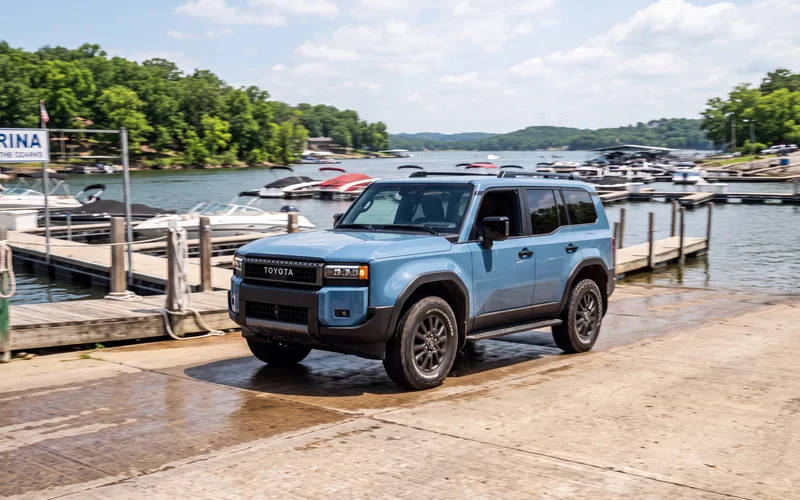 Toyota Land CruiserOff-Road SUVBetter at: Value and efficiency
The same platform and off-road hardware with a standard hybrid powertrain and a much lower price, giving up the GX's third row, nicer interior and bigger screen.
Compare 2.34C+
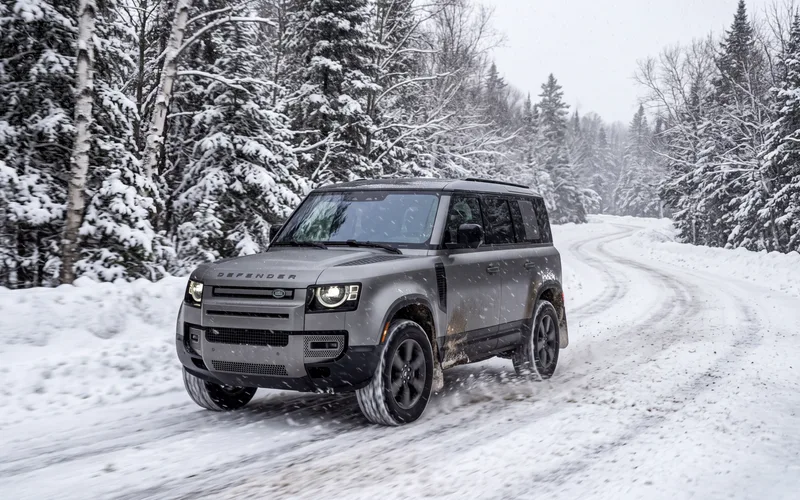 Land Rover DefenderLuxury Off-Road SUVBetter at: Ride comfort
The most direct luxury off-road rival, with a far better ride on air suspension and a plug-in option, at the cost of Lexus-grade reliability and resale.
Compare 2.88B-
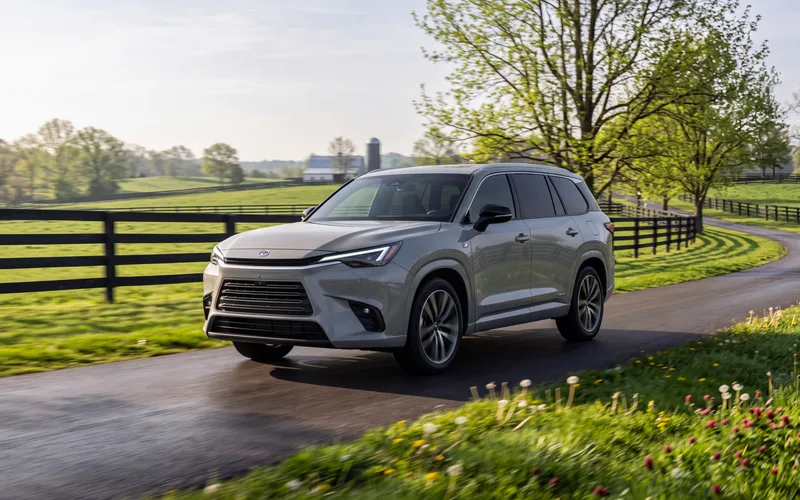 Lexus TXMid-Size Luxury SUVBetter at: Three-row space
If the third row and the fuel bill are what is bothering you, the TX is the same brand with adult-usable seating, hybrid and plug-in power and roughly double the MPG.
CompareHow it's evolved
10 scored model years · 2017–2026
Subject scores by year
Hover or tap a score to see what moved it versus the year before. A corner mark flags a big swing.
| Year | Performance | Efficiency | Safety | Space | Cost | Reliability | Tech | Use-case | Driving | Value |
|---|---|---|---|---|---|---|---|---|---|---|
| 2026 | 72 | 12 | 68 | 61 | 48 | 74 | 80 | 69 | 69 | 76 |
| 2025 | 73 | 12 | 68 | 63 | 50 | 67 | 80 | 65 | 67 | 77 |
| 2024 | 71 | 12 | 66 | 62 | 50 | 60 | 77 | 62 | 64 | 76 |
| 2023 | 57 | 10 | 47 | 57 | 56 | 89 | 47 | 60 | 57 | 61 |
| 2022 | 57 | 10 | 47 | 57 | 57 | 89 | 47 | 59 | 57 | 59 |
| 2021 | 56 | 10 | 47 | 55 | 58 | 90 | 34 | 54 | 59 | 59 |
| 2020 | 57 | 10 | 47 | 56 | 58 | 88 | 37 | 59 | 56 | 62 |
| 2019 | 57 | 10 | 35 | 56 | 57 | 86 | 35 | 56 | 57 | 58 |
| 2018 | 57 | 10 | 35 | 56 | 55 | 87 | 34 | 57 | 60 | 57 |
| 2017 | 57 | 10 | 32 | 55 | 61 | 85 | 33 | 55 | 59 | 59 |
Compare two years
Best fit & conditions
Higher scores mean a better fit for that use case. Learn more about use-case fit →
Subject profile
Detailed scoring by subject
1Performance & PowertrainOne of the GX's strongest categories.2.80B-
The all-new 2024 GX 550 (third generation, J250) uses the V35A-FTS 3.4-liter twin-turbo V6 in every US grade, so the volume Premium trim and the range maximum are the same figure.
Peak torque is a standout for the segment — the twin-turbo V6 replaces the old 4.6L V8's 329 lb-ft with 479 lb-ft, available low in the rev range.
Multiple instrumented tests of the volume Premium trim cluster at 6.2–6.3 seconds; heavier Overtrail+ and Luxury+ trims run 6.3–6.9 seconds.
The V35A-FTS delivers its 479 lb-ft early and pulls strongly with little turbo lag in normal driving, but reviewers consistently note the twin-turbo V6 sounds coarse and synthetic under load compared with the smooth 4.6L V8 it replaced.
The 10-speed Direct Shift automatic shifts smoothly and keeps the engine in its torque band, though with ten ratios it can shuffle gears on rolling grades and is slow to kick down when left in Normal.
The third-generation GX raises max towing to roughly 9,100 lbs — a large jump over the prior generation's 6,500 lbs and near the top of the luxury mid-size SUV field.
Full-time 4WD with a two-speed transfer case and a Torsen limited-slip locking center differential is standard on every 2024 GX, with an electronically locking rear differential on Overtrail grades — there is no 2WD version to dilute the lineup.
Built on the GA-F body-on-frame platform shared with the Land Cruiser Prado, the GX carries genuine hardware — dedicated Overtrail grades on 33-inch all-terrains, E-KDSS disconnecting stabilizer bars, a rear locker, Crawl Control and Multi-Terrain Select — held back only from the top band by modest 8.7–8.9 in ground clearance and a 21-degree departure angle.
For the 2024 model year the US GX is a single-powertrain vehicle — the 3.4L twin-turbo V6 in all six grades. Lexus announced a hybrid for later but the GX 550h was not offered in the US in 2024.
2Efficiency & RangeThe GX's lowest-graded category.0.00F
EPA rates every 2024 GX 550 configuration at 17 MPG combined — the twin-turbo V6 in a 5,700-lb body-on-frame 4WD SUV is thirsty even by luxury off-road SUV standards.
EPA city rating for the volume Premium trim; no stop-start hybrid assist and full-time 4WD keep urban economy low.
EPA highway rating, matching the figure Lexus quotes in the 2024 GX press release; the boxy body and 4WD hardware cap highway efficiency.
A large 21.1-gallon tank partly offsets the poor economy, giving a respectable but unremarkable total range for a luxury SUV.
The combination of 17 MPG combined and required premium fuel produces one of the highest annual fuel bills in the SUV field, well above the top of the segment's normalization band.
Premium gasoline is required, not merely recommended, on the 3.4L twin-turbo V6 — a hard cost penalty on every fill of the 21.1-gallon tank with no regular-fuel alternative anywhere in the 2024 lineup.
3SafetyMid-pack among this car's ten categories.2.45C+
NHTSA has never issued an overall rating for any model year of the J250 GX 550; the 2024 car returns "Not Rated" on every test. The 4-star estimate is anchored on the GX's own real 5-star side result (2025) plus both GA-F platform siblings, which each landed 4 stars overall on the same structure (4-star frontal, 5-star side, 3-star rollover).
IIHS has never tested the GX 550 — no ratings page exists for any year of the J250 and it appears on no 2024, 2025 or 2026 Top Safety Pick list, so no award is possible. Untested alone would sit mid-band, but there is a specific structural concern: the GA-F platform siblings both rated Marginal in the updated moderate overlap front test, which is what kept them off the award list too. Offsetting that, those siblings rated Good in small overlap front on both sides and Good in the updated side test, so the concern is confined to one test rather than the structure generally.
The full checklist is standard on the base Premium trim: Lexus Safety System+ 3.0 brings AEB with pedestrian/cyclist detection, left-turn oncoming vehicle detection and braking, Risk Avoidance Emergency Steer Assist, All-Speed Dynamic Radar Cruise Control, Lane Tracing Assist, Lane Departure Alert with Steering Assist and Proactive Driving Assist — and Blind Spot Monitor with Rear Cross-Traffic Alert plus Intuitive Parking Assist with Auto Braking are separately standard. Held below the top of the band only because the 360-degree Panoramic View Monitor and Rear Pedestrian Detection start at Premium+, not on the volume base trim.
The GX itself has no IIHS front crash prevention result, but its GA-F sibling running the same generation of Toyota/Lexus sensing hardware earned Good in both the updated vehicle-to-vehicle and the pedestrian evaluations, the latter including nighttime scenarios. Scored just below the top band because that is proxy evidence rather than a test of this vehicle.
Blind Spot Monitor with Rear Cross-Traffic Alert is standard on every trim including base Premium, which is better than the "available on most trims" middle of the band, and Intuitive Parking Assist with Auto Braking is standard alongside it. Kept out of the top band because the cross-traffic system is alert-only on the volume trim — braking for what is behind you (Rear Pedestrian Detection) starts at Premium+ — and there is no Safe Exit Assist and no published trailer-aware blind-spot coverage despite the 9,063-lb tow rating.
Lane Tracing Assist (centering) and Lane Departure Alert with Steering Assist are standard on all trims, so the capability is there on every GX sold. The score sits in the middle of the band on execution: Edmunds' year-long test found the lane assistance more annoying than useful and recorded the system attempting to steer the car off-line at one bend, which is exactly the "occasional wander or intervention" the middle band describes.
All-Speed Dynamic Radar Cruise Control with Curve Speed Management is standard and works down to a full stop in stop-and-go traffic, so the hardware is full-range. Reviewers describe precisely the rough edges the middle band calls out — late braking when a car cuts in and slow acceleration when it clears.
Traffic Jam Assist is genuine hands-free steering, which puts the GX above the no-option floor, but it is about as limited as a hands-free system gets: controlled-access freeways only, at or below 25 mph, so it never operates at highway speed. It is also an extra-cost option on every trim and requires an active Drive Connect subscription after the 3-year trial. Nothing comparable to BlueCruise or Super Cruise is offered.
Triple-Beam LED headlamps are standard on every trim rather than reserved for upper grades, and Intelligent High Beams (automatic high beam) are standard within LSS+ 3.0 — a genuinely uniform lighting package across the range. Held below the top band because IIHS has never rated GX headlights, the platform sibling split Good on one trim and Marginal on another, and no curve-adaptive beam is offered on a vehicle at this price.
The J250's squared-off body is a real safety asset here: upright glass, a low beltline, a flat hood whose corners the driver can place, and slim pillars give it sightlines most luxury SUVs have styled away, and reviewers single the visibility out as outstanding. Short of the ceiling only because camera compensation is not standard — the Panoramic View Monitor begins at Premium+, leaving the base trim on parking sensors and a rear camera.
The second row is workable — two complete sets of lower anchors on the outboard seats behind velcro flaps and three top tethers, with the anchors themselves rated easy to access, and the tall body gives wide door openings. The compromises are real though: the third row has no lower anchors and no top tethers at all, which in a seven-seat SUV means it takes boosters only and cannot take a forward-facing convertible, the GX will not hold three car seats, and second-row legroom is tight for a rear-facing seat.
4Space & ComfortMid-pack among this car's ten categories.2.21C
Seating for seven is standard on the volume Premium trim and every Luxury grade; the off-road Overtrail grades are two-row five-seaters and captain's chairs drop the count to six.
The power tilt-and-slide moonroof is standard equipment on the volume Premium trim, so 39.39 in is the figure the buyer actually gets; the taller 41.71 in normal-roof measurement is only reachable via the moonroof delete offered on Overtrail grades.
Front legroom is 41.18 in on every 2024 GX grade — adequate but unremarkable for a 197-inch SUV, and one of the few interior measurements the third generation did not grow over the outgoing car.
The J250's flat roof and upright glasshouse give an exceptionally tall second row — 43.15 in is the figure Lexus publishes and the one every spec database carries. Note that Lexus quotes 'effective head room', which for the second and third rows reads higher than a strict SAE vertical measurement, so this tops out the segment band.
Second-row legroom of 36.73 in is mid-pack for a mid-size luxury SUV and is fixed across the range; the captain's chairs do not slide fore-and-aft, so there is no way to trade second-row space for third-row space.
A genuine third row exists and is standard on the volume trim, but with 31.89 in of legroom, 35.45 in of headroom and a raised floor it is a kid-and-short-trip space — a 5'10" adult has to tuck their feet under the second-row seats with knees pushed up. Access is further hampered because the second-row seats do not slide, and the power-folding mechanism that makes it easy to deploy starts at Premium+, not on the base car.
With the third row folded the seven-seat GX offers 40.2 cu ft — modest for its 197-inch footprint, because the body-on-frame floor sits high and the third row stows into it rather than under it. The two-row Overtrail gains 5.4 cu ft by deleting the mechanism.
Maximum volume of 76.9 cu ft with both rows down is average for a mid-size three-row SUV; the two-row Overtrail's 90.5 cu ft shows how much the folded third-row mechanism costs.
Better than average on features — a 120V/400W AC household outlet and six USB-C ports are standard on the volume trim, the console is well laid out with large cupholders and physical controls, and a refrigerated Cool Box is available. It is held to the middle of the band by the cargo bay itself: 10.3 cu ft behind the raised third row is almost entirely vertical space that luggage testers struggled to use, and the tall body-on-frame load floor limits underfloor storage.
Unusually strong for the price of entry: heated AND ventilated front seats are standard on every grade including base Premium, with a 10-way heated/ventilated power driver's seat and front massaging seats on Luxury grades, and Edmunds covered 1,000 highway miles reporting comfort as the car's defining trait. Short of the top band only because the second-row seats do not slide and the third row is a short-trip space.
A large step forward for a body-on-frame SUV — reviewers describe smooth, well-isolated bump absorption and impressive body control, and call it the best-riding of the Lexus ladder-frame SUVs. It stays out of the top band because Adaptive Variable Suspension is not fitted to the volume Premium trim (it starts at Luxury+), the Premium rides on 20-inch wheels, and testers still note truck-like moments over sharp inputs.
Road noise and vibration are well suppressed in typical Lexus fashion, but the J250's deliberately boxy shape works against it at speed — a 0.399 drag coefficient and large mirrors generate wind noise reviewers call excessive above 70 mph, and the twin-turbo V6 is more audible under load than the V8 it replaced.
Among the most generously equipped in the segment at the entry point: heated and ventilated front seats plus the heated leather steering wheel package are standard on all six grades, heated second-row outboard seats arrive at Premium+, and second-row sunshades, illuminated sills, a Cool Box and app-based remote climate fill out the range. A windshield-wiper de-icer and headlamp washers are a package on Luxury grades rather than standard, which keeps it just below the ceiling.
5Cost of OwnershipOne of the GX's weakest categories.1.35D
The all-new third-generation (J250) GX 550 opened at $62,900 plus a $1,350 delivery fee for the entry Premium grade, so the cheapest 2024 GX a buyer can order lands at $64,250 — essentially at the ceiling of the SUV normalization band, which is what a body-on-frame luxury SUV costs.
Demand in the launch year concentrated on the two grades that share a $69,250 delivered price — the Premium+, which adds the second-row and comfort content most buyers wanted, and the Overtrail, whose 33-inch all-terrain tires, locking rear differential and E-KDSS made it the grade dealers could not keep. That is past the $68,000 top of the SUV band, so the item bottoms out.
Estimates for the GX 550 span a wide range and the truth sits between them: Lexus's own prepaid plan prices scheduled service at about $632/yr, RepairPal's record for the predecessor GX 460 is roughly $770/yr all-in, and CarEdge models $2,751 over five years, while KBB's dealer-rate figure for an Overtrail+ reaches $7,426. Splitting toward the middle at ~$4,600 puts the GX in the good-but-not-exceptional part of the SUV band — Toyota body-on-frame hardware and a strong repair-frequency record, carried at Lexus dealer labor rates with a twin-turbo V6 to service.
Resale is the GX's strongest ownership argument and the launch-year car is the strongest case of it — constrained supply meant 2024 examples were still trading at roughly what they cost new two years on. Set at 63%, in the upper part of the 40–70% SUV band: above CarEdge's and KBB's lease-residual implications being generous, below the ceiling, since the launch-era scarcity premium normalizes as third-generation supply catches up.
Standard Lexus coverage, unchanged for the 2024 lineup — a year longer than the 3-year mainstream norm and typical for a luxury brand, but well short of the 5-year outliers that top the band.
Lexus's 72-month/70,000-mile powertrain term sits near the floor of the 5–10 year band — far behind Genesis, Hyundai and Kia at 10 years/100,000 miles, and a notable gap given that 2024 is the first year of an all-new twin-turbocharged V6 and TNGA-F driveline in this application.
The included-maintenance window is thin — 1 year / 10,000 miles, which in practice is the 6-month/5,000-mile and 12-month/10,000-mile services and nothing beyond — but the package wrapped around it is genuinely useful: four years of unlimited-mileage roadside assistance, Lexus Encore owner benefits with loaner access, and the connected-service trials (Safety Connect, Service Connect, Remote and Drive Connect) bundled with the new Lexus Interface system. That is mid-band: real perks attached to a short maintenance plan, behind BMW, Genesis and Jaguar-style 3–5 year scheduled-service programs.
$69,250 volume-trim price minus its estimated resale value after 5 years (63% retained, or about $43,628) leaves about $25,623 in depreciation. Add the projected $4,600 in 5-year maintenance and repairs, and owning this vehicle for 5 years costs about $30,223 in total.
6Reliability & QualityOne of the GX's weakest categories.2.04C
The two major sources disagree, and the one with actual 2024-owner data is negative: Consumer Reports rates the 2024 GX below average — worse than the average vehicle of its model year — with brakes and body hardware rated poor, while J.D. Power's 89/100 'Quality & Reliability' score is a launch-window prediction that predates the engine recall, the two TSBs and CR's owner survey. Scored just into the below-average band rather than the mixed band because everything that happened after J.D. Power published corroborates CR, and this is the launch year of an all-new J250 generation whose 3.4L twin-turbo V6 replaced the 1UR-FE 4.6L V8 that made the previous GX 460 a CR reliability standout.
A brand-level item, so the GX inherits Lexus's standing rather than its own: Lexus has led J.D. Power's Vehicle Dependability Study three years running by a wide margin, which keeps it firmly in the top band. Held two points below the 2026 GX scorecard's 89 because the Consumer Reports side of the record has since verifiably weakened — Lexus fell three places in CR's brand reliability ranking, and this very vehicle is the model CR blames for it.
Four NHTSA recall campaigns on the 2024 GX, and they are not trivial paperwork: one is a powertrain campaign whose remedy is a main-bearing inspection and, where needed, a complete engine replacement, and two others are outright FMVSS non-compliances (rear visibility, instrument cluster warnings). Two significant TSBs sit on top of that for the brake squeal and massage-seat failures CR's owners reported. That combination is 'major or repeated recalls (powertrain, safety systems)' by the item's own definition. Scored well below the 2026 GX's 60, which was assigned on the then-correct understanding that no GX was named in the engine campaign — the recall was expanded in November 2025 to cover the 2024 GX specifically, and 2026 build is not included.
The V35A-FTS twin-turbo V6 carries a documented, repeatedly expanded bearing-failure defect, and the 2024 GX is inside it — the worst-case outcome is a seized engine and the remedy is engine replacement. That is a known-problem powertrain by the item's definition, and it replaced the 1UR-FE 4.6L V8, one of the most bulletproof engines Lexus ever fitted to this nameplate. Not scored at the bottom of the band because the root cause is a manufacturing contamination issue with a defined build window and a funded remedy rather than a design flaw, and the rest of the driveline — the Aisin 10-speed automatic, proven across Tundra, LX and LS — has no comparable record. Below the 2026 GX's 62 purely because 2026 build is outside the campaign and 2024 build is inside it.
Reviewers consistently rate the J250 cabin well: soft-touch surfaces, perforated leather or NuLuxe, padded knee bolsters where they are actually needed, and genuine switchgear rather than capacitive panels. What keeps it out of the top band is that this is judged against the Luxury price class at roughly $69,250 as typically equipped, where the volume Premium+/Overtrail grades still carry Toyota-shared switchgear and hard plastics on the lower dash, console sides and door bases, and the Overtrail grade is deliberately wipe-clean rather than plush. Held level with the 2026 GX, which has the same interior.
This is where the launch year separates sharply from later J250 build. Consumer Reports rates body hardware a poor trouble spot on the 2024 specifically, and owner reports cluster around exactly that: door rattles, rear seatbelt-anchor rattles, cabin ticks reported at barely over 1,000 miles, and a massage-seat air hose that disconnects in normal use — the last serious enough to earn its own TSB. Japanese Lexus assembly is still a real asset and the panel work itself is not what owners complain about, which keeps this in the 'generally solid with scattered complaints' band rather than below it, but 27 points clear of the 2026 GX's 87 is the honest gap between a first-build-year car and one with two years of running changes behind it.
Lexus is the industry benchmark for dealer service satisfaction and sits at or near the top of the premium field every year, which places the GX solidly in the top band — and that matters more than usual on a car carrying an engine-replacement campaign, since the remedy quality depends on the service network. Held below the Toyota network's scores in this dataset because Lexus runs roughly a fifth as many US stores: coverage is excellent in metro markets but thin in the rural and mountain areas an Overtrail buyer actually drives to.
Availability is a genuine strength — the GX is mechanically a global Land Cruiser Prado and shares its TNGA-F chassis and much of its driveline with the Tacoma, 4Runner, Land Cruiser and Tundra, so OEM mechanical parts are plentiful and the 250-series overlanding aftermarket is deep. Cost is what caps it: Lexus-badged trim and electronics carry a premium, and the turbochargers, 10-speed automatic, Adaptive Variable Suspension and E-KDSS are real out-of-warranty expenses. Marked one point below the 2026 GX because launch-year cars sit at the thin end of a new generation's parts pipeline, with less salvage and aftermarket supply behind them.
7Technology & InfotainmentThe GX's best-graded category.3.20B+
The 14-inch Lexus Interface display is standard equipment on every 2024 GX grade including the base Premium — there is no de-contented smaller screen, so the volume trim and the range maximum are the same figure.
Lexus Interface is consistently described as fast, logically organized and easy to read, and critically it keeps real hardware — a volume knob plus physical climate knobs sit below the screen rather than being buried in menus. Held short of the top band by the absence of split-screen zones and by seat heating/ventilation being a touchscreen-only control.
Both wireless Apple CarPlay and wireless Android Auto are standard on all six grades including the base Premium — the top of the scoring band, with nothing gated behind a trim walk or a subscription.
Drive Connect bundles cloud-based navigation, the natural-language 'Hey Lexus' Intelligent Assistant and live Destination Assist, and it is fitted to every grade — a genuinely modern voice and maps stack that reviewers say responds well to spoken commands. It falls short of the top band because the whole package reverts to a paid subscription after the three-year trial, at which point the built-in cloud navigation stops and owners fall back on phone projection.
A 10-speaker Lexus Premium system is standard on every grade — a solid base rather than a token four-speaker setup — and the 21-speaker Mark Levinson surround system is available from Luxury up, one of the better-regarded branded systems in the segment.
A 12.3-inch multi-information display is standard on all six grades, so even the base Premium gets the full-width configurable digital cluster — near-standard availability of a large, crisp display is exactly the top band, with only the lack of a genuinely reconfigurable multi-layout mode keeping it from the ceiling.
Lexus Interface supports over-the-air updates pushed directly to the multimedia screen, and Lexus explicitly warns that displays shown may not reflect the latest OTA enhancements — so infotainment and map updates genuinely arrive without a dealer visit. It sits in the middle band because the scope is multimedia and maps, not the whole-vehicle feature-adding updates that define the top band.
The Lexus app covers the core set — Remote Connect for remote start and climate, lock/unlock and vehicle locate, plus Safety Connect and Service Connect with long trials — and a phone-as-key Digital Key exists. The middle band fits precisely: Remote Connect reverts to a paid subscription after three years, Digital Key is an extra-cost option that the volume Premium trim cannot even order, and owners report the app's remote start and Digital Key working inconsistently.
Six USB-C ports are standard on the volume trim — no legacy USB-A and no first-row-only stinginess — alongside a 120V/400W household AC outlet standard on every grade, which is rare at this price and genuinely useful for camping or jobsite duty. Kept out of the very top only because the wireless phone charger is an extra-cost option on the base Premium rather than standard.
SmartAccess proximity entry with push-button start, power-folding mirrors and a power rear door with a pop-out window are standard on every grade, and remote start comes through Remote Connect. It stays in the upper middle rather than the top band because the hands-free kick sensor for the tailgate starts at Premium+ and phone-as-key Digital Key is an extra-cost option unavailable on the volume Premium trim.
Intuitive Parking Assist with Auto Braking is standard on every grade and the Panoramic View Monitor is widely fitted from Premium+ up, gaining a four-camera Multi-Terrain Monitor with an underfloor view on Overtrail. It lands in the middle band because the volume Premium trim gets only the rear camera and sensors — surround view costs a trim step — and no automated parking function is offered anywhere in the range.
A 10-inch colour head-up display is orderable on every grade including the base Premium rather than being reserved for the top of the range, which is the distinction the upper band rewards. It is not scored higher because it remains a standalone extra-cost option on all six grades — no trim gets it as standard equipment.
8Use-Case FitMid-pack among this car's ten categories.2.21C
Seven seats are standard and the boxy body gives wide, square door openings with easy-to-reach LATCH anchors, but the compromises are the kind families hit daily: the third row has no lower anchors and no top tethers at all, three car seats will not fit across, second-row legroom is too tight for a rear-facing seat behind an adult, and the second row does not slide to make room.
The equipment side is excellent at the family price point — Lexus Safety System+ 3.0 plus Blind Spot Monitor with Rear Cross-Traffic Alert are standard on the base Premium, not optional. The credentials side is what holds it to the middle band: NHTSA has issued no overall rating for the J250, IIHS has never tested it, and both GA-F platform siblings rated Marginal in the updated moderate overlap front test, which is exactly the crash mode that matters to a family buyer.
For four occupants it is a fine long-haul machine — heated and ventilated front seats standard, heated second-row outboard seats from Premium+, six USB-C ports, a 120V outlet and a tall, airy second row with 43 in of headroom. It cannot reach the top band as a seven-seat tourer, though, because filling the third row leaves only 10.3 cu ft for luggage, and that row is a short-trip space for children.
Easy to live with for something this size — 479 lb-ft from 2,000 rpm makes it effortless off the line, visibility from the upright glasshouse is outstanding, and reviewers call the J250 markedly more road-friendly and buttoned-down than its predecessor. It stops short of the top band because the driver-assist calibration actively irritates: Edmunds found the adaptive cruise slow to brake for cut-ins and slow to resume, and the lane keeping 'more annoying than useful'.
One of the most expensive ways to commute in the segment: 17 MPG combined on required premium fuel works out to roughly $4,550 a year at EPA's 15,000-mile assumption, and there was no hybrid GX in the US for 2024 to soften it. Consumables match the profile — 20-inch tires on the volume trim, 22s on Luxury grades.
The footprint is the problem — 197.05 in long and 77.95 in wide (78.74 on Overtrail) with a 39.4 ft curb-to-curb turning circle. What rescues it to mid-band is that the squared body makes the corners easy to place, outward visibility is genuinely outstanding, and parking sensors with auto braking are standard; reviewers find it simple to slot between other large SUVs. Surround view still costs a trim step above the volume Premium.
The hardware is real for an SUV — an 8,000 lb tow rating on the volume Premium with a hitch standard on every grade, a body-on-frame GA-F chassis, full-time 4WD with low range and 479 lb-ft that makes light work of a loaded trailer. It is capped in the middle band by what it lacks against a pickup: no bed, about 1,425 lb of payload, and 40.2 cu ft of enclosed cargo behind the second row.
Mechanically this is Land Cruiser Prado hardware — the GA-F ladder frame, double-wishbone front and four-link coil rear, shared with the global Prado and the Toyota Land Cruiser, a lineage with about as strong a durability reputation as exists. What keeps it below the fleet-proven band is that nothing about the cabin is built for abuse: NuLuxe or semi-aniline leather, no washable surfaces, and 22-inch wheels on the Luxury grades.
There is genuine onboard power — a 400-watt 120V AC outlet standard on every grade — plus a standard tow hitch and roof rails, so light trade use is possible. But this is a luxury SUV and scores accordingly: no bed or bed access features, no washable interior, no dedicated upfit ecosystem, and the black utility roof rails that would carry racks are Overtrail-only equipment.
Comfort credentials are strong — heated and ventilated front seats standard on every grade, a well-isolated ride and a 1,000-mile Edmunds road trip whose headline was comfort. Range and refinement cap it: a 21.14-gallon tank at 17 MPG combined means roughly 359 miles between premium-fuel stops, wind noise becomes intrusive above 70 mph, and the adaptive cruise that should cut fatigue is the part reviewers complain about.
This is the GX's strongest case. Full-time 4WD with a two-speed transfer case and a Torsen locking centre differential is standard on every grade — there is no pavement-only version — and the Overtrail grades add an electronic rear locker, E-KDSS disconnecting anti-roll bars, Crawl Control, Multi-Terrain Select and 33-inch all-terrains. An 8,000 lb tow rating and a 400W outlet cover toys and camp power; only the modest 8.66-8.86 in ground clearance and 21-degree departure angle keep it off the ceiling.
Flexible in the ways that matter for gear: 40.2 cu ft with the third row down and 76.9 cu ft with both rows flat, a power rear door with a pop-out window for long loads, roof rails and a tow hitch standard on every grade, and power third-row folding from Premium+. It is not exceptional because the raised body-on-frame load floor eats into usable height, the space behind the third row is nearly unusable, and the two-row Overtrail's 90.5 cu ft shows what the seven-seat layout costs.
9Driving ExperienceMid-pack among this car's ten categories.2.30C+
A real improvement over the outgoing GX — reviewers credit the GA-F frame with impressive body control and call it the best-handling of the Lexus ladder-frame SUVs — but the limits are low and honestly reported: Consumer Reports managed only 47.5 mph through its avoidance manoeuvre, with obvious weight transfer through the cones from a 5,600 lb body-on-frame SUV. Adaptive Variable Suspension, which sharpens it, is not fitted to the volume Premium trim.
Sits in the middle band because the evidence genuinely splits: the rack-and-pinion EPS is quick at 3.2 turns lock-to-lock and testers call it surprisingly crisp with welcome weight for a body-on-frame SUV, while Consumer Reports found the steering light at the limit. Precise enough for confident placement, short on actual feedback.
Hardware is sized for the job — 13.94-inch ventilated front discs with four-piston fixed calipers, an uncommon fitment on a luxury SUV — and stops are adequate and repeatable on the road-biased grades. Scored mid-band because testers describe pedal response as unremarkable and because braking on the Overtrail's 33-inch all-terrain tires was reported as inconsistent, with the tires gripping unevenly.
Well calibrated in normal use: the V35A-FTS delivers all 479 lb-ft from 2,000 rpm so there is little perceptible turbo lag, and the 10-speed Direct Shift automatic shifts smoothly and keeps the engine in its band. Held below the top band by the ten-ratio gearbox shuffling on rolling grades and being slow to kick down when left in Normal.
The twin-turbo V6 is quiet enough at cruise and free of vibration through the controls, but its character is the consistent complaint of the 2024 road tests — coarse and synthetic-sounding under load, and a clear step down in aural quality from the 4.6-litre V8 it replaced. That is precisely the 'audible but inoffensive' middle of the band rather than anything pleasant.
Lexus publishes a 19.7 ft minimum turning radius at the tire, giving a 39.4 ft curb-to-curb diameter — large in absolute terms but modest for a 197-inch body-on-frame SUV, and reviewers single it out as making the GX easier to park than its footprint suggests.
One of the GX's genuine strengths: a commanding upright seating position with outstanding sightlines over a flat hood whose corners the driver can actually place, slim pillars, and a control layout that keeps a volume knob and physical climate knobs below the screen. Running boards are standard to manage the tall step-in. Kept just off the ceiling because the power tilt-and-telescoping wheel is an option rather than standard on the volume Premium trim, and seat heating/ventilation is buried in the touchscreen.
It has real character — the boxy J250 styling, a deep well of low-rev torque, and off-road hardware that makes the interesting route genuinely available — and reviewers came away fond of it rather than indifferent. But it is not entertaining in the conventional sense: 5,600 lb, low cornering limits, numb steering and an engine note nobody praises put it in the pleasant-but-not-thrilling band.
10Value & Market PositionOne of the GX's strongest categories.3.19B
Unusually for a six-grade luxury ladder, the 2024 GX puts the headline content on every car: the 14.0-inch Lexus Interface touchscreen, a 10-speaker audio system, wireless Apple CarPlay and Android Auto, the full Lexus Safety System+ 3.0 suite, and the whole driveline — 349 hp twin-turbo V6, 10-speed automatic, full-time four-wheel drive with a Torsen limited-slip locking center differential and low range — are standard from the $64,250 Premium. Three-row seating is available from Premium up. What keeps it out of the 80s is the cabin: NuLuxe synthetic upholstery, no head-up display, no surround-view camera and no ventilated seats at the entry grade, with leather and Mark Levinson audio reserved for the Luxury grades.
Measured on sticker, the GX is the value argument in the luxury off-road class: $64,250–$81,250 buys body-on-frame TNGA-F construction, a 9,096 lb tow rating that leads the mid-size luxury field, 479 lb-ft from the twin-turbo V6, a real locking-differential off-road grade, up to seven seats and the segment's strongest resale — hardware a Defender 110 or G 550 charges substantially more for. The offsets are real too: 17 MPG combined on premium fuel, a $4,550/yr EPA fuel bill, only 349 hp for the money, and a considerable premium over the mechanically related Land Cruiser. Scored on MSRP content; the launch-year dealer markups that eroded actual transaction value are graded separately under 10.2.3.
Six grades spread across roughly $64,000 to $81,000, and they are genuinely different vehicles rather than equipment tiers — the new-for-2024 Overtrail pair goes off-road with 33-inch all-terrain tires, a locking rear differential and E-KDSS disconnecting stabilizer bars, while Luxury and Luxury+ go the opposite way toward semi-aniline leather and on-road refinement, with seating stepping between five, six and seven depending on grade. What holds it below the top band is the absence of choice beneath the trim ladder: one powertrain in one state of tune, one body, one drivetrain, with the promised hybrid still unannounced for 2024.
The 30,914 units sold in 2024 read as flat against the outgoing GX 460's 31,910 in 2023, but the constraint was supply, not demand: the generation changeover left several very thin months early in the year, dealers were taking orders against waitlists running 500-plus names and 8–12 months at some stores, and roughly 88% of listed inventory was already spoken for. The following year, with production settled, the GX posted 37,180 — its best year ever. For a $70,000 body-on-frame SUV that is a strong commercial result, though not a segment volume leader in absolute terms.
Lexus's equity is built on dependability and service satisfaction rather than performance glamour, and the third-generation GX converted that into something closer to desire — the boxy J250 styling, the Overtrail's instant credibility with the overlanding audience, and best-in-class resale gave the nameplate an image halo the outgoing GX 460 never had. Held below the Land Cruiser and G-Class, whose badges carry heritage the GX name does not yet match.
Scored on buyer benefit, and 2024 was close to the worst case. Lexus put no factory cash and no lease support on the car — leases ran a .00320 money factor, equivalent to roughly 7.7% APR — and the only program available was a $1,500 lease-loyalty credit for returning customers. On top of that, dealers added market adjustments averaging around $11,000 and reaching $12,500 on Overtrail+ and Luxury+, pushing some cars near $98,000. A buyer in this model year paid sticker at best and usually well over it.
2024 is the launch year of the all-new third-generation J250 GX — new GA-F/TNGA-F body-on-frame platform, an all-new 3.4-liter twin-turbo V6 replacing the old 4.6-liter V8, a new electrical architecture, the current Lexus Interface multimedia system and Lexus Safety System+ 3.0, plus the first Overtrail off-road grade in Lexus history. There is no redesign risk whatever for a buyer in this year; the only pending change is the hybrid variant Lexus said would follow.
One of the best-received luxury SUV launches of its cycle. The Drive named the GX its Best SUV of 2024 and it also took that outlet's People's Choice award; Motor1 called it the best SUV of the year; and it won Mid-Size SUV of Texas at the Texas Truck Rodeo. Reviewers consistently praised the styling, the low-rpm shove of the twin-turbo V6, the Overtrail's genuine trail hardware, excellent outward visibility and the interior step over its Toyota platform-mates, with recurring criticism of mid-teens fuel economy, a tight third row, a dim instrument display in bright light and a ride that stays trucky over sharp inputs. It sits at the foot of the top band rather than in it because it did not win the marquee titles — MotorTrend's 2024 SUV of the Year went to the Chevrolet Blazer EV, and no NACTOY Utility win is on record.