
The verdict
A mixed-report luxury off-road suv, strong on performance and held back by efficiency.
The 2026 Land Rover Defender is the rare off-roader you can genuinely live with on pavement: 11.5 inches of ground clearance, 35.4 inches of wading depth and a class-topping 8,201-pound tow rating, wrapped in an air-sprung unibody that rides better than any body-on-frame rival. The 395-hp mild-hybrid inline-six gets the 110 to 60 mph in 5.8 seconds, and the camera suite — including a see-through-hood ClearSight ground view — is the best in the segment. The bill is the problem: 19 MPG combined on required premium fuel, roughly $3,275 a year in gas, a typically-equipped 110 SE around $77,000, and Land Rover's bottom-of-industry reliability record. Buy it for capability and character, and go in knowing the running costs and the repair reputation are real.
Jump to scoresStrengths
- Best-in-class off-road hardware, with a tow rating to match
- The best camera and visibility package of any off-roader
- A serious off-roader that actually rides and drives well
What holds it back
- Among the thirstiest vehicles you can buy, and it drinks premium
- Expensive to buy and brutally expensive to keep
- Land Rover's reliability record is the worst in the segment
Top alternatives
Cars shoppers cross-shop with the Land Rover Defender 2.80B-
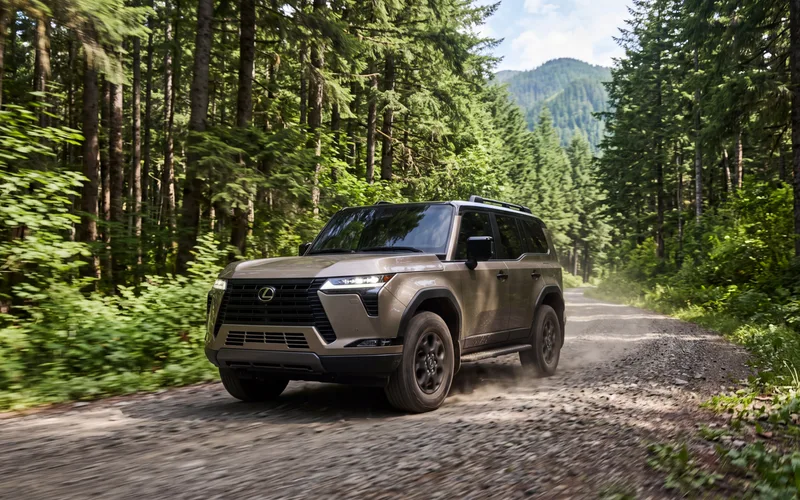 Lexus GXLuxury Off-Road SUVBetter at: Reliability
It matches the Defender's off-road hardware and beats it on cargo space, standard driver aids and running costs, backed by a reliability and dealer record Land Rover cannot approach.
Compare 2.40C+
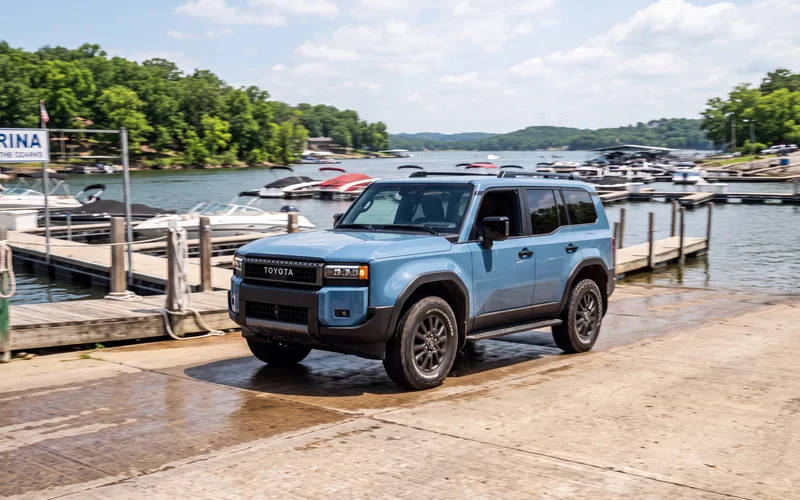 Toyota Land CruiserOff-Road SUVBetter at: Ownership cost
A hybrid powertrain, roughly $20,000 lower as-equipped price and Toyota durability make it the sane choice for anyone who plans to keep the car past warranty.
Compare 2.55C+
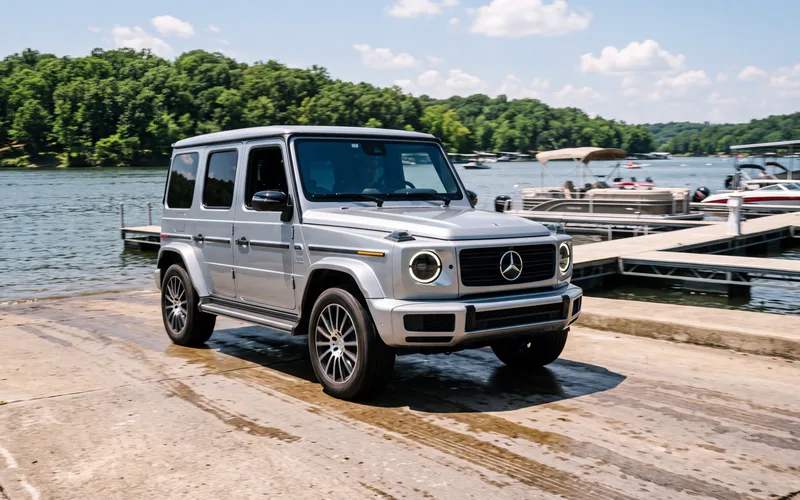 Mercedes-Benz G-ClassLuxury Off-Road SUVBetter at: Prestige
For buyers who want maximum icon status and a richer cabin — plus an electric G 580 option — and are willing to pay close to double for it.
CompareHow it's evolved
7 scored model years · 2020–2026
Subject scores by year
Hover or tap a score to see what moved it versus the year before. A corner mark flags a big swing.
| Year | Performance | Efficiency | Safety | Space | Cost | Reliability | Tech | Use-case | Driving | Value |
|---|---|---|---|---|---|---|---|---|---|---|
| 2026 | 79 | 27 | 64 | 58 | 33 | 40 | 79 | 69 | 71 | 76 |
| 2025 | 79 | 24 | 65 | 58 | 12 | 44 | 79 | 68 | 71 | 77 |
| 2024 | 78 | 20 | 64 | 57 | 14 | 43 | 78 | 68 | 71 | 75 |
| 2023 | 65 | 20 | 51 | 55 | 17 | 41 | 73 | 65 | 63 | 73 |
| 2022 | 65 | 20 | 50 | 55 | 32 | 43 | 63 | 58 | 58 | 68 |
| 2021 | 66 | 20 | 48 | 48 | 24 | 43 | 65 | 59 | 56 | 71 |
| 2020 | 64 | 24 | 46 | 54 | 25 | 43 | 57 | 58 | 58 | 70 |
Compare two years
Best fit & conditions
Higher scores mean a better fit for that use case. Learn more about use-case fit →
Subject profile
Academic Probation · NHTSA safety recalls
Jun 12, 2026Air bags: frontalThe driverâs air bag clockspring connector may corrode, which can cause the air bag not to deploy as intended.
Defect
Jaguar Land Rover North America, LLC (Land Rover) is recalling certain 2020-2026 Land Rover Defender, 2021-2026 Discovery, and 2022-2026 Range Rover vehicles. The driverâs air bag clockspring connector may corrode, which can cause the air bag not to deploy as intended.
Risk
An air bag that does not deploy as intended increases the risk of injury in a crash.
Remedy
Dealers will apply a protective lubricant gel to the driverâs air bag connector terminals, free of charge. Owner letters were mailed August 3, 2026. Owners may contact Land Rover's customer service at 800-637-6837. Land Rover's number for this recall is D120.
NHTSA campaign 26V389000 ↗Manufacturer no. D120250,857 vehicles potentially affected (all models in the campaign)Owners notified Jul 31, 2026Filed by Jaguar Land Rover North America, LLCFiled as DEFENDERApr 23, 2026Fuel system, gasoline: storage: tank assemblyThe fuel tank was improperly manufactured with walls that are too thin.
Defect
Jaguar Land Rover North America, LLC (Land Rover) is recalling certain 2026 Land Rover Defender vehicles. The fuel tank was improperly manufactured with walls that are too thin.
Risk
In the event of a crash, an improperly manufactured fuel tank may leak fuel, increasing the risk of a fire.
Remedy
Dealers will replace the fuel tank, free of charge. Owner letters were mailed June 19, 2026. Owners may contact Land Rover's customer service at 800-637-6837. Land Rover's number for this recall is D127.
NHTSA campaign 26V263000 ↗Manufacturer no. D1276 vehicles potentially affected (all models in the campaign)Owners notified Jun 17, 2026Filed by Jaguar Land Rover North America, LLCFiled as DEFENDERMar 18, 2026Seat belts: critical fastenersThe third-row lower seat belt anchorage bracket may have an insufficient weld stud.
Defect
Jaguar Land Rover North America, LLC (Land Rover) is recalling certain 2026 Land Rover Defender vehicles. The third-row lower seat belt anchorage bracket may have an insufficient weld stud.
Risk
A seat belt assembly with an insufficient weld may not properly restrain an occupant during a crash, increasing the risk of injury.
Remedy
Dealers will replace the third-row lower seat belt anchorage bracket or the weld-stud on the bracket, free of charge. Owner notification letters were mailed May 19, 2026. Owners may contact Land Rover's customer service at 800-637-6837. Land Rover's numbers for this recall are D098 and D113.
NHTSA campaign 26V163000 ↗Manufacturer no. D098 D113582 vehicles potentially affected (all models in the campaign)Owners notified May 13, 2026Filed by Jaguar Land Rover North America, LLCFiled as DEFENDER
16 recalls on other model years of the Defender (2020–2025)
Sep 24, 2026Seat belts: rear/other: webbing: stitchingThe second-row seat belt may be improperly stitched.
Defect
Jaguar Land Rover North America, LLC (Land Rover) is recalling certain 2024 Land Rover Defender vehicles. The second-row seat belt may be improperly stitched.
Risk
An improperly stitched seat belt may fail to properly restrain an occupant during a crash, increasing the risk of injury.
Remedy
Dealers will inspect the second-row seat belt serial number, and replace the seat belt, as necessary, free of charge. Interim letters notifying owners of the safety risk are expected to be mailed November 20, 2026. Additional letters will be sent once the final remedy is available. Owners may contact Land Rover's customer service at 800-637-6837. Land Rover's number for this recall is D130.
NHTSA campaign 26V615000 ↗Manufacturer no. D130371 vehicles potentially affected (all models in the campaign)Filed by Jaguar Land Rover North America, LLCFiled as DEFENDERSep 17, 2026Electrical system: propulsion system: dc/dc converterThe DC-DC converter may malfunction due to an electrical overload that can occur during high power demand. Additionally, a software error can cause the DC-DC converter to stop functioning at vehicle start-up under certain circumstances. Failure of the DC-DC converter will result in the loss of 12-Volt system charging and can lead to complete loss of drive power and exterior lighting.
Defect
Jaguar Land Rover North America, LLC (Land Rover) is recalling certain 2019-2024 Land Rover Range Rover Sport, 2020-2024 Land Rover Range Rover Evoque, Land Rover Range Rover, Land Rover Discovery Sport, Land Rover Defender, 2021-2024 Land Rover Range Rover Velar, Jaguar E-Pace, F-Pace, and Land Rover Discovery vehicles. The DC-DC converter may malfunction due to an electrical overload that can occur during high power demand. Additionally, a software error can cause the DC-DC converter to stop functioning at vehicle start-up under certain circumstances. Failure of the DC-DC converter will result in the loss of 12-Volt system charging and can lead to complete loss of drive power and exterior lighting.
Risk
A loss of drive power increases the risk of a crash.
Remedy
Dealers will update the vehicle software, free of charge. Interim letters notifying owners of the safety risk are expected to be mailed November 13, 2026. Additional letters will be sent once the final remedy is available. Owners may contact Land Rover's customer service at 800-637-6837. Land Rover's number for this recall is E008. This recall expands previous NHTSA recall number 26V248.
NHTSA campaign 26V599000 ↗Manufacturer no. E00823,677 vehicles potentially affected (all models in the campaign)Filed by Jaguar Land Rover North America, LLCFiled as DEFENDERApr 17, 2026Electrical system: propulsion system: dc/dc converterInsufficient electrical load balancing during times of high demand can lead to a current overload condition and malfunction of the DCDC converter. A failure of the DC-DC converter will result in a loss of 12-Volt system charging and can lead to complete loss of drive power and exterior lighting.
Defect
Jaguar Land Rover North America, LLC (Land Rover) is recalling certain 2021-2024 Land Rover Range Rover Velar and Land Rover Discovery, 2020-2023 Land Rover Range Rover Evoque, 2019-2024 Land Rover Range Rover Sport, 2020-2024 Land Rover Range Rover, 2020 Land Rover Discovery Sport, 2020-2024 Land Rover Defender, 2021-2024 Jaguar F-Pace, and 2021-2022 Jaguar E-Pace mild-hybrid electric vehicles (MHEVs). Insufficient electrical load balancing during times of high demand can lead to a current overload condition and malfunction of the DCDC converter. A failure of the DC-DC converter will result in a loss of 12-Volt system charging and can lead to complete loss of drive power and exterior lighting.
Risk
A loss of drive power increases the risk of a crash.
Remedy
Dealers will update the central software, free of charge. Interim letters notifying owners of the safety risk were mailed June 17, 2026. Additional letters will be sent once the final remedy is available. Owners may contact Land Rover's customer service at 800-637-6837. Land Rover's numbers for this recall are D126 and H575.
NHTSA campaign 26V248000 ↗Manufacturer no. D126 H575170,169 vehicles potentially affected (all models in the campaign)Filed by Jaguar Land Rover North America, LLCFiled as DEFENDERJan 16, 2025Back over prevention: software · Equipment: electrical: infotainment: video (touch)screen/monitor/unitThe touchscreen in the center console may go blank at vehicle startup, resulting in the rearview camera image not displaying as intended. As such, these vehicles fail to comply with the requirements of Federal Motor Vehicle Safety Standard (FMVSS) number 111, "Rear Visibility."
Defect
Jaguar Land Rover North America, LLC (Land Rover) is recalling certain 2023 Discovery Sport, 2023-2024 Defender, and 2023 Range Rover Evoque vehicles. The touchscreen in the center console may go blank at vehicle startup, resulting in the rearview camera image not displaying as intended. As such, these vehicles fail to comply with the requirements of Federal Motor Vehicle Safety Standard (FMVSS) number 111, "Rear Visibility."
Risk
A rearview camera that does not display an image can reduce the driver's rear view, increasing the risk of a crash.
Remedy
Dealers will update the touchscreen software, free of charge. Owner notification letters were mailed March 3, 2025. Owners may contact Land Rover's customer service at 1-800-637-6837. Land Rover's number for this recall is N972.
NHTSA campaign 25V016000 ↗Manufacturer no. N97228,370 vehicles potentially affected (all models in the campaign)Owners notified Mar 3, 2025Filed by Jaguar Land Rover North America, LLCFiled as DEFENDERDec 6, 2024Equipment · Structure: body: roof and pillarsThe raised air intake may not be secured properly, which can allow the intake to detach from the vehicle.
Defect
Jaguar Land Rover North America, LLC (Land Rover) is recalling certain 2020-2025 Land Rover Defender vehicles equipped with Raised Air Intake (RAI) aftermarket accessory equipment, with part number VPLEP0543. The raised air intake may not be secured properly, which can allow the intake to detach from the vehicle.
Risk
A detached raised air intake can fall off the vehicle and become a road hazard, increasing the risk of a crash.
Remedy
Dealers will inspect, and if necessary, remove and reinstall the RAI accessory, free of charge. Owner letters were mailed February 20, 2025. Owners may contact Land Rover customer service at 1-800-637-6837. Land Rover's number for this recall is N964.
NHTSA campaign 24E102000 ↗Manufacturer no. N964485 vehicles potentially affected (all models in the campaign)Owners notified Feb 20, 2025Filed by Jaguar Land Rover North America, LLCFiled as DEFENDERSep 12, 2024Back over prevention: sensing system: camera · Forward collision avoidance: sensing system: cameraThe Near Field Sensing Module (NFSM) may overheat and cause the 3D surround camera images, including the rearview camera image, not to display.
Defect
Jaguar Land Rover North America, LLC (Land Rover) is recalling certain 2024 Defender, Discovery Sport, Range Rover, Range Rover Evoque, Range Rover Velar, and Range Rover Sport vehicles. The Near Field Sensing Module (NFSM) may overheat and cause the 3D surround camera images, including the rearview camera image, not to display.
Risk
A rearview camera image that does not display can decrease the driver's visibility, increasing the risk of injury or crash.
Remedy
Dealers will replace the NFSM, free of charge. Owner notification letters were mailed October 24, 2024. Owners may contact Land Rover customer service at 1-800-637-6837. Land Rover's number for this recall is N927.
NHTSA campaign 24V678000 ↗Manufacturer no. N927180 vehicles potentially affected (all models in the campaign)Owners notified Oct 24, 2024Filed by Jaguar Land Rover North America, LLCFiled as DEFENDERJun 17, 2024Engine and engine cooling: engine: oil/lubrication: filter/screenThe oil filter housing can crack and leak oil into the engine compartment.
Defect
Jaguar Land Rover North America, LLC (Land Rover) is recalling certain 2023-2024 Defender, 2024 Discovery, Range Rover, Range Rover Sport, and Range Rover Velar vehicles. The oil filter housing can crack and leak oil into the engine compartment.
Risk
An oil leak in the presence of an ignition source such as hot engine or exhaust components, can increase the risk of a fire.
Remedy
Dealers will replace the filter housing, oil filter, and o-rings, free of charge. Owner notification letters were mailed June 27, 2024. Owners may contact Land Rover customer service at 1-800-637-6837. Land Rover's number for this recall is N908.
NHTSA campaign 24V450000 ↗Manufacturer no. N9082,013 vehicles potentially affected (all models in the campaign)Owners notified Jun 27, 2024Filed by Jaguar Land Rover North America, LLCFiled as DEFENDERNov 22, 2023Service brakes, hydraulic: critical fastenersThe brake calipers may not be reinstalled properly, allowing the brake calipers to detach.
Defect
Jaguar Land Rover North America, LLC (Land Rover) is recalling certain 2023 Land Rover Defender 130 vehicles modified for the TRek Off-Road Competition. The brake calipers may not be reinstalled properly, allowing the brake calipers to detach.
Risk
Detached brake calipers can reduce braking ability and cause structural wheel damage, increasing the risk of a crash.
Remedy
Dealers will reinstall the brake calipers, free of charge. Owner letters were mailed January 18, 2024. Owners may contact Land Rover customer service at 1-800-637-6837. Land Rover's number for this recall is N848.
NHTSA campaign 23V789000 ↗Manufacturer no. N848121 vehicles potentially affected (all models in the campaign)Owners notified Jan 18, 2024Filed by Jaguar Land Rover North America, LLCFiled as DEFENDERMar 2, 2023Child seat: vehicle tether anchor · Seats: mid/rear assemblyThe third-row seatback latch may not latch properly, reducing the strength of a child seat installed to the top tether.
Defect
Jaguar Land Rover North America, LLC (Land Rover) is recalling certain 2023 Land Rover Defender 130 vehicles equipped with third-row seats. The third-row seatback latch may not latch properly, reducing the strength of a child seat installed to the top tether.
Risk
A child seat with reduced strength may not properly restrain the occupant during a crash, increasing the risk of injury.
Remedy
Dealers will inspect and replace the third-row seat frame and components, as necessary, free of charge. Owner notification letters were mailed April 24, 2023. Owners may contact Land Rover customer service at 1-800-637-6837. Land Rover's number for this recall is N768.
NHTSA campaign 23V137000 ↗Manufacturer no. N768812 vehicles potentially affected (all models in the campaign)Owners notified Apr 24, 2023Filed by Jaguar Land Rover North America, LLCFiled as DEFENDERFeb 2, 2023Engine and engine cooling: engine: oil/lubricationThe engine cam carrier oil channel may be blocked, which can lead to an oil leak.
Defect
Jaguar Land Rover North America, LLC (Land Rover) is recalling certain 2019-2023 Range Rover Sport, 2020-2023 Range Rover, Defender, 2022-2023 Discovery, and 2023 Range Rover Velar vehicles. The engine cam carrier oil channel may be blocked, which can lead to an oil leak.
Risk
An oil leak in the presence of an ignition source can increase the risk of a fire.
Remedy
Dealers will inspect and replace the engine cam carrier and related components as necessary, free of charge. Owner notification letters were mailed March 29, 2023. Owners may contact Land Rover customer service at 1-800-637-6837. Land Rover's number for this recall is N763.
NHTSA campaign 23V044000 ↗Manufacturer no. N7636,724 vehicles potentially affected (all models in the campaign)Owners notified Mar 29, 2023Filed by Jaguar Land Rover North America, LLCFiled as DEFENDERJul 21, 2022Seat belts: pretensionerThe driver and front passenger seat belt pretensioners may be damaged, which can cause the seat belts to not properly restrain occupants.
Defect
Jaguar Land Rover North America, LLC (Land Rover) is recalling certain 2022-23 Land Rover Defender, Discovery, Discovery Sport and 2022 Range Rover Sport and Range Rover Velar vehicles. The driver and front passenger seat belt pretensioners may be damaged, which can cause the seat belts to not properly restrain occupants.
Risk
Improperly restrained occupants have an increased risk of injury during a crash.
Remedy
Dealers will inspect and replace the front seat belt assemblies, as necessary, free of charge. Owner notification letters were mailed September 16, 2022. Owners may contact Land Rover customer service at 1-800-637-6837. Land Rover's number for this recall is N720.
NHTSA campaign 22V523000 ↗Manufacturer no. N7204,927 vehicles potentially affected (all models in the campaign)Owners notified Sep 16, 2022Filed by Jaguar Land Rover North America, LLCFiled as DEFENDERAug 26, 2021Seat belts: front: retractor · Seat belts: rear/other: retractorThe seat belt automatic locking retractors may deactivate early, which can prevent the child restraint system from securing properly.
Defect
Jaguar Land Rover North America, LLC (Land Rover) is recalling certain 2021 Range Rover, 2022 Range Rover Sport, 2020-2021 Range Rover Velar, Discovery Sport, 2020-2022 Discovery, and Defender vehicles. The seat belt automatic locking retractors may deactivate early, which can prevent the child restraint system from securing properly.
Risk
An unsecured child restraint system can increase the risk of injury during a crash.
Remedy
Dealers will inspect and replace the seat belt assemblies as necessary, free of charge. Owner letters were mailed October 20, 2021. Owners may contact Land Rover customer service at 1-800-637-6837. Land Rover's number for this recall is N630.
NHTSA campaign 21V668000 ↗Manufacturer no. N63032,687 vehicles potentially affected (all models in the campaign)Owners notified Oct 20, 2021Filed by Jaguar Land Rover North America, LLCFiled as DEFENDERJul 29, 2021Child seat: vehicle latch anchor · Equipment: other: owners/service/other manualThe owner's manual incorrectly states that the third-row seating is equipped with LATCH child seat restraints with top tethers. As such, these vehicles fail to comply with the requirements of Federal Motor Vehicle Safety Standard number 225, "Child Restraint Anchorage Systems."
Defect
Jaguar Land Rover North America, LLC (Land Rover) is recalling certain 2020-2021 Land Rover Defender vehicles. The owner's manual incorrectly states that the third-row seating is equipped with LATCH child seat restraints with top tethers. As such, these vehicles fail to comply with the requirements of Federal Motor Vehicle Safety Standard number 225, "Child Restraint Anchorage Systems."
Risk
Incorrect child restraint information may result in a child seat being improperly secured, which can increase the risk of injury in a crash.
Remedy
Land Rover will mail owners the correct information to insert into the owner's manual, free of charge. Owner notification letters were mailed on September 23, 2021. Owners may contact Land Rover customer service at 1-800-637-6837. Land Rover's number for this recall is N601.
NHTSA campaign 21V584000 ↗Manufacturer no. N6017,027 vehicles potentially affected (all models in the campaign)Owners notified Sep 23, 2021Filed by Jaguar Land Rover North America, LLCFiled as DEFENDERJul 1, 2021SeatsThe front seat track end-stop bracket may become deformed, which could prevent the seat from locking into place.
Defect
Jaguar Land Rover North America, LLC (Land Rover) is recalling certain 2021 Defender 90 vehicles equipped with manually-adjustable front seats. The front seat track end-stop bracket may become deformed, which could prevent the seat from locking into place.
Risk
A seat that is not properly locked into place can move unintentionally during a crash, increasing the risk of injury.
Remedy
Dealers will replace the front seat tracks, free of charge. Owner notification letters were mailed on October 28, 2021. Owners may contact Land Rover customer service at 1-800-637-6837. Land Rover's number for this recall is N609.
NHTSA campaign 21V499000 ↗Manufacturer no. N609603 vehicles potentially affected (all models in the campaign)Owners notified Oct 28, 2021Filed by Jaguar Land Rover North America, LLCFiled as DEFENDERJun 8, 2021Exterior lighting: brake lights · Exterior lighting: tail lights · Exterior lighting: turn signalA voltage spike, triggered by a bright light shining on the rear of the vehicle, can cause the turn signals, brake lights, and tail lights to fail.
Defect
Jaguar Land Rover North America, LLC (Land Rover) is recalling certain 2020-2022 Defender X vehicles equipped with smoked rear light assemblies. A voltage spike, triggered by a bright light shining on the rear of the vehicle, can cause the turn signals, brake lights, and tail lights to fail.
Risk
Turn signals, brake lights, and tail lights that fail to illuminate can reduce visibility to other drivers and increase the risk of a crash.
Remedy
Dealers will replace the rear light assemblies, free of charge. Owner letters were mailed September 27, 2021. Owners can contact Land Rover customer service at 1-800-637-6837. Land Rover's number for this recall is N598.
NHTSA campaign 21V435000 ↗Manufacturer no. N5982,622 vehicles potentially affected (all models in the campaign)Owners notified Sep 27, 2021Filed by Jaguar Land Rover North America, LLCFiled as DEFENDERJun 3, 2021Electrical system: software · Power train: automatic transmission: control module (tcm/pcm/tecm)The Powertrain Control Module (PCM) may unexpectedly switch off while the vehicle is in motion, resulting in an engine stall with no warning.
Defect
Jaguar Land Rover North America, LLC (Land Rover) is recalling certain 2020-2021 Land Rover Defender vehicles equipped with 6-cylinder engines. The Powertrain Control Module (PCM) may unexpectedly switch off while the vehicle is in motion, resulting in an engine stall with no warning.
Risk
An engine stall can increase the risk of a crash.
Remedy
The Connected Diagnostic Services (CDS) and the Over-the-air (OTA) diagnostics functionality will be disabled, either by a dealer or through an OTA update, free of charge. Owner notification letters were mailed July 28, 2021. Owners may contact Land Rover customer service at 1-800-637-6837. Land Rover's number for this recall is N599.
NHTSA campaign 21V424000 ↗Manufacturer no. N599163 vehicles potentially affected (all models in the campaign)Owners notified Jul 28, 2021Filed by Jaguar Land Rover North America, LLCFiled as DEFENDER
Source: NHTSA Office of Defects Investigation recall database, model years 2020–2026. Recalls are listed by model year as the manufacturer filed them; whether a specific car is affected depends on its VIN — check a VIN at nhtsa.gov ↗. NHTSA model names matched to this page: DEFENDER.
Detailed scoring by subject
1Performance & PowertrainThe Defender's best-graded category.3.38B+
Scored on the P400 3.0L turbocharged mild-hybrid inline-six as the representative US powertrain: it is standard from the SE trim upward on the 110, standard across the entire 130 range, and the entry 90/110 S with the 296 hp P300 four are the only trims that do not offer it. Strong output for the SUV band without reaching the V8 flagships.
The P400's 406 lb-ft (550 Nm) arrives low and is bolstered off idle by the 48V electric supercharger, which is what makes the Defender feel muscular at low speed and under tow. Comfortably above the SUV-band midpoint but short of the torque-rich body-on-frame rivals like the GX and Land Cruiser.
Manufacturer claim and independent instrumented testing agree at roughly 5.8 seconds for the 110 P400, which is quick for a 5,000+ lb boxy off-roader and near the top of the luxury off-road set outside the V8s. The base four-cylinder is about two seconds slower.
The Ingenium inline-six is one of the smoother sixes in the class: the 48V electric supercharger fills in below the turbo's threshold so there is effectively no launch lag, and the engine stays turbine-smooth to redline. Marks come off only for a slightly gruff note when extended, and for the P300 four, which is coarser and works audibly harder in a vehicle this heavy.
Every US Defender uses the ZF 8HP eight-speed automatic — the class benchmark for shift smoothness and ratio selection — paired with a two-speed transfer case. It is decisive rather than hunty, downshifts cleanly under tow load, and its low-range and Terrain Response calibrations are unusually well judged off-road. Held below the top of the band because paddle response is deliberately relaxed rather than crisp.
At 8,201 lbs the Defender tops out the SUV normalization band (1,000–8,000 lbs) and posts the strongest tow rating in the luxury off-road segment, ahead of the G-Class at 7,000 lbs and just below the Lexus GX. Advanced Tow Assist and integrated trailer stability control back the rating up.
Permanent four-wheel drive with a two-speed transfer case, locking centre differential and Terrain Response 2 is standard on every Defender — there is no two-wheel-drive version at any price. An active locking rear differential is available and configurable Terrain Response lets the driver mix settings manually. Essentially top-of-band, matching the G-Class.
Genuine benchmark hardware: up to 11.5 in of ground clearance on the electronic air suspension, 35.4 in wading depth, and 38°/28°/40° approach/breakover/departure angles — figures that beat almost everything in the class. Add ClearSight ground-view camera, Wade Sensing, All-Terrain Progress Control and a dedicated Octa flagship with 6D Dynamics hydraulic suspension. Just short of the G-Class only because that vehicle's three locking differentials remain the segment's hardest-core answer.
Four genuinely distinct US powertrains — 2.0L turbo four, 3.0L mild-hybrid inline-six, 5.0L supercharged V8 and the Octa's 4.4L twin-turbo V8 — is unusually wide for the segment and far broader than the single-engine GX or Land Cruiser. It falls short of the 80+ band because the electrification is only 48V mild-hybrid: the P400e plug-in hybrid is an overseas offering whose US availability is unconfirmed, and there is no Defender EV, unlike the G-Class which fields the G580 alongside its combustion cars.
2Efficiency & RangeThe Defender's lowest-graded category.0.00F
EPA combined rating for the volume configuration — the Defender 110 with the P400 3.0L turbocharged inline-six and 48V mild-hybrid assist, which is the mainstream engine across the X-Dynamic SE and SE trims that make up most US sales. The L663 is a heavy (~5,150 lb), boxy, full-time-4WD SUV with a high drag coefficient, so it sits barely above the 18 MPG floor of the SUV normalization band.
EPA city rating for the 110 P400. The 48V belt-integrated starter-generator enables smoother stop-start and brief engine-off coasting but recovers only a fraction of what a true hybrid would in stop-and-go use, leaving the figure just above the 16 MPG floor of the SUV city band.
EPA highway rating for the 110 P400. The Defender's upright windscreen, flat sides and roof-rail hardware make it one of the least aerodynamic SUVs in the luxury class, so highway economy stays near the bottom of the 20–42 MPG band despite the tall top gear of the ZF 8-speed.
Derived from the EPA combined rating and the Defender 110's 90-litre (23.8 US gal) fuel tank. The unusually large tank is the Defender's saving grace in this category — it converts mediocre economy into genuinely long legs between fills, which is the point of an expedition-oriented SUV, and lands the item mid-band rather than at the floor.
At EPA's standard 15,000 mi/yr the 110 P400 burns roughly 790 gallons, and Land Rover's premium-fuel requirement prices every one of them at the expensive pump. The result exceeds the top of the 700–3,200 $/yr SUV band, flooring the item — though it is still meaningfully cheaper to feed than a Lexus GX (~$3,650) or a V8 Defender.
Land Rover specifies premium unleaded (91 octane) for every US Defender engine, including the volume P400 inline-six, to deliver rated output. There is no diesel, E85 or plug-in option in the US to soften the bill, and the 23.8-gallon tank makes each fill an expensive one. That is squarely the 0–49 'premium fuel required' band, essentially the same position as the Lexus GX (25) and other premium-only luxury off-roaders.
3SafetyMid-pack among this car's ten categories.2.35C+
NHTSA has published no 5-Star Safety Ratings for the L663 Defender in any US model year (2020–2026); the estimate is anchored on the Defender's five-star Euro NCAP result and its bonded-aluminium D7x monocoque, which is structurally closer to a unibody crossover than to the body-on-frame off-roaders it competes with. Replaces a placeholder 4.5-star value.
The Defender holds no IIHS Top Safety Pick or TSP+ award and has no published IIHS crashworthiness results, so it cannot reach the award band. It scores above a wholly untested rival because Euro NCAP did test the L663 and awarded five stars with strong adult- and child-occupant protection, which is real crash evidence even though it is not the US test protocol.
Land Rover fits the core suite as standard across the 2026 Defender range — autonomous emergency braking, lane keep assist, traffic sign recognition with adaptive speed limiter, driver condition monitor and a rear camera — but adaptive cruise control is not standard: it arrives with the optional Driver Assist Pack alongside the 360-degree camera and rear traffic monitor. That is the textbook 'core standard, key items optional' pattern and keeps a $60k+ luxury SUV well below rivals like the Lexus GX, where full-speed ACC is standard on every grade.
IIHS has not run front crash prevention tests on the Defender, so there is no Superior/Advanced rating to cite. Euro NCAP's safety-assist and vulnerable-road-user assessments of the L663 were solid but not class-leading, and the system predates the night-time pedestrian detection benchmarks IIHS now uses, which caps this in the adequate band.
Blind Spot Assist is fitted across most of the 2026 range and intervenes with a steering nudge rather than only warning, which is stronger than alert-only coverage. Rear Traffic Monitor and Clear Exit Monitor, however, sit inside the optional Driver Assist Pack rather than being standard, so cross-traffic protection is not guaranteed on a volume-trim car as delivered.
Lane keep assist is standard but is a departure-correction system, not lane centering — true centering requires the Steering Assist function that comes only with the optional adaptive cruise pack. Reviewers have consistently found JLR's lane keep intervention abrupt and quick to nag compared with the smoother tuning from Mercedes and Toyota, so this lands in the middle of the functional band.
When fitted, Adaptive Cruise Control with Steering Assist is a full-speed-range stop-and-go system that reviewers rate as competent on the highway. The score is held down by availability rather than capability: it is an option pack on a luxury SUV whose direct rivals increasingly make full-speed ACC standard, so the volume car as commonly specified may not have it at all.
JLR offers no hands-free highway driving system on any 2026 Defender trim. Steering Assist is a hands-on lane-centering aid with a torque-sensing wheel check, so the Defender has no answer to BlueCruise, Super Cruise or Drive Pilot.
Matrix LED headlights with automatic high beam are fitted from the volume trims upward, with Pixel LED on higher specs — good hardware by segment standards. Without a published IIHS headlight rating for any L663 model year there is no verified Good result to justify the top band.
This is the Defender's clearest safety strength: an upright boxy body with a near-vertical windshield, low beltline, deep side glass and thin front pillars gives genuinely commanding natural sightlines. The tailgate-mounted spare and thick D-pillars do obstruct the rearward view, but that is well compensated by the 3D Surround Camera, the ClearSight Ground View 'see-through hood' camera and the available ClearSight digital rear-view mirror.
The 110's tall, square rear door aperture, flat floor and generous second-row width make car-seat installation and buckling easier than in most off-road-focused rivals, and the five-seat layout leaves the outboard LATCH positions unobstructed. It stops short of the top band because the lower anchors sit behind seat-back trim flaps that take some digging, and IIHS has published no LATCH ease-of-use rating to confirm.
4Space & ComfortMid-pack among this car's ten categories.1.93C-
The volume configuration is the Defender 110 in S/SE trim, which seats five; the front center jump seat (6) and the 5+2 third row (7) are low-take-rate options, and the eight-seat layout belongs to the longer 130 body. Carried over unchanged for 2026.
The Defender's upright, boxy roofline gives generous front headroom; the figure quoted is the no-sunroof measurement, which drops roughly an inch with the optional panoramic roof. Unchanged for 2026 — the L663 body is carried over.
JLR publishes a front legroom figure well below the US-market norm across its range, and the Defender's 39.1 in falls under the segment band floor of 40 in despite a cabin that feels spacious thanks to its width and upright seating. The same convention produced the 0 score for the Mercedes G-Class (38.5 in) in this dataset.
The flat roof and near-vertical rear glass preserve second-row headroom that most luxury SUVs lose to a tapering roofline, putting the Defender near the top of the SUV band. Unchanged for 2026.
The 110's 119.0-inch wheelbase yields genuinely adult-friendly second-row legroom — well clear of the body-on-frame off-road set (Land Cruiser 32.0 in, 4Runner 32.9 in) and comparable to the G-Class. The short-wheelbase 90 is far tighter.
The 110 can be optioned with a 5+2 third row, so it is not a strict two-row like the G-Class, Wrangler or Bronco — but the seats are token: minimal legroom, a knees-up floor, awkward access past the second row, and no meaningful amenities. Buyers wanting a usable third row are pushed to the 130.
Behind-the-second-row space is modest for the vehicle's footprint — the side-hinged tailgate, externally mounted spare and upright packaging cost usable volume, and the quoted figure is measured to the window line. It still beats the Wrangler and Bronco but trails the Land Cruiser and GX.
Folding the second row opens a tall, square, flat-floored hold that is easy to pack, though the total lags longer-roofed rivals like the 4Runner (89.5) and GX (90.9). The upright box shape makes the space more usable than the raw number suggests.
Storage is a signature strength: a full-width dashboard shelf built around the exposed magnesium cross-beam, a deep center console, an optional front jump seat that converts to a console/armrest, rubberized wash-out flooring, seatback and side loadspace boxes, and multiple USB-C and 12V outlets. Ahead of the 4Runner's 76 and clearly ahead of the G-Class and Bronco.
Front seats draw consistent praise for their upright command position, cushioning and support on long hauls, with 14-way heated and ventilated seats with memory available and Windsor leather or Kvadrat wool trim; the second-row bench is flat-ish but roomy. Roughly level with the G-Class (84) and above the GX (79).
The D7x unibody platform plus electronic air suspension (standard on six-cylinder trims) makes this the most compliant-riding of the serious off-roaders — it absorbs broken pavement in a way the body-on-frame Land Cruiser (70), Bronco (60), G-Class (55) and Wrangler (40) cannot. Large 20–22-inch wheels and all-terrain tires add some brittleness over sharp edges.
The unibody structure, available acoustic laminated glass and smooth inline-six keep it far quieter than the Wrangler (33) and Bronco (38), but the slab-sided body generates real wind noise at highway speed and all-terrain tires add roar — so it sits alongside the G-Class and GX (both 72) rather than with luxury crossovers.
Three-zone climate control, heated front seats and a heated steering wheel are standard from the S trim, with ventilated and massaging front seats, heated rear seats, a heated windshield, cabin air purification with PM2.5 filtration and app-based remote preconditioning available. Just below the G-Class (88), comfortably above the GX (82).
5Cost of OwnershipOne of the Defender's weakest categories.0.18F
The cheapest way into a 2026 Defender is the short-wheelbase 90 S with the 2.0L P300 four, and even that lands near the very top of the $25,000–$65,000 SUV band. Carrying the 2024 90 S ($56,400 + $1,475 destination) forward through the MY2025 refresh and two rounds of JLR price increases — plus tariff pressure on the Slovakia-built Defender — puts the 2026 entry point in the low $60,000s.
US volume sits squarely on the five-door 110 in S/SE trim with the 395-hp P400 inline-six, and Defenders are rarely bought stripped — packs, wheels, roof options and air suspension routinely add $6,000–$10,000. A realistic transaction lands in the mid-to-high $70,000s, far past the $68,000 ceiling of the SUV band, so the item bottoms out.
This is the Defender's worst ownership exposure. Land Rover sits at or near the bottom of every major brand-reliability and repair-cost table, and the Defender's air suspension, dense electrical architecture and mild-hybrid I6 are all expensive out-of-warranty items. The result sits near the bottom of the $3,000–$9,500 SUV band — materially worse than a G 550, which benefits from simpler hardware and a longer service record.
Resale is the one item that rescues the Defender's cost picture, and it is the heaviest-weighted item in the category. The L663 has been one of the slowest-depreciating vehicles on the US market — a genuine outlier against the rest of the Land Rover range, driven by design demand and constrained supply. Set at the upper-middle of the 40–70% band rather than the ceiling: the headline depreciation figures come from the 2020–21 supply-crunch cohort, and residuals soften as volume normalizes and incentives return.
Standard Land Rover coverage — mid-band, matching Mercedes-Benz, BMW and Lexus and better than the 3-year mainstream norm, but no longer the class-leading term JLR once offered.
Land Rover publishes no separate extended powertrain term — the engine and driveline are covered only for the same 4 years / 50,000 miles as the rest of the car. That falls below the 5-year floor of the band and scores zero, the same structural weakness the Mercedes G-Class carries, and it stings more here given the Defender's repair-cost record.
No scheduled maintenance is included with a 2026 Defender — JLR retired the EliteCare plan and now sells service coverage as a prepaid add-on. What remains is roadside assistance running with the warranty term plus Pivi Pro connected-service and data trials, which keeps this off the floor but well behind rivals bundling multi-year included service. Scored alongside the G-Class (40), which has an identical structure.
$77,000 volume-trim price minus its estimated resale value after 5 years (62% retained, or about $47,740) leaves about $29,260 in depreciation. Add the projected $8,400 in 5-year maintenance and repairs, and owning this vehicle for 5 years costs about $37,660 in total.
6Reliability & QualityOne of the Defender's weakest categories.0.67F
The L663 Defender has drawn consistently below-average owner-reported and predicted reliability, driven by electrical/infotainment faults, air-suspension issues and 12V battery drain rather than by hard mechanical failure. Nothing in the 2026 carryover lineup addresses those complaint patterns.
Land Rover is the clearest bottom-dweller in US dependability studies, finishing last or near-last year after year in both major surveys — a durable multi-year pattern, not a single bad result.
The L663 has accumulated an unusually high recall count for a nameplate only six model years old, including safety-critical items (fuel-system leak, airbag/restraint and rearview-camera campaigns) alongside a steady stream of software fixes.
Genuinely mixed. The ZF 8HP eight-speed is one of the most proven automatics in the industry, and the OCTA's BMW-derived 4.4L twin-turbo V8 is a robust unit, but the volume Ingenium engines carry real red flags — timing-chain wear and oil-consumption history on the 2.0L I4, and a 48V MHEV/electric-supercharger layer on the 3.0L I6 that adds failure points without a long high-mileage record.
The Defender's exposed-structure cabin is one of the most distinctive in any price class — visible magnesium cross-beam, powder-coated surfaces, and durable Kvadrat wool/Robustec textiles that read as purposeful rather than cheap. The deliberate hard, washable surfaces keep it just short of the richest cabins at this money.
Structurally the Nitra-built D7x body is solid and panel alignment is generally good, but JLR's initial-quality standing is mediocre and scattered reports of interior rattles, trim squeaks and wind noise from the boxy shape persist through the generation.
Roughly 190 US Land Rover retailers make for thin coverage outside major metros — a real problem for a vehicle marketed on remote-country capability — and service satisfaction is dragged down by long shop waits driven by the brand's own failure and parts-supply rates.
Land Rover is routinely ranked among the most expensive brands in America to maintain, parts are overwhelmingly dealer-sourced at premium prices, and JLR's well-publicized parts-supply backlogs have left vehicles waiting weeks. A strong off-road accessory aftermarket does nothing for mechanical repair costs.
7Technology & InfotainmentOne of the Defender's strongest categories.3.38B+
The L663 Defender runs Pivi Pro on an 11.4-inch curved-glass touchscreen, standard on every 90/110/130 trim including the volume S and X-Dynamic SE grades — there is no larger option. That is the weakest part of the Defender's tech case: it sits well below the 13.1-inch panel JLR fits to the Range Rover, Range Rover Sport and Discovery, and below the 12.3-inch screens in the G-Class and Wrangler.
Pivi Pro boots fast, uses a clean and shallow tile layout, and the Defender keeps genuinely good hardware alongside it — a rotary volume knob plus the twin rotary climate dials that double as seat-heat and terrain controls, so the daily functions never go into a menu. It stops short of the 80s because JLR's software still draws steady reviewer and owner complaints about intermittent lag, screen freezes and Bluetooth dropouts, and the small 11.4-inch panel limits how much the split-screen layout can usefully show.
Wireless Apple CarPlay and wireless Android Auto are standard on every Defender trim through Pivi Pro, with no trim gating and no subscription attached, backed by a wireless charging pad on most configurations.
Pivi Pro ships with connected online navigation with live traffic and door-to-door routing as standard, and Amazon Alexa is built in, which handles natural-language media, climate and destination requests better than JLR's own legacy voice layer. It lands just below the 80s because the embedded assistant outside Alexa is command-driven rather than conversational, and the connected-services data that powers live traffic runs on a trial that eventually needs renewing.
The Defender offers a proper premium ladder — the standard Land Rover system is adequate, the Meridian Sound System is a worthwhile mid-step, and the top Meridian Surround setup with subwoofer is genuinely good and widely praised. It sits below the G-Class because the boxy, hard-trimmed Defender cabin is a noisier and more reflective acoustic environment than a Burmester-equipped luxury rival.
A 12.3-inch fully digital Interactive Driver Display is standard across the Defender range — crisp, configurable, and unusually useful off-road because it can mirror terrain, wade-sensing and driveline data rather than just repeating the trip computer. It is a clear strength relative to the 11.4-inch center screen it sits next to.
JLR's Software Over The Air system is one of the broader implementations outside the EV startups — it updates dozens of vehicle modules, not just the head unit and maps, so powertrain, chassis and driver-assist calibrations can improve without a dealer visit. It falls short of the top band because JLR ships feature-adding releases on an occasional cadence rather than the regular, publicized feature drops that define the 90s.
The Land Rover Remote app covers the expected core set — remote lock/unlock, remote start and preconditioning, vehicle locate, status and journey history, plus PHEV charge scheduling on the P400e. It is held to the low 70s by a persistently mediocre reputation for responsiveness and reliability, remote functions that lapse into a paid connected-services subscription after the included term, and the absence of a true phone-as-key digital key of the sort BMW and Mercedes now offer.
Device power is a real Defender strength: USB-C outlets are distributed across all rows including the third row on the 110 and 130, a wireless charging pad is fitted on most configurations, and 12V sockets plus an available household-style socket in the load space serve the camping and jobsite use the truck is built around.
Keyless entry with push-button start and app-based remote start is standard or near-standard across the range, and the waterproof wearable Activity Key is a genuinely useful Defender-specific option for beach, trail and jobsite use. It is capped below the 80s by the side-hinged rear door, which rules out the hands-free power liftgate that most rivals at this price now include, and by the lack of a phone-as-key.
This is the Defender's standout tech feature and the best camera suite of any off-roader in the dataset: a high-resolution 3D Surround Camera, front and rear parking aids, and two Land Rover-specific systems — ClearSight Ground View, which stitches the forward cameras into a see-through-hood image of the ground and front wheels, and the ClearSight digital rear-view mirror, which restores rearward vision that the side-mounted spare and small rear glass otherwise block. The ground-view camera is a real capability aid on a trail, not a novelty.
A windshield-projected head-up display is offered on the Defender, but as an extra-cost item concentrated on upper trims and option packs rather than fitted to the volume S grade, and it is a comparatively modest, non-augmented-reality unit. That places it in the middle of the trim-limited band — well ahead of the G-Class, Wrangler and Land Cruiser, which offer no HUD at all, but behind rivals that make a large HUD easy to get.
8Use-Case FitMid-pack among this car's ten categories.2.66C+
Tall, square door apertures and class-leading second-row space make seat installation and kid-loading genuinely easy, and air suspension access mode drops the high step-in height. The side-hinged tailgate with external spare swings wide and blocks curbside loading in tight parking, and only two outboard LATCH positions are provided.
There is no NHTSA overall star rating and no IIHS crashworthiness rating for any L663 model year, so US families have no domestic crash credential to point to beyond the 2020 Euro NCAP five-star result. AEB, lane keep and blind spot assist are standard, but adaptive cruise with stop-and-go, rear traffic monitor and Clear Exit Monitor all sit in the optional Driver Assist Pack.
Air-sprung ride, supportive long-haul front seats, three-zone climate, heated rear seats and USB-C across rows make it a comfortable multi-hour family tourer. It gives back points for boxy-body wind noise at highway speed, only 34 cu ft of luggage space behind an occupied second row, and a 5+2 third row reviewers treat as children-only.
The P400 mild-hybrid six with its electric supercharger pulls cleanly off idle with no perceptible lag, the ZF 8-speed is among the best-calibrated automatics in production, and the upright glasshouse plus surround-camera suite make it easy to place in traffic. Sheer width and mass, plus the coarser base 2.0L four, keep it short of the effortless-commuter benchmark.
This is among the most expensive vehicles in the dataset to commute in: 19 MPG combined on required 91-octane premium, roughly $3,275 a year in fuel, Land Rover's industry-topping maintenance and repair costs, upper-band luxury insurance, and expensive large-diameter all-terrain tires. Nothing about the ownership math favors daily mileage.
Excellent camera hardware and squared-off corners you can actually see make the Defender easier to place than its footprint suggests, and the 90 is genuinely short. Working against it: a wide body, one of the larger turning circles in the class, and a side-hinged tailgate with tailgate-mounted spare that needs roughly three feet of clearance behind before it will open.
An 8,201 lb tow rating is the top of the framework's band and beats every off-road SUV rival except the GX, and it is backed by full-time 4WD with a two-speed transfer case, locking centre differential and an optional rear locker so the drivetrain holds up under load. It is capped below true work-tool territory by having no open bed — everything hauled has to fit inside 78.8 cu ft or on the roof.
The D7x monocoque is exceptionally rigid and the ZF 8-speed is proven, but Land Rover sits at or near the bottom of both J.D. Power dependability and Consumer Reports brand reliability, the Ingenium four has a documented timing-chain and oil-consumption history, and NHTSA campaigns plus heavy electrical and suspension TSB traffic follow the L663. There is essentially no US commercial fleet adoption to point to as evidence it survives hard duty.
Land Rover's factory accessory catalogue is one of the richest in the industry — expedition roof rack, deployable roof ladder, side-mounted gear carrier, loadspace partition, rubber mats and tow packs — and a domestic power socket plus loadspace tie-downs cover basic onboard needs. But there is no bed, no high-output inverter comparable to a pickup's onboard power system, and no body-builder or service-body upfit ecosystem, so it serves trades as a gear hauler rather than a work truck.
Air suspension, 14-way heated and ventilated front seats and a refined mild-hybrid six make it a strong mile-eater, with roughly 450 miles between fills. It falls short of the class benchmark on two counts: boxy-body wind noise and all-terrain tire roar at highway speed, and driver-assist fatigue reduction that requires paying for the Driver Assist Pack, with no hands-free highway system offered at any price.
This is the Defender's defining strength and the best result in the dataset for the item: 11.5 in of ground clearance, 35.4 in of wading depth, low range with a locking centre differential, Terrain Response 2 and All-Terrain Progress Control, plus an 8,201 lb tow rating for toys and a factory rack, roof-tent and gear-carrier ecosystem built for it.
The load bay's vertical walls and squared-off roofline make it far more useful than 34 cu ft behind the second row implies, and roof rails, an external side-mounted gear carrier, a hitch, underfloor storage and the optional folding front jump seat for long items give it unusual flexibility. The side-hinged tailgate is the one real limit, needing clearance behind before anything can be loaded.
9Driving ExperienceGrades above the middle of the scale.2.82B-
Scored on the volume 110 P400: the D7x aluminum monocoque with fully independent suspension and standard electronic air springs makes the Defender far more composed than the body-on-frame rugged set — body roll is checked, it tracks straight at speed, and it never feels floaty. It stays out of the top band because 5,200+ lb of tall, boxy SUV on off-road-biased rubber never feels agile, and lateral grip is only around 0.8 g.
Accurate and consistently weighted, with a rack quick enough that the 110 is easy to place despite its size, and light effort at parking speeds is a genuine asset off-road. Feedback, however, is heavily filtered — reviewers consistently describe it as precise but numb, which is the middle band by definition.
Pedal feel is firm and progressive and the brakes resist fade well on grade and under tow, but curb weight dominates the numbers — instrumented 70–0 mph stops for the 110 P400 land in the 170-foot range, mid-pack rather than strong. All-terrain tires on the trims most buyers order cost a few more feet.
The P400 3.0L Ingenium inline-six pairs a 48V belt-integrated starter-generator and electric supercharger with the ZF 8HP eight-speed, so tip-in is immediate with effectively no turbo lag and shifts are smooth and decisive. Held just inside the top band because the 48V stop/start restart is perceptible and the entry P300 four is noticeably less polished.
The inline-six is inherently balanced and sounds pleasant rather than strained when extended, with no meaningful vibration through the wheel or pedals. This item covers the drivetrain only — the Defender's boxy shape and all-terrain tires generate wind and road noise that are penalized separately under cabin quietness (cat4 4.3.3 = 72).
The 110's 119-inch wheelbase gives it one of the widest turning circles in the SUV band — a real everyday liability in parking structures and on tight trails, and consistent with this vehicle's low cat8 parking & maneuverability score (62). The short-wheelbase 90 is dramatically better and the three-row 130 worse.
A standout: commanding upright seating, a deep glasshouse with a low beltline, and squared-off corners you can actually see make the Defender unusually easy to place for its size, and the exposed-fastener dash keeps essentials within reach. Marks come off for a tall step-in without running boards and a rear view largely blocked by the tailgate-mounted spare — mitigated but not erased by the ClearSight camera mirror.
Character is the Defender's strongest suit — a genuinely quick 5.8-second inline-six, a distinctive shape you look back at, and off-road ability that turns a detour into the point of the drive. It is not a corner-carver, but enthusiasts and reviewers actively recommend it, which is what the top band describes.
10Value & Market PositionOne of the Defender's strongest categories.3.19B
The mechanical baseline is genuinely generous — every Defender, including the entry 90/110 S, gets full-time four-wheel drive with a two-speed transfer case and low range, a locking centre differential, Terrain Response, the 11.4-inch Pivi Pro curved-glass touchscreen with wireless CarPlay and Android Auto, and the 12.3-inch digital instrument display. Where it gives ground is the cabin and driver-assist ladder: the S grade opens on Resist/grained-leatherette upholstery, air suspension is an extra on 90 and 110 (standard from the 130 and upper grades), and adaptive cruise, the 3D surround camera package, ClearSight ground view, heated/ventilated seats, Meridian audio and the head-up display all sit behind option packs, so a realistically equipped car climbs well above its sticker. That option-heavy JLR pricing model is what holds it below the G-Class (74) and the GX (72) here, both of which bundle more cabin and safety content into their base price.
Measured on capability and content per dollar the Defender is the strong argument in the Luxury Off-Road segment: roughly $77,000 as typically equipped for a 110 SE buys a 395 hp mild-hybrid inline-six, an 8,201 lb tow rating, up to 11.5 inches of ground clearance on air suspension, a genuine low range and locking differentials, and about 62% resale retained at five years — against a G 550 that asks close to double for comparable hardware. What keeps it out of the 80s is not the sticker but the total bill: option packs inflate the transaction price sharply over base, and this vehicle's own cost-of-ownership and reliability scoring is poor (cat5 = 30.1, cat6 = 40.2, with roughly $8,400 of five-year maintenance and repair), which erodes the content-for-price case over an ownership cycle. Placed well above the G-Class (42), a little below the GX (76), whose lower running costs and stronger resale do more with a similar sticker.
This is the Defender's standout item and one of the widest configuration ranges of any vehicle in the dataset. Three distinct bodies — the short-wheelbase 90, the volume 110 and the long 130 — span two- through eight-seat layouts; the powertrain ladder runs from the P300 2.0-litre four through the 395 hp P400 mild-hybrid inline-six to the supercharged V8 and the 626 hp twin-turbo Octa, with a plug-in hybrid in the range as well; and grades step from S through SE, X-Dynamic SE/HSE and X to Octa, layered with the Explorer, Adventure, Country and Urban accessory packs plus a steady run of special editions. The result is a ladder from roughly $62,500 to $155,000-plus with very few gaps in it. Scored above the Wrangler (88) and 4Runner (86) for the extra body lengths and the far broader powertrain spread, and far above the single-body, single-engine GX (74).
The L663 is the commercial success that reshaped Land Rover — the Defender has grown into the brand's highest-volume nameplate globally and one of its pillars in the US, expanding steadily since its 2020 launch as each new body and grade widened its reach. Within Luxury Off-Road it is comfortably the volume leader, selling in multiples of the G-Class and holding its own against the GX despite a higher price of entry, and the segment itself has been one of the few growth pockets in the luxury market. It is not a mass-market sales leader in absolute terms, and JLR's US supply has been uneven, which is what keeps it below the 90s rather than any softness in demand. Scored above the GX (82) and G-Class (76).
Few nameplates carry more image equity: the Defender name has seventy-plus years of expedition heritage behind it, the L663's design won broad critical acclaim rather than merely respectful reviews, and the car has become a genuine style object in urban and outdoor markets alike, with an active accessory and personalisation culture around it. Resale is the market's own confirmation — roughly 62% retained at five years is exceptional for a Land Rover. What holds it below the G-Class (94) and Land Cruiser (90) is the parent brand rather than the model: Land Rover's dependability reputation is a real drag on perception, sitting at or near the bottom of the J.D. Power dependability rankings, and buyers price that in.
Scored on buyer benefit. The Defender spent its first two or three years as an allocation-limited car transacting at or above sticker with waitlists, but by 2026 — the seventh year of the generation, with the range broadened across three bodies and a dozen grades — supply has normalised and it behaves like a normal luxury SUV: JLR runs subvented lease and APR programmes on the volume 110 grades, and the slower corners of the range (130, the V8 grades, run-out special editions) are where dealers actually negotiate. Factory cash remains modest and the Octa still sells on demand rather than discount. That is materially better for a buyer than the G-Class (25) or the GX (40), and well short of the heavily incentivised mainstream off-roaders like the Wrangler (78).
The L663 arrived for the 2020 model year, so 2026 is a late-cycle year on a platform that is no longer new — but Land Rover has kept it current with unusual persistence rather than letting it age. The 130 added a third body in 2023, the 2025 model year brought a substantive update with revised cabin and infotainment, a reworked grade structure and the flagship Octa on its 4.4-litre twin-turbo V8 and 6D Dynamics suspension, and 2026 continues to layer special editions on top. The underlying D7x architecture, electrical system and screen hardware remain competitive rather than dated, and no replacement has been signalled for the near term, so redesign risk for a 2026 buyer is low — but this is a mid-to-late-cycle car, not a fresh one. Placed below the recently refreshed G-Class (82) and the second-generation GX.
The L663 is one of the most decorated SUVs of its generation — it took World Car Design of the Year and MotorTrend SUV of the Year honours at launch, has held recurring Editors' Choice and best-of-class placements since, and wins the comparison tests that matter to its buyers by pairing genuine low-range capability with on-road refinement no Wrangler or G-Class can match. Reviewers reach for it as the reference point in the segment, which is visible even in this dataset's G-Class file, where the Defender is cited as the car that edges the G on value and breadth. The ceiling is set by the long-term verdicts rather than the road tests: reliability caveats and running costs appear in nearly every ownership-oriented review and in Consumer Reports' below-average predicted-reliability rating, which keeps it out of the very top band. Scored well above the G-Class (74).