
The verdict
A capable luxury off-road suv, strong on technology and held back by efficiency.
The 2025 Lexus GX is a genuine body-on-frame off-roader wrapped in a Lexus cabin, and it is very good at being exactly that: 9,096 lbs of towing, full-time 4WD with low range standard on every grade, and roughly 65% of its price still in the car after five years. The price of admission is a thirst that no amount of badge equity fixes — 17 MPG combined on premium fuel, an EPA-estimated $4,550 a year, and no hybrid offered for 2025. It is also less roomy than its 197-inch body suggests, with a third row strictly for kids and only 10.3 cu ft of cargo behind it. Buy it if you will actually use the low range and the tow hitch; if you won't, a unibody three-row will do the family job for far less per mile.
Jump to scoresStrengths
- Real off-road hardware, standard on every grade
- Class-leading towing for a mid-size luxury SUV
- Tech and safety kit that isn't paywalled
What holds it back
- Fuel costs are punishing, and there is no way out of them
- Space doesn't match the footprint or the price
- The twin-turbo V6 has not earned the GX's old reputation yet
Top alternatives
Cars shoppers cross-shop with the Lexus GX 2.40C+
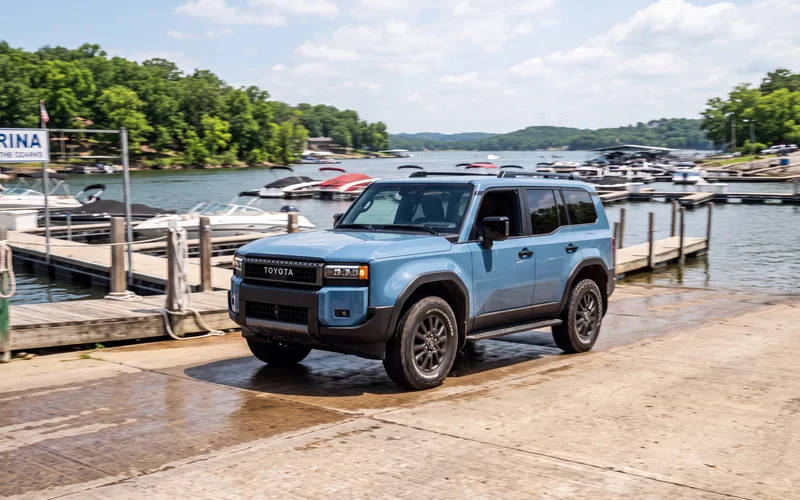 Toyota Land CruiserOff-Road SUVBetter at: Value and efficiency
The same platform and off-road hardware with a standard hybrid powertrain and a much lower price, giving up the GX's third row, nicer interior and bigger screen.
Compare 2.34C+
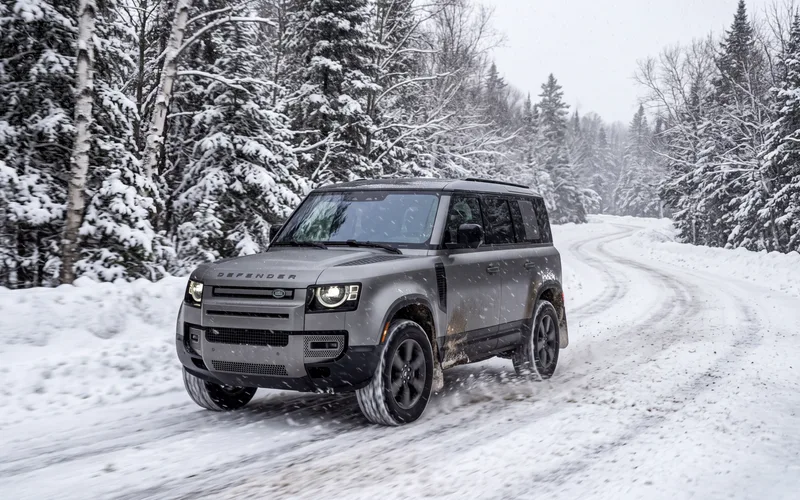 Land Rover DefenderLuxury Off-Road SUVBetter at: Ride comfort
The most direct luxury off-road rival, with a far better ride on air suspension and a plug-in option, at the cost of Lexus-grade reliability and resale.
Compare 2.88B-
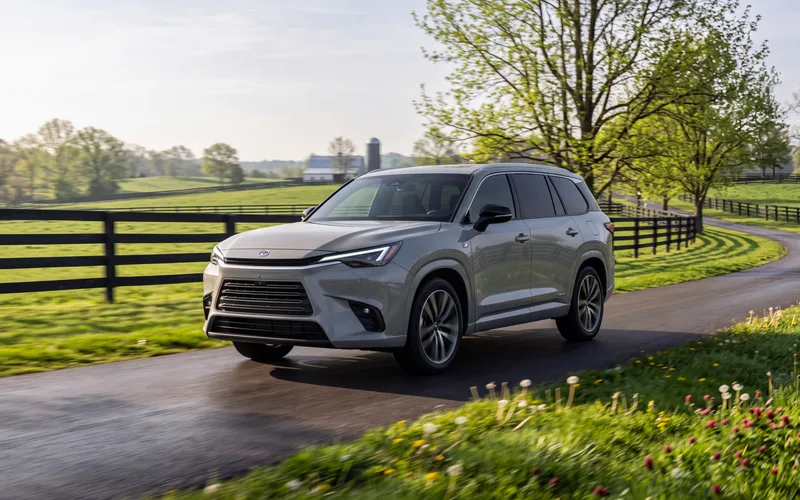 Lexus TXMid-Size Luxury SUVBetter at: Three-row space
If the third row and the fuel bill are what is bothering you, the TX is the same brand with adult-usable seating, hybrid and plug-in power and roughly double the MPG.
CompareHow it's evolved
10 scored model years · 2017–2026
Subject scores by year
Hover or tap a score to see what moved it versus the year before. A corner mark flags a big swing.
| Year | Performance | Efficiency | Safety | Space | Cost | Reliability | Tech | Use-case | Driving | Value |
|---|---|---|---|---|---|---|---|---|---|---|
| 2026 | 72 | 12 | 68 | 61 | 48 | 74 | 80 | 69 | 69 | 76 |
| 2025 | 73 | 12 | 68 | 63 | 50 | 67 | 80 | 65 | 67 | 77 |
| 2024 | 71 | 12 | 66 | 62 | 50 | 60 | 77 | 62 | 64 | 76 |
| 2023 | 57 | 10 | 47 | 57 | 56 | 89 | 47 | 60 | 57 | 61 |
| 2022 | 57 | 10 | 47 | 57 | 57 | 89 | 47 | 59 | 57 | 59 |
| 2021 | 56 | 10 | 47 | 55 | 58 | 90 | 34 | 54 | 59 | 59 |
| 2020 | 57 | 10 | 47 | 56 | 58 | 88 | 37 | 59 | 56 | 62 |
| 2019 | 57 | 10 | 35 | 56 | 57 | 86 | 35 | 56 | 57 | 58 |
| 2018 | 57 | 10 | 35 | 56 | 55 | 87 | 34 | 57 | 60 | 57 |
| 2017 | 57 | 10 | 32 | 55 | 61 | 85 | 33 | 55 | 59 | 59 |
Compare two years
Best fit & conditions
Higher scores mean a better fit for that use case. Learn more about use-case fit →
Subject profile
Detailed scoring by subject
1Performance & PowertrainOne of the GX's strongest categories.2.93B-
The 2025 GX is a carry-over year in the third-generation (J250) run that began with 2024, and every grade from Premium to Overtrail+ shares one V35A-FTS 3.4L twin-turbocharged V6 at 349 hp, so the volume trim and the range maximum are the same number. That lands mid-band for the SUV normalization range, below the V8 and electrified flagships of the luxury off-road set.
479 lb-ft on a broad low-rpm plateau sits near the top of the SUV torque band and is the defining trait of this powertrain — it is a truck engine tuned for pulling, which is what produces the 9,000-lb tow rating below. Unchanged for 2025.
Lexus publishes no 0–60 claim for the GX 550, so the value is the average of independent instrumented runs on the mechanically unchanged J250: Car and Driver recorded 6.2 s on a GX 550 Premium (the volume grade), Edmunds 6.7 s, and MotorTrend 6.9 s on the heavier Luxury+. Quick for a ~5,470 lb body-on-frame off-roader, but only mid-band against the wider SUV field.
The twin-turbo V6 is quiet and effortless once the 479 lb-ft plateau arrives at 2,000 rpm, but reviewers of the 2025 car consistently flag a beat of turbo lag from a standstill and an engine note that reads muted and synthetic next to the 4.6L V8 this engine replaced. That is the top of the 50–79 band rather than into the 80s.
The 10-speed Direct Shift automatic is unobtrusive in normal driving and well matched to an engine that makes its torque low down, but the closely spaced upper ratios invite some part-throttle gear hunting and kickdown can be unhurried. No transmission change for 2025.
A class-leading rating for a mid-size luxury SUV — the body-on-frame GA-F platform, full-time 4WD and a standard tow hitch receiver do the work. It exceeds the top of the SUV normalization band, so the item clamps at 100.
Full-time four-wheel drive is standard on every 2025 grade — not optional, not reserved for the top of the range — with a two-speed transfer case and low range, a Torsen limited-slip locking center differential splitting torque 50:50, and Multi-Terrain Select. Overtrail grades add an electronically controlled locking rear differential. That is the sophisticated end of the 80–100 band.
The Overtrail grade is a genuine off-road trim rather than an appearance package, and 2025 strengthens it: the one-inch suspension lift becomes standard equipment on Overtrail and Overtrail+, lifting minimum running ground clearance to 9.84 in against 8.66 in for Premium and Luxury. With 33-inch all-terrains, a locking rear differential, E-KDSS disconnecting stabilizer bars, Crawl Control and Multi-Terrain Monitor on a body-on-frame chassis, it sits just below the Defender and G-Class, whose adjustable air suspension buys more clearance and articulation.
The 2025 US GX range is gas-only: one 3.4L twin-turbo V6 in one state of tune across all six grades, with no hybrid, PHEV or EV option. The GX 550h hybrid exists in other markets but had no announced US timeline for the 2025 model year. That is squarely the 0–49 single-powertrain band, and rivals offer materially more choice — the Defender spans several engines including a PHEV, the G-Class adds an AMG V8 and a full EV.
2Efficiency & RangeThe GX's lowest-graded category.0.00F
EPA rates exactly one 2025 GX configuration — the 3.4L twin-turbo V6 with the 10-speed automatic and full-time 4WD — at 17 MPG combined, so the volume Premium grade and every other grade carry the same rating. Retrieved live from the EPA vehicle record rather than carried over. It sits at the bottom of the gas-SUV band.
A ~5,470 lb body-on-frame SUV with full-time 4WD and no electrification of any kind — the EPA record confirms no start-stop system and no cylinder deactivation — has nothing to recover stop-and-go losses, and the figure lands below the floor of the SUV city band.
The EPA highway rating is the GX's best cycle and Lexus quotes it in the model-year press release itself, but a boxy body-on-frame profile keeps it at the bottom of the SUV highway band. EPA publishes a single rating covering Overtrail as well as the road-biased grades.
Derived from the EPA combined rating and the GX's 21.1-gallon (80 L) fuel tank. The large tank partly offsets the poor economy, so range lands low-mid band rather than at the floor — but it is well short of the 400-plus miles hybrid three-row rivals manage on smaller tanks, and the premium-only fill makes each stop expensive.
This is EPA's own published annual cost at its standard assumptions, not a derivation: roughly 880 gallons a year, every one of them priced at the premium pump. It exceeds the worst end of the SUV cost band, so the item floors at 0 — EPA itself puts the GX $11,500 behind an average new vehicle over five years.
EPA lists the 2025 GX's fuel type as Premium Gasoline — the same V35A-FTS engine runs on regular in Toyota-badged applications, but the Lexus tune does not. With no hybrid, PHEV, E85 or home-charging path offered for 2025, there is nothing to soften the bill, which puts the GX in the 0–49 'premium required' band.
3SafetyMid-pack among this car's ten categories.2.58C+
NHTSA's SafetyRatings record for the 2025 GX 550 SUV AWD returns "Not Rated" for the overall score, for both frontal tests and for rollover; the only completed program is the side impact, where the GX earned 5 stars in every sub-test (barrier front and rear, pole). The value is therefore an estimate, anchored on the one real result plus a published rollover risk of 24.6% — that risk figure alone maps to a 3-star rollover band, and a 5-star side paired with a 3-star rollover and an untested frontal is how TNGA-F body-on-frame SUVs land on 4 stars overall.
The J250 GX is simply absent from the IIHS ratings program — it appears in no class summary and on no Top Safety Pick list, so there is not a single crashworthiness result to point to, let alone an award. That absence is confirmed rather than assumed here, which is why this sits mid-band rather than at the floor: the structure is a current-generation GA-F platform and NHTSA's side test came back a clean 5 stars, so there is real evidence the body performs. It is held below the segment median because the shared-platform Tacoma posted a sub-Good result on the updated moderate-overlap front test that grades rear-passenger protection, and a luxury SUV whose rivals collect TSP+ awards cannot be credited for a test it has never taken.
Every 2025 GX grade, base Premium included, ships Lexus Safety System+ 3.0 — Pre-Collision System with pedestrian detection, Full-Speed Range Dynamic Radar Cruise Control, Lane Departure Alert with Steering Assist, Lane Tracing Assist, Road Sign Assist, Proactive Driving Assist, automatic high beams and the Emergency Driving Stop System — with Blind Spot Monitor, Rear Cross-Traffic Alert and Intuitive Parking Assist with auto braking standard alongside it. All five features the top band names (AEB, ACC, LKA, BSM, RCTA) are fitted to the volume trim with nothing paywalled, which is a clear step past the Mercedes G-Class where adaptive cruise sits in an option package. It stops short of the 90s because the genuinely advanced layers — Front Cross-Traffic Alert, Lane Change Assist, the driver monitor camera and Traffic Jam Assist — are reserved for Luxury and above, and the Panoramic View Monitor is not on the base Premium.
The LSS+ 3.0 pre-collision system is a current-generation unit with pedestrian and daytime cyclist detection, motorcyclist recognition and intersection turning support, and Toyota/Lexus AEB has generally rated well in vehicle-to-vehicle front crash prevention. Held to the upper-middle band on two counts: IIHS has published no front crash prevention result for the GX at all, so the nighttime-pedestrian performance the top band demands is unverified, and a roughly 5,700 lb body-on-frame SUV has substantially more mass to arrest than the crossovers those good ratings came from.
Blind Spot Monitor with Rear Cross-Traffic Alert is standard on every grade rather than optioned up, and front and rear parking sensors with automatic braking add genuine low-speed intervention. Short of the top band on the counts the guidance names directly: the cross-traffic system warns without braking, Front Cross-Traffic Alert and Lane Change Assist are withheld until the Luxury grade, the Panoramic View Monitor that covers a tall off-roader's low-speed blind zones is not fitted to the base Premium, and there is no trailer-aware blind-spot extension despite a rating of up to 9,096 lbs — the exact use case where a longer detection zone earns its keep.
Lane Departure Alert with Steering Assist is standard and Lane Tracing Assist delivers real centering, but only while the radar cruise is engaged — a meaningful limitation against systems that center independently of ACC. The Lexus calibration is smoother and less nagging than the Toyota-badged version of the same hardware, yet it still wanders within the lane on faded or narrow markings, and the GX's tall body and deliberately light steering make each correction read as slower and vaguer than in a crossover.
Full-Speed Range Dynamic Radar Cruise Control is standard on every grade with stop-and-go operation and curve speed management, and paired with Lane Tracing Assist it functions as a competent hands-on highway assist that reviewers find restful on long hauls. It lands below the top band because gap-closing is conservative and resume from a full stop is slow next to the best systems at this price — the reference point for a $65k-plus luxury SUV is BMW and Genesis, not the mainstream Toyota line.
The GX does offer a legal hands-off system — Traffic Jam Assist takes over acceleration, braking and lane centering and permits hands off the wheel — but only below 25 mph, only on divided limited-access highways, and only while the driver monitor camera confirms eyes forward. That is a traffic-jam feature, not highway driving, and it is not on the volume trim: it arrives with the Luxury grade or as an extra-cost package. Scored well above the no-hands-free floor because the capability genuinely exists and is more than Mercedes offers on the G-Class, but well below the "limited coverage" band because a buyer cross-shopping a Super Cruise Escalade or a BlueCruise Expedition gets nothing comparable here at a comparable price.
LED headlamps with standard automatic high beams are fitted across the range and the luxury positioning means the volume grade gets real lighting hardware rather than a decontented base unit. Scored mid-band because there is no IIHS headlight rating for the J250 generation to confirm the beam pattern, Toyota's recent truck-based products have not consistently earned Good, and the adaptive high beam system that the GX's triple-beam lamps support elsewhere in the world was not certified for the US market on the 2025 car — US buyers get on/off auto high beams, not adaptive matrix.
The clearest safety strength in the car. The J250's deliberately boxy greenhouse, low beltline, large squared-off side glass, slim front pillars and flat hood whose corners the driver can actually place produce a commanding, easy-to-judge view out, and the single horizontal instrument panel keeps the forward sightline clean — the opposite of the wedge-shaped luxury crossovers it competes against. The Panoramic View Monitor with Multi-Terrain views covers the low-speed blind zones a tall off-roader creates. Kept out of the high 80s because that camera is not standard on the base Premium, and the thick D-pillar, high rear beltline and third-row headrests clutter the mirror on seven-seat configurations.
Tall square rear doors, a boxy cabin and a flat second-row bench make child seats physically easy to load, and on the seven-seat configuration a rear-facing seat pushing the bench back does not cost the family its cargo hold. Held below the top band because the lower anchors sit recessed in the seat bight and take digging, the second row is not wide enough to take three seats abreast without a fight, and the high floor of a body-on-frame off-roader — raised a further inch on Overtrail grades for 2025 — makes lifting a child up into the vehicle harder than in a crossover.
4Space & ComfortOne of the GX's weakest categories.2.23C
The volume Premium+ grade seats seven — unlike the two-row-only US Land Cruiser it shares the J250 platform with, the GX keeps a third row on all four on-road grades. The off-road Overtrail pair delete it for five-passenger seating, which is why the registry carries the GX at 5 seats.
The power tilt-and-slide moonroof is standard on Premium+ and every on-road grade, so 39.4 in is the figure a buyer actually gets — mid-band, and a full 2.3 in below the moonroof-delete Overtrail's 41.7 in. The tall, upright greenhouse makes the cabin feel airier than the number suggests.
The weakest passenger-space spec on the vehicle and a genuine surprise at this price: front legroom sits near the bottom of the SUV band, a consequence of the shared TNGA-F front structure and a high, truck-derived seating position that trades stretch-out room for a command view. It trails its own platform mate, the Land Cruiser (42.9 in), by nearly two inches.
The square roofline and a second row mounted high on its sliding rails give the GX the most published second-row headroom of any SUV in this dataset — it tops the 36–40 in band outright. Worth noting the figure is Lexus's 'effective head room' measure, the same convention used for the platform-mate Land Cruiser's 39.3 in, so the comparison within this catalog is apples-to-apples even though 43.2 in reads high against the front row's 39.4 in.
Mid-band, and level with the Land Cruiser on the same 112.2-in wheelbase — the GX's second row rides on rails so it slides back for adults or forward to feed the third row. The catch is that 36.7 in and a usable third row are mutually exclusive: with passengers in row three the bench moves forward and rear legroom drops well below this figure.
A real third row rather than none at all — 31.9 in of legroom, 35.5 in of headroom, power-folding on the upper on-road grades, with its own USB-C ports — but strictly a kids' bench: the cushion is mounted low to the floor, forcing a knees-up posture, and access requires tumbling the second row. It is not offered on the Overtrail grades at all. Bottom of the kid-friendly band: well behind genuinely adult-usable third rows, clearly ahead of the Land Cruiser, Bronco and Wrangler, which have none.
Below mid-band and modest for a 197-inch SUV — the stowed third-row mechanism eats into the floor, and behind an upright third row there is only 10.3 cu ft, barely a grocery run. The five-seat Overtrail, with no third-row hardware under the floor, clears it by more than five cubic feet.
Mid-band rather than the standout the boxy body promises: folding everything in the seven-seat GX yields less than the Land Cruiser's 82.1 cu ft or the 4Runner's 90.2, because the third-row seat structure stays in the floor. Buyers who want the boxy shape's full payoff have to take the five-seat Overtrail and its 90.5 cu ft.
Competitive everyday storage with one genuinely useful trick and no headline innovation: a deep center console, bottle-capable door bins, wireless charging and — standard on every grade — a 120V/400-watt AC household outlet, plus a refrigerated Cool Box on Luxury+. The power rear door with its separately opening pop-out window is standard across the range and is the one clever touch, handy in tight parking; it is a legacy GX feature rather than a new idea. No giga-console, frunk or fold-flat tailgate table to reach the top band.
Heated and ventilated front seats are standard on every grade — including the base Premium — and the front chairs draw consistent long-haul praise, with massaging available on the upper grades; heated second-row outboard seats are standard on most of the range. Held just below the very top because the volume Premium+ gets an 8-way rather than the 10-way driver's seat of the Luxury grades, and the third row is genuinely uncomfortable for anyone above kid size.
Well up the mid band and the best-riding vehicle on the J250 platform — Lexus tuning, the available Adaptive Variable Suspension and, on Overtrail, E-KDSS keep the body far better controlled than the Land Cruiser or 4Runner. It stops short of the top band because it is still body-on-frame with a four-link coil rear axle: reviewers consistently note a 'truckish' edge over broken pavement, and the Overtrail's 33-inch all-terrains add patter.
Better than its shape has any right to be: reviewers repeatedly single out how hushed the GX is at highway speed, with road noise well suppressed even on the Overtrail's all-terrain tires. It falls short of library-quiet only because a 75.6-inch-tall brick with a 0.399 drag coefficient generates audible wind noise off the large door mirrors.
Comfortably in the top band, and unusually so at the bottom of the range: heated AND ventilated front seats, a power tilt-and-telescoping column and the Lexus Memory System are standard on every grade including base Premium, with a heated leather steering wheel standard from Premium+ up (a Cold Area Package option on Premium) and heated second-row outboard seats on most grades. Remote climate start comes through the Lexus app on a three-year Remote Connect trial. Marked down only because the wheel heater and a second-row sunshade are grade-walk items, and remote start reverts to a paid subscription after three years.
5Cost of OwnershipOne of the GX's weakest categories.1.32D
The cheapest way into a 2025 GX is the Premium grade at $65,585 delivered, which sits above the $65,000 ceiling of the SUV normalization band, so this reference item bottoms out. Lexus raised Premium by roughly $1,035 over the 2024 launch price and added standard content to justify it.
Premium+ is the mainstream seller — it adds the content most buyers want (larger wheels, upgraded interior trim, driver-assist and convenience additions) without stepping to the $78,000 Luxury grades, and at $70,050 delivered it is well past the $68,000 top of the SUV band. The off-road Overtrail at $73,230 is the other high-demand grade and would score the same zero.
The two published industry estimates disagree by a factor of nearly four, so this is a reasoned midpoint rather than a single sourced figure: CarEdge's $2,751 leans on the GX's low repair frequency and excludes warranty-covered work over the first four years, while KBB's $10,396 prices scheduled service at Lexus dealer labor rates. A twin-turbo V6 on premium fuel and luxury-brand shop rates sit against a Toyota body-on-frame drivetrain and a well-above-average repair record, which lands the GX comfortably better than the luxury-SUV norm but short of mainstream cheap.
Resale is the GX's strongest ownership argument and the reason a $70,000 sticker does not translate into a punishing cost per year — constrained supply, body-on-frame durability and Lexus badge equity keep the J250 near the top of the luxury-SUV residual tables. Set at 65%, between the forward-looking projections from KBB and CarEdge (both ~67%) and iSeeCars' more conservative 58.4%, near the top of the 40–70% SUV band.
Standard Lexus coverage, unchanged for 2025 — a year better than the mainstream 3-year norm and typical for a luxury brand, landing at the midpoint of the 3–5 year band.
Six years / 70,000 miles sits near the bottom of the 5–10 year band and is the weakest number in this category — Genesis, Hyundai and Kia all cover 10 years / 100,000 miles, and the GX's twin-turbo V6 is exactly the kind of hardware a buyer would want covered longer.
The included-maintenance window is thin — LexusCare covers only the 6-month/5,000-mile and 12-month/10,000-mile services, so effectively the first year — but what surrounds it is genuinely useful: four years of unlimited-mileage roadside assistance, Lexus Encore owner benefits including complimentary loaners, and multi-year connected-service trials. Mid-band: real perks wrapped around a short maintenance plan, behind rivals offering three to five years of scheduled service.
$70,050 volume-trim price minus its estimated resale value after 5 years (65% retained, or about $45,533) leaves about $24,518 in depreciation. Add the projected $6,200 in 5-year maintenance and repairs, and owning this vehicle for 5 years costs about $30,718 in total.
6Reliability & QualityMid-pack among this car's ten categories.2.50C+
The badge and the model-specific data point in opposite directions, and the model-specific data is the one with real owner reports behind it: Consumer Reports rates the 2025 GX below average, the second straight below-average year for the J250 generation, making the GX the lone Lexus that is not above average in CR's current book. J.D. Power offers no counterweight at the model level yet — its 2025 VDS surveys 2022 model-year cars, so the redesigned GX simply is not in it, and the favorable third-party 'predictions' circulating for this truck are extrapolations from the Lexus brand score and the old GX 460, not measurements of this one.
Lexus is the strongest dependability brand in the US by the two largest syndicated studies — first in J.D. Power's VDS for a third consecutive year at 140 PP100 against a 202 PP100 industry average, and first overall in the 2025 IQS. CR's slip from third to sixth among brands is the one soft spot and keeps this off a perfect score, but sixth of roughly thirty brands is still firmly top-tier and the multi-year pattern is consistent.
The 2025 model year itself carries only two recalls and neither is mechanical — a Panoramic View Monitor software fault and a mislabeled load-capacity sticker, both fixable in a single visit. What holds the score to mid-band is the generation around it: the 2024 GX took four campaigns including the V35A main-bearing recall and an instrument-cluster fault, and unresolved owner-level patterns on 2024–2025 trucks (transmission shift calibration handled by reflash, highway-speed hood flutter, infotainment freezes) read as an early-build generation still being sorted rather than a settled one.
The 3.4L V35A-FTS twin-turbo V6 is the weakest link in this truck's case. It replaced the naturally aspirated V8s that built the GX's high-mileage reputation, it has no comparable track record of its own, and roughly 270,000 of them across Tundra, LX and the 2024 GX have been recalled for machining debris that starves the main bearings and can seize the engine — with reports that some replacement units have also failed. The 2025 GX falls outside the affected production window and is not in that campaign, which is why this is not scored in the bottom band, but an engine family under an active bearing-failure cloud cannot be called proven.
Reviewers consistently describe the J250 cabin as ruggedly upscale and honestly built — soft-touch surfaces where hands land, NuLuxe that does not read as cheap on the Premium/Premium+ volume grades, semi-aniline leather further up — but just as consistently note it does not match the price. The absence of quilting, an Alcantara headliner or a leather-wrapped dash puts it a step behind German and Genesis rivals on material richness, which is what this item measures.
Assembly is a genuine strength — Lexus led the 2025 Initial Quality Study outright, and reviewers call the GX solidly screwed together. The deduction is for documented early-build items on this specific truck rather than for the brand: owners report hood flutter at highway speed (some resolved by dealer adjustment, which points at panel alignment tolerance) plus scattered infotainment freezes, which is 'generally solid with scattered complaints' rather than a clean sheet.
Lexus finishes at or near the top of the industry for service satisfaction every year and did again in 2025, ranking second among premium brands overall and second in premium SUV. The roughly 245-store US network is thinner than a mass-market brand's by count, which is the only thing keeping this out of the 90s, but it is nationally distributed and backed by the best-regarded service experience in the luxury field after Porsche.
The GX sits on the GA-F platform and shares its V35A engine and 10-speed with the Land Cruiser, Tundra and LX, so hard parts are high-volume Toyota components rather than low-production luxury pieces, and the Prado-derived lineage supports an unusually deep off-road aftermarket. Costs land near normal rather than cheap: Lexus repairs run below the all-vehicle average and far below the luxury average, but the GX's body-on-frame hardware and turbo plumbing push it above a typical Lexus car, and routine work still runs at luxury-dealer labor rates.
7Technology & InfotainmentThe GX's best-graded category.3.42B+
The 14-inch panel is standard equipment on all six grades rather than an upper-trim upgrade, which is the important part: base Premium buyers get the same display as Luxury+ buyers. It sits high in the 7–15.5 in SUV band.
Lexus Interface is the system that ended the brand's long run of touchpad misery, and it is now a genuine strength: a widget-based home screen that keeps most functions within two taps, quick response, and — crucially for a vehicle used off-road — real physical hardware retained alongside it, including climate knobs, a volume knob and prewired auxiliary switches on the Overtrail grades. Short of the very top band only because deeper vehicle settings are buried and several headline functions sit behind Drive Connect and Remote Connect subscriptions once the trials lapse.
Both protocols, both wireless, standard on all six grades with no option box and no trim walk — the top-band case exactly. Held a notch below a perfect score only because the GX offers no wired fallback port arrangement that some owners prefer for stable long-drive connections.
Drive Connect bundles cloud-based navigation, the natural-language 'Hey Lexus' Intelligent Assistant and Destination Assist, and the cloud nav genuinely is better than the old embedded maps — live traffic, over-the-air map data, no update discs. The reason this is not a top-band score is structural rather than technical: all of it is a three-year trial on a subscription, so a four-year-old GX has no native navigation unless the owner keeps paying.
A 10-speaker Lexus Premium system is standard on five of six grades — a real premium-branded base rather than a token four-speaker setup — and the optional Mark Levinson 21-speaker surround system is one of the better factory audio installations at any price. Kept out of the top of the band because Mark Levinson is an extra-cost option on the volume grades and standard on only one.
A 12.3-inch multi-information display is standard on every grade including base Premium, with crisp graphics and off-road-specific pages (inclinometer, Multi-Terrain Monitor feeds) that make it more than a rev-counter substitute. It lands just below the ceiling because the layout is less reconfigurable than the best German full-digital clusters and the outer bezel graphics remain fixed.
The GX does receive over-the-air updates, but the scope is infotainment and map data rather than whole-vehicle software — Lexus Interface pulls cloud navigation and system updates over its embedded AT&T 5G connection, and there is no history of OTA drops adding powertrain, chassis or driver-assist features the way Tesla, Rivian or Ford's BlueCruise fleet do. Squarely the middle band: real OTA, limited reach.
The Lexus app covers the core set — remote start and climate, lock/unlock, vehicle locate, guest driver alerts — and Digital Key turns a phone into the key with a card key as backup and sharing to family. Two things hold it to the middle band: Remote Connect is a three-year trial that becomes a paid subscription, and Digital Key is a factory option on four grades and requires that subscription to work at all, so it is neither free nor universally fitted.
Near the top of the band and one of the GX's quiet strengths: six USB-C ports on the three-row grades (four on the two-row Overtrail pair), wireless phone charging standard on the volume Premium+ and up, and — standard on every single grade — a 120V/400-watt household AC outlet, which is what separates this from rivals that reserve onboard power for a top trim or omit it entirely.
SmartAccess proximity entry with push-button start is standard, the power rear door is standard on every grade with a hands-free kick sensor on four of them, and phone-as-key is offered via Digital Key. Short of the ceiling because Digital Key is an extra-cost option tied to a subscription rather than standard equipment, and the kick sensor may have to be disabled when a tow hitch accessory sits near the rear bumper.
Top-band: the Panoramic View Monitor surround camera is standard on five of six grades — including the volume Premium+ — and the Overtrail pair get a Multi-Terrain Monitor version that shows what is under the front wheels on a trail, a genuinely useful extension rather than a marketing feature. Intuitive Parking Assist with Auto Braking is standard on every grade, with Rear Pedestrian Detection added on four. Only base Premium goes without the 360 view.
A head-up display is offered on all six grades rather than being locked behind the top of the range — a buyer of the base Premium can tick the box. It is an extra-cost option everywhere, though, standard on none, which keeps it in the middle band rather than the 80-plus 'available on volume trims' ceiling that assumes wide fitment.
8Use-Case FitMid-pack among this car's ten categories.2.42C+
Seven seats, wide square door openings, a second row that slides on rails to trade legroom for third-row access, and power-folding row three on the upper grades make the daily school run workable. Two real compromises keep it out of the upper band: a tall body-on-frame step-in height that small children cannot manage unaided even with the standard running boards, and only 10.3 cu ft behind a raised third row — not enough for a stroller plus a grocery run.
Lexus Safety System+ 3.0 and Blind Spot Monitor with Rear Cross-Traffic Alert are standard on every grade including base Premium, so families are not paying up for the safety kit — the strongest part of the case. What holds it below the top band is the credentials rather than the equipment: NHTSA has published only a 5-star side-crash result with frontal and rollover untested, so there is no overall star rating, and the GX carries no IIHS Top Safety Pick award.
For four people this is an excellent long-haul family car — heated and ventilated front seats standard on every grade, heated second-row outboard seats on most, a second-row sunshade, six USB-C ports and a 120V household outlet for devices. It drops to the middle band the moment rows three is occupied: 31.9 in of third-row legroom on a floor-mounted cushion is a short-trip proposition, and with seven aboard the 10.3 cu ft behind them will not hold a family's luggage.
In traffic the GX is genuinely relaxing: 479 lb-ft arriving at 2,000 rpm means it never needs to be worked, the 10-speed shifts imperceptibly at low speed, the cabin is quiet, and the upright glasshouse gives excellent forward sightlines. Held to the middle band by the things that make it a truck — a noticeable beat of turbo lag from rest, a firm-edged ride over broken city pavement, and 5,600+ lb of mass that has to be managed in stop-and-go.
Among the most expensive vehicles in this catalog to commute in. 17 MPG combined is bad enough; requiring premium fuel to reach it pushes the EPA annual bill to $4,550 at 15,000 miles, and there is no hybrid option in the 2025 lineup to escape into. Nothing about consumables offsets it — 20-inch or 33-inch tires and Lexus service pricing are both above segment norm.
The footprint is the problem: 197.1 in long, 78.0 in wide, 75.6 in tall, and a 39.4 ft curb-to-curb turning circle that makes three-point turns routine in city garages. What rescues it from the bottom band is the camera and visibility package — the Panoramic View Monitor is standard on five of six grades, Intuitive Parking Assist with Auto Braking on all six, and the squared-off hood with visible corners makes the GX far easier to place than its dimensions suggest.
A tow rating of 9,041–9,063 lb on the volume Premium+ is serious capability — enough for a two-horse trailer or a mid-size boat — and a tow hitch is standard on every grade rather than an option. It is not a work tool in the upper-band sense, though: there is no bed, payload is limited by a 7,030 lb GVWR against 5,600 lb of curb weight, and the seven-seat grades give up more than 1,200 lb of tow rating to the Luxury trims' extra equipment.
The bones are as proven as anything in the segment — a body-on-frame GA-F platform shared with the Land Cruiser Prado, full-time 4WD with a two-speed transfer case and a standard Torsen locking centre differential, backed by Toyota's fleet and overlanding reputation. It is not a top-band answer because the V35A-FTS twin-turbo V6 has a shorter service record than the 4.6L V8 it replaced, and the NuLuxe and semi-aniline interiors are the opposite of wear-friendly work surfaces.
Better provisioned than most luxury SUVs — a 120V/400-watt AC outlet and a tow hitch are standard on every grade, roof rails come with the moonroof, and the Overtrail grades add prewired auxiliary switches and onboard air compressors that are genuinely upfit-oriented. Still middle-band: there is no bed, no washable interior option, and the accessory ecosystem is aftermarket overlanding rather than the commercial upfit networks a work buyer would expect.
A strong mile-eater on every axis except one. The cabin is remarkably quiet for a box, the front seats are standard heated and ventilated with massage available, Lexus Safety System+ 3.0 brings adaptive cruise and lane centering on every grade, and Traffic Jam Assist is available. The limiting factor is range: a 21.1-gallon tank at 17 MPG combined is roughly 359 miles between fills, and every one of them is a premium-fuel fill.
Top band without qualification, and the clearest thing the GX is for. Full-time 4WD with a two-speed transfer case and a Torsen locking centre differential is standard on all six grades — not a package — with 8.66 in of running ground clearance, a 26-degree approach angle and 27.56 in of wading depth. The Overtrail grades, newly lifted one inch for 2025, add a locking rear differential, E-KDSS disconnecting anti-roll bars, Crawl Control, Multi-Terrain Select, 33-inch all-terrains and onboard air, taking clearance to 9.84 in. The standard 120V outlet and roof rails cover the camping side.
Flexible where it counts: roof rails and a tow hitch are standard, the boxy body means near-vertical walls rather than a tapering roofline, and the power rear door's separately opening pop-out glass lets long items load in tight spots. The ceiling is the volume itself — 76.9 cu ft maximum on the seven-seat grades is less than the Land Cruiser's 82.1 or the 4Runner's 90.2, because the folded third row stays in the floor; only the five-seat Overtrail reaches 90.5.
9Driving ExperienceMid-pack among this car's ten categories.2.55C+
A 5,600–5,700 lb body-on-frame SUV with a four-link coil solid rear axle, and it handles like one: reviewers consistently report that the GX 'rolls about in hard turns at speed', and grip is modest — more so on the Overtrail's 33-inch all-terrains. Adaptive Variable Suspension on the upper grades and E-KDSS on Overtrail keep the body motions honest enough that several testers called the composure better than expected for the size, but this is secure and predictable rather than agile. Mid-band, below the unibody luxury mid-sizers it gets cross-shopped against.
Reviewers split on this, which is itself the answer: several praise the electric rack as 'perfectly weighted' and easy to place, while others find the effort 'frustrated by numbness and low grip that defy crisp lane changes.' It is accurate and untiring, with a quick-enough 3.2 turns lock-to-lock, but there is essentially no information about what the front tires are doing. Precise enough but numb — the middle of the band.
Better hardware than most of its body-on-frame peers: 13.94-inch front discs clamped by four-piston fixed calipers rather than the sliding calipers typical of the class, which shows up as consistent pedal travel and good fade resistance on repeated stops. Absolute distances are still long because there is 5,600+ lb to arrest, and the Overtrail's all-terrain rubber gives up meaningful further ground. Upper middle band.
Well calibrated once moving: 479 lb-ft available from 2,000 rpm makes the GX feel effortless in every normal situation, and the 10-speed's shifts are smooth and largely imperceptible. It sits at the top of the middle band rather than in the 80s because there is a real beat of turbo lag off the line — the manufacturer's own 6.5-second 0–60 claim and instrumented results spanning 6.2–6.9 s reflect a powertrain that needs a moment to gather itself — and the 10-speed can hesitate when asked for a sudden downshift.
Lexus isolates the V6 well — at a cruise the GX is genuinely hushed and there is no driveline shudder or shake through the controls, which is the main refinement gap it closes on the mechanically related Land Cruiser. It loses the top band only on character: the twin-turbo note under load is muted and synthetic, and reviewers still miss the 4.6L V8 it replaced.
Wide, and it is felt in parking structures — 39.4 ft sits in the bottom quarter of the 34–42 ft SUV band, a consequence of a 112.2-in wheelbase carrying 197 in of body on a solid-axle chassis. It is line-ball with the shorter Land Cruiser, which publishes 40 ft on the same wheelbase.
One of the GX's genuine strengths. A commanding upright position, a squared-off hood with visible corners and deep glass give it some of the best outward visibility in any luxury SUV, and the J250 cabin keeps real hardware — physical climate and volume controls beside the 14-inch screen, with the loathed Lexus touchpad gone. A power tilt-and-telescoping column and the Lexus Memory System for seat, mirrors and wheel are standard on every grade. Marked down only for a tall step-in height that makes ingress a climb, especially on the lifted Overtrail.
On pavement the GX is an effortless, relaxing appliance rather than an entertaining one — heavy, numb through the wheel and uninterested in being hurried. Its real character shows up off-road, where low range, a locking rear differential, E-KDSS and the Overtrail package give it genuine ability and a committed enthusiast following. That lifts it clear of the merely forgettable without reaching the fun band.
10Value & Market PositionOne of the GX's strongest categories.3.26B+
The 2025 GX gives away far more at the entry grade than the segment norm: the 14-inch Lexus Interface touchscreen with cloud navigation is standard on every grade — not a step-up option — alongside Lexus Safety System+ 3.0, triple-beam LED headlamps, wireless CarPlay and Android Auto, a 10-speaker audio system, heated and ventilated 8-way power front seats, a power liftgate and third-row seating on Premium through Luxury+. The mechanical baseline is identical across the range too: the same 349 hp twin-turbo V6, full-time four-wheel drive with locking center differential and low range. For 2025 Lexus added the Lexus Memory System and a power tilt-and-telescopic steering column as standard on all grades. What holds it below the top band is cabin material and convenience content at Premium — NuLuxe synthetic upholstery rather than leather, no head-up display, no surround-view camera, no Mark Levinson audio until the Luxury grades.
Within the luxury off-road segment the GX is the value argument. About $70,000 as typically equipped buys body-on-frame construction, a 9,096 lb tow rating that leads the mid-size luxury field, genuine locking-differential off-road hardware in the Overtrail grades, up to seven seats, and the best five-year resale in the class — which is what converts a high sticker into a defensible cost per year. A Mercedes G-Class asks roughly double for comparable capability. What keeps it out of the 80s is the money asked over the mechanically related Land Cruiser, only 349 hp for the price, and 17 MPG combined on premium fuel that costs an EPA-estimated $4,550/yr.
Six grades spread across roughly $65,600 to $82,000, and unusually for a single-body lineup they are genuinely different vehicles rather than equipment tiers — the Overtrail grades bring 33-inch all-terrain tires, 18-inch wheels, a locking rear differential, E-KDSS disconnecting stabilizer bars and (new for 2025) a one-inch suspension lift, while the Luxury grades go the other way toward semi-aniline leather and on-road refinement; seating steps between five (Overtrail, Overtrail+) and seven. What holds it out of the top band is the absence of choice beneath the trim ladder: one powertrain in one state of tune, one body, one drivetrain, and no hybrid option in 2025 — Lexus had announced a hybrid to come but it is not part of the 2025 US lineup.
The J250 redesign turned the GX from a niche holdover into one of Lexus's clearest commercial successes. Calendar 2024 — the first, allocation-constrained year of the new car, with several very thin early months — still produced 30,914 US sales, the nameplate's best since 2005, and 2025 followed with a model-record 37,180 units, up 20.3%, part of a record year in which GX was one of four Lexus nameplates posting best-ever results. Not a volume leader in absolute terms next to the RX or NX, but for a $70,000-plus body-on-frame SUV the trajectory and the demand-versus-supply position are about as strong as the segment gets.
Lexus carries durable brand equity built on dependability and service satisfaction rather than performance glamour, and with the J250 the GX became a nameplate people actively want rather than merely respect — the boxy styling, the Overtrail's credibility with the overlanding audience and class-leading residuals all feed a real image halo. Held below the Land Cruiser and G-Class, whose badges carry heritage the GX name does not yet match.
Scored on buyer benefit, and there is very little of it. Lexus put no factory cash or rebate on the 2025 GX in most markets — the only broadly available support is a $1,500 lease loyalty program that requires qualification, plus seasonal lease specials. Meanwhile the car was still transacting at or above sticker in its second year, with dealer addendums common on the Overtrail grades and multi-month waits for allocation. A buyer should expect to pay MSRP and negotiate very little.
2025 is only the second model year of the third-generation J250, launched for 2024 on Toyota's current GA-F body-on-frame architecture with an all-new twin-turbo V6, current Lexus Interface multimedia and the latest safety suite. There is no redesign risk for a buyer and no dated hardware anywhere in the package; 2025 even added standard content rather than coasting — memory settings and a power steering column across the range, plus the Overtrail suspension lift.
The J250 was one of the best-received SUV launches of its cycle and it converted that into real hardware: outright best-SUV honors from The Drive (including their People's Choice) and Motor1 for 2024, SUV of Texas from the Texas Auto Writers Association in January 2025 — the overall award, not just the midsize class — a place among KBB's favorite new vehicles of 2024, a 2025 MotorTrend SUV of the Year finalist berth, and Edmunds' top ranking among luxury midsize three-row SUVs. Reviewers consistently praise the styling, the low-rpm shove of the 479 lb-ft V6, the Overtrail's genuine trail hardware and the cabin's step over its Toyota platform-mates. Held just short of the top of the band by the recurring criticisms — mid-teens fuel economy, a cramped third row, a ride that stays trucky over sharp inputs — and by the fact that it was not a NACTOY finalist (the 2024 Utility finalists were the Genesis Electrified GV70, Kia EV9 and Volvo EX30).