
The verdict
A capable full-size luxury suv, strong on performance and held back by ownership.
The 2026 Lexus LX is a Land Cruiser 300 in a tuxedo: a genuinely go-anywhere, tow-anything body-on-frame SUV built to Lexus flagship standards, wrapped in one of the quietest cabins on sale. It tows 8,000 lbs, holds roughly 62% of its value after five years — best in its class — and will still be running long after the German competition has been traded in. The catch is that it asks about $110,000 to start and gives back less space than a $90,000 Escalade: 35.6 inches of second-row legroom, a token third row, just 64 cu ft of maximum cargo, and 19 MPG combined on required premium fuel. Buy it for durability, quiet and capability; look elsewhere if you need room or care what it costs to run.
Jump to scoresStrengths
- Real off-road hardware and an 8,000-lb tow rating
- Build quality and resale value that no rival matches
- One of the quietest, most comfortable long-haul cabins on sale
What holds it back
- Fuel economy is close to the worst in the entire SUV field
- Six-figure pricing with a narrow value case
- Cargo space is the worst in the class by a wide margin
Top alternatives
Cars shoppers cross-shop with the Lexus LX 2.80B-
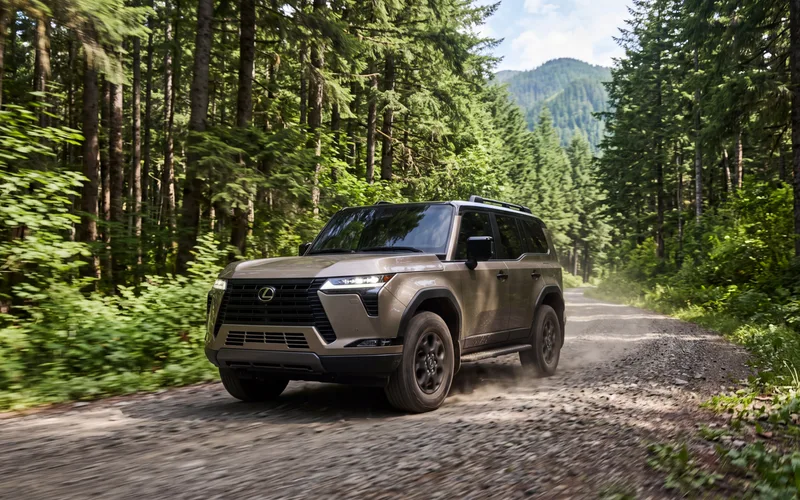 Lexus GXLuxury Off-Road SUVBetter at: Value
Nearly the same capability, service experience and resale story for roughly half the price, with far more cargo room and a bigger screen.
Compare 3.16B
3.16B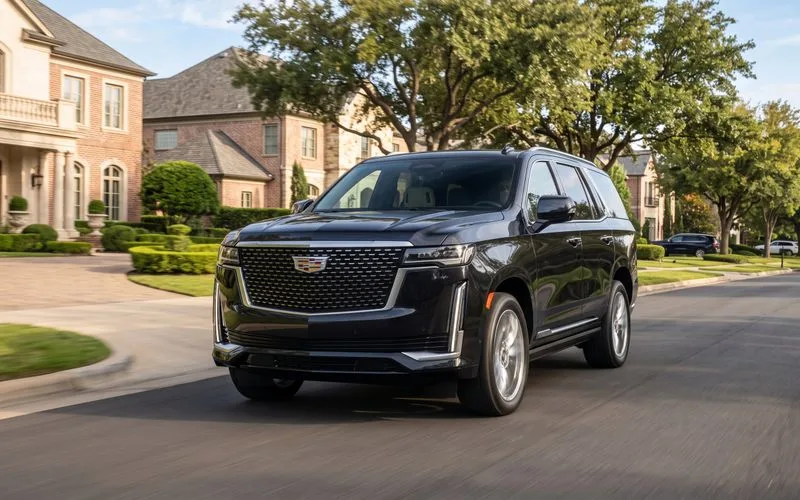 Cadillac EscaladeFull-Size Luxury SUVBetter at: Space and tech
About $20,000 less to start with dramatically more passenger and cargo space plus Super Cruise hands-free highway driving.
Compare 3.00B
3.00B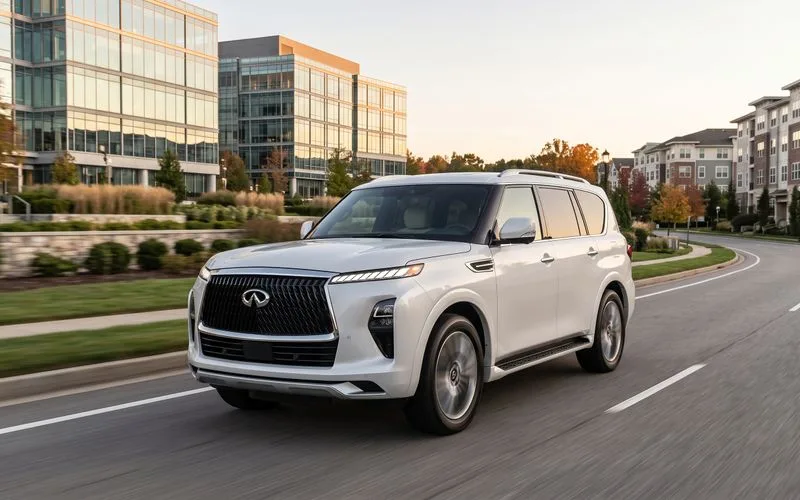 Infiniti QX80Full-Size Luxury SUVBetter at: Family space
A genuinely usable three-row family SUV at a lower price, with 41 inches of second-row legroom and 101 cu ft of cargo space.
CompareHow it's evolved
10 scored model years · 2017–2026
Subject scores by year
Hover or tap a score to see what moved it versus the year before. A corner mark flags a big swing.
| Year | Performance | Efficiency | Safety | Space | Cost | Reliability | Tech | Use-case | Driving | Value |
|---|---|---|---|---|---|---|---|---|---|---|
| 2026 | 77 | 23 | 67 | 59 | 15 | 73 | 77 | 63 | 68 | 64 |
| 2025 | 78 | 20 | 67 | 60 | 15 | 73 | 77 | 62 | 68 | 65 |
| 2024 | 76 | 21 | 66 | 59 | 24 | 68 | 74 | 62 | 64 | 64 |
| 2023 | 75 | 21 | 67 | 58 | 35 | 68 | 75 | 59 | 64 | 64 |
| 2022 | 75 | 21 | 67 | 57 | 27 | 66 | 74 | 58 | 64 | 64 |
| 2021 | 65 | 8 | 58 | 61 | 35 | 89 | 42 | 58 | 56 | 49 |
| 2020 | 65 | 8 | 58 | 55 | 30 | 89 | 40 | 59 | 58 | 49 |
| 2019 | 65 | 10 | 58 | 54 | 32 | 86 | 37 | 59 | 58 | 50 |
| 2018 | 65 | 10 | 58 | 53 | 29 | 86 | 36 | 58 | 58 | 50 |
| 2017 | 65 | 10 | 58 | 62 | 29 | 86 | 39 | 59 | 58 | 50 |
Compare two years
Best fit & conditions
Higher scores mean a better fit for that use case. Learn more about use-case fit →
Subject profile
Academic Probation · NHTSA safety recalls
Feb 18, 2026Power train: automatic transmissionIn the event of transmission solenoid failure, the communication may fail between the transmission electronic control unit (ECU) and the engine ECU, resulting in transmission damage.
Defect
Toyota Motor Engineering & Manufacturing (Toyota) is recalling certain 2025-2026 Lexus LX600 vehicles. In the event of transmission solenoid failure, the communication may fail between the transmission electronic control unit (ECU) and the engine ECU, resulting in transmission damage.
Risk
A damaged transmission can cause a loss of drive power, increasing the risk of a crash. In addition, a damaged transmission can leak transmission fluid, increasing the risk of a fire.
Remedy
Dealers will update the transmission ECU software, free of charge. Owner notification letters were mailed April 13, 2026. Owners may contact Toyota's customer service at 1-800-331-4331. Toyota's number for this recall is 26LA01.
NHTSA campaign 26V094000 ↗Manufacturer no. 26LA014,374 vehicles potentially affected (all models in the campaign)Owners notified Apr 9, 2026Filed by Toyota Motor Engineering & ManufacturingFiled as LX
8 recalls on other model years of the LX (2017–2019, 2022–2025)
Mar 24, 2026Air bags: sensor: occupant classification: front passenger · SeatsThe front passenger seat may have insufficient clearance between the seat frame and the stopper that can cause the Occupant Classification System (OCS) sensor to incorrectly detect the occupant. As such, these vehicles fail to comply with the requirements of Federal Motor Vehicle Safety Standard number 208, "Occupant Crash Protection."
Defect
Toyota Motor Engineering & Manufacturing (Toyota) is recalling certain 2022-2024 Lexus LX vehicles. The front passenger seat may have insufficient clearance between the seat frame and the stopper that can cause the Occupant Classification System (OCS) sensor to incorrectly detect the occupant. As such, these vehicles fail to comply with the requirements of Federal Motor Vehicle Safety Standard number 208, "Occupant Crash Protection."
Risk
Incorrect detection of an occupant may result in improper air bag deployment during a crash, increasing the risk of injury.
Remedy
Dealers will inspect and replace the front passenger seat frame assembly, as necessary, free of charge. Interim letters notifying owners of the safety risk were mailed April 27, 2026. Additional letters will be sent once the final remedy is available, anticipated between September 17 - October 1, 2026. Owners may contact Toyota's customer service at 1-800-331-4331. Toyota's numbers for this recall are 26LB03 and 26LA03.
NHTSA campaign 26V180000 ↗Manufacturer no. 26LB03 / 26LA0315,264 vehicles potentially affected (all models in the campaign)Filed by Toyota Motor Engineering & ManufacturingFiled as LXNov 6, 2025Engine and engine cooling: engine: hard parts internal/mechanicalDebris from the manufacturing process may contaminate the engine and cause the main bearings to fail, which can result in an engine stall and loss of drive power.
Defect
Toyota Motor Engineering & Manufacturing (Toyota) is recalling certain 2022-2024 Toyota Tundra, Lexus LX, and 2024 Lexus GX vehicles equipped with a V35A engine. Debris from the manufacturing process may contaminate the engine and cause the main bearings to fail, which can result in an engine stall and loss of drive power.
Risk
A loss of drive power increases the risk of a crash.
Remedy
Dealers will perform an inspection on the #1 main bearing using vehicle inspection software and drive data, and if necessary, replace the engine. Repairs will be performed free of charge. Owner letters were mailed August 28, 2026. Owners may contact Toyota's customer service at 1-800-331-4331. Toyota's numbers for this recall are 25TB14 and 25TA14. Lexus' numbers for this recall are 25LB07 and 25LA07. This recall expands previous NHTSA recall number 24V381.
NHTSA campaign 25V767000 ↗Manufacturer no. See Part 573 Report126,691 vehicles potentially affected (all models in the campaign)Owners notified Aug 28, 2026Filed by Toyota Motor Engineering & ManufacturingFiled as LXOct 30, 2025Back over prevention: display functionPlease see the recall report for a complete list of models. A software error may cause the rearview camera to freeze or display a blank screen when the vehicle is in reverse. As such, these vehicles fail to comply with the requirements of Federal Motor Vehicle Safety Standard (FMVSS) number 111, "Rear Visibility."
Defect
Toyota Motor Engineering & Manufacturing (Toyota) is recalling certain 2022-2026 Toyota, Lexus, and Subaru Solterra vehicles equipped with a Panoramic View Monitor (PVM) system. Please see the recall report for a complete list of models. A software error may cause the rearview camera to freeze or display a blank screen when the vehicle is in reverse. As such, these vehicles fail to comply with the requirements of Federal Motor Vehicle Safety Standard (FMVSS) number 111, "Rear Visibility."
Risk
A rearview camera that fails to display an image can reduce the driver's view behind the vehicle, increasing the risk of a crash.
Remedy
Dealers will update the parking assist software, free of charge. Owner letters were mailed January 2, 2026. Owners may contact Toyota's customer service at 1-800-331-4331. Toyota's numbers for this recall are 25TB13 and 25LB06. Subaru's number for this recall is WRE25.
NHTSA campaign 25V744000 ↗Manufacturer no. 25TB13/25LB06/WRE251,024,407 vehicles potentially affected (all models in the campaign)Owners notified Dec 5, 2025Filed by Toyota Motor Engineering & ManufacturingFiled as LX, LX HYBRIDMay 30, 2024Engine and engine cooling: engine: hard parts internal/mechanicalDebris from the manufacturing process may contaminate the engine and cause the main bearings to fail, which can result in an engine stall and loss of drive power.
Defect
Toyota Motor Engineering & Manufacturing (Toyota) is recalling certain 2022-2023 Tundra and Lexus LX600 vehicles equipped with a V35A engine. Debris from the manufacturing process may contaminate the engine and cause the main bearings to fail, which can result in an engine stall and loss of drive power.
Risk
A loss of drive power increases the risk of a crash.
Remedy
Dealers will replace the engine assembly, free of charge. Owner letters were mailed between December 17, 2024 and February 19, 2025. Owners may contact Toyota customer service at 1-800-331-4331. Toyota's numbers for this recall are 24TB07/24TA07 and 24LB04/24LA04.
NHTSA campaign 24V381000 ↗Manufacturer no. 24TB07,24TA07,24LB04102,092 vehicles potentially affected (all models in the campaign)Owners notified Dec 17, 2024Filed by Toyota Motor Engineering & ManufacturingFiled as LXFeb 21, 2024Power train: automatic transmissionUnexpected vehicle movement may occur when the vehicle is in neutral and the brakes are not applied.
Defect
Toyota Motor Engineering & Manufacturing (Toyota) is recalling certain 2022-2024 Tundra, Tundra Hybrid, Lexus LX600, and 2023-2024 Sequoia Hybrid vehicles. Unexpected vehicle movement may occur when the vehicle is in neutral and the brakes are not applied.
Risk
Unexpected vehicle movement can increase the risk of a crash.
Remedy
Dealers will update the transmission control ECU software, free of charge. Owner notification letters were mailed April 8, 2024. Owners may contact Toyota customer service at 1-800-331-4331. Toyota's numbers for this recall are 24TA02 and 24LA02.
NHTSA campaign 24V125000 ↗Manufacturer no. 24TA02, 24LA02280,663 vehicles potentially affected (all models in the campaign)Owners notified Apr 8, 2024Filed by Toyota Motor Engineering & ManufacturingFiled as LXApr 13, 2022Electronic stability control (esc): control module: softwareThe Skid Control ECU software may not turn on the Vehicle Stability Control (VSC) system when the vehicle is restarted after the driver has disabled the VSC system. As such, these vehicles fail to comply with the requirements of Federal Motor Vehicle Safety Standard number 126, "Electronic Stability Control Systems."
Defect
Toyota Engineering & Manufacturing (Toyota) is recalling certain 2022 Lexus LX 600, Lexus NX 350h, Lexus NX 450h+, Toytoa RAV4 Hybrid, 2021-2022 Lexus LS 500h, Toyota Mirai, RAV4 PRIME, Sienna, Venza, and 2020-2022 Toyota Highlander Hybrid vehicles. The Skid Control ECU software may not turn on the Vehicle Stability Control (VSC) system when the vehicle is restarted after the driver has disabled the VSC system. As such, these vehicles fail to comply with the requirements of Federal Motor Vehicle Safety Standard number 126, "Electronic Stability Control Systems."
Risk
Driving with a deactivated stability control system increases the risk of a crash.
Remedy
Dealers will update the Skid Control ECU software, free of charge. Owner notification letters were mailed May 27, 2022. Owners may contact Toyota customer service at 1-800-331-4331. Toyota's number for this recall is 22TA03. Lexus' number for this recall is 22LA01.
NHTSA campaign 22V239000 ↗Manufacturer no. 22TA03, 22LA01458,110 vehicles potentially affected (all models in the campaign)Owners notified May 27, 2022Filed by Toyota Motor Engineering & ManufacturingFiled as LX600Nov 4, 2020Fuel system, gasoline: delivery: fuel pumpThe low-pressure fuel pump inside the fuel tank may fail.
Defect
Toyota Motor Engineering & Manufacturing (Toyota) is recalling certain 2018-2019 4Runner, 2019-2020 Avalon, 2019 Corolla Hatchback, 2017-2019 Highlander, 2018-2020 Camry, 2020 Corolla, 2018-2019 Land Cruiser, 2017-2020 Tacoma, 2019-2020 RAV4, 2019-2020 Sequoia, 2017-2020 Sienna, 2019-2020 Tundra, 2018-2020 Lexus ES350, 2017 Lexus GS200t, 2017-2019 Lexus GS350, 2019 Lexus GS300, 2018-2020 Lexus LC500h, 2019-2020 Lexus LS500, 2018-2019 Lexus GX460, 2017 Lexus IS200t, 2019 Lexus IS300, 2019 Lexus IS350, 2018-2020 Lexus LC500, 2018 Lexus LS500, 2019 Lexus LS500h, 2018-2019 Lexus LX570, 2017 Lexus RC200t, 2019 Lexus RC300, RC350, 2017 and 2019-2020 Lexus RX350, 2018-2020 RX350L, 2019 Lexus UX200, 2018-2019 Lexus NX300 vehicles. The low-pressure fuel pump inside the fuel tank may fail.
Risk
If the fuel pump fails, the engine can stall while driving, increasing the risk of a crash.
Remedy
Toyota will notify owners, and dealers will replace the fuel pump assembly with an improved one, free of charge. Owners of specific models were notified that remedy parts were available starting January 21, 2021. Owners of other models will be notified as remedy parts become available. Remedy parts should be available for all affected vehicles by late March 2021. Owners may contact Toyota customer service at 1-888-270-9371 or Lexus customer service at 1-800-255-3987. Note: This recall is an expansion of recall 20V-012. Toyota's number for this recall is 20TA02. Lexus' number for this recall is 20LA01.
NHTSA campaign 20V682000 ↗Manufacturer no. 20TA02, 20LA011,525,742 vehicles potentially affected (all models in the campaign)Owners notified Jan 21, 2021Filed by Toyota Motor Engineering & ManufacturingFiled as LX570Dec 13, 2018Air bags: frontal: passenger side: inflator module · Air bags: sensor: occupant classification · Seat belts: frontOver time, the seat belt tension sensor wire harness may break and deactivate the front passenger air bag, knee air bag, and passenger seat-mounted side airbag.
Defect
Toyota Motor Engineering & Manufacturing (Toyota) is recalling certain 2008-2019 Toyota Land Cruiser and Lexus LX 570 vehicles. Over time, the seat belt tension sensor wire harness may break and deactivate the front passenger air bag, knee air bag, and passenger seat-mounted side airbag.
Risk
In the event of a crash, deactivated air bags can increase the risk of injury .
Remedy
Toyota will notify owners, and dealers will modify the front passenger seat belt assembly or replace it with an improved one, as necessary, free of charge. The recall began February 11, 2019. Owners may contact Toyota customer service at 1-888-270-9371 or Lexus customer service at 1-800-255-3987. Toyota's numbers for this recall are Lexus Interim J2L and Remedy JLL, Toyota Interim J15 and Remedy J05.
NHTSA campaign 18V887000 ↗Manufacturer no. See attached report.89,740 vehicles potentially affected (all models in the campaign)Owners notified Feb 11, 2019Filed by Toyota Motor Engineering & ManufacturingFiled as LX570
Source: NHTSA Office of Defects Investigation recall database, model years 2017–2026. Recalls are listed by model year as the manufacturer filed them; whether a specific car is affected depends on its VIN — check a VIN at nhtsa.gov ↗. NHTSA model names matched to this page: LX, LX HYBRID, LX570, LX600.
Detailed scoring by subject
1Performance & PowertrainThe LX's best-graded category.3.25B+
The volume LX 600 runs the 3.4L twin-turbo V6 (V35A-FTS) in its 409 hp flagship tune — the same engine family as the GX but turned up, and the range tops out at 457 hp combined with the LX 700h hybrid. Comfortably above mid-band for the SUV normalization range without reaching the V8 and EV outliers of the full-size luxury set.
479 lb-ft on a broad low-rpm plateau sits near the top of the SUV band, and the hybrid's 583 lb-ft goes past it entirely. Torque, not peak power, is what this platform is built around — it is a Land Cruiser 300 driveline under a Lexus body.
Instrumented runs of the J310 LX 600 have clustered in the mid-6s, quicker than the conservative factory estimate, with the hybrid LX 700h a touch ahead. Genuinely brisk for a ~5,700 lb body-on-frame SUV but only mid-band against the wider SUV field, which includes far quicker EVs and performance variants.
In the volume LX 600 the twin-turbo V6 is near-silent at cruise, pulls hard from just above idle, and is better isolated than in the GX that shares it — reviewers consistently describe effortless, unstressed thrust. It falls just short of the top of the band for the same two reasons cited across the J310: a beat of lag off the line and an engine note with none of the old 5.7L V8's character. The optional hybrid fills the low-end gap but brings the i-Force Max system's less-polished transitions and brake feel.
The 10-speed Direct-Shift automatic is smooth, unobtrusive, and well matched to the engine's fat low-rpm torque curve, and it holds gears sensibly under tow. As on the GX, the closely spaced upper ratios invite some part-throttle hunting and kickdown is unhurried rather than sharp — very good, not exceptional.
8,000 lbs is at the very top of the SUV normalization band, so the item clamps at 100. The rating is unchanged between the gas and hybrid powertrains — the body-on-frame TNGA-F platform and full-time 4WD carry it, not the engine choice.
Full-time four-wheel drive is standard on every trim, with a two-speed transfer case and low range, a Torsen limited-slip center differential, Multi-Terrain Select and Crawl Control. Overtrail grades add an electronic locking rear differential and E-KDSS disconnecting stabilizer bars. That is the sophisticated end of the 80–100 band, marginally ahead of the GX on hardware breadth.
Real credentials: low range, height-adjustable air suspension, Multi-Terrain Select, Crawl Control and the Multi-Terrain Monitor camera suite, plus a dedicated Overtrail grade with 33-inch all-terrain tires, a rear locker and E-KDSS. Scored a notch under the GX (88) because the LX is heavier, wider and more luxury-biased, and its air suspension is a less robust choice than the GX Overtrail's setup for sustained rough use.
Two distinct powertrains — the 409 hp twin-turbo V6 and the 457 hp hybrid added for 2025 — which is genuinely broader than the single-engine GX (40) and comparable to the Escalade's gas/diesel pairing (68). Held out of the 80+ band because both are tunes of the same 3.4L V6 with no PHEV, diesel or EV option, so the choice is a hybrid system rather than a different kind of vehicle.
2Efficiency & RangeOne of the LX's weakest categories.0.00F
EPA combined rating for the volume LX 600, the entry configuration of the fourth-generation LX (J310, 2022–present) with the 409-hp 3.4L twin-turbo V6 (V35A-FTS), 10-speed automatic and full-time 4WD — a carryover powertrain for 2026 with no EPA-relevant revision announced. At 19 MPG the LX sits barely above the 18 MPG floor of the SUV combined band, so the item scores in low single digits; the LX 700h hybrid added for 2025 lifts this only to about 20 MPG, which is a negligible move within the same band.
EPA city rating for the LX 600. A roughly 5,800-lb body-on-frame SUV on the TNGA-F platform with full-time 4WD, a two-speed transfer case and no electrified assistance in this trim has nothing to recover stop-and-go losses, leaving it within 1 MPG of the 16 MPG floor of the SUV city band.
EPA highway rating for the volume LX 600. The hybrid gains essentially nothing here — at steady highway speed the LX 700h's battery assistance is idle and the extra mass offsets it — so 22 MPG stands for both powertrains, near the 20 MPG bottom of the SUV highway band.
Derived from the EPA combined rating and the LX's 21.1-gallon (80 L) fuel tank. The large tank is doing the work here — it converts one of the worst combined ratings in the dataset into a mid-band cruising range, and it is the one efficiency-adjacent metric where the LX is genuinely competitive with three-row rivals.
At EPA's standard 15,000 mi/yr the LX 600 burns roughly 790 gallons, and the premium-fuel requirement prices every one of them at the expensive pump. The result sits above the worst end of the 700–3,200 $/yr SUV band and floors the item at 0 — the hybrid trims it by only about $165/yr, not enough to clear the band ceiling.
Lexus specifies premium unleaded (91 octane) for the LX's 3.4L twin-turbo V6 in both LX 600 and LX 700h form — the same V35A-FTS family runs on regular 87 in Toyota-badged Tundra and Sequoia applications, but the Lexus tune does not. There is no E85, diesel, or plug-in charging path to soften the bill, placing the LX in the 0–49 'premium required' band. It scores essentially level with the GX (25): the hybrid's marginally lower consumption is offset by the LX's greater mass and thirst, so the practical cost-per-mile penalty is the same.
3SafetyMid-pack among this car's ten categories.2.55C+
NHTSA has not published an overall star rating for the fourth-generation (J310) LX, which arrived for 2022 and carries into 2026 structurally unchanged; a six-figure price and low US volume keep it out of the test queue, exactly as they did the J200 LX 570 before it. The value is estimated from the platform pattern rather than measured — the TNGA-F body-on-frame family (Tundra, Sequoia, Land Cruiser, GX) lands at 4 stars overall, held there by the rollover result a tall, heavy body-on-frame SUV produces, and nothing about the LX's proportions suggests it escapes that.
The LX holds no IIHS Top Safety Pick or TSP+ in any year of the J310 generation and has no published crashworthiness results — the Institute does not routinely buy and crash $110,000+ full-size luxury SUVs, so the Escalade, Navigator, QX80 and LX are all unawarded for the same reason. Scored mid-band rather than low: the underlying structure is modern TNGA-F and the Lexus build adds mass and content, but Toyota's recent body-on-frame products have posted sub-Good results on the updated moderate-overlap front test that grades rear-passenger protection, so an award cannot be assumed in absentia.
Lexus Safety System+ 3.0 is standard on every 2026 LX grade — Premium, Premium+, F Sport Handling, Overtrail, Luxury and Ultra Luxury — covering the pre-collision system with pedestrian, bicyclist, motorcyclist and intersection-turn support, full-speed-range Dynamic Radar Cruise Control with curve speed management, Lane Departure Alert with steering assist, Lane Tracing Assist, Road Sign Assist, Proactive Driving Assist and automatic high beams, with Blind Spot Monitor, Rear Cross-Traffic Alert and Safe Exit Assist standard alongside it. Nothing meaningful is paywalled to upper trims, which is top-band territory and a clear step past the Mercedes GLS and Range Rover, where centering or adaptive cruise still ride in option packages. Held just below the 90s because the coverage is alert-and-assist rather than active intervention — no blind-spot steering, no rear cross-traffic braking.
The LSS+ 3.0 pre-collision system adds motorcyclist detection, improved low-light pedestrian detection and intersection turning support over the prior generation, and Toyota/Lexus systems have historically rated well in vehicle-to-vehicle front crash prevention. Kept in the upper-middle band because no confirmed IIHS front crash prevention result exists for the LX, the current test is markedly stricter at night and at higher closing speeds, and a roughly 6,000 lb full-size SUV has far more mass to arrest than the crossovers those good results came from.
Blind Spot Monitor with Rear Cross-Traffic Alert and Safe Exit Assist is standard across the lineup rather than optioned up, and the Panoramic View Monitor with Multi-Terrain and underfloor views extends low-speed coverage — genuinely useful given the LX's length and blunt rear quarters. Short of the top band on the two counts the guidance names: the cross-traffic system warns without braking, where the QX80 brakes, and there is no trailer-aware blind-spot extension against an 8,000 lb tow rating — precisely the case where a longer detection zone earns its keep.
Lane Departure Alert with steering assist is standard and Lane Tracing Assist provides real centering, but only while Dynamic Radar Cruise Control is engaged — a genuine limitation against systems that center independently. The flagship tune is smoother and less nagging than the Toyota-badged implementation and the LX's heavier, better-damped steering makes interventions read as more deliberate than in the GX, but the system still wanders within the lane on faded or narrow markings and a vehicle this wide leaves little margin when it does.
Full-Speed Range Dynamic Radar Cruise Control is standard on every grade with stop-and-go operation, automatic resume and curve speed management, and paired with Lane Tracing Assist it works as a competent hands-on highway assist that reviewers find genuinely restful over long distances — a strength in a vehicle bought for exactly that. It lands below the top band because gap-closing stays conservative and resume from a full stop is slow next to the best systems at this price, where the reference points are BMW's Driving Assistant Professional and Infiniti's ProPILOT 2.1 rather than anything from Toyota.
No hands-free highway driving system is offered on the LX. Lexus Teammate with Advanced Drive has stayed confined to a small number of low-volume Lexus cars and has not reached the TNGA-F truck and SUV line, so LSS+ 3.0 is hands-on throughout; Advanced Park automates parking, not driving. Scored just above the floor rather than at it to acknowledge the fully integrated hands-on highway assist, but this is the LX's sharpest competitive deficit — a buyer cross-shopping a Super Cruise Escalade, a BlueCruise Navigator or a ProPILOT 2.1 QX80 gets materially less at a comparable or higher price.
Triple-LED projector headlights with automatic high beams are standard across the range, and the flagship positioning means even the entry grade gets real lighting hardware rather than a decontented unit, with adaptive high-beam projector lamps higher up. Scored mid-band pending a confirmed IIHS result: the LX has never been headlight-rated, and Toyota's recent truck-based products have not consistently earned Good.
The upright body-on-frame greenhouse, high hip point and large side glass give the commanding, easy-to-place forward view this class is bought for, and Lexus compensates the rest well — Panoramic View Monitor with Multi-Terrain and underfloor views on volume grades, plus an available digital rearview mirror that shoots past third-row headrests and cargo. Kept out of the 80s by the long blunt hood, thick D-pillars and the sheer length of the thing, which leaves close-in blind zones the cameras cover but the eyes do not; the boxier GX sees out noticeably better.
Tall, wide-opening rear doors and a big second row make child seats physically easy to load, and second-row outboard LATCH positions with upper tethers are present on every grade that seats more than four. Held below the top band because the lower anchors sit recessed in the seat bight and take digging, three seats abreast is a struggle even at this width, and the high floor of a body-on-frame SUV makes lifting a child up and in harder than any crossover — while the four-seat Ultra Luxury grade, with its reclining rear thrones and fixed console, is effectively unusable for a family.
4Space & ComfortOne of the LX's weakest categories.1.95C-
The J310 LX offers a third row only on the Premium and Luxury grades, giving the volume configuration seven seats; Overtrail and F Sport Handling are two-row five-seaters and Ultra Luxury is a four-seat executive layout.
Modest front headroom for a 74-inch-tall full-size SUV — the J310's high floor and thick seat structure eat into the tall body, and the moonroof fitted to nearly every grade costs a further inch.
41.0 inches sits near the bottom of the full-size band — the LX carries over the Land Cruiser 300's relatively short front footwell rather than the limousine-like front row of an Escalade or Navigator.
Second-row headroom is adequate but unremarkable, trailing the 40-plus inches offered by the Infiniti QX80 and Mercedes GLS despite the LX's greater exterior height.
The LX's weakest packaging number: 35.6 inches of second-row legroom is mid-size-SUV territory and gives away five inches or more to the Escalade, Navigator and QX80 at comparable money.
Where fitted, the third row is a token bench — roughly 28 inches of legroom, a floor-mounted cushion that forces a knees-up posture, and awkward access past the second row; it is also unavailable entirely on the Overtrail, F Sport Handling and Ultra Luxury grades.
Poor cargo volume for the class — the third row stows against the sides of the bay rather than folding into the floor, narrowing the load area and leaving a high, uneven floor even when it is out of the way.
Maximum cargo is the weakest figure among full-size luxury SUVs here — the side-stowing third row and raised load floor cost the LX 20 to 40 cubic feet against rivals on a similar footprint.
Competent rather than clever: a deep console with a cooler box on upper grades and a genuinely useful power split tailgate, offset by limited underfloor storage and a cargo bay compromised by the stowed third row and, on the 700h, the hybrid battery pack.
Front seats are a genuine strength — broadly adjustable, well-bolstered semi-aniline chairs with heating, ventilation and massage on upper grades — and the second row is comfortable if short on stretch-out room; the third row drags the average down.
Standard height-adjustable air suspension with adaptive damping delivers a settled, isolated ride that is a clear step beyond the Sequoia and GX, though body-on-frame construction still lets sharp transverse ridges through and the Overtrail's 33-inch all-terrains blunt it further.
Among the quietest vehicles in the segment — acoustic glass, heavy sound deadening and active noise control keep wind and road noise well suppressed, and the 700h adds near-silent low-speed electric running.
Richly equipped: four-zone climate control, heated and ventilated front and second-row seats, heated steering wheel and remote climate start are standard or near-standard, with massage and rear-seat entertainment on the executive grades.
5Cost of OwnershipThe LX's lowest-graded category.0.00F
The LX opens at roughly $110K for 2026 — the entry LX 600 Premium after Lexus dropped the old Standard grade in the 2025 revamp that added the LX 700h hybrid. That is more than 1.5x the top of the SUV normalization band (65,000), so the item floors at 0.
Real-world LX transactions cluster in the hybrid Overtrail / upper LX 600 grades near $118K, and the Ultra Luxury tops $145K. Every configuration sits far above the 68,000 band ceiling, so the item floors at 0.
Toyota Land Cruiser 300-series mechanicals keep unscheduled repair exposure low by luxury-SUV standards, but LX-specific hardware — height-adjustable air suspension, E-KDSS, 22-inch tires on upper grades, twin-turbo V6 service intervals — pushes routine costs above the GX and well above a Land Cruiser.
This is the LX's single strongest ownership argument. Constrained US allocation, Land Cruiser 300 durability reputation, and Lexus brand residuals keep depreciation far below the German and American full-size luxury norm, even though the very expensive Ultra Luxury grades give back more than the base trims.
Standard Lexus basic coverage, unchanged for 2026 — a year longer than the Toyota-branded Land Cruiser and Sequoia it shares hardware with, but mid-pack against luxury rivals.
Lexus powertrain coverage is 6 yr / 70,000 mi, near the bottom of the 5–10 year band. The LX 700h's separate hybrid-component and traction-battery coverage is considerably longer but does not extend the base powertrain term the item measures.
A short included-maintenance window paired with genuinely strong ancillary coverage: Lexus Complimentary Maintenance runs only 1 yr / 10,000 mi, but roadside assistance is 4 years with unlimited mileage and connected services carry long trials. Mid-band — better than the German full-sizers' bare-bones packages, well short of a multi-year included-maintenance program.
$118,500 volume-trim price minus its estimated resale value after 5 years (62% retained, or about $73,470) leaves about $45,030 in depreciation. Add the projected $6,800 in 5-year maintenance and repairs, and owning this vehicle for 5 years costs about $51,830 in total.
6Reliability & QualityOne of the LX's strongest categories.2.98B-
The strongest case in the category rests on maturity rather than a retrieved rating: 2026 is the fifth model year of the J310, so the early-production teething the GX (73) and QX80 (58) are still working through is behind the LX, and the Lexus brand halo plus Japanese flagship assembly sit on top of it. Held out of the top band because the LX is a complex, low-volume flagship — hydraulic/air-assisted adaptive suspension, four-zone climate, dual-screen electronics — and its V35A twin-turbo V6 is the exact application named in Toyota's engine machining-debris campaign, which is a real mark against a nameplate whose predecessor was a Consumer Reports reliability standout.
Brand-level item, so the LX inherits Lexus's standing unchanged and matches the Lexus GX's mark in this dataset: a perennial top-three finisher in Consumer Reports' brand reliability survey and one of the strongest performers in J.D. Power's Vehicle Dependability Study. Placed firmly in the top band but not above parent-brand Toyota's dataset mark, since CR's most recent survey has Toyota ahead of Lexus.
Scored below its platform siblings because the LX 600 was not merely exposed to Toyota's V35A engine machining-debris campaign — it was named in it, and the remedy was full engine replacement. That is the most severe class of defect this item contemplates. It sits at 54 rather than in the failing band because the campaign covered 2023-build cars specifically, the affected engines were remedied, three model years of production have followed without a repeat, and the J310 otherwise carries an unremarkable campaign record for a flagship.
A real reputational step down that the record has not yet repaid. The V35A-FTS twin-turbo V6 replaced the 5.7L 3UR-FE V8 of the LX 570, one of the most bulletproof engines Toyota ever built, and the LX runs that engine in its highest state of tune — 409 hp against 389 in the Tundra and 349 in the GX — in the exact application named in the machining-debris recall. Scored level with the Sequoia (58) and below the GX (62) for that combination of direct exposure and the hardest tune in the family; the Aisin 10-speed automatic is genuinely proven and keeps it out of the failing band.
Materials are unambiguously good — semi-aniline leather, real open-pore wood and metal on Luxury and Ultra Luxury, with the four-passenger Ultra Luxury cabin among the most lavish rear compartments sold in the US. What keeps it out of the 90s is that this is scored against a volume configuration typically equipped near $118,000, where the Land Cruiser 300 switchgear, hard lower-console and door-base plastics and the dated-looking stacked twin-screen dash are more conspicuous than they would be at GX money. Reviewers consistently place perceived richness behind the Range Rover and the German flagships rather than level with them.
The category's standout and the clearest thing the LX's price buys. Japanese Lexus flagship assembly produces panel work, shutlines and trim alignment tighter than anything else in the full-size class, and after five model years no recurring squeak, rattle or misalignment theme has attached to the J310. Scored above the Japanese-built GX (87) and the Spartanburg-built X7 (88) on flagship line standards and generation maturity.
Lexus is the industry benchmark for service satisfaction and the ownership package around it is unusually generous, which puts the LX solidly in the top band. Scored a point above the GX (85) because the network's real weakness — roughly a fifth as many US stores as Toyota, thin in rural and mountain areas — barely bites an LX buyer, whose ownership is overwhelmingly metropolitan, where Lexus coverage is excellent. Held below the Mercedes-Benz mark (86) only by dealer count, not by service reputation.
Middling, and for a specific reason: the LX does not get the parts-commonality dividend its siblings do. It is mechanically a Land Cruiser 300, which is not sold in the US, so unlike the GX — a Land Cruiser Prado sharing hardware with the Tacoma, 4Runner and Land Cruiser 250 — the LX's chassis-specific parts are low-volume flagship items. Engine and transmission commonality with the Tundra and Sequoia helps, and Toyota's supply chain means availability is never the problem; cost is. The height-adjustable adaptive suspension, twin turbochargers and Lexus-badged trim and electronics are all genuine out-of-warranty expenses on a $110,000-plus vehicle.
7Technology & InfotainmentOne of the LX's strongest categories.3.23B+
The J310 LX uses a fixed dual-screen stack — a 12.3-inch upper touchscreen running Lexus Interface over a 7-inch lower touchscreen for climate, drive modes and terrain functions — with no larger option anywhere in the range, so the volume grade and the $140k Ultra Luxury share the same 12.3-inch panel. That is a full inch and a half smaller than the platform-adjacent GX's 14.0-inch unit and well behind the full-size luxury field.
Lexus Interface boots quickly and responds without lag, and the LX keeps real knobs for volume, tuning and temperature, so daily operation is easy. It sits below the GX's 83 because the split upper/lower screen arrangement scatters related controls across two panels — climate and terrain modes live on the small lower display — and the 12.3-inch upper screen makes map and media views feel cramped for the class.
Wireless Apple CarPlay and wireless Android Auto are standard on every LX grade with no trim gating and no subscription attached. Scored a shade under the GX's 90 only because wireless Android Auto arrived partway through this generation's life rather than at launch, so the provision is slightly less certain for a specific model year.
The 'Hey Lexus' cloud assistant handles natural-language climate, media and destination requests reliably, and cloud navigation routes with live traffic. It is held out of the 80s because the embedded navigation degrades to a limited onboard mode once the included Drive Connect trial lapses, which pushes many owners back to CarPlay for routing.
A 10-speaker Lexus Premium Sound system is standard and the optional Mark Levinson Reference Surround system — a 25-speaker installation, the most elaborate Mark Levinson fitment Lexus sells — is genuinely excellent and standard at the top of the range. It stops short of 90 because the reference system is reserved for upper grades rather than handed to every buyer.
The LX pairs its center stack with a digital driver display carrying off-road and hybrid power-flow layouts, and the F Sport Handling grade gets the distinctive moving-ring treatment. It is scored in the high 70s rather than the mid 80s because the LX's cluster is a comparatively narrow display framed by fixed bezels rather than the edge-to-edge configurable panel that the German full-size rivals fit as standard.
Lexus delivers over-the-air updates to the multimedia head unit and navigation map data, which clears the 'no meaningful OTA' floor, but there is no published cadence of whole-vehicle updates that add features the way Rivian, Tesla or Ford's Power-Up program do.
The Lexus App covers remote start and climate, lock/unlock, vehicle status, vehicle finder and guest-driver settings, with Digital Key available for phone-as-key use. It is held out of the 80s because the useful remote functions sit behind Remote Connect, which becomes a paid subscription once the included trial ends — a poor look on a six-figure vehicle.
USB-C data and charge ports are distributed through the first and second rows with a Qi wireless charging pad standard on the volume grades, and the rear-seat entertainment screens on Ultra Luxury bring their own HDMI/USB provision. It stays below 80 because there is no confirmed household-style AC outlet on any grade and third-row port provision is thin on the seven-seat configurations.
Proximity entry with push-button start is standard, remote start works from both the fob and the Lexus App, Digital Key allows phone-as-key use, and the LX keeps the genuinely useful two-piece power tailgate with separately opening upper glass that most rivals have dropped.
The Panoramic View Monitor with Multi-Terrain Monitor underbody view is one of the best camera suites fitted to any SUV — it renders the ground beneath the truck, which matters both off-road and when placing a 200-inch body in a parking structure — and it is joined by front and rear sensors with Parking Support Brake. It lands below 90 because no automated parking feature is confirmed and camera resolution trails the newest German systems.
A large color head-up display is offered on the LX but is gated to the upper grades rather than fitted to the entry Premium, which is the 'HUD limited to top trims' band. It is scored at the top of that band because the unit itself is a good, information-rich one and reaches a substantial share of a range whose volume sits well above the base grade.
8Use-Case FitMid-pack among this car's ten categories.2.25C
Wide, square door openings, a sliding/reclining second row with good LATCH access, and an air suspension that drops the body in Easy Access mode make day-to-day kid loading better than the LX's 8-inch ride height suggests. It is held to mid-band by the things that matter most to families: the third row is a cramped jump seat that is awkward to climb into, only the Premium and Luxury grades have one at all, and with it raised there is barely enough space behind it for a folded stroller.
Lexus Safety System+ 3.0 is standard on every 2026 grade — there is no trim walk to climb for pre-collision, full-speed adaptive cruise, lane tracing, blind-spot monitoring or the rear-seat reminder — which is exactly the right structure for a family buyer. What keeps it out of the top band is that neither NHTSA nor IIHS publishes crash results for the J310 LX, so the crashworthiness half of the family safety case is an unknown rather than a credential, and Toyota's recent body-on-frame products have posted sub-Good results on the updated moderate-overlap front test that grades rear-passenger protection.
For a family of four the LX is close to the segment benchmark: among the quietest cabins in the class, long-haul-grade front seats, four-zone climate with heated and ventilated outboard second-row seats, a Mark Levinson system, and available rear-seat entertainment on the upper grades. It loses the top band on the seven-occupant case — with the third row up, luggage space collapses to roughly a carry-on's worth, so a full load of people and a full load of bags are mutually exclusive in a 200-inch SUV.
In traffic the LX is close to effortless: the twin-turbo V6 pulls from just off idle so the 10-speed rarely hunts, the hybrid adds smooth low-speed torque fill, the air suspension absorbs broken pavement, and steering is light with a commanding seating position. It stops short of the top band for reasons that are structural rather than fixable — nearly 200 inches of length and around 5,800 lb of body-on-frame mass mean lane changes and gaps always need planning.
This is the LX's worst use case by a wide margin. 17 MPG in the city on required premium fuel puts it near the bottom of the entire SUV field, the hybrid recovers only about 2 MPG in town, and the surrounding running costs match — six-figure-vehicle insurance and 21-inch or 33-inch all-terrain tires that are expensive to replace on schedule. Nothing here is average for the class; it is genuinely costly per commuting mile even by full-size luxury standards.
The footprint and the turning circle are the problem: about 200 inches long and 78 inches wide on a body-on-frame chassis whose 39.3-foot circle is among the worst in the dataset, which turns ordinary parking-garage ramps and three-point turns into five-point turns. The camera suite is genuinely excellent and pulls the score up out of the bottom band, but a panoramic view monitor makes a large vehicle placeable, not small.
The towing half of the case is strong — an 8,000-lb rating at the top of the SUV band, a low-rpm torque plateau that does not strain under load, full-time 4WD with a two-speed transfer case, and trailer sway control — so it will move a boat or a two-horse trailer without drama. The cargo half is where it gives ground: there is no bed, maximum cargo volume is modest for a full-size SUV, and payload of roughly 1,300 lb is limited by the weight of the luxury build itself.
Underneath it is a Land Cruiser 300 — a body-on-frame chassis with one of the strongest global durability reputations in existence, which is the single best thing that can be said for the LX under abuse. Three things keep it mid-band rather than fleet-proven: the V35A-FTS twin-turbo V6 has a materially worse record than the naturally aspirated V8 it replaced, the height-adjustable air suspension is a known long-term expense on this model line, and a semi-aniline-and-wood interior is the opposite of wear-friendly.
There is very little here for work duty and the previous score badly overstated it. No bed or open load area, no meaningful onboard AC power export even on the LX 700h hybrid, a carpeted and trimmed cargo bay with no washable surfaces or drain, and no work-oriented upfit program from Lexus — the accessory catalogue is overland and towing gear, not ladder racks and shelving. Cargo tie-downs, available roof rails with a modest roof load, and a factory tow package are the extent of the provisions.
This is what the LX is genuinely best at. The cabin is among the quietest in the dataset, the front seats are built for all-day stints, the air suspension smothers highway expansion joints, and a 21.1-gallon tank still gives roughly 400 miles between stops despite the poor economy. It falls short of the very top only because the adaptive cruise system stops at lane-centering — there is no hands-free highway mode to take the edge off a long interstate day.
A genuine adventure enabler rather than a trim package: full-time 4WD with a locking Torsen centre differential and a two-speed transfer case, Multi-Terrain Select, Crawl Control, a Multi-Terrain Monitor, height-adjustable air suspension, and an 8,000-lb rating for towing toys. The Overtrail grade goes further with 33-inch all-terrain tires and front and rear locking differentials. It is held below the top band by camping ergonomics rather than terrain ability — no flat load floor and no onboard power worth using at a campsite.
The weakest practical dimension of the vehicle relative to its size. 64 cu ft with everything folded is roughly half what an Escalade or Suburban offers from a similar footprint, the load floor sits high because the frame and full-time 4WD hardware are underneath it, and the third row stows to a raised, uneven surface rather than flat into the floor. Roof rails, a factory hitch and proper tie-downs cover normal luggage and a bike rack, but bulky gear is a real squeeze here.
9Driving ExperienceMid-pack among this car's ten categories.2.62C+
The J310 LX is body-on-frame on the TNGA-F platform at roughly 5,800–6,200 lbs, and no amount of chassis electronics hides that: it corners securely and predictably but leans, takes a beat to settle, and never feels agile. What lifts it above the Land Cruiser/GX end of the family is hardware — the Adaptive Variable Suspension with height control on upper trims and E-KDSS disconnecting stabilizer bars on Overtrail give it genuinely good body control for a solid-rear-axle truck. Squarely mid-band 'secure but unremarkable', behind the independently sprung Escalade (82) and X7 but a step ahead of the GX (63).
Light, slow and heavily isolated — tuned for effortless parking-lot manners and relaxed highway tracking rather than feedback, which is the correct choice for the mission but scores as numb. On-center precision is slightly better resolved than the GX's (58), and F Sport's variable gear ratio quickens the rack, but nothing in the range delivers real road feel.
Ventilated discs at all four corners haul the mass down without drama and the pedal is firm and progressive by luxury-SUV standards, but stopping distances are long in absolute terms and repeated hard stops from speed heat the system — a consequence of carrying up to ~6,200 lbs. The LX 700h adds regenerative blending that is smooth but not seamless, the same soft initial-bite trait noted on other i-Force Max applications. Slightly behind the lighter GX (68) and the QX80 (73).
The 3.4L twin-turbo V6 and 10-speed automatic are the most polished application of this driveline in the Toyota/Lexus range: a fat 479 lb-ft plateau from 2,000 rpm means the LX rarely downshifts, tip-in is well judged, and stop/start restarts are barely perceptible. It stops short of the top of the band for two consistent reasons — a beat of turbo lag off idle, and the LX 700h's hybrid handoffs, which fill the low end but are less transparent than the gas car's. Consistent with the 80 assigned to powertrain refinement in cat1.
NVH isolation is the LX's single strongest driving trait — acoustic glass, extensive sound deadening and active noise control keep the V6 essentially inaudible at cruise, with no driveline shake through the wheel or pedals despite the live rear axle. It gives up the last few points only on character: the twin-turbo six is quiet rather than pleasant under full throttle, with none of the old 5.7L V8's voice. Ahead of the QX80 (82) and well clear of the GX (78), which shares the engine with less insulation.
A 112.2-in wheelbase plus 20-inch wheels on the volume Premium/Luxury grades gives a curb-to-curb circle just under 40 ft — poor in absolute terms and a real constraint in parking structures, though still tighter than the QX80's ~41.5 ft. The shorter-tired Overtrail trims the figure slightly; the 22-inch F Sport and Ultra Luxury grades widen it.
A commanding seat height, a very wide power seat and telescoping-wheel adjustment range, excellent forward sightlines and retained physical climate and drive-mode controls make this an easy vehicle to get comfortable in quickly, helped by a surround-view system and standard running boards for a tall step-in. It falls short of the boxier GX (86) because the sloped rear glass and thick D-pillars hurt over-the-shoulder vision, and the split-screen stack puts the lower display low enough to pull eyes off the road.
The LX is satisfying in the way a private jet is satisfying — effortless torque, total quiet, genuine low-range capability you can go use — but it is not enjoyable to drive quickly and makes no attempt to be. There is no soundtrack, no eagerness to change direction, and the F Sport package adds hardware without changing the character. Pleasant but forgettable from the driver's seat, below the GX (66) which trades some polish for more personality, and far below the Escalade (85).
10Value & Market PositionMid-pack among this car's ten categories.2.33C+
The base LX 600 Premium is well equipped in absolute terms — adaptive variable air suspension, full-time 4WD with Torsen center differential, Multi-Terrain Select and Crawl Control, 12.3-inch upper plus 7-inch lower dual touchscreens, Lexus Safety System+ 2.5, panoramic view monitor, heated and ventilated leather front seats, wireless Apple CarPlay/Android Auto — but it opens near $107K, so the content is competitive rather than generous for the money. Massaging seats, the 25-speaker Mark Levinson system, rear-seat entertainment and the four-place Ultra Luxury cabin are all reserved for trims well into the $130K+ range, while an Escalade or GLS delivers comparable or richer standard tech tens of thousands lower.
The LX asks a substantial premium over the mainstream of its class — roughly $107K to start and past $145K for LX 700h Ultra Luxury — for a vehicle that gives up interior packaging, third-row space and cargo volume to the Escalade, GLS, X7 and Navigator, and returns poor fuel economy from the 409-hp twin-turbo V6. What the money does buy is genuinely unmatched in the segment: Land Cruiser 300-series body-on-frame hardware, real off-road capability with locking differentials on Overtrail, ~8,000-lb towing and Lexus build integrity. That is a narrow value case, so it lands below the segment midpoint rather than at it.
One of the broadest configuration spreads in the full-size luxury class: two powertrains (LX 600 twin-turbo V6, LX 700h hybrid), an off-road-focused Overtrail with triple locking differentials and 33-inch tires, an F Sport Handling variant, Luxury and Ultra Luxury, and seating in five-, seven- and four-place (Ultra Luxury executive) layouts. The gaps are at the bottom — there is no genuinely affordable entry point — but for a buyer already in six figures the lineup covers off-road, sporting, family and chauffeur use cases distinctly.
US LX volume runs in the mid-single-digit thousands per year — a small fraction of the Escalade's roughly 40,000 units and well behind the GLS, X7, Navigator and QX80. Volume is constrained as much by allocation as by demand, and the LX 700h's arrival broadened the appeal, so the trajectory is steady rather than declining; but on the item's own terms this is a low-volume niche seller in its segment, not a mid-pack one.
Lexus is among the strongest badges a buyer can put in this segment — perennially at or near the top of J.D. Power dependability and owner-loyalty studies, and a repeat KBB Best Resale Value brand. The LX inherits the Land Cruiser's global durability halo on top of that, and body-on-frame Toyota 4WDs hold value better than essentially anything else in the luxury SUV class, which directly protects the owner from the segment's brutal depreciation. This is the LX's single strongest market attribute.
Scored as buyer benefit, and there is little on offer. Constrained allocation and steady demand mean the LX typically transacts at or very near MSRP, with dealer markups still common on the newer LX 700h and on Ultra Luxury; Lexus rarely puts meaningful cash or subvented finance support on the model. Higher trims sitting on lots are the main place any negotiation exists, which is thin ground for a shopper hunting a deal.
The J310 LX launched for model year 2022, so 2026 is the fifth year of the generation — squarely mid-cycle. It is not stale, though: the MY2025 update added the LX 700h hybrid powertrain, the Overtrail off-road trim and a third-row seating option, and the underlying TNGA-F platform remains Toyota's current body-on-frame architecture. Redesign risk for a 2026 buyer is low, but the cabin tech and interface no longer feel leading-edge against freshly redesigned rivals.
Reviewers consistently respect the LX without picking it: praise concentrates on build quality, powertrain refinement, ride isolation on air suspension and genuine off-road ability rare at the price, while criticism lands on fuel economy, a tight and awkwardly packaged third row, modest cargo volume for the exterior size, and a price that undercuts its own case against the Escalade and GLS. It scores in the sevens with mainstream outlets and typically finishes mid-pack in full-size luxury SUV rankings rather than winning comparison tests, and it has not taken a major award such as NACTOY or a C/D 10Best nod.