

The verdict
A strong full-size luxury suv, strong on technology and held back by ownership.
The redesigned QX80 is the value play among full-size luxury SUVs: a $85,940 starting price undercuts an Escalade or Navigator by thousands while delivering 450 hp, 516 lb-ft, an 8,500-lb tow rating and one of the best cabins Infiniti has ever built. Dual 14.3-inch screens with Google Built-In, 24-speaker Klipsch audio and hands-free ProPILOT Assist 2.1 make it feel current in a way the 14-year-old previous model never did. The catch is running cost: 17 MPG combined on required premium, roughly $3,400 a year in fuel, and a brand that historically gives back nearly two-thirds of its value in five years. Buy it if you want maximum truck-based luxury per dollar today and plan to keep it; lease or look elsewhere if resale matters.
Jump to scoresStrengths
- Genuine 8,500-lb towing muscle
- Cabin space that actually uses its 210 inches
- Best-in-class-feeling technology, standard
What holds it back
- 17 MPG, and it drinks premium
- Depreciation is the real price of admission
- One powertrain, no electrified option
Top alternatives
Cars shoppers cross-shop with the Infiniti QX80 3.16B
3.16B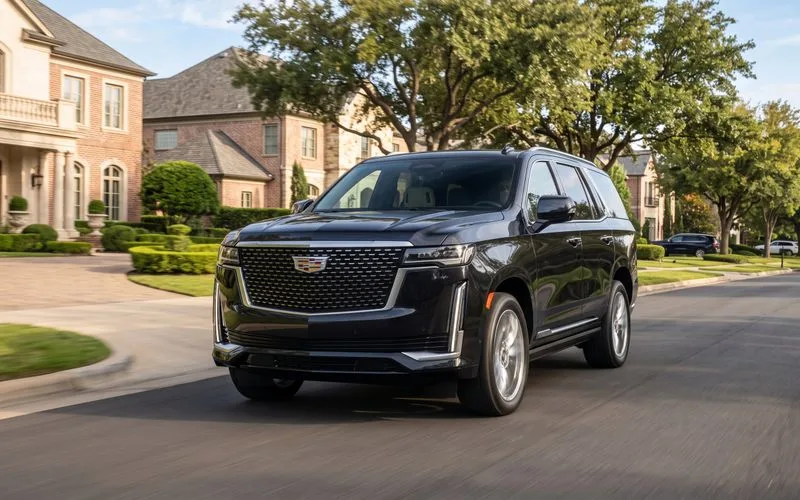 Cadillac EscaladeFull-Size Luxury SUVBetter at: Resale value
Same towing and size with far better resale value, a stronger dealer network and Super Cruise's much wider hands-free highway coverage, for roughly $2,000–$4,000 more to start.
Compare 3.12B
3.12B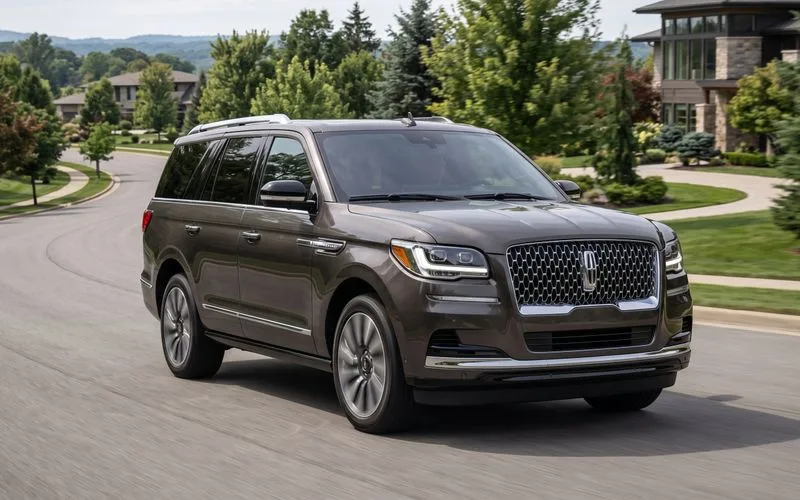 Lincoln NavigatorFull-Size Luxury SUVBetter at: Ride comfort
A softer ride, a genuinely adult-sized third row and BlueCruise, if you can live with a starting price over $102,000.
Compare 2.72B-
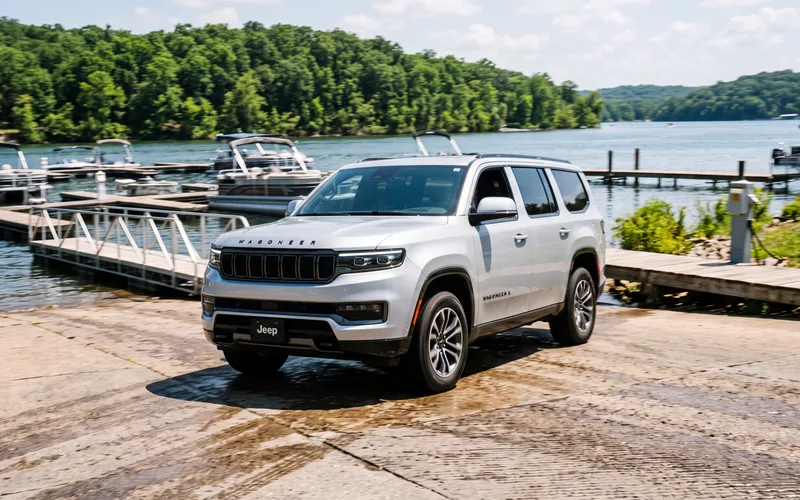 Jeep WagoneerFull-Size SUVBetter at: Space per dollar
Comparable towing and more usable third-row and cargo space for meaningfully less money, with a nationwide service network behind it.
CompareProduction history
Best fit & conditions
Higher scores mean a better fit for that use case. Learn more about use-case fit →
Subject profile
Academic Probation · NHTSA safety recalls
Jul 15, 2026Equipment: other: labelsThe Gross Axle Weight Rating (GAWR) listed on the certification label is incorrect, which can allow the vehicle to be overloaded. As such, these vehicles fail to comply with the requirements of Federal Motor Vehicle Safety Standard number 110, "Tire Selection and Rims."
Defect
Nissan North America, Inc. (Nissan) is recalling certain 2020-2026 Nissan Armada, 2011-2013 Infiniti QX56, and 2014-2027 QX80 vehicles equipped with 22" wheels. The Gross Axle Weight Rating (GAWR) listed on the certification label is incorrect, which can allow the vehicle to be overloaded. As such, these vehicles fail to comply with the requirements of Federal Motor Vehicle Safety Standard number 110, "Tire Selection and Rims."
Risk
An overloaded vehicle can increase the risk of a crash.
Remedy
Dealers will install new labels, free of charge. Additionally, Nissan will mail replacement labels to owners. Interim letters notifying owners of the safety risk were mailed September 2, 2026. Additional letters will be sent once the final remedy is available, anticipated Fall 2026. Owners may contact Nissan customer service at 1-800-867-7669. Nissan's numbers for this recall are R26B1 and P6A13/4. Vehicle Identification Numbers (VINs) involved in this recall became searchable on NHTSA.gov on July 16, 2026.
NHTSA campaign 26V455000 ↗Manufacturer no. R26B1/2, P6A13/4168,149 vehicles potentially affected (all models in the campaign)Filed by Nissan North America, Inc.Filed as QX80Nov 26, 2025Back over prevention: softwareA software error may occur in the In-Vehicle Infotainment (IVI) system at vehicle startup, resulting in the rearview camera image not displaying when the vehicle is shifted into reverse. As such, these vehicles fail to comply with the requirements of Federal Motor Vehicle Safety Standard (FMVSS) number 111, "Rear Visibility."
Defect
Nissan North America, Inc. (Nissan) is recalling certain 2025 Murano, 2025-2026 Armada, and Infiniti QX80 vehicles. A software error may occur in the In-Vehicle Infotainment (IVI) system at vehicle startup, resulting in the rearview camera image not displaying when the vehicle is shifted into reverse. As such, these vehicles fail to comply with the requirements of Federal Motor Vehicle Safety Standard (FMVSS) number 111, "Rear Visibility."
Risk
A rearview image that does not display reduces the driver's view behind the vehicle, increasing the risk of a crash.
Remedy
The IVI system software will be updated by a dealer, or through an over-the-air (OTA) update, free of charge. Owner notification letters were mailed February 2, 2026. Owners may contact Nissan's customer service at 800-647-7261 or Infiniti's customer service at 1-800-662-6200. Nissan's numbers for this recall are R25D6, R25D5, and R25D7. Vehicle Identification Numbers (VINs) involved in this recall will become searchable on NHTSA.gov beginning December 12, 2025.
NHTSA campaign 25V821000 ↗Manufacturer no. R25D6, R25D5, R25D764,085 vehicles potentially affected (all models in the campaign)Owners notified Jan 23, 2026Filed by Nissan North America, Inc.Filed as QX80
5 recalls on other model years of the QX80 (2018–2021, 2025)
Oct 3, 2024Back over prevention · Equipment: electrical: infotainment: softwareA software error may cause the rearview camera to display a blank screen when the vehicle is in reverse. As such, these vehicles fail to comply with the requirements of Federal Motor Vehicle Safety Standard number 111, "Rear Visibility."
Defect
Nissan North America, Inc. (Nissan) is recalling certain 2024-2025 Rogue and 2025 INFINITI QX80 vehicles. A software error may cause the rearview camera to display a blank screen when the vehicle is in reverse. As such, these vehicles fail to comply with the requirements of Federal Motor Vehicle Safety Standard number 111, "Rear Visibility."
Risk
The loss of the rearview camera image while in reverse can reduce the driver's rear visibility, increasing the risk of a crash.
Remedy
The in-vehicle infotainment software will be updated by an over-the-air (OTA) software update or by a dealer, free of charge. Owner notification letters were mailed December 2, 2024. Owners may contact Nissan's customer service at 800-647-7261 or INFINITI's customer service at 1-800-662-6200. Nissan's numbers for this recall are R24B3 and R24B4.
NHTSA campaign 24V748000 ↗Manufacturer no. R24B3, R24B437,236 vehicles potentially affected (all models in the campaign)Owners notified Dec 3, 2024Filed by Nissan North America, Inc.Filed as QX80Oct 3, 2024Back over prevention: softwareA software error may cause the rearview camera to freeze and display a blank screen when the vehicle is in reverse. As such, these vehicles fail to comply with the requirements of Federal Motor Vehicle Safety Standard number 111, "Rear Visibility."
Defect
Nissan North America, Inc. (Nissan) is recalling certain 2025 INFINITI QX80 vehicles equipped with an Around View Monitor (AVM). A software error may cause the rearview camera to freeze and display a blank screen when the vehicle is in reverse. As such, these vehicles fail to comply with the requirements of Federal Motor Vehicle Safety Standard number 111, "Rear Visibility."
Risk
The loss of the rearview camera image while in reverse can reduce the driver's rear visibility, increasing the risk of a crash.
Remedy
Dealers will reprogram the AVM software, free of charge. Owner notification letters were mailed December 2, 2024. Owners may contact INFINITI's customer service at 1-800-662-6200. Nissan's numbers for this recall are R24B5 and R24C2.
NHTSA campaign 24V747000 ↗Manufacturer no. R24B5, R24C25,176 vehicles potentially affected (all models in the campaign)Owners notified Dec 2, 2024Filed by Nissan North America, Inc.Filed as QX80Aug 2, 2021Back over prevention: display functionA software error may deactivate the audio/video control unit screen, preventing the rear-view image from displaying. As such, these vehicles fail to comply with the requirements of Federal Motor Vehicle Safety Standard number 111, "Rear Visibility."
Defect
Nissan North America, Inc. (Nissan) is recalling certain 2021 Infinity Q50, Q60, and QX80 vehicles. A software error may deactivate the audio/video control unit screen, preventing the rear-view image from displaying. As such, these vehicles fail to comply with the requirements of Federal Motor Vehicle Safety Standard number 111, "Rear Visibility."
Risk
A rear-view camera that does not display an image reduces the driver's rear view, increasing the risk of a crash.
Remedy
Dealers will update the control unit software, free of charge. Owner notification letters were mailed September 14, 2021. Owners may contact Nissan customer service at 1-800-867-7669. Nissan's number for this recall is R21A9.
NHTSA campaign 21V599000 ↗Manufacturer no. R21A93,569 vehicles potentially affected (all models in the campaign)Owners notified Sep 14, 2021Filed by Nissan North America, Inc.Filed as QX80May 20, 2021Fuel system, gasoline: delivery: fuel pump: control/drive moduleThe impeller can swell and bind within the fuel pump module, causing it to fail.
Defect
Nissan North America, Inc. (Nissan) is recalling certain 2020-2021 Nissan Armada and 2020-2021 INFINITI QX80 vehicles equipped with V8 engines. The impeller can swell and bind within the fuel pump module, causing it to fail.
Risk
Fuel pump failure can cause an engine stall, increasing the risk of a crash.
Remedy
Dealers will replace the fuel pump module, free of charge. Owner notification letters were mailed February 4, 2022. Owners may contact Nissan customer service at 1-800-867-7669. Nissan's number for this recall is R21A2. Owners may contact INFINITI customer service at 1-800-662-6200. INFINITI's number for this recall is R21A3.
NHTSA campaign 21V373000 ↗Manufacturer no. R21A2, R21A324,140 vehicles potentially affected (all models in the campaign)Owners notified Feb 4, 2022Filed by Nissan North America, Inc.Filed as QX80Sep 12, 2019Back over prevention: sensing system: cameraAdditionally included are 2019 Nissan GT-R and Taxi and Infiniti QX50, QX60, Q70, Q70L vehicles. The back-up camera and display settings can be adjusted such that the rear view image is no longer visible and the system will retain that setting the next time the vehicle is placed in reverse. As such, these vehicles fail to comply with the requirements of Federal Motor Vehicle Safety Standard (FMVSS) number 111, "Rear Visibility."
Defect
Nissan North America, Inc. (Nissan) is recalling certain 2018-2019 Nissan Altima, Armada, Frontier, Kicks, Leaf, Maxima, Murano, NV, NV200, Pathfinder, Rogue, Rogue Sport, Sentra, Titan, Titan Diesel, Versa Note and Versa Sedan vehicles, as well as Infiniti Q50, Q60, QX30 and QX80 vehicles. Additionally included are 2019 Nissan GT-R and Taxi and Infiniti QX50, QX60, Q70, Q70L vehicles. The back-up camera and display settings can be adjusted such that the rear view image is no longer visible and the system will retain that setting the next time the vehicle is placed in reverse. As such, these vehicles fail to comply with the requirements of Federal Motor Vehicle Safety Standard (FMVSS) number 111, "Rear Visibility."
Risk
The lack of an image in the back-up camera display increases the risk of a crash.
Remedy
Nissan will notify owners in phases, having dealers update the back-up camera settings software, free of charge. The recall began November 11, 2019 and all affected VINs should be activated. Owners may contact Nissan customer service at 1-800-867-7669 or INFINITI customer service at 1-800-662-6200.
NHTSA campaign 19V654000 ↗1,228,830 vehicles potentially affected (all models in the campaign)Owners notified Nov 11, 2019Filed by Nissan North America, Inc.Filed as QX80
Source: NHTSA Office of Defects Investigation recall database, model years 2017–2026. Recalls are listed by model year as the manufacturer filed them; whether a specific car is affected depends on its VIN — check a VIN at nhtsa.gov ↗. NHTSA model names matched to this page: QX80.
Detailed scoring by subject
1Performance & PowertrainOne of the QX80's strongest categories.3.12B
Redesigned QX80 replaces the outgoing 5.6L V8 with a 3.5L twin-turbo V6 (VR35DDTT) rated at 450 hp — a substantial jump versus the prior generation and strong for the full-size luxury SUV class.
Twin-turbo V6 delivers 516 lb-ft — at the top of the SUV torque band and higher than the outgoing V8's 413 lb-ft, giving effortless low-end thrust.
Instrumented tests peg the new QX80 at roughly 5.5 seconds to 60 — dramatically quicker than the prior V8 model and competitive with rivals like the Escalade and Navigator.
New TT V6 is quiet, smooth and delivers linear thrust with minimal turbo lag; reviewers uniformly praise refinement, though a few note the V8 soundtrack is gone.
The 9-speed automatic (replacing the old 7-speed) is generally decisive but multiple reviews cite occasional low-speed hesitation and busy shifting when the driver requests quick throttle inputs.
Best-in-class towing rating among traditional full-size luxury SUVs, matching the Cadillac Escalade and topping most European rivals; body-on-frame architecture makes it a genuinely capable tow rig.
4WD is a widely-available option on Luxe and standard on Sensory/Autograph trims, with a two-speed transfer case (low range) plus terrain modes (Sand, Rock, Snow, Mud/Rut, Tow) — genuinely sophisticated system.
Body-on-frame construction, 9.4-inch ground clearance, low-range transfer case and terrain modes give real light-duty capability, but there's no dedicated off-road trim (no lockers, skid plates, or knobby tires) — it's a luxury cruiser first.
Single powertrain across the entire QX80 lineup — no hybrid, PHEV, or EV option — a real weakness in a segment where Cadillac (Escalade IQ EV), Range Rover (PHEV), Mercedes (EQS SUV EV), Tesla (Model X), Rivian (R1S) and Lucid (Gravity) all offer electrified alternatives.
2Efficiency & RangeOne of the QX80's weakest categories.0.00F
EPA-rated 17 MPG combined for the 4WD volume configuration with the new 3.5L twin-turbo V6 (450 hp) replacing the outgoing 5.6L V8; 18 combined for RWD. Below the SUV normalization floor.
EPA city rating is 16 MPG regardless of drivetrain — sits at the bottom of the SUV band, reflecting the QX80's 5,800+ lb curb weight and full-time V6 turbo powertrain.
EPA highway rating is 19 MPG for the 4WD volume trim, 20 MPG for RWD — below the SUV band floor of 20.
23.6-gallon fuel tank at 17 MPG combined (4WD) yields ~401 mi; RWD stretches to ~425 mi at 18 MPG. Mid-pack range for the full-size SUV segment.
EPA annual fuel cost estimate at 15,000 mi/yr and ~$3.85/gal premium comes to ~$3,400 for the 4WD volume trim (~$3,150 for RWD per fueleconomy.gov reporting). Sits above the SUV normalization ceiling.
The 3.5L twin-turbo V6 requires premium unleaded (91 octane) — a real running-cost premium of roughly $0.50–$0.70/gal over regular. No E85/diesel/EV options exist to soften this.
3SafetyGrades above the middle of the scale.2.96B-
NHTSA has not yet published a full overall star rating for the redesigned Y63 QX80; body-on-frame full-size SUVs of similar height and weight (Escalade, Armada, Sequoia) routinely land at 4 stars overall due to rollover propensity.
IIHS has not published full crashworthiness results for the redesigned QX80; large body-on-frame luxury SUVs seldom earn TSP/TSP+ (Escalade, Navigator, LX are all unawarded) and the new platform is unproven in the updated moderate overlap and side tests.
Infiniti Safety Shield 360 is standard across every trim — AEB with pedestrian detection, rear AEB, blind-spot warning, rear cross-traffic alert, lane departure warning, and high beam assist — plus standard Intelligent Cruise Control on all trims. Very complete for the class.
Nissan/Infiniti AEB with pedestrian detection has generally earned Superior daytime front crash prevention on recent IIHS tests, and the QX80 adds Predictive Forward Collision Warning that tracks the vehicle two cars ahead. New-generation night pedestrian performance is unverified.
Blind-spot warning, rear cross-traffic alert with automatic braking, and rear-door alerts are standard; the tall greenhouse and thick C/D pillars make these especially valuable in this body style.
ProPILOT Assist with Navi-link provides smooth lane centering with curve-speed adjustment; reviewers praise it as one of the more natural non-hands-free systems, though not at the polish level of BlueCruise or Super Cruise.
Full-speed-range Intelligent Cruise Control is standard; ProPILOT Assist 2.1 with Navi-link is available on Luxe and higher and adds map-linked speed adjustment, curve preparation, and coordinated highway assist — a top-tier package for a luxury SUV.
ProPILOT Assist 2.1 supports hands-off, single-lane driving on mapped divided highways using an infrared driver monitor — one of the few luxury SUVs at this price with real hands-free capability alongside BlueCruise and Super Cruise. Mapped-road coverage is narrower than Ford/GM.
LED headlights are standard and adaptive/curve-adaptive Digital LED with auto-leveling is included from the Luxe trim upward. New-generation lights are unrated by IIHS; predecessor QX80 lights carried Acceptable ratings on upper trims.
Tall, boxy greenhouse and high hip point give a commanding forward view, but thick D-pillars and a very long hood create close-in blind zones. Infiniti compensates with a class-leading 3D Around View Monitor featuring Invisible Hood View and moving-object detection, standard on most trims.
Wide rear-door openings and a large second row make LATCH access straightforward; second-row captain's chairs (standard on most trims) provide easy anchor visibility, and the third row includes tether anchors. Optional bench seat adds 3-across flexibility.
4Space & ComfortOne of the QX80's strongest categories.3.42B+
Volume Luxe/Sensory trims come with 7-passenger config (second-row captain's chairs); 8-seat bench is a no-cost option on lower trims.
Generous front headroom typical of the full-size luxury SUV segment; panoramic moonroof standard on Sensory/Autograph reduces to ~39.6 in.
Front legroom is competitive but trails the class-leading Escalade (44.5 in) and Navigator (43.9 in); the redesign didn't add front row length despite the platform change.
Second-row headroom is at the top of the SUV band; boxy roofline of the new QX80 delivers generous vertical space for adults.
Second-row legroom is near the top of the band; captain's chairs slide fore/aft to trade off with third row when needed.
Third-row headroom (36.9 in) is decent but legroom (33.9 in) is only kid/teen-friendly; power-folding second-row captain's chairs give easy walk-in access, and dedicated third-row climate vents plus USB-C help. Adults short-trip only.
Cargo volume behind the second row lands mid-pack for full-size luxury SUVs; trails Escalade/Suburban-based rivals but competitive with Navigator/GLS.
Maximum cargo volume with all rear seats folded exceeds the top of the band; class-competitive with other body-on-frame full-size luxury SUVs.
Large center console, generous door bins, dual wireless charging pads on Sensory/Autograph, four USB-C ports, and a covered console tray are competent but lack a standout innovation like Ford's Pro Power or Rivian's gear tunnel.
Redesigned semi-aniline leather seats with up to 20-way power adjustment, massage (up to 20 programs on Autograph), and biometric cooling; reviewers consistently praise front and second-row comfort on long trips.
Standard hydraulic body motion control; Electronic Air Suspension standard on Sensory/Autograph delivers composed ride, but reviewers note some choppiness over sharp urban impacts and occasional secondary jiggle uncharacteristic of true class leaders (Range Rover, GLS).
Active noise cancellation, acoustic laminated front and second-row glass, and improved sealing versus the outgoing generation; twin-turbo V6 is much quieter than the old V8 at cruise.
Four-zone climate control standard on Sensory/Autograph, heated/ventilated front and second-row seats, heated steering wheel, biometric cooling, and Klipsch headrest speakers on Autograph — deep comfort menu even by luxury standards.
5Cost of OwnershipThe QX80's lowest-graded category.0.00F
Base Pure RWD trim starts at $83,750 MSRP; destination and handling is $2,190 on all grades. Well above the SUV normalization band.
Luxe (the volume mid-grade) is $93,950 MSRP + $2,190 destination = $96,140. Sport ($102,645) and Autograph ($112,195) sit above; Pure is the loss leader.
CarEdge projects ~$4,117 in maintenance + repair over 5 years; ConsumerAffairs/Infiniti data reports ~$907/yr average, ~$4,535 over 5 years. Complimentary 3-yr basic maintenance and 6-yr powertrain warranty keep early-life costs low.
iSeeCars pegs QX80 5-year depreciation at 62.9% (37.1% retention), well below the luxury large SUV category average (~45.7%). All-new 2025 redesign and steep MSRP hikes may improve near-term residuals modestly, but historical trend is weak.
Standard Infiniti new-vehicle limited warranty: 4 years or 60,000 miles.
Standard Infiniti powertrain warranty covers 6 years or 70,000 miles — trailing Hyundai/Kia/Genesis (10 yr/100k) and Mitsubishi (10 yr/100k).
INFINITI Premium Care (standard on all new 2026 QX80s) covers up to 3 oil changes and 3 tire rotations over 3 years, plus 48 months of unlimited-mileage roadside assistance to the nearest Infiniti retailer. Modest by luxury standards — BMW/Genesis/Volvo/Jaguar all include richer scheduled-service packages — but better than the many luxury brands that offer no complimentary maintenance at all.
$96,140 volume-trim price minus its estimated resale value after 5 years (37.1% retained, or about $35,668) leaves about $60,472 in depreciation. Add the projected $4,500 in 5-year maintenance and repairs, and owning this vehicle for 5 years costs about $64,972 in total.
6Reliability & QualityOne of the QX80's weakest categories.2.40C+
Second year of the redesigned Y63 QX80 with a brand-new twin-turbo VR35 V6, new 9-speed automatic, and a heavy tech stack (14.3-inch dual-display dash, ProPILOT 2.1). First model year drew multiple software/hardware recalls and Consumer Reports has not yet given the new generation a recommended rating.
Infiniti has trended mid-pack to slightly below the industry in recent J.D. Power VDS studies and Consumer Reports brand rankings — ahead of some European rivals but behind Lexus, Buick, and Cadillac. Not a bottom-third brand, but not a dependability standout.
The redesigned QX80 accumulated multiple NHTSA recalls in its first year, including issues with the 14.3-inch center display blanking, rearview camera image failure, and ProPILOT Assist software behavior. Cluster of early software/electronics recalls hurts the score.
The 3.5L twin-turbo VR35DDTT V6 is derived from the engine used in the Q50/Q60 Red Sport, where it has a solid but not spotless record (turbo oil coking, timing-chain concerns on high-mileage examples). Application to a 6,000-lb body-on-frame SUV paired with a new 9-speed automatic is unproven at scale.
Reviewers uniformly call out the new QX80's cabin as a massive step up — semi-aniline leather, open-pore ash wood, quilted metal accents, and standard 24-way front seats with massage. Materials genuinely rival Range Rover, GLS, and Escalade at comparable trims.
Assembly quality is generally strong for a body-on-frame flagship, but reviewers have flagged the dual-screen infotainment for occasional lag and freezes and the InTouch software for glitches. Panel gaps and switchgear feel are competitive.
Infiniti operates roughly 200 US dealers — thinner than Lexus (~240), BMW (~350), Mercedes-Benz (~380), and much thinner than Cadillac and Lincoln networks. Service satisfaction lands mid-pack, and some markets have no local Infiniti retailer.
Body-on-frame chassis, powertrain, and much of the underbody are shared with the 2025+ Nissan Armada, which broadens parts availability and keeps mechanical repair costs closer to premium-mainstream than pure luxury. Trim-specific interior and electronics parts remain dealer-only and pricy.
7Technology & InfotainmentThe QX80's best-graded category.3.85A+
Standard across all trims on the redesigned QX80: 14.3-inch center infotainment display paired with a second 14.3-inch lower display for climate/vehicle controls.
Google Built-In powers a fast, modern UI with a dedicated climate display keeping HVAC off the main screen. Reviewers praise the layout and hardware feel; some note the deep menu structure and occasional lag on secondary functions.
Wireless Apple CarPlay and wireless Android Auto are standard across all trims on the redesigned QX80.
Google Built-In includes Google Assistant natural-language voice control and Google Maps as native navigation — best-in-class integration that most owners will not need to bypass with phone projection.
Klipsch Reference Premiere 24-speaker premium audio available on Sensory and Autograph — a genuinely elite branded system for the segment. Base system is competent.
Full 14.3-inch reconfigurable digital instrument cluster is standard on all trims, matching the flagship look of German rivals.
Infiniti supports over-the-air updates via Google Built-In and Infiniti Connected Services — primarily infotainment/maps and periodic system improvements, not the broad whole-vehicle scope Tesla/Rivian offer.
Infiniti InTouch/Connected Services app offers remote start, lock/unlock, locate, and vehicle status — solid core functionality but partially subscription-gated after the trial and no digital key.
Abundant USB-C ports across all three rows, wireless phone charging pad standard on most trims, HDMI ports for rear-seat entertainment on upper trims. No 120V household outlet as on some rivals.
Proximity keyless entry, push-button start, remote engine start, and hands-free power liftgate are standard. No phone-as-key (Digital Key) offered on the QX80.
Around View Monitor with Invisible Hood View, 3D camera modes, moving object detection, and front/rear parking sensors are class-leading. ProPILOT Assist adds low-speed maneuvering assistance.
Large color head-up display is available but restricted to upper Sensory and Autograph trims, not offered on volume Luxe or base Pure.
8Use-Case FitMid-pack among this car's ten categories.2.68C+
Wide rear-door openings and second-row captain's chairs (standard on volume trims) make LATCH access easy, and power-folding second-row seats provide clean walk-in access to the third row. Downsides are the very high step-in height (5,800+ lb body-on-frame SUV) that requires lifting toddlers up, and a 210-inch footprint that complicates daycare/school-lot maneuvering.
Safety Shield 360 (AEB with pedestrian detection, blind-spot warning, rear cross-traffic alert with braking, lane departure, rear door alert) is standard on every trim, and ProPILOT Assist 2.1 hands-free is available. Crash-test knock: neither IIHS nor NHTSA has published full ratings for the new-generation QX80, and body-on-frame full-size SUVs typically miss TSP designations.
Full-size cabin with 41-inch second-row legroom, four-zone climate control, heated/ventilated first and second rows, dual wireless charging, and 101 cubic feet of max cargo make it a genuine long-trip family hauler. Klipsch audio and available headrest speakers add road-trip polish; only real limits are a tighter-than-Escalade third row and no factory rear-seat entertainment on lower trims.
Twin-turbo V6 is quiet and effortless in traffic, and ProPILOT Assist 2.1 with hands-free highway driving reduces commute fatigue meaningfully. Working against daily ease: 5,800+ lb curb weight, big-truck sight lines requiring the 3D Around View camera constantly, and reviewer complaints about occasional low-speed jerkiness from the 9-speed automatic.
17 MPG combined (16/19 4WD; 16/20 RWD) on required premium fuel produces roughly $3,400/yr in fuel alone at 15,000 mi. Add ~$2,700/yr insurance and expensive 22-24 inch tire replacements and the QX80 is one of the pricier vehicles you can commute in — no hybrid, PHEV, or EV option softens the running cost.
At ~210 inches long, ~83 inches wide (with mirrors folded), and a turning circle near 40 feet, the QX80 is genuinely difficult in urban parking and tight garages. Infiniti's standard 3D Around View Monitor with Invisible Hood View is one of the best camera systems in the segment and prevents corner-tap disasters, but it can't shrink the footprint.
Best-in-class 8,500-lb tow rating for the traditional full-size luxury SUV group, 516 lb-ft of torque, and a body-on-frame chassis make the QX80 a legitimate heavy-hauling family/work vehicle for boats, horse trailers, and enclosed toy haulers. Not a work truck — no bed, no upfit ecosystem — but for tow-heavy duty it's serious.
Body-on-frame construction and a powertrain shared with the fleet-hardened Nissan Armada give the QX80 a solid mechanical foundation for heavy-cycle duty. Working against it: semi-aniline leather, open-pore wood, and 22-24 inch wheels don't tolerate work-truck abuse, and the VR35 twin-turbo V6 is unproven at high mileage in this application.
Standard tow package, tie-downs, and available roof rails cover the basics, but there's no factory onboard AC power outlet, no aftermarket upfit ecosystem, and the plush interior is a poor jobsite match. Rivals like the Ford Expedition (Pro Power outlets) and full-size trucks dominate here — the QX80 is a luxury tow vehicle, not a work platform.
20-way power seats with massage on upper trims, active noise cancellation, acoustic laminated glass, and one of the segment's best hands-free driver-assist systems (ProPILOT Assist 2.1) make the QX80 a superb mile-eater. Range is the one caveat: 23.6-gallon tank × 17 MPG combined = ~400 miles, mid-pack for the class, trailing the Escalade's 24-gallon/440-mile setup.
4WD with two-speed transfer case, low range, and terrain modes (Sand, Rock, Snow, Mud/Rut, Tow) plus 9.4 inches of ground clearance make the QX80 more capable off-pavement than most luxury three-rows. But there's no dedicated off-road trim, no lockers, no skid-plate package, no all-terrain tire option — it's a gravel-road cruiser, not a Land Cruiser or Defender rival.
101 cubic feet of max cargo with the rear rows folded, power-folding second and third rows, standard tow hitch, and available roof rails cover most gear-hauling needs well. Underfloor storage is modest and the load floor sits high off the ground; no frunk or gear tunnel to match EV-native rivals like the R1S.
9Driving ExperienceMid-pack among this car's ten categories.2.53C+
Body-on-frame flagship with electronic air suspension and adaptive dampers keeps the 6,000-lb mass composed on highway sweepers, but reviewers consistently note weight and body roll on curvier roads; competent for the class, not agile.
Predictably weighted and accurate, but tuned for stability rather than sportiness; multiple reviewers call it 'slightly numb' with limited feedback — competent for the class but not communicative.
Pedal is strong and predictable in reviewer accounts, adequate for the 6,000-lb curb weight, but no instrumented test data surfaced and reviewers stop short of praising it as a class leader.
Twin-turbo 3.5L V6 (450 hp / 516 lb-ft) delivers 0–60 in ~6.1 sec with a well-matched 9-speed automatic that 'shifts unobtrusively' per multiple reviewers; only ding is mild off-boost lag before turbos spool.
Acoustic glass, extensive insulation, and a subdued twin-turbo V6 keep the cabin quiet under normal driving; engine note only intrudes on hard throttle. Class-competitive with Navigator/GLS, quieter than the Escalade.
Wheelbase carried over from prior generation at 121.1 in; prior-generation QX80 measured ~41.6 ft curb-to-curb (20.8 ft radius). No manufacturer figure surfaced for the redesigned 2025/2026 chassis, so keep the inherited estimate.
Commanding seating position with 10-way power adjustment plus massage on higher trims; Invisible Hood View and Front Wide View cameras help offset the tall cowl and long hood in tight quarters. Some reviewers call the seat height 'almost comically tall'.
Pleasant grand-tourer character with strong straight-line pace, but reviewers uniformly frame it as a comfort-first cruiser rather than an engaging drive — no sport mode transforms the chassis, and the size is felt at every turn.
10Value & Market PositionGrades above the middle of the scale.3.11B
Base Pure trim (~$84K) includes dual 14.3-inch displays, ProPilot Assist 1.1, wireless CarPlay/Android Auto, tri-zone climate, 20-inch wheels, and heated leather seats — competitive but not class-leading versus Escalade's 38-inch curved display standard or Navigator's BlueCruise availability. Volume Sensory trim adds head-up display, Klipsch 24-speaker audio, and massaging front seats.
QX80 starts around $84,450 versus Escalade at $88K+, Navigator at $102K+, Lexus LX at $107K+, Range Rover at $107K+, and Mercedes-Benz GLS at $88K+ — undercutting most full-size luxury rivals while offering comparable power (450 hp twin-turbo V6), 8,500 lb tow rating, and rear independent suspension. Loaded Autograph (~$112K) still comes in well below a base Range Rover.
Four well-spaced trims (Pure, Luxe, Sensory, Autograph) spanning roughly $84K to $112K, with RWD/4WD choices and 7- or 8-passenger seating (2nd-row captain's chairs or bench). Reasonable configurability, though fewer option packages than German rivals.
Historically a niche player selling roughly 12,000-15,000 units annually — well behind Escalade (~40K) and Navigator (~20K). The 2025 redesign lifted sales, but QX80 remains a mid-pack player in the full-size luxury SUV segment.
Infiniti sits below the top-tier luxury brands (Mercedes, BMW, Lexus, Land Rover) in prestige surveys and has struggled with brand momentum over the past decade. The refreshed QX80 helps but the badge is still a drag versus Cadillac, Lincoln, or the Germans in the full-size class.
Infiniti routinely offers meaningful cash and financing incentives (typically $2,000-$5,000 off MSRP plus low-APR financing) to move QX80 inventory, and dealer negotiability is generous relative to Range Rover or Lexus LX which often transact at MSRP or above.
All-new second-generation platform launched for the 2025 model year after 14+ years on the outgoing Y62 architecture — brand new powertrain (3.5L twin-turbo V6, 9-speed auto), new interior with dual 14.3-inch displays, and new independent rear suspension. 2026 is a fresh, current-generation product with no redesign risk near-term.
Reviews for the redesigned QX80 have been broadly positive on interior craftsmanship, ride quality, and value, but mixed on transmission tuning, real-world fuel economy, and material choices at Autograph prices. Not a category-winner versus Escalade or Range Rover in comparison tests, but a major step up from its predecessor. No major awards to date.