
The verdict
A mixed-report mid-size luxury suv, strong on reliability and held back by efficiency.
The 2020 Lexus RX is the luxury SUV you buy to stop thinking about your car. It won its class in J.D. Power's dependability study of three-year-old 2020 models, holds about 66% of its value after five years against a 50% class average, runs on regular gas, and rides in near-silence — but it is slow (7.9 seconds to 60 mph), thirsty for a V6 (22 MPG combined), and carries just 18.4 cu ft of cargo behind the rear seat, less than a compact RAV4. Shop it if long-term ownership cost and peace of quiet matter more than speed, space, or a modern screen; the 2020 facelift finally added a touchscreen and Android Auto, but the base display is still 8 inches and blind-spot monitoring is a paid option this year.
Jump to scoresStrengths
- Best-documented dependability in the segment
- It barely depreciates, and it drinks regular
- A genuinely serene place to spend time
What holds it back
- The cargo hold is the smallest in the class
- Slow, and thirsty for what it delivers
- The infotainment is a half-fix, and the cluster is analog
Top alternatives
Cars shoppers cross-shop with the Lexus RX 2.81B-
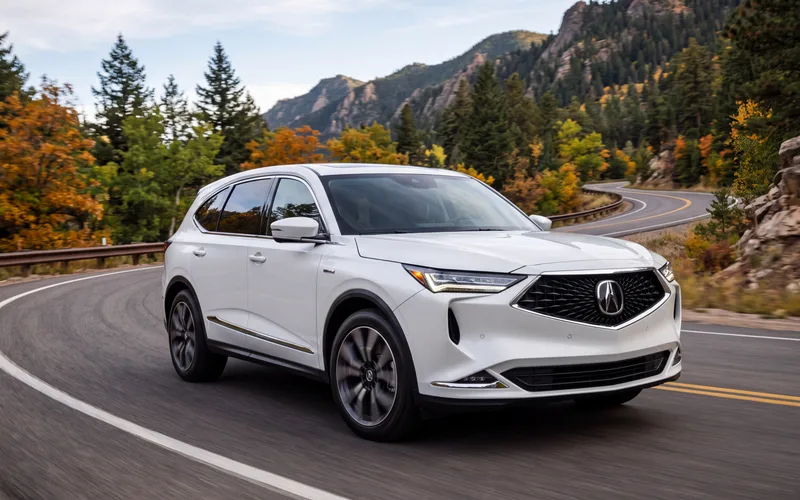 Acura MDXMid-Size Luxury SUVBetter at: Third-row seating
Similar money buys a third row, a V6 and comparable Japanese-luxury ownership costs — the obvious pick if five seats aren't enough.
Compare 2.90B-
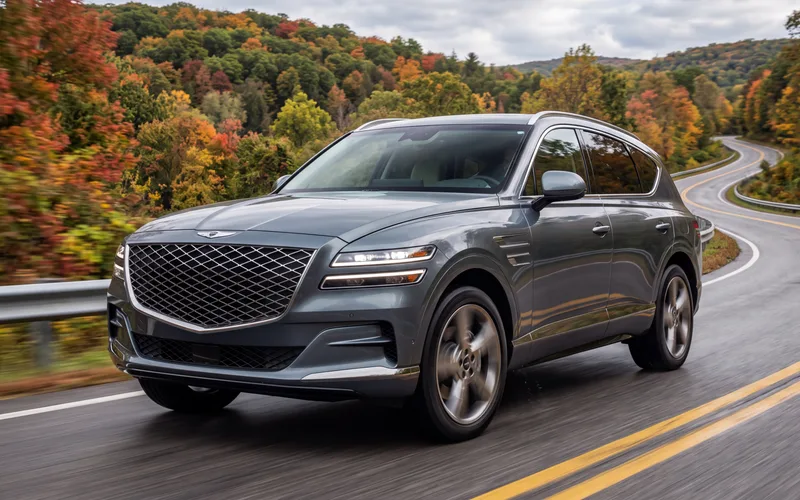 Genesis GV80Mid-Size Luxury SUVBetter at: Interior and warranty
A richer cabin, more athletic chassis and a 10-year/100,000-mile powertrain warranty for around $6,500 more than a base RX.
Compare 2.88B-
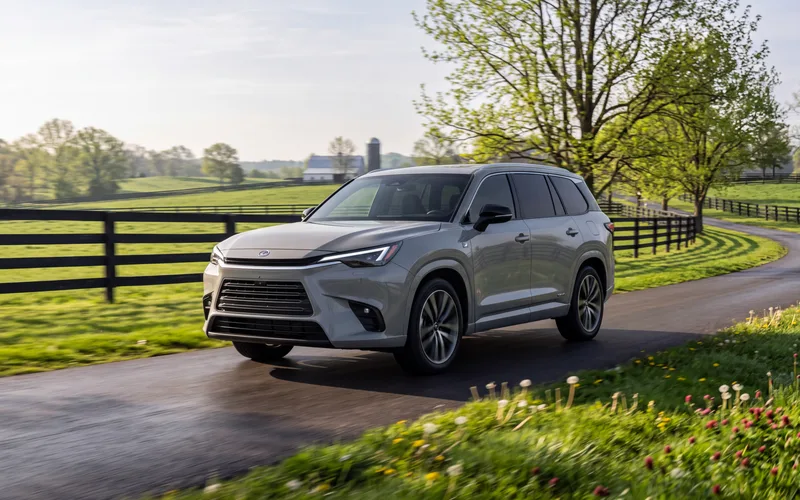 Lexus TXMid-Size Luxury SUVBetter at: Space
The same Lexus hybrid hardware and dealer experience in a three-row body that fixes the RX's cargo and seating ceiling.
CompareHow it's evolved
10 scored model years · 2017–2026
Subject scores by year
Hover or tap a score to see what moved it versus the year before. A corner mark flags a big swing.
| Year | Performance | Efficiency | Safety | Space | Cost | Reliability | Tech | Use-case | Driving | Value |
|---|---|---|---|---|---|---|---|---|---|---|
| 2026 | 48 | 44 | 77 | 50 | 59 | 84 | 75 | 68 | 66 | 78 |
| 2025 | 48 | 41 | 79 | 50 | 60 | 82 | 75 | 68 | 66 | 77 |
| 2024 | 48 | 40 | 80 | 49 | 60 | 83 | 71 | 60 | 61 | 80 |
| 2023 | 46 | 40 | 86 | 47 | 62 | 78 | 72 | 62 | 59 | 77 |
| 2022 | 45 | 47 | 69 | 54 | 64 | 89 | 53 | 59 | 60 | 66 |
| 2021 | 45 | 48 | 69 | 52 | 64 | 88 | 51 | 61 | 60 | 75 |
| 2020 | 46 | 42 | 74 | 54 | 66 | 85 | 51 | 59 | 64 | 72 |
| 2019 | 45 | 42 | 67 | 53 | 66 | 86 | 39 | 58 | 59 | 69 |
| 2018 | 46 | 42 | 72 | 55 | 67 | 87 | 40 | 58 | 62 | 69 |
| 2017 | 45 | 42 | 78 | 53 | 65 | 87 | 38 | 59 | 62 | 74 |
Compare two years
Best fit & conditions
Higher scores mean a better fit for that use case. Learn more about use-case fit →
Subject profile
Academic Probation · NHTSA safety recalls
Dec 20, 2023Air bags: sensor: occupant classificationA short circuit may develop in the Occupant Classification System (OCS) sensor, preventing the front passenger air bag from deploying.
Defect
Toyota Motor Engineering & Manufacturing (Toyota) is recalling certain 2020-2021 Avalon, Avalon Hybrid, Corolla, Highlander, Highlander Hybrid, RAV4, RAV4 Hybrid, Lexus ES350, Lexus RX350, Lexus RX450H, 2021 Sienna Hybrid, Lexus ES250, 2020-2022 Camry, Camry Hybrid, and ES300H vehicles. A short circuit may develop in the Occupant Classification System (OCS) sensor, preventing the front passenger air bag from deploying.
Risk
An air bag that does not deploy during a crash increases the risk of injury.
Remedy
Dealers will inspect and replace the sensor as necessary, free of charge. Interim letters notifying owners of the safety risk were mailed in February 2024. Some final remedy owner letters were mailed October 31, 2024. Letters will continue to be mailed in phases through January 2026. Owners may contact Toyota customer service at 1-800-331-4331. Toyota's number for this recall is 23TB15/23TA15 Lexus 23LB03/23LA03.
NHTSA campaign 23V865000 ↗Manufacturer no. 23TA15, 23LA03999,901 vehicles potentially affected (all models in the campaign)Owners notified Oct 31, 2024Filed by Toyota Motor Engineering & ManufacturingFiled as RX, RX HYBRIDNov 4, 2020Fuel system, gasoline: delivery: fuel pumpThe low-pressure fuel pump inside the fuel tank may fail.
Defect
Toyota Motor Engineering & Manufacturing (Toyota) is recalling certain 2018-2019 4Runner, 2019-2020 Avalon, 2019 Corolla Hatchback, 2017-2019 Highlander, 2018-2020 Camry, 2020 Corolla, 2018-2019 Land Cruiser, 2017-2020 Tacoma, 2019-2020 RAV4, 2019-2020 Sequoia, 2017-2020 Sienna, 2019-2020 Tundra, 2018-2020 Lexus ES350, 2017 Lexus GS200t, 2017-2019 Lexus GS350, 2019 Lexus GS300, 2018-2020 Lexus LC500h, 2019-2020 Lexus LS500, 2018-2019 Lexus GX460, 2017 Lexus IS200t, 2019 Lexus IS300, 2019 Lexus IS350, 2018-2020 Lexus LC500, 2018 Lexus LS500, 2019 Lexus LS500h, 2018-2019 Lexus LX570, 2017 Lexus RC200t, 2019 Lexus RC300, RC350, 2017 and 2019-2020 Lexus RX350, 2018-2020 RX350L, 2019 Lexus UX200, 2018-2019 Lexus NX300 vehicles. The low-pressure fuel pump inside the fuel tank may fail.
Risk
If the fuel pump fails, the engine can stall while driving, increasing the risk of a crash.
Remedy
Toyota will notify owners, and dealers will replace the fuel pump assembly with an improved one, free of charge. Owners of specific models were notified that remedy parts were available starting January 21, 2021. Owners of other models will be notified as remedy parts become available. Remedy parts should be available for all affected vehicles by late March 2021. Owners may contact Toyota customer service at 1-888-270-9371 or Lexus customer service at 1-800-255-3987. Note: This recall is an expansion of recall 20V-012. Toyota's number for this recall is 20TA02. Lexus' number for this recall is 20LA01.
NHTSA campaign 20V682000 ↗Manufacturer no. 20TA02, 20LA011,525,742 vehicles potentially affected (all models in the campaign)Owners notified Jan 21, 2021Filed by Toyota Motor Engineering & ManufacturingFiled as RX350, RX350L
12 recalls on other model years of the RX (2017–2019, 2021, 2023–2026)
Sep 17, 2026Steering: linkages: knuckle: spindle: armDue to a manufacturing error, the front steering knuckles may crack and break, which can result in a loss of vehicle steering control.
Defect
Toyota Motor Engineering & Manufacturing (Toyota) is recalling certain 2026 Lexus TX350, RX350 Hybrid, RX350, RX500 Hybrid, TX500 Hybrid, Toyota Grand Highlander, and Grand Highlander Hybrid vehicles. Due to a manufacturing error, the front steering knuckles may crack and break, which can result in a loss of vehicle steering control.
Risk
A loss of vehicle steering control increases the risk of a crash.
Remedy
Dealers will inspect and replace the front steering knuckles, as necessary, free of charge. Owner notification letters are expected to be mailed November 2, 2026. Owners may contact Toyota's customer service at 1-800-331-4331. Toyota's numbers for this recall are 26TA19 and 26LA09.
NHTSA campaign 26V598000 ↗Manufacturer no. 26TA19 / 26LA09617 vehicles potentially affected (all models in the campaign)Filed by Toyota Motor Engineering & ManufacturingFiled as RX, RX HYBRIDMar 18, 2026Back over prevention: softwareThe rearview camera image may not display when the vehicle is placed in reverse. As such, these vehicles fail to comply with the requirements of Federal Motor Vehicle Safety Standard (FMVSS) number 111, "Rear Visibility."
Defect
Toyota Motor Engineering & Manufacturing (Toyota) is recalling certain 2022-2025 Lexus NX350, NX250, 2023-2026 RX350, and 2024-2026 TX350 vehicles. The rearview camera image may not display when the vehicle is placed in reverse. As such, these vehicles fail to comply with the requirements of Federal Motor Vehicle Safety Standard (FMVSS) number 111, "Rear Visibility."
Risk
A rearview image that does not display reduces the driver's view behind the vehicle, increasing the risk of a crash.
Remedy
Dealers will update the rearview camera software or replace the rearview camera, as necessary, free of charge. Owner notification letters were mailed May 15, 2026. Owners may contact Toyota's customer service at 1-800-331-4331. Toyota's numbers for this recall are 26LB02 and 26LA02.
NHTSA campaign 26V162000 ↗Manufacturer no. 26LB02 / 26LA02144,200 vehicles potentially affected (all models in the campaign)Owners notified May 15, 2026Filed by Toyota Motor Engineering & ManufacturingFiled as RXOct 30, 2025Back over prevention: display functionPlease see the recall report for a complete list of models. A software error may cause the rearview camera to freeze or display a blank screen when the vehicle is in reverse. As such, these vehicles fail to comply with the requirements of Federal Motor Vehicle Safety Standard (FMVSS) number 111, "Rear Visibility."
Defect
Toyota Motor Engineering & Manufacturing (Toyota) is recalling certain 2022-2026 Toyota, Lexus, and Subaru Solterra vehicles equipped with a Panoramic View Monitor (PVM) system. Please see the recall report for a complete list of models. A software error may cause the rearview camera to freeze or display a blank screen when the vehicle is in reverse. As such, these vehicles fail to comply with the requirements of Federal Motor Vehicle Safety Standard (FMVSS) number 111, "Rear Visibility."
Risk
A rearview camera that fails to display an image can reduce the driver's view behind the vehicle, increasing the risk of a crash.
Remedy
Dealers will update the parking assist software, free of charge. Owner letters were mailed January 2, 2026. Owners may contact Toyota's customer service at 1-800-331-4331. Toyota's numbers for this recall are 25TB13 and 25LB06. Subaru's number for this recall is WRE25.
NHTSA campaign 25V744000 ↗Manufacturer no. 25TB13/25LB06/WRE251,024,407 vehicles potentially affected (all models in the campaign)Owners notified Dec 5, 2025Filed by Toyota Motor Engineering & ManufacturingFiled as REDUNDANT RX PLUG-IN HYBRID, RX, RX HYBRID, RX PLUG-IN HYBRIDSep 11, 2025Electrical system: instrument cluster/panelDue to an error in the instrument panel software at vehicle startup, the instrument panel may fail to display vehicle speed, brake system, and tire pressure warning lights.
Defect
Toyota Motor Engineering & Manufacturing (Toyota) is recalling certain 2023-2024 Toyota Venza, 2023-2025 RAV4 Prime, RAV4, Highlander, GR Corolla, Crown, 2024-2025 Lexus TX, LS, Toyota Tacoma, Grand Highlander, and 2025 Lexus RX, Toyota Crown Signia, Camry, RAV 4 Plug-in Hybrid (PHEV), and 4 Runner vehicles. Due to an error in the instrument panel software at vehicle startup, the instrument panel may fail to display vehicle speed, brake system, and tire pressure warning lights.
Risk
An instrument panel display that does not show critical information can increase the risk of a crash or injury.
Remedy
Dealers will update the instrument panel software over-the-air (OTA) for non-PHEV vehicles, free of charge. For PHEV vehicles, dealers will inspect the instrument panel assembly, and either replace it, or update the software, free of charge. Owner letters were mailed December 5, 2025. Additional letters will be sent, anticipated in May 2026. This is a phased recall. Owners may contact Toyota's customer service at 1-800-331-4331. Toyota's numbers for this recall are 25TB08 and 25TA08. Lexus' numbers for this recall are 25LB05 and 25LA05.
NHTSA campaign 25V595000 ↗Manufacturer no. See Part 573 Report591,377 vehicles potentially affected (all models in the campaign)Owners notified Dec 5, 2025Filed by Toyota Motor Engineering & ManufacturingFiled as RXFeb 6, 2025Seat belts: rear/other: webbingThe second-row center seat belt webbing may be damaged. As such, these vehicles fail to comply with the requirements of Federal Motor Vehicle Safety Standard (FMVSS) number 209, "Seat Belt Assemblies."
Defect
Toyota Motor Engineering & Manufacturing (Toyota) is recalling certain 2025 Toyota Camry Hybrid, Lexus NX250, NX350, NX350 Hybrid, 2024-2025 Lexus RX350, RX350 Hybrid, and RX500 Hybrid vehicles. The second-row center seat belt webbing may be damaged. As such, these vehicles fail to comply with the requirements of Federal Motor Vehicle Safety Standard (FMVSS) number 209, "Seat Belt Assemblies."
Risk
A damaged seat belt may not adequately restrain an occupant, increasing the risk of injury during a crash.
Remedy
Dealers will inspect the seat belt webbing and replace the seat belt assembly if necessary, free of charge. Owner notification letters were mailed March 20, 2025. Owners may contact Toyota's customer service at 1-800-331-4331. Toyota's numbers for this recall are 25TA03 and 25LA03.
NHTSA campaign 25V059000 ↗Manufacturer no. 25TA03 / 25LA0340,922 vehicles potentially affected (all models in the campaign)Owners notified Mar 20, 2025Filed by Toyota Motor Engineering & ManufacturingFiled as RX, RX HYBRIDJan 29, 2025Air bags: frontal: driver clockspring/spiral cassette · Steering: columnAn electrical connection inside the steering column's spiral cable assembly may be insufficiently welded, causing the connection to separate and deactivate the driver's air bag. As such, these vehicles fail to comply with the requirements of Federal Motor Vehicle Safety Standard number 208, "Occupant Crash Protection."
Defect
Toyota Motor Engineering & Manufacturing (Toyota) is recalling certain 2023 Toyota Corolla, Corolla Cross, Corolla Cross Hybrid, Highlander, Highlander Hybrid, Tacoma, Lexus RX350, 2023-2024 NX250, and NX350 vehicles that may have been incorrectly repaired under previous NHTSA recall number 23V-480. An electrical connection inside the steering column's spiral cable assembly may be insufficiently welded, causing the connection to separate and deactivate the driver's air bag. As such, these vehicles fail to comply with the requirements of Federal Motor Vehicle Safety Standard number 208, "Occupant Crash Protection."
Risk
A deactivated driver's air bag will not deploy as intended, increasing the risk of injury during a crash.
Remedy
Dealers will inspect and replace the spiral cable assembly as necessary, free of charge. Owner notification letters were mailed March 17, 2025. Owners may contact Toyota's customer service at 1-800-331-4331. Toyota's number for this recall is 25TA02. Lexus' number for this recall is 25LA02.
NHTSA campaign 25V040000 ↗Manufacturer no. 25TA02/25LA021,716 vehicles potentially affected (all models in the campaign)Owners notified Mar 17, 2025Filed by Toyota Motor Engineering & ManufacturingFiled as RXJan 22, 2025Fuel system, gasoline: delivery: fuel pumpThe low-pressure fuel pump inside the fuel tank may fail.
Defect
Toyota Motor Engineering & Manufacturing (Toyota) is recalling certain 2018 Camry, 2019 Lexus NX300, and 2019 RX350L vehicles. The low-pressure fuel pump inside the fuel tank may fail.
Risk
Fuel pump failure can cause an engine stall, increasing the risk of a crash.
Remedy
Dealers will replace the fuel pump assembly, free of charge. Owner notification letters were mailed March 12, 2025. Owners may contact Toyota's customer service at 1-800-331-4331. Toyota's numbers for this recall are 25TA01 and 25LA01.
NHTSA campaign 25V028000 ↗Manufacturer no. 25TA01 / 25LA01858 vehicles potentially affected (all models in the campaign)Owners notified Mar 12, 2025Filed by Toyota Motor Engineering & ManufacturingFiled as RXJun 27, 2024Seats: front assembly: head restraintThe head restraints on the driver and front passenger seats may be inadvertently removed without pressing the lock release button. As such, these vehicles fail to comply with the requirements of Federal Motor Vehicle Safety Standard (FMVSS) Number 202, "Head Restraints."
Defect
Toyota Motor Engineering & Manufacturing (Toyota) is recalling certain 2024 Lexus RX 350, RX 350h, 2024-2025 NX 250, NX 350, and NX 350h vehicles. The head restraints on the driver and front passenger seats may be inadvertently removed without pressing the lock release button. As such, these vehicles fail to comply with the requirements of Federal Motor Vehicle Safety Standard (FMVSS) Number 202, "Head Restraints."
Risk
A head restraint that is inadvertently removed and not reinstalled can increase the risk of injury during a rear-end crash.
Remedy
Dealers will replace the driver and front passenger seat head rest assemblies, free of charge. Owner letters were mailed February 14, 2025. Owners may contact Toyota customer service at 1-800-331-4331. Toyota's numbers for this recall are 24LB06 and 24LA06.
NHTSA campaign 24V482000 ↗Manufacturer no. 24LB06, 24LA0611,418 vehicles potentially affected (all models in the campaign)Owners notified Feb 14, 2025Filed by Toyota Motor Engineering & ManufacturingFiled as RX, RX HYBRIDJul 12, 2023Air bags: frontal: driver clockspring/spiral cassette · Steering: columnAn electrical connection inside the steering column's spiral cable assembly may be insufficiently welded, causing the connection to separate and deactivate the driver's air bag. As such, these vehicles fail to comply with the requirements of Federal Motor Vehicle Safety Standard number 208, "Occupant Crash Protection."
Defect
Toyota Motor Engineering & Manufacturing (Toyota) is recalling certain 2023 Corolla, Corolla Cross, Corolla Cross Hybrid, Highlander, Highlander Hybrid, Tacoma, 2023 Lexus RX350, RX350 Hybrid, RX500 Hybrid, 2023-2024 Lexus NX250, NX350, and NX350 Hybrid vehicles. An electrical connection inside the steering column's spiral cable assembly may be insufficiently welded, causing the connection to separate and deactivate the driver's air bag. As such, these vehicles fail to comply with the requirements of Federal Motor Vehicle Safety Standard number 208, "Occupant Crash Protection."
Risk
A deactivated driver's air bag that does not deploy as intended increases the risk of injury during a crash.
Remedy
Dealers will inspect and replace the spiral cable assembly, if necessary, free of charge. Owner notification letters were mailed September 8, 2023. Owners may contact Toyota's customer service at 1-800-331-4331. Toyota's number for this recall is 23TA08. Lexus' number for this recall is 23LA02.
NHTSA campaign 23V480000 ↗Manufacturer no. 23TA08/ 23LA02152,927 vehicles potentially affected (all models in the campaign)Owners notified Sep 8, 2023Filed by Toyota Motor Engineering & ManufacturingFiled as RX HYBRID, RX350, RX500HFeb 3, 2021Fuel system, gasoline: storage: tank assembly: filler pipe and capThe transport hook may not have been removed prior to sale. As such, these vehicles fail to comply with the requirements of Federal Motor Vehicle Safety Standard number 301, "Fuel System Integrity."
Defect
Toyota Motor Engineering & Manufacturing (Lexus) is recalling certain 2019 Lexus RX350 and 2021 RX350 vehicles. The transport hook may not have been removed prior to sale. As such, these vehicles fail to comply with the requirements of Federal Motor Vehicle Safety Standard number 301, "Fuel System Integrity."
Risk
During a rear-end crash, the transport hook can damage the fuel filler pipe, increasing the risk of a fire.
Remedy
Lexus will notify owners, and dealers will inspect and, as necessary, remove the rear transport hook, free of charge. The recall began April 1, 2021. Owners may contact Lexus customer service at 1-800-331-4331. Lexus' number for this recall is 21LA01.
NHTSA campaign 21V043000 ↗Manufacturer no. 21LA011,081 vehicles potentially affected (all models in the campaign)Owners notified Apr 1, 2021Filed by Toyota Motor Engineering & ManufacturingFiled as RX350Jan 13, 2020Fuel system, gasoline: delivery: fuel pumpToyota Motor Engineering & Manufacturing (Toyota) recalled certain 2018-2019 4Runner, Highlander, Camry, Land Cruiser, Sequoia, Sienna, Tacoma and Tundra, and Lexus RC 300, RC 350, GS 350, GX 460, IS 300, LC 500, LS 500, LX 570, RX 350L, and 2019 Toyota Avalon and Corolla, and certain Lexus NX 300, and ES 350 vehicles on January 13, 2020. On March 4, 2020, Toyota expanded the recall to include certain 2014-2015 Toyota 4Runner and Land Cruiser, 2018 Avalon, Corolla, 2014 FJ Cruiser, 2017 Sienna and Lexus 2018 ES 350, 2018-2019 GS 300, 2013-2014 GS350, 2014-2015 GX 460, IS 350 and LX 570, 2014 IS F, 2018-2019 IS 350, LC 500H and LS 500H, 2013-2015 LS 460, 2015 NX 200T and RC350, 2017 RC 200T and RX 350. Toyota also removed the 2018-2019 Toyota 4Runner and Land Cruiser and 2018-2019 Lexus GX 460 and LX 570 and 2019 NX300 from inclusion in this recall. On March 19, 2020, Toyota expanded the recall to include 2015 Lexus GS350 vehicles. The low-pressure fuel pump inside the fuel tank may fail.
Defect
Toyota Motor Engineering & Manufacturing (Toyota) recalled certain 2018-2019 4Runner, Highlander, Camry, Land Cruiser, Sequoia, Sienna, Tacoma and Tundra, and Lexus RC 300, RC 350, GS 350, GX 460, IS 300, LC 500, LS 500, LX 570, RX 350L, and 2019 Toyota Avalon and Corolla, and certain Lexus NX 300, and ES 350 vehicles on January 13, 2020. On March 4, 2020, Toyota expanded the recall to include certain 2014-2015 Toyota 4Runner and Land Cruiser, 2018 Avalon, Corolla, 2014 FJ Cruiser, 2017 Sienna and Lexus 2018 ES 350, 2018-2019 GS 300, 2013-2014 GS350, 2014-2015 GX 460, IS 350 and LX 570, 2014 IS F, 2018-2019 IS 350, LC 500H and LS 500H, 2013-2015 LS 460, 2015 NX 200T and RC350, 2017 RC 200T and RX 350. Toyota also removed the 2018-2019 Toyota 4Runner and Land Cruiser and 2018-2019 Lexus GX 460 and LX 570 and 2019 NX300 from inclusion in this recall. On March 19, 2020, Toyota expanded the recall to include 2015 Lexus GS350 vehicles. The low-pressure fuel pump inside the fuel tank may fail.
Risk
If the fuel pump fails, the engine can stall while driving, increasing the risk of a crash.
Remedy
Toyota will notify owners, and dealers will replace the fuel pump, free of charge. The recall began May 4, 2020. Owners may contact Toyota customer service at 1-888-270-9371 or Lexus customer service at 1-800-255-3987. Toyota's numbers for this recall are 20TB02 and 20TA02 for Toyota vehicles and 20LB01 and 20LA01 for Lexus vehicles.
NHTSA campaign 20V012000 ↗Manufacturer no. 20TB02/20TA02/20LB011,830,752 vehicles potentially affected (all models in the campaign)Owners notified May 1, 2020Filed by Toyota Motor Engineering & ManufacturingFiled as RX350, RX350LApr 3, 2018Service brakes, hydraulic: power assist: vacuumDuring the manufacturing process, the oil galley in the rotor for the brake booster vacuum pump assembly may have been improperly machined possibly resulting in a sudden loss of brake assist.
Defect
Toyota Motor Engineering & Manufacturing (Toyota) is recalling certain 2018 Toyota Camry and Highlander vehicles, 2017 Toyota Sienna and Tacoma vehicles and 2017 Lexus RX350 vehicles. During the manufacturing process, the oil galley in the rotor for the brake booster vacuum pump assembly may have been improperly machined possibly resulting in a sudden loss of brake assist.
Risk
A sudden loss of braking assist can increase the risk of a crash.
Remedy
Toyota will notify owners, and dealers will replace the brake booster vacuum pump, free of charge. The recall began on May 9, 2018. Owners may contact Toyota customer service at 1-888-270-9371, or Lexus customer service at 1-800-255-3987. Toyota's numbers for this recall are J0K/JLD.
NHTSA campaign 18V211000 ↗Manufacturer no. J0K/JLD6,046 vehicles potentially affected (all models in the campaign)Owners notified May 9, 2018Filed by Toyota Motor Engineering & ManufacturingFiled as RX350
Source: NHTSA Office of Defects Investigation recall database, model years 2017–2026. Recalls are listed by model year as the manufacturer filed them; whether a specific car is affected depends on its VIN — check a VIN at nhtsa.gov ↗. NHTSA model names matched to this page: REDUNDANT RX PLUG-IN HYBRID, RX, RX HYBRID, RX PLUG-IN HYBRID, RX350, RX350L, RX500H.
Detailed scoring by subject
1Performance & PowertrainOne of the RX's weakest categories.1.04D
2020 is the facelift year of the fourth-generation RX (AL20) and the powertrain was carried over untouched: the 2GR-FKS 3.5-liter V6 at 295 hp @ 6,300 rpm. That is a healthy figure on paper for a mid-size luxury SUV but it is moving nearly 4,400 lbs, and the turbo-six rivals in the class were already past 330 hp.
267 lb-ft is modest for the segment and — being a naturally aspirated V6 — it arrives high in the rev range rather than just off idle, so the RX has to be worked to feel strong even though the peak number is respectable.
Two independent specification sources put the RX 350 AWD at 7.9 seconds, which is squarely mid-pack-to-slow for a 2020 mid-size luxury SUV and the clearest evidence that this is a comfort device rather than a quick one. Reviewers consistently describe the V6 as adequate rather than urgent.
This is the 2020 RX's strongest performance trait: a naturally aspirated V6 with no turbo lag, no hybrid handoffs and no coarse note under load, delivering power linearly in a cabin reviewers describe as serene. It is not quick and it does not pretend to be, but nothing about the delivery is rough — the refinement complaints only arrive with the turbocharged four that replaces it for 2023.
The eight-speed automatic is well sorted after three model years in service — smooth and predictable in normal driving, willing to drop gears on demand, and it does not hunt the way a wider-ratio unit would. It gives up the top band only because kickdown from a naturally aspirated V6 is unhurried, so it takes a moment to gather itself for a highway pass.
3,500 lbs is enough for a small boat, a pair of jet skis or a light utility trailer and it does not change with drivetrain or trim. It is the number the whole RX line carries and roughly half what a BMW X5 or Audi Q7 of the same year will pull.
All-wheel drive is a straightforward option on every gas RX 350 and RX 350L grade and is standard on both hybrids, so effectively any 2020 RX can be had with it. The hardware is pavement-minded though — an on-demand coupling that idles at front drive and shuffles torque rearward only when slip appears, with no low range, no locking differential and no terrain-mode suite.
The RX is a road crossover and the 2020 facelift pushed it further that way, retuning the suspension and stiffening the body for on-road composure. 8.2 inches of ground clearance, road tires, no skid plates, no low range, no locker and no off-road grade anywhere in the lineup — a snowy driveway or a graded gravel road is the honest limit, and Lexus sells the body-on-frame GX to buyers who need more.
Two genuinely distinct powertrains for 2020 — the 295-hp 3.5 V6 and the 308-hp RX 450h full hybrid, each available in two-row or three-row L bodywork — which covers the mainstream of the class but no more. There is no plug-in (the RX 450h+ arrives with the fifth generation), no EV, and no performance variant, so an RX buyer chooses between quiet-and-thirsty and quiet-and-frugal and nothing else.
2Efficiency & RangeThe RX's lowest-graded category.0.76F
A 3.5-liter naturally aspirated V6 in a 4,400-lb crossover returns what one expects: 22 MPG combined, below the median for a gas SUV and the price of the smoothness the same engine earns in Category 1. The RX 450h on the same chassis returns 30 MPG.
City is the gas RX's worst cycle — no electric assist, no cylinder deactivation and no stop-start on this powertrain, so the V6 idles and accelerates on fuel alone. The hybrid returns 12 MPG more in town on the same platform.
Highway is the RX 350's best showing and the one cycle where it nearly matches its own hybrid — a tall eighth gear and a relaxed cruise keep it within 2 MPG of the RX 450h — but 26 MPG still trails the downsized turbo fours its rivals were fielding.
Range is where the thirsty V6 is partly rescued by a large 19.2-gallon tank: roughly 420 miles between fills is solidly mid-pack for the segment and better than the mileage alone suggests. Computed from the EPA combined rating and the published tank size, not an EPA-published range figure.
EPA's own estimate, and a case where the fuel grade matters more than the mileage: at 22 MPG the RX 350 burns a lot, but it burns regular, which is why it lands only $250/yr adrift of a hybrid that goes 8 MPG further on premium. The 2023 turbo RX 350 — better on MPG, worse on grade — costs $400/yr more than this car.
The 2020 RX 350 runs on regular 87-octane unleaded — genuinely unusual for a mid-size luxury SUV, and the single best efficiency-related fact about the car. It is the reason its annual fuel bill undercuts several rivals that beat it on MPG, and it separates this V6 both from the RX 450h beside it in the showroom and from the premium-required turbo four that replaces it for 2023.
3SafetyOne of the RX's strongest categories.3.00B
NHTSA tested both drivetrains of the facelifted 2020 RX 350 separately and they land differently: the AWD car rounds up to 5 stars overall while the lighter FWD car takes 4, on identical 4-star frontal and 5-star side results. The volume gas trim scored here is the RX 350 AWD, so 5 stars is the figure, with the FWD result noted.
The 2020 RX is a Top Safety Pick with Good in all six crashworthiness tests — including the passenger-side small overlap test the RX faced for the first time in 2020, after the facelift added structural reinforcement on that side. Only the headlights kept it off Top Safety Pick+, which is why it sits at the bottom of the award band rather than the top.
The 2020 facelift made Lexus Safety System+ 2.0 standard on every RX — AEB with pedestrian detection, all-speed adaptive cruise, lane departure alert with steering assist, lane tracing assist, road sign assist and auto high beams — which covers the expensive half of the suite. But Blind Spot Monitor and Rear Cross-Traffic Alert are still options in 2020 (they only became standard for 2021), which is exactly the pattern the 50–79 band describes.
IIHS rated the standard LSS+ 2.0 Superior for vehicle-to-vehicle front crash prevention — collisions avoided outright at both 12 and 25 mph — and Advanced for pedestrian detection. That is near the top of the band; it falls short of a perfect score only because the pedestrian result is Advanced rather than Superior and the nighttime pedestrian test did not yet exist to confirm the low-light claim.
Blind Spot Monitor and Rear Cross-Traffic Alert are optional on the 2020 RX — bundled into packages rather than fitted to the base car — and they are alert-only, with no cross-traffic braking and no safe-exit warning. Rivals in this class already made them standard, and Lexus itself did so one year later.
Lane Departure Alert with Steering Assist plus Lane Tracing Assist lane centering are standard for 2020, and reviewers found LTA does its job without hectoring the driver. It is a competent, low-drama system rather than a confident one — it needs clear markings and hands-on input and does not hold a curve as firmly as the best highway assists in the class.
All-Speed Dynamic Radar Cruise Control is standard and works down to a full stop with resume, pairing with Lane Tracing Assist for genuine highway assist on the base car. The Toyota/Lexus calibration is conservative — large default gaps and an unhurried resume — which keeps it just below the refined-system band.
No hands-free highway system is offered on the 2020 RX at any trim or price. Lexus Teammate arrived later and only on the LS and on the newer RX generation, so the 2020 car is hands-on-wheel at all times.
No 2020 RX headlight earns a Good rating from IIHS: the base and one premium LED projector setup are Acceptable, and the available curve-adaptive LED units are outright Poor for glare — so the more you spend, the worse the light can get. Intelligent High Beams are standard, which is the one thing pulling this above the bottom band.
The RX's heavily styled rear three-quarter — thick pillars and a rising beltline — creates real blind zones, and the camera and sensor hardware that would compensate is optional in 2020 rather than standard. A base car sees out worse than most mid-size luxury SUVs; a well-optioned one with Panoramic View Monitor is fine.
IIHS rates the RX's LATCH hardware Good for ease of use, with extra anchor positions beyond the required two, and the two-row RX pairs that with wide rear doors and generous rear legroom. Three across is still a squeeze on a mid-size bench, which is what keeps it at the foot of the top band.
4Space & ComfortGrades below the middle of the scale.1.63D
The volume RX is a two-row, five-seat crossover — the registry records the nameplate at five seats and that is the configuration scored here. Buyers who need more are pushed to the separate long-wheelbase RX 350L, which stretches the body 4.3 inches to fit a third row.
39.4 inches is mid-pack for a mid-size SUV and the figure holds across gas trims. The panoramic roof that most well-equipped RXs carry takes roughly an inch and a half back, which is the version many buyers actually sit in.
44.1 inches is near the top of the mid-size SUV band and one of the two-row RX's genuine space strengths — a tall driver has room to spare, helped by a 10-way power seat with power tilt-and-telescoping column.
39.1 inches puts the RX near the top of its segment band for rear headroom — the roofline looks fast from outside but the second row sits high enough that adults do not brush the headliner.
38.0 inches is comfortably adult-sized and the bench slides fore-aft and reclines, so rear passengers can trade legroom for cargo depth. It trails the roomiest mid-size SUVs but is generous for a two-row luxury crossover.
The RX scored here has no third row at all — it is a five-seat, two-row crossover, which the item's guidance places in the bottom band. Lexus sells the answer as a different vehicle, the RX 350L, and even there the third row is token: 23.5 inches of legroom and 34.8 inches of headroom is a jump seat for small children, not a row adults or teens can use.
Cargo room is the two-row RX's clearest packaging weakness and the reason it grades at the floor of the SUV band: 18.4 cu ft is trunk-of-a-large-sedan territory in a 192.5-inch vehicle, and reviewers flag it independently of the number. The value carries MEDIUM confidence because Lexus's own published figure for this body moved — 18.4 in 2020 materials, 16.0 for 2021 — and the fifth-generation RX's 29.6 cu ft reflects a different method rather than a sudden doubling of the space.
56.3 cu ft sits at the very bottom of the mid-size SUV range — a compact Toyota RAV4 of the same year beats it — and confirms that the RX trades interior volume for styling and ride. The power-folding seats do at least leave a genuinely flat floor, so the space that is there is usable.
Everyday storage is competent and conventional: a deep centre console with a sliding lid, a usable glovebox, decent door bins, self-gripping cup holders and an underfloor tray in the cargo area, plus six USB ports after 2020 added two. Nothing here is clever in the way a fold-flat front passenger seat or onboard AC power would be, and the shallow cargo well limits what the underfloor space can swallow.
Long-haul seat comfort is one of the two things the RX is unambiguously excellent at. The front chairs are wide, softly padded and contoured with four-way power lumbar on a 10-way driver's seat, and the second row reclines and slides — reviewers reach for words like soporific rather than merely adequate. It gives up the very top of the band only because the cushions are pillowy rather than supportive, which costs it on a winding road.
The 2020 facelift was largely a chassis exercise — laser-screw welding and extra adhesive for body rigidity, larger anti-roll bars, stiffer bushings and new dampers — and it made a soft ride quieter and better damped without turning it firm. The RX isolates broken pavement as well as anything in the class; it lands just short of the top band because the flip side is lazy body control, with enough vertical motion on undulating roads that passengers notice.
Noise isolation is the RX's signature. Acoustic glass, thick sound deadening and a naturally aspirated V6 that never has to strain at cruise give it a hush at the top of the mid-size luxury class, and the 2020 body reinforcement tightened it further. Only at full throttle does the V6 make itself heard.
The comfort hardware is all here — heated and ventilated front seats, heated steering wheel, heated rear seats, rear climate controls, rear sunshades, panoramic moonroof, remote start through the Enform app — but almost none of it is standard on the volume RX 350. Heated front seats arrive with the Premium Package, ventilation and the heated wheel with the Comfort or Luxury packages, which is exactly the mid-trim-and-up pattern the middle band describes.
5Cost of OwnershipMid-pack among this car's ten categories.2.44C+
The entry 2020 RX 350 front-drive opens at $44,150 before Lexus' $1,025 destination and handling charge, which puts it in the middle of the mid-size luxury SUV field — below a BMW X5 or Mercedes GLE, above an Acura MDX or Cadillac XT5.
The volume 2020 RX is the all-wheel-drive RX 350 with the Premium Package — the moonroof/roof-rails/memory-seat bundle most buyers tick — which is $45,550 + $1,580 + $1,025 destination. Navigation and the 12.3-inch screen are a separate $2,285, so a lot of real cars leave the lot a shade over $50,000.
Estimates for this car span a wide range — CarEdge projects $2,566 over five years and RepairPal measures $550/yr against an $807 luxury-mid-size-SUV average, while Edmunds' True Cost to Own for the 2020 RX 350L totals $12,319 in maintenance plus repairs at Lexus dealer prices. $5,800 is a blended figure that sits below the mid-size luxury SUV norm, which is where every source agrees the RX belongs: the 2GR-FKS V6 is a long-serving Toyota engine with no turbos, no air suspension and no high-voltage hardware on the gas car.
Residual strength is the single best thing about owning an RX and the reason it wins cost-to-own comparisons it can't win on sticker. iSeeCars puts RX 350 five-year depreciation at 32.4% against 50.1% for the luxury mid-size SUV category, and KBB places the 2020 RX in the top 10–25% for depreciation among all 2020 SUVs. The figure is dampened slightly from KBB's COVID-era three-year reading, which was distorted by the used-market spike.
Four years or 50,000 miles is the standard luxury-brand term and matches BMW, Mercedes, Audi, Acura and Lincoln exactly — competitive, but no advantage. Genesis (5/60) and the mainstream Koreans go further.
Six years or 70,000 miles is a full luxury-segment term and beats BMW and Mercedes, which cap powertrain coverage at the same 4/50,000 as their basic warranty — but it is well short of the 10-year powertrain coverage that anchors the top of this band, so the normalized score reads low. Scored on the gas RX 350, so the longer hybrid-component terms don't apply here.
The included-maintenance period is short — just the first two scheduled services at 6 months/5,000 miles and 12 months/10,000 miles — but everything wrapped around it is generous: four years of unlimited-mileage roadside assistance, a three-year Enform Safety Connect and Remote trial, and an unusually long 10-year Enform Service Connect trial that most rivals bill for after a year. Better than a basic roadside-only package, short of the multi-year included maintenance that would reach the top band.
$48,155 volume-trim price minus its estimated resale value after 5 years (66% retained, or about $31,782) leaves about $16,373 in depreciation. Add the projected $5,800 in 5-year maintenance and repairs, and owning this vehicle for 5 years costs about $22,173 in total.
6Reliability & QualityThe RX's best-graded category.3.78A
The 2020 RX is the single best-documented dependability case in the segment: J.D. Power's 2023 Vehicle Dependability Study surveyed owners of 2020 model-year vehicles at three years and the RX won Midsize Premium SUV outright, tying the Toyota C-HR as the most dependable model in the whole study. It is also a late, fully sorted year of the fourth-generation AL20 (the May 2019 facelift changed trim, the 12.3-inch screen and Lexus Safety System+ 2.0, not the mechanical package), so nothing about it was new.
Lexus is the benchmark US dependability brand and was measured as such on this exact cohort — it finished first of all brands in the 2023 VDS, the study of three-year-old 2020 model-year vehicles, by a wide margin over the industry average, and sits at or near the top of Consumer Reports' brand rankings year after year.
Two NHTSA campaigns reach the 2020 RX 350 and both are safety-consequential: the industry-wide Denso low-pressure fuel-pump recall, whose failure mode is an engine stall in traffic, and an Occupant Classification System short circuit that can prevent the front passenger airbag from deploying. Neither is an RX-specific design fault — both are supplier defects that swept most of the Toyota/Lexus range — and there is no fire or Do-Not-Drive advisory, but a stall-risk campaign plus an airbag-inhibit campaign, alongside a persistent pattern of dashboard rattle and plugged sunroof-drain complaints, is typical activity rather than a clean record.
The gas RX 350 runs the 3.5L 2GR-FKS V6 (295 hp / 268 lb-ft) with an Aisin eight-speed torque-converter automatic — a naturally aspirated, chain-driven, port-and-direct-injected V6 family in service since 2005 with one of the strongest high-mileage records of any modern engine, and a conventional planetary automatic rather than a CVT or dual-clutch. By 2020 the combination was in its fifth year in this body with no systemic failure pattern.
Touch points are genuinely luxury-grade — leather or NuLuxe, soft-touch dash and door tops, precise stitching — and the 2020 facelift standardized the 12.3-inch screen, lifting the perceived quality of the centre stack. Reviewers still find hard plastics in the lower cabin and consider the ambience conservative next to German rivals at the price, which keeps it strong rather than class-leading.
Assembly at Kyushu/Cambridge is to the usual Lexus standard — tight exterior gaps, a solid structural feel and top-tier initial-quality standing — but interior rattles are the recurring 2020 RX owner complaint, concentrated under the passenger dashboard and around the defrost grille, and a handful of owners report trim gaps and chipped plastic edges.
Roughly 240 US Lexus dealers give dense nationwide coverage, and the brand was the measured leader in premium dealer-service satisfaction in the year this car was sold, slipping only narrowly to second the following year — service experience is one of the strongest arguments for the nameplate.
Running costs are far below the luxury mid-size SUV norm because the mechanical package is shared with high-volume Toyotas — the 2GR V6 and Aisin eight-speed are in millions of vehicles, so parts are abundant, independent shops can service the car, and no proprietary turbo or air-suspension hardware forces dealer-only work.
7Technology & InfotainmentOne of the RX's weakest categories.1.44D
The US 2020 RX keeps an 8.0-inch display as standard equipment and reserves the 12.3-inch screen for the Navigation Package, so the volume trim scored here carries the small one. Wikipedia's account of the facelift — that the 12.3-inch screen became standard — describes other markets; the Lexus USA press release is explicit that both sizes are offered.
2020 is the year Lexus finally made the RX's screen a touchscreen and pulled it 5.5 inches closer so it can be reached — a genuine fix for the system's worst flaw. What remains is still mid-pack: the Remote Touch trackpad is retained and is as imprecise as ever on the move, the menu structure and graphics are dated against German rivals, and on the 12.3-inch screen the far edge is still a stretch.
Both Apple CarPlay and Android Auto are standard across the 2020 RX range — Android Auto was new for this model year, with the RX among the first Lexus models to get it — but the connection is wired only, and there is no wireless charging pad to pair with it. That is squarely the 'wired standard' middle band.
Dynamic Voice Command is a real step up on the old command-tree system — natural-ish address entry and much broader point-of-interest search — and Alexa is built in for media and smart-home requests. But native navigation is not standard: it arrives only with the Navigation Package that also brings the big screen, so most volume-trim RXs navigate through CarPlay or Android Auto, which is the definition of the middle band.
The premium option is a genuine standout — the 15-speaker, 835-watt Mark Levinson surround system is among the best factory audio setups at any price and is available on the volume RX 350, not just the top trim. The nine-speaker base system is merely fine, which keeps this out of the 90s.
There is no configurable full-digital cluster on the 2020 RX. Standard cars use analog dials flanking a 4.2-inch colour multi-information display; the F SPORT substitutes the LFA-derived single moving-ring TFT meter, which is dramatic but shows one layout, not a reconfigurable display. Against a segment where 12.3-inch digital clusters were already common in 2020, that lands in the bottom band.
The 2020 RX has no meaningful over-the-air update path. Vehicle software is dealer-flashed, map updates on navigation-equipped cars come by USB or dealer visit, and the only thing that refreshes remotely is the cloud-side content the Enform data connection streams. Toyota and Lexus did not ship real OTA until the Audio Multimedia system that arrives with the fifth-generation RX.
Lexus Enform Remote covers the core set — remote start with climate, lock/unlock, vehicle finder, guest driver alerts, plus Alexa and Google Assistant skills — and adds Safety Connect for crash notification and stolen-vehicle locate. Two things hold it mid-band: the app is functional rather than polished, and the remote features run on a trial that then becomes a paid subscription, with no digital key anywhere in the lineup.
Port count is generous for 2020 — six USB outlets after the facelift added two, so both rows are covered — but the quality of the provision is dated: they are USB-A, there is no factory Qi wireless charging pad (that arrives for 2021), and the gas RX offers no household AC outlet.
Smart Access proximity entry with push-button start is standard on every 2020 RX, and the power liftgate is standard too, with a kick-sensor hands-free version available. Remote start is app-based through Enform rather than on the key fob, and there is no phone-as-key, so this sits at the top of the middle band rather than in the top one.
A backup camera is standard, as it must be, but everything beyond it costs money on the 2020 RX: the Panoramic View Monitor and Intuitive Parking Assist sensors are packaged options, and there is no automated parking system in the US lineup. That matters more here than on most rivals because the RX's thick rear pillars leave real blind zones for a driver relying on mirrors alone.
When fitted, the RX's colour head-up display is one of the largest in the class at 10.2 inches diagonal, projecting speed, navigation and safety-system prompts high in the windscreen. It is an option bundled into upper packages rather than something the volume RX 350 carries, which is what the middle band describes.
8Use-Case FitMid-pack among this car's ten categories.1.98C-
The mechanics of family duty are good: IIHS rates the LATCH hardware Good for ease of use with extra anchor positions beyond the two required, the rear doors open wide onto a 38-inch-legroom bench that slides and reclines, and the step-in height suits a parent leaning in. What holds it back is the cargo hold behind that bench — 18.4 cu ft is tight for a stroller plus a week's gear, and three car seats across a mid-size bench is a squeeze.
The headline credentials are strong on the trim families actually buy: five NHTSA stars for the AWD car, an IIHS Top Safety Pick with Good in all six crash tests, and Lexus Safety System+ 2.0 standard on every RX including automatic emergency braking with pedestrian detection and all-speed adaptive cruise. Two gaps keep it out of the top band — blind-spot monitoring and rear cross-traffic alert are still paid options in 2020, and no 2020 RX headlight earns better than Acceptable, with the adaptive units rated Poor.
For four people on a long day the RX is close to ideal — a bank-vault-quiet cabin, soft seats, a reclining second row with its own climate vents, available heated rear seats and rear sunshades. It does not reach the top band because the luggage space that has to coexist with those four occupants is the smallest in the class and there is no rear-seat entertainment on the two-row car.
This is what the RX is built for. A naturally aspirated V6 with no turbo lag and no hybrid handoffs, a smooth eight-speed, light controls, a cushy ride and standard all-speed adaptive cruise with lane tracing make stop-and-go traffic about as low-effort as a mid-size SUV gets. It falls short of the very top only because the RX offers no one-pedal or brake-hold-style easing beyond conventional stop-and-go cruise.
22 MPG combined from a 3.5-liter V6 is unremarkable for 2020 and works out to roughly $2,850 a year at EPA's 15,000-mile assumption. Two things rescue it from the bottom band: the RX 350 runs on regular unleaded, unusual for a luxury badge, and Lexus consumables and service intervals are ordinary Toyota ones. Buyers who commute seriously should be in the RX 450h, which returns 30 MPG combined.
Mid-pack urban manners. At 192.5 inches long with a 38.7-foot turning circle the RX threads a parking garage without drama, but the heavily styled rear three-quarter creates genuine blind zones and the surround-view camera and parking sensors that would cancel them out are optional rather than standard on the volume trim.
The RX is not a work vehicle in any meaningful sense: 3,500 lbs of towing when properly equipped is enough for a small utility trailer or a pair of jet skis and roughly half what an X5 or Q7 of the same year manages, there is no bed, and the 18.4 cu ft cargo hold is the smallest in the class. The V6 pulls a light load without complaint, which is the one thing keeping this off the floor.
The mechanicals are as proven as anything on the road — the 2GR V6 and eight-speed automatic are long-service Toyota units and the RX carries top-tier predicted reliability — but nothing about the vehicle is set up for abuse: carpeted cargo floor, Nuluxe or leather trim, no vinyl or rubber-floor option, unibody construction and road-biased AWD. It will last; it just is not meant to be worked.
There is essentially no work-focused provision. No onboard AC power, no bed, no jobsite lighting, no upfit ecosystem, no washable surfaces — the accessory catalogue runs to cargo liners, crossbars and a tow hitch, which is the extent of it.
A near-ideal interstate tourer: a bank-vault-quiet cabin, seats reviewers describe as soporific, a soft long-wave ride, roughly 420 miles between fills from the 19.2-gallon tank, and standard all-speed adaptive cruise with lane centering to take the edge off the miles. It is not perfect — the conservative cruise calibration and the modest luggage hold keep it out of the 90s — but this is the mission the RX was designed for.
A graded forest road, a snowy trailhead and a bike rack are within reach — AWD is available on every trim, ground clearance is 8.2 inches and roof rails with crossbars are on the accessory list — but that is the honest ceiling. No low range, no locking differential, no terrain modes, no skid plates, road tires, 3,500 lbs of towing and no onboard power for camping. Lexus sells the body-on-frame GX to buyers who need more.
The mechanism is good and the volume is not. A 40/20/40 second row power-folds to a genuinely flat floor, there is an underfloor tray, a standard power liftgate and roof rails for what will not fit inside — but 56.3 cu ft maximum is the smallest in the mid-size class and 18.4 cu ft with the seats up is a real constraint on bulky gear.
9Driving ExperienceMid-pack among this car's ten categories.2.35C+
The 2020 facelift was a real chassis effort — laser-augmented welding and extra structural adhesive, larger anti-roll bars and stiffer bushings — and the RX is measurably tidier for it, but the tuning target was never agility. Body motions are still generous enough on an undulating road to unsettle passengers, and the F SPORT's adaptive dampers firm things up without making the car keen. Secure and unremarkable is exactly right.
Retuned for 2020 and better for it — the weighting is consistent and the response off-centre is quicker than before, so the RX tracks straight on the highway and turns in predictably. Feedback is another matter: the electric rack tells the driver very little about the road surface, which is the definition of precise-but-numb.
Stopping power is adequate and consistent for a 4,400-lb crossover, with no fade complaints in normal use and nothing alarming in the emergency-braking behavior that earned the standard pre-collision system a Superior rating from IIHS. The pedal is tuned soft and long in the Lexus manner — reassuring in traffic, short on precision when you want to brake hard and late.
The best thing about driving a 2020 RX. A naturally aspirated 3.5-liter V6 has no turbo lag to mask and no hybrid handoffs to blend, the eight-speed shifts smoothly and downshifts on demand, and there is no stop/start shudder to apologise for. Response is leisurely — 7.9 seconds to 60 — but the calibration itself is close to faultless.
At cruise the V6 is essentially inaudible inside a cabin reviewers call bank-vault quiet, and there is no vibration through the wheel or pedals. Worked hard it makes a pleasant, well-isolated V6 note rather than the coarse thrash of a strained four — the reason the 2020 car sounds better under load than its 2023 replacement.
38.7 feet is mid-pack for a 192.5-inch mid-size SUV on a 110-inch wheelbase — unremarkable but never awkward in a parking structure. Confidence is MEDIUM because the figure is corroborated from market specification tables rather than a US Lexus spec sheet, and US cars on 18-inch wheels are published slightly tighter at around 38 ft.
The driver sits well: a 10-way power seat with four-way lumbar, a power tilt-and-telescoping wheel, a commanding sightline and low step-in make this comfortable for almost any body. Two things cost it the top band — the Remote Touch trackpad on the console is an awkward way to work a screen on the move even after 2020 moved the display closer, and the thick rear pillars leave the driver dependent on optional cameras over the shoulder.
Nobody takes the long way home in an RX. It is a deliberately appliance-like device — soft, quiet, unhurried at 7.9 seconds to 60, with steering that communicates nothing and a chassis tuned to isolate rather than involve. The F SPORT adds firmer dampers and a louder grille without changing the character, and reviewers are unanimous that driving enjoyment is not why this car sells.
10Value & Market PositionOne of the RX's strongest categories.2.88B-
2020 is the year the RX's standard spec got genuinely competitive: Lexus Safety System+ 2.0 is fitted to every car — pre-collision with daytime bicyclist and low-light pedestrian detection, radar cruise, Lane Tracing Assist and Road Sign Assist — alongside an 8-inch display that finally became a touchscreen, Apple CarPlay, Android Auto and Alexa, six USB ports and LED headlights. What holds it out of the top band is what still costs money: blind-spot monitoring and rear cross-traffic alert are not standard until 2021, navigation and the 12.3-inch screen are a $2,285 package, and the base car wears NuLuxe synthetic rather than leather.
At roughly $48,000 as typically equipped the RX delivers a genuinely luxury-grade cabin, a full standard driver-assist suite and Lexus build quality, but the content sheet is only fair against rivals — Acura's MDX and Genesis' SUVs include navigation, blind-spot monitoring and leather at prices where Lexus still charges for them, and the 295-hp V6 and 7.9-second 0–60 give up performance-per-dollar to the turbocharged Germans. The RX's value case is made after the sale rather than at it: class-leading retention and below-average service costs, not sticker content.
Unusually wide for the class. Buyers choose two-row RX or three-row RX L, front- or all-wheel drive, gas RX 350 or hybrid RX 450h, and base, F SPORT or F SPORT Performance grades, with Premium, Luxury, Navigation, Mark Levinson, Cold Weather and Towing packages layering on top — a Luxury grade was added to the 350 and 450hL for 2020 specifically. Six gas trims alone span $44,150 to $51,750 before options. The gap is at the top: there is no genuinely high-performance or off-road RX.
The RX is the best-selling luxury SUV in America and 2020 did nothing to change that: 101,059 US deliveries, a 9% dip that is smaller than the pandemic-year decline across most of the market, followed by a recovery to 115,320 in 2021. Four straight years between 101,000 and 115,000 units is exceptional consistency for a model in the fifth year of its generation.
Lexus carries one of the strongest ownership reputations in the industry — dependability, dealer service and resale are the brand's identity, and RX buyers are among the most loyal in the market. It is a notch below genuinely aspirational, though: the image is 'sensible and well-made' rather than desirable, and cross-shoppers who want badge presence or driving credibility still leave for BMW, Mercedes or Porsche.
Middling for the buyer. Lexus supports the RX mainly through subvented lease rates rather than cash on the hood, and strong demand for the segment's best-seller keeps discounting modest — but it sells nowhere near MSRP-plus, and 2020's spring pandemic period brought unusually aggressive low-APR and deferred-payment offers across Toyota and Lexus. Scored mid-band as a reasonable but not generous deal environment; period-specific transaction data for this model year is no longer published, hence the low confidence.
2020 is the mid-cycle refresh of the fourth-generation AL20 RX, facelifted in May 2019 — new grille treatment, hollow stabilizer bars, retuned dampers, a stiffened body, active cornering assist, a touchscreen moved 5.5 inches closer to the driver and Lexus Safety System+ 2.0. That is a substantial update that buys the car real currency, but the underlying platform dates to the 2016 model year and the fifth-generation replacement was still three years out, so the bones were no longer new.
Well reviewed and decorated on ownership grounds — IIHS Top Safety Pick, KBB's 2020 Lowest 5-Year Cost to Own for two-row midsize luxury SUVs, and a #2 class ranking from US News — with reviewers consistently praising the cabin quality, ride and quiet. It is rarely the outright pick of a comparison test, though: the touchpad interface drew near-universal criticism even after the 2020 touchscreen addition, cargo room trails the class, the headlight rating cost it the Top Safety Pick+, and no publication calls it the driver's choice.