
The verdict
A mixed-report mid-size luxury suv, strong on reliability and held back by performance.
The 2021 Lexus RX 350 is the luxury SUV you buy to stop thinking about your car. It is the sixth year of a generation that was already fully debugged, it runs on regular 87-octane, it costs about $550 a year to keep running against $807 for the class, and it holds roughly 66% of its value at five years — the best retention of any luxury mid-size SUV. What you give up is everything that makes a car interesting or practical: 295 hp and a 7.7-second 0-60, an 8.0-inch screen with a trackpad the reviewers hated, and a cargo hold of just 18.4 cubic feet behind the rear seat in a 192-inch body. Buy it for the quiet, the seats and the ownership math; look elsewhere if you carry cargo or care how it drives.
Jump to scoresStrengths
- Dependability that is genuinely in a class of one
- The best resale value in the luxury SUV class
- A superbly quiet, comfortable long-distance cruiser
What holds it back
- The cargo hold is the size of a subcompact's
- Dated infotainment behind an 8.0-inch screen
- Slow, soft and uninvolving to drive
Top alternatives
Cars shoppers cross-shop with the Lexus RX 2.81B-
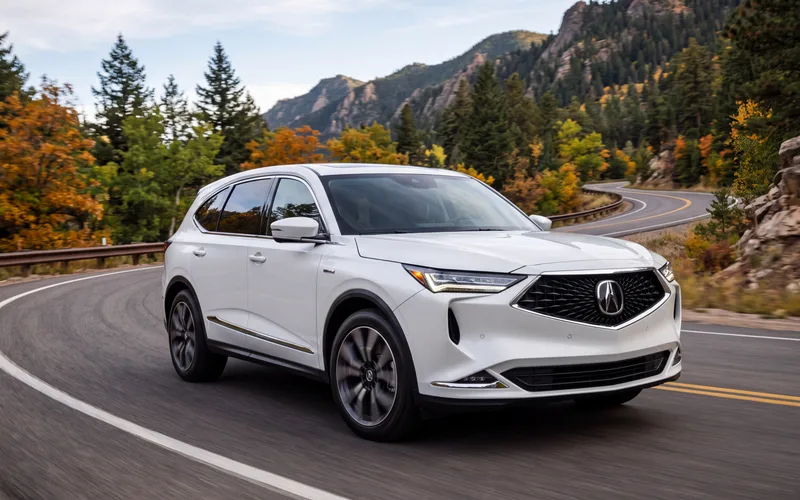 Acura MDXMid-Size Luxury SUVBetter at: Third-row seating
Similar money buys a third row, a V6 and comparable Japanese-luxury ownership costs — the obvious pick if five seats aren't enough.
Compare 2.90B-
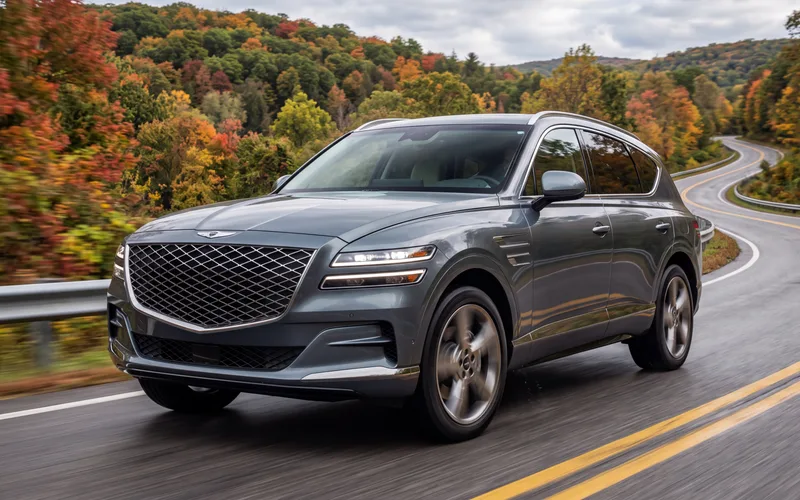 Genesis GV80Mid-Size Luxury SUVBetter at: Interior and warranty
A richer cabin, more athletic chassis and a 10-year/100,000-mile powertrain warranty for around $6,500 more than a base RX.
Compare 2.88B-
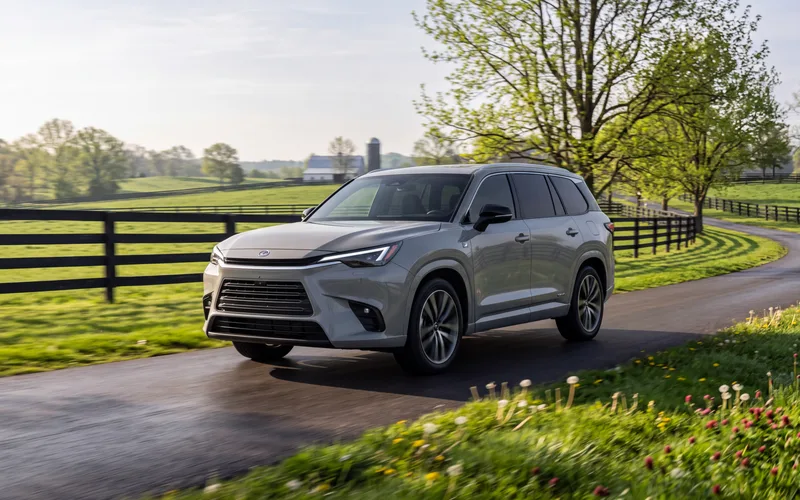 Lexus TXMid-Size Luxury SUVBetter at: Space
The same Lexus hybrid hardware and dealer experience in a three-row body that fixes the RX's cargo and seating ceiling.
CompareHow it's evolved
10 scored model years · 2017–2026
Subject scores by year
Hover or tap a score to see what moved it versus the year before. A corner mark flags a big swing.
| Year | Performance | Efficiency | Safety | Space | Cost | Reliability | Tech | Use-case | Driving | Value |
|---|---|---|---|---|---|---|---|---|---|---|
| 2026 | 48 | 44 | 77 | 50 | 59 | 84 | 75 | 68 | 66 | 78 |
| 2025 | 48 | 41 | 79 | 50 | 60 | 82 | 75 | 68 | 66 | 77 |
| 2024 | 48 | 40 | 80 | 49 | 60 | 83 | 71 | 60 | 61 | 80 |
| 2023 | 46 | 40 | 86 | 47 | 62 | 78 | 72 | 62 | 59 | 77 |
| 2022 | 45 | 47 | 69 | 54 | 64 | 89 | 53 | 59 | 60 | 66 |
| 2021 | 45 | 48 | 69 | 52 | 64 | 88 | 51 | 61 | 60 | 75 |
| 2020 | 46 | 42 | 74 | 54 | 66 | 85 | 51 | 59 | 64 | 72 |
| 2019 | 45 | 42 | 67 | 53 | 66 | 86 | 39 | 58 | 59 | 69 |
| 2018 | 46 | 42 | 72 | 55 | 67 | 87 | 40 | 58 | 62 | 69 |
| 2017 | 45 | 42 | 78 | 53 | 65 | 87 | 38 | 59 | 62 | 74 |
Compare two years
Best fit & conditions
Higher scores mean a better fit for that use case. Learn more about use-case fit →
Subject profile
Academic Probation · NHTSA safety recalls
Dec 20, 2023Air bags: sensor: occupant classificationA short circuit may develop in the Occupant Classification System (OCS) sensor, preventing the front passenger air bag from deploying.
Defect
Toyota Motor Engineering & Manufacturing (Toyota) is recalling certain 2020-2021 Avalon, Avalon Hybrid, Corolla, Highlander, Highlander Hybrid, RAV4, RAV4 Hybrid, Lexus ES350, Lexus RX350, Lexus RX450H, 2021 Sienna Hybrid, Lexus ES250, 2020-2022 Camry, Camry Hybrid, and ES300H vehicles. A short circuit may develop in the Occupant Classification System (OCS) sensor, preventing the front passenger air bag from deploying.
Risk
An air bag that does not deploy during a crash increases the risk of injury.
Remedy
Dealers will inspect and replace the sensor as necessary, free of charge. Interim letters notifying owners of the safety risk were mailed in February 2024. Some final remedy owner letters were mailed October 31, 2024. Letters will continue to be mailed in phases through January 2026. Owners may contact Toyota customer service at 1-800-331-4331. Toyota's number for this recall is 23TB15/23TA15 Lexus 23LB03/23LA03.
NHTSA campaign 23V865000 ↗Manufacturer no. 23TA15, 23LA03999,901 vehicles potentially affected (all models in the campaign)Owners notified Oct 31, 2024Filed by Toyota Motor Engineering & ManufacturingFiled as RX, RX HYBRIDFeb 3, 2021Fuel system, gasoline: storage: tank assembly: filler pipe and capThe transport hook may not have been removed prior to sale. As such, these vehicles fail to comply with the requirements of Federal Motor Vehicle Safety Standard number 301, "Fuel System Integrity."
Defect
Toyota Motor Engineering & Manufacturing (Lexus) is recalling certain 2019 Lexus RX350 and 2021 RX350 vehicles. The transport hook may not have been removed prior to sale. As such, these vehicles fail to comply with the requirements of Federal Motor Vehicle Safety Standard number 301, "Fuel System Integrity."
Risk
During a rear-end crash, the transport hook can damage the fuel filler pipe, increasing the risk of a fire.
Remedy
Lexus will notify owners, and dealers will inspect and, as necessary, remove the rear transport hook, free of charge. The recall began April 1, 2021. Owners may contact Lexus customer service at 1-800-331-4331. Lexus' number for this recall is 21LA01.
NHTSA campaign 21V043000 ↗Manufacturer no. 21LA011,081 vehicles potentially affected (all models in the campaign)Owners notified Apr 1, 2021Filed by Toyota Motor Engineering & ManufacturingFiled as RX350
12 recalls on other model years of the RX (2017–2020, 2023–2026)
Sep 17, 2026Steering: linkages: knuckle: spindle: armDue to a manufacturing error, the front steering knuckles may crack and break, which can result in a loss of vehicle steering control.
Defect
Toyota Motor Engineering & Manufacturing (Toyota) is recalling certain 2026 Lexus TX350, RX350 Hybrid, RX350, RX500 Hybrid, TX500 Hybrid, Toyota Grand Highlander, and Grand Highlander Hybrid vehicles. Due to a manufacturing error, the front steering knuckles may crack and break, which can result in a loss of vehicle steering control.
Risk
A loss of vehicle steering control increases the risk of a crash.
Remedy
Dealers will inspect and replace the front steering knuckles, as necessary, free of charge. Owner notification letters are expected to be mailed November 2, 2026. Owners may contact Toyota's customer service at 1-800-331-4331. Toyota's numbers for this recall are 26TA19 and 26LA09.
NHTSA campaign 26V598000 ↗Manufacturer no. 26TA19 / 26LA09617 vehicles potentially affected (all models in the campaign)Filed by Toyota Motor Engineering & ManufacturingFiled as RX, RX HYBRIDMar 18, 2026Back over prevention: softwareThe rearview camera image may not display when the vehicle is placed in reverse. As such, these vehicles fail to comply with the requirements of Federal Motor Vehicle Safety Standard (FMVSS) number 111, "Rear Visibility."
Defect
Toyota Motor Engineering & Manufacturing (Toyota) is recalling certain 2022-2025 Lexus NX350, NX250, 2023-2026 RX350, and 2024-2026 TX350 vehicles. The rearview camera image may not display when the vehicle is placed in reverse. As such, these vehicles fail to comply with the requirements of Federal Motor Vehicle Safety Standard (FMVSS) number 111, "Rear Visibility."
Risk
A rearview image that does not display reduces the driver's view behind the vehicle, increasing the risk of a crash.
Remedy
Dealers will update the rearview camera software or replace the rearview camera, as necessary, free of charge. Owner notification letters were mailed May 15, 2026. Owners may contact Toyota's customer service at 1-800-331-4331. Toyota's numbers for this recall are 26LB02 and 26LA02.
NHTSA campaign 26V162000 ↗Manufacturer no. 26LB02 / 26LA02144,200 vehicles potentially affected (all models in the campaign)Owners notified May 15, 2026Filed by Toyota Motor Engineering & ManufacturingFiled as RXOct 30, 2025Back over prevention: display functionPlease see the recall report for a complete list of models. A software error may cause the rearview camera to freeze or display a blank screen when the vehicle is in reverse. As such, these vehicles fail to comply with the requirements of Federal Motor Vehicle Safety Standard (FMVSS) number 111, "Rear Visibility."
Defect
Toyota Motor Engineering & Manufacturing (Toyota) is recalling certain 2022-2026 Toyota, Lexus, and Subaru Solterra vehicles equipped with a Panoramic View Monitor (PVM) system. Please see the recall report for a complete list of models. A software error may cause the rearview camera to freeze or display a blank screen when the vehicle is in reverse. As such, these vehicles fail to comply with the requirements of Federal Motor Vehicle Safety Standard (FMVSS) number 111, "Rear Visibility."
Risk
A rearview camera that fails to display an image can reduce the driver's view behind the vehicle, increasing the risk of a crash.
Remedy
Dealers will update the parking assist software, free of charge. Owner letters were mailed January 2, 2026. Owners may contact Toyota's customer service at 1-800-331-4331. Toyota's numbers for this recall are 25TB13 and 25LB06. Subaru's number for this recall is WRE25.
NHTSA campaign 25V744000 ↗Manufacturer no. 25TB13/25LB06/WRE251,024,407 vehicles potentially affected (all models in the campaign)Owners notified Dec 5, 2025Filed by Toyota Motor Engineering & ManufacturingFiled as REDUNDANT RX PLUG-IN HYBRID, RX, RX HYBRID, RX PLUG-IN HYBRIDSep 11, 2025Electrical system: instrument cluster/panelDue to an error in the instrument panel software at vehicle startup, the instrument panel may fail to display vehicle speed, brake system, and tire pressure warning lights.
Defect
Toyota Motor Engineering & Manufacturing (Toyota) is recalling certain 2023-2024 Toyota Venza, 2023-2025 RAV4 Prime, RAV4, Highlander, GR Corolla, Crown, 2024-2025 Lexus TX, LS, Toyota Tacoma, Grand Highlander, and 2025 Lexus RX, Toyota Crown Signia, Camry, RAV 4 Plug-in Hybrid (PHEV), and 4 Runner vehicles. Due to an error in the instrument panel software at vehicle startup, the instrument panel may fail to display vehicle speed, brake system, and tire pressure warning lights.
Risk
An instrument panel display that does not show critical information can increase the risk of a crash or injury.
Remedy
Dealers will update the instrument panel software over-the-air (OTA) for non-PHEV vehicles, free of charge. For PHEV vehicles, dealers will inspect the instrument panel assembly, and either replace it, or update the software, free of charge. Owner letters were mailed December 5, 2025. Additional letters will be sent, anticipated in May 2026. This is a phased recall. Owners may contact Toyota's customer service at 1-800-331-4331. Toyota's numbers for this recall are 25TB08 and 25TA08. Lexus' numbers for this recall are 25LB05 and 25LA05.
NHTSA campaign 25V595000 ↗Manufacturer no. See Part 573 Report591,377 vehicles potentially affected (all models in the campaign)Owners notified Dec 5, 2025Filed by Toyota Motor Engineering & ManufacturingFiled as RXFeb 6, 2025Seat belts: rear/other: webbingThe second-row center seat belt webbing may be damaged. As such, these vehicles fail to comply with the requirements of Federal Motor Vehicle Safety Standard (FMVSS) number 209, "Seat Belt Assemblies."
Defect
Toyota Motor Engineering & Manufacturing (Toyota) is recalling certain 2025 Toyota Camry Hybrid, Lexus NX250, NX350, NX350 Hybrid, 2024-2025 Lexus RX350, RX350 Hybrid, and RX500 Hybrid vehicles. The second-row center seat belt webbing may be damaged. As such, these vehicles fail to comply with the requirements of Federal Motor Vehicle Safety Standard (FMVSS) number 209, "Seat Belt Assemblies."
Risk
A damaged seat belt may not adequately restrain an occupant, increasing the risk of injury during a crash.
Remedy
Dealers will inspect the seat belt webbing and replace the seat belt assembly if necessary, free of charge. Owner notification letters were mailed March 20, 2025. Owners may contact Toyota's customer service at 1-800-331-4331. Toyota's numbers for this recall are 25TA03 and 25LA03.
NHTSA campaign 25V059000 ↗Manufacturer no. 25TA03 / 25LA0340,922 vehicles potentially affected (all models in the campaign)Owners notified Mar 20, 2025Filed by Toyota Motor Engineering & ManufacturingFiled as RX, RX HYBRIDJan 29, 2025Air bags: frontal: driver clockspring/spiral cassette · Steering: columnAn electrical connection inside the steering column's spiral cable assembly may be insufficiently welded, causing the connection to separate and deactivate the driver's air bag. As such, these vehicles fail to comply with the requirements of Federal Motor Vehicle Safety Standard number 208, "Occupant Crash Protection."
Defect
Toyota Motor Engineering & Manufacturing (Toyota) is recalling certain 2023 Toyota Corolla, Corolla Cross, Corolla Cross Hybrid, Highlander, Highlander Hybrid, Tacoma, Lexus RX350, 2023-2024 NX250, and NX350 vehicles that may have been incorrectly repaired under previous NHTSA recall number 23V-480. An electrical connection inside the steering column's spiral cable assembly may be insufficiently welded, causing the connection to separate and deactivate the driver's air bag. As such, these vehicles fail to comply with the requirements of Federal Motor Vehicle Safety Standard number 208, "Occupant Crash Protection."
Risk
A deactivated driver's air bag will not deploy as intended, increasing the risk of injury during a crash.
Remedy
Dealers will inspect and replace the spiral cable assembly as necessary, free of charge. Owner notification letters were mailed March 17, 2025. Owners may contact Toyota's customer service at 1-800-331-4331. Toyota's number for this recall is 25TA02. Lexus' number for this recall is 25LA02.
NHTSA campaign 25V040000 ↗Manufacturer no. 25TA02/25LA021,716 vehicles potentially affected (all models in the campaign)Owners notified Mar 17, 2025Filed by Toyota Motor Engineering & ManufacturingFiled as RXJan 22, 2025Fuel system, gasoline: delivery: fuel pumpThe low-pressure fuel pump inside the fuel tank may fail.
Defect
Toyota Motor Engineering & Manufacturing (Toyota) is recalling certain 2018 Camry, 2019 Lexus NX300, and 2019 RX350L vehicles. The low-pressure fuel pump inside the fuel tank may fail.
Risk
Fuel pump failure can cause an engine stall, increasing the risk of a crash.
Remedy
Dealers will replace the fuel pump assembly, free of charge. Owner notification letters were mailed March 12, 2025. Owners may contact Toyota's customer service at 1-800-331-4331. Toyota's numbers for this recall are 25TA01 and 25LA01.
NHTSA campaign 25V028000 ↗Manufacturer no. 25TA01 / 25LA01858 vehicles potentially affected (all models in the campaign)Owners notified Mar 12, 2025Filed by Toyota Motor Engineering & ManufacturingFiled as RXJun 27, 2024Seats: front assembly: head restraintThe head restraints on the driver and front passenger seats may be inadvertently removed without pressing the lock release button. As such, these vehicles fail to comply with the requirements of Federal Motor Vehicle Safety Standard (FMVSS) Number 202, "Head Restraints."
Defect
Toyota Motor Engineering & Manufacturing (Toyota) is recalling certain 2024 Lexus RX 350, RX 350h, 2024-2025 NX 250, NX 350, and NX 350h vehicles. The head restraints on the driver and front passenger seats may be inadvertently removed without pressing the lock release button. As such, these vehicles fail to comply with the requirements of Federal Motor Vehicle Safety Standard (FMVSS) Number 202, "Head Restraints."
Risk
A head restraint that is inadvertently removed and not reinstalled can increase the risk of injury during a rear-end crash.
Remedy
Dealers will replace the driver and front passenger seat head rest assemblies, free of charge. Owner letters were mailed February 14, 2025. Owners may contact Toyota customer service at 1-800-331-4331. Toyota's numbers for this recall are 24LB06 and 24LA06.
NHTSA campaign 24V482000 ↗Manufacturer no. 24LB06, 24LA0611,418 vehicles potentially affected (all models in the campaign)Owners notified Feb 14, 2025Filed by Toyota Motor Engineering & ManufacturingFiled as RX, RX HYBRIDJul 12, 2023Air bags: frontal: driver clockspring/spiral cassette · Steering: columnAn electrical connection inside the steering column's spiral cable assembly may be insufficiently welded, causing the connection to separate and deactivate the driver's air bag. As such, these vehicles fail to comply with the requirements of Federal Motor Vehicle Safety Standard number 208, "Occupant Crash Protection."
Defect
Toyota Motor Engineering & Manufacturing (Toyota) is recalling certain 2023 Corolla, Corolla Cross, Corolla Cross Hybrid, Highlander, Highlander Hybrid, Tacoma, 2023 Lexus RX350, RX350 Hybrid, RX500 Hybrid, 2023-2024 Lexus NX250, NX350, and NX350 Hybrid vehicles. An electrical connection inside the steering column's spiral cable assembly may be insufficiently welded, causing the connection to separate and deactivate the driver's air bag. As such, these vehicles fail to comply with the requirements of Federal Motor Vehicle Safety Standard number 208, "Occupant Crash Protection."
Risk
A deactivated driver's air bag that does not deploy as intended increases the risk of injury during a crash.
Remedy
Dealers will inspect and replace the spiral cable assembly, if necessary, free of charge. Owner notification letters were mailed September 8, 2023. Owners may contact Toyota's customer service at 1-800-331-4331. Toyota's number for this recall is 23TA08. Lexus' number for this recall is 23LA02.
NHTSA campaign 23V480000 ↗Manufacturer no. 23TA08/ 23LA02152,927 vehicles potentially affected (all models in the campaign)Owners notified Sep 8, 2023Filed by Toyota Motor Engineering & ManufacturingFiled as RX HYBRID, RX350, RX500HNov 4, 2020Fuel system, gasoline: delivery: fuel pumpThe low-pressure fuel pump inside the fuel tank may fail.
Defect
Toyota Motor Engineering & Manufacturing (Toyota) is recalling certain 2018-2019 4Runner, 2019-2020 Avalon, 2019 Corolla Hatchback, 2017-2019 Highlander, 2018-2020 Camry, 2020 Corolla, 2018-2019 Land Cruiser, 2017-2020 Tacoma, 2019-2020 RAV4, 2019-2020 Sequoia, 2017-2020 Sienna, 2019-2020 Tundra, 2018-2020 Lexus ES350, 2017 Lexus GS200t, 2017-2019 Lexus GS350, 2019 Lexus GS300, 2018-2020 Lexus LC500h, 2019-2020 Lexus LS500, 2018-2019 Lexus GX460, 2017 Lexus IS200t, 2019 Lexus IS300, 2019 Lexus IS350, 2018-2020 Lexus LC500, 2018 Lexus LS500, 2019 Lexus LS500h, 2018-2019 Lexus LX570, 2017 Lexus RC200t, 2019 Lexus RC300, RC350, 2017 and 2019-2020 Lexus RX350, 2018-2020 RX350L, 2019 Lexus UX200, 2018-2019 Lexus NX300 vehicles. The low-pressure fuel pump inside the fuel tank may fail.
Risk
If the fuel pump fails, the engine can stall while driving, increasing the risk of a crash.
Remedy
Toyota will notify owners, and dealers will replace the fuel pump assembly with an improved one, free of charge. Owners of specific models were notified that remedy parts were available starting January 21, 2021. Owners of other models will be notified as remedy parts become available. Remedy parts should be available for all affected vehicles by late March 2021. Owners may contact Toyota customer service at 1-888-270-9371 or Lexus customer service at 1-800-255-3987. Note: This recall is an expansion of recall 20V-012. Toyota's number for this recall is 20TA02. Lexus' number for this recall is 20LA01.
NHTSA campaign 20V682000 ↗Manufacturer no. 20TA02, 20LA011,525,742 vehicles potentially affected (all models in the campaign)Owners notified Jan 21, 2021Filed by Toyota Motor Engineering & ManufacturingFiled as RX350, RX350LJan 13, 2020Fuel system, gasoline: delivery: fuel pumpToyota Motor Engineering & Manufacturing (Toyota) recalled certain 2018-2019 4Runner, Highlander, Camry, Land Cruiser, Sequoia, Sienna, Tacoma and Tundra, and Lexus RC 300, RC 350, GS 350, GX 460, IS 300, LC 500, LS 500, LX 570, RX 350L, and 2019 Toyota Avalon and Corolla, and certain Lexus NX 300, and ES 350 vehicles on January 13, 2020. On March 4, 2020, Toyota expanded the recall to include certain 2014-2015 Toyota 4Runner and Land Cruiser, 2018 Avalon, Corolla, 2014 FJ Cruiser, 2017 Sienna and Lexus 2018 ES 350, 2018-2019 GS 300, 2013-2014 GS350, 2014-2015 GX 460, IS 350 and LX 570, 2014 IS F, 2018-2019 IS 350, LC 500H and LS 500H, 2013-2015 LS 460, 2015 NX 200T and RC350, 2017 RC 200T and RX 350. Toyota also removed the 2018-2019 Toyota 4Runner and Land Cruiser and 2018-2019 Lexus GX 460 and LX 570 and 2019 NX300 from inclusion in this recall. On March 19, 2020, Toyota expanded the recall to include 2015 Lexus GS350 vehicles. The low-pressure fuel pump inside the fuel tank may fail.
Defect
Toyota Motor Engineering & Manufacturing (Toyota) recalled certain 2018-2019 4Runner, Highlander, Camry, Land Cruiser, Sequoia, Sienna, Tacoma and Tundra, and Lexus RC 300, RC 350, GS 350, GX 460, IS 300, LC 500, LS 500, LX 570, RX 350L, and 2019 Toyota Avalon and Corolla, and certain Lexus NX 300, and ES 350 vehicles on January 13, 2020. On March 4, 2020, Toyota expanded the recall to include certain 2014-2015 Toyota 4Runner and Land Cruiser, 2018 Avalon, Corolla, 2014 FJ Cruiser, 2017 Sienna and Lexus 2018 ES 350, 2018-2019 GS 300, 2013-2014 GS350, 2014-2015 GX 460, IS 350 and LX 570, 2014 IS F, 2018-2019 IS 350, LC 500H and LS 500H, 2013-2015 LS 460, 2015 NX 200T and RC350, 2017 RC 200T and RX 350. Toyota also removed the 2018-2019 Toyota 4Runner and Land Cruiser and 2018-2019 Lexus GX 460 and LX 570 and 2019 NX300 from inclusion in this recall. On March 19, 2020, Toyota expanded the recall to include 2015 Lexus GS350 vehicles. The low-pressure fuel pump inside the fuel tank may fail.
Risk
If the fuel pump fails, the engine can stall while driving, increasing the risk of a crash.
Remedy
Toyota will notify owners, and dealers will replace the fuel pump, free of charge. The recall began May 4, 2020. Owners may contact Toyota customer service at 1-888-270-9371 or Lexus customer service at 1-800-255-3987. Toyota's numbers for this recall are 20TB02 and 20TA02 for Toyota vehicles and 20LB01 and 20LA01 for Lexus vehicles.
NHTSA campaign 20V012000 ↗Manufacturer no. 20TB02/20TA02/20LB011,830,752 vehicles potentially affected (all models in the campaign)Owners notified May 1, 2020Filed by Toyota Motor Engineering & ManufacturingFiled as RX350, RX350LApr 3, 2018Service brakes, hydraulic: power assist: vacuumDuring the manufacturing process, the oil galley in the rotor for the brake booster vacuum pump assembly may have been improperly machined possibly resulting in a sudden loss of brake assist.
Defect
Toyota Motor Engineering & Manufacturing (Toyota) is recalling certain 2018 Toyota Camry and Highlander vehicles, 2017 Toyota Sienna and Tacoma vehicles and 2017 Lexus RX350 vehicles. During the manufacturing process, the oil galley in the rotor for the brake booster vacuum pump assembly may have been improperly machined possibly resulting in a sudden loss of brake assist.
Risk
A sudden loss of braking assist can increase the risk of a crash.
Remedy
Toyota will notify owners, and dealers will replace the brake booster vacuum pump, free of charge. The recall began on May 9, 2018. Owners may contact Toyota customer service at 1-888-270-9371, or Lexus customer service at 1-800-255-3987. Toyota's numbers for this recall are J0K/JLD.
NHTSA campaign 18V211000 ↗Manufacturer no. J0K/JLD6,046 vehicles potentially affected (all models in the campaign)Owners notified May 9, 2018Filed by Toyota Motor Engineering & ManufacturingFiled as RX350
Source: NHTSA Office of Defects Investigation recall database, model years 2017–2026. Recalls are listed by model year as the manufacturer filed them; whether a specific car is affected depends on its VIN — check a VIN at nhtsa.gov ↗. NHTSA model names matched to this page: REDUNDANT RX PLUG-IN HYBRID, RX, RX HYBRID, RX PLUG-IN HYBRID, RX350, RX350L, RX500H.
Detailed scoring by subject
1Performance & PowertrainThe RX's lowest-graded category.1.01D
The 2021 RX 350 is a carry-over of the 2019 facelift of the fourth-generation (AL20) car, with the naturally aspirated 2GR-FKS 3.5L V6 unchanged; 295 hp is competitive but unremarkable now that most mid-size luxury rivals run turbo sixes or high-output turbo fours.
Naturally aspirated peak torque arrives high in the rev range, so the RX trails turbocharged rivals that make more twist from ~1,600 rpm despite similar on-paper output.
Lexus's own quoted figure for the RX 350 is 7.7 seconds and independent tests cluster between roughly 7.4 and 7.9 seconds depending on drivetrain; mid-pack for the segment and well behind turbocharged German rivals.
The naturally aspirated V6 is smooth and quiet with no turbo lag to manage and a well-isolated cabin, but throttle calibration is deliberately soft and reviewers and owners both describe a lazy initial response rather than eager delivery.
The 8-speed automatic shifts smoothly in normal driving and suits the RX's comfort brief, but it is calibrated for economy — early upshifts that bog the engine and a beat of hesitation before a downshift are a recurring owner complaint on this generation.
3,500 lbs with a dead-weight hitch is typical for a unibody mid-size luxury crossover — enough for a small boat or utility trailer, short of the 5,000 lbs several body-on-frame and turbo rivals advertise.
Dynamic Torque Control AWD is a factory option on every RX 350 grade (and the RX 450h's E-Four is standard), but it is a basic on-demand system — no low range, no terrain modes, no meaningful torque vectoring.
The RX is an unapologetically pavement-focused unibody crossover — roughly 8 inches of clearance, no skid plates, no locking differential, no off-road drive modes and no off-road grade in the lineup.
For 2021 the RX offers two genuinely distinct powertrains — the 295 hp gas V6 and the 308 hp RX 450h hybrid — each in standard and long-wheelbase L form, but there is no turbo option, no plug-in hybrid (the 450h+ arrives with the 2023 redesign) and no EV.
2Efficiency & RangeOne of the RX's weakest categories.1.18D
A naturally aspirated 3.5L V6 with no cylinder deactivation and no stop-start returns middling combined economy for a mid-size crossover; the RX 350 is graded here as a gas vehicle, with the far thriftier 450h hybrid scored as its own configuration.
City economy is the RX 350's weakest figure — without stop-start or an electric assist motor the 4,400-lb crossover burns fuel at idle and from rest.
Highway economy is the V6's best showing — tall 8th gear and good aerodynamics make 27 MPG respectable for the class, though turbo-four rivals of similar size beat it.
A large 19.2-gallon tank offsets the modest economy and yields a solid mid-400s cruising range; EPA publishes no separate range figure for gas vehicles, so this is tank capacity × EPA combined.
Running cost lands mid-pack — the thirst of the V6 is partly offset by the RX 350 accepting regular unleaded, unlike most premium-fuel luxury rivals.
The RX 350 runs on 87-octane regular unleaded — a genuine and unusual running-cost advantage in the luxury segment, where premium is typically required, and it keeps the annual fuel bill well below what the raw MPG would suggest.
3SafetyOne of the RX's strongest categories.2.70B-
NHTSA retested the 2021 RX 350 after Toyota changed the passenger frontal and seat-cushion airbags mid-year, and the post-change build carries a 4-star overall rating rather than the 5 stars the early build held. The 4-star figure is the one that applies to the bulk of 2021 production.
The 2021 RX earns Good in all six IIHS crashworthiness tests — driver and passenger small overlap front, moderate overlap front, side, roof strength and head restraints — and takes a Top Safety Pick award. It falls short of TSP+ only because no headlight variant rates Good.
For 2021 Lexus made Blind Spot Monitor and Rear Cross Traffic Alert standard on every grade, joining the Lexus Safety System+ 2.0 suite that the 2020 facelift already made standard. That puts AEB, all-speed adaptive cruise, lane keeping/centering, BSM and RCTA on the base trim with nothing critical left in an options box.
IIHS rates the standard Pre-Collision System Superior for vehicle-to-vehicle front crash prevention, avoiding collisions outright in both the 12 mph and 25 mph tests, and Advanced rather than Superior for daytime pedestrian detection. Lexus claims low-light pedestrian capability, but IIHS had not yet begun nighttime pedestrian testing for this model year, so that claim is unverified by test.
Blind Spot Monitor and Rear Cross Traffic Alert are standard on every 2021 grade — a real upgrade over 2020, where they were bundled options — but both are alert-only, with no steering or braking intervention on the blind-spot side. Rear cross-traffic braking and reverse automatic braking remain package options rather than standard equipment.
Lane Departure Alert with steering assist is standard, and Lane Tracing Assist adds true lane centering when adaptive cruise is engaged, including a follow-the-car-ahead fallback where markings are missing. Toyota/Lexus LTA of this generation is competent on clearly marked highway but is commonly described as wandering within the lane rather than holding a confident center line.
All-Speed Dynamic Radar Cruise Control is standard and works the full speed range down to a complete stop in traffic, and it pairs with Lane Tracing Assist for an integrated highway-assist experience. The combination is refined and well-suited to the RX's commuter mission, though it stops short of the more capable systems now offered by German rivals.
No hands-free highway driving is offered on the 2021 RX at any trim. Lexus Teammate, the brand's hands-off Advanced Drive system, launched on the 2022 LS 500h and never reached this fourth-generation RX; LSS+ 2.0 is a hands-on assistance suite that nags for steering input.
This is the RX's clear safety weak point and the single reason it holds Top Safety Pick rather than TSP+. No 2021 headlight variant rates Good: the standard LED projector and the Triple-Beam LED both rate Acceptable, and both adaptive Triple-Beam auto-leveling AFS variants rate Poor for excessive glare and inadequate coverage — meaning the upgraded lighting is the worse-rated hardware.
Forward sightlines are good for the class thanks to a low cowl and a commanding seating position, but the RX's floating-roof styling brings thick rear pillars and a shallow rear window that create real over-the-shoulder blind zones. Standard BSM/RCTA and newly standard power-folding auto-dimming mirrors compensate electronically, though the Panoramic View Monitor that would fill in the remaining gaps stays optional.
IIHS rates the RX's child-seat anchor hardware Good+, its top grade, with two outboard positions carrying complete LATCH hardware and a third usable via borrowed anchors. Wide-opening rear doors and a flat, roomy second-row bench make installation straightforward in the five-seat RX 350.
4Space & ComfortGrades below the middle of the scale.1.50D
The standard-wheelbase RX 350 being scored is a strict two-row five-seater; buyers wanting a third row have to step to the stretched RX 350L, which is a separate body and a separate purchase decision.
Front headroom is average for a mid-size SUV — generous enough that the RX never feels tight, but the low-slung roofline and standard moonroof on most builds give away space to boxier rivals.
Front legroom is a genuine standout — 44.1 inches is near the top of the mid-size class and comfortably more than the fifth-generation RX that replaced this car offers.
Second-row headroom is strong for the segment — the floating-roof styling costs rear visibility but not rear head clearance, and adults sit upright without ducking.
Thirty-eight inches puts two adults behind two adults in comfort, and the 40/20/40 bench slides and reclines — solidly above average without matching the most spacious three-row rivals.
The RX 350 being scored has no third row at all, and the RX 350L's optional one is token rather than usable — 23.5 in of legroom and 34.8 in of headroom is child-only seating reached past a second row that has to give up seven inches of its own legroom to create it.
This is the fourth-generation RX's defining practical weakness: the cargo hold is subcompact-sized in a mid-size body, and the high load floor and heavily raked tailgate cost usable volume no folding trick recovers.
Folding everything recovers a usable but still class-trailing 56 cubic feet, and the sources disagree by measurement method — the Lexus-aligned figure is quoted here, while Chrome Data listings put the same space at 32.7 cu ft.
Everyday storage is competent and no more — a deep console bin, usable door pockets, a shelf ahead of the passenger and six USB ports, but no underfloor cargo well of consequence, no onboard AC power and none of the packaging innovation the segment's best now offer.
Seat comfort is one of the RX's core strengths and a repeated theme in reviews: broad, well-padded, eight-way-or-better power front chairs biased toward long-haul cushioning over bolstering, with a reclining second row that keeps adults happy for hours.
Isolation is excellent and broken pavement is smothered rather than transmitted, but reviewers stop short of calling it class-leading — there is real float over undulations, and the 20-inch wheels and the F Sport's firmer tune both erode the advantage.
Quietness is the RX's signature: acoustic glass and heavy sound deadening keep wind and road noise low at highway speed, and the naturally aspirated V6 stays distant unless worked hard.
Dual-zone automatic climate control and power front seats are standard, but the comfort kit buyers actually want — heated and ventilated front seats, heated steering wheel, heated rear seats, panoramic roof — all sits in option packages on a car that already starts north of $46,000, and there is no separate rear climate zone on the standard-wheelbase RX.
5Cost of OwnershipMid-pack among this car's ten categories.2.30C+
2021 is the sixth year of the fourth-generation (AL20) RX and the second year of the 2019 facelift, so pricing moved only marginally — the front-drive RX 350 opened at $45,220 plus Lexus's $1,025 delivery, processing and handling fee, with all-wheel drive a flat $1,400 more. That undercuts a BMW X5 or Mercedes-Benz GLE by roughly $10,000 at the entry point, which is the RX's historic value argument.
The 2021 RX sells its content in packages rather than in named grades, and the volume build is an all-wheel-drive RX 350 with the Premium Package — the step that adds the power moonroof, heated and ventilated front seats, heated leather-wrapped steering wheel and driver memory, and the one that dominates used listings for this year. AWD at $47,645 delivered plus a Premium Package in the $2,400–$2,900 range lands a typical car just over $50,000; the gas ladder tops out at $53,525 for the AWD F SPORT Handling.
The naturally aspirated 2GR-FKS V6 and eight-speed automatic are long-proven Toyota hardware with no turbocharger, no belt-driven complexity and a repair record among the best in the luxury field, so unscheduled spend is genuinely low; what keeps the figure from being cheap is Lexus dealer labour rates, 20-inch tyres on the popular builds and complimentary maintenance that runs out after a single year. The published estimates straddle this number by a wide margin, so it is set between the poles rather than taken from either.
Resale is the RX's single strongest ownership argument, two independent projections agree closely, and for this model year the real-world resale market has now caught up with them: a 2021 car bought new in late 2020 appraises today at roughly two-thirds of what it cost. The class average loses half its value over the same span. Set near the top of the 40–70% SUV band, short of the ceiling only because the 2020–2022 used-market spike flattered every retention figure from this period.
Lexus's basic new-vehicle limited warranty ran 48 months or 50,000 miles across the 2021 range, mid-pack for a luxury brand — level with BMW and Mercedes-Benz, behind Genesis and Jaguar's five-year terms and well behind the Korean brands' non-luxury coverage.
Seventy-two months or 70,000 miles sits near the bottom of the 5–10 year band — Lexus leans on its dependability record rather than warranty length, so an RX 350 buyer gets markedly less paper protection than a Genesis (10 yr / 100,000 mi) owner. The long hybrid and battery terms apply to the 450h and 450hL, not to the gas RX 350 scored here.
The included-maintenance period is genuinely short — one year or 10,000 miles, covering only the first two scheduled services, beaten by Toyota's own 2 yr / 25,000 mi ToyotaCare and by BMW's and Jaguar's multi-year plans. What lifts the 2021 RX above a bare mid-band score is the surrounding package: four years of unlimited-mileage roadside assistance, a ten-year Safety Connect trial (automatic collision notification, emergency assistance, enhanced roadside, stolen vehicle locator) rather than the usual one-to-three years, a Service Connect trial, Lexus Enform with Alexa integration, and the brand's loaner-and-concierge dealer treatment that consistently tops ownership-satisfaction surveys.
$50,400 volume-trim price minus its estimated resale value after 5 years (66% retained, or about $33,264) leaves about $17,136 in depreciation. Add the projected $5,900 in 5-year maintenance and repairs, and owning this vehicle for 5 years costs about $23,036 in total.
6Reliability & QualityThe RX's best-graded category.3.97A+
A carry-over 2021 of the AL20 RX in its sixth model year, two years past the 2020 facelift, so the hardware is thoroughly debugged; J.D. Power rates its quality & reliability 85/100 ('Great') and Consumer Reports calls the 2021 RX much more reliable than the average 2021 vehicle. Held below the 90s because the 2021 car's NHTSA complaint file is real rather than empty.
Lexus is the benchmark dependability brand rather than merely a top-five one — it led the 2021 J.D. Power VDS for the ninth time in ten years, and by a wide margin over the industry average.
Two NHTSA campaigns reach MY2021 RX 350: a trivial 1,081-unit transport-hook noncompliance (21V043000) and the much larger 23V865000 occupant-classification-sensor short circuit, a ~1M-unit Toyota/Lexus campaign in which the front passenger airbag may not deploy as designed. Typical activity with nothing systemic to this model, but the airbag campaign and the complaint volume clustered around it keep it out of the clean-record band.
The 3.5L 2GR-FKS V6 (295 hp / 267 lb-ft) with the Aisin eight-speed automatic is a naturally aspirated, timing-chain, port-and-direct-injection design with a 250,000–300,000-mile reputation across Highlander, Camry, Tacoma and RX. Docked a few points for the family's known timing-cover sealant seepage and water-pump/ignition-coil wear items rather than for anything structural.
Reviewers place the RX cabin among the plushest and most meticulously crafted in the mid-size luxury SUV class — soft leather, high-grade touch points, hard plastics confined to places occupants rarely touch. Short of the top band only because a few outlets note it stops short of the richest finishes offered by German rivals at the same money.
Kyushu-built assembly is consistently described as solid with superb fit and finish, and the NHTSA file carries no assembly-quality pattern; scattered owner reports of interior/exterior trim mismatch and a recurring road/exhaust-noise theme across 2020–2022 cars — an NVH complaint rather than a build defect — keep it out of the high 80s/90s.
About 240 US Lexus stores is thinner coverage than a mainstream brand, but dealer service satisfaction is near best-in-class among premium marques and the RX is the volume nameplate every one of those stores is set up around.
Running costs are not merely good for a luxury SUV but below the all-vehicle average, helped by heavy Toyota Highlander parts commonality and a regular-fuel V6 with no turbos, air suspension or exotic hardware to fail.
7Technology & InfotainmentOne of the RX's weakest categories.1.43D
The volume RX 350 leaves the showroom with an 8.0-inch display — small by 2021 luxury standards — and the 12.3-inch panel that Lexus markets the car on is locked behind the Navigation Package.
The 2019 facelift finally moved the screen 5.5 inches closer so it could be touched, which fixed the worst of the old Remote Touch-only arrangement, but the software underneath is unchanged: dated graphics, deep nested menus, and the touchpad still sitting on the console as the primary controller for anything the driver cannot reach.
Both Apple CarPlay and Android Auto are standard across the 2021 range — Android Auto arrived only with the facelift — but both are wired-only, and the wireless charger that would make a cable redundant is itself a new-for-2021 option.
Dynamic Voice Command handles natural phrasing for climate and audio better than the segment average and Amazon Alexa integration is built in, but native navigation is not standard equipment at all — it comes with the same package as the big screen, so the volume car navigates by phone.
The standard nine-speaker system is clean if unremarkable, but the optional 15-speaker Mark Levinson Premium Surround system is one of the genuinely excellent factory audio systems in the class, with a 12-speaker Pioneer upgrade sitting between them.
The RX 350 still runs conventional analog dials with a small color multi-information display between them; the only genuinely digital cluster in the lineup is the F Sport's sliding-ring TFT, which the volume car does not get.
There is no whole-vehicle over-the-air update capability on this car — the only thing that refreshes remotely is map data through Dynamic Navigation, and that requires the navigation option the volume trim does not carry. Firmware changes mean a dealer visit.
Lexus Enform Remote covers the essentials properly — remote start with climate, lock/unlock, vehicle locate, fuel level, and Alexa voice control — and the three-year trial is generous, but it becomes a paid subscription afterward and there is no phone-as-key or digital key on this car.
Six USB ports across both rows is a good count, but they are legacy USB-A at modest amperage rather than USB-C, wireless charging only became available as an option for 2021, and there is no household AC outlet anywhere in the car.
Smart Access proximity entry with push-button start and a power liftgate are standard across the range, and remote start comes through the app rather than the key fob — but the hands-free kick-sensor tailgate is an option package item and there is no phone-as-key.
A backup camera is standard as federal rules require, and blind-spot monitor with rear cross-traffic alert became standard for 2021, but the Panoramic View Monitor and Intuitive Parking Assist sensors that make a 193-inch crossover easy to park are package-only, and there is no automated parking.
A large color head-up display is offered and is good when fitted, but it is confined to the Executive and F Sport packages near the top of the range — a volume RX 350 buyer will not have one.
8Use-Case FitMid-pack among this car's ten categories.2.09C
Child-seat hardware is genuinely best-in-class and the wide rear door openings and 38 inches of second-row legroom make loading easy, but the 18.4-cubic-foot cargo hold is the constraint — a stroller and a week's shopping is a real squeeze in a vehicle this size.
Lexus Safety System+ 2.0 is standard on every grade and 2021 added standard blind-spot monitoring and rear cross-traffic alert, so families are not paying extra for the important hardware — the ceiling is the headlight rating that keeps the RX at Top Safety Pick rather than TSP+, and the four-star NHTSA overall result on mid-year builds.
Four people travel extremely well — quiet cabin, reclining and sliding second row, rear air vents, a 19.2-gallon tank worth roughly 420 miles — but rear amenities are thin for the money (no separate rear climate zone, rear-seat entertainment only on the long RX L) and luggage space with all seats occupied is the limiting factor on a week-long trip.
This is what the RX is built for and what it does better than almost anything in the class: light controls, a naturally aspirated V6 with no turbo lag and no stop-start shudder, a smothered ride and a very quiet cabin, backed by adaptive cruise that works down to a standstill in traffic.
Twenty-two MPG combined from a 4,400-pound naturally aspirated V6 is unremarkable, but the RX 350 takes 87-octane regular where most luxury rivals demand premium, and Toyota running gear keeps consumables cheap — so the per-mile figure is better than the MPG alone suggests without being good.
A 192.5-inch body and a roughly 38.8-foot turning circle are average rather than awkward, and the low cowl gives good forward vision — but the floating-roof styling leaves thick rear pillars and a small back window, and the 360-degree camera and parking sensors that would compensate are option-package items.
There is no bed, the cargo hold is subcompact-sized, and the 3,500-pound tow rating with a dead-weight hitch covers a small utility trailer and nothing more — the RX was never designed to be a work tool and does not pretend otherwise.
The mechanical package is about as durable as anything sold — the naturally aspirated 2GR-FKS V6 and eight-speed automatic are long-proven Toyota hardware with no turbocharger — but everything above the floorpan is luxury-oriented: leather surfaces, no wipe-clean trim option, and no fleet or commercial presence to speak of.
Provision for work is essentially limited to cargo-area tie-down hooks and a dealer-accessory hitch and crossbars — there is no onboard AC power, no washable surfaces, and no upfit ecosystem of any kind around this vehicle.
As a mile-eater the RX is excellent: broad, well-padded seats that reviewers praise for long stints, a quiet and isolated cabin, roughly 420 miles between fills from the 19.2-gallon tank, and standard full-speed adaptive cruise with lane centering to take the edge off a long interstate day.
Dynamic Torque Control AWD, about 8.2 inches of ground clearance, available roof rails and a 3,500-pound rating cover gravel roads, a bike rack and a small trailer — but there is no low range, no terrain mode, no skid plating and no onboard power, so this is an all-weather crossover rather than an adventure vehicle.
The 40/20/40 seat fold is flexible and power-folding on higher builds, roof rails and a hitch are available, but the underlying volume is the problem — 18.4 cubic feet with the seats up and 56.3 with them down means bulky gear goes on the roof or does not come.
9Driving ExperienceMid-pack among this car's ten categories.2.06C
The RX is secure and predictable but never agile — there is real body roll in corners, the soft spring and damper tune prioritizes isolation over control, and only the F Sport's adaptive dampers and Handling Package meaningfully tighten it up.
Accurate enough to place the car without fuss and better connected than earlier RX generations, but the electric rack is light and completely mute — Car and Driver's verdict is that there is essentially no feedback at all.
Stopping power is adequate and consistent for a 4,400-pound crossover, with instrumented 70-0 distances for this generation landing in the high 160s to mid 170s of feet, but the pedal is deliberately soft at the top of its travel to suit the comfort brief rather than to inspire.
The naturally aspirated 2GR-FKS V6 is inherently smooth, there is no turbo lag to calibrate around and no automatic stop-start to shudder on restart — but throttle tip-in is deliberately soft and the eight-speed automatic is geared for economy, so a request for power meets a beat of hesitation before the downshift arrives.
A naturally aspirated V6 in a heavily insulated body is close to the best case for this item: distant and smooth at cruise, and pleasant rather than coarse when extended, with none of the three- or four-cylinder thrash that afflicts downsized-turbo rivals.
Average for a mid-size SUV — a suburban U-turn needs care but not a three-point turn. Note that Chrome Data-sourced listings publish a much wider 45 ft figure for the same car; the value used here is the one two independent sources agree on.
The driving position itself is a strength — commanding seat height, a low cowl, wide power adjustment range and easy ingress from a sensible step-in height — but the console-mounted touchpad still governs anything out of arm's reach, and the floating-roof rear pillars compromise the over-shoulder view.
Nobody takes the long way home in an RX 350, and Lexus does not claim they should — soft steering, a 7.7-second 0-60 and a chassis tuned entirely for isolation add up to a comfortable appliance that enthusiasts consistently describe as unremarkable to drive.
10Value & Market PositionOne of the RX's strongest categories.3.11B
2021 was a genuine content year for the RX: blind-spot monitor with rear cross-traffic alert and power-folding, auto-dimming mirrors became standard on every grade, joining Lexus Safety System+ 2.0 (daytime bicyclist and low-light pedestrian detection, Road Sign Assist, Lane Tracing Assist), Apple CarPlay, Android Auto and Alexa, NuLuxe upholstery, a nine-speaker system, proximity key, dual-zone climate, rain-sensing wipers and a power liftgate — a safety suite that costs thousands extra on a German rival. It stays out of the upper band because the entry car still runs the 8.0-inch display rather than the available 12.3-inch split screen, and heated seats, moonroof, leather, navigation and wireless charging all live behind the Premium, Navigation or Luxury packages.
At $46,245 delivered the RX undercuts an X5 or GLE by roughly ten thousand dollars, and it converts that into ownership value better than anything in the class — the best five-year retention of any luxury mid-size SUV and annual running costs about a third below the segment average. Real transaction prices made the case stronger still in this model year, with a $2,500 factory rebate on top of routine dealer discounts. What holds it below the top band is what the money does not buy: a 295 hp naturally aspirated V6 that is merely adequate against turbocharged rivals, the widely criticised Remote Touch trackpad interface, and an 8.0-inch screen as standard in a year when rivals had moved on.
This is the broadest the RX has ever been: two powertrains (295 hp V6 RX 350 and 308 hp RX 450h hybrid), two body lengths including the three-row RX 350L and RX 450hL with six- or seven-seat configurations, front- or all-wheel drive on the gas car, F SPORT Appearance and F SPORT Handling packages, the new-for-2021 Black Line Special Edition, and a package ladder from Premium through Navigation to Luxury that spans roughly $46,000 to $60,000. The gaps are a missing plug-in hybrid — the 450h+ waits for the 2023 redesign — and no performance grade beyond the appearance-and-suspension F SPORT.
2021 was the RX's best year ever and it came in the sixth year of the generation, which is close to unheard of: 115,320 US sales, up 14.1% on 2020 and past the 2018 previous high, making it comfortably the best-selling traditional-luxury vehicle in the country and roughly 38% of Lexus's entire US volume from one nameplate. Demand was strong enough that the following year's 16.7% drop was a supply story rather than a demand one.
Lexus carries unusually durable brand equity built on dependability, dealer experience and resale, and the RX is the model that built it — the nameplate widely credited with creating the luxury crossover and leading its class for more than two decades. It sits below the top band because the brand's pull is reassurance rather than aspiration: at this price Mercedes, BMW and Porsche still hold the prestige halo, and the RX's spindle-grille styling was polarising throughout this generation.
Scored on buyer benefit, and 2021 was one of the better years to buy an RX. The model year reached dealers in early fall 2020, before the semiconductor shortage tightened supply, with Lexus supporting an aging generation ahead of the 2023 redesign: buyers routinely reported a $2,500 factory rebate stacked on dealer discounts of 6% and up, with double-digit percentage discounts achievable in competitive markets. That is a materially better deal than the same nameplate offered a year or two later, when RX inventory fell to a few days' supply and cars transacted at or above sticker. It falls short of the top band only because the discounts were strongly regional and the best of them required shopping several dealers.
2021 is the sixth model year of the fourth-generation AL20 RX, which launched for 2016, and the second year after the May 2019 facelift — so the buyer got current safety and connectivity content on a platform approaching the end of its life, with the all-new fifth-generation car arriving for 2023. The 2021 updates were real but incremental (standard blind-spot monitoring, power-folding mirrors, optional wireless charging), and the dated 8.0-inch screen and Remote Touch trackpad gave the cabin away. A mid-cycle score, pulled toward the lower half by visible redesign risk one year out.
The 2021 RX reviewed well without winning comparison tests. Critics consistently praised the ride quality, interior materials, quietness and a dependability record no rival matches, and the safety honours were real — IIHS Top Safety Pick with Good ratings in all six crashworthiness tests and a Superior front crash prevention rating. The recurring complaints are equally consistent: the Remote Touch trackpad, unremarkable acceleration from the naturally aspirated V6 and a chassis tuned for isolation rather than involvement. A strong US News placing on the strength of reliability and safety rather than a class-winning verdict puts it squarely in the well-reviewed-but-rarely-the-enthusiast-pick band.