

The verdict
A capable full-size luxury suv, strong on efficiency and held back by ownership.
Overall 2.90 (B-) across 10 graded subjects. Its strongest is efficiency & range at 3.91 (A+), its weakest cost of ownership at 0.00 (F). 8 of 10 subjects grade at C− or better.
Jump to scoresStrengths
- Efficiency & Range
- Performance & Powertrain
- Space & Comfort
What holds it back
- Cost of Ownership
- Reliability & Quality
- Technology & Infotainment
Top alternatives
Cars shoppers cross-shop with the Lucid Gravity 2.81B-
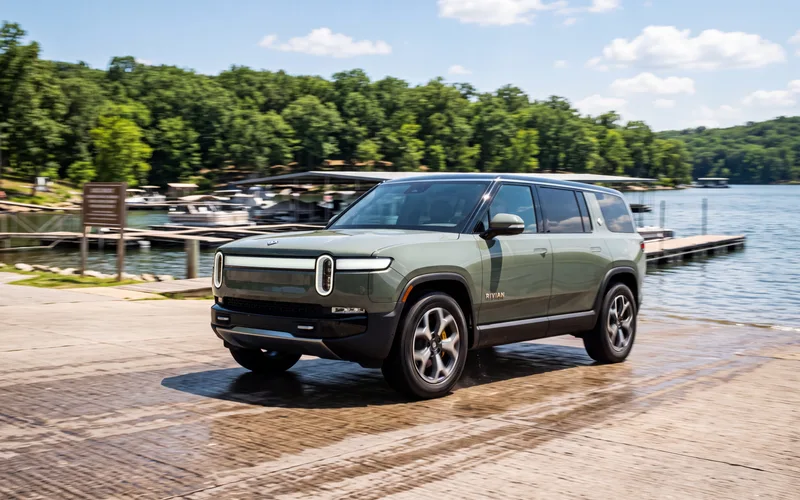 Rivian R1SFull-Size Luxury SUVBetter at: Off-road capability
The other American electric three-row at this price, with more standard equipment and far more off-road capability, though it gives up efficiency and charging speed.
Compare 2.69C+
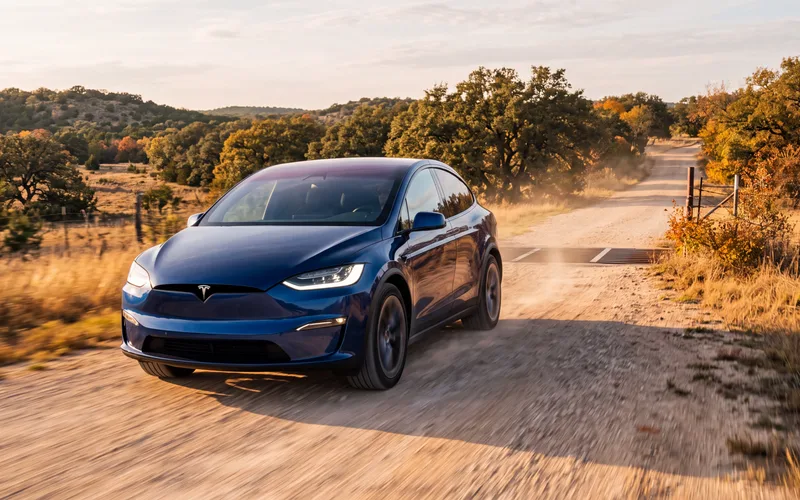 Tesla Model XFull-Size Luxury SUVBetter at: Service network
A cheaper, longer-proven fast electric three-row with a service and charging network Lucid cannot match, and much stronger resale.
Compare 2.76B-
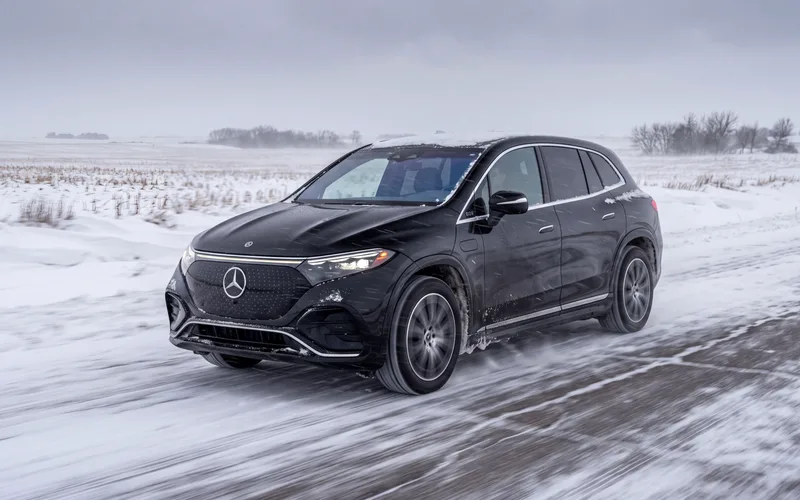 Mercedes-Benz EQS SUVFull-Size Luxury SUVBetter at: Brand support
For buyers who would trade range, speed, and $25,000 for an established luxury brand with a dealer in every metro and a more finished interior.
CompareSubject scores by year
Hover or tap a score to see what moved it versus the year before. A corner mark flags a big swing.
| Year | Performance | Efficiency | Safety | Space | Cost | Reliability | Tech | Use-case | Driving | Value |
|---|---|---|---|---|---|---|---|---|---|---|
| 2026 | 83 | 79 | 88 | 80 | 18 | 53 | 88 | 77 | 88 | 81 |
| 2025 | 83 | 87 | 77 | 83 | 16 | 46 | 73 | 73 | 81 | 75 |
Compare two years
Best fit & conditions
Higher scores mean a better fit for that use case. Learn more about use-case fit →
Subject profile
Academic Probation · NHTSA safety recalls
Mar 26, 2026SeatsThe lap belt anchor brackets on the second row seats may have insufficient welds, which can cause bracket failure. As such, these vehicles fail to comply with the requirements of Federal Motor Vehicle Safety Standard numbers 207, âSeating Systemsâ and 210, âSeat Belt Assembly Anchorages.â
Defect
Lucid USA, Inc. (Lucid) is recalling certain 2025-2026 Gravity vehicles. The lap belt anchor brackets on the second row seats may have insufficient welds, which can cause bracket failure. As such, these vehicles fail to comply with the requirements of Federal Motor Vehicle Safety Standard numbers 207, âSeating Systemsâ and 210, âSeat Belt Assembly Anchorages.â
Risk
Seat bracket failure can increase the risk of injury during a crash.
Remedy
Lucid will inspect and repair the seats or replace the seats as necessary, free of charge. Owner notification letters were mailed May 18, 2026. Owners may contact Lucid at 1-888-995-8243. Lucid's number for this recall is SR-26-04-00.
NHTSA campaign 26V192000 ↗Manufacturer no. SR-26-04-004,476 vehicles potentially affected (all models in the campaign)Owners notified May 18, 2026Filed by Lucid USA, Inc.Filed as GRAVITYJan 16, 2026Back over prevention: softwareThe rearview camera image may not display when the vehicle is placed in reverse. As such, these vehicles fail to comply with the requirements of Federal Motor Vehicle Safety Standard number 111, "Rear Visibility."
Defect
Lucid USA, Inc. (Lucid) is recalling certain 2025-2026 Gravity vehicles operating a software version prior to 3.3.20. The rearview camera image may not display when the vehicle is placed in reverse. As such, these vehicles fail to comply with the requirements of Federal Motor Vehicle Safety Standard number 111, "Rear Visibility."
Risk
A rearview image that does not display reduces the driver's view behind the vehicle, increasing the risk of a crash.
Remedy
Lucid has released an over-the-air (OTA) software update, free of charge. Owner notification letters were mailed March 4, 2026. Owners may contact Lucid at 1-888-995-8243. Lucid's number for this recall is SR-26-02-0.
NHTSA campaign 26V018000 ↗Manufacturer no. SR-26-02-03,900 vehicles potentially affected (all models in the campaign)Owners notified Mar 4, 2026Filed by Lucid USA, Inc.Filed as GRAVITY
1 recall on other model years of the Gravity (2026)
Dec 10, 2025Air bags · SeatsIncorrect backrest covers may have been installed on the front seats, preventing the side air bags from deploying correctly.
Defect
Lucid USA, Inc. (Lucid) is recalling certain 2026 Gravity vehicles. Incorrect backrest covers may have been installed on the front seats, preventing the side air bags from deploying correctly.
Risk
An air bag that does not deploy as intended increases the risk of injury during a crash.
Remedy
Lucid will inspect and replace the seat backrest covers as necessary, free of charge. Owner notification letters were mailed January 21, 2026. Owners may contact Lucid Customer Care at 1-888-99-LUCID or 1-888-995-8243. Lucid's number for this recall is SR-25-05-0.
NHTSA campaign 25V855000 ↗Manufacturer no. SR-25-05-066 vehicles potentially affected (all models in the campaign)Owners notified Jan 21, 2026Filed by Lucid USA, Inc.Filed as GRAVITY
Source: NHTSA Office of Defects Investigation recall database, model years 2025–2026. Recalls are listed by model year as the manufacturer filed them; whether a specific car is affected depends on its VIN — check a VIN at nhtsa.gov ↗. NHTSA model names matched to this page: GRAVITY.
Detailed scoring by subject
1Performance & PowertrainOne of the Gravity's strongest categories.3.66A-
The launch-year Grand Touring was the only 2025 Gravity initially offered and its standard dual-motor system produces 828 hp. This is far beyond the top of the SUV normalization band.
The two permanent-magnet motors deliver 909 lb-ft in the representative Grand Touring, more than enough to saturate the SUV scoring band.
Lucid's claimed 3.4-second sprint is exceptionally quick for a three-row luxury SUV and slightly exceeds the top of the scoring band.
Immediate EV response is paired with exceptionally linear, controlled delivery rather than an abrupt hit. Multiple launch-year reviewers praised both its smoothness and effortless acceleration.
Single-speed front and rear reduction gearing eliminates shifts, hunting, and interruption in acceleration. Selectable regenerative-braking levels, including lift-off coasting, make the behavior unusually adaptable.
A 6,000-lb maximum is strong for an electric luxury crossover, though below the 8,000-lb ceiling used for SUVs.
Dual-motor AWD is standard on the 2025 Grand Touring, with very fast in-house traction control and dedicated drive modes. It lacks low range and locking differentials, keeping it short of serious 4x4 systems.
Adjustable air suspension provides up to about 9.3–9.6 inches of clearance and Terrain mode gives credible light-duty capability. Street tires, long overhangs, and no lockers or dedicated off-road trim rule out hard-core trail use.
For model year 2025 the powertrain choice was effectively take-it-or-leave-it: the 828-hp dual-motor Grand Touring. The less powerful Touring was announced for production only in late 2025 and was not part of the initial 2025 offering.
2Efficiency & RangeThe Gravity's best-graded category.3.91A+
The EPA's most efficient 2025 Grand Touring configuration earns 108 MPGe combined; choosing the third row reduces that to 104 MPGe. The raw EPA figure is reported without adjustment for vehicle size or EV status.
EPA city efficiency is 113 MPGe in the maximum-range two-row configuration and remains 108 MPGe with the third row.
The 103-MPGe highway rating is exceptional for a large, powerful luxury SUV; the comparable three-row configuration is 100 MPGe.
The launch Grand Touring's maximum-range configuration is EPA-rated at 450 miles, while adding the third row lowers it only to 437 miles. Both are class-leading results for an electric SUV.
The 926-V Gravity can accept up to 400 kW on suitable equipment and uses a built-in boost system to sustain up to 225 kW on lower-voltage chargers, including Tesla V3 Superchargers.
Lucid quotes miles added rather than a 10–80% time, so the value uses the closest production-car charging test rather than a battery-size estimate. Testing shows roughly 24 minutes under favorable conditions, consistent with 300 EPA miles added in 20 minutes from a depleted battery.
EPA's standard annual-energy estimate is only $700 for the maximum-range configuration and $750 with the third row, exceptionally low for this performance and utility.
Home charging is inexpensive and unusually capable at up to 19.2 kW AC, while native NACS and built-in voltage boosting provide broad, fast public-charging access. Public DC pricing and the need for adapters at legacy CCS/J1772 stations are the only meaningful complications.
3SafetyGrades above the middle of the scale.3.23B+
NHTSA has not published an overall rating for the 2025 Gravity, so five stars is a low-confidence proxy based on the same-model 2025 Euro NCAP result, not a claimed U.S. rating.
The launch-year Gravity has no published IIHS crashworthiness results and no 2025 Top Safety Pick award. Its five-star Euro NCAP performance is reassuring, but cannot substitute for the IIHS tests specified by this item.
The sole 2025 Grand Touring trim includes all five rubric essentials plus intersection assist, active blind-spot intervention, front cross-traffic protection, rear pedestrian protection, and safe-exit warning. Premium and Pro packages add convenience and automation rather than filling a basic safety-suite omission.
No IIHS vehicle-to-vehicle or day/night pedestrian result is available, but standard AEB covers intersections and the vehicle also provides rear-pedestrian collision protection. Euro NCAP's strong safety-assist and vulnerable-road-user results corroborate good real-world potential without justifying a top-band maximum.
Coverage is exceptional and standard: blind-spot monitoring actively intervenes, front and rear cross-traffic systems can warn and brake, and Safe Exit Protection watches for vehicles and cyclists. Rear cross-traffic protection is disabled while towing, a sensible but relevant limitation.
Standard lane-departure protection and hands-on centering provide meaningful assistance, but independent testing found that lane centering could disengage without warning. Adaptive lane biasing is useful, yet the inconsistent handoff keeps this well below polished class leaders.
Full-speed hands-on Drive Assist includes extended stop-and-go and curve-speed control, giving it strong functional breadth. Edmunds observed occasional late braking, so execution trails the feature list and the segment's best-integrated highway systems.
Hands-free driving was optional via DreamDrive Pro hardware and was not active at the 2025 vehicle's launch; Lucid subsequently enabled it by OTA on compatible divided highways. Its limited-road, late-delivery status and lack of a long maturity record place it at the bottom of the available-hands-free band.
Automatic high beams are standard, while adaptive driving beams require an upgraded DreamDrive package and arrived through later software. With no IIHS headlight rating for any 2025 Gravity configuration, there is insufficient evidence for Good-rated credit.
The low cowl and expansive glazing aid natural forward vision, while optional Premium/Pro equipment adds surround view, blind-spot video, and see-through-vehicle views. Those camera aids were not standard on the original base DreamDrive suite, limiting the score for the representative Grand Touring.
Second-row outboard lower anchors sit behind dedicated fold-back covers and proved easy to reach, while low step-in height, 90-degree rear doors, and generous second-row room simplify installation. The third row lacks lower LATCH anchors, keeping it short of the maximum for a three-row family vehicle.
4Space & ComfortOne of the Gravity's strongest categories.3.66A-
The 2025 Grand Touring was configurable with three rows and seating for seven.
Published 2025 Grand Touring dimensions put front headroom at the top of the SUV band.
The cab-forward package prioritizes rear space; measured front legroom is adequate rather than class-leading.
Second-row headroom exceeds the framework's upper SUV benchmark.
The power-sliding second row supplies exceptional legroom.
The optional third row has genuine adult space, although access relies on the powered second row and its cushions are less suited to very long stints.
The seven-seat 2025 configuration offers strong behind-row-two space.
The scored seven-seat layout clears the framework maximum and adds a useful front trunk.
Fold-flat rear rows, an 8.1-cubic-foot frunk that doubles as a bench, underfloor storage, tray tables, outlets, and a large console make this unusually inventive.
Highly adjustable, supportive front seats and generous rear room suit long trips, though the second-row cushion is less plush.
Standard air suspension delivers an exceptional blend of plush compliance and disciplined body control.
The silent EV drivetrain and excellent wind/road isolation make the cabin notably serene.
Heated front seats are standard and ventilation, massage, heated rear seats, heated wheel, and four-zone climate were available, though several require packages.
5Cost of OwnershipThe Gravity's lowest-graded category.0.00F
Grand Touring was the only 2025 Gravity available, so it is both the entry and representative trim. The announced $79,900 Touring did not arrive until late 2025 as a later model-year offering and is not substituted here.
Because Grand Touring was the sole 2025 trim, its standard configuration is the defensible volume-trim price. Options could lift examples above $125,000, but an option-heavy press vehicle is not representative of the trim itself.
No reputable model-specific five-year maintenance-and-repair projection is yet published for this new, low-volume nameplate. The estimate reflects low routine EV service needs offset by premium tires, Lucid labor rates, first-generation complexity, and no included scheduled-maintenance plan for 2025 buyers.
A five-year Gravity-specific forecast is not publicly available, so the projection discounts a new luxury-EV nameplate for startup-brand risk and already steep early depreciation. It is directionally supported by KBB's observed 31% loss after only one year.
Lucid's 2025 new-vehicle warranty is competitive with the standard luxury-brand 4-year/50,000-mile term but does not lead the segment.
The EV powertrain and battery terms match the prevailing premium-EV standard, including a stated battery-capacity floor.
The 2025 package provides complimentary roadside assistance for 4 years/50,000 miles and native Tesla Supercharger access, but no free public charging or included scheduled maintenance. Lucid's two-year maintenance plan applies only to new purchases or leases from April 1, 2026, so it is excluded.
$96,550 volume-trim price minus its estimated resale value after 5 years (35% retained, or about $33,793) leaves about $62,758 in depreciation. Add the projected $5,500 in 5-year maintenance and repairs, and owning this vehicle for 5 years costs about $68,258 in total.
6Reliability & QualityOne of the Gravity's weakest categories.1.03D
The 2025 Gravity is the first model year of Lucid's first SUV, so it has no model-specific CR or J.D. Power dependability record. Early production vehicles showed repeated software, key-recognition, feature-completion, and assembly problems, while Lucid's related Air supplies a poor reliability proxy.
Lucid began customer deliveries only in 2021 and lacks the multi-year dependability record expected in this class. Consumer Reports could not rank Lucid in its 2024 brand survey for insufficient data, while the established Air's current reliability verdict is substantially below average.
Three NHTSA safety campaigns now include the 2025 Gravity, an elevated record for a low-volume launch model. Two concern occupant protection hardware, while the rear-camera campaign was software-related and remedied over the air.
The Gravity's battery enclosure is new, but its cells, modules, and most drive-unit hardware carry over from the Air, providing several years of field exposure without a demonstrated pattern of widespread traction-battery or motor failures. The architecture remains young and low-volume, however, so it does not yet have a high-mileage durability record.
The launch-volume Grand Touring presents an upscale, spacious cabin with excellent seats, sharp displays, and convincing luxury finishes. It falls short of class-leading quality at its roughly six-figure transaction price because reviewers found flimsy door handles and buttons, crude storage pieces, and cheap unfinished seat-anchor details.
Production-spec launch vehicles displayed conspicuous trim misalignment and intermittent feature failures, and Lucid itself acknowledged early quality problems. These are more frequent and visible than acceptable in a first-year luxury SUV, even though not every vehicle exhibited them.
Lucid offers direct service centers and mobile technicians, but its footprint is concentrated in major metropolitan areas and is far thinner than established luxury-brand networks. Mobile service mitigates minor work but cannot eliminate long travel or transport for workshop repairs.
As a new, low-volume proprietary EV, the Gravity has essentially no independent aftermarket and depends heavily on Lucid or its limited certified repair network. Verified-owner reports describe parts shortages and delayed diagnosis, making availability and downtime materially worse than normal despite strong warranty coverage.
7Technology & InfotainmentOne of the Gravity's weakest categories.2.92B-
The lower center touchscreen is 11 inches; the much larger 34-inch display is the driver/cockpit array and is noted separately.
UX 3.0 is crisp, quick, and logically split across displays, but touch-heavy secondary controls and early software omissions temper the score.
Neither Apple CarPlay nor Android Auto was available on delivered 2025 Gravity vehicles; promised later OTA support does not count as launch-year equipment.
Native navigation provides strong dual-map views and EV charge planning, but the lack of phone projection makes its limitations more consequential.
The available 22-speaker Surreal Sound Pro system with Dolby Atmos is a genuinely premium option, though it cost extra.
A high-resolution, curved 34-inch 6K OLED cockpit display is a defining standard interface.
Gravity supports broad whole-vehicle OTA updates that add meaningful functionality, not merely maps.
The Lucid app provides digital-key access and rich vehicle, climate, charging, location, and security-camera controls.
Two USB ports per row, at least four USB-C sockets, optional third-row ports, a dual-device wireless pad, and available outlets are excellent coverage.
Proximity access, app control, phone key, and a powered clamshell liftgate provide full luxury-grade convenience.
A comprehensive sensor/camera suite supports surround views and automated parking, with later 2025 OTA features expanding its usefulness.
The augmented-reality HUD was not generally available on the 2025 Grand Touring volume trim after launch plans were curtailed.
8Use-Case FitGrades above the middle of the scale.2.97B-
Low step-in height, 90-degree rear doors, accessible anchors, power-sliding seats and vast cargo capacity make family loading easy, aside from slow powered third-row access.
Standard DreamDrive includes a broad ADAS suite, but no 2025 NHTSA or IIHS crash rating was available and advanced DreamDrive Pro hardware cost extra.
Excellent ride, quietness, adult-usable rows, four-zone climate availability and 56.2 cubic feet behind row two make it a superb family tourer, though some rear amenities are optional.
Smooth EV response, effective one-pedal modes, air suspension and available rear steering reduce fatigue; its width and touch controls still demand acclimation.
Exceptional EV efficiency and home-charging economics offset expensive tires, insurance and luxury-vehicle consumables.
A 198.2-inch length and 87.2-inch mirror width are substantial, but cameras and optional rear steering deliver an unusually tight 38.4-foot turning diameter.
A 6,000-pound tow rating, 828-hp AWD powertrain and large cargo bay handle moderate towing and hauling, but this is not a payload-focused work SUV.
The first-year luxury EV is unproven under fleet abuse, with delicate trim and early build-quality complaints poorly suited to hard work.
Outlets, a hitch package and useful cargo storage help, but there is no established commercial upfit ecosystem or work-hardened interior.
A 450-mile EPA estimate, very rapid DC charging, superb quietness and excellent air-suspension comfort make Gravity an outstanding mile-eater.
Dual-motor AWD, Terrain mode, adjustable ride height, a 6,000-pound hitch rating, outlets and the frunk bench make it highly camping-friendly, short of a true off-roader.
Completely flat-folding rows, 106.2 cubic feet in the seven-seater, an 8.1-cubic-foot frunk, deep underfloor well and hitch support provide exceptional flexibility.
9Driving ExperienceGrades above the middle of the scale.3.49B+
Gravity hides its size with excellent grip, composure and body control, especially with the optional rear-steer Dynamic Handling Package.
Steering is crisp, accurate and well weighted, though the lightest mode and unusual wheel controls will not suit everyone.
Strong predictable regeneration and smooth stopping inspire confidence, but the friction pedal does not blend regeneration and drew criticism.
Dual motors provide immediate, seamless thrust and polished low-speed control despite the vehicle's roughly three-ton mass.
The dual-motor drivetrain is near-silent and well isolated even under load.
Rear-axle steering gives this large SUV a competitive turning diameter.
Excellent seat adjustment, low cowl and forward visibility support comfort, but the distant A-pillar, touch controls and squircle wheel create minor ergonomic friction.
Supercar acceleration and unusually agile chassis tuning give this family SUV genuine enthusiast appeal.
10Value & Market PositionGrades above the middle of the scale.3.11B
The sole Grand Touring includes 828-hp dual-motor AWD, adaptive air suspension, a 34-inch display, heated power front seats, a 13-speaker system, and a broad DreamDrive safety suite. Five seats are standard, however, while the third row and several expected six-figure-luxury amenities and enhanced driver-assistance features cost extra.
At $96,550 delivered, the Gravity combines super-SUV acceleration, 450-mile EPA range, extremely rapid charging, adult-capable optional third-row packaging, and up to 6,000 pounds of towing. Its core engineering value is exceptional, though desirable options can push a Grand Touring beyond $125,000 and early build-quality concerns temper the bargain case.
For 2025 this was effectively a one-trim, dual-motor-AWD lineup: Grand Touring, with five- or seven-seat layouts and option packages. That provides meaningful personalization but no lower-price, rear-drive, or alternative-performance trim within the scored model year.
Absolute volume was niche at 2,875 U.S. units, but deliveries accelerated sharply through the launch year and 80% of buyers were new to Lucid. That is promising acceptance for a six-figure startup-brand SUV, not yet broad segment popularity.
Lucid has a strong technology-and-design halo among premium EV shoppers, and Gravity's range and performance reinforce it. The young brand's tiny footprint, uneven early quality, uncertain long-term resale, and limited service network keep it below established aspirational luxury marques.
Lease customers could receive the $7,500 commercial clean-vehicle benefit, and Lucid guaranteed an equivalent Advantage Credit for qualifying delayed 2025 deliveries after the federal credit ended. The buyer benefit was meaningful, though conditional and more indicative of an emerging brand's sales support than universal cash discounting.
The 2025 Gravity is the launch model year of an entirely new nameplate and first generation, with current 900-volt-class EV architecture, native NACS charging, and Lucid's newest UX and driver-assistance hardware. There is effectively no redesign-age risk.
Launch reviews consistently treated Gravity as a new benchmark for driving dynamics, range, charging and packaging, with reservations mainly about software and early assembly quality. It subsequently earned Car and Driver 10Best recognition for 2026, strong validation for the same launch-generation vehicle, though that award postdates the nominal model year.