

The verdict
A mixed-report full-size luxury suv, strong on performance and held back by ownership.
The 2026 Model X is a spectacularly fast, spectacularly efficient three-row electric SUV that costs a fortune to own. For $91,380 you get 670 hp, a 3.8-second 0-60 mph, roughly 352 miles of range, about $745 a year in electricity, and the best road-trip charging network in America — plus falcon-wing doors that make loading kids easier than in any conventional SUV. The bill comes due everywhere else: insurance near $3,350 a year, roughly 41% resale value after five years, below-average predicted reliability driven by those same doors, and only about 200 US service centers to fix them. It is now the final year of an eleven-year-old design, so buy it for the powertrain and the Supercharger network, not as a long-term value play.
Jump to scoresStrengths
- Running costs that undercut every gas rival by thousands
- Supercar pace in a six-seat family SUV
- Best-in-class software, screens and audio
What holds it back
- The worst ownership economics in this dataset
- Reliability and repair exposure are the real risk
- Space that does not match the footprint
Top alternatives
Cars shoppers cross-shop with the Tesla Model X 2.81B-
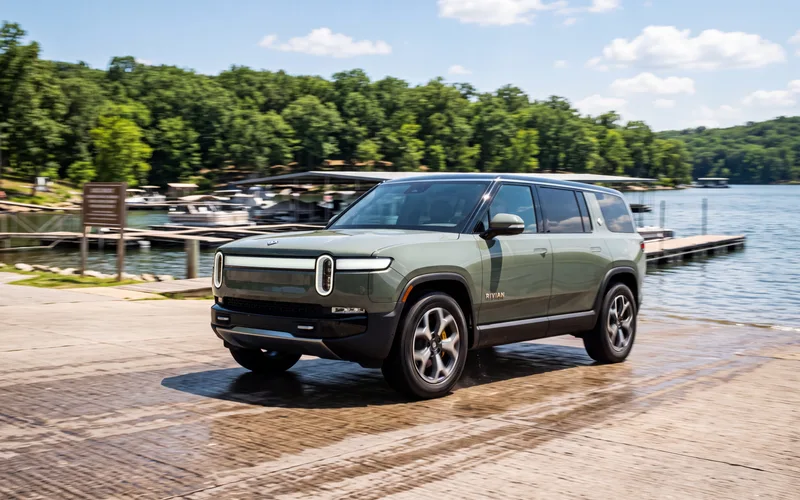 Rivian R1SFull-Size Luxury SUVBetter at: Capability
Same three-row electric SUV mission with 7,700 pounds of towing, real off-road hardware, more front legroom and a roof rack the Model X cannot offer.
Compare 3.32B+
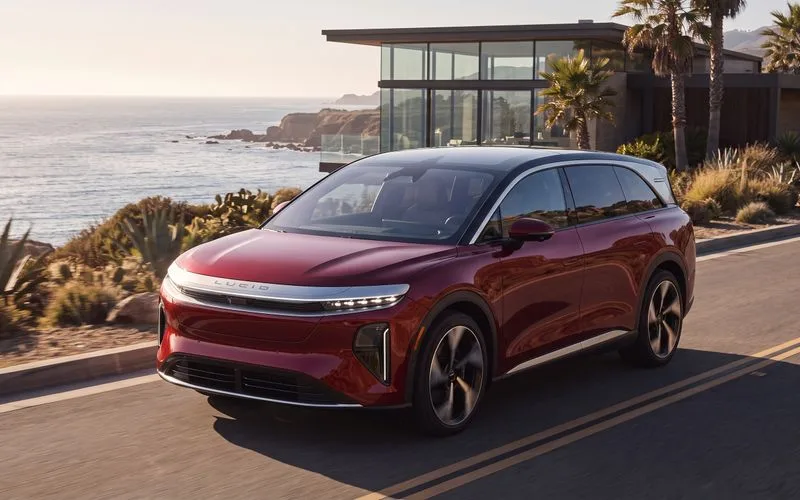 Lucid GravityFull-Size Luxury SUVBetter at: Range and interior
Similar money buys much longer range, 111.9 cu ft of cargo and a far more convincing luxury interior on a brand-new platform rather than an eleven-year-old one.
Compare 2.96B-
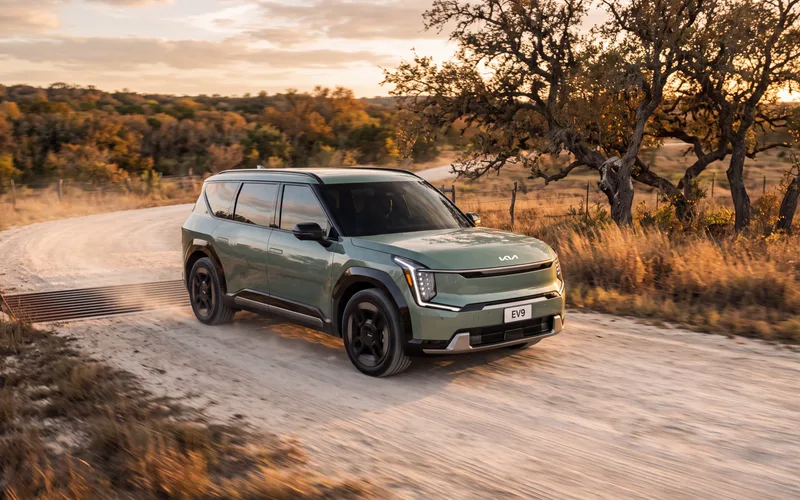 Kia EV9Mid-Size SUVBetter at: Value
Roughly half the price with a more usable third row, a long factory warranty and a real dealer network — the sensible family answer if you do not need 670 hp.
CompareHow it's evolved
10 scored model years · 2017–2026
Subject scores by year
Hover or tap a score to see what moved it versus the year before. A corner mark flags a big swing.
| Year | Performance | Efficiency | Safety | Space | Cost | Reliability | Tech | Use-case | Driving | Value |
|---|---|---|---|---|---|---|---|---|---|---|
| 2026 | 78 | 74 | 78 | 68 | 16 | 51 | 75 | 72 | 74 | 65 |
| 2025 | 78 | 72 | 77 | 61 | 17 | 55 | 74 | 70 | 73 | 66 |
| 2024 | 78 | 73 | 75 | 60 | 15 | 49 | 73 | 64 | 72 | 67 |
| 2023 | 77 | 73 | 66 | 59 | 17 | 47 | 72 | 64 | 71 | 61 |
| 2022 | 77 | 73 | 66 | 60 | 14 | 46 | 70 | 62 | 68 | 58 |
| 2021 | 76 | 73 | 63 | 67 | 16 | 35 | 69 | 65 | 74 | 59 |
| 2020 | 77 | 72 | 69 | 55 | 15 | 42 | 66 | 59 | 63 | 60 |
| 2019 | 76 | 61 | 67 | 61 | 14 | 41 | 67 | 57 | 70 | 63 |
| 2018 | 70 | 65 | 57 | 59 | 17 | 44 | 65 | 61 | 67 | 65 |
| 2017 | 59 | 58 | 57 | 62 | 15 | 31 | 62 | 63 | 70 | 67 |
Compare two years
Best fit & conditions
Higher scores mean a better fit for that use case. Learn more about use-case fit →
Subject profile
Trims & configurations
2 trimsScores above reflect the volume trim. Per-trim specs and scores are rolling out — the full lineup:
Academic Probation · NHTSA safety recalls
No NHTSA safety recall is on record for the 2026 Tesla Model X. Other model years of the Model X have 35 — listed below.
35 recalls on other model years of the Model X (2017–2025)
May 4, 2026Back over prevention: softwareThe rearview camera image may be delayed when the vehicle is placed in reverse. As such, these vehicles fail to comply with the requirements of Federal Motor Vehicle Safety Standard number 111, "Rear Visibility."
Defect
Tesla, Inc. (Tesla) is recalling certain 2017, 2021-2023 Model 3, 2020-2023 Model Y, 2021-2023 Model S, and Model X vehicles operating software version 2026.8.6. The rearview camera image may be delayed when the vehicle is placed in reverse. As such, these vehicles fail to comply with the requirements of Federal Motor Vehicle Safety Standard number 111, "Rear Visibility."
Risk
A delayed rearview image reduces the driver's view behind the vehicle, increasing the risk of a crash.
Remedy
Tesla has released an over-the-air (OTA) software update, free of charge. Owner notification letters were mailed July 3, 2026. Owners may contact Tesla customer service at 1-877-798-3752. Tesla's number for this recall is SB-26-00-001.
NHTSA campaign 26V283000 ↗Manufacturer no. SB-26-00-001218,868 vehicles potentially affected (all models in the campaign)Owners notified Jul 3, 2026Filed by Tesla, Inc.Filed as MODEL XMar 19, 2025Air bags · Electrical system: hornAn air bag with the incorrect horn pad may have been installed, preventing the horn from sounding.
Defect
Tesla, Inc. (Tesla) is recalling certain 2021-2024 Model S and 2021-2025 Model X vehicles. An air bag with the incorrect horn pad may have been installed, preventing the horn from sounding.
Risk
An inoperative horn may prevent the driver from alerting other drivers, increasing the risk of a crash.
Remedy
Tesla service will inspect and install an air bag with the correct horn pad as necessary, free of charge. Owner notification letters were mailed May 20, 2025. Owners may contact Tesla customer service at 1-877-798-3752. Tesla's number for this recall is SB-25-20-001.
NHTSA campaign 25V172000 ↗Manufacturer no. SB-25-20-00191 vehicles potentially affected (all models in the campaign)Owners notified May 20, 2025Filed by Tesla, Inc.Filed as MODEL XJan 6, 2025Back over prevention: software · Electrical systemThe computer circuit board may short, resulting in the loss of the rearview camera image. As such, these vehicles fail to comply with the requirements of Federal Motor Vehicle Safety Standard (FMVSS) number 111, "Rear Visibility."
Defect
Tesla, Inc. (Tesla) is recalling certain 2024-2025 Model 3, Model S, 2023-2025 Model X, and Model Y vehicles. The computer circuit board may short, resulting in the loss of the rearview camera image. As such, these vehicles fail to comply with the requirements of Federal Motor Vehicle Safety Standard (FMVSS) number 111, "Rear Visibility."
Risk
A rearview camera that does not display an image reduces the driver's rear view, increasing the risk of a crash.
Remedy
Tesla released an over-the-air (OTA) software update, free of charge. Tesla will also identify any vehicles that experienced a circuit board failure, or stress that may lead to a circuit board failure, and replace the affected computers, free of charge. Owner notification letters were mailed March 7, 2025. Owners may contact Tesla customer service at 1-877-798-3752. Tesla's number for this recall is SB-25-00-001.
NHTSA campaign 25V002000 ↗Manufacturer no. SB-25-00-001239,382 vehicles potentially affected (all models in the campaign)Owners notified Mar 7, 2025Filed by Tesla, Inc.Filed as MODEL XDec 23, 2024Air bags: frontal: driver side: cushionThe driver's air bag could tear during deployment. As such, these vehicles fail to comply with the requirements of Federal Motor Vehicle Safety Standard (FMVSS) numbers 208, "Occupant Crash Protection" and 212, "Windshield Mounting."
Defect
Tesla, Inc. (Tesla) is recalling certain 2021-2025 Model S and Model X vehicles. The driver's air bag could tear during deployment. As such, these vehicles fail to comply with the requirements of Federal Motor Vehicle Safety Standard (FMVSS) numbers 208, "Occupant Crash Protection" and 212, "Windshield Mounting."
Risk
A torn air bag may not adequately protect an occupant in a crash, increasing the risk of injury.
Remedy
Tesla service will replace the air bag assembly, free of charge. Owner notification letters were mailed February 21, 2025. Owners may contact Tesla customer service at 1-877-798-3752. Tesla's number for this recall is SB-24-20-001.
NHTSA campaign 24V967000 ↗Manufacturer no. SB-24-20-001487 vehicles potentially affected (all models in the campaign)Owners notified Feb 21, 2025Filed by Tesla, Inc.Filed as MODEL XDec 2, 2024Exterior lighting: headlightsThe parking lights and low beam headlights may flicker. As such, these vehicles fail to comply with the requirements of Federal Motor Vehicle Safety Standard (FMVSS) number 108, "Lamps, Reflective Devices, and Associated Equipment."
Defect
Tesla, Inc. (Tesla) is recalling certain 2024 Model X vehicles. The parking lights and low beam headlights may flicker. As such, these vehicles fail to comply with the requirements of Federal Motor Vehicle Safety Standard (FMVSS) number 108, "Lamps, Reflective Devices, and Associated Equipment."
Risk
Flickering headlights or parking lights may not suffciently illuminate the roadway, increasing the risk of a crash.
Remedy
Tesla released an over-the-air (OTA) software update, free of charge. All vehicles were updated by September 17, 2024. Owners may contact Tesla customer service at 1-877-798-3752. Tesla's number for this recall is SB-24-00-017.
NHTSA campaign 24V904000 ↗Manufacturer no. SB-24-00-01725 vehicles potentially affected (all models in the campaign)Owners notified Feb 1, 2025Filed by Tesla, Inc.Filed as MODEL XJul 24, 2024Electrical system: software · Latches/locks/linkages: hood: latchThe hood latch assembly may fail to detect an unlatched hood condition after the hood has been opened.
Defect
Tesla, Inc. (Tesla) is recalling certain 2021-2024 Model 3, Model S, Model X, and 2020-2024 Model Y vehicles. The hood latch assembly may fail to detect an unlatched hood condition after the hood has been opened.
Risk
An unlatched hood can fully open, obstructing the driver's view and increasing the risk of a crash.
Remedy
Tesla has released an over-the-air (OTA) software update, free of charge. Owner notification letters were mailed September 24, 2024. Owners may contact Tesla customer service at 1-877-798-3752. Tesla's number for this recall is SB-24-00-012.
NHTSA campaign 24V554000 ↗Manufacturer no. SB-24-00-0121,849,638 vehicles potentially affected (all models in the campaign)Owners notified Sep 22, 2024Filed by Tesla, Inc.Filed as MODEL XMay 28, 2024Seat belts: front: warning light/devicesIn the event of an unbelted driver, the seat belt warning light and audible chime may not activate as intended. As such, these vehicles fail to comply with the requirements of Federal Motor Vehicle Safety Standard number 208, "Occupant Crash Protection."
Defect
Tesla, Inc. (Tesla) is recalling certain 2012-2024 Model S, 2015-2024 Model X, 2017-2023 Model 3, and 2020-2023 Model Y vehicles. In the event of an unbelted driver, the seat belt warning light and audible chime may not activate as intended. As such, these vehicles fail to comply with the requirements of Federal Motor Vehicle Safety Standard number 208, "Occupant Crash Protection."
Risk
A seat belt warning system that fails to alert occupants of an unbelted seat belt can increase the risk of injury during a crash.
Remedy
Tesla will release an over-the-air (OTA) software update. Owner notification letters were mailed July 26, 2024. Owners may contact Tesla customer service at 1-877-798-3752. Tesla's number for this recall is SB-24-00-008.
NHTSA campaign 24V376000 ↗Manufacturer no. SB-24-00-008125,233 vehicles potentially affected (all models in the campaign)Owners notified Jul 26, 2024Filed by Tesla, Inc.Filed as MODEL XFeb 27, 2024Electrical system: software · Forward collision avoidance: warnings: external/pedestrian alertA factory reset muted the Pedestrian Warning System (PWS) sounds. As such, these vehicles fail to comply with the requirements of Federal Motor Vehicle Safety Standard number 141, "Minimum Sound Requirements for Hybrid and Electric Vehicles."
Defect
Tesla, Inc. (Tesla) is recalling certain 2013, 2018-2021 Model S, 2020-2021 Model X, 2018-2022 Model 3, and 2020-2022 Model Y vehicles. A factory reset muted the Pedestrian Warning System (PWS) sounds. As such, these vehicles fail to comply with the requirements of Federal Motor Vehicle Safety Standard number 141, "Minimum Sound Requirements for Hybrid and Electric Vehicles."
Risk
Pedestrians may be unaware of an approaching vehicle if the PWS sounds are muted, increasing the risk of a crash.
Remedy
Tesla released an over-the-air (OTA) software update, release 2023.44.30.14, free of charge. Owner notification letters were mailed April 27, 2024. Owners may contact Tesla customer service at 1-877-798-3752. Tesla's number for this recall is SB-24-00-006.
NHTSA campaign 24V153000 ↗Manufacturer no. SB-24-00-0066,557 vehicles potentially affected (all models in the campaign)Owners notified Apr 27, 2024Filed by Tesla, Inc.Filed as MODEL XJan 30, 2024Electrical system: instrument cluster/panelAn incorrect font size is displayed on the instrument panel for the Brake, Park, and Antilock Brake System (ABS) warning lights. As such, these vehicles fail to comply with the requirements of Federal Motor Vehicle Safety Standard number 105, "Hydraulic and Electric Brake Systems" and 135, "Light Vehicle Brake Systems."
Defect
Tesla, Inc. (Tesla) is recalling certain 2012-2023 Model S, 2016-2024 Model X, 2017-2023 Model 3, 2019-2024 Model Y, and 2024 Cybertruck vehicles. An incorrect font size is displayed on the instrument panel for the Brake, Park, and Antilock Brake System (ABS) warning lights. As such, these vehicles fail to comply with the requirements of Federal Motor Vehicle Safety Standard number 105, "Hydraulic and Electric Brake Systems" and 135, "Light Vehicle Brake Systems."
Risk
Warning lights with a smaller font size can make critical safety information on the instrument panel difficult to read, increasing the risk of a crash.
Remedy
Tesla began releasing an over-the-air (OTA) software update, free of charge. Owners may contact Tesla customer service at 1-877-798-3752. Tesla's number for this recall is SB-24-00-003.
NHTSA campaign 24V051000 ↗Manufacturer no. SB-24-00-0032,193,869 vehicles potentially affected (all models in the campaign)Owners notified Feb 21, 2024Filed by Tesla, Inc.Filed as MODEL XJan 22, 2024Back over prevention: sensing system: cameraSoftware instability may prevent the rearview camera image from displaying.
Defect
Tesla, Inc. (Tesla) is recalling certain 2023 Model S, X, and Y vehicles equipped with full self-driving computer 4.0 and running a software release version 2023.44.30 through 2023.44.30.6 or 2023.44.100. Software instability may prevent the rearview camera image from displaying.
Risk
A rearview image that does not display while in reverse decreases the driver's visibility and increases the risk of a crash.
Remedy
Tesla has released an over-the-air (OTA) software update, free of charge. Owner notification letters were mailed March 22, 2024. Owners may contact Tesla customer service at 1-877-798-3752. Tesla's number for this recall is SB-24-00-002.
NHTSA campaign 24V035000 ↗Manufacturer no. SB-24-00-002199,575 vehicles potentially affected (all models in the campaign)Owners notified Mar 22, 2024Filed by Tesla, Inc.Filed as MODEL XDec 19, 2023Electrical system: software · Latches/locks/linkages: doors: latchThe cabin doors can be unlocked during a crash. As such, these vehicles fail to comply with the requirements of Federal Motor Vehicle Safety Standard number 214, "Side Impact Protection."
Defect
Tesla, Inc. (Tesla) is recalling certain 2021-2023 Model S and X vehicles. The cabin doors can be unlocked during a crash. As such, these vehicles fail to comply with the requirements of Federal Motor Vehicle Safety Standard number 214, "Side Impact Protection."
Risk
An unlocked door may unlatch and open during a crash, increasing the risk of injury.
Remedy
Tesla has released an over-the-air (OTA) software update, free of charge. Owner notification letters were mailed February 17, 2024. Owners may contact Tesla customer service at 1-877-798-3752. Tesla's number for this recall is SB-23-00-009.
NHTSA campaign 23V862000 ↗Manufacturer no. SB-23-00-009120,423 vehicles potentially affected (all models in the campaign)Owners notified Feb 17, 2024Filed by Tesla, Inc.Filed as MODEL XDec 12, 2023Electrical system: adas: driver monitoring: softwareTesla, Inc. (Tesla) is recalling 2012-2023 Model S, 2016-2023 Model X, 2017-2023 Model 3, and 2020-2023 Model Y vehicles equipped with all versions of Autosteer leading up to the version(s) that contains the recall remedy. In certain circumstances when Autosteer is engaged, the prominence and scope of the feature's controls may not be sufficient to prevent driver misuse of the SAE Level 2 advanced driver-assistance feature.
Defect
Tesla, Inc. (Tesla) is recalling 2012-2023 Model S, 2016-2023 Model X, 2017-2023 Model 3, and 2020-2023 Model Y vehicles equipped with all versions of Autosteer leading up to the version(s) that contains the recall remedy. In certain circumstances when Autosteer is engaged, the prominence and scope of the feature's controls may not be sufficient to prevent driver misuse of the SAE Level 2 advanced driver-assistance feature.
Risk
In certain circumstances when Autosteer is engaged, and the driver does not maintain responsibility for vehicle operation and is unprepared to intervene as necessary or fails to recognize when Autosteer is canceled or not engaged, there may be an increased risk of a crash.
Remedy
Tesla will release an over-the-air (OTA) software update, free of charge. Owner notification letters were mailed February 10, 2024. Owners may contact Tesla customer service at 1-877-798-3752. Tesla's number for this recall is SB-23-00-008.
NHTSA campaign 23V838000 ↗Manufacturer no. SB-23-00-0082,031,220 vehicles potentially affected (all models in the campaign)Owners notified Feb 10, 2024Filed by Tesla, Inc.Filed as MODEL XNov 3, 2023Air bags: frontal · Steering: steering wheel/handle barAn incorrect air bag may have been installed when the steering yoke or round steering wheel was replaced with a different style of yoke or steering wheel.
Defect
Tesla, Inc. (Tesla) is recalling certain 2021-2024 Model S and Model X vehicles. An incorrect air bag may have been installed when the steering yoke or round steering wheel was replaced with a different style of yoke or steering wheel.
Risk
An air bag that is not designed to function with the replacement steering yoke or wheel may deploy incorrectly, increasing the risk of injury during a crash.
Remedy
Tesla Service will inspect and replace the driver air bag as necessary, free of charge. Owner notification letters were mailed January 2, 2024. Owners may contact Tesla customer service at 1-877-798-3752. Tesla's number for this recall is SB-23-20-005.
NHTSA campaign 23V743000 ↗Manufacturer no. SB-23-20-005194 vehicles potentially affected (all models in the campaign)Owners notified Jan 2, 2024Filed by Tesla, Inc.Filed as MODEL XOct 11, 2023Electrical system · Service brakes, hydraulic: brake fluid low warning: switch/sensor/floatThe vehicle controller may fail to detect low brake fluid and will not display a warning light. As such, these vehicles fail to comply with the requirements of Federal Motor Vehicle Safety Standard number 135, "Light Vehicle Brake Systems."
Defect
Tesla, Inc. (Tesla) is recalling certain 2021-2023 Model X vehicles. The vehicle controller may fail to detect low brake fluid and will not display a warning light. As such, these vehicles fail to comply with the requirements of Federal Motor Vehicle Safety Standard number 135, "Light Vehicle Brake Systems."
Risk
Without a warning light, the vehicle may be driven with low brake fluid, which can reduce braking performance and increase the risk of a crash.
Remedy
Tesla has released an over-the-air (OTA) software update, free of charge. Owner notification letters were mailed December 12, 2023. Owners may contact Tesla customer service at 1-877-798-3752. Tesla's number for this recall is SB-23-00-005.
NHTSA campaign 23V679000 ↗Manufacturer no. SB-23-00-00554,676 vehicles potentially affected (all models in the campaign)Owners notified Dec 12, 2023Filed by Tesla, Inc.Filed as MODEL XJul 14, 2023Forward collision avoidance: sensing system: cameraThe forward-facing camera may be misaligned, causing some of the active safety features such as emergency braking, forward collision warning, and lane assist to become unavailable without alerting the driver.
Defect
Tesla, Inc. (Tesla) is recalling certain 2023 Model S, Model X, and Model Y vehicles. The forward-facing camera may be misaligned, causing some of the active safety features such as emergency braking, forward collision warning, and lane assist to become unavailable without alerting the driver.
Risk
Safety features that are unavailable without any warning to the driver may increase the risk of a crash.
Remedy
Tesla Service will inspect and adjust the pitch angle, as necessary, free of charge. Owner notification letters were mailed September 12, 2023. Owners may contact Tesla customer service at 1-877-798-3752. Tesla's number for this recall is SB-23-17-006.
NHTSA campaign 23V489000 ↗Manufacturer no. SB-23-17-0061,337 vehicles potentially affected (all models in the campaign)Owners notified Sep 12, 2023Filed by Tesla, Inc.Filed as MODEL XJul 14, 2023Seat belts: frontThe front-row seat belts may not be connected properly to the pretensioner anchors, which can cause the seat belts to detach.
Defect
Tesla, Inc. (Tesla) is recalling certain 2021-2023 Model S and Model X vehicles. The front-row seat belts may not be connected properly to the pretensioner anchors, which can cause the seat belts to detach.
Risk
A detached seat belt may not properly restrain an occupant during a crash, increasing the risk of injury.
Remedy
Tesla Service will inspect the front-row seat belts and connect the seat belts to pretensioner anchors, or replace the seat belt assemblies, as necessary, free of charge. Owner notification letters were mailed September 12, 2023. Owners may contact Tesla customer service at 1-877-798-3752. Tesla's number for this recall is SB-23-20-004.
NHTSA campaign 23V488000 ↗Manufacturer no. SB-23-20-00415,869 vehicles potentially affected (all models in the campaign)Owners notified Sep 12, 2023Filed by Tesla, Inc.Filed as MODEL XApr 5, 2023Back over preventionWeak camera signal strength may prevent the rearview image from displaying. As such, these vehicles fail to comply with the requirements of Federal Motor Vehicle Safety Standard number 111, "Rear Visibility."
Defect
Tesla, Inc. (Tesla) is recalling certain 2023 Model X vehicles equipped with a full self-driving computer 4.0 and running software release version 2023.2.200. Weak camera signal strength may prevent the rearview image from displaying. As such, these vehicles fail to comply with the requirements of Federal Motor Vehicle Safety Standard number 111, "Rear Visibility."
Risk
A rearview image that does not display while in reverse decreases the driver's visibility, increasing the risk of injury or crash.
Remedy
Tesla has released an over-the-air (OTA) software update, free of charge. All affected vehicles have been remedied. Owners may contact Tesla customer service at 1-877-798-3752.
NHTSA campaign 23V244000 ↗38 vehicles potentially affected (all models in the campaign)Owners notified Mar 9, 2023Filed by Tesla, Inc.Filed as MODEL XFeb 15, 2023Steering: automated/adaptive steeringIn addition, the system may respond insufficiently to changes in posted speed limits or not adequately account for the driver's adjustment of the vehicle's speed to exceed posted speed limits.
Defect
Tesla, Inc. (Tesla) is recalling certain 2016-2023 Model S, Model X, 2017-2023 Model 3, and 2020-2023 Model Y vehicles equipped with Full Self-Driving Beta (FSD Beta) software or pending installation. The FSD Beta system may allow the vehicle to act unsafe around intersections, such as traveling straight through an intersection while in a turn-only lane, entering a stop sign-controlled intersection without coming to a complete stop, or proceeding into an intersection during a steady yellow traffic signal without due caution. In addition, the system may respond insufficiently to changes in posted speed limits or not adequately account for the driver's adjustment of the vehicle's speed to exceed posted speed limits.
Risk
FSD Beta software that allows a vehicle to exceed speed limits or travel through intersections in an unlawful or unpredictable manner increases the risk of a crash.
Remedy
Tesla will release an over-the-air (OTA) software update, free of charge. Owner notification letters were mailed April 15, 2023. Owners may contact Tesla customer service at 1-877-798-3752. Tesla's number for this recall is SB-23-00-001.
NHTSA campaign 23V085000 ↗Manufacturer no. SB-23-00-001362,758 vehicles potentially affected (all models in the campaign)Owners notified Apr 15, 2023Filed by Tesla, Inc.Filed as MODEL XNov 15, 2022Air bags: air bag/restraint control module: software · Air bags: frontalThe restraint control module (RCM) calibration may cause the front passenger air bag to deploy incorrectly during certain low speed crashes. As such, these vehicles fail to comply with the requirements of Federal Motor Vehicle Safety Standard number 208, "Occupant Crash Protection."
Defect
Tesla, Inc. (Tesla) is recalling certain 2021-2023 Model X vehicles. The restraint control module (RCM) calibration may cause the front passenger air bag to deploy incorrectly during certain low speed crashes. As such, these vehicles fail to comply with the requirements of Federal Motor Vehicle Safety Standard number 208, "Occupant Crash Protection."
Risk
A passenger air bag that does not deploy as intended increases the risk of injury during a crash.
Remedy
Tesla has released an over-the-air (OTA) software update to recalibrate the RCM, free of charge. Owner notification letters were mailed January 14, 2023. Owners may contact Tesla customer service at 1-877-798-3752. Tesla's number for this recall is SB-22-00-015.
NHTSA campaign 22V843000 ↗Manufacturer no. SB-22-00-01529,348 vehicles potentially affected (all models in the campaign)Owners notified Jan 14, 2023Filed by Tesla, Inc.Filed as MODEL XNov 1, 2022Steering: electric power assist systemThe electronic power assist steering (EPAS) system may experience a loss of power steering assist when driving on rough roads or after hitting a pothole.
Defect
Tesla, Inc. (Tesla) is recalling certain 2017-2021 Model S and Model X vehicles. The electronic power assist steering (EPAS) system may experience a loss of power steering assist when driving on rough roads or after hitting a pothole.
Risk
A loss of power steering assist can require greater steering effort, especially at low speeds, increasing the risk of a crash.
Remedy
Tesla has released an over-the-air (OTA) software update to recalibrate the EPAS system, free of charge. Owner notification letters were mailed December 31, 2022. Owners may contact Tesla customer service at 1-877-798-3752. Tesla's number for this recall is SB-22-00-014.
NHTSA campaign 22V818000 ↗Manufacturer no. SB-22-00-01440,168 vehicles potentially affected (all models in the campaign)Owners notified Dec 31, 2022Filed by Tesla, Inc.Filed as MODEL XSep 19, 2022Visibility: power window devices and controlsThe window automatic reversal system may not react correctly after detecting an obstruction. As such, these vehicles fail to comply with the requirements of Federal Motor Vehicle Safety Standard number 118, "Power-Operated Window Systems."
Defect
Tesla, Inc. (Tesla) is recalling certain 2017-2022 Model 3, 2020-2022 Model Y, and 2021-2022 Model S and Model X vehicles. The window automatic reversal system may not react correctly after detecting an obstruction. As such, these vehicles fail to comply with the requirements of Federal Motor Vehicle Safety Standard number 118, "Power-Operated Window Systems."
Risk
A closing window may exert excessive force by pinching a driver or passenger before retracting, increasing the risk of injury.
Remedy
Tesla will perform an over-the-air (OTA) software update of the automatic window reversal system, free of charge. Owner notification letters were mailed March 31, 2032. Owners may contact Tesla customer service at 1-877-798-3752. Tesla's number for this recall is SB-22-00-013.
NHTSA campaign 22V702000 ↗Manufacturer no. SB-22-00-0131,096,762 vehicles potentially affected (all models in the campaign)Owners notified Mar 31, 2023Filed by Tesla, Inc.Filed as MODEL XMay 3, 2022Back over prevention: display function · Equipment: electrical: infotainment: video (touch)screen/monitor/unitThe infotainment central processing unit (CPU) may overheat during the preparation or process of fast-charging, causing the CPU to lag or restart.
Defect
Tesla, Inc. (Tesla) is recalling certain 2021-2022 Model S, Model X, and 2022 Model 3 and Model Y vehicles operating certain firmware releases. The infotainment central processing unit (CPU) may overheat during the preparation or process of fast-charging, causing the CPU to lag or restart.
Risk
A lagging or restarting CPU may prevent the center screen from displaying the rearview camera image, gear selection, windshield visibility control settings, and warning lights, increasing the risk of a crash.
Remedy
Tesla will perform an over-the-air (OTA) software update that will improve CPU temperature management, free of charge. Owner notification letters were mailed July 1, 2022. Owners may contact Tesla customer service at 1-877-798-3752. Tesla's number for this recall is SB-22-00-009.
NHTSA campaign 22V296000 ↗Manufacturer no. SB-22-00-009129,960 vehicles potentially affected (all models in the campaign)Owners notified Jul 1, 2022Filed by Tesla, Inc.Filed as MODEL XApr 18, 2022Seats: mid/rear assembly · Structure: bodyTesla, Inc. (Tesla) is recalling one 2022 Model X vehicle. A body structure reinforcement bracket was not installed at the second-row seat. As such, this vehicle fails to comply with the requirements of Federal Motor Vehicle Safety Standard numbers 207, "Seating Systems" and 210, "Seat Belt Assembly Anchorages."
Defect
Tesla, Inc. (Tesla) is recalling one 2022 Model X vehicle. A body structure reinforcement bracket was not installed at the second-row seat. As such, this vehicle fails to comply with the requirements of Federal Motor Vehicle Safety Standard numbers 207, "Seating Systems" and 210, "Seat Belt Assembly Anchorages."
Risk
The second-row seat may not properly restrain occupants during a crash, increasing the risk of injury.
Remedy
Tesla will replace the vehicle, free of charge. The recall was completed April 28, 2022. Owners may contact Tesla customer service at 1-877-798-3752.
NHTSA campaign 22V264000 ↗1 vehicles potentially affected (all models in the campaign)Owners notified Apr 28, 2022Filed by Tesla, Inc.Filed as MODEL XApr 12, 2022Electrical system: software · Forward collision avoidance: warnings: external/pedestrian alertThe Boombox function allows sounds to be played through an external speaker while the vehicle is in motion, which may obscure the Pedestrian Warning System (PWS) sounds. As such, these vehicles fail to comply with the requirements of Federal Motor Vehicle Safety Standard number 141, "Minimum Sound Requirements for Hybrid and Electric Vehicles."
Defect
Tesla, Inc. (Tesla) is recalling certain 2020-2022 Model Y, Model X, Model S, and 2017-2022 Model 3 vehicles. The Boombox function allows sounds to be played through an external speaker while the vehicle is in motion, which may obscure the Pedestrian Warning System (PWS) sounds. As such, these vehicles fail to comply with the requirements of Federal Motor Vehicle Safety Standard number 141, "Minimum Sound Requirements for Hybrid and Electric Vehicles."
Risk
Pedestrians may be unaware of an approaching vehicle if the PWS sounds are obscured, increasing the risk of a crash.
Remedy
Tesla will perform an over-the-air (OTA) software update that will disable the Boombox functionality when the vehicle is in Drive, Neutral and Reverse modes, including Summon and Smart Summon, free of charge. Owner notification letters were mailed June 6, 2022. Owners may contact Tesla customer service at 1-877-798-3752. Tesla's number for this recall is SB-22-00-003. Note: This recall supersedes recall 22V-063. Vehicles configured with Summon or Smart Summon and already remedied under 22V-063 will need to have the new remedy software installed.
NHTSA campaign 22V235000 ↗Manufacturer no. SB-22-00-003594,894 vehicles potentially affected (all models in the campaign)Owners notified Jun 6, 2022Filed by Tesla, Inc.Filed as MODEL XApr 8, 2022Air bags: side/window: curtainThe left or right front-row side curtain air bags may not deploy as intended when the windows are lowered. As such, these vehicles fail to comply with the requirements of Federal Motor Vehicle Safety Standard number 226, "Ejection Mitigation."
Defect
Tesla, Inc. (Tesla) is recalling certain 2021-2022 Model X vehicles. The left or right front-row side curtain air bags may not deploy as intended when the windows are lowered. As such, these vehicles fail to comply with the requirements of Federal Motor Vehicle Safety Standard number 226, "Ejection Mitigation."
Risk
Improper side curtain air bag deployment can increase the risk of injury during a crash.
Remedy
Tesla Service Centers will replace the left and right front-row side curtain air bags, free of charge. Owner notification letters were mailed July 16, 2022. Owners may contact Tesla customer service at 1-877-798-3752. Tesla's number for this recall is SB-22-20-003.
NHTSA campaign 22V233000 ↗Manufacturer no. SB-22-20-0037,289 vehicles potentially affected (all models in the campaign)Owners notified Aug 16, 2022Filed by Tesla, Inc.Filed as MODEL XMar 18, 2022Back over prevention: display functionThe rearview image may not immediately display when the vehicle begins to reverse. As such, these vehicles fail to comply with the requirements of Federal Motor Vehicle Safety Standard number 111, "Rear Visibility."
Defect
Tesla, Inc. (Tesla) is recalling certain 2018-2019 Model S, Model X, and 2017-2020 Model 3 vehicles equipped with Autopilot Computer 2.5 and operating certain firmware releases. The rearview image may not immediately display when the vehicle begins to reverse. As such, these vehicles fail to comply with the requirements of Federal Motor Vehicle Safety Standard number 111, "Rear Visibility."
Risk
A delayed rearview camera image reduces the driver's rear view, increasing the risk of a crash.
Remedy
Tesla will perform an over-the-air (OTA) software update, free of charge. Owner notification letters were mailed May 17, 2022. Owners may contact Tesla customer service at 1-877-798-3752. Tesla's number for this recall is SB-22-00-004.
NHTSA campaign 22V169000 ↗Manufacturer no. SB-22-00-004947 vehicles potentially affected (all models in the campaign)Owners notified May 17, 2022Filed by Tesla, Inc.Filed as MODEL XFeb 4, 2022Electrical system: software · Forward collision avoidance: warnings: external/pedestrian alertThe Boombox function allows sounds to be played through an external speaker while the vehicle is in motion, which may obscure the Pedestrian Warning System (PWS) sounds. As such, these vehicles fail to comply with the requirements of Federal Motor Vehicle Safety Standard number 141, "Minimum Sound Requirements for Hybrid and Electric Vehicles."
Defect
Tesla, Inc. (Tesla) is recalling certain 2020-2022 Model S, Model X, Model Y, and 2017-2022 Model 3 vehicles. The Boombox function allows sounds to be played through an external speaker while the vehicle is in motion, which may obscure the Pedestrian Warning System (PWS) sounds. As such, these vehicles fail to comply with the requirements of Federal Motor Vehicle Safety Standard number 141, "Minimum Sound Requirements for Hybrid and Electric Vehicles."
Risk
Pedestrians may be unaware of an approaching vehicle if the PWS sounds are obscured, increasing the risk of a crash.
Remedy
Tesla will perform an over-the-air (OTA) software update that will disable the Boombox functionality when the vehicle is in Drive, Neutral and Reverse modes, free of charge. Owner notification letters are expected to be mailed April 5, 2022. Owners may contact Tesla customer service at 1-877-798-3752. Tesla's number for this recall is SB-22-00-003. Note: This recall has been superseded by Recall 22V-235. Tesla's number for the new recall is SB-22-00-003.
NHTSA campaign 22V063000 ↗Manufacturer no. SB-22-00-003578,607 vehicles potentially affected (all models in the campaign)Owners notified Apr 12, 2022Filed by Tesla, Inc.Filed as MODEL XFeb 2, 2022Electrical system: software · Visibility: defroster/defogger/hvac system: air handler/chamber, ducts, and valvesA software error may cause a valve in the heat pump to open unintentionally and trap the refrigerant inside the evaporator, resulting in decreased defrosting performance. As such, these vehicles fail to comply with the requirements of Federal Motor Vehicle Safety Standard number 103, "Windshield Defrosting and Defogging Systems."
Defect
Tesla, Inc. (Tesla) is recalling certain 2021-2022 Model 3, Model S, Model X, and 2020-2022 Model Y vehicles. A software error may cause a valve in the heat pump to open unintentionally and trap the refrigerant inside the evaporator, resulting in decreased defrosting performance. As such, these vehicles fail to comply with the requirements of Federal Motor Vehicle Safety Standard number 103, "Windshield Defrosting and Defogging Systems."
Risk
Decreased defrosting performance may reduce the driver's visibility, increasing the risk of a crash.
Remedy
Tesla will perform an over-the-air (OTA) software update, free of charge. Owner notification letters were mailed April 1, 2022. Owners may contact Tesla customer service at 1-877-798-3752. Tesla's number for this recall is SB-22-18-002.
NHTSA campaign 22V050000 ↗Manufacturer no. SB-22-18-00226,681 vehicles potentially affected (all models in the campaign)Owners notified Apr 1, 2022Filed by Tesla, Inc.Filed as MODEL XFeb 1, 2022Electrical system: software · Seat belts: frontThe audible chime may not activate when the vehicle starts and the driver has not buckled their seat belt. As such, these vehicles fail to comply with the requirements of Federal Motor Vehicle Safety Standard number 208, "Occupant Crash Protection."
Defect
Tesla, Inc. (Tesla) is recalling certain 2021-2022 Model S and Model X, 2017-2022 Model 3, and 2020-2022 Model Y vehicles. The audible chime may not activate when the vehicle starts and the driver has not buckled their seat belt. As such, these vehicles fail to comply with the requirements of Federal Motor Vehicle Safety Standard number 208, "Occupant Crash Protection."
Risk
The driver may be unaware that their seat belt is not fastened, increasing the risk of injury during a crash.
Remedy
Tesla will perform an over-the-air (OTA) software update, free of charge. Owner notification letters were mailed April 1, 2022. Owners may contact Tesla customer service at 1-877-798-3752. Tesla's number for this recall is SB-22-00-002.
NHTSA campaign 22V045000 ↗Manufacturer no. SB-22-00-002817,143 vehicles potentially affected (all models in the campaign)Owners notified Apr 1, 2022Filed by Tesla, Inc.Filed as MODEL XJan 27, 2022Steering: automated/adaptive steeringThe "rolling stop" functionality available as part of the Full Self-Driving (Beta) software may allow the vehicle to travel through an all-way stop intersection without first coming to a stop.
Defect
Tesla, Inc. (Tesla) is recalling certain 2016-2022 Model S and Model X, 2017-2022 Model 3, and 2020-2022 Model Y vehicles. The "rolling stop" functionality available as part of the Full Self-Driving (Beta) software may allow the vehicle to travel through an all-way stop intersection without first coming to a stop.
Risk
Failing to stop at a stop sign can increase the risk of a crash.
Remedy
Tesla will perform an over-the-air (OTA) software update that disables the "rolling stop" functionality, free of charge. Owner notification letters were mailed March 28, 2022. Owners may contact Tesla customer service at 1-877-798-3752. Tesla's number for this recall is SB-22-00-001.
NHTSA campaign 22V037000 ↗Manufacturer no. SB-22-00-00153,822 vehicles potentially affected (all models in the campaign)Owners notified Mar 28, 2022Filed by Tesla, Inc.Filed as MODEL XNov 9, 2021Air bags · Air bags: frontal: driver side: cushionThe driver's air bag cushion may tear during deployment.
Defect
Tesla, Inc. (Tesla) is recalling certain 2021 Model X and Model S vehicles. The driver's air bag cushion may tear during deployment.
Risk
A torn air bag may not adequately protect an occupant in a crash, increasing their risk of injury.
Remedy
Tesla Service will replace the driver's air bag, free of charge. Owner notification letters were mailed January 7, 2022. Owners may contact Tesla customer service at 1-877-798-3752. Tesla's number for this recall is SB-21-20-007.
NHTSA campaign 21V868000 ↗Manufacturer no. SB-21-20-0077,600 vehicles potentially affected (all models in the campaign)Owners notified Jan 7, 2022Filed by Tesla, Inc.Filed as MODEL XOct 29, 2021Forward collision avoidance: automatic emergency braking · Forward collision avoidance: sensing system: camera · Forward collision avoidance: warnings · Forward collision avoidance: softwareA communication error may cause false forward-collision warning (FCW) or unexpected activation of the automatic emergency brake (AEB) system.
Defect
Tesla, Inc. (Tesla) is recalling certain 2017-2021 Model S, Model 3, Model X, and 2020-2021 Model Y vehicles operating software version 2021.36.5.2. A communication error may cause false forward-collision warning (FCW) or unexpected activation of the automatic emergency brake (AEB) system.
Risk
Unexpected activation of the AEB system may cause the car to stop suddenly, increasing the risk of a crash.
Remedy
Tesla Service has released an over-the-air (OTA) software update, free of charge. The recall began October 25, 2021. Owners may contact Tesla customer service at 1-877-798-3752. Tesla's number for this recall is SB-21-00-004.
NHTSA campaign 21V846000 ↗Manufacturer no. SB-21-00-00411,728 vehicles potentially affected (all models in the campaign)Owners notified Oct 25, 2021Filed by Tesla, Inc.Filed as MODEL XJan 29, 2021Back over prevention: software · Exterior lighting: turn signal · Visibility: defroster/defogger/hvac systemWhen the 8GB eMMC NAND flash memory device for the center display reaches lifetime wear, the eMMC controller will no longer be able to maintain the integrity of the filesystem, causing a failure in some of the center display functions.
Defect
Tesla, Inc. (Tesla) is recalling certain 2012-2018 Tesla Model S and 2016-2018 Model X vehicles with a center display equipped with a NVIDIA Tegra 3 processor and an 8GB eMMC NAND flash memory device. When the 8GB eMMC NAND flash memory device for the center display reaches lifetime wear, the eMMC controller will no longer be able to maintain the integrity of the filesystem, causing a failure in some of the center display functions.
Risk
The eMMC controller wear-out condition can cause the loss of the rearview camera display, defrost/defog control settings, and exterior turn signal lighting, reducing visibility and increasing the risk of a crash.
Remedy
Owners should ensure their vehicles are operating firmware release 2020.48.48.12 or newer, which will alert owners if the eMMC is approaching lifetime wear. Tesla will notify owners, and will replace the VCM daughterboard with one containing an enhanced eMMC controller, free of charge. The recall began March 29, 2021. Owners may contact Tesla customer service at 1-877-798-3752. Tesla's number for this recall is SB-21-21-001.
NHTSA campaign 21V035000 ↗Manufacturer no. SB-21-21-001134,951 vehicles potentially affected (all models in the campaign)Owners notified Mar 29, 2021Filed by Tesla, Inc.Filed as MODEL XOct 12, 2017Seats: mid/rear assemblyThe left-side, second row, reclining seat backs may not fully latch due to having incorrectly adjusted recliner mechanism cables. As such, these vehicles fail to comply with the requirements of Federal Motor Vehicle Safety Standard (FMVSS) number 207, "Seating Systems," and 210, "Seat Belt Assembly Anchorages."
Defect
Tesla, Inc. (Tesla) is recalling certain 2016-2017 Model X vehicles. The left-side, second row, reclining seat backs may not fully latch due to having incorrectly adjusted recliner mechanism cables. As such, these vehicles fail to comply with the requirements of Federal Motor Vehicle Safety Standard (FMVSS) number 207, "Seating Systems," and 210, "Seat Belt Assembly Anchorages."
Risk
If the seat back moves forward in the event of a crash, it can increase the risk of injury.
Remedy
Tesla will notify owners, and Tesla service technicians will correct the cable adjustment for the left-side, fold-flat, second row, seat recliner mechanism, free of charge. The recall began on November 10, 2017. Owners may contact Tesla customer service at 1-877-798-3752. Tesla's number for this recall is SB-17-13-004.
NHTSA campaign 17V639000 ↗Manufacturer no. SB-17-13-0044,582 vehicles potentially affected (all models in the campaign)Owners notified Nov 10, 2017Filed by Tesla Motors, Inc.Filed as MODEL XApr 19, 2017Parking brakeThe electric parking brake calipers have an internal gear that may be improperly manufactured, possibly resulting in the gear fracturing during parking brake application or release.
Defect
Tesla, Inc. (Tesla) is recalling certain 2016 Model S and Model X vehicles. The electric parking brake calipers have an internal gear that may be improperly manufactured, possibly resulting in the gear fracturing during parking brake application or release.
Risk
If the gear breaks during parking brake release, the vehicle will not be able to be moved. If the gear breaks during parking brake application, the parking brake may not adequately hold the vehicle, potentially resulting in the vehicle rolling, increasing the risk of a crash.
Remedy
Tesla will notify owners, and service centers will replace both the left and right electric parking brake calipers, free of charge. The recall began March 6, 2018. Owners may contact Tesla customer service at 1-877-798-3752. Tesla's number for this recall is SB-17-33-002.
NHTSA campaign 17V260000 ↗Manufacturer no. SB-17-33-00231,709 vehicles potentially affected (all models in the campaign)Owners notified Mar 6, 2018Filed by Tesla Motors, Inc.Filed as MODEL X
Source: NHTSA Office of Defects Investigation recall database, model years 2017–2026. Recalls are listed by model year as the manufacturer filed them; whether a specific car is affected depends on its VIN — check a VIN at nhtsa.gov ↗. NHTSA model names matched to this page: MODEL X.
Detailed scoring by subject
1Performance & PowertrainThe Model X's best-graded category.3.30B+
The volume trim is the dual-motor Model X All-Wheel Drive at 670 hp combined, with the tri-motor Plaid at 1,020 hp; both figures carry over unchanged into 2026 from the mid-2025 refresh. Replaces a placeholder value that badly understated the car.
Tesla does not publish a torque rating for the Model X, so this is the widely cited third-party combined figure for the dual-motor AWD; either way the value is far above the SUV band ceiling of 500 lb-ft and the item pins at 100.
Tesla rates the volume AWD trim at 3.8 seconds to 60 mph and the Plaid at 2.5 seconds, both including the customary one-foot rollout — quicker than every non-Plaid three-row rival in the segment. The placeholder had claimed a 7.1 s time, which was wrong by a wide margin.
Instant, lag-free permanent-magnet/induction motor delivery with no gearbox or hybrid handoffs to interrupt it, and the 2025 refresh added more sound deadening and active noise cancellation that further isolates what little motor whine there is. Scored just above the Model Y (91) for the extra isolation and air suspension, in line with the BMW iX (90) and Lucid Gravity (92).
Single-speed reduction gears front and rear mean there is nothing to shift, hunt, or drone — power delivery is continuous from a standstill, and regen blending is well judged. Matches the Model Y (92) and iX (92); the small shortfall from perfect reflects occasional abruptness in low-speed creep and regen transitions.
Tesla rates the Model X at 5,000 lbs with the factory tow hitch, which is included rather than optional — mid-pack for a full-size luxury SUV and below the 6,000–7,700 lbs that body-on-frame and Rivian/Lucid rivals manage. The placeholder's 6,945 lbs overstated it.
Every Model X is all-wheel drive — dual-motor on the AWD trim, tri-motor on the Plaid — with independent front/rear (and dual-rear on Plaid) torque control that vectors far faster than a mechanical system. Rated above the Model Y (76, which offers a RWD Standard trim) but below the Rivian R1S (87) and Lucid Gravity (90) for lack of a low-range analogue or terrain-specific drive modes.
Adaptive air suspension raises ground clearance to roughly 8.4 in and instant AWD torque helps on loose surfaces, but there are no skid plates, no locking differentials, no terrain modes, no crawl control, and the standard 20–22 in wheels wear low-profile street tires. Above the Model Y (28) and iX (25) purely on the air-suspension lift, well below the Lucid Gravity (62) and Rivian R1S (74), which have real off-road hardware and drive modes.
One powertrain type only — battery-electric — in two states of tune (dual-motor AWD, tri-motor Plaid), with no gas, hybrid, or PHEV alternative and not even a single-motor entry point. Scored just under the Model Y (28) and Lucid Gravity (30), both of which offer more variants within their EV lineups; the placeholder's 80 was wrong in kind.
2Efficiency & RangeGrades above the middle of the scale.3.00B
32 kWh/100 mi is respectable for a ~5,400-lb three-row luxury SUV and comfortably beats every German electric SUV in this dataset, but it trails the Model S by 19 MPGe and the Model Y by more than 20 — the falcon-wing body is taller and heavier than the sedan it shares a platform with. The June 2025 update (sold as the 2026 model year) changed wheels, camera and interior, not the powertrain.
City is normally an EV's strongest rating, so the weakest of the Model X's three numbers against its class band is a direct consequence of mass — regeneration recovers a lot, but there is a great deal of vehicle to accelerate in stop-and-go traffic and the ~100 kWh pack is heavy to haul.
The best of the Model X's three ratings relative to its class band, and the one that matters most for a road-trip vehicle: only a 10% drop from city to highway, where a conventionally shaped electric SUV loses considerably more. The ~0.24 Cd body — remarkable for a vehicle this tall — is doing the work.
352 miles clears the practical road-trip threshold with room to spare and beats every mainstream three-row electric SUV in this dataset, but the Lucid Gravity defines the top of the class and the Rivian R1S Max pack is close behind. The June 2025 update lifted this figure without a powertrain change — efficiency and wheel work, not a bigger battery.
250 kW is genuinely quick but is the hard ceiling of Tesla's 400V architecture and did not move with the 2025 update — the 800V Lucid Gravity, Hyundai Ioniq 9 and Kia EV9 accept 230–350 kW on a bus built for it. The Supercharger network's reliability is the real-world offset, but this item measures the rate itself.
The weakest number in this category and the practical cost of a large pack on a 400V bus: roughly 67 kWh has to move to cover 10–80%, and the curve tapers early enough that the session averages ~129 kW. Mid-band — an 800V rival does the same job in the low-to-mid twenties.
About $700 a year to run a three-row full-size luxury SUV is roughly a quarter of what the V8 competition in this class costs to fuel, and it is the single largest running-cost advantage the vehicle has. Owners without home charging who lean on Superchargers will pay two to three times this.
No fuel grade to worry about, and still the best public-charging story in the US: the native NACS port plugs straight into the Supercharger network, with route planning and battery preconditioning handled by the nav system, and 11.5 kW Level 2 home charging covers daily use for pennies. Held below the ceiling because 250 kW on a 400V bus makes a road-trip stop ~31 minutes rather than ~20, and because the ~100 kWh pack makes public-charging economics meaningfully worse for owners without a home plug. Scored identically to the Model S, which shares the port, architecture and onboard charger.
3SafetyOne of the Model X's strongest categories.3.30B+
The Model X carries a 5-star NHTSA overall rating with 5 stars in every category, and the skateboard battery pack gives it one of the lowest rollover risk figures NHTSA has recorded for an SUV. The Model X has run as a single generation since 2016, so the current-generation test result carries to the 2026 car.
Unlike the Model 3 and Model Y — both Top Safety Pick+ winners — the Model X has never been put through the IIHS crashworthiness program, so there is no award and no small-overlap, updated moderate-overlap, updated side, roof-strength or head-restraint result to point to. Scored in the no-award band rather than lower because the NHTSA result is genuinely strong, but held near its floor by a recall history that touches occupant protection directly (second- and third-row seat belts not properly secured, falcon-wing doors closing on obstructions, roof trim and panoramic glass detaching).
Both 2026 trims get Autopilot — traffic-aware cruise plus Autosteer lane centering — alongside AEB, forward collision warning, lane departure avoidance, emergency lane departure avoidance and blind spot warning as standard, with nothing safety-relevant paywalled behind a trim walk. Kept out of the top of the band because blind-spot warning is rendered on the touchscreen rather than in the mirror and there is no true rear cross-traffic braking, both of which full-size luxury rivals fit as standard.
The Model X runs the same camera-only Tesla Vision AEB stack that rates in the Superior/Good range for the IIHS-tested Model 3 and Model Y, including nighttime pedestrian scenarios — but the Model X itself has no IIHS front crash prevention result, so it is scored below its stablemates rather than at their level. Further trimmed by persistent phantom-braking reports and NHTSA scrutiny of the vision-only approach.
Blind-spot warning is standard but appears as a red arc on the centre touchscreen with an optional chime and a side-camera feed when signalling, asking the driver to look inboard rather than at the mirror where every full-size luxury rival puts a lit indicator. Cross-traffic coverage is alert-level only with no autonomous braking, and there is no safe-exit alert — the falcon-wing doors' obstacle sensing guards the door's own swing path, not an approaching cyclist.
Autosteer is standard on both trims and remains among the smoothest and most confident lane-centering systems on sale, holding the middle of the lane without the ping-ponging that afflicts many rivals — the same implementation scored here for the Model Y. Lane departure avoidance and emergency lane departure avoidance back it up.
Traffic-Aware Cruise Control is a full-speed-range system with stop-and-go that combines with Autosteer into a genuinely well-integrated highway assist, standard rather than optional. Docked for the unprompted deceleration events reviewers and owners still report on the vision-only stack.
FSD (Supervised) gives the Model X by far the broadest road coverage of any consumer driver-assist system — it is not geofenced to mapped highways the way BlueCruise and Super Cruise are — with cabin-camera attention monitoring in place of constant steering-wheel torque nags. Held short of the top band because Tesla classes it as supervised rather than hands-free, it costs roughly $8,000 or a monthly subscription, and it is under active NHTSA investigation.
LED projector headlamps with automatic high beam are standard on both trims, so there is no volume-trim penalty — but the Model X has no IIHS headlight rating at all, and the matrix-style adaptive beam hardware has historically shipped to US cars with its adaptive function limited. Placed mid-band on the strength of standard-across-the-range equipment without a Good rating to justify the top band.
Forward visibility is a genuine standout — the panoramic windshield sweeps back over the driver's head for a view no rival full-size SUV matches — but that advantage is spent entirely ahead of the A-pillar. Rearward the shallow raked glass, high beltline, thick D-pillars and third-row headrests leave a large blind zone with no rear wiper to keep it clear, and camera compensation is only partial: Tesla shows individual feeds rather than a stitched surround view, and vision-only park assist reads distances less precisely than the ultrasonic sensors it replaced.
The falcon-wing doors are the Model X's best family argument: they swing upward to open an aperture far taller and less obstructed than any conventional rear door, letting a parent stand upright beside the seat instead of leaning around a door frame, and the flat skateboard floor and easy third-row reach compound the advantage. Held below the very top of the band because the lower anchors sit recessed in the seat bight and take some digging, the doors need overhead clearance that low garages and parking decks do not always give, and the optional six-seat captain's-chair layout gives up three-across in the second row.
4Space & ComfortMid-pack among this car's ten categories.2.60C+
The refreshed Model X (launched mid-2025 and carried into the 2026 model year) makes the six-seat interior with second-row captain's chairs the standard and volume configuration; there is no five-seat Model X in the current lineup. Six seats sits mid-band for the SUV segment, behind the 7- and 8-seat full-size rivals.
The Model X's tall body and expansive panoramic windshield give it 41.7 in of front headroom, near the top of the SUV band and unchanged by the 2025 refresh, which altered the fascia and interior trim rather than the greenhouse.
Front legroom of 41.2 in is modest for a full-size SUV — the skateboard battery raises the floor and the yoke/wheel-forward dash package costs stretch-out room, leaving the Model X well behind body-on-frame and dedicated three-row EV rivals (Escalade IQ 44.5 in, Rivian R1S 44.3 in).
Second-row headroom of 40.9 in tops the SUV normalization band — the Model X's roofline stays high over row two and the falcon-wing doors cut into the roof for near-vertical entry, so tall adults sit upright without the glass roof intruding.
38.4 in of second-row legroom is good rather than class-leading — the sliding captain's chairs let occupants buy space from the third row, but the fixed figure trails the Escalade IQ (41.5 in) and Rivian R1S (41.4 in).
The third row is standard and genuinely usable for children and shorter teens — roughly 31 in of legroom and 37 in of headroom with a low, knees-up cushion — so adults tolerate it only for short hops. Access is the redeeming feature: the falcon-wing doors open a huge aperture and the power-folding second row clears a wide path, which is easier than the pinched climb-through of most three-row SUVs. Cargo behind row three is minimal, so a full house means luggage goes in the frunk.
With the third row folded into the floor the Model X offers roughly 38 cu ft behind the second row — a poor figure by full-size SUV standards, because the sloping liftgate and the packaging of the folding third row eat into the load bay. The front trunk adds useful separate space that this item does not count.
Tesla's published 88.1 cu ft maximum is strong but no longer exceptional among electric three-rows — the Escalade IQ (119.2 cu ft) and Lucid Gravity (111.9 cu ft) both open up considerably more, and Tesla's number leans on the front trunk to get there.
Storage is a genuine Model X strength: a large covered center console with dual wireless phone chargers, deep bins under the armrest and beneath the cargo floor, a flat battery-skateboard floor, a usable front trunk, a third row that folds level into the floor, and 120V/USB-C power for onboard gear. It stops short of the very best only because there is no equivalent of Rivian's gear tunnel or Cadillac's split-tailgate tricks.
Front seats are heated and ventilated with power adjustment and are comfortable over long stints, and the 2025 refresh reworked front-seat trim and padding. The captain's chairs in row two are supportive but offer limited recline and adjustment compared with the reclining, sliding thrones in a Navigator or Escalade IQ, and the third-row cushion is short and low — enough to keep this out of the segment's top band.
Adaptive air suspension is standard and the mid-2025 refresh retuned bushings and dampers, giving a settled, well-controlled highway ride with the low-slung battery keeping body motions in check. It is firmer than the pillowy Lincoln/Cadillac benchmarks — large wheels and stiff sidewalls let sharp expansion joints through — so it sits just below the plushest full-size luxury SUVs.
No engine, extensive acoustic glass, and additional sound insulation added in the 2025 refresh make the Model X very quiet at highway speed. It is not quite the isolation chamber that an EQS SUV or Escalade IQ manages — wide tires generate audible road roar on coarse pavement, which the silent powertrain makes easier to notice.
Comfort equipment is effectively fully standard — there are no comfort option packages to climb. Heated seats in all three rows, heated steering wheel, ventilated front seats, tri-zone climate with rear controls, HEPA filtration with Bioweapon Defense Mode, and app-based remote preconditioning, Dog Mode and Camp Mode come on every Model X.
5Cost of OwnershipThe Model X's lowest-graded category.0.00F
Model X carries over the June 2025 refresh two-trim US lineup for 2026 — All-Wheel Drive at $89,990 and Plaid at $104,990 — plus Tesla's $1,390 destination fee, putting the entry price roughly $26,000 above the top of the SUV normalization band. Unlike Model 3/Y, Model S/X were not given a cheaper 'Standard' trim in the October 2025 lineup restructure.
The non-Plaid All-Wheel Drive is the volume trim; as typically ordered it adds destination and a paid paint color (roughly $1,500–$2,500 over the no-cost finish), landing near $93,400 before the six/seven-seat interior or FSD.
Tesla publishes no scheduled maintenance interval — only cabin filters, brake-fluid checks and A/C desiccant — so routine servicing is cheap, but the Model X's 20–22-inch tires, standard air suspension and falcon-wing door hardware push its projected repair spend meaningfully above the Model S and far above a conventional SUV drivetrain's savings.
Model X has been among the fastest-depreciating vehicles in the market, and the 2025–26 combination of Tesla price cuts, brand-sentiment headwinds and the September 2025 expiry of the federal EV credit has pulled used luxury-EV values down further. Retention lands just above the bottom of the SUV band.
Tesla's Basic Vehicle Limited Warranty is 4 years or 50,000 miles, whichever comes first — mid-pack coverage that is short on mileage for a luxury flagship, where 4 yr/50,000 mi is the German-luxury norm but Genesis and the Korean brands offer more.
Model X gets Tesla's longest battery-and-drive-unit term at 8 years / 150,000 miles with a 70% minimum capacity guarantee — 30,000–50,000 miles more than Model 3/Y coverage and the strongest element of the Model X ownership package.
Tesla includes no scheduled maintenance at all, so the package is roadside assistance for the basic-warranty term plus a short Premium Connectivity trial — well behind luxury rivals such as BMW, Genesis and Lucid that bundle multi-year included servicing at this price point. Supercharging credits appear only as periodic sales promotions, not standing coverage.
$93,380 volume-trim price minus its estimated resale value after 5 years (41% retained, or about $38,286) leaves about $55,094 in depreciation. Add the projected $5,400 in 5-year maintenance and repairs, and owning this vehicle for 5 years costs about $60,494 in total.
6Reliability & QualityOne of the Model X's weakest categories.1.45D
The Model X is the weakest Tesla for predicted reliability apart from the Cybertruck, and it sits below the 2026 Model S (scored 54) on the same platform. The falcon-wing rear doors are the defining liability — sensor faults, alignment drift, water intrusion and seal noise recur across the whole 2016-present generation — and the standard adaptive air suspension adds a second age-related failure mode that the Model Y does not carry. Scored in the below-average band rather than mid-band because the complaint pattern is structural to the car's design rather than teething trouble on a new generation; confidence is LOW because S/X US volume is small enough (roughly 20,000 units a year for both nameplates combined) that Consumer Reports frequently lacks the survey sample to publish a Model X prediction at all.
This is a brand-level judgment and is held consistent with the other 2026 Tesla scorecards. Tesla's multi-year dependability standing is bottom-third: J.D. Power's Vehicle Dependability Study has placed the brand at or near the bottom of the ranked field for several consecutive years, and Consumer Reports' brand rankings have put Tesla in the lower half to lower third. Scored at the top of that band rather than deeper into it because the failure pattern is lopsided — drivetrain and battery hold up well while body hardware, electronics and trim generate most of the problems.
Tesla runs a far higher absolute count of NHTSA campaigns than the segment norm, and while most are remedied over the air with no shop visit — which genuinely lowers owner burden — the Model X carries more physical, shop-required actions than the Model Y does. Falcon-wing door and roof-trim campaigns, seat-belt anchorage actions, hood-latch and power-steering campaigns have all touched this generation, on top of brand-wide software actions such as the Autosteer driver-monitoring recall. Scored just below the mid band because the physical share of the Model X's recall history is the part that costs owners time.
The category's clear strength and the reason the Model X does not score near the Cybertruck. The S/X dual-motor drive units and the large ~100 kWh pack have a real high-mileage record, with pack degradation typically settling around 10-15% and no wear-item drivetrain service at all. Deducted from the top band for the early-generation drive-unit failures that dogged pre-2017 cars, for the severity of an out-of-warranty high-voltage repair on a low-volume model, and because the Plaid tri-motor is a smaller-population variant. Held one point below the 2026 Model S for the extra mass and towing duty the SUV body puts through the same hardware.
The 2021 interior overhaul and the 2025 refresh made this a genuinely pleasant cabin — 17-inch landscape center screen, rear-seat display, real wood trim, ventilated seats, 22-speaker audio, and added acoustic glass and sound deadening. It is competitive, not class-leading, and the gap matters more here than on the Model Y because the price point is roughly $90,000: an X7, GLS or Range Rover offers richer hides, more convincing metal switchgear and a more finished lower cabin. The near-total absence of physical controls and of an instrument cluster is a perceived-quality deduction at this price, not just an ergonomic one.
Sits at the floor of the mid band and below the 2026 Model S (60), because the Model X has a fit-and-finish problem the sedan does not: the falcon-wing doors must seal and align across a double-hinged span, and misalignment, uneven gaps against the roof glass, wind noise and water leaks around those seals are among the most frequently reported owner issues on the nameplate. The lower-volume Fremont S/X line involves more hand assembly than the Model Y line, which helps paint and panel consistency somewhat, but Tesla's initial-quality standing remains well below the industry average.
Physical coverage is thin by luxury standards — on the order of 200 US service centers, against a dense dealer network for every German and Japanese rival in this segment — so owners outside major metros face long drives and multi-week appointment waits, and Tesla-certified collision capacity is scarcer still. Tesla's mobile service fleet and app-based scheduling are real, well-liked offsets, but they help the Model X less than the Model Y: falcon-wing door mechanisms, air-suspension work and body alignment are shop jobs, not driveway jobs. Adequate with caveats, and a weak showing against the service expectations a $90,000 SUV buyer brings from Lexus or Mercedes.
Squarely in the low band and below the 2026 Model S (43). Parts are effectively dealer-only, collision-component backorders on low-volume S/X are routinely measured in weeks to months, and the Model X stacks unusually expensive assemblies on top of that: falcon-wing door mechanisms and their glass, the one-piece panoramic windshield, aluminum-intensive structure, and air-suspension struts and compressor that become a predictable out-of-warranty expense. The independent-shop ecosystem that restrains repair cost on a Lexus LX or a Navigator barely exists here, and the aftermarket that does exist is cosmetic and accessory parts rather than the structural and electronic components that drive real bills.
7Technology & InfotainmentOne of the Model X's strongest categories.3.07B
The 2026 Model X carries the 17-inch landscape center touchscreen introduced with the 2021 redesign, standard on every trim, and it is the largest single display in the full-size luxury SUV field. It is well above the top of the SUV normalization band, so the item maxes out.
The Model X runs Tesla's AMD Ryzen-based system, which reviewers consistently rate as the fastest and best-organized native infotainment on sale — instant map rendering, no menu lag, broad in-car app and gaming support. It sits just below the Model Y's mark because the Model S/X cabin pushes even more secondary functions (gear selection, wipers, mirrors, glovebox, door releases) onto the screen and steering-wheel buttons, which reviewers repeatedly flag as the car's biggest daily-usability weakness.
Tesla offers neither Apple CarPlay nor Android Auto — wired or wireless — on any 2026 Model X trim. This is an omission by design rather than a trim gap, and it is the single biggest deduction in this category. Native Spotify/Apple Music/Tidal apps plus Bluetooth audio and calling keep it off the floor.
Native navigation is a genuine strength and one owners actually use rather than bypass: live traffic plus an EV trip planner that routes around Supercharger congestion and pre-conditions the battery on approach. Voice command coverage is broad and the Grok assistant added by OTA brings natural-language conversation, though its authority over vehicle functions remains limited.
The Model X carries a 22-speaker, roughly 960-watt system with active road-noise reduction as standard equipment on both trims, and reviewers rate it among the best factory audio setups at any price despite carrying no audio brand name. Unlike the Model Y there is no decontented base system to average against, which is why this outscores the smaller Tesla by a wide margin.
Unlike the Model 3/Y, the Model X keeps a 12.3-inch full-digital driver display directly in the sightline showing speed, range, driver-assist state and turn-by-turn prompts, and it is crisp and standard on every trim. It falls short of the very top only because Tesla gives the driver very little control over what the display shows compared with the configurable clusters from BMW, Mercedes and Genesis.
Tesla remains the industry benchmark for over-the-air updates: whole-vehicle software spanning powertrain, braking, driver assistance and infotainment, delivered frequently and free over the car's own connection, and historically adding real features rather than bug fixes alone. Full-size luxury rivals are still largely infotainment-and-maps OTA.
The Tesla app is the class benchmark — phone-as-key, remote climate and defrost, charge scheduling and limit control, vehicle location, Sentry Mode live camera view, and on the Model X remote operation of the falcon-wing doors and liftgate. Core functions carry no subscription; only in-car streaming, live traffic and satellite maps sit behind Premium Connectivity.
The front console holds two wireless charging pads that take two phones at once, with USB-C ports in the console and further USB-C provision for rear passengers, which is generous provisioning for the segment. It stops short of the top band because there is no 120V household outlet anywhere in the vehicle — a real gap in a three-row SUV that rivals like the Rivian R1S and the domestic full-sizers cover.
Phone-as-key over Bluetooth gives walk-up unlock and walk-away lock with nothing in hand, and unlike the Model Y the Model X includes a conventional key fob alongside the card key rather than charging for it. The auto-presenting driver's door, app- and screen-operated falcon-wing rear doors and standard power liftgate put this near the top of the segment.
The camera suite is high-resolution and feeds an Autopark function, and the added front bumper camera materially improved close-quarters visibility over the earlier refreshed car. It stays mid-band because Tesla deleted ultrasonic parking sensors in favour of Tesla Vision, so there are no proximity sensors and no true stitched bird's-eye view — a bigger penalty on a vehicle of this footprint than it is on a Model Y, and a clear step behind the surround-view systems in the Escalade, Navigator and QX80.
No head-up display is offered on any 2026 Model X trim, at any price, as an option or otherwise — while every full-size luxury rival from the X7 to the Escalade to the EQS SUV fits one. The sting is softened only slightly by the fact that the Model X, unlike the Model Y, at least has a driver-facing instrument display.
8Use-Case FitGrades above the middle of the scale.2.90B-
The falcon wing rear doors are a genuine segment benchmark for this exact task: they swing upward in roughly 12 in of side clearance and open a tall, unobstructed aperture an adult can stand nearly upright inside, making buckling a child into the second or third row easier than in any conventional SUV. Flat skateboard floor, standard 2+2+2 captain's chairs with a walk-through to row three, and LATCH usability already scored 82 in cat3 back it up; the doors' slow multi-second cycle, their dependence on overhead clearance and sensors, and only ~13 cu ft behind row three for a stroller when all six seats are in use are the real compromises. Replaces a placeholder.
Crash credentials are excellent and every ADAS feature that exists is standard rather than trim-gated: NHTSA 5 stars overall with one of the lowest rollover risks of any SUV, Autopilot (full-speed TACC + Autosteer) on every car, cabin-radar occupant detection plus Dog Mode/Cabin Overheat Protection that goes beyond a door-logic rear-seat reminder, and standard HEPA cabin filtration. Held back by no current IIHS Top Safety Pick rating, a camera-image blind-spot warning rather than a mirror light with audible alert, and no rear cross-traffic braking after the ultrasonic sensors were deleted.
Second-row provisioning is among the best in the class: 40.9 in of rear headroom (best-in-segment), sliding captain's chairs, an 8.0 in rear touchscreen with its own climate control plus streaming and gaming, heated seats in all rows, tri-zone climate with HEPA filtration, and a panoramic windshield that gives kids an unusually good view. Cabin quietness scored 88 and 88.1 cu ft of maximum cargo plus a deep frunk means luggage is a non-issue with row three folded; the limits are a third row only 55-rated for usability, modest space behind it when all six seats are occupied, and no roof-box option to absorb the overflow.
Shift-free dual-motor delivery, one-pedal driving that removes most brake work in traffic, standard adaptive air suspension that takes the edge off broken pavement, a quiet cabin and standard Autopilot for stop-and-go make this a low-fatigue daily driver, and the companion app (96) handles preconditioning and keyless entry seamlessly. The annoyances are real though: no CarPlay or Android Auto at all, wipers and mirrors buried in the 17 in screen, no head-up display, an 81.6 in width that fills a lane, and falcon doors that need overhead clearance and several seconds on a hurried school run.
Energy cost per mile is outstanding for a 5,400 lb full-size SUV: about 102 MPGe combined and 107 MPGe in the city — the stop-and-go duty cycle where regen pays best — for roughly $745/yr at 15,000 miles, with no oil changes, no scheduled service and regen sparing the brake pads. What pulls it down from the Model Y's 92 is everything around the electricity: two-plus tons on 20 or 22 in wheels eats expensive tires, insurance runs about $3,350/yr (one of the worst figures in the dataset), and out-of-warranty parts and repair cost score badly.
The weakest of the twelve missions. At 198.3 in long, 81.6 in wide and 5,400 lb with a 38.7 ft turning circle, it is both big and unusually clumsy to turn — worse than an EQS SUV, which trims to ~36 ft with rear-axle steering the Model X does not offer — and outward visibility and parking aids are only middling now that distance sensing is vision-only after the ultrasonic sensors were deleted. The genuine counterweight is the falcon wing doors: in a packed garage bay you can actually get out, since they need ~12 in of side clearance instead of a full door swing. They trade that for a vertical requirement that low-ceiling garages and some parking structures defeat outright.
Better than most luxury EV SUVs but still not a work tool. The 5,000 lb tow rating with a hitch standard on the 2026 car beats the Model Y and EQS SUV (both 3,500 lb) and 670 hp with 713 lb-ft never runs short on a grade. But there is no bed, payload headroom is thin for a 5,400 lb vehicle, and towing roughly halves usable range to about 150-175 mi between charges — compounded by pull-in Supercharger stalls that often mean unhitching the trailer, which is what really rules out repeat work duty.
Poorly suited to abuse. The falcon wing doors are the most complaint-prone assembly on the car — alignment, sensors and seals — and repeated hard-use cycling is exactly what they tolerate worst; the interior is leatherette, glass and a panoramic windshield rather than wipe-down work surfaces, and there is no fleet or commercial service record for this model. The drive units and battery pack are the real exception, with a proven high-mileage record and an 8-year/150,000-mile warranty, which is what keeps this off the floor.
Almost nothing here serves a jobsite. There is no 120V household outlet anywhere in the vehicle and no vehicle-to-load export, so no tool runs off the car; there is no bed, no upfitter provisions and no rubberized load floor. Decisively for this item, the falcon wing doors make a conventional crossbar roof rack impossible and Tesla sells none — that removes ladders, lumber and pipe entirely. What credit there is comes from the standard 5,000 lb hitch, tie-downs and an underfloor bin in the rear well, a large lockable frunk, and 65W front USB-C ports that will run a laptop.
The Model X's best mission. About 352 mi of EPA range is competitive, but the decisive advantage is the Supercharger network — automatic route planning, automatic battery preconditioning and stall availability that rivals still cannot match — paired with standard full-speed Autopilot, one of the least fatiguing highway assists on sale. A quiet cabin, standard air suspension and tri-zone climate carry the comfort side. It falls short of the Lucid Gravity's 450 mi, loses 35-40 mi on the 22 in Turbine wheels, has no head-up display, and Autopilot stays hands-on-wheel rather than truly hands-free.
Capable on the soft-roading that most owners actually do, hard-stopped on the rest. Standard dual-motor AWD and standard adaptive air suspension that lifts to roughly 8 in of clearance handle gravel and trailheads, 5,000 lb of tow covers a boat or small camper, and Camp Mode holds cabin climate and the screen overnight off the traction pack for genuinely good car camping. But there is no low range, no locker, street tires and poor approach and departure angles over an expensive underbody — and with no roof rack available, rooftop tents, cargo boxes, kayaks and ski bars are all off the table, leaving hitch-mounted racks as the only route.
Strong on total volume, constrained on shape and on overflow. 88.1 cu ft with the rear rows folded includes a deep lockable front trunk that swallows carry-ons independently of the main hold, there is a large underfloor well behind row three, the power liftgate is standard, and the power-folding third row and folding captain's chairs both drop flat — while the falcon doors make loading bulky items into the second row unusually easy. Against that, only ~38 cu ft behind the second row is below par for a full-size SUV, about 13 cu ft remains with all six seats up, the sloping tailgate limits tall boxes, and there are no roof rails to take the excess.
9Driving ExperienceGrades above the middle of the scale.3.04B
Standard adaptive air suspension, a floor-mounted battery that puts the center of gravity far below any combustion full-size SUV, and a wide track let the ~5,400 lb Model X corner far flatter and change direction far more willingly than its footprint suggests — it is one of the few three-row SUVs that genuinely feels shrunken from behind the wheel. It sits below the class's dynamic benchmarks because the mass eventually tells in transitions and the 2025 mid-cycle update softened the tune toward comfort rather than sharpening it.
The variable-ratio electric rack is quick, accurate and offers three selectable weight settings, so aiming a very large SUV is easy and precise — but the weighting is synthetic and road feedback is almost entirely filtered out, the most persistent dynamic criticism of Tesla's steering. That is squarely the upper half of the 50-79 'precise but numb' band, not the 80+ feedback tier.
Stopping power is a genuine strength given the mass — the volume AWD pulls up from 70 mph in roughly 165-175 ft on all-seasons, with Plaid on summer rubber materially shorter, and the pedal is firm and consistent with no long-travel mush over repeated stops. The deduction is calibration rather than capability: one-pedal regen is the only mode offered and the regen-to-friction handoff is noticeably less linear with a cold or near-full pack.
A single-speed dual-motor EV with no shifts, no stop/start and no driveline shunt, delivering roughly 3.8s to 60 mph in the volume AWD — tip-in is linear and instant and the calibration is among the best anywhere, never mind in a three-row SUV. Held just short of the ceiling because strict one-pedal operation takes acclimation and can feel abrupt at parking-lot speeds.
Near-silent in normal driving with no vibration reaching the controls, and the 2025 update specifically targeted NVH with additional sound deadening and acoustic glass, making the 2026 car quieter than the 2021-2024 refresh. Only faint inverter and motor whine intrudes under full throttle; the residual complaint against the Model X is wind and road noise around the large glass area rather than the drivetrain itself, which is not what this item measures.
Commonly published curb-to-curb turning circle for the Model X is 40.3 ft, and the 2025 update left the 116.7-in wheelbase and front-end hard points untouched, so the figure carries into 2026. That is poor even by full-size SUV standards — near the wide end of the segment's 34-42 ft band and a daily nuisance in parking structures and three-point turns.
The seating position itself is excellent — commanding hip point, wide power adjustment, and the panoramic windshield that sweeps overhead gives forward and upward sightlines nothing else in the class matches, while the falcon-wing rear doors and auto-presenting driver's door make ingress and egress genuinely easy. The control interface is what pulls it into the middle band: there is no instrument cluster, no stalks at all, turn signals live on capacitive wheel buttons, gear selection is a touchscreen swipe, and wipers, mirrors and vent aim are menu items — and rearward visibility is poor through the shallow rear glass with no rear wiper fitted.
The volume AWD is absurdly quick for a three-row family SUV and its responses are clean and immediate, but the appeal is spectacle rather than involvement — numb steering, no soundtrack, and a heavy, sealed-off feel mean the novelty of the launch fades and few owners take the long way home. Impressive rather than enthusiast-recommended; the 2.5-second Plaid is the version with real character, and it is not the configuration being scored.
10Value & Market PositionOne of the Model X's weakest categories.2.40C+
The $84,990 All-Wheel Drive car needs no option packages to be fully equipped: 17-in center display, 12.3-in driver display, 8-in rear touchscreen, 22-speaker 960W audio, adaptive air suspension, dual-motor AWD, heated and ventilated front seats, heated second-row seats and steering wheel, HEPA filtration with Bioweapon Defense Mode, glass roof, matrix LED headlights, dual wireless charging, a standard tow package, the signature falcon-wing rear doors, and Autopilot (traffic-aware cruise plus Autosteer) — nothing safety-relevant is trim-gated the way German rivals bundle adaptive cruise into a pack. Two deductions keep it out of the top band, and one is segment-specific: the luxury feature list is shorter than the class (no head-up display at any price, no massage seats, no rear-seat executive package, no branded audio tier, FSD a separate ~$8,000 option, Premium Connectivity behind a subscription), and in a full-size SUV the third row and the six-seat captain's-chair layout are extra-cost options where the Escalade, Navigator, GLS and X7 all seat seven as standard. Placed level with the X7 (76) and QX80 (76), below the EQS SUV (80), above the GLS (70) and Lucid Gravity (66).
On measurable capability per dollar the Model X remains one of the stronger cases in the full-size luxury field: $84,990 buys roughly 670 hp, a high-3-second 0-60 mph, an EPA range in the neighborhood of 350 miles, a 5,000 lb tow rating and native Supercharger access — undercutting the Mercedes EQS 580 SUV and Cadillac Escalade IQ by tens of thousands while matching or beating them on range and pace, and reaching Plaid's 1,020 hp for $99,990 where a comparably quick German SUV costs well into six figures. The offsets are real and specific: the cabin reads thin against Escalade, GLS, Navigator and Range Rover on material variety and switchgear at this money, the falcon-wing doors buy theatre at the cost of complexity and parking-structure clearance, and third-row space is tight for a vehicle this large. Held clearly below the Lucid Gravity (90), which offers more range and a far more impressive interior for similar money, and roughly level with the QX80 (82) and X7 (74).
Among the narrowest lineups in the segment. Two trims — All-Wheel Drive ($84,990) and Plaid ($99,990) — share one body and one battery pack, with no rear-drive rung, no standard-range or extended-range choice, no wheelbase option and no combustion or hybrid alternative for a buyer not ready to go electric. Options amount to paint, a 20-in or 22-in wheel, an interior color, seating layout and the FSD software. What lifts this above the Model S's 46 is that the seating configuration is a genuinely meaningful variable the sedan cannot offer — five, six or seven seats materially changes what the vehicle is for — and the $15K step between trims is a real one (670 hp versus 1,020 hp). It still sits far below rivals that ladder engines, wheelbases and option packages across many rungs.
The trajectory is the story, and it is a steep one. The Model X pioneered the premium electric SUV, but volume has fallen for several years running as buyers moved to the far cheaper Model Y and as the segment filled with newer electric rivals; Tesla no longer breaks out Model X deliveries at all, reporting S and X together in an 'other models' line whose combined global total has collapsed from six figures to the low tens of thousands. In US terms that leaves it selling a fraction of what the Escalade, Range Rover, GLS, X7 and Navigator move each year, and this scorecard's own registry records production ending at 2026 — a buyer is purchasing the final model year of an eleven-year-old nameplate. It very likely still outsells the EQS SUV, which is what keeps it above that car here, but it does so as a declining nameplate rather than a healthy seller.
Held level with the Model Y (62) and just below the Model S (65), since this is a brand-level judgment. Tesla's durable assets are intact — high owner loyalty, the Supercharger halo, the software and OTA reputation, and in the Model X a genuinely distinctive silhouette plus a Plaid variant with real enthusiast cachet. Against that, brand favorability and purchase-consideration measures fell sharply through 2025 as CEO Elon Musk's political activity triggered protests and organized boycotts, with the damage concentrated precisely among the affluent, coastal, EV-intending buyers an $85-100K SUV depends on, and Tesla resale values softened materially over the same period. In a segment where the badge is a large part of what is being bought, that makes the Tesla mark a liability rather than an asset: it sits far below the GLS (92), LX (88), X7 (88), iX (88), Range Rover (82) and EQS SUV (82), and below the Gravity (76).
Scored on buyer benefit. Tesla's direct-sales model means there is never a dealer markup and never a negotiation — a consistent, real advantage most of this segment cannot offer — and because the Model X is a slow-moving, end-of-life flagship, Tesla itself discounts it: demo and inventory cars carry meaningful reductions, and subsidized low-APR financing, sharp lease multiples and intermittent free-Supercharging promotions appear on S and X in a way they do not on the volume models. Two things cap it below the Gravity (92) and EQS SUV (90): there is no dealer to negotiate with on a build-to-order car, and no federal purchase credit applies — the Section 30D consumer credit terminated for vehicles acquired after 30 Sep 2025, and the June 2025 price rise to $84,990 had already pushed the Model X past the $80,000 SUV MSRP cap that governed eligibility, so a 2026 buyer pays materially more in real terms than a 2024 buyer did. Transparency and factory promotions, not the five-figure cap-cost reductions moving EQS SUV inventory.
The hardest fact about buying this car in 2026, and the weakest item in the category. The Model X has run on one generation since 2015 (US MY2016) — eleven model years, updated rather than replaced. The 2021 Palladium refresh brought the current interior, screens and tri-motor Plaid powertrain, and the June 2025 mid-cycle update added a revised front fascia, a front bumper camera, acoustic glass and extra sound insulation, revised suspension bushings, more ambient lighting and a range increase. That update is genuinely recent, and monthly OTA releases keep the software side current. But the hardware underneath is a decade old: a 400V architecture peaking near 250 kW where 800V rivals charge far faster, no rear-axle steering, no head-up display, and falcon-wing doors that no successor design has imitated. Meanwhile the segment has just been renewed wholesale around it — Lucid Gravity (96), Cadillac Escalade IQ, Volvo EX90 and the refreshed iX (92) are all ground-up recent designs. The registry records production ending at 2026 with no announced successor, so this is not mid-cycle; it is the terminal model year. Scored a shade above the Model S (42) only because this platform is four years younger.
Reviewers still rate the Model X highly on everything instrumented — range, efficiency, charging speed and Supercharger access, straight-line pace (Plaid remains one of the quickest SUVs ever sold), towing capability for an EV, and cargo volume with the frunk. What they no longer do is pick it, and unlike the Model S it never accumulated a decorated award record to trade on: no NACTOY win, no 10Best run, and its launch reception in 2016 was mixed from the start over the falcon-wing doors' complexity and reliability. Current criticisms are structural rather than cosmetic — door mechanism failures and service exposure, an interior that reads dated and under-finished for $85-100K, the loss of stalks and hard controls, no CarPlay, no HUD, deleted ultrasonic parking sensors, tight third-row space for the footprint, and below-average build-quality and reliability scores. Recent comparison tests in the electric three-row luxury class have gone decisively to the Rivian R1S and Lucid Gravity. Squarely the 'well-reviewed, rarely the pick of the class' band, and toward its lower half: above the EQS SUV (62) and below the Model S (71), X7 (72), QX80 (72) and Range Rover (74), with the Gravity (93) and iX (84) well clear.