

The verdict
A mixed-report compact luxury suv, strong on safety and held back by ownership.
The 2026 EQB is a Mercedes-badged electric version of the boxy GLB, and it is the only compact luxury EV you can order with a third row — which is genuinely useful if you occasionally need seven seats. The problem is the electric part: the volume EQB 300 4MATIC is EPA-rated at just 205 miles and charges at a 100 kW ceiling when rivals take 150–350 kW, so a road trip means more stops and longer ones. It is quiet, easy to park, well equipped with MBUX tech, and heavily discounted on lease — but at $57,200 for the volume trim with roughly 42% resale value left after five years, it is an expensive way to buy an aging EV. Lease it cheap for city and school-run duty; think hard before buying one outright.
Jump to scoresStrengths
- MBUX tech that still feels current
- Cheap to lease, generous freebies
- Quiet, smooth and effortless to drive
What holds it back
- Short range and slow charging — a bad combination
- Depreciation is brutal if you buy instead of lease
- Cargo space is tight for a family SUV
Top alternatives
Cars shoppers cross-shop with the Mercedes-Benz EQB 2.63C+
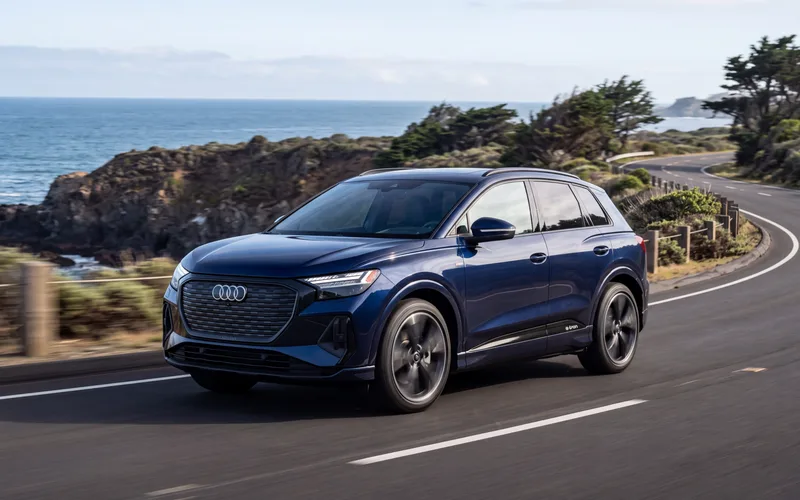 Audi Q4 e-tronCompact Luxury SUVBetter at: Range and charging
It is the same kind of compact German luxury EV but with meaningfully more range and roughly 175 kW fast charging instead of the EQB's 100 kW ceiling.
Compare 2.56C+
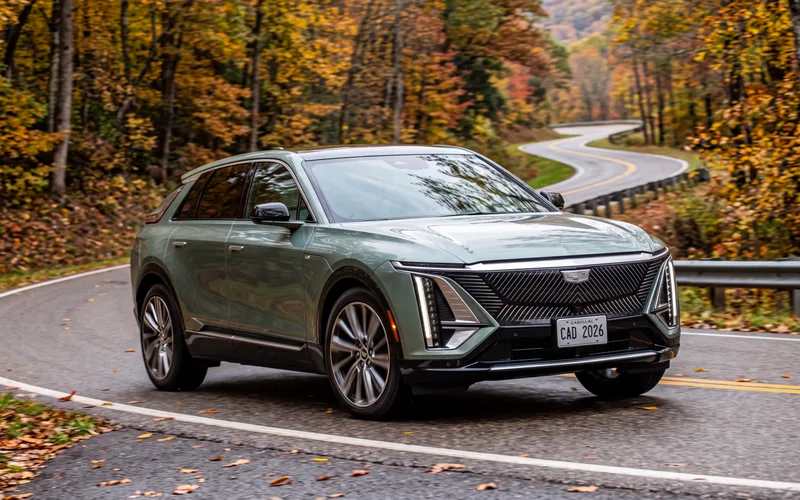 Cadillac OptiqCompact Luxury SUVBetter at: Range per dollar
Roughly 300 miles of range and a much newer platform for about the same money makes it the better buy for anyone keeping the car rather than leasing it.
Compare 2.60C+
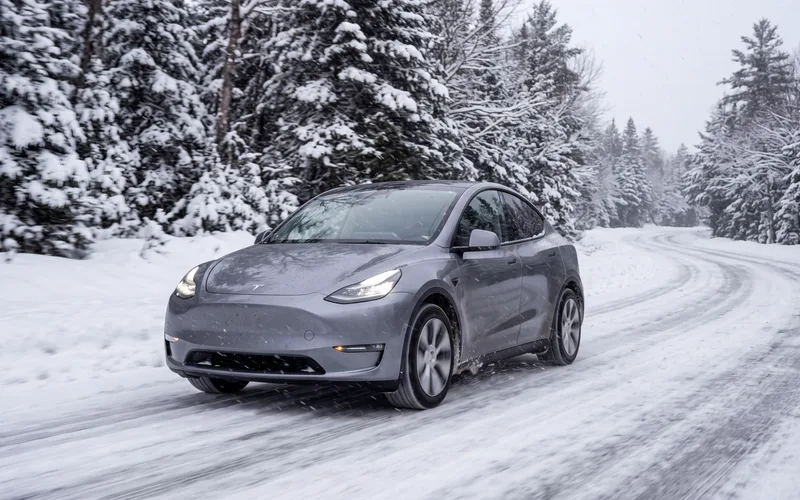 Tesla Model YCompact SUVBetter at: Road-trip usability
It costs less, goes farther, and charges on the Supercharger network natively, which makes it the default choice for a buyer who actually takes road trips.
CompareSubject scores by year
Hover or tap a score to see what moved it versus the year before. A corner mark flags a big swing.
| Year | Performance | Efficiency | Safety | Space | Cost | Reliability | Tech | Use-case | Driving | Value |
|---|---|---|---|---|---|---|---|---|---|---|
| 2026 | 44 | 60 | 77 | 57 | 40 | 63 | 76 | 65 | 69 | 65 |
| 2025 | 42 | 60 | 51 | 56 | 37 | 55 | 74 | 54 | 68 | 62 |
| 2024 | 42 | 60 | 51 | 56 | 33 | 50 | 72 | 54 | 68 | 63 |
| 2023 | 42 | 60 | 51 | 56 | 33 | 50 | 65 | 54 | 67 | 62 |
| 2022 | 42 | 60 | 51 | 56 | 31 | 48 | 65 | 54 | 67 | 60 |
Compare two years
Best fit & conditions
Higher scores mean a better fit for that use case. Learn more about use-case fit →
Subject profile
Academic Probation · NHTSA safety recalls
No NHTSA safety recall is on record for the 2026 Mercedes-Benz EQB. Other model years of the EQB have 6 — listed below.
6 recalls on other model years of the EQB (2022–2025)
Feb 6, 2026Electrical system: propulsion system: traction batteryThe high voltage battery may fail internally and lead to a vehicle fire while parked or driving.
Defect
Mercedes-Benz USA, LLC (MBUSA) is recalling certain 2023-2024 EQB 250+, 2022-2024 EQB 300 4MATIC, and EQB 350 4MATIC vehicles. The high voltage battery may fail internally and lead to a vehicle fire while parked or driving.
Risk
A vehicle fire while parked or driving can increase the risk of injury.
Remedy
Owners are advised to park outside and away from structures until the recall repair is complete. Also, owners are advised to only charge their vehicles to a maximum of 80% battery capacity until the remedy has been completed. Dealers will replace the high voltage battery, free of charge. Interim letters, notifying owners of the safety risk, were mailed March 13, 2026. Additional letters will be sent once the final remedy is available. This recall replaces recalls 25V050 and 25V894. Vehicles previously repaired under recall 25V050 or 25V894 will need to have the new remedy completed. Owners may contact MBUSA customer service at 1-800-367-6372. Vehicle Identification Numbers (VINs) involved in this recall will be searchable on NHTSA.gov beginning February 13, 2026.
NHTSA campaign 26V073000 ↗11,895 vehicles potentially affected (all models in the campaign)Filed by Mercedes-Benz USA, LLCFiled as EQB 250+, EQB 300 4MATIC, EQB 350 4MATICDec 19, 2025Electrical system: propulsion system: traction batteryThe high voltage battery may fail internally and lead to a vehicle fire while parked or driving.
Defect
Mercedes-Benz USA, LLC (MBUSA) is recalling certain 2023 EQB 250, 2022-2023 EQB 300 4MATIC, and EQB 350 4MATIC vehicles. The high voltage battery may fail internally and lead to a vehicle fire while parked or driving.
Risk
A vehicle fire while parked or driving can increase the risk of injury.
Remedy
Owners are advised to only charge their vehicles to a maximum of 80% battery capacity until the repair has been completed. Vehicles previously repaired under Recall 25V050 will need to be repaired again. Dealers will update the battery management system software, free of charge. Owner notification letters were mailed February 6, 2026. Owners may contact MBUSA customer service at 1-800-367-6372. MBUSA's number for this recall is 2025120005. Vehicle Identification Numbers (VINs) involved in this recall will be searchable on NHTSA.gov on December 23, 2025.
NHTSA campaign 25V894000 ↗Manufacturer no. 2025120005169 vehicles potentially affected (all models in the campaign)Owners notified Feb 6, 2026Filed by Mercedes-Benz USA, LLCFiled as EQB 250, EQB 300 4MATIC, EQB 350 4MATICJul 25, 2025Electrical system: propulsion system: traction batteryThe bus bar in the high voltage battery may be secured with incorrect screws, which can cause the system to have a sudden loss of drive power without warning.
Defect
Mercedes-Benz USA, LLC (MBUSA) is recalling certain 2022-2023 EQB 350 4MATIC, and EQB 300 4MATIC vehicles. The bus bar in the high voltage battery may be secured with incorrect screws, which can cause the system to have a sudden loss of drive power without warning.
Risk
A loss of drive power increases the risk of a crash.
Remedy
Owners are advised to park outside until the recall repair is complete. Dealers will inspect and replace the high-voltage battery as necessary, free of charge. This will be a phased campaign, with the remedy becoming available in different phases based on model and model years. Owner notification letters were mailed January 9, 2026. Owners may contact MBUSA customer service at 1-800-367-6372. MBUSA's number for this recall is 2025080004.
NHTSA campaign 25V487000 ↗Manufacturer no. 2025080004660 vehicles potentially affected (all models in the campaign)Owners notified Jan 9, 2026Filed by Mercedes-Benz USA, LLCFiled as EQB 300 4MATIC, EQB 350 4MATICFeb 7, 2025Electrical system: propulsion system: traction batteryThe high voltage battery may fail internally and lead to a vehicle fire while parked or driving.
Defect
Mercedes-Benz USA, LLC (MBUSA) is recalling certain 2022-2025 EQB 250, EQB 300 4MATIC, and EQB 350 4MATIC electric vehicles. The high voltage battery may fail internally and lead to a vehicle fire while parked or driving.
Risk
A vehicle fire while parked or driving can increase the risk of injury.
Remedy
Owners are advised to only charge their vehicles to a maximum of 80% battery capacity until the repair has been completed. Dealers will update the battery management system software, free of charge. Owner notification letters were mailed on May 22, 2025. This is a phased recall. Phase 1 owner letters were mailed on May 22, 2025. Phase 2 owner letters were mailed on October 31, 2025 and Phase 3 owner letters were mailed on December 12, 2025. Owners may contact MBUSA customer service at 1-800-367-6372. MBUSA's number for this recall is 2025040005.
NHTSA campaign 25V050000 ↗Manufacturer no. 202504000512,236 vehicles potentially affected (all models in the campaign)Owners notified May 22, 2025Filed by Mercedes-Benz USA, LLCFiled as EQB 250, EQB 250+, EQB 300 4MATIC, EQB 350 4MATICMay 10, 2024Electrical system: propulsion system · Power trainThe welded spur gear within the front axle electric drivetrain may not have been welded properly. As such, these vehicles fail to comply with the requirements of Federal Motor Vehicle Safety Standard number 114, "Theft Protection."
Defect
Mercedes-Benz USA, LLC (MBUSA) is recalling certain 2022 EQB 300 and EQB 350 vehicles. The welded spur gear within the front axle electric drivetrain may not have been welded properly. As such, these vehicles fail to comply with the requirements of Federal Motor Vehicle Safety Standard number 114, "Theft Protection."
Risk
An improperly welded spur gear can fail and result in a vehicle rollaway, increasing the risk of a crash.
Remedy
Dealers will replace the front axle electric drivetrain, free of charge. Owner notification letters were mailed on August 9, 2024. Owners may contact MBUSA at 1-800-367-6372. MBUSA's number for this recall is 2024060007.
NHTSA campaign 24V331000 ↗Manufacturer no. 2024060007283 vehicles potentially affected (all models in the campaign)Owners notified Aug 9, 2024Filed by Mercedes-Benz USA, LLCFiled as EQB 300 4MATIC, EQB 350 4MATICOct 6, 2023Child seat: vehicle tether anchorMercedes-Benz USA, LLC (MBUSA) is recalling one 2022 EQB 350 vehicle. Incorrect child seat anchor covers may have been installed on the second-row seat. As such, this vehicle fails to comply with the requirements of Federal Motor Vehicle Safety Standard number 225, "Child Restraint Anchorage Systems."
Defect
Mercedes-Benz USA, LLC (MBUSA) is recalling one 2022 EQB 350 vehicle. Incorrect child seat anchor covers may have been installed on the second-row seat. As such, this vehicle fails to comply with the requirements of Federal Motor Vehicle Safety Standard number 225, "Child Restraint Anchorage Systems."
Risk
Incorrect child seat anchor covers may result in a child restraint system being installed incorrectly, increasing the risk of injury.
Remedy
Dealers will replace the child seat anchor covers, free of charge. An owner notification letter was mailed November 10, 2023. Owners may contact MBUSA customer service at 1-800-367-6372. MBUSA's number for this recall is 2023100011.
NHTSA campaign 23V677000 ↗Manufacturer no. 20231000111 vehicles potentially affected (all models in the campaign)Owners notified Nov 10, 2023Filed by Mercedes-Benz USA, LLCFiled as EQB 350 4MATIC
Source: NHTSA Office of Defects Investigation recall database, model years 2022–2026. Recalls are listed by model year as the manufacturer filed them; whether a specific car is affected depends on its VIN — check a VIN at nhtsa.gov ↗. NHTSA model names matched to this page: EQB 250, EQB 250+, EQB 300 4MATIC, EQB 350 4MATIC.
Detailed scoring by subject
1Performance & PowertrainOne of the EQB's weakest categories.0.93F
Volume EQB 300 4MATIC dual-motor produces 225 hp; base EQB 250+ 188 hp, EQB 350 4MATIC 288 hp.
EQB 300 4MATIC peak torque is 288 lb-ft; EQB 250+ 284 lb-ft, EQB 350 4MATIC 384 lb-ft.
MBUSA manufacturer figure for EQB 300 4MATIC is 7.0 seconds; EQB 250+ 8.0 s, EQB 350 4MATIC 6.0 s.
Dual-motor EV delivers instant, quiet, seamless power; reviewers praise responsive throttle and refinement, though ~5,000 lb curb weight blunts sharpness.
Single-speed reduction gear on all EQB variants — no shifts, no hunting, no CVT drone; EV delivery is inherently smooth.
EQB 4MATIC is engineered for 1,700 kg (~3,750 lbs) braked trailer weight with the optional factory hitch and ESP trailer stabilization; MBUSA does not prominently market a US towing rating and base 250+ is not rated to tow.
4MATIC dual-motor AWD standard on two of three trims (EQB 300 and EQB 350); base EQB 250+ is FWD single-motor. No low range or terrain modes.
Pavement-oriented compact luxury crossover: modest ~5.7 in ground clearance, no off-road drive modes, no skid plates, no dedicated off-road trim.
Single powertrain type — battery-electric only — offered at three power levels (188 / 225 / 288 hp); no ICE, hybrid, or PHEV alternatives.
2Efficiency & RangeMid-pack among this car's ten categories.2.04C
Scored on the volume 300 4MATIC AWD trim at 89/85/87 MPGe city/hwy/combined, identical in MY2024 and MY2025 — the X243 is a settled carry-over with no US MY2026 change. Confidence stays MEDIUM rather than HIGH because there is no 2026 EPA certification for this nameplate: Mercedes ended US/Canada EQB sales after MY2025, so these are the final US configuration's figures applied to the 2026 scorecard.
EPA city MPGe for the volume 300 4MATIC trim, unchanged MY2024→MY2025. The dual-motor 4MATIC gives up a large chunk of the FWD 250+'s city efficiency (89 vs 114 MPGe) — a 22% penalty that is among the widest AWD city-cycle gaps in the EV compact-SUV set.
EPA highway MPGe for the volume 300 4MATIC trim, unchanged MY2024→MY2025. The EQB's boxy GLB-derived body — an ICE crossover shell adapted to an EV rather than a purpose-built one — costs it on the highway cycle relative to dedicated EV crossovers.
EPA rates the volume 300 4MATIC at 205 miles on its ~70.5 kWh pack — re-confirmed this run against the EPA record rather than a secondhand figure. That sits essentially on the floor of the EV-SUV range band; only the FWD 250+ at 251 miles clears it meaningfully, and even that trails every mainstream EV crossover rival.
The EQB's 400V architecture accepts only 100 kW peak, unchanged since launch and among the lowest of any EV SUV sold in the US — 800V rivals in the same segment take 150–350 kW. The successor GLB with EQ Technology on the MMA platform is quoted at up to 320 kW, which is the clearest measure of how far behind this figure had fallen by the end of the EQB's run.
Mercedes quotes 32 minutes for 10–80%, and independent tests land in a 30–35 minute window. That reads mid-pack in minutes only because the pack is small — 32 minutes buys roughly 143 miles here versus well over 200 on a longer-range rival charging for the same time.
EPA estimated annual energy cost at 15k mi/yr on the national-average electricity price. Cheap in absolute terms against any gas SUV, but only average among EVs — the trims that lose MPGe to the 4MATIC hardware pay for it here, $150/yr more than the FWD car.
No gasoline at all, and the 9.6 kW onboard charger refills the pack overnight on an ordinary Level 2 circuit (EPA logs ~8.3 h at 240V), which covers daily use cheaply. Held below the segment's NACS-native cars because the EQB keeps a CCS1 inlet — Supercharger access needs Mercedes' $185 NACS adapter plus a dealer software update for Plug & Charge — and a 205-mile range sends the owner to public chargers more often than a longer-legged rival. The 100 kW DC ceiling is scored directly at 2.2.4/2.2.5, so it is deliberately not counted again here.
3SafetyThe EQB's best-graded category.3.23B+
NHTSA has not published a comprehensive overall rating specifically for the EQB in this generation; Mercedes-Benz compact SUV peers (GLB, GLC) and the EQE SUV routinely achieve 5-star overall ratings, so a 5-star estimate is the segment norm for this platform.
The EQB earned an IIHS Top Safety Pick under the 2022–2023 testing regime with mostly Good crashworthiness results; the 2024+ facelift carries forward the same structure, but updated 2025-protocol moderate overlap and side ratings for the 2026 EQB have not been fully re-published. Falls short of TSP+ due to headlight variability across trims.
Standard on every EQB: Active Brake Assist (AEB with pedestrian detection), Attention Assist, Blind Spot Assist (2024+ model refresh made BSM standard), and a rear-view camera. However, adaptive cruise (Active Distance Assist DISTRONIC), Active Lane Keeping Assist, and Active Steering Assist remain in the optional Driver Assistance Package, which is a gap versus rivals like the Q4 e-tron and iX that bundle more ADAS as standard.
Mercedes-Benz Active Brake Assist has consistently earned Superior IIHS front crash prevention ratings across the current EQ/GLA/GLB platform, including day and night pedestrian detection. System also brakes for cross-traffic at intersections when equipped with Driver Assistance Package.
Active Blind Spot Assist with rear cross-traffic alert is standard on the 2026 EQB following the mid-cycle equipment update; active intervention (braking) is available via Driver Assistance Package. Exit warning is included to protect from opening doors into oncoming cyclists/traffic.
Active Lane Keeping Assist is standard as a warning/nudge system, but true Active Steering Assist (lane centering) is bundled in the Driver Assistance Package. When equipped, reviewers describe the centering as smooth and confident on well-marked highways, though it can hand off in construction zones.
Active Distance Assist DISTRONIC with stop-and-go and Route-Based Speed Adaptation is well-regarded when the Driver Assistance Package is optioned — smooth full-speed-range operation with map-aware curve/limit anticipation. Downside is the cost of the package and that base trims ship without ACC.
The EQB does not offer any hands-free driving system in the US. Mercedes-Benz DRIVE PILOT (SAE Level 3) is only certified on the EQS Sedan and S-Class in Nevada and California; it is not available on the EQB. Active Lane Change Assist requires the driver to keep hands on the wheel.
LED High Performance headlights are standard and rated Acceptable by IIHS; adaptive Multibeam LED headlights with matrix-style beam shaping are optional (Premium Package) and earn Good ratings. Headlight quality thus varies by trim, keeping this out of the top tier.
The EQB shares the GLB's tall, boxy greenhouse with relatively upright pillars and large side glass — reviewers praise forward and side sightlines. Rear visibility is compromised by third-row headrests when the optional 3rd row is deployed; 360° surround-view camera is optional (Premium Package) to compensate.
Two full LATCH sets in the outboard rear seats plus a top tether for the middle position; anchors are recessed but reasonably accessible. Wide-opening rear doors and near-flat floor make seat installation straightforward. Optional 3rd row is snug and generally reserved for small children — it does not offer LATCH.
4Space & ComfortOne of the EQB's weakest categories.1.86C-
EQB is standard 5-seat with an optional 7-seat third-row package — a rare 7-passenger option in the subcompact/compact luxury EV class.
Manufacturer-published US front headroom for the 2026 EQB; reduces to 40.5 in with the panorama roof option.
Manufacturer-published US front legroom for the 2026 EQB; adequate at the wheel but low against the broader SUV normalization band.
Second-row headroom benefits from the EQB's upright roofline and boxy profile shared with the outgoing GLB architecture.
Manufacturer-published second-row legroom for the 2026 EQB.
Optional third row is tight even by class standards — 34.5 in headroom and 29.1 in legroom — genuinely kid-only, and reviewers uniformly flag it as short-trip use. Rare 7-seat availability in the class is offset by very limited real-world usability.
Cargo behind the second row is small even by compact-luxury standards; the floor sits high to accommodate the battery pack. Scores at the bottom of the SUV normalization band that spans through mid-size and larger utilities.
Max cargo with the second row folded flat. Modest against the SUV normalization band (55–100 cu ft) that reaches into full-size utilities.
Competent everyday storage — dual center console bins, sliding second row (with optional 3rd row), and a small underfloor bin — but no standout innovations like an in-cabin frunk, giga console, or Pro Power outlets.
Front seats deliver typical Mercedes support and cushioning with power adjustment and memory standard; second-row cushion is a bit flat and the bench sits low, drawing criticism on longer stints.
Ride is composed with reasonable compliance on the older MFA2 platform, but the extra battery mass and standard 19–20 in wheels make it firmer over broken pavement than the plusher EQE/EQS SUVs.
Electric powertrain delivers naturally quiet propulsion and Mercedes adds acoustic front glass on upper trims. Some wind noise around the upright A-pillars at highway speed keeps it from library-quiet.
Dual-zone climate, heated front seats, and remote pre-conditioning standard; heated steering wheel, ventilated front seats, and heated rear seats available via the Premium/Exclusive packages on the EQB 350 4MATIC.
5Cost of OwnershipThe EQB's lowest-graded category.0.64F
2026 EQB 250+ (base RWD) opens the lineup at $53,050 — high end of compact luxury SUV pricing but competitive vs EV rivals (Audi Q4 e-tron, Cadillac Optiq).
EQB 300 4MATIC represents the volume configuration — the middle AWD trim, most common choice among luxury EV buyers who want all-wheel drive plus a moderate options package.
EV drivetrain reduces routine service (no oil changes, minimal brake wear from regen), but Mercedes labor rates and tire/coolant/12V service push totals above mainstream EVs.
Luxury EQ models depreciate faster than ICE peers as EV incentives churn and new models undercut used stock. Forecasts converge on ~55–60% depreciation over 5 years, leaving ~40–45% retention — well below segment norms.
Standard Mercedes-Benz New Vehicle Limited Warranty — 4 years / 50,000 miles, matching German luxury peers (Audi, BMW) but shorter than Genesis (5/60k).
HV battery certificate covers 8 years / 100,000 miles at ≥70% capacity — the meaningful powertrain protection for an EV. Non-battery drivetrain components share the 4-yr basic term.
Strong package: 2 years complimentary Premier Prepaid Maintenance (first two scheduled services), 2 years of complimentary 30-minute DC fast-charging sessions on Electrify America, 24/7 Roadside Assistance, and 1-year Mercedes me connect trial. Charging credit is meaningful for daily-use EQB owners.
$57,200 volume-trim price minus its estimated resale value after 5 years (42% retained, or about $24,024) leaves about $33,176 in depreciation. Add the projected $6,500 in 5-year maintenance and repairs, and owning this vehicle for 5 years costs about $39,676 in total.
6Reliability & QualityMid-pack among this car's ten categories.2.28C
Consumer Reports predicts below-average reliability for Mercedes-Benz EVs broadly, and the EQB in particular has drawn owner complaints around 12V battery/electronics niggles and slow OTA support. The 2026 model year is the run-out for this MFA2-based EQ generation before the MMA-platform successor arrives, and CR/JDP do not project meaningful gains over the outgoing car.
Mercedes-Benz consistently lands in the lower third of Consumer Reports brand reliability rankings and near 200 PP100 in J.D. Power's 2025 VDS versus a 186 industry average — behind Lexus, Genesis, Buick, and Toyota at the premium end. Brand-level assessment is unchanged from the ICE GLB.
The current-generation EQB has been swept up in multiple Mercedes-Benz EV-related recalls including a 2023 high-voltage battery contactor issue on the EQ family and a 2024 12V DC-DC converter software recall, plus the brand-wide May 2026 infotainment cluster-reset recall covering ~144,049 vehicles. Nothing catastrophic, but recall volume is above the compact-luxury norm.
The EQB uses Mercedes' first-generation ASM permanent-magnet/asynchronous motor combo and a 70.5 kWh nickel-cobalt-manganese pack — architecture that is still young in the field with no proven high-mileage cohort. No epidemic drivetrain failures have surfaced, but early Mercedes EQ owners have reported occasional contactor and thermal-management faults tied to the shared HV platform.
The EQB carries the GLB-derived cabin — turbine vents, dual-screen MBUX layout, rose-gold EQ accents — that reads clearly above mainstream compact SUVs but with more hard plastic in the lower dash and door cards than the larger EQE/EQS. Reviewers routinely call out that it does not match the material richness of the Volvo EX40 or Cadillac Optiq at similar price points.
US-market EQB production is at Mercedes-Benz's Kecskemét, Hungary plant, which historically produces tighter panel gaps and fewer initial-quality complaints than the Aguascalientes GLB. Reviewer test cars have shown solid assembly with no widespread rattle or misalignment reports.
Mercedes-Benz USA operates ~380+ dealerships with strong metro coverage and luxury-brand service amenities, and most are EV-certified with high-voltage tooling. J.D. Power CSI places Mercedes mid-pack among luxury brands, consistently trailing Lexus and Cadillac.
Mercedes-Benz OEM parts and dealer labor rates are among the highest in the industry, and the EQB compounds that with HV-battery and EV-specific components that are dealer-only with limited aftermarket depth. Body panels sit behind slower EU parts logistics than domestic EV rivals, and typical out-of-warranty repair estimates run notably above segment average.
7Technology & InfotainmentOne of the EQB's strongest categories.3.16B
Corrected placeholder — EQB retains the pre-Hyperscreen MBUX dual-10.25-inch layout (cluster + center display) across all trims; no larger screen option.
MBUX is quick, well-rendered, and integrates EV route planning; menus are deeper than Tesla/Rivian but the trackpad and voice options ease daily use. Below EQE/EQS SUV (Hyperscreen MB.OS) but on par with GLB/GLA.
Wireless Apple CarPlay and Android Auto are standard equipment on every EQB trim, no packages required.
'Hey Mercedes' is one of the strongest natural-language automotive assistants, and MBUX Navigation with Electric Intelligence handles EV routing/charging stops with augmented-reality overlays.
Base audio is adequate; the optional Burmester surround-sound upgrade is a well-regarded premium system, though not the reference-tier Burmester 3D found in EQE/EQS SUV.
Full 10.25-inch configurable digital cluster is standard with multiple display styles; sharp but smaller than the 12.3-inch clusters in newer Mercedes EVs.
MBUX supports OTA updates for infotainment, maps, and select vehicle functions, but the EQB predates the MB.OS platform used in EQE/EQS SUV that enables broader vehicle-wide OTA feature drops.
Mercedes me app is polished with remote lock, climate preconditioning, charge monitoring, and locate — but many features become subscription-gated after the trial period.
USB-C ports front and rear are standard; wireless phone charging is included with the standard convenience package. No household AC outlet.
KEYLESS-GO proximity entry with push-button start is standard; hands-free power liftgate available, and Mercedes offers Digital Vehicle Key (UWB) via iPhone/Apple Wallet on the EQB.
Rear camera and PARKTRONIC sensors standard; Surround View System with 360-degree camera and Active Parking Assist available via the Parking Assistance Package. Image quality is class-competitive.
Head-up display is available as an optional extra (part of premium packages), not standard on the volume trim.
8Use-Case FitMid-pack among this car's ten categories.2.40C+
Boxy GLB-derived greenhouse gives wide-opening rear doors and a near-flat floor for LATCH access (two outboard sets plus middle tether, IIHS Acceptable ease of use), and the optional 7-seat package is genuinely rare in this class. Held back by only 22 cu ft of cargo behind the 2nd row — stroller-plus-groceries loading is tighter than in most rivals.
Standard Active Brake Assist (Superior IIHS FCP), Blind Spot Assist, and Attention Assist give a solid safety floor, and a 2023 IIHS Top Safety Pick award (older protocol) plus expected 5-star NHTSA class norm are credible. But DISTRONIC ACC, Active Steering Assist, and rear cross-traffic braking still live in the optional Driver Assistance Package — a gap vs Q4 e-tron/iX that bundle those as standard.
Quiet EV cabin (light wind noise only) and dual-zone climate with heated fronts standard make it pleasant for shorter family trips, and the rare optional 3rd row helps for kid overflow. But 22 cu ft behind the 2nd row fills quickly with four sets of luggage, rear heated seats are locked behind the EQB 350's Exclusive package, and the 227-mile volume-trim range forces a charging stop on any real road trip.
Instant EV torque, silent low-speed drivetrain, and steering-wheel regen paddles (avoiding forced one-pedal creep) make it a relaxed commuter, and the compact ~184-in footprint threads city traffic easily. Slightly blunted vs lighter Q4 e-tron by ~5,000 lb curb weight that reviewers flag as reducing sharpness at parking speeds.
87 MPGe combined and EPA-estimated ~$850/yr energy cost on the volume 300 4MATIC keep per-mile costs cheap by SUV standards — well under any ICE luxury crossover on home L2 charging. Efficiency trails 2026 luxury EV benchmarks (Q4 e-tron 115 MPGe, EX40 100+ MPGe), and Mercedes labor rates plus ~$2,700/yr insurance nibble at the win.
Short ~184-in length, upright pillars, and large side glass give excellent forward and side visibility — reviewers consistently praise the boxy shape for city usability. 40.9-ft turning circle is only average and the 360-degree surround-view camera lives in an optional Parking Assistance Package, holding it below the class ceiling.
4MATIC trims tow up to ~3,750 lbs with the optional factory hitch — enough for a small utility trailer or a pair of jet skis — and 62 cu ft max cargo handles light hauling. Base 250+ is not rated to tow, there is no bed, no frunk, and no meaningful payload headroom, so it is not a real work tool.
MFA2 platform is proven at fleet scale under the GLA/GLB globally, and Mercedes chassis engineering is sound, but the leather/leatherette-only interior is not built for muddy boots and 2x4s and there is no vinyl work-spec option. Suitable for the occasional load, not for sustained work-duty abuse.
No vehicle-to-load (V2L), no 120V household outlet, no Mercedes upfitter program. Basic cargo tie-downs and available roof rails are the extent of work provisions — squarely a lifestyle EV.
Quiet cabin, supportive front seats, and DISTRONIC (when optioned) make the driving part of a road trip fine, but the fundamentals are weak for 2026: 207–251 mi EPA range from a small 70.5 kWh pack, and a 100 kW DC fast-charge ceiling that leaves it 20+ min behind Q4 e-tron (175 kW) or Optiq/EX40 (150+ kW) at every stop. Not a mile-eater.
4MATIC dual-motor AWD standard on two of three trims, optional roof rails for kayaks/rocket boxes, and the ~3,750-lb tow rating handles a small camper. Held back by only ~5.7 in of ground clearance, no off-road drive modes, no low range, and no V2L for camping power — pavement-oriented at heart.
40/20/40 folding rear seat with sliding second row (when 3rd-row optioned) and a small underfloor bin give reasonable flexibility, and optional roof rails plus hitch open bike/box options. Held back by tight 22 cu ft behind the 2nd row and 62 cu ft max — smaller than Model Y, EX40, or Q4 e-tron — and there is no frunk.
9Driving ExperienceOne of the EQB's strongest categories.2.70B-
Low-slung battery gives the EQB a more hunkered feel than its boxy proportions suggest, and it corners securely without excessive body roll — but it is unambiguously not a back-road weapon, a common note across reviews.
Steering is light with a decent build-up in weight at higher speeds and precise at parking speeds, but reviews consistently describe it as competent rather than feelsome — no meaningful road feedback.
Regen tuning is fine and paddle-adjustable, but Edmunds specifically criticizes the friction brake pedal as touchy and difficult to modulate smoothly, and notes the EQB won't hold itself at a stop without pedal input unlike many EV rivals.
Standard EV benefits — instant, seamless torque delivery with no gearshifts or start-stop shudder — apply here; tip-in is well-calibrated and acceleration feels 'more than adequate' around town. Not class-leading tuning but no meaningful faults.
Single-speed EV drivetrain is near-silent at speed with no engine noise, gear whine, or motor droning; some tire and wind noise intrudes because there is no engine to mask it, but the powertrain itself is inoffensive.
Manufacturer curb-to-curb turning circle of 11.7 m (38.4 ft). Roughly mid-pack for a compact luxury SUV — not tight, not ungainly.
High, commanding seating position with wide seat/wheel adjustment range and clear forward sightlines; MBUX touchscreen and haptic wheel controls take some familiarization but core driving controls remain intuitive.
The EQB is a boxy, family-focused seven-seat EV — well-mannered and adequately quick, but nobody buys it to take the long way home; reviewers explicitly call it relaxing rather than engaging.
10Value & Market PositionMid-pack among this car's ten categories.2.42C+
Base EQB 250+ includes dual 10.25-inch MBUX displays, panoramic sunroof, LED headlights, keyless start, 8-way power heated front seats, and full active-safety suite — competitive but not standout for a $53K+ luxury EV against Cadillac Optiq and Genesis GV60 which pack more content at similar prices.
Base ~$53K MSRP with ~245-mile range trails newer rivals: Cadillac Optiq (~$54K, ~300 mi), Genesis GV60 (~$52K, 800V charging), Hyundai Ioniq 5 (~$44K), and Lexus RZ (better tech). Small MMA-platform EV has aging efficiency and mid-tier fast-charging (~112 kW peak).
Three trims (EQB 250+ RWD, EQB 300 4MATIC, EQB 350 4MATIC) span single-motor to dual-motor with a rare optional third row (7-seat) — a meaningful configuration advantage vs. every compact luxury EV rival. Powertrain and range spread is narrower than best-in-class.
US EQB volume has been modest and trending down as luxury EV shoppers gravitated to newer, longer-range entries; well behind Tesla Model Y, Mustang Mach-E, and even sibling EQE SUV in unit sales.
Mercedes-Benz remains a top-tier aspirational luxury brand with strong three-pointed-star equity, though the 'EQ' sub-brand has drawn criticism for looking and feeling less premium than the equivalent ICE Benz, which caps upside.
One of the most heavily incentivized luxury EVs: Mercedes routinely passes the $7,500 commercial-lease EV credit through on EQB leases plus stacks dealer/MB Financial cash, producing standout lease deals — great for buyers even though it reflects soft demand.
Current EQB launched US MY2022 on MFA2 architecture with a light 2024 refresh (revised grille, new AMG Line styling, updated MBUX). 2026 is late-cycle — next-gen EQB on the MMA platform is expected imminently, raising redesign-risk for buyers.
Reviewer consensus is mixed: praised for practicality, cabin quality, and optional third row, but knocked for modest range, so-so efficiency, and unremarkable driving character. No 10Best, NACTOY, or Car and Driver comparison wins; rarely the class pick.