
The verdict
A capable mid-size luxury sedan, strong on technology and held back by ownership.
The 2026 EQE Sedan is a genuinely lovely place to sit — a library-quiet cabin on standard air suspension, Burmester 3D audio and one of the best infotainment systems in any car — and Mercedes cut $10,000 off the price this year, with the base 320+ now starting at $66,100. What it isn't is a cheap car to own or a long-legged EV: 308 miles of range on the RWD trim (267 on the 4MATIC), a modest 170 kW charging peak, and a projected 40% resale after five years that works out to roughly $49,660 in depreciation plus service. Rear-seat space is the other catch — 36.2 inches of rear headroom and 36.6 inches of legroom are tight enough that adults in back notice on any drive over an hour. Buy it if you drive it yourself, charge at home, and lease rather than buy, because the incentives on this car are extraordinary and the depreciation is somebody else's problem.
Jump to scoresStrengths
- Safety credentials at the very top of the class
- Discounts, charging perks and a 10-year battery warranty
- One of the best tech suites in any sedan
What holds it back
- Brutal depreciation — the single biggest cost of owning one
- Range and charging speed have been overtaken
- The back seat is the price of that shape
Top alternatives
Cars shoppers cross-shop with the Mercedes-Benz EQE Sedan 3.26B+
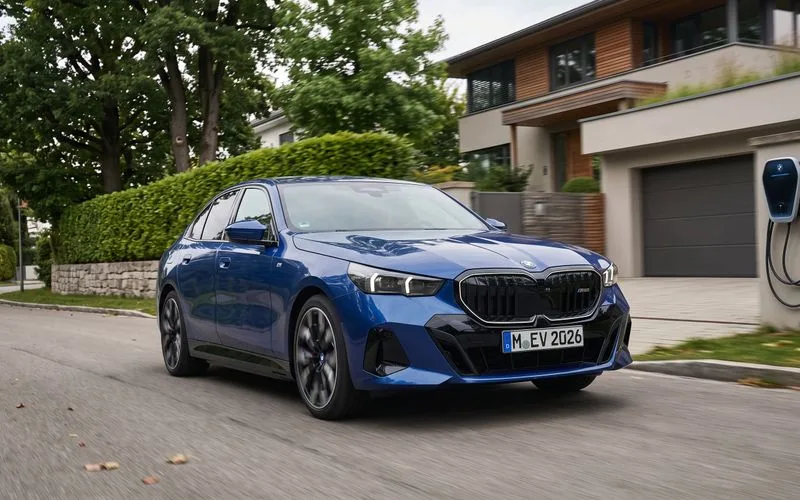 BMW i5Mid-Size Luxury SedanBetter at: Driving dynamics
Same money buys more rear-seat room, standard driver assistance instead of a $2,300 option package, and a chassis that's genuinely enjoyable to drive.
Compare 3.30B+
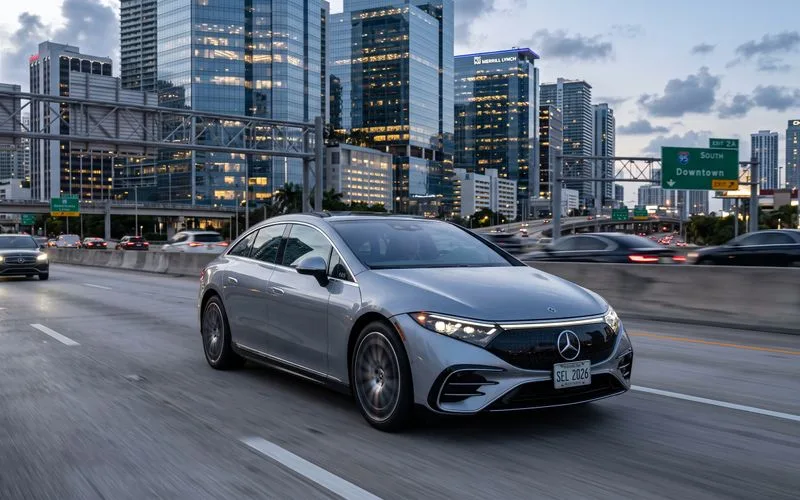 Mercedes-Benz EQS SedanFull-Size Luxury SedanBetter at: Range and space
The same Mercedes EV experience with 350–390 miles of range, an adult-sized back seat and a hatchback opening — the EQE's biggest weaknesses solved for more money.
Compare2.87B-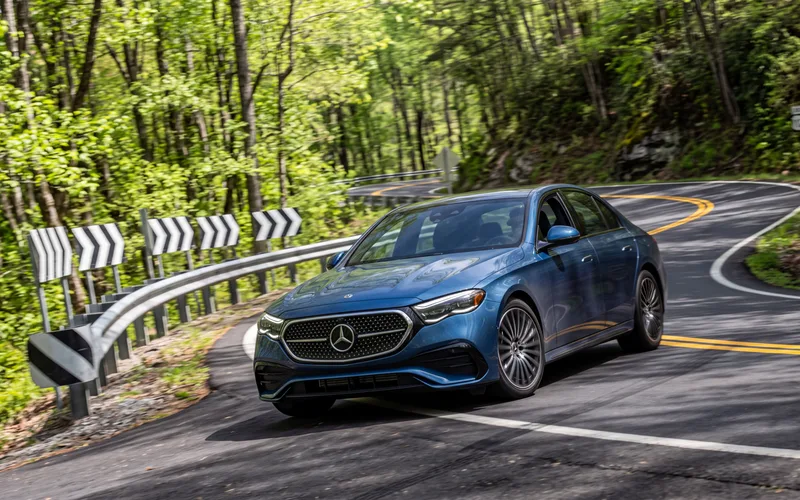 Mercedes-Benz E-ClassMid-Size Luxury SedanBetter at: Resale value
If home charging isn't realistic, the gas E-Class delivers the same cabin quality and ride with a bigger trunk, more rear legroom and far better five-year resale.
CompareSubject scores by year
Hover or tap a score to see what moved it versus the year before. A corner mark flags a big swing.
| Year | Performance | Efficiency | Safety | Space | Cost | Reliability | Tech | Use-case | Driving | Value |
|---|---|---|---|---|---|---|---|---|---|---|
| 2026 | 67 | 64 | 81 | 70 | 24 | 67 | 84 | 55 | 69 | 72 |
| 2025 | 64 | 63 | 54 | 69 | 23 | 66 | 82 | 53 | 66 | 70 |
| 2024 | 64 | 63 | 54 | 68 | 22 | 63 | 81 | 51 | 66 | 69 |
| 2023 | 63 | 63 | 54 | 68 | 22 | 58 | 80 | 51 | 65 | 69 |
Compare two years
Best fit & conditions
Higher scores mean a better fit for that use case. Learn more about use-case fit →
Subject profile
Academic Probation · NHTSA safety recalls
No NHTSA safety recall is on record for the 2026 Mercedes-Benz EQE Sedan. Other model years of the EQE Sedan have 10 — listed below.
10 recalls on other model years of the EQE Sedan (2023–2025)
Aug 20, 2025Steering: critical fastenersPlease see the recall report for a complete list of models. The steering coupling bolt may have been improperly tightened, allowing the steering coupling to loosen from the steering rack.
Defect
Mercedes-Benz USA, LLC (MBUSA) is recalling certain 2023-2026 EQE and GLC vehicles. Please see the recall report for a complete list of models. The steering coupling bolt may have been improperly tightened, allowing the steering coupling to loosen from the steering rack.
Risk
A loose steering coupling can cause a loss of steering control, increasing the risk of a crash.
Remedy
Dealers will tighten the steering coupling bolts as necessary, free of charge. Owner notification letters were mailed October 6, 2025. Owners may contact MBUSA customer service at 1-800-367-6372.
NHTSA campaign 25V533000 ↗3,749 vehicles potentially affected (all models in the campaign)Owners notified Oct 6, 2025Filed by Mercedes-Benz USA, LLCFiled as AMG EQE 53 4MATIC, EQE 350 4MATIC, EQE 350+, EQE 500 4MATIC, REDUNDANT EQE 350, REDUNDANT EQE 350 4MATICJun 5, 2025Back over prevention: warnings: external/pedestrian alertPlease see the recall report for a complete list of models. Software in the Acoustic Vehicle Alerting System (AVAS) may cause an incorrect external pedestrian warning sound while reversing. As such, these vehicles fail to comply with the requirements of Federal Motor Vehicle Safety Standard number 141, "Minimum Sound Requirements for Hybrid Electric Vehicles."
Defect
Mercedes-Benz USA, LLC (MBUSA) is recalling certain 2022-2025 S-Class, EQE SUV, EQE, EQS SUV and EQS vehicles. Please see the recall report for a complete list of models. Software in the Acoustic Vehicle Alerting System (AVAS) may cause an incorrect external pedestrian warning sound while reversing. As such, these vehicles fail to comply with the requirements of Federal Motor Vehicle Safety Standard number 141, "Minimum Sound Requirements for Hybrid Electric Vehicles."
Risk
A vehicle that makes an incorrect sound may fail to alert pedestrians of a reversing vehicle, increasing the risk of crash.
Remedy
Dealers will update the AVAS software, free of charge. Owner notification letters were mailed August 1, 2025. Owners may contact MBUSA customer service at 1-800-367-6372. MBUSA's number for this recall is 2025070005.
NHTSA campaign 25V366000 ↗Manufacturer no. 202507000594 vehicles potentially affected (all models in the campaign)Owners notified Aug 1, 2025Filed by Mercedes-Benz USA, LLCFiled as AMG EQE 53 4MATIC, EQE 350+, EQE 500 4MATICMay 12, 2025Electrical system: wiring: fuses and circuit breakersAn incorrect fuse box that was not designed for the vehicle may have been installed.
Defect
Mercedes-Benz USA, LLC (MBUSA) is recalling certain 2023-2024 C-Class, E-Class, S-Class, SL, GLC, EQE SUV, EQE, EQS SUV, and EQS vehicles that were incorrectly repaired under recall 24V-115. An incorrect fuse box that was not designed for the vehicle may have been installed.
Risk
An incorrect fuse box can result in a sudden loss of drive power or a loss of critical safety functions such as the restraint systems or instrument cluster, increasing the risk of a crash or injury. Additionally, there could be an increased risk of a fire.
Remedy
Dealers will inspect and replace the main fuse boxes, free of charge. Owner notification letters were mailed June 6, 2025. Owners may contact MBUSA customer service at 1-800-367-6372. MBUSA's number for this recall is 2025050003/4.
NHTSA campaign 25V255000 ↗Manufacturer no. 2025050003/4443 vehicles potentially affected (all models in the campaign)Owners notified Jun 6, 2025Filed by Mercedes-Benz USA, LLCFiled as AMG EQE 53 4MATIC, EQE 350 4MATIC, EQE 500 4MATICMar 7, 2025Wheels: rimThe rim inserts may detach from the wheels while driving.
Defect
Mercedes-Benz USA, LLC (MBUSA) is recalling certain 2023 EQE 350 4MATIC and EQE 350+ vehicles. The rim inserts may detach from the wheels while driving.
Risk
Wheel rim insert detachment can create a hazard for other road users, increasing the risk of a crash.
Remedy
Dealers will inspect and replace the rim inserts as necessary, free of charge. Owner notification letters were mailed April 25, 2025. Owners may contact MBUSA customer service at 1-800-367-6372. MBUSA's number for this recall is 2025030016.
NHTSA campaign 25V150000 ↗Manufacturer no. 20250300164 vehicles potentially affected (all models in the campaign)Owners notified Apr 25, 2025Filed by Mercedes-Benz USA, LLCFiled as EQE 350+, REDUNDANT EQE 350 4MATICMay 28, 2024Electrical system: propulsion system: traction battery: management system/energy control module (bms/becm): softwareThe battery management system software may cause the high-voltage battery to shut down, which can result in a sudden loss of drive power.
Defect
Mercedes-Benz USA, LLC (MBUSA) is recalling certain 2024 EQE 350 4MATIC, EQE 350+, EQE 500 4MATIC, EQS 450 4MATIC, EQS 450+, EQS 580 4MATIC, AMG EQE 53 4MATIC, AMG EQS 53 4MATIC, 2023-2025 EQE SUV 350 4MATIC, EQE SUV 350+, EQE SUV 500 4MATIC, EQS SUV 450 4MATIC, EQS SUV 450+, EQS SUV 580 4MATIC, 2024-2025 EQS SUV 680 4MATIC, and AMG EQE SUV 53 4MATIC vehicles. The battery management system software may cause the high-voltage battery to shut down, which can result in a sudden loss of drive power.
Risk
A sudden loss of drive power increases the risk of a crash.
Remedy
Dealers will update the battery management system software, free of charge. Owner notification letters were mailed July 5, 2024. Owners may contact MBUSA customer service at 1-800-367-6372. MBUSA's number for this recall is 2024060002.
NHTSA campaign 24V372000 ↗Manufacturer no. 202406000214,912 vehicles potentially affected (all models in the campaign)Owners notified Jul 5, 2024Filed by Mercedes-Benz USA, LLCFiled as AMG EQE 53 4MATIC, EQE 350 4MATIC, EQE 350+, EQE 500Feb 16, 2024Electrical system: wiring: fuses and circuit breakersThe 80-Amp fuses may have been manufactured incorrectly, which can cause the fuses to fail.
Defect
Mercedes-Benz USA, LLC (MBUSA) is recalling certain 2023-2024 C300, AMG C43, S580e, S580, Maybach S580, Maybach S680, AMG SL43, AMGSL63, GLC300, EQE350, EQE500, EQS450, EQS580, AMG EQS, 2023 S500, AMG SL55, AMG EQE, 2024 E350, E450, AMG C63e S, CLE300 Coupe, CLE450 Coupe, and GLC300 Coupe vehicles. The 80-Amp fuses may have been manufactured incorrectly, which can cause the fuses to fail.
Risk
An 80-Amp fuse that fails can result in a sudden loss of drive power or a loss of critical safety functions such as the restraint systems or instrument cluster, increasing the risk of a crash or injury. Additionally, there could be an increased risk of a fire.
Remedy
Dealers will replace the main fuse boxes, free of charge. Owner notification letters were mailed April 5, 2024. Owners may contact MBUSA customer service at 1-800-367-6372. MBUSA's number for this recall is 2024030008.
NHTSA campaign 24V115000 ↗Manufacturer no. 202403000831,848 vehicles potentially affected (all models in the campaign)Owners notified Apr 5, 2024Filed by Mercedes-Benz USA, LLCFiled as AMG EQE, EQE 500, REDUNDANT EQE 350, REDUNDANT EQE 350 4MATICDec 15, 2023Electrical system: software · Exterior lighting: headlightsThe headlights may be incorrectly adjusted due to a software error in the headlight control unit.
Defect
Mercedes-Benz USA, LLC (MBUSA) is recalling certain 2023 EQE 350 vehicles equipped with comfort suspension. The headlights may be incorrectly adjusted due to a software error in the headlight control unit.
Risk
Incorrectly adjusted headlights can reduce the visibility of oncoming traffic and impair the dynamic driving control performance. Both scenarios increase the risk of a crash.
Remedy
Dealers will update the headlight control unit software, free of charge. Owner notification letters were mailed by February 2, 2024. Owners may contact MBUSA customer service at 1-800-367-6372.
NHTSA campaign 23V853000 ↗Manufacturer no. 202401000910 vehicles potentially affected (all models in the campaign)Owners notified Feb 2, 2024Filed by Mercedes-Benz USA, LLCFiled as EQE350Aug 4, 2023Structure: frame and membersThe absorbers in the roof frame may not be secured properly and can detach during window air bag deployment.
Defect
Mercedes-Benz USA, LLC (MBUSA) is recalling certain 2023 AMG EQE, EQE 500, and EQE 350 vehicles. The absorbers in the roof frame may not be secured properly and can detach during window air bag deployment.
Risk
In the event of a crash with window air bag deployment, detached absorbers can strike vehicle occupants and increase their risk of injury.
Remedy
Dealers will replace the absorbers, free of charge. Owner notification letters were mailed September 1, 2023. Owners may contact MBUSA customer service at 1-800-367-6372. MBUSA's number for this recall is 2023080004.
NHTSA campaign 23V555000 ↗Manufacturer no. 202308000410 vehicles potentially affected (all models in the campaign)Owners notified Sep 1, 2023Filed by Mercedes-Benz USA, LLCFiled as AMG EQE, EQE 500, REDUNDANT EQE 350 4MATICJun 5, 2023Electrical system: propulsion systemA software error in the electric drivetrain may cause a loss of drive power.
Defect
Mercedes-Benz USA, LLC (MBUSA) is recalling certain 2022-2023 EQS 450, AMG EQS, EQS 580, and 2023 AMG EQE vehicles. A software error in the electric drivetrain may cause a loss of drive power.
Risk
A loss of drive power can increase the risk of a crash.
Remedy
Dealers will update the electric drivetrain software, free of charge. Owner notifications were mailed beginning July 19, 2023. Owners may contact MBUSA customer service at 1-800-367-6372. MBUSA's number for this recall is 2023060009.
NHTSA campaign 23V405000 ↗Manufacturer no. 20230600098,281 vehicles potentially affected (all models in the campaign)Owners notified Jul 19, 2023Filed by Mercedes-Benz USA, LLCFiled as AMG EQEMay 2, 2023Electrical system: propulsion system: traction battery thermal: management: softwareThe high-voltage battery monitoring system software may not alert the driver of a battery malfunction. As such, these vehicles fail to comply with the requirements of Federal Motor Vehicle Safety Standard number 305, "Electric-powered vehicles: Electrolyte Spillage and Electrical Shock Protection."
Defect
Mercedes-Benz USA, LLC (MBUSA) is recalling certain 2023 EQE 350, S580e, 2022-2023 EQS 450, EQS 580, 2022 AMG EQS 53, and EQS 450+ vehicles. The high-voltage battery monitoring system software may not alert the driver of a battery malfunction. As such, these vehicles fail to comply with the requirements of Federal Motor Vehicle Safety Standard number 305, "Electric-powered vehicles: Electrolyte Spillage and Electrical Shock Protection."
Risk
A high-voltage battery monitoring system that does not alert the driver of a battery malfunction may increase the risk of an injury.
Remedy
Dealers will update the battery management system software, free of charge. Owner notification letters were mailed beginning August 18, 2023. Owners may contact MBUSA customer service at 1-800-367-6372. MBUSA's number for this recall is 2023070013.
NHTSA campaign 23V309000 ↗Manufacturer no. 20230700133,828 vehicles potentially affected (all models in the campaign)Owners notified Aug 18, 2023Filed by Mercedes-Benz USA, LLCFiled as REDUNDANT EQE 350 4MATIC
Source: NHTSA Office of Defects Investigation recall database, model years 2023–2026. Recalls are listed by model year as the manufacturer filed them; whether a specific car is affected depends on its VIN — check a VIN at nhtsa.gov ↗. NHTSA model names matched to this page: AMG EQE, AMG EQE 53 4MATIC, EQE 350 4MATIC, EQE 350+, EQE 500, EQE 500 4MATIC, EQE350, REDUNDANT EQE 350, REDUNDANT EQE 350 4MATIC.
Detailed scoring by subject
1Performance & PowertrainMid-pack among this car's ten categories.2.51C+
Volume trim is the EQE 320+, a single rear-mounted permanent-magnet motor rated at 315 hp. The 320 4MATIC keeps the same 315 hp output; the AMG EQE steps up to 617 hp (677 hp briefly with launch control).
Instant EV torque delivery gives the base 320+ 416 lb-ft even in its single-motor RWD form; the dual-motor 4MATIC jumps to 564 lb-ft and the AMG EQE tops out at 701 lb-ft (738 lb-ft with Race Start).
Mercedes quotes 5.8 s for the base EQE 320+, a couple tenths quicker than the outgoing 350+. The 4MATIC drops to 5.5 s in independent testing and the AMG EQE hits 3.2 s with launch control.
Reviewers uniformly praise the EQE's power delivery as seamless and quiet — permanent-magnet motors with instant torque, no shift shock, and Mercedes-caliber noise isolation. It reads as a signature strength of the car rather than a weak point.
Single-speed reduction gearbox delivers continuous, shift-free acceleration — no hunting, no downshifts, no drone. Behavior is effectively invisible to the driver, which is the ideal outcome for this item.
4MATIC dual-motor AWD is broadly available across the range (EQE 320 4MATIC and AMG EQE), with the AMG adding torque vectoring and drift-capable rear-motor bias. Not standard on the volume 320+ RWD trim, and there's no low-range or terrain hardware — but that's segment-appropriate for a luxury sedan.
EV-only lineup with a single ~96 kWh battery pack; three tunings (320+, 320 4MATIC, AMG EQE) all draw from the same electric architecture. The 402-hp EQE 500 4MATIC was actually deleted for 2026, narrowing choice further. No hybrid, PHEV or gas alternative — take-it-or-leave-it on electrification.
2Efficiency & RangeOne of the EQE Sedan's weakest categories.2.30C+
EPA combined MPGe for the volume EQE 320+ (RWD, 96 kWh) — the trim cat1 and cat5 score as this scorecard's configuration. Re-scored from the 320 4MATIC figures used previously, which described a different trim than the rest of the scorecard.
EPA city MPGe for the volume EQE 320+ sedan. Modest for an EV in city driving — the EQE's mass (roughly 5,300 lb) works against it where regenerative braking should be paying off most.
EPA highway MPGe for the volume EQE 320+ sedan. The 0.22 Cd body holds the highway figure level with city — unusual for an EV, and the EQE's strongest efficiency showing.
EPA range for the volume EQE 320+ on its 96 kWh pack. Respectable but no longer competitive with EV sedans on newer architectures — the Lucid Air and Model S both clear 400 miles.
Mercedes quotes 170 kW peak DC across every 2026 EQE Sedan trim. The V295 is a 400-volt car, so it sits mid-pack against the 800V EV sedans (Taycan, e-tron GT, Ioniq 6) that accept 240–320 kW.
Manufacturer-quoted 32 minutes from 10–80%, identical across the 2026 EQE Sedan range. A flat, well-sustained charge curve offsets the modest 170 kW peak, but it trails the sub-25-minute 800V cars.
EPA annual electricity cost at 15k mi/yr for the volume 320+. Comfortably mid-pack among EV sedans, which run roughly $450–$1,300, and a fraction of what a comparable gas executive sedan burns.
No gasoline at all, a 9.6 kW onboard charger that refills the pack overnight on an ordinary Level 2 circuit, and $800/yr of electricity. Raised from 72 because MY26 Mercedes EVs now ship WITH the NACS adapter rather than requiring a $185 dealer purchase, opening the Supercharger network at no extra cost. Held below the 80s because this is still a 400V CCS1 car needing that adapter — native NACS arrived on the MMA-platform CLA, not the V295 EQE.
3SafetyOne of the EQE Sedan's strongest categories.3.49B+
EQE Sedan carries a 5-star NHTSA overall rating from the current-generation crash test program, with strong scores across frontal, side, and rollover categories.
EQE Sedan earned IIHS Top Safety Pick+ with Good ratings across the updated moderate overlap front, side, and roof strength tests, plus Superior front crash prevention.
Standard suite includes Active Brake Assist (AEB with pedestrian detection), Blind Spot Assist, Attention Assist, and adaptive high beams, but full adaptive cruise (Distronic) and Active Steering Assist lane centering remain locked behind the optional Driver Assistance Package — a real gap on a six-figure luxury EV.
IIHS front crash prevention testing rated the EQE Superior in both vehicle-to-vehicle and pedestrian evaluations, including improved nighttime detection.
Blind Spot Assist is standard with active brake intervention on both this vehicle and (with the Driver Assistance Package) an exit-warning system that flags cyclists at the door. Rear cross-traffic alert with braking is included.
Active Steering Assist (optional) provides confident lane centering that reviewers consistently rate as smooth and predictable on marked highways, though it lags Ford BlueCruise / GM Super Cruise / BMW Highway Assistant for hands-off usability.
DISTRONIC adaptive cruise (part of Driver Assistance Package) is a mature, full-speed-range system with smooth stop-and-go and predictive route-based speed adjustment via nav data — one of the more refined ACC implementations available.
Mercedes Drive Pilot Level 3 remains restricted to EQS Sedan and S-Class in the US (Nevada and California only); the EQE has no equivalent hands-free offering, and Active Steering Assist requires a hand on the wheel.
MULTIBEAM LED headlights with adaptive high-beam assist and 84 individually addressable pixels are standard on the volume trim, delivering IIHS Good-equivalent range without glare.
Aerodynamic cab-forward silhouette and steeply raked C-pillars create noticeable rear-quarter blind zones, though a standard 360-degree camera and available surround view help compensate at low speeds.
Two sets of lower LATCH anchors in outboard rear seats and a top tether at the center; anchors sit somewhat deep in the cushion bolstering and the sloping roofline limits headroom for tall rear-facing seats.
4Space & ComfortGrades above the middle of the scale.2.75B-
Standard five-passenger layout with 2+3 seating; only configuration offered.
Competitive front headroom for the mid-size luxury sedan segment; panoramic glass roof is standard.
Below-average front legroom for the class; the sculpted, egg-shaped one-bow cabin trades some driver stretch-out room for aero.
Rear headroom is tight because the arched roofline slopes sharply toward the trunk; taller adults will find their heads close to the panoramic glass.
Rear legroom is meaningfully tighter than the E-Class and rivals like the BMW i5; battery packaging and the sloped roofline eat into second-row space.
Trunk is average for the class and notably smaller than the EQS Sedan; the high battery floor limits depth and there is no front trunk.
Competitive everyday storage — sliding center console with dual cupholders, wireless phone charger, and reasonable door bins — but no clever tricks and no frunk (unlike Tesla and Lucid rivals).
Front seats are widely praised for long-haul comfort with strong bolstering; ENERGIZING massage and multi-contour seats available on Exclusive/Pinnacle trims. Rear bench is well-cushioned but the low, reclined seating position combined with tight legroom limits long-trip comfort.
AIRMATIC air suspension is standard and delivers a plush, well-controlled ride that leads the segment; optional rear-wheel steering further improves low-speed comfort. Larger wheels on AMG trims can firm things up.
Silent EV powertrain combined with acoustic laminated glass and extensive sound deadening produces a library-quiet cabin; only minor tire roar intrudes on coarse pavement.
Heated front seats and heated steering wheel standard; ventilated front seats and heated rear seats available; four-zone climate on higher trims; ENERGIZING comfort programs and remote preconditioning via the Mercedes me app.
5Cost of OwnershipThe EQE Sedan's lowest-graded category.0.00F
2026 model year drops $10,000 vs 2025; new EQE 320+ RWD replaces old 350+ as base. Still well above sedan-band ceiling ($55k).
AWD 4MATIC is the volume US configuration in this luxury class. Base 4MATIC $67,450 + destination; most buyers add option packages pushing effective transaction into low-$70Ks. Well above sedan-band ceiling ($58k).
KBB 5-year cost-to-own projects ~$12,284 combined maintenance + repairs for 2026 EQE, though CarEdge shows lower ~$465/yr routine maintenance; EV drivetrain is simpler but Mercedes dealer service is expensive and out-of-warranty repairs (air-suspension, high-voltage components) are pricey. Blended estimate ~$8,500 accounts for 2 yrs included maintenance offsetting years 1-2.
KBB projects ~$39,613 depreciation on $66,200 base = ~40% residual after 5 years. Luxury EV depreciation has been especially punishing; historical 2023 EQE has already shed 57% in 3 years. Well below sedan-band midpoint (35-65).
Standard Mercedes-Benz EQ basic coverage — mid-pack for luxury segment.
EV high-voltage battery gets industry-leading 10-year/155,000-mile coverage — top of the sedan-band ceiling. (Combustion-style powertrain coverage on the electric drive unit is 4 yr / 50k, but the battery — the highest-cost EV powertrain component — is the meaningful figure.)
Two years of scheduled maintenance included plus free 30-minute Electrify America DC fast-charging sessions with every new EQE, Mercedes me Connect trial, and standard roadside assistance. Substantial charging perk on top of maintenance is a genuine differentiator vs most luxury rivals.
$68,600 volume-trim price minus its estimated resale value after 5 years (40% retained, or about $27,440) leaves about $41,160 in depreciation. Add the projected $8,500 in 5-year maintenance and repairs, and owning this vehicle for 5 years costs about $49,660 in total.
6Reliability & QualityMid-pack among this car's ten categories.2.53C+
Consumer Reports has rated the EQE Sedan below average on predicted reliability since its 2023 launch, citing MBUX Hyperscreen glitches, 12V/high-voltage electronics complaints, and early charging/BMS teething. Scores a shade below the BMW i5 (70) — same first-gen luxury-EV risk profile but with weaker MBUX software signals and a lower Mercedes brand baseline in J.D. Power VDS.
Mercedes-Benz sits in the lower half of J.D. Power VDS and Consumer Reports brand rankings — not bottom-tier, but well behind Lexus/Toyota/Buick and marginally behind BMW. Same brand baseline as the E-Class.
The V295 EQE has taken on more recall activity than the E-Class since its 2023 launch — seatbelt anchor plate, high-voltage battery contactor, rear-axle driveshaft/subframe fasteners, and multiple MBUX/eCall software campaigns — but no fire or fundamental drivetrain issues. Slightly worse than the BMW i5 (75), which has had a lighter recall load.
EQE runs Mercedes' first-generation EVA2 dedicated-EV drive units and 90.6 kWh NMC pack, in service since 2022 across EQE/EQS. Fewer wear items than an ICE Mercedes but the platform is only ~3 years old with some early charging/BMS software fixes; less proven than the shared 5th-gen BMW eDrive (i5 at 80).
The EQE cabin is class-benchmark for mid-size luxury EV sedans: optional MBUX Hyperscreen (three integrated displays), backlit trim, Nappa leather, open-pore wood, and top-shelf switchgear. Reviewers rate it just behind the S-Class-derived EQS Sedan and on par with the BMW i5 (90) on tactile richness.
Bremen-built EQE delivers strong German assembly — tight panel gaps, solid door thunk, low mechanical rattle — but MBUX Hyperscreen freezes/reboots and 12V-electronics glitches keep J.D. Power IQS results below segment average. Slightly behind the BMW i5 (87), which has drawn cleaner initial-quality remarks.
~380 Mercedes-Benz dealers across all 50 US states, denser than BMW (~340) and Audi (~300), with EQ-certified service capability at the vast majority. Luxury service satisfaction sits mid-pack in J.D. Power CSI, behind Lexus and Cadillac. Same brand baseline as the E-Class.
Mercedes parts are among the most expensive in the industry and largely dealer-sourced, and the EQE stacks EV-specific components — high-voltage pack service, drive-unit inverter/motors, air suspension, and MBUX Hyperscreen electronics — on top of the brand's premium pricing. Aftermarket support is thinner than for the ICE E-Class (48).
7Technology & InfotainmentThe EQE Sedan's best-graded category.3.74A
Standard center display is the 12.8-inch portrait OLED across trims; the optional MBUX Hyperscreen replaces it with a 17.7-inch landscape OLED as part of a 56-inch three-screen dash.
Latest-gen MBUX on a fast OLED with slick graphics, EV-aware routing, and generally quick response; reviewers ding it for menu depth but consistently rank it among the top luxury systems.
Wireless Apple CarPlay and Android Auto are standard across every EQE Sedan trim.
"Hey Mercedes" is one of the best natural-language assistants in the segment, and native navigation includes Electric Intelligence route planning with predictive charge stops and AR turn-by-turn overlays.
Burmester 3D 15-speaker system is standard on the EQE Sedan, with the optional Burmester 4D system (17 speakers with resonators) available — a stronger baseline than most sedan rivals.
12.3-inch fully-digital instrument cluster is standard with multiple configurable display styles; upgrades to a matching 12.3-inch OLED with Hyperscreen option.
MBUX supports OTA updates for infotainment, maps, and select ECU functions, with Mercedes progressively expanding coverage; not yet as broad as Tesla but well ahead of most legacy luxury peers.
Mercedes me Connect app covers remote climate/preconditioning, lock/unlock, locate, charging control, and Apple Wallet Digital Key; some services (traffic, remote start on some markets) are subscription-gated after the trial period.
USB-C ports front and rear plus a standard wireless charging pad; no household AC outlet, so it falls short of the very top tier here.
KEYLESS-GO with proximity entry and push-button start is standard, and Apple Wallet Digital Key (with Ultra Wideband hands-free unlocking on compatible iPhones) is available.
360-degree Surround View camera and Active Parking Assist with PARKTRONIC are available (standard on most trims), with high-resolution imagery and useful trailer/curb views.
A large, bright augmented-reality head-up display is offered as part of the Driver Assistance Package rather than standard on the volume trim, keeping it out of the top tier.
8Use-Case FitOne of the EQE Sedan's weakest categories.1.70C-
Standard four-door sedan aperture with outboard LATCH is workable, but the EQE's sloping fastback roofline, ~36.2 in rear headroom, and 36.6 in rear legroom make loading tall rear-facing seats awkward, and the 15 cu ft trunk with no frunk is a tight fit for strollers plus family gear. Below the peer BMW i5 (74) and slightly below EQS Sedan (62) because the EQE trades even more interior room for aero.
Elite crash credentials (5-star NHTSA overall, IIHS Top Safety Pick+, Superior AEB day and night) but full ADAS — DISTRONIC adaptive cruise and Active Steering Assist lane centering — remains locked behind a $2,300 Driver Assistance Package on a $66k+ car. Standard Blind Spot Assist and Active Brake Assist provide a solid baseline; behind i5 (86) which bundles Active Driving Assistant standard.
AIRMATIC air suspension, library-quiet cabin, and standard Burmester 3D audio make it a superb front-seat cruiser, but tight rear headroom/legroom, a modest 15 cu ft trunk, and 267 mi 4MATIC EPA range limit four-up multi-hour hauling versus the roomier EQS (90) and i5 (82). Optional heated rear seats and four-zone climate help but rear amenities are thin vs the EQS's Executive Rear Seat option.
Single-speed EV drivetrain with instant torque, standard 360-degree camera, standard KEYLESS-GO, adjustable regen paddles for one-pedal driving, and a hushed AIRMATIC ride make traffic effortless; optional rear-axle steering sharpens low-speed maneuvering. Slightly behind the i5 (90) mainly because MBUX menu depth adds friction versus BMW's newest iDrive gestures.
EPA-estimated $900/yr electricity (86 MPGe on 4MATIC, up to 94 MPGe RWD) is a fraction of what a comparable gas E-Class costs to fuel, and two years of complimentary maintenance plus 30-minute free Electrify America sessions further reduce running costs. Insurance (~$3,750/yr) and Mercedes dealer service pricing keep it off the top tier.
At about 196.7 in overall (notably shorter than the EQS at 205+ in), a standard 360-degree Surround View camera, and an optional rear-axle steering system that tightens the turning circle meaningfully, the EQE handles urban parking better than most mid-size luxury peers. Thick C-pillars and small rear glass hurt natural over-shoulder visibility.
Not rated for towing in the US market, has no bed, and the 15 cu ft trunk plus low battery-packaged load floor make it functionally incapable of meaningful work-vehicle duty. Sits squarely in the 0–49 'not work-capable' band with EQS Sedan (20) and i5 (20).
Luxury-oriented interior (Nappa leather, wood/piano-black trim, standard panoramic glass roof), complex 400V EV drivetrain with air suspension, and Mercedes dealer service pricing are the opposite of a jobsite-tough platform; no fleet or work-vehicle reputation.
No bidirectional V2L outlets in the US, no factory hitch or bed, no tie-down/upfit ecosystem, no washable-surface options, and trunk provisions are luxury-oriented (carpeted) rather than work-friendly.
AIRMATIC ride, exceptional NVH, superb front seats, and optional DISTRONIC make it a great mile-eater, but the 267 mi EPA range on the volume 4MATIC (308 mi on the RWD 320+) and ~170 kW peak DC fast charging trail the EQS Sedan (84, 350–390 mi), Tesla Model S, and Lucid Air. NACS adapter opens Supercharger access from 2026, which helps close the corridor gap.
4MATIC AWD is available and AIRMATIC can raise slightly at low speed, but ~5.5 in ground clearance, no factory roof rails, no US tow rating, and low-profile all-season/summer tires confine the EQE to pavement and light gravel — bike/kayak carriers require aftermarket solutions.
15 cu ft trunk with a 40/20/40 split-folding rear seat provides a modest pass-through for skis/long items, but there's no frunk, no factory hitch, no roof rails, and the aerodynamic decklid limits vertical clearance — well behind the EQS's hatchback and any wagon or SUV alternative in the family.
9Driving ExperienceMid-pack among this car's ten categories.2.67C+
EQE 350+ volume trim is composed and secure with well-controlled body motions from the air suspension, and standard rear-axle steering aids agility at low and moderate speeds, but the ~5,300 lb curb weight and comfort-first tuning keep it well behind sportier rivals like the BMW i5 and Genesis G80 Electrified.
Typical modern Mercedes electric steering: accurate and appropriately weighted in Sport mode but largely feedback-free, with an artificial on-center action reviewers have consistently criticized as isolating on the EQE platform.
Regen-to-friction blending is generally seamless and paddle-adjustable regen (including one-pedal DAuto mode) is a strength, but the brake pedal is long and slightly wooden and stopping distances for the heavy EQE trail class-leading benchmarks despite strong initial bite.
Single permanent-magnet rear motor delivers instant, seamless torque with no shift interruptions or step-off lag; drive-mode calibrations are well judged and low-speed manners at parking and creep speeds are impeccable.
Whisper-quiet at cruise with only faint motor whine under hard acceleration; extensive acoustic glazing and the sealed 'egg' body shape make the EQE one of the quieter EV sedans on the market, though not quite to EQS Sedan standards.
Standard 4.5° rear-axle steering on the volume EQE 350+ trim yields a curb-to-curb turning diameter of roughly 37.9 ft; the optional 10° rear-axle steering package drops it to about 34.4 ft, which is class-leading for the segment.
Wide range of power seat and steering adjustment plus supportive front thrones, but the low, coupe-like beltline and thick D-pillars pinch outward visibility, and capacitive steering-wheel controls plus deep touchscreen menus are common ergonomic complaints on the EQE.
The base EQE 350+ is a comfort-first cruiser rather than an enthusiast tool — quick and effortless in a straight line but lacking the character, sound, or steering engagement that defines a memorable driver's car; the AMG EQE variants change that story but are not the volume trim.
10Value & Market PositionOne of the EQE Sedan's strongest categories.2.88B-
EQE 350+ base includes dual 12.3"/12.8" MBUX displays, Burmester audio, panoramic roof, wireless charging, 64-color ambient lighting, power-folding mirrors, and the Driver Assistance package — a genuinely competitive luxury-EV kit that undercuts the base BMW i5 on standard content. Kept out of the top tier by the signature Hyperscreen, augmented-reality nav, and rear-seat comfort features remaining paid options.
At sticker (~$77k RWD, ~$83k 4MATIC) the EQE undercuts EQS but reads as expensive against BMW i5 eDrive40 and Model 3 Long Range for comparable range and less rear space. Aggressive discounting and lease deals rescue transaction-price value, but on MSRP alone it is fair rather than standout.
Well-spaced range — EQE 350+ (RWD), EQE 350 4MATIC, EQE 500 4MATIC, plus the separately badged AMG EQE 43 and 53 — with Pinnacle, Exclusive, AMG Line, and Night option packages and the Hyperscreen upgrade providing broad build-up flexibility, though the base wheel/exterior palette is more conservative than Lucid or Porsche rivals.
US demand has been weak — the EQE Sedan has consistently trailed the BMW i5 and Tesla Model 3 by wide margins, forcing Mercedes into heavy incentives and lease pull-forwards. MBUSA has publicly acknowledged softer-than-planned EQ demand, and the sedan runs behind its own EQE SUV sibling.
Mercedes-Benz remains one of the world's strongest premium brands with high consumer aspiration, though the EQ sub-brand has drawn some skepticism from purists over styling and range. Three-pointed-star equity still lifts the model versus non-luxury EVs.
One of the most heavily incentivized luxury EVs on sale — dealer discounts of $10k+ off MSRP are common, and Mercedes has repeatedly offered aggressive lease deals passing through the $7,500 EV commercial-clean-vehicle credit as a cap cost reduction. Excellent buyer benefit even if it reflects slow demand.
Introduced as a 2023 model on the dedicated EVA2 platform, so MY26 is year 4 of the current generation with only content-level updates — current but no longer cutting-edge. No major mid-cycle refresh has been announced for the sedan, and the CLA-based MMA architecture plus BMW's Neue Klasse arriving 2026–27 raise medium-term redesign risk.
Reviewers praise cabin refinement, ride quality, and MBUX tech, but comparison tests routinely flag cramped rear headroom, middling real-world range versus Lucid Air and BMW i5, and polarizing styling — the EQE typically finishes mid-pack rather than on top, with no major North American awards (NACTOY, C/D 10Best) to its name.