

The verdict
A struggling subcompact hatchback, strong on driving and held back by use-case.
The 2026 Mini Cooper Hardtop is a car you buy with your heart, and it earns that: a ~$31,000 starting price gets you one of the most entertaining, best-looking small cars on sale, with a 201-hp Cooper S that hits 60 mph in 6.3 seconds, a 35.4-ft turning circle, and a knit-fabric cabin built around a 9.4-inch circular OLED screen that nothing else in the class can match. What it does not do is carry people or things — 30.8 inches of rear legroom, four seats, and 8.8 cubic feet of cargo behind them put it below the floor of the hatchback segment on all three. Add premium-fuel-only engines, a 4-year/50,000-mile warranty with no separate powertrain coverage, roughly $6,800 in five-year maintenance and repairs, and about 46% resale retention, and the running costs bite harder than the sticker suggests. Buy it as a second car or a solo driver's car; do not buy it as your only vehicle if anyone else regularly rides along.
Jump to scoresStrengths
- Genuinely one of the most fun cars under $40,000
- The easiest car in America to park and place
- Tech content that punches above the price
What holds it back
- The back seat and trunk are barely usable
- Ownership costs are the real price of admission
- Small-car fuel bills without small-car fuel economy
Top alternatives
Cars shoppers cross-shop with the Mini Cooper Hardtop 2.43C+
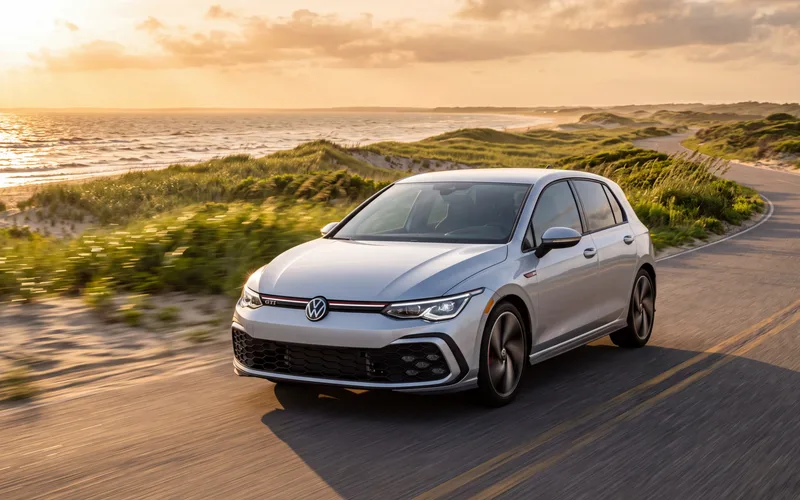 Volkswagen Golf GTIHot HatchBetter at: Everyday practicality
Costs about the same and is quicker, but adds a usable back seat and roughly double the cargo space, so it works as an only car in a way the Mini does not.
Compare 2.61C+
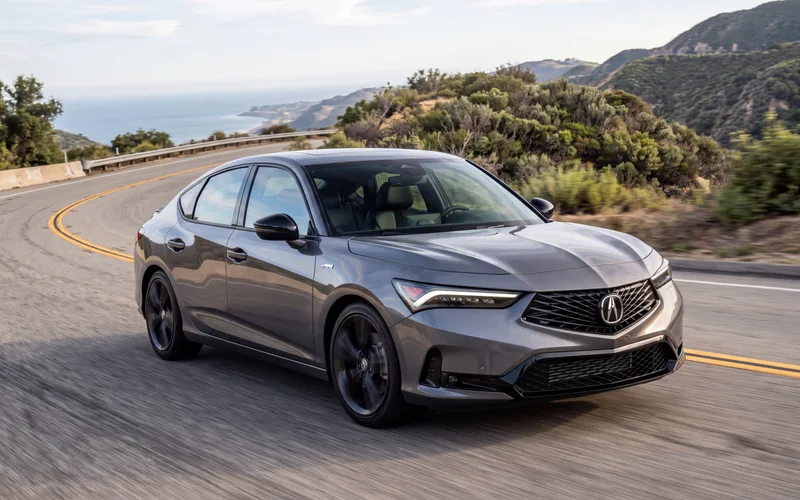 Acura IntegraSport CompactBetter at: Space and resale
Delivers the same premium-badge hatchback appeal with a real rear seat, a proper cargo hold and Honda-grade reliability and resale behind it.
Compare 2.57C+
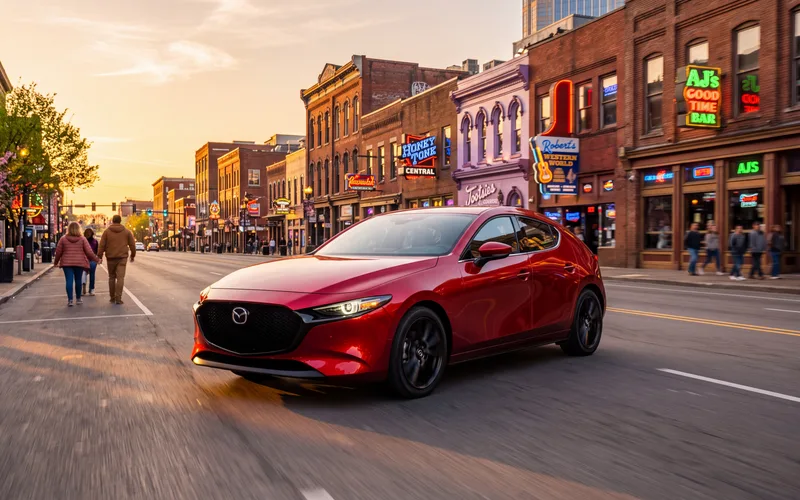 Mazda Mazda3 HatchbackCompact HatchbackBetter at: Ownership cost
Offers a similarly upscale cabin and sharp steering while adding available all-wheel drive, regular fuel and far lower long-term repair risk.
CompareHow it's evolved
4 scored model years · 2023–2026
Subject scores by year
Hover or tap a score to see what moved it versus the year before. A corner mark flags a big swing.
| Year | Performance | Efficiency | Safety | Space | Cost | Reliability | Tech | Use-case | Driving | Value |
|---|---|---|---|---|---|---|---|---|---|---|
| 2026 | 44 | 50 | 54 | 38 | 53 | 58 | 70 | 38 | 76 | 69 |
| 2025 | 39 | 42 | 36 | 38 | 55 | 65 | 66 | 38 | 71 | 69 |
| 2024 | 43 | 40 | 42 | 36 | 60 | 71 | 48 | 38 | 75 | 61 |
| 2023 | 42 | 39 | 43 | 36 | 59 | 69 | 51 | 41 | 77 | 56 |
Compare two years
Best fit & conditions
Higher scores mean a better fit for that use case. Learn more about use-case fit →
Subject profile
Academic Probation · NHTSA safety recalls
Sep 17, 2025Seat belts: front: retractorThe torsion bar in both front seat belt retractors may have been damaged during production.
Defect
BMW of North America, LLC is recalling certain 2025-2026 X1 and X2, MINI Cooper Convertible, MINI Cooper, Mini Countryman S ALL4, and 2025 MINI Countryman SE ALL4 vehicles. The torsion bar in both front seat belt retractors may have been damaged during production.
Risk
A damaged seat belt retractor may not properly restrain an occupant during a crash, increasing the risk of injury.
Remedy
Dealers will replace both front seat belt retractors, free of charge. Owner notification letters were mailed November 13, 2025. Owners may contact BMW customer service at 1-800-525-7417. Vehicle Identification Numbers (VINs) will be searchable on NHTSA.gov on November 7, 2025.
NHTSA campaign 25V616000 ↗1,571 vehicles potentially affected (all models in the campaign)Owners notified Nov 13, 2025Filed by BMW of North America, LLCFiled as COOPER
13 recalls on other model years of the Cooper Hardtop (2017, 2019–2025)
Jul 1, 2026Electronic stability control (esc) · Service brakes, hydraulic: power assist: electric: control moduleThe integrated brake (IB) system may malfunction and result in a loss of power brake assist or cause the Antilock Brake (ABS) and Dynamic Stability Control (DSC) systems to not function properly.
Defect
BMW of North America, LLC (BMW) is recalling certain 2025 Mini Cooper S, Mini Countryman S All4, X2, 2024 Rolls-Royce Spectre, 2023-2025 i7, 7 Series, X7, 2024-2025 i5, 5 Series, 2023-2024 XM, X1, 2024-2025 X6, and X5 vehicles. The integrated brake (IB) system may malfunction and result in a loss of power brake assist or cause the Antilock Brake (ABS) and Dynamic Stability Control (DSC) systems to not function properly.
Risk
A loss of power brake assist can extend the distance required to stop the vehicle. Additionally, malfunctioning ABS and/or DSC systems can cause a loss of vehicle control. Either of these scenarios can increase the risk of a crash.
Remedy
The Integrated brake system will be inspected and, if necessary, replaced, free of charge. Owner notification letters are expected to be mailed August 21, 2026. Owners may contact BMW customer service at 1-800-525-7417 or Rolls-Royce customer service at 1-877-877-3735. Vehicle Identification Numbers (VINs) involved in this recall will become searchable on NHTSA.gov beginning August 21, 2026. Vehicles previously repaired under recall 24V739 or 24V104 will need to have the new remedy completed.
NHTSA campaign 26V422000 ↗428 vehicles potentially affected (all models in the campaign)Owners notified Aug 25, 2026Filed by BMW of North America, LLCFiled as COOPER SSep 18, 2024Electronic stability control (esc): control module · Service brakes, hydraulic: antilock/traction control/electronic limited slip: control unit/modulePlease refer to the recall report for the complete list of models. The welds in the servomotor of the integrated brake control module may break, causing a loss of power brake assist and rear brake function. In addition, the Antilock Brake System (ABS) and Dynamic Stability Control (DSC) system may not function.
Defect
BMW of North America (BMW) is recalling certain 2023-2024 X1, 2024-2025 X5, 2025 X6, 2023-2025 X7, 740i, 760i, 2024 XM, 530i, 540i, i7, 750e, X2, 2024-2025 i5, 2024 Rolls Royce Spectre, 2025 MINI Countryman S ALL4, JCW Countryman ALL4, and 2025 MINI Hardtop 2 Door (Cooper, Cooper S) vehicles. Please refer to the recall report for the complete list of models. The welds in the servomotor of the integrated brake control module may break, causing a loss of power brake assist and rear brake function. In addition, the Antilock Brake System (ABS) and Dynamic Stability Control (DSC) system may not function.
Risk
A loss of brake power assist or rear brake function can result in extended stopping distance. A loss of ABS or DSC can cause a loss of vehicle handling and control. Either of these scenarios can increase the risk of a crash.
Remedy
Dealers will replace the integrated brake system, free of charge. Owner notification letters were mailed November 13, 2024. Owners can contact BMW Customer Service at 1-800-525-7417.
NHTSA campaign 24V697000 ↗309 vehicles potentially affected (all models in the campaign)Owners notified Nov 13, 2024Filed by BMW of North America, LLCFiled as COOPER, COOPER SAug 15, 2024Electrical system: propulsion system: traction battery thermal: management: softwareFaults may occur in the high voltage battery or high voltage system, resulting in a short circuit.
Defect
BMW of North America, LLC. (BMW) is recalling certain 2020-2024 MINI Hardtop 2 Door (Cooper SE) vehicles. Faults may occur in the high voltage battery or high voltage system, resulting in a short circuit.
Risk
A short circuit increases the risk of a fire.
Remedy
Owners are advised that if a warning message is displayed in the vehicle, to park the vehicle outside and away from structures until the remedy has been completed. Dealers will provide a software update, free of charge. Owner notification letters were mailed October 14, 2024. Owners may contact BMW customer service at 1-866-ASK-MINI (1-866-275-6464).
NHTSA campaign 24V612000 ↗12,535 vehicles potentially affected (all models in the campaign)Owners notified Oct 14, 2024Filed by BMW of North America, LLCFiled as COOPER SEApr 29, 2024Electrical system: propulsion system: traction batteryThe high voltage battery housing may not have been sealed properly, allowing water to enter the battery.
Defect
BMW of North America, LLC (BMW) is recalling certain 2020-2024 MINI Hardtop 2 Door (Cooper SE) vehicles. The high voltage battery housing may not have been sealed properly, allowing water to enter the battery.
Risk
A high voltage battery with water damage can cause a fire or a vehicle stall, increasing the risk of injury or a crash.
Remedy
Dealers will inspect and leak test the high voltage battery, and repair the battery as necessary, free of charge. Letters informing owners of the safety risk were mailed June 28, 2024. Owner notification letters were mailed October 30, 2024. Owners may contact BMW customer service at 1-866-825-1525.
NHTSA campaign 24V302000 ↗145 vehicles potentially affected (all models in the campaign)Owners notified Oct 30, 2024Filed by BMW of North America, LLCFiled as COOPER SEFeb 12, 2024Electronic stability control (esc) · Service brakes, hydraulic: power assist: electric: control modulePlease see the recall report for a complete list of models and model years. The integrated brake (IB) system may malfunction and result in a loss of power brake assist or cause the Antilock Brake (ABS) and Dynamic Stability Control (DSC) systems to not function properly.
Defect
BMW of North America, LLC. (BMW) is recalling certain 2023-2025 BMW, MINI, and Rolls-Royce vehicles. Please see the recall report for a complete list of models and model years. The integrated brake (IB) system may malfunction and result in a loss of power brake assist or cause the Antilock Brake (ABS) and Dynamic Stability Control (DSC) systems to not function properly.
Risk
A loss of power brake assist can extend the distance required to stop the vehicle. Additionally, malfunctioning ABS and/or DSC systems can cause a loss of vehicle control. Either of these scenarios can increase the risk of a crash.
Remedy
Dealers will replace the integrated brake system, free of charge. Owner notification letters were mailed between June and December 2024. Owners may contact BMW customer service at 1-800-525-7417 or Rolls Royce customer service at 1-877-877-3735.
NHTSA campaign 24V104000 ↗266,716 vehicles potentially affected (all models in the campaign)Owners notified Jun 28, 2024Filed by BMW of North America, LLCFiled as COOPER, COOPER SJul 21, 2021Seat beltsThe passenger seat belt Automatic Locking Retractor (ALR) may deactivate early, before the webbing fully retracts. As such, these assemblies fail to comply with the requirements of Federal Motor Vehicle Safety Standard number 208, "Occupant Crash Protection."
Defect
BMW of North America, LLC (BMW) is recalling certain 2021 2 Series (230i, 230i xDrive, M240i, M240i xDrive), 330e, 330e Xdrive, 4 Series Coupe (430i, 430i xDrive, M440i xDrive) M4 Coupe, M4 Competition Coupe, BMW 4 Series Convertible (430i, M440i), BMW X1 sDrive28i, xDrive28i, 2 Series Gran Coupe (228i, 228i xDrive, M235i xDrive), M2 Competition Coupe, 330i, 330i xDrive, M340i, M340i xDrive, M3, M3 Competition, 530i, 530i xDrive, 540i, 540i xDrive, MINI Hardtop 2 Door (Cooper, CooperS, JCW), X2 sDrive28i, X2 xDrive28i, X2 M35i, Z4 sDrive30i, Z4 M40i, MINI Hardtop 2 Door (Cooper SE), MINI Convertible (Cooper, Cooper S, JCW), MINI Clubman (Cooper S, Cooper S All4, JCW), MINI Countryman (Cooper, Cooper All4, Cooper S, Cooper S All4, JCW All4), Rolls Royce Ghost, MINI Countryman (Cooper S E All4), Rolls Royce Phantom, Rolls Royce Cullinan, and Toyota Supra vehicles. The passenger seat belt Automatic Locking Retractor (ALR) may deactivate early, before the webbing fully retracts. As such, these assemblies fail to comply with the requirements of Federal Motor Vehicle Safety Standard number 208, "Occupant Crash Protection."
Risk
During a crash, a seat belt retractor that does not function as intended increases the risk of injury.
Remedy
Dealers will inspect the seat belt retractors (including the seat belts) and, if necessary, replace the retractors, free of charge. Owner notification letters were mailed on September 3, 2021. Owners may contact BMW customer service at 1-800-525-7417; 1-866-825-1525 (MINI); 1-877-877-3735 (Rolls Royce); and 1-888-270-9371 (Toyota).
NHTSA campaign 21V554000 ↗21,537 vehicles potentially affected (all models in the campaign)Owners notified Sep 3, 2021Filed by BMW of North America, LLCFiled as COOPER, COOPER S, COOPER SEMay 20, 2020Air bags · Air bags: air bag/restraint control module · Air bags: side/window: curtainDue to a problem with the rollover sensor within the air bag control unit, in the event of a rollover crash, the head air bag, seat belt pretensioners and other safety systems, may not activate.
Defect
BMW of North America, LLC (BMW) is recalling certain 2020 X1 xDrive28i, X1 sDrive28i, X2 xDrive28i and X2 sDrive28i, 2020 MINI Clubman Cooper S All4, 2021 MINI Hardtop 2 Door (Cooper, Cooper S, John Cooper Works and Cooper S E) and MINI Hardtop 4 Door (Cooper and Cooper S) vehicles. Due to a problem with the rollover sensor within the air bag control unit, in the event of a rollover crash, the head air bag, seat belt pretensioners and other safety systems, may not activate.
Risk
If the safety systems do not deploy as intended in a roll over crash, it may increase the risk of injury.
Remedy
BMW will notify owners, and dealers will replace the air bag control unit, free of charge. The recall began July 17, 2020. Owners may contact BMW customer service at 1-800-525-7417 or MINI customer service at 1-866-825-1525.
NHTSA campaign 20V283000 ↗76 vehicles potentially affected (all models in the campaign)Owners notified Jul 17, 2020Filed by BMW of North America, LLCFiled as COOPER, COOPER SAug 28, 2019StructureThe rear side trim panels may have been assembled without a crash pad. As such, these vehicles fail to comply with the requirements of Federal Motor Vehicle Safety Standard (FMVSS) number 214, "Side Impact Protection."
Defect
BMW of North America, LLC (BMW) is recalling certain 2020 MINI Hardtop 2-Door Cooper, Cooper S, and JCW vehicles. The rear side trim panels may have been assembled without a crash pad. As such, these vehicles fail to comply with the requirements of Federal Motor Vehicle Safety Standard (FMVSS) number 214, "Side Impact Protection."
Risk
Without a crash pad, rear seat passengers would have an increased risk of injury in the event of a side impact crash.
Remedy
MINI will notify owners, and MINI dealers will install crash pads, free of charge. The recall began October 11, 2019. Owners may contact MINI customer service at 1-866-825-1525.
NHTSA campaign 19V634000 ↗683 vehicles potentially affected (all models in the campaign)Owners notified Oct 11, 2019Filed by BMW of North America, LLCFiled as COOPER, COOPER S, JCWAug 14, 2019Steering: linkages: tie rod assemblyThe steering gear tie rod may have been assembled incorrectly, which may result in excessive wear of the tie rod end, eventually causing it to break.
Defect
BMW of North America, LLC (BMW) is recalling certain 2018-2019 BMW X1 sDrive28i, X1 xDrive28i, 2019 X2 xDrive28i, MINI Cooper S Convertible, Countryman, and John Cooper Works Countryman vehicles. The steering gear tie rod may have been assembled incorrectly, which may result in excessive wear of the tie rod end, eventually causing it to break.
Risk
A broken steering tie rod would lead to a loss of vehicle control, increasing the risk of a crash.
Remedy
BMW will notify owners, and dealers will inspect the vehicles and replace the tie rods and ball joints as necessary, free of charge. The recall began October 11, 2019. Owners may contact BMW customer service at 1-800-525-7417 or MINI customer service at 1-866-825-1525.
NHTSA campaign 19V601000 ↗32 vehicles potentially affected (all models in the campaign)Owners notified Oct 11, 2019Filed by BMW of North America, LLCFiled as COOPERJul 11, 2018Engine and engine cooling: engineThe crankshaft sensor may be equipped with incorrect firmware, preventing the sensor from properly processing input from the crankshaft reluctor ring, possibly resulting in a vehicle stall. On September 12, 2018, BMW expanded the recall to a total of 5,309 vehicles including certain 2018-2019 BMW 540d xDrive, 230i M240i, M240i xDrive, X2 sDrive28i, X2 xDrive28i, X1 sDrive28i, X1 xDrive28i, 330i, 330i xDrive, 340i, 340i xDrive, 330i xDrive Gran Turismo, 530i, 530i xDrive, 540i, 540i xDrive, 530e, 530e xDrive, 640i xDrive Gran Turismo, 330e, 2019 430i Gran Coupe, 430i xDrive Gran Coupe, 440i Gran Coupe, 440i xDrive Gran Coupe, 430i, 430i xDrive, 440i, 440i xDrive, 740i, 740i xDrive, MINI Cooper, Cooper S, JCW, MINI Countryman (Cooper, Cooper All4, Cooper S, Cooper S All4, JCW All4), and MINI Clubman (Cooper, Cooper S, Cooper All4, Cooper S All4, JCW All4) vehicles.
Defect
BMW of North America, LLC (BMW) is recalling certain 2018 BMW 540d xDrive vehicles. The crankshaft sensor may be equipped with incorrect firmware, preventing the sensor from properly processing input from the crankshaft reluctor ring, possibly resulting in a vehicle stall. On September 12, 2018, BMW expanded the recall to a total of 5,309 vehicles including certain 2018-2019 BMW 540d xDrive, 230i M240i, M240i xDrive, X2 sDrive28i, X2 xDrive28i, X1 sDrive28i, X1 xDrive28i, 330i, 330i xDrive, 340i, 340i xDrive, 330i xDrive Gran Turismo, 530i, 530i xDrive, 540i, 540i xDrive, 530e, 530e xDrive, 640i xDrive Gran Turismo, 330e, 2019 430i Gran Coupe, 430i xDrive Gran Coupe, 440i Gran Coupe, 440i xDrive Gran Coupe, 430i, 430i xDrive, 440i, 440i xDrive, 740i, 740i xDrive, MINI Cooper, Cooper S, JCW, MINI Countryman (Cooper, Cooper All4, Cooper S, Cooper S All4, JCW All4), and MINI Clubman (Cooper, Cooper S, Cooper All4, Cooper S All4, JCW All4) vehicles.
Risk
A vehicle stall can increase the risk of a crash.
Remedy
BMW will notify owners, and dealers will replace the crankshaft sensor, free of charge. The recall began September 6, 2018. Owners may contact BMW customer service at 1-800-525-7417.
NHTSA campaign 18V465000 ↗5,309 vehicles potentially affected (all models in the campaign)Owners notified Sep 6, 2018Filed by BMW of North America, LLCFiled as COOPER, COOPER S, JCWMar 31, 2017Exterior lighting: brake lightsWhen the affected vehicles are braking and the turn signals are on, the inner, bumper-mounted, brake light will go out. As such, these vehicles fail to comply with the requirements of Federal Motor Vehicle Safety Standard (FMVSS) number 108, "Lamps, Reflective Devices, and Associated Equipment."
Defect
BMW of North America, LLC (BMW) is recalling certain 2016-2017 MINI Cooper Clubman, Cooper S Clubman and JCW Clubman vehicles. When the affected vehicles are braking and the turn signals are on, the inner, bumper-mounted, brake light will go out. As such, these vehicles fail to comply with the requirements of Federal Motor Vehicle Safety Standard (FMVSS) number 108, "Lamps, Reflective Devices, and Associated Equipment."
Risk
If the brake light does not illuminate when a turn signal is activated, other drivers may be confused, increasing the risk of a crash.
Remedy
MINI will notify owners, and dealers will reprogram the vehicle to correct the brake lighting, free of charge. The recall began May 22, 2017. Owners may contact MINI customer service at 1-866-825-1525.
NHTSA campaign 17V222000 ↗16,883 vehicles potentially affected (all models in the campaign)Owners notified May 19, 2017Filed by BMW of North America, LLCFiled as COOPER, COOPER SDec 20, 2016Air bagsThe affected vehicles have seat- mounted side air bag inflator initiators that may fail to ignite during a crash.
Defect
BMW of North America, LLC (BMW) is recalling certain model year 2017 BMW 640i, 640i xDrive, 650i, 650i xDrive, M6, 535i, 535i xDrive, 430i, 430i xDrive, 440i, 440i xDrive, M4, X1 sDrive28i, X1 xDrive28i, i3, i8, Rolls-Royce Dawn, Mini Clubman Cooper, Clubman Cooper S, Cooper All4, Cooper S All4, Mini 4-Door Cooper, Cooper S, Mini 2-Door Cooper, Cooper S, John Cooper Works and 2016 BMW 528i, 528i xDrive, 535i, 535i xDrive, 550i, 550i xDrive, M5 and 535d vehicles. The affected vehicles have seat- mounted side air bag inflator initiators that may fail to ignite during a crash.
Risk
If the air bag inflator initiator fails to ignite, the seat-mounted air bag will not deploy, increasing the risk of injury.
Remedy
BMW will notify owners, and dealers will replace the air bag modules, free of charge. The recall began February 6, 2017. Owners may contact BMW customer service at 1-800-525-7417.
NHTSA campaign 16V914000 ↗3,506 vehicles potentially affected (all models in the campaign)Owners notified Feb 10, 2017Filed by BMW of North America, LLCFiled as COOPER, COOPER SOct 17, 2016Seat belts: front: retractorThe vehicle-sensitive locking mechanism of the seat belt Emergency Locking Retractor (ELR) for the driver's seat may not lock as designed. As such, these vehicles fail to comply with the requirements of the Federal Motor Vehicle Safety Standard (FMVSS) number 209, "Seat Belt Assemblies."
Defect
BMW of North America, LLC (BMW) is recalling certain model year 2016-2017 X1 sDrive28i, X1 xDrive28i, MINI Hardtop 4 Door Cooper, Mini Hardtop 4 Door Cooper S, MINI Cooper Clubman, and Cooper S Clubman, 2017 Rolls-Royce Ghost, and 2016 528i vehicles. The vehicle-sensitive locking mechanism of the seat belt Emergency Locking Retractor (ELR) for the driver's seat may not lock as designed. As such, these vehicles fail to comply with the requirements of the Federal Motor Vehicle Safety Standard (FMVSS) number 209, "Seat Belt Assemblies."
Risk
In the event of a crash where heavy braking is applied, the Emergency Locking Retractor (ELR) may activate when the occupant is more forward in the seat, possibly increasing the risk of injury.
Remedy
BMW will notify owners, and dealers will replace the driver's seat belt assembly, free of charge. The recall began July 3, 2019. Owners may contact BMW customer service at 1-800-525-7417.
NHTSA campaign 16V747000 ↗15,455 vehicles potentially affected (all models in the campaign)Owners notified Jul 3, 2019Filed by BMW of North America, LLCFiled as COOPER, COOPER S
Source: NHTSA Office of Defects Investigation recall database, model years 2017–2026. Recalls are listed by model year as the manufacturer filed them; whether a specific car is affected depends on its VIN — check a VIN at nhtsa.gov ↗. NHTSA model names matched to this page: COOPER, COOPER S, COOPER SE, JCW.
Detailed scoring by subject
1Performance & PowertrainOne of the Cooper Hardtop's weakest categories.0.94F
Volume trim is the Cooper S with the 2.0L TwinPower Turbo four at 201 hp; the base Cooper's 1.5L turbo three makes 161 hp and the John Cooper Works 228 hp. Strong for a subcompact but modest against the hatchback normalization band, which runs to 520 hp.
The Cooper S four-cylinder delivers 221 lb-ft on a broad, low turbo plateau, which is what makes the car feel quicker in traffic than its displacement suggests.
Manufacturer-quoted 6.3 seconds for the Cooper S, with instrumented tests of this generation landing at or just under that figure. Quick for a subcompact, though hot hatches like the Golf GTI and GR Corolla are a second or more ahead.
The 2.0L turbo four is smooth and eager with only mild lag off idle, and the electric Cooper SE is seamless; the base three-cylinder is thrummier under load and MINI's synthesized engine sound divides reviewers.
The 7-speed dual-clutch shifts quickly and decisively once moving, but low-speed hesitation and abrupt engagement at crawl are a recurring criticism versus the torque-converter automatic it replaced. No manual is offered in this generation.
The Cooper Hardtop is front-wheel drive only — MINI's ALL4 all-wheel drive has never been offered on the two-door hatch and stays reserved for the Countryman. Lands in the low band by the item's own guidance.
Unusually broad for a subcompact: three distinct gas tunes (1.5L turbo three, 2.0L turbo four in S and JCW states) plus a fully electric Cooper SE on a separate platform. The absence of any hybrid or PHEV keeps it out of the top of the band.
2Efficiency & RangeGrades below the middle of the scale.1.34D
Volume trim is the base 2026 Cooper Hardtop 2-Door with the 161-hp 1.5L turbo three and 7-speed DCT (F66 generation, carried over unchanged for 2026), rated around 33 MPG combined; the 201-hp Cooper S 2.0L drops to roughly 31 MPG. Decent for a premium subcompact but well short of the hybrid and EV hatchbacks that define the top of this band.
City economy is the Cooper's weakest EPA cycle — the small turbo three has no hybrid assist, so stop-and-go urban driving lands it near the bottom of the hatchback band alongside conventional gas compacts rather than near the Prius or Fiat 500e.
The highway figure is the Cooper's best result — low mass, a small three-cylinder and tall DCT top gears put it around 40 MPG, competitive with mainstream compact hatchbacks even though it drinks premium to get there.
Respectable combined economy is undercut by a very small ~11.6-gallon fuel tank, so total range lands near 380 miles — low in the hatchback band and a real-world annoyance on road trips despite the car's efficiency.
Good mileage is partly cancelled by the premium-fuel requirement: at 15,000 miles a year the Cooper burns roughly 455 gallons of 91-octane, landing near $1,900 annually — mid-pack for the segment rather than the bargain its size suggests.
MINI specifies premium 91-octane for both the 1.5L turbo three and the 2.0L Cooper S, a standing cost penalty of roughly 50-70 cents per gallon over regular that erodes the efficiency advantage of a small car. Scored just below the mid-band rather than at the floor because the electric Cooper SE gives buyers a cheap home-charging alternative within the same nameplate.
3SafetyGrades below the middle of the scale.1.61D
NHTSA has not published an overall NCAP star rating for the Cooper Hardtop in the current (F66/F65, 2025-on) generation, and the nameplate has gone untested through most recent model years; 4 stars is estimated from the outgoing F56 Cooper and from the current-generation Cooper's 4-star Euro NCAP overall result. Down from the 4.4-star placeholder.
The current-generation Cooper Hardtop holds no IIHS Top Safety Pick or TSP+ award and has no published crashworthiness results — a low-volume subcompact IIHS has not put through the updated moderate-overlap and side tests. Missing data plus the inherent mass disadvantage of a ~2,900 lb subcompact places it below the awarded compact hatchbacks in this segment.
MINI's standard Active Driving Assistant covers the core items on the volume trim — forward collision warning with city AEB and pedestrian detection, lane departure warning, speed-limit info, rear-view camera and park distance control — but the higher-value assists (full-range adaptive cruise with stop-and-go, lane centering, surround-view parking) sit in the Driving Assistant Plus and upper-trim bundles rather than being standard across the range.
AEB with pedestrian detection is standard and the BMW-group camera/radar hardware it shares generally performs respectably, but there is no IIHS front crash prevention result — vehicle-to-vehicle or nighttime pedestrian — for the current-generation Cooper to confirm Superior/Advanced performance. Scored on standard-equipment credit without test verification.
Blind-spot detection and rear cross-traffic alert come bundled with the driver-assistance and parking packages on upper trims rather than fitted across the range, and the coverage is alert-only — no active steering or braking intervention and no safe-exit warning.
Lane departure warning is standard and lane centering arrives with the Driving Assistant Plus bundle; the BMW-derived system is competent and the Cooper's short wheelbase makes holding a lane easy, but current-generation reviews dwell more on intrusive attention and speed-limit nags than on centering quality, and the volume-trim buyer does not get centering by default.
Active Cruise Control with Stop & Go is a well-regarded BMW-group system with smooth full-speed-range behaviour, and paired with lane centering it makes a capable hands-on highway assist — but it is an upper-trim/package item on the Cooper rather than standard, which caps the score for a volume-trim buyer.
No hands-free highway driving system is offered on the Cooper Hardtop at any trim. BMW Group's hands-free Highway Assistant is a BMW-brand feature that has not been extended to the MINI lineup in the US, so the driver must keep hands on the wheel at all times.
Full LED headlamps are standard across the range on the current generation, with adaptive/matrix functions and automatic high beams available higher up the trim ladder. There is no IIHS headlight rating for this generation to confirm Good-rated output, and prior-generation Coopers rated only Acceptable or worse in IIHS headlight evaluations.
The Cooper's upright windshield, low beltline and large glass area give unusually good forward and three-quarter sightlines for a modern car, and its tiny footprint makes placement easy; the offsets are a shallow rear window, chunky rear pillars on the two-door body and a surround-view camera that is optional rather than standard.
The Cooper's weakest safety dimension: a subcompact rear bench with two outboard LATCH positions, lower anchors recessed deep in the seat bight, and very little front-to-rear room once a rear-facing seat is installed. The four-door body's rear doors help versus the two-door, but three-across is impossible and one bulky convertible seat forces the front occupant well forward.
4Space & ComfortOne of the Cooper Hardtop's weakest categories.0.54F
The Cooper Hardtop 2-Door — the volume and defining US configuration — is a strict 2+2 four-seater with a fixed rear bench, one seat short of the hatchback norm. Replaces a placeholder value of 4.8 seats.
Front headroom is a genuine strength — the Cooper's tall, upright greenhouse and low seating position clear the top of the subcompact-hatch band despite the car's small footprint.
Front legroom is adequate rather than generous — long-legged drivers fit, but the figure sits in the lower third of the hatchback band. Replaces a placeholder value of 43.1 in.
The boxy roofline preserves mid-pack rear headroom — headroom is not what limits the back seat here, legroom is.
Rear legroom falls below the floor of the hatchback band — the 98.2 in wheelbase leaves a back seat that is realistically for children or short trips, and access requires tilting a front seat. Replaces a placeholder value of 40 in that badly overstated the space.
Cargo space behind the rear seats is below the hatchback band floor — a weekend bag and groceries, not a family's luggage. Folding the rear seats roughly quadruples it, but the everyday figure is what the item measures. Replaces a placeholder value of 15.5 cu ft.
The current-generation redesign helped — the minimalist dash frees an open shelf beneath the circular OLED display, and there is a wireless charging pad and usable door pockets — but the glovebox and center console bins remain small, and there is no underfloor or clever-storage innovation. Competitive for the class rather than a standout.
Front seats are a genuine strength — well-bolstered, widely praised for support on long drives, with sport seats available and good adjustability for a car this size. The score is held back by the rear bench, which is thinly padded and cramped enough that adults tolerate it only briefly.
The short wheelbase and firm, go-kart-tuned suspension deliver excellent body control but a busy, jittery ride over broken pavement — the defining trade-off of the car, and worse on the larger wheels fitted to S and John Cooper Works trims. Adaptive dampers take the edge off without changing the character.
Road and tire noise intrude at highway speed and the three-cylinder in the base Cooper C is audibly thrummy under load, though the current generation improved sound insulation and the electric Cooper SE is materially quieter. Average for a premium subcompact, not library-quiet.
Premium-brand equipment levels work in the Cooper's favor: heated front seats and a heated steering wheel are standard or widely available, dual-zone automatic climate control appears on mid and upper trims, and the electric variant adds remote pre-conditioning. Ventilated seats and any rear climate control are absent, which is normal for the class.
5Cost of OwnershipGrades below the middle of the scale.1.59D
The F66-generation Cooper Hardtop 2 Door opened at $28,950 + $1,175 destination for the base Cooper Signature in its 2025 US launch year; a routine model-year uplift plus a higher destination charge puts the 2026 entry point near $31k. Cheap for a premium-badged car, which is the strongest part of this vehicle's cost story.
US buyers overwhelmingly take the Cooper S (2.0L turbo, ~201 hp) over the base three-cylinder, and Signature Plus is the mid-grade carrying the equipment most shoppers expect; with a paint/wheel/package or two the typical build lands in the mid-to-high $30s.
MINI carries a long-standing reputation for expensive out-of-warranty repairs — turbo, cooling, and electrical items on the BMW-derived engines are the usual culprits — so the back half of a 5-year hold is costly even though the first three years of scheduled service are covered. Cheaper to run than a BMW 2 Series or X1 thanks to smaller consumables, but well above a Civic or Corolla hatch.
This is the weak link. MINI has been among the faster-depreciating brands in US tracking data — a shrinking dealer footprint, a shrinking US small-car market, and repair-cost anxiety all compress used demand, and the loyal-enthusiast buyer base is not large enough to offset it. The electric Cooper SE depreciates faster still.
MINI follows the BMW Group standard — a 4-year/50,000-mile New Passenger Car Limited Warranty, plus 12-year unlimited-mileage rust perforation coverage. Mid-pack: a year longer than most mainstream brands, shorter than Hyundai/Kia.
Like BMW, MINI does not extend powertrain coverage past the bumper-to-bumper term, so the engine and transmission drop out of warranty at 4 years/50,000 miles — a real weakness against the 5- and 10-year powertrain terms common in this price bracket, and one that matters given MINI's repair costs. Only the electric Cooper SE's high-voltage battery gets the federally mandated 8-year/100,000-mile coverage.
MINI includes roughly 3 years/36,000 miles of complimentary scheduled maintenance (the MINI equivalent of BMW Ultimate Care) alongside 4 years of unlimited-mileage roadside assistance and a MINI Connected services trial — a genuinely useful package that covers the oil services where MINI dealer rates bite hardest. Scored just below the top band because the maintenance term is three years rather than multi-year-plus and there is no standout extra such as a large charging credit.
$37,000 volume-trim price minus its estimated resale value after 5 years (46% retained, or about $17,020) leaves about $19,980 in depreciation. Add the projected $6,800 in 5-year maintenance and repairs, and owning this vehicle for 5 years costs about $26,780 in total.
6Reliability & QualityMid-pack among this car's ten categories.1.92C-
Consumer Reports has consistently placed the Mini Cooper Hardtop at or below average for predicted reliability (roughly 2-3 of 5) across the outgoing F56 generation, and the current F66/J01 generation is only in its second US model year with thin owner-survey data. The all-new MINI Operating System 9 infotainment and the switch to an all-DCT lineup add first-cycle software and driveline risk.
MINI sits mid-pack to below average in J.D. Power Vehicle Dependability rankings and below average in Consumer Reports brand reliability, well short of the top-5 dependability tier. The brand's long-run record is dragged down by the early Prince-engine era, though BMW-sourced modern hardware has improved the trend.
The F66/J01 generation is new enough that recall activity remains limited, and nothing systemic has emerged on the 2025-2026 cars. The prior F56 generation carried typical BMW-group recall volume — fuel pump, electrical and airbag-supplier campaigns — rather than a chronic powertrain or fire defect, so the outlook is average rather than clean.
The B38 1.5L three-cylinder (Cooper C) and B48 2.0L four (Cooper S/JCW) are BMW modular-family engines in service since 2014 with a serviceable high-mileage record, but they carry well-documented oil-filter-housing and valve-cover gasket leaks plus direct-injection carbon buildup. The 7-speed dual-clutch is now the only transmission offered and is less proven for long-term durability than the torque-converter automatic it replaced.
The current cabin is a genuine class standout: recycled knit textile dash surfacing, a 9.4-inch circular OLED touchscreen, and toggle switchgear that reviewers consistently single out as feeling special for a subcompact. It falls short of a perfect score because lower-console and door-bin plastics are ordinary and the Premium price class sets a high bar.
Oxford-built Hardtops have a solid assembly reputation with tight panel fit and little rattle criticism, which keeps this above segment average. The offset is the new OS 9 software stack — infotainment complaints weigh heavily in initial-quality measurement, and a screen-centric interface with no standard gauge cluster is a common source of early-ownership gripes.
MINI USA operates only on the order of a hundred-odd dealers nationwide, most of them co-located with BMW stores in metro markets — an order of magnitude thinner than mainstream rivals like Toyota or Honda. Facilities and technician training benefit from the BMW affiliation, but buyers outside major metros can face a long drive for warranty and service work.
This is the weakest link in the ownership case: MINI carries BMW-group parts pricing and labor rates, and RepairPal has long placed the brand in the bottom third for average annual repair cost. A healthy enthusiast aftermarket exists for the Hardtop, but many components remain dealer-channel and the China-built electric variant adds parts-sourcing uncertainty.
7Technology & InfotainmentOne of the Cooper Hardtop's strongest categories.2.75B-
The current-generation Cooper Hardtop uses a 9.4-inch round OLED 'MINI Interaction Unit' centred on the dash — the same single screen on every trim, with no larger option. Measured on the diagonal it is small for 2026, and because the panel is circular the usable rectangular area is smaller still than the number implies, which is why it normalizes near the bottom of the 7–15.5 in hatchback band. Corrects the 14.7 in placeholder, which was not a size MINI has ever fitted.
MINI Operating System 9 is genuinely quick — Snapdragon-class hardware, an OLED panel with deep blacks, slick animations and near-instant menu transitions — and the retro physical toggle bar beneath the screen keeps start/stop, gear selection, volume and Experience-mode switching off the touchscreen. The offset is that almost everything else, climate control included, is buried in the round interface, and reviewers of the current generation consistently split between admiring the presentation and criticising the menu depth and wasted corners of a circular layout.
Wireless Apple CarPlay and wireless Android Auto are both standard on every US trim, with no wired-only base model — top-band equipment. The deduction is presentational rather than functional: phone projection has to run inside a round screen, so the CarPlay canvas sits letterboxed in the middle with the corners unused, and it looks visibly compromised next to a conventional widescreen implementation.
The MINI Intelligent Personal Assistant is the BMW-group natural-language system — one of the better factory assistants, handling conversational climate, navigation and media requests, here fronted by the animated 'Spike' dog avatar. Connected native navigation with online route calculation and live traffic is standard, so unlike most of the segment this is a nav system owners have a real reason to use rather than defaulting straight to phone projection.
A Harman Kardon premium system is available on upper trims and is a legitimate branded upgrade with strong mid-range clarity, while the standard system is adequate rather than notable. What caps the score is the room it plays in: a subcompact cabin with modest sound deadening and prominent road noise at highway speed limits how much of the premium system's ability actually reaches the listener.
The Cooper's weakest technology dimension by this item's measure: the current generation deletes the instrument binnacle entirely, so there is no gauge display of any kind in front of the driver at any trim or price — MINI substitutes a standard head-up display, credited separately under 7.3.3. Scored in the low band because the item measures a configurable digital gauge display and the vehicle offers none, with partial credit for the fact that the HUD is a deliberate, standard-equipment replacement rather than a cost omission.
MINI inherits BMW Group's Remote Software Upgrade infrastructure, which delivers whole-vehicle over-the-air updates — infotainment, driver assistance and vehicle control software, not just maps — pushed to the car and installable from the phone app or the centre screen. MINI OS 9 was architected around this, so the Cooper sits in the top band, though MINI's US release cadence has been less publicised and less feature-additive than the industry leaders'.
The MINI App covers the full remote set — lock/unlock, vehicle locate and status, remote climate preconditioning, send-to-car navigation and, on the Cooper SE, charge scheduling and monitoring — on the same well-maintained BMW-group backend rather than a bespoke MINI stack. Digital Key Plus adds ultra-wideband phone-as-key with iPhone and Apple Watch. The deduction is for the familiar BMW pattern of connected services moving to paid subscriptions after an initial included term.
Front occupants are served properly — USB-C only with no legacy USB-A, plus a wireless charging shelf under the centre screen on the volume trim and above. Rear passengers get essentially nothing, there is no household AC outlet, and the total port count is small even by subcompact standards, which is the packaging reality of a two-door car with a token back seat.
Comfort Access proximity entry is fitted on the volume trim and above, ignition is the signature toggle switch on the physical control bar, and Digital Key Plus makes an iPhone or Apple Watch a true phone-as-key with ultra-wideband passive unlocking. Held below the top band because a subcompact hatchback offers no power or hands-free tailgate, so the convenience set is entry-and-start only.
Rear-view camera and park distance control are standard, and the optional Parking Assistant Plus bundle brings a genuinely capable surround-view camera, automated parallel and perpendicular parking, and a Reversing Assistant that retraces the last stretch of travel automatically — strong content for the class. It stays mid-band because the 360-degree view and the parking automation are package items on upper trims rather than volume-trim equipment, and the car is small enough that many buyers never option them.
The Cooper is one of very few cars at any price with a head-up display standard on every trim, base included — a direct consequence of deleting the instrument cluster, since the HUD is the only place speed and navigation prompts appear in the driver's line of sight. It is a pop-up combiner panel rather than a windshield-projected unit, so the image is smaller and dimmer in strong sun than a premium full-windshield HUD, which is what keeps it off the very top of the band.
8Use-Case FitThe Cooper Hardtop's lowest-graded category.0.50F
The defining US configuration is a two-door 2+2 with 30.8 in of rear legroom, so every child load requires tilting and sliding a front seat, and a rear-facing seat forces the front passenger far forward. With 8.8 cu ft behind the rear seats a folded stroller and a grocery run are mutually exclusive. Replaces a placeholder score of 94.
Standard Active Driving Assistant covers forward collision warning with city AEB, pedestrian detection and lane departure warning, but the current generation has no published NHTSA overall star rating and no IIHS crashworthiness results — a real gap for buyers who shop on crash-test credentials. Blind-spot detection and rear cross-traffic alert are bundled into upper-trim packages rather than standard, on a car that already starts near $31,000.
Four seats maximum, 30.8 in of rear legroom and essentially no rear amenities — no rear USB power, no rear vents, no rear entertainment — make the back seat a short-hop proposition rather than a multi-hour one. Luggage space with all four seats occupied is 8.8 cu ft, well under the hatchback band floor, so a family of four cannot pack for a weekend without folding a rear seat and dropping to three.
The Cooper is an easy urban companion — light controls, a tiny footprint, an upright windshield and low beltline that give unusually good sightlines, and a standard head-up display that keeps speed in view despite the deleted gauge cluster. Against that, the 7-speed dual-clutch is criticized for hesitation and abrupt engagement at crawl speeds, the short-wheelbase suspension is busy over broken pavement, and adaptive cruise with stop-and-go is a package option rather than standard equipment.
33 MPG combined is genuinely good, but MINI specifies premium 91-octane, which puts annual fuel cost near $1,900 at 15,000 miles — no better than a mainstream compact on regular. The bigger commuting-cost drag is service: BMW-group parts pricing and labor rates put five-year maintenance and repair around $6,800, offset only partly by cheap insurance and the 3-year/36,000-mile complimentary maintenance. Commuters who take the electric Cooper SE instead cut per-mile energy cost sharply.
This is the car's standout use-case strength and the reason the nameplate exists: roughly 152 inches long on a 98.2-inch wheelbase with a turning circle in the mid-30-foot range, plus the best outward visibility in the segment from the upright glasshouse. A rear-view camera and park distance control are standard, and Parking Assistant Plus adds surround-view and automated parallel/perpendicular parking. Near the top of the band for any car sold in the US.
Not meaningfully a work vehicle: no US tow rating is published for the Cooper Hardtop, there is no bed, and payload is limited to four occupants' worth in a subcompact hatch. Folding the rear seats opens roughly 34 cu ft, which will swallow boxes or a couple of toolbags for a light-duty errand, so it is not literally zero — but towing headroom and load capacity are absent.
A premium small car aimed at style buyers, not hard use. Consumer Reports has held the nameplate at or below average for predicted reliability, MINI sits mid-pack-to-below in J.D. Power dependability, and RepairPal places the brand in the bottom third for annual repair cost — the opposite of a fleet-proven profile. The BMW B38/B48 engines have a serviceable high-mileage record, which keeps this off the floor, but the knit-textile interior surfacing and premium trim are not wear-friendly work surfaces.
Few work-oriented provisions: no 120V onboard power (12V and USB-C only), no factory hitch or bed access hardware, no roof rails on the two-door body, and no meaningful upfit ecosystem. MINI's accessory catalog offers a door-frame-mounted base carrier and a cargo net, which is the extent of it, and the premium cabin materials are not washable surfaces.
The front seats are a genuine strength — well-bolstered and praised for long-drive support — and the standard head-up display plus available Active Cruise Control with Stop & Go help on the interstate. What caps it is endurance: a small ~11.6-gallon tank holds total range to roughly 380 miles despite decent economy, road and tire noise intrude at highway speed, and the short-wheelbase suspension stays busy over expansion joints for hours at a time. Only four people can make the trip.
Pavement-bound by design: front-wheel drive only with no ALL4 option on the two-door hatch, hatchback ride height with no additional clearance, no US tow rating for a trailer or a hitch-mounted bike rack, and no camping-friendly provisions such as a 120V outlet or a flat load floor with the seats down. A roof-mounted accessory carrier and gravel-road duty are about the limit.
The hatchback shape and split-folding rear seatbacks do real work — folding them takes cargo from 8.8 to roughly 34 cu ft, enough for a bike with the wheel off or a full airport run for two. But the everyday figure with the rear seats up is below the hatchback band floor, there are no roof rails on the two-door body, no factory hitch, and no underfloor storage of consequence, so bulky gear is a genuine squeeze.
9Driving ExperienceThe Cooper Hardtop's best-graded category.3.13B
A 98.2-in wheelbase, wide track and roughly 2,900 lb curb weight give the Cooper S the quick direction changes and flat cornering attitude MINI markets as 'go-kart handling' — among the most agile things in the subcompact class. It gives up outright grip and adjustability to the AWD hot hatches (GR Corolla, Type R), and the short wheelbase makes it fidgety over broken pavement.
The electrically assisted rack is fast and accurate off-center, which is a large part of the car's agility, but reviewers of this generation describe it as artificially weighted and short on genuine road feedback compared with older MINIs.
Low mass and a short, firm pedal give the Cooper S confident, repeatable stops for the class; the electric Cooper SE blends regen into the friction brakes cleanly and offers usable one-pedal driving.
The 2.0L TwinPower Turbo four responds crisply once rolling and the electric Cooper SE is seamless, but the 7-speed dual-clutch that replaced the torque-converter automatic hesitates and engages abruptly at crawl — the most consistent drivability complaint on this generation.
The Cooper S four is audible but tuneful under load, while the base 1.5L three-cylinder thrums at idle and sounds coarse when extended; MINI's synthesized engine sound divides reviewers, and the small, stiffly sprung body transmits more powertrain noise than a larger hatch.
The short 98.2-in wheelbase gives the Hardtop 2-Door one of the tightest turning circles on sale, a genuine advantage in city parking and U-turns. Replaces a placeholder 39.2 ft figure that was implausible for a car this small.
The seating position is upright with good forward sightlines and a wide wheel/seat adjustment range for a subcompact, but this generation migrated climate and most vehicle settings into the round OLED touchscreen with only a small physical toggle bar, and deleted the gauge cluster in favor of an available head-up display. Two long doors and a low hip point also make ingress/egress harder than in a four-door hatch.
Character is the Cooper's entire product thesis and it delivers: eager turn-in, a torquey 2.0L, tiny footprint and a playful cabin make it one of the few cars in the class enthusiasts actively recommend. It trails the GR Corolla and Civic Type R on outright pace, and the DCT-only lineup costs it the manual-shift engagement older MINIs had.
10Value & Market PositionOne of the Cooper Hardtop's strongest categories.2.66C+
The F66 Cooper makes its signature 9.4-inch circular OLED touchscreen, wireless Apple CarPlay/Android Auto, LED headlights, keyless entry and the Active Driving Assistant suite (AEB, lane-departure warning, blind-spot detection) standard across the range — genuinely well-equipped for a subcompact base car. Heated seats, head-up display, adaptive cruise and Harman Kardon audio remain bundled into the Signature Plus/Iconic tiers or option packages, so a comparably-equipped Mini climbs well past its entry price.
Mini charges a clear style-and-badge premium: a Cooper S lands in the same low-to-mid $30K territory as a Volkswagen GTI or Civic Si while giving up rear-seat space, cargo volume, a manual transmission and outright pace. Buyers get real content and a premium-feeling cabin, but on pure content-and-capability per dollar the mainstream hot hatches beat it, and options inflate the sticker quickly.
Three distinct powertrain grades — Cooper (1.5L turbo three, ~161 hp), Cooper S (2.0L turbo four, ~201 hp) and John Cooper Works (~228 hp) — each layered over Signature/Signature Plus/Iconic equipment tiers plus extensive paint, roof and trim personalization, which is broad for a subcompact. Marks come off for a front-drive-only lineup with no AWD and no manual transmission in the current generation, narrowing the configuration space that mattered most to enthusiast buyers.
The Hardtop is Mini's volume nameplate but the brand sells only in the low tens of thousands annually in the US, and the subcompact premium hatch is a structurally shrinking niche as buyers migrate to the Countryman and other small crossovers. It is a real, established seller rather than a failing one, but the long-term trajectory is downward and it is nowhere near a segment volume leader.
Mini is one of the strongest image plays in the small-car market — an iconic, instantly recognizable nameplate with BMW Group engineering behind it, a genuinely loyal owner base, and strong appeal on design and 'go-kart' character. It sits just below the German luxury marques on outright aspiration and its narrow US dealer footprint tempers the halo, but the badge clearly helps rather than hurts the car.
Mini follows the BMW Group playbook of supported lease programs and subvented APR offers rather than large cash-on-hood, and slow-moving 2-door inventory typically leaves room to negotiate below MSRP. Solid buyer-side benefit without the desperation pricing that would signal a failing model.
The F66 generation is new — it replaced the long-running F56 with an all-new interior architecture built around the circular OLED display, revised exterior design and updated turbo powertrains, reaching the US for the 2025 model year. MY2026 is the second year of a current-generation car, so buyers face essentially no redesign risk and get current-generation cabin tech.
Reviewers consistently praise the Cooper's steering, chassis balance and design character — it remains one of the more entertaining small cars sold in the US — but the current generation draws recurring criticism for burying climate and vehicle controls in the touchscreen, a firm ride, a tight rear seat and the loss of the manual transmission. Well-liked and frequently recommended for buyers who want one, but not a habitual comparison-test winner against the Golf GTI or Civic Si.