

The verdict
A struggling subcompact suv, strong on ownership and held back by performance.
The 2026 Outlander Sport is the cheapest way to put a brand-new all-wheel-drive SUV in your driveway — $24,995 before destination, with AWD standard on all seven trims and a 10-year/100,000-mile powertrain warranty behind it. Everything else is the price of that bargain: a 148-hp engine that needs about 10.4 seconds to reach 60 mph, 26 MPG combined that trails every modern rival, 21.7 cu ft of cargo space that's among the smallest of any SUV, and a design that has been on sale essentially unchanged since 2011. There's no adaptive cruise, no lane-keeping assist, no wireless CarPlay, and no digital gauge cluster at any price. Buy it if the monthly payment and the warranty are what matter most and you accept a slow, loud, dated car in exchange; cross-shop almost anything else if they aren't.
Jump to scoresStrengths
- Class-leading warranty coverage
- The cheapest new SUV with standard all-wheel drive
- Cheap to keep running
What holds it back
- Genuinely slow, and noisy about it
- Missing driver-assist features rivals include as standard
- Technology stuck a decade behind
Top alternatives
Cars shoppers cross-shop with the Mitsubishi Outlander Sport 2.05C
2.05C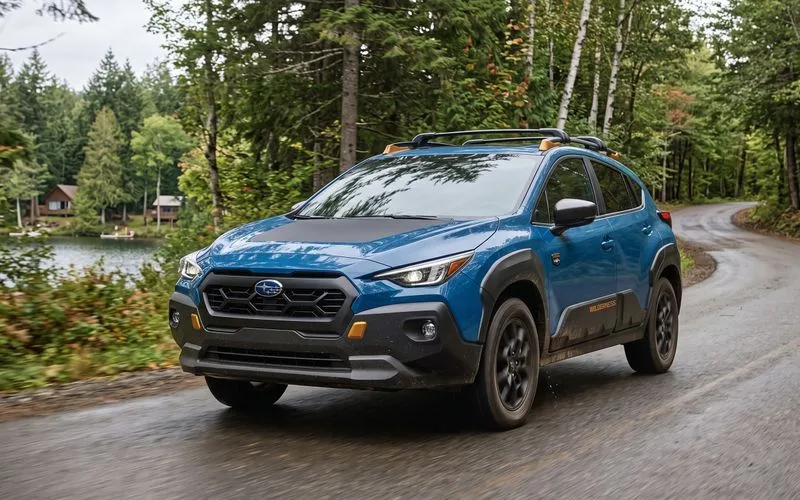 Subaru CrosstrekSubcompact SUVBetter at: Resale value
The natural upgrade for anyone buying the Outlander Sport for its standard AWD — better fuel economy, real driver-assist tech, and dramatically stronger resale for a modest price step.
Compare 1.54D
1.54D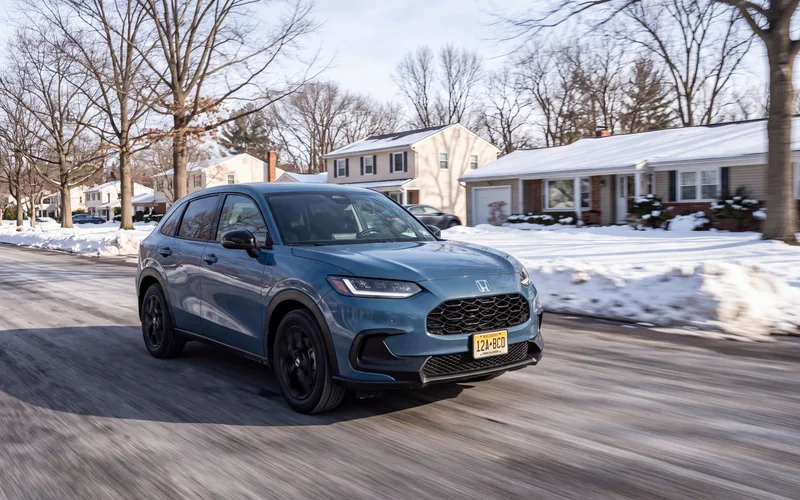 Honda HR-VSubcompact SUVBetter at: Safety tech
A far newer, quieter, more refined subcompact SUV with Honda Sensing standard and more cargo room, for buyers who can live without AWD on the base trim.
Compare 1.21D
1.21D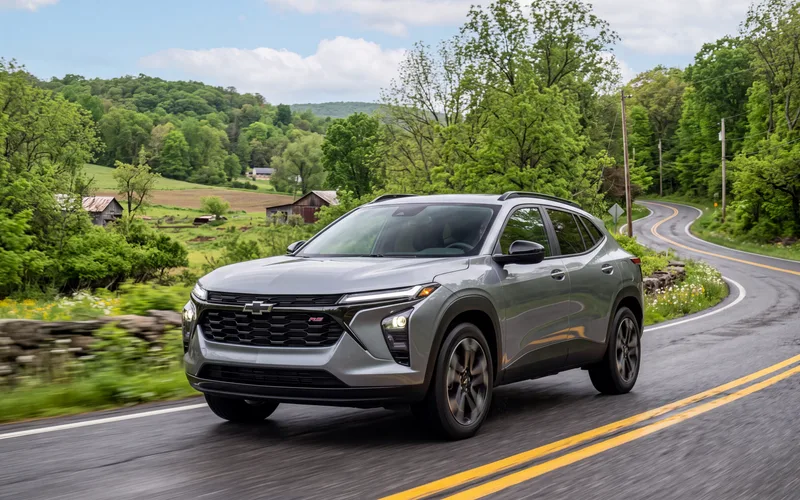 Chevrolet TraxSubcompact SUVBetter at: Interior tech
Similar money buys a brand-new design with a bigger cabin, a larger touchscreen and wireless CarPlay — the pick if you don't actually need all-wheel drive.
CompareProduction history
Best fit & conditions
Higher scores mean a better fit for that use case. Learn more about use-case fit →
Subject profile
Academic Probation · NHTSA safety recalls
No NHTSA safety recall is on record for the 2026 Mitsubishi Outlander Sport. Other model years of the Outlander Sport have 3 — listed below.
3 recalls on other model years of the Outlander Sport (2018–2022)
Aug 2, 2022Power train: automatic transmission: control module: softwareA software error in the transmission control unit (CVT-ECU) may incorrectly reduce the transmission gear ratio at high speeds, which can result in an engine stall.
Defect
Mitsubishi Motors North America, Inc. (MMNA) is recalling certain 2019-2022 Outlander Sport vehicles equipped with continuously variable transmissions and mechanical key ignition systems. A software error in the transmission control unit (CVT-ECU) may incorrectly reduce the transmission gear ratio at high speeds, which can result in an engine stall.
Risk
An engine stall can increase the risk of a crash.
Remedy
Dealers will update the CVT-ECU software, free of charge. Owner notification letters were mailed August 24, 2022. Owners may contact MMNA customer service at 1-888-648-7820. MMNA's number for this recall is SR-22-004.
NHTSA campaign 22V563000 ↗Manufacturer no. SR-22-00476,508 vehicles potentially affected (all models in the campaign)Owners notified Aug 24, 2022Filed by Mitsubishi Motors North America, Inc.Filed as OUTLANDER SPORTSep 14, 2018Electrical system: software · Electronic stability control (esc) · Forward collision avoidance: adaptive cruise control · Service brakes, hydraulic: antilock/traction control/electronic limited slipThe software for the Hydraulic Unit Electronic Control Unit (ECU) may be incorrect, possibly preventing the intervention of a safety system such as automatic emergency braking, Anti-lock Braking (ABS), Electronic Stability Control (ESC), or the Brake Auto Hold (BAH) function when any of these systems are in use.
Defect
Mitsubishi Motors North America, Inc. (MMNA) is recalling certain 2018 Mitsubishi Outlander Sport vehicles equipped with a Forward Collision Mitigation (FCM) system and 2018 Mitsubishi Outlander PHEV and Eclipse Cross vehicles and 2017-2018 Outlander vehicles equipped with an Adaptive Cruise Control (ACC) system and/or an Electric Parking Brake (EPB) system. The software for the Hydraulic Unit Electronic Control Unit (ECU) may be incorrect, possibly preventing the intervention of a safety system such as automatic emergency braking, Anti-lock Braking (ABS), Electronic Stability Control (ESC), or the Brake Auto Hold (BAH) function when any of these systems are in use.
Risk
If the safety systems do not function as intended, it can increase the risk of a crash.
Remedy
MMNA will notify owners, and dealers will update the Hydraulic Unit-ECU software, free of charge. The recall began October 16, 2018. Owners may contact MMNA customer service at 1-888-648-7820. MMNA's number for this recall is SR-18-008.
NHTSA campaign 18V621000 ↗Manufacturer no. SR-18-00858,916 vehicles potentially affected (all models in the campaign)Owners notified Oct 16, 2018Filed by Mitsubishi Motors North America, Inc.Filed as OUTLANDER SPORTSep 14, 2018Electrical system: software · Forward collision avoidance: software: pedestrian/cyclist/object/obstacle/ recognitionDue to incorrect software, the FCM-ECU (Electronic Control Unit) may apply braking for longer than needed, even after a pedestrian is no longer detected.
Defect
Mitsubishi Motors North America (MMNA) is recalling certain 2018 Mitsubishi Outlander PHEV, Outlander Sport, 2018-2019 Eclipse Cross, and 2017-2018 Outlander vehicles equipped with a Forward Collision Mitigation (FCM) system that detects pedestrians. Due to incorrect software, the FCM-ECU (Electronic Control Unit) may apply braking for longer than needed, even after a pedestrian is no longer detected.
Risk
If the FCM-ECU software activates the brake for longer than necessary, the driver may react by applying additional braking. The resulting rapid deceleration of the vehicle can increase the risk of a rear-end collision.
Remedy
MMNA will notify owners, and dealers will reprogram the FCM-ECU software with updated software, free of charge. The recall is began October 16, 2018. Owners may contact MMNA customer service at 1-888-648-7820. MMNA's number for this recall is SR-18-007.
NHTSA campaign 18V620000 ↗Manufacturer no. SR-18-0079,166 vehicles potentially affected (all models in the campaign)Owners notified Oct 16, 2018Filed by Mitsubishi Motors North America, Inc.Filed as OUTLANDER SPORT
Source: NHTSA Office of Defects Investigation recall database, model years 2017–2026. Recalls are listed by model year as the manufacturer filed them; whether a specific car is affected depends on its VIN — check a VIN at nhtsa.gov ↗. NHTSA model names matched to this page: OUTLANDER SPORT.
Detailed scoring by subject
1Performance & PowertrainThe Outlander Sport's lowest-graded category.0.00F
Six of the seven 2026 trims (S, ES, LE, SE, Trail Edition, Ralliart) use the naturally aspirated 2.0-liter MIVEC four at 148 hp; only the SEL steps up to the 2.4-liter's 168 hp. Volume trims are 2.0L, and 148 hp falls below the bottom of the SUV normalization band.
The volume 2.0-liter makes 145 lb-ft, barely above the 130 lb-ft floor of the SUV band; the SEL's 2.4-liter adds 22 lb-ft.
With 148 hp hauling a ~3,300 lb all-wheel-drive crossover through a CVT, 0–60 lands around 10.4 seconds — slower than the 9.5 s bottom of the SUV band, so the item bottoms out. Reviewers uniformly call the acceleration inadequate for passing and short on-ramps.
The 2.0-liter MIVEC four is an old, naturally aspirated design that gets loud and coarse whenever it is asked for anything, and there is no electrification to smooth the low end. Reviewers consistently flag engine noise and strained delivery rather than lag, placing it below the Honda HR-V in the same subcompact set.
The CVT is calibrated smoothly enough in light-throttle driving — U.S. News calls it 'pretty smooth and relatively unobtrusive' — but with only 148 hp to work with it holds high revs under load and produces the classic drone, plus a low-frequency hum at steady highway speed. Six pre-programmed ratios are available but there is no genuine manual-mode satisfaction.
Mitsubishi publishes no US tow rating for the Outlander Sport and offers no factory hitch — the CVT is not rated for trailer duty. This is a genuine zero-capability reading, not missing data.
For 2026 Mitsubishi made All-Wheel Control standard across all seven trims — front-drive is gone — making this the cheapest standard-AWD SUV on sale at $24,995. The driver-selectable 2WD / 4WD Auto / 4WD Lock system with Active Stability Control and Hill Start Assist is more than most subcompact rivals offer, though it stops short of low range or true torque vectoring.
8.5 inches of standard ground clearance is genuinely good for a subcompact crossover and the 4WD Lock mode helps in snow and on loose surfaces, but that is the extent of it: no skid plates, no locking differential, no all-terrain rubber, and modest approach/departure angles. The Trail Edition is a cosmetic package — black wheels, black lower body and mirrors, a hood decal — with no added hardware.
Two engines nominally, but they are variants of the same naturally aspirated MIVEC four paired with the same CVT, and the 2.4-liter is walled off in the single top SEL trim. No turbo, no hybrid, no PHEV and no EV — a notable gap given the Outlander PHEV sits in the same showroom.
2Efficiency & RangeOne of the Outlander Sport's strongest categories.1.70C-
The 2026 Outlander Sport carries over the 148-hp 2.0L MIVEC four with a CVT and — new for the current lineup — All-Wheel Control standard on every trim, so there is no thriftier FWD configuration to quote. 26 MPG combined is well below the subcompact-SUV field, where non-hybrid rivals sit at 29–30 and hybrids clear 40.
23 MPG city is near the bottom of the subcompact-SUV class — a consequence of standard AWD on a 15-year-old GA-platform design with no start-stop hybrid assist. Hybrid rivals (Kona Hybrid, Corolla Cross Hybrid, Niro) roughly double it in city driving.
29 MPG highway is the vehicle's best showing and mid-pack rather than poor — the low-output 2.0L and tall CVT gearing hold up at steady cruise even with the AWC hardware attached.
A 15.8-gallon tank paired with 26 MPG combined yields roughly 411 miles between fills — a genuinely competitive figure, because the relatively large tank offsets the mediocre economy. Highway range stretches to about 458 miles.
At EPA's standard assumptions — 15,000 mi/yr, 55% city / 45% highway, $3.99/gal regular — the 23/29 MPG ratings burn roughly 590 gallons a year, about $2,350. That is $150–$400 more per year than the class-leading non-hybrids and roughly double a Corolla Cross Hybrid's bill.
Runs on 87-octane regular unleaded with no premium requirement, no diesel or E85 complication, and no charging hardware to install — the cheapest and simplest fuel spec available. It does not reach the very top of the band only because the poor economy means more visits to that cheap pump.
3SafetyGrades near the bottom of the scale.0.79F
NHTSA rates the carryover Outlander Sport 4 stars overall — 4 stars frontal, 5 stars side, 4 stars rollover (16.9% rollover probability). Replaces the placeholder 3.8-star estimate with the real tested figure.
Crashworthiness results are mostly Good but were earned under IIHS's retired test protocols; the Outlander Sport has never been a Top Safety Pick and has not been run through the updated moderate-overlap or updated side tests that now gate the award.
Standard content on the volume ES is limited to Forward Collision Mitigation with pedestrian detection, lane departure warning and automatic high beams. Adaptive cruise and lane-keeping assist are not offered on any trim, and blind-spot warning with rear cross-traffic alert is reserved for SE/SEL — a bottom-of-class suite for a 2026 subcompact SUV.
IIHS rated the standard front crash prevention system Superior for vehicle-to-vehicle under the original low/moderate-speed protocol, and pedestrian detection is included, but the system has never been evaluated under the current pedestrian or higher-speed front crash prevention tests.
Blind Spot Warning with Lane Change Assist and Rear Cross Traffic Alert are alert-only and unavailable on the S, ES and LE trims that carry the model's volume — buyers must move up to SE or SEL to get coverage that rivals include as standard.
The 2026 Outlander Sport offers lane departure warning only — an audible/visual alert with no steering intervention. There is no lane keep assist and no lane centering on any trim.
Conventional fixed-speed cruise control is the only option — adaptive cruise is not available on any 2026 Outlander Sport trim, and Mitsubishi's MI-PILOT Assist highway-assist package is exclusive to the larger Outlander.
No hands-free highway driving system is offered — Mitsubishi markets nothing comparable to BlueCruise or Super Cruise, and the Outlander Sport lacks even the adaptive cruise and lane centering such a system would build on.
IIHS has rated multiple headlight variants on this generation and none reached Good, with the volume-trim units landing in the Marginal-to-Acceptable range; standard automatic high beams across the 2026 lineup partly offset the weak low-beam reach.
Upright glass and a high seating position help forward sightlines, but thick oblong rear roof pillars and a small rear window restrict the view aft, and camera compensation stops at the federally mandated backup camera on volume trims — a 360-degree view is confined to upper trims.
IIHS rates the LATCH hardware Acceptable — two full sets of lower anchors for the outboard positions plus three tether anchors — but the short 105.1-inch wheelbase means rear-facing seats squeeze the front occupants and three-across is impractical.
4Space & ComfortOne of the Outlander Sport's weakest categories.0.22F
The 2026 Outlander Sport is a two-row subcompact SUV seating five on every trim from S through Trail Edition — no third row or six-seat configuration is offered.
Front headroom of 39.4 in is mid-pack for the SUV band and generous for the subcompact class — the tall, boxy greenhouse of this long-running design is one of its genuine strengths.
41.6 in of front legroom sits in the lower-middle of the SUV band — adequate for most drivers but short of the 43-in-plus figures posted by newer subcompact rivals.
Second-row headroom of 37.9 in benefits from the upright roofline; the rear bench is the one place the aging packaging still measures competitively.
36.3 in of second-row legroom is above the middle of the SUV band and among the better numbers in the subcompact segment — the 105.1-in wheelbase is spent on passengers rather than cargo.
The Outlander Sport has no third row and never has — it is a strictly two-row, five-seat subcompact SUV, so this item scores at the floor. Buyers needing seven seats are pushed to the larger Outlander, which is a different vehicle on a different platform.
At 21.7 cu ft behind the rear seats the Outlander Sport falls below the 25 cu ft floor of the SUV normalization band, so it scores zero — the short body trades cargo depth for the rear legroom above, and it is one of the smallest holds of any SUV in the dataset.
Maximum cargo of 49.5 cu ft with the 60/40 bench folded is also below the SUV band floor of 55 cu ft, scoring zero. It undercuts even close rivals like the HR-V (55.1) and Crosstrek (54.7) that already bottom out this item.
Storage is the plain, dated basics — a modest center console bin, small cupholders, unlined door pockets and a shallow glovebox, with no underfloor cargo bin, fold-flat front passenger seat, or onboard power beyond a 12V outlet and USB ports. Nothing is missing outright, but nothing is clever either, and the 2011-era console layout wastes space newer rivals exploit.
Front seats are supportive if plain, but reviewers describe the leather-trimmed versions as hard and inflexible, and consumer reviews single out the cushions as uncomfortable on longer drives. Adjustability is limited — power adjustment is driver-only and confined to upper trims, with no lumbar on lower trims — and the flat rear bench offers little thigh support.
The suspension is the vehicle's weakest comfort trait: harsh over sharp bumps yet floaty over smooth undulations, with the body wandering on the highway and over rough surfaces. Reviewers explicitly fault it for lacking the compliance of newer subcompact rivals — a consequence of a chassis that has run largely unchanged since 2011.
One of the loudest cabins in the segment. Reviewers report plenty of engine and wind noise at highway speed, with traffic and road-surface roar plus audibly loud climate-control fans; the CVT is smooth but lets the four-cylinder drone under load. There is no acoustic glass or active noise cancellation to offset it.
Automatic climate control is standard across the lineup and heated front seats plus a heated steering wheel are available, but only from the LE trim upward — base S/ES buyers get manual comfort basics. There are no ventilated seats, no rear-seat climate vents or second-row zone, and no remote pre-conditioning, leaving the equipment list thin against subcompact rivals that bundle more in.
5Cost of OwnershipThe Outlander Sport's best-graded category.3.63A-
The 2026 Outlander Sport opens at $24,995 before a $1,595 destination charge, making it one of the cheapest new SUVs on sale in the US and near the bottom of the entire SUV normalization band. Price is the model's single strongest ownership argument against much newer rivals.
The mid-pack SE — the trim reviewers point to as the value pick for adding heated seats, upgraded trim and extra driver aids — lands at $28,595 plus $1,595 destination, or about $30,190 as typically equipped. Even a well-equipped Outlander Sport stays under the price of a base compact SUV, and the whole seven-trim ladder tops out around $33,000.
A naturally aspirated 2.0-liter four with a CVT, cheap parts and long service intervals keeps scheduled maintenance modest, and the first two years/30,000 miles are covered by Mitsubishi at no charge. Repair exposure in the window is unusually low because the 5-year/60,000-mile bumper-to-bumper warranty spans nearly the entire five years, where most rivals' basic coverage ends at 3 years/36,000 miles.
Depreciation is the item that undoes much of the low purchase price. The Outlander Sport gives back value faster than its class average — a consequence of a design dating to 2011, heavy incentive support, and Mitsubishi's thin brand equity — and KBB lists weak resale outright as a drawback of the 2026 car.
Mitsubishi's 5-year/60,000-mile New Vehicle Limited Warranty tops the SUV normalization band and beats the 3-year/36,000-mile coverage of nearly every mainstream rival, including the HR-V, Crosstrek and Corolla Cross this car is cross-shopped against.
The 10-year/100,000-mile powertrain warranty is the ceiling of the band and matches Hyundai/Kia for the longest coverage in the industry — meaningful reassurance on a CVT-equipped car. It applies to the original owner only; later owners get the balance of the 5-year/60,000-mile basic coverage.
Mitsubishi Motors Confidence bundles two years/30,000 miles of complimentary scheduled maintenance (three services covering oil and filter, tire rotations, cabin filter and inspections) with 5 years of unlimited-mileage roadside assistance — a genuinely strong package for a sub-$27,000 SUV. It stops short of the top band because the maintenance period is two years rather than three-plus and the connected-services trial is short and limited to upper trims.
$30,190 volume-trim price minus its estimated resale value after 5 years (51% retained, or about $15,397) leaves about $14,793 in depreciation. Add the projected $4,200 in 5-year maintenance and repairs, and owning this vehicle for 5 years costs about $18,993 in total.
6Reliability & QualityOne of the Outlander Sport's strongest categories.2.17C
Consumer Reports expects about-average reliability for the 2026 Outlander Sport, and RepairPal rates it 4.0/5.0 (7th of 26 in its class) with low repair severity and frequency. A 2026 model that is a straight carryover of a design in continuous production since 2011 carries essentially no new-model risk, which is the main thing propping this score above the Mitsubishi brand average.
Mitsubishi finished near the bottom of J.D. Power's 2025 Vehicle Dependability Study at 256 PP100 (industry average roughly 200), and Consumer Reports has repeatedly lacked enough model coverage to rank the brand at all, telling shoppers to 'keep an extra close eye' on it. RepairPal's cost-weighted view is far kinder (Mitsubishi 4.0/5.0, 6th of 32 brands), so the signals conflict rather than converge on bottom-third.
Recent Mitsubishi recall activity has centered on the larger Outlander and Outlander PHEV — the 25V369 rearview-camera software campaign (2022-2024 Outlander, 2023-2025 Outlander PHEV) and the liftgate gas-spring corrosion recall expanded in April 2026 to 102,815 2014-2020 Outlanders — none of which touch the Outlander Sport. The Sport's own 862 lifetime NHTSA complaints are concentrated in the mid-2010s cars; the current-spec years are quiet.
The 2.0L MIVEC four (148 hp, six of seven trims) is a simple, long-proven naturally aspirated engine with a good high-mileage record, and the 168-hp 2.4L in the SEL is equally well understood. The CVT is the liability: 288 of the model's 862 NHTSA complaints are transmission-related — shudder, hesitation, overheating and outright failure, worst on 2014-2016 cars and the subject of a December 2021 class action — though later units improved and the 10-year/100,000-mile powertrain warranty backs the risk.
A cabin architecture unchanged in substance since 2011 means hard plastics nearly everywhere and switchgear that reviewers uniformly describe as outdated — well behind the Corolla Cross, HR-V and Seltos on perceived quality. The ergonomics are sound and controls are clearly marked, which keeps it out of the very bottom band, but nothing here reads as competitive for the money by 2026 standards.
Fifteen model years of continuous production have wrung the assembly variability out of this body — reviewers call it sturdy, and rattle/misalignment complaints are not a theme in the Outlander Sport's NHTSA record the way transmission complaints are. Cheap materials cap how solid it can feel, but the pieces are consistently put together.
Coverage is thin and getting thinner: roughly 297 US Mitsubishi dealers as of early 2026, down 56 net since 2019 — the third-largest net loss among mainstream brands — which leaves real geographic holes for service. What offsets it is service satisfaction: Mitsubishi topped the mass-market segment of J.D. Power's Customer Service Index at 884, so owners who can reach a store tend to be treated well.
Running costs are a genuine strength — $498 average annual repair and maintenance against $521 for the segment and $652 fleet-wide, with RepairPal rating both severity and frequency of repairs below average. Fifteen years of one basic design means parts are commodity items and widely cross-compatible, and the 2-year/30,000-mile complimentary maintenance plus 10-year/100,000-mile powertrain coverage shift more of the early bills off the owner.
7Technology & InfotainmentOne of the Outlander Sport's weakest categories.0.00F
The 8.0-inch Smartphone Link Display Audio unit is now standard across the whole 2026 range — the S and ES gave up their 7-inch screen for it — but 8.0 inches is the smallest center display of any 2026 subcompact SUV and there is no larger screen offered at any price.
Smartphone Link Display Audio is a low-resolution, slow, visually dated unit that reviewers describe as 'very basic' — the software is essentially the 2011 architecture with a bigger panel bolted on. Retained hard buttons and a real volume knob keep it from being genuinely frustrating, and standard CarPlay/Android Auto means most owners never touch the native menus, which is the only reason it clears the bottom of the band.
The real 2026 story is that wired Apple CarPlay and Android Auto finally became standard on every trim including the base S — previously an upper-trim feature. Wireless projection, though, is not offered on any trim at any price, which puts it below rivals like the HR-V that at least offer it on a top trim and well behind a Trax or Kicks where wireless is standard.
There is no factory navigation on any 2026 Outlander Sport trim — mapping exists only if you plug in a phone — and the native voice function is a basic Bluetooth command set for phone and audio rather than anything resembling a natural-language assistant. Siri and Google Assistant work through the projection interface, so the capability is not absent, but none of it is the vehicle's own.
Four speakers on the S, ES, LE, Trail Edition and Ralliart and six on the SE and SEL, with no branded premium system offered anywhere in the 2026 range — the nine-speaker 710-watt Rockford Fosgate setup that used to headline the top trim is gone from current listings. A four-speaker base system is below where even budget rivals start.
Analog dials with a small multi-information display between them, unchanged in concept since 2011 — no configurable digital cluster is available on any trim, not even the $29,695 SEL. This is one of the few remaining 2026 vehicles with no digital gauge option at all, where the class norm is at least a partial TFT.
The Outlander Sport carries no telematics control unit, so there is no over-the-air path of any kind — not vehicle software, not infotainment, not maps (there are no maps). Any update means a dealer visit. This is a hardware absence rather than a policy choice, and it is the single biggest gap between this car and everything else in the segment.
The My Mitsubishi Connect app does not support the Outlander Sport, so there is no remote start, lock/unlock, vehicle locator, digital key or status check from a phone — the functions the rest of the class treats as table stakes simply do not exist here. Owners are limited to key-fob range, and the fob-based remote start is only fitted on upper trims.
The base S and ES give you exactly one front USB-A port; rear USB ports are new for 2026 but only from LE upward. There is no USB-C anywhere in the vehicle, no wireless charging pad on any trim, and no household outlet — a USB-A-only car in 2026 is a genuine daily annoyance for anyone with a modern phone.
FAST-Key proximity entry with push-button start arrives only at the SE trim, leaving the volume S, ES and LE on a conventional key — where most of the class now makes push-button start standard. There is no power or hands-free liftgate and no phone-as-key, and with no telematics unit the remote functions that do exist are fob-only.
A federally mandated rear camera is the whole of it — the image is low-resolution by current standards, no 360-degree Multi-View system is offered on any trim (that stays exclusive to the larger Outlander), and front/rear parking sensors and any parking automation are absent from the 2026 range.
No head-up display is offered on the 2026 Outlander Sport on any trim or in any package. Mitsubishi does sell a HUD, but only on the larger Outlander, where it is optional on the SEL and standard on the top two trims.
8Use-Case FitGrades near the bottom of the scale.0.64F
The hardware basics are there — two full sets of outboard lower anchors plus three tether points, IIHS-rated Acceptable, an upright roofline and wide-opening rear doors on a low-sill body — but the logistics around them are poor. The 105.1-in wheelbase means a rear-facing seat pushes the front occupants forward, three-across is impractical, and 21.7 cu ft behind the bench is one of the smallest holds in the SUV dataset, so a stroller plus a grocery run is already a squeeze. There is no power liftgate, no underfloor bin, and rear USB ports only from LE upward.
This is the weakest family-safety proposition among 2026 subcompact SUVs. NHTSA gives 4 stars overall rather than 5, IIHS has never awarded the model a Top Safety Pick, and the trims families actually buy — S, ES and LE — get only forward collision mitigation, lane departure warning and auto high beams. Blind-spot warning and rear cross-traffic alert require stepping up to SE or SEL, adaptive cruise and lane-keeping assist are unavailable at any price, and there is no rear-occupant reminder.
Second-row space is the one bright spot — 36.3 in of legroom and 37.9 in of headroom are competitive for the class — but everything around it undermines a multi-hour trip with a full car. Reviewers single out a very noisy cabin and a ride that is choppy over sharp bumps yet wanders on the highway, the seats are described as hard on longer drives, and there are no rear climate vents, no second-row zone, no rear entertainment and no rear USB below LE. With four aboard, 21.7 cu ft leaves little room for a family's luggage.
Light controls, a compact footprint, a high seating position and a CVT that U.S. News calls 'pretty smooth and relatively unobtrusive' make the low-speed crawl undemanding. What costs it is fatigue rather than clumsiness: 148 hp through a CVT makes merging and on-ramps a noisy, strained event, the cabin is among the loudest in the segment, the ride is choppy, and there is no adaptive cruise anywhere in the range to take the edge off stop-and-go. Push-button start does not appear until SE.
Fuel is the weak half and consumables are the strong half. At 23/29/26 MPG the Outlander Sport is near the bottom of the subcompact class — roughly $2,350 a year at EPA assumptions, $150–$400 more than the thriftiest non-hybrid rivals and about double a Corolla Cross Hybrid — but it drinks regular 87-octane, RepairPal puts annual repair and maintenance at $498 against a $521 segment average, and Mitsubishi covers the first two years/30,000 miles of scheduled service. Net result is an average-cost commuter, not a cheap one.
The best use case the car has. At 171.9 in long and 71.3 in wide with a 34.8-ft turning circle it slots into city spaces easily, and the upright glasshouse plus high hip point gives good forward and three-quarter sightlines. It falls short of the top band because the view aft is genuinely restricted by thick oblong rear pillars and a small rear window, and the camera help stops at a low-resolution federally mandated backup camera — no 360-degree Multi-View, no front or rear parking sensors, and no parking automation on any 2026 trim.
Effectively no work capability. Mitsubishi publishes no US tow rating for the Outlander Sport and offers no factory hitch — the CVT is not rated for trailer duty — while its stablemates the Outlander (2,000 lbs) and Eclipse Cross (1,500 lbs) both are. Cargo is 21.7 cu ft behind the bench and 49.5 cu ft folded, below the SUV normalization floor at both measures, and 148 hp through a CVT is already strained unloaded. Standard AWD and 8.5 in of clearance mean it can reach an unpaved jobsite; it cannot carry or pull anything once there.
The naturally aspirated 2.0L MIVEC four is a simple, long-proven design with a good high-mileage record, fifteen unbroken model years have wrung the assembly variability out of the body, cheap hard-plastic-and-cloth interiors tolerate abuse, and the 10-year/100,000-mile powertrain warranty backs it. The CVT is what holds the score down: 288 of the model's 862 NHTSA complaints are transmission-related, covering shudder, hesitation, overheating and outright failure — exactly the failure mode hard duty provokes. There is no fleet or commercial track record to point to.
Provisions are close to nonexistent. Onboard power is a single 12V outlet and USB-A ports — no USB-C, no wireless charging, no household outlet on any trim — and there is no factory hitch, no bed or upfit ecosystem, no washable-floor option and nothing beyond basic cargo-area hooks for tie-downs. What keeps it off the floor is the factory roof rails, which take Mitsubishi accessory crossbars and a roof box or ladder rack, plus dealer cargo mats.
Range is the one asset — a 15.8-gallon tank at 29 MPG highway gives roughly 458 miles between stops, better than several thriftier rivals with smaller tanks. Everything else about the interstate is poor: the cabin is among the loudest in the segment from engine, wind and tire noise, the chassis wanders on the highway and over rough surfaces, the seats are described as hard and inflexible over distance, and with no adaptive cruise, no lane centering and no hands-free system there is nothing to reduce driver load over a long day.
The genuine story for 2026 is that All-Wheel Control became standard on all seven trims, making this the cheapest standard-AWD SUV on sale, and the driver-selectable 2WD / 4WD Auto / 4WD Lock system paired with 8.5 in of ground clearance handles snow, gravel and forest-service roads better than most subcompact crossovers. It stops there: no low range, no locking differential, no skid plates, no all-terrain tires, no tow rating for a trailer or teardrop, and no 120V outlet for camping. The Trail Edition is a cosmetic package — black wheels, black lower body and mirrors, a hood decal — with no added hardware.
The 60/40 split-folding bench and factory roof rails that accept crossbars, a roof box or a bike carrier cover the basics, but the hold itself is the smallest in the SUV dataset — 21.7 cu ft behind the seats and 49.5 cu ft folded, both under the segment normalization floors and behind even the HR-V (55.1) and Crosstrek (54.7) that already bottom out. There is no underfloor bin, no adjustable cargo floor, no fold-flat front passenger seat, no power liftgate, and with no tow rating or factory hitch a hitch-mounted cargo tray or bike rack is an aftermarket workaround rather than a supported option.
9Driving ExperienceGrades below the middle of the scale.1.08D
The 2026 car still rides on the GS platform architecture Mitsubishi launched in 2011, and no chassis work accompanied this year's standard-AWD and 8-inch-screen updates. Reviewers describe stiff damping that makes it skittish over bumpy corners without controlling body roll, and poor composure in emergency maneuvers — clearly behind newer subcompacts like the Trailblazer and Kona, and behind Mitsubishi's own Eclipse Cross.
The electric rack is light and vague with almost no on-center definition, so the car wanders and needs constant small corrections at highway speed. This is the single weakest dynamic trait and sits in the 0–49 'vague, inconsistent, overly light' band.
Stopping power is adequate for a 3,120-lb crossover, but the pedal is soft and long-travel and the chassis is unsettled under hard braking, with heavy nosedive and lateral wiggle. No instrumented 60–0 figure is published for the current car; the qualitative record is consistent across model years.
The naturally aspirated 2.0-liter/CVT combination is smooth and unobtrusive at light throttle — there is no lag, shudder or rough stop/start to fault — but with 148 hp the calibration defaults to holding high revs the moment more than gentle throttle is asked for, and response to a demand for passing power is poor. Consistent with the 38/45 already recorded for cat1 powertrain refinement and transmission behavior.
The old 2.0-liter four is coarse and loud whenever it is loaded, and CVT calibration parks it at high revs, producing sustained drone; there is little sound deadening to absorb it. Matches the 38 recorded for cabin quietness in cat4.
At 34.8 ft curb-to-curb on a 105.1-inch wheelbase, the Outlander Sport sits essentially at the bottom of the SUV band and is genuinely easy to park and U-turn — the clearest strength in this category and the one thing the old, small platform gives back.
The upright body gives a commanding seating position with good outward sightlines, and the physical climate and audio controls are straightforward — the new-for-2026 8-inch touchscreen does not bury basic functions. Adjustment range is the limit: the volume trims get a manual driver's seat without power lumbar, and front legroom is only average despite the 41.6-inch figure.
A ~10.4-second 0–60, numb steering, droning CVT and no chassis reward add up to pure appliance duty; the Ralliart trim added for 2026 is a trim-and-badge package with no powertrain or suspension changes, so none of the rally heritage it invokes reaches the driving experience.
10Value & Market PositionGrades below the middle of the scale.1.55D
The headline inclusion is All-Wheel Control on every trim including the $24,995 S — no other new SUV in America includes AWD at that price — and 2026 finally makes the 8-inch touchscreen with Apple CarPlay and Android Auto standard on S and ES, closing the car's most-criticized base-spec gap. Against that, the base car still ships with 16-inch steel wheels and covers, a four-speaker stereo, one front USB-A port, manual seat adjustment, and a driver-assist suite limited to forward collision mitigation and lane departure warning (no blind-spot monitoring or adaptive cruise until higher trims), so content outside the drivetrain is thin. Net: genuinely generous on the one thing rivals charge for, merely competitive elsewhere.
Purely on dollars, this is the car's strongest argument: the cheapest standard-AWD SUV on sale, a whole seven-trim range that tops out under $30,000 before destination, a 10-year/100,000-mile powertrain and 5-year/60,000-mile basic warranty matched only by Hyundai and Kia, and two years/30,000 miles of included maintenance — consistent with the 96/92/100/100 already recorded in cat5 for base price, volume-trim price, and both warranties. It falls short of the 80+ band because what the dollars buy is dated: 148 hp, 26 mpg combined that trails every modern rival, a cat7 technology score of 29, and a 5-year residual scored 37 that hands back much of the up-front saving at trade-in.
Seven trims — S, ES, LE, SE, Ralliart, Trail Edition, SEL — is an above-average count for a subcompact SUV and gives buyers plenty of price steps. The breadth is shallower than the count suggests, though: the whole range spans just $4,450, there is one transmission and one drivetrain (AWD only, so no cheaper FWD entry point), Ralliart and Trail Edition are essentially appearance packages over the same mechanicals, and the only powertrain choice in the lineup is the 2.4-liter locked to the single top trim. No hybrid or electrified option at all.
Trajectory is the story: 20,508 units in the first half of 2026 already beat the entire 2025 calendar year (20,479), with Q2 up 69.7% year over year, making this 15-year-old design Mitsubishi's second-best seller and a major prop under the brand's US volume. Absolute strength is only mid-pack, however — an annualized ~41,000 units leaves it well behind subcompact leaders like the Trax, HR-V, Corolla Cross and Crosstrek, and the surge reads as a cheap-AWD demand spike in a rising-price market rather than broad market preference for the product.
Mitsubishi is the smallest mainstream brand in the US with a correspondingly thin dealer and service footprint (scored 55 in cat6), and carries no image halo that helps this car — the Ralliart badge is a nameplate borrowed from a performance era two decades gone. The clearest market verdict is residual value, which sits at the bottom of the segment and is the direct financial cost of weak brand pull. The brand is not toxic — the class-leading warranty gives buyers a rational reason to take the risk — but it drags rather than lifts, consistent with the 38 recorded for the Outlander.
Buyers do well here. Mitsubishi supports the car with 0% APR for 60 months, stackable $750 loyalty and $500 military cash, advertised 4.99% APR alternatives, and lease programs seen as low as $249-262/month for 39 months — real, ongoing support rather than one-off clearance pricing, and dealers negotiate freely with no market-adjustment premium. Scored for buyer benefit as the item directs; the one restraint on a higher score is that the 2026 sales surge has firmed up transaction prices somewhat versus the deep discounting of prior years.
This is the worst freshness case in the entire catalog. The current GS-platform generation launched as a 2011 model and is still here 15 model years later — among the oldest designs on sale in the US — with only facelifts in 2016 and 2020 and a single 2026 change of consequence, the now-standard 8-inch touchscreen. Replacement is confirmed rather than speculative: Automotive News reports Mitsubishi will replace it for 2027 with a model derived from the Xforce, so a 2026 buyer is purchasing the final year of a design that will be two generations behind almost immediately.
The professional verdict is close to unanimous and unfavorable: KBB places it dead last in its subcompact SUV ranking, U.S. News scores it 6.5/10 for 17th in class, and Edmunds' summary is that every rival is newer, more refined and better to drive. There are no comparison-test wins, no NACTOY or 10Best recognition, and no IIHS Top Safety Pick to point to (cat3 crashworthiness scored 52). It sits in the bottom-of-comparisons band, lifted slightly off the floor only because owner ratings are middling rather than damning and reviewers consistently credit the price and warranty.