

The verdict
A capable full-size suv, strong on technology and held back by ownership.
The 2026 Armada is the second year of a ground-up redesign that finally made Nissan's full-size SUV competitive: 425 hp and 516 lb-ft from a twin-turbo V6, 8,500 lbs of towing, 97.1 cu ft of cargo space, and dual 14.3-inch screens with Google built-in — starting around $59,500, the cheapest way into the segment. It is essentially an Infiniti QX80 for roughly $25,000 less, and for a family that needs eight seats and a trailer hitch, that is a genuinely strong deal. The catch is everything that happens after you sign: 18 MPG combined (16 in the city), a 3-year/36,000-mile warranty with no free maintenance, and the weakest resale value of any mainstream full-size SUV at about 45% retained after five years. Buy it if the monthly payment matters more than the five-year total, and be prepared for a fuel bill near $2,750 a year.
Jump to scoresStrengths
- Serious towing and effortless low-end torque
- Genuine eight-passenger room with limousine-grade second row
- Modern tech that isn't paywalled
What holds it back
- Fuel economy is the worst thing about owning one
- Depreciation erases the low sticker price
- Segment-floor warranty with nothing thrown in
Top alternatives
Cars shoppers cross-shop with the Nissan Armada 2.79B-
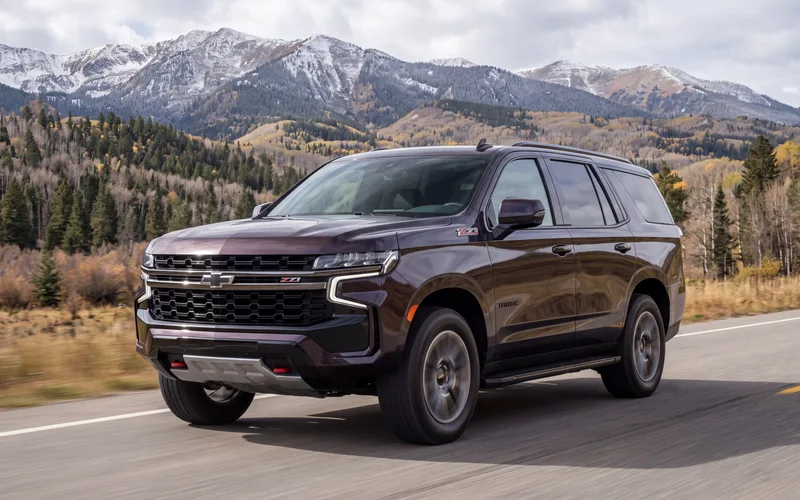 Chevrolet TahoeFull-Size SUVBetter at: Resale value
The default full-size SUV cross-shop — costs a bit more up front but holds about 57% of its value at five years versus the Armada's ~45%, and offers V8 and diesel engines the Armada can't match.
Compare 2.92B-
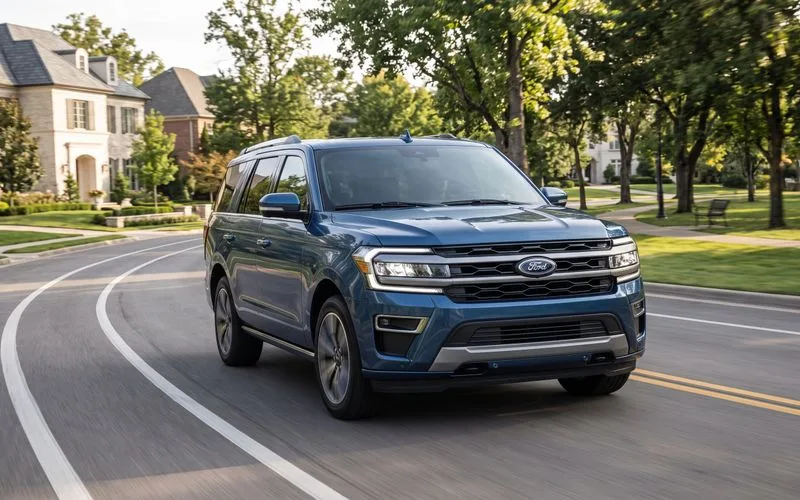 Ford ExpeditionFull-Size SUVBetter at: Space and towing
For similar money on volume trims it tows 9,600 lbs, seats adults in the third row with 36.1 in of legroom, and offers a Max long-wheelbase body — plus it wins the comparison tests the Armada doesn't.
Compare 2.63C+
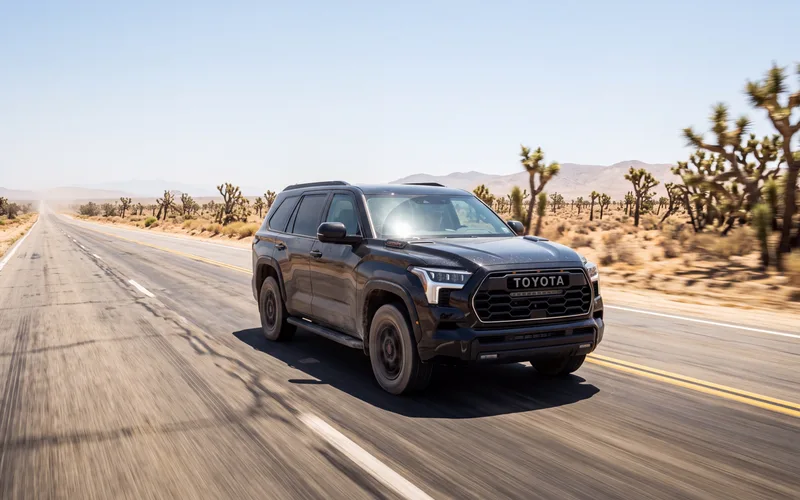 Toyota SequoiaFull-Size SUVBetter at: Total cost of ownership
Its standard hybrid powertrain fixes the Armada's 18-MPG problem, and Toyota's roughly 60% five-year retention plus free scheduled maintenance make it far cheaper to own despite the higher sticker.
CompareProduction history
Best fit & conditions
Higher scores mean a better fit for that use case. Learn more about use-case fit →
Subject profile
Academic Probation · NHTSA safety recalls
Jul 15, 2026Equipment: other: labelsThe Gross Axle Weight Rating (GAWR) listed on the certification label is incorrect, which can allow the vehicle to be overloaded. As such, these vehicles fail to comply with the requirements of Federal Motor Vehicle Safety Standard number 110, "Tire Selection and Rims."
Defect
Nissan North America, Inc. (Nissan) is recalling certain 2020-2026 Nissan Armada, 2011-2013 Infiniti QX56, and 2014-2027 QX80 vehicles equipped with 22" wheels. The Gross Axle Weight Rating (GAWR) listed on the certification label is incorrect, which can allow the vehicle to be overloaded. As such, these vehicles fail to comply with the requirements of Federal Motor Vehicle Safety Standard number 110, "Tire Selection and Rims."
Risk
An overloaded vehicle can increase the risk of a crash.
Remedy
Dealers will install new labels, free of charge. Additionally, Nissan will mail replacement labels to owners. Interim letters notifying owners of the safety risk were mailed September 2, 2026. Additional letters will be sent once the final remedy is available, anticipated Fall 2026. Owners may contact Nissan customer service at 1-800-867-7669. Nissan's numbers for this recall are R26B1 and P6A13/4. Vehicle Identification Numbers (VINs) involved in this recall became searchable on NHTSA.gov on July 16, 2026.
NHTSA campaign 26V455000 ↗Manufacturer no. R26B1/2, P6A13/4168,149 vehicles potentially affected (all models in the campaign)Filed by Nissan North America, Inc.Filed as ARMADANov 26, 2025Back over prevention: softwareA software error may occur in the In-Vehicle Infotainment (IVI) system at vehicle startup, resulting in the rearview camera image not displaying when the vehicle is shifted into reverse. As such, these vehicles fail to comply with the requirements of Federal Motor Vehicle Safety Standard (FMVSS) number 111, "Rear Visibility."
Defect
Nissan North America, Inc. (Nissan) is recalling certain 2025 Murano, 2025-2026 Armada, and Infiniti QX80 vehicles. A software error may occur in the In-Vehicle Infotainment (IVI) system at vehicle startup, resulting in the rearview camera image not displaying when the vehicle is shifted into reverse. As such, these vehicles fail to comply with the requirements of Federal Motor Vehicle Safety Standard (FMVSS) number 111, "Rear Visibility."
Risk
A rearview image that does not display reduces the driver's view behind the vehicle, increasing the risk of a crash.
Remedy
The IVI system software will be updated by a dealer, or through an over-the-air (OTA) update, free of charge. Owner notification letters were mailed February 2, 2026. Owners may contact Nissan's customer service at 800-647-7261 or Infiniti's customer service at 1-800-662-6200. Nissan's numbers for this recall are R25D6, R25D5, and R25D7. Vehicle Identification Numbers (VINs) involved in this recall will become searchable on NHTSA.gov beginning December 12, 2025.
NHTSA campaign 25V821000 ↗Manufacturer no. R25D6, R25D5, R25D764,085 vehicles potentially affected (all models in the campaign)Owners notified Jan 23, 2026Filed by Nissan North America, Inc.Filed as ARMADA
2 recalls on other model years of the Armada (2018–2021)
May 20, 2021Fuel system, gasoline: delivery: fuel pump: control/drive moduleThe impeller can swell and bind within the fuel pump module, causing it to fail.
Defect
Nissan North America, Inc. (Nissan) is recalling certain 2020-2021 Nissan Armada and 2020-2021 INFINITI QX80 vehicles equipped with V8 engines. The impeller can swell and bind within the fuel pump module, causing it to fail.
Risk
Fuel pump failure can cause an engine stall, increasing the risk of a crash.
Remedy
Dealers will replace the fuel pump module, free of charge. Owner notification letters were mailed February 4, 2022. Owners may contact Nissan customer service at 1-800-867-7669. Nissan's number for this recall is R21A2. Owners may contact INFINITI customer service at 1-800-662-6200. INFINITI's number for this recall is R21A3.
NHTSA campaign 21V373000 ↗Manufacturer no. R21A2, R21A324,140 vehicles potentially affected (all models in the campaign)Owners notified Feb 4, 2022Filed by Nissan North America, Inc.Filed as ARMADASep 12, 2019Back over prevention: sensing system: cameraAdditionally included are 2019 Nissan GT-R and Taxi and Infiniti QX50, QX60, Q70, Q70L vehicles. The back-up camera and display settings can be adjusted such that the rear view image is no longer visible and the system will retain that setting the next time the vehicle is placed in reverse. As such, these vehicles fail to comply with the requirements of Federal Motor Vehicle Safety Standard (FMVSS) number 111, "Rear Visibility."
Defect
Nissan North America, Inc. (Nissan) is recalling certain 2018-2019 Nissan Altima, Armada, Frontier, Kicks, Leaf, Maxima, Murano, NV, NV200, Pathfinder, Rogue, Rogue Sport, Sentra, Titan, Titan Diesel, Versa Note and Versa Sedan vehicles, as well as Infiniti Q50, Q60, QX30 and QX80 vehicles. Additionally included are 2019 Nissan GT-R and Taxi and Infiniti QX50, QX60, Q70, Q70L vehicles. The back-up camera and display settings can be adjusted such that the rear view image is no longer visible and the system will retain that setting the next time the vehicle is placed in reverse. As such, these vehicles fail to comply with the requirements of Federal Motor Vehicle Safety Standard (FMVSS) number 111, "Rear Visibility."
Risk
The lack of an image in the back-up camera display increases the risk of a crash.
Remedy
Nissan will notify owners in phases, having dealers update the back-up camera settings software, free of charge. The recall began November 11, 2019 and all affected VINs should be activated. Owners may contact Nissan customer service at 1-800-867-7669 or INFINITI customer service at 1-800-662-6200.
NHTSA campaign 19V654000 ↗1,228,830 vehicles potentially affected (all models in the campaign)Owners notified Nov 11, 2019Filed by Nissan North America, Inc.Filed as ARMADA
Source: NHTSA Office of Defects Investigation recall database, model years 2017–2026. Recalls are listed by model year as the manufacturer filed them; whether a specific car is affected depends on its VIN — check a VIN at nhtsa.gov ↗. NHTSA model names matched to this page: ARMADA.
Detailed scoring by subject
1Performance & PowertrainOne of the Armada's strongest categories.3.04B
The Y63 Armada, redesigned for 2025 and carried into 2026, drops the 5.6L Endurance V8 for the VR35DDTT 3.5L twin-turbo V6 rated at 425 hp across SV, SL, PRO-4X, Platinum and Platinum Reserve — up 25 hp on the old V8 and strong for a full-size SUV, though the mechanically related Infiniti QX80 gets a higher 450 hp tune.
516 lb-ft at 3,600 rpm tops the SUV normalization band outright and is a 103 lb-ft gain on the outgoing V8's 413 lb-ft, giving the Armada effortless low-rpm thrust loaded or towing.
Instrumented tests put the roughly 5,900 lb Armada at about 6.0 seconds to 60 — a large improvement on the previous generation and quicker than the Tahoe, but trailing the higher-output QX80 (5.5 s) and the Sequoia and Wagoneer (5.7 s).
The twin-turbo V6 is quiet and linear with little perceptible lag, and reviewers consistently rate it a clear refinement gain over the coarser, thirstier V8 it replaced; it sits just below the QX80 (80) on cabin isolation rather than any engine difference, and some buyers still miss the V8 soundtrack.
The new 9-speed automatic (replacing the old 7-speed) holds gears sensibly and shifts smoothly at cruise, but shares the QX80's documented low-speed hesitation and occasional busy shifting under quick throttle inputs — behind the Expedition and Wagoneer 10-speeds (both 82).
8,500 lbs properly equipped exceeds the top of the SUV normalization band, matching the QX80 and beating the Tahoe (8,400 lbs), though the Sequoia (9,520), Expedition (9,600) and Wagoneer (10,000) tow more. Body-on-frame construction makes it a genuinely capable tow rig.
4WD is available on every trim and standard on PRO-4X, using a genuine two-speed transfer case with low range plus a multi-mode terrain selector (Auto, Sand, Rock, Snow, Mud/Rut, Tow) — sophisticated hardware, held just short of the Wagoneer (88) only because RWD remains the standard configuration on lower trims.
The PRO-4X is a real dedicated off-road trim — electronic locking rear differential, all-terrain tires, skid plates, off-road-tuned dampers and roughly 9.5 in of ground clearance on a body-on-frame chassis — which puts the Armada well clear of the QX80 (58) and the Tahoe Z71 (66). It stops short of the Sequoia TRD Pro (78) on suspension development, and there is no front locker or crawl-control equivalent.
One engine family across the entire lineup — the 3.5L twin-turbo V6, in a 425 hp standard tune plus a higher-output NISMO tune — with no hybrid, PHEV or EV option anywhere in the range. That is a genuine weakness against the Tahoe/Yukon (V8s plus a diesel, 58), Wagoneer (55) and the electrified Sequoia (38), and only marginally broader than the single-tune QX80 (25).
2Efficiency & RangeOne of the Armada's weakest categories.0.00F
The 2026 Armada carries over the Y63 generation's sole powertrain — the 3.5L VR35DDTT twin-turbo V6 (425 hp / 516 lb-ft) with a 9-speed automatic — so EPA figures are unchanged from the 2025 redesign. The volume trim scored here is SL 4WD at 18 MPG combined, which lands at the very bottom of the SUV normalization band (18–45).
A 5,800+ lb body-on-frame full-size SUV with a boosted V6 pays heavily in stop-and-go driving; 16 MPG city sits at the floor of the SUV band (16–48).
Highway economy is the Armada's best case but still only 20 MPG in 4WD form — the bottom of the SUV highway band (20–42). The 9-speed automatic and turbocharging help versus the old V8, but mass and frontal area dominate.
Range is derived from the Y63's approximately 23.0-gallon tank and the 18 MPG combined rating, giving roughly 414 miles — mid-pack for the segment, since the large tank partly offsets the poor economy. Both the tank figure and the resulting range are unverified this run.
At EPA's 15,000 mi/yr assumption the Armada burns roughly 833 gallons a year; at a ~$3.30/gal regular-grade assumption that is about $2,750 — near the expensive end of the SUV band (700–3200, inverted). Running the recommended premium grade would push the real-world figure past $3,400.
Nissan recommends premium unleaded for the twin-turbo V6's full 425 hp but permits 87-octane regular with reduced output, placing the Armada in the prompt's 50–79 'premium recommended but not required' band. That flexibility is a real advantage over its Infiniti QX80 platform-mate, where premium is the specified grade — but owners chasing the advertised output pay the premium spread on a vehicle that already drinks ~833 gal/yr.
3SafetyGrades above the middle of the scale.2.78B-
NHTSA has not published a full overall star rating for the redesigned (2025+) Y63 Armada; tall body-on-frame full-size SUVs of comparable height and mass — including the platform-shared Infiniti QX80, Tahoe, Sequoia and Yukon — consistently land at 4 stars overall because the rollover subtest caps them at 3 stars. Replaces the placeholder 3.9-star value.
The redesigned Armada holds no Top Safety Pick or TSP+ award and has no published set of crashworthiness results — IIHS rates the full-size body-on-frame SUV class only sparsely, and where it has tested peers under the updated moderate-overlap (rear-passenger) protocol the results have been poor (Expedition Marginal, Tahoe and Sequoia unawarded). An unproven new structure cannot be credited above the middle band. The placeholder 64 implied award-adjacent results that do not exist.
Nissan Safety Shield 360 is standard on every Armada trim from the base SV up — AEB with pedestrian detection, rear automatic braking, blind-spot warning, rear cross-traffic alert, lane departure warning and high-beam assist — with Intelligent Cruise Control and ProPILOT Assist also included across the range. Nothing core is paywalled to upper trims, which is the top band for this class.
The standard AEB system pairs radar and camera with pedestrian detection and Predictive Forward Collision Warning that reads the vehicle two cars ahead, and Nissan's current-generation system has generally earned Superior daytime front crash prevention results on tested siblings. The Armada's mass and the unverified nighttime pedestrian performance of the new-generation hardware keep it out of the top band.
Blind-spot warning, rear cross-traffic alert and rear automatic braking are standard across the lineup rather than trim-gated, and rear-door alerts add a child/pet reminder — genuinely valuable given the thick D-pillars and long rear overhang of this body style. Blind-spot coverage remains alert-only, with no active steering intervention.
Lane departure warning is standard and ProPILOT Assist delivers true lane centering rather than corrective nudges, holding the Armada's considerable width steadily on divided highways; reviewers of the shared Y63 ADAS stack describe the centering as natural and low-drama, if not quite at BlueCruise/Super Cruise polish.
Full-speed-range Intelligent Cruise Control with stop-and-go is standard on every trim, and ProPILOT Assist with Navi-link on upper trims adds map-linked speed adjustment and curve preparation for well-integrated highway assist. A strong, smooth system that trails only the more elaborate 2.1 setup in the QX80.
ProPILOT Assist 2.1 offers genuine hands-off, single-lane driving on mapped divided highways with an infrared driver monitor, but on the Armada it is reserved for the top Platinum Reserve trim rather than offered mid-range as on the QX80, and Nissan's mapped-road coverage is narrower than Ford BlueCruise or GM Super Cruise. Hands-free is available but clearly limited in reach.
LED projector headlights with auto high-beam assist are standard across the range, but curve-adaptive/auto-leveling lighting is reserved for the upper trims, so the volume SV/SL buyer gets competent rather than class-leading illumination. The new-generation lights carry no IIHS headlight rating; the predecessor Armada's lights rated only Acceptable on upper trims.
The upright, boxy greenhouse and high seating position give a commanding forward view with usefully large glass area, but thick D-pillars, a long hood and the third-row headrests create real close-in blind zones. The Intelligent Around View Monitor with Invisible Hood View and moving-object detection compensates well and is standard on most trims.
Wide, tall rear-door openings and a spacious second row make LATCH anchors easy to reach and car seats easy to load; the second-row bench (7- or 8-passenger configurations) allows 3-across, captain's chairs on upper trims trade that for easier third-row walk-through, and the third row includes top-tether anchors. The high floor height is the main drawback for lifting children in.
4Space & ComfortOne of the Armada's strongest categories.3.52A-
The Y63-generation Armada seats eight with the standard second-row bench on SV and SL; Platinum and Platinum Reserve substitute captain's chairs for seven. Eight is the maximum capacity of the volume configuration.
Tall body-on-frame packaging puts the Armada near the top of the full-size SUV band for front headroom; the figure drops on trims fitted with the panoramic moonroof.
Front legroom is mid-pack rather than class-leading - the Armada's size advantage shows up in the second and third rows, not the front footwell, and it trails the Tahoe and Expedition here.
Second-row headroom sits at the top of the SUV normalization band, a direct benefit of the boxy Y63 roofline and the flat roof section over the middle row.
The sliding second row gives 41.0 in of legroom at its rearward setting - genuinely adult-limousine space and among the best in the full-size class.
The Y63 third row is a real seat with power fold and easy one-touch second-row access, comfortable for teens and for adults on shorter trips, but its roughly 32.9 in of legroom trails the Expedition and Tahoe, so it stops short of the adult-all-day standard.
With the power-folding third row down the Armada opens up 56.8 cu ft - solid for the class but short of the long-wheelbase Suburban and Expedition Max, and slightly under the QX80's published figure.
Folding both rear rows yields 97.1 cu ft, near the top of the SUV band and competitive with the standard-wheelbase Tahoe and Expedition.
The redesigned interior adds a large covered console bin, a dedicated wireless charging pad, deep door pockets and a flat load floor with underfloor storage behind the third row, plus USB-C throughout - competitive everyday storage without a signature innovation like GM's sliding console.
Wide, well-padded Zero Gravity-derived front seats with generous adjustment are a consistent Armada strength and the second row is equally accommodating; upper trims add heated, ventilated and massaging fronts. It falls just short of the QX80's more feature-rich chairs.
The Y63's independent rear suspension and available adaptive dampers give the Armada a far more settled highway ride than the outgoing truck, with good body control for a body-on-frame full-sizer, but low-speed impact harshness on the larger wheel packages keeps it out of the top band.
Extensive sound insulation, acoustic front glass and active noise cancellation make the new Armada markedly quieter than its predecessor at highway speed; it stops just below the QX80, which layers on additional glazing and deadening.
Tri-zone automatic climate control, remote start and heated front seats are standard or near-standard, with ventilated fronts, a heated steering wheel, heated second-row seats and massaging front seats available as trims climb - a rich set for a mainstream badge.
5Cost of OwnershipThe Armada's lowest-graded category.0.00F
The 2026 Armada is the second year of the Y63 generation redesigned for 2025 (Patrol-based, 3.5L twin-turbo V6 replacing the 5.6L V8), so entry pricing is a normal year-over-year step off the 2025 SV 4x2 rather than a fresh reset. It undercuts every domestic full-size rival at the entry point — roughly $2,000 below a base Tahoe and $6,000 below a base Sequoia — but still sits deep in the upper reaches of the SUV pricing band (25,000–65,000), because no body-on-frame full-size SUV has a cheap entry point.
SL 4x4 is the Armada's realistic volume configuration — full-size SUV buyers skew heavily toward four-wheel drive and mid-grade trim, and SV is largely a fleet/advertised-price grade. At roughly $67,500 delivered it lands at the very top of the SUV band (27,000–68,000), essentially level with a Tahoe LT (~$67,000) and an Expedition Active (~$66,500). The prior placeholder ($40,677) sat below any real 2026 Armada trim, which accounts for nearly all of this item's downward delta.
Nissan parts and dealer labor are cheap for the class, which keeps routine service below the domestic full-size SUVs — but the new VR35DDTT twin-turbo V6 and 9-speed automatic are more complex than the old naturally-aspirated V8, Nissan has a mixed record on newly-introduced powertrains, and 20–22 inch tires plus full-size fluid capacities push consumables up. Lands mid-band: cheaper than a Tahoe (~$6,800) or Expedition (~$8,650), costlier than the mechanically-identical QX80 (~$4,500), whose figure is flattered by three years of included Infiniti maintenance the Armada does not get.
Depreciation is the Armada's single biggest ownership penalty. The nameplate has historically ranked among the worst-retaining large SUVs — heavy factory incentives and low advertised transaction prices mean the MSRP-based residual starts underwater, and the mechanically-identical QX80 posts a class-trailing ~37% retention. The 2025 redesign, a far more modern product than the 14-year-old truck it replaced, should lift the curve somewhat, but the Armada still trails the Tahoe (~57%) and Expedition (~48.5%) and is nowhere near the Toyota benchmark (Sequoia ~60%).
Nissan's standard 3-year/36,000-mile basic coverage, unchanged across the lineup for many years and sitting at the floor of the framework's 3–5 year band. Level with the domestic full-size rivals (Tahoe, Expedition, Sequoia all 3 yr) and well behind Hyundai/Kia (5 yr/60,000 mi) — and notably a year shorter than the Infiniti QX80 (4 yr/60,000 mi) built alongside it.
Nissan's standard 5-year/60,000-mile powertrain term is the floor of the 5–10 year band. That is thin coverage for a first-generation twin-turbo V6 application: buyers worried about the new VR35DDTT and 9-speed automatic get one year and 10,000 miles less than a QX80 owner (6 yr/70,000 mi) and half the term of a Hyundai/Kia (10 yr/100,000 mi).
Nissan includes no complimentary scheduled maintenance on the Armada — every oil change and rotation is out of pocket from day one, which is the main reason this lands at the bottom of the 50–79 band rather than in it comfortably. What is included is basic: 3 yr / 36,000 mi roadside assistance running concurrent with the bumper-to-bumper term, plus trial subscriptions to NissanConnect Services and the Google built-in suite (Maps/Assistant/Play) that the Y63 generation ships with. That trails ToyotaCare on a Sequoia (2 yr / 25,000 mi of real free service, scored 80), the QX80's Premium Care oil changes and 48-month roadside (58), and Ford's package on an Expedition (58).
$67,500 volume-trim price minus its estimated resale value after 5 years (45% retained, or about $30,375) leaves about $37,125 in depreciation. Add the projected $6,300 in 5-year maintenance and repairs, and owning this vehicle for 5 years costs about $43,425 in total.
6Reliability & QualityMid-pack among this car's ten categories.2.21C
2026 is only the second model year of the ground-up Y63 Armada, which replaced the long-serving 5.6L V8/7-speed combination with a brand-new-to-the-application twin-turbo V6, a 9-speed automatic, and a far heavier electronics stack. A redesigned model from a mid-pack dependability brand with no accumulated owner data is the textbook case for a below-average prediction, and it sits a touch under the mechanically related Infiniti QX80 (58) because Nissan's brand-level dependability standing is weaker than Infiniti's.
Nissan is a mid-pack dependability brand — typically middle of the J.D. Power Vehicle Dependability Study and mid-to-lower in Consumer Reports brand rankings — well behind Toyota, Lexus, Honda and Hyundai/Kia, but not a bottom-third name. Held identical to the score given the Nissan Rogue in this dataset, since the item measures the brand rather than the vehicle.
The Y63 platform drew a busier-than-average recall log in its launch year, concentrated in electronics and software (displays, camera and driver-assist behavior) rather than powertrain integrity or fire risk. That is early-life teething on a clean-sheet design, not a systemic defect — materially better than the Rogue's engine-bearing campaign, but short of a clean record. Scored marginally above the QX80 (55) because fewer of the flagship electronics are standard on volume Armada trims.
The 3.5L VR35DDTT twin-turbo V6 has roughly a decade of service in the Q50/Q60 Red Sport, where its record is solid but not spotless (turbo oil coking and timing-chain concerns on high-mileage cars), and it is paired here with a new 9-speed automatic. The step is a real risk: the outgoing 5.6L VK56 V8 was the old Armada's most durable component, and this engine now does body-on-frame duty in a 6,000-lb SUV rated to tow 8,500 lb. A notch below the QX80's 70 for the harder duty cycle at the same hardware.
The redesign is a genuine leap over the outgoing Armada's dated cabin — quilted leather, open-pore-look trim and twin 14.3-inch displays on Platinum Reserve draw consistent praise. It lands clearly above the Sequoia (68) but well short of its QX80 twin (85): volume SV and SL trims still carry visible hard plastics on the lower dash and doors, which is exactly the 'competitive with expected hard plastics in low-touch zones' band for a Premium-class full-sizer.
Bodywork and switchgear assembly are competitive for a body-on-frame flagship, but the Armada inherits the same dual-screen infotainment stack that has produced lag and freeze complaints on the QX80, and second-year-of-generation builds have not yet demonstrated a settled initial-quality record. Placed just under the QX80's 76, in the 'generally solid with scattered complaints' band.
Coverage is the strong half: Nissan runs roughly a thousand US franchise dealers, so an Armada owner has service within reach almost anywhere — a real advantage over the ~200-store Infiniti network its twin depends on. Service satisfaction is the weak half, with Nissan mid-to-lower in customer-service studies and no complimentary scheduled maintenance. Held identical to the Rogue, since the network is brand-level.
Mainstream-brand parts pricing and a dense dealer network keep routine service cheaper than the QX80's, and sharing the platform, engine and transmission with that vehicle broadens the supply chain. It sits below the Rogue (70) rather than above it because Armada volumes are a fraction of the Rogue's, independent-shop familiarity with the VR35DDTT is thinner, and full-size consumables — 20/22-inch tires, large brakes, twin turbochargers, adaptive dampers on upper trims — carry real cost.
7Technology & InfotainmentThe Armada's best-graded category.3.55A-
The Y63-generation Armada carried into 2026 pairs a 14.3-inch center touchscreen with a 14.3-inch digital cluster on SL, PRO-4X, Platinum and Platinum Reserve; the entry SV uses a smaller 12.3-inch screen. Scored on SL as the volume trim.
Google built-in gives the redesigned Armada a fast, modern interface, and unlike the QX80 it keeps a row of physical climate and volume controls below the screen — a layout reviewers consistently reward. Menu depth for secondary vehicle settings is the main complaint.
Wireless Apple CarPlay and wireless Android Auto are standard across the Armada range, including the base SV — no trim walk required.
Google built-in supplies Google Assistant natural-language voice control and Google Maps as the native navigation system on SL and above — genuinely good enough that owners need not default to phone projection. Connected features move to a subscription after the included trial.
A Klipsch Premiere branded system is available on upper Armada trims and is a clear step up from the standard setup, but it is a smaller, less ambitious installation than the 24-speaker Klipsch Reference Premiere reserved for the Infiniti QX80.
Every 2026 Armada gets a full-digital reconfigurable cluster — 14.3 inches on SL and above, 12.3 inches on SV — with crisp graphics and multiple layouts. Full digital across the lineup with no analog fallback.
The Google built-in stack brings over-the-air updates to infotainment, apps and map data, which is a real improvement over the previous Armada, but Nissan does not offer the broad whole-vehicle OTA scope that adds features to powertrain or driver-assist systems.
The NissanConnect Services app covers the core set — remote start, remote lock/unlock, vehicle locate, alerts and vehicle health — but functionality is subscription-gated after the included trial and there is no phone-as-key digital key.
USB-C data and charge ports are distributed across all three rows, a wireless charging pad is fitted from SL upward, and top trims add rear-seat entertainment screens with HDMI input — well-equipped for a family full-size SUV.
Nissan Intelligent Key proximity entry, push-button start, remote engine start and a hands-free motion-activated power liftgate are standard or near-standard across the range. No phone-as-key option holds it out of the top band.
Around View Monitor with Invisible Hood View, 3D perspective modes and moving-object detection plus front and rear parking sensors make a very large three-row SUV genuinely manageable — one of the Armada's strongest tech showings, matching the QX80 hardware minus a trim level of standard fitment.
A large color head-up display (roughly 9-inch class, shared with the QX80) is offered on the Armada, but it is confined to the top Platinum and Platinum Reserve trims and is unavailable on the volume SV and SL.
8Use-Case FitMid-pack among this car's ten categories.2.63C+
Wide, tall rear door openings, a sliding second row and a one-touch tilt-slide mechanism make car-seat installation and third-row access genuinely easy, and 20.4 cu ft behind the third row swallows a stroller with all eight seats occupied. The tall body-on-frame step-in height is the real daily penalty when lifting toddlers into the second row.
Nissan Safety Shield 360 is standard from the base SV up — AEB with pedestrian detection, rear automatic braking, blind-spot warning, rear cross-traffic alert and rear door alert — so families buying the affordable trims are not short-changed on equipment. What holds it out of the top band is credentials rather than content: the redesigned Y63 carries no IIHS Top Safety Pick and NHTSA has not published a full overall star rating.
Second-row space is close to best-in-class at 41.0 in legroom and 40.4 in headroom, backed by tri-zone climate, heated second-row seats, USB-C in all three rows and rear-seat entertainment screens with HDMI on upper trims — a well-provisioned long-haul family cabin. The limits are the third row's roughly 32.9 in of legroom and the modest 20.4 cu ft of luggage space left when all eight seats are in use.
516 lb-ft from 3,600 rpm makes the Armada effortless in traffic, and full-speed-range adaptive cruise with stop-and-go plus ProPILOT Assist lane centering are standard on every trim, which meaningfully cuts commute fatigue. Against that, the 9-speed automatic shares the QX80's documented low-speed hesitation, and roughly 209 in of length with thick D-pillars keeps the driver working in dense traffic.
16 MPG city and 18 MPG combined in the volume 4WD configuration sit at the floor of the full-size SUV band, and Nissan recommends premium for the twin-turbo V6's full output, so per-mile commuting cost is among the worst of any vehicle a family shops at this price. There is no hybrid anywhere in the range to soften it, unlike the Sequoia.
At roughly 209 in long and 80 in wide, the Armada is simply a large object in an urban parking structure and its turning circle is unremarkable for the class. The saving grace is genuinely excellent camera hardware — Around View Monitor with Invisible Hood View, 3D perspective modes and moving-object detection plus front and rear sensors — which makes tight maneuvers manageable rather than intimidating.
8,500 lbs of towing properly equipped, 516 lb-ft of low-rpm torque, a body-on-frame chassis, a dedicated Tow terrain mode and trailer sway control make this a legitimate trailer vehicle for boats, campers and equipment. It is a solid rather than class-leading work tool: the Expedition (9,600 lbs), Sequoia (9,520) and Wagoneer (10,000) all tow more, and an enclosed SUV cargo hold is less useful than a bed for dirty loads.
The underlying Patrol-derived body-on-frame architecture has a strong global reputation for hard-use durability, but the specific US drivetrain — the VR35DDTT twin-turbo V6 with a 9-speed automatic — is only in its second model year in this application, and Nissan sits mid-pack at best on dependability. The Armada also has no meaningful commercial or fleet track record to draw on, and its leather-trimmed cabin is not built for abuse.
Beyond cargo tie-downs, roof rails and a hitch receiver, the Armada offers essentially nothing aimed at work: no bed, no washable floor or vinyl-trim option, no exportable onboard power system of the kind pickups now offer, and no upfitter ecosystem. It is a family flagship that happens to tow, not a jobsite vehicle.
This is the Armada's strongest mission: wide Zero Gravity-derived front seats, a markedly quieter cabin than the outgoing truck thanks to acoustic glass and active noise cancellation, available adaptive dampers, and roughly 414 miles of range from the ~23-gallon tank despite the poor economy. ProPILOT Assist lane centering with standard stop-and-go adaptive cruise — and true hands-off ProPILOT Assist 2.1 on Platinum Reserve — makes interstate stints genuinely low-effort.
Four-wheel drive with a genuine two-speed transfer case and low range is offered across the range alongside a multi-mode terrain selector (Auto, Sand, Rock, Snow, Mud/Rut, Tow), and the PRO-4X adds an electronic locking rear differential, all-terrain tires, skid plates, off-road-tuned dampers and roughly 9.5 in of ground clearance. Combined with an 8,500 lb tow rating for boats and toy haulers, roof rails and rear rows that fold flat for sleeping, this is a real adventure enabler rather than a soft-roader.
97.1 cu ft with both rear rows folded, 56.8 cu ft behind the second row and a power-folding third row that leaves a flat load floor with underfloor storage make the Armada an excellent gear hauler, and roof rails plus an available hitch extend it further. The main constraint is that the second row folds but does not remove, and the 20.4 cu ft behind the third row is modest when all eight seats are in use.
9Driving ExperienceOne of the Armada's weakest categories.2.10C
The Y63 Armada (redesigned for 2025, carried into 2026) is a body-on-frame full-size SUV of roughly 5,900–6,100 lb, but its independent rear suspension and stiffer new frame give it noticeably better body control and cornering composure than the outgoing Y62 — secure and predictable rather than engaging, with real roll in quick direction changes and no air suspension to help (unlike the platform-shared Infiniti QX80). Sits above the floatier Sequoia and Expedition, roughly level with Tahoe/Yukon, and below the QX80.
Electric power steering is accurate and easy to place for a vehicle this size, and it tracks straight without constant correction, but weighting is light and there is essentially no feedback about grip — precise enough, numb by any enthusiast measure.
Ventilated discs at all four corners haul down roughly three tons adequately, with 60–0 stops in the typical full-size-SUV 130–140 ft range, but the pedal is long and soft in the first third of travel and repeated hard stops loaded or towing bring on fade — adequate stopping power with a mushy pedal.
The VR35DDTT 3.5L twin-turbo V6 (425 hp / 516 lb-ft) paired with the 9-speed automatic is the biggest single drivability gain of the redesign: 516 lb-ft arrives at 3,600 rpm with little perceptible lag, so the Armada moves off cleanly and passes without hunting for a downshift. It falls short of top marks because the 9-speed can be lumpy in low-speed part-throttle shifts and the auto stop/start restart is felt through the structure.
The turbo V6 is quieter at cruise and under part throttle than the V8 it replaced, and active noise cancellation plus acoustic front glass keep it well isolated; the trade is a flat, synthetic-sounding V6 note at full throttle where the old Endurance V8 had genuine character. Inoffensive rather than pleasant.
A 116.1-in wheelbase and ~208.9-in overall length give the Armada a turning diameter near the bottom of the SUV normalization band — it needs a three-point turn where a mid-size SUV does not, and the figure grows on the 22-inch wheels fitted to Platinum and Platinum Reserve.
A commanding seating position, wide-ranging power seat and tilt/telescoping wheel adjustment, and a dashboard that keeps physical climate controls and a volume knob alongside the twin 14.3-in displays make it easy to live with. Marks come off for the high step-in (running boards are not standard across the range) and thick rear pillars that limit over-the-shoulder vision.
The 516 lb-ft shove is genuinely satisfying and the PRO-4X adds some off-road character, but the Armada is fundamentally a quiet, heavy hauler with numb steering and no soundtrack worth seeking out — nobody takes the long way home in one. Pleasant and competent, forgettable as a driver's car.
10Value & Market PositionGrades above the middle of the scale.2.90B-
The base SV (~$59,500 4x2 incl. destination) is the cheapest way into a modern full-size SUV and still arrives with dual 12.3-inch displays, wireless Apple CarPlay and Android Auto, Safety Shield 360, ProPilot Assist, Around View Monitor with front and rear sensors, tri-zone climate, a power liftgate and eight-passenger seating — genuinely strong content at the segment's lowest entry price. It sits above the Tahoe LS (72) on price-adjusted content but below the Expedition Active (80), which makes its 13.2-inch screen and 24-inch cluster standard where the Armada reserves the 14.3-inch pair, wireless charging and the head-up display for SL and above.
On sticker the Armada is the segment's value play: it is mechanically the Infiniti QX80 — same Y63 platform, 3.5L twin-turbo V6, 9-speed automatic, independent rear suspension, Around View hardware and Google built-in — for roughly $25,000 less at the entry point, with 425 hp, 516 lb-ft and an 8,500-lb tow rating that match or beat the Tahoe and Expedition. What keeps it out of the 80s is the back half of the ownership math the class is judged on: retention is the weakest of the mainstream full-size SUVs (~45% at five years), warranty is the segment floor at 3/36 and 5/60 with no complimentary maintenance, and real-world fuel economy is no better than the V8 it replaced. Placed level with the Tahoe (76) and well above the Sequoia (61) and Wagoneer (54), below the Expedition (82) and its own QX80 twin (82), whose price-to-content gap against Escalade and Navigator is wider than the Armada's against Tahoe and Expedition.
Six rungs — SV, SL, PRO-4X, Platinum, Platinum Reserve and the 460-hp NISMO added for 2026 — span roughly $59,500 to the high $80Ks with genuinely distinct characters (fleet-grade value, family volume trim, off-road, luxury, performance), 4x2 or 4x4 on the lower trims and a choice of second-row bench or captain's chairs for seven or eight seats. The ceiling on the score is structural: one powertrain only, and unlike the Suburban, Expedition Max and Wagoneer L there is no long-wheelbase body for buyers who need third-row cargo depth. Slots below the Tahoe (82), whose three engines including a diesel give it the widest ladder in the class, and level with the QX80 (76).
The Armada has always been the volume laggard of the traditional full-size SUV segment, running in the mid-teens of thousands per year through the late Y62 era against a Tahoe selling roughly 110,000 and an Expedition near 86,000. The Y63 redesign lifted the trajectory into the mid-20,000s, which is real improvement and the reason this does not score lower, but it still leaves the Armada behind the Sequoia and roughly level with the slow-selling Wagoneer (46) at the bottom of the class. Scored as a slow seller on a rising trend rather than a declining one.
Nissan is a net-negative brand asset in this segment rather than a neutral one: well-publicized corporate financial strain, a mid-pack dependability record, and a reputation built on aggressive discounting all feed directly into the Armada's class-worst resale. The Armada does better than the Nissan average — it is body-on-frame with a conventional automatic, so it carries none of the CVT stigma that colors the Rogue and Frontier, and the Y63's Nissan Patrol lineage gives it real credibility with the overlanding crowd. Set marginally above the Rogue (52) and Frontier (54) for that reason, but well below Chevrolet and Ford (68 each) and nowhere near Toyota's reliability halo (83), which is a first-order purchase driver at this price.
Scored on buyer benefit, and this is the Armada's best showing in the category. Nissan is among the most aggressive discounters in the US market, and a low-volume flagship competing against entrenched domestics is exactly the product that carries stacked cash allowances plus subvented APR. Buyers routinely transact well under MSRP on Armadas, a genuine advantage over the Tahoe (65) and Expedition (58), both of which sell close to sticker on healthy demand. Held a point below the Wagoneer (85) because Stellantis inventory pressure has been the more extreme case, and because Armada discounts, while large, are the ordinary Nissan pattern rather than distress pricing.
2026 is the second model year of the Y63 Armada, an all-new generation for 2025 that replaced a Y62 architecture in service since 2010 — new Patrol-derived platform, new VR35DDTT twin-turbo V6 and 9-speed automatic in place of the 5.6L V8 and 7-speed, new independent rear suspension, and a new cabin with dual 14.3-inch displays and Google built-in. 2026 adds the NISMO variant rather than any structural change. That puts it at the front of the segment on freshness with essentially zero redesign risk for a buyer, level with the equally new-for-2025 Expedition (88) and just behind the QX80 (92), scored one notch closer to its launch.
The redesign was received as a large and overdue step forward — reviewers consistently credit the torque-rich twin-turbo V6, the transformed cabin, the retention of physical climate controls the QX80 gave up, and the price-to-content story against Tahoe and Expedition. But the Armada is not the pick of the class in comparison tests: the same reviews flag hesitant 9-speed calibration, fuel economy no better than the V8 it replaced, ride quality on the 22-inch wheels, and third-row and cargo packaging that trail the domestics, and the nameplate has not collected a major award on the order of the Expedition's comparison-test sweep. Lands in the 'well-reviewed, rarely the pick of the class' band — just below its QX80 twin (72), which draws more praise for craftsmanship, clearly above the Sequoia (60) and Wagoneer (64), and well behind the Expedition (90) and Tahoe (75).