
The verdict
A mixed-report full-size suv, strong on performance and held back by ownership.
The 2026 Sequoia is the full-size SUV for people who tow and hate gas stations: every trim gets the 437-hp, 583-lb-ft i-FORCE MAX hybrid, tows up to 9,520 lbs, and returns 20 MPG combined in 4WD — several MPG clear of every V8 rival. The catch is the part of the vehicle you sit in and load: the hybrid battery forces the third row onto a raised deck, leaving roughly 11.5 cu ft behind it and 86.9 cu ft maximum, versus 122.9 in a Tahoe. Add a live rear axle that patters over broken pavement, no hands-free highway system, and a Limited 4x4 that lands near $75,500, and this is a tow rig and long-haul cruiser first, a people-and-luggage hauler second. Cross-shop it hard against the Tahoe and Expedition before signing.
Jump to scoresStrengths
- Class-leading towing and effortless muscle
- The only full-size SUV that's hybrid-only
- Safety tech is standard, not trim-gated
What holds it back
- The cargo hold is the worst in the class, by a lot
- Full-size money without the full-size room
- Live rear axle rides and drives like a truck
Top alternatives
Cars shoppers cross-shop with the Toyota Sequoia 2.79B-
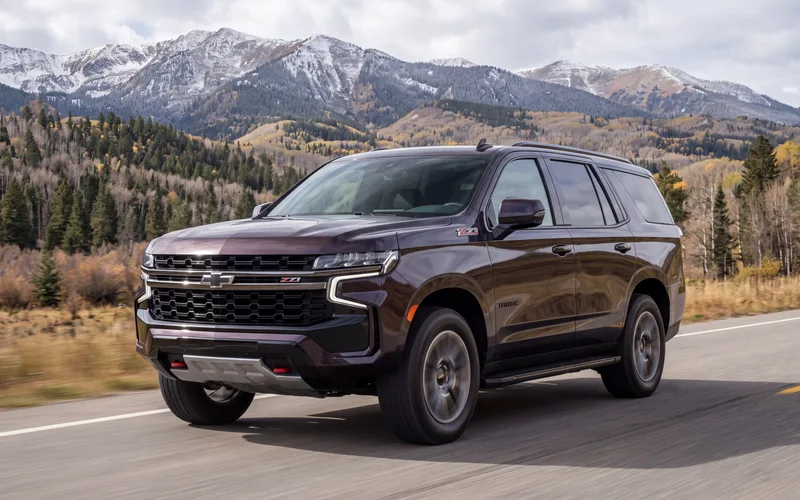 Chevrolet TahoeFull-Size SUVBetter at: Cargo space
Costs less to buy, carries 36 cu ft more gear, rides on an independent rear end and offers Super Cruise hands-free driving — the default choice unless you specifically want the hybrid or the tow rating.
Compare 2.92B-
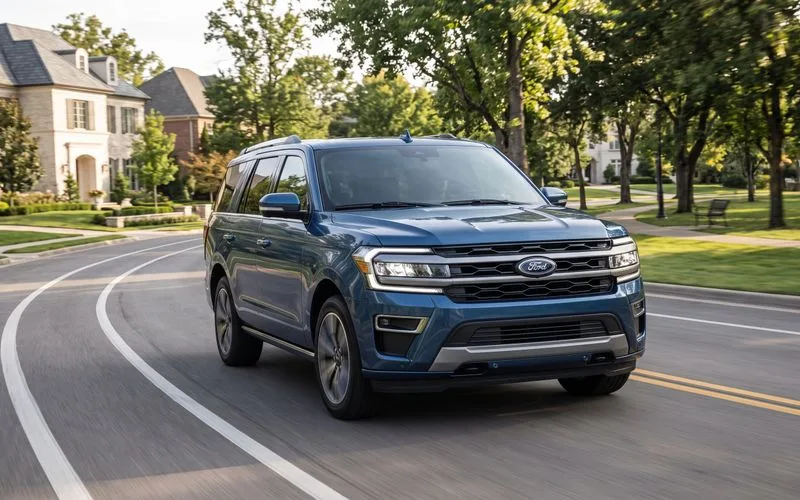 Ford ExpeditionFull-Size SUVBetter at: Family room
The freshest full-size SUV in the class, with a third row adults can actually use, 108.5 cu ft of max cargo and BlueCruise, at the cost of worse fuel economy and weaker resale.
Compare 2.88B-
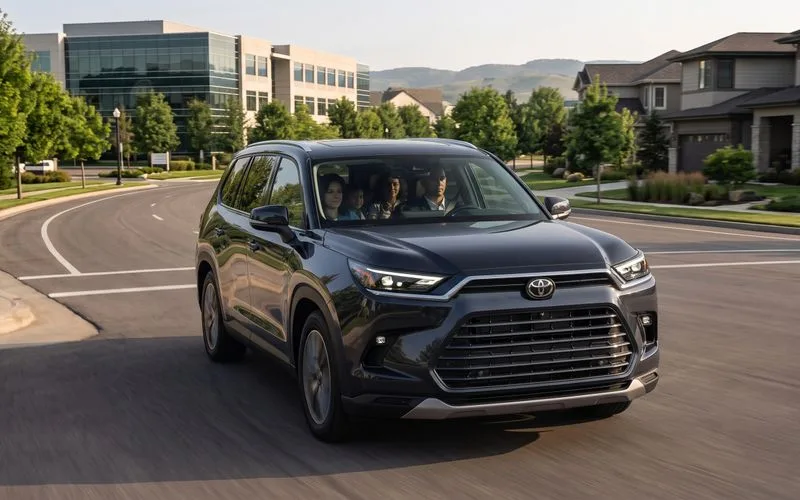 Toyota Grand HighlanderMid-Size SUVBetter at: Value
Same Toyota reliability and hybrid efficiency for far less money, with a better ride and a more usable third row — the right call for anyone who doesn't truly need 9,520 lbs of towing.
CompareHow it's evolved
10 scored model years · 2017–2026
Subject scores by year
Hover or tap a score to see what moved it versus the year before. A corner mark flags a big swing.
| Year | Performance | Efficiency | Safety | Space | Cost | Reliability | Tech | Use-case | Driving | Value |
|---|---|---|---|---|---|---|---|---|---|---|
| 2026 | 76 | 40 | 65 | 71 | 38 | 69 | 75 | 69 | 57 | 66 |
| 2025 | 76 | 35 | 57 | 64 | 37 | 72 | 73 | 67 | 56 | 62 |
| 2024 | 76 | 35 | 53 | 65 | 43 | 68 | 74 | 67 | 56 | 66 |
| 2023 | 78 | 35 | 55 | 65 | 47 | 69 | 74 | 67 | 58 | 66 |
| 2022 | 63 | 15 | 38 | 66 | 47 | 81 | 35 | 61 | 55 | 43 |
| 2021 | 63 | 16 | 41 | 68 | 37 | 82 | 39 | 61 | 55 | 49 |
| 2020 | 64 | 16 | 41 | 67 | 52 | 81 | 42 | 61 | 56 | 47 |
| 2019 | 64 | 15 | 44 | 67 | 39 | 79 | 25 | 61 | 58 | 47 |
| 2018 | 62 | 16 | 42 | 67 | 50 | 79 | 25 | 61 | 56 | 52 |
| 2017 | 62 | 15 | 18 | 67 | 60 | 82 | 24 | 56 | 55 | 50 |
Compare two years
Best fit & conditions
Higher scores mean a better fit for that use case. Learn more about use-case fit →
Subject profile
Academic Probation · NHTSA safety recalls
No NHTSA safety recall is on record for the 2026 Toyota Sequoia. Other model years of the Sequoia have 15 — listed below.
15 recalls on other model years of the Sequoia (2017–2025)
Mar 24, 2026Equipment: other: labelsThe load carrying capacity modification label may display inaccurate added weight values. As such, these vehicles fail to comply with the requirements of Federal Motor Vehicle Safety Standard number 110, "Tire Selection and Rims."
Defect
Toyota Motor Engineering & Manufacturing (Toyota) is recalling certain 2024-2025 Toyota Tundra, Tacoma Hybrid, Tacoma, RAV4 Hybrid, Land Cruiser Hybrid, Lexus GX550, 2024-2026 Tundra Hybrid, 2025 Sequoia Hybrid, Crown Signia, Grand Highlander, Lexus TX500 Hybrid, Lexus NX350 Hybrid, 2025-2026 Grand Highlander Hybrid, and Lexus TX350 vehicles. The load carrying capacity modification label may display inaccurate added weight values. As such, these vehicles fail to comply with the requirements of Federal Motor Vehicle Safety Standard number 110, "Tire Selection and Rims."
Risk
A vehicle with an incorrect maximum capacity weight value may be overloaded, which can increase the risk of a crash.
Remedy
Dealers will replace the load carrying capacity modification label, free of charge. Owner letters were mailed May 26, 2026. Owners may contact Toyota's customer service at 1-800-331-4331. Toyota's numbers for this recall are 26LB04, 26LA04, 26TB07, and 26TA07.
NHTSA campaign 26V179000 ↗Manufacturer no. See attached Part5738,230 vehicles potentially affected (all models in the campaign)Owners notified May 22, 2026Filed by Toyota Motor Engineering & ManufacturingFiled as SEQUOIA HYBRIDOct 1, 2025Back over prevention: softwareA software error may cause the rearview image not to display when the vehicle is placed in reverse. As such, these vehicles fail to comply with the requirements of Federal Motor Vehicle Safety Standard (FMVSS) number 111, "Rear Visibility."
Defect
Toyota Motor Engineering & Manufacturing (Toyota) is recalling certain 2022-2025 Tundra, Tundra Hybrid, and 2023-2025 Sequoia Hybrid vehicles. A software error may cause the rearview image not to display when the vehicle is placed in reverse. As such, these vehicles fail to comply with the requirements of Federal Motor Vehicle Safety Standard (FMVSS) number 111, "Rear Visibility."
Risk
A rearview image that does not display reduces the driver's view behind the vehicle, increasing the risk of a crash.
Remedy
Dealers will update the multimedia display software, free of charge. Owner notification letters were mailed November 19, 2025. Owners may contact Toyota's customer service at 1-800-331-4331. Toyota's numbers for this recall are 25TB10 and 25TA10.
NHTSA campaign 25V657000 ↗Manufacturer no. 25TB10 / 25TA10393,838 vehicles potentially affected (all models in the campaign)Owners notified Nov 19, 2025Filed by Toyota Motor Engineering & ManufacturingFiled as SEQUOIA HYBRIDOct 15, 2024Tires: sidewallThe passenger-side front and rear tires may have inner sidewall damage, which can cause a sudden loss of tire pressure.
Defect
Toyota Motor Engineering & Manufacturing (Toyota) is recalling certain 2024 Sequoia Hybrid, Tundra and Tundra Hybrid vehicles. The passenger-side front and rear tires may have inner sidewall damage, which can cause a sudden loss of tire pressure.
Risk
A sudden loss of tire pressure can result in a loss of vehicle control, increasing the risk of a crash.
Remedy
Dealers will inspect and replace the tires as necessary, free of charge. Owner notification letters were mailed December 5, 2024. Owners may contact Toyota customer service at 1-800-331-4331. Toyota's number for this recall is 24TA12.
NHTSA campaign 24V767000 ↗Manufacturer no. 24TA1211,890 vehicles potentially affected (all models in the campaign)Owners notified Dec 5, 2024Filed by Toyota Motor Engineering & ManufacturingFiled as SEQUOIA HYBRIDAug 26, 2024Structure: body: bumpers · Trailer hitchesThe tow hitch cover may come loose from the bumper and detach from the vehicle.
Defect
Toyota Motor Engineering & Manufacturing (Toyota) is recalling certain 2023-2024 Sequoia Hybrid vehicles equipped with a tow hitch cover attached to the rear bumper. The tow hitch cover may come loose from the bumper and detach from the vehicle.
Risk
A tow hitch cover that detaches can become a road hazard and increase the risk of a crash.
Remedy
Dealers will replace the tow hitch cover and modify the rear bumper, free of charge. Owner letters were mailed April 7, 2025. Owners may contact Toyota customer service at 1-800-331-4331. Toyota's numbers for this recall are 24TB10 and 24TA10.
NHTSA campaign 24V640000 ↗Manufacturer no. 24TB10 / 24TA1043,395 vehicles potentially affected (all models in the campaign)Owners notified Apr 7, 2025Filed by Toyota Motor Engineering & ManufacturingFiled as SEQUOIA HYBRIDJul 23, 2024Equipment: other: labelsThe load carrying capacity modification label may display inaccurate added weight values. As such, these vehicles fail to comply with the requirements of Federal Motor Vehicle Safety Standard number 110, "Tire Selection and Rims."
Defect
Gulf States Toyota, Inc. (GST) is recalling certain Toyota 2023 GR Supra, 2024 4 Runner, Corolla, Grand Highlander, Grand Highlander Hybrid, Land Cruiser Hybrid, Tacoma, Tacoma Hybrid, 2023-2024 BZ4X, Corolla Cross Hybrid, GR Corolla, GR86, Highlander, Highlander Hybrid, Prius, Prius Prime, Sequoia Hybrid, Tundra, Tundra Hybrid, Venza Hybrid, 2023-2025 Crown, and 2025 Camry Hybrid vehicles equipped with GST accessories. The load carrying capacity modification label may display inaccurate added weight values. As such, these vehicles fail to comply with the requirements of Federal Motor Vehicle Safety Standard number 110, "Tire Selection and Rims."
Risk
A vehicle with an incorrect maximum capacity weight value may be overloaded, which can increase the risk of a crash.
Remedy
GST will mail new labels to owners, free of charge. Owner notification letters were mailed September 16, 2024. Owners may contact GST customer service at 1-800-444-1074. GST's number for this recall is 24R2.
NHTSA campaign 24V548000 ↗Manufacturer no. 24R233,848 vehicles potentially affected (all models in the campaign)Owners notified Sep 16, 2024Filed by Gulf States Toyota, Inc.Filed as SEQUOIA HYBRIDFeb 21, 2024Power train: automatic transmissionUnexpected vehicle movement may occur when the vehicle is in neutral and the brakes are not applied.
Defect
Toyota Motor Engineering & Manufacturing (Toyota) is recalling certain 2022-2024 Tundra, Tundra Hybrid, Lexus LX600, and 2023-2024 Sequoia Hybrid vehicles. Unexpected vehicle movement may occur when the vehicle is in neutral and the brakes are not applied.
Risk
Unexpected vehicle movement can increase the risk of a crash.
Remedy
Dealers will update the transmission control ECU software, free of charge. Owner notification letters were mailed April 8, 2024. Owners may contact Toyota customer service at 1-800-331-4331. Toyota's numbers for this recall are 24TA02 and 24LA02.
NHTSA campaign 24V125000 ↗Manufacturer no. 24TA02, 24LA02280,663 vehicles potentially affected (all models in the campaign)Owners notified Apr 8, 2024Filed by Toyota Motor Engineering & ManufacturingFiled as SEQUOIA HYBRIDJul 7, 2023Tires: temporary/emergency spare tireThe steel chain used to secure the spare tire to the underside of the vehicle may have been insufficiently welded.
Defect
Toyota Motor Engineering & Manufacturing (Toyota) is recalling certain 2023 Tundra, Tundra Hybrid, and Sequoia Hybrid vehicles. The steel chain used to secure the spare tire to the underside of the vehicle may have been insufficiently welded.
Risk
Chains that are not welded sufficiently can break and allow the spare tire to detach, increasing the risk of a crash.
Remedy
Dealers will replace the spare tire carrier assembly, free of charge. Owner notification letters are expected to be mailed August 14, 2023. Owners may contact Toyota's customer service at 1-800-331-4331. Toyota's number for this recall is 23TB06/23TA06.
NHTSA campaign 23V468000 ↗Manufacturer no. 23TB06/23TA061,398 vehicles potentially affected (all models in the campaign)Owners notified Sep 5, 2023Filed by Toyota Motor Engineering & ManufacturingFiled as SEQUOIA HYBRIDDec 23, 2021Steering: hydraulic power assist system · Steering: rack and pinionThe power steering gear assembly may have been manufactured incorrectly, which can result in an oil leak.
Defect
Toyota Motor Engineering & Manufacturing (Toyota) is recalling certain JTEKT power steering gear assembly service parts for 2007-2021 Tundra and 2008-2022 Sequoia, part numbers 44250-0C160, 44250-0C131, 44250-0C170, and 11250-0C121. The power steering gear assembly may have been manufactured incorrectly, which can result in an oil leak.
Risk
An oil leak may cause a sudden loss of power steering assist, increasing the risk of a crash.
Remedy
Dealers will inspect and replace the power steering gear assembly, free of charge. Owner notification letters were mailed on February 17, 2022. Owners may contact Toyota customer service at 1-800-331-4331. Toyota's number for this recall is 21TH01.
NHTSA campaign 21E103000 ↗Manufacturer no. 21TH01151 vehicles potentially affected (all models in the campaign)Owners notified Feb 17, 2022Filed by Toyota Motor Engineering & ManufacturingFiled as SEQUOIANov 23, 2021Steering: hydraulic power assist system · Steering: rack and pinionThe power steering gear assembly may have been manufactured incorrectly, which can result in an oil leak.
Defect
Toyota Motor Engineering & Manufacturing (Toyota) is recalling certain 2008-2022 Sequoia and 2007-2021 Tundra vehicles. The power steering gear assembly may have been manufactured incorrectly, which can result in an oil leak.
Risk
An oil leak may cause a sudden loss of power steering assist, increasing the risk of a crash.
Remedy
Dealers will inspect and replace the power steering gear assembly as necessary, free of charge. Owner notification letters were mailed on January 21, 2022. Owners may contact Toyota customer service at 1-800-331-4331. Toyota's numbers for this recall are 21TB10 and 21TA10.
NHTSA campaign 21V920000 ↗Manufacturer no. 21TB10 / 21TA1022,462 vehicles potentially affected (all models in the campaign)Owners notified Jan 21, 2022Filed by Toyota Motor Engineering & ManufacturingFiled as SEQUOIANov 4, 2020Fuel system, gasoline: delivery: fuel pumpThe low-pressure fuel pump inside the fuel tank may fail.
Defect
Toyota Motor Engineering & Manufacturing (Toyota) is recalling certain 2018-2019 4Runner, 2019-2020 Avalon, 2019 Corolla Hatchback, 2017-2019 Highlander, 2018-2020 Camry, 2020 Corolla, 2018-2019 Land Cruiser, 2017-2020 Tacoma, 2019-2020 RAV4, 2019-2020 Sequoia, 2017-2020 Sienna, 2019-2020 Tundra, 2018-2020 Lexus ES350, 2017 Lexus GS200t, 2017-2019 Lexus GS350, 2019 Lexus GS300, 2018-2020 Lexus LC500h, 2019-2020 Lexus LS500, 2018-2019 Lexus GX460, 2017 Lexus IS200t, 2019 Lexus IS300, 2019 Lexus IS350, 2018-2020 Lexus LC500, 2018 Lexus LS500, 2019 Lexus LS500h, 2018-2019 Lexus LX570, 2017 Lexus RC200t, 2019 Lexus RC300, RC350, 2017 and 2019-2020 Lexus RX350, 2018-2020 RX350L, 2019 Lexus UX200, 2018-2019 Lexus NX300 vehicles. The low-pressure fuel pump inside the fuel tank may fail.
Risk
If the fuel pump fails, the engine can stall while driving, increasing the risk of a crash.
Remedy
Toyota will notify owners, and dealers will replace the fuel pump assembly with an improved one, free of charge. Owners of specific models were notified that remedy parts were available starting January 21, 2021. Owners of other models will be notified as remedy parts become available. Remedy parts should be available for all affected vehicles by late March 2021. Owners may contact Toyota customer service at 1-888-270-9371 or Lexus customer service at 1-800-255-3987. Note: This recall is an expansion of recall 20V-012. Toyota's number for this recall is 20TA02. Lexus' number for this recall is 20LA01.
NHTSA campaign 20V682000 ↗Manufacturer no. 20TA02, 20LA011,525,742 vehicles potentially affected (all models in the campaign)Owners notified Jan 21, 2021Filed by Toyota Motor Engineering & ManufacturingFiled as SEQUOIAJan 13, 2020Fuel system, gasoline: delivery: fuel pumpToyota Motor Engineering & Manufacturing (Toyota) recalled certain 2018-2019 4Runner, Highlander, Camry, Land Cruiser, Sequoia, Sienna, Tacoma and Tundra, and Lexus RC 300, RC 350, GS 350, GX 460, IS 300, LC 500, LS 500, LX 570, RX 350L, and 2019 Toyota Avalon and Corolla, and certain Lexus NX 300, and ES 350 vehicles on January 13, 2020. On March 4, 2020, Toyota expanded the recall to include certain 2014-2015 Toyota 4Runner and Land Cruiser, 2018 Avalon, Corolla, 2014 FJ Cruiser, 2017 Sienna and Lexus 2018 ES 350, 2018-2019 GS 300, 2013-2014 GS350, 2014-2015 GX 460, IS 350 and LX 570, 2014 IS F, 2018-2019 IS 350, LC 500H and LS 500H, 2013-2015 LS 460, 2015 NX 200T and RC350, 2017 RC 200T and RX 350. Toyota also removed the 2018-2019 Toyota 4Runner and Land Cruiser and 2018-2019 Lexus GX 460 and LX 570 and 2019 NX300 from inclusion in this recall. On March 19, 2020, Toyota expanded the recall to include 2015 Lexus GS350 vehicles. The low-pressure fuel pump inside the fuel tank may fail.
Defect
Toyota Motor Engineering & Manufacturing (Toyota) recalled certain 2018-2019 4Runner, Highlander, Camry, Land Cruiser, Sequoia, Sienna, Tacoma and Tundra, and Lexus RC 300, RC 350, GS 350, GX 460, IS 300, LC 500, LS 500, LX 570, RX 350L, and 2019 Toyota Avalon and Corolla, and certain Lexus NX 300, and ES 350 vehicles on January 13, 2020. On March 4, 2020, Toyota expanded the recall to include certain 2014-2015 Toyota 4Runner and Land Cruiser, 2018 Avalon, Corolla, 2014 FJ Cruiser, 2017 Sienna and Lexus 2018 ES 350, 2018-2019 GS 300, 2013-2014 GS350, 2014-2015 GX 460, IS 350 and LX 570, 2014 IS F, 2018-2019 IS 350, LC 500H and LS 500H, 2013-2015 LS 460, 2015 NX 200T and RC350, 2017 RC 200T and RX 350. Toyota also removed the 2018-2019 Toyota 4Runner and Land Cruiser and 2018-2019 Lexus GX 460 and LX 570 and 2019 NX300 from inclusion in this recall. On March 19, 2020, Toyota expanded the recall to include 2015 Lexus GS350 vehicles. The low-pressure fuel pump inside the fuel tank may fail.
Risk
If the fuel pump fails, the engine can stall while driving, increasing the risk of a crash.
Remedy
Toyota will notify owners, and dealers will replace the fuel pump, free of charge. The recall began May 4, 2020. Owners may contact Toyota customer service at 1-888-270-9371 or Lexus customer service at 1-800-255-3987. Toyota's numbers for this recall are 20TB02 and 20TA02 for Toyota vehicles and 20LB01 and 20LA01 for Lexus vehicles.
NHTSA campaign 20V012000 ↗Manufacturer no. 20TB02/20TA02/20LB011,830,752 vehicles potentially affected (all models in the campaign)Owners notified May 1, 2020Filed by Toyota Motor Engineering & ManufacturingFiled as SEQUOIAMar 27, 2019Equipment: other: labelsThe text on the load capacity label may become illegible. As such, these vehicles fail to comply with the requirements of Federal Motor Vehicle Safety Standard (FMVSS) number 110, "Tire Selection and Rims."
Defect
Gulf States Toyota (GST) is recalling certain 2019 C-HR, 4Runner, Avalon, Avalon Hybrid, Camry, Camry Hybrid, Highlander, Land Cruiser, Prius, RAV4, Sequoia, Tacoma, Sienna, Tundra and Yaris vehicles. The text on the load capacity label may become illegible. As such, these vehicles fail to comply with the requirements of Federal Motor Vehicle Safety Standard (FMVSS) number 110, "Tire Selection and Rims."
Risk
If the driver cannot read the label, they may unknowingly overload the vehicle, increasing the risk of a crash.
Remedy
GST will notify owners, and dealers will provide corrected load carrying capacity modification labels, free of charge. The recall began May 24, 2019. Owners may contact GST customer service at 1-800-444-1074. GST's number for this recall is 19R1.
NHTSA campaign 19V244000 ↗Manufacturer no. 19R13,634 vehicles potentially affected (all models in the campaign)Owners notified May 24, 2019Filed by Gulf States Toyota, Inc.Filed as SEQUOIAOct 4, 2018Air bags · Electrical system: softwareThe air bag electronic control unit (ECU) may erroneously detect a fault during the vehicle start-up self check. If this occurs, the ECU may not deploy the airbags as intended, in the event of a crash. As such, these vehicles fail to comply with the requirements of Federal Motor Vehicle Safety Standard (FMVSS) number 208, "Occupant Crash Protection," and 214, "Side Impact Protection."
Defect
Toyota Motor Engineering & Manufacturing (Toyota) is recalling certain 2018-2019 Toyota Tundra and Sequoia vehicles and 2019 Toyota Avalon and Avalon Hybrid vehicles. The air bag electronic control unit (ECU) may erroneously detect a fault during the vehicle start-up self check. If this occurs, the ECU may not deploy the airbags as intended, in the event of a crash. As such, these vehicles fail to comply with the requirements of Federal Motor Vehicle Safety Standard (FMVSS) number 208, "Occupant Crash Protection," and 214, "Side Impact Protection."
Risk
If the air bags do not deploy as intended, it can increase the risk of injury in a crash.
Remedy
Toyota will notify owners, and dealers will update the software for the air bag ECU, free of charge. The recall began October 26, 2018. Owners may contact Toyota customer service at 1-888-270-9371. Toyota's number for this recall is J0X. Note: 18V-122 was superseded by this recall. The software remedy also includes the updates to the software for 18V-122.
NHTSA campaign 18V685000 ↗Manufacturer no. J0X168,187 vehicles potentially affected (all models in the campaign)Owners notified Oct 26, 2018Filed by Toyota Motor Engineering & ManufacturingFiled as SEQUOIAFeb 20, 2018Electronic stability control (esc)Electrical interference within the power supply circuit may cause the vehicle's electronic stability control system to be deactivated. As such, these vehicles fail to comply with the requirements of Federal Motor Vehicle Safety Standard (FMVSS) number 126, "Electronic Stability Control Systems."
Defect
Toyota Motor Engineering & Manufacturing (Toyota) is recalling certain 2018 Toyota Tundra and Sequoia vehicles. Electrical interference within the power supply circuit may cause the vehicle's electronic stability control system to be deactivated. As such, these vehicles fail to comply with the requirements of Federal Motor Vehicle Safety Standard (FMVSS) number 126, "Electronic Stability Control Systems."
Risk
Deactivation of the vehicle stability control system can increase the risk of a crash in certain conditions.
Remedy
Toyota will notify owners, and dealers will update the vehicle's software, free of charge. The recall began March 14, 2018. Owners may contact Toyota customer service at 1-888-270-9371. Toyota's number for this recall is J0H. Note: This recall has been superseded by 18V-685. The software remedy for 18V-685 includes the updates to the software for this recall.
NHTSA campaign 18V122000 ↗Manufacturer no. J0H64,901 vehicles potentially affected (all models in the campaign)Owners notified Mar 14, 2018Filed by Toyota Motor Engineering & ManufacturingFiled as SEQUOIAMay 11, 2017Wheels: lugs/nuts/bolts/studsThe Rockstar wheels were installed with lugnuts that may crack and detach.
Defect
Southeast Toyota Distributors, LLC (SET) is recalling certain model year 2013-2017 Toyota Tundra and Sequoia vehicles accessorized with Southeast Toyota accessory 20-inch Rockstar wheels installed by Southeast Toyota or a Southeast Toyota dealer. The Rockstar wheels were installed with lugnuts that may crack and detach.
Risk
Lugnuts that crack and detach may cause the wheels to separate from the vehicle, increasing the risk of a crash.
Remedy
SET will notify owners, and dealers will install new replacement lugnuts, free of charge. The recall began June 23, 2017. Owners may contact SET customer service at 1-866-405-4226. SET's number for this recall is SET17A.
NHTSA campaign 17V311000 ↗Manufacturer no. SET17A1,325 vehicles potentially affected (all models in the campaign)Owners notified Jun 23, 2017Filed by Southeast Toyota Distributors, LLCFiled as SEQUOIA
Source: NHTSA Office of Defects Investigation recall database, model years 2017–2026. Recalls are listed by model year as the manufacturer filed them; whether a specific car is affected depends on its VIN — check a VIN at nhtsa.gov ↗. NHTSA model names matched to this page: SEQUOIA, SEQUOIA HYBRID.
Detailed scoring by subject
1Performance & PowertrainThe Sequoia's best-graded category.3.15B
The XK80 Sequoia is i-FORCE MAX-only: a 3.4L twin-turbo V6 (V35A-FTS) paired with a motor-generator in the bellhousing for 437 hp combined, identical from SR5 through Capstone. That clears the Tahoe's 5.3L V8 and the Expedition's 3.5L EcoBoost, and there is no lower-output base engine to dilute the volume trim.
583 lb-ft is the headline number for this vehicle and tops the full-size SUV field — well beyond the Expedition's EcoBoost and the Tahoe/Yukon 5.3L V8. Electric assist fills in below the turbos, so peak torque arrives at 2,400 rpm and the truck feels effortless loaded or towing.
Instrumented testing of the XK80 generation clusters in the mid-5-second range, with lighter SR5/Limited trims at the quick end and the heavier TRD Pro and Capstone nearer 6.0 s. Genuinely quick for a three-ton body-on-frame three-row, though the segment's EV entrants are now faster.
Thrust is abundant and low-rpm response excellent, but refinement is the i-FORCE MAX system's weak point: reviewers consistently flag a coarse, gruff V6 note under load, less-than-seamless handoffs as motor and engine trade off, and grabby regenerative brake blending. Strong delivery, imperfect polish — mid-band rather than the 80+ reserved for seamless powertrains.
The 10-speed automatic is decisive under power and keeps the engine in its torque band when towing, but low-speed manners draw complaints — occasional clunky part-throttle upshifts and hesitation from a stop as the hybrid clutch engages. Competent and well-geared, short of the crisp-in-every-situation top band.
The max rating is achieved on a lightly optioned RWD SR5 with the tow package; heavier 4WD, TRD Pro and Capstone configurations rate roughly 9,000 lbs. Either figure sits at the top of the full-size SUV class and well above the 8,000 lb ceiling of the SUV normalization band.
Part-time 4WD with a genuine two-speed transfer case and low range is optional on every trim and standard on TRD Pro, with Multi-Terrain Select and an available locking rear differential on 4WD models. Real truck hardware rather than an on-demand crossover coupling; held below the very top only because RWD remains the default on most trims.
Body-on-frame construction, roughly 8.6 in of ground clearance, low range, Crawl Control and a dedicated TRD Pro trim with 2.5-inch Fox internal-bypass shocks, a front skid plate and 33-inch Falken Wildpeak all-terrains give it real credibility. Its length, width and mass keep it short of a 4Runner or Land Cruiser on tight trails, so it lands just below the top band.
There is exactly one powertrain: the i-FORCE MAX hybrid, standard on every trim from SR5 to Capstone. No V8, no non-hybrid option, no PHEV or EV variant. The single choice happens to be a strong electrified one, which lifts it off the floor, but structurally this is take-it-or-leave-it and sits in the low band by the item's own guidance.
2Efficiency & RangeOne of the Sequoia's weakest categories.0.67F
The XK80 Sequoia is hybrid-only — the 3.4L twin-turbo V6 i-FORCE MAX is the sole powertrain — and its EPA ratings have been unchanged since the generation launched for 2023. Scored on 4WD as the representative configuration for a full-size body-on-frame SUV; RWD buyers gain 2 MPG.
City is where the hybrid system earns its keep against V8 rivals — the Sequoia's 19 MPG 4WD city figure is roughly 3–4 MPG clear of a Tahoe 5.3L or Expedition — but it is still a 6,000-lb ladder-frame SUV and lands near the bottom of the all-SUV normalization band.
Highway is the Sequoia's weakest efficiency case — at steady cruise the electric motor contributes little and the boxy full-size body dominates. The TRD Pro's all-terrain tires and raised ride height cost roughly another 1 MPG.
A 22.5-gallon tank paired with hybrid-assisted 20 MPG combined yields roughly 450 miles of 4WD range — respectable for a full-size SUV and better than V8 rivals on comparable tanks, though short of competitors that carry 28–32 gallons.
At 20 MPG combined the Sequoia burns about 750 gallons a year on the EPA's 15,000-mile assumption. That is a real running cost, but roughly $400–500/yr less than a V8 Tahoe or Expedition covering the same miles.
Regular 87-octane unleaded is specified across the entire range despite the twin-turbo V6, and the hybrid system self-charges so there is nothing to plug in. It stops short of the top of the band only because there is no E85, diesel or home-charging option to hedge against pump prices.
3SafetyMid-pack among this car's ten categories.2.39C+
NHTSA NCAP result for the current third-generation (2023+) Sequoia is 4 stars overall, held back by the 3-star rollover typical of a tall body-on-frame full-size SUV; no separate 2026 retest. Replaces the placeholder 4.2-star value.
The third-gen Sequoia carries no Top Safety Pick award: Good small-overlap results are undercut by a sub-Good result in the updated moderate-overlap front test that penalizes rear-passenger protection, plus weak seat-belt reminders. Placeholder 72 was far too generous for an unawarded full-size SUV.
Toyota Safety Sense 3.0 is standard on every Sequoia trim from the base SR5 up — pre-collision with pedestrian detection and intersection support, full-speed-range adaptive cruise, lane departure alert with steering assist, lane tracing assist, road sign assist, auto high beams and proactive driving assist — with blind-spot monitoring and rear cross-traffic alert also standard across the range. Nothing core is paywalled to upper trims.
The TSS 3.0 pre-collision system is a current-generation radar-plus-camera setup with pedestrian, bicyclist and intersection-turn coverage and rates well in daytime pedestrian scenarios, but the Sequoia's mass and the tougher updated vehicle-to-vehicle protocol keep it short of a top-band result.
Blind Spot Monitor with Rear Cross-Traffic Alert is standard on every trim rather than optional, and the tow-oriented setup extends blind-spot coverage along a trailer — but the system is alert-only, with no active steering or braking intervention as offered by GM's Blind Zone Steering Assist.
Lane Departure Alert with Steering Assist and Lane Tracing Assist are standard and hold the Sequoia's considerable width in a lane competently when paired with adaptive cruise, but reviewers consistently describe Toyota's lane centering as functional rather than confidence-inspiring, with occasional wander on curves and lane-marking dropouts.
Full-Speed Range Dynamic Radar Cruise Control with stop-and-go is standard on every trim — not a mid-trim upgrade — and Proactive Driving Assist adds gentle braking for curves and slower traffic. Toyota's DRCC is among the smoother mainstream systems in following distance and resume behavior.
The Sequoia offers no hands-free highway driving at any trim or price — Toyota reserves its Teammate hands-free system for the Lexus brand. This is the model's single largest ADAS deficit against full-size rivals that all offer one.
LED headlamps and Automatic High Beams are standard across the lineup, and the top Platinum/Capstone trims add adaptive front lighting, but the volume trims' fixed projectors deliver mid-tier curve illumination rather than a Good-across-the-range result.
Forward sightlines from the high seating position are good, but the Sequoia is the weakest of the full-size SUVs rearward: a high beltline, thick rear pillars and the fixed cargo shelf above the sliding third row badly restrict the back window, and the Panoramic View Monitor that would compensate is not standard on the SR5 and Limited volume trims.
Wide rear doors and a tall, square opening make second-row seats easy to load, with accessible LATCH anchors on the outboard positions, but the second-row captain's chairs standard on most trims cut usable positions and the third row is tight for rear-facing seats despite its sliding track.
4Space & ComfortOne of the Sequoia's strongest categories.2.80B-
Third-generation (XK80) Sequoia is a three-row full-size SUV offering up to 8 seats with the second-row bench on the volume SR5/Limited trims; captain's chairs reduce it to 7. Corrected from the placeholder 6.7 seats.
Tall, boxy TNGA-F body-on-frame cabin gives generous front headroom, near the top of the full-size SUV band but a step behind the Tahoe's 42.3 in. Moonroof-equipped trims lose roughly an inch.
Front legroom is the Sequoia's weakest passenger-space dimension — it shares the Tundra CrewMax front structure and trails the class badly (Tahoe 44.5 in, Expedition 43.9 in). Tall drivers notice the shortfall on long stints.
The upright roofline and flat second-row bench/captain's-chair mounting deliver strong second-row headroom, ahead of the Tahoe's 38.9 in though behind the Expedition's 40.6 in.
The Sequoia's sliding second row is a genuine strength: at its rearmost setting second-row legroom is among the best in the full-size class. The catch is that the space is shared — sliding back to 41.6 in squeezes an already-tight third row.
The Sequoia's third row is the clear weak point of its packaging: roughly 33.7 in of legroom and a high, flat floor forced by the solid rear axle and hybrid-battery packaging produce a knees-up seating position that suits kids but punishes adults. Access is decent thanks to the tilt-and-slide second row, but it sits well below the independent-rear-suspension Expedition (85), Wagoneer (82) and Tahoe (72).
Cargo room is the Sequoia's defining compromise. Because the third row folds onto a raised platform rather than into the floor, usable volume behind the second row lands far below every full-size rival (Tahoe 72.6, Wagoneer 70.8, Expedition 60.8 cu ft), and behind the third row it is poor unless the seat is slid forward.
At 86.9 cu ft the Sequoia has the smallest maximum hold of any mainstream full-size SUV — roughly 22 cu ft behind the Expedition and 36 behind the Tahoe, and less than several mid-size three-rows. The seats also fold to an uneven, raised surface rather than a flat floor.
Solid everyday storage — a deep console with a sliding tray, large door bins, an available adjustable cargo shelf system and a power liftgate with separate opening glass — but the raised, non-flat cargo deck undercuts real-world utility and there is no giga-console or frunk-style trick to offset it. Lands below Expedition (85) and Wagoneer (78).
Front seats are broad and well-padded — Capstone's semi-aniline chairs in particular draw praise — and the second row is comfortable in either bench or captain's-chair form. The knees-up third row drags the overall rating down, keeping it just under the Tahoe (76) and well below the Expedition (90).
The Sequoia's solid rear axle is its most-criticized dynamic trait: over broken pavement and expansion joints the rear end skips and shudders in a way the independent-rear-suspension Tahoe, Expedition and Wagoneer simply do not. Available rear air springs on upper trims help but do not close the gap, so it sits meaningfully below Tahoe (74) and Wagoneer (78).
Acoustic front glass and thorough sound deadening make for a quiet highway cruise, but the 3.4L twin-turbo V6 is gruff when the hybrid system hands off under load and TRD Pro's all-terrain tires add road roar. In the same territory as the Expedition (78) but a notch back.
Toyota equips the Sequoia generously: tri-zone automatic climate control, heated and ventilated front seats and a heated steering wheel arrive by Limited, with heated second-row seats and — on Capstone — ventilated second-row seats above that. SR5 is the only trim where the comfort kit is genuinely thin.
5Cost of OwnershipThe Sequoia's lowest-graded category.0.50F
The 2026 Sequoia is a carryover of the third-generation XK80 (TNGA-F, launched for 2023) with no redesign, so entry pricing tracks a normal year-over-year step off the 2025 SR5 4x2. Even the cheapest Sequoia sits at or past the top of the SUV pricing band (25,000-65,000) - a hybrid-only, body-on-frame full-size SUV has no inexpensive entry point, and it opens roughly $4,000 above a base Tahoe.
Limited 4x4 is the Sequoia's volume configuration - full-size SUV buyers skew heavily to four-wheel drive and mid-grade trim. At roughly $75,500 as delivered it is well past the top of the SUV band (27,000-68,000) and above the comparable Tahoe LT (~$67,000), which is the single biggest drag on this category. The prior placeholder ($56,073) sat below any real 2026 Sequoia trim, which accounts for most of this item's downward delta.
The i-FORCE MAX 3.4L twin-turbo V6 hybrid is a proven Toyota/Tundra powertrain with few out-of-warranty repair events, and Toyota parts and service pricing are cheap for the class - but full-size mass, 20-22 inch tires, and larger fluid capacities push consumables well above a mid-size Toyota. Lands mid-band: cheaper than a Tahoe (~$6,800) or any European full-size SUV, slightly costlier than the lighter Tundra (~$5,500).
Toyota body-on-frame SUVs are the segment's residual benchmark, and the Sequoia benefits from constrained supply, hybrid-only efficiency that ages well against V8 rivals, and the brand's durability reputation. It falls short of the Tundra (~65%) and 4Runner because a high starting MSRP and low nameplate volume flatten the curve at the top trims, but it clears the domestic full-size SUVs (Tahoe ~57%, Expedition lower).
Toyota's standard 3-year/36,000-mile basic coverage, unchanged across the lineup for many years and at the bottom of the framework's 3-5 year band. Well behind Hyundai/Kia (5 yr/60,000 mi) and level with the domestic full-size SUV rivals, which also offer 3 years.
The conventional powertrain term scored here is Toyota's standard 5 years/60,000 miles - the floor of the 5-10 year band. Because the Sequoia is hybrid-only, a large share of its drivetrain is in practice covered far longer: 8 yr/100,000 mi on hybrid-system components and 10 yr/150,000 mi on the traction battery, which the scored value does not capture.
ToyotaCare bundles two years / 25,000 miles of genuinely no-cost factory-scheduled maintenance with two years of unlimited-mileage roadside assistance - a real multi-year included-maintenance program rather than a single first service, plus connected-services trials (Safety Connect, Remote Connect, Drive Connect). The mileage cap is thin for a full-size SUV that racks up family miles, and there are no charging credits or concierge perks to match what luxury full-size rivals bundle. Scored identically to the Tundra, which carries the same package.
$75,500 volume-trim price minus its estimated resale value after 5 years (60% retained, or about $45,300) leaves about $30,200 in depreciation. Add the projected $5,600 in 5-year maintenance and repairs, and owning this vehicle for 5 years costs about $35,800 in total.
6Reliability & QualityMid-pack among this car's ten categories.2.67C+
The Sequoia is one of Toyota's weaker models on predicted reliability rather than one of its stars: Consumer Reports has run the XK80 generation around or below average, and the model has been grouped with Tundra as a drag on Toyota's otherwise class-leading brand rank. 2026 is the fourth year of the generation, so early build issues are largely behind it, but the hybrid-only twin-turbo powertrain keeps predictions mixed rather than top-tier.
Toyota remains the benchmark mass-market brand for dependability, placing top-two in Consumer Reports' brand reliability rankings year after year (usually alongside Lexus) and finishing above industry average in J.D. Power's Vehicle Dependability Study. This item scores the brand, not the model — the Sequoia's own weaker record is captured in 6.1.1 and 6.1.4.
The XK80 generation is shadowed by the V35A twin-turbo V6 machining-debris campaign — a powertrain defect whose remedy was full engine replacement, about as severe as a recall gets — plus routine actions typical of a new platform. Scored at the bottom of the 'typical activity' band rather than in the failing band because the campaign's coverage of the hybrid i-FORCE MAX application the Sequoia uses is the part I could not confirm.
The 3.4L V35A-FTS twin-turbo V6 with an integrated motor-generator, 10-speed automatic and 1.87 kWh battery replaced the 5.7L 3UR-FE V8, one of the most bulletproof high-mileage engines Toyota ever sold — a real reputational step down. The family is complex, has only existed since 2022, and carries a documented manufacturing-defect episode, so it sits mid-band on a newer-with-mixed-history basis rather than earning the proven-powertrain score a Toyota V8 would.
Materials are solid and clearly a step above the Tundra they derive from — Capstone gets semi-aniline leather and open-pore walnut — but the volume Limited trim still carries hard plastics across the lower dash and door bases, and reviewers consistently rate perceived richness behind Escalade, Navigator and Wagoneer at comparable money.
Assembly is generally tight and consistent from a now-mature San Antonio line, with no recurring rattle or misalignment theme in reviews, but the shared Tundra program drew scattered early-build complaints and Toyota sits only around industry average on J.D. Power Initial Quality.
Toyota runs one of the densest US dealer networks — roughly 1,200 franchised dealers, so service is reachable almost anywhere in the country — with service satisfaction that rates solidly, if not exceptionally, among mass-market brands.
Parts supply is dependable through a huge dealer network and the Tundra shares most of the hardware, which helps availability, but the Sequoia is a low-volume full-size hybrid — twin-turbo, hybrid-electric and full-size-specific components cost real money, and out-of-warranty repair is meaningfully dearer than a Highlander's. Normal-band rather than cheap-and-abundant.
7Technology & InfotainmentOne of the Sequoia's strongest categories.3.06B
Scored on the Limited grade as the representative volume trim — on a $65k-plus full-size SUV the entry SR5 is the price leader rather than the bread-and-butter seller, the same convention applied to the Tahoe (volume LT, base LS excluded). Limited and every grade above it ship the 14.0-inch Toyota Audio Multimedia head unit as standard, which lands near the top of the SUV band. This deliberately differs from the platform-twin Tundra, scored at 8.0 in because SR5 genuinely is that truck's volume trim. The placeholder 10.8 in described no Sequoia configuration.
Toyota Audio Multimedia is quick to wake, keeps a shallow menu tree with a persistent shortcut rail, and — unusually for a 2026 full-size SUV — retains real HVAC knobs, a volume dial and hard keys for drive modes and 4WD alongside the screen. It rates above the Tundra and Highlander running the same software because the volume grade here gets the 14-inch panel that actually fills the dash rather than the marooned 8-inch unit. It stops short of the top band on a thin app catalog and functions parked behind Connected Services subscriptions.
Wireless Apple CarPlay and wireless Android Auto are standard on every Sequoia grade including the base SR5, on both the 8-inch and 14-inch head units — no package, no trim gate, no subscription. Held just below the ceiling because Qi wireless charging to keep the phone alive is not standard on the entry grade alongside it.
The cloud-backed 'Hey Toyota' assistant takes natural phrasing for climate, media and destination search and is a real step above command-word systems. Native navigation is the weak half: cloud nav runs on a Drive Connect subscription once the included trial lapses, so many owners default to CarPlay maps — well short of the Google Maps-native experience GM and Ford now ship in this segment.
The available JBL Premium system — 14 speakers with subwoofer and amplifier, standard from Platinum up and available on Limited — is a credible premium setup with enough output for a cabin this large, and it edges the Tundra's 12-speaker version of the same system. The base six-speaker SR5 system is merely adequate, and the JBL is not the reference-grade ladder that McIntosh in the Grand Wagoneer or Bang & Olufsen in the Expedition represent.
The 12.3-inch fully digital configurable cluster is standard on Limited and every grade above — four of five trims, including the representative volume grade — which is close to the 'near-standard' threshold. It is held to the top of the middle band rather than pushed into the 80s because the SR5 still makes do with a small multi-information display between conventional dials, so the range is not uniformly digital the way the Tahoe's and Expedition's are.
Toyota Audio Multimedia takes over-the-air updates for head-unit software and map data, and Toyota has pushed some module-level fixes remotely, but the Sequoia has no whole-vehicle OTA architecture that adds powertrain, chassis or driver-assist features after delivery — those still mean a dealer visit. That is squarely the 'infotainment/maps OTA only' band, and it is the single largest gap against the domestic full-size SUVs.
The Toyota app covers the core set competently — remote start and climate, lock/unlock, vehicle finder, status and guest-driver limits — and Digital Key phone-as-key is offered, which several rivals in this class still do not match. What holds it mid-band is Toyota's subscription posture: Remote Connect reverts to a paid plan once the trial ends and Digital Key rides on the same service, so remote start becomes a recurring bill rather than an owned feature.
Provisioning suits a three-row hauler: USB-C data/charge ports distributed across all three rows, Qi wireless charging standard from Limited up, a 120V household outlet and a Wi-Fi hotspot. It clears the Highlander comfortably on the strength of the AC outlet and third-row port access, but stops short of the top band because there is no high-output onboard generator of the kind Ford's Pro Power sets as the benchmark, and no rear-seat entertainment screens like the Grand Wagoneer's.
Smart Key proximity entry with push-button start and key-fob remote start are standard across the lineup, a hands-free power liftgate arrives on the upper grades, and the power vertical-sliding rear window remains a genuinely useful Sequoia signature that no rival offers. Digital Key phone-as-key is available. Held just below the top band because the hands-free liftgate is trim-gated and phone-as-key is tied to the same subscription that gates remote start.
Rear camera and front/rear parking sensors with braking assist are widely fitted, and the Panoramic View Monitor surround camera is available on Limited and standard from Platinum up. That is respectable, but it is exactly the wrong item to trim-gate on a 205-inch SUV — surround view is close to a necessity here, not a luxury — and no automated parking is offered, where the domestic rivals pair higher-resolution surround systems with trailer camera views.
A 10-inch color head-up display is offered on the upper grades — standard on Capstone, available on Platinum and TRD Pro — but it never reaches the SR5 or the volume Limited, so most Sequoia buyers cannot have one. That is the 'HUD limited to top trims' band, a notch above the Highlander because more than one grade can be optioned with it.
8Use-Case FitGrades above the middle of the scale.2.70B-
Wide rear door openings, a ~6 in fore/aft sliding second row and tilt-slide captain's chairs (standard Platinum and above) make third-row access and car-seat installation manageable, but the raised cargo deck leaves only ~11.5 cu ft behind the third row at its rearmost setting — a stroller-and-groceries problem no other full-size SUV in this class has. High body-on-frame step-in height also makes self-loading harder for small kids on trims without running boards.
Toyota Safety Sense 3.0 plus Blind Spot Monitor with Rear Cross-Traffic Alert and a rear-seat reminder are standard on every trim including the entry SR5 — genuinely better standard content than most rivals at the price families actually pay. What holds the score to mid-band is the crash record rather than the equipment: a 4-star NHTSA overall and no current IIHS Top Safety Pick, with a sub-Good updated moderate overlap front (rear-passenger) result.
Front and second-row accommodations are strong for a long haul — 41.6 in second-row legroom on a sliding track, tri-zone climate, USB-C in all three rows, a 120V outlet and an available panoramic moonroof — but the mission-critical failure is luggage with the seats actually occupied: a family of six or seven cannot carry a week's bags behind the third row. The kids-only third row on a raised floor and the well-documented rear-axle patter further limit multi-hour comfort for a full load.
The i-FORCE MAX hybrid's 583 lb-ft from 2,400 rpm makes the Sequoia effortless off the line in traffic, and Toyota keeps physical climate and drive-mode controls, but reviewers consistently flag abrupt gas/electric brake blending and low-speed shift hesitation from the 10-speed — exactly the behaviors that grate on a commute. Rear visibility is compromised by the fixed adjustable cargo shelf, and the 360-degree camera is not standard on the trims most buyers start with.
Standard hybridization makes the Sequoia the cheapest full-size SUV in this dataset to commute in — 20 MPG combined in 4WD and 22 MPG in RWD beats every V8 rival, and it runs on 87 octane with no premium-fuel penalty. It still costs roughly $2,600 a year in fuel at 15,000 miles, so this is class-leading rather than genuinely cheap, and large-diameter tires (33 in on TRD Pro) keep consumables expensive.
At roughly 205 in long and 80 in wide on a truck frame with a wide turning circle and no rear-axle steering, the Sequoia is an awkward urban companion — better than the stretched Suburban or Wagoneer, worse than a Tahoe. Camera help exists but is trim-gated: the Panoramic View Monitor is optional on Limited and standard only from Platinum up, and there is no automated parking assist.
This is the Sequoia's strongest mission: up to 9,520 lbs of towing — top of the full-size SUV class — behind 437 hp and 583 lb-ft that arrive low enough to move a loaded trailer without downshift hunting, plus an integrated trailer brake controller, Tow/Haul mode and trailer backup guidance. Payload in the ~1,700 lb range is competitive; the only real limit on work duty is the small cargo hold behind the third row.
Toyota's brand durability record and the shared Tundra TNGA-F frame, axles and Texas assembly line give the Sequoia a strong presumption of toughness under repeated towing duty. It falls short of a fleet-proven 82 because the V35A twin-turbo V6 is a young engine family with a documented debris-related engine-replacement recall on its truck siblings, and because CR's predicted reliability for this generation has run at or below average — an unproven hard-use record, not a bad one.
Useful work provisions are present — a 120V AC cargo-area outlet, USB-C power in all rows, cargo tie-downs, roof rails, an adjustable cargo shelf, a power vertical-sliding rear window for long items and one of the deepest OEM/aftermarket accessory catalogs in the business. It does not reach the upper band because the cargo hold itself is the smallest in the class, there are no washable work-grade interior surfaces, and the Sequoia does not offer the high-output onboard inverter its Tundra sibling can be had with.
A 22.5-gallon tank at 20–22 MPG combined yields roughly 450–495 miles between stops, and full-speed adaptive cruise with lane tracing is standard on every trim, so fatigue management is good even on an SR5. Comfortable front seats and decent highway isolation are offset by the coil-sprung live rear axle's secondary-ride harshness over broken pavement and the absence of any hands-free system, which rivals in this class all offer.
Among full-size SUVs the Sequoia is one of the few with genuine off-pavement intent: part-time 4WD with a two-speed transfer case and low range, Multi-Terrain Select, Crawl Control and an available locking rear differential, topped by a TRD Pro with Fox 2.5-in internal-bypass shocks and 33-inch all-terrains. Add 9,520 lbs of tow rating for boats and toy haulers, a 120V outlet for camp, roof rails and Toyota's overlanding accessory ecosystem. It stops short of the top band because ~8.6 in of ground clearance is only average and the third row folds against a raised deck rather than flat, so sleeping or hauling long gear inside is awkward.
This is the Sequoia's defining compromise and the weakest gear-hauling case in the full-size SUV class: 86.9 cu ft maximum is 20–36 cu ft short of every direct rival, and because the hybrid battery sits under the third row that row folds against a raised deck instead of into the floor, leaving a stepped, shallow load bay. The sliding third row and adjustable cargo shelf recover some usable space, and the power vertical-sliding rear glass, standard roof rails and hitch availability help with long or dirty items, but bulky gear is a genuine squeeze.
9Driving ExperienceOne of the Sequoia's weakest categories.1.80C-
The XK80 rides on the stiff body-on-frame TNGA-F platform with double-wishbone front suspension, and body roll is contained better than the ~6,000 lb curb weight suggests — but the live rear axle with coil springs is the class outlier (Tahoe/Yukon, the 2025+ Expedition and the 2025+ Armada all run independent rear ends) and it patters and skips over mid-corner bumps in a way reviewers consistently flag. Secure and predictable rather than agile: solidly mid-band, below the IRS full-size peers.
Rack-mounted electric assist is light, consistent and easy to place for a vehicle this size — genuinely low-effort in parking lots — but it is numb off-center and returns essentially no feedback about front grip. Precise enough to point accurately, which keeps it out of the bottom band, but firmly in the 'numb' half of the 50-79 range.
Stopping power itself is class-typical for a three-ton body-on-frame SUV, but the regenerative blending is the i-FORCE MAX system's best-known flaw — the pedal is widely reported as grabby and inconsistent in the first inch of travel, which undermines confidence in exactly the low-speed situations where a vehicle this heavy needs it. Adequate distances, poorly resolved pedal feel.
Response is a genuine strength: the motor-generator fills in below the turbos so 583 lb-ft arrives at 2,400 rpm and tip-in is immediate with no turbo lag. Smoothness is not — the gas/electric handoffs are audible and occasionally lumpy, the engine restart after EV creep is noticeable, and the 10-speed can shift clunkily at part throttle from a stop. Strong delivery, imperfect calibration.
Cruising is quiet and EV creep is near-silent, but the twin-turbo V6 turns coarse and gruff under load and the piped-in engine sound does not disguise it — a V8 Tahoe or Yukon simply sounds better working hard. Audible and a bit unrefined rather than intrusive, so mid-band.
A 122.0-in wheelbase and full-size footprint yield a wide turning diameter — near the bottom of the SUV normalization band, though marginally better than the Armada and about level with the Expedition. Parking and three-point turns need planning.
One of the vehicle's better aspects: a commanding, high hip point with an excellent forward sightline, a wide-range power seat plus tilt/telescoping wheel that accommodates a broad range of drivers, and a large touchscreen flanked by real physical climate and volume controls rather than buried menus. Marked down only for the high step-in that effectively requires the running boards, and thick rear pillars that hurt over-shoulder visibility.
The shove from 583 lb-ft is genuinely entertaining the first few times and the truck feels muscular and unbothered when loaded or towing, but numb steering, a coarse engine note and a rear axle that fidgets over bad pavement mean nobody takes the long way home in one. Pleasant capability rather than enjoyment.
10Value & Market PositionMid-pack among this car's ten categories.2.43C+
Every 2026 Sequoia is a 437-hp i-FORCE MAX hybrid with three rows, Toyota Safety Sense and a tow package, so the mechanical content at base is strong — but the volume SR5 still ships with the small 8-inch touchscreen while the 14-inch unit and leather are held back for Limited and above, which reads stingy on a full-size SUV opening near $65K.
The Sequoia's weakest value dimension: it asks Tahoe/Expedition money (roughly mid-$60Ks for SR5 to high-$80Ks for Capstone) while delivering markedly less of what full-size SUV buyers pay for — the solid rear axle and hybrid packaging leave a high load floor, a cramped third row and class-trailing cargo volume behind row three. The offsets are real but narrower: best-in-class fuel economy for a body-on-frame full-sizer, 437 hp standard, and Toyota resale.
A wide and well-spaced six-rung ladder — SR5, Limited, Platinum, TRD Pro, 1794 Edition and Capstone, with TRD off-road/sport packages and RWD or 4WD — but the choice stops at trim level: one powertrain only, and no long-wheelbase variant to answer Suburban, Expedition Max or Yukon XL. There is also no genuinely cheap entry point.
The third generation transformed the nameplate's volume — the previous Sequoia sold in the low five figures, while the XK80 runs in the low-to-mid 40,000s per year — but that is still a mid-pack result in a segment where the Tahoe clears 100K and the Expedition and Yukon sit in the 65-70K range. Steady seller, not a volume force.
About as strong as mainstream brand equity gets: Toyota's reliability and resale halo is a first-order purchase driver in this segment, and the Sequoia additionally borrows credibility from the TNGA-F truck family it shares with the Tundra, Land Cruiser and Lexus LX. It falls short of a true aspirational badge — full-size SUV status shopping still tilts toward Escalade, Navigator and Wagoneer.
Scored on buyer benefit, and the news is middling: Toyota is structurally disciplined on cash incentives compared with GM and Ford, so Sequoia support tends to arrive as occasional subvented TFS financing rather than large rebates. It is not the near-impossible negotiation the RAV4 has become — moderate volume and $70K+ transaction prices give some room — but full-size shoppers will find far more money on the hood of a Wagoneer or a GM twin.
2026 is the fourth model year of the third-generation XK80 Sequoia that launched for 2023, and it has not yet had a mid-cycle refresh — squarely mid-cycle. The underpinnings age well: the TNGA-F platform and the hybrid-only i-FORCE MAX powertrain are current-generation hardware rather than carryover, so it does not feel as dated as the year count suggests, but a refresh is a nearer risk for a 2026 buyer than for rivals just redone.
Reviewers admire the powertrain, towing and efficiency and trust the reliability outlook, but the Sequoia reliably loses full-size comparison tests on the things the class is judged by — third-row habitability, cargo room and ride composure over broken pavement. Well-reviewed in isolation, rarely the pick when lined up against rivals.