

The verdict
A struggling compact sedan, strong on safety and held back by performance.
The redesigned 2026 Nissan Sentra is the value play in the compact-sedan aisle: roughly $23,800 to start, a 12.3-inch Google-powered touchscreen on the volume SV, and Nissan's full Safety Shield 360 driver-assist suite standard even on the base car. What you give up is motivation — a single 149-hp 2.0-liter four and a CVT make it the slowest car in its class at about 8.9 seconds to 60 mph, with no hybrid option anywhere in the lineup while the Corolla, Civic and Elantra all sell one. Add a 34.5-inch back seat that's the tightest in the segment and resale that trails Toyota and Honda badly, and the Sentra makes most sense as a cheap, comfortable, well-equipped commuter for one or two people rather than a long-haul family car.
Jump to scoresStrengths
- Among the cheapest ways into a new compact sedan
- Safety Shield 360 standard on every trim, including the cheapest one
- Big screens and Google built-in at a bargain price
What holds it back
- The slowest powertrain in the compact-sedan class
- No hybrid — and rivals all have one
- The tightest back seat among mainstream compact sedans
Top alternatives
Cars shoppers cross-shop with the Nissan Sentra 2.40C+
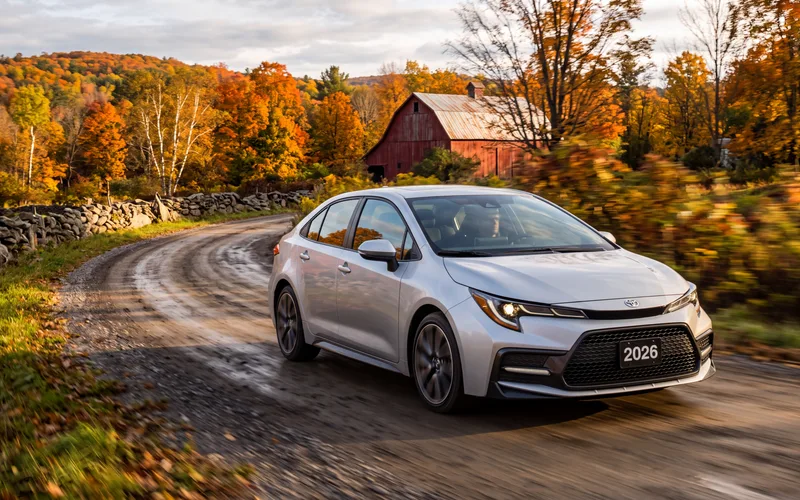 Toyota CorollaCompact SedanBetter at: Resale value
For a few hundred dollars more it delivers better fuel economy, dramatically stronger reliability and resale, and a ~50 MPG hybrid option the Sentra simply doesn't offer.
Compare 2.44C+
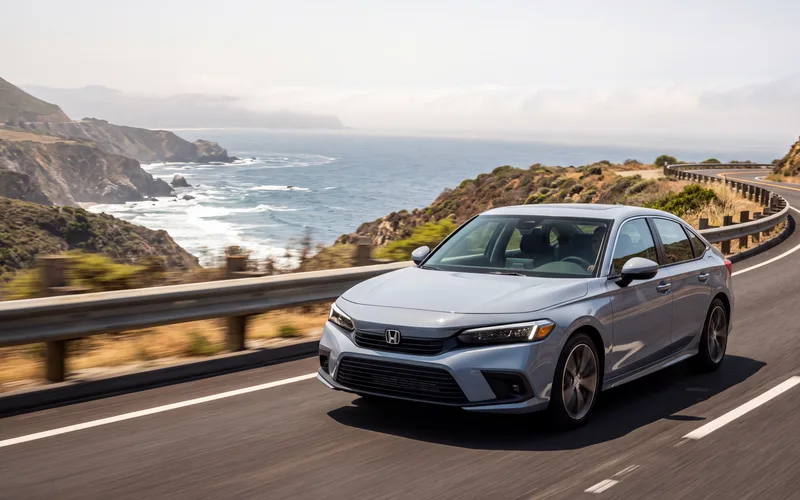 Honda CivicCompact SedanBetter at: Rear-seat space
Costs more but gives you three extra inches of rear legroom, a bigger trunk, a current IIHS Top Safety Pick and a car that's actually enjoyable to drive.
Compare 2.13C
2.13C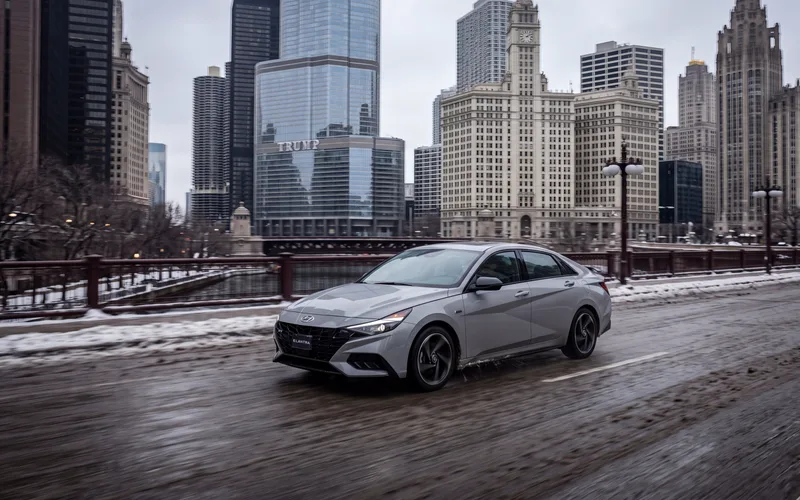 Hyundai ElantraCompact SedanBetter at: Warranty coverage
Matches the Sentra on price while adding a 10-year/100,000-mile powertrain warranty, free scheduled maintenance and a hybrid variant — the better long-term ownership math.
CompareHow it's evolved
10 scored model years · 2017–2026
Subject scores by year
Hover or tap a score to see what moved it versus the year before. A corner mark flags a big swing.
| Year | Performance | Efficiency | Safety | Space | Cost | Reliability | Tech | Use-case | Driving | Value |
|---|---|---|---|---|---|---|---|---|---|---|
| 2026 | 20 | 60 | 69 | 62 | 65 | 64 | 66 | 51 | 62 | 66 |
| 2025 | 20 | 60 | 57 | 61 | 67 | 69 | 45 | 47 | 54 | 63 |
| 2024 | 20 | 60 | 63 | 63 | 61 | 66 | 44 | 48 | 57 | 64 |
| 2023 | 20 | 56 | 63 | 63 | 68 | 67 | 41 | 47 | 57 | 64 |
| 2022 | 20 | 56 | 66 | 63 | 68 | 66 | 40 | 47 | 57 | 61 |
| 2021 | 20 | 56 | 68 | 63 | 73 | 65 | 41 | 47 | 57 | 66 |
| 2020 | 20 | 56 | 67 | 63 | 71 | 63 | 39 | 47 | 57 | 69 |
| 2019 | 15 | 54 | 44 | 61 | 68 | 61 | 32 | 44 | 52 | 54 |
| 2018 | 15 | 54 | 45 | 62 | 70 | 59 | 26 | 44 | 49 | 57 |
| 2017 | 15 | 54 | 40 | 64 | 69 | 58 | 26 | 44 | 56 | 57 |
Compare two years
Best fit & conditions
Higher scores mean a better fit for that use case. Learn more about use-case fit →
Subject profile
Trims & configurations
3 trimsScores above reflect the volume trim. Per-trim specs and scores are rolling out — the full lineup:
Academic Probation · NHTSA safety recalls
Mar 13, 2026SeatsThe hook bracket of the front seat frames may be insufficiently welded, which can cause the front seat frames to become loose. As such, these vehicles fail to comply with the requirements of Federal Motor Vehicle Safety Standard (FMVSS) numbers 207, "Seating Systems" and 210, "Seat Belt Assembly Anchorages."
Defect
Nissan North America, Inc. (Nissan) is recalling certain 2026 Kicks and Sentra vehicles. The hook bracket of the front seat frames may be insufficiently welded, which can cause the front seat frames to become loose. As such, these vehicles fail to comply with the requirements of Federal Motor Vehicle Safety Standard (FMVSS) numbers 207, "Seating Systems" and 210, "Seat Belt Assembly Anchorages."
Risk
A loose seat may not restrain the occupant as intended, increasing the risk of injury during a crash.
Remedy
Dealers will replace the front seat assemblies, free of charge. Owner notification letters were mailed May 18, 2026. Owners may contact Nissan's customer service at 800-647-7261. Nissan's number for this recall is PMA64. Vehicle Identification Numbers (VINs) involved in this recall became searchable on NHTSA.gov on March 13, 2026.
NHTSA campaign 26V145000 ↗Manufacturer no. PMA6415 vehicles potentially affected (all models in the campaign)Owners notified May 11, 2026Filed by Nissan North America, Inc.Filed as SENTRA
16 recalls on other model years of the Sentra (2017–2025)
Jun 26, 2026Power train: driveline: driveshaftThe front left-side driveshaft may not be fully seated in the continuously variable transmission (CVT) assembly, which can cause a transmission fluid leak and loss of drive power.
Defect
Nissan North America, Inc. (Nissan) is recalling certain 2025 Nissan Sentra vehicles. The front left-side driveshaft may not be fully seated in the continuously variable transmission (CVT) assembly, which can cause a transmission fluid leak and loss of drive power.
Risk
An unexpected loss of drive power can increase the risk of a crash. In addition, a driveshaft that is not fully engaged can result in a vehicle rollaway if the parking brake is not applied, increasing the risk of a crash or injury.
Remedy
Dealers will inspect the front left driveshaft, and if necessary, replace the driveshaft and CVT assembly, free of charge. Owner notification letters were mailed August 12, 2026. Owners may contact Nissan customer service at 1-800-867-7669. Nissan's number for this recall is PMA68. Vehicle Identification Numbers (VINs) involved in this recall became searchable on NHTSA.gov on June 30, 2026.
NHTSA campaign 26V410000 ↗Manufacturer no. PMA68946 vehicles potentially affected (all models in the campaign)Owners notified Aug 5, 2026Filed by Nissan North America, Inc.Filed as SENTRAJan 20, 2026Latches/locks/linkages: doors: latchThe door strikers may have been improperly welded and break, allowing the door to open while moving. As such, these vehicles fail to comply with the requirements of Federal Motor Vehicle Safety Standard number 206, "Door Locks and Door Retention Components."
Defect
Nissan North America, Inc. (Nissan) is recalling certain 2025 Altima, Sentra, 2025-2026 Frontier, and 2026 Kicks vehicles. The door strikers may have been improperly welded and break, allowing the door to open while moving. As such, these vehicles fail to comply with the requirements of Federal Motor Vehicle Safety Standard number 206, "Door Locks and Door Retention Components."
Risk
A door that opens unexpectedly while the vehicle is in motion increases the risk of injury or a crash.
Remedy
Dealers will replace the door strikers, free of charge. Owner notification letters were mailed March 17, 2026. Owners may contact Nissan's customer service at 800-647-7261. Nissan's numbers for this recall are PD185 and PMA61. Vehicle Identification Numbers (VINs) involved in this recall will be searchable on NHTSA.gov beginning January 28, 2026.
NHTSA campaign 26V023000 ↗Manufacturer no. PD185, PMA6126,432 vehicles potentially affected (all models in the campaign)Owners notified Mar 13, 2026Filed by Nissan North America, Inc.Filed as SENTRANov 20, 2025Visibility: windshieldThe windshield glass may have visible air bubbles, which can obscure the driver's visibility. As such, these vehicles fail to comply with the requirements of Federal Motor Vehicle Safety Standard number 205, "Glazing Materials."
Defect
Nissan North America, Inc. (Nissan) is recalling certain 2025 Sentra vehicles. The windshield glass may have visible air bubbles, which can obscure the driver's visibility. As such, these vehicles fail to comply with the requirements of Federal Motor Vehicle Safety Standard number 205, "Glazing Materials."
Risk
Reduced visibility while driving can increase the risk of a crash.
Remedy
Dealers will inspect and replace the windshield as necessary, free of charge. Owner notification letters were mailed January 21, 2026. Owners may contact Nissan's customer service at 1-800-867-7669. Nissan's number for this recall is PMA58. Vehicle Identification Numbers (VINs) involved in this recall became searchable on NHTSA.gov beginning November 21, 2025.
NHTSA campaign 25V807000 ↗Manufacturer no. PMA5841,797 vehicles potentially affected (all models in the campaign)Owners notified Jan 14, 2026Filed by Nissan North America, Inc.Filed as SENTRAMar 11, 2025SeatsThe driver's seat frame may not be fully secured to the outer side of the seat track. As such, these vehicles fail to comply with the requirements of Federal Motor Vehicle Safety Standard numbers 207, "Seating Systems," and 210, "Seat Belt Assembly Anchorages."
Defect
Nissan North America, Inc. (Nissan) is recalling certain 2025 Sentra vehicles. The driver's seat frame may not be fully secured to the outer side of the seat track. As such, these vehicles fail to comply with the requirements of Federal Motor Vehicle Safety Standard numbers 207, "Seating Systems," and 210, "Seat Belt Assembly Anchorages."
Risk
An unsecured driver's seat may not adequately restrain the driver during a crash, increasing the risk of injury.
Remedy
Dealers will inspect and replace the driver's side lower seat frame assembly as necessary, free of charge. Owner notification letters were mailed May 1, 2025. Owners may contact Nissan's customer service at 1-800-867-7669. Nissan's number for this recall is PMA45.
NHTSA campaign 25V153000 ↗Manufacturer no. PMA45199 vehicles potentially affected (all models in the campaign)Owners notified May 1, 2025Filed by Nissan North America, Inc.Filed as SENTRAJul 1, 2024Visibility: windshieldThe windshield may have air bubbles on the front lower driver's side, which can obscure the Vehicle Identification Number (VIN). As such, these vehicles fail to comply with the requirements of Federal Motor Vehicle Safety Standard number 205, "Glazing Materials."
Defect
Nissan North America, Inc. (Nissan) is recalling certain 2024 Nissan Sentra vehicles. The windshield may have air bubbles on the front lower driver's side, which can obscure the Vehicle Identification Number (VIN). As such, these vehicles fail to comply with the requirements of Federal Motor Vehicle Safety Standard number 205, "Glazing Materials."
Risk
An owner who cannot see their VIN clearly may not recognize their vehicle is involved in a safety recall, and may not have the recall remedy performed, which could increase the risk of injury, fire, or a crash.
Remedy
Dealers will inspect and replace the windshield as necessary, free of charge. Owner notification letters were mailed August 29, 2024. Owners may contact Nissan customer service at 1-800-867-7669. Nissan's number for this recall is PMA38.
NHTSA campaign 24V498000 ↗Manufacturer no. PMA381,608 vehicles potentially affected (all models in the campaign)Owners notified Aug 29, 2024Filed by Nissan North America, Inc.Filed as SENTRAApr 29, 2024Power train: driveline: driveshaftThe front left-side driveshaft may not be fully seated in the continuously variable transmission (CVT) assembly, or may have a loose or missing retaining clip, which can cause a transmission fluid leak and loss of drive power.
Defect
Nissan North America, Inc. (Nissan) is recalling certain 2024 Sentra vehicles. The front left-side driveshaft may not be fully seated in the continuously variable transmission (CVT) assembly, or may have a loose or missing retaining clip, which can cause a transmission fluid leak and loss of drive power.
Risk
An unexpected loss of drive power can increase the risk of a crash.
Remedy
Dealers will inspect the front left driveshaft, and if necessary, replace the driveshaft and CVT assembly, free of charge. Owner notification letters were mailed June 26, 2024. Owners may contact Nissan customer service at 1-800-867-7669. Nissan's number for this recall is PMA37.
NHTSA campaign 24V304000 ↗Manufacturer no. PMA379,645 vehicles potentially affected (all models in the campaign)Owners notified Jun 26, 2024Filed by Nissan North America, Inc.Filed as SENTRAFeb 27, 2024Air bags: frontal: driver side: inflator moduleDue to a manufacturing issue, the driver's air bag inflator may absorb moisture, and cause the air bag to deploy improperly.
Defect
Nissan North America, Inc. (Nissan) is recalling certain 2024 Titan, Frontier, Infiniti QX60, Pathfinder, 2023-2024 Sentra, Versa, Kicks, Infiniti QX50, and 2023 Rogue vehicles. Due to a manufacturing issue, the driver's air bag inflator may absorb moisture, and cause the air bag to deploy improperly.
Risk
An air bag that deploys improperly may not protect the driver as intended during a crash, increasing the risk of injury.
Remedy
Dealers will replace the front driver's air bag assembly, free of charge. Owner notification letters were mailed April 10, 2024. Owners may contact Nissan customer service at 1-800-867-7669. Nissan's numbers for this recall are PD103, PD104, and PMA34.
NHTSA campaign 24V154000 ↗Manufacturer no. PD103, PD104, PMA34351 vehicles potentially affected (all models in the campaign)Owners notified Apr 10, 2024Filed by Nissan North America, Inc.Filed as SENTRASep 8, 2023Back over prevention: sensing system: cameraDamage to the camera harness can cause distortion or loss of the rearview camera display image. As such, these vehicles fail to comply with the requirements of Federal Motor Vehicle Safety Standard number 111, "Rear Visibility."
Defect
Nissan North America, Inc. (Nissan) is recalling certain 2019-2021 Altima and 2020-2021 Sentra vehicles. Damage to the camera harness can cause distortion or loss of the rearview camera display image. As such, these vehicles fail to comply with the requirements of Federal Motor Vehicle Safety Standard number 111, "Rear Visibility."
Risk
A rearview camera that does not properly display an image can reduce the driver's rear view, increasing the risk of a crash.
Remedy
Dealers will inspect the rearview camera and harness for damage and replace them as necessary. If no damage is found, the dealer will apply protective tape and reroute the rearview camera harness. Repairs will be performed free of charge. Owner notification letters are expected to be mailed October 19, 2023. Owners may contact Nissan's customer service at 1-800-867-7669. Nissan's number for this recall is R23C3.
NHTSA campaign 23V628000 ↗Manufacturer no. R23C3153,376 vehicles potentially affected (all models in the campaign)Owners notified Oct 19, 2023Filed by Nissan North America, Inc.Filed as SENTRAAug 15, 2023Steering: linkages: tie rod assemblyThe left and/or right tie rod may bend.
Defect
Nissan North America, Inc. (Nissan) is recalling certain 2020-2022 Sentra vehicles. The left and/or right tie rod may bend.
Risk
A bent tie rod can break and cause a loss of steering control, increasing the risk of a crash.
Remedy
Owners are advised to contact their dealer for transport assistance if they are experiencing an off-center steering wheel or vibration. As an interim repair, dealers will inspect and replace any bent or broken tie rods, free of charge. Once newly designed parts are available, dealers will replace both left and right tie rods, free of charge. Owner letters were mailed November 27, 2024. Owners may contact Nissan's customer service at 1-800-867-7669. Nissan's number for this recall is R23B3. This recall replaces and expands recall number 21V-461. Vehicles previously repaired under 21V-461 will need to have the new remedy completed.
NHTSA campaign 23V581000 ↗Manufacturer no. R23B3236,238 vehicles potentially affected (all models in the campaign)Owners notified Nov 27, 2024Filed by Nissan North America, Inc.Filed as SENTRAJun 12, 2023Structure: bodyThe driver's side cowl area may have a missing or improper seal, which can allow water to leak inside the vehicle and corrode electrical components.
Defect
Nissan North America, Inc. (Nissan) is recalling certain 2022 Sentra vehicles. The driver's side cowl area may have a missing or improper seal, which can allow water to leak inside the vehicle and corrode electrical components.
Risk
Corrosion of the electrical components could result in failure of various electrical systems, such as loss of wiper motor function or exterior lighting, inoperative air bags, or the ability to shift into gear without applying the brake pedal. Any of these scenarios can increase the risk of a crash. In addition, an electrical short-circuit may occur, increasing the risk of a fire.
Remedy
Dealers will inspect and, if necessary, reseal the driver's side cowl. If moisture or corrosion is found, the main harness and engine room harness will be replaced. Repairs will be performed free of charge. Owner notification letters are expected to be mailed July 26, 2023. Owners may contact Nissan's customer service at 1-800-867-7669.
NHTSA campaign 23V421000 ↗Manufacturer no. PMA21230 vehicles potentially affected (all models in the campaign)Owners notified Jul 31, 2023Filed by Nissan North America, Inc.Filed as SENTRAApr 13, 2022Exterior lighting: headlightsThe right-hand headlight aim may be misaligned. As such, these vehicles fail to comply with the requirements of Federal Motor Vehicle Safety Standard number 108, "Lamp, Reflective Devices, and Associated Equipment."
Defect
Nissan North America, Inc. (Nissan) is recalling certain 2020 Sentra vehicles, equipped with LED headlights. The right-hand headlight aim may be misaligned. As such, these vehicles fail to comply with the requirements of Federal Motor Vehicle Safety Standard number 108, "Lamp, Reflective Devices, and Associated Equipment."
Risk
An improperly aimed headlight may reduce the driver's visibility, increasing the risk of a crash.
Remedy
Dealers will replace the right-hand headlight, free of charge. Owner notification letters were mailed June 10, 2022. Owners may contact Nissan customer service at 1-800-867-7669. Nissan's number for this recall is R20B4.
NHTSA campaign 22V244000 ↗Manufacturer no. R20B45,520 vehicles potentially affected (all models in the campaign)Owners notified Jun 10, 2022Filed by Nissan North America, Inc.Filed as SENTRAJun 17, 2021Steering: linkages: tie rod assemblyThe left and/or right tie rod may be bent.
Defect
Nissan North America, Inc. (Nissan) is recalling certain 2020-2021 Sentra vehicles. The left and/or right tie rod may be bent.
Risk
A bent tie rod can break, causing a loss of steering control and increasing the risk of a crash.
Remedy
Dealers will inspect and replace the left and/or right tie rods as necessary, free of charge. Owner notification letters were mailed August 5, 2021. Owners may contact Nissan customer service at 1-800-867-7669. Nissan's number for this recall is PM985.
NHTSA campaign 21V461000 ↗Manufacturer no. PM985138,736 vehicles potentially affected (all models in the campaign)Owners notified Aug 5, 2021Filed by Nissan North America, Inc.Filed as SENTRAMar 3, 2021Exterior lighting: brake lights: switchThe brake light switch may become contaminated, preventing the circuit from closing and the brake lights from illuminating.
Defect
Nissan North America, Inc. (Nissan) is recalling certain 2016-2019 Nissan Sentra vehicles. The brake light switch may become contaminated, preventing the circuit from closing and the brake lights from illuminating.
Risk
The brake lights may not illuminate, increasing the risk of a crash.
Remedy
Dealers will replace the brake light switch and install a protective grommet, free of charge. Owner notification letters were mailed July 1, 2022. Owners may contact Nissan customer service at 1-800867-7769. Nissan's number for this recall is PM971.
NHTSA campaign 21V135000 ↗Manufacturer no. PM971807,376 vehicles potentially affected (all models in the campaign)Owners notified Jul 1, 2022Filed by Nissan North America, Inc.Filed as SENTRASep 12, 2019Back over prevention: sensing system: cameraAdditionally included are 2019 Nissan GT-R and Taxi and Infiniti QX50, QX60, Q70, Q70L vehicles. The back-up camera and display settings can be adjusted such that the rear view image is no longer visible and the system will retain that setting the next time the vehicle is placed in reverse. As such, these vehicles fail to comply with the requirements of Federal Motor Vehicle Safety Standard (FMVSS) number 111, "Rear Visibility."
Defect
Nissan North America, Inc. (Nissan) is recalling certain 2018-2019 Nissan Altima, Armada, Frontier, Kicks, Leaf, Maxima, Murano, NV, NV200, Pathfinder, Rogue, Rogue Sport, Sentra, Titan, Titan Diesel, Versa Note and Versa Sedan vehicles, as well as Infiniti Q50, Q60, QX30 and QX80 vehicles. Additionally included are 2019 Nissan GT-R and Taxi and Infiniti QX50, QX60, Q70, Q70L vehicles. The back-up camera and display settings can be adjusted such that the rear view image is no longer visible and the system will retain that setting the next time the vehicle is placed in reverse. As such, these vehicles fail to comply with the requirements of Federal Motor Vehicle Safety Standard (FMVSS) number 111, "Rear Visibility."
Risk
The lack of an image in the back-up camera display increases the risk of a crash.
Remedy
Nissan will notify owners in phases, having dealers update the back-up camera settings software, free of charge. The recall began November 11, 2019 and all affected VINs should be activated. Owners may contact Nissan customer service at 1-800-867-7669 or INFINITI customer service at 1-800-662-6200.
NHTSA campaign 19V654000 ↗1,228,830 vehicles potentially affected (all models in the campaign)Owners notified Nov 11, 2019Filed by Nissan North America, Inc.Filed as SENTRAAug 21, 2018Electrical system: ignitionIn these models, over time, the weight on the key ring and road conditions or some other jarring event may cause the ignition switch to move out of the run position to the accessory position, turning off the engine.
Defect
Nissan North America, Inc. (Nissan) is recalling certain 2017 Nissan NV200, Sentra, NV3500 Van, NV3500 Bus, NV200 Taxi, NV1500, NV2500 Van, Chevrolet City Express, 2017-2018 Frontier, Versa Note, and Versa Sedan vehicles that have a mechanical (physical) key ignition system. In these models, over time, the weight on the key ring and road conditions or some other jarring event may cause the ignition switch to move out of the run position to the accessory position, turning off the engine.
Risk
If the vehicle stalls, it can increase the risk of a crash.
Remedy
Nissan will notify owners, and dealers will inspect the production information on the ignition switch, and replace it as necessary, free of charge. The recall began October 1, 2018. Owners may contact Nissan customer service at 1-800-867-7669.
NHTSA campaign 18V551000 ↗153,047 vehicles potentially affected (all models in the campaign)Owners notified Oct 1, 2018Filed by Nissan North America, Inc.Filed as SENTRAApr 13, 2017Air bagsDue to a manufacturing error within the air bag inflators, the passenger frontal air bag may not properly deploy in the event of a crash.
Defect
Nissan North America, Inc. (Nissan) is recalling certain 2015-2017 LEAF and 2014, 2016 and 2017 Sentra vehicles. Due to a manufacturing error within the air bag inflators, the passenger frontal air bag may not properly deploy in the event of a crash.
Risk
In the event of a crash, if the front passenger air bag doesn't deploy properly, it can increase the risk of injury to passengers.
Remedy
Nissan will notify owners, and dealers will replace the front passenger air bag inflator, free of charge. The recall began June 7, 2017. Owners may contact Nissan customer service at 1-800-647-7261.
NHTSA campaign 17V253000 ↗30,038 vehicles potentially affected (all models in the campaign)Owners notified Jun 7, 2017Filed by Nissan North America, Inc.Filed as SENTRA
Source: NHTSA Office of Defects Investigation recall database, model years 2017–2026. Recalls are listed by model year as the manufacturer filed them; whether a specific car is affected depends on its VIN — check a VIN at nhtsa.gov ↗. NHTSA model names matched to this page: SENTRA.
Detailed scoring by subject
1Performance & PowertrainThe Sentra's lowest-graded category.0.00F
The Sentra offers a single engine across the entire lineup — the 2.0L MR20DD naturally aspirated four at 149 hp — so the volume SV and the range maximum are the same number. That sits at the bottom of the compact-sedan field alongside the Elantra's 147 hp and Civic's 150 hp, and well under the Corolla's 169 hp, with no turbo or hybrid variant available to lift the top of the range.
Peak torque of 146 lb-ft arrives high in the rev range at roughly 4,400 rpm, typical of a naturally aspirated four and the reason the CVT has to hold high revs to make progress. It is modestly better than the Elantra (132) and Civic (133) on paper but delivered far less accessibly than any turbo rival.
With 149 hp hauling roughly 3,100–3,200 lb, the Sentra is among the slowest compact sedans sold — about 21 lb per horsepower, worse than the Corolla's ratio, so it is scored a step slower than the Corolla's 8.7 s anchor. Instrumented results for this engine have spread meaningfully by trim and test, and the 2026 car is no lighter, so about 8.9 s for the volume SV is the fair representative figure.
The naturally aspirated 2.0L is smooth and entirely lag-free in light around-town driving, but it turns coarse and audibly strained on highway merges and grades where the CVT pins it near its power peak. Unlike the Civic (70) and Elantra (62), the Sentra has no hybrid variant whose electric assist covers the low-rpm gap and lifts the lineup average, so it scores below even the gas-plus-hybrid Corolla (58) — this is the coarse base engine and nothing else.
Nissan's Xtronic CVT with D-Step logic simulates ratio steps under throttle and is acceptably smooth in normal driving, but it is more drone-prone under sustained load than Honda's class-leading calibration (75) or Toyota's launch-gear Dynamic-Shift unit (65). The Sentra is also penalised for having no alternative: the 6-speed manual is gone and there is no geared automatic or hybrid direct-drive anywhere in the lineup to lift the average, unlike the Elantra (68).
The Sentra is front-wheel drive on every trim, with no AWD option offered anywhere in the range and none ever offered on the nameplate. That matches the FWD-only Civic (15) and Elantra (15) and falls well short of the Corolla (46), which at least offers electronic on-demand AWD on its hybrid trims.
The Sentra is the textbook single-powertrain car: one 2.0L naturally aspirated four, one CVT, front drive, on all three trims — no turbo, no hybrid, no PHEV, no EV, and no longer a manual. That is the narrowest lineup among mainstream compact sedans, behind the Corolla's two powertrains (60) and far behind the Civic's three (72) and Elantra's four (76), and it lands squarely in the framework's bottom band for a take-it-or-leave-it lineup.
2Efficiency & RangeOne of the Sentra's weakest categories.2.07C
The redesigned 2026 Sentra carries over the 149-hp 2.0L MR20DD four and Xtronic CVT, with aero and calibration work lifting it to about 34 MPG combined on the volume SV — roughly 1 MPG better than the 2025 car but still short of the 35–36 MPG posted by the base Corolla, Civic and Elantra. The sport-tuned SR gives back about 2 MPG.
City economy is the Sentra's weakest EPA figure: a naturally aspirated 2.0L with no electrified assist gives up meaningful ground in stop-and-go use to the hybrid variants its rivals offer (Civic Hybrid 50 city, Corolla Hybrid 53 city).
Highway is where the Sentra is most competitive — the tall CVT ratio and improved aerodynamics of the 2026 redesign put it right around 40 MPG, essentially level with the 41 MPG posted by base Corolla, Civic and Elantra.
A 12.4-gallon tank at 34 MPG combined works out to roughly 420 miles — usable but mid-pack, since the Corolla's larger 13.2-gallon tank buys it about 40 more miles despite similar economy.
At 34 MPG combined the Sentra burns roughly 441 gallons a year under EPA assumptions, about $50/yr more than a Corolla and $50–100 more than a Civic LX — and several hundred dollars more than any of the hybrid compacts it competes against.
The Sentra asks for nothing costly: regular 87-octane unleaded on every trim, with no premium recommendation, no diesel or E85 complication, and no charging infrastructure to arrange. Fuel flexibility is a clear strength even though outright consumption is not.
3SafetyThe Sentra's best-graded category.2.66C+
The B18-generation Sentra carries a 5-star NHTSA overall rating, with the frontal-impact sub-score the weak leg at 4 stars and side impact at 5; the 2026 car is scored against that generation-level result rather than a separately published 2026 test.
The Sentra posts Good results across the legacy IIHS crashworthiness battery and was a Top Safety Pick early in this generation, but it has not held an award since IIHS tightened the moderate-overlap (rear passenger) and side-impact tests, where it grades below Good — the same pattern that costs the Corolla its award.
Nissan Safety Shield 360 is standard on every Sentra trim including the base S — automatic emergency braking with pedestrian detection, rear automatic braking, blind-spot warning, rear cross-traffic alert, lane departure warning and high-beam assist — which is broader standard content than most of the class. The one real gap is adaptive cruise: ProPILOT Assist starts at SV, leaving the base car on conventional cruise control.
AEB covers vehicles and pedestrians on every trim and is backed by standard rear automatic braking, which few rivals match, but Nissan's forward system has not distinguished itself in the harder updated front crash prevention evaluations — particularly the higher-speed and nighttime-pedestrian scenarios that now separate the class.
Blind Spot Warning and Rear Cross Traffic Alert are standard on the base trim, not trim-gated as on much of the segment, and rear automatic braking adds real intervention behind the car. It stays out of the top band because the blind-spot system is alert-only — no steering or braking correction into an occupied lane — and there is no safe-exit alert.
Lane departure warning is standard and ProPILOT Assist adds true lane centering from SV up, which reviewers find steady on well-marked highways; it is marked down because the centering is trim-gated, hands-on only, and gives up earlier than the best systems on faded lines and tighter curves.
ProPILOT Assist pairs full-speed-range adaptive cruise — including stop-and-hold in traffic — with lane centering, and it is among the smoother mainstream implementations for gap management and resume. It loses points for not being standard on the base S and for being the plain ProPILOT Assist rather than the Navi-link version with map-based speed adjustment.
No hands-free highway driving is offered on the Sentra at any trim or price. ProPILOT Assist requires hands on the wheel, and Nissan fields no BlueCruise/Super Cruise equivalent in the US compact-sedan class.
LED headlights and automatic high beams are standard across the range, but IIHS grading has been uneven trim-to-trim on this generation — the better result attaches to the upper-trim projector units while the volume configuration grades lower, which is part of why the car no longer carries an award.
The low cowl and low seating position give a clean forward view for the class, but the Sentra's high beltline, fast rear roofline and thick C-pillars pinch the over-the-shoulder view, and camera compensation is thin — a rear camera is standard while the surround-view monitor is reserved for the top trim.
Two outboard lower-anchor positions and three top tethers is the standard compact-sedan hardware set, but the Sentra's anchors sit recessed in the seat bight and its rear legroom trails the Civic and Corolla, so a rear-facing seat pushes hard into front-passenger space and three across is not realistic.
4Space & ComfortMid-pack among this car's ten categories.2.19C
Five-passenger seating on every 2026 Sentra trim — two front buckets plus a three-place rear bench, top of the sedan normalization band.
38.9 in of front headroom without the moonroof sits in the upper half of the compact-sedan band; a power moonroof on upper trims costs roughly an inch. NOTE: this is the last published Sentra figure, not a verified 2026-specific measurement.
44.0 in of front legroom is a genuine Sentra strength and among the most generous in the compact-sedan class — it tops the sedan normalization band and beats the Civic (42.3 in) and Corolla (42.0 in). NOTE: knowledge-based figure pending 2026-specific verification.
36.7 in of rear headroom is mid-pack for a compact sedan — fine for average-height adults, tight-ish for six-footers under the sloping roofline. NOTE: knowledge-based figure pending 2026-specific verification.
Rear legroom is the Sentra's clearest packaging weakness: 34.5 in trails the Civic (37.4 in), Elantra (38.0 in) and Jetta (37.4 in) by roughly three inches, leaving the back seat noticeably tighter than the class norm despite the generous front-row space. NOTE: knowledge-based figure — the 2026 redesign may have improved this, and it is the single most important value to re-verify.
14.3 cu ft of trunk space is competitive for the compact-sedan class — behind the Civic's 14.8 cu ft but comfortably ahead of the Corolla's 13.1 cu ft, with a wide opening and 60/40 folding rear seatbacks on SV and SR. NOTE: knowledge-based figure pending 2026-specific verification.
Conventional but adequate: covered center console, front and rear door bins, twin cupholders, a shelf ahead of the shifter and available wireless charging on upper trims. The 2026 redesign's reworked console and dash free up more open stowage than the old car, but there is no signature clever-storage feature to lift it above class-average.
Nissan's Zero Gravity front seats are a consistent Sentra strength — the NASA-inspired cushioning and support are repeatedly singled out as better than the compact-sedan norm on long drives, and they outclass the Civic's flatter, short-tracked front chairs. The rear bench is the limiter: the cushion is fine but roughly 34.5 in of legroom keeps adults from getting genuinely comfortable back there, so this lands above mid-pack rather than in the top band.
The Sentra is tuned for compliance rather than sport: the suspension rounds off broken pavement and expansion joints well for the price, and comfort-first damping is one of the car's better traits. Body control is the trade-off — it floats more over undulations and leans more in corners than a Civic or Mazda3, so it is composed rather than segment-leading.
Wind and road noise are about average for the class, but the 149-hp 2.0L paired with the Xtronic CVT drones loudly under hard acceleration and on grades — the most persistent refinement criticism of this powertrain. Added sound insulation in the redesign helps at steady highway cruise without fixing the powertrain noise.
Better equipped than the segment average in the middle of the range: heated front seats, a heated steering wheel, dual-zone automatic climate control and remote start are available on SV and SR — the heated wheel in particular is something the Civic does not offer at any trim. Base S remains sparse (manual air conditioning, no heated seats) and no Sentra trim offers ventilated seats or rear climate controls.
5Cost of OwnershipMid-pack among this car's ten categories.2.36C+
Entry S trim of the redesigned 2026 Sentra, estimated from the 2025 ladder (S $21,590 + $1,140 destination = $22,730) plus a typical redesign-year increase. The Sentra continues to undercut Corolla and Civic at the entry point, which is the model's core value argument.
The SV is the volume Sentra trim, adding the larger displays, alloy wheels and the fuller driver-assist content most buyers want. As typically equipped it lands just over $25,000, undercutting a Corolla SE and coming in well under a Civic Sport.
Routine service is cheap on the naturally aspirated 2.0L four, and RepairPal has long placed the Sentra modestly below the compact-car average for annual maintenance and repair. The Xtronic CVT is the cost risk that keeps it from matching the Corolla, since a CVT replacement outside powertrain coverage is a four-figure event.
This is the Sentra's weakest ownership metric and the single biggest drag on the category, since resale carries the heaviest weight here. Heavy incentive spend, rental and fleet volume, and lingering market wariness about Nissan CVTs push residuals well below the Corolla and Civic benchmarks, so the low transaction price is partly given back at trade-in.
Nissan's basic New Vehicle Limited Warranty runs 3 years or 36,000 miles, whichever comes first — the segment floor. It matches Toyota and Honda but is half the term Hyundai and Kia offer.
Nissan covers the powertrain for 5 years or 60,000 miles — again the segment floor. That matters more here than on most rivals, because the Xtronic CVT is the component buyers most want covered and it comes off warranty at 60,000 miles.
Nissan includes no complimentary scheduled maintenance on the Sentra — there is no ToyotaCare or Hyundai 3-yr/36k equivalent, so the first oil change is a customer expense. What is included is roadside assistance across the 3-year/36,000-mile basic term plus a NissanConnect connected-services trial, which places it in the 'basic roadside only' band rather than the zero band.
$25,400 volume-trim price minus its estimated resale value after 5 years (49% retained, or about $12,446) leaves about $12,954 in depreciation. Add the projected $4,500 in 5-year maintenance and repairs, and owning this vehicle for 5 years costs about $17,454 in total.
6Reliability & QualityMid-pack among this car's ten categories.2.29C
The Sentra's recent predicted-reliability record is average for a mainstream compact rather than a strength: solid engine hardware paired with the Xtronic CVT, which remains the recurring source of owner complaints and the single largest driver of downside risk. 2026 carries extra uncertainty because Nissan has been moving the Sentra onto a next-generation car in the mid-2020s, and a first-year-of-generation vehicle would carry launch risk that the outgoing car's accumulated owner data does not capture.
Nissan sits in the lower-middle of multi-year dependability — consistently behind Toyota, Honda and Hyundai in Consumer Reports brand rankings and at or below industry average in J.D. Power's Vehicle Dependability Study. The brand's CVT legacy is the specific thing holding its long-term numbers down, which makes it doubly relevant to a CVT-equipped Sentra.
Recall exposure on this generation has been moderate in count and largely component-level — supplier-driven campaigns rather than a repeating powertrain, fire or safety-system defect — which keeps it out of the sub-50 band. The persistent blemish is on the TSB side, where CVT judder, control-software reflash and cooling bulletins remain a recurring service theme across Nissan's CVT lineup.
The engine and the transmission pull in opposite directions. The 2.0L MR20DD four is a low-stress, long-serving Nissan unit with no significant high-mileage durability red flag. The Xtronic CVT is the problem: Nissan's CVT family carries the weakest longevity reputation among mainstream compact transmissions, and while current units are materially improved over the 2013-2018 population, the family has not demonstrated Toyota- or Honda-grade high-mileage durability.
The cabin is a genuine bright spot for a mainstream compact. Reviewers have consistently rated the current Sentra's material selection, upper-trim quilted leatherette seating and switchgear feel above what the price suggests — ahead of the plastic-heavy Corolla and Elantra — while base trims still use expected hard plastics in low-touch zones.
Assembly quality is unremarkable but not problem-prone — no widespread rattle, squeak or panel-alignment complaint pattern attaches to this generation, with Nissan landing near industry average in initial-quality measures rather than at the Honda-grade top of the class.
Physical access is not the issue — Nissan runs one of the larger US franchised networks, roughly comparable in dealer count to Honda and far denser than the premium and low-volume brands. What holds the score back is mid-pack service satisfaction and a network that has been contracting under Nissan's US sales decline and restructuring, which adds some access risk in thinner markets over a long ownership period.
This is the category's clearest strength. The Sentra is a decades-old, high-volume US compact with deep component sharing across Nissan's lineup, so OEM and aftermarket parts are cheap and universally stocked and any independent shop can service it — estimated annual repair cost sits near the low end of the segment. The offset that keeps it out of the top band is the CVT: a replacement is a four-figure big-ticket item that shows up disproportionately in this model's long-term cost tail.
7Technology & InfotainmentOne of the Sentra's strongest categories.2.49C+
The 2026 Sentra adopts Nissan's current-generation cockpit, putting a 12.3-inch center touchscreen on the volume SV and the SR while the base S keeps a small legacy display. At 12.3 inches the volume trim leapfrogs every mainstream compact sedan rival — the Corolla's volume LE is on 8 inches, the Civic's volume trim on 7 — and sits near the top of the sedan normalization band.
Nissan's Google built-in system is quick, cleanly laid out, and — importantly for a compact sedan — retains a physical volume knob and separate climate controls rather than burying HVAC in the touchscreen. It reads a step behind Hyundai's exceptionally logical menu structure (Elantra 78) and roughly level with Toyota Audio Multimedia (Corolla 74), while comfortably clearing the Civic's dated 7-inch baseline (65); the base S's small legacy head unit is what keeps this out of the 80s.
Wireless Apple CarPlay and wireless Android Auto are standard across the 2026 Sentra range on Nissan's current infotainment generation, which puts it in the top band and near the segment benchmark. It scores just under the Corolla (90), where standard-on-every-trim wireless projection is confirmed for 2026, and well clear of the Civic (50), which still restricts wireless to its priciest trim.
Google built-in delivers Google Maps as the native navigation and Google Assistant as the voice layer on SV and SR — real natural-language voice and the best maps in the business, not a manufacturer system owners bypass. That is a genuine advantage over the Corolla, whose assistant and connected nav sit behind a Drive Connect subscription (62), and over the Elantra's competent but conventional built-in nav (68); it falls short of the top band only because the base S goes without.
The Sentra offers a Bose premium system at the top of the range, and having any credible branded upgrade in a compact sedan is worth real credit — the base six-speaker setup is unremarkable but adequate. It edges the Elantra's Bose availability (66) and the Corolla's JBL (64) on the strength of Nissan's Bose tuning in this class, but the upgrade is confined to the SR and its option package, so this stays mid-band.
A full 12.3-inch configurable digital cluster arrives on the volume SV rather than only at the top of the range, which is exactly the placement that earns credit here — the base S retains a smaller partial-digital display. That matches the Elantra's volume-trim full-digital cluster (74) and beats the Corolla (66), where the new 12.3-inch cluster is standard only on XSE and Hybrid XLE.
The Google built-in stack takes over-the-air updates to infotainment software, apps and Google Maps data, which is meaningfully better than a maps-only pipe but still stops well short of whole-vehicle OTA that adds features to the powertrain or driver aids. That lands it in the middle band alongside the Elantra (60) and Corolla (58), ahead of the Civic's narrow scope (50).
NissanConnect Services covers the expected core set — remote engine start, remote lock/unlock, vehicle locator, alerts — through a complimentary trial that converts to a paid subscription, and there is no phone-as-key on the Sentra. That is a mid-band showing: better than the Corolla's subscription-gated Remote Connect (58), clearly behind the Elantra (76), where Hyundai made Bluelink+ complimentary outright.
USB-C data and charge ports front and rear plus wireless phone charging from the volume SV up is a solid, modern provision for the class — rear-seat ports in particular are not a given here. It sits level with the Corolla (70) and just under the Elantra (72), held out of the top band by the absence of any household AC outlet or onboard power.
Nissan Intelligent Key with proximity entry and push-button start is standard well down the Sentra range, and remote engine start comes with the volume SV — the full convenience set most buyers actually shop for. There is no phone-as-key and no hands-free trunk, which caps it: level with the Elantra (72) and clearly ahead of the Corolla (58), where proximity entry is still optional on the volume LE.
A rear camera is standard and the Sentra offers Nissan's Intelligent Around View Monitor — a true 360-degree surround view — on its upper trim, which none of the Civic, Corolla or Elantra can match in this class. Front and rear sonar are available rather than standard and there is no automated parking, so it stops short of the top band, but it is the strongest parking-aid package among mainstream compact sedans and scores above the Elantra (58) and Corolla (54) accordingly.
No head-up display is offered on the 2026 Sentra at any trim, including a fully loaded SR — Nissan reserves HUD for higher models such as the Rogue Platinum and Ariya. That is the bottom band by definition, and the previous placeholder score of 53 credited hardware the car does not have. The miss is shared with the Civic (10) and Corolla (10), so it costs no ground against direct rivals.
8Use-Case FitOne of the Sentra's weakest categories.1.38D
Rear legroom of 34.5 in is the tightest among mainstream compact sedans, so a rear-facing seat pushes hard on the front passenger; the 14.3 cu ft trunk and standard Rear Door Alert claw back some family points. Re-scored from placeholder against real Civic/Corolla/Elantra calibration.
Nissan puts the full Safety Shield 360 suite — including rear automatic braking and blind-spot warning — on the base S, so families shopping the cheap trim get the safety content, and NHTSA rates the car 5 stars overall. No IIHS Top Safety Pick and mid-pack headlights keep it below the Civic.
Zero Gravity front seats and a competitive trunk make the front half of the car a good place to spend four hours, but the class-trailing rear legroom, absent rear HVAC vents and the noisiest powertrain of the compact set limit it with a full load.
Light steering, a small footprint, genuinely good front seats and ProPILOT Assist with stop-and-hold from the SV make traffic duty low-effort; 149 hp through a CVT is adequate around town but gets loud and strained the moment you ask for a merge.
34 MPG combined on 87 octane with cheap compact-car consumables is a genuinely low-cost commute, but the Sentra is the only car in this comparison set with no hybrid anywhere in the lineup — Civic, Corolla and Elantra all offer a ~50 MPG variant that roughly halves the fuel bill.
A short compact-sedan footprint and the availability of a 360-degree Around View Monitor — rare at this price — make tight spots easy, but the 37.3 ft turning circle is meaningfully wider than the Corolla's or Elantra's and rear visibility is only fair.
Nissan publishes no US tow rating for the Sentra on any trim, and a front-drive unibody compact sedan with a 149-hp naturally aspirated four has no bed, no meaningful payload headroom and no work configuration. Scored in the low band because the vehicle lacks what this item measures, not because data is missing.
The Sentra is a fleet and rental staple with a long-serving MR20DD engine, cheap parts and wear-friendly cloth interiors on S and SV, which is exactly what hard-use duty wants; Nissan's Xtronic CVT carries the standing long-term durability question that keeps this out of the upper band.
There is no 120V outlet, no roof-rail or factory hitch provision and no washable-floor option; the only work-adjacent feature is the split-folding rear seatback that lets long items pass through from the trunk.
About 420 miles between fills, Zero Gravity seats that are a real long-haul asset, and ProPILOT Assist to take the edge off interstate hours; working against it are the noisiest cabin in the compact set and a powertrain that has to be wrung out to pass with four aboard.
Front-drive only with no AWD option anywhere in the range, compact-sedan ground clearance, no tow rating and no roof-rail provision — this is a pavement car that will manage a graded gravel road and nothing beyond it.
A 14.3 cu ft trunk is mid-to-upper for the compact-sedan class and the 60/40 folding rear seatback handles skis or flat-packed boxes, but a sedan's narrow trunk aperture, no roof rails and no hitch cap what bulky gear can go aboard.
9Driving ExperienceMid-pack among this car's ten categories.2.18C
The Sentra's independent multi-link rear suspension, wide track and low seating position give it secure, flat-enough cornering and a genuinely good ride, but the tuning is comfort-first: soft initial body roll, modest grip on the volume trim's narrow 16-inch all-seasons, and no urge to change direction quickly. That places it clearly behind the Civic (78) and a step under the Corolla (72), around the middle of the compact-sedan field. The SR's 18-inch wheels and firmer damping sharpen it slightly without changing the character.
The electric rack is accurately geared and light enough to make parking easy, but it is among the more isolated setups in the class — weight builds artificially off-center and there is essentially no surface information coming back through the wheel. Precise enough to place the car, numb everywhere else, so it sits below the Corolla (66) and well under the Civic (74) and Mazda3.
Stopping power is adequate and repeatable for a roughly 3,100-lb compact with no regen blending to complicate the pedal, but pedal feel is the weak point — soft and long-travel, with bite that arrives late enough to make smooth low-speed stops a learned skill. Mid-pack stopping distances and an unremarkable pedal put it in the middle band, under the Corolla (68) and the Civic's firm, easily modulated pedal (76).
Tip-in is linear and shudder-free — a naturally aspirated engine and a CVT means no turbo lag and no gear hunting in town — but the 149-hp/146-lb-ft combination is simply slow, and any real demand for speed sends the Xtronic to high revs and holds it there. Without the launch gear that smooths the Corolla's step-off (66) or any hybrid torque fill in the range (Civic 72), it scores below both, above only the coarsest CVT calibrations in the class.
This is the Sentra's clearest refinement weakness: the 2.0L turns buzzy and strained on merges and grades, and the CVT's high-rpm hold makes it drone rather than build and fade like a stepped automatic. D-Step logic simulates ratio changes and masks some of it, and cruising vibration through the wheel and pedals is minimal, which keeps it out of the bottom band — but it reads a notch coarser than the Corolla (55) and well behind the Civic (68).
Nissan's published curb-to-curb turning diameter for the Sentra on its standard 16-inch wheels is 34.8 ft — genuinely tight for a compact sedan and better than the Corolla (35.6 ft), Jetta (35.8 ft) or Civic (37.4 ft), which makes it easy to place in parking structures and U-turns. The SR's wider 18-inch wheels and tires cost roughly a foot.
The strongest part of the Sentra's driving experience. Nissan's Zero Gravity front seats are among the better chairs in any economy car, front legroom of 44.0 in is class-leading so tall drivers actually fit, and the cabin keeps a physical volume knob and separate climate controls instead of burying them in the 12.3-inch screen. Marks come off for a low, sunk-in hip point that makes ingress and egress less easy than a comparable crossover and for thick rear pillars that pinch over-shoulder visibility — enough to keep it under the Civic's low-cowl, thin-pillar benchmark (78).
The Sentra is tuned to be easy, quiet-riding transport and it is good at that — but nothing here rewards a longer route home: the slowest powertrain in the class, a droning CVT, numb steering, and no performance trim, manual, or hybrid variant to raise the ceiling. The SR's 18s and body kit are appearance-led. Pleasant and forgettable, a notch below the equally sensible Corolla (58) and far from the Civic (75).
10Value & Market PositionOne of the Sentra's strongest categories.2.43C+
Standard content is the Sentra's strongest value argument: Nissan Safety Shield 360 is fitted to every trim including the base S — automatic emergency braking with pedestrian detection, blind-spot warning, rear cross-traffic alert, lane departure warning, rear automatic braking and high-beam assist — alongside standard intelligent cruise control, LED headlights and push-button start, and the redesigned 2026 cabin moves a large central touchscreen and wireless Apple CarPlay/Android Auto down the range rather than reserving them for upper trims. That clears the competitive band comfortably, but it stops short of the 80s because the compact-sedan class is unusually generous at base — Civic LX, Corolla LE and Elantra SE all arrive with full ADAS suites of their own — so the Sentra matches rivals on standard kit rather than embarrassing them the way a base Rogue does in its segment.
The Sentra undercuts the Civic and Corolla on sticker while matching them on safety content and beating most of the class on rear-seat space and cabin quietness, which is a real bargain case in the low-$20K bracket. It is held to fair-value rather than standout because two costs sit behind the price: the carryover 149-hp 2.0-liter naturally aspirated four and Xtronic CVT are the least capable powertrain in the class with no hybrid offered at all, at a moment when Civic and Corolla buyers can have one and are rewarded with roughly 50 MPG for it; and Nissan's weak residual performance hands a meaningful share of the purchase-price advantage back at trade-in. Cheap to buy, less clearly cheap to own, and nothing about the driving hardware feels like more car than the money.
Three trims — S, SV and SR — span a functional range from a well-equipped base car to a loaded SR with the premium package, and they are sensibly spaced, so most budgets find a slot. Everything else is fixed: one engine, one transmission, front-wheel drive only, no manual, no hybrid and no performance variant. Against a Civic that offers LX through Sport Touring plus a hybrid, an Si and a Type R, or an Elantra spanning SE to N Line and N plus a hybrid, the Sentra lineup is close to take-it-or-leave-it, and the placeholder 74 badly overstated the buyer's actual room to choose.
The Sentra is a genuinely healthy seller — reliably around six figures of US volume a year and typically the third-to-fifth best-selling compact sedan behind the Civic, Corolla and Elantra — and it is one of the few Nissan nameplates whose trajectory has held up through the company's recent troubles, helped by cheap-car demand as average transaction prices climbed. That is a strong steady seller rather than a segment leader: it has never threatened the Civic or Corolla for the top of the class, and a non-trivial share of its volume is incentive-supported and fleet-assisted rather than pure retail pull.
Nissan is a neutral-to-weak badge here rather than an aspirational one, and the placeholder 69 overstated it. The brand carries a well-documented CVT durability reputation that lands squarely on a CVT-only compact sedan, mid-pack dependability standings, a long history of discount-led selling, the weakest residuals among the mainstream Japanese brands, and ongoing corporate-health headlines that give cautious buyers pause. It sits at the bottom of the neutral band — clearly behind Toyota, Honda and Hyundai in the same cross-shop — but above genuinely damaged brands, because Nissan retains broad familiarity, a large US dealer network and real loyalty among value buyers, and the Sentra is one of the nameplates that loyalty attaches to.
Scored on buyer benefit, this is a strong dimension: Nissan supports the Sentra with among the most aggressive programs in the class — cash allowances, subvented low-APR financing and heavily supported lease offers — and the brand's volume-first posture means dealers negotiate far more freely than Toyota or Honda stores do on a Corolla or Civic. It is scored below the Rogue's level for two reasons specific to this car and year: a freshly redesigned model early in its cycle historically carries lighter money on the hood than a late-generation one, and tariff exposure on Mexican-built vehicles has squeezed the room manufacturers have to discount entry-price cars.
2026 is the launch year of the redesigned Sentra, revealed at the New York show in spring 2025 with new exterior and interior design, a substantially reworked cabin built around much larger screens, and updated driver-assist provision. A buyer therefore faces essentially zero redesign risk and gets the newest cabin tech in the nameplate's history. It is held out of the 90s because the redesign is skin, structure and interior rather than propulsion: the 2.0-liter naturally aspirated four and Xtronic CVT carry straight over unchanged, and the car arrives without the hybrid option that rivals already field, so the mechanical package is not current-generation in the way the presentation is.
Reviewers consistently credit the Sentra with a comfortable ride, a quiet and unusually spacious cabin for the class, attractive styling and strong standard safety content for the money, and it earns solid buy-it-if-value-matters recommendations. It is just as consistently not the pick of a compact-sedan comparison test, finishing behind the Civic, Elantra, Corolla, Mazda3 and K4 in most published rankings. The criticisms are structural rather than trim-specific and survive the redesign untouched: the car is slow, the CVT drones under load, and the chassis is tuned for placidity rather than engagement in a segment where the benchmarks are genuinely good to drive. It holds no 10Best, NACTOY or comparable major award. Placed in the lower half of the well-reviewed band.