
The verdict
A struggling subcompact sedan, strong on ownership and held back by performance.
The 2026 Versa is the cheapest new car sold in the United States — roughly $19,400 to start, about $22,700 for the volume SV — and it spends that money in the right places: Nissan's full Safety Shield 360 suite is standard even on the base trim, and 35 MPG combined on regular gas comes with no hybrid hardware to pay for. What you give up is everything else. The 122-hp 1.6-liter engine is the weakest of any sedan we score and takes about 9.6 seconds to reach 60 mph while droning loudly through its CVT, rear legroom is a worst-in-class 31.0 inches, and the infotainment, warranty and resale value all sit at the bottom of the class. Buy it as transportation at a price nothing else matches, not as a small version of a good car.
Jump to scoresStrengths
- The lowest price of any new car in America
- Hybrid-adjacent fuel economy without hybrid hardware
- Cheap to run, cheap to fix
What holds it back
- The weakest powertrain of any sedan we score
- 31 inches of rear legroom — worst in class
- Infotainment a full generation behind its own showroom-mate
Top alternatives
Cars shoppers cross-shop with the Nissan Versa 1.91C-
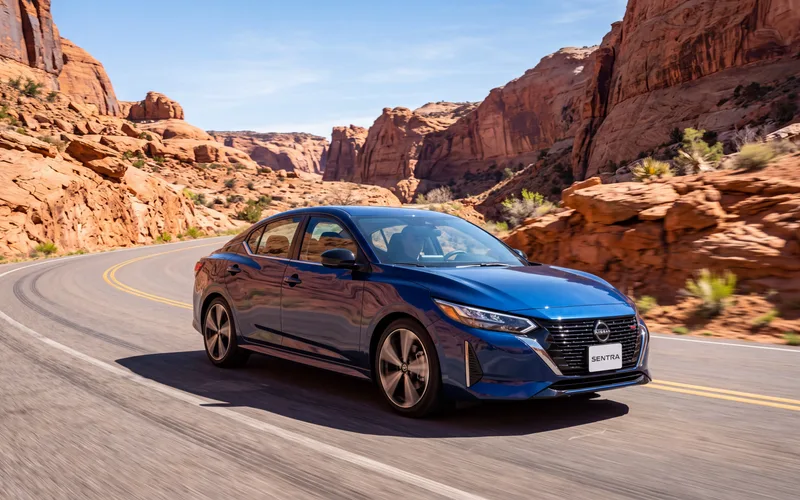 Nissan SentraCompact SedanBetter at: Overall refinement
About $4,400 more from the same dealer buys 27 more horsepower, 3.5 inches of rear legroom, a far better screen and standard lane centering — the natural step up for anyone who can stretch.
Compare 2.40C+
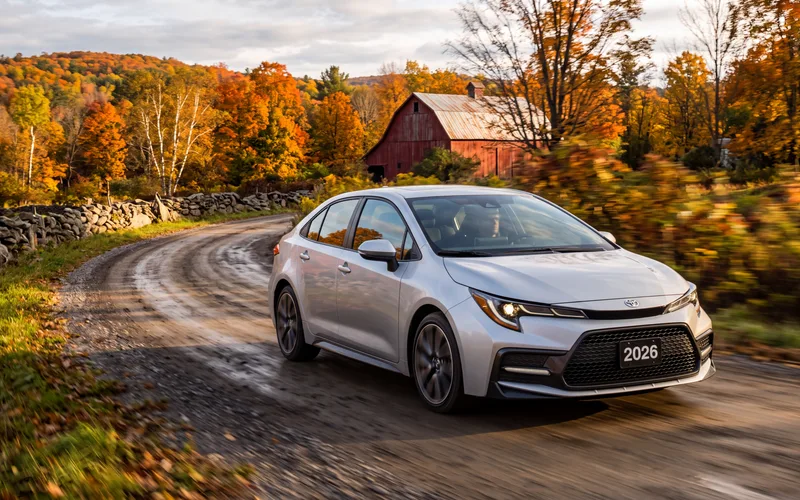 Toyota CorollaCompact SedanBetter at: Resale value
Matches the Versa's 35 MPG with real power in reserve and retains roughly 60% of its value at five years versus 46%, so the cheaper car costs more to own than the sticker suggests.
Compare 2.13C
2.13C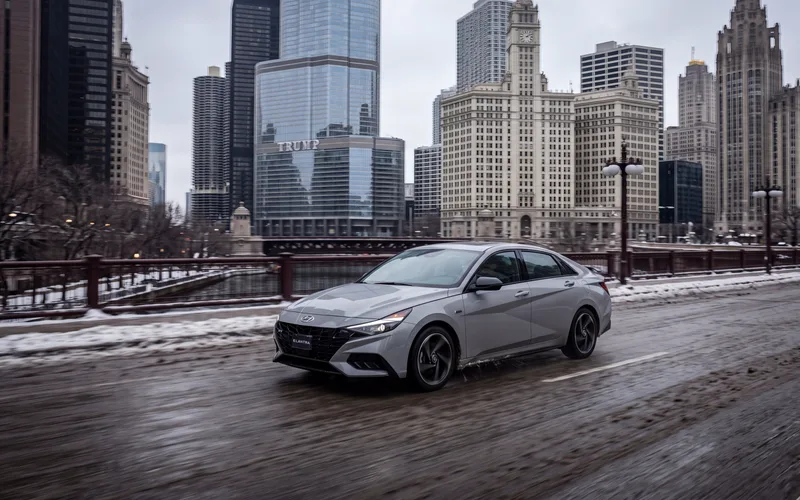 Hyundai ElantraCompact SedanBetter at: Warranty & rear space
A 10-year/100,000-mile powertrain warranty and 38.0 inches of rear legroom fix the Versa's two biggest liabilities for a payment that's still budget-class.
CompareProduction history
Best fit & conditions
Higher scores mean a better fit for that use case. Learn more about use-case fit →
Subject profile
Academic Probation · NHTSA safety recalls
No NHTSA safety recall is on record for the 2026 Nissan Versa. Other model years of the Versa have 10 — listed below.
10 recalls on other model years of the Versa (2017–2021, 2023–2024)
Feb 27, 2024Air bags: frontal: driver side: inflator moduleDue to a manufacturing issue, the driver's air bag inflator may absorb moisture, and cause the air bag to deploy improperly.
Defect
Nissan North America, Inc. (Nissan) is recalling certain 2024 Titan, Frontier, Infiniti QX60, Pathfinder, 2023-2024 Sentra, Versa, Kicks, Infiniti QX50, and 2023 Rogue vehicles. Due to a manufacturing issue, the driver's air bag inflator may absorb moisture, and cause the air bag to deploy improperly.
Risk
An air bag that deploys improperly may not protect the driver as intended during a crash, increasing the risk of injury.
Remedy
Dealers will replace the front driver's air bag assembly, free of charge. Owner notification letters were mailed April 10, 2024. Owners may contact Nissan customer service at 1-800-867-7669. Nissan's numbers for this recall are PD103, PD104, and PMA34.
NHTSA campaign 24V154000 ↗Manufacturer no. PD103, PD104, PMA34351 vehicles potentially affected (all models in the campaign)Owners notified Apr 10, 2024Filed by Nissan North America, Inc.Filed as VERSAJul 18, 2023Steering: electric power assist systemAn intermittent electrical connection in the electric power steering (EPS) torque sensor can disable the power steering assist.
Defect
Nissan North America, Inc. (Nissan) is recalling certain 2021 Versa and Kicks vehicles. An intermittent electrical connection in the electric power steering (EPS) torque sensor can disable the power steering assist.
Risk
Loss of power steering assist can increase the steering effort required, especially at low speeds, and increase the risk of a crash.
Remedy
Dealers will inspect the steering column torque sensor lot code and replace the steering column assembly, if necessary, free of charge. Owner notification letters are expected to be mailed September 8, 2023. Owners may contact Nissan's customer service at 1-800-867-7669. Nissan's number for this recall is PMA26. This recall involves vehicles that were previously inspected, but did not receive a steering column replacement, under recall number 22V-693. These vehicles will need to be reinspected for this recall.
NHTSA campaign 23V496000 ↗Manufacturer no. PMA2611,824 vehicles potentially affected (all models in the campaign)Owners notified Sep 8, 2023Filed by Nissan North America, Inc.Filed as VERSASep 15, 2022Steering: electric power assist systemAn intermittent electrical connection in the electric power steering (EPS) torque sensor can disable the power steering assist.
Defect
Nissan North America, Inc. (Nissan) is recalling certain 2021 Versa and Kicks vehicles. An intermittent electrical connection in the electric power steering (EPS) torque sensor can disable the power steering assist.
Risk
Loss of power steering assist can increase the steering effort required, especially at low speeds, and increase the risk of a crash.
Remedy
Dealers will inspect the steering column torque sensor lot code, and replace the column, if necessary, free of charge. Owner notification letters are expected to be mailed November 9, 2022. Owners may contact Nissan's customer service at 1-800-867-7669. Nissan's numbers for this recall are PMA10 / PMA25.
NHTSA campaign 22V693000 ↗Manufacturer no. PMA10 / PMA2520,040 vehicles potentially affected (all models in the campaign)Owners notified Nov 10, 2022Filed by Nissan North America, Inc.Filed as VERSAJun 23, 2021Exterior lighting: turn signal: bulbsThe front right and/or left turn signal bulb can crack and fail to illuminate.
Defect
Nissan North America, Inc. (Nissan) is recalling certain 2020-2021 Titan, Titan XD, and Versa vehicles. The front right and/or left turn signal bulb can crack and fail to illuminate.
Risk
Inoperable front turn signals cannot alert on-coming drivers and/or pedestrians that the vehicle will be turning, increasing the risk of a crash.
Remedy
Dealers will inspect and replace the bulbs as necessary, free of charge. Owner notification letters were mailed August 20, 2021. Owners may contact Nissan customer service at 1-800-867-7669. Nissan's numbers for this recall are PM986 and PC811.
NHTSA campaign 21V471000 ↗Manufacturer no. PM986 / PC81130,799 vehicles potentially affected (all models in the campaign)Owners notified Aug 20, 2021Filed by Nissan North America, Inc.Filed as VERSAFeb 26, 2020Fuel system, gasoline: storage: tank assemblyDue to a manufacturing issue, the fuel tank wall thickness may be insufficient, potentially causing a small hole in the tank seam area.
Defect
Nissan North America, Inc. (Nissan) is recalling certain 2020 Versa vehicles. Due to a manufacturing issue, the fuel tank wall thickness may be insufficient, potentially causing a small hole in the tank seam area.
Risk
If a small hole is present, a fuel leak may occur if the operator fills the tank over half full, increasing the risk of a fire.
Remedy
Nissan will notify owners, and dealers will replace the fuel tank, free of charge. The recall began April 6, 2020. Owners may contact Nissan customer service at 1-800-867-7669.
NHTSA campaign 20V112000 ↗46 vehicles potentially affected (all models in the campaign)Owners notified Apr 6, 2020Filed by Nissan North America, Inc.Filed as VERSASep 12, 2019Back over prevention: sensing system: cameraAdditionally included are 2019 Nissan GT-R and Taxi and Infiniti QX50, QX60, Q70, Q70L vehicles. The back-up camera and display settings can be adjusted such that the rear view image is no longer visible and the system will retain that setting the next time the vehicle is placed in reverse. As such, these vehicles fail to comply with the requirements of Federal Motor Vehicle Safety Standard (FMVSS) number 111, "Rear Visibility."
Defect
Nissan North America, Inc. (Nissan) is recalling certain 2018-2019 Nissan Altima, Armada, Frontier, Kicks, Leaf, Maxima, Murano, NV, NV200, Pathfinder, Rogue, Rogue Sport, Sentra, Titan, Titan Diesel, Versa Note and Versa Sedan vehicles, as well as Infiniti Q50, Q60, QX30 and QX80 vehicles. Additionally included are 2019 Nissan GT-R and Taxi and Infiniti QX50, QX60, Q70, Q70L vehicles. The back-up camera and display settings can be adjusted such that the rear view image is no longer visible and the system will retain that setting the next time the vehicle is placed in reverse. As such, these vehicles fail to comply with the requirements of Federal Motor Vehicle Safety Standard (FMVSS) number 111, "Rear Visibility."
Risk
The lack of an image in the back-up camera display increases the risk of a crash.
Remedy
Nissan will notify owners in phases, having dealers update the back-up camera settings software, free of charge. The recall began November 11, 2019 and all affected VINs should be activated. Owners may contact Nissan customer service at 1-800-867-7669 or INFINITI customer service at 1-800-662-6200.
NHTSA campaign 19V654000 ↗1,228,830 vehicles potentially affected (all models in the campaign)Owners notified Nov 11, 2019Filed by Nissan North America, Inc.Filed as VERSA, VERSA NOTEAug 21, 2018Electrical system: ignitionIn these models, over time, the weight on the key ring and road conditions or some other jarring event may cause the ignition switch to move out of the run position to the accessory position, turning off the engine.
Defect
Nissan North America, Inc. (Nissan) is recalling certain 2017 Nissan NV200, Sentra, NV3500 Van, NV3500 Bus, NV200 Taxi, NV1500, NV2500 Van, Chevrolet City Express, 2017-2018 Frontier, Versa Note, and Versa Sedan vehicles that have a mechanical (physical) key ignition system. In these models, over time, the weight on the key ring and road conditions or some other jarring event may cause the ignition switch to move out of the run position to the accessory position, turning off the engine.
Risk
If the vehicle stalls, it can increase the risk of a crash.
Remedy
Nissan will notify owners, and dealers will inspect the production information on the ignition switch, and replace it as necessary, free of charge. The recall began October 1, 2018. Owners may contact Nissan customer service at 1-800-867-7669.
NHTSA campaign 18V551000 ↗153,047 vehicles potentially affected (all models in the campaign)Owners notified Oct 1, 2018Filed by Nissan North America, Inc.Filed as VERSA, VERSA NOTEDec 20, 2017Air bags: side/windowDuring deployment of the side curtain air bag, a component of the air bag inflator may detach. As such, these vehicles fail to comply with the requirements of Federal Motor Vehicle Safety Standards (FMVSS) number 214, "Side Impact Protection," and 226, "Ejection Mitigation."
Defect
Nissan North America, Inc. (Nissan) is recalling certain 2018 Nissan Versa Note vehicles. During deployment of the side curtain air bag, a component of the air bag inflator may detach. As such, these vehicles fail to comply with the requirements of Federal Motor Vehicle Safety Standards (FMVSS) number 214, "Side Impact Protection," and 226, "Ejection Mitigation."
Risk
If the component detaches during deployment, it may enter the passenger compartment and be a projectile within the vehicle cabin, increasing the risk of injury.
Remedy
Nissan will notify owners, and dealers will replace the side curtain air bags, free of charge. The recall began February 13, 2018. Owners may contact Nissan customer service at 1-800-647-7261.
NHTSA campaign 17V837000 ↗111 vehicles potentially affected (all models in the campaign)Owners notified Feb 13, 2018Filed by Nissan North America, Inc.Filed as VERSA NOTEApr 26, 2017Air bags: frontal: passenger side: inflator moduleThe ring plate that secures the air bag cushion to the passenger frontal air bag assembly may fail, possibly causing the air bag to deploy improperly in the event of a crash.
Defect
Nissan North America, Inc. (Nissan) is recalling certain 2017 Versa, and Versa Note vehicles. The ring plate that secures the air bag cushion to the passenger frontal air bag assembly may fail, possibly causing the air bag to deploy improperly in the event of a crash.
Risk
In the event of a crash, if the passenger frontal air bag does not deploy as intended, it can increase the risk of injury.
Remedy
Nissan will notify owners, and dealers will replace the passenger frontal air bag module, free of charge. The recall began June 12, 2016. Owners may contact Nissan customer service at 1-800-647-7261.
NHTSA campaign 17V275000 ↗509 vehicles potentially affected (all models in the campaign)Owners notified Jun 12, 2017Filed by Nissan North America, Inc.Filed as VERSA, VERSA NOTEOct 11, 2016Air bags: side/windowA seam in the fabric section of the side curtain air bags may tear during side curtain air bag deployment, potentially affecting the performance of the air bag. As such, these vehicles fail to comply with the requirements of Federal Motor Vehicle Safety Standard (FMVSS) number 226, "Ejection Mitigation", and number 214, "Side Impact Protection."
Defect
Nissan North America, Inc. (Nissan) is recalling certain model year 2017 Versa vehicles manufactured August 1, 2016, to August 16, 2016. A seam in the fabric section of the side curtain air bags may tear during side curtain air bag deployment, potentially affecting the performance of the air bag. As such, these vehicles fail to comply with the requirements of Federal Motor Vehicle Safety Standard (FMVSS) number 226, "Ejection Mitigation", and number 214, "Side Impact Protection."
Risk
In the event of a crash necessitating side curtain air bag deployment, if the side curtain air bags do not deploy as intended there would be an increased risk of injury.
Remedy
Nissan will notify owners, and dealers will replace the left and right side curtain air bags, free of charge. The recall began on December 2, 2016. Owners may contact Nissan customer service at 1-800-647-7261.
NHTSA campaign 16V724000 ↗1,754 vehicles potentially affected (all models in the campaign)Owners notified Dec 2, 2016Filed by Nissan North America, Inc.Filed as VERSA
Source: NHTSA Office of Defects Investigation recall database, model years 2017–2026. Recalls are listed by model year as the manufacturer filed them; whether a specific car is affected depends on its VIN — check a VIN at nhtsa.gov ↗. NHTSA model names matched to this page: VERSA, VERSA NOTE.
Detailed scoring by subject
1Performance & PowertrainThe Versa's lowest-graded category.0.00F
One engine serves the whole Versa lineup — the 1.6L HR16DE naturally aspirated four at 122 hp — so the volume SV and the range maximum are the same figure, unchanged since the third-generation (N18) car arrived for 2020 and untouched by the 2024 facelift. That is the lowest output of any sedan in this dataset, below the Sentra's 149 hp and under the sedan normalization floor of 130 hp, so the item bottoms out.
Peak torque of 114 lb-ft arrives around 4,000 rpm, so meaningful thrust only exists once the CVT has already sent the revs high. It sits below the sedan band floor of 120 lb-ft and trails the Sentra (146), Elantra (132) and Civic (133) — the least torque of any sedan scored here.
With 122 hp pulling roughly 2,600–2,700 lb, the Versa carries about 22 lb per horsepower — worse than the Sentra's ratio, which is why it is scored a step slower than that car's 8.9 s anchor. Instrumented tests of this powertrain have clustered around 9.6 s for the CVT, past the 9.5 s edge of the sedan band, so the item scores zero even though the car is adequate in ordinary traffic.
Being naturally aspirated, the 1.6L has no turbo lag and responds cleanly to small throttle inputs around town, but it is the most overworked engine in the sedan set: highway merges and grades pin it near its power peak, where it turns loud and thrashy. It scores below the Sentra (52) because the same coarse-under-load character arrives with 27 fewer horsepower and no hybrid variant anywhere in the range to soften the low-rpm gap.
Nissan's Xtronic CVT is smooth and unobtrusive at light throttle but drones badly when asked for full acceleration, and with only 114 lb-ft to work with it holds high revs longer than the same unit does in the Sentra (55). Offsetting that, the Versa has long been one of the last cars in the US to offer a genuine alternative — a 5-speed manual on the base S — whose light clutch and long-throw shifter are unrefined but give the car a second, more engaging behavior the Sentra no longer has.
The Versa is front-wheel drive on every trim, with no all-wheel-drive option anywhere in the range and none ever offered on the nameplate sedan. That places it in the framework's bottom band alongside the FWD-only Sentra (15), Civic (15) and Elantra (15), and well behind the Corolla (46), which offers on-demand AWD on its hybrid trims.
One 1.6L naturally aspirated four, front drive, across all three trims — no turbo, no hybrid, no PHEV, no EV — which is the framework's take-it-or-leave-it bottom band. It edges the CVT-only Sentra (22) solely because a buyer can still choose between the 5-speed manual and the Xtronic, a real if narrow choice, and it remains far behind the Corolla (60), Civic (72) and Elantra (76).
2Efficiency & RangeOne of the Versa's strongest categories.1.98C-
The 1.6L HR16DE and Xtronic CVT return about 35 MPG combined — the Versa's best attribute and the whole point of the car, since it extracts Corolla-grade economy (35) from the cheapest sedan in the dataset without any hybrid hardware. It is a genuine 1 MPG ahead of its own showroom-mate the Sentra (34), though the Civic LX and Elantra SE (36) edge it and every hybrid compact buries it. The base S with the 5-speed manual gives back a large 5 MPG, so the volume CVT trim is the right representative.
At 32 MPG city the Versa is level with the base Corolla, Civic and Elantra and 2 MPG clear of the Sentra, which is a real achievement for a non-hybrid — light weight (~2,600–2,700 lb) does the work that electric assist does elsewhere. It still loses badly in stop-and-go to the hybrids it cannot answer, with the Corolla Hybrid at 53 city and Civic Hybrid at 50.
40 MPG highway is competitive on paper and identical to the Sentra's, but it is the figure the Versa is least able to deliver in the real world: with 122 hp and 114 lb-ft, holding highway speed on grades or into a headwind pushes the CVT to drop ratio and the engine to rev, exactly where the rating assumes it will not. The Corolla and Civic post 41 with far more power in reserve.
This is where the Versa's efficiency advantage is thrown away. Subcompact packaging leaves only a 10.8-gallon tank — the smallest in the sedan set — so despite beating the Sentra on MPG it travels about 44 fewer miles between fills, and the Corolla's 13.2-gallon tank buys 84 more. A commuter will not care; anyone doing regular long trips will notice stopping roughly every five hours.
At 35 MPG combined the Versa burns roughly 429 gallons a year under EPA assumptions — about $50 less than the Sentra and dead level with the Corolla LE and Civic LX. It is cheap to run in absolute terms, but a hybrid compact costs $500–600 less per year, which over a typical ownership period claws back a meaningful fraction of the Versa's purchase-price advantage.
The Versa asks nothing costly of its owner: regular 87-octane on every trim, no premium recommendation, no diesel or E85 complication, and no charging to arrange or pay to install. For the budget buyer this car is aimed at, that unconditional simplicity is worth nearly as much as the MPG figure itself.
3SafetyGrades below the middle of the scale.1.57D
The N18-generation Versa carries a 4-star NHTSA overall rating rather than the 5 stars the larger Sentra earns, with frontal impact the weak leg — the usual pattern for a light subcompact sedan, where mass works against it in the frontal barrier test.
The Versa posts Good results in the legacy IIHS front tests but has never held a Top Safety Pick in this generation, and the tests IIHS has tightened since — updated moderate overlap with a rear occupant and the updated side impact — are exactly where a low-cost subcompact structure grades below Good. Scored at the top of the bottom band: solid legacy crashworthiness, no award, known soft spots under current criteria.
Nissan Safety Shield 360 is standard on every Versa trim including the base S — automatic emergency braking with pedestrian detection, rear automatic braking, blind-spot warning, rear cross-traffic alert, lane departure warning and high-beam assist — which is remarkable standard content on the cheapest new car sold in the US. Two real gaps keep it out of the top band: adaptive cruise is trim-gated above the S, and there is no lane keep assist or centering at any price.
Forward AEB covers vehicles and pedestrians on every trim and is backed by standard rear automatic braking, which almost nothing else at this price offers, but this is Nissan's basic sensor set and it has not distinguished itself in the harder updated front crash prevention evaluations — particularly the higher-speed and nighttime-pedestrian scenarios that now separate the class.
Blind Spot Warning and Rear Cross Traffic Alert are standard on the base trim rather than trim-gated as on much of the segment, and standard rear automatic braking adds genuine intervention behind the car. It stays out of the top band because the blind-spot system is alert-only — no steering or braking correction into an occupied lane — and there is no safe-exit alert.
The Versa warns but does not steer: Lane Departure Warning is standard on every trim, and that is the whole of it — no lane keep assist intervention and no lane centering on any trim, because ProPILOT Assist is not offered on this model line. That places it squarely in the bottom band, above zero only because the warning itself is standard equipment.
Intelligent Cruise Control is available on the upper trims and works as a straightforward radar-following system, but the base S is left on conventional cruise control and there is no highway assist of any kind because no lane centering exists to combine it with. Scored at the floor of the middle band: real adaptive cruise, no integration, not on the cheapest car.
No hands-free highway driving is offered on the Versa at any trim or price, and the car does not even have the hands-on lane-centering system that would be its prerequisite. The previous score of 70 credited a capability the car does not have.
LED headlights and automatic high beams are standard across the range — good content for the price — but standard LEDs are not the same as good beam patterns, and IIHS grading on this generation's headlights has been a weak link rather than a strength, which is part of why the car has never carried an award.
Small car, low cowl and a fairly upright front greenhouse give a clean forward and side view that bigger sedans have lost, but the N18's rising beltline, raked backlight and thick C-pillars pinch the over-the-shoulder view, and camera compensation is minimal — a rearview camera is standard and no surround-view system is offered on any trim.
The hardware is the class-standard two outboard lower-anchor positions plus three top tethers, but the Versa's rear compartment is the real constraint: rear legroom is around 31 inches, so a rear-facing seat forces the front passenger seat well forward, and the narrow rear bench rules out three across. Scored in the bottom band on packaging, not on anchor design.
4Space & ComfortGrades below the middle of the scale.1.66D
The Versa is a conventional five-seat subcompact sedan — front buckets plus a three-place rear bench — across S, SV and SR. Replaces a placeholder value of 4.4 seats.
Front headroom is a genuine Versa strength — the upright subcompact roofline gives it more front headroom than Nissan's larger Sentra (38.9 in), and no sunroof is offered to eat into it.
44.5 in of front legroom is at the top of the sedan band and beats most compact and even mid-size sedans — the N18 Versa devotes its packaging to the front row.
Rear headroom is mid-pack for a sedan — adequate for average-height adults but no more, and the sloping trunk-lid line limits it.
The defining weakness of this car. The N18 redesign cut rear legroom to 31.0 in from roughly 37 in in the outgoing model, putting it below the 32 in floor of the sedan band and making the back seat a children-and-short-trips proposition.
A 14.7 cu ft trunk is large for a subcompact — bigger than the Sentra's 14.3 cu ft — and is where the Versa spends the space it takes out of the rear seat. 60/40 folding rear seatbacks are available above the base trim.
Storage is functional but bare: glovebox, modest door bins, two front cupholders and a small tray. The base S does without a proper covered center-console bin/armrest, there is no underfloor or second-tier stowage, and USB provision is minimal on lower trims — no clever packaging of the kind that earns a mid-band score.
The front seats punch above the price — Nissan's Zero Gravity-derived cushions are consistently the most-praised part of the interior and hold up on longer drives. The rear bench is the opposite: 31 in of legroom, a flat, thin cushion, an upright backrest that does not recline, and no rear armrest on lower trims, which drags the combined front-and-rear rating well below the Sentra's 68.
Softly tuned for the class and reasonably absorbent around town, but the short (~103 in) wheelbase and torsion-beam rear make it choppy and busy over expansion joints and broken pavement, with noticeable secondary motion at highway speed. Composed enough to sit mid-band, short of the Sentra's more settled 68.
The weakest comfort dimension. The 1.6-liter four drones loudly through the CVT under any real throttle, and thin glass with minimal sound deadening lets road and wind noise through at highway speed — a recurring criticism in reviews of this generation and clearly behind the Sentra (50).
Sparse by design at this price. Manual air conditioning is standard and is all most buyers get; heated front seats and a heated steering wheel appear only at the top SR trim (or via option packages), and there is no dual-zone climate, no ventilated seats, no rear vents and no rear climate control on any trim. Remote start is CVT-and-upper-trim only.
5Cost of OwnershipThe Versa's best-graded category.2.49C+
The Versa S remains the entry point of the US new-car market and the cheapest way into a new sedan, sitting several thousand dollars below every compact rival. This is the item the Versa exists to win, and it lands well under the sedan band floor, so it scores out at the maximum.
The SV with the Xtronic CVT is the volume Versa — it adds the larger touchscreen, alloy wheels, cruise control and the fuller Safety Shield 360 content that makes the car liveable, and most buyers step up to it rather than take the stripped S. Even so equipped it undercuts the base price of most compact sedans, so it clears the bottom of the sedan band.
The naturally aspirated 1.6L four is about as simple and cheap to service as anything sold new — small oil capacity, no turbo, inexpensive 16-inch tires, and parts that are plentiful because the platform has been in high-volume production for years. The Xtronic CVT is the one real cost risk: it is the component most likely to produce a four-figure bill once the 60,000-mile powertrain coverage lapses, which is what keeps this a good rather than class-leading number.
This is the Versa's weakest ownership metric and the heaviest-weighted item in the category, so it does most of the damage. Rental and fleet volume, heavy incentive spend at the bottom of the market, and buyer wariness about Nissan CVTs push residuals below the Sentra and far below the Corolla, so part of the cheap purchase price is handed back at trade-in. The percentage overstates the pain in dollar terms, though — 54% of a $19,400 car is a far smaller absolute loss than a mid-pack residual on a $35,000 one.
Nissan's New Vehicle Limited Warranty runs 3 years or 36,000 miles — the segment floor and the bottom of the framework band. It matches Toyota and Honda but is half the term Hyundai and Kia give, which matters more on a bargain car whose buyers are least able to absorb an out-of-warranty repair.
Nissan covers the powertrain for 5 years or 60,000 miles, again the band floor. The Xtronic CVT is precisely the component Versa shoppers most want covered, and it comes off warranty at 60,000 miles — well short of Hyundai and Kia's 10-year/100,000-mile original-owner coverage.
Nissan includes no complimentary scheduled maintenance on the Versa — there is no ToyotaCare or Hyundai 3-yr/36k equivalent, so the first oil change is out of pocket. Roadside assistance is bundled with the 3-year/36,000-mile basic term, which keeps this out of the zero band, but the connected-services content that pads this item on pricier cars is thin here: the base S goes without the NissanConnect services the SV and SR get on trial.
$22,700 volume-trim price minus its estimated resale value after 5 years (46% retained, or about $10,442) leaves about $12,258 in depreciation. Add the projected $4,200 in 5-year maintenance and repairs, and owning this vehicle for 5 years costs about $16,458 in total.
6Reliability & QualityOne of the Versa's strongest categories.2.15C
The Versa's predicted-reliability case rests on mechanical simplicity: one naturally aspirated 1.6L engine, front-wheel drive only, no turbo, no hybrid and very little electronic content to fail. Consumer Reports has generally placed the N18 Versa at or modestly above average within Nissan's lineup on that basis, while the Xtronic CVT remains the single component that pulls the prediction back toward mid-pack. Scored average-band rather than strong.
Brand-level item, so this matches the figure already scored for the 2026 Sentra. Nissan sits in the lower-middle of multi-year dependability — consistently behind Toyota, Honda and Hyundai in Consumer Reports brand rankings and at or around industry average in J.D. Power's Vehicle Dependability Study, with the long-running CVT reputation as the main drag on owner perception.
Recall exposure on this generation has been moderate in count and largely component- and supplier-driven (camera/software, electrical and hardware campaigns) rather than a repeating powertrain, fire or safety-system defect. That is typical activity for a high-volume economy sedan, so it scores mid-band rather than clean.
The engine and the transmission point in opposite directions. The 1.6L HR16DE is a low-stress, naturally aspirated unit that has served Nissan and Renault globally for close to two decades with no significant high-mileage durability red flag. The Jatco Xtronic CVT paired to it is the liability: Nissan's small-car CVTs carry the most damaging durability reputation in the brand's portfolio, with earlier Versa and Sentra applications drawing owner complaints, extended-coverage programs and class-action litigation. A proven engine bolted to the segment's most-doubted transmission nets out just above the middle of the band.
The Versa competes at the very bottom of the US new-car price ladder and the cabin shows it: hard plastics across the dash, doors and console, cloth on all but the top grade, and basic switchgear. The 2023-model-year refresh improved the design, screen and trim presentation more than the material substance. Judged relative to price it is acceptable rather than embarrassing, but it sits clearly below the Sentra, which reviewers single out as punching above its class.
Assembly quality at Nissan's Aguascalientes, Mexico plant is unremarkable but not problem-prone — no widespread panel-alignment or misassembly pattern attaches to this generation. What keeps it below the Sentra is the economy-car consequence of thin sound insulation and lightweight trim: road, wind and powertrain noise plus occasional interior creak are recurring review notes, and they read to owners as build quality even where assembly itself is sound.
Brand-level item, matched to the 2026 Sentra. Physical access is a strength — Nissan operates one of the larger US franchised networks, broadly comparable in dealer count to Honda and far denser than premium or low-volume brands, so parts and service are reachable almost anywhere in the country. What holds the score short of the top band is service satisfaction, where Nissan's dealer experience has run at rather than above industry average.
This is the category's clearest strength and one of the strongest arguments for the car. The Versa is a high-volume, mechanically simple economy sedan built on long-serving, widely shared Nissan components, so OEM and aftermarket parts are cheap, plentiful and stocked by every chain, and independent shops can work on it without special tooling. Published maintenance-and-repair estimates for the Versa have historically run below the subcompact average.
7Technology & InfotainmentOne of the Versa's weakest categories.0.67F
The Versa carries the head units introduced with the 2024 facelift into 2026 unchanged: a 7-inch display on the entry S and an 8-inch touchscreen on the volume SV and the SR. Eight inches sits barely above the bottom of the sedan normalization band and matches the Corolla LE and Jetta S rather than the 12.3-inch screens now fitted to the Sentra and K4 — the Versa is a full screen generation behind its own showroom sibling.
The Versa runs Nissan's legacy NissanConnect head unit rather than the Google built-in stack now in the Sentra, so the graphics are dated and the menu depth is basic — but the system is small, simple, and quick enough for what it does, and it keeps real volume and tuning knobs plus separate rotary climate dials. That physical-control discipline is worth genuine credit and keeps it out of the bottom band; it lands below the Civic's dated-but-clean 7-inch baseline (65) and well behind the Sentra (72) and Corolla (74).
Wireless Apple CarPlay is standard on the volume SV and the SR, but Android Auto remains wired-only across the entire Versa range and the base S is wired for both — so roughly half of buyers get no wireless projection at all. That is squarely the middle band ("wired standard / wireless on upper trims"): better than the Civic (50), which confines wireless to its priciest trim, and far behind the Corolla (90) and Sentra (82), where both protocols are wireless on every grade.
No built-in navigation is offered on the Versa at any trim, and the native voice layer is rudimentary phone-and-audio command recognition rather than a natural-language assistant — mapping exists only if you plug in a phone. That is the low band by definition. It sits below the Jetta and Mazda3 (both 55), which at least offer some native nav, and well under the Sentra (78), where Google Maps and Google Assistant come built in; the score is not lower only because CarPlay/Android Auto do cover maps for most owners.
The Versa runs four speakers on the S and six on SV and SR, with no branded premium system available anywhere in the range — the only sedan here with no upgrade path at all. That is the "weak audio even in upper trims" band. Every mainstream rival offers something: Bose on the Sentra (68), Elantra (66) and Mazda3 (75), JBL on the Corolla (64).
The volume SV keeps conventional analog gauges flanking a small color information display, and even the top SR tops out at a partial digital drive-assist screen rather than a full configurable cluster — no Versa grade offers a true digital instrument panel. That is the analog-only band. The Civic (55) and Jetta (80) both put real digital clusters within reach, and the Sentra's 12.3-inch full-digital display arrives on its volume trim (74).
The Versa's legacy head unit has no over-the-air update path — not whole-vehicle, and not even the infotainment-and-maps pipe that earns rivals a middle-band score; software and map data are dealer- or USB-serviced. This is the clearest "no meaningful OTA capability" result in the sedan set, below the Mazda3 (40) and the Civic (50), and it is a direct consequence of the Versa skipping the connected Google built-in stack that gives the Sentra 60.
The Versa is the outlier in Nissan's US lineup in going without the connected-services telematics unit, so there is no app-based remote start, lock/unlock, or vehicle locator — remote engine start on the SR works from the key fob only, and there is no digital key. Scored in the low band for a barebones provision. Every mainstream rival clears 55 here, and the Elantra's complimentary Bluelink+ (76) shows what the class ceiling looks like.
Front-row USB-A plus a USB-C port added in the 2024 facelift is the whole story: no rear-seat charging ports, no wireless phone charging pad at any trim, and no household AC outlet. Rear passengers have nothing to plug into, which is what pushes this into the low band — below the Mazda3 (50) and well behind the Sentra and Corolla (both 70), where rear USB-C and wireless charging are on the volume trim.
Nissan Intelligent Key with proximity entry and push-button start is standard on the volume SV and the SR — the base S still uses a conventional turn key — and remote engine start is confined to the SR. Core keyless convenience reaches the trim most buyers actually purchase, which earns the middle band, but with no phone-as-key and no hands-free trunk it lands level with the Corolla (58) and clearly under the Sentra (72), where remote start comes with the volume grade.
The Versa gets the federally mandated rear camera and nothing more in the way of parking hardware — no Around View Monitor at any price, no front or rear parking-sensor display, no automated parking — and the camera itself is a low-resolution unit. Rear Automatic Braking on the upper grades uses rear sonar, but it is a collision-avoidance function rather than a parking aid the driver reads. That is the "rear camera only, low quality" band, and it is the weakest showing in the sedan set: below the Jetta (52), Corolla (54) and Civic (55), and far behind the Sentra's available 360-degree system (68). The previous placeholder score of 65 credited surround-view hardware the car does not offer.
No head-up display is offered on the 2026 Versa at any trim — Nissan reserves HUD for far more expensive models, and it is not available on the Sentra above it either. Bottom band by definition; the previous placeholder score of 54 credited hardware the car does not have. The Corolla and Civic share the same miss (both 10), so it costs the Versa no ground against direct rivals.
8Use-Case FitOne of the Versa's weakest categories.0.83F
Rear legroom of 31.0 in is the defining problem: a rear-facing infant seat forces the front passenger seat so far forward that an adult cannot sit ahead of it, and the narrow bench rules out three across, so the Versa is a one-or-two-kid car at best. A 14.7 cu ft trunk that swallows a stroller is the real counterweight, but the base S does without folding rear seatbacks and the small rear door apertures make buckling a toddler a stoop-and-reach exercise.
The Versa's family safety argument is that Nissan puts the whole Safety Shield 360 suite — AEB with pedestrian detection, rear automatic braking, blind-spot warning and rear cross-traffic alert — on the cheapest new car sold in the US, so a family shopping the $19k trim is not buying away its safety content. What holds it to the middle band is the crash side and the gaps: 4 stars overall from NHTSA rather than the Sentra's 5, no IIHS award in this generation, weak headlight grades, and no lane keep assist or lane centering at any price.
With four aboard for several hours this is the weakest sedan in the dataset. The rear bench pairs 31.0 in of legroom with a flat, upright, non-reclining backrest, there are no rear HVAC vents, no rear charging ports and no rear armrest on lower trims, and the cabin is the noisiest here — the 1.6L drones through the CVT on every grade and highway climb. The generous trunk and genuinely good Zero Gravity-derived front seats mean the adults up front are fine; everyone behind them is counting the miles.
Around town the Versa is genuinely easy: light steering, a tiny footprint, a low cowl with a clear forward view, comfortable front seats and a CVT that is smooth and unobtrusive at the light throttle openings city traffic actually uses. The fatigue comes the moment the road opens up — 122 hp and 114 lb-ft mean merges and hills require full throttle, where the engine turns loud and thrashy — and the driver-assist help that makes rivals restful is missing, with adaptive cruise gated above the base S and no lane centering offered at any price.
Per commuted mile this is the cheapest non-hybrid sedan in the dataset. 35 MPG combined on 87 octane, roughly $1,750/yr in fuel, below-average maintenance and repair on a naturally aspirated engine with no turbo, inexpensive 16-inch tires, and the lowest insurance premium of the Nissan sedans — all on top of a purchase price several thousand dollars under any compact rival, which is the part of the commuting bill the MPG table never shows. It stops short of the top band only because there is no electrified Versa: a Corolla or Elantra hybrid roughly halves the fuel line for a commuter who drives enough miles to care.
Physical size does most of the work here: at roughly 177 in long on a ~103 in wheelbase the Versa is the smallest sedan in this dataset, it slots into gaps compact sedans have to pass on, and the low cowl and upright front glass make placing the nose easy. Camera and sensor help is the opposite of generous — a standard low-resolution rear camera and nothing else, with no 360-degree monitor and no parking-sensor display at any trim — and the raked backlight with thick C-pillars pinches the over-the-shoulder view, so the driver does the work the electronics do elsewhere.
Nissan publishes no US tow rating for the Versa on any trim, and there is nothing else here for work duty: no bed, a sealed 14.7 cu ft trunk, front-wheel drive only, and the least powerful engine of any sedan in the dataset at 122 hp and 114 lb-ft. Scored at the bottom because the vehicle lacks what this item measures, not because the data is missing — it sits a few points under the compact sedans purely on powertrain headroom under load.
As a hard-use runabout the Versa has real arguments: a low-stress naturally aspirated 1.6L that has served Nissan and Renault for close to two decades, cloth interiors and hard plastics that shrug off abuse, high fleet and rental deployment that keeps parts cheap and body shops familiar, and the lowest running costs in the sedan set. Two things keep it mid-band — the Xtronic CVT carries Nissan's weakest long-term service reputation and it is the exact component hard duty punishes, and the car is built to the lightest, thinnest standard of anything here.
There is effectively nothing here for work: no 120V outlet or inverter, no factory hitch, no roof rails or rack ecosystem, no tie-down system beyond trunk bag hooks, and no washable or rubberized surfaces. It scores below even the Sentra and Elantra because the one work-adjacent feature those cars have as standard — a split-folding rear seatback to pass long items through from the trunk — is not fitted to the base Versa S, and device power is a single front USB-A and USB-C with no rear provision.
The Versa is the weakest long-haul companion in the sedan set on all three axes this item measures. Range is the shortest — a 10.8-gallon tank throws away the 35 MPG advantage and puts stops roughly every 378 miles, some 44 fewer than the Sentra and 84 short of a Corolla. The cabin is the loudest, with thin glass, minimal sound deadening and an engine that revs and drones to hold speed on grades. And there is no fatigue relief: adaptive cruise is gated above the base S and no Versa has lane centering. The excellent front seats are the one genuine mile-eating asset and are why this is not lower.
Pavement-bound with the least in reserve of anything in the segment. There is no AWD anywhere in the Versa range and never has been, no published tow rating for even a small utility trailer, no roof rails or factory crossbar kit for a bike or box, subcompact ground clearance and no underbody protection, and no AC outlet for camp power. A graded gravel road is the honest limit, and the 122-hp engine makes a loaded car on a mountain grade hard work.
The trunk is the surprise: at 14.7 cu ft it is the largest here, bigger than the Sentra's and comfortably past the Corolla's, because the N18 packaging spends on cargo exactly what it takes out of the rear seat, and it takes four people's luggage without complaint. Flexibility beyond that is thin — the 60/40 folding seatback that opens up skis and flat-packed boxes is not standard on the base S, the sedan's narrow trunk aperture blocks anything bulky, and there are no roof rails, no hitch and no underfloor bin.
9Driving ExperienceGrades below the middle of the scale.1.59D
At roughly 2,600–2,700 lb on a short 103-in wheelbase the Versa is genuinely light on its feet in town — it changes direction willingly and never feels the mass that hurts bigger economy sedans. What holds it in the middle band is the hardware underneath: a torsion-beam rear axle and narrow low-rolling-resistance tires give soft body control and modest grip, so it leans early and washes wide well before the limit. It scores ten points under the Sentra (62) because that car's 2020 redesign brought an independent multi-link rear end and wider rubber, a real chassis advantage the Versa never received.
The electric rack is accurate and consistent enough to place the car precisely in a parking structure, and its very light effort is an asset at city speeds, but it is almost entirely mute — weight builds artificially off-center and nothing about surface or grip reaches the rim. That is the same numb character as the Sentra (60) delivered with less on-center substance and lighter tires, so it lands at the boundary between the 'precise but numb' and 'overly light' bands.
There is little mass to stop, so outright stopping distances are unremarkable rather than poor, but the Versa is the rare car in this dataset still using rear drums on every trim, and the pedal is long and soft with the bite point set well into travel. Repeated hard stops bring noticeable fade and the low-rolling-resistance tires cap ultimate retardation, which puts it eight points below the four-wheel-disc Sentra (60).
Being naturally aspirated with a CVT, the Versa has no lag, no shift shock and no hybrid handoffs to bungle — tip-in is clean and low-speed drivability is genuinely smooth. The penalty is that 122 hp and 114 lb-ft leave almost no reserve, so any real demand sends the Xtronic straight to a high, held ratio and the car spends highway merges and grades at full strain. It sits six points under the Sentra (56), which runs the same calibration philosophy with 27 more horsepower to absorb the same requests.
This is the Versa's weakest dynamic trait. Because the engine must be worked so hard, the CVT parks it near the power peak under load and the 1.6L turns coarse and droning, with the buzz audible through the wheel and pedals — and an economy car's sound package does little to mask it. It falls ten points below the Sentra (52), which is noisy under the same conditions but reaches them less often.
A 34.8 ft curb-to-curb diameter on a 103-in wheelbase sits near the tight end of the sedan band and is the single best thing about driving a Versa — U-turns, tight garages and parallel parking are all easy. This is the car's one clearly above-average driving-experience trait.
Visibility is a real strength — an upright seating position, a low beltline and slim pillars make the Versa one of the easiest cars in the segment to place, and the surviving physical climate knobs keep everyday controls simple. It is pulled well below the Sentra (74) by adjustability: the steering column tilts but does not telescope on any trim, and driver's seat adjustment is minimal on the base car, so taller drivers end up compromising between reach to the wheel and reach to the pedals.
Nothing about the Versa invites the long way home: the engine sounds strained rather than characterful, the steering is silent, and the chassis rewards nothing beyond brisk. The one genuine spark is the base S trim's 5-speed manual, one of the last in any US-market new car, which gives an otherwise inert car something to do — but it is confined to the cheapest, least-equipped version and does not lift the volume CVT car, which is squarely appliance-like at 42 against the Sentra's 52.
10Value & Market PositionMid-pack among this car's ten categories.1.78C-
The Versa's standout inclusion is Nissan Safety Shield 360 standard on every grade including the base S — automatic emergency braking with pedestrian detection, rear automatic braking, blind spot warning, rear cross traffic alert, lane departure warning and high beam assist — content most rivals reserve for higher trims or charge for. Against that, the rest of the base car is genuinely sparse: steel wheels with covers, manual air conditioning, a conventional key barrel rather than push-button start, a 7-inch head unit, four speakers, a tilt-only steering column with no telescoping adjustment, and rear drum brakes. Competitive-for-the-price rather than generous in absolute terms, which puts it in the middle band.
This is the item the Versa exists to win: it is the lowest-priced new car sold in the United States, and it pairs that sticker with a full standard active-safety suite and low running costs rather than stripping the car to hit the number. What holds it below the standout band is that the value gap has narrowed — at roughly $19,400 to start and ~$22,700 for the volume SV, a Sentra or Corolla now sits only a few thousand dollars above with materially more car (independent rear suspension, four-wheel discs, telescoping wheel, more power, better materials) — and capability per dollar is thin at 122 hp with no AWD and no electrified option.
Three trims (S, SV, SR) spanning a narrow ~$19,400–$24,000 band, one engine, front-wheel drive only, and essentially no option packages beyond appearance and accessory items. The only real configuration choice is the 5-speed manual, which is confined to the base S. That is close to a take-it-or-leave-it lineup, lifted slightly above the bottom band because the three grades are sensibly spaced and the manual gives the S a genuine second configuration.
The Versa is effectively the last subcompact sedan standing in the US after the Mirage, Rio and Accent left the market, so it leads its nominal segment largely by default — but the segment itself has collapsed, and Versa volume runs at a fraction of the Sentra's, let alone the Corolla's. Steady rather than strong: it holds a real, defensible niche as the entry point to the new-car market, with no trajectory that suggests growth.
Nissan's US brand image is a drag rather than a neutral: persistently mid-pack reliability standing, a CVT reputation that follows its small cars specifically, soft resale relative to Toyota and Honda, and an ongoing corporate restructuring that colors buyer confidence in the entry models. Within that, the Versa carries the additional weight of being the cheapest-car-in-America badge, which is a purchase rationale rather than an aspiration.
Scored as buyer benefit: Nissan is among the more aggressive US incentive brands, and the Versa is a negotiable, freely available car rather than an allocation-constrained one, with subvented APR and lease offers routinely in market on the entry trims. The score stops short of the top band because the Versa's thin margins limit how much cash can sit on the hood in absolute dollars, and tariff exposure on the Mexican-built car cuts against deep discounting in the current environment.
The third-generation (N18) Versa arrived for the 2020 model year and received a mid-cycle facelift for 2024 — revised front-end styling, wheel designs and the larger 8-inch head unit on upper grades — so 2026 is the seventh model year on the same platform and the third since the refresh. The architecture predates the segment's move to electrification and modern driver assistance: no hybrid, no AWD, no lane centering, torsion-beam rear and rear drums. Replacement risk is the real concern for a 2026 buyer, with Nissan's restructuring putting the future of its US entry models in genuine doubt.
Reviewer consensus on this generation is consistent and consistently qualified: the price, the standard safety content and the fuel economy earn genuine credit, while the strained CVT powertrain, hard-plastic cabin and tight rear seat draw equally consistent criticism. The Versa is a fixture of cheapest-new-car and budget-pick roundups but is not a comparison-test winner on absolute merit, and it holds no 10Best, NACTOY or IIHS Top Safety Pick — it typically finishes near the bottom of subcompact and compact car rankings once price is set aside.