

The verdict
A mixed-report mid-size luxury suv, strong on technology and held back by ownership.
Overall 2.45 (C+) across 10 graded subjects. Its strongest is technology & infotainment at 3.92 (A+), its weakest cost of ownership at 0.00 (F). 7 of 10 subjects grade at C− or better.
Jump to scoresStrengths
- Technology & Infotainment
- Driving Experience
- Efficiency & Range
What holds it back
- Cost of Ownership
- Reliability & Quality
- Space & Comfort
Top alternatives
Cars shoppers cross-shop with the Polestar Polestar 3 2.64C+
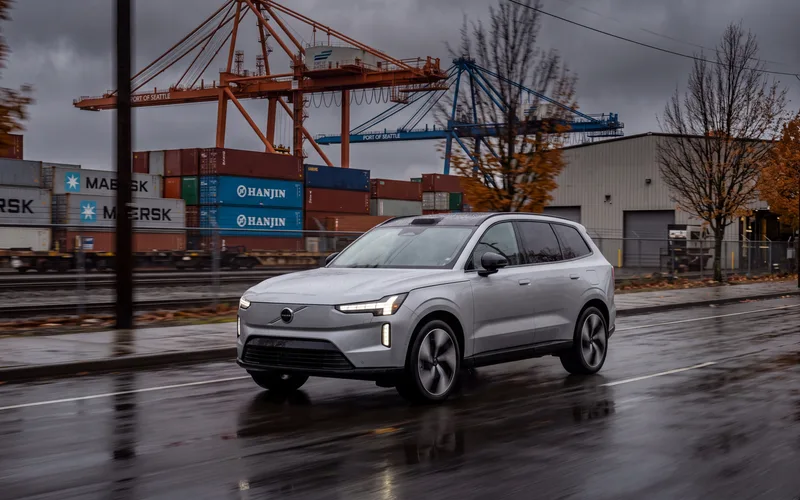 Volvo EX90Mid-Size Luxury SUVBetter at: Resale and space
Same platform, same factory and much of the same hardware, but with a third row, 5,000-pound towing and a brand that will still be selling and servicing cars in the US next year.
Compare 2.73B-
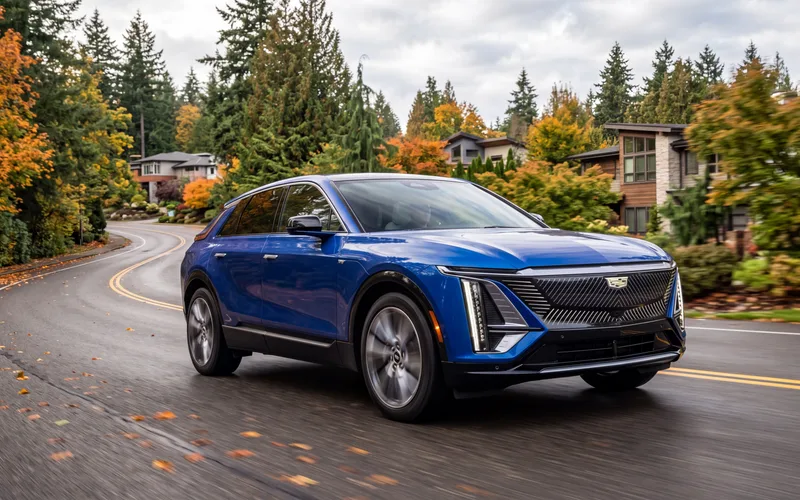 Cadillac LyriqMid-Size Luxury SUVBetter at: Value and support
Costs less, hauls more at 60.8 cubic feet folded, adds Super Cruise hands-free driving, and comes with a nationwide dealer network behind it.
Compare 3.20B+
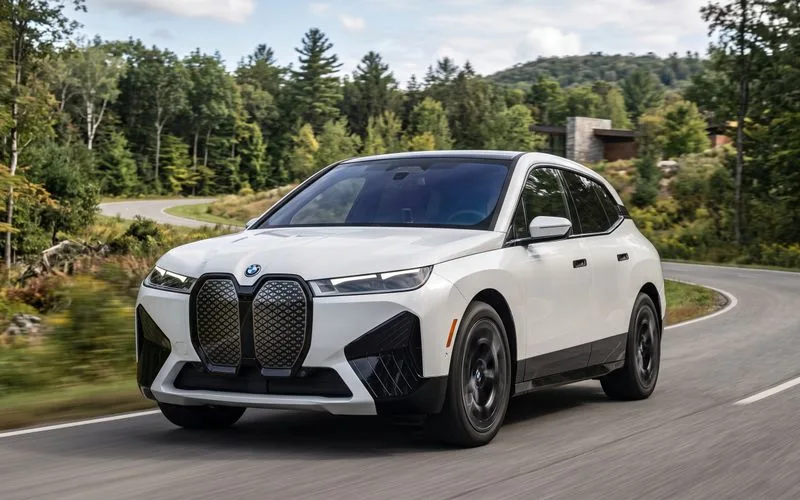 BMW iXMid-Size Luxury SUVBetter at: Cargo space
Matches the Polestar's luxury feel while offering far more cargo room and longer range, with resale that holds up over a five-year ownership period.
CompareSubject scores by year
Hover or tap a score to see what moved it versus the year before. A corner mark flags a big swing.
| Year | Performance | Efficiency | Safety | Space | Cost | Reliability | Tech | Use-case | Driving | Value |
|---|---|---|---|---|---|---|---|---|---|---|
| 2026 | 71 | 79 | 75 | 47 | 20 | 40 | 86 | 59 | 80 | 66 |
| 2025 | 73 | 71 | 70 | 54 | 22 | 41 | 87 | 69 | 84 | 72 |
| 2024 | 70 | 71 | 66 | 53 | 22 | 50 | 87 | 66 | 82 | 71 |
Compare two years
Best fit & conditions
Higher scores mean a better fit for that use case. Learn more about use-case fit →
Subject profile
Detailed scoring by subject
1Performance & PowertrainGrades above the middle of the scale.2.77B-
The 2024 launch model's standard dual-motor powertrain produces 489 hp; the optional Performance Pack raises output to 517 hp.
The standard launch powertrain makes 620 lb-ft, already beyond the SUV normalization band's upper bound; the Performance Pack adds 51 lb-ft.
Polestar's original 2024 launch specification quotes 4.9 seconds for the standard dual-motor model and 4.6 seconds with the Performance Pack.
The dual motors deliver immediate, linear thrust, while the front-motor disconnect operates unobtrusively to reduce cruising losses. Reviewers praised the prototype and production vehicle for smooth, refined power delivery.
Single-speed direct drive eliminates shifts, hunting, and interruption of power. The EV drivetrain supplies seamless acceleration and selectable regenerative braking without conventional transmission compromises.
A 3,500-pound maximum is useful for a small recreational trailer but modest among mid-size luxury SUVs.
AWD is standard throughout the 2024 launch range, with rear-biased calibration, active rear-axle torque vectoring, and a disconnecting front motor. This is considerably more sophisticated than basic on-demand AWD.
Standard adaptive air suspension can raise the body and AWD can actively distribute torque, giving some poor-road ability. However, the Polestar 3 is road-focused and offers no low range, locking differential, skid-plate package, or dedicated off-road trim.
The 2024 launch lineup has one 111-kWh dual-motor EV powertrain in two output calibrations. There is no single-motor, gasoline, hybrid, or PHEV alternative for this model year.
2Efficiency & RangeOne of the Polestar 3's strongest categories.2.83B-
The hardware-matched EPA-certified launch configuration returns 88 MPGe combined on its standard 21-inch wheels. EPA records it as MY2025 because US deliveries slipped, although the vehicle is the unchanged 2024 launch specification scored here.
The certified dual-motor launch configuration is rated at 92 MPGe city on its standard 21-inch wheels.
The certified highway result is 84 MPGe for the standard-wheel dual-motor model.
Final EPA certification improved on Polestar's preliminary 300-mile launch estimate, yielding 315 miles for the standard 21-inch dual-motor configuration.
The 400-volt, 111-kWh battery accepts up to 250 kW DC, a strong rate for the class at launch though below the quickest 800-volt competitors.
Polestar quotes 30 minutes from 10 to 80 percent under suitable DC fast-charging conditions, competitive but not class-leading.
EPA estimates $850 in annual electricity cost for the standard-wheel dual-motor configuration under its standard mileage and energy-price assumptions.
It uses electricity only, avoiding premium gasoline, and its 11-kW onboard charger supports practical overnight home charging. Public charging remains less convenient and generally costlier than home charging, preventing a top-band score.
3SafetyMid-pack among this car's ten categories.2.46C+
NHTSA has not published an NCAP overall star rating for the 2024 Polestar 3. The required numeric field uses the dataset's segment-neutral 4-star convention for an untested vehicle, not a claimed test result.
IIHS has no published crashworthiness evaluation or Top Safety Pick award for the 2024 Polestar 3, so it cannot receive credit for Good test results or an award despite its modern SPA2 structure and nine airbags.
The 2024 launch version included the Pilot and Plus packs as standard, delivering AEB, adaptive cruise, Pilot Assist lane centering, lane keeping, blind-spot monitoring and rear cross-traffic alert/braking. This covers every core feature in the rubric on the volume Long range Dual motor.
Standard forward collision avoidance detects vehicles, pedestrians, cyclists and intersection hazards and can brake automatically, giving it broad nominal capability. With no IIHS vehicle-to-vehicle or day/night pedestrian test result, however, actual performance cannot be scored in the Superior/Advanced band.
Coverage goes well beyond alerts: standard BLIS can steer the vehicle back when a lane change is unsafe, cross-traffic alert can automatically brake for cars, cyclists or pedestrians, and exit assist warns occupants before a door is opened into approaching traffic.
Pilot Assist provides true lane centering and assisted lane changes, but early testing found software reliability issues, including unexplained shutdowns and sensitivity during lane changes. That makes it functional but materially less trustworthy than the best luxury-SUV systems.
Full-speed traffic-following ACC integrates with Pilot Assist and lane-change assistance, but the launch software did not allow following-distance adjustment and reviewers criticized its cancel/resume logic and overly long gap. It is capable highway assistance with notable usability rough edges.
The 2024 Polestar 3 offers only hands-on Level 2 Pilot Assist; no BlueCruise/Super Cruise-style hands-free highway system was available. The optional lidar hardware was described as preparation for future automation, not hands-free functionality at launch.
Active LED headlights with automatic leveling, active high beam and bending functionality were standard on the launch configuration, a strong equipment set. No IIHS headlight result exists, and the 1.3-megapixel HD pixel lamps advertised globally were explicitly unavailable in North America, preventing a Good-rated score.
The low roof and substantial rear bodywork limit natural rearward sightlines somewhat, but the launch-standard Pilot pack's 360-degree camera with 3D view, wide-angle cameras, parking sensors and blind-spot intervention provide comprehensive compensation.
The spacious five-seat cabin, flat rear floor and wide second row support multiple child seats, with two lower-anchor positions and three top tethers. Anchor access is generally straightforward, though three-across usability is not established by a 2024-specific instrumented check.
4Space & ComfortOne of the Polestar 3's weakest categories.1.58D
The Polestar 3 is exclusively a five-seat SUV.
The published North American technical drawing shows unusually generous front clearance despite the standard glass roof.
Front legroom is adequate rather than exceptional for a midsize SUV.
Second-row headroom reaches the top of the SUV normalization range.
The flat floor helps, but the published measurement is mid-pack for a two-row midsize SUV.
No third row is offered.
The rear hold is very small for the vehicle's 192.9-inch midsize footprint.
Maximum volume falls below the framework's 55-cu-ft SUV floor.
A flat rear floor, 3.2-cu-ft underfloor bin, small frunk, ski hatch and 60/40 seat add useful flexibility, though none is class-leading.
Supportive eight-way sports-comfort seats include lumbar adjustment and cushion extensions; contemporary reviewers praised front-seat comfort, though the rear cushion drew mixed comments.
Standard dual-chamber air suspension on the dual-motor launch car combines compliance with strong body control.
Acoustic laminated glass and an inherently quiet EV drivetrain produce a notably hushed cabin.
Three-zone climate, heat pump, heated front seats and parking preconditioning are standard; heated rear seats, wheel and richer filtration require Plus.
5Cost of OwnershipThe Polestar 3's lowest-graded category.0.00F
The 2024 US launch lineup began with the comprehensively equipped Long Range Dual Motor Launch Edition; the substantially cheaper Pilot-only configuration belongs to model year 2025 and is not carried backward.
The regular dual-motor Launch Edition is the representative 2024 configuration; the Performance Pack version was $91,300 including destination.
No industry projection is published for the nominal 2024 launch model, so this uses KBB's closest same-generation Polestar 3 estimate: $1,865 maintenance plus $2,178 repairs.
The nearest published same-generation KBB projection retains $17,853 from $68,900 after five years, or 25.9%; the costlier 2024 Launch Edition may differ, so this is explicitly a proxy.
Polestar's new-vehicle warranty exceeds the common three-year term but retains a 50,000-mile cap.
The battery and electric-drive coverage is competitive for an EV, including eight years and 100,000 miles.
Three years of included scheduled maintenance plus four years of unlimited-mile roadside assistance is a strong luxury ownership package, although no durable charging-credit benefit was verified.
$85,300 volume-trim price minus its estimated resale value after 5 years (25.9% retained, or about $22,093) leaves about $63,207 in depreciation. Add the projected $4,043 in 5-year maintenance and repairs, and owning this vehicle for 5 years costs about $67,250 in total.
6Reliability & QualityOne of the Polestar 3's weakest categories.1.36D
The 2024 Polestar 3 was a first-year vehicle on the new SPA2 EV platform, with no model-specific CR or J.D. Power dependability history. Its launch was delayed by software development and early production-representative vehicles still exhibited UI glitches, making a below-average prediction appropriate despite no established mechanical failure pattern.
Polestar lacked the multi-year sample required for a CR brand reliability ranking and had no eligible three-year J.D. Power VDS standing. The available large-sample initial-quality signal was bottom-tier, so the brand did not provide a reassuring track record for its first SUV.
No NHTSA safety-recall campaign was found for a U.S.-market 2024 Polestar 3, which is favorable, but exposure is unusually limited because production only began in 2024 and U.S. deliveries came later. The software-related launch delay prevents treating the record as genuinely clean or mature.
The volume Long Range Dual Motor's 400-volt, 111-kWh battery and dual-motor SPA2 drivetrain had no high-mileage record in its launch year. Liquid-cooled motors and Volvo/Geely engineering support are reassuring, and no 2024-specific battery or motor failure pattern was found, but the system was too new to earn an above-average durability score.
Materials are a clear strength for the price, with convincing sustainable textiles, laminated acoustic glass and carefully finished trim producing a properly luxurious cabin. Multiple reviewers judged the materials and interior finish notably upscale, although extensive plastic trim and touch controls keep it short of class-leading.
The production-representative vehicles reviewers examined felt solid and well finished, with no recurring 2024 panel-gap, squeak or rattle pattern identified. However, those assessments were largely of prototypes, and their visible UI glitches plus Polestar's poor brand-level initial-quality result make assembly consistency less certain than the premium surfaces suggest.
Polestar's own U.S. retail footprint is sparse compared with established luxury brands, and many Spaces are sales-only with service performed off-site. Volvo-linked service infrastructure, roadside assistance and pickup within 100 miles soften the disadvantage, but owners far from a service point still face meaningful inconvenience.
SPA2 component sharing with the Volvo EX90 and U.S. warranty support help, but the first-year, low-volume Polestar 3 had essentially no aftermarket and model-specific body, cabin and high-voltage parts depended on specialist channels. Its complex air suspension, torque-vectoring rear drive and large battery also create expensive out-of-warranty repair exposure.
7Technology & InfotainmentThe Polestar 3's best-graded category.3.92A+
The portrait center screen is standard.
The clean Google-based layout is logical, but nearly all functions are touch-controlled and early software showed intermittent lag.
Wireless Apple CarPlay is standard, while Android Automotive with Google built-in provides native Android services rather than conventional Android Auto projection.
Google Assistant and Google Maps are deeply integrated into the car and charging workflow.
The launch Plus-equipped car offered an exceptional 25-speaker Bowers & Wilkins system; revised base cars retain a respectable 10-speaker system.
A crisp 9-inch digital driver display is standard and moves with the steering column, though it is smaller and less configurable than some rivals.
The software-defined SPA2 vehicle supports full over-the-air software updates, not merely map refreshes.
The app supports digital key, climate and charging-related ownership functions, plus profile recognition, although connected-service renewal may eventually cost extra.
Four USB-C ports cover both rows and wireless charging is provided, but there is no household AC outlet or vehicle-to-load provision.
Approach-deploying handles, UWB/profile recognition, digital key and a hands-free power liftgate deliver comprehensive keyless convenience.
Pilot-equipped 2024 volume cars include surround-view imaging backed by 12 sensors; camera cleaning is a thoughtful daily-use detail.
A large windshield HUD was included with the Pilot/Plus launch equipment and broadly available on 2024 volume configurations.
8Use-Case FitMid-pack among this car's ten categories.2.46C+
A flat floor, electric child locks and rear ISOFIX/LATCH aid two-child duty, but the small 17.1-cu-ft cargo hold and absent third row constrain larger families.
A broad standard collision-avoidance suite, occupant detection, ten airbags and driver monitoring are strong, but no US crash rating was available for the new 2024 launch model.
The quiet, smooth cabin and three-zone climate serve four adults well, but limited luggage space hurts a long family trip.
Smooth EV response, one-pedal driving, adaptive cruise and excellent camera coverage reduce fatigue, offset by touch-centric controls and substantial width.
Electric energy and routine servicing are favorable, but the heavy dual-motor SUV's roughly 38 kWh/100 miles and large staggered tires are not cheap by EV standards.
A 38.8-ft circle and Pilot surround cameras make it manageable, but 192.9-inch length and 83.5-inch mirror width require care.
AWD torque and a 3,500-lb tow ceiling cover light trailers, but minimal cargo capacity prevents serious work use.
The new-for-2024 SPA2 platform had no fleet durability record, and the luxury cabin/air suspension are not optimized for abuse.
Load eyes, roof rails and a retractable hitch offer basics, but there is no onboard AC power, bed, washable cabin or meaningful upfit ecosystem.
Excellent quietness, seats, air ride and Pilot assistance make it a fine tourer; the launch dual motor's roughly 279-315-mile rating and 30-minute 10-80% charge are good rather than class-leading.
Standard AWD, about eight inches of clearance, adjustable air suspension, roof-load capability and a hitch suit gravel roads and outdoor toys, but this is not a rugged off-roader.
A 60/40 fold, ski hatch, underfloor bin, frunk and hitch add options, yet the unusually small cargo volumes remain limiting.
9Driving ExperienceOne of the Polestar 3's strongest categories.3.61A-
Torque vectoring and well-controlled air suspension disguise considerable mass and provide progressive, predictable handling.
Accurate steering with three selectable weights and credible feedback is better than the luxury-EV norm, though not Porsche-level.
Large Brembo hardware and brake-by-wire blending provide ample capability, with strong one-pedal regeneration reducing routine pedal use.
The 489-hp dual-motor drivetrain delivers immediate, seamless thrust, rear-motor disconnect notwithstanding.
The dual electric motors are near-silent and reviewers found no notable vibration or intrusive motor noise.
The turning diameter is acceptable but not especially tight for an SUV.
Excellent seat and wheel adjustment and a column-mounted driver display help, but small rear glass, touch-sensitive wheel switches and screen-based controls create friction.
Strong acceleration, rear-biased torque-vectoring behavior and playful, predictable chassis tuning give this large luxury SUV genuine character.
10Value & Market PositionGrades above the middle of the scale.2.81B-
The 2024 Launch Edition bundled both Pilot and Plus, giving the base car air suspension, extensive driver assistance, head-up display, premium audio, panoramic glass and upscale comfort equipment.
Its rich standard content, 483-hp dual-motor performance and sophisticated air suspension justify much of the price, but $85,300 placed a five-seat newcomer against larger or more established luxury EVs.
The 2024 US range was essentially one loaded dual-motor configuration with or without a Performance Pack, leaving little budget, drivetrain or equipment flexibility.
Production only began in February 2024, US production followed in August, and delayed customer deliveries kept first-year acceptance modest; improving late-year orders were encouraging but did not make it a mainstream segment seller.
Polestar carries distinctive Scandinavian design and a credible Volvo-performance connection, but its young, niche US presence lacks the loyalty, retail reach and resale strength of established luxury marques.
A $7,500 lease incentive was offered even before broad deliveries, a very meaningful buyer benefit, though such an early incentive also reflected soft EV demand and launch-price pressure.
This is the launch year of the first Polestar 3 generation and the debut application of the dedicated-electric SPA2 platform, so there was no redesign risk at purchase.
Early reviews consistently praised its refinement, design and unusually capable handling, and it collected multiple 2024 Australian Good Design honors; it had not yet built a record of major US comparison-test victories.