

The verdict
A mixed-report mid-size luxury suv, strong on technology and held back by ownership.
The 2026 Polestar 3 is the best-driving electric SUV in its class and one of the worst financial decisions in it. Its 2026 update brings a genuinely competitive 800-volt system — 544 hp, 350 kW charging, 10–80% in about 22 minutes — wrapped in a beautifully built cabin with a 14.5-inch Google-powered screen, and reviewers put its handling nearer a Porsche Macan than any EV rival. But Polestar has been barred from selling model-year 2027 cars in the US and is exiting the market, which is why the brand is discounting roughly $25,000 off a $74,800 sticker and why five-year resale looks like about 30%. Buy it only with eyes open: you are getting a superb car at a steep discount from a brand that will not be selling new vehicles here, with a 31-store service network and just 17.1 cubic feet of cargo space behind the seats.
Jump to scoresStrengths
- Charges as fast as anything on the road
- Drives like a sports sedan that swallowed an SUV
- Best-in-class tech, with Google actually built in
What holds it back
- The brand is leaving the US, and your resale will pay for it
- The smallest cargo hold in the class
- Six recalls in its first full model year
Top alternatives
Cars shoppers cross-shop with the Polestar Polestar 3 2.64C+
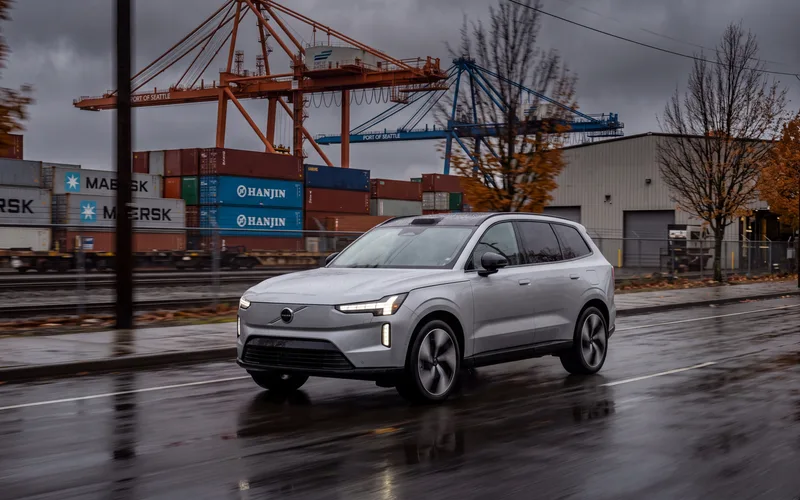 Volvo EX90Mid-Size Luxury SUVBetter at: Resale and space
Same platform, same factory and much of the same hardware, but with a third row, 5,000-pound towing and a brand that will still be selling and servicing cars in the US next year.
Compare 2.73B-
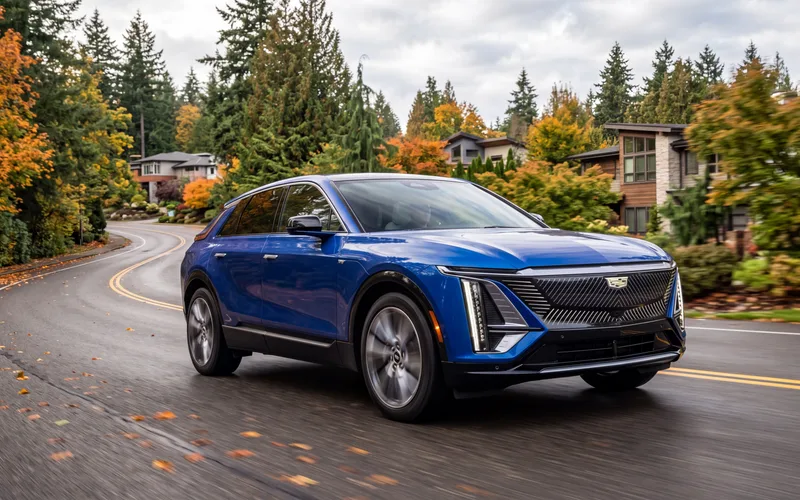 Cadillac LyriqMid-Size Luxury SUVBetter at: Value and support
Costs less, hauls more at 60.8 cubic feet folded, adds Super Cruise hands-free driving, and comes with a nationwide dealer network behind it.
Compare 3.20B+
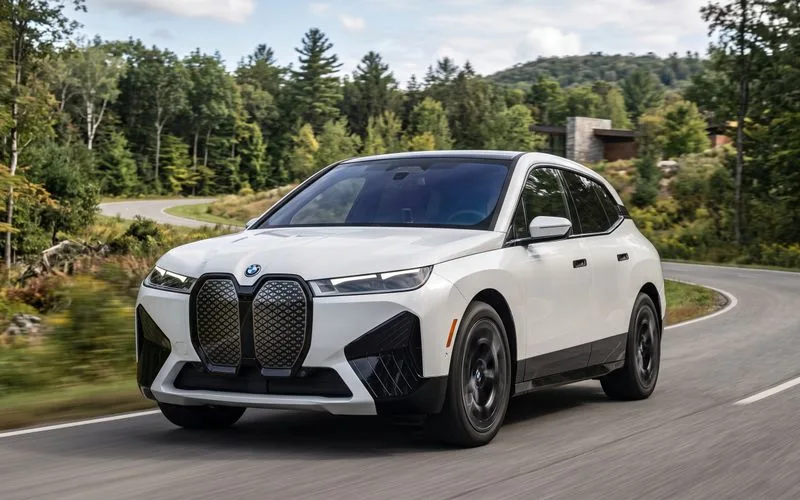 BMW iXMid-Size Luxury SUVBetter at: Cargo space
Matches the Polestar's luxury feel while offering far more cargo room and longer range, with resale that holds up over a five-year ownership period.
CompareSubject scores by year
Hover or tap a score to see what moved it versus the year before. A corner mark flags a big swing.
| Year | Performance | Efficiency | Safety | Space | Cost | Reliability | Tech | Use-case | Driving | Value |
|---|---|---|---|---|---|---|---|---|---|---|
| 2026 | 71 | 79 | 75 | 47 | 20 | 40 | 86 | 59 | 80 | 66 |
| 2025 | 73 | 71 | 70 | 54 | 22 | 41 | 87 | 69 | 84 | 72 |
| 2024 | 70 | 71 | 66 | 53 | 22 | 50 | 87 | 66 | 82 | 71 |
Compare two years
Best fit & conditions
Higher scores mean a better fit for that use case. Learn more about use-case fit →
Subject profile
Academic Probation · NHTSA safety recalls
No NHTSA safety recall is on record for the 2026 Polestar Polestar 3. Other model years of the Polestar 3 have 6 — listed below.
6 recalls on other model years of the Polestar 3 (2025)
Jan 23, 2026Seats: critical fastenersThe striker brackets that secure the rear seat backrest may be loose. As such, these vehicles fail to comply with the requirements of Federal Motor Vehicle Safety Standard number 207, "Seating Systems."
Defect
Polestar Automotive USA, Inc. (Polestar) is recalling certain 2025 Polestar 3 vehicles. The striker brackets that secure the rear seat backrest may be loose. As such, these vehicles fail to comply with the requirements of Federal Motor Vehicle Safety Standard number 207, "Seating Systems."
Risk
A loose rear seat backrest may fall forward and allow cargo to enter the cabin during a crash, increasing the risk of injury.
Remedy
Dealers will inspect and tighten the rear seat backrest striker bracket mounting nuts as necessary, free of charge. Owner notification letters were mailed March 4, 2026. Owners may contact Polestar's customer service at 1-800-806-2504. Polestar's number for this recall is RP1079. Vehicle Identification Numbers (VINs) involved in this recall will become searchable on NHTSA.gov beginning January 30, 2026.
NHTSA campaign 26V037000 ↗Manufacturer no. RP1079213 vehicles potentially affected (all models in the campaign)Owners notified Mar 20, 2026Filed by Polestar Automotive USA, Inc.Filed as POLESTAR 3Aug 26, 2025Structure: body: bumpersThe hood wing front bumper may be missing bolts, allowing the bumper to detach.
Defect
Polestar Automotive USA, Inc. (Polestar) is recalling certain 2025 Polestar 3 vehicles. The hood wing front bumper may be missing bolts, allowing the bumper to detach.
Risk
A detached bumper can become a road hazard, increasing the risk of a crash.
Remedy
Polestar will inspect the hood wing bumper for missing screws. If any screws are missing, the bumper and screws will be replaced. Repairs will be performed free of charge. Owner notification letters were mailed September 30, 2025. Owners may contact Polestar's customer service at 1-800-806-2504. Polestar's number for this recall is RP1064.
NHTSA campaign 25V555000 ↗Manufacturer no. RP106468 vehicles potentially affected (all models in the campaign)Owners notified Sep 30, 2025Filed by Polestar Automotive USA, Inc.Filed as POLESTAR 3Jul 14, 2025Visibility: sun/moon roof assemblyThe panoramic glass sunroof may not be properly secured and can detach.
Defect
Polestar Automotive USA, Inc. (Polestar) is recalling certain 2025 Polestar 3 vehicles. The panoramic glass sunroof may not be properly secured and can detach.
Risk
A detached glass sunroof can become a road hazard, increasing the risk of a crash.
Remedy
Polestar will replace the panoramic glass sunroof, free of charge. Owner notification letters were mailed July 28, 2025. Owners may contact Polestar's customer service at 1-800-806-2504. Polestar's number for this recall is RP1060.
NHTSA campaign 25V420000 ↗Manufacturer no. RP106033 vehicles potentially affected (all models in the campaign)Owners notified Jul 25, 2025Filed by Polestar Automotive USA, Inc.Filed as POLESTAR 3Jul 7, 2025Electrical system: wiringWater may damage the electrical connectors between the engine bay and front bumper cable harnesses.
Defect
Polestar Automotive USA, Inc. (Polestar) is recalling certain 2025 Polestar 3 vehicles. Water may damage the electrical connectors between the engine bay and front bumper cable harnesses.
Risk
Damage to harnesses can cause various electrical malfunctions, such as a loss of power steering assist, increasing the risk of a crash or injury.
Remedy
Polestar will replace the bumper harness and the inline front bumper/engine bay connector on the engine bay harness, free of charge. Owner notification letters were mailed July 31, 2025. Owners may contact Polestar's customer service at 1-800-806-2504. Polestar's number for this recall is RP1063.
NHTSA campaign 25V453000 ↗Manufacturer no. RP1063969 vehicles potentially affected (all models in the campaign)Owners notified Jul 31, 2025Filed by Polestar Automotive USA, Inc.Filed as POLESTAR 3May 7, 2025Back over prevention: softwareThe rearview camera image may not display when the vehicle is placed in reverse. As such, these vehicles fail to comply with the requirements of Federal Motor Vehicle Safety Standard number 111, "Rear Visibility."
Defect
Polestar Automotive USA, Inc. (Polestar) is recalling certain Polestar 3 vehicles. The rearview camera image may not display when the vehicle is placed in reverse. As such, these vehicles fail to comply with the requirements of Federal Motor Vehicle Safety Standard number 111, "Rear Visibility."
Risk
A rearview camera image that does not display reduces the driver's view of what is behind the vehicle, increasing the risk of a crash.
Remedy
The software will be updated by a dealer or through an over-the-air (OTA) update, free of charge. Owner notification letters are expected to be mailed June 24, 2025. Owners may contact Polestar's customer service at 1-800-806-2504. Polestar's number for this recall is RP1057.
NHTSA campaign 25V293000 ↗Manufacturer no. RP10573,664 vehicles potentially affected (all models in the campaign)Owners notified Jun 24, 2025Filed by Polestar Automotive USA, Inc.Filed as POLESTAR 3Dec 18, 2024Electrical system: propulsion systemFluctuations in the 12-volt system may have damaged the High to Low Voltage Converter Module (HLCM).
Defect
Polestar Automotive USA, Inc. (Polestar) is recalling certain 2025 Polestar 3 hybrid electric vehicles. Fluctuations in the 12-volt system may have damaged the High to Low Voltage Converter Module (HLCM).
Risk
A damaged HLCM reduces the system's ability to convert energy, causing a sudden loss in drive power and increasing the risk of a crash.
Remedy
Dealers will replace the High to Low Voltage Converter Module (HLCM), free of charge. Owner notification letters were mailed January 17, 2025. Owners may contact Polestar customer service at 1-800-806-2504. Polestar's number for this recall is RP1043.
NHTSA campaign 24V940000 ↗Manufacturer no. RP10436 vehicles potentially affected (all models in the campaign)Owners notified Jan 17, 2025Filed by Polestar Automotive USA, Inc.Filed as POLESTAR 3
Source: NHTSA Office of Defects Investigation recall database, model years 2024–2026. Recalls are listed by model year as the manufacturer filed them; whether a specific car is affected depends on its VIN — check a VIN at nhtsa.gov ↗. NHTSA model names matched to this page: POLESTAR 3.
Detailed scoring by subject
1Performance & PowertrainGrades above the middle of the scale.2.82B-
2026 is a major change year, not a carry-over: the SPA2 Polestar 3 moves to an 800V architecture with an all-new in-house rear motor, lifting the volume Dual Motor from 489 hp to 544 hp (400 kW). Scored on the Long range Dual motor as the volume AWD configuration.
Dual motor torque drops from the outgoing 620 lb-ft (840 Nm) to 546 lb-ft (740 Nm) with the new 800V rear motor, but still sits far beyond the top of the SUV normalization band.
Manufacturer 0–60 mph figure for the volume Dual motor; the MY26 update leaves the Dual motor at 4.5 s while cutting the Rear motor from 7.5 s to 6.3 s and the Performance from 4.5 s to 3.8 s.
Dual permanent-magnet motors give instant, lag-free delivery with no combustion or hybrid handover to disrupt it, and the rear-axle motor disconnect clutch lets the car coast on one motor and re-engage the second without a perceptible step. Reviewers describe the throttle as a 'hyperspeed button' in Performance form and find the Dual motor effortlessly smooth; a point or two is held back because peak output is limited to 230 kW under sustained load (30-min rating), so repeated hard runs taper.
Single-speed reduction gear at each axle — no shifts to time, no hunting, no CVT drone. Delivery is seamless in both Range and Performance drive modes, with the rear motor disconnect clutch the only transition of any kind and it is engineered to be imperceptible.
3,500 lbs with the factory retractable semi-electric towbar — mid-pack for a mid-size luxury SUV and well behind the mechanically related Volvo EX90's 5,000 lbs. The US rating is deliberately conservative: the same car is rated 2,200 kg (4,850 lbs) in Europe.
AWD is standard on two of the three variants (Dual motor and Performance) and technically sophisticated — true torque vectoring on the rear axle plus a rear motor disconnect clutch that decouples for efficiency and re-engages on demand. It is not standard across the range, though: the entry Rear motor is RWD only, and there is no low range or terrain-mode layer.
Purely pavement-oriented. Ground clearance is 202 mm (7.95 in) on the Dual motor, there are no skid plates, no locking differentials, no low range and no terrain modes, and the volume wheel fitments are 21- and 22-inch on performance-oriented rubber. The air suspension is tuned for aero and load levelling rather than lift.
Battery-electric only, with no gas, hybrid or PHEV alternative — SPA2 is a dedicated EV platform. The three configurations (Rear motor, Dual motor, Performance) are output and battery variations on one drivetrain rather than distinct powertrains, though the 92 kWh RWD versus 106 kWh AWD split does give buyers a real range-versus-power choice.
2Efficiency & RangeOne of the Polestar 3's strongest categories.3.34B+
The volume Long Range Dual Motor on its standard 21-inch wheels is EPA-rated 90 MPGe combined (37.5 kWh/100 mi), up from 88 MPGe for the same 2025 configuration — the gain coming with the 2026 facelift's 800-volt architecture, lighter 106 kWh CATL pack and new in-house rear motor. That is roughly double the combined figure of any combustion mid-size luxury SUV but only mid-pack among electric SUVs, which is the set the class-normalized band measures it against.
EPA city rating of 95 MPGe for the Long Range Dual Motor on 21-inch wheels, improved from 92 MPGe for the 2025 equivalent — the whole of the facelift's combined-cycle gain landed here. Regenerative braking and the rear-motor disconnect clutch make stop-and-go driving the car's strongest efficiency case, but 95 MPGe is still an unremarkable city figure for a two-and-a-half-ton electric SUV.
EPA highway rating of 84 MPGe, unchanged from 2025 — the facelift's efficiency gain landed on the city cycle, not this one. Highway remains the weaker half of the Polestar 3's split: a two-and-a-half-ton SUV shape on wide 21-inch rubber loses more to aerodynamic drag at speed than the city cycle penalizes it, and EPA's own highway-cycle range is 292 miles against 329 in the city.
312 miles is competent but no longer competitive, and it is the one place the 2026 facelift went backwards: the 111 kWh pack gave way to a smaller 106 kWh CATL pack on Dual Motor cars, so the efficiency gain bought no extra range (315 mi in 2025 → 312 mi in 2026), and the entry Single Motor's new 92 kWh pack cut its rating to 291 miles. Rivals on the same money — Lucid Gravity, Rivian R1S, BMW iX, Acura ZDX — all clear 320–400 miles.
The 2026 facelift's headline change: an 800-volt architecture lifts peak DC intake from 250 kW to 350 kW on the volume Dual Motor, which is the ceiling of what public CCS hardware delivers and puts the Polestar 3 level with the fastest-charging EVs sold in the US — well clear of 400-volt mid-size luxury rivals like the Acura ZDX (190 kW), Cadillac Lyriq or Mercedes EQE SUV. The practical caveat is that realizing it needs an 800V-capable 350 kW charger; on a Tesla Supercharger the car is charger-limited to 250 kW.
Polestar quotes 10–80% in as little as 22 minutes for the 800-volt car, more than 25% quicker than the 30 minutes the 2025 model needed, and that is a manufacturer figure for the exact benchmark this item measures rather than one inferred from pack size and peak rate. It roughly halves the ZDX's session and is competitive with Hyundai/Kia E-GMP SUVs; it also partly offsets the mediocre 312-mile range on a road trip. Short of a perfect score because the claim carries the usual "ideal conditions" qualifier — a preconditioned pack on a 350 kW charger — and US buyers leaning on Superchargers are capped at 250 kW and a longer session.
EPA puts annual energy cost at $850 for the volume Dual Motor at 15,000 miles a year — roughly a third of what a comparably quick combustion mid-size luxury SUV burns in premium fuel, and the Performance Pack's figure improved from $1,000 to $950 with the facelift. The figure assumes residential electricity; at typical public DC rates of $0.45–0.55/kWh the same mileage runs closer to $2,700.
No fuel grade to worry about at all, and the 2026 car now meets the top band's architecture test outright — 800 volts, 350 kW, 10–80% in 22 minutes — while an 11 kW onboard AC charger refills the 106 kWh pack overnight on a home Level 2 circuit (EPA: 11 hours at 240V). Held below the top of the band because the US car still ships with a CCS1 inlet through the 2026 model year despite Polestar's 2023 NACS commitment, so Supercharger access costs a roughly $230 adapter and caps the session at 250 kW, where several 2026 rivals now have a native NACS plug.
3SafetyGrades above the middle of the scale.3.07B
NHTSA has never crash-tested the Polestar 3 under NCAP, so no star rating exists for any model year; the estimate leans on the structurally identical SPA2 sibling that NHTSA did test and on the car's own Euro NCAP result.
IIHS publishes no ratings and no award for the Polestar 3, so there is no US crashworthiness verification — but unlike other untested entries there are no known concerns, and the SPA2 twin is a 2026 Top Safety Pick+ with Good in all three updated crash tests.
Every US Polestar 3 ships with the full active-safety set — AEB across four scenario types, ACC, lane keeping, blind-spot with steering assist and cross-traffic with brake support — and the Pilot Pack is standard on US cars, so even Pilot Assist, Lane Change Assist and the 360° camera are included rather than optional.
The AEB hardware and scenario coverage are broad and Euro NCAP's safety-assist result is solid, but there is no IIHS front crash prevention rating at all, and the 79% vulnerable-road-user score is mid-pack rather than superior — nighttime pedestrian performance is unverified in US testing.
Both systems are standard and both intervene rather than merely warn — blind-spot monitoring adds steering assist and cross-traffic alert adds automatic braking — with a rear-facing exit warning for pedestrians and cyclists on top.
Lane departure warning and lane keeping aid are standard and Pilot Assist centers to roughly 90 mph, but reviewers and owners consistently describe the centering as dropping out on imperfect lane markings and correcting abruptly — functional rather than trusted.
The Volvo-derived full-speed-range adaptive cruise is standard and works well on its own, but the combined highway-assist behavior inherits Pilot Assist's inconsistent lane centering, leaving it a capable system with rough edges rather than a refined one.
There is no hands-free highway system of any kind — Pilot Assist is a hands-on lane-centering assist requiring continuous steering-wheel contact, and the LiDAR-enabled autonomy Polestar has previewed is not offered on US cars.
Active LED headlights with automatic leveling and auto high beam are standard, but IIHS has never rated them and the adaptive Pixel LED matrix function — the feature that would lift this into the top band — remains disabled on US cars pending NHTSA compliance procedures.
The fastback roofline, heavy B- and C-pillars and shallow rear glass genuinely restrict natural sightlines, and while the standard 360° camera, park assist and blind-spot system compensate well at low speed, the compensation is a workaround rather than a fix.
Cars.com graded the LATCH hardware and both rear-facing configurations an A with easy-to-find anchors and generous rear space, and Euro NCAP's child-occupant result is a record — held back only by fixed head restraints that interfere with forward-facing seats and the inability to fit three across.
4Space & ComfortOne of the Polestar 3's weakest categories.1.15D
The Polestar 3 is a strict two-row five-seater across the entire 2026 US lineup — Long range Single motor, Long range Dual motor and Performance all seat five, with no six- or seven-seat configuration offered.
Polestar does not publish SAE interior dimensions for any of its models, so this is estimated from the 2026 car's 64.1 in overall height, standard panoramic laminated glass roof and unusually low seating position, benchmarked against same-height rivals. Reviews describe front headroom as adequate for most adults but trimmed slightly by the glass roof.
Estimated from the SPA2 platform sibling Volvo EX90, which shares the 117.5-in wheelbase, floorpan and front seat mounting and is rated 40.9 in SAE front legroom; reviewers consistently report generous front leg and shoulder room in the 3.
The fastback roofline costs second-row head clearance relative to boxier mid-size SUVs, but the low floor-mounted rear bench offsets much of it; estimated against the similarly low-roofed Cadillac Lyriq (37.4 in second-row headroom). Reviews call rear headroom good for adults except the very tall.
Because the 3 forgoes a third row, the second-row bench sits farther back than on the same-wheelbase Volvo EX90 (36.5 in SAE), and the flat BEV floor makes the space usable across all three positions; reviewers describe rear legroom as a standout.
There is no third row on any 2026 Polestar 3 — the car is a five-seat-only mid-size SUV, so buyers needing six or seven seats must look to the platform sibling Volvo EX90 or the Kia EV9. Scored in the low band per the rubric for a missing third row, in line with other two-row luxury SUVs in the set (BMW iX 15, Cadillac Lyriq 12, Mercedes EQE SUV 5).
Polestar's published 17.1 cu ft is the smallest figure of any mid-size luxury SUV in the set and is a genuine weak point, though part of the gap is methodology — Polestar measures to the top of the seatbacks while most manufacturers quote to the roof, and a 90-litre underfloor compartment plus a 1.1 cu ft frunk sit outside that number.
Even folded, the 3 trails two-row luxury EV rivals (Lyriq 60.8, BMW iX 77.9 cu ft) — the low fastback roof and shallow load height (636 mm) cap total volume despite a useful 74.0-in load floor length.
Competent rather than clever: a 90-L underfloor bin, flat BEV floor, ski hatch, second-row cubbies with two USB-C ports, wireless charging and a reversible/foldable load floor (Plus pack) cover the basics, but the 1.1 cu ft frunk is token and there is nothing on the order of a Model X-style megaconsole or onboard AC power.
The sports comfort front seats — 8-way power with powered multi-directional lumbar and a mechanical cushion extension — draw consistent praise for long-haul support, and the rear bench is well shaped with a flat floor; the score is held under the mid-80s because ventilation, massage and powered side bolsters require the Nappa upgrade on top of the Plus pack rather than being available on the volume Dual motor trim.
Dual-chamber active air suspension with adaptive dampers is standard on both Dual motor variants (the volume configuration) and is widely rated a segment strength — compliant over broken pavement without float, and unusually tolerant of the optional 21- and 22-inch wheels. Only the Long range Single motor goes without it.
Laminated UV/IR noise-reducing panoramic glass is standard and reviewers describe the cabin as whisper-quiet at speed, with only coarse-surface tyre roar intruding; the Plus pack adds active road noise cancellation, headrest speakers, an infrared windscreen and acoustic rear glass, so the very quietest configuration costs extra.
Three-zone climate with a rear panel, a heat pump, heated front seats, a panoramic roof and a soft-close power tailgate with foot sensor are standard on every 2026 trim, and app-based remote preconditioning is built in — but the heated steering wheel and heated rear seats sit behind the $5,500 Plus pack (which itself requires the Pilot pack), and ventilated/massaging front seats behind the Nappa upgrade above that, which is stingier than the Mercedes EQE SUV or Tesla Model X at similar money.
5Cost of OwnershipThe Polestar 3's lowest-graded category.0.00F
US MY2026 pricing carries over from 2025 despite the mid-cycle 800V update: the rear-drive Long Range Single Motor opens at $67,500 before a $1,400 destination charge. At $68,900 delivered it sits above the top of the $25,000–$65,000 SUV pricing band, so the item floors out — though it undercuts the mechanically related Volvo EX90 ($78,090) by roughly $9,000.
The AWD Long Range Dual Motor is the volume configuration — it is the car Polestar advertises and leases against, while the single-motor RWD is a price leader and the Performance Pack is low-volume. The 2026 update folds the formerly $9,000 Plus pack into standard equipment, so the sticker buys more than it did, but $74,800 delivered is still far above the $27,000–$68,000 SUV band and the item floors out. Worth noting for buyers: actual transaction prices are nowhere near MSRP — Polestar is running $25,000 off purchase or finance through 2026-08-31 as it clears US inventory.
The strongest item on the card. A BEV service schedule of one visit every 2 years/20,000 miles with no oil, plugs or transmission work, and Polestar covers the first 3 years/30,000 miles of it — so the owner's first scheduled visit is free. The figure is set above its EX90 twin (~$2,634) to price in real orphan-brand exposure: with Polestar leaving the US market, a 32-store service network and out-of-warranty parts supply are a genuine cost risk that a young dataset does not yet show. Estimates vary widely because the model only began US deliveries in mid-2024.
By far the largest cost of owning this car, and the single fact a buyer most needs to know. Three forces stack: iSeeCars already ranks the Polestar 3 at 37.6% retention, the $7,500 federal credit expired 2025-09-30 and removed the floor under used luxury-EV pricing, and — decisively — the US Commerce Department's Connected Vehicle Rule bars Polestar from selling MY2027 cars, so the brand is exiting the US entirely. Factory discounts of $25,000 off MSRP set the real transaction price far below sticker, which collapses retention measured against MSRP, and an orphaned nameplate with a shrinking service network carries a further used-market discount. The estimate is marked below every published forecast because those forecasts predate the exit.
Polestar's standard 4-year/50,000-mile coverage for manufacturing and material defects — a year better than the German luxury norm, short of the 5-year terms from Hyundai/Genesis and Kia, landing squarely mid-band. Polestar has publicly committed to honoring existing warranties in full after the US sales ban.
The federally mandated 8-year/100,000-mile battery term, which is class-standard — but Polestar extends it to the electric motors as well, a meaningful edge over Volvo, where the drive units fall under the shorter 4-year basic warranty. Class-competitive rather than class-leading.
A genuinely strong included-ownership package, and notably better than what its Volvo twin now offers. Three years/30,000 miles of complimentary scheduled maintenance covers the entire first service interval and then some, delivered with pickup, drop-off and an exterior clean; on top sit 4 years of 24/7 roadside assistance, 12-year corrosion cover, over-the-air software updates and Google built-in services. Volvo cut the EX90 to a single covered service at 2 years/20,000 miles for MY2026, so Polestar is clearly ahead here. What holds it out of the top band is that the perks are only as good as the network delivering them: with Polestar exiting the US, roughly 32 retailers remain, service coverage is geographically thin, and there is no free-charging credit in the current US package.
$74,800 volume-trim price minus its estimated resale value after 5 years (30% retained, or about $22,440) leaves about $52,360 in depreciation. Add the projected $3,400 in 5-year maintenance and repairs, and owning this vehicle for 5 years costs about $55,760 in total.
6Reliability & QualityOne of the Polestar 3's weakest categories.0.67F
No published predicted-reliability rating exists — Consumer Reports lists the 2026 Polestar 3 as "NA" and excluded Polestar from its brand rankings for insufficient data — so the available signal is the model's own first-year record: six NHTSA recalls on the 2025 car and persistent owner-reported software faults. Its SPA2/Superset platform twin, the Volvo EX90, carries the same troubled software reputation, and 2026 layers an all-new 800V architecture on top.
Polestar sits at the bottom of the industry on the one large-sample quality study that covers it, and is absent from the other for lack of data. There is no multi-year dependability record showing improvement, and the Polestar 2's own recall history reinforces the pattern rather than offsetting it.
Six NHTSA recall campaigns hit the 2025 Polestar 3 — the nameplate's first full US model year — spanning propulsion, structural attachment and safety-system failures rather than one isolated defect. Several are hardware remedies requiring parts replacement, not OTA fixes, and one is an outright FMVSS non-compliance.
The dual permanent-magnet/asynchronous motor and CATL battery hardware shows no pattern of failures and is backed by an 8-year/100,000-mile battery warranty, but nothing here is proven: SPA2 launched in 2024, the first year already produced a propulsion-system recall for a damaged HV-to-LV converter, and 2026 is a change year, not a carry-over.
The cabin is the car's clearest strength and reads as genuinely premium for a mid-size luxury EV — soft-touch surfaces almost everywhere, credible switchgear, and material choices that make the sustainable alternatives feel like an upgrade rather than a compromise. Comfortably competitive with German rivals at the price.
Reviewers consistently describe the assembled car as solid and consistent, but the recall record is dominated by assembly defects rather than design flaws — missing bumper bolts, unsecured sunroof glass and loose seat-backrest brackets are all things that left the line wrong. Design-level quality is high; execution has not matched it, and the brand's initial-quality standing corroborates that.
Roughly 31 US locations is among the thinnest networks of any brand sold here, and it is now winding down: the Commerce Department's connected-vehicle denial ends new Polestar sales in the US after the 2026 model year, leaving retailers without a new-car business. Polestar pledges continued service access and OTA support, but a 2026 buyer cannot yet confirm a long-term service point in most of the country.
Routine upkeep is cheap and largely prepaid, and sharing the Ridgeville plant and much of the SPA2 parts bin with Volvo's EX90 helps supply. Against that, collision and out-of-warranty parts are dealer-only with essentially no aftermarket, insurance is high for the class, and the US market exit introduces genuine supply and turnaround risk that a normal luxury brand does not carry.
7Technology & InfotainmentThe Polestar 3's best-graded category.3.85A+
A portrait 14.5-inch center display is standard across the entire Polestar 3 range — Single Motor, Dual Motor and Performance — with no smaller screen on any trim.
Android Automotive with Google built-in is one of the quickest and most logical native systems in the segment, and the MY26 update swaps in a far more powerful central computer (NVIDIA DRIVE AGX Orin, 254 vs 30 TOPS) plus Android 15. It is held back by near-total touchscreen dependence — mirrors, steering-column adjustment and vents all live in menus with almost no physical controls.
Wireless Apple CarPlay is standard, and Polestar added Android Auto to the Polestar 3 in its 2026 software release, so both projection systems are now available on every trim on top of the native Google stack. Android Auto arrived only via that update rather than shipping from launch.
Google built-in delivers native Google Maps with live traffic and EV route planning against the car's own state of charge, plus Google Assistant (with Gemini rolling out) for natural-language commands — the native stack most owners actually prefer over phone projection.
The optional Bowers & Wilkins system — 1,610 watts, 25 speakers including headrest drivers, Dolby Atmos and an Abbey Road Studios mode — is among the best factory audio setups sold in any SUV. The 300-watt, 10-speaker standard system is merely adequate, and the upgrade is bundled inside the Plus pack rather than sold on its own.
A crisp full-digital 9-inch driver display is standard on every trim, but it is small by luxury mid-size standards and deliberately minimal — Volvo-style, with limited layout configurability compared with the wide, highly customizable clusters in the BMW iX or Mercedes EQE SUV.
Polestar ships regular whole-vehicle over-the-air updates that add real features rather than just map data — the 2026 releases alone brought Android Auto, Android 15, Launch Mode for Performance cars, and improved driver monitoring and exit assist.
The Polestar app covers the expected set — remote lock/unlock, climate preconditioning, vehicle locate, charge status and scheduling — and digital key works across Apple, Samsung and Google devices at no extra cost. Owner reports of occasional connection lag and slow refresh keep it short of the best-in-class apps.
Four USB-C ports (2 front, 2 rear) plus a standard Qi wireless charging pad cover the basics for a five-seat SUV, but provision is thin for the money: a single 12V outlet, no household AC outlet, and no vehicle-to-load export in the US car.
Proximity keyless entry is standard with flush door handles that extend as the driver approaches, and phone-as-key is offered broadly across Apple, Samsung and Google devices — the full keyless suite with no upper-trim gating.
Park assist with cross-traffic alert and a rear camera are standard, and the Pilot pack adds high-resolution 360-degree cameras with a 3D view plus Park Assist Pilot semi-automated parking. The best hardware sits behind a pack rather than being standard on the base car.
A large 9x3-inch head-up display is offered, but only inside the Plus pack, which itself requires the Pilot pack — so the base Single Motor volume trim leaves the showroom without one unless the buyer steps up through two packs.
8Use-Case FitMid-pack among this car's ten categories.1.96C-
The car-seat hardware itself is excellent — Cars.com graded LATCH and both rear-facing configurations an A, and the flat BEV floor plus a second row pushed rearward (there is no third row to make room for) gives class-leading rear legroom for a bulky rear-facing seat. What holds it to the middle band is the gear half of family logistics: 17.1 cu ft behind the seats is the smallest hold of any mid-size luxury SUV in the set, so a stroller plus a week's shopping is a genuine squeeze, only two car seats fit across, and the fixed rear head restraints fold but do not raise, interfering with forward-facing seats.
The safety content families care about is standard rather than optional: every US car gets AEB across four scenario types, blind-spot monitoring with steering assist, cross-traffic alert with braking, exit assist, infrared driver monitoring and the Pilot pack, and Euro NCAP recorded a 93% child-occupant score — the highest of any passenger car it had tested in nine years. Held out of the top band because there is no US crash verification at all: NHTSA has never NCAP-tested the Polestar 3 and IIHS publishes no ratings for it, so families are relying on European testing and on the structurally identical Volvo EX90's results.
Passengers travel well — three-zone climate with a rear panel, two rear USB-C ports, a panoramic roof, a whisper-quiet cabin and unusually generous second-row legroom over a flat floor make multi-hour stints easy for four adults. The trip logistics are the weak half: luggage space with all seats occupied is the smallest in the class, there is no rear-seat entertainment or household outlet, heated rear seats and the noise-cancelling B&W audio sit behind the $5,500 Plus pack, and a real-world 260–290 highway miles means a charging stop every 2.5–3.5 hours with a family aboard.
This is what the Polestar 3 is best at. Dual-chamber active air suspension is standard on the volume Dual motor, the cabin is among the quietest in the segment, one-pedal drive plus instant single-speed torque removes the whole stop-and-go workload, and full-speed adaptive cruise is standard. Two things keep it out of the 90s: near-total touchscreen dependence — mirrors, vents and the steering column all live in menus — and regen that reviewers find slightly aggressive even at its lightest setting.
Per-mile running cost is a genuine strength: EPA rates the volume Dual motor at 95 MPGe city and $850/yr in energy at 15,000 miles, the city cycle is the car's strongest efficiency case thanks to regen and the rear-motor disconnect clutch, and there is no oil, plugs or transmission service — Polestar covers the first 3 years/30,000 miles of a 2-year/20,000-mile schedule outright. Held below the top band by the consumables a 5,700-lb SUV on 21-inch performance rubber actually goes through, and by ~$2,450/yr insurance on a $75,000 car.
Mid-band: the 38.8-ft curb-to-curb turning circle is reasonable for a 117.5-in wheelbase, and the standard Pilot pack brings 360° cameras with 3D view plus Park Assist Pilot semi-automated parking, which does most of the work in a tight garage. But the underlying car is 192.9 in long, 77.4 in wide (83.5 in across the mirrors) and 5,700 lb, and natural sightlines are genuinely poor — the fastback roofline, heavy B- and C-pillars and shallow rear glass are the most consistent complaint in reviews. The camera suite is a workaround rather than a fix.
Not meaningfully a work vehicle. The 3,500-lb rating on the Dual motor (2,000 lb on the Single motor) covers a small utility or box trailer and nothing beyond it — the mechanically related Volvo EX90 is rated 5,000 lb — and it requires the optional retractable towbar. Cargo is the real disqualifier: 17.1 cu ft behind the seats and 49.8 cu ft folded is the smallest hold in the mid-size luxury SUV set, with no bed, no load-oriented body style and no payload headroom in a 5,700-lb curb weight. The powertrain has torque to spare under load, but towing a real trailer cuts an already-modest 312-mi range roughly in half.
A luxury design brief with no fleet history and specific hard-use liabilities: dual-chamber air suspension, 21- and 22-inch wheels on summer or all-season performance rubber, a full-glass panoramic roof, and an interior of textile/Nappa surfaces with essentially every control on a touchscreen — nothing here is chosen for abuse or hose-out cleaning. The SPA2 platform and Volvo-derived engineering are sound and the drive units carry 8 years/100,000 miles, but the nameplate has only been on sale in the US since mid-2024 and Polestar is exiting the market, so long-term parts and service support under commercial mileage is an open risk rather than a proven quantity.
Almost no work-oriented provision. There is no household AC outlet and no vehicle-to-load export in the US car — just a single 12V socket and four USB-C ports — so nothing on board will run a tool. The roof is bare with no factory rails (crossbars are an aftermarket fit) and rated to only about 220 lb including the carrier, the hitch is a $1,850-to-$3,000 option that lands as a 1.25-in receiver rather than the 2-in standard most work accessories assume, and there is no upfit, rack or ladder ecosystem of any kind. What exists is consumer-grade: cargo tie-down points, a 90-L underfloor bin, a ski hatch, and a foldable/reversible load floor that itself requires the Plus pack.
A very good tourer with one real endurance limit. The 8-way sports comfort seats draw praise for all-day support, the cabin is among the quietest in the class, standard air suspension isolates broken highway well, and the 2026 move to 800V takes DC charging to 350 kW — 10–80% in about 22 minutes, eight minutes quicker than the 2025 car. The limit is how often you stop: 312 mi EPA becomes 260–290 real miles at 70–75 mph in the Dual motor, behind the R1S, Gravity, iX and Vistiq at the money, and the CCS1 port needs a ~$230 adapter to use Superchargers. Pilot Assist's lane centering is also the weakest ADAS element, dropping out on imperfect markings rather than reducing fatigue.
Good for gravel roads and a bike rack, little beyond that. AWD with true rear torque vectoring is standard on the Dual motor and the 7.95 in of ground clearance clears a rutted trailhead access road, but the air suspension has no lift setting, there are no terrain modes, no low range, no skid plates, and the volume fitment is 21- or 22-inch wheels on summer or all-season performance tires. For camping the gaps are concrete: no vehicle-to-load or AC outlet to run gear, a 220-lb roof limit that rules out a roof tent, 3,500 lb of towing for a small teardrop at best, and rear seats that fold to a load floor rather than anything sleepable.
The most restrictive cargo bay in the mid-size luxury SUV set, and the flexibility around it does not make up the deficit. 17.1 cu ft behind the seats and 49.8 cu ft folded trail the Lyriq (60.8) and BMW iX (77.9) badly, and part — but only part — of the gap is Polestar measuring to the seatbacks rather than the roof. The useful bits are real: a 74-in load length folded, a 90-L underfloor bin, a ski hatch through the 60/40 seat backs and a 636-mm load height. Against them, the frunk is a token 1.1 cu ft, the reversible load floor requires the Plus pack, the roof is bare with no factory rails, and a hitch for a cargo or bike carrier is a $1,850+ option on a 1.25-in receiver.
9Driving ExperienceOne of the Polestar 3's strongest categories.3.46B+
Best-in-class body control and grip for a mid-size luxury EV SUV: 0.95-0.96 g on the skidpad despite a ~5,700 lb curb weight, with dual-chamber active air suspension (standard/nimble/firm) and true rear-axle torque vectoring standard on Dual Motor. For 2026 Polestar fitted updated anti-roll bars and shifted power delivery further rear-biased, sharpening turn-in further.
Accurate and quick off-center with three selectable weights (light/standard/firm), and 2026's new steering software is aimed squarely at making it more direct. It is precise rather than communicative, though — light for the mass it manages, and short of a Macan or Stelvio for genuine road feedback.
Brembo hardware with 400 mm front / 390 mm rear ventilated discs is standard across the range and delivers a 97 ft stop from 60 mph — outstanding for a 5,700 lb SUV. The brake-by-wire system blends friction and regen cleanly; the deduction is that pedal travel shortens and feels more synthetic as regen strength is raised, with the most natural pedal coming only with regen switched off.
Dual permanent-magnet motors on a single-speed drive deliver seamless, instantaneous response with no shift or stop/start events to calibrate around — 0-60 mph in roughly 4.2-4.8 s depending on trim. The rear motor disconnect clutch engages and releases transparently, and the only criticism is a slightly gradual regen onset in the most aggressive setting.
Effectively silent from the driveline — no motor whine even at full throttle, and no vibration through the controls. Held just short of the ceiling because the 22-inch Pirelli P Zeros on Performance Pack cars let noticeable road roar into an otherwise hushed cabin on coarse surfaces, which the optional active noise cancellation only partly masks.
Mid-pack for a mid-size luxury SUV — the 117.5 in wheelbase and wide 20-22 in wheels keep it from feeling nimble in parking structures or on tight U-turns.
The seat and wheel themselves are excellent — supportive low-set buckets, wide adjustment range, and a column-mounted driver display that never hides behind the rim. The score is dragged down by Polestar's decision to bury routine physical adjustments in the 14.5-inch touchscreen: mirror aim, steering column position and even the glovebox release have no hardware control, which is the single most consistent complaint in reviews.
Genuinely enjoyable and the reason enthusiasts recommend it over its Volvo EX90 platform twin — reviewers repeatedly reach for the Macan comparison, which almost nothing else in the electric mid-size luxury SUV class earns. It stops short of the top band because the character is deliberately restrained and quiet rather than theatrical, and the firm, occasionally choppy ride is a real cost paid for the body control.
10Value & Market PositionMid-pack among this car's ten categories.2.43C+
Strong core content and an unusually generous ownership package, but Euro-style pack gating puts a 360-degree camera, head-up display, heated steering wheel/rear seats and Pilot Assist behind the Pilot/Plus Packs — items Genesis and Hyundai/Kia luxury EVs include standard at this price. Base audio is a modest 10-speaker/300W system on a $67,500 vehicle.
At MSRP the content is competitive for a mid-size luxury EV SUV, and at real transaction prices — roughly $25,000 off — the 536-hp Dual Motor lands near $48–50k, which is standout bang-for-buck against an EQE SUV or iX. The discount is partly compensation for risk, though: the federal EV credit is gone and 5-year retention is a weak 37.6%, so much of the up-front saving is given back in depreciation.
Three powertrains spanning roughly $67.5k–$79.4k with Pilot/Plus/Performance packs and a decent color and wheel palette, but the range is narrow by segment standards: five seats only — no third-row option, unlike the mechanically related Volvo EX90 as well as the Vistiq and EV9 — and Plus Pack requires Pilot Pack, which limits mixing. With US supply now clearance stock rather than factory orders, real configuration choice is whatever remains in inventory.
US volume is tiny and collapsing, and market acceptance is not merely weak but terminal: Polestar was denied authorization under the US Connected Vehicle Rule and cannot sell model-year 2027 vehicles here, making the 2026 Polestar 3 effectively the last one available.
The design and engineering credibility is real — Scandinavian minimalism, Volvo-derived hardware, genuine enthusiast respect — but in the US the badge is now a liability rather than a halo: a brand exiting the market leaves buyers facing thin retail and service coverage plus open questions on parts, software support and OTA continuity, and the market has already priced that in through weak residuals.
Scored on buyer benefit as the item directs, this is close to the best deal environment on any new luxury SUV — roughly a third off MSRP, stackable loyalty and conquest bonuses, and subsidized financing. It is plainly clearance pricing driven by the market exit rather than routine incentive activity, which is why it stops short of the very top of the band.
2026 is a substantial change year, not a carry-over: the SPA2 generation launched for 2024 gets an 800-volt architecture with 350-kW charging, a new in-house rear permanent-magnet motor, a front-motor disconnect and large power increases across all three variants, putting its charging hardware in the current top tier. There is no redesign risk to worry about — but only because there is no MY2027 successor for the US.
Consistently well-reviewed and singled out for chassis quality — reviewers place its handling near the electric Macan — with the 2026 charging and power upgrades lifting verdicts further. It is rarely the outright winner of a comparison test, though: infotainment quirks, poor rear visibility and the five-seat-only packaging cost it, and no major US award (NACTOY, World Car, IIHS Top Safety Pick) is on record for the model.