

The verdict
A struggling sports car, strong on driving and held back by efficiency.
The 2018 Porsche 718 Boxster is one of the best-driving cars you can buy at any price — a mid-engine roadster with near-perfect 45/55 weight balance, steering borrowed from the 911 Turbo, and a chassis reviewers routinely rate above cars costing twice as much. What you give up is nearly everything else: two seats, 9.7 cubic feet of split trunk space, 25 MPG on required premium fuel, an estimated $14,000 in five-year maintenance, and a turbocharged flat-four whose coarse note the motoring press panned almost unanimously. At $58,450 delivered before Porsche's famously expensive options list, it is a pure-driving purchase, not a practical one. The saving grace is money: at roughly 68% resale retention after five years, it holds value better than almost any convertible sold in America.
Jump to scoresStrengths
- A chassis that defines the segment
- Genuinely fun without needing a racetrack
- Resale value near the top of the convertible class
What holds it back
- Expensive to feed and to keep
- Two seats and 9.7 cubic feet — that's the whole car
- The flat-four sounds wrong, and 2018 offers no escape
Top alternatives
Cars shoppers cross-shop with the Porsche 718 Boxster 2.48C+
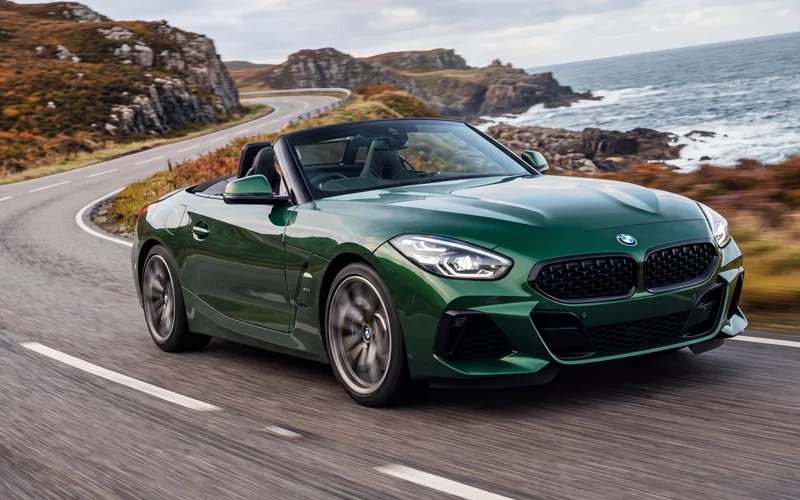 BMW Z4Sports CarBetter at: Standard equipment
Same two-seat roadster brief with far more standard equipment for the money, if you can live with less chassis magic.
Compare 2.67C+
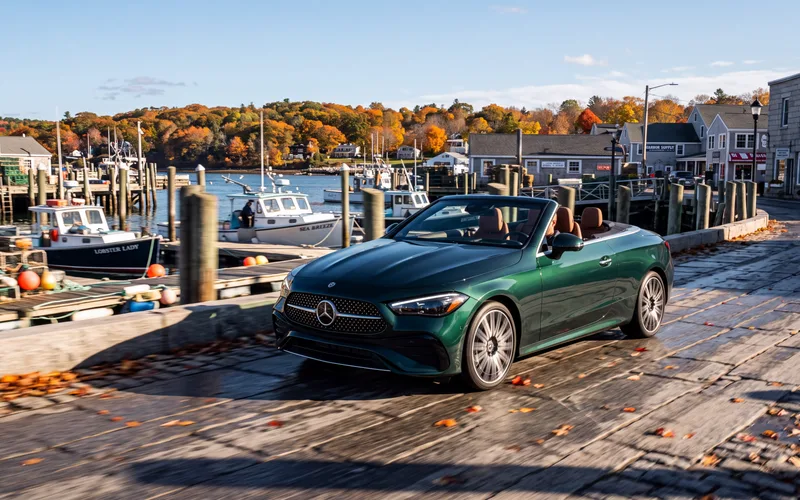 Mercedes-Benz CLE ConvertibleLuxury CoupeBetter at: Comfort and tech
Adds two rear seats, modern screens and a full driver-assistance suite for buyers who want a comfortable open car rather than a sports car.
Compare 2.48C+
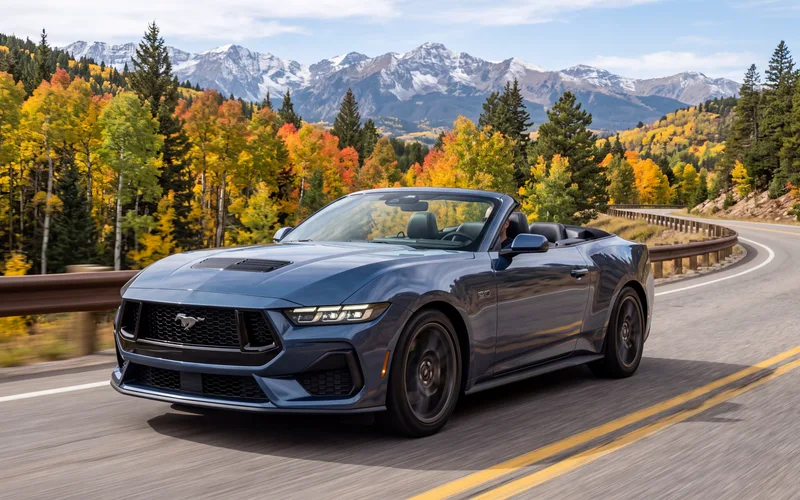 Ford Mustang ConvertibleSports CarBetter at: Value
480 hp, back seats and standard safety tech for roughly $24,000 less than a base Boxster.
CompareHow it's evolved
9 scored model years · 2017–2025
Subject scores by year
Hover or tap a score to see what moved it versus the year before. A corner mark flags a big swing.
| Year | Performance | Efficiency | Safety | Space | Cost | Reliability | Tech | Use-case | Driving | Value |
|---|---|---|---|---|---|---|---|---|---|---|
| 2025 | 59 | 16 | 36 | 52 | 12 | 79 | 40 | 30 | 85 | 61 |
| 2024 | 59 | 16 | 36 | 52 | 18 | 78 | 40 | 30 | 85 | 62 |
| 2023 | 59 | 16 | 36 | 52 | 19 | 80 | 40 | 30 | 85 | 62 |
| 2022 | 59 | 16 | 36 | 52 | 22 | 80 | 40 | 29 | 85 | 59 |
| 2021 | 54 | 16 | 36 | 52 | 31 | 78 | 43 | 30 | 85 | 59 |
| 2020 | 58 | 16 | 36 | 51 | 30 | 76 | 41 | 29 | 84 | 58 |
| 2019 | 55 | 24 | 34 | 50 | 32 | 74 | 39 | 29 | 84 | 60 |
| 2018 | 55 | 21 | 42 | 49 | 34 | 73 | 39 | 27 | 84 | 63 |
| 2017 | 54 | 22 | 37 | 49 | 33 | 70 | 34 | 28 | 83 | 61 |
Compare two years
Best fit & conditions
Higher scores mean a better fit for that use case. Learn more about use-case fit →
Subject profile
Detailed scoring by subject
1Performance & PowertrainMid-pack among this car's ten categories.1.70C-
The volume 718 Boxster carries the 2.0L turbocharged flat-four at 300 hp, unchanged since the 982 generation launched for 2017. 2018 is the year the GTS joins the range (announced October 2017 per Wikipedia) at 365 hp, but the base car that anchors this score is untouched. A modest headline number against a V8 Mustang GT convertible or Corvette convertible, though the 718's case has always rested on mass and balance rather than peak output.
280 lb-ft is mid-band on paper, but it arrives at just 1,950 rpm and holds flat to 4,500, so the base roadster pulls hard through the mid-range against a sub-3,100 lb curb weight. Reviewers of the era singled out the low-end torque as the turbo four's strongest trait even while criticizing its sound. Still well short of the big-displacement American convertibles' torque numbers.
Porsche quotes 4.9 seconds to 60 for the base car with the standard 6-speed manual, the volume-configuration figure for 2018 since PDK did not become the standard gearbox until the 2025 refresh. The new-for-2018 GTS is considerably quicker at a manufacturer-claimed 3.9 s with PDK (MotorWeek tested 3.7 s), but the base trim remains the representative figure. Quick but not remarkable in a segment where a base Corvette convertible is under 4 seconds; the mid-engine layout keeps the figure repeatable rather than a launch-control party trick.
The 2.0T pulls strongly and responsively in the mid-range, but 2018-era reviews describe real hesitation at low rpm and, more pointedly, a coarse, raspy exhaust note under load that was the single most-criticized aspect of the turbocharged 982 generation — Wikipedia records near-unanimous press pushback (Car and Driver, Top Gear, Evo) on exactly this point. The new GTS improves things somewhat with a larger turbo and different intakes giving a more pleasing sound per contemporary reviews, but that is not the volume trim. The open roadster body amplifies the four-cylinder's voice rather than masking it.
Both 2018 gearboxes are class benchmarks: the optional 7-speed PDK shifts almost imperceptibly fast and never hunts, while the standard 6-speed manual — bundled with rev-matching when Sport Chrono is fitted — is precise and mechanically satisfying. Porsche's willingness to make the manual standard equipment on every 2018 trim, including the new GTS, rather than PDK-only, was itself unusual for the segment. Scored just below the 911's contemporary PDK, which carried an extra ratio.
No all-wheel-drive 718 existed in 2018 or at any point in the 982 generation — every Boxster from base to the new GTS is rear-drive only, unlike the 911 range which offers '4' variants. The mid-engine layout puts roughly 55% of mass over the driven axle, giving real traction off the line, but this item measures availability and that is a hard zero regardless of the mechanical compensation.
The 2018 range spans three trims — base, S and the newly-launched GTS — but only two engine displacements (2.0L and 2.5L turbo flat-four) in three states of tune, plus a manual/PDK gearbox choice. That is real but modest variety: no naturally aspirated flat-six (that arrived with the GTS 4.0 for 2020), no hybrid, PHEV or EV option. Middling relative to rivals with broader engine spreads, though clearly ahead of a single-engine convertible, and the GTS addition is the one lineup expansion of the model year.
2Efficiency & RangeThe 718 Boxster's lowest-graded category.0.00F
The 2018 718 Boxster carries the 982-generation 2.0L turbocharged flat-4 (300 hp) that replaced the naturally-aspirated flat-6 for 2017, with no powertrain change for 2018. EPA-rated 25 MPG combined with the 7-speed PDK, the higher-take-rate transmission, sits near the bottom of the convertible band, which is calibrated against far more efficient droptops.
A 3,400+ lb curb weight before options and a turbocharged flat-4 tuned for output over economy keep city mileage well below the band's hybrid-influenced ceiling; there is no electrified assist to help in stop-and-go driving.
Highway is the Boxster's best number thanks to a tall top gear and modest frontal area, but it still lands near the bottom of the convertible band, which is calibrated against far more efficient droptops.
The base 718 Boxster uses Porsche's standard 54-liter (14.3 US gal) tank — smaller than the 64-liter tank fitted to S/GTS models — which keeps total range modest despite decent highway economy. No EPA-published range figure exists for gas cars, so range is derived from tank capacity and EPA combined MPG.
EPA's standard annual fuel cost estimate for the base PDK trim, driven up by the premium-fuel requirement and sits at the high end of the convertible cost band because premium-fuel sports cars simply cost more to run than the sedans/hatchbacks the band is calibrated against.
Premium gasoline is required (not merely recommended) across all 2018 718 Boxster trims per fueleconomy.gov, adding real ongoing cost versus regular-fuel rivals. No E85, diesel, or charging considerations apply.
3SafetyGrades near the bottom of the scale.0.76F
NHTSA has never published an overall star rating for the 982-generation 718 Boxster (2017–2018 carry-over year), typical for a low-volume two-seat convertible outside NCAP's test priorities. Held at the same mid-band estimate used for the untested Z4, Mustang Convertible and Mini Convertible so the segment stays internally consistent.
IIHS has never crash-tested the 982-generation 718 Boxster — low sales volume convertibles are routinely skipped, and IIHS's roof-strength and full side-impact protocols aren't run on soft-top convertibles regardless. No award, no individual Good/Acceptable results, and no known structural concerns either, so it sits just below the untested-but-modern-structure band the Z4 gets.
The 2018 base 718 Boxster's standard safety equipment is limited to non-adaptive cruise control, a reversing camera, and front/rear Park Assist. Every meaningful active-safety feature — forward collision warning with AEB (Porsche Active Safe), adaptive cruise control, and blind-spot monitoring (Lane Change Assist) — is a paid option, and there is no lane-keeping system at any price. This is the significant-features-locked band.
Porsche Active Safe, optional on the 2018 718 Boxster, layers forward collision warning with a staged response — audible/visual alert, a brief brake jolt, then targeted braking, and full autonomous stop if the driver still doesn't react. Functionally competent, but it is option-only (not standard on the volume trim) and has never been IIHS front-crash-prevention tested, so there's no day/night pedestrian data to confirm real-world performance.
Lane Change Assist — Porsche's blind-spot warning system, a radar-based mirror-light alert — is available as an option across the 2018 718 range but is not standard on any trim, and it is alert-only with no active steering intervention or safe-exit function. No dedicated rear cross-traffic alert is offered on the 718.
The 2018 718 Boxster offers no lane departure warning and no lane-keeping assist at any trim or option level — Porsche did not extend that feature to the 718 lineup in this generation. This is the crude-or-absent floor, and a clear gap versus rivals like the Mustang Convertible and Z4 that at least offer a warning-only system.
Adaptive cruise control is bundled into the optional Porsche Active Safe package and supports full stop-and-go, but only with the PDK dual-clutch transmission — manual-equipped cars (a meaningful share of Boxster sales) can't use it at all. It is not standard on the volume trim, and there is no highway-assist layer since the car has no lane centering to pair it with.
Porsche offered no hands-free highway driving system on any model in the 2018 lineup, and the 718 Boxster has no lane-centering foundation such a system would require. Scored at the floor alongside every other untested sports convertible in this segment.
Bi-xenon headlights are standard on the 2018 718 Boxster, with the Porsche Dynamic Light System (PDLS) directional cornering function and the LED matrix PDLS+ package both optional upgrades. Real, usable equipment on the base trim, but IIHS has never rated the 718's headlights, so there's no Good/Acceptable confirmation across the range.
Top down, the mid-engine Boxster has excellent sightlines with nothing behind the driver's head. Top up, the thick canvas-covered rear quarters and small backlight create real blind spots, particularly rearward — a limitation owners consistently note. Standard front/rear Park Assist and a reversing camera meaningfully compensate when parking, putting it a step above convertibles that only add a camera as an option.
4Space & ComfortGrades below the middle of the scale.1.27D
The mid-engine 982-generation Boxster has never offered a 2+2 or token rear seat on any trim — the engine bay sits directly behind the cabin and the folded fabric top stows where a rear bench would go. This is unchanged across the 2017–2019 pre-facelift 718 generation, so it applies directly to 2018, and it falls below the 4–5 seat convertible normalization band.
Porsche does not publish a US interior-dimension spec sheet for the 718 Boxster the way sedans/SUVs get one — cars.com, iSeeCars and TrueDelta all carry this field as N/A or 0.0 for the 2018 model year. One aggregator feed returned 38.7 in, but the same feed simultaneously invented rear-seat dimensions for this 2-seater, so that figure is discarded as contaminated. Estimated instead from the unchanged 982-generation cabin and roofline, consistent with the 37.5 in already used for the 2020 718 Boxster in this dataset (same generation, no bodyshell change through 2017–2025).
Also unpublished for 2018 — cars.com/iSeeCars/TrueDelta all carry this as N/A rather than a real figure, and the one aggregator number that surfaced (42.9 in) came from the same contaminated feed that invented rear-seat dimensions for this 2-seat car, so it isn't used. Estimated in line with the 718 Cayman's shared floorpan/wheelbase and the 42.0 in already used for the 2020 718 Boxster, since the 982 generation is dimensionally unchanged from 2017 through 2025.
The mid-engine layout splits cargo front and rear, but the roadster gives up rear-trunk space versus the Cayman coupe because the folded fabric top intrudes on that compartment — roughly 4.4–4.6 cu ft here against the Cayman's 9.7 cu ft rear trunk. The front frunk figure (5.3 cu ft) is consistent across every source checked; the rear figure and resulting total vary slightly by outlet (9.7 vs 9.9 cu ft), so this sits at MEDIUM rather than HIGH confidence. Either total falls below the 10 cu ft floor of the convertible normalization band, so the item scores zero on an absolute measure.
The dual frunk-plus-trunk split is the genuinely clever part of this car's packaging, but everyday cabin storage is thin: two door pockets per side (one with a small spring-loaded expandable lid for a wallet or phone), a shallow open console tray with a USB port, and no rear seats or parcel shelf to fall back on. Owner-forum threads single out the fold-out cupholders as a recurring weak point — flimsy and prone to spilling on rough pavement, prompting common aftermarket fixes — which keeps this below the competitive-but-unremarkable middle band despite the strong dual-trunk cargo split.
Consumer Reports' 2018-model-year road test is unusually direct and positive: the standard sport seats are firm, very supportive, and offer a wide range of adjustment, with the only real knock being that pronounced bolsters can feel confining to wider drivers. That's a strong showing for a fixed (non-adaptive) standard seat, though the same bolstering that helps on a back road is a genuine fit compromise for some body types, which keeps this just short of the top band.
Consumer Reports describes the standard passive suspension as firm and stiff but not punishing, delivering a very controlled ride for what is, first and foremost, a sports car — exactly the trade-off buyers expect. PASM adaptive damping remains an option across the 2018 range rather than standard equipment, so ride comfort is somewhat configuration-dependent, and the car sits a notch below the more isolated fixed-roof 911/Cayman on outright compliance.
This is the car's clearest comfort weak spot in 2018. The turbocharged flat-four's raspy, coarse note was near-universally criticized by the motoring press at this generation's launch and is unchanged for 2018, and reviewers note the standard 4-speaker stereo is easily overwhelmed by road and wind noise at speed, pushing most buyers toward the optional BOSE system. Working in the car's favor, the fabric top itself seals well — wind buffeting is mild and the roof holds up a phone call top-up — but that partial credit doesn't offset the engine note and road roar that keep this well off library-quiet.
Air conditioning is standard on the 2018 base Boxster, along with 2-way power sport seats, partial leather trim, a tilt/telescoping wheel, cruise control, heated mirrors and PCM touchscreen infotainment — an adequate baseline. But dual-zone automatic climate control, heated seats, ventilated seats (bundled with the 18-way adaptive sport seat package) and a heated steering wheel are all cost options rather than standard equipment for 2018, and there's no rear climate zone or remote pre-conditioning to speak of on a 2-seat gasoline roadster. That combination of a workable standard baseline with the richer comfort features gated behind the options list keeps this mid-band.
5Cost of OwnershipOne of the 718 Boxster's weakest categories.0.26F
The entry 718 Boxster opens at $57,400 before Porsche's $1,050 destination fee for the 2018 model year, well above the $22,000-$55,000 convertible band, so this item bottoms out. 2018 is the second model year of the 982-generation launch (introduced for MY2017) and a change year within that run: the GTS variant, announced in October 2017 with a 365 PS 2.5-litre flat-four, joins the range as a new top trim while the entry Boxster carries over the 2.0-litre turbo flat-four and manual/PDK gearbox choices unchanged from 2017.
The base Boxster is the volume car, but Porsche's a-la-carte options structure (PDK, PASM, Sport Chrono, Bose, heated seats, metallic paint) typically adds $8,000-$9,000, landing a normally-equipped roadster just under where the Boxster S starts as delivered.
The 4-year/50,000-mile warranty absorbs most repair exposure through 2022, leaving scheduled service (oil/filter, brake fluid, alignment) as the main line at $1,000-$2,500 per dealer visit; year five (2023) falls outside warranty and carries full repair exposure, which drives the jump. At roughly $14,000 this is well above the top of the convertible band, so the item scores zero, consistent with every 718-generation entry in this dataset.
The 718 Boxster is among the strongest value-retaining convertibles sold in America, and because this model year is now eight years old, the figure is grounded in an actual observed used-market price rather than a forward projection.
Porsche's New Vehicle Limited Warranty was 4 years / 50,000 miles for the 2018 model year, unchanged from before and since, matching the German luxury norm and mid-banding the item.
Porsche does not offer a standalone extended powertrain warranty in the US - drivetrain components, including the turbocharged flat-four and flat-six engines, were covered by the same 4-year/50,000-mile New Vehicle Limited Warranty and nothing beyond it in 2018. That falls below the 5-year floor of the band, so the item scores zero.
Porsche's policy of including exactly one scheduled service - the first one, generally due at 1 year / 10,000 miles - took effect starting with the 2018 model year, so this is the first Boxster model year to carry the benefit; every visit after it is billed, at $1,000-$2,500 a stop. Alongside it, 24/7 roadside assistance ran for the full 4-year/50,000-mile warranty period. That is a short included-maintenance period rather than the no-coverage floor, but only just.
$66,000 volume-trim price minus its estimated resale value after 5 years (68% retained, or about $44,880) leaves about $21,120 in depreciation. Add the projected $14,000 in 5-year maintenance and repairs, and owning this vehicle for 5 years costs about $35,120 in total.
6Reliability & QualityOne of the 718 Boxster's strongest categories.2.97B-
Consumer Reports has no statistically significant owner-survey sample for the 2018 718 Boxster, typical for a low-volume two-seat sports car, so predicted reliability leans on Porsche's strong brand-level dependability standing rather than a model-specific CR verdict.
Porsche finished 2nd overall (behind only Lexus) in the 2018 J.D. Power VDS at 100 PP100 and tied for 2nd again in 2019, a consistent top-5 multi-year dependability standing across all mainstream and luxury brands, not just premium marques.
The 2018 718 Boxster is covered by two NHTSA recalls: a fuel-leak campaign (AKA3, spanning 2017-2019 Boxster/Boxster S plus 2018-2019 Boxster GTS) where a rear crossmember could detach from the luggage-compartment bracket and cause a fuel leak, and an airbag-sensor campaign (AKA4) covering 2018 Boxster/Boxster S/Boxster GTS where side airbag impact sensors may not have been properly tightened. Both are dealer-fix campaigns rather than powertrain failures, but a fuel-leak/fire-risk recall plus an airbag-deployment recall on the same model year keeps this out of the 'few, minor' top band.
The 982's turbocharged flat-4 (2.0L base, 2.5L S) unchanged for 2018 carries well-documented long-term durability complaints: main and auxiliary water pump bearing/impeller wear leading to early leaks (some owners report failures from as early as 20,000 km, with early replacement common by 30-40k miles, and access requiring exhaust removal that drives up labor cost), coolant expansion tank cracking, and a 2.0L turbo actuator prone to seizing from moisture/dirt ingress at the underbody vent. The 2.5L turbo's heat-sink limp-mode issue was a known but non-catastrophic complaint later addressed on the GTS. These are recurring owner-forum patterns rather than isolated reports, though the base engine architecture itself has shown low outright catastrophic-failure rates.
Reviewers consistently praised the 982-generation Boxster's cabin for soft-touch surfaces, tight switchgear, and a driver-focused layout shared with the contemporary 991.2-generation 911, putting perceived material quality well ahead of mainstream sports-car rivals for 2018.
The 982 generation is broadly regarded as tightly assembled with consistent panel gaps and minimal rattle complaints for the 2018 model year, consistent with Porsche's overall strong initial-quality reputation among sports-car buyers; Edmunds/KBB owner reviews for the 2018 model show overwhelmingly positive sentiment with no widespread fit/finish complaints.
Porsche Cars North America operated roughly 190 independently owned U.S. dealerships in the late 2010s (191 confirmed for 2019) and has ranked at or near the top of J.D. Power's Customer Service Index for dealer service satisfaction for years running, giving Boxster owners a smaller but consistently high-satisfaction service network.
Parts are dealer-priced and expensive relative to mainstream brands, and known service items (water pump, turbo actuator) require significant labor including exhaust removal on some jobs, driving repair bills well above segment norms. A mature independent Porsche specialist network and enthusiast aftermarket partially offset cost, but out-of-pocket repair expense remains a real ownership drawback for the 982 generation.
7Technology & InfotainmentGrades near the bottom of the scale.0.59F
The 982-generation 718 Boxster launched for MY2017 with Porsche Communication Management (PCM) 4.0 and a fixed 7-inch high-resolution touchscreen; unchanged for 2018 across base, S, and the newly added GTS trim — no larger screen was offered.
PCM 4.0 (introduced with the 982 generation in 2017, unchanged for 2018) offers a faster processor than its predecessor, multi-touch gestures, and a physical rotary volume/tuning knob that keeps core functions off the touchscreen — usable and reasonably quick, but the small 7-inch screen and dated menu structure trail newer, larger rival systems.
Apple CarPlay is available as a factory option (bundled with the Connect/Connect Plus package) on the 2018 718 Boxster but is wired-only; Porsche did not offer Android Auto at all on PCM 4.0 this generation, and no wireless projection of any kind was available from the factory.
PCM 4.0 includes built-in voice control and native navigation as part of the Connect Plus/Navigation package, but the voice assistant is command-based rather than natural-language (Porsche's natural-language "Hey Porsche" assistant arrived only with later PCM generations), so most owners default to CarPlay for voice/maps.
The standard 110-watt/6-speaker system is adequate, and the optional 12-speaker, 300-watt Burmester High-End Surround Sound System with subwoofer is a genuinely premium upgrade — a step above typical sports-car audio options, tempered only by convertible wind/road noise limiting how much fidelity is appreciable top-down.
The 2018 718 Boxster retains Porsche's traditional five-gauge analog cluster with a large center analog tachometer; only the flanking gauges include small digital multi-info displays (speed, gear, range) rather than a configurable full-digital cluster — a fully digital gauge display wasn't offered on the 718 until a later mid-cycle update.
PCM 4.0 in 2018 relied on dealer visits or manual SD-card/USB updates for firmware and map data rather than meaningful wireless OTA; Porsche's whole-vehicle OTA capability arrived with later models (e.g. Taycan) and never reached the 982-generation 718.
The optional Porsche Connect package (bundled with the Navigation option) supports remote lock/unlock, vehicle locate, horn/lights, remote climate, and vehicle status — solid core functionality, but it is an extra-cost option most 2018 718 buyers skipped in favor of CarPlay alone, so it is far from a universal standard-equipment feature.
Just two USB ports (one in the glovebox, one in the phone/storage compartment) were available for device charging in 2018, with no factory wireless charging pad offered at any trim — sparse compared to rivals adding wireless charging trays and USB-C.
The 718 retains Porsche's signature ignition-key-in-dash arrangement (no push-button start) on volume trims, and the passive proximity 'Entry & Drive' keyless system was an extra-cost option rather than standard in 2018 — behind the segment norm of standard proximity entry.
A rear-view camera is standard for 2018, and ParkAssist (front and rear parking sensors) is available as an option, but a 360-degree surround-view camera was not offered as a factory option at all this model year — adequate but not class-leading.
No head-up display was offered on the 718 Boxster in any trim for 2018 — cockpit packaging constraints in the 982 architecture precluded a HUD unit, a gap versus rivals that offer it at least on upper trims.
8Use-Case FitOne of the 718 Boxster's weakest categories.0.00F
The 718 Boxster is a strict two-seat roadster with no rear seats or LATCH anchors of any kind, so there is nowhere to mount a car seat and no way to carry a child passenger.
Dual front/side airbags, PSM stability control and a reinforced windshield-frame rollover system are standard, but the car is not NHTSA/IIHS crash-tested (too low-volume), key ADAS like adaptive cruise and lane-keep are extra-cost options on the 2018 model, and the format itself offers zero family utility.
With no rear seats at all, the Boxster cannot transport a family of four for any distance — this use case simply does not apply to a 2-seat roadster.
Despite its sports-car brief, the 718 Boxster is regarded as one of the most livable daily sports cars: light steering, a compliant base suspension (PASM adaptive dampers optional), a smooth PDK option, and good outward visibility with the top down — offset by firm ride on the optional sport suspension and a low seating position that adds mild ingress/egress fatigue.
EPA-rated 19 city/25 highway/21 combined mpg on required premium fuel is mediocre for a commuter, and Porsche maintenance/tire costs run well above segment norms.
A compact 172-inch footprint and a tight 36-ft turning circle make the Boxster easy to place and park in the city; a rearview camera is optional rather than standard on the 2018 base car, and top-up rear visibility is narrow.
No tow rating, no bed, and only two small trunks — the Boxster has essentially no fitness for hauling or towing work.
The turbocharged flat-4 and chassis are well engineered, but this is a low-volume luxury sports car with no fleet-use track record and an interior/finish not intended for abuse.
No tie-downs, no rack mounting points, no upfit ecosystem, and washable surfaces are irrelevant to a leather-trimmed 2-seat convertible.
Porsche's sport seats are genuinely comfortable over long stints and the ~16.9-gal tank at 25 hwy mpg gives roughly 400+ mile range, but road/wind noise with the top down and firmer optional suspensions dent endurance, and adaptive cruise is an extra-cost option in 2018.
Rear-wheel drive only with a 3.9-inch minimum ground clearance makes the Boxster strictly pavement-bound — no AWD option and no ground clearance for anything beyond a smooth gravel driveway.
The dual-trunk layout (front + rear) gives a usable ~9.7 cu ft combined for a 2-seat roadster, but fixed non-folding seats, no roof rails, and no hitch option mean bulky gear simply does not fit.
9Driving ExperienceThe 718 Boxster's best-graded category.3.69A-
The 982-generation 718 Boxster's mid-engine layout puts a nearly ideal 45/55 front/rear weight distribution on the road, and for 2018 Porsche further stiffened the rear subframe cross member, widened the rear tires a half inch, and fitted stiffer-piston dampers on top of the retuned suspension introduced at the 2017 launch — the reference point in the segment, with reviewers routinely rating it above the front-engine convertibles it competes with and even above the 911. The 2018 model year adds a GTS trim (new for this year) with PASM Sport lowered 20mm and standard Porsche Torque Vectoring for sharper turn-in. Scored one point under the structurally stiffer 718 Cayman coupe: the roadster body gives up real torsional rigidity versus the hardtop, a small but non-zero deficit at the limit.
The 718's electromechanical rack, adopted from the 911 Turbo and made 10 percent more direct on-center than the outgoing 981's, is the class benchmark for how good an electric power steering system can be: quick and linear off-center, weight that builds honestly with cornering load, and enough returned texture to feel the front tires load up. With no engine over the nose the 718 arguably reads the road better than the 911. Held just under the handling score only because no electric system fully recovers the granularity of Porsche's older hydraulic racks.
For 2018 the base 718 Boxster inherited the previous Boxster S's brake package: four-piston aluminum monoblock fixed calipers on 330mm (13.0 in) front rotors (0.6 in larger than the pre-718 car), with 299mm rear rotors — hauling down a car that weighs a bit over 3,000 lb with a firm, short-travel, easy-to-modulate pedal and no road-going fade concern. Held just under the top band because the standard cast-iron rotors are what eventually complains on sustained track laps; PCCB carbon-ceramics (350mm at all four corners) remain a roughly $7,500+ option, and no GT-badged 718 exists yet in the 2018 lineup to push the ceiling higher.
Judged purely on calibration the base 718 Boxster is good but not top-band for 2018. Tip-in is crisp, Dynamic Boost holds the throttle plate open through brief lifts so boost stays on tap, and the optional 7-speed PDK remains the benchmark dual-clutch for shift speed and low-speed manners — Porsche's own press materials cite peak torque available as low as 1,900 rpm across the 2.0L, 2.5L, and new-for-2018 GTS engines, giving strong tip-in response without needing to rev out. Two things keep it out of the top band: genuine softness below roughly 2,000 rpm from the single-turbo 2.0-liter flat-four in the volume base trim, and the fact that the six-speed manual is still the standard gearbox on the entire 2018 range (base/S/GTS) — PDK did not become standard fitment until the 2025 model year — so the representative car exposes the engine's tall gearing rather than an automatic masking it.
This is the base 718's clearest weakness in 2018, and 2018 sits at the low point of it: every trim in the lineup — base, S, and the newly introduced GTS alike — runs a turbocharged flat-four, and the naturally aspirated flat-six that would blunt the criticism starting with the 2020 GTS 4.0 does not exist yet as an alternative anywhere in the 2018 range. There is no vibration through the wheel or pedals and the engine is mechanically smooth, but the turbo-four's voice under load is coarse and boomy — reviewers of even the range-topping 2018 GTS, with its Sport Exhaust, still call the note a step down from the six it replaced — and in a mid-engine roadster it plays directly behind the driver's head with only a fabric roof (or nothing) between it and your ears.
A 36.1-foot circle is mid-pack for a compact two-seater — respectable in absolute terms but no better than a mainstream sedan despite the 718's short wheelbase, because a wide front track and fat front rubber consume the steering lock a short wheelbase would otherwise buy. The 2018 718 was never offered with the rear-axle steering that shrinks the 911's low-speed circle.
One of the best driving positions offered at any price in 2018: you sit very low with the wheel falling straight into your lap, the pedals are squarely aligned for heel-and-toe (which matters when the manual is standard across the whole range), and seat and column adjust through a wide range. The 982's redesigned dash keeps an analog center tachometer plus the PCM infotainment system with physical buttons and rotary controls for climate and chassis functions, so nothing hides in a submenu, and the new 918 Spyder-style steering wheel adds a mode-switch dial on Sport Chrono cars. Points come off for the deep sill and low bucket that make ingress and egress awkward, thick rear three-quarter blind spots with the roof up, and near-zero cabin storage.
The 718 Boxster is the car enthusiasts reach for when the 911 is out of budget, and plenty argue it is the more rewarding chassis regardless of price — then the roof folds away and adds the open-air dimension the Cayman cannot offer, which is why it scores above its own coupe twin here. It is fast enough to be genuinely exciting at public-road speeds rather than needing a track to come alive, and it stays playful without ever feeling nervous. 2018 is the first model year the 365-hp GTS joins the lineup, and AutoGuide's test of it calls the combination "far more serious" than the car's size suggests and "just as fast (if not faster)" than a comparable 911. It scores a shade below its later-generation self mainly because the turbo-four soundtrack (9.2.2) is unrelieved by any flat-six alternative anywhere in the 2018 lineup, which slightly undercuts the occasion compared to the GTS 4.0/Spyder cars that would follow from 2020.
10Value & Market PositionOne of the 718 Boxster's strongest categories.2.28C
The base 2018 718 Boxster starts around $57,400 but that buys a relatively sparse car — partial-leather seats, a 7.0-in PCM touchscreen, Bluetooth, a 6-speaker system, rearview camera and power-folding soft top are standard, but navigation, Apple CarPlay, heated/ventilated seats, upgraded Burmester audio, Sport Chrono, and most driver-assist features (adaptive cruise, forward-collision warning, blind-spot monitoring) are all extra-cost — Porsche's options list is notorious for adding thousands to the sticker.
Reviewers consistently rank the mid-engine 718 chassis among the best-handling cars sold at any price, delivering genuine sports-car dynamics for tens of thousands less than a 911 Cabriolet — strong capability-per-dollar even though the deep, expensive options list erodes outright value against muscle-car rivals (Mustang GT, Corvette) that offer comparable straight-line performance for far less.
2018 lineup spans base 718 Boxster (2.0L turbo-4, 300 hp, ~$57,400), Boxster S (2.5L turbo-4, 350 hp, ~$69,600), and the newly-added Boxster GTS (365 hp, ~$82,950, announced Oct 2017), each available with 6-speed manual or PDK — a reasonable three-tier spread, though the value-oriented 718 T and flat-six GTS 4.0 didn't arrive until MY2020, leaving fewer bookend choices than later years.
US 718 (Boxster + Cayman combined, as Porsche reports the line) sales totaled 5,276 units in 2018, even as Porsche Cars North America posted a company-wide US retail sales record that year (57,202 deliveries, a ninth consecutive year of growth) — the 718 twins remain a low-volume niche well behind the Macan and 911, a steady, respected seller rather than a volume mover, and sales would fall further to 3,880 in 2019.
Porsche carries one of the strongest aspirational-brand halos in the US market, with a loyal enthusiast following and class-leading resale reputation that extends to the Boxster despite it sitting below the 911 in the brand hierarchy.
Porsche does not run factory rebates on the 718, but real-world buyer reports for the 2018 model year show meaningful negotiating room — commonly 8-10% off MSRP on current-year cars, and considerably more (reports up to ~20%) on aging leftover 2018 inventory once newer model years arrived — so a patient buyer benefits even without manufacturer incentives.
The 982-generation 718 Boxster debuted for MY2017 with the switch to turbocharged flat-4 power and PCM 4.0 infotainment; 2018 is the second model year of this generation and adds the new GTS variant, keeping the lineup current without yet approaching the end-of-cycle updates (T, GTS 4.0 flat-six, GT4/Spyder) that arrive for MY2020.
The 718 Boxster/Cayman won Car and Driver's 10Best award for 2018 and the 718 Boxster also took Kelley Blue Book's 2018 Best Buy Award in the Performance Car category — a strong, corroborated critical showing, tempered only by the near-universal press criticism of the turbocharged flat-4's exhaust note versus the outgoing flat-six.