

The verdict
A struggling sports car, strong on driving and held back by efficiency.
The 2020 718 Boxster is one of the best-driving cars money can buy and one of the least practical. Its mid-engine chassis, steering and brakes are the segment benchmark, and Porsche's resale is extraordinary — roughly 68% of the original $60,950 sticker survives five years, against 38% for convertibles as a class. The trade is real: two seats, 9.6 cu ft of luggage space split between two trunks, 22 mpg on premium fuel, no automatic emergency braking at any price, and a turbo flat-four the motoring press has called coarse since 2017. 2020 is a notable year for the range — the sport-focused 718 T arrived and the GTS 4.0 got a naturally aspirated flat-six — but the base car most buyers drive home is unchanged.
Jump to scoresStrengths
- Chassis and steering that set the class benchmark
- Resale value that softens the price of admission
- Solid reliability record behind a strong dealer network
What holds it back
- Driver-assist safety equipment is nearly absent
- Expensive to run, on premium fuel
- Two seats and 9.6 cu ft — that's the whole car
Top alternatives
Cars shoppers cross-shop with the Porsche 718 Boxster 2.48C+
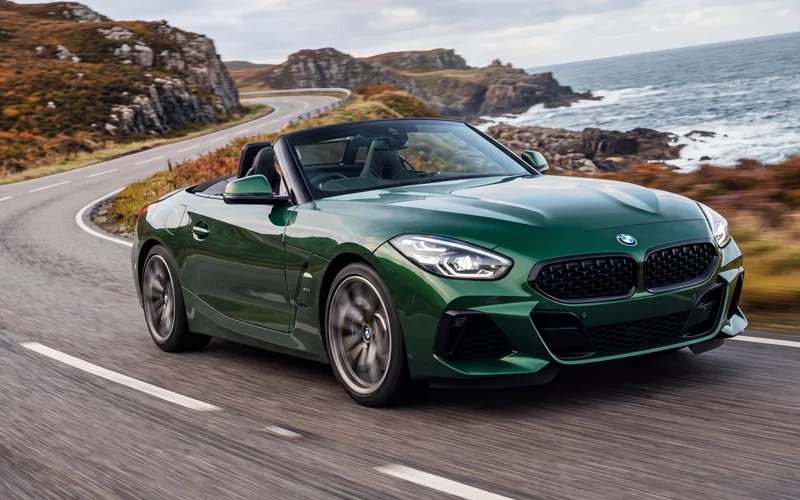 BMW Z4Sports CarBetter at: Standard equipment
Same two-seat roadster brief with far more standard equipment for the money, if you can live with less chassis magic.
Compare 2.67C+
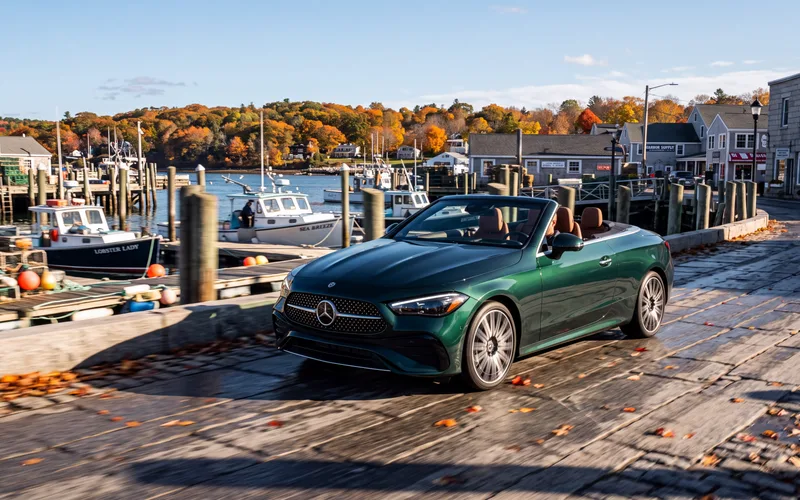 Mercedes-Benz CLE ConvertibleLuxury CoupeBetter at: Comfort and tech
Adds two rear seats, modern screens and a full driver-assistance suite for buyers who want a comfortable open car rather than a sports car.
Compare 2.48C+
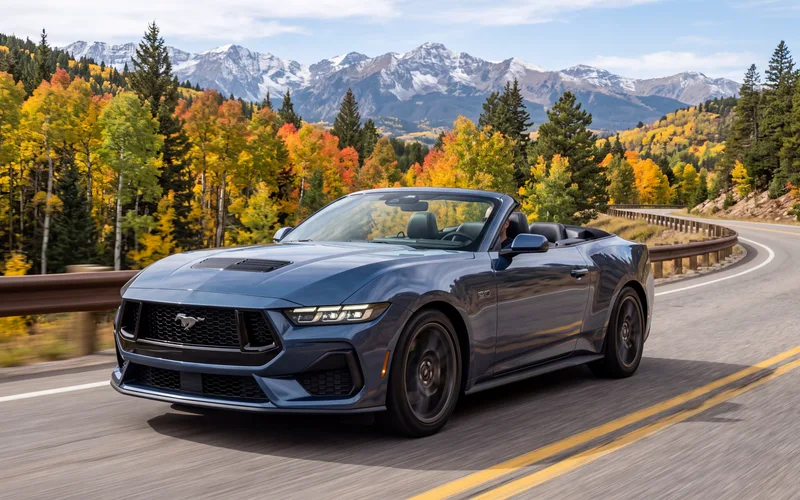 Ford Mustang ConvertibleSports CarBetter at: Value
480 hp, back seats and standard safety tech for roughly $24,000 less than a base Boxster.
CompareHow it's evolved
9 scored model years · 2017–2025
Subject scores by year
Hover or tap a score to see what moved it versus the year before. A corner mark flags a big swing.
| Year | Performance | Efficiency | Safety | Space | Cost | Reliability | Tech | Use-case | Driving | Value |
|---|---|---|---|---|---|---|---|---|---|---|
| 2025 | 59 | 16 | 36 | 52 | 12 | 79 | 40 | 30 | 85 | 61 |
| 2024 | 59 | 16 | 36 | 52 | 18 | 78 | 40 | 30 | 85 | 62 |
| 2023 | 59 | 16 | 36 | 52 | 19 | 80 | 40 | 30 | 85 | 62 |
| 2022 | 59 | 16 | 36 | 52 | 22 | 80 | 40 | 29 | 85 | 59 |
| 2021 | 54 | 16 | 36 | 52 | 31 | 78 | 43 | 30 | 85 | 59 |
| 2020 | 58 | 16 | 36 | 51 | 30 | 76 | 41 | 29 | 84 | 58 |
| 2019 | 55 | 24 | 34 | 50 | 32 | 74 | 39 | 29 | 84 | 60 |
| 2018 | 55 | 21 | 42 | 49 | 34 | 73 | 39 | 27 | 84 | 63 |
| 2017 | 54 | 22 | 37 | 49 | 33 | 70 | 34 | 28 | 83 | 61 |
Compare two years
Best fit & conditions
Higher scores mean a better fit for that use case. Learn more about use-case fit →
Subject profile
Detailed scoring by subject
1Performance & PowertrainOne of the 718 Boxster's strongest categories.1.89C-
The volume 718 Boxster carries over the 2.0L turbocharged flat-four at 300 hp unchanged from prior 982 model years. 2020 is a change year for the nameplate as a whole — the 718 T joins as a sport-focused trim on the same 300-hp engine, and the GTS switches from a turbo four to a naturally aspirated 4.0L flat-six shared with the Spyder/GT4 — but the base powertrain that most buyers order is unchanged. 300 hp remains a modest headline number against convertible rivals like the Mustang GT convertible.
280 lb-ft is a mid-band figure for the segment, but the flat delivery from 1,950 to 4,500 rpm means the base roadster pulls hard through the midrange despite the modest peak number — carryover behavior for the 982-generation turbo four, unchanged for 2020.
Porsche's own figure for the base car as standard-equipped (6-speed manual) is 4.9 seconds, quicker with the optional PDK and quicker still with Sport Chrono. Quick for the segment but not remarkable set against a base Corvette convertible under 3 seconds. The GTS 4.0 gained a meaningfully quicker PDK option only late in calendar-year 2020, per Wikipedia's production history.
The 2.0T pulls strongly through the midrange and Dynamic Boost keeps boost present through brief throttle lifts, but reviewers of the 2020 car consistently note a beat of hesitation low in the rev range at low speeds before power arrives, plus the flat-four's coarse, unrefined sound at load — the same criticism leveled at this engine since its 2017 introduction and unresolved for 2020. The GTS 4.0's naturally aspirated flat-six, new this year, is by contrast praised as smooth and richer-sounding, but it isn't the volume powertrain being scored here.
The standard 6-speed manual carries a short-throw shifter (borrowed lineage from the GT4) praised for precision, and the optional 7-speed PDK shifts crisply with no hunting and rev-matched downshifts under Sport Chrono. 2020 is the model year where Porsche extended the PDK option to the flagship GTS 4.0 as well (added mid-year), broadening where buyers can get either gearbox across the range.
No 718 Boxster has ever offered all-wheel drive, in 2020 or any other model year — every variant from the base car to the GTS 4.0 is mid-engine, rear-wheel drive only. The mid-engine weight distribution helps traction off the line, but this item measures AWD/4WD availability specifically, which is a hard zero across the range.
2020 is the most mechanically varied model year yet for the 718 range at this point: two turbocharged flat-fours of different displacement (2.0L base/T, 2.5L S) plus a newly reintroduced naturally aspirated 4.0L flat-six for the GTS, each pairable with either a 6-speed manual or 7-speed PDK. That's real engine variety for a single nameplate. It stays out of the top band because every engine is gasoline with no electrified option anywhere in the range, and the 4.0-six is confined to the low-volume GTS/GT4/Spyder tier rather than being broadly available — the practical choice for most buyers is still one of two turbo fours.
2Efficiency & RangeThe 718 Boxster's lowest-graded category.0.00F
EPA-rated 24 mpg combined for the PDK-equipped base 718 Boxster (2.0L turbo flat-4) — near the bottom of the convertible segment's normalization band, reflecting a small-volume performance engine tuned for output over economy.
EPA city rating of 21 mpg for the PDK-equipped base Boxster; the 6-speed manual rates 20 mpg city.
EPA highway rating of 27 mpg for the PDK-equipped base Boxster; the manual gearbox rates 26 mpg highway.
341-mile EPA total range on a 14.2-gallon premium tank at 24 mpg combined — modest for the segment since the small tank prioritizes weight distribution over range.
EPA-estimated $3,150/year fuel cost at standard 15,000 mi/yr assumptions for the PDK-equipped base Boxster — exceeds the top of the convertible segment's cost band due to the premium-fuel requirement combined with sub-30 mpg ratings.
Porsche specifies premium (91-octane) unleaded fuel for the 718 Boxster's turbocharged flat-4 across every 2020 trim; there is no flex-fuel, diesel, or home-charging alternative.
3SafetyGrades near the bottom of the scale.0.38F
NHTSA has never run an NCAP test on the 982-generation 718 Boxster, and the 2020 model year — the mid-cycle update that introduced the 718 T and the naturally-aspirated GTS 4.0 alongside the base and S cars — is no exception. NHTSA's own vehicle lookup for the 2020 718 Boxster returns no overall rating, and the Center for Auto Safety's recall/complaint listing carries no NCAP score either. Estimated at the segment-typical 4 from the car's Porsche Side Impact Protection airbag complement, reinforced windshield frame and dual roll-over protection bars, but there is no tested figure behind the number.
IIHS has never crash-tested any model year of the 718 Boxster, so 2020 carries no Top Safety Pick, no TSP+, and not one individual crashworthiness result. Untested with no known structural deficiency, and backed by Porsche Side Impact Protection (dual-stage front, knee, and door-mounted side airbags), a reinforced windshield frame and dual roll-over protection bars, it earns the middle of the no-award band rather than the bottom. Scored a notch under the mechanically related 718 Cayman coupe because the open-top car gives up a fixed-roof structure and roof-rail curtain airbags — head protection instead comes from door-mounted units and the roll-over bars — and because the 982 bodyshell was already four model years old by 2020.
Of the five features this item measures — AEB, adaptive cruise, lane keeping, blind-spot monitoring, rear cross-traffic — the 2020 718 Boxster has none standard, and only two of the five exist anywhere on its order sheet. Porsche's assistance-systems literature for the 718 range lists exactly three items: adaptive cruise control with Porsche Active Safe (optional, PDK only), Lane Change Assist (optional, alert-only), and ParkAssist plus a reversing camera (standard). Consumer Reports' road test of the 2020 718 Boxster confirms blind-spot warning as optional-only and both pedestrian-detecting and highway-speed AEB as not available. That is the thinnest ADAS provision in this segment, unchanged from the layout the 982 generation launched with in 2017 and carried through 2020's T and GTS 4.0 additions, neither of which touched the assistance-systems lineup.
The only collision-braking function on the 2020 718 Boxster is Porsche Active Safe, and it is not standard, not available on manual cars, and not a modern pedestrian-capable AEB system. PAS ships only bundled with the optional adaptive cruise control, which Porsche restricts to PDK — order the 6-speed manual that most Boxster buyers take as a no-cost option and there is no forward-collision intervention available at any price in 2020. Where fitted, PAS gives an audible and visual warning, a brake jolt, and targeted vehicle-to-vehicle braking with driver brake-force boosting; Consumer Reports classes both pedestrian-detecting and highway-speed AEB as not available on this model year. IIHS has never run front crash prevention testing on the 718 in either protocol.
Blind-spot coverage on the 2020 Boxster is Lane Change Assist — radar-based, mirror-panel warning only, explicitly non-intervening, active above 19 mph — and it is a paid option rather than standard safety content. Rear cross-traffic alert and safe-exit warning are not on the 718's option list at all; Consumer Reports lists rear cross-traffic warning as not available for the 2020 model year. Optional alert-only monitoring with no cross-traffic function sits at the top of the bottom band. It matters more on this car than on many rivals: with the fabric roof raised, over-the-shoulder visibility is genuinely poor, which is exactly why reviewers flag the optional monitor as worth ticking.
The 2020 718 Boxster has no lane assistance of any kind — no lane departure warning, no lane keep assist, no centering — on any trim, at any price, including the newly introduced T and GTS 4.0 variants. Porsche's 718 assistance-systems lineup runs to three entries (adaptive cruise/PAS, Lane Change Assist, ParkAssist) and none of them touches lane position; Lane Keep Assist was sold elsewhere in the Porsche range (911, Macan, Cayenne, Panamera) but never offered on the 982 718. This is an outright absence, not a weak implementation, and it did not change across the 982 generation's 2020 mid-cycle update.
Adaptive cruise control is a competent full-speed-range radar system on the 2020 718 — 650 ft of forward scan, coasting permitted while active, PAS distance warning layered on — but it is optional, and Porsche gates it behind the PDK gearbox, so a buyer choosing the 6-speed manual that defines this car gets plain fixed-speed cruise control and nothing more. No highway assist exists because there is no lane-centering function to combine with it, and Porsche InnoDrive was not offered on the 718 in 2020. A capable option that a large share of volume-trim buyers cannot even order lands in the basic-cruise band rather than above it.
No hands-free highway driving system is offered on the 718 Boxster for 2020 or any other model year, and Porsche sold no BlueCruise or Super Cruise equivalent anywhere in its range at the time — the 718's assistance list tops out at hands-on adaptive cruise. Floor of the band, matching other sports cars/roadsters of the era.
The 2020 718 Boxster left the factory on Bi-Xenon headlights standard across the range, with LED daytime running lights and cornering lighting; this generation-wide equipment did not change with the 2020 model-year update. That is a generation behind rivals where LED is standard and matrix systems are common. The mitigation is real but has to be paid for: LED headlights with Porsche Dynamic Light System Plus, adding camera-based automatic high-beam dipping and intersection illumination. IIHS has never rated 718 headlights on either configuration, so there is no Good/Acceptable result behind the estimate.
Visibility here is two different cars. Roof down, the Boxster is close to best-in-class — the mid-engine layout gives a short nose and a low cowl, the A-pillars are slim, and over-the-shoulder checks are trivial in a way no coupe in this set can match. Roof up, small side windows, thick pillars and the fabric top's wide rear quarters create real blind zones, with only a narrow view through the rear window between the head restraints — exactly why reviewers of the 2020 model recommend the optional blind-spot monitor. Porsche offered no surround-view camera on the 718 in 2020 to compensate, but standard front and rear ParkAssist sensors plus a standard reversing camera cover the parking case well.
4Space & ComfortGrades below the middle of the scale.1.43D
The mid-engine layout puts the powertrain immediately behind the seat backs and the folded fabric top stows where a rear bench would go, so every 2020 718 Boxster is a strict two-seater — which clamps this item to the floor of the 4–5 seat convertible band.
Porsche does not publish US interior dimensions for the 982 generation and aggregators carry the field blank for 2020, so this is estimated from the roadster's 50 in overall height and its very low seat mounting — unchanged from the 2017 982 launch through the 2021+ cars this dataset already scores.
Also unpublished, and identical in packaging to the 718 Cayman — same 97 in wheelbase, same footwell, same seat rails — so the estimate carries across from the rest of the 982 generation.
Two compartments front and rear are the mid-engine dividend, but the roadster gives up more than a third of the Cayman's luggage space because the folded fabric top eats into the rear compartment — 9.6 cu ft against the coupe's 15.0. It is still generous for an open two-seater (a Miata carries 4.6), yet it falls below the 10 cu ft floor of the convertible normalization band, so the item scores zero on an absolute measure.
The dual-trunk layout is the clever part and two carry-ons still fit up front, but the rear compartment is shallow and sits under the stowed roof, so the roadster loses the Cayman's genuinely useful rear hold. Inside the cabin the provision is thin and unchanged since the 982's 2017 launch: narrow door bins, a shallow lidded console cubby, a small glovebox and the pop-out dash cupholders — with no rear seats and no parcel shelf, there is nowhere to put anything that will not slide around top-down.
The driving position is among the best in the segment and the standard partial-leather power sport seats are firm but well shaped, holding up over long stints; the option book runs from Sport Seats Plus up through Adaptive Sport Seats Plus to full carbon-fiber bucket seats on the GTS 4.0 and Spyder. What keeps the volume car below the 911 and Corvette is that the standard seats are comparatively basic two-way power units — the extra bolstering and adjustment range most owners want are paid-for upgrades on the mainstream Standard, T and S trims.
For a car this focused the Boxster rides remarkably well — the standard passive steel setup is firm but supple over broken pavement and body control is exemplary, which is why a Boxster works as an everyday car. 2020 is the launch year of the flat-six GTS 4.0, which brings a standard PASM Sport Suspension (20mm lower, with mechanical limited-slip differential and Porsche Torque Vectoring); PASM remains a paid option on the Standard, T and S trims. It sits a notch under the 911 and a hair under the fixed-roof Cayman because the open body is marginally less rigid over expansion joints.
The 718's clearest comfort weakness, and the roadster body makes it worse than the coupe. The volume car's turbo flat-four sits directly behind the bulkhead with a coarse, boomy voice the motoring press criticized almost universally, and a fabric roof cannot match a steel one for road and powertrain isolation. Wind sealing is genuinely good for a soft top and buffeting is mild, but road roar on coarse asphalt is intrusive and the engine is never out of earshot — which is exactly why Porsche introduced the six-cylinder GTS 4.0 for 2020 as a sound-first alternative to the turbo four.
The 2020 718 Boxster comes standard with single-zone automatic climate control, heated exterior mirrors, Apple CarPlay/Android Auto and a 7-in touchscreen, plus a power fabric roof that cycles in about nine seconds with a heated glass rear window. The score sits below the following model year because two-zone automatic climate control, heated front seats, and auto-dimming/rain-sensing exterior mirrors were still Premium Package options for 2020 — Porsche's own newsroom release for MY2021 confirms all three became standard equipment only "for the new model year," implying they were paid extras through 2020 — and the two-seat gasoline packaging rules out any rear climate zone or remote pre-conditioning regardless of model year.
5Cost of OwnershipOne of the 718 Boxster's weakest categories.0.00F
The entry 718 Boxster opens at $59,600 before Porsche's $1,350 delivery charge for the 2020 model year, well above the $22,000–$55,000 convertible band, so this item bottoms out. 2020 is the model year the sport-oriented Boxster T joined the range and the GTS 4.0 gained its naturally aspirated flat-six, but neither changes the base car's starting price.
The base Boxster is the volume car, but Porsche's a-la-carte options structure (PDK, PASM, Sport Chrono, Bose, heated seats, metallic paint) typically adds $8,000–$12,000, landing a normally-equipped roadster just under where the Boxster S starts. This mirrors how option-heavy German cars are priced elsewhere in this dataset.
The 4-year/50,000-mile warranty absorbs most repair exposure through 2024, leaving scheduled service (oil/filter, brake fluid, alignment) as the main line at $1,200–$2,500 per dealer visit; year five (2025) is out of warranty and exposed to full repair cost, which drives the jump. At roughly $15,000 this is nearly double the top of the convertible band, so the item scores zero, consistent with every 718-generation entry in this dataset.
The 718 Boxster is among the strongest value-retaining convertibles sold in America, and because this model year is now six years old, the figure is grounded in an actual observed used-market price rather than a forward projection — unlike the current-model-year Boxster entry in this dataset, which had to estimate forward.
Porsche's New Vehicle Limited Warranty was 4 years / 50,000 miles for the 2020 model year, unchanged from before and since, matching the German luxury norm and mid-banding the item.
Porsche does not offer a standalone extended powertrain warranty in the US — drivetrain components, including the turbocharged flat-four and flat-six engines, were covered by the same 4-year/50,000-mile New Vehicle Limited Warranty and nothing beyond it in 2020. That falls below the 5-year floor of the band, so the item scores zero.
Porsche's policy of including exactly one scheduled service — the first one, generally due at 1 year / 10,000 miles — took effect starting with the 2018 model year and applied unchanged to the 2020 718 Boxster; every visit after it is billed, at $1,200–$2,500 a stop. Alongside it, 24/7 roadside assistance ran for the full 4-year/50,000-mile warranty period. That is a short included-maintenance period rather than the no-coverage floor, but only just.
$70,000 volume-trim price minus its estimated resale value after 5 years (68% retained, or about $47,600) leaves about $22,400 in depreciation. Add the projected $15,000 in 5-year maintenance and repairs, and owning this vehicle for 5 years costs about $37,400 in total.
6Reliability & QualityOne of the 718 Boxster's strongest categories.3.15B
Consumer Reports has no statistically significant sample for the 2020 718 Boxster (insufficient owner survey responses), so predicted reliability leans on J.D. Power brand-level dependability data rather than a model-specific CR score. Porsche's strong brand standing offsets the small-volume model uncertainty.
Porsche finished 4th overall in the 2020 J.D. Power VDS and 2nd overall in 2021, a consistent top-5 multi-year dependability standing among all brands, not just premium marques.
No NHTSA recalls are on file specifically for the 2020 718 Boxster model year; the 982-generation's notable recall (suspension components not properly tightened) landed on 2021-model-year cars. TSB pattern for this generation is unremarkable outside known cooling-system service items.
The 982's turbocharged flat-4 (2.0L base, 2.5L S) carries documented long-term durability concerns: water pumps have failed as early as ~20,000 km with labor-intensive access (exhaust removal), coolant expansion tanks develop hairline cracks, and the 2.0L's turbo actuator is prone to seizing from water/dirt ingress at the underbody vent. The 2.5L's turbo heat-sink limp-mode issue was addressed by Porsche only on the GTS. These are consistent, repeated complaints across owner forums rather than isolated reports.
Reviewers consistently praise the 982 cabin's soft-touch surfaces, tight switchgear, and driver-focused layout carried over from the 991-generation 911 parts bin, with the PCM 4.0 infotainment refresh for 2020 improving perceived tech quality further.
The 982 generation is broadly regarded as tightly assembled with consistent panel gaps and minimal rattle complaints, consistent with Porsche's overall strong initial-quality reputation among sports car buyers.
Porsche operated roughly 192 independently owned U.S. dealers in 2020 and has ranked at or near the top of J.D. Power's Customer Service Index for dealer service satisfaction for years running, giving Boxster owners a smaller but consistently high-satisfaction service network.
Parts are dealer-priced and expensive relative to mainstream brands, and known service items (water pump, turbo actuator) require significant labor including exhaust removal, driving repair bills well above segment norms. A mature independent Porsche specialist and enthusiast aftermarket network partially offsets cost, but out-of-pocket repair expense remains a real ownership drawback.
7Technology & InfotainmentGrades near the bottom of the scale.0.69F
The 982-generation 718 Boxster uses Porsche Communication Management (PCM) 4.0 with a fixed 7-inch high-resolution touchscreen across base, T, S, and GTS 4.0 trims for 2020 — no larger screen was offered.
PCM 4.0 (introduced with the 982 in 2016, carried into 2020) was a real step up from PCM 3.1 with a faster processor, multi-touch gestures, and a physical rotary volume/tuning knob that keeps core functions off the touchscreen — usable and reasonably quick, but the small 7-inch screen and dated menu structure feel behind rivals with larger, newer displays.
Apple CarPlay is standard but wired-only in 2020; Porsche did not offer Android Auto at all on PCM 4.0 (the hardware supports it but Porsche never enabled it in this generation), and no wireless projection of any kind was offered.
PCM 4.0 includes built-in voice control and native navigation, but the voice assistant is command-based rather than natural-language (Porsche's "Hey Porsche" natural-language assistant didn't arrive until later PCM generations), so most owners lean on CarPlay for voice/maps.
Standard Sound Package Plus is adequate, and the optional 12-speaker, 821-watt Burmester High-End Surround Sound System (option 9VJ) with Air Motion Transformer tweeters is a genuinely premium upgrade — a step above the typical sports-car audio option, tempered only by convertible wind/road noise limiting how much fidelity is appreciable top-down.
The 2020 718 Boxster retains Porsche's traditional five-gauge analog cluster with a large center analog tachometer; only the flanking gauges include small digital multi-info displays (speed, gear, range) rather than a configurable full-digital cluster — a fully digital gauge display wasn't offered on the 718 until a later mid-cycle update.
PCM 4.0 in 2020 relied on dealer visits or manual SD-card/USB updates for firmware and map data rather than meaningful wireless OTA; Porsche's true whole-vehicle OTA capability came with later models (e.g. Taycan) and never reached the 982-generation 718.
The optional Porsche Connect package/app (predecessor to My Porsche) supports remote lock/unlock, vehicle locate, horn/lights, remote climate, and vehicle status — solid core functionality, but it's an extra-cost option bundle rather than standard, and later superseded by the My Porsche app.
Just two USB ports (one in the glovebox, one in the phone/storage compartment) for device charging and no wireless charging pad was offered at any trim in 2020 — sparse compared to rivals adding wireless charging trays and USB-C.
The 718 retains Porsche's signature ignition-key-in-dash arrangement (no push-button start) on volume trims, and the passive proximity "Entry & Drive" keyless system was an extra-cost option rather than standard — behind the segment norm of standard proximity entry.
A rear-view camera and front parking sensors were standard for 2020, but a 360-degree surround-view camera was not offered as a factory option at all this model year — adequate but not class-leading.
No head-up display was offered on the 718 Boxster in any trim for 2020 — cockpit packaging constraints in the 982 architecture precluded a HUD unit, a gap versus rivals that offer it at least on upper trims.
8Use-Case FitOne of the 718 Boxster's weakest categories.0.00F
Every 2020 718 Boxster is a strict two-seater — base, T, S and the newly-introduced GTS 4.0 all share the same cabin — so there are no LATCH lower anchors or top tethers anywhere in the car and the front passenger seat is the only conceivable child-seat position. The roadster body is worse than the Cayman coupe for this: a rear-facing seat sits under open sky with no shade or weather protection when the top is down, and the 9.7 cu ft of trunk split across two compartments will not take a full-size stroller.
No crash-test evidence exists at all for the 2020 model year — neither NHTSA nor IIHS has ever rated a 718 Boxster — and the aids families rely on are optional add-ons, not standard equipment: no automatic emergency braking or lane keeping at any price, and adaptive cruise with Porsche Active Safe is only available bundled with the extra-cost PDK transmission (a 6-speed manual is standard for 2020). Standard ParkAssist with a reversing camera and the pop-up rollover bars behind the headrests are the meaningful standard safety content.
With two seats there is no second row to assess — no rear vents, amenities or entertainment — so a family trip is physically capped at two people. The Boxster also carries only 9.7 cu ft against the Cayman's 15.0, because the folding roof stack eats the rear compartment down to 4.4 cu ft, leaving room for little more than a couple of soft bags.
The 718 is one of the easier mid-engine cars to live with day to day: the 2.0-liter turbo four's torque plateau starts at 1,950 rpm, PCM 4.0 is straightforward, and the roadster's sightlines are unusually good — better than the Cayman's with the roof stowed. It trails the coupe slightly on refinement, and unlike later model years the 6-speed manual is standard equipment (the 7-speed PDK is a paid option), so stop-and-go duty asks more of the driver; the fabric roof also lets through more road noise on top of a flat-four the press has always called coarse.
At 22 MPG combined with the standard manual (24 with the optional PDK) the base Boxster is among the most economical cars in this peer group and its 18-inch base wheels wear far cheaper rubber than a 911's staggered fitment, but every mile is bought with required premium fuel and Porsche shop rates. Against the Cayman it carries one extra long-run cost the coupe does not: the powered fabric roof and its drive motors are a wear item.
The best urban car in this set: about 172 in long on a compact footprint, a 36 ft turning circle, and — unusually for the class — ParkAssist with front and rear sensors plus a reversing camera standard rather than optional. Dropping the roof turns the worst blind spot in the car into a clear view over the shoulder, which the Cayman cannot do; the low front splitter still scrapes steep driveways without the optional front-axle lift.
Porsche publishes no US towing capacity for the 718 Boxster and sells no factory hitch, and a two-seat cabin with no folding surfaces rules out payload or work-gear duty. Its 9.7 cu ft of lockable trunk space is a third less than the Cayman's, and the rear compartment sits directly above a hot mid-mounted engine — this is not a vehicle that does work of any kind.
The 982 chassis, manual gearbox and optional PDK are proven hardware with a strong track-abuse record, so this is no fragile exotic, but nothing about it is built for work abuse: leather and cloth-and-leather interiors, no washable surfaces, low bodywork that meets curbs badly, and a parts-and-labor structure that makes incidental damage expensive. The powered fabric roof adds a failure mode the Cayman does not have — drive motors, microswitches and a rear window that are all replaceable wear items.
There is no 120V household outlet, no hitch, no bed access hardware and no tie-downs beyond a luggage net. Unlike the Cayman — which can take a factory roof transport system with ski, bike and roof-box modules — the 982 Boxster has no factory roof carrier in the US catalogue, because the folding fabric roof occupies the mounting points a carrier would use.
Two-up touring is one of the Boxster's better missions — the sport seats draw long-distance praise and PASM (where fitted) keeps the highway ride settled — but 2020's standard manual and optional-only PDK/ACC combination make it a more hands-on tourer than later model years, and roughly 313 miles of range on the standard tank with the manual (about 341 with the optional PDK) trails the Cayman on quiet cabin duty. The fabric roof adds road noise over an already coarse flat-four, and adaptive cruise requires paying for PDK first with no lane centering available at any price.
Rear-wheel drive in every 2020 configuration, about 4 in of ground clearance behind a low splitter, summer performance tires and no tow rating make this a pavement car, and unlike the Cayman it cannot take a factory roof carrier for skis or bikes. What it does offer is the open-air experience itself plus two lockable, weather-sealed trunks and Porsche winter wheel-and-tire packages — enough for a scenic-road trip, not for leaving the pavement.
Two lockable, weather-sealed compartments totalling 9.7 cu ft is respectable for a roadster — the deep squarish frunk takes two carry-ons and the rear takes a third — but the folding roof costs the Boxster 5.3 cu ft against the Cayman's hatch trunk, and that loss is exactly the space bulky gear needs. There is no seat to fold, no pass-through, no hitch and no roof carrier, so total volume is also total flexibility.
9Driving ExperienceThe 718 Boxster's best-graded category.3.71A
The 982's mid-engine layout puts the mass between the axles, and the Boxster carries it with a rotational balance no front-engine convertible rival can match — turn-in is immediate, the body stays flat, and the car never feels nervous at the limit. 2020 is a change year for the nameplate as a whole (718 T and GTS 4.0 introduced) but the base Boxster's chassis and suspension are unchanged from the prior 982 model years: passive steel springs standard, PASM adaptive damping with a 10 mm drop optional. It sits one point under the Cayman only because an open body is marginally less rigid than a fixed roof.
The Boxster's variable-ratio electromechanical rack is the reference for how good EPAS can be: quick and linear off-center, weighting that builds honestly with cornering load, and enough texture returning through the rim to feel the front tires approaching their limit. With no engine over the nose it arguably reads the road better than a 911 does. Unchanged for 2020. It lands just below the handling score because no electric system fully recovers the granularity of Porsche's older hydraulic racks.
Four-piston aluminum monoblock fixed calipers on 13-inch front / 12-inch rear cast-iron discs — unchanged 982-generation hardware for 2020 — haul the sub-3,100 lb roadster down with a firm, short-travel pedal that is easy to modulate right to the stop. Fade resistance on the road is a non-issue; the base car's irons are what eventually complain over sustained track laps, which is why PCCB carbon-ceramics stay on the options sheet. Scored a point below the 2025 file's carryover figure for lower confidence, since no 2020-specific instrumented brake test was found and this leans on generation-wide data plus contemporary GTS 4.0 press impressions.
On calibration alone the volume Boxster is very good: for 2020 the standard gearbox is still the 6-speed manual (PDK did not become standard until later in the 982's run), with the 7-speed PDK optional and Dynamic Boost holding the throttle plate open through brief lifts so boost is still there when getting back on it. What keeps it out of the top band is genuine hesitation below roughly 2,000 rpm from the single-turbo 2.0-liter flat-four, a trait the newly introduced naturally aspirated 4.0-liter flat-six in the GTS 4.0 does not share — scored a couple points below the 2025 carryover figure to reflect the manual-standard, PDK-optional layout for this model year rather than PDK-as-standard refinement. Sound character is scored separately in 9.2.2 and is not double-counted here.
The base 718's one real failing, and the single most criticized attribute of the whole 982 generation, unresolved for the 2020 model year on the volume Boxster. There is no vibration through the wheel or pedals and the engine is mechanically smooth, but the turbo flat-four's voice under load is coarse and boomy, and in a mid-engine roadster it plays directly behind the driver's head with only a fabric roof — or nothing at all — between the two. Scored in line with later 982 model years because the engine and exhaust are unchanged for 2020; the naturally aspirated flat-six newly available in the GTS 4.0 this year would score in the mid-90s here but is not the volume powertrain being scored.
A 36.1-foot circle is mid-pack for a compact two-seater — respectable in absolute terms but no better than a mainstream sedan despite the Boxster's short wheelbase, because a wide front track and fat front rubber eat the steering lock a short wheelbase would otherwise buy. Unchanged across the 982 generation; the 718 never offered the rear-axle steering that shrinks the 911's low-speed circle.
One of the best driving positions offered at any price: you sit very low with the wheel falling straight into your lap, the pedals are squarely aligned for heel-and-toe (helped by the manual gearbox standard for 2020), and the seat and column adjust through a wide range. The 982 kept an analog center tachometer and a bank of physical buttons and rotary controls for climate and chassis functions, so nothing needs a submenu. Roof down, outward visibility is best-in-class and ingress is easier than the Cayman's; roof up, the fabric top pinches the rear three-quarter view. Points come off for the deep sill, narrow bolsters that confine broader drivers, and near-zero cabin storage.
The Boxster is the car enthusiasts reach for when the 911 is out of budget, and a good many argue it is the more rewarding chassis regardless of price — fast enough to be exciting on a public road at sane speeds rather than needing a track to come alive, and playful without ever feeling nervous. Roof down it adds the open-air dimension the Cayman cannot. 2020 sharpens the case for the range as a whole with the sport-focused 718 T and the flat-six GTS 4.0 joining the lineup, though the volume Boxster scored here still carries the flat-four's less charismatic soundtrack, which keeps it a shade below a perfect score.
10Value & Market PositionMid-pack among this car's ten categories.1.87C-
For 2020 the base 718 Boxster started at roughly $61,900 (destination extra) and for that money buyers get 18-inch wheels, a manual soft top with a 10-second cycle, partial-leather power sport seats, automatic climate control, Bluetooth/CarPlay/Android Auto on a 7-inch PCM 4.0 screen, and standard PASM active dampers — but metallic paint, Bose audio, navigation, heated seats, and even the wind deflector are all extra-cost options. Safety equipment is the weak point: a backup camera and front/rear park sensors are standard, but blind-spot monitoring and adaptive cruise are optional and no forward-collision/AEB system is offered at all, well behind the roughly $35K Mustang GT convertible's standard Co-Pilot360 suite.
On raw output-per-dollar the 718 loses badly to muscle-car convertibles: 300 hp for roughly $62,000 versus a 2020 Mustang GT convertible's 460 hp for about $45,000. But the mid-engine chassis, the segment's benchmark steering and balance, and Porsche's exceptional resale (a 718 typically retains value far better than rivals) mean the money is largely parked rather than burned, which is the strongest argument for value this car makes. Against its true cross-shops — Z4, 4 Series convertible — it holds up well; against the Mustang or Miata on pure dollars-per-horsepower or dollars-per-smile it does not.
2020 is the widest the 982-generation lineup had been to that point: base Boxster, the newly added 718 T (sport suspension, mechanical limited-slip, shorter shifter, no-cost manual-only positioning), Boxster S, the all-new GTS 4.0 with the naturally aspirated flat-six pulled from the GT4/Spyder, and the 718 Spyder itself, whose US sales commenced in spring 2020 — five distinct trims spanning roughly $62,000 to $96,000. Every trim but the Spyder offers a manual/PDK choice, and the GTS 4.0's engine swap is a genuinely different car, not a sticker package. The only real gap is no all-wheel-drive variant and nothing below the low-$60Ks.
2020 was a weak sales year for the nameplate even by its own niche standards: combined 718 Boxster/Cayman US deliveries fell to about 3,447 units for the year, with reporting noting declines as steep as 40% in Q1 2020 as COVID-19 shut showrooms and disrupted production. The Boxster's individual share of that combined figure is a low-volume slice of an already low-volume nameplate, well under the Mustang convertible, Miata, or even the Z4. A genuinely slow year, not a mid-pack one, driven by both the pandemic and the two-seat roadster's inherently small addressable buyer pool.
Porsche's aspirational standing and owner loyalty were already elite entering 2020, independent of any single model year's news, and that halo is the mechanism behind the 718's well-documented resale strength. The brand carried no major image damage in 2020 — the EV pivot turbulence and Taycan sales issues that would later dent the corporate narrative were still ahead — so this sits near the top of the scale without the extra terminal-model boost a later model year would earn.
This is close to the worst case scored anywhere in this framework. Porsche did roll out COVID-19 relief financing in 2020 (a 1.95% APR offer running roughly mid-May through June 1), but reporting specifically notes the 718 Cayman and Boxster were excluded from that and other incentive programs, reasoning that a low-volume halo car already selling near MSRP has little need to be discounted. Buyers found essentially no factory cash, no subvented leases, and thin dealer flexibility on a car that was also harder to source that year given pandemic production stoppages.
The 982 generation was in its fifth model year in 2020 (launched January 2016) — squarely mid-cycle rather than new — but 2020 was the single biggest news year of that cycle for the lineup: the 718 T joined as a new trim, the GTS 4.0 introduced a naturally aspirated flat-six that directly answered years of criticism of the turbo-four's sound, and the 718 Spyder began US sales. That is meaningfully more freshness than a typical mid-cycle year, even though the base architecture, cabin, and PCM 4.0 infotainment were unchanged from 2019 and no exterior redesign occurred.
The 718 pair continued its remarkable Car and Driver 10Best run through 2020 (part of a streak later described as 20 consecutive years through 2025), and the year's headline news — the GTS 4.0's naturally aspirated flat-six — was received as Porsche directly fixing the one persistent complaint about the 718 generation, with MotorAuthority's first-drive summarizing it as the car finally 'rocking to a familiar tune.' The base and S turbo-four cars still drew the same coarse-exhaust-note criticism the press had leveled since 2016, which keeps this just short of the ceiling, but the chassis praise (handling, steering, mid-engine balance) was as strong as ever.