
The verdict
A mixed-report full-size truck, strong on technology and held back by ownership.
The Ramcharger is the electric truck for people who don't want to think about charging. Its wheels are driven only by electric motors — 663 hp, 615 lb-ft, 0–60 in a claimed 4.4 seconds — but a 3.6L V6 sits under the hood purely as a generator, so you get roughly 145 miles of quiet electric driving, then another 545 on a 27-gallon tank for about 690 miles total, plus a 14,000 lb tow rating that stays usable on a long haul instead of evaporating the moment you hitch a trailer. Around that sits the best cabin in the half-ton class: class-leading 45.2 inches of rear legroom, a five-link coil rear end with standard air suspension, and Uconnect 5 with wireless CarPlay. The problems are money and proof — an estimated ~$68,000 volume price against a ~$55,000 gas Big Horn takes over a decade to pay back in fuel savings, resale is projected near 49%, the basic warranty is only 3 yr/36,000 mi, and this is a first-year truck with an all-new powertrain from the brand with the weakest recent reliability record of the domestic three, carrying no NHTSA or IIHS crash results at all.
Jump to scoresStrengths
- 690 miles of range and a five-minute fill-up
- A cabin that still leads the class
- A jobsite generator that never runs out
What holds it back
- Cost of ownership is the worst part of this truck
- Everything mechanical is unproven at once
- No crash test results exist, and the related truck's are weak
Top alternatives
Cars shoppers cross-shop with the Ram 1500 Ramcharger 2.42C+
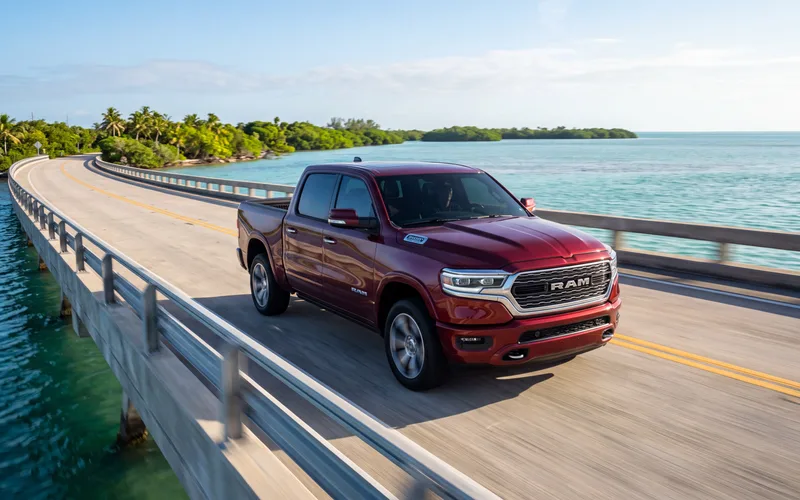 Ram 1500Full-Size TruckBetter at: Value
The same class-leading cabin, ride and trailering kit for roughly $13,000 less, with a proven powertrain, better resale and Ram's habitual deep discounting — the fuel savings never catch up.
Compare 2.66C+
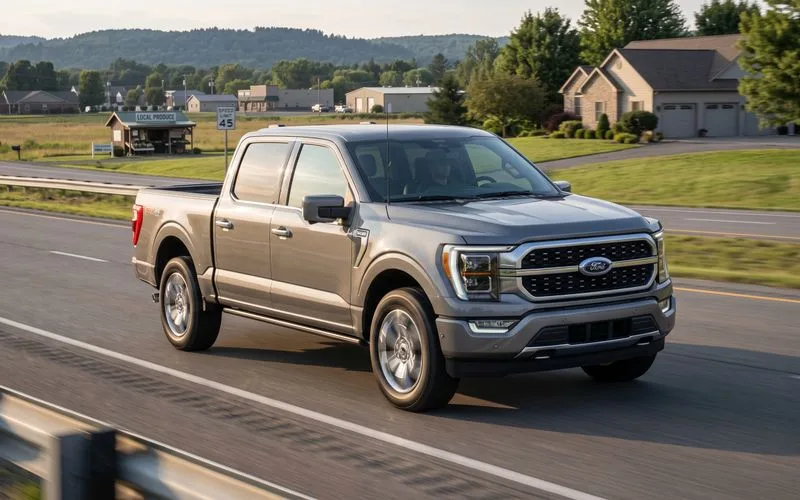 Ford F-150Full-Size TruckBetter at: Proven reliability
Real crash test results, cab and bed configurations the crew-cab-only Ramcharger doesn't offer, 3,000+ lbs of payload in work spec, and decades of proven fleet durability.
Compare 2.60C+
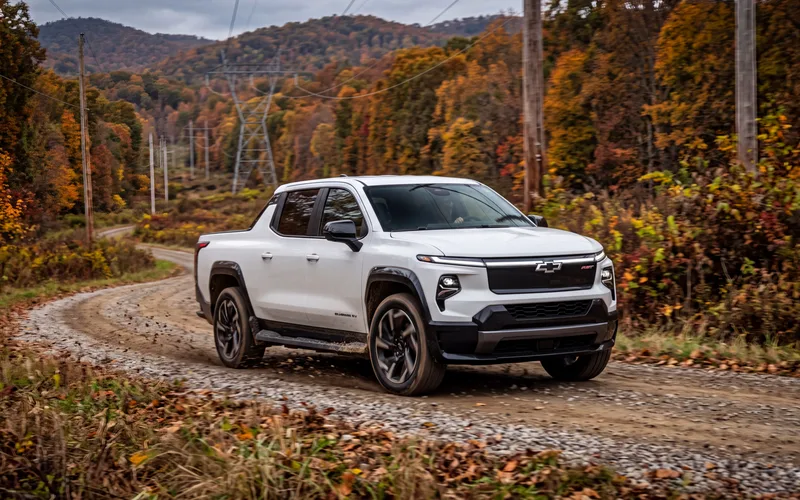 Chevrolet Silverado EVFull-Size TruckBetter at: Running costs
If you can charge at home and rarely tow far, it's the cheaper, quieter, fully electric option — about $1,250 a year in energy, 350 kW fast charging and Super Cruise hands-free driving.
CompareProduction history
Best fit & conditions
Higher scores mean a better fit for that use case. Learn more about use-case fit →
Subject profile
Academic Probation · NHTSA safety recalls
No NHTSA safety recall is on record for the 2026 Ram 1500 Ramcharger. Nothing is on record for any 2026 1500 Ramcharger either.
Source: NHTSA Office of Defects Investigation recall database, model years 2026. Recalls are listed by model year as the manufacturer filed them; whether a specific car is affected depends on its VIN — check a VIN at nhtsa.gov ↗.
Detailed scoring by subject
1Performance & PowertrainOne of the 1500 Ramcharger's strongest categories.3.17B
The Ramcharger is an extended-range electric truck: both axles are driven exclusively by electric motors, and Ram rates the combined system at 663 hp. That is the highest output in the half-ton segment short of the Hummer EV, and roughly 120 hp clear of the Ram 1500's own 540 hp Hurricane High Output.
615 lb-ft is well above any combustion half-ton (Ram's own Hurricane HO tops out at 521 lb-ft) and, being electric, is delivered instantly rather than at a 3,500 rpm peak — which matters more than the headline number when launching a loaded trailer.
Ram's 4.4-second estimate puts the Ramcharger in the same bracket as the Ram 1500 RHO (~4.6 s) and ahead of every mainstream gas half-ton, though behind the quickest battery-electric trucks such as the Rivian R1T and Tesla Cybertruck, which run in the mid-2s to low-3s.
Because the wheels are driven only by electric motors, throttle response is instant and stepless with no turbo lag and no hybrid handoff between gas and electric propulsion — structurally more refined than any belt-hybrid or turbocharged half-ton. It falls short of a pure BEV on one count: under sustained heavy load or low state of charge the Pentastar generator runs at engine speeds unrelated to road speed, an NVH signature EREVs are consistently noted for.
There is no multi-speed gearbox to criticize — single-speed reduction at each axle means seamless, hunt-free delivery, the same advantage that puts battery-electric trucks at the top of this item. It stops short of the 90s only because towing-heavy use puts the generator's behavior, not a transmission, in the driver's ear.
14,000 lbs is the top of the half-ton class and matches the best-equipped conventional Ram 1500 and F-150 ratings. The EREV layout is the real story here: unlike a battery-electric truck, range under tow is backstopped by the onboard generator, so the rating is usable on a long haul rather than only on paper.
2,625 lbs is a competitive half-ton payload figure and notably better than battery-electric rivals, whose pack mass eats into it — but it trails the highest-rated work-configured gas half-tons, which clear 3,000 lbs.
The Ramcharger inherits the 1500's full towing suite — integrated trailer brake controller, trailer reverse steering control, surround-view and trailer camera coverage, trailer tire-pressure monitoring and a Trailer Tow Group — and adds onboard power export for the trailer or jobsite. It sits just below the top of the band because Ram's package, while comprehensive, does not include a Ford-style onboard trailer scale.
Dual-motor all-wheel drive is standard on every Ramcharger — there is no rear-drive version — with an electronic locking rear differential and independent front/rear torque control that a mechanical transfer case cannot match for response. It is held below the top of the band because there is no true low-range gear, which a working 4x4 buyer will notice on a steep ramp or in deep low-speed crawling.
Capable light-duty off-road rather than a genuine trail truck: available air suspension with an off-road ride height, an e-locker, terrain modes and underbody protection give it real ability, and the onboard generator removes the range anxiety that limits battery-electric trucks far from a charger. But there is no low-range transfer case and no Rebel- or Power Wagon-class Ramcharger confirmed at launch, so it does not earn the dedicated-off-road-trim band the conventional Ram 1500 lineup does.
As a nameplate the Ramcharger is a single-powertrain proposition: the same 663 hp EREV drivetrain in every trim, with no gas, diesel or pure-battery-electric alternative under this badge. The score sits at the top of the low band rather than the bottom because the one powertrain offered is itself dual-source — it can be refueled as either an EV or a gas vehicle, covering more use cases than a single engine choice normally would.
2Efficiency & RangeOne of the 1500 Ramcharger's strongest categories.3.19B
Per the framework's PHEV convention this item carries the CHARGE-SUSTAINING figure — what the truck returns once the 145-mile battery is spent and the Pentastar V6 is running purely as a generator — and Ram states it as 20 MPG combined. That is a weak result inside the phev-truck band (18–32): at roughly 7,300 lb the Ramcharger's engine-on economy lands a point below its own conventional 3.6L 4x4 sibling and three below the F-150 PowerBoost hybrid. Value and score unchanged this run; the F-150 hybrid peer, previously quoted secondhand, is now verified directly against fueleconomy.gov.
Ram publishes only a combined charge-sustaining number, so the city figure is split out of it — and for a series hybrid the split runs the opposite way from a conventional truck: city is the strong cycle, because regenerative braking recovers energy from a 7,300 lb vehicle that a mechanical drivetrain simply throws away as heat. Value unchanged this run, but the direction now has independent support beyond the layout argument: secondary reporting on the Ramcharger also puts city above highway. It still only ties the conventional 3.6L 4x4's 19 MPG city by a couple of points, because the ~1,300 lb of battery offsets most of what regen recovers.
Highway is both where a Ramcharger owner most often exhausts the 145-mile battery and where the series layout costs the most: every mile runs mechanical → electrical → mechanical, so a roughly 10–15% conversion loss stacks on top of a full-size crew cab's aerodynamic drag, with no braking energy recovered to offset it. That puts it near the floor of the 18–32 phev-truck band and five MPG behind the conventional truck it is based on. Value unchanged this run and the city-above-highway ordering is now independently corroborated.
690 miles is Ram's published combined gas + electric target and it is the entire product thesis of this truck — it nearly tops the 350–700 mi phev-truck band and beats every battery-electric pickup in the dataset by a wide margin. A BEV pickup cannot carry enough energy to go this far; the Ramcharger simply refuels at a pump. Score unchanged this run, with the figure re-verified against Wikipedia, Ram's spec sheet, and the January 2026 production-version reporting — all three still say 690.
145 miles of electric-only range is roughly four to five times what a conventional plug-in hybrid offers and sits at the very top of the 25–150 mi truck band — more electric range than several battery-electric cars, and enough that a typical owner's entire week happens without the engine starting. This is the item that carries the Ramcharger's efficiency case; the weak 2.1.x figures describe the fallback, not the daily experience. Score unchanged this run and the figure survived the powertrain's production freeze intact.
A 145-mile electric range means an owner who charges covers the overwhelming majority of annual miles on electricity — roughly 12,750 electric miles at about $1,060 plus about 2,250 gas miles at about $465 — which lands at less than half of what the conventional Ram 1500 costs to run and close to, though not beneath, the battery-electric pickups. Trimmed from $1,540 by recomputing on EPA fuel prices derived live from fueleconomy.gov's own 2026 listings rather than assumed. Treat the precision loosely: the ±5-point uncertainty in the charging-utility assumption moves this figure about ±$60, far more than the price refinement did, and the whole advantage is conditional on plugging in.
The most flexible energy setup of any electrified full-size truck, and the top 2.3.2 score in the segment: the Pentastar generator takes regular 87 octane, and charging is genuinely optional — no buyer is gated on a home charger or public DC availability, which is exactly the failure mode that has stalled the battery-electric pickups it is priced against. It sits above the PHEV guidance band for 'needs Level 2 to recharge in a reasonable time' despite literally needing one, because a 69.7 kWh pack fails the household-outlet test only by being four to five times the size of a normal PHEV's — the same property that makes the plug skippable. Held out of the 90s for the real costs of that: an 11 kW Level 2 install to realize the cheap-energy case (~8 hours; ~45 hours on 120V), a 400V architecture accepting about 145 kW on CCS1 rather than the 350 kW an 800V pickup manages, and a 20 MPG truck for anyone who never plugs in. Score unchanged; the 87-octane requirement and charging figures were re-verified this run.
3SafetyMid-pack among this car's ten categories.2.26C
NHTSA has published no NCAP star rating for the 1500 Ramcharger: the truck has not reached US customer deliveries (registry production start 2027), and NCAP only tests vehicles that are actually in the retail fleet. Unlike the Silverado EV and Hummer EV, the Ramcharger is likely to sit under NCAP's 10,000 lb GVWR ceiling once it launches — so this is a not-yet-tested blank rather than a permanently-ineligible one, but either way there is no result to credit. Scored at the segment-neutral 4.0 stars, the same convention this dataset applies to the untested Ram 1500 REV, Chevrolet Silverado EV and GMC Hummer EV. Replaces a placeholder value of 4.2 stars.
IIHS has published no crashworthiness results or award status for the Ramcharger, so there is no Top Safety Pick to credit. Scored just below the neutral-untested 50 used for the Silverado EV and Hummer EV because the Ramcharger's cab structure is closely related to the DT-generation Ram 1500 — the weakest crash performer of the domestic full-size three, with no TSP anywhere in the generation and Acceptable-to-Marginal results in key tests. A known structural concern is worse than a clean unknown. Matches the sibling 1500 REV at 46. Replaces a placeholder score of 83.
The Ramcharger inherits the safety bundle the 2025 refresh pushed down to every Ram 1500 trim — forward collision warning with active braking and pedestrian detection, lane departure warning with lane keep assist, blind-spot monitoring with rear cross-path, and Adaptive Cruise Control with Stop & Go — and adds the surround-view camera and digital rearview mirror that are trim-gated on the gas truck. That is worth six points over the gas Ram 1500 (70). It is held below the sibling REV (80) and the Silverado EV (84) for two reasons: Ram announced a full trim ladder for the Ramcharger including a Tradesman work trim, so unlike a premium-only BEV there is a genuine entry configuration that can dilute average content, and none of this has been confirmed on a production window sticker for a truck that has not yet been delivered.
No IIHS front crash prevention rating exists for the Ramcharger. Stellantis's camera-plus-radar AEB with pedestrian detection is adequate in daylight but has repeatedly trailed the class in nighttime and pedestrian evaluations, and the Ramcharger's 92 kWh underfloor pack plus V6 generator add several hundred pounds over the gas 1500, which lengthens stopping distances. Scored two points under the gas Ram 1500 (65) for that mass, not for the hardware, and one point above the REV (62), whose 168 kWh pack makes it substantially heavier still. Replaces a placeholder score of 87.
Blind-spot monitoring with rear cross-path detection is standard, and Ram's trailer-aware implementation extends the detection zone along the length of an attached trailer once its length is entered — genuinely useful on a truck rated to tow 14,000 lbs. Rated two points above the gas Ram 1500 (72) because the Ramcharger also gets trailer reverse steering control and the auxiliary trailer camera as part of its towing hardware. It stays well short of the Silverado EV (80) and Hummer EV (85): Ram's system is alert-only, with no active steering intervention equivalent to GM's Blind Zone Steering Assist and no rear cross-traffic braking. Replaces a placeholder score of 67.
Lane departure warning with lane keep assist is standard, and the Ramcharger's premium positioning should carry Ram's centering-capable Active Driving Assist across most of the range rather than as a top-trim option — worth eight points over the gas Ram 1500 (62), where the standard system is a reactive nudge and continuous centering is an add-on. Held two points under the REV (72) because the Ramcharger's announced Tradesman trim likely reverts to the nudge-only system, and well under the GM EV trucks (80/82), where Super Cruise-grade centering is a different class of system. No reviewer has driven a production Ramcharger, so the calibration is unconfirmed. Replaces a placeholder score of 74.
Adaptive Cruise Control with Stop & Go is standard and handles full-speed-range following and traffic restarts smoothly on the gas Ram 1500 (68), where it is well regarded for a truck of this size. The Ramcharger should improve on it: the wheels are driven only by electric motors, so speed adjustments and traffic restarts come without a transmission hunting for gears, and regenerative braking makes the closing-and-holding behavior smoother. Rated two points below the REV (74), which is a pure BEV with no engine-start intrusion at all — the Ramcharger's generator can fire mid-cruise once the battery buffer depletes. Replaces a placeholder score of 89.
Ram offers Hands-Free Active Driving Assist on the 1500 — genuine eyes-on, hands-off highway driving with a driver-attention camera — and it is expected to carry to the Ramcharger, which puts it clearly ahead of trucks with no hands-free option. It sits in the middle band because Stellantis's mapped-road coverage is a fraction of Super Cruise's ~750,000 miles, there is no automatic lane change, and it is an upper-trim option rather than standard equipment. Scored one point above the gas Ram 1500 (65) for the Ramcharger's richer average trim mix, and two below the REV (68), which has no work-truck trim at all. Replaces a placeholder score of 76.
The gas Ram 1500 scores poorly here (54) purely because lighting is trim-dependent — entry trims run basic reflector units while the adaptive LED projectors that produce the good beam pattern sit on Laramie and above. The Ramcharger is expected to standardize full LED lighting across the range as part of its premium electric positioning, which is worth ten points, but it is held below the REV (68) because the announced Tradesman trim leaves room for a cheaper lamp, and no IIHS headlight evaluation exists for the truck to confirm the beam pattern. Replaces a placeholder score of 80.
Natural sightlines are typical full-size pickup — high beltline, thick A-pillars and a long flat hood with a large forward blind zone — and unlike the REV, the Ramcharger keeps a full-height grille and conventional nose because the onboard V6 generator needs cooling air, so it gains none of the REV's lowered-hood benefit. Ram compensates better than most: a 360-degree surround-view camera and the digital rearview mirror that keeps rear vision usable with a loaded bed or rear passengers are expected standard rather than trim-gated here. Two points above the gas Ram 1500 (58) for that camera content, below the REV (62) on hood height. Replaces a placeholder score of 86.
The Ramcharger is crew-cab-only with five seats and inherits the Ram 1500 Crew Cab rear compartment, one of the best car-seat environments in any pickup: class-leading rear legroom, tall near-vertical door openings that let a rear-facing seat go in without wrestling, a flat floor, and reclining rear seatbacks. Scored between the gas Ram 1500 (76) and the REV (78) — no crew-cab body change, but the underfloor battery raises the rear floor slightly, trimming the knee space that makes the gas truck exceptional. As on the gas truck, the center position lacks a dedicated lower anchor, capping a clean three-across install. Replaces a placeholder score of 81.
4Space & ComfortMid-pack among this car's ten categories.2.68C+
Like the 1500 REV, the Ramcharger is a crew-cab-only proposition with front buckets and a three-place rear bench, so five is the sole configuration. The 40/20/40 front bench that lifts the gas 1500 to six seats is not part of the electrified truck's packaging, because the full-length console carries the shifter and storage.
The Ramcharger uses the DT-generation crew cab structure unchanged above the beltline, so front headroom tracks the gas Ram 1500's published 40.9 in. Mid-pack for a full-size truck — comfortably above the F-150 (40.8 in) but well short of the Silverado/Sierra's 43.0 in, and the available panoramic roof trims it further.
Ram's published 40.9 in of front legroom for the DT crew cab is the outlier of the full-size class on paper — roughly 3 in behind the F-150 SuperCrew (43.9 in) and 3.6 in behind the Silverado/Sierra Crew Cab (44.5 in) — which puts it under the truck normalization floor of 41 in. The Ramcharger inherits the cab and therefore the number; in practice seat-track travel and the low, reclined driving position mean reviewers rarely flag front-seat room.
The shared DT crew cab roofline gives 39.8 in of second-row headroom, a fraction behind the F-150 and Silverado/Sierra (40.1–40.4 in). As with the REV, the underfloor battery raises the seating platform slightly relative to the gas truck, so treat this as the optimistic end of the range pending verified Ramcharger figures.
The DT crew cab's 45.2 in of rear legroom leads the full-size half-ton class — ahead of the F-150 SuperCrew (43.6 in) and Silverado/Sierra Crew Cab (43.4–43.6 in) — and saturates the top of the truck band at 45 in. The Ramcharger keeps it, and the rear bench folds flat so the back seat doubles as load space.
The Ramcharger is sold with the 5-foot-7 box only — no 6'4" option and certainly no 8-ft box — which scores poorly against a truck band that runs to 98 in and is the single biggest space compromise of the truck. The available powered midgate offsets it in practice by opening a pass-through into the cab for long loads, but this item measures bed floor length.
Bed volume matches the gas 1500's 5'7" box at 53.9 cu ft — below average for a full-size truck and behind the Silverado/Sierra Durabed short box (62.9 cu ft). Unlike the battery-electric REV, the Ramcharger has no large frunk to compensate, because the 3.6L V6 range-extender generator occupies the front compartment.
Strong but a step below the REV. It keeps everything that makes the DT the storage benchmark — the enormous console with fold-flat work surface, rear in-floor bins, under-seat storage, available RamBox lockable bedside bins and the powered midgate with fold-flat rear seats — and adds onboard power export that, uniquely among electrified trucks, the V6 generator can sustain indefinitely without draining the pack or needing a charger. What it gives up is the REV's class-leading frunk, which the range extender displaces. Rated below the REV (91) and just under the gas 1500 (88) on that basis, still ahead of the F-150 (80) and Sierra (76).
The DT cab's seats are among the best in the half-ton class and the Ramcharger carries them over, with multi-way power front seats and massage expected on Limited/Tungsten and the crew cab's reclining rear seatback retained. Rated a couple of points under the gas Ram 1500 (88) only because no instrumented long-haul reviews of the Ramcharger exist to corroborate.
Keeps the five-link coil-spring rear end that makes the gas Ram the half-ton ride benchmark — every leaf-sprung rival is at a structural disadvantage unladen — and adds four-corner air suspension as standard rather than optional. Rated marginally below the gas truck (90) because the battery and dual-motor hardware add substantial mass and the resulting spring and damper rates trade away some of the DT's absorbency, though the 92 kWh Ramcharger is lighter than the big-pack REV.
Quiet by class standards but the clearest comfort compromise of the range-extender layout. The DT's active noise cancellation and acoustic laminated glass carry over, and the truck runs silently on battery for the great majority of driving; when the pack depletes or a heavy tow load calls for it, the 3.6L V6 generator runs at engine speeds decoupled from road speed, which is audible and not always in sync with what the driver is doing. Rated well below the pure-electric REV (88) and the gas 1500 (86) for that reason, still ahead of the F-150 (75).
As a Premium-priced electrified truck the Ramcharger starts well up the equipment ladder — heated and ventilated front seats, heated rear seats, heated wheel and dual-zone automatic climate are broadly available rather than reserved for the top trim — and the electric drivetrain adds scheduled cabin preconditioning from the app. The range extender makes that preconditioning genuinely free of range anxiety in a way no BEV pickup can match, since the generator can top the pack back up.
5Cost of OwnershipThe 1500 Ramcharger's lowest-graded category.0.07F
Estimated by adding the EREV hardware premium to the gas Ram 1500's entry Crew Cab 4x4, and bracketed below the battery-electric 1500 REV, which Ram positions above the Ramcharger. Replaces a placeholder of $62,922, so the score improves — but no verified 2026 window sticker or order guide backs this figure, and Ram had not published Ramcharger MSRPs at reveal.
Ram 1500 retail volume concentrates in Big Horn and Laramie, and the equipment groups buyers actually order push a representative Ramcharger build into the high $60Ks. Replaces a placeholder of $55,630 — a figure that had priced this truck like a mainstream gas half-ton and sat implausibly below its own base MSRP — so the score falls steeply.
The series-hybrid layout is why this lands below the gas Ram 1500 rather than above it: the wheels are always driven by electric motors through single-speed reduction gearing, so there is no automatic transmission to service, regenerative braking greatly extends pad and rotor life, and the Pentastar V6 accumulates few engine hours when roughly 80% of miles run on the 145 mi electric range. It does not reach BEV territory because the engine, its oil, coolant, plugs and exhaust all remain. Replaces a placeholder of $7,281 — a small improvement.
The single item that decides this category, at weight 3. Structurally the Ramcharger should resell far better than a battery-electric pickup — 690 mi of total range and a 27-gal tank mean its used buyer is an ordinary truck buyer, not someone who must own a charger — but it inherits Ram's weakest-of-the-Big-Three half-ton retention, arrives as a first-model-year electrified nameplate with no service or parts history, and carries the depreciation penalty that high-content ~$68,000 trucks take in absolute dollars. Replaces a placeholder of 67.1%, which had this truck holding value like a proven gas half-ton.
Stellantis holds its basic new-vehicle limited warranty at 3 years / 36,000 miles across the Ram line, and nothing about the EREV changes that term. It sits at the bottom of the 3–5 year band and scores 0. Replaces a placeholder of 4.6 years, which had invented a class-leading term this brand does not offer.
Scored on the electric drive hardware because that is what actually drives the wheels — the Ramcharger is a series hybrid with no mechanical path from engine to axle, so the 8 yr / 100,000 mi battery and EDM coverage governs the drivetrain, matching the sibling 1500 REV. The 3.6L V6 generator is covered only 5 yr / 60,000 mi, a real gap this single figure cannot capture and the reason confidence is LOW rather than MEDIUM. Replaces a placeholder of 8.6 years.
Mid-band: no complimentary scheduled maintenance rules out the top band outright, but the electrified-Ram package — 5 yr / 60,000 mi roadside assistance bundled with powertrain coverage, Uconnect connected-services and SiriusXM trials, and the Free2move Charge home-charging program Stellantis bundles with its electrified vehicles — carries more than the gas truck's trials-only offering. Scored a couple of points under the 1500 REV because the same charging perks are worth less to a buyer whose truck has a 27-gallon tank and never needs a public charger. Replaces a placeholder of 80, which had credited this truck with multi-year included maintenance it does not have.
$68,000 volume-trim price minus its estimated resale value after 5 years (49% retained, or about $33,320) leaves about $34,680 in depreciation. Add the projected $7,100 in 5-year maintenance and repairs, and owning this vehicle for 5 years costs about $41,780 in total.
6Reliability & QualityOne of the 1500 Ramcharger's weakest categories.1.43D
No predicted-reliability rating can exist yet because there is no owner fleet to survey — the 1500 Ramcharger is a first-model-year nameplate carrying the first series-production application of Stellantis's extended-range electric powertrain, and its on-sale date slipped repeatedly from the originally announced timing. Everything here is therefore inferred from the two things that do predict first-year outcomes: the brand's standing (Ram is bottom-third at Consumer Reports, which rates all-new models with all-new powertrains conservatively by default) and the novelty of the hardware. The Ramcharger gets a couple of points over the battery-only 1500 REV because its range-extending engine is a genuinely proven unit and its battery is roughly half the size, but it is still an unproven architecture from a brand with a weak recent record, and it lands well below every conventional full-size pickup in the calibration set.
The same split brand picture as the rest of the Ram line: bottom-third in Consumer Reports' annual reliability rankings, dragged down by the electrical and infotainment problems that run across Stellantis, but treated more kindly by J.D. Power's Vehicle Dependability Study where Ram has posted at- or above-average PP100 in several recent cycles. Scored at the same level as the 1500 REV rather than the gas truck for a specific reason: the argument that props up Ram's brand number is that its truck-only lineup avoided the troubled EV and crossover launches that hurt other mainstream badges — and the Ramcharger is precisely that kind of launch, so the brand's historical record is less protective here than it is for a conventional Hemi or Pentastar 1500.
The Ramcharger has essentially no campaign record of its own, and it would be unfair to charge a first-year truck with the fifth-generation DT's long recall list — fuel-pump stalling, backup-camera and Uconnect software, tailgate latch, steering electronics. But this item measures expected exposure for the generation, and two base rates both point the same way: Stellantis has ranked among the highest-volume recall filers in the US, and first-year vehicles with new propulsion software are among the most recall-prone categories in the industry, with campaigns concentrated in battery-management and drive-unit control software. Held at the same mark as the 1500 REV — no accumulated sins, but no reason to expect this one bucks the house pattern either.
The most interesting item in the category, because the Ramcharger splits cleanly into one proven half and one entirely unproven half. The range-extending 3.6L Pentastar V6 has been in production since 2011 across millions of Stellantis vehicles and is one of the better-understood engines the company builds — but it has never before been asked to run as a generator, a duty cycle with very different load, thermal, and start-stop characteristics from driving a truck, so its field record transfers only partly. Everything else is new at once: the traction motors, the power electronics, the battery pack, and the supervisory software that decides when the engine runs. The truck also structurally carries both an internal-combustion powertrain and a full electric one, so it inherits both sets of failure modes plus the integration risk between them. Nudged just above the 1500 REV for the proven engine and the smaller pack, still far below any conventional pickup.
The clearest strength in the category, and essentially inherited rather than earned. The Ramcharger uses the refreshed Ram 1500 cabin that reviewers have treated as the full-size benchmark since the 2019 redesign — large Uconnect 5 display, reworked dash architecture, genuinely good soft-touch coverage on door tops and dash even below the flagship trims. Because the truck is positioned as a premium-price offering rather than a fleet special, buyers are unlikely to encounter the stripped low-trim materials that pull the equivalent number down on some rival electric pickups. A couple of points under the gas 1500's mark only because the range-topping trims that show the cabin at its best are not the volume configuration here.
The body-and-trim side of this should be competitive — the Ramcharger is built alongside the conventional 1500 on the same line, and that body shop turns out a truck reviewers generally describe as solidly screwed together, with Ram outperforming sibling Stellantis brands in initial-quality benchmarking. The deduction from the gas truck's mark is launch risk and software. First-year builds of a new powertrain variant routinely show elevated defect rates while the line settles, and initial-quality surveys count infotainment and propulsion-software faults as defects even when nothing is physically loose — which is exactly the failure class an all-new EREV control stack is most likely to generate.
Roughly 2,300–2,400 Ram rooftops inside the combined CDJR network is a real structural advantage over Rivian or Tesla for a truck buyer outside a metro area, and it is the main reason this item stays clear of the bottom band. Two things hold it below where a dense network alone would put it: Stellantis service satisfaction has been middling to poor in customer-service benchmarking, with well-documented parts-backorder problems keeping vehicles on lifts, and only a subset of stores will have technicians trained and tooled for high-voltage work at launch. Scored a point above the 1500 REV because half of this powertrain is a Pentastar V6 that every CDJR service bay already knows how to work on.
Mid-band, and notably better than the battery-only 1500 REV for one concrete reason: the Ramcharger's traction battery is roughly half the size of a full-size electric pickup's, so the worst-case out-of-warranty repair — a pack replacement — is a materially smaller number, and the Pentastar V6, its accessories, and the truck's conventional chassis and body parts are among the most abundant and cheapest components in the Stellantis catalog with deep aftermarket support. What keeps it from going higher is that the parts unique to this truck — drive units, inverter and power electronics, the pack itself, the EREV control modules — are dealer-only with no aftermarket, on a low-volume first-year vehicle where Stellantis's existing back-order problems bite hardest. Buyers also pay for both maintenance schedules: the engine still needs oil and filters even though it rarely drives the wheels.
7Technology & InfotainmentThe 1500 Ramcharger's best-graded category.3.41B+
Ram specified the 14.5-inch Uconnect 5 center display for the electrified 1500s (Ramcharger and REV) rather than the 12.0-inch panel that the gas 1500 still uses on its volume trims, which is the clearest infotainment separation between the two trucks. Replaces the 13.8 in placeholder; scored level with the Ram 1500 REV, which shares the identical cabin.
The Ramcharger runs the same Uconnect 5 stack that reviewers repeatedly call the best infotainment in the full-size truck class — quick response, a logical tile/card home layout, split-screen multitasking — and keeps a physical volume knob and a hard-key HVAC bank below the screen instead of burying climate in menus. Scored level with the gas Ram 1500 and the REV because it is the same software on the same hardware.
Wireless Apple CarPlay and wireless Android Auto are built into Uconnect 5 and ship on every Ram 1500 trim, so they carry to the Ramcharger lineup from Tradesman through Tungsten. That is a real competitive advantage over the electrified full-size trucks from GM, which omit phone projection by design.
Uconnect 5 pairs TomTom-sourced connected navigation with 'Hey Uconnect' natural-language voice and Amazon Alexa integration, and the Ramcharger adds EV-aware routing and charge planning. It scores a little below the battery-only REV because the onboard generator makes charge-stop routing far less consequential — practically this is the gas truck's navigation experience — and it stays well short of GM's Google Maps/Google Assistant built-in stack, with most owners defaulting to CarPlay anyway.
The Ramcharger carries the Ram 1500's Klipsch Reference Premiere premium system — roughly a 23-speaker, 1,229-watt setup that is among the strongest audio options offered in any pickup — with a mid-grade Alpine system below it. Scored level with the gas 1500 rather than above it like the REV: the 3.6L V6 generator cycles on under load and at low states of charge, so the cabin never gets the uniformly low noise floor that flatters audio in a battery-only truck.
A 12.3-inch fully digital reconfigurable cluster was announced as standard on the Ramcharger, with EREV-specific layouts covering electric range, generator state and energy flow. Standard fitment is what puts it in the top band — the gas 1500's volume trims still run a 7-inch TFT between analog gauges.
The Ramcharger rides on Stellantis' STLA Frame platform with the STLA Brain electrical architecture, which is designed for genuine whole-vehicle over-the-air updates rather than the maps-and-infotainment-only OTA of the gas 1500. Held out of the top band because Stellantis' delivered OTA cadence has lagged well behind GM Ultifi, Ford Power-Up and Rivian, and the Ramcharger program's repeated schedule slips mean the capability is more promised than demonstrated.
The Ram connected-services app layers electrified-vehicle control on top of the usual remote start/lock/locate set — charge scheduling and monitoring, cabin preconditioning, and integration with Ram Charging Solutions home hardware. Kept out of the top band because the useful service tiers go behind a paid subscription once the trial lapses and Ram still has no mainstream phone-as-key on the 1500 to match GM Digital Key or Ford Phone As A Key.
Exportable power is the Ramcharger's signature technology feature: up to 7.2 kW spread across bed, cabin and a lockable front trunk, plus vehicle-to-vehicle and vehicle-to-home capability, on top of USB-C in both rows and a wireless charging pad. Scored a notch above the battery-only REV because the onboard V6 generator lets it sustain jobsite or home backup power essentially as long as there is fuel instead of draining a fixed pack — the most practical power-export package of any truck here short of GM's higher-wattage PowerBase.
Keyless Enter 'n Go proximity entry with push-button start is expected across the Ramcharger range — there is no stripped conventional-key work-truck configuration the way there is on the gas Tradesman — and remote preconditioning through the Ram app plus an available power-release tailgate cover the daily convenience case well. It stops short of the top band because Ram does not offer a phone-as-key equivalent on the 1500.
The Ramcharger carries Ram's fuller camera set — 360-degree surround view, digital rearview mirror, ParkSense front and rear sensors and active park assist — and as a premium-priced electrified truck it fits more of that as standard content than the gas 1500 does. It still trails GM's trailering camera suite, which offers more views plus a transparent-trailer function that matters at this truck's 14,000 lb tow rating.
Ram's 10.25-inch full-color head-up display is one of the larger units in the segment, and simply offering one is an advantage over the GM electric trucks, which offer none at all. Scored in the upper half of the middle band rather than the top because it remains upper-trim content — the Ramcharger was announced spanning Tradesman through Tungsten, so a volume-trim buyer still goes without.
8Use-Case FitGrades above the middle of the scale.3.04B
The Ramcharger is crew-cab-only, so every example sold carries the best rear compartment in any pickup: 45.2 in of rear legroom — the most in the full-size class — over a flat floor, with a reclining rear seatback no rival offers and tall, near-square door openings that make a rear-facing install workable without wrestling. Rear in-floor bins and under-seat storage handle the daily kid clutter, and the surround-view camera and digital rearview mirror expected as standard content help with a loaded back seat. It lands two points under the sibling 1500 REV because the Pentastar generator occupies the front compartment, so there is no ~15.3 cu ft lockable frunk — the REV's genuine answer to strollers and diaper bags that an open bed cannot match. High step-in height without the optional running boards and the missing dedicated center lower anchor keep it out of the top band. Replaces a placeholder score of 74.
The active-safety half is genuinely good and genuinely standard: Ram's 2025 refresh pushed forward collision warning with pedestrian detection, lane keep assist, blind-spot monitoring with rear cross-path and adaptive cruise with Stop & Go onto every 1500 trim including the base Tradesman, and the Ramcharger adds surround view and the digital rearview mirror as expected standard fitment rather than option-pack content. The passive half is the problem. IIHS has published nothing on the Ramcharger and NHTSA has issued no star rating, so a family buyer gets no verified crash credentials at all — and the closely related DT-generation Ram 1500 cab structure is the weakest crash performer of the domestic full-size three, with no Top Safety Pick anywhere in the generation. That is a known concern rather than a clean unknown, which is why this sits well below the F-150 and near its own electrified sibling. Replaces a placeholder score of 84 that had credited safety standing this truck has not earned.
This is where the DT crew cab and the range-extender layout compound. Rear-seat passengers get class-leading legroom, a reclining seatback, heated outboard seats, dual-zone climate and USB-C in both rows, on a five-link coil rear end with standard four-corner air suspension — the best-riding half-ton chassis in the class. The powertrain then removes the one thing that breaks an electrified family road trip: with 690 miles of total range and a 5-minute gas fill, there is no charging-stop choreography with kids in the back, which is exactly what holds the 350-mile REV and the 493-mile Silverado EV down on this item. Held out of the 90s because the generator is audible on the sustained highway leg once the 145-mile electric range is spent — cabin quietness rates 80 here against 86–88 for the gas Ram and the REV — and because luggage for four-plus still lives in an open 5'7" bed unless a tonneau is fitted, with no frunk as backup. Replaces a placeholder score of 60 that badly understated a strength.
In the commute the Ramcharger simply is an electric truck — 145 miles of electric range covers essentially every daily cycle without the generator ever starting, so the driver gets instant stepless torque, one-pedal-style regen and no transmission hunting in stop-and-go, over the class's best-riding chassis with standard air suspension. Adaptive cruise with Stop & Go is standard and hands-free Active Driving Assist is available, both of which cut traffic fatigue. What keeps it in the middle of the band is unchanged by electrification: this is a ~7,000 lb full-size crew cab with a high beltline, thick A-pillars and a large forward blind zone, and unlike the REV it keeps a full-height grille and conventional hood because the V6 generator needs cooling air. Rated a point above the REV for the DT ride and standard camera content, below the Silverado EV, which is lower, better-sighted and pairs Super Cruise with its ACC. Replaces a placeholder score of 82.
A plugged-in owner covers roughly 80% of annual miles on electricity thanks to the 145-mile electric range, which works out to about $1,930 a year against roughly $2,800 for the gas Ram 1500 — a real and large commuting saving, and the reason this scores nearly twice the gas truck. It falls short of the pure electrics on two counts. Per electric mile it is less efficient than they are, at roughly 70 kWh/100 mi at the wall for a ~7,000 lb truck carrying a battery, an engine and a full fuel tank simultaneously; and it still has an internal combustion engine to service, so oil changes and the fuel system stay on the maintenance bill where a BEV has neither. Heavy LT-rated truck tires and a ~$2,650/yr insurance premium are the other consumables working against it, only partly offset by regenerative braking sparing the pads. The whole case also depends on home charging — an owner who never plugs in lands near $2,500/yr and most of this score evaporates. Replaces a placeholder score of 67.
Better than the gas Ram 1500 for a structural reason: the Ramcharger is sold only as a crew cab with the 5-foot-7 box, which is the most compact 1500 footprint on offer, so no buyer ends up in a 6'4"- or 8-ft-box configuration that will not fit a garage or a city space. Ram's fuller camera set — 360-degree surround view, digital rearview mirror, ParkSense front and rear sensors and active park assist — is expected as standard rather than trim-gated content here, and precise low-speed electric torque control makes creeping into a tight slot easier than modulating a torque-converter truck. None of that changes the fundamentals: this is a ~232 in, ~7,000 lb pickup with a large forward blind zone, and it needs camera help rather than sightlines to park. Rated just above the REV on standard camera fitment and well above the gas Ram, whose score reflects the long-box configurations the Ramcharger does not offer. Replaces a placeholder score of 81 that was implausible for a full-size crew cab.
On the numbers this is the most capable electrified half-ton in the dataset: 14,000 lbs of towing matches the very top of the class and beats the gas Ram 1500 outright, and 2,625 lbs of payload is well clear of what battery-electric pickups manage once pack mass is accounted for. The architecture matters more than either figure. A BEV pickup can lose half its range the moment a trailer is hitched, which makes a high tow rating largely theoretical on a long haul; the Ramcharger just burns fuel and keeps going, so the rating is usable over a working day. Two things keep it below the F-150 and Silverado: the 5-foot-7 box is the only box offered, with 53.9 cu ft and no 6'4" or 8-ft option and no regular-cab work configuration, and payload still trails the 3,000 lb-plus figures a work-configured gas half-ton reaches. Replaces a placeholder score of 64 that undersold the towing case.
Everything load-bearing about this truck is new at once: the STLA Frame platform, the dual electric drive modules, the 92 kWh pack and the series-hybrid control strategy all arrive together, on a program Stellantis has delayed repeatedly, from a brand whose recent reliability record is the weakest of the domestic three. There is no fleet history to appeal to because no fleet has run one. The mitigating facts are real but modest: the 3.6L Pentastar V6 is a thoroughly proven engine even though running it purely as a generator is a new duty cycle for it, and Ram does offer a Tradesman work trim with the wear-friendly vinyl-floor interior a jobsite actually wants. That places it between the equally unproven battery-electric REV and the gas Ram 1500, and far below the fleet-proven F-150 and Silverado. Replaces a placeholder score of 69.
The single best use case for this truck. Up to 7.2 kW of exportable power is spread across the bed, the cabin and a lockable front trunk, with vehicle-to-vehicle and vehicle-to-home support — but the differentiator is runtime rather than wattage. A battery-electric truck's power export eats the pack that has to get the crew home, and the F-150's matching 7.2 kW runs off a small hybrid buffer with the engine idling; the Ramcharger has a 92 kWh pack backstopped by a V6 generator and a 27-gallon tank, so it can hold up a jobsite or a house essentially as long as there is fuel, without a charger anywhere in the picture. Around that sit Ram's conventional work strengths: available RamBox lockable bedside bins, the bed step and adjustable tie-down system, a Tradesman trim with washable surfaces, and the largest upfit and accessory ecosystem in the segment. It trails only the Silverado EV, whose PowerBase offers higher wattage and a 240V outlet across more sockets. Replaces a placeholder score of 88.
The best mile-eater among real-scored trucks in this dataset, and the item the whole product exists to win. 690 miles of total range is the longest here — ahead of the gas Ram 1500's 494, the Silverado EV's 493 and the Ram 1500 REV's 350 — and it refuels in five minutes at any gas station, so a cross-country run has no charging-network dependency and no route planning at all. The comfort hardware backs it up: the class's best-riding chassis with standard four-corner air suspension, available 24-way multicontact front seats with massage, dual-zone climate, and adaptive cruise with Stop & Go standard under an available hands-free highway assist. Two things hold it under 90. After the first 145 miles the truck is running on the Pentastar as a generator at engine speeds unrelated to road speed — audible on exactly the sustained highway leg this item measures, and the reason cabin quietness rates 80 rather than the gas truck's 86. And Ram's hands-free mapped-road coverage is a fraction of Super Cruise's, so the fatigue-reduction half of the item is mid-pack. Replaces a placeholder score of 75.
Strong as an expedition and camping platform, merely competent as a trail truck. The camping case is excellent and specific to this powertrain: 7.2 kW of export that a generator sustains indefinitely runs a campsite, a trailer or a set of tools far from any hookup, and 690 miles of range means genuinely remote country carries no range anxiety — the constraint that limits every battery-electric pickup once the pavement and the chargers end. Standard dual-motor AWD, an electronic locking rear differential, air suspension with an off-road ride height, terrain modes and underbody protection cover gravel, sand and moderate trails, and 14,000 lbs of towing handles any toy trailer. What it does not have is a two-speed transfer case — single-speed reduction gearing means no true low range for steep crawling — and Ram announced no dedicated off-road variant among the launch trims, so there is no Rebel- or Power Wagon-class Ramcharger. That is why it sits below the gas Ram 1500, whose lineup includes both. Replaces a placeholder score of 72.
The short box would be a serious limitation if it stood alone — 5 feet 7 inches and 53.9 cu ft is below average for a full-size truck, with no 6'4" or 8-ft option — but the available powered midgate is the answer to it, opening a pass-through into the cab so long items load through the rear bulkhead with the rear seats folded flat. Around that sit the DT's storage strengths: rear in-floor bins, under-seat storage, the fold-flat console work surface, available RamBox lockable bedside bins, and a hitch that makes a receiver-mounted rack trivial. It comes in four points under the sibling 1500 REV for one specific reason — the REV pairs the same midgate with a roughly 15.3 cu ft lockable frunk for the secure, weatherproof storage an open bed cannot provide, and the Ramcharger's front compartment is occupied by the Pentastar generator instead. Replaces a placeholder score of 88.
9Driving ExperienceGrades above the middle of the scale.2.77B-
The Ramcharger has the same chassis brief as the Ram 1500 REV — STLA Frame with independent front and multi-link independent rear suspension and four-corner air springs — and the floor-mounted 92 kWh pack drops the center of gravity well below any gas half-ton, which is why it sits above the conventional Ram 1500 (66) and the Silverado EV (64). It does not clear the REV's 73 despite carrying roughly 700–1,000 lb less battery, because the Pentastar generator and fuel tank put that saved mass back high and forward of the front axle, trading the REV's flat skateboard balance for a nose-heavy one. The placeholder's 88 was implausible — no half-ton short of the Rivian R1T (85) handles at the top of the class.
Ram's electric-assist rack in the DT-generation 1500 is accurately geared and consistently weighted but heavily isolated, and the Ramcharger carries the same tuning philosophy — squarely the 'precise enough but numb' band. Held one point under the REV (66) because the Ramcharger stacks a front electric drive module and the V6 generator ahead of the axle line, and that extra mass over the steering axis typically dulls turn-in feel further.
Mass governs this item, and the Ramcharger's is the best case among electrified half-tons: a 92 kWh pack instead of the REV's 168 kWh puts curb weight near 7,000 lb rather than 8,000+, so it should stop shorter than the REV (63) and considerably shorter than the ~8,500 lb Silverado EV. The offsetting risk is calibration — Stellantis blended-brake and regen-handoff software is unproven at this scale, which is what keeps it out of the 70s rather than any hardware shortfall.
The wheels are driven only by electric motors through single-speed reduction gearing at each axle, so there are no shifts, no torque converter and no turbo lag — instant, stepless tip-in from 663 hp and 615 lb-ft. It sits below the REV (88) and the Silverado EV (90) for one structural reason a pure BEV does not have: the Pentastar generator has to fire and shut down under the driver, and that engine-start event is exactly the drivability transition this item penalizes when it is felt. Matches the 84 assigned to powertrain refinement in category 1 for the same architecture.
This is the Ramcharger's structural weak point and the clearest place it gives ground to the REV (88). For roughly the first 145 miles it is a silent EV in a cabin that already leads the segment for isolation — active noise cancellation and acoustic laminated glass carried over from the DT 1500 — but once the battery depletes, or under sustained tow load, a 3.6L V6 runs at engine speeds unrelated to road speed, which is the drone EREVs are consistently criticized for. Landing at 72 rather than the placeholder's 69 reflects that most daily driving happens in the silent phase; it stays below the gas Ram 1500's 78, whose V8 at least makes a noise buyers want.
Ram has not published a turning diameter for the Ramcharger. Estimated at the same ~49 ft used for the Ram 1500 REV, which is the correct comparator: identical STLA Frame crew cab on roughly a 145-in wheelbase, a little longer than the gas 1500 crew cab short bed that turns in 46.2 ft, with a front drive module limiting steering lock. No rear-steer system is offered to claw it back the way Four-Wheel Steer does for the Silverado EV (45.4 ft). Adjusted from the placeholder's 49.9 ft for consistency with the platform sibling.
The Ramcharger inherits the DT crew cab, which is the benchmark half-ton driving environment: wide seat and tilt-telescoping wheel adjustment, a commanding forward sightline, and physical climate and volume controls kept beneath the large Uconnect screen rather than buried in it. Critically, unlike the Silverado EV — which loses more than two inches of front headroom to its battery floor — the Ramcharger's 40.9 in front headroom matches the gas Ram 1500, so electrification costs nothing here, and the air suspension's entry/exit mode helps ingress. The placeholder's 69 penalized a cabin that is actually a strength.
663 hp and a manufacturer-estimated 4.4-second run to 60 mph make this one of the quickest pickups sold, and the silent instant shove of a dual-motor truck is genuinely entertaining — plus, unlike a battery-electric rival, the performance is usable on a long trip without watching the range. It lands a point under the REV (74) on character: when you lean on it, the noise you get is a generator droning at a fixed speed rather than either V8 theater or pure EV silence. Still a comfort- and capability-first work truck, not something enthusiasts seek out.
10Value & Market PositionOne of the 1500 Ramcharger's weakest categories.2.12C
The Ramcharger inherits the refreshed Ram 1500's class-leading base tech — a 12.0-inch Uconnect 5 touchscreen with wireless Apple CarPlay and Android Auto standard on every trim, with a 14.5-inch display and 10.25-inch passenger screen available — and layers on content that is optional or absent elsewhere in the segment: dual-motor all-wheel drive and an electronic locking rear differential on every truck, plus Ram Powershare bidirectional charging with onboard power export. It sits a few points above the gas Ram 1500 (67) because there is no stripped work-truck specification at this price point, and level with the 1500 REV (70), which was judged from the same announced Ram content set.
The capability per dollar is real — 663 hp, 615 lb-ft, 14,000 lb towing, 2,625 lb payload, roughly 145 mi of electric range and about 690 mi total — but the arithmetic a buyer actually faces is unfavorable. At the high-$60K volume price this project estimates in category 5, the Ramcharger asks roughly a $13,000 premium over the comparably equipped Big Horn/Laramie where Ram 1500 volume concentrates, while saving about $870 a year in energy — a payback measured in more than a decade, with no federal clean-vehicle credit left to offset it. That places it below the gas Ram 1500 (70) as a value proposition but far above the 1500 REV (45), whose problem was that none of its specification was purchasable at any price.
The announced trim ladder is reasonable — Tradesman through Big Horn/Lone Star, Laramie, Limited and Tungsten — but the body and drivetrain choice that defines this segment is absent: every Ramcharger is a dual-motor AWD crew cab with the single 5-foot-7-inch box and one 92 kWh pack, so there is no regular or extended cab, no long bed, no rear-drive option and no second battery. It lands just under the 1500 REV (60), which shared the cab-and-bed constraint but at least offered two battery sizes, and far below the gas Ram 1500 (73), whose ladder spans a low-$40,000 work truck to a near-$90,000 Tungsten across four powertrains.
There is no established sales record to score: this is a first-model-year nameplate whose on-sale date slipped repeatedly from its originally announced timing after the November 2023 reveal, and it enters the weakest-performing corner of the US market, where Ford, GM and Tesla have all cut electric-truck output and the expiry of the federal credit removed the main demand prop. It scores well clear of the 1500 REV (18), which has no US sales at all and public reporting that it may be cancelled outright, because the Ramcharger is the truck Stellantis prioritized and the one actually reaching customers — but a nameplate with no proven volume cannot be credited as a steady mid-pack seller.
This item measures the brand, so it is scored identically to the other two Ram entries in the dataset. Ram carries genuine truck equity — a loyal owner base, the class-benchmark interior and ride reputation, and Truck of the Year recognition for the 1500 — and reviving the Ramcharger name adds some enthusiast resonance. Working against it is the same discount applied to the gas truck and the REV: bottom-third Stellantis quality and reliability perception, plus Ram's 2024–25 US sales slide.
Scored as buyer benefit, and a launch-year buyer gets little. New, supply-constrained, first-year vehicles transact at or near MSRP before any factory cash appears, and the single largest offset that would have applied to an electrified truck — the $7,500 federal clean-vehicle credit — expired for acquisitions after 30 September 2025. What keeps this above the REV's 20 is that there is something to buy and that Stellantis runs the most aggressive incentive programs of the domestic three, so subvented financing and the bundled Free2move Charge home-charging offer are realistic; it sits far below the gas Ram 1500 (86), where deep, habitual discounting is the strongest part of that truck's value case.
The clearest strength in the category and the item where the Ramcharger beats every truck in the dataset. It is an all-new nameplate on the new STLA Frame platform with a series-hybrid powertrain no rival half-ton offers, so a 2026 buyer carries no redesign risk and no aging-generation penalty — the opposite of the eighth-model-year gas Ram 1500 (68). It stops short of the top of the band for two reasons: the design was frozen at the November 2023 reveal and reached market well after the intended date, and its 400-volt architecture is already a step behind the 800-volt systems in the 1500 REV and Silverado EV.
The concept earned some of the most favorable press any electrified pickup has received — reviewers widely read the EREV layout as the most sensible answer yet to the electric-truck problem, because roughly 690 miles of total range and a 14,000 lb tow rating address the two objections that have limited battery-electric trucks. But favorable coverage of an idea is not a comparison-test record: no instrumented tests, comparison-test placements or major awards for the production 2026 Ramcharger could be confirmed in this run. It therefore lands above the 1500 REV (50), which has positive spec-sheet press and no product at all, and below the gas Ram 1500 (76), which has NACTOY and MotorTrend Truck of the Year wins and repeat Car and Driver 10Best appearances on the board.