
The verdict
A mixed-report full-size truck, strong on value and held back by ownership.
The 2026 Ford F-150 remains the default answer in the full-size truck aisle: 13,500 lbs of max towing, 2,440 lbs of payload, the widest configuration menu on sale (10+ trims, three cabs, three beds, four gas/hybrid powertrains), and America's deepest dealer and parts network behind it. SuperCrew rear legroom of 43.6 inches is class-leading, and Ford's PowerBoost hybrid plus 7.2 kW Pro Power Onboard genuinely differentiate it as a jobsite and campsite tool. The trade-offs are real, though — 20 MPG combined and a $3,150/yr fuel estimate, a 3-year/36,000-mile bumper-to-bumper warranty that matches the industry floor, and an IIHS Poor rating in the updated moderate-overlap front test that keeps it off the Top Safety Pick list.
Jump to scoresStrengths
- Class-leading work capability
- Widest lineup and configuration menu in the segment
- SuperCrew rear-passenger space and clever storage
What holds it back
- Fuel bills are expensive on the volume engine
- Warranty is at the industry floor
- IIHS Poor rating on the updated moderate-overlap test
Top alternatives
Cars shoppers cross-shop with the Ford F-150 2.41C+
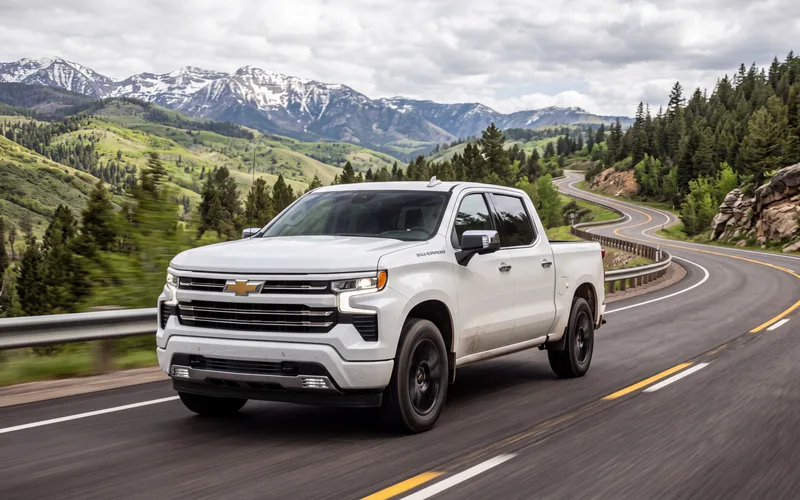 Chevrolet Silverado 1500Full-Size Truck
The F-150 tops the Silverado on towing (13,500 vs 13,300 lbs max), payload leadership, and configuration breadth (10+ trims vs Chevy's narrower ladder).
Compare 2.42C+
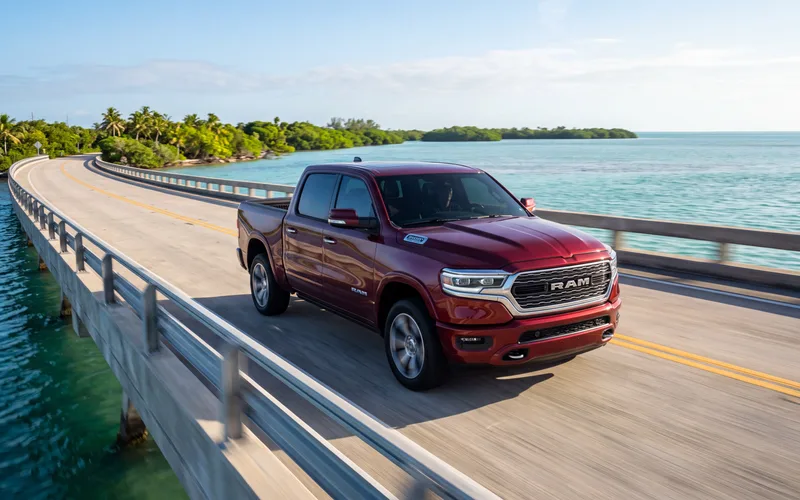 Ram 1500Full-Size Truck
Ram beats the F-150 on ride quality (its coil-sprung rear suspension is the class ride benchmark) and on upmarket interior luxury in Limited and Tungsten trims.
Compare 2.20C
2.20C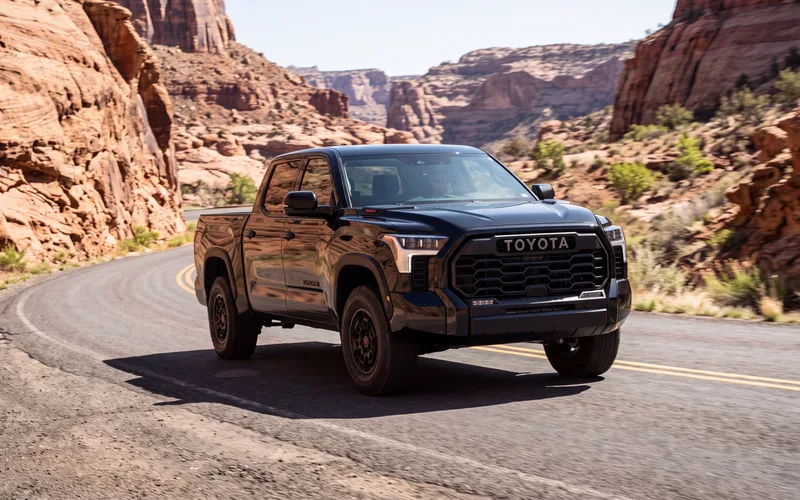 Toyota TundraFull-Size Truck
Tundra brings Toyota's warranty-plus-reliability halo and a standard i-FORCE MAX hybrid on upper trims, but the F-150 outmatches it on max towing (13,500 vs 12,000 lbs), payload, trim breadth, hands-free driving (BlueCruise vs no Toyota equivalent), and Pro Power Onboard exportable power.
CompareHow it's evolved
10 scored model years · 2017–2026
Subject scores by year
Hover or tap a score to see what moved it versus the year before. A corner mark flags a big swing.
| Year | Performance | Efficiency | Safety | Space | Cost | Reliability | Tech | Use-case | Driving | Value |
|---|---|---|---|---|---|---|---|---|---|---|
| 2026 | 64 | 52 | 72 | 69 | 47 | 67 | 72 | 73 | 65 | 75 |
| 2025 | 64 | 68 | 76 | 72 | 52 | 59 | 76 | 73 | 64 | 72 |
| 2024 | 69 | 50 | 76 | 65 | 55 | 50 | 75 | 71 | 64 | 72 |
| 2023 | 69 | 50 | 68 | 65 | 56 | 55 | 64 | 69 | 60 | 65 |
| 2022 | 69 | 60 | 68 | 65 | 58 | 56 | 67 | 69 | 61 | 63 |
| 2021 | 70 | 68 | 73 | 68 | 54 | 56 | 67 | 68 | 63 | 76 |
| 2020 | 68 | 60 | 61 | 66 | 54 | 64 | 49 | 65 | 59 | 67 |
| 2019 | 66 | 65 | 66 | 66 | 57 | 59 | 53 | 66 | 62 | 70 |
| 2018 | 64 | 67 | 49 | 65 | 58 | 58 | 53 | 60 | 62 | 68 |
| 2017 | 59 | 57 | 46 | 63 | 55 | 58 | 42 | 63 | 63 | 73 |
Compare two years
Best fit & conditions
Higher scores mean a better fit for that use case. Learn more about use-case fit →
Subject profile
Trims & configurations
8 trimsScores above reflect the volume trim. Per-trim specs and scores are rolling out — the full lineup:
Academic Probation · NHTSA safety recalls
Oct 6, 2026SeatsThe front seats may have been improperly secured to the vehicle.
Defect
Ford Motor Company (Ford) is recalling certain 2025-2027 F-150 vehicles. The front seats may have been improperly secured to the vehicle.
Risk
An improperly secured seat may not adequately restrain the seat occupant, increasing the risk of injury during a crash.
Remedy
Dealers will inspect and tighten, or replace the front seat bolts as necessary, free of charge. Owner notification letters are expected to be mailed October 26, 2026. Owners may contact Ford customer service at 1-866-436-7332. Ford's number for this recall is 26S74. Vehicle Identification Numbers (VINs) involved in this recall became searchable on NHTSA.gov on October 9, 2026.
NHTSA campaign 26V655000 ↗Manufacturer no. 26S742,276 vehicles potentially affected (all models in the campaign)Filed by Ford Motor CompanyFiled as F-150Sep 9, 2026Fuel system, gasoline: storage: tank assembly: mountingThe fuel tank may be improperly secured and leak fuel, or detach from the vehicle while driving.
Defect
Ford Motor Company (Ford) is recalling certain 2023-2027 F-150 vehicles. The fuel tank may be improperly secured and leak fuel, or detach from the vehicle while driving.
Risk
A detached tank can create a road hazard, increasing the risk of a crash. In addition, a fuel leak can cause an engine stall or increase the risk of a fire.
Remedy
Dealers will inspect and replace the fuel tank straps, as necessary, free of charge. Owner notification letters were mailed September 21, 2026. Owners may contact Ford customer service at 1-866-436-7332. Ford's number for this recall is 26S69. Vehicle Identification Numbers (VINs) involved in this recall will be searchable on NHTSA.gov beginning September 14, 2026.
NHTSA campaign 26V578000 ↗Manufacturer no. 26S69223,472 vehicles potentially affected (all models in the campaign)Owners notified Sep 21, 2026Filed by Ford Motor CompanyFiled as F-150Sep 9, 2026Suspension: rearFord Motor Company (Ford) is recalling certain 2026 F-150 vehicles.The stabilizer rod fasteners may not have been tightened properly during manufacturing, which can allow the rod to shift out of position.
Defect
Ford Motor Company (Ford) is recalling certain 2026 F-150 vehicles.The stabilizer rod fasteners may not have been tightened properly during manufacturing, which can allow the rod to shift out of position.
Risk
A misaligned stabilizer rod can cause a loss of vehicle handling and control, which can increase the risk of a crash.
Remedy
Dealers will replace the stabilizer rod fasteners, free of charge. Owner notification letters were mailed September 18, 2026. Owners may contact Ford customer service at 1-866-436-7332. Ford's number for this recall is 26S66. Vehicle Identification Numbers (VINs) involved in this recall became searchable on NHTSA.gov on September 10, 2026.
NHTSA campaign 26V577000 ↗Manufacturer no. 26S6617 vehicles potentially affected (all models in the campaign)Owners notified Sep 18, 2026Filed by Ford Motor CompanyFiled as F-150Sep 9, 2026Power train: driveline: differential unitIncorrect rear axle tail bearings may have been installed, which can result in rear wheel lock-up or driveshaft separation.
Defect
Ford Motor Company (Ford) is recalling certain 2026 F-150 vehicles. Incorrect rear axle tail bearings may have been installed, which can result in rear wheel lock-up or driveshaft separation.
Risk
Rear wheel lock-up can result in a loss of vehicle control. Driveshaft separation can result in a loss of drive power, or a vehicle rollaway if the vehicle is parked without the parking brake applied. Either of these situations can increase the risk of a crash or injury.
Remedy
Dealers will replace the rear axle tail bearing, free of charge. Owner notification letters were mailed September 21, 2026. Owners may contact Ford customer service at 1-866-436-7332. Ford's number for this recall is 26S63. Vehicle Identification Numbers (VINs) involved in this recall will be searchable on NHTSA.gov beginning September 14, 2026.
NHTSA campaign 26V576000 ↗Manufacturer no. 26S6337 vehicles potentially affected (all models in the campaign)Owners notified Sep 21, 2026Filed by Ford Motor CompanyFiled as F-150Aug 25, 2026Structure: bodyCertain vehicle joints may be improperly tightened. This can lead to detached parts, unsecured cargo, degraded crash protection, electrical system failure, or a loss of vehicle stability.
Defect
Ford Motor Company (Ford) is recalling certain 2026 Maverick, F-150, and Bronco Sport vehicles. Certain vehicle joints may be improperly tightened. This can lead to detached parts, unsecured cargo, degraded crash protection, electrical system failure, or a loss of vehicle stability.
Risk
Improperly tightened vehicle joints may lead to a loss of vehicle control, electrical failure, or detached parts, increasing the risk of a crash or fire.
Remedy
Dealers will inspect and tighten the vehicle joints or repair and replace the joint retention mechanisms as necessary, free of charge. Owner notifications letters are expected to be mailed September 21, 2026. Owners may contact Ford customer service at 1-866-436-7332. Ford's number for this recall is 26S60. Vehicle Identification Numbers (VINs) involved in this recall became searchable on NHTSA.gov on August 26, 2026.
NHTSA campaign 26V550000 ↗Manufacturer no. 26S6023 vehicles potentially affected (all models in the campaign)Filed by Ford Motor CompanyFiled as F-150Feb 20, 2026Electrical system: integrated trailer brake control · Exterior lighting: tail lightsWhen towing a trailer, the integrated trailer module (ITRM) may lose communication with the vehicle, possibly causing a loss of brake and turn signal lights, or a loss of brake function. As such, these vehicles fail to comply with the requirements of Federal Motor Vehicle Safety Standard number 108, " Lamps, Reflective Devices, and Associated Equipment."
Defect
Ford Motor Company (Ford) is recalling certain 2021-2026 F-150, 2022-2026 F-250 SD, F-350 SD, F-450 SD, F-550 SD, Maverick, 2024-2026 Ranger, 2023-2026 F-600 SD, 2022-2027 Lincoln Navigator, Expedition, and 2026 E-Transit vehicles. When towing a trailer, the integrated trailer module (ITRM) may lose communication with the vehicle, possibly causing a loss of brake and turn signal lights, or a loss of brake function. As such, these vehicles fail to comply with the requirements of Federal Motor Vehicle Safety Standard number 108, " Lamps, Reflective Devices, and Associated Equipment."
Risk
Trailer lights or brakes that do not function can reduce the driverâs ability to control the trailer and decrease the trailers visibility to other road users, increasing the risk of a crash.
Remedy
The integrated trailer module software will be updated by a dealer, or through an over-the-air (OTA) update, free of charge. Owner notification letters were mailed March 25, 2026. Owners may contact Ford customer service at 1-866-436-7332. Ford's number for this recall is 26C10. Vehicle Identification Numbers (VINs) involved in this recall will be searchable on NHTSA.gov beginning March 17, 2026.
NHTSA campaign 26V104000 ↗Manufacturer no. 26C104,381,878 vehicles potentially affected (all models in the campaign)Owners notified Mar 25, 2026Filed by Ford Motor CompanyFiled as F-150
92 recalls on other model years of the F-150 (2017–2025)
Jul 28, 2026Back over prevention: display function · Back over prevention: softwareA software error may cause the rearview camera image to be obstructed by the infotainment home screen menu when the vehicle is placed in reverse. As such, these vehicles fail to comply with the requirements of Federal Motor Vehicle Safety Standard (FMVSS) number 111, "Rear Visibility."
Defect
Ford Motor Company (Ford) is recalling certain 2021-2023 F-150 and 2023-2026 F-250 SD vehicles equipped with 8-inch SYNC infotainment screens. A software error may cause the rearview camera image to be obstructed by the infotainment home screen menu when the vehicle is placed in reverse. As such, these vehicles fail to comply with the requirements of Federal Motor Vehicle Safety Standard (FMVSS) number 111, "Rear Visibility."
Risk
An obstructed rearview camera image can reduce the driver's rear visibility, increasing the risk of a crash.
Remedy
The accessory protocol interface module (APIM) software will be updated by a dealer or through an over-the-air (OTA) update, free of charge. Owner notification letters were mailed October 9, 2026. Owners may contact Ford customer service at 1-866-436-7332. Ford's number for this recall is 26C37. Vehicle Identification Numbers (VINs) involved in this recall became searchable on NHTSA.gov on July 31, 2026.
NHTSA campaign 26V489000 ↗Manufacturer no. 26C3747,587 vehicles potentially affected (all models in the campaign)Owners notified Oct 9, 2026Filed by Ford Motor CompanyFiled as F-150Jun 24, 2026Power train: automatic transmissionThe transmission park pawl may engage while the vehicle is in motion, resulting in park system damage.
Defect
Ford Motor Company (Ford) is recalling certain 2018-2021 Navigator, Expedition, 2020-2021 Explorer, Lincoln Aviator, and 2021 F-150 vehicles. The transmission park pawl may engage while the vehicle is in motion, resulting in park system damage.
Risk
Park system damage may result in a vehicle rollaway, increasing the risk of a crash.
Remedy
Dealers will update the powertrain control module software, and inspect and replace any damaged transmission components as necessary, free of charge. Interim letters, notifying owners of the safety risk, were mailed July 10, 2026. Additional letters will be sent once the remedy is available, anticipated in April 2027. Owners may contact Ford customer service at 1-866-436-7332. Ford's number for this recall is 26S48. Vehicle Identification Numbers (VINs) involved in this recall became searchable on NHTSA.gov on June 26, 2026.
NHTSA campaign 26V402000 ↗Manufacturer no. 26S48741,195 vehicles potentially affected (all models in the campaign)Filed by Ford Motor CompanyFiled as F-150Jun 9, 2026Power train: automatic transmission: control module (tcm/pcm/tecm)Quickly moving the shift lever from Park to Drive may cause a loss of gear indication on the instrument cluster display and a momentary selection of an unintended gear, such as Reverse or Neutral.
Defect
Ford Motor Company (Ford) is recalling certain 2018 F-150 vehicles previously repaired incorrectly under recall number 17V669. Quickly moving the shift lever from Park to Drive may cause a loss of gear indication on the instrument cluster display and a momentary selection of an unintended gear, such as Reverse or Neutral.
Risk
Unintended gear selection may cause the vehicle to move in an unexpected direction, increasing the risk of crash or injury.
Remedy
Dealers will update the powertrain control module software, free of charge. Owner notification letters were mailed July 9, 2026. Owners may contact customer service at 1-866-436-7332. Ford's number for this recall is 26S42. Vehicle Identification Numbers (VINs) involved in this recall will become searchable on NHTSA.gov on July 6, 2026.
NHTSA campaign 26V375000 ↗Manufacturer no. 26S4210,742 vehicles potentially affected (all models in the campaign)Owners notified Jul 9, 2026Filed by Ford Motor CompanyFiled as F-150Jun 9, 2026Exterior lighting: headlightsWhen the headlight switch is turned from "Autolamps" to "Headlamps On," the Daytime Running Lamps (DRLs) may remain fully bright instead of dimming to parking lamps as intended. As such, these vehicles fail to comply with the requirements of Federal Motor Vehicle Safety Standard (FMVSS) number 108, "Lamps, Reflective Devices and Associated Equipment."
Defect
Ford Motor Company (Ford) is recalling certain 2018-2020 F-150 vehicles previously repaired incorrectly under recall number 20V097. When the headlight switch is turned from "Autolamps" to "Headlamps On," the Daytime Running Lamps (DRLs) may remain fully bright instead of dimming to parking lamps as intended. As such, these vehicles fail to comply with the requirements of Federal Motor Vehicle Safety Standard (FMVSS) number 108, "Lamps, Reflective Devices and Associated Equipment."
Risk
Daytime Running Lamps that do not dim may reduce the visibility of other drivers, increasing the risk of a crash.
Remedy
,Dealers will reprogram the body control module software, free of charge. Owner notification letters were mailed July 17, 2026. Owners may contact customer service at 1-866-436-7332. Ford's number for this recall is 26C28. Vehicle Identification Numbers (VINs) involved in this recall will become searchable on NHTSA.gov on July 6, 2026.
NHTSA campaign 26V373000 ↗Manufacturer no. 26C2891,198 vehicles potentially affected (all models in the campaign)Owners notified Jul 17, 2026Filed by Ford Motor CompanyFiled as F-150Jun 9, 2026Electrical system: instrument cluster/panelThe instrument cluster may lose power after initial vehicle start-up in cold ambient temperatures. Several gauges, including the transmission gear position indicator, may not illuminate. As such, these vehicles fail to comply with the requirements of Federal Motor Vehicle Safety Standard number 102, "Transmission Shift Lever Sequence, Starter Interlock, and Transmission Braking Effect."
Defect
Ford Motor Company (Ford) is recalling certain 2017 F-150 vehicles previously repaired incorrectly under recall number 17V053. The instrument cluster may lose power after initial vehicle start-up in cold ambient temperatures. Several gauges, including the transmission gear position indicator, may not illuminate. As such, these vehicles fail to comply with the requirements of Federal Motor Vehicle Safety Standard number 102, "Transmission Shift Lever Sequence, Starter Interlock, and Transmission Braking Effect."
Risk
An instrument cluster that fails to display critical safety information, such as gear position or warning lights, increases the risk of a crash or injury.
Remedy
Dealers will update the Instrument Panel Cluster Assembly (IPC) software, free of charge. Owner notification letters were mailed July 17, 2026. Owners may contact Ford customer service at 1-866-436-7332. Ford's number for this recall is 26C26. Vehicle Identification Numbers (VINs) involved in this recall will become searchable on NHTSA.gov on July 6, 2026.
NHTSA campaign 26V370000 ↗Manufacturer no. 26C264,445 vehicles potentially affected (all models in the campaign)Owners notified Jul 17, 2026Filed by Ford Motor CompanyFiled as F-150Apr 14, 2026Power train: automatic transmissionA loss of signal between the transmission range sensor and the powertrain control module can cause the transmission to unexpectedly downshift into second gear.
Defect
Ford Motor Company (Ford) is recalling certain 2015-2017 F-150 vehicles. A loss of signal between the transmission range sensor and the powertrain control module can cause the transmission to unexpectedly downshift into second gear.
Risk
Unexpectedly downshifting into second gear may result in a loss of vehicle control, increasing the risk of a crash.
Remedy
Dealers will update the powertrain control module software, free of charge. Owner notification letters were mailed July 24, 2026. Owners may contact Ford customer service at 1-866-436-7332. Ford's number for this recall is 26S28. Vehicle Identification Numbers (VINs) involved in this recall became searchable on NHTSA.gov on April 15, 2026.
NHTSA campaign 26V237000 ↗Manufacturer no. 26S281,392,935 vehicles potentially affected (all models in the campaign)Owners notified Jul 24, 2026Filed by Ford Motor CompanyFiled as F-150Dec 1, 2025Service brakes, hydraulic: power assist: electric: control moduleThe Electronic Brake Booster (EBB) module may malfunction while driving or when the driver is utilizing an Advanced Driver Assistance System (ADAS) feature, resulting in a loss of power brake assist.
Defect
Ford Motor Company (Ford) is recalling certain 2025 Lincoln Navigator, F-150, Expedition, Bronco, and Ranger vehicles. The Electronic Brake Booster (EBB) module may malfunction while driving or when the driver is utilizing an Advanced Driver Assistance System (ADAS) feature, resulting in a loss of power brake assist.
Risk
An unexpected loss of power brake assist while driving can extend stopping distance and increase the risk of a crash. Additionally, a loss of power brake assist while ADAS features are engaged can result in the vehicle not braking as expected, increasing the risk of a crash.
Remedy
Dealers will replace the electronic brake booster, free of charge. Owner notification letters were mailed February 26, 2026. Owners may contact Ford customer service at 1-866-436-7332. Ford's number for this recall is 25SD4. Vehicle Identification Numbers (VINs) involved in this recall became searchable on NHTSA.gov on December 3, 2025.
NHTSA campaign 25V823000 ↗Manufacturer no. 25SD4679 vehicles potentially affected (all models in the campaign)Owners notified Feb 26, 2026Filed by Ford Motor CompanyFiled as F-150Oct 24, 2025Visibility: sun/moon roof assemblyThe moonroof wind deflector clips may be inadequately attached to the moonroof frame, which can result in the wind deflector detaching from the vehicle.
Defect
Ford Motor Company (Ford) is recalling certain 2021-2022 Expedition, Lincoln Navigator, 2021-2023 F-150, 2022 F-250 SD, F-350 SD, and F-450 SD vehicles. The moonroof wind deflector clips may be inadequately attached to the moonroof frame, which can result in the wind deflector detaching from the vehicle.
Risk
A detached wind deflector can become a road hazard and increase the risk of a crash.
Remedy
Dealers will inspect and repair the moonroof wind deflector as necessary, free of charge. Owner notification letters were mailed November 10, 2025. Owners may contact Ford customer service at 1-866-436-7332. Ford's number for this recall is 25SB7. Vehicle Identification Numbers (VINs) involved in this recall will be searchable on NHTSA.gov beginning October 30, 2025.
NHTSA campaign 25V729000 ↗Manufacturer no. 25SB7174,853 vehicles potentially affected (all models in the campaign)Owners notified Nov 10, 2025Filed by Ford Motor CompanyFiled as F-150Aug 22, 2025Electrical system: instrument cluster/panelThe Instrument Panel Cluster (IPC) may fail at startup.
Defect
Ford Motor Company (Ford) is recalling certain 2025-2026 F-550 SD, F-450 SD, F-350 SD, F-250 SD, and 2025 F-150 vehicles. The Instrument Panel Cluster (IPC) may fail at startup.
Risk
An instrument panel display that does not show critical information, such as warning lights or vehicle speed, increases the risk of a crash.
Remedy
The instrument panel cluster software will be updated by a dealer or through an over-the-air (OTA) update, free of charge. Owner notification letters were mailed September 5, 2025. Owners may contact Ford customer service at 1-866-436-7332. Ford's number for this recall is 25S88.
NHTSA campaign 25V540000 ↗Manufacturer no. 25S88355,656 vehicles potentially affected (all models in the campaign)Owners notified Sep 5, 2025Filed by Ford Motor CompanyFiled as F-150Aug 8, 2025Exterior lighting: lighting control moduleThe parking lights may flicker when the headlights are activated. As such, these vehicles fail to comply with the requirements of Federal Motor Vehicle Safety Standard number 108, "Lamps, Reflective Devices, and Associated Equipment."
Defect
Ford Motor Company (Ford) is recalling certain 2022 F-150 vehicles that were repaired incorrectly under recall 22V686. The parking lights may flicker when the headlights are activated. As such, these vehicles fail to comply with the requirements of Federal Motor Vehicle Safety Standard number 108, "Lamps, Reflective Devices, and Associated Equipment."
Risk
Flickering parking lights can reduce visibility, increasing the risk of a crash.
Remedy
Dealers will replace the light emitting diode control module and update the software, free of charge. Owner notification letters were mailed September 12, 2025. Owners may contact Ford customer service at 1-866-436-7332. Ford's number for this recall is 25C37.
NHTSA campaign 25V517000 ↗Manufacturer no. 25C371,278 vehicles potentially affected (all models in the campaign)Owners notified Sep 12, 2025Filed by Ford Motor CompanyFiled as F-150Aug 8, 2025Exterior lighting: lighting control moduleThe parking lights may flicker when the headlights are activated. As such, these vehicles fail to comply with the requirements of Federal Motor Vehicle Safety Standard number 108, "Lamps, Reflective Devices, and Associated Equipment."
Defect
Ford Motor Company (Ford) is recalling certain 2022 F-150 vehicles that were repaired incorrectly under recalls 22V686 and 23V802. The parking lights may flicker when the headlights are activated. As such, these vehicles fail to comply with the requirements of Federal Motor Vehicle Safety Standard number 108, "Lamps, Reflective Devices, and Associated Equipment."
Risk
Flickering parking lights can reduce visibility, increasing the risk of a crash.
Remedy
Dealers will replace the light emitting diode control module and update the software, free of charge. Owner notification letters were mailed August 20, 2025. Owners may contact Ford customer service at 1-866-436-7332. Ford's number for this recall is 25C38.
NHTSA campaign 25V515000 ↗Manufacturer no. 25C382,361 vehicles potentially affected (all models in the campaign)Owners notified Aug 20, 2025Filed by Ford Motor CompanyFiled as F-150Aug 8, 2025Power train: axle hubsThe rear axle hub bolt may fatigue and break, which can result in damage to the axle hub splines.
Defect
Ford Motor Company (Ford) is recalling certain 2023-2025 F-150 vehicles equipped with the Trailer Tow Max Duty package and a 9.75-inch heavy duty axle with a 3/4 float axle design. The rear axle hub bolt may fatigue and break, which can result in damage to the axle hub splines.
Risk
Damaged axle hub splines can result in a vehicle rollaway when in park without the parking brake applied or cause a loss of drive power. Either of these conditions can increase the risk of a crash.
Remedy
Dealers will replace the left and right rear axle shaft assemblies, free of charge. This is a phased recall. Ford owners will receive letters in multiple phases, beginning August 2025 through Winter 2025. Phase 1 will include 2023 F-150 model year vehicles. Phase 2 will include 2025 F-150 model year vehicles and Phase 3 will include 2024 F-150 model year vehicles. Interim owner notification letters informing owners of the safety risk were mailed August 22, 2025. Owner notification letters were mailed August 22, 2025. Owners may contact Ford customer service at 1-866-436-7332. Ford's number for this recall is 25S82. This recall expands previous NHTSA recall number 23V896.
NHTSA campaign 25V512000 ↗Manufacturer no. 25S82103,174 vehicles potentially affected (all models in the campaign)Owners notified Aug 22, 2025Filed by Ford Motor CompanyFiled as F-150Jul 25, 2025Seat belts: front: warning light/devicesWhen the driver or passenger's seat belt is not buckled and the vehicle is started, the audible warning chime may not activate as intended. As such, these vehicles fail to comply with the requirements of Federal Motor Vehicle Safety Standard number 208, "Occupant Crash Protection."
Defect
Ford Motor Company (Ford) is recalling certain 2025 F-150 hybrid vehicles equipped with a 3.5L hybrid electric powertrain. When the driver or passenger's seat belt is not buckled and the vehicle is started, the audible warning chime may not activate as intended. As such, these vehicles fail to comply with the requirements of Federal Motor Vehicle Safety Standard number 208, "Occupant Crash Protection."
Risk
An audible warning chime that fails to alert occupants of an unbelted seat belt can increase the risk of injury during a crash.
Remedy
Dealers will update the audio control module software, free of charge. Owner notification letters were mailed August 15, 2025. Owners may contact Ford customer service at 1-866-436-7332. Ford's number for this recall is 25C31.
NHTSA campaign 25V489000 ↗Manufacturer no. 25C3156,473 vehicles potentially affected (all models in the campaign)Owners notified Aug 15, 2025Filed by Ford Motor CompanyFiled as F-150 HYBRIDJul 25, 2025Service brakes, hydraulic: power assist: electric: control module: softwareThe Electronic Brake Booster (EBB) module may malfunction while driving or when the driver is utilizing an Advanced Driver Assistance System (ADAS) feature, resulting in a loss of power brake assist.
Defect
Ford Motor Company (Ford) is recalling certain 2025 Lincoln Navigator, F-150, Expedition, Bronco, and Ranger vehicles. The Electronic Brake Booster (EBB) module may malfunction while driving or when the driver is utilizing an Advanced Driver Assistance System (ADAS) feature, resulting in a loss of power brake assist.
Risk
An unexpected loss of power brake assist while driving can extend stopping distance and increase the risk of a crash. Additionally, a loss of power brake assist while ADAS features are engaged can result in the vehicle not braking as expected, increasing the risk of a crash.
Remedy
The EBB module software will be updated over-the-air (OTA) or by a dealer, free of charge. Owner notification letters were mailed on August 22, 2025. Owners may contact Ford customer service at 1-866-436-7332. Ford's number for this recall is 25S77.
NHTSA campaign 25V488000 ↗Manufacturer no. 25S77312,120 vehicles potentially affected (all models in the campaign)Owners notified Aug 22, 2025Filed by Ford Motor CompanyFiled as F-150Jul 7, 2025Fuel system, gasoline: delivery: fuel pumpThe low-pressure fuel pump may fail, which can result in an engine stall while driving.
Defect
Ford Motor Company (Ford) is recalling certain 2021-2023 Bronco, Explorer, Lincoln Aviator, F-250 SD, F-350 SD, F-450 SD, F-550 SD, 2021-2022 Lincoln Navigator, Mustang, F-150, and 2022 Expedition vehicles. The low-pressure fuel pump may fail, which can result in an engine stall while driving.
Risk
An engine stall increases the risk of a crash.
Remedy
Dealers will replace the low pressure fuel pump on super duty vehicles and update the powertrain control module (PCM) software on all other affected vehicles, free of charge. Owner notification letters were mailed July 27, 2026. Owners may contact Ford customer service at 1-866-436-7332. Ford's number for this recall is 25S75.
NHTSA campaign 25V455000 ↗Manufacturer no. 25S75850,318 vehicles potentially affected (all models in the campaign)Owners notified Jul 27, 2026Filed by Ford Motor CompanyFiled as F-150Jun 27, 2025Back over prevention: softwareA software error may cause the rearview camera to display a blank image, or the image may remain on the display after the backing event has ended.
Defect
Ford Motor Company (Ford) is recalling certain 2018-2022 Transit Connect, 2019-2020 MKZ, MKX, Edge, Continental, F-150, Nautilus, Fusion, 2019-2023 Ranger, Mustang, 2020-2021 EcoSport, Expedition, Navigator, 2020-2022 Escape, F-250 SD, Corsair, 2020-2023 Aviator, Transit, 2020-2024 Explorer, 2021-2024 Bronco Sport, and 2022-2024 Maverick vehicles. A software error may cause the rearview camera to display a blank image, or the image may remain on the display after the backing event has ended.
Risk
A rearview camera that displays a blank image can reduce the driver's view behind the vehicle. A rearview image that continues to be displayed after the vehicle is shifted out of reverse may distract the driver. Both of these situations can increase the risk of a crash.
Remedy
Dealers will update the rearview camera software, free of charge. Owner notification letters were mailed September 4, 2025. Owners may contact Ford customer service at 1-866-436-7332. Ford's number for this recall is 25S72.
NHTSA campaign 25V442000 ↗Manufacturer no. 25S72200,237 vehicles potentially affected (all models in the campaign)Owners notified Sep 4, 2025Filed by Ford Motor CompanyFiled as F-150Jun 13, 2025Electrical system: wiring · Engine and engine cooling: cooling system: hoses/lines/piping/fittingsContact with the engine coolant hose may chafe the engine wire harness or cause a pull out of the Powertrain Control Module (PCM) connector pins, causing the engine to stall.
Defect
Ford Motor Company (Ford) is recalling certain 2025 F-150 trucks. Contact with the engine coolant hose may chafe the engine wire harness or cause a pull out of the Powertrain Control Module (PCM) connector pins, causing the engine to stall.
Risk
An engine stall increases the risk of a crash.
Remedy
Dealers will inspect, replace the engine wire harness as necessary, and relocate the engine coolant hose, free of charge. Owner notification letters were mailed September 12, 2025. The parts are anticipated to be available the third quarter of 2025. Owners may contact Ford customer service at 1-866-436-7332. Ford's number for this recall is 25S63.
NHTSA campaign 25V398000 ↗Manufacturer no. 25S6340 vehicles potentially affected (all models in the campaign)Owners notified Sep 12, 2025Filed by Ford Motor CompanyFiled as F-150Jun 13, 2025Engine and engine cooling: engine: hard parts internal/mechanicalThe connecting rod and rod bearing components may have manufacturing defects that can lead to engine damage and engine failure.
Defect
Ford Motor Company (Ford) is recalling certain 2025 Transit, F-150, and Explorer vehicles. The connecting rod and rod bearing components may have manufacturing defects that can lead to engine damage and engine failure.
Risk
A damaged engine can result in engine failure and a stall, increasing the risk of a crash.
Remedy
Dealers will inspect the connecting rods and replace the engine long block assembly as necessary, free of charge. Owner notification letters were mailed August 15, 2025. Owners may contact Ford customer service at 1-866-436-7332. Ford's number for this recall is 25S55.
NHTSA campaign 25V344000 ↗Manufacturer no. 25S55156 vehicles potentially affected (all models in the campaign)Owners notified Aug 15, 2025Filed by Ford Motor CompanyFiled as F-150May 23, 2025Exterior lighting: back up lightsAn over-the-air software update to the body control module (BCM) may have disabled both reverse lights.
Defect
Ford Motor Company (Ford) is recalling certain 2021 F-150 vehicles equipped with the Onboard Scales feature that were repaired incorrectly under recall 24V443. An over-the-air software update to the body control module (BCM) may have disabled both reverse lights.
Risk
Inoperative reverse lights may fail to alert others that the vehicle is reversing, increasing the risk of a crash.
Remedy
Dealers will update the body control module software, free of charge. Owner notification letters were mailed on June 27, 2025. Owners may contact Ford customer service at 1-866-436-7332. Ford's number for this recall is 25S57.
NHTSA campaign 25V348000 ↗Manufacturer no. 25S5710 vehicles potentially affected (all models in the campaign)Owners notified Jun 26, 2025Filed by Ford Motor CompanyFiled as F-150May 9, 2025Back over prevention: softwareA software error may cause the rearview camera image to delay, freeze, or not display when the vehicle is in reverse.
Defect
Ford Motor Company (Ford) is recalling certain 2021-2024 Bronco, F-150, 2021-2024 Edge, 2022-2025 Escape, F-250, F-350, F-450, F-550, F-600, 2022-2024 Expedition, 2022-2025 Transit, 2021-2023 Mach-E, 2024 Ranger, Mustang, 2021-2023 Lincoln Nautilus, 2022-2024 Navigator, and 2023-2024 Corsair vehicles. A software error may cause the rearview camera image to delay, freeze, or not display when the vehicle is in reverse.
Risk
A frozen or missing rearview camera image can reduce the driver's view behind the vehicle, increasing the risk of a crash.
Remedy
The accessory protocol interface module (APIM) software will be updated by a dealer or through an over-the-air update, free of charge. This will be a phased campaign, with the remedy becoming available in different phases based on model and model years. Interim letters notifying owners of the safety risk were mailed on June 26, 2025. Additional letters will be mailed once the final remedy is available on each phase. Owner notification letters were sent on October 8, 2025. Owners may contact Ford customer service at 1-866-436-7332. Ford's number for this recall is 25S49.
NHTSA campaign 25V315000 ↗Manufacturer no. 25S491,076,138 vehicles potentially affected (all models in the campaign)Owners notified Oct 8, 2025Filed by Ford Motor CompanyFiled as F-150May 9, 2025SteeringThe lower intermediate shaft fasteners may be improperly attached to the steering gear, allowing the shaft to come loose or detach.
Defect
Ford Motor Company (Ford) is recalling certain 2025 F-150 vehicles. The lower intermediate shaft fasteners may be improperly attached to the steering gear, allowing the shaft to come loose or detach.
Risk
A lower intermediate shaft that detaches can result in a loss of steering control, increasing the risk of a crash.
Remedy
Dealers will inspect and replace the lower intermediate shaft fasteners as necessary, free of charge. Owner notification letters were mailed May 30, 2025. Owners may contact Ford customer service at 1-866-436-7332. Ford's number for this recall is 25S46.
NHTSA campaign 25V309000 ↗Manufacturer no. 25S469,181 vehicles potentially affected (all models in the campaign)Owners notified May 29, 2025Filed by Ford Motor CompanyFiled as F-150Apr 23, 2025Equipment: other: labelsThe air bag warning label may be missing from the dashboard. As such, these vehicles fail to comply with the requirements of Federal Motor Vehicle Safety Standard number 208, "Occupant Crash Protection."
Defect
Ford Motor Company (Ford) is recalling certain 2025 F-150 vehicles. The air bag warning label may be missing from the dashboard. As such, these vehicles fail to comply with the requirements of Federal Motor Vehicle Safety Standard number 208, "Occupant Crash Protection."
Risk
A missing air bag warning label will not warn occupants about the risks of air bag deployment, increasing the risk of injury in a crash.
Remedy
Ford will mail owners the warning labels, free of charge. Owner notification letters were mailed May 7, 2025. Owners may contact Ford customer service at 1-866-436-7332. Ford's number for this recall is 25C12.
NHTSA campaign 25V271000 ↗Manufacturer no. 25C12326 vehicles potentially affected (all models in the campaign)Owners notified May 7, 2025Filed by Ford Motor CompanyFiled as F-150Apr 11, 2025Service brakes, hydraulic: foundation components: master cylinder · Service brakes, hydraulic: power assistThe brake master cylinder may allow brake fluid to leak from the front wheel circuit into the brake booster.
Defect
Ford Motor Company (Ford) is recalling certain 2017-2018 F-150, Expedition, and Lincoln Navigator vehicles. The brake master cylinder may allow brake fluid to leak from the front wheel circuit into the brake booster.
Risk
A brake fluid leak can cause reduced brake function and extend the distance required to stop, increasing the risk of a crash.
Remedy
Dealers will replace the brake master cylinder. If the master cylinder is leaking, the brake booster will also be replaced. Repairs will be performed free of charge. Owner notification letters were mailed September 25, 2025. Owners may contact Ford customer service at 1-866-436-7332. Ford's number for this recall is 25S37. This recall is an expansion of NHTSA recall number 22V-150.
NHTSA campaign 25V236000 ↗Manufacturer no. 25S37123,611 vehicles potentially affected (all models in the campaign)Owners notified Sep 25, 2025Filed by Ford Motor CompanyFiled as F-150Mar 28, 2025Electrical system: propulsion system: fuses, relays, contacts, and shuntsThe high voltage battery junction box may contain an incorrect fuse, which can fail and result in a sudden loss of drive power.
Defect
Ford Motor Company (Ford) is recalling certain 2025 F-150 full hybrid electric (FHEV) vehicles. The high voltage battery junction box may contain an incorrect fuse, which can fail and result in a sudden loss of drive power.
Risk
A sudden loss of drive power increases the risk of a crash.
Remedy
Dealers will replace the incorrect 60-amp fuse with a 150-amp fuse, free of charge. Owner notification letters were mailed April 11, 2025. Owners may contact Ford customer service at 1-866-436-7332. Ford's number for this recall is 25S29.
NHTSA campaign 25V199000 ↗Manufacturer no. 25S2947 vehicles potentially affected (all models in the campaign)Owners notified Apr 11, 2025Filed by Ford Motor CompanyFiled as F-150 HYBRIDMar 28, 2025Engine and engine cooling: engine: oil/lubricationThe engine may have a misaligned engine cup plug, which can result in a rapid oil leak.
Defect
Ford Motor Company (Ford) is recalling certain 2024-2025 F-150, Expedition, and 2024 Lincoln Navigator vehicles equipped with 3.5L GTDI engines. The engine may have a misaligned engine cup plug, which can result in a rapid oil leak.
Risk
A rapid oil leak can result in an engine stall, increasing the risk of a crash. In addition, an oil leak in the presence of an ignition source such as hot engine or exhaust components, can increase the risk of a fire.
Remedy
Dealers will inspect the engine cup plug alignment, and replace the plug if necessary, free of charge. Owner notification letters were mailed May 22, 2025. Owners may contact Ford customer service at 1-866-436-7332. Ford's number for this recall is 25S30.
NHTSA campaign 25V198000 ↗Manufacturer no. 25S304,356 vehicles potentially affected (all models in the campaign)Owners notified May 23, 2025Filed by Ford Motor CompanyFiled as F-150Mar 14, 2025Power train: automatic transmission: control module (tcm/pcm/tecm)The Diagnostic Trouble Code (DTC) for low transmission fluid pressure may falsely activate and cause the transmission to unexpectedly shift into neutral.
Defect
Ford Motor Company (Ford) is recalling certain 2021 F-150 vehicles previously repaired incorrectly under recall number 22V-188. The Diagnostic Trouble Code (DTC) for low transmission fluid pressure may falsely activate and cause the transmission to unexpectedly shift into neutral.
Risk
An unexpected shift into neutral will cause a loss of drive power and increase the risk of a crash.
Remedy
Dealers will update the Powertrain Control Module (PCM) software, free of charge. Owner notification letters were mailed April 22, 2025. Owners may contact Ford customer service at 1-866-436-7332. Ford's number for this recall is 25S24.
NHTSA campaign 25V169000 ↗Manufacturer no. 25S24567 vehicles potentially affected (all models in the campaign)Owners notified Apr 22, 2025Filed by Ford Motor CompanyFiled as F-150Mar 14, 2025Power train: automatic transmission: fluid/lubricant: valves/valve bodyThe transmission valve body may have been machined incorrectly, which can cause reverse gear failure, or unexpected forward movement in reverse or neutral gear.
Defect
Ford Motor Company (Ford) is recalling certain 2024-2025 F-150, Bronco, 2024 Ranger, 2025 Mustang, Explorer, and Aviator vehicles. The transmission valve body may have been machined incorrectly, which can cause reverse gear failure, or unexpected forward movement in reverse or neutral gear.
Risk
Unexpected vehicle movement increases the risk of a crash.
Remedy
Dealers will replace the transmission main control valve body, free of charge. Owner notification letters were mailed April 11, 2025. Owners may contact Ford customer service at 1-866-436-7332. Ford's number for this recall is 25S19.
NHTSA campaign 25V164000 ↗Manufacturer no. 25S19269 vehicles potentially affected (all models in the campaign)Owners notified Apr 11, 2025Filed by Ford Motor CompanyFiled as F-150Feb 28, 2025Electrical system: integrated trailer brake controlDue to a software error, a towed trailer equipped with an electric or electric-over hydraulic brake system may not brake.
Defect
Ford Motor Company (Ford) is recalling certain 2021-2022 F-150, 2022 Maverick, Expedition, Lincoln Navigator, F-250, F-350, F-450, and F-550 vehicles previously repaired incorrectly under recall number 22V-193. Due to a software error, a towed trailer equipped with an electric or electric-over hydraulic brake system may not brake.
Risk
Loss of trailer brake functionality can extend the distance required to stop, increasing the risk of a crash.
Remedy
Dealers will update the integrated trailer brake control module software, free of charge. Owner notification letters were mailed April 11, 2025. Owners may contact Ford customer service at 1-866-436-7332. Ford's number for this recall is 25S18.
NHTSA campaign 25V132000 ↗Manufacturer no. 25S1510,952 vehicles potentially affected (all models in the campaign)Owners notified Apr 11, 2025Filed by Ford Motor CompanyFiled as F-150Jan 17, 2025SteeringThe steering gear assembly may have been assembled with an incorrect rack, which can cause the gears to fracture.
Defect
Ford Motor Company (Ford) is recalling certain 2024 F-150 vehicles. The steering gear assembly may have been assembled with an incorrect rack, which can cause the gears to fracture.
Risk
A fractured steering gear can cause the steering to bind or lock, resulting in a loss of steering control and increasing the risk of a crash.
Remedy
Dealers will replace the steering gear assembly, free of charge. Owner notification letters were mailed February 19, 2025. Owners may contact Ford customer service at 1-866-436-7332. Ford's number for this recall is 25S04.
NHTSA campaign 25V022000 ↗Manufacturer no. 25S043 vehicles potentially affected (all models in the campaign)Owners notified Feb 19, 2025Filed by Ford Motor CompanyFiled as F-150Dec 20, 2024Engine and engine cooling: engine: oil/lubricationThe engines may have a misaligned engine cup plug, which can result in a rapid oil leak.
Defect
Ford Motor Company (Ford) is recalling certain 2024-2025 F-150, 2024 Expedition and 2024 Lincoln Navigator vehicles equipped with a 3.5L GTDI engine. The engines may have a misaligned engine cup plug, which can result in a rapid oil leak.
Risk
A rapid oil leak can result in an engine stall, increasing the risk of a crash. In addition, an oil leak in the presence of an ignition source such as hot engine or exhaust components, can increase the risk of a fire.
Remedy
Dealers will inspect the engine cup plug alignment, and replace the plug if necessary, free of charge. Owner notification letters were mailed on May 23, 2024. Owners may contact Ford customer service at 1-866-436-7332. Ford's number for this recall is 24S70.
NHTSA campaign 24V851000 ↗Manufacturer no. 24S702,490 vehicles potentially affected (all models in the campaign)Owners notified May 23, 2025Filed by Ford Motor CompanyFiled as F-150Nov 8, 2024Equipment: other: labelsThe air bag warning label may be missing from the dashboard. As such, these vehicles fail to comply with the requirement Federal Motor Vehicle Safety Standard number 208, "Occupant Crash Protection."
Defect
Ford Motor Company (Ford) is recalling certain 2020-2025 Explorer, Lincoln Aviator, 2020-2024 Escape, Lincoln Corsair, 2018-2024 F-150, Expedition and Lincoln Navigator vehicles. The air bag warning label may be missing from the dashboard. As such, these vehicles fail to comply with the requirement Federal Motor Vehicle Safety Standard number 208, "Occupant Crash Protection."
Risk
Without a label that shows the proper restraint usage guidelines, the occupants may have an increased risk of injury in the event of a crash.
Remedy
Ford will mail owners the warning labels, free of charge. Owner notification letters were mailed December 19, 2024. Owners may call Ford customer service at 1-866-436-7332. Ford's number for this recall is 24C39.
NHTSA campaign 24V852000 ↗Manufacturer no. 24C3927,678 vehicles potentially affected (all models in the campaign)Owners notified Dec 19, 2024Filed by Ford Motor CompanyFiled as F-150Sep 13, 2024Exterior lighting: lighting control moduleThe parking lights may flicker when the headlights are activated. As such, these vehicles fail to comply with the requirements of Federal Motor Vehicle Safety Standard number 108, "Lamps, Reflective Devices, and Associated Equipment."
Defect
Ford Motor Company (Ford) is recalling certain 2022 F-150 vehicles. The parking lights may flicker when the headlights are activated. As such, these vehicles fail to comply with the requirements of Federal Motor Vehicle Safety Standard number 108, "Lamps, Reflective Devices, and Associated Equipment."
Risk
Flickering parking lights can reduce visibility, increasing the risk of a crash.
Remedy
Dealers will replace the LED Driver module, free of charge. Owner notification letters were mailed on March 10, 2025. Owners may contact Ford customer service at 1-866-436-7332. Ford's number for this recall is 24C30. These vehicles were previously recalled for this same issue under 22V-686 and will need to have the new remedy performed.
NHTSA campaign 24V682000 ↗Manufacturer no. 24C3016,543 vehicles potentially affected (all models in the campaign)Owners notified Mar 10, 2025Filed by Ford Motor CompanyFiled as F-150Aug 23, 2024Engine and engine cooling: engine: hard parts internal/mechanicalThe engine intake valves may break while driving, which can result in engine failure and a loss of drive power.
Defect
Ford Motor Company (Ford) is recalling certain 2021-2022 Bronco, F-150, Edge, Explorer, Lincoln Nautilus, and Lincoln Aviator vehicles equipped with either a 2.7L or 3.0L Nano EcoBoost engine. The engine intake valves may break while driving, which can result in engine failure and a loss of drive power.
Risk
A loss of drive power increases the risk of a crash.
Remedy
Dealers will perform an engine cycle test and replace the engine as necessary, free of charge. Owner notification letters were mailed July 3, 2025. Owners may contact Ford customer service at 1-866-436-7332. Ford's number for this recall is 24S55.
NHTSA campaign 24V635000 ↗Manufacturer no. 24S5590,736 vehicles potentially affected (all models in the campaign)Owners notified Jul 3, 2025Filed by Ford Motor CompanyFiled as F-150Jun 28, 2024Visibility: windshieldThe windshield may not have been properly bonded to the vehicle, allowing it to detach during a crash. As such, these vehicles fail to comply with the requirements of Federal Motor Vehicle Safety Standard number 212, "Windshield Mounting."
Defect
Ford Motor Company (Ford) is recalling certain 2024 F-150 vehicles. The windshield may not have been properly bonded to the vehicle, allowing it to detach during a crash. As such, these vehicles fail to comply with the requirements of Federal Motor Vehicle Safety Standard number 212, "Windshield Mounting."
Risk
A windshield that detaches from a vehicle during a crash can increase the risk of injury.
Remedy
Dealers will remove and reinstall the windshield, free of charge. Owner notification letters were mailed July 10, 2024. Owners may contact Ford customer service at 1-866-436-7332. Ford's number for this recall is 24C20.
NHTSA campaign 24V486000 ↗Manufacturer no. 24C204,361 vehicles potentially affected (all models in the campaign)Owners notified Jul 10, 2024Filed by Ford Motor CompanyFiled as F-150Jun 14, 2024Electrical system: body control module: software · Exterior lighting: back up lightsAn over-the-air software update to the body control module (BCM) may have disabled both reverse lights.
Defect
Ford Motor Company (Ford) is recalling certain 2021 F-150 vehicles equipped with the Onboard Scales feature. An over-the-air software update to the body control module (BCM) may have disabled both reverse lights.
Risk
Disabled reverse lights cannot alert others that the vehicle is reversing, increasing the risk of a crash.
Remedy
Dealers will update the body control module software, free of charge. Owner notification letters are were mailed June 26, 2024. Owners may contact Ford customer service at 1-866-436-7332. Ford's number for this recall is 24S38.
NHTSA campaign 24V443000 ↗Manufacturer no. 24S38159 vehicles potentially affected (all models in the campaign)Owners notified Jun 26, 2024Filed by Ford Motor CompanyFiled as F-150May 10, 2024Steering: columnThe steering column lower shaft may have been secured to the steering gear assembly with an incorrect fastener, which can result in the separation of steering components and cause a loss of steering control.
Defect
Ford Motor Company (Ford) is recalling certain 2024 F-150 vehicles. The steering column lower shaft may have been secured to the steering gear assembly with an incorrect fastener, which can result in the separation of steering components and cause a loss of steering control.
Risk
A loss of steering control increases the risk of a crash.
Remedy
Dealers will replace the lower steering shaft fastener, free of charge. Owner notification letters were mailed May 22, 2024. Owners may contact Ford customer service at 1-866-436-7332. Ford's number for this recall is 24S32.
NHTSA campaign 24V329000 ↗Manufacturer no. 24S32385 vehicles potentially affected (all models in the campaign)Owners notified May 22, 2024Filed by Ford Motor CompanyFiled as F-150Dec 22, 2023Power train: axle hubsThe rear axle hub bolt may fatigue and break, which can result in damage to the axle hub splines.
Defect
Ford Motor Company (Ford) is recalling certain 2021-2023 F-150 vehicles equipped with the Trailer Tow Max Duty package and a 9.75-inch heavy duty axle with a 3/4 float axle design. The rear axle hub bolt may fatigue and break, which can result in damage to the axle hub splines.
Risk
Damaged axle hub splines can result in a vehicle rollaway when the vehicle is in park without the parking brake applied or cause a loss of drive power. Both of these conditions can increase the risk of a crash.
Remedy
Dealers will replace the left and right rear axle shaft assemblies, free of charge. Owner notification letters were mailed on May 9, 2025. Owners may contact Ford customer service at 1-866-436-7332. Ford's number for this recall is 23S65.
NHTSA campaign 23V896000 ↗Manufacturer no. 23S65112,965 vehicles potentially affected (all models in the campaign)Owners notified May 9, 2025Filed by Ford Motor CompanyFiled as F-150Dec 15, 2023Air bags: frontal: driver clockspring/spiral cassette · Steering: columnThe steering wheel clock spring may have an insufficient weld, causing a loss of electrical connection to the driver's frontal air bag.
Defect
Ford Motor Company (Ford) is recalling certain 2023 F-150 and Ford SD F250, F350, F450, F550, and F600 vehicles. The steering wheel clock spring may have an insufficient weld, causing a loss of electrical connection to the driver's frontal air bag.
Risk
A deactivated air bag will not deploy during a crash, increasing the risk of injury.
Remedy
Dealers will inspect and replace the clock spring as necessary, free of charge. Owner notification letters were mailed on May 3, 2024. Owners may contact Ford customer service at 1-866-436-7332.
NHTSA campaign 23V847000 ↗17,970 vehicles potentially affected (all models in the campaign)Owners notified May 3, 2024Filed by Ford Motor CompanyFiled as F-150Nov 28, 2023Exterior lighting: lighting control moduleThe parking lights may flicker when the headlights are activated. As such, these vehicles fail to comply with the requirements of Federal Motor Vehicle Safety Standard number 108, "Lamps, Reflective Devices, and Associated Equipment."
Defect
Ford Motor Company (Ford) is recalling certain 2022 F-150 vehicles. The parking lights may flicker when the headlights are activated. As such, these vehicles fail to comply with the requirements of Federal Motor Vehicle Safety Standard number 108, "Lamps, Reflective Devices, and Associated Equipment."
Risk
Flickering parking lights can reduce visibility, increasing the risk of a crash.
Remedy
Dealers will update the LED driver module software, free of charge. Owner notification letters were mailed January 19, 2024. Owners may contact Ford customer service at 1-866-436-7332. Ford's number for this recall is 23C36. Vehicles with high series headlamps previously recalled under recall number 22V-686 that received an incomplete remedy, or have not yet been repaired, will need to have the new remedy completed.
NHTSA campaign 23V802000 ↗Manufacturer no. 23C3618,527 vehicles potentially affected (all models in the campaign)Owners notified Jan 19, 2024Filed by Ford Motor CompanyFiled as F-150Jul 21, 2023Parking brake: electricalContact with the rear axle housing may damage the wiring harness, causing the electric parking brake to activate unexpectedly.
Defect
Ford Motor Company (Ford) is recalling certain 2021-2023 F-150 vehicles equipped with a single exhaust system. Contact with the rear axle housing may damage the wiring harness, causing the electric parking brake to activate unexpectedly.
Risk
Unexpected activation of the electric parking brake while driving increases the risk of a crash.
Remedy
Dealers will install a protective tie strap, tape wrap, and replace the harness as necessary, free of charge. Owner notification letters were mailed February 12, 2024. Owners may contact Ford customer service at 1-866-436-7332. Ford's number for this recall is 23S35.
NHTSA campaign 23V509000 ↗Manufacturer no. 23S35870,701 vehicles potentially affected (all models in the campaign)Owners notified Feb 12, 2024Filed by Ford Motor CompanyFiled as F-150Mar 10, 2023Visibility: windshield wiper/washer: linkagesThe windshield wiper arms may break, causing the windshield wipers to fail.
Defect
Ford Motor Company (Ford) is recalling certain 2021 F-150 vehicles. The windshield wiper arms may break, causing the windshield wipers to fail.
Risk
Inoperative windshield wipers can reduce visibility in certain conditions, increasing the risk of a crash.
Remedy
Dealers will inspect and replace the wiper arms, as necessary, free of charge. Owner notification letters were mailed December 13, 2023. Owners may contact Ford customer service at 1-866-436-7332. Ford's number for this recall is 23S10. This recall expands previous recall number 22V-250.
NHTSA campaign 23V163000 ↗Manufacturer no. 23S10222,454 vehicles potentially affected (all models in the campaign)Owners notified Dec 13, 2023Filed by Ford Motor CompanyFiled as F-150Feb 24, 2023Power train: axle assemblyThe front axle pinion may not have been heat-treated, which can cause it to fracture.
Defect
Ford Motor Company (Ford) is recalling certain 2023 F-150, Expedition, and Lincoln Navigator vehicles. The front axle pinion may not have been heat-treated, which can cause it to fracture.
Risk
A fractured pinion can result in a loss of 4-wheel drive and may cause the front wheels to lock up, increasng the risk of a crash.
Remedy
Dealers will replace the front axle pinion gear set. If there is a broken front axle pinion, the entire axle assembly will be replaced. Repairs will be performed free of charge. Owner notification letters were mailed April 21, 2023. Owners may contact Ford customer service at 1-866-436-7332. Ford's number for this recall is 23S07.
NHTSA campaign 23V128000 ↗Manufacturer no. 23S07240 vehicles potentially affected (all models in the campaign)Owners notified Apr 21, 2023Filed by Ford Motor CompanyFiled as F-150Feb 10, 2023Air bags: frontalThe instrument panel top cover on the passenger-side may prevent the air bag from deploying as intended. As such, these vehicles fail to comply with the requirements of Federal Motor Vehicle Safety Standard number 208, "Occupant Crash Protection."
Defect
Ford Motor Company (Ford) is recalling certain 2023 F-150 vehicles. The instrument panel top cover on the passenger-side may prevent the air bag from deploying as intended. As such, these vehicles fail to comply with the requirements of Federal Motor Vehicle Safety Standard number 208, "Occupant Crash Protection."
Risk
An air bag that does not deploy as intended increases the risk of injury in a crash.
Remedy
Dealers will replace the passenger instrument panel top cover, free of charge. Owner notification letters were mailed March 16, 2023. Owners may contact Ford customer service at 1-866-436-7332. Ford's number for this recall is 23C01.
NHTSA campaign 23V072000 ↗Manufacturer no. 23C01321 vehicles potentially affected (all models in the campaign)Owners notified Mar 16, 2023Filed by Ford Motor CompanyFiled as F-150Feb 10, 2023Power train: automatic transmissionThe transmission may contain a loose bolt which could prevent the transmission from engaging the park gear, although the gear shifter position may indicate that the vehicle has been shifted to "PARK."
Defect
Ford Motor Company (Ford) is recalling certain 2022-2023 F-150, Mustang, Explorer, Bronco, and 2023 Lincoln Aviator vehicles equipped with automatic transmissions. The transmission may contain a loose bolt which could prevent the transmission from engaging the park gear, although the gear shifter position may indicate that the vehicle has been shifted to "PARK."
Risk
The inability to secure the vehicle in the park position can result in a rollaway, increasing the risk of a crash or injury.
Remedy
Dealers will inspect and, if necessary, replace the transmissions, free of charge. Owner notification letters were mailed April 25, 2023. Owners may contact Ford customer service at 1-866-436-7332. Ford's number for this recall is 23S06.
NHTSA campaign 23V070000 ↗Manufacturer no. 23S061,138 vehicles potentially affected (all models in the campaign)Owners notified Apr 25, 2023Filed by Ford Motor CompanyFiled as F-150Nov 15, 2022Visibility: windshield wiper/washer: motorThe front windshield wiper motor may become inoperative, causing the wipers to fail.
Defect
Ford Motor Company (Ford) is recalling certain 2021-2022 F-150 vehicles. The front windshield wiper motor may become inoperative, causing the wipers to fail.
Risk
Inoperative windshield wipers can reduce visibility in certain conditions, increasing the risk of a crash.
Remedy
Dealers will replace the front windshield wiper motor, free of charge. Owner notification letters were mailed June 30, 2023. Remedy parts are expected in the 3rd Quarter of 2023. Owners may contact Ford customer service at 1-866-436-7332. Ford's number for this recall is 22S71. This recall expands previous recall number 22V-142.
NHTSA campaign 22V842000 ↗Manufacturer no. 22S71483,082 vehicles potentially affected (all models in the campaign)Owners notified Jun 30, 2023Filed by Ford Motor CompanyFiled as F-150Sep 14, 2022Exterior lighting: lighting control moduleThe parking lights may flicker when the headlights are activated. As such, these vehicles fail to comply with the requirements of Federal Motor Vehicle Safety Standard number 108, "Lamps, Reflective Devices, and Associated Equipment."
Defect
Ford Motor Company (Ford) is recalling certain 2022-2023 Bronco Sport and 2022 F-150 vehicles. The parking lights may flicker when the headlights are activated. As such, these vehicles fail to comply with the requirements of Federal Motor Vehicle Safety Standard number 108, "Lamps, Reflective Devices, and Associated Equipment."
Risk
Flickering parking lights can reduce visibility, increasing the risk of a crash.
Remedy
Dealers will replace the LED Driver module, free of charge. Owner notification letters were mailed March 29, 2023. Owners may contact Ford customer service at 1-866-436-7332. Ford's number for this recall is 22C22.
NHTSA campaign 22V686000 ↗Manufacturer no. 22C2286,050 vehicles potentially affected (all models in the campaign)Owners notified Mar 29, 2023Filed by Ford Motor CompanyFiled as F-150Sep 14, 2022Air bagsThe right-side instrument panel cover may have been manufactured incorrectly, which can cause the air bag to not deploy as intended. As such, these vehicles fail to comply with the requirements of Federal Motor Vehicle Safety Standard number 208, "Occupant Crash Protection."
Defect
Ford Motor Company (Ford) is recalling certain 2022 F-150 vehicles. The right-side instrument panel cover may have been manufactured incorrectly, which can cause the air bag to not deploy as intended. As such, these vehicles fail to comply with the requirements of Federal Motor Vehicle Safety Standard number 208, "Occupant Crash Protection."
Risk
During air bag deployment, the air bag cover my break and project fragments into the vehicle, or the air bag may deploy improperly, increasing the risk of occupant injury.
Remedy
Dealers will replace the right-side instrument panel cover, free of charge. Owner notification letters were mailed October 26, 2022. Owners may contact Ford customer service at 1-866-436-7332. Ford's number for this recall is 22C23.
NHTSA campaign 22V684000 ↗Manufacturer no. 22C2374 vehicles potentially affected (all models in the campaign)Owners notified Oct 26, 2022Filed by Ford Motor CompanyFiled as F-150Sep 8, 2022Wheels: lugs/nuts/bolts/studsThe lug nuts on the wheels may have been incorrectly tightened.
Defect
Ford Motor Company (Ford) is recalling certain 2022 F-150 Raptor Series vehicles equipped with 37-inch tires. The lug nuts on the wheels may have been incorrectly tightened.
Risk
Incorrectly tightened wheel lug nuts can loosen and result in wheel separation from the vehicle, increasing the risk of a crash.
Remedy
Dealers will tighten or replace the wheel lug nuts, as necessary, free of charge. Owner notification letters were mailed September 26, 2022. Owners may contact Ford customer service at 1-866-436-7332. Ford's number for this recall is 22S59.
NHTSA campaign 22V675000 ↗Manufacturer no. 22S591,519 vehicles potentially affected (all models in the campaign)Owners notified Sep 26, 2022Filed by Ford Motor CompanyFiled as F-150Aug 12, 2022Power train: driveline: driveshaft · Structure: frame and members: underbody shieldsUnderbody heat and noise insulators may loosen and contact the aluminum driveshaft, which could damage the driveshaft and cause it to fracture.
Defect
Ford Motor Company (Ford) is recalling certain 2021-2022 F-150 vehicles. Underbody heat and noise insulators may loosen and contact the aluminum driveshaft, which could damage the driveshaft and cause it to fracture.
Risk
A fractured driveshaft can cause a loss of drive power, or a loss of vehicle control if the driveshaft contacts the ground. Additionally, unintended movement could occur while parked if the parking brake is not engaged. Any of these scenarios increases the risk of a crash.
Remedy
Dealers will inspect and repair the driveshaft, as necessary, and properly attach the underbody insulators, free of charge. Owner notification letters were mailed September 1, 2022. Owners may contact Ford customer service at 1-866-436-7332. Ford's number for this recall is 22S53.
NHTSA campaign 22V623000 ↗Manufacturer no. 22S5358,203 vehicles potentially affected (all models in the campaign)Owners notified Sep 1, 2022Filed by Ford Motor CompanyFiled as F-150Jun 10, 2022Fuel system, gasoline: storageFord Motor Company (Ford) is recalling one 2021 F-150 vehicle. A single vehicle may have been assembled without a fuel tank front attachment resulting in an unsecured fuel tank attachment strap.
Defect
Ford Motor Company (Ford) is recalling one 2021 F-150 vehicle. A single vehicle may have been assembled without a fuel tank front attachment resulting in an unsecured fuel tank attachment strap.
Risk
An improperly attached fuel tank increases the risk of a fuel leak and potential for fire.
Remedy
Dealers will inspect and repair (if necessary) the fuel tank strap bracket, free of charge. Owner notification letters were mailed July 1, 2022. Owners may contact Ford customer service at 1-866-436-7332. Ford's number for this recall is 22S42.
NHTSA campaign 22V414000 ↗Manufacturer no. 22S421 vehicles potentially affected (all models in the campaign)Owners notified Jul 1, 2022Filed by Ford Motor CompanyFiled as F-150Apr 14, 2022Steering: columnThe power-adjustable telescoping steering column connector wiring may be too short. Wiring that is too short can become damaged or separate if the adjustable steering column is extended all the way.
Defect
Ford Motor Company (Ford) is recalling certain 2022 F-150 vehicles. The power-adjustable telescoping steering column connector wiring may be too short. Wiring that is too short can become damaged or separate if the adjustable steering column is extended all the way.
Risk
Damaged or separated wiring may result in the steering column not moving as intended in certain crash conditions, increasing the risk of injury in a crash.
Remedy
Dealers will inspect the steering column wiring harness and repair the wiring, as necessary, free of charge. Interim owner notification letters informing owners of the safety risk, were mailed on May 9, 2022. Owner notification letters were mailed July 28, 2022. Remedy parts are expected to be available by the end of July, 2022. Owners may contact Ford customer service at 1-866-436-7332. Ford's number for this recall is 22S24.
NHTSA campaign 22V253000 ↗Manufacturer no. 22S2419,175 vehicles potentially affected (all models in the campaign)Owners notified Jul 28, 2022Filed by Ford Motor CompanyFiled as F-150Apr 14, 2022Back over prevention: sensing system: cameraDue to a poor electrical connection, the rearview camera may intermittently display a blank or distorted image. As such, these vehicles fail to comply with the requirements of Federal Motor Vehicle Safety Standard number 111, "Rear Visibility."
Defect
Ford Motor Company (Ford) is recalling certain 2019 F-150, Super Duty F-250, F-350, F-450, and F-550 vehicles. Due to a poor electrical connection, the rearview camera may intermittently display a blank or distorted image. As such, these vehicles fail to comply with the requirements of Federal Motor Vehicle Safety Standard number 111, "Rear Visibility."
Risk
A rearview camera that displays a blank or distorted image can reduce the drivers view of what is behind the vehicle, increasing the risk of a crash.
Remedy
Dealers will replace the rearview camera, free of charge. Owner notification letters were mailed June 2, 2022. Owners may contact Ford customer service at 1-866-436-7332. Ford's number for this recall is 20C19.
NHTSA campaign 22V252000 ↗Manufacturer no. 20C1921,904 vehicles potentially affected (all models in the campaign)Owners notified Jun 2, 2022Filed by Ford Motor CompanyFiled as F-150Apr 14, 2022Visibility: windshield wiper/washer: linkagesThe windshield wiper arms may break, causing the windshield wipers to fail.
Defect
Ford Motor Company (Ford) is recalling certain 2020-2021 F-150, Expedition, 2020-2022 Super Duty F-250, F-350, F-450, F-550, and 2020-2021 Lincoln Navigator vehicles. The windshield wiper arms may break, causing the windshield wipers to fail.
Risk
Inoperative windshield wipers can reduce visibility in certain driving conditions, increasing the risk of a crash.
Remedy
Dealers will replace both front windshield wiper arms, free of charge. Interim owner notification letters, informing owners of the safety risk, were mailed on May 24, 2022. Remedy parts are expected to be available 3rd Quarter 2022. Owner notification letters were mailed on October 21, 2022. Owners may contact Ford customer service at 1-866-436-7332. Ford's number for this recall is 22S26.
NHTSA campaign 22V250000 ↗Manufacturer no. 22S26652,996 vehicles potentially affected (all models in the campaign)Owners notified Oct 21, 2022Filed by Ford Motor CompanyFiled as F-150Mar 25, 2022Electrical system: integrated trailer brake controlDue to a software error, a towed trailer equipped with an electric or electric-over hydraulic brake system may not brake.
Defect
Ford Motor Company (Ford) is recalling certain 2021-2022 F-150, 2022 Maverick, Expedition, Lincoln Navigator, F-250, F-350, F-450, and F-550 vehicles. Due to a software error, a towed trailer equipped with an electric or electric-over hydraulic brake system may not brake.
Risk
Loss of trailer brake functionality could result in extended stopping distance, increasing the risk of a crash.
Remedy
Dealers will update the integrated trailer brake control module software, free of charge. Owner notification letters were mailed April 22, 2022. Owners may contact Ford customer service at 1-866-436-7332. Ford's number for this recall is 22S17.
NHTSA campaign 22V193000 ↗Manufacturer no. 22S17391,836 vehicles potentially affected (all models in the campaign)Owners notified Apr 22, 2022Filed by Ford Motor CompanyFiled as F-150Mar 25, 2022Power train: automatic transmission: control module (tcm/pcm/tecm)The Diagnostic Trouble Code (DTC) for low transmission fluid pressure may falsely activate and cause the transmission to unexpectedly shift into neutral.
Defect
Ford Motor Company (Ford) is recalling certain 2021 F-150 vehicles. The Diagnostic Trouble Code (DTC) for low transmission fluid pressure may falsely activate and cause the transmission to unexpectedly shift into neutral.
Risk
An unexpected shift into neutral will cause a loss of drive power and increase the risk of a crash.
Remedy
Dealers will update the Powertrain Control Module (PCM) software, free of charge. Owner notification letters were mailed on April 12, 2022. Owners may contact Ford customer service at 1-866-436-7332. Ford's number for this recall is 22S15.
NHTSA campaign 22V188000 ↗Manufacturer no. 22S1547,084 vehicles potentially affected (all models in the campaign)Owners notified Apr 12, 2022Filed by Ford Motor CompanyFiled as F-150Mar 11, 2022Service brakes, hydraulic: foundation components: master cylinder · Service brakes, hydraulic: power assistThe brake master cylinder may allow brake fluid to leak from the front wheel circuit into the brake booster.
Defect
Ford Motor Company (Ford) is recalling certain 2016-2017 Ford Expedition, Lincoln Navigator, and 2016-2018 F-150 vehicles equipped with 3.5L Ecoboost engines. The brake master cylinder may allow brake fluid to leak from the front wheel circuit into the brake booster.
Risk
A loss of brake fluid may result in a change in brake pedal travel, increased pedal effort and reduced front brake function, requiring greater effort and distance to stop the vehicle. These conditions can increase the risk of a crash.
Remedy
Dealers will replace the brake master cylinder. If the master cylinder is leaking, the brake booster will also be replaced. Repairs will be performed free of charge. An interim owner notification letter notifying customers of the safety defect were mailed on April 29, 2022. Owner notification letters were mailed April 29, 2022. This recall is an expansion of NHTSA recall number 20V-332. Owners may contact Ford customer service at 1-866-436-7332. Ford's number for this recall is 22S11.
NHTSA campaign 22V150000 ↗Manufacturer no. 22S11195,864 vehicles potentially affected (all models in the campaign)Owners notified Apr 29, 2022Filed by Ford Motor CompanyFiled as F-150Mar 11, 2022Visibility: windshield wiper/washer: motorThe front windshield wiper motor may become inoperative, causing the wipers to fail.
Defect
Ford Motor Company (Ford) is recalling certain 2021 F-150 vehicles. The front windshield wiper motor may become inoperative, causing the wipers to fail.
Risk
Inoperative windshield wipers can reduce visibility in certain conditions, increasing the risk of a crash.
Remedy
Dealers will replace the front windshield wiper motor, free of charge. Owner notification letters were mailed June 22, 2023. Owners may contact Ford customer service at 1-866-436-7332. Ford's number for this recall is 22S12.
NHTSA campaign 22V142000 ↗Manufacturer no. 22S12157,306 vehicles potentially affected (all models in the campaign)Owners notified Jun 22, 2023Filed by Ford Motor CompanyFiled as F-150Dec 16, 2021Power train: driveline: driveshaft · Structure: frame and members: underbody shieldsUnderbody heat and noise insulators may loosen and contact the aluminum driveshaft, which could damage the driveshaft and cause it to fracture.
Defect
Ford Motor Company (Ford) is recalling certain 2021-2022 F-150 vehicles. Underbody heat and noise insulators may loosen and contact the aluminum driveshaft, which could damage the driveshaft and cause it to fracture.
Risk
A fractured driveshaft can cause a loss of drive power, or a loss of vehicle control if the driveshaft contacts the ground. Additionally, unintended movement could occur while parked if the parking brake is not engaged. Any of these scenarios can increase the risk of a crash.
Remedy
Dealers will inspect and repair the driveshaft as necessary, and properly attach the underbody insulators, free of charge. Owner notification letters were mailed February 4, 2022. Owners may contact Ford customer service at 1-866-436-7332. Ford's number for this recall is 21S56.
NHTSA campaign 21V986000 ↗Manufacturer no. 21S56184,698 vehicles potentially affected (all models in the campaign)Owners notified Feb 4, 2022Filed by Ford Motor CompanyFiled as F-150Dec 16, 2021Latches/locks/linkages: tailgate: latchThe tailgate latches may unlatch unexpectedly while driving.
Defect
Ford Motor Company (Ford) is recalling certain 2018 F-150 vehicles with manual and power release tailgates. The tailgate latches may unlatch unexpectedly while driving.
Risk
Unexpected tailgate opening may allow unrestrained cargo to fall out of the truck bed and become a road hazard, increasing the risk of a crash.
Remedy
Dealers will replace the left-hand and right-hand tailgate latches, free of charge. An interim notification letter was mailed January 31, 2022. Owner notification letters were mailed on May 31, 2022. Owners may contact Ford customer service at 1-866-436-7332. Ford's number for this recall is 21S53.
NHTSA campaign 21V983000 ↗Manufacturer no. 21S5357,591 vehicles potentially affected (all models in the campaign)Owners notified May 31, 2022Filed by Ford Motor CompanyFiled as F-150Oct 15, 2021Air bags: sensor: side impact · Air bags: side/windowThe front-door side impact pressure sensor modules may have been damaged during supplier assembly, which can cause the side impact air bags to not deploy properly in a crash. As such, these vehicles fail to comply with the requirements of Federal Motor Vehicle Safety Standard number 214, "Side Impact Protection."
Defect
Ford Motor Company (Ford) is recalling certain 2022 Super Duty F-250, F-350, 2021 F-150, Expedition, and Lincoln Navigator vehicles. The front-door side impact pressure sensor modules may have been damaged during supplier assembly, which can cause the side impact air bags to not deploy properly in a crash. As such, these vehicles fail to comply with the requirements of Federal Motor Vehicle Safety Standard number 214, "Side Impact Protection."
Risk
An air bag that does not deploy properly during a crash increases the risk of injury.
Remedy
Dealers will replace the driver and passenger front door side impact sensors, free of charge. Owner notification letters were mailed November 3, 2021. Owners may contact Ford customer service at 1-866-436-7332. Ford's number for this recall is 21C26.
NHTSA campaign 21V805000 ↗Manufacturer no. 21C26777 vehicles potentially affected (all models in the campaign)Owners notified Nov 3, 2021Filed by Ford Motor CompanyFiled as F-150Aug 23, 2021Seat belts: front: webbingThe front seatbelt webbing may be incorrectly routed.
Defect
Ford Motor Company (Ford) is recalling certain 2021 F-150 Super Cab vehicles. The front seatbelt webbing may be incorrectly routed.
Risk
A misrouted seatbelt may not adequately restrain an occupant in a crash, increasing the risk of injury.
Remedy
Owners are advised to perform a preliminary self-inspection of the front seatbelts. If the passenger-side seatbelt fails inspection, owners should not use the passenger seat until the repair is performed. If the driver-side seatbelt fails inspection, owners should not drive their vehicle until the repair is performed. Dealers will inspect the front seatbelts and, if the webbing is misrouted, will replace the seatbelt retractor and pretensioner, free of charge. Owner notification letters were mailed on October 14, 2021. Owners may contact Ford customer service at 1-866-436-7332. Ford's number for this recall is 21C20.
NHTSA campaign 21V653000 ↗Manufacturer no. 21C2016,430 vehicles potentially affected (all models in the campaign)Owners notified Oct 14, 2021Filed by Ford Motor CompanyFiled as F-150Jul 15, 2021Service brakes, hydraulicThe electronic brake booster may leak brake fluid into the electronic control unit, which could result in reduced braking performance.
Defect
Ford Motor Company (Ford) is recalling certain 2021 F-150 vehicles. The electronic brake booster may leak brake fluid into the electronic control unit, which could result in reduced braking performance.
Risk
Reduced braking performance can increase the risk of a crash.
Remedy
Dealers will replace the electronic brake booster assembly, free of charge. Owner notification letters were mailed on July 28, 2021. Owners may contact Ford customer service at 1-866-436-7332. Ford's number for this recall is 21S33.
NHTSA campaign 21V533000 ↗Manufacturer no. 21S3356 vehicles potentially affected (all models in the campaign)Owners notified Jul 28, 2021Filed by Ford Motor CompanyFiled as F-150May 29, 2021Steering · Steering: gear box (other than rack and pinion) · Steering: rack and pinionThe steering gear may have internal damage, which could result in difficulty steering, or the inability to rotate the steering wheel while driving.
Defect
Ford Motor Company (Ford) is recalling certain 2021 F-150 vehicles. The steering gear may have internal damage, which could result in difficulty steering, or the inability to rotate the steering wheel while driving.
Risk
Loss of steering control can increase the risk of a crash.
Remedy
Owners are advised to not drive their vehicles until the repair is complete. Vehicles will be towed in for service, and dealers will remove and replace the steering gear, free of charge. Owner notification letters were mailed on June 4, 2021. Owners may contact Ford customer service at 1-866-436-7332. Ford's number for this recall is 21S28.
NHTSA campaign 21V407000 ↗Manufacturer no. 21S28223 vehicles potentially affected (all models in the campaign)Owners notified Jun 4, 2021Filed by Ford Motor CompanyFiled as F-150May 24, 2021Power train: driveline: driveshaftThe two-piece driveshafts may have been improperly assembled, which could result in driveshaft separation.
Defect
Ford Motor Company (Ford) is recalling certain 2021 F-150 vehicles. The two-piece driveshafts may have been improperly assembled, which could result in driveshaft separation.
Risk
Driveshaft separation may result in a sudden loss of drive power, or unintended vehicle movement if the vehicle is in park without the parking brake applied, increasing the risk of a crash.
Remedy
Dealers will inspect the driveshaft, and replace it if necessary, free of charge. Owner notification letters were mailed on June 15, 2021. Owners may contact Ford customer service at 1-866-436-7332. Ford's number for this recall is 21S25.
NHTSA campaign 21V381000 ↗Manufacturer no. 21S254,436 vehicles potentially affected (all models in the campaign)Owners notified Jun 15, 2021Filed by Ford Motor CompanyFiled as F-150Apr 12, 2021Suspension: front: control arm: upper ball jointThe ball joint may have a misaligned dust boot and may be missing alignment hole and installation warning tag, which may lead to improper alignment of the ball joint.
Defect
Tenneco Automotive (DRiV) is recalling certain MOOG K500359 ball joints, for aftermarket installation on 2015-2018 Ford F-150 trucks. The ball joint may have a misaligned dust boot and may be missing alignment hole and installation warning tag, which may lead to improper alignment of the ball joint.
Risk
An incorrectly installed ball joint may cause the ball joint stud to break, which can compromise front wheel control, increasing the risk of a crash.
Remedy
DRiV will notify owners, and dealers will inspect, and if necessary replace the ball joint, free of charge. Owner letters were mailed May 5, 2021. Owners may contact Tenneco Automotive customer service at 1-877-489-6659.
NHTSA campaign 21E027000 ↗2,394 vehicles potentially affected (all models in the campaign)Owners notified May 5, 2021Filed by Tenneco AutomotiveFiled as F-150Mar 10, 2021TiresOn the affected vehicles, it is possible that one or more tires were cured for too long during tire production.
Defect
Ford Motor Company (Ford) is recalling certain 2018 F-150, 2018-2020 F-250, F-350, and 2019 Escape vehicles equipped with Continental tires. On the affected vehicles, it is possible that one or more tires were cured for too long during tire production.
Risk
Over cured tires may develop a break in the sidewall, resulting in sudden air loss or belt edge separation which could lead to tread/belt loss. Either condition can cause a loss of vehicle control, increasing the risk of a crash.
Remedy
Ford will notify owners, and dealers will inspect the tires, and replace them as necessary, free of charge. The recall began on March 27, 2021. Owners may contact Ford customer service at 1-866-436-7332. Ford's number for this recall is 21S10.
NHTSA campaign 21V155000 ↗Manufacturer no. 21S1015,769 vehicles potentially affected (all models in the campaign)Owners notified Apr 27, 2021Filed by Ford Motor CompanyFiled as F-150Feb 18, 2021Visibility: windshield · Visibility: windshield: critical fastenersDuring manufacturing, the windshield may not have been properly bonded to the vehicle, allowing it to detach in a crash. As such, these vehicles fail to comply with the requirements of Federal Motor Vehicle Safety Standard (FMVSS) number 212, "Windshield Mounting."
Defect
Ford Motor Company (Ford) is recalling certain 2021 F-150 and 2020-2021 F-250, F-350, F-450, and F-550 Super Duty vehicles. During manufacturing, the windshield may not have been properly bonded to the vehicle, allowing it to detach in a crash. As such, these vehicles fail to comply with the requirements of Federal Motor Vehicle Safety Standard (FMVSS) number 212, "Windshield Mounting."
Risk
In the event of a crash, if the windshield separates from the vehicle, it can increase the risk of injury.
Remedy
Ford will notify owners, and dealers will remove and reinstall the windshield, free of charge. The recall began April 16, 2021. Owners may contact Ford customer service at 1-866-436-7332. Ford's number for this recall is 21C06.
NHTSA campaign 21V090000 ↗Manufacturer no. 21C0679,017 vehicles potentially affected (all models in the campaign)Owners notified Apr 16, 2021Filed by Ford Motor CompanyFiled as F-150Sep 23, 2020Back over prevention: sensing system: cameraDue to a poor electrical connection, the rearview camera may intermittently display a blank or distorted image. As such, these vehicles fail to comply with the requirements of Federal Motor Vehicle Safety Standard (FMVSS) number 111, "Rear Visibility."
Defect
Ford Motor Company (Ford) is recalling certain 2020 Ford F-150, F-250, F-350, F-450, F-550, Explorer, Mustang, Transit, Expedition, Escape, Ranger and Edge, and Lincoln Nautilus and Corsair vehicles. Due to a poor electrical connection, the rearview camera may intermittently display a blank or distorted image. As such, these vehicles fail to comply with the requirements of Federal Motor Vehicle Safety Standard (FMVSS) number 111, "Rear Visibility."
Risk
Reduced rearward visibility can increase the risk of a crash.
Remedy
Ford will notify owners, and dealers will replace the rearview camera, free of charge. The recall began November 17, 2020. Remedy became available on February 1, 2021. Owner notification letters were mailed on February 1, 2021. Owners may contact Ford customer service at 1-866-436-7332. Ford's number for this recall is 20C19.
NHTSA campaign 20V575000 ↗Manufacturer no. 20C19620,246 vehicles potentially affected (all models in the campaign)Owners notified Feb 1, 2021Filed by Ford Motor CompanyFiled as F-150Aug 10, 2020Electrical system: starter assemblyAn incorrect attachment nut may have been used to attach the battery positive (B+) power supply cable to the starter motor, possibly affecting the electrical conductivity, resulting in excess heat and electrical arcing.
Defect
Ford Motor Company (Ford) is recalling certain 2020 F-150 vehicles. An incorrect attachment nut may have been used to attach the battery positive (B+) power supply cable to the starter motor, possibly affecting the electrical conductivity, resulting in excess heat and electrical arcing.
Risk
Electrical arcing can increase the risk of a fire.
Remedy
Ford will notify owners, and dealers will replace the starter motor B+ power supply attachment nut, free of charge. The recall began August 25, 2020. Owners may contact Ford customer service at 1-866-436-7332. Ford's number for this recall is 20S40.
NHTSA campaign 20V467000 ↗Manufacturer no. 20S40431 vehicles potentially affected (all models in the campaign)Owners notified Aug 25, 2020Filed by Ford Motor CompanyFiled as F-150Jun 8, 2020Service brakes, hydraulic: foundation components: master cylinder · Service brakes, hydraulic: power assistThe brake master cylinder may leak brake fluid into the brake booster.
Defect
Ford Motor Company (Ford) is recalling certain 2014-2017 F-150 pickup trucks equipped with 3.5L Ecoboost engines. The brake master cylinder may leak brake fluid into the brake booster.
Risk
A loss of brake fluid may result in a change in brake pedal travel and feel, increased pedal effort and reduced front brake function, possibly requiring greater effort and distance to stop the vehicle. These conditions can increase the risk of a crash.
Remedy
Ford will notify owners, and dealers will replace the brake master cylinder and inspect the brake booster, replacing it as necessary, free of charge. Ford issued owners an interim notification on June 30, 2020. The recall began on October 28, 2020. Owners may contact Ford customer service at 1-866-436-7332. Ford's number for this recall is 20S31.
NHTSA campaign 20V332000 ↗Manufacturer no. 20S31292,311 vehicles potentially affected (all models in the campaign)Owners notified Oct 28, 2020Filed by Ford Motor CompanyFiled as F-150Apr 3, 2020Power train: automatic transmission: gear position indication (prndl)The transmission shift cable lock clip may not be fully seated, allowing the transmission to actually be in a different gear than the gear shift position selected by the driver.
Defect
Ford Motor Company (Ford) is recalling certain 2020 Ranger and F-150 vehicles equipped with 10-speed automatic transmissions and certain 2020 Expedition vehicles equipped with a "police" package. The transmission shift cable lock clip may not be fully seated, allowing the transmission to actually be in a different gear than the gear shift position selected by the driver.
Risk
If the transmission selection does not match the indicated gear selection, and the parking brake is not applied, unintended vehicle movement can occur, increasing the risk of injury or crash.
Remedy
Ford will notify owners, and dealers will inspect and correct the shift cable locking clip installation, as necessary, free of charge. The recall began April 27, 2020. Owners may contact Ford customer service at 1-866-436-7332. Ford's number for this recall is 20S18.
NHTSA campaign 20V197000 ↗Manufacturer no. 20S1855,158 vehicles potentially affected (all models in the campaign)Owners notified Apr 27, 2020Filed by Ford Motor CompanyFiled as F-150Feb 21, 2020Exterior lighting: headlightsThe Daytime Running Lamps (DRL) may remain activated instead of dimming to parking lamps when the Master Lighting Switch (MLS) is manually rotated from the "Autolamps" switch position to "Headlamps On." As such, these vehicles fail to comply with the requirements of Federal Motor Vehicle Safety Standard (FMVSS) number 108, "Lamps, Reflective Devices and Associated Equipment."
Defect
Ford Motor Company (Ford) is recalling certain 2018-2020 F-150 trucks equipped with high series LED headlamps with Autolamp (On/Off) functionality. The Daytime Running Lamps (DRL) may remain activated instead of dimming to parking lamps when the Master Lighting Switch (MLS) is manually rotated from the "Autolamps" switch position to "Headlamps On." As such, these vehicles fail to comply with the requirements of Federal Motor Vehicle Safety Standard (FMVSS) number 108, "Lamps, Reflective Devices and Associated Equipment."
Risk
DRL that cannot dim may reduce the visibility of other drivers, increasing the risk of a crash.
Remedy
Ford will notify owners, and dealers will reprogram the body control module, free of charge. The recall began March 10, 2020. Owners may contact Ford customer service at 1-866-436-7332. Ford's number for this recall is 20C03.
NHTSA campaign 20V097000 ↗Manufacturer no. 20C03166,196 vehicles potentially affected (all models in the campaign)Owners notified Mar 10, 2020Filed by Ford Motor CompanyFiled as F-150Dec 18, 2019Tires: bead · Tires: temporary/emergency spare tireThe spare tire could have been damaged when it was installed on the rim.
Defect
Ford Motor Company (Ford) is recalling certain 2020 F-150 trucks equipped with 17-inch spare tires. The spare tire could have been damaged when it was installed on the rim.
Risk
The damage can cause the tire to rapidly lose air pressure or detach from the wheel, increasing the risk of a crash.
Remedy
Ford will notify owners, and dealers will replace the spare tire, free of charge. The recall began January 13, 2020. Owners may contact Ford customer service at 1-866-436-7332. Ford's number for this recall is 19S55.
NHTSA campaign 19V903000 ↗Manufacturer no. 19S5533 vehicles potentially affected (all models in the campaign)Owners notified Jan 13, 2020Filed by Ford Motor CompanyFiled as F-150Nov 12, 2019Electrical system: 12v/24v/48v battery: cablesThe fastener securing the Power Distribution Box (PDB) 12V cable and Battery Monitoring System (BMS) eyelets to the positive battery terminal may loosen and affect the vehicle's systems such as instrument panel displays and braking or steering assist. The engine could also stall.
Defect
Ford Motor Company (Ford) is recalling certain 2019-2020 F-150 vehicles. The fastener securing the Power Distribution Box (PDB) 12V cable and Battery Monitoring System (BMS) eyelets to the positive battery terminal may loosen and affect the vehicle's systems such as instrument panel displays and braking or steering assist. The engine could also stall.
Risk
Inoperative vehicle systems or an engine stall can increase the risk of a crash. Reduced braking and steering efforts increases the risk of a crash. This condition could also create a resistive short, increasing the risk of a fire.
Remedy
Ford will notify owners, and dealers will inspect the positive battery cable/BMS/PDB joint for excess sealant adhesive and remove any excessive adhesive, reassemble the joint, and retorque the fastener, as necessary, free of charge. The recall began November 25, 2019. Owners may contact Ford customer service at 1-866-436-7332. Ford's number for this recall is 19S40.
NHTSA campaign 19V805000 ↗Manufacturer no. 19S40135,725 vehicles potentially affected (all models in the campaign)Owners notified Nov 25, 2019Filed by Ford Motor CompanyFiled as F-150Aug 28, 2019Seats: front assembly: recliner · Seats: mid/rear assemblyAlso included are certain 2020 Ford Explorer and Lincoln Aviator vehicles equipped with rear outboard seats and manual seat back recliner mechanisms. The recliner mechanisms may be missing the third pawl required for seat back strength, resulting in a loose seat back. As such, these vehicles fail to comply with the requirements of Federal Motor Vehicle Safety Standard (FMVSS) numbers 202, "Head Restraints" and 207, "Seating Systems."
Defect
Ford Motor Company (Ford) is recalling certain 2018-2020 F-150 and 2019-2020 F-250, F-350, F-450, and F-550 Super Duty pickup trucks, and 2018-2019 Ford Explorer, 2019-2020 Expedition, and 2020 Escape vehicles equipped with driver and/or passenger's manual front seat back recliner mechanisms. Also included are certain 2020 Ford Explorer and Lincoln Aviator vehicles equipped with rear outboard seats and manual seat back recliner mechanisms. The recliner mechanisms may be missing the third pawl required for seat back strength, resulting in a loose seat back. As such, these vehicles fail to comply with the requirements of Federal Motor Vehicle Safety Standard (FMVSS) numbers 202, "Head Restraints" and 207, "Seating Systems."
Risk
A seat back with an improperly assembled recliner mechanism may have reduced strength and may not adequately restrain an occupant in a crash, increasing the risk of injury.
Remedy
Ford will notify owners, and Ford and Lincoln dealers will inspect the seat structure and replace them, as necessary, free of charge. The recall began October 21, 2019. Owners may contact Ford customer service at 1-866-436-7332. Ford's number for this recall is 19C07.
NHTSA campaign 19V633000 ↗Manufacturer no. 19C07639,137 vehicles potentially affected (all models in the campaign)Owners notified Oct 21, 2019Filed by Ford Motor CompanyFiled as F-150Apr 8, 2019Engine · Equipment: electricalDuring the previous repair, the block heater cable's splice connector may have been damaged.
Defect
Ford Motor Company (Ford) is recalling certain 2015-2019 Ford F-150 and 2017-2019 Ford F-250 Super Duty, F-350 Super Duty, F-450 Super Duty, and F-550 Super Duty pick-up trucks equipped with an engine block heater and previously remedied under recall 18V894. During the previous repair, the block heater cable's splice connector may have been damaged.
Risk
A damaged cable could cause a resistive short, increasing the risk of overheated or melted wiring, increasing the risk of a fire.
Remedy
Ford will notify owners, and dealers will disable the engine block heater from being used. When replacement cables become available, a second notice will be mailed and dealers will replace the engine block heater cord, free of charge. The recall began May 31, 2019. Owners may contact Ford customer service at 1-866-436-7332. Ford's number for this recall is 19S11.
NHTSA campaign 19V278000 ↗Manufacturer no. 19S11131,068 vehicles potentially affected (all models in the campaign)Owners notified May 31, 2019Filed by Ford Motor CompanyFiled as F-150Dec 18, 2018EngineWater and contaminants may get into the block heater cable's splice connector causing corrosion and damage.
Defect
Ford Motor Company (Ford) is recalling certain 2015-2019 Ford F-150 and 2017-2019 Ford F-250 Super Duty, F-350 Super Duty, F-450 Super Duty, and F-550 Super Duty pick-up trucks equipped with an engine block heater. Water and contaminants may get into the block heater cable's splice connector causing corrosion and damage.
Risk
When the heater is plugged in, prolonged corrosion could cause a resistive short, increasing the risk of overheated or melted wiring which can increase the risk of a fire.
Remedy
Ford will notify owners, and dealers will disable the block heater cable, free of charge. Once parts are available, Dealers will replace the engine block heater cable, free of charge. The recall began June 3, 2019. Owners may contact Ford customer service at 1-866-436-7332. Ford's number for this recall is 18S45.
NHTSA campaign 18V894000 ↗Manufacturer no. 18S45410,289 vehicles potentially affected (all models in the campaign)Owners notified Jun 3, 2019Filed by Ford Motor CompanyFiled as F-150Aug 31, 2018Seat belts: pretensioner · Structure: body: roof and pillarsIf a front seat belt pretensioner deploys as the result of a crash, the sparks may ignite materials such as carpeting or insulation within the B-pillar area.
Defect
Ford Motor Company (Ford) is recalling certain 2015-2018 Ford F-150 Regular Cab and SuperCrew Cab vehicles. If a front seat belt pretensioner deploys as the result of a crash, the sparks may ignite materials such as carpeting or insulation within the B-pillar area.
Risk
A vehicle fire could result if materials ignite inside the vehicle.
Remedy
Ford will notify owners, and dealers will remove the B-pillar insulation material and wiring harness tape, and install heat resistant tape, free of charge. The recall began September 28, 2018. Owners may contact Ford customer service at 1-866-436-7332. Ford's number for this recall is 18S27.
NHTSA campaign 18V568000 ↗Manufacturer no. 18S271,619,112 vehicles potentially affected (all models in the campaign)Owners notified Sep 28, 2018Filed by Ford Motor CompanyFiled as F-150Jun 12, 2018Fuel system, gasoline: delivery: fuel pumpThese vehicles have high pressure fuel pump assemblies with welds that can fracture, which may cause an oil or fuel leak.
Defect
Ford Motor Company (Ford) is recalling certain 2018 Ford Expedition, F-150, and Lincoln Navigator vehicles equipped with 3.5L GTDI V6 engines. These vehicles have high pressure fuel pump assemblies with welds that can fracture, which may cause an oil or fuel leak.
Risk
A fuel leak in the presence of an ignition source may increase the risk of a fire.
Remedy
Ford will notify owners, and dealers will replace the high pressure fuel pump and associated components, free of charge. The recall began July 17, 2018. Owners may contact Ford customer service at 1-866-436-7332. Ford's number for this recall is 18S17.
NHTSA campaign 18V392000 ↗Manufacturer no. 18S175,645 vehicles potentially affected (all models in the campaign)Owners notified Jul 17, 2018Filed by Ford Motor CompanyFiled as F-150Apr 4, 2018Power train: automatic transmission · Power train: automatic transmission: gear position indication (prndl)The gear shift cable clip may not be properly seated, allowing the transmission to be in a different gear than indicated by the gear shift lever position.
Defect
Ford Motor Company (Ford) is recalling certain 2018 F-650 and F-750 vehicles equipped with 6-speed automatic transmissions and 2018 Ford F-150 and Expedition vehicles equipped with 10-speed automatic transmissions (excluding Expedition vehicles with a Rotary Gear Shift Dial on the console). The gear shift cable clip may not be properly seated, allowing the transmission to be in a different gear than indicated by the gear shift lever position.
Risk
If the gear shift cable clip becomes unseated or dislodged, the gear shift lever position may indicate that the transmission is in 'Park' when it may be in a different gear. Additionally, despite selecting 'Park', if the parking brake is not applied before the vehicle is exited, the vehicle may roll. Either scenario increases the risk of a crash.
Remedy
Ford will notify owners, and dealers will inspect the shift cable locking clip and properly seat it, if necessary, free of charge. The recall began on April 13, 2018. Owners may contact Ford customer service at 1-866-436-7332. Ford's number for the recall is 18S10.
NHTSA campaign 18V214000 ↗Manufacturer no. 18S10292,909 vehicles potentially affected (all models in the campaign)Owners notified Apr 13, 2018Filed by Ford Motor CompanyFiled as F-150Apr 4, 2018Power train: automatic transmissionA roll pin may not have been installed in the transmission, potentially causing a loss of the "Park" function.
Defect
Ford Motor Company (Ford) is recalling certain 2017-2018 Ford F-150 and 2018 Ford Expedition and Mustang and Lincoln Navigator vehicles equipped with 10-speed automatic transmissions. A roll pin may not have been installed in the transmission, potentially causing a loss of the "Park" function.
Risk
Despite the transmission shift lever being placed in 'Park' and the instrument panel display indicating 'Park,' the vehicle may roll away after it has been exited if the parking brake has not been applied, increasing the risk of injury or a crash.
Remedy
Ford will notify owners, and dealers will inspect the transmission to make sure it has the roll pin, installing one if it is missing, free of charge. The recall began on April 13, 2018. Owners may contact Ford customer service at 1-866-436-7332. Ford's number for this recall is 18S09.
NHTSA campaign 18V213000 ↗Manufacturer no. 18S09142 vehicles potentially affected (all models in the campaign)Owners notified Apr 13, 2018Filed by Ford Motor CompanyFiled as F-150Oct 24, 2017Power train: automatic transmission: lever and linkage: column shift · Power train: automatic transmission: lever and linkage: floor shiftThe pin that attaches the transmission shift linkage to the transmission may come out, preventing the transmission from responding to movement of the shift lever.
Defect
Ford Motor Company (Ford) is recalling certain 2017 F-150 vehicles equipped with ten-speed transmissions. The pin that attaches the transmission shift linkage to the transmission may come out, preventing the transmission from responding to movement of the shift lever.
Risk
The disconnected linkage may cause the vehicle to not move forward or backward as selected by the driver with the shift lever. Additionally, despite selecting 'Park', if the parking brake is not applied, the vehicle may roll. Either scenario increases the risk of a crash.
Remedy
Ford will notify owners, and dealers will replace the roll pin with an updated part, free of charge. The recall is expected to begin December 2017. Owners may contact Ford customer service at 1-866-436-7332. Ford's number for this recall is 17S36.
NHTSA campaign 17V671000 ↗Manufacturer no. 17S3611,783 vehicles potentially affected (all models in the campaign)Owners notified Dec 8, 2017Filed by Ford Motor CompanyFiled as F-150Oct 23, 2017EngineThe cylinder heads may have been machined without lubrication supply holes for the camshaft bearing journals.
Defect
Ford Motor Company (Ford) is recalling certain 2018 F-150 vehicles equipped with 3.5L engines. The cylinder heads may have been machined without lubrication supply holes for the camshaft bearing journals.
Risk
Without a proper supply of lubrication, the engine will fail, causing a stall and increasing the risk of a crash.
Remedy
Ford is not aware of any affected vehicles outside of dealer control. Should owner contact subsequently be required, arrangements will be made to transport their vehicle to a Ford or Lincoln dealer to have the engine replaced.The recall began October 24, 2017. Owners may contact Ford customer service at 1-866-436-7332. Ford's number for this recall is 17S37.
NHTSA campaign 17V672000 ↗Manufacturer no. 17S3722 vehicles potentially affected (all models in the campaign)Owners notified Oct 24, 2017Filed by Ford Motor CompanyFiled as F-150Oct 23, 2017Power train: automatic transmission: control module (tcm/pcm/tecm) · Power train: automatic transmission: lever and linkage: column shiftQuickly moving the shift lever from Park to Drive may cause a loss of gear indication on the instrument cluster display and a momentary selection of an unintended gear, such as Reverse or Neutral before the vehicle achieves Drive function.
Defect
Ford Motor Company (Ford) is recalling certain 2018 F-150 vehicles equipped with a 3.3L engine, a 6-speed transmission and a column mounted shift lever. Quickly moving the shift lever from Park to Drive may cause a loss of gear indication on the instrument cluster display and a momentary selection of an unintended gear, such as Reverse or Neutral before the vehicle achieves Drive function.
Risk
Unidentified or unintended gear selection may cause the vehicle to move in a way that was not intended by the driver, increasing the risk of crash or injury.
Remedy
Ford will notify owners, and dealers will reprogram the powertrain control module, free of charge. Owners may contact Ford Customer Service at 1-866-436-7332. Ford's number for this recall is 17S35.
NHTSA campaign 17V669000 ↗Manufacturer no. 17S3512,429 vehicles potentially affected (all models in the campaign)Owners notified Dec 5, 2017Filed by Ford Motor CompanyFiled as F-150Oct 16, 2017Latches/locks/linkages: doors: latchThe doors on these vehicles may have a bent or kinked actuation cable or the door latches may freeze after water gets into the latch. Either condition can result in the doors opening while driving although they appear to be closed.
Defect
Ford Motor Company (Ford) is recalling certain 2015-2017 Ford F-150, and 2017 F-250, F-350, F-450, and F-550 Super Duty trucks. The doors on these vehicles may have a bent or kinked actuation cable or the door latches may freeze after water gets into the latch. Either condition can result in the doors opening while driving although they appear to be closed.
Risk
A door that opens while driving can increase the risk of injury.
Remedy
Ford will notify owners, and dealers will inspect the door latch actuation cables and repair if necessary, and install water shields over the door latches, free of charge. The recall began October 12, 2018. Owners may contact Ford customer service at 1-866-436-7332. Ford's number for this recall is 17S33.
NHTSA campaign 17V652000 ↗Manufacturer no. 17S331,101,107 vehicles potentially affected (all models in the campaign)Owners notified Oct 12, 2018Filed by Ford Motor CompanyFiled as F-150Sep 25, 2017Seat belts: front: anchorage · SeatsThe seat belt anchor may not be adequately welded to the seat cushion frame. As such, these vehicles fail to comply with the requirements of Federal Motor Vehicle Safety Standard (FMVSS) number 210, "Seat Belt Assembly Anchorages," and 207, "Seating Systems."
Defect
Ford Motor Company (Ford) is recalling certain 2017 Ford F-150, F-250, F-350, F-450, and F-550 trucks with manually-adjusted front passenger seats. The seat belt anchor may not be adequately welded to the seat cushion frame. As such, these vehicles fail to comply with the requirements of Federal Motor Vehicle Safety Standard (FMVSS) number 210, "Seat Belt Assembly Anchorages," and 207, "Seating Systems."
Risk
The seat belt buckle weld may fail, preventing the occupants from being properly restrained in the event of a crash, increasing the risk of injury.
Remedy
Ford will notify owners, and dealers will replace the front passenger manual seat track, free of charge. The recall is expected to begin November 6, 2017. Owners may contact Ford customer service at 1-866-436-7332. Ford's number for this recall is 17C17.
NHTSA campaign 17V599000 ↗Manufacturer no. 17C17504 vehicles potentially affected (all models in the campaign)Owners notified Oct 26, 2017Filed by Ford Motor CompanyFiled as F-150Sep 25, 2017Structure: body: roof and pillarsThe structural roof braces may be missing rivets at the attachment of the roof rail, thereby reducing the structural integrity.
Defect
Ford Motor Company (Ford) is recalling certain 2018 Ford F-150 Raptor Super Cab pick-up trucks not equipped with a moonroof. The structural roof braces may be missing rivets at the attachment of the roof rail, thereby reducing the structural integrity.
Risk
If the structural integrity is reduced, in the event of a rollover crash, there may be an increased risk of injury .
Remedy
Ford will notify owners, and dealers will install the rivets for the roof brace attachments, free of charge. The recall began October 17, 2017. Owners may contact Ford customer service at 1-866-436-7332. Ford's number for this recall is 17S29.
NHTSA campaign 17V598000 ↗Manufacturer no. 17S2939 vehicles potentially affected (all models in the campaign)Owners notified Oct 17, 2017Filed by Ford Motor CompanyFiled as F-150Aug 28, 2017Air bags: frontal: passenger side: inflator moduleThe air bag inflator within the passenger frontal air bag module may rupture in the event of a crash.
Defect
Ford Motor Company (Ford) is recalling certain 2017 F-150 and Mustang vehicles. The air bag inflator within the passenger frontal air bag module may rupture in the event of a crash.
Risk
An inflator rupture may result in metal fragments striking the vehicle occupants resulting in serious injury or death.
Remedy
Ford will notify owners, and dealers will replace the passenger frontal air bag module, free of charge. The recall began October 11, 2017. Owners may contact Ford customer service at 1-866-436-7332. Ford's number for this recall is 17S26.
NHTSA campaign 17V529000 ↗Manufacturer no. 17S26650 vehicles potentially affected (all models in the campaign)Owners notified Oct 11, 2017Filed by Ford Motor CompanyFiled as F-150Aug 28, 2017Seat belts: rear/otherThe left rear inflatable seat belt buckle assembly may be inadequately attached to its mounting bracket. As such, these vehicles fail to comply with the requirements of Federal Motor Vehicle Safety Standard (FMVSS) number 210, "Seat Belt Assembly Anchorages."
Defect
Ford Motor Company (Ford) is recalling certain 2015-2017 F-150, and 2017 F-250 and F-350 trucks equipped with a crew cab. The left rear inflatable seat belt buckle assembly may be inadequately attached to its mounting bracket. As such, these vehicles fail to comply with the requirements of Federal Motor Vehicle Safety Standard (FMVSS) number 210, "Seat Belt Assembly Anchorages."
Risk
If the left rear inflatable seat belt buckle separates from it's mounting bracket, the seat occupant may not be adequately restrained, increasing their risk of injury.
Remedy
Ford will notify owners, and dealers will inspect the seat belt assembly, replacing the attaching rivet as necessary, free of charge. Interim notices informing owners of the safety risk were mailed October 18, 2017. Owners will receive a second notice when the remedy becomes available. Owners may contact Ford Customer Service at 1-866-436-7332. Ford's number for this recall is 17C12.
NHTSA campaign 17V526000 ↗Manufacturer no. 17C12117,423 vehicles potentially affected (all models in the campaign)Owners notified Dec 8, 2017Filed by Ford Motor CompanyFiled as F-150May 22, 2017Seats · Seats: front assembly: reclinerIn the event of a crash, the seat back frame may not restrain the occupant due to having inadequate welds. As such, these vehicles may not meet the requirements of Federal Motor Vehicle Safety Standard (FMVSS) numbers 202a, "Head Restraints" and 207, "Seating Systems."
Defect
Ford Motor Company (Ford) is recalling certain 2017 Ford Explorer, F-150, F-250, F-350, F-450 and F-550 vehicles equipped with a manual driver's seat back recliner mechanism. In the event of a crash, the seat back frame may not restrain the occupant due to having inadequate welds. As such, these vehicles may not meet the requirements of Federal Motor Vehicle Safety Standard (FMVSS) numbers 202a, "Head Restraints" and 207, "Seating Systems."
Risk
If the occupant is not adequately restrained in the event of a crash, they have an increased risk of injury.
Remedy
Ford will notify owners, and dealers will inspect and, if necessary, replace the seat back frame, free of charge. The recall began on June 7, 2017. Owners may contact Ford at 1-866-436-7332. Ford's number for this recall is 17C08.
NHTSA campaign 17V332000 ↗Manufacturer no. 17C082,204 vehicles potentially affected (all models in the campaign)Owners notified Jun 7, 2017Filed by Ford Motor CompanyFiled as F-150May 22, 2017Latches/locks/linkages: doors: latch · Structure: body: doorThese accessory door handle covers may cause the doors to unlatch in a side impact collision. As such, these vehicles may fail to comply with the requirements of Federal Motor Vehicle Safety Standard (FMVSS) number 206, "Door Locks and Door Retention Components."
Defect
Ford Motor Company (Ford) is recalling certain 2015-2017 F-150, and 2017 F-250, F-350, F-450, and F-550 vehicles originally produced with black or body colored exterior door handles that may have been subsequently equipped with a chrome exterior door handle cover accessory kit purchased from a Ford dealer. These accessory door handle covers may cause the doors to unlatch in a side impact collision. As such, these vehicles may fail to comply with the requirements of Federal Motor Vehicle Safety Standard (FMVSS) number 206, "Door Locks and Door Retention Components."
Risk
If the doors unlatch and open in a side impact collision, the occupants have an increased risk of injury.
Remedy
Ford will notify owners, and dealers will remove the accessory covers and refund the purchase price. The recall began July 13, 2017. Owners may contact Ford at 1-866-436-7332. Ford's number for the recall is 17C09.
NHTSA campaign 17V331000 ↗Manufacturer no. 17C0914,410 vehicles potentially affected (all models in the campaign)Owners notified Jul 13, 2017Filed by Ford Motor CompanyFiled as F-150Jan 24, 2017Electrical system: instrument cluster/panel · Power train: automatic transmission: gear position indication (prndl)In these vehicles, the instrument cluster may lose power after the initial vehicle start-up in cold ambient temperatures. Several gauges, including the transmission gear position indicator, may not illuminate. As such, these vehicles fail to comply with the requirements of Federal Motor Vehicles Safety Standard (FMVSS) number 102, "Transmission shift position sequence, starter interlock, and transmission braking effect."
Defect
Ford Motor Company (Ford) is recalling certain 2017 F-150 trucks equipped with an eight-inch productivity screen. In these vehicles, the instrument cluster may lose power after the initial vehicle start-up in cold ambient temperatures. Several gauges, including the transmission gear position indicator, may not illuminate. As such, these vehicles fail to comply with the requirements of Federal Motor Vehicles Safety Standard (FMVSS) number 102, "Transmission shift position sequence, starter interlock, and transmission braking effect."
Risk
If the transmission gear position indicator fails to illuminate, the driver may be unable to tell the transmission shift position, increasing the risk of a crash or injury from unintended vehicle movement.
Remedy
Ford will notify owners, and dealers will reprogram the instrument cluster, free of charge. The recall began February 20, 2017. Owners may contact Ford customer service at 1-866-436-7332. Ford's number for this recall is 17C01.
NHTSA campaign 17V053000 ↗Manufacturer no. 17C016,792 vehicles potentially affected (all models in the campaign)Owners notified Feb 20, 2017Filed by Ford Motor CompanyFiled as F-150
Source: NHTSA Office of Defects Investigation recall database, model years 2017–2026. Recalls are listed by model year as the manufacturer filed them; whether a specific car is affected depends on its VIN — check a VIN at nhtsa.gov ↗. NHTSA model names matched to this page: F-150, F-150 HYBRID.
Detailed scoring by subject
1Performance & PowertrainOne of the F-150's weakest categories.2.30C+
Volume XLT trim's standard 2.7L EcoBoost V6 makes 325 hp; upper powertrains scale to 400 hp (5.0L V8 / 3.5L EcoBoost), 430 hp (PowerBoost hybrid), and 720 hp (Raptor R).
Standard 2.7L EcoBoost makes 400 lb-ft; PowerBoost hybrid V6 tops the mainstream lineup at 570 lb-ft.
XLT with standard 2.7L EcoBoost is typically tested at 6.0–6.5 s to 60 mph; upper powertrains dip into the mid-5s and the Raptor R hits the mid-3s.
The 2.7L EcoBoost delivers strong midrange with only mild turbo lag; the PowerBoost hybrid earns particular praise for seamless gas-electric transitions, though the 2.7 can sound gruff under full load.
Ford's 10-speed automatic is widely regarded as one of the segment's best — quick, decisive shifts and rarely hunts; occasional hesitation under partial throttle noted in reviews.
Segment best-in-class-tier max tow rating of 13,500 lbs when properly equipped with the 3.5L EcoBoost and Max Trailer Tow Package.
Max payload of 2,440 lbs with 3.5L EcoBoost and HD Payload Package places the F-150 among the class leaders for half-ton hauling.
Ford offers the most complete towing suite in the segment: integrated trailer brake controller, Pro Trailer Backup Assist (knob-based reverse steering), Pro Trailer Hitch Assist, Onboard Scales with Smart Hitch, up to seven cameras with 360-view and trailer reverse guidance, plus BlueCruise 1.2 with trailer-tow capability.
4x4 is available on every trim (standard on Tremor, Raptor, Raptor R, and Platinum Plus). The Raptor's electronic-shift transfer case with Hi/Lo range and terrain-select drive modes (Baja, Rock Crawl, Weather, Mud/Sand, Slippery) plus e-locking rear diff represents sophisticated 4WD across the volume lineup.
Two purpose-built off-road trims give the F-150 genuine credibility: the Tremor (10.9" clearance, 27.6°/24.3° approach/departure, skid plates, e-locker, Trail Control) and the Raptor (12–13.1" clearance, up to 33.1°/24.9° angles, Fox Live Valve dampers, dual e-lockers on Raptor R). Only Ram TRX and Silverado ZR2 Bison rival the Raptor R.
Four distinct powertrains span the lineup: 2.7L EcoBoost V6, 3.5L EcoBoost V6, 5.0L Ti-VCT V8, and the 3.5L PowerBoost full-hybrid V6 (with 7.2 kW Pro Power Onboard) — plus the 720-hp supercharged 5.2L V8 in Raptor R. Only knock: no PHEV, and the F-150 Lightning EV is scored as a separate model.
2Efficiency & RangeOne of the F-150's weakest categories.1.47D
EPA combined figure for volume XLT SuperCrew 4x4 with standard 2.7L twin-turbo EcoBoost V6. Optional PowerBoost hybrid (~23 MPG 4x4 / 25 MPG 2WD) and 5.0L V8 (~19 MPG combined) meaningfully shift the range.
EPA city figure for volume 2.7L EcoBoost 4x4 SuperCrew configuration.
EPA highway rating for 2.7L EcoBoost 4x4; on the highway the PowerBoost hybrid 4x4 lands at the same 24 MPG, so hybrid uplift is city-biased.
20 MPG combined × 26-gal standard SuperCrew tank ≈ 520 mi. Optional 36-gal tank is common on higher trims and pushes range past 700 mi; PowerBoost hybrid with the 30.6-gal tank routinely tops 700 mi.
EPA estimate for volume 2.7L EcoBoost 4x4 configuration at 15,000 mi/yr and standard fuel price assumptions.
All volume gas engines (2.7L EcoBoost, 3.5L EcoBoost, 5.0L V8, 3.5L PowerBoost hybrid) run on regular 87-octane; the 5.0L V8 adds E85 flex-fuel capability. Only the low-volume Raptor (High-Output 3.5L) and Raptor R (supercharged 5.2L V8) recommend premium, so mainstream buyers incur no premium-fuel penalty.
3SafetyGrades above the middle of the scale.2.85B-
NHTSA has awarded the 2026 F-150 crew cab a 5-star overall rating with 5-star frontal and side crash results.
IIHS gives the 2026 F-150 crew cab Good ratings in small overlap (driver & passenger) and side impact, but the updated moderate overlap front test is rated Poor due to rear-passenger belt kinematics — no TSP or TSP+ award.
Ford Co-Pilot360 is standard on base XL and includes Pre-Collision Assist with AEB, Lane-Keeping System with LDW, BLIS with rear cross-traffic warning, and auto high-beams — but adaptive cruise, lane centering, and stop-and-go require the Co-Pilot360 Assist 2.0 package (XLT 302A) and are standard only on Lariat and above.
IIHS rates the F-150's pedestrian front crash prevention Good overall, including nighttime — it avoided collisions in the 25 mph parallel-adult night test with both high and low beams, and nearly avoided the 37 mph parallel test with high beams.
BLIS with rear cross-traffic alert is standard across the range, and F-150 offers trailer-aware BLIS coverage that extends the blind-spot zone along attached trailers — a meaningful truck-specific strength versus rivals.
Base XL/STX get Lane-Keeping Alert (warning + nudge) only; true lane centering arrives with Co-Pilot360 Assist 2.0 (XLT 302A+, standard Lariat and above) and is well regarded when paired with BlueCruise, but the volume XLT typically requires the option package.
When equipped, Intelligent Adaptive Cruise Control with stop-and-go and lane centering is polished and reviewers rate it a class strength, but it is not standard on XL/STX or base XLT, which caps the practical rating.
BlueCruise 1.4 with hands-free driver-initiated lane change (tap turn signal) is available on XLT and above, covers ~130,000+ miles of divided-highway Blue Zones, and is one of the most mature hands-free systems on sale — but it is not offered on entry XL/STX and lags BlueCruise 1.5 (automatic lane change) rolled out on some 2026 Ford SUVs.
IIHS rates the LED reflector low/high-beams with high-beam assist fitted to XL, STX, XLT, and Raptor as Good overall; low beams stay within glare limits and never exceed on straightaways.
Sightlines are typical for a full-size truck — tall hood and thick A and C pillars create blind zones and reviewers note the rear center headrest can block the interior mirror — mitigated on upper trims by the available 360-degree camera and Pro Trailer Backup Assist, but the base rearview camera alone leaves gaps at the corners.
SuperCrew rear cabin is spacious with wide-opening doors and exposed lower LATCH anchors in the outboard positions, making rear-facing installs straightforward; drawbacks are that the center seat lacks dedicated LATCH and top-tether routing behind the flip-up seat cushions can require the manual.
4Space & ComfortMid-pack among this car's ten categories.2.67C+
Volume XLT SuperCrew configuration seats 5 with front buckets; front 40/20/40 bench brings capacity to 6 on XL/XLT/King Ranch.
Manufacturer-published front headroom for the 2026 F-150 SuperCrew.
Manufacturer-published front legroom for the 2026 F-150 SuperCrew.
Manufacturer-published second-row headroom for the SuperCrew cab.
SuperCrew second-row legroom is among the best in the full-size truck class.
Volume SuperCrew configuration ships with the 5.5-ft bed; 6.5-ft and 8-ft beds available on other cab pairings.
Cargo box volume for the 5.5-ft SuperCrew configuration.
F-150 has segment-standout storage: fold-flat rear seats with lockable under-seat bins, deep console, interior work surface (Mobile Office Package), and Pro Power Onboard up to 7.2 kW for jobsite power.
Front seats widely praised as supportive with heating, ventilation, and available massage; Platinum's Multi-Contour seats and cushy leather earn top marks. Rear bench is roomy and comfortable in SuperCrew.
Composed on-road ride despite conventional rear leaf-spring suspension; well-controlled and smooth in normal driving, though loaded/unladen behavior is typical of body-on-frame trucks. Coil-sprung Ram remains the ride benchmark.
Road, tire, and wind noise are minimal at highway speed; cabin ambience described as impressive across professional reviews.
Deep comfort menu across the lineup: heated front seats, heated wheel, dual-zone climate (from Lariat), heated/ventilated fronts, available heated rear seats, and massaging Multi-Contour seats on Platinum. Base XL/STX cabins remain sparse.
5Cost of OwnershipThe F-150's lowest-graded category.1.17D
2026 F-150 XL Regular Cab RWD 6.5' bed opens the lineup at $42,820 including the $2,795 destination fee, a mid-pack entry price for the full-size truck segment.
XLT SuperCrew remains the F-150's volume trim. A typical 4x4 SuperCrew as-equipped configuration lands around $54,500, sitting inside the trim's $44.7k–$62.4k range.
F-150 5-year maintenance and repair costs run mid-pack for full-size trucks — dealer service is widely available and parts are commodity, but EcoBoost turbo maintenance and PowerBoost hybrid service push totals above compact-truck norms.
F-150 is a perennial KBB Best Resale Value contender; gas and hybrid variants (unlike the Lightning EV) hold roughly 58–62% of MSRP over 5 years, well above the Ram 1500 and Silverado 1500 gas trucks.
Ford's bumper-to-bumper new-vehicle warranty is 3 years/36,000 miles — the industry floor, matching domestic and Japanese full-size peers and well behind Hyundai/Kia coverage.
Powertrain coverage is 5 years/60,000 miles — the segment floor. PowerBoost hybrid unique components carry the federally-driven 8-year/100,000-mile coverage, but the core drivetrain warranty is unchanged.
Ford includes no complimentary scheduled maintenance visits (unlike Toyota's 2-year ToyotaCare or BMW/Volvo included service). Roadside assistance is bundled for the 5-year/60,000-mile powertrain period, and FordPass Connect ships with a connected-services trial. Adequate coverage but unremarkable relative to the segment.
$54,500 volume-trim price minus its estimated resale value after 5 years (60% retained, or about $32,700) leaves about $21,800 in depreciation. Add the projected $7,000 in 5-year maintenance and repairs, and owning this vehicle for 5 years costs about $28,800 in total.
6Reliability & QualityMid-pack among this car's ten categories.2.53C+
Mixed but improving picture: CR's 2025 Reliability Survey rates the gas F-150 at 43 and PowerBoost hybrid at 49 (both 'average'), yet CR now Recommends the entire 2026 F-150 lineup after prior years to-avoid status. J.D. Power gave the 2026 F-150 an 86/100 'Great' quality score with Best-in-Segment honors in the 2026 Initial Quality Study for a second straight year, and it placed 3rd in the 2026 U.S. Vehicle Dependability Study behind Ram 1500 and Silverado.
Ford is a solidly mid-pack brand that has trended upward. In the 2025 Consumer Reports brand reliability rankings, Ford scored 48 for 11th place (up 4 points and 2 spots year-over-year). In the 2025 J.D. Power VDS Ford posted 208 PP100 for 13th, jumping from 23rd (239 PP100) the prior year. Still meaningfully below top-5 brands (Toyota 66, Subaru 63, Lexus 60).
Recall activity is heavy and includes several safety-relevant items on the current generation. Active NHTSA recalls affecting 2025-2026 F-150 include Integrated Trailer Module loss-of-communication (trailer brake/turn-signal loss), Electronic Brake Booster module malfunction (loss of power brake assist), Instrument Panel Cluster startup failure, and rear axle hub-bolt fatigue on Trailer Tow Max Duty trucks (rollaway/loss-of-drive risk). Ford's 2026 total recall volume across models is the highest in the industry.
Uneven across the three volume powertrains. The 5.0L Coyote V8 has a strong long-haul reputation (200-300k mi with maintenance). The 3.5L EcoBoost is capable but historically prone to cam-phaser rattle and timing-chain wear from heat/oil stress. The 3.5L PowerBoost hybrid was flagged by CR as one of the least reliable vehicles in 2021-2022 launch years but reports indicate 2023+ builds are meaningfully improved. Battery pack lifespan (8-10 yr / 150k+ mi) is not yet a proven variable at scale.
Materials scale well with trim and are competitive for a mainstream full-size truck. Upper trims (King Ranch, Platinum) use quilted leather with real wood, brushed brass/nickel accents, and reviewers praise the execution. Volume XLT/Lariat trims mix soft-touch surfaces on high-touch zones with hard plastics lower in the cabin, in line with segment norms rather than class-leading.
Initial build quality is a genuine strength. The 2026 F-150 took Best-in-Segment in the J.D. Power Initial Quality Study for the second consecutive year, and Ford was named the top mainstream brand overall in the 2026 IQS — a rare Ford win in build-quality benchmarks that historically favored import brands.
Ford operates one of the largest dealer/service footprints in the US (~2,900 franchised dealers), and truck-owner service satisfaction is a genuine bright spot: Ford ranked highest of any brand in the truck segment of the 2026 J.D. Power U.S. Customer Service Index (869), a marked improvement over prior below-average years. Advantage is meaningful for rural buyers who depend on truck service coverage.
The F-150 has been America's best-selling vehicle for decades, which underwrites the deepest OEM and aftermarket parts ecosystem in the light-truck market. RepairPal pegs annual maintenance at $788 vs a $936 full-size-truck average, and unscheduled shop visits average 0.3/yr with a 15% severe-repair probability — favorable numbers for a class where big-ticket electronics and towing hardware push costs up.
7Technology & InfotainmentOne of the F-150's strongest categories.2.91B-
12-inch center touchscreen with SYNC 4 is standard on every trim from XL through Platinum; unlike the Lightning sibling, the gas F-150 does not offer the 15.5-inch portrait display.
SYNC 4 is well-regarded — quick, cleanly laid out, and it keeps physical controls for climate and volume — but reviewers note the split-screen widgets can feel cluttered and menu depth trails class leaders like Ram's Uconnect 5.
Wireless Apple CarPlay and wireless Android Auto are standard on every trim (XL through Platinum) via SYNC 4, one of the broadest standard rollouts in the segment.
SYNC 4 offers cloud-connected natural-language voice and Ford's Connected Navigation with live traffic — capable and cleanly integrated on Lariat and above — but most reviewers still bypass it for CarPlay/Android Auto in daily use.
Base 4- to 6-speaker system is thin, but the optional Bang & Olufsen Unleashed system (up to 18 speakers on Platinum) is one of the better premium audio options in a full-size truck.
A configurable 12-inch full-digital cluster is standard from XLT upward; the base XL still uses an analog cluster with a smaller info display, holding the score below trucks with full-digital across the line.
Ford Power-Up over-the-air updates cover a broad list of vehicle modules (infotainment, driver-assist, powertrain calibrations) and Ford has delivered dozens of feature-adding updates to the current-generation F-150 since 2021.
FordPass offers remote start, lock/unlock, vehicle status, trip logs, and Phone as Key (Lariat and above) — solid and reliable, though the UI trails Hyundai/Kia and Rivian in polish and some functions are subscription-gated after the trial.
Multiple USB-C/USB-A ports front and rear, optional wireless charging pad (Lariat+), and the standout Pro Power Onboard — 2.4 kW standard with the PowerBoost hybrid, up to 7.2 kW optional — is class-leading for jobsite and campsite use.
Intelligent Access proximity entry and push-button start are standard from XLT upward, remote start is broadly available, and Phone as Key adds digital-key convenience on Lariat and above — but XL work-truck buyers still use a physical key.
360-degree camera with split-view and trailer views is available from Lariat upward with strong image quality, and Pro Trailer Backup Assist plus Pro Trailer Hitch Assist are class-leading parking aids for a full-size truck.
A color head-up display is available on the F-150 (added with the 2024 refresh) but restricted to Lariat and higher trims — not offered on the volume XLT — which limits its reach compared to segment leaders.
8Use-Case FitOne of the F-150's strongest categories.2.96B-
SuperCrew's class-leading 43.6" rear legroom and 40.4" rear headroom with wide-opening rear doors make loading kids and gear easier than nearly any half-ton rival, and exposed lower LATCH anchors help rear-facing installs. Downsides: tall step-in on 4x4 volume configs, center seat has no dedicated LATCH, and top-tether routing behind flip-up cushions is fussy.
NHTSA 5-star overall (SuperCrew) and Good IIHS small-overlap plus Good pedestrian AEB anchor the safety case, but IIHS rates the updated moderate-overlap front test Poor (rear-passenger belt kinematics), and adaptive cruise plus lane centering require Co-Pilot360 Assist 2.0 on the family-priced XLT. Trailer-aware BLIS is a legitimate family-tow bonus.
SuperCrew delivers stretch-out rear space (43.6" legroom), a quiet cabin, composed ride, available heated/ventilated fronts with heated rear seats, and Pro Power Onboard for gear on multi-day trips. A tonneau adds lockable luggage under the 5.5-ft bed. Ride is composed rather than plush (leaf-sprung rear) and rear amenities require Lariat or above for full effect.
10-speed automatic is one of the segment's best-calibrated and the 2.7L EcoBoost is torque-rich for low-speed traffic, but SuperCrew's ~231" length, tall step-in, and truck-scale visibility make daily errands more effortful than any SUV or compact truck. Auto stop-start and hybrid one-pedal-ish PowerBoost creep help around town.
20 MPG combined on the volume 2.7L EcoBoost 4x4 and an EPA estimate of $3,150/yr in fuel are expensive per commuting mile, though 87-octane regular and the PowerBoost hybrid's 25 MPG combined (2WD) at ~$2,500/yr soften the blow versus a V8. Consumables (oil, tires) run mainstream, not premium.
44.3-ft turning circle and the SuperCrew's near-232" length are unwieldy in urban lots; a 360-degree camera and Pro Trailer Backup Assist (optional XLT+, standard Platinum) make it manageable but not easy, and tight parallel spots require patience regardless of tech.
13,500-lb max tow and 2,440-lb max payload place the F-150 at the top of the half-ton class, with four powertrains (including the 570-lb-ft PowerBoost) that handle real work loads and three bed lengths (5.5/6.5/8 ft) across cab options — a serious work tool with capacity to spare.
F-150 has been America's fleet workhorse for decades, and 2026 earns J.D. Power Best-in-Segment Initial Quality for the second consecutive year with the entire lineup CR-Recommended. Offset by heavy recent recall activity (ITRM, EBB module, IPC, rear-axle hub-bolt) and mixed CR reliability, but fleet operators still rate it a durable, easy-to-service truck.
Segment benchmark for work-focused features: Pro Power Onboard up to 7.2 kW (PowerBoost) turns the truck into a jobsite generator, Onboard Scales with Smart Hitch measures payload/tongue weight, Pro Trailer Backup Assist and integrated trailer brake controller are class-leading, Ford Pro Upfit ecosystem is the widest in North America, and Mobile Office Package adds a fold-out worksurface. Multi-Function Tailgate available.
Quiet cabin, composed ride, supportive front seats (available massage on Platinum), and ~520 mi of range on the standard 26-gal tank rising to ~720 mi with the optional 36-gal tank or the PowerBoost hybrid's 30.6-gal setup. BlueCruise 1.4 hands-free driving on 130,000+ mi of Blue Zones is one of the most mature ADAS systems on sale and materially reduces fatigue.
4x4 is optional across every trim, with genuine off-road credibility from Tremor (10.9" clearance, e-locker, terrain modes) and Raptor (12–13.1" clearance, Fox Live Valve, up to 33.1° approach). Pro Power Onboard supplies up to 7.2 kW for base camp, and the segment's largest upfit ecosystem covers roof tents, bed racks, and gear haulers. Not a Rivian R1T for tech-driven adventure or a rock crawler like Wrangler-based rivals.
Bed choices from 52.8 cu ft (5.5 ft) up to the 8-ft box, combined with fold-flat rear seats over lockable under-seat bins, Mobile Office worksurface, factory tie-downs, tonneau options, and a nearly universal aftermarket rack/hitch ecosystem, deliver exceptional gear flexibility for weekend trips or hauls.
9Driving ExperienceMid-pack among this car's ten categories.2.39C+
Recalibrated suspension for 2026 tames the previous bounciness and the truck feels secure at its limits, but reviewers consistently describe handling as capable rather than agile, still behind the coil-sprung Ram in composure.
Steering is quick and precise off-center — the F-150 feels smaller than it is around town — but tester feedback is split: some praise the effort curve, others call it slow and numb through corners.
Pedal produces confident stopping power with the standard brakes; the PowerBoost hybrid's regen-blended pedal is criticized as touchy at low speed, docking overall feel.
The 2.7L and 3.5L EcoBoost V6s pair with a well-calibrated 10-speed for immediate, refined response, and the PowerBoost hybrid transitions between gas and electric drive smoothly enough to post a 5.8-sec 0–60 without drama.
EcoBoost V6s are muted under normal load with only faint turbo whistle at wide-open throttle; the PowerBoost's electric assist and stop/start keep cabin noise low around town. Well refined for the class without matching luxury-pickup hush.
Value carried forward from 2021–2025 F-150 tech spec sheets; the 2026 refresh did not alter wheelbase or steering geometry. Volume SuperCrew short-bed reported at 47.8 ft curb-to-curb.
Ten-way power seats with lumbar (Active Motion massage optional) suit long shifts, sightlines are commanding, and the console shifter, physical HVAC knobs and 12-inch touchscreen sit within easy reach; running boards on higher trims ease ingress.
Volume XLT/Lariat trims are competent and confidence-inspiring but not what an enthusiast reaches for on a canyon road; the character lives in the Raptor. For the everyday F-150 it is pleasant rather than memorable.
10Value & Market PositionThe F-150's best-graded category.3.07B
Base XL is a stripped work-truck spec; volume XLT trim includes SYNC 4 with 12-inch touchscreen, Ford Co-Pilot360 driver-assist suite (AEB, BLIS, lane-keep), LED headlamps and cloth seats. Roughly on par with Silverado LT and Ram Big Horn — competitive but no standout generosity.
Fair value across the mainstream range: XLT and STX offer strong capability-per-dollar with 2.7L EcoBoost and available PowerBoost hybrid. Upper trims (King Ranch, Platinum, Platinum Plus) climb past $75k where Ram Limited and GMC Denali Ultimate offer more perceived luxury for similar money.
Segment-leading breadth: 10+ trims (XL, STX, XLT, Lariat, King Ranch, Platinum, Platinum Plus, Tremor, Raptor, Raptor R, plus Lobo street-truck), three cab styles (Regular, SuperCab, SuperCrew), three bed lengths (5.5, 6.5, 8.0 ft), five gas/hybrid powertrains, and 2WD/4WD. No full-size rival matches this configurability.
Best-selling vehicle in America for 47+ consecutive years and best-selling truck for 48+; roughly 700,000+ US units annually. Undisputed segment sales leader by a wide margin over Silverado and Ram.
"Built Ford Tough" is one of the strongest brand halos in American autos with fierce loyalty across work, family, and lifestyle buyers. Slightly less aspirational than Ram Limited or GMC Denali at the luxury end but broadly respected across every price band.
Ford routinely offers meaningful F-150 incentives — cash rebates of $1,500–$4,000, sub-market APR/lease promos, and X-Plan pricing. High volume and heavy dealer stock keep transaction prices well below MSRP outside of Raptor/King Ranch.
14th-generation platform launched for 2021 with a substantive mid-cycle refresh for 2024 (new grille, restyled interior, 12-inch digital cluster, BlueCruise 1.2). 2026 continues the refreshed generation with minor updates; next-gen T4 platform rumored for 2027–2028, so mid-cycle risk is moderate.
Broadly regarded as the best all-around full-size truck: NACTOY Truck of the Year 2021, MotorTrend Truck of the Year 2018 (current-gen predecessor), frequent Car and Driver Editors' Choice, Edmunds Top Rated pickup. Rarely wins luxury-focused shootouts against Ram but wins on-balance capability tests.