
The verdict
A mixed-report full-size truck, strong on efficiency and held back by ownership.
On paper the Ram 1500 REV is the most capable electric pickup anyone has announced — 654 hp, a 14,000 lb tow target and 2,700 lbs of payload, wrapped in the best cabin in the full-size class with wireless CarPlay the GM electric trucks still don't offer. The catch is enormous: this truck has never reached a dealer. Ram revealed it in April 2023 for a 2024 launch, then pushed it behind the Ramcharger EREV to a 2027 production start, so there is no MY2026 inventory, no EPA rating, no crash test, no window sticker, and no federal tax credit (that expired 30 September 2025). If you want an electric half-ton in 2026, you buy a Silverado EV or an F-150 Lightning; the REV is a promise with a spec sheet, and even when it lands, a projected ~40% five-year resale and a 3 yr/36,000 mi basic warranty make it an expensive one.
Jump to scoresStrengths
- Towing and payload numbers no other electric truck matches
- Cheap to fuel — about $1,430 a year instead of $2,800
- The best cabin in the full-size truck class, now silent
What holds it back
- You can't actually buy one
- Depreciation that should scare anyone paying cash
- 350 miles of range in the truck people would actually order
Top alternatives
Cars shoppers cross-shop with the Ram 1500 REV 2.60C+
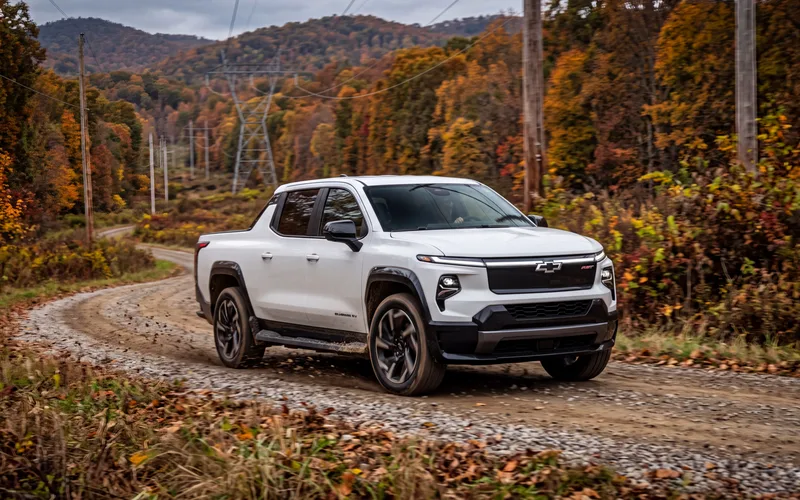 Chevrolet Silverado EVFull-Size TruckBetter at: Availability
It's the electric full-size truck you can order today, with 493 miles of range, four-wheel steering and Super Cruise instead of a 2027 promise.
Compare 2.44C+
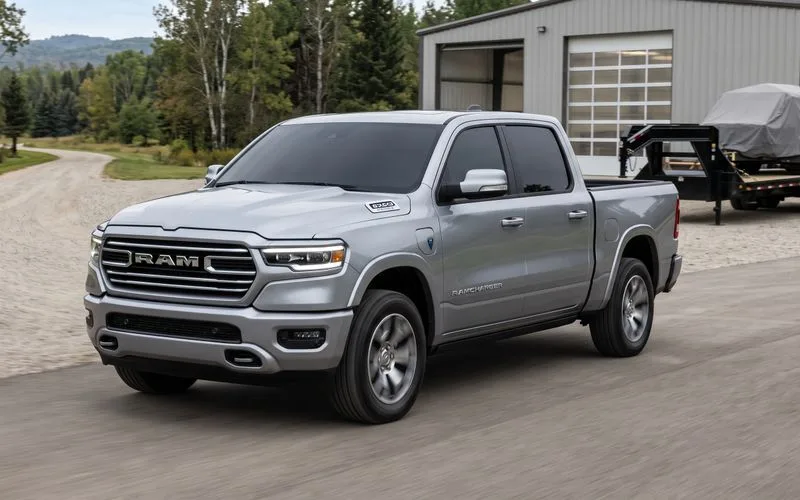 Ram 1500 RamchargerFull-Size TruckBetter at: Towing range
Same Ram cab and platform but with an onboard gas generator, so it tows across the country without a charging plan — and Stellantis is actually building it.
Compare 2.33C+
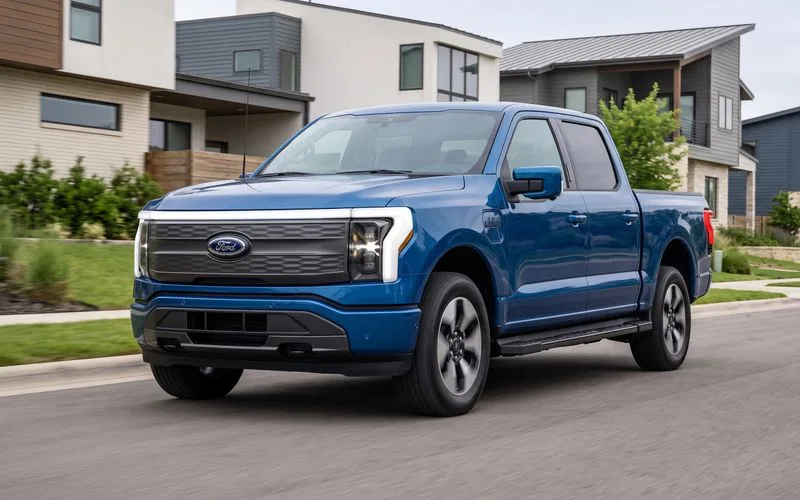 Ford F-150 LightningFull-Size TruckBetter at: Value
Proven, widely available and heavily discounted on the used market, it delivers most of the electric-truck experience without first-year risk or the REV's depreciation curve.
CompareProduction history
Best fit & conditions
Higher scores mean a better fit for that use case. Learn more about use-case fit →
Subject profile
Academic Probation · NHTSA safety recalls
No NHTSA safety recall is on record for the 2026 Ram 1500 REV. Nothing is on record for any 2026 1500 REV either.
Source: NHTSA Office of Defects Investigation recall database, model years 2026. Recalls are listed by model year as the manufacturer filed them; whether a specific car is affected depends on its VIN — check a VIN at nhtsa.gov ↗.
Detailed scoring by subject
1Performance & PowertrainOne of the 1500 REV's strongest categories.3.22B+
Ram's published figure for the 1500 REV is 654 hp from two electric drive modules, one per axle, with no lower-output variant announced — so the volume trim and the range maximum are the same number. That is well clear of every gas half-ton and close to the Ramcharger's combined system output, but short of the Cybertruck, R1T Quad and Hummer EV.
620 lb-ft is strong in absolute terms and available instantly, but it is notably below the EV-truck norm — the Silverado EV LT claims ~775 lb-ft and the Cybertruck and R1T sit higher still. Ram appears to have traded peak torque for towing durability and range.
Ram quotes roughly 4.4 seconds to 60 mph, which would make the REV markedly quicker than the gas Ram 1500 (6.2 s) and the Ramcharger (~6.8 s) and competitive with the Silverado EV RST. No independent instrumented result exists because the truck has not reached customer deliveries.
A dual-motor BEV on an 800V architecture has no lag, no shift interruption and no combustion coarseness, so the architecture alone earns a high band. Scored below the Silverado EV (92) and Hummer EV (93) because those ratings rest on published drive impressions of production trucks, while the REV's calibration has not been sampled by reviewers.
Single-speed reduction gear at each axle — there are no ratios to hunt for and no shift shock. Ram has confirmed selectable regeneration including a one-pedal mode; the score sits just under the GM EV trucks pending confirmation that the regen blending is as well sorted in production.
Ram's 14,000 lb claim is the highest rating of any announced electric pickup and tops the framework's truck band outright, beating the Silverado EV's 12,500 lbs and the gas Ram 1500's 11,580 lbs. It is a manufacturer target for a truck not yet in customer hands, and towing range on a BEV collapses far harder than on a gas or diesel truck — a penalty that lands in cat2, not here.
2,700 lbs is a strong figure for a battery-electric half-ton — it beats the gas Ram 1500's ~2,300 lbs and clears the Silverado EV's ~1,800 lbs by half a ton, implying Ram gave the REV substantial GVWR headroom rather than letting the pack consume it. Manufacturer target, unconfirmed by a production window sticker.
The REV inherits Ram's full 1500 trailering suite — integrated trailer brake controller, Trailer Reverse Steering Control, trailer-detection blind-spot monitoring, trailer TPMS and multi-camera coverage — and adds EV-specific trailer-aware range estimation and charge-stop routing. Rated two points above the gas Ram 1500 for that trailer-aware energy management, still behind Ford and GM, which offer onboard scales / Smart Hitch.
Dual-motor all-wheel drive is standard across the range with independent axle torque control, an available electronic locking rear differential and available four-corner air suspension. It loses ground to the gas Ram 1500's two-speed transfer case — there is no low range — but gains fully variable front/rear torque split.
Available air suspension, underbody protection for the pack and an off-road group with larger tires give the REV credible light-duty capability, but no Rebel- or RHO-equivalent electric trim has been announced, so it lands far below the gas Ram 1500 (87) and roughly level with the Silverado EV (65). Battery mass and the absence of a low range cap what it can do on real terrain.
The REV is a single-powertrain nameplate: one dual-motor BEV drivetrain, with buyer choice limited to battery capacity (a standard pack and a larger extended-range pack), not powertrain type. Scored level with the Silverado EV (44) and Hummer EV (45) on the same logic — the gas Ram 1500 and the Ramcharger EREV are separate entries in this dataset, so their existence does not broaden this nameplate's lineup.
2Efficiency & RangeThe 1500 REV's best-graded category.3.75A
Ram's own preliminary figure for the range-extender is 60 MPGe in electric mode and 20 MPG combined on the generator, and this run replaces the previous scorecard's self-derived 58 MPGe with that published number. Sixty MPGe is mid-band for an electric truck and short of the Silverado EV's EPA-rated 68, because the REV carries a 3.6L V6, a 130 kW generator and 27 gallons of fuel in addition to its battery.
City is the strongest cycle for anything electrified because regenerative braking recovers what a truck this heavy otherwise throws away as heat, and the REV runs its 250 kW front and 248 kW rear drive modules on battery alone in normal urban use. Estimated by applying the city/combined spread of EPA-rated electric pickups to Ram's 60 MPGe combined estimate; it rises with the combined figure this run.
Highway is the weakest electric cycle — nothing is recovered and aerodynamic drag dominates — and the REV is a conventional-cab full-size pickup on the existing fifth-generation 1500 body rather than an aero-optimized forward-cab design like the Silverado EV. It is also the cycle where a REV owner is most likely to be running on the generator anyway, at roughly 20 MPG.
690 miles between stops is the headline of this truck and the reason Stellantis kept it after cancelling the battery-electric version — it is longer-legged than any gas or diesel half-ton in the catalog, let alone any electric one, and it clamps the top of the EV band (230–430 mi) by a wide margin. The 145-mile electric-only portion covers ordinary daily use and the V6 generator removes the range anxiety that defines the electric-pickup class.
Corrected down from the 175 kW the previous run took from the older press kit: Ram's current model page and the production-truck coverage both say 145 kW. That is weak against the 800V electric pickups — the Silverado EV takes 350 kW — and lands in the bottom fifth of the 100–350 kW band. It matters less here than it would on a battery-electric truck, because a REV driver in a hurry refuels the 27-gallon tank instead of waiting at a charger.
Ram publishes a miles-per-minute claim rather than a 10–80% time, so this is derived: 70% of the 70.8 kWh usable pack is 49.6 kWh, and at 145 kW peak with the taper typical of a 400V pack (roughly 105 kW average across the window) that is about 28 minutes. Up two minutes on the previous run because the peak rate corrected from 175 kW to 145 kW; it still scores well mostly because the pack is small — a 92 kWh battery refills quickly even at unremarkable power, the inverse of the Hummer's problem.
A 145-mile electric range covers the large majority of a typical 15,000-mile year, so most miles run at home-charging cost, with the generator adding a gasoline bill on longer trips: ~12,750 electric miles at 0.56 kWh/mi and $0.148/kWh is about $1,060, plus ~2,250 gas miles at 20 MPG and $4.12/gal is about $465. Down from the previous run's $1,620 as the consumption rate follows Ram's published 60 MPGe and the energy prices were refreshed to the ones fueleconomy.gov currently uses. It beats any gas half-ton comfortably but still sits above the pure-EV pickups, which is why it scores low against an EV-normalized band.
This is the item the range-extender architecture wins outright: cheap overnight home charging for daily use, and when the battery is empty it takes regular 87-octane from any gas station rather than requiring a working DC charger — which matters more than usual given the REV's weak 145 kW peak charge rate. The 92 kWh pack is less than half the Silverado EV's or Hummer's, so it genuinely refills overnight on a residential Level 2 circuit instead of needing most of a day. Held below the top of the band only because owners do still maintain two energy supplies, and generator-mode running at ~20 MPG is no cheaper per mile than a gas half-ton.
3SafetyMid-pack among this car's ten categories.2.35C+
NHTSA has published no NCAP star rating for the 1500 REV — the truck has not reached customer deliveries (registry production start 2027), and a dual-motor full-size electric crew cab with a 2,700 lb payload rating likely sits at or above NCAP's 10,000 lb GVWR testing ceiling in any case. Scored at the segment-neutral 4.0 stars, the same convention applied to the untested Chevrolet Silverado EV and GMC Hummer EV in this dataset. Replaces a placeholder value of 4.4 stars.
IIHS has published no crashworthiness results or award status for the 1500 REV, so there is no Top Safety Pick to credit. Scored just below the neutral-untested 50 used for the Silverado EV and Hummer EV because the REV's closest structural relative — the DT-generation Ram 1500, which shares the cab family — is the weakest crash performer of the domestic full-size three, carries no TSP in this generation, and posts Acceptable-to-Marginal results in key tests. That is a known concern rather than a clean unknown. Replaces a placeholder score of 86.
The REV has no work-truck base trim — it is a Premium-price-class BEV, so the safety content that is bundled or trim-gated on the gas 1500 is expected standard across the range: forward collision warning with active braking and pedestrian detection, blind-spot monitoring with rear cross-path, lane departure warning with lane keep assist, and Adaptive Cruise Control with Stop & Go. That lifts it a full band above the gas Ram 1500 (70), which still has a Tradesman trim dragging its average down. Held below the Silverado EV (84) and Hummer EV (88) because Ram's suite is narrower than GM's and none of it has been confirmed on a production window sticker.
No IIHS front crash prevention rating exists for the REV. Stellantis's camera-plus-radar AEB with pedestrian detection performs adequately in daylight but has repeatedly trailed the class in nighttime and pedestrian evaluations, and the REV adds roughly a ton of battery mass over the gas 1500, which materially extends stopping distances — the same penalty applied to the ~9,000 lb Hummer EV. Scored a few points under the gas Ram 1500 (65) for the mass, not for the hardware. Replaces a placeholder score of 66.
Blind-spot monitoring with rear cross-path detection is standard, and Ram's trailer-aware implementation extends the detection zone along the length of a trailer — genuinely useful on a truck rated to tow 14,000 lbs. Rated two points above the gas Ram 1500 (72) because there is no lower trim where it could be deleted, but well short of the Silverado EV (80): Ram's system is alert-only, with no active steering intervention equivalent to GM's Blind Zone Steering Assist and no rear cross-traffic braking. Replaces a placeholder score of 67.
Lane departure warning with lane keep assist is standard, and unlike the gas Ram 1500 — where the standard system is a reactive nudge and continuous centering arrives only with optional Active Driving Assist — the REV's premium positioning should carry the centering-capable system as standard equipment. That is worth ten points over the gas truck (62), but it lands below the GM EV trucks (80/82) because Super Cruise-grade centering is a different class of system and no reviewer has driven a production REV to confirm the calibration. Replaces a placeholder score of 78.
Adaptive Cruise Control with Stop & Go handles full-speed-range following and traffic restarts and forms the base layer under Active Driving Assist. The REV should improve on the gas Ram 1500 (68) on two counts — it is standard rather than optional, and regenerative braking gives an EV smoother, earlier deceleration in ACC than a torque-converter automatic manages. Held under the GM EV trucks (84/85), whose ACC hands off into a far more polished highway assist. Replaces a placeholder score of 88, which credited this truck with a best-in-class system it has never demonstrated.
Ram offers Hands-Free Active Driving Assist — genuine eyes-on, hands-off highway driving with a driver-attention camera — and on a premium electric flagship it should be standard rather than optional, which is worth a few points over the gas Ram 1500 (65). It stays in the middle band because Stellantis's mapped hands-free network is a small fraction of Super Cruise's roughly 750,000 miles of North American coverage, it lacks automatic lane change and hands-free trailering, and it has not been demonstrated on this vehicle. Replaces a placeholder score of 89, which implied a mature system on par with Super Cruise.
The gas Ram 1500 scores poorly here (54) purely because lighting is trim-dependent — entry trims run basic reflector units while the good adaptive LED projectors sit high in the range. The REV has no entry trim, so full LED projectors with automatic high beams should be standard, and its lowered aerodynamic nose is a new lamp design rather than a carry-over. No IIHS headlight rating exists to confirm the beam pattern, which is what keeps it below the Hummer EV (76). Replaces a placeholder score of 67.
Natural sightlines are typical full-size electric pickup — high beltline, thick A-pillars, and a long hood made longer by the frunk, producing a large forward blind zone. The REV recovers some ground over the gas Ram 1500 (58) because its nose is lowered for aerodynamics rather than raised for grille presence, and surround-view cameras plus a digital rearview mirror are expected standard at this price rather than optional. Lands just under the Silverado EV (63) on the same reasoning. Replaces a placeholder score of 67.
The REV is crew-cab-only with five seats and inherits the Ram 1500 Crew Cab's rear compartment, which is one of the best car-seat environments in any pickup — roughly 45 in of rear legroom, the most in the full-size class, with tall, near-vertical door openings that let a rear-facing seat go in without a fight. The skateboard battery gives it a flat rear floor the gas truck does not have, so it is scored two points above the gas Ram 1500 (76) and level with the Silverado EV (78). Replaces a placeholder score of 87.
4Space & ComfortGrades above the middle of the scale.2.75B-
The 1500 REV is offered as a crew cab only with front bucket seats and a three-place rear bench, so five is the sole configuration; unlike the gas 1500 there is no 40/20/40 front bench option, because the center console packages the EV shifter and storage.
The REV uses the DT-generation crew cab structure essentially unchanged above the beltline, so front headroom tracks the gas Ram 1500's 40.9 in. Mid-pack for a full-size truck — the Hummer EV's 42.7 in is the segment high.
Ram publishes 40.9 in front legroom for the DT crew cab — a genuinely low figure against the segment band and well short of the F-150 SuperCrew (43.9 in) and Silverado/Sierra Crew Cab (44.5 in). The REV shares the cab, so it inherits the same number and falls below the truck band floor of 41 in.
Shared DT crew cab roofline gives 39.8 in of second-row headroom. The skateboard battery raises the floor slightly relative to the gas truck, so treat this as the optimistic end of the range pending verified REV figures.
The DT crew cab's 45.2 in of rear legroom is class-leading and the REV keeps it, clearing the top of the truck band. The REV adds a fold-flat rear bench and powered midgate, so the back seat doubles as load space rather than only passenger room.
The REV is sold with the 5-foot-7 box only — no 6'4" option — which is short against the truck band and the main knock on its bed. The powered midgate substantially offsets it in practice by opening a pass-through from the bed into the cab, but the item measures bed floor length.
Bed volume matches the gas 1500's 5'7" box at 53.9 cu ft — below average for a full-size truck. The item counts bed volume only; the REV's large lockable frunk is credited under 4.2.5 instead.
The REV is the storage standout of the electric full-size trucks: the largest frunk in the class, a powered midgate with removable rear glass and fold-flat rear seats, available RamBox bedside bins, rear in-floor bins and a deep console, plus onboard V2L/V2H power. Rated just above the Silverado EV (90), which has the midgate but a smaller frunk and no RamBox.
The DT cab's seats are among the best in the half-ton class and the REV carries them over, with multi-way power front seats and massage expected on upper trims. Rated a couple of points under the gas Ram 1500 (88) only because no instrumented long-haul reviews of the REV exist to corroborate, and the rear bench is re-engineered to fold flat for the midgate.
The REV keeps the DT's five-link coil rear end — the reason the gas Ram is the half-ton ride benchmark — and adds air suspension as standard equipment rather than an option. Rated marginally below the gas truck (90) because roughly 2,000 lb of additional battery mass and the resulting high-load-rate tires typically cost some low-speed compliance on EV trucks.
The DT is already the quietest half-ton thanks to active noise cancellation and acoustic laminated glass, and deleting the V8 removes the largest remaining noise source. Held short of the top band because the removable rear window and midgate seal introduce a noise path that fixed-glass trucks do not have.
As a Premium-priced EV the REV starts well up the equipment ladder — heated and ventilated front seats, heated rear seats and heated wheel are broadly available rather than reserved for the top trim — and the electric powertrain adds genuinely useful scheduled cabin preconditioning from the app or charge schedule. Rated between the Silverado EV (86) and Hummer EV (92).
5Cost of OwnershipThe 1500 REV's lowest-graded category.0.00F
The Tradesman with the standard 168 kWh pack is the entry point; every retail-oriented trim sits well above it, and the Tungsten launch trim is roughly double. Replaces a placeholder estimate of $73,889, so the score improves sharply — but this is still an estimate, not a verified window sticker.
Retail volume in the Ram 1500 line concentrates in Big Horn and Laramie, and the equipment groups buyers actually order push a representative REV build into the mid-$70Ks. The 229 kWh long-range pack adds several thousand more. Replaces a placeholder estimate of $58,753, so the score drops steeply — the placeholder had priced this truck like a mainstream gas half-ton.
The BEV drivetrain removes oil changes, spark plugs, exhaust and transmission service, which is the single largest ownership-cost advantage this truck has over the gas Ram 1500. Consumables push back: an 8,000 lb-class curb weight chews through tires and brakes, and Stellantis dealer labor rates and parts pricing run above the segment median. Replaces a placeholder estimate of $8,413.
This is the item that sinks the category. Electric full-size pickups have posted the worst depreciation of any mainstream US segment, and the REV compounds it with a first-model-year nameplate, an uncertain product roadmap, and the loss of the federal purchase credit that used to support used EV pricing indirectly. Replaces a placeholder estimate of 68.5% — the placeholder had this truck holding value like a gas half-ton, which is the opposite of the observed pattern.
Stellantis has held its basic new-vehicle limited warranty at 3 years / 36,000 miles across Ram, and nothing about the BEV changes that term. It sits at the bottom of the 3–5 year band and scores 0. Replaces a placeholder estimate of 4.5 years, which had invented a class-leading term this brand does not offer.
The BEV's 8 yr / 100,000 mi battery and electric-drive coverage is materially better than the 5 yr / 60,000 mi powertrain warranty on the gas Ram 1500 — the one place where the REV clearly beats its combustion sibling on ownership terms. Score is unchanged from the placeholder, which happened to land on the right number.
Scored mid-band: no complimentary scheduled maintenance, which rules out the top band outright, but the EV-specific package — roadside assistance, connected-services and SiriusXM trials, and the Free2move Charge home-charging and public-network program Ram bundles with its BEVs — carries more value than the gas Ram 1500's trials-only offering. Replaces a placeholder estimate of 84, which had credited this truck with multi-year included maintenance it does not have.
$74,000 volume-trim price minus its estimated resale value after 5 years (40% retained, or about $29,600) leaves about $44,400 in depreciation. Add the projected $6,300 in 5-year maintenance and repairs, and owning this vehicle for 5 years costs about $50,700 in total.
6Reliability & QualityOne of the 1500 REV's weakest categories.1.33D
There is no predicted-reliability data for this truck because there is no fleet to survey — the 1500 REV is a first-model-year nameplate and among the first vehicles on Stellantis's STLA Frame architecture, and its launch has slipped repeatedly from the originally announced on-sale date. Everything that can be said is base-rate: Consumer Reports places Ram in the bottom third of mainstream brands, first-year models from any brand underperform their own later years, and Stellantis has no US battery-electric track record to lend the platform credibility. The failure modes that already dominate Ram owner complaints — Uconnect and electrical faults — are precisely the ones an EV adds more of. Scores below the Silverado EV, which at least has several model years of field data and a parent that has shipped Ultium in volume.
Same brand picture as the gas Ram 1500 — bottom-third in Consumer Reports, kinder treatment from J.D. Power's VDS where Ram has posted at- or above-average PP100 — but scored a few points lower here for a specific reason. The argument that partially rescues Ram's brand number on the gas truck is that its truck-only lineup avoided the botched crossover and EV launches that dragged down other mainstream badges. That defense does not transfer to the REV, because this is that launch. Stellantis-wide electrical and software quality is the brand's documented weak point, and an EV concentrates exposure to it.
The REV carries no accumulated recall record of its own — as a first-year vehicle there is essentially nothing on the books, and it would be unfair to charge it with the fifth-generation DT truck's heavy campaign history. But the item measures expected exposure for this generation, and the base rate is poor: Stellantis has run at or near the top of the industry in annual US recall volume for several years running, and first-year launches on new architectures are where software and electronics campaigns cluster. The truck does support over-the-air updates, which should keep some share of those campaigns out of the service bay. No record to condemn, and none to credit either.
Unproven rather than known-bad, but less proven than any EV rival in the segment. The REV's dual-motor drive units, its 800-volt architecture, and its cells from Stellantis's new domestic battery joint venture all enter series production simultaneously — where GM's Ultium hardware in the Silverado EV and Hummer EV has at least been building since 2021. Offsetting that, an EV drivetrain deletes most of the wear items that hold Ram's V8s back (no MDS lifters, no camshaft wear, no eight-speed), and the mandated 8-year/100,000-mile battery-and-EV-component warranty covers the expensive failure. Mid-band on the strength of EV mechanical simplicity, held down by a complete absence of high-mileage data.
The clearest strength in the category. The REV inherits the refreshed Ram 1500 cabin that reviewers treat as the full-size benchmark — the 14.5-inch Uconnect 5 display, reworked dash architecture, and genuinely good soft-touch coverage — and unlike the Silverado EV it is not sold in a stripped fleet-work-truck spec, so the volume configurations sit in upper trims with the better leather and trim. Scores a few points under the gas Ram 1500 only because a Premium-class EV window sticker raises the bar the same materials have to clear, not because anything was cheapened. Confidence is LOW because this rests on the shared cabin design rather than on volume-production examples in reviewers' hands.
The REV is built at Sterling Heights Assembly alongside the gas 1500, and that body shop turns out a truck reviewers describe as solidly screwed together — so the sheetmetal side of this should be competitive. The deduction from the gas truck's mark is launch risk and software. First-year builds on a new architecture are where panel-fit and trim-alignment complaints concentrate, and J.D. Power's Initial Quality Study counts infotainment freezes, charging-session faults and phantom warnings as defects, which is exactly how new EVs from software-troubled parents post poor IQS numbers regardless of assembly quality. Ram outperforms its Stellantis siblings on initial quality, which keeps this above the failing band.
Roughly 2,300–2,400 Ram rooftops inside the combined CDJR network is a real structural advantage over Rivian or Tesla for a truck buyer in rural America, and it is the main reason this item stays well clear of the bottom band. It lands below both the gas Ram 1500 and the Silverado EV for two compounding reasons: high-voltage work routes only to EV-equipped and certified stores rather than every service bay, and Stellantis enters this with thinner EV technician depth than GM plus a documented parts-backorder problem, on top of Customer Service Index results that already sit below the mass-market average.
The worst item in the category, and the place where a low-volume EV pickup gets punished hardest. Routine maintenance is cheap — no oil changes, long brake life from regen — but this item measures parts exposure and repair cost, and there the REV has no cushion: an out-of-warranty pack is a five-figure-plus proposition, the motors and high-voltage hardware are dealer-only with no independent aftermarket, and collision severity on a structural-battery truck pushes moderate damage toward a total loss. It scores below the Silverado EV rather than level with it because projected REV volume is a fraction of the Silverado's, so fewer parts amortize across a shared bin, and because Stellantis's parts-backorder record is worse than GM's.
7Technology & InfotainmentOne of the 1500 REV's strongest categories.3.42B+
Ram specified the 14.5-inch Uconnect 5 center touchscreen as standard equipment on the 1500 REV rather than an upper-trim option, which is the single biggest infotainment difference from the gas 1500 (12.0 in standard, 14.5 in optional). Replaces the placeholder 13.8 in.
The REV runs the same Uconnect 5 stack that reviewers repeatedly call the best infotainment in the full-size truck class — fast, logical tile/card layout, split-screen multitasking — and keeps a physical volume knob and HVAC control bank below the screen instead of burying climate in menus. Scored level with the gas Ram 1500 because it is the same system on a larger standard panel.
Wireless Apple CarPlay and wireless Android Auto ship standard on every REV trim because they are built into Uconnect 5, which is standard fleet-wide. This is a substantial competitive advantage over the electric full-size rivals from GM, which omit phone projection entirely.
Uconnect 5 pairs TomTom-sourced connected navigation with 'Hey Uconnect' natural-language voice and Amazon Alexa, and the REV adds EV-aware routing that plans charging stops against state of charge. Scored a few points above the gas 1500 for the charge-aware routing, but still short of GM's Google Maps/Google Assistant built-in stack, and most owners will default to CarPlay for daily navigation.
The REV carries the Ram 1500's Klipsch Reference Premiere premium system — a 23-speaker, roughly 1,229-watt setup that is among the strongest audio options in any pickup — and an EV cabin's low noise floor flatters it further. Marked a touch above the gas truck for that quieter environment; the base system in lower REV trims remains ordinary.
A 12.3-inch fully digital reconfigurable cluster is standard on the REV, with EV-specific layouts for energy flow, range under load and charging state — a clear step up from the gas 1500, where the volume trim still gets a 7-inch TFT between analog gauges. That standard-fitment status is what puts it in the top band.
The REV is built on Stellantis' STLA Frame with the STLA Brain electrical architecture, which is designed for genuine whole-vehicle over-the-air updates rather than the maps-and-infotainment-only OTA of the gas 1500. Held well short of the top band because Stellantis' delivered OTA cadence has so far lagged badly behind GM's Ultifi, Ford Power-Up and Rivian/Tesla, and the REV's own program delays mean that capability is promised more than demonstrated.
The Ram connected-services app adds EV-specific control on top of the standard remote start/lock/locate set — charge scheduling and monitoring, cabin preconditioning, charger routing and the Ram Charging Solutions home-hardware integration. Kept out of the top band because the useful tiers go behind a paid subscription after the trial and Ram has no mainstream phone-as-key on the 1500 to match GM Digital Key or Ford Phone As A Key.
Device and jobsite power is one of the REV's headline strengths: up to 7.2 kW of onboard power export spread across cab, bed and a powered front trunk, plus vehicle-to-vehicle and vehicle-to-home capability through Ram's home charging hardware, on top of USB-C in both rows and wireless phone charging. It sits below the Silverado EV only because GM's PowerBase delivers more (10.2 kW across ten outlets including 240V).
Proximity entry with push-button start is standard across the REV range — there is no stripped conventional-key work-truck configuration the way there is on the gas Tradesman — and remote preconditioning through the app plus an available power-release tailgate cover the daily convenience case well. It stops short of the top band because Ram does not offer a phone-as-key equivalent on the 1500.
The REV carries Ram's fuller camera set — 360-degree surround view, digital rearview mirror, ParkSense front and rear sensors and active park assist — and as a premium-priced EV it fits more of that as standard content than the gas truck does. It still trails GM's trailering camera suite, which offers more views and a transparent-trailer function.
Ram offers its large 10.25-inch full-color head-up display on the REV, one of the bigger units in the segment, and simply having one is an advantage over the GM electric trucks, which offer none at all. Scored in the upper half of the middle band rather than the top because it remains upper-trim content — the REV was announced spanning Tradesman through Tungsten, so a lower-trim buyer still goes without.
8Use-Case FitGrades above the middle of the scale.2.90B-
The REV inherits the best car-seat environment sold in any pickup and adds the segment's best secure-cargo answer. The shared Ram 1500 Crew Cab gives 45.2 in of rear legroom — the most in the full-size class and more than the Silverado EV's 44.3 in — over a flat floor, with a reclining rear seatback no rival offers and tall near-square door openings that make rear-facing installs and three-across attempts genuinely workable. The ~15.3 cu ft lockable front trunk is a real family advantage over an open bed for strollers and diaper bags, and it is larger than the Silverado EV eTrunk (10.7) or the Hummer EV frunk (11.3). Held out of the top band by truck realities rather than packaging: a high step-in height that small kids cannot manage without the optional running boards, and lower LATCH anchors buried in the seat bight. Replaces a placeholder score.
Good active-safety content at a price point families will find steep, with no crash credentials behind it. Standard ADAS breadth is genuinely strong — forward collision warning with active braking and pedestrian detection, blind-spot monitoring with rear cross-path, lane departure warning with lane keep assist, adaptive cruise with Stop & Go and a rear-seat reminder at the REV's content level — and wireless CarPlay/Android Auto matters more to families than the Silverado EV's absence of it. The drag is credentials and cost: neither NHTSA nor IIHS has published any result for the 1500 REV, so families are buying an unrated ~9,000-lb vehicle, the related gas Ram 1500 has never earned a Top Safety Pick, and the volume trim lands near $74,000. Ranked below the Silverado EV because Chevy Safety Assist is standard on literally every trim and Super Cruise is a better-credentialed hands-free system than Ram's first-generation effort. Replaces a placeholder score.
The strongest multi-hour family cabin in the electric-truck class. The reclining second-row seatback is unique among full-size pickups, rear legroom is class-leading at 45.2 in, the five-link coil rear with standard air suspension delivers a settled ride that leaf-sprung rivals cannot match, and active noise cancellation plus acoustic laminated glass over a silent BEV powertrain make it the quietest cabin in the segment. Rear amenities are deep — heated rear seats, dual-zone climate, 120V outlets in cabin and bed, and departure-time preconditioning that means the truck is already warm when the kids get in. Wireless CarPlay and Android Auto on the 14.5-inch Uconnect 5 close the gap the Silverado EV leaves open for back-seat content routines. It sits below the gas Ram 1500 because a road-trip stop is a 20-plus-minute charge rather than five minutes at a pump, and there is no rear-seat entertainment option. Replaces a placeholder score.
Everything that makes the gas Ram 1500 the most relaxing half-ton to commute in, with the drivetrain annoyances deleted. Single-speed direct drive removes shift hunting entirely, selectable regen and one-pedal driving smooth out stop-and-go, air suspension and the class-best cabin isolation cut fatigue, and Uconnect 5 keeps real volume and HVAC knobs alongside wireless CarPlay — a meaningful daily advantage over the Silverado EV, which has neither. Adaptive cruise with Stop & Go and available hands-free assist handle the freeway leg. What holds it below the Silverado EV is the physics and the assist tier: roughly 9,000 lbs and about 233 in of crew cab still has to be threaded through traffic, there is no four-wheel steering to shrink the low-speed footprint, Ram's hands-free system is a first-generation effort well short of Super Cruise, and the long flat hood and 40.9 in of front legroom carry over from the gas truck. Replaces a placeholder score.
Energy cost per commuting mile is a fraction of any gas half-ton's — roughly $1,430 a year at home-charging rates against about $2,800 for a HEMI Ram 1500 — and consumables are cheap, with no oil changes and regenerative braking sparing the pads. That alone lifts it far above every combustion truck in the segment. The offsets keep it out of the top band and just below the Silverado EV: full-coverage insurance runs near $2,850 a year, heavy truck tires on large-diameter wheels are expensive to replace, the derived ~60 MPGe combined trails the Silverado EV's cheaper annual energy bill, and a commuter without a home outlet who relies on public DC fast charging gives back most of the saving. Replaces a placeholder score.
A crew-cab-only full-size pickup around 233 in long and 82 in wide, and unlike its electric rivals it has no trick to shrink itself. There is no four-wheel steering as on the Silverado EV and no CrabWalk as on the Hummer EV, so structured garages, urban parallel spots and older parking decks are a genuine problem, compounded by the tall belt line and long flat hood that leave a substantial forward blind zone. What lifts it above the gas Ram is camera and drivetrain help rather than size: ParkSense front and rear sensors, available 360-degree surround view, a full-display digital rearview mirror and active park assist arrive at a higher content level on a premium-priced BEV, and precise single-speed motor metering makes low-speed placement easier than a torque-converter truck's. Replaces a placeholder score.
On paper the most capable electric pickup announced: 14,000 lbs of towing and 2,700 lbs of payload when properly equipped both top the Silverado EV (12,500 / ~1,800) and the gas Ram 1500 (11,580), and 654 hp with 620 lb-ft available from zero is exactly what pulling away under load wants. Payload in particular is the standout — most electric trucks surrender GVWR headroom to the pack, and the REV does not. Two structural limits keep it mid-band. Towing a heavy trailer roughly halves usable range, so a 350-mile standard pack becomes a 150-to-175-mile working radius and a routine work day becomes a charging problem. And the configuration is thin: a 5'7" box is the only length offered, with no 8-foot bed and no regular cab, so long material needs the midgate and costs the rear seats. The capability figures are also manufacturer targets rather than tested results. Replaces a placeholder score.
The weakest part of the REV's case, and it is weaker than the gas Ram's already-poor showing because nothing here has a track record. This is a first-model-year nameplate on a brand-new STLA Frame platform with a new 800V architecture, new dual-motor drive units and cells from a new joint venture — not one of those components has a high-mileage population behind it. The brand context compounds it: Consumer Reports has placed Ram in the bottom third of mainstream brands for several years running, Stellantis is among the highest-volume US recall filers, and the Ram dealer network at roughly 2,300-2,400 points is meaningfully thinner than the ~2,900 Chevrolet stores a Silverado EV work buyer can reach in rural country. An out-of-warranty high-voltage pack or drive unit is a dealer-only, five-figure event. Credit where due: a Tradesman spec with vinyl floor and cloth seats is a properly hose-out work interior and the steel body resists jobsite dents. Replaces a placeholder score.
The REV fixes the one thing the gas Ram gets badly wrong on a jobsite. Onboard power jumps from a 400-watt cab outlet to up to 7.2 kW of export with 120V outlets in the bed, cabin and lockable front trunk, plus vehicle-to-vehicle and vehicle-to-home support — enough to run corded tools all day without dragging a generator to site. Stack that on the storage advantages Ram already owns and the package is deep: the RamBox Cargo Management System's lockable, drainable, lit bed-rail bins are unique among half-tons and the best place in any pickup to keep tools secure and dry, the ~15.3 cu ft lockable frunk adds more, the powered midgate opens the cab for long material, and a spray-in liner, adjustable tie-down rails, available multifunction tailgate and a hose-out Tradesman floor round it out. It trails the Silverado EV only because 7.2 kW is short of PowerBase's 10.2 kW and there is no announced 240V bed outlet for the heaviest corded equipment. Replaces a placeholder score.
The comfort half of this item is best-in-segment and the range half is not. On comfort the REV is unmatched among electric trucks: the quietest cabin in the class with active noise cancellation and acoustic laminated glass over a silent powertrain, the only five-link coil rear with standard air suspension, available multi-contact massage front seats, a reclining rear bench no rival offers, a 23-speaker Klipsch system and an available head-up display. Charging architecture helps too — 800V taking up to 350 kW restores roughly 110 miles in ten minutes. What caps it in the 70s is that the volume configuration is the standard 168 kWh pack targeting 350 miles, well short of the Silverado EV Extended Range's 493 and less than half a gas Ram's 600-plus miles on the big tank, so the stop cadence on a long day is materially worse. Ram's hands-free assist is also a first-generation system with limited mapped coverage rather than Super Cruise. The 229 kWh / 500-mile pack fixes much of this, but it is the option, not the volume build. Replaces a placeholder score.
A capable trailhead and gravel-road truck that stops short of the gas Ram's genuine off-road credentials. Standard dual-motor AWD, an available e-locking rear differential, available height-adjustable air suspension and underbody and battery protection cover forest roads, boat ramps and ski access without hesitation, and for toys the 14,000-lb tow target is the best in the electric-truck class. Camp power is a real differentiator — 7.2 kW of export with outlets in bed, cabin and frunk beats any generator anyone would carry. The limits are what the BEV gives up: no two-speed transfer case and so no low range, no dedicated off-road trim in the way the gas truck fields the Rebel and the 35-inch-tired RHO, roughly 9,000 lbs that sinks into soft ground where a gas half-ton floats, and the structural problem that the further you get from pavement the further you are from a charger. Replaces a placeholder score.
The deepest gear-hauling package in the pickup segment, because it is the only one that stacks a midgate, a large lockable frunk and RamBox together. The powered midgate with removable rear window opens the 5'7" box into a continuous load floor — Ram cites roughly 18 ft with the midgate open and the tailgate down — so sheet goods, kayaks, surfboards and dirt bikes ride inside a truck that still parks like a crew cab. The ~15.3 cu ft lockable front trunk is the largest in the segment, bigger than the Silverado EV eTrunk (10.7) or the Hummer EV's (11.3), and the available RamBox bed-rail bins add lockable, drainable, lit volume that sits outside the bed measurement entirely, which is the pickup's usual weakness solved. Rear seats fold flat over in-floor storage, tie-down rails are adjustable, and a multifunction split tailgate makes awkward loads easier to reach. Short of the ceiling only because the bed still needs an optional tonneau to be weathertight and using the midgate takes the rear seats out of service. Replaces a placeholder score.
9Driving ExperienceGrades above the middle of the scale.2.90B-
The REV has the best hardware brief of any half-ton: a floor-mounted pack that drops the center of gravity far below any gas pickup, independent front and multi-link independent rear suspension on STLA Frame, and standard four-corner active-level air suspension with adaptive damping — where the gas Ram 1500 still runs a coil-sprung live rear axle. Against that, curb weight lands somewhere north of 7,000 lb (well past 8,000 lb with the large pack), and no press car has been handed over for instrumented testing, so the composure is engineered-in rather than demonstrated.
Ram's electric-assist rack in the DT 1500 is among the better half-ton setups — accurately geared and consistently weighted, if short on feedback — and the REV carries the same basic tuning philosophy. The front drive module adds mass directly over the steering axis, which typically dulls turn-in feel further, so this sits a few points above the gas 1500 (62) and the Silverado EV (62) without approaching the 80-plus band.
Mass is the governing factor: a 7,000–8,500 lb pickup asks a great deal of its friction brakes once regen tapers, and heavy EV trucks as a class post longer 60–0 distances than their gas equivalents. Ram specifies one-pedal driving with selectable regen levels, but blended-brake calibration is the single hardest thing to get right on a first-generation EV platform and Stellantis has no half-ton EV track record to lean on. Scored in the 'adequate stopping power' band alongside the Silverado EV (64) rather than the R1T (90), which earned its score on tested results.
This is where the REV's format pays: dual electric drive modules, single-speed reduction at each axle, no shifts, no torque converter, no stop/start event and instant tip-in from 654 hp and 620 lb-ft. Held just under the Silverado EV's 90 because Stellantis EV drivability software is unproven at this scale and early Stellantis BEVs have shipped with calibration rough edges; consistent with the 88 already recorded for powertrain refinement in category 1.
No combustion engine means no idle shake, no throttle drone under tow-mode load and no vibration through the pedals — the near-silent end of the scale, and the reason this scores 10 points above the gas Ram 1500 (78) and 19 above the range-extended Ramcharger (69), whose V6 generator fires under load. Held short of the 90s because motor whine and tire/wind noise become the dominant sources once the engine is gone, and a truck this large generates plenty of both.
Ram has not published a turning diameter for the REV. Estimated from the platform it shares with the Ramcharger — the same STLA Frame crew cab on roughly a 145 in wheelbase, a touch longer than the gas 1500 crew cab short bed that turns in 46.2 ft — with the front drive module further limiting steering lock and no rear-axle steering offered to claw any of it back. That puts it near the bottom of the truck band (40–54 ft) and materially worse than the four-wheel-steer Silverado EV at 45.4 ft.
The REV inherits the DT crew cab, which is the benchmark half-ton driving environment: wide seat and wheel adjustment range, a commanding sightline, and Ram's decision to keep physical climate and volume controls alongside the large central touchscreen. The air suspension's entry/exit mode lowers the truck to make the step-in manageable. Points come off for the sheer scale of the thing — long hood, thick pillars and a body wide enough that placing it in a parking structure takes practice.
654 hp and a claimed 4.4-second run to 60 mph make this among the quickest pickups sold, and the silent, seamless shove of a big dual-motor EV is genuinely entertaining the first several dozen times. But it is a four-ton work tool with no soundtrack and no enthusiast intent behind it — quick and effortless rather than characterful. Rated above the gas Ram 1500 (66) and Silverado EV (70) on pace alone, far below the R1T (97), which was engineered to be enjoyed.
10Value & Market PositionOne of the 1500 REV's weakest categories.1.43D
Judged against announced specification only, since no MY2026 window sticker exists. Ram's published content for the REV is generous on paper — 12.0-inch Uconnect 5 center screen (14.5-inch available), a 10.25-inch front passenger display, a 10.25-inch head-up display, and the Ram Powershare bidirectional charging system with vehicle-to-home and vehicle-to-vehicle capability — but trim-by-trim standard/optional splits were never finalized in a production 2026 order guide, so this is announced content rather than verified base equipment.
The announced capability set is genuinely strong — 654 hp / 620 lb-ft, 14,000 lb maximum towing, 2,700 lb payload, a 168 kWh pack targeting roughly 350 miles with a 229 kWh pack targeting roughly 500 miles, 800-volt architecture and 350 kW DC fast charging — but none of it is purchasable at any price in MY2026, Ram never confirmed final MSRPs, and the federal clean-vehicle credit that would have offset an electric full-size truck expired for vehicles acquired after September 30, 2025. A 2026 shopper wanting this capability must buy a Silverado EV, F-150 Lightning, R1T or Cybertruck instead, so realized value per dollar is poor however good the paper spec looks.
As designed the ladder is reasonable for an electric truck — Tradesman through Big Horn/Lone Star, Laramie, Limited and Tungsten, layered over two battery choices — but every 1500 REV is a dual-motor AWD crew cab with a single 5-foot-7-inch bed, forfeiting the cab-and-bed flexibility that defines the full-size segment. Scored just under the similarly single-body Silverado EV (68 in this dataset) because none of these configurations were actually orderable for 2026.
There are effectively no US sales: the 1500 REV was revealed in April 2023 for a 2024 launch and has slipped repeatedly, with Stellantis reprioritizing the Ramcharger EREV ahead of it and pushing the battery-electric truck to 2027 amid public reporting that it could be cancelled outright. A nameplate with zero deliveries and an unresolved future sits at the bottom of this band by definition, well under the Silverado EV's 58.
Ram itself carries real truck equity — a loyal owner base, a class-benchmark interior and ride reputation, and a history of Truck of the Year recognition for the 1500 — but that halo is discounted here by Stellantis-era quality and reliability perception, Ram's 2024-25 US sales slide, and the fact that the REV sub-nameplate has accumulated no equity of its own beyond years of delay coverage.
This item scores the buyer's benefit, and a 2026 shopper gets none: no inventory to discount, no orderable configuration, no announced APR or lease program, and the $7,500 federal clean-vehicle credit that would have been the largest single offset on an electric full-size truck expired for acquisitions after September 30, 2025. Unlike a slow seller sitting on lots with hood money, an unavailable truck offers nothing to negotiate.
This cuts both ways. The underlying design is genuinely new — a bespoke STLA Frame electric platform with an 800-volt architecture nothing else in Ram's lineup uses — so there is no aging generation here. But the truck was publicly revealed in April 2023 and still has not been delivered, which makes it stale before launch, and the item explicitly weighs buyer risk: a 2026 shopper faces an unresolved 2027 target and live cancellation speculation, a sharper version of the redesign risk this item penalizes.
The specification drew genuinely positive press when revealed — the roughly 500-mile range target and 14,000 lb tow rating led coverage and were read as class-leading ambitions — but there is no production vehicle, so there are no instrumented tests, no comparison-test placements and no awards, and coverage since 2024 has been dominated by delay and cancellation reporting rather than product praise. Spec-sheet enthusiasm without a single road test lands mid-band at best.