
The verdict
A mixed-report full-size truck, strong on driving and held back by ownership.
The 2025 F-150 Lightning is the easiest electric truck to live with day to day — 775 lb-ft of instant torque, a silent cabin, a 14.1 cu ft lockable frunk, and up to 9.6 kW of onboard power that can run a job site or back up your house. Where it hurts is the money: it holds only about 43% of its value after five years, the worst retention of any full-size truck, which works out to roughly $37,000 of depreciation on a $65,190 XLT. Add a Poor IIHS moderate-overlap crash result driven by rear-passenger protection, a 39-minute road-trip charging stop, and a 10,000-lb tow rating that can drop range to 90–210 miles, and this becomes a truck that makes sense if you charge at home and tow occasionally — not if you tow long distances or plan to sell it in five years. The saving grace for a 2025 buyer is the discounting: dealer cuts of $15,000–$20,000 off sticker reshape the value case entirely.
Jump to scoresStrengths
- Instant, effortless torque and a silent drivetrain
- It doubles as a generator and a lockable storage locker
- Cheap to fuel if you charge at home
What holds it back
- Depreciation is brutal — the worst in the full-size truck segment
- A Poor IIHS crash result and only Acceptable headlights
- Road trips mean 40-minute stops, and towing guts the range
Top alternatives
Cars shoppers cross-shop with the Ford F-150 Lightning 2.66C+
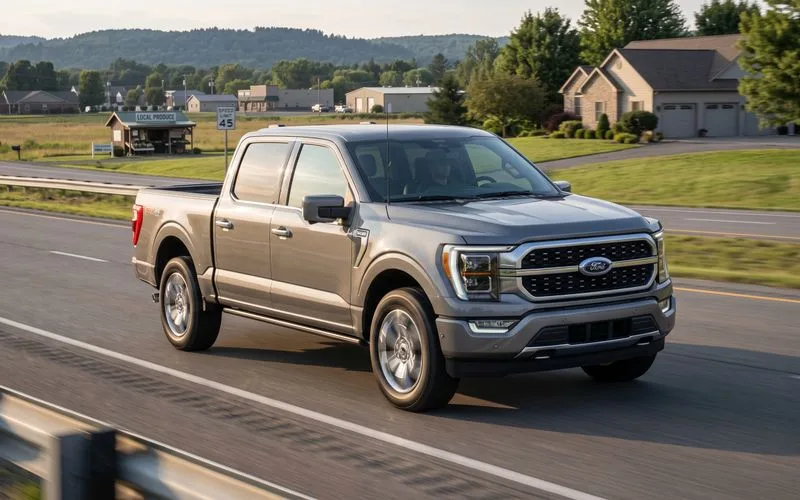 Ford F-150Full-Size TruckBetter at: Towing and resale
Same cab and same dealer, but with 13,500-lb towing, five-minute refuels and vastly better resale — the obvious choice if you can't charge at home or you tow far.
Compare 2.60C+
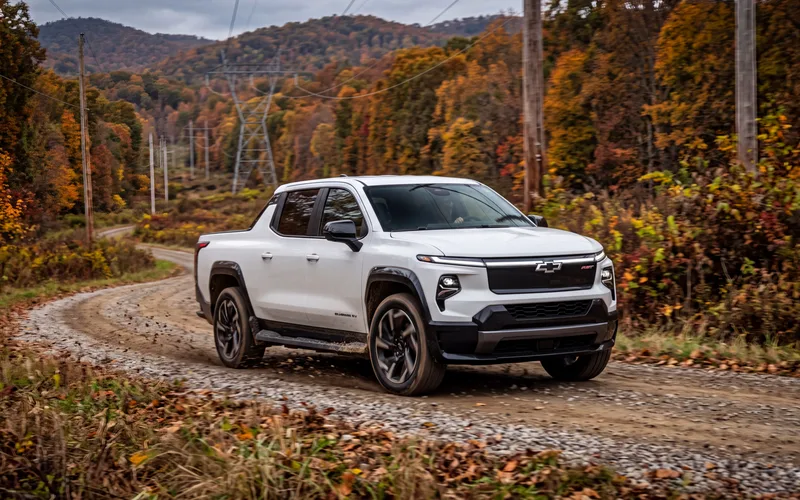 Chevrolet Silverado EVFull-Size TruckBetter at: Range
A much longer-range electric truck on an 800-volt architecture, which is what the Lightning's 320-mile rating and ~182 kW ceiling can't answer on a road trip.
Compare 2.44C+
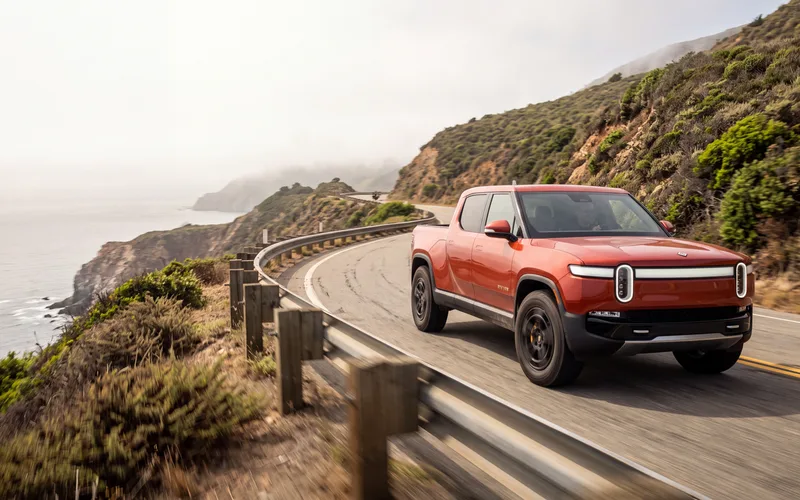 Rivian R1TFull-Size TruckBetter at: Resale value
Costs more but drives better, goes further off pavement, and holds roughly 66–70% of its value where the Lightning holds 43%.
CompareSubject scores by year
Hover or tap a score to see what moved it versus the year before. A corner mark flags a big swing.
| Year | Performance | Efficiency | Safety | Space | Cost | Reliability | Tech | Use-case | Driving | Value |
|---|---|---|---|---|---|---|---|---|---|---|
| 2025 | 65 | 65 | 67 | 69 | 34 | 50 | 72 | 69 | 73 | 60 |
| 2024 | 70 | 64 | 69 | 69 | 32 | 41 | 75 | 67 | 70 | 61 |
| 2023 | 69 | 63 | 69 | 69 | 27 | 38 | 75 | 69 | 70 | 68 |
| 2022 | 70 | 63 | 65 | 71 | 24 | 40 | 74 | 68 | 64 | 72 |
Compare two years
Best fit & conditions
Higher scores mean a better fit for that use case. Learn more about use-case fit →
Subject profile
Academic Probation · NHTSA safety recalls
Dec 12, 2025Power train: automatic transmission: internal: park pawlThe integrated park module may fail to lock into the park position when the driver shifts into park. As such, these vehicles fail to comply with the requirements of Federal Motor Vehicle Safety Standard (FMVSS) number 114, "Theft Protection and Rollaway Prevention."
Defect
Ford Motor Company (Ford) is recalling certain 2022-2026 F-150 Lightning BEV, 2024-2026 Mustang Mach-E, and 2025-2026 Maverick vehicles. The integrated park module may fail to lock into the park position when the driver shifts into park. As such, these vehicles fail to comply with the requirements of Federal Motor Vehicle Safety Standard (FMVSS) number 114, "Theft Protection and Rollaway Prevention."
Risk
A loss of park function can allow the vehicle to rollaway, increasing the risk of a crash.
Remedy
The park module software will be updated over-the-air (OTA) or by a dealer, free of charge. Owner notification letters were mailed February 3, 2026. Owners may contact Ford customer service at 1-866-436-7332. Ford's number for this recall is 25C69. Vehicle Identification Numbers (VINs) involved in this recall will be searchable on NHTSA.gov beginning January 26, 2026.
NHTSA campaign 25V863000 ↗Manufacturer no. 25C69272,645 vehicles potentially affected (all models in the campaign)Owners notified Feb 3, 2026Filed by Ford Motor CompanyFiled as F-150 LIGHTNING BEVJun 27, 2025Service brakes, hydraulic: foundation components: hoses, lines/piping, and fittingsThe front brake jounce hose bracket screws may loosen and detach, which can allow the jounce hose to contact the tire and result in a brake fluid leak.
Defect
Ford Motor Company (Ford) is recalling certain 2025 F-150 Lightning BEV vehicles. The front brake jounce hose bracket screws may loosen and detach, which can allow the jounce hose to contact the tire and result in a brake fluid leak.
Risk
A brake fluid leak can extend the distance needed to stop the vehicle, increasing the risk of a crash.
Remedy
Dealers will inspect the front brake hose and replace both brake jounce hose bracket screws, free of charge. Owner notification letters were mailed July 15, 2025. Owners may contact Ford customer service at 1-866-436-7332. Ford's number for this recall is 25S71.
NHTSA campaign 25V438000 ↗Manufacturer no. 25S715 vehicles potentially affected (all models in the campaign)Owners notified Jul 15, 2025Filed by Ford Motor CompanyFiled as F-150 LIGHTNING BEVMay 23, 2025Suspension: front: control arm: upper ball jointThe front upper control arm ball joint nut may not have been tightened properly, allowing the front upper control arm to detach from the knuckle assembly.
Defect
Ford Motor Company (Ford) is recalling certain 2024-2025 F-150 Lightning BEV vehicles. The front upper control arm ball joint nut may not have been tightened properly, allowing the front upper control arm to detach from the knuckle assembly.
Risk
A detached control arm can cause a loss of vehicle steering and control, increasing the risk of a crash.
Remedy
Dealers will inspect the upper control arm ball joint nut, and replace the nut and/or knuckle assembly, as necessary, free of charge. Owner notification letters were mailed June 6, 2025. Owners may contact Ford customer service at 1-866-436-7332. Ford's number for this recall is 24S76. This recall expands previous NHTSA recall number 24V949.
NHTSA campaign 25V341000 ↗Manufacturer no. 24S7629,501 vehicles potentially affected (all models in the campaign)Owners notified Jun 6, 2025Filed by Ford Motor CompanyFiled as F-150 LIGHTNING BEV
12 recalls on other model years of the F-150 Lightning (2022–2024)
Oct 24, 2025Exterior lightingThe rear lightbar may have microcracks in the outer lens that allows moisture to accumulate, which can result in inoperative or flickering reverse lights.
Defect
Ford Motor Company (Ford) is recalling certain 2022-2023 F-150 Lightning BEV vehicles previously repaired under recall number 23V418. The rear lightbar may have microcracks in the outer lens that allows moisture to accumulate, which can result in inoperative or flickering reverse lights.
Risk
Inoperative or flickering reverse lights may not alert other driver's that the vehicle is reversing, increasing the risk of injury or crash.
Remedy
Dealers will inspect and replace the rear lightbar and fasteners as necessary, free of charge. Owner notification letters were mailed June 3, 2026. Owners may contact Ford customer service at 1-866-436-7332. Ford's number for this recall is 25SB6. Vehicle Identification Numbers (VINs) involved in this recall became searchable on NHTSA.gov on October 29, 2025.
NHTSA campaign 25V731000 ↗Manufacturer no. 25SB614,843 vehicles potentially affected (all models in the campaign)Owners notified Jun 3, 2026Filed by Ford Motor CompanyFiled as F-150 LIGHTNING BEVMay 23, 2025Tires: pressure monitoring and regulating systemsThe tire pressure monitoring system (TPMS) light may not illuminate as intended, failing to warn the driver of low tire pressure. As such, these vehicles fail to comply with the requirements of Federal Motor Vehicle Safety Standard number 138, "Tire Pressure Monitoring Systems."
Defect
Ford Motor Company (Ford) is recalling certain 2022 F-150 Lightning BEV vehicles equipped with 20" or 22" all season tires that were repaired incorrectly under recall 22V-453. The tire pressure monitoring system (TPMS) light may not illuminate as intended, failing to warn the driver of low tire pressure. As such, these vehicles fail to comply with the requirements of Federal Motor Vehicle Safety Standard number 138, "Tire Pressure Monitoring Systems."
Risk
Low tire pressure can lead to poor vehicle handling and a loss of vehicle control, increasing the risk of a crash.
Remedy
Dealers will update the body control module (BCM) software, free of charge. Owner notification letters were mailed June 27, 2025. Owners may contact Ford customer service at 1-866-436-7332. Ford's number for this recall is 25C20.
NHTSA campaign 25V340000 ↗Manufacturer no. 25C20197 vehicles potentially affected (all models in the campaign)Owners notified Jun 27, 2025Filed by Ford Motor CompanyFiled as F-150 LIGHTNING BEVMay 9, 2025Electronic stability control (esc)The SYNC software may fail to activate the electronic stability control (ESC) system at the beginning of each ignition cycle. As such, these vehicles fail to comply with the requirements of Federal Motor Vehicle Safety Standard number 126, "Electronic Stability Control Systems."
Defect
Ford Motor Company (Ford) is recalling certain 2022-2023 F-150 Lightning vehicles previously repaired incorrectly under recall number 23V801. The SYNC software may fail to activate the electronic stability control (ESC) system at the beginning of each ignition cycle. As such, these vehicles fail to comply with the requirements of Federal Motor Vehicle Safety Standard number 126, "Electronic Stability Control Systems."
Risk
Failure to reset the ESC to active may result in the driver unknowingly operating the vehicle without electronic stability control, increasing the risk of a crash.
Remedy
Dealers will update the Accessory Protocol Interface Module (APIM) software, free of charge. Owner notification letters were mailed June 18, 2025. Owners may contact Ford customer service at 1-866-436-7332. Ford's number for this recall is 25C15.
NHTSA campaign 25V313000 ↗Manufacturer no. 25C156 vehicles potentially affected (all models in the campaign)Owners notified Jun 18, 2025Filed by Ford Motor CompanyFiled as F-150 LIGHTNING BEVApr 23, 2025Electrical system: propulsion system: traction batteryThe fasteners that secure the junction box bus bars inside the high-voltage battery pack may not have been tightened securely, which can cause electrical arcing at the busbars.
Defect
Ford Motor Company (Ford) is recalling certain 2023 F-150 Lightning vehicles. The fasteners that secure the junction box bus bars inside the high-voltage battery pack may not have been tightened securely, which can cause electrical arcing at the busbars.
Risk
Electrical arcing increases the risk of a fire. In addition, a loss of drive power may occur, which can increase the risk of a crash.
Remedy
Dealers will inspect and repair the busbar fasteners and replace any damaged components as necessary, free of charge. Owner notification letters were mailed on May 21, 2025. Owners may contact Ford Customer Service at 1-866-436-7332. Ford's number for this recall is 24S11. This recall expands previous recall number 24V-144.
NHTSA campaign 25V272000 ↗Manufacturer no. 24S113 vehicles potentially affected (all models in the campaign)Owners notified May 21, 2025Filed by Ford Motor CompanyFiled as F-150 LIGHTNING BEVFeb 28, 2025Electrical system: propulsion system: traction batteryA manufacturing defect in the high voltage battery cells may result in an internal short circuit.
Defect
Ford Motor Company (Ford) is recalling certain 2022-2024 F-150 Lightning battery electric vehicles. A manufacturing defect in the high voltage battery cells may result in an internal short circuit.
Risk
A battery short circuit increases the risk of a fire.
Remedy
Owners are advised to only charge their vehicles to a maximum of 80% battery capacity until the repair has been completed. Dealers will inspect and replace the high voltage battery array as necessary, free of charge. Owner notification letters were mailed June 27, 2025. Owners may contact Ford customer service at 1-866-436-7332. Ford's number for this recall is 25S18.
NHTSA campaign 25V131000 ↗Manufacturer no. 25S18950 vehicles potentially affected (all models in the campaign)Owners notified Jun 27, 2025Filed by Ford Motor CompanyFiled as F-150 LIGHTNING BEVDec 19, 2024Suspension: front: control arm: upper ball jointThe front upper control arm ball joint nut may not have been tightened properly, allowing the front upper control arm to detach from the knuckle assembly.
Defect
Ford Motor Company (Ford) is recalling certain 2023-2024 F-150 Lightning BEV vehicles. The front upper control arm ball joint nut may not have been tightened properly, allowing the front upper control arm to detach from the knuckle assembly.
Risk
A detached control arm can cause a loss of vehicle steering and control, increasing the risk of a crash.
Remedy
Dealers will inspect the upper control arm ball joint nut, and replace the nut and/or knuckle assembly, as necessary, free of charge. Owner notification letters were mailed February 10, 2025. Owners may contact Ford customer service at 1-866-436-7332. Ford's number for this recall is 24S76.
NHTSA campaign 24V949000 ↗Manufacturer no. 24S7611,922 vehicles potentially affected (all models in the campaign)Owners notified Feb 10, 2025Filed by Ford Motor CompanyFiled as F-150 LIGHTNING BEVFeb 23, 2024Electrical system: propulsion system: traction batteryThe fasteners that secure the junction box bus bars inside the high-voltage battery pack may not have been tightened securely, which can cause electrical arcing at the busbars.
Defect
Ford Motor Company (Ford) is recalling certain 2023 F-150 Lightning vehicles. The fasteners that secure the junction box bus bars inside the high-voltage battery pack may not have been tightened securely, which can cause electrical arcing at the busbars.
Risk
Electrical arcing increases the risk of a fire. In addition, a loss of drive power may occur, which can increase the risk of a crash.
Remedy
Dealers will inspect and repair the busbar fasteners and replace any damaged components as necessary, free of charge. Owner notification letters were mailed on May 31, 2024. Owners may contact Ford customer service at 1-866-436-7332. Ford's number for this recall is 24S11.
NHTSA campaign 24V144000 ↗Manufacturer no. 24S11216 vehicles potentially affected (all models in the campaign)Owners notified Mar 22, 2024Filed by Ford Motor CompanyFiled as F-150 LIGHTNING BEVNov 28, 2023Electronic stability control (esc)The SYNC software may fail to activate the electronic stability control (ESC) system at the beginning of each ignition cycle. As such, these vehicles fail to comply with the requirements of Federal Motor Vehicle Safety Standard number 126, "Electronic Stability Control Systems."
Defect
Ford Motor Company (Ford) is recalling certain 2022-2023 F-150 Lightning vehicles. The SYNC software may fail to activate the electronic stability control (ESC) system at the beginning of each ignition cycle. As such, these vehicles fail to comply with the requirements of Federal Motor Vehicle Safety Standard number 126, "Electronic Stability Control Systems."
Risk
Failure to reset the ESC to active may result in the driver unknowingly operating the vehicle without electronic stability control, increasing the risk of a crash.
Remedy
The Accessory Protocol Interface Module (APIM) software will be updated by a dealer or through an over-the-air (OTA) update, free of charge. Owner notification letters were mailed December 21, 2023. Owners may contact Ford customer service at 1-866-436-7332. Ford's number for this recall is 23C38.
NHTSA campaign 23V801000 ↗Manufacturer no. 23C385,118 vehicles potentially affected (all models in the campaign)Owners notified Dec 21, 2023Filed by Ford Motor CompanyFiled as F-150 LIGHTNING BEVOct 13, 2023Visibility: defroster/defogger/hvac system: windshield: electrical heating elementThe electronic cabin coolant heater module may be missing a solder joint, which can cause intermittent or no cabin heat and result in an inoperative windshield defrosting and defogging system. As such, these vehicles fail to comply with the requirements of Federal Motor Vehicle Safety Standard number 103, "Windshield Defrosting and Defogging Systems."
Defect
Ford Motor Company (Ford) is recalling certain 2023 F-150 Lightning pickup trucks. The electronic cabin coolant heater module may be missing a solder joint, which can cause intermittent or no cabin heat and result in an inoperative windshield defrosting and defogging system. As such, these vehicles fail to comply with the requirements of Federal Motor Vehicle Safety Standard number 103, "Windshield Defrosting and Defogging Systems."
Risk
An inoperative windshield defrosting and defogging system may decrease the driver's visibility, increasing the risk of a crash.
Remedy
Dealers will replace the electronic cabin coolant heater, free of charge. Owner notification letters were mailed January 3, 2024. Owners may contact Ford customer service at 1-866-436-7332. Ford's number for this recall is 23C32.
NHTSA campaign 23V688000 ↗Manufacturer no. 23C32931 vehicles potentially affected (all models in the campaign)Owners notified Jan 3, 2024Filed by Ford Motor CompanyFiled as F-150 LIGHTNING BEVJun 9, 2023Exterior lightingThe rear lightbar may have microcracks in the outer lens that allows moisture to accumulate, which can result in inoperative or flickering reverse lights.
Defect
Ford Motor Company (Ford) is recalling certain 2022-2023 F-150 BEV vehicles. The rear lightbar may have microcracks in the outer lens that allows moisture to accumulate, which can result in inoperative or flickering reverse lights.
Risk
Inoperative or flickering reverse lights may not alert other driver's that the vehicle is reversing, increasing the risk of injury or crash.
Remedy
Dealers will replace the rear lightbar, free of charge. Owner notification letters were mailed October 9, 2023. Owners may contact Ford customer service at 1-866-436-7332. Ford's number for this recall is 23S30.
NHTSA campaign 23V418000 ↗Manufacturer no. 23S3016,375 vehicles potentially affected (all models in the campaign)Owners notified Oct 9, 2023Filed by Ford Motor CompanyFiled as F-150 LIGHTNING BEVMar 15, 2023Electrical system: propulsion system: traction batteryThe high-voltage battery pack may experience an electrical short-circuit when the battery is fully charged or near fully charged.
Defect
Ford Motor Company (Ford) is recalling certain 2023 F-150 Lightning pickup trucks. The high-voltage battery pack may experience an electrical short-circuit when the battery is fully charged or near fully charged.
Risk
A battery short-circuit increases the risk of a fire.
Remedy
Dealers will replace the high-voltage battery pack, free of charge. Owner notification letters were mailed March 31, 2023. Owners may contact Ford customer service at 1-866-436-7332. Ford's number for this recall is 23S15.
NHTSA campaign 23V168000 ↗Manufacturer no. 23S1518 vehicles potentially affected (all models in the campaign)Owners notified Mar 31, 2023Filed by Ford Motor CompanyFiled as F-150 LIGHTNING BEVJun 24, 2022Tires: pressure monitoring and regulating systemsThe tire pressure monitoring system (TPMS) light may not illuminate as intended, failing to warn the driver of low tire pressure. As such, these vehicles fail to comply with the requirements of Federal Motor Vehicle Safety Standard number 138, "Tire Pressure Monitoring Systems."
Defect
Ford Motor Company (Ford) is recalling certain 2022 F-150 BEV vehicles equipped with 20" or 22" all season tires. The tire pressure monitoring system (TPMS) light may not illuminate as intended, failing to warn the driver of low tire pressure. As such, these vehicles fail to comply with the requirements of Federal Motor Vehicle Safety Standard number 138, "Tire Pressure Monitoring Systems."
Risk
Low tire pressure can lead to poor vehicle handling and a loss of vehicle control, increasing the risk of a crash.
Remedy
The body control module (BCM) software will be updated by a dealer, or through an over-the-air (OTA) update, free of charge. Owner notification letters were mailed July 20, 2022. Owners may contact Ford customer service at 1-866-436-7332. Ford's number for this recall is 22C15.
NHTSA campaign 22V453000 ↗Manufacturer no. 22C152,666 vehicles potentially affected (all models in the campaign)Owners notified Jul 20, 2022Filed by Ford Motor CompanyFiled as F-150 LIGHTNING BEV
Source: NHTSA Office of Defects Investigation recall database, model years 2022–2025. Recalls are listed by model year as the manufacturer filed them; whether a specific car is affected depends on its VIN — check a VIN at nhtsa.gov ↗. NHTSA model names matched to this page: F-150 LIGHTNING BEV.
Detailed scoring by subject
1Performance & PowertrainMid-pack among this car's ten categories.2.37C+
The dual-motor standard-range battery pack (available on Pro and XLT) is rated 452 hp; stepping up to the 131 kWh extended-range pack (optional on XLT/Lariat, standard on Flash and Platinum) raises output to 580 hp. Unchanged from MY2024 — 2025 is the final model year of this first generation.
Peak torque is identical at 775 lb-ft regardless of battery size — only horsepower and 0-60 time change with the extended-range pack. This class-leading figure is unchanged for MY2025.
Ford and independent instrumented tests place the standard-range dual-motor configuration around 4.1–4.7 s to 60 mph; the heavier-but-more-powerful extended-range pack is quicker, with MotorTrend recording 3.8 s on a Lariat ER and Car and Driver confirming a sub-4-second run.
Dual permanent-magnet motors deliver instant, linear torque with zero turbo lag or gear hunting — reviewers consistently praise the Lightning's seamless, silent power delivery as one of its strongest traits regardless of battery size.
Single-speed reduction-gear EV drivetrain has no shifts to hunt or clunk through; power delivery is continuous and predictable from a stop through highway speed.
The extended-range battery configuration is rated to tow up to 10,000 lbs when properly equipped, versus 7,700 lbs for the standard-range pack — both unchanged for MY2025, the final year of this generation.
The commercial-focused Pro trim with the standard-range battery carries the highest payload rating at 2,235 lbs; the heavier extended-range battery reduces payload to roughly 1,800 lbs on upper trims.
Pro Trailer Backup Assist, Pro Power Onboard exportable power for job sites/trailers, Ford's Smart Hitch weight/tongue-load advisor (via phone app and onboard scale estimate), and a 360-degree camera system with trailer-view modes cover most of the modern towing suite; lacks a true onboard scale display or advanced trailer-brake tuning beyond the standard integrated controller.
Dual-motor all-wheel drive is standard across every trim (Pro through Platinum) with an electronically locking rear differential and multiple drive/terrain modes, though it lacks a true low-range transfer case found on gas 4WD trucks.
Full-time AWD, an electronically locking rear differential, and a dedicated Off-Road drive mode give light-duty trail capability, but 8.9 in of ground clearance, street-oriented tires, and the absence of skid plates or a dedicated off-road trim (no Raptor/Tremor-class variant) keep it well short of genuine off-road credibility.
The Lightning is a dedicated single-powertrain nameplate — every trim is battery-electric, with the only variation being standard-range vs. extended-range battery capacity, not a distinct powertrain type.
2Efficiency & RangeMid-pack among this car's ten categories.2.39C+
EPA combined MPGe for the 131-kWh extended-range battery, the pack behind Ford's headline 320-mile figure and the representative retail configuration. 2025 is a carry-over year for the powertrain — the model-year changes were DC charging current, BlueCruise 1.4 and an appearance package, none of which alter the EPA ratings.
EPA city rating for the extended-range configuration; regenerative braking gives the Lightning its usual EV city-over-highway advantage.
EPA highway rating for the extended-range configuration. The blunt full-size cab and 6,000+ lb curb weight cost it more at highway speed than a car-shaped EV loses.
320 miles is mid-pack among electric full-size trucks — ahead of the Ram 1500 REV's entry pack and the Hummer, behind the Silverado EV and Rivian R1T — and range collapses under tow far faster than in a gas F-150. For 2025 Ford added a second extended-range pack (123 kWh, 300 mi) beneath the familiar 131-kWh unit.
The Lightning's ~400V architecture caps it well below the 350 kW that the 800V Silverado EV and Hummer EV accept, and Ford rates the port by current rather than power. The 2025 model year raised maximum current from 450 A to 500 A — the single cat2-relevant change of the year — which puts real-world peak near 182 kW rather than the 150 kW Ford has always advertised.
A mid-band result: the taper is flat and well-managed — 141 kW average across the window is a higher fraction of peak than most EVs hold — but a 131-kWh pack at a ~182 kW ceiling still means a near-40-minute stop, roughly matching the much larger-battery Silverado EV despite that truck's 350 kW headline.
Replaces the previous run's extrapolated ~$1,150 estimate with EPA's own published annual energy cost for this exact configuration, which is slightly lower — hence the small upward score move.
Best home-energy story in the electric full-size truck class: no fuel grade to think about, an 11.3 kW onboard AC charger, the 80A/19.2 kW Ford Charge Station Pro, and Intelligent Backup Power — bidirectional whole-home backup no rival here matches. Trimmed from 94 to sit correctly against segment peers (Cybertruck 88, R1T 85, 1500 REV 82, Hummer EV 78): the Lightning leads them on home charging and on EPA annual energy cost, but reaches Superchargers only through an adapter where the Cybertruck is native, and its ~182 kW DC ceiling makes public charging the weakest part of the picture.
3SafetyMid-pack among this car's ten categories.2.54C+
NHTSA's overall 5-star rating for the 2025 F-150 Lightning SuperCrew is pulled down slightly by 4-star frontal and rollover components, but the composite figure matches other full-size EV pickups.
IIHS testing published in September 2025 gave the Lightning a Poor rating in the moderate front overlap test — driver protection was good but rear-passenger protection was inadequate — which disqualifies it from Top Safety Pick/Pick+ despite Good marks for pedestrian front crash prevention and seat belt reminder.
Ford Co-Pilot360 2.0 — AEB with pedestrian detection, lane-keeping system, blind-spot monitoring, rear cross-traffic alert, and auto high-beams — is standard across all five trims (Pro, XLT, Flash, Lariat, Platinum), but adaptive cruise control (and BlueCruise prep) is only standard from Flash up, so the base/volume Pro and XLT trims go without it.
IIHS rated front crash prevention: pedestrian as Good, but the same test round that flagged Poor structural crashworthiness didn't publish a standout vehicle-to-vehicle or nighttime pedestrian result, so this lands in the adequate-but-not-superior band.
Blind-spot monitoring and rear cross-traffic alert are standard on every 2025 Lightning trim, and Ford's system extends coverage for an attached trailer — a meaningful plus for a truck that's frequently towing.
Standard lane-keeping/lane-departure warning works reliably, and BlueCruise-equipped trims add smoother centering, but owner-forum feedback and general F-150 platform reviews describe the base lane-keep system as functional rather than confidence-inspiring on the standard (non-BlueCruise) setup.
BlueCruise 1.4 delivers a refined, full-speed-range adaptive cruise with hands-free lane change on equipped trims, but ACC itself isn't standard until the Flash trim, so the volume-level Pro/XLT buyer doesn't get it without stepping up or adding a package.
BlueCruise 1.4 is factory-installed on the 2025 Lightning and covers more than 130,000 miles of divided highway with hands-free lane changes — one of the more mature and broadly capable hands-free systems in the truck segment.
IIHS rated the Lightning's headlights Acceptable rather than Good, citing visibility shortfalls on both low and high beam even though glare stayed within limits — a mid-pack result rather than a standout.
The Lightning shares the current F-150's tall hood, thick pillars, and reduced glass area that industry researchers have flagged as a broader visibility regression for the nameplate, though the standard/available 360-degree camera system helps compensate for parking and low-speed maneuvers.
The SuperCrew cab's wide rear doors and flat rear bench give reasonably easy LATCH anchor access and room for multiple car seats, typical of full-size crew-cab trucks, though anchors sit slightly deeper in the seat bight than in a dedicated family SUV.
4Space & ComfortOne of the F-150 Lightning's strongest categories.2.68C+
The Lightning's console-mounted shifter and battery packaging preclude the gas F-150's optional 40/20/40 front bench, capping every trim (Pro through Platinum) at 5-passenger seating.
Front headroom is identical to the gas F-150 SuperCrew, as the Lightning shares the same cab structure.
Front legroom matches the gas F-150 SuperCrew's figure, sitting near the top of the full-size-truck band.
The Lightning is SuperCrew-only, so it inherits the tall-roofline SuperCrew's segment-competitive rear headroom rather than any smaller-cab figure.
Rear legroom matches the gas SuperCrew's near-limousine figure, and the flat rear floor (no driveshaft tunnel) adds usable foot space reviewers repeatedly praise.
Unlike the gas F-150, the Lightning is offered exclusively with the 5.5-ft box paired to SuperCrew; there is no longer-bed or Regular/SuperCab option, so buyers cannot trade cab space for bed length.
Bed volume matches the gas F-150's 5.5-ft box figure and lands mid-pack for the full-size-truck segment.
The Mega Power Frunk adds 14.1 cu ft / 400 lb of lockable, weatherproof front storage the gas F-150 cannot match, and available Pro Power Onboard scales up to 9.6 kW across 11 outlets — well beyond the gas PowerBoost hybrid's 7.2 kW — turning the truck into a genuine mobile power station on top of the flat-floor rear seat storage and large console.
Reviewers describe large, supportive, well-padded seats front and rear with generous rear legroom, though the base Pro trim ships with manual-adjust vinyl seats and richer bolstering/heating-ventilation only arrives on XLT and above.
The battery pack's low center of gravity and independent rear suspension give the Lightning a notably smooth, stable, well-controlled ride versus leaf-spring gas rivals, though its roughly 6,500-6,900 lb curb weight can still produce some float and body motion on rebound over larger bumps unladen.
The electric powertrain eliminates engine and exhaust noise entirely, and reviewers consistently call out the hushed cabin at highway speed with only modest wind/road noise intrusion, putting it near the top of the truck segment for quietness.
Heated/ventilated front seats, a heated steering wheel, and heated rear seats are available climbing the trim ladder (Lariat/Platinum), and the EV powertrain enables remote cabin preconditioning while plugged in, but the base Pro trim is comparatively spartan with manual, unheated vinyl seating.
5Cost of OwnershipThe F-150 Lightning's lowest-graded category.0.22F
Entry Pro trim is fleet/commercial-leaning but is the lowest advertised configuration for MY2025; pricing carried over unchanged from 2024 per Ford Authority.
XLT is the volume retail trim (Pro skews fleet); standard-range XLT starts around $63,345 MSRP before destination, with the extended-range battery and Lariat trim pushing well into the $77K range.
No engine oil, spark plugs, or transmission service lowers routine maintenance well below gas F-150 levels, but heavy curb weight drives faster tire wear and EV-specific 12V/software repairs push total cost above the bare CarEdge maintenance-only figure, in line with peer EV trucks (Cybertruck, Silverado EV, Ram 1500 REV all land in the $7,000–$9,500 band).
The Lightning has depreciated faster than any other full-size truck in the segment, driven by repeated Ford list-price cuts, a glut of lightly-used lease returns, and softer EV truck demand generally — well behind rival EV trucks (Cybertruck, Rivian R1T, Silverado EV, Ram REV all retain 66–70%+).
Standard Ford bumper-to-bumper coverage, unchanged from other F-150/Ford models and the shortest common basic-warranty term in the segment.
Ford backs the Lightning's high-voltage battery and electric drive components for 8 years/100,000 miles, guaranteeing at least 70% retained capacity over that span — well ahead of the standard 5-year gas powertrain warranty and roughly mid-pack among EV truck rivals.
Ford bundles a 2-year complimentary maintenance plan with current financing/lease offers, 250 kWh of free DC fast charging at Electrify America (about 575 miles of range) via FordPass Rewards, and the Ford Power Promise complimentary home Level 2 charger with standard installation — a strong perk package though the included-maintenance window is shorter than some rivals' 3-year plans.
$65,190 volume-trim price minus its estimated resale value after 5 years (43% retained, or about $28,032) leaves about $37,158 in depreciation. Add the projected $5,500 in 5-year maintenance and repairs, and owning this vehicle for 5 years costs about $42,658 in total.
6Reliability & QualityOne of the F-150 Lightning's weakest categories.1.35D
Consumer Reports rates the 2025 F-150 Lightning's overall reliability as average (45/100) but calls out below-average predicted reliability specifically, continuing a rough reliability history for the Lightning nameplate since its 2022 launch (software, battery, and drivetrain complaints). J.D. Power does not break out a separate Lightning predicted-reliability figure.
Ford as a brand jumped 10 spots to 13th of roughly 30 brands in J.D. Power's 2025 U.S. Vehicle Dependability Study, a clear multi-year improvement trend into mid-pack territory, though still short of top-tier.
The Lightning carries several safety-critical recalls affecting 2023-2025 trucks: a high-voltage battery cell manufacturing defect that can cause internal short circuits and fire (NHTSA 25V131/25S18, owners told to charge to max 80% until repaired), a front upper control arm ball joint defect risking loss of steering (24S76, ~41,000 trucks across two campaigns), and an integrated park module that may fail to fully lock into Park, creating rollaway risk (25V863/25C69). This pattern of major, safety-critical recalls places it in the low band.
The dual-motor EV powertrain is now in its fourth model year with real-world data emerging: InsideEVs' three-year owner follow-up found battery degradation modest (roughly in line with the 10-20% over 8-10 years Ford targets), and the pack carries an 8-year/100,000-mile warranty guaranteeing at least 70% capacity retention. It remains a newer, unproven-at-high-mileage design relative to combustion trucks, and has seen software/contactor-related state-of-charge glitches on early build vehicles.
Interior quality spans a wide range by trim: base Pro uses durable but basic vinyl upholstery and rubber/carpeted flooring, mid-grade XLT/Lariat step up to cloth and synthetic leather, and top Platinum trims get real leather with more extensive soft-touch trim — competitive for the segment but only the priciest trim fully matches its price tag.
The Lightning shares its cab structure and assembly line quality improvements with the redesigned 14th-generation F-150, with no widely reported systemic rattle, panel-gap, or misalignment complaints specific to the EV variant beyond the electrical/software issues already reflected in its recall record.
The Lightning is sold and serviced through Ford's roughly 2,833-dealership US network, one of the largest in the industry, but Lightning service depends on dealers having completed Ford's BEV/high-voltage-systems technician certification (250+ hours/year of training program), so EV-ready service capability varies more by location than for the conventional F-150.
Routine maintenance is cheap and infrequent thanks to EV simplicity (RepairPal estimates average repair/maintenance cost of $178, well below a comparable gas F-150), but high-voltage battery and drive-unit components are Ford-specific, costly outside warranty, and lack the enormous body/chassis aftermarket the conventional F-150 enjoys.
7Technology & InfotainmentOne of the F-150 Lightning's strongest categories.2.88B-
XLT is the volume retail trim and carries the 12-in SYNC 4 screen; the larger 15.5-in SYNC 4A unit is a step up available from Flash trim and above.
SYNC 4/4A is fast and logically laid out with a strong physical-control balance (climate knobs retained), though the portrait 15.5-in menu structure on upper trims draws some reviewer complaints about buried functions.
Wireless Apple CarPlay and Android Auto are standard across the full trim lineup, not gated to upper trims.
SYNC 4A's cloud-connected navigation with real-time traffic and voice controls is functional and EV-aware (routes to chargers), but most owners still default to CarPlay/Android Auto maps for daily use.
Base audio on Pro/XLT is adequate but unremarkable; the Bang & Olufsen premium system is a genuine upgrade but is reserved for Flash and above rather than standard fleet-wide.
Every Lightning trim, including base Pro, gets a full digital gauge cluster — there is no analog option anywhere in the lineup, a genuine EV-platform advantage.
Lightning supports whole-vehicle over-the-air updates that have added functionality post-sale (e.g. BlueCruise enablement, charging and Pro Power Onboard software improvements), Tesla-style rather than infotainment-only.
The FordPass app covers remote start/climate preconditioning, lock/locate, charge scheduling and status, and Intelligent Backup Power monitoring — a richer feature set than a typical ICE truck app given the EV-specific functions.
Best-in-class onboard power: available 9.6 kW Pro Power Onboard with a bed power panel (four 120V/20A outlets plus one 240V/30A outlet) and rear-seat USB-C ports plus a 120V cabin outlet, enough to run a home for days.
Proximity keyless entry with pushbutton start and Ford's SecuriCode keypad are available from XLT up, with remote start standard; full phone-as-key is not confirmed across the lineup, keeping it just short of the top band.
A standard rearview camera covers base trims, with 360-degree surround view and Pro Trailer Backup Assist bundled into an optional Tow Technology Package rather than being standard or widely bundled.
Ford does not offer a factory head-up display on any F-150 Lightning trim (the gas F-150 offers one, but it is absent from the Lightning lineup); its absence has spawned an aftermarket HUD accessory market for owners.
8Use-Case FitMid-pack among this car's ten categories.2.64C+
SuperCrew-only body gives full-size, wide-opening rear doors and a genuinely spacious back seat with easy LATCH access; the Mega Power Frunk adds huge stroller/gear space up front, though loading a child seat over the tall load floor and high beltline is still a truck-scale reach.
NHTSA's 5-star overall rating and standard Ford Co-Pilot360 (AEB, blind-spot, lane-keep) across every trim including base Pro are strong, but IIHS's 2025 moderate-overlap front test result of Poor — driven by rear-passenger chest/belt performance — is a serious red flag for a family hauler and drags the score down from where the NHTSA/ADAS picture alone would put it.
Independent rear suspension gives a smoother, quieter ride than the gas F-150 for rear-row passengers, and the frunk plus 5.5-ft bed swallow luggage easily; ride can feel soft/wallowy on undulating pavement and rear-seat amenities (climate, USB placement) don't exceed the gas Lariat/Platinum equivalents.
Well-tuned one-pedal driving is strong and predictable enough that reviewers rarely touch the brake pedal, instant EV torque makes low-speed maneuvers effortless, and the cabin is notably quiet — among the most relaxing full-size trucks to drive daily.
Home-charged electricity cost per mile undercuts every gas or hybrid full-size truck by a wide margin, though the Lightning's 68 MPGe combined (standard range) / low-70s MPGe (extended range) trails lighter EV trucks and rivals like the Rivian R1T, and public DC fast charging materially narrows the savings.
Full-size crew-cab footprint (over 232 in long) makes tight urban parking and multi-story garages a real chore despite standard 360-degree camera and parking sensors that ease the process somewhat.
10,000 lb max tow (Extended Range battery) and up to 2,000 lb payload (Standard Range) are usable for moderate work, but both trail the gas F-150's 13,500 lb tow/3,325 lb payload ceilings by a wide margin, and towing at capacity can cut range to roughly 150-210 miles — a real limitation for job-site round trips.
Shares its aluminum-intensive body and cab structure with the fleet-proven gas F-150 and the Pro trim has real commercial/fleet uptake, but the EV powertrain, battery, and dual-motor drive unit lack the multi-decade durability track record of the gas 3.5L EcoBoost, so long-term hard-use reliability is still being established.
Segment-leading job-site power: standard 9.6 kW Pro Power Onboard with up to 11 outlets across frunk, cab and bed (including a 240V outlet), zone on/off control from the SYNC screen, and the Mega Power Frunk itself functions as weatherproof lockable job-site storage — a genuine differentiator over gas trucks' smaller inverter options.
Quiet, comfortable highway cruiser with BlueCruise hands-free driving available to ease fatigue, but the Extended Range battery's EPA 320 mile rating drops meaningfully at highway speeds and in cold weather, and road trips depend on DC fast-charging availability rather than F-150 gas's 5-minute refuels.
Standard dual-motor AWD and instant torque help on loose surfaces, and Pro Power Onboard is genuinely useful for camping/tailgating, but there is no off-road-focused trim (no Tremor/Raptor equivalent), ground clearance and approach/departure angles are unremarkable, and towing toys meaningfully cuts already-limited range.
Combination of a standard 5.5-ft bed, the large lockable Mega Power Frunk, standard trailer hitch, and available bed/frunk power outlets gives strong flexibility for bulky gear beyond what a typical crew-cab truck offers, though roof rail/rack options are more limited than dedicated adventure-trim rivals.
9Driving ExperienceThe F-150 Lightning's best-graded category.2.96B-
The Lightning's battery pack sits low in the frame, giving it a noticeably lower center of gravity than the gas F-150, which keeps body motions composed and the rear end planted over bumps for a 6,600+ lb full-size pickup. It still carries over the standard F-150's slow steering ratio and generally clumsy-feeling responses in tighter corners, so it's secure rather than genuinely engaging.
Steering is accurately weighted and appropriately hefty for a heavy truck, but multiple reviewers note there is almost no actual road feel coming back through the wheel — precise enough to place the truck confidently, numb otherwise.
One-pedal regen driving is strong and predictable enough that most reviewers rarely touch the mechanical brakes day to day, and stopping power feels impressive for the truck's mass. Consumer Reports flagged unexpectedly long stopping distances when relying on the one-pedal mode specifically compared to other EVs, which caps the score below the top band.
Dual permanent-magnet motor EV powertrain delivers instant, linear torque with no shift shock, turbo lag, or stop/start behavior to manage — extended-range Platinum trim runs 0-60 mph in about 4.0 seconds per Car and Driver instrumented testing, with seamless single-speed delivery throughout the range. 2025 adds the new mid-tier Flash trim (300-mile EPA range, 10,000-lb Max Trailer Tow package available) without changing the underlying motor calibration.
No engine noise or vibration under load; cabin is dominated by wind/road noise at speed rather than any powertrain harshness, typical of a well-isolated dual-motor EV drivetrain.
Full-size crew-cab EV pickup; the Lightning's 24-ft turning radius (48-ft curb-to-curb diameter) is corroborated across multiple 2025-model-year spec listings and sits mid-band for full-size trucks, moderately tighter than some gas F-150 configurations that run up to 26.5 ft radius. Prior scoring cited a wider 51.2 ft figure from a less-authoritative EV spec aggregator; corrected on re-check against corroborating sources.
Carries over the F-150's excellent command seating position, wide adjustment range, and clear sightlines, plus the large front trunk and household-style Pro Power Onboard outlets add everyday convenience. Battery placement raises the cabin floor slightly versus the gas truck, a minor compromise most reviewers call negligible.
The instant torque and near-silent operation make it genuinely entertaining in a straight line and a novelty at first — supercar-adjacent 4.0-second 0-60 times in a full-size truck are memorable — but the numb steering, curb weight, and utilitarian mission keep it from being a corner-carving delight.
10Value & Market PositionOne of the F-150 Lightning's weakest categories.2.03C
Base Pro trim ($49,875 MSRP, targeted at fleets) is work-truck-plain, but mid trims add real content quickly — XLT gets 20-in wheels and signature lighting, Flash/Lariat step up to the 15.5-in SYNC 4A touchscreen and extended-range battery standard. Competitive but not segment-leading generosity at the entry point.
Strong instant-torque performance, big frunk, and Pro Power Onboard are genuine capability-per-dollar wins, but sticker prices climb quickly through the range ($79k Lariat, $87k Platinum) and only look competitive once heavy 2025 incentives are applied.
Five trims (Pro, XLT, Flash, Lariat, Platinum) span fleet to luxury pricing, and standard/extended-range battery choices exist on most trims, but the Lightning is offered only as a SuperCrew with a single 5.5-ft bed — no cab, bed-length, or drivetrain variety versus the gas F-150's dozens of configurations.
Lightning remains the best-selling electric pickup in the US, but that leads a still-small segment; Ford halved production in early 2024 on soft demand and idled the Rouge plant for seven weeks (mid-Nov 2024–Jan 2025), signaling demand well below original targets.
The F-150 name carries decades of truck-buyer loyalty and Ford's brand strength is a real asset, but the Lightning sub-brand specifically has taken some image hits from the production cuts and slower-than-expected uptake versus the halo the nameplate enjoys in gas form.
2025 Lightning incentives are aggressive and widely available: Pro price cuts up to $12,215, dealer discounts of $15,000–$20,000+ off MSRP on Flash/XLT, sub-$250/month leases, up to $11,500 in combined incentives, 0% APR for 72 months, and eligibility for the $7,500 federal EV tax credit through Sept 30, 2025.
The current generation launched for MY2022 and 2025 is its fourth model year with only incremental updates (faster DC fast-charging, NACS adapter) — no major redesign yet, and a substantial exterior/interior/battery refresh is already confirmed for 2026, so 2025 buyers are getting the outgoing platform.
Reviewers consistently praise the Lightning's blend of familiar F-150 utility with EV torque, frunk space, and Pro Power Onboard, and it won 2023 North American Truck of the Year plus Edmunds' Top Rated Electric Truck honors early in its run — but in current comparison tests against the Rivian R1T and newer Silverado EV/Cybertruck it's generally regarded as competent rather than class-leading.