

The verdict
A struggling compact suv, strong on safety and held back by performance.
The 2020 Forester is the sensible, safety-first choice in the compact SUV class: standard all-wheel drive on every trim, an IIHS Top Safety Pick+ award, 5-star NHTSA rating, and one of the airiest, easiest-to-see-out-of cabins you can buy. It starts at $25,505 and the volume Premium trim lands at $28,405, then holds roughly 65% of its value after five years — so the money side works out well. What you give up is pace and gadgetry: 182 hp and a CVT deliver a leisurely ~8.7-second 0-60, towing tops out at 1,500 lbs, and the 6.5-inch touchscreen with wired-only CarPlay was dated even when new. Buy it for the AWD, the visibility, the safety gear, and the low running costs — not for the drive or the screen.
Jump to scoresStrengths
- Top-tier crash protection and standard driver assists
- Money-smart from sticker to trade-in
- Efficient on regular gas, with real highway range
What holds it back
- Underpowered, and there's no faster version
- Infotainment was dated the day it launched
- Barely tows, and no help for work duty
Top alternatives
Cars shoppers cross-shop with the Subaru Forester 2.13C
2.13C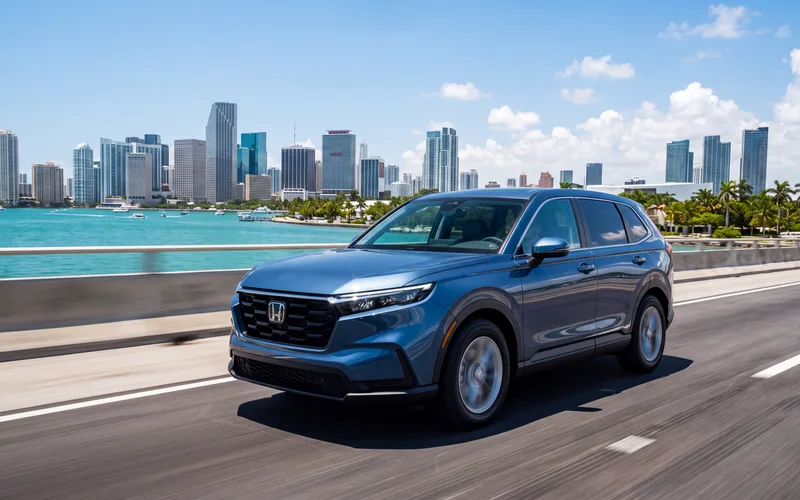 Honda CR-VCompact SUVBetter at: Cargo space
If your reason for an SUV is carrying things, the CR-V's ~39 cu ft behind the rear seat and smoother hybrid make the Forester's 27.5 cu ft hard to justify.
Compare 2.56C+
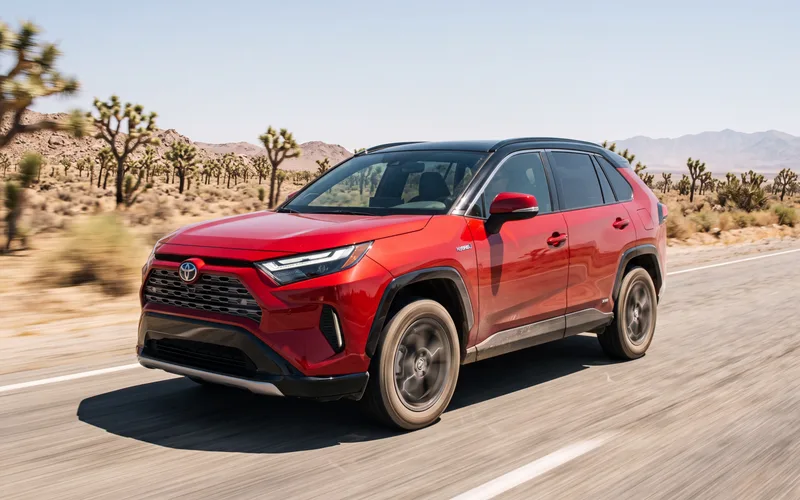 Toyota RAV4Compact SUVBetter at: Efficiency
Better fuel economy across the hybrid lineup, stronger resale value, and two years of included maintenance the Forester doesn't offer.
Compare 2.40C+
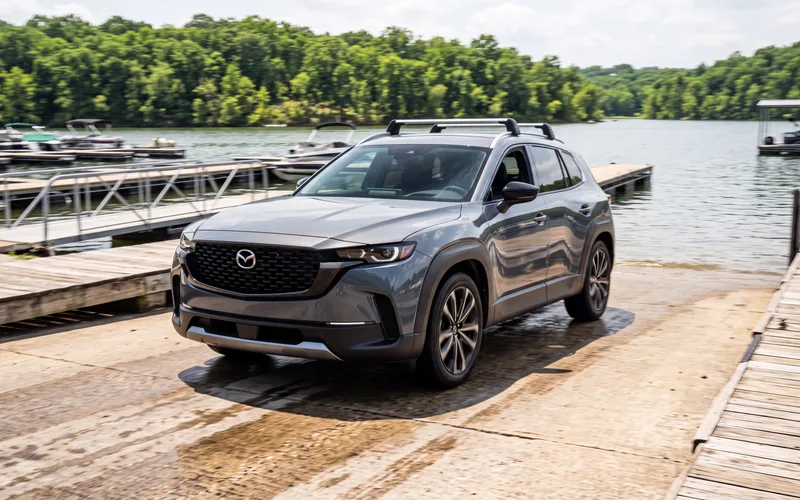 Mazda CX-50Compact SUVBetter at: Driving feel
Standard AWD like the Subaru, but with a turbo option, a 3,500-lb tow rating, and a chassis that rewards a good back road.
CompareHow it's evolved
10 scored model years · 2017–2026
Subject scores by year
Hover or tap a score to see what moved it versus the year before. A corner mark flags a big swing.
| Year | Performance | Efficiency | Safety | Space | Cost | Reliability | Tech | Use-case | Driving | Value |
|---|---|---|---|---|---|---|---|---|---|---|
| 2026 | 33 | 73 | 84 | 53 | 62 | 69 | 60 | 69 | 62 | 73 |
| 2025 | 38 | 72 | 79 | 51 | 59 | 71 | 58 | 69 | 65 | 75 |
| 2024 | 33 | 72 | 76 | 50 | 68 | 74 | 44 | 67 | 62 | 67 |
| 2023 | 33 | 72 | 76 | 50 | 69 | 74 | 44 | 67 | 62 | 69 |
| 2022 | 30 | 72 | 81 | 51 | 72 | 70 | 36 | 60 | 53 | 67 |
| 2021 | 28 | 72 | 79 | 53 | 63 | 72 | 40 | 61 | 59 | 66 |
| 2020 | 29 | 72 | 77 | 55 | 70 | 65 | 33 | 62 | 59 | 68 |
| 2019 | 28 | 72 | 72 | 55 | 70 | 56 | 35 | 62 | 57 | 72 |
| 2018 | 29 | 66 | 61 | 52 | 69 | 48 | 27 | 56 | 55 | 63 |
| 2017 | 30 | 66 | 66 | 53 | 68 | 52 | 25 | 55 | 60 | 66 |
Compare two years
Best fit & conditions
Higher scores mean a better fit for that use case. Learn more about use-case fit →
Subject profile
Trims & configurations
6 trimsScores above reflect the volume trim. Per-trim specs and scores are rolling out — the full lineup:
Academic Probation · NHTSA safety recalls
No NHTSA safety recall is on record for the 2020 Subaru Forester. Other model years of the Forester have 15 — listed below.
15 recalls on other model years of the Forester (2017–2019, 2022–2026)
Jul 7, 2026Equipment: other: labelsThese vehicles were manufactured with an incorrect Gross Axle Weight Rating (GAWR) on the certification label. As such, these vehicles fail to comply with the requirements of Federal Motor Vehicle Safety Standard (FMVSS) 110, "Tire selection and rims."
Defect
Subaru of America, Inc. (Subaru) is recalling certain 2026 Crosstrek Hybrid, 2025-2026 Forester Hybrid, Forester, and 2019-2026 Ascent vehicles. These vehicles were manufactured with an incorrect Gross Axle Weight Rating (GAWR) on the certification label. As such, these vehicles fail to comply with the requirements of Federal Motor Vehicle Safety Standard (FMVSS) 110, "Tire selection and rims."
Risk
An incorrect GAWR label may lead to an overloaded vehicle, increasing the risk of a crash.
Remedy
Subaru will mail a new certification label to owners, free of charge. Owners may also choose to have a dealer install the new label, free of charge. Letters informing owners of the safety risk were mailed August 27, 2026. Additional letters will be mailed once the remedy is available. Owners may contact Subaru customer service at 1-844-373-6614. Subaru's number for this recall is WRH-26.
NHTSA campaign 26V436000 ↗Manufacturer no. WRH-26541,237 vehicles potentially affected (all models in the campaign)Filed by Subaru of America, Inc.Filed as FORESTER, FORESTER HYBRIDMay 28, 2026Visibility: sun/moon roof assemblyThe sliding glass panel of the power moonroof assembly may have been improperly bonded to the sliding frame, allowing the glass panel to detach from the vehicle.
Defect
Subaru of America, Inc. (Subaru) is recalling certain 2026 Forester and Forester Hybrid vehicles. The sliding glass panel of the power moonroof assembly may have been improperly bonded to the sliding frame, allowing the glass panel to detach from the vehicle.
Risk
A detached glass panel may become a road hazard, increasing the risk of a crash.
Remedy
Dealers will inspect the power moonroof glass panel for proper adhesion and, if necessary, replace the glass panel assembly, free of charge. Owner notification letters were mailed July 6, 2026. Owners may contact Subaru customer service at 1-844-373-6614. Subaru's number for this recall is WRF-26. Vehicle Identification Numbers (VINs) involved in this recall became searchable on NHTSA.gov beginning May 29, 2026.
NHTSA campaign 26V346000 ↗Manufacturer no. WRF-2669,663 vehicles potentially affected (all models in the campaign)Owners notified Jul 6, 2026Filed by Subaru of America, Inc.Filed as FORESTER, FORESTER HYBRIDFeb 23, 2026Fuel system, gasoline: storage: tank assembly: filler pipe and capWhen the fuel tank is near full capacity, an increase in ambient temperature may cause the fuel to expand and spill out of the filler neck due to an insufficient seal on the fuel cap.
Defect
Subaru of America, Inc. is recalling certain 2026 Crosstrek hybrid, and 2025 Forester hybrid vehicles. When the fuel tank is near full capacity, an increase in ambient temperature may cause the fuel to expand and spill out of the filler neck due to an insufficient seal on the fuel cap.
Risk
A fuel leak in the presence of an ignition source increases the risk of a fire.
Remedy
Owners are advised to park outside and away from structures, and to limit the fuel level to 50% until the remedy is completed. Dealers will replace the fuel filler cap gasket, free of charge. Owner notification letters were mailed March 25, 2026. Owners may contact Subaru customer service at 1-844-373-6614. Subaru's number for this recall is WRD-26. Vehicle Identification Numbers (VINs) involved in this recall became searchable on NHTSA.gov on February 16, 2026.
NHTSA campaign 26V106000 ↗Manufacturer no. WRD-2669,870 vehicles potentially affected (all models in the campaign)Owners notified Mar 25, 2026Filed by Subaru of America, Inc.Filed as FORESTER HYBRIDDec 18, 2025Structure: body: hatchback/liftgate: hinge and attachmentsThese vehicles may have been manufactured with an incorrect and/or incorrectly oriented rear hatch support bracket which can detach without prior warning.
Defect
Subaru of America, Inc. (Subaru) is recalling certain 2026 Forester vehicles. These vehicles may have been manufactured with an incorrect and/or incorrectly oriented rear hatch support bracket which can detach without prior warning.
Risk
A rear hatch support bracket that detaches can allow the rear hatch to fall unexpectedly during use and increase the risk of injury.
Remedy
Dealers will inspect the rear hatch support brackets and, if necessary, replace the stay and support bracket, free of charge. Owner notification letters were mailed January 29, 2026. Owners may contact Subaru customer service at 1-844-373-6614. Subaru's number for this recall is WRG-25. Vehicle Identification Numbers (VINs) involved in this recall became searchable on NHTSA.gov on December 20, 2025.
NHTSA campaign 25V889000 ↗Manufacturer no. WRG-255,603 vehicles potentially affected (all models in the campaign)Owners notified Jan 29, 2026Filed by Subaru of America, Inc.Filed as FORESTERJun 19, 2025Child seatThe child seat anchor bolts may have been improperly tightened, allowing the bolts to come loose.
Defect
Subaru of America, Inc. (Subaru) is recalling certain 2025 Forester vehicles. The child seat anchor bolts may have been improperly tightened, allowing the bolts to come loose.
Risk
A loose child seat anchor bolt increases the risk of injury to a child during a crash.
Remedy
Dealers will inspect the child seat anchor bolts and, if necessary, tighten the bolts, free of charge. Owner notification letters are expected to be mailed August 15, 2025. Owners may contact Subaru customer service at 1-844-373-6614. Subaru's number for this recall is WRC-25.
NHTSA campaign 25V419000 ↗Manufacturer no. WRC-252,938 vehicles potentially affected (all models in the campaign)Owners notified Jul 17, 2025Filed by Subaru of America, Inc.Filed as FORESTERJan 23, 2025WheelsThe wheels may have been manufactured with an incorrectly specified lug seat surface, which can result in the wheel being improperly attached and cause a loss of vehicle stability.
Defect
Subaru of America, Inc. (Subaru) is recalling certain 2025 Forester vehicles equipped with 18" aluminum alloy wheels. The wheels may have been manufactured with an incorrectly specified lug seat surface, which can result in the wheel being improperly attached and cause a loss of vehicle stability.
Risk
A loss of vehicle stability increases the risk of a crash.
Remedy
Dealers will inspect and replace the wheels, as necessary, free of charge. Owner notification letters were mailed February 28, 2025. Owners may contact Subaru customer service at 1-844-373-6614. Subaru's number for this recall is WRB-25.
NHTSA campaign 25V033000 ↗Manufacturer no. WRB-2520,366 vehicles potentially affected (all models in the campaign)Owners notified Feb 28, 2025Filed by Subaru of America, Inc.Filed as FORESTERNov 9, 2023Power train: automatic transmission: park/neutral start interlock switchAn insufficient weld may allow water to enter the inhibitor switch, causing it to fail.
Defect
Subaru of America, Inc. is recalling certain model year 2021 Crosstrek, 2022 Forester, 2021-2023 Legacy, and Outback vehicles. An insufficient weld may allow water to enter the inhibitor switch, causing it to fail.
Risk
An inoperative inhibitor switch may prevent the reverse lights from illuminating and the rearview camera image from displaying, increasing the risk of a crash.
Remedy
Dealers will replace the inhibitor switch, free of charge. Owner notification letters were mailed January 8, 2024. Owners may contact Subaru customer service at 1-800-782-2783. Subaru's number for this recall is WRQ-23.
NHTSA campaign 23V755000 ↗Manufacturer no. WRQ-2395,830 vehicles potentially affected (all models in the campaign)Owners notified Jan 8, 2024Filed by Subaru of America, Inc.Filed as FORESTERNov 9, 2023Power train: driveline: driveshaftThe front driveshaft assemblies' outer race may develop cracks and break.
Defect
Subaru of America, Inc. (Subaru) is recalling certain 2024 Crosstrek, Impreza, 2023-2024 Forester, and 2023 WRX vehicles. The front driveshaft assemblies' outer race may develop cracks and break.
Risk
A broken driveshaft can cause a loss of drive power while driving or vehicle rollaway when the vehicle is in park without the parking brake engaged. Either of these scenarios can increase the risk of a crash.
Remedy
Dealers will inspect and replace the left and right front driveshafts as necessary, free of charge. Owner notification letters were mailed January 8, 2024. Owners may contact Subaru's customer service at 1-844-373-6614. Subaru's number for this recall is WRP-23.
NHTSA campaign 23V754000 ↗Manufacturer no. WRP-234,701 vehicles potentially affected (all models in the campaign)Owners notified Jan 8, 2024Filed by Subaru of America, Inc.Filed as FORESTEROct 26, 2023Engine and engine coolingThe engine water pipe may have loose attachment bolts, allowing the pipe to lose its seal and leak coolant.
Defect
Subaru of America, Inc. (Subaru) is recalling certain 2024 Forester vehicles. The engine water pipe may have loose attachment bolts, allowing the pipe to lose its seal and leak coolant.
Risk
Leaking coolant can contact a hot exhaust pipe, increasing the risk of a fire.
Remedy
SubaruÂs independent distributor processing facilities will tighten the water pipe attachment bolts. The affected vehicles have not been delivered to dealers or sold to owners and therefore, no owner notification letters will be sent. Owners may contact Subaru's customer service at 1-844-373-6614. Subaru's number for this recall is WRO-23.
NHTSA campaign 23V723000 ↗Manufacturer no. WRO-2349 vehicles potentially affected (all models in the campaign)Owners notified Nov 22, 2023Filed by Subaru of America, Inc.Filed as FORESTERJul 29, 2021Fuel system, gasoline: delivery: fuel pumpThe low-pressure fuel pump inside the fuel tank may fail.
Defect
Subaru of America, Inc. (Subaru) is recalling certain 2019-2020 Ascent, 2018 Forester, 2018-2020 Impreza, Legacy, Outback, 2018-2019 BRZ, WRX, and Toyota 86 vehicles. The low-pressure fuel pump inside the fuel tank may fail.
Risk
Fuel pump failure can cause an engine stall while driving, increasing the risk of a crash.
Remedy
Dealers will replace the low-pressure fuel pump, free of charge. Owner notification letters were mailed September 24, 2021. Subaru and Toyota owners may call customer service at 1-844-373-6614. Subaru's number for this recall is WRG-21.
NHTSA campaign 21V587000 ↗Manufacturer no. WRG-21175,968 vehicles potentially affected (all models in the campaign)Owners notified Sep 24, 2021Filed by Subaru of America, Inc.Filed as FORESTERApr 15, 2021Suspension: rearThe rear stabilizer bracket bolts may loosen and detach.
Defect
Subaru of America, Inc. (Subaru) is recalling certain 2018-2019 Subaru Crosstrek, 2019 Crosstrek Hybrid, and 2019 Forester vehicles. The rear stabilizer bracket bolts may loosen and detach.
Risk
Missing bolts may allow the rear stabilizer bracket to shift, increasing the risk of a crash.
Remedy
Subaru will notify owners, and dealers will retorque and replace any missing bolts, free of charge. Owner notification letters were mailed May 17, 2021. Owners may contact Subaru customer service at 1-844-373-6614. Subaru's number for this recall is WRD-21.
NHTSA campaign 21V263000 ↗Manufacturer no. WRD-21408,271 vehicles potentially affected (all models in the campaign)Owners notified May 17, 2021Filed by Subaru of America, Inc.Filed as FORESTERDec 2, 2019Engine and engine cooling: exhaust system: emission control: crankcase (pcv)The aluminum Positive Crankcase Ventilation (PCV) valve can separate, allowing the separated components to enter the engine, resulting in a loss of power while driving.
Defect
Subaru of America, Inc. (Subaru) is recalling certain 2019 Crosstrek, Forester, and Ascent vehicles. The aluminum Positive Crankcase Ventilation (PCV) valve can separate, allowing the separated components to enter the engine, resulting in a loss of power while driving.
Risk
An unexpected loss of power while driving can increase the risk of a crash.
Remedy
Subaru will notify owners, and dealers will inspect and replace the PCV valve, free of charge. If the PCV valve has separated and the components cannot be found, the short block engine will be replaced, free of charge. The recall began January 31, 2020. Owners may contact Subaru customer service at 1-844-373-6614. Subaru's number for this recall is WUW-08.
NHTSA campaign 19V856000 ↗Manufacturer no. WUW-0851,613 vehicles potentially affected (all models in the campaign)Owners notified Jan 31, 2020Filed by Subaru of America, Inc.Filed as FORESTEROct 3, 2019Air bags: sensor: occupant classificationAn electrical connection in the front passenger seat for the Occupant Detection System (ODS) may loosen.
Defect
Subaru of America, Inc. (Subaru) is recalling certain 2015-2018 Forester vehicles equipped with heated seats. An electrical connection in the front passenger seat for the Occupant Detection System (ODS) may loosen.
Risk
If the connection loosens, the front passenger airbag may deactivate even though the seat is occupied, increasing the risk of injury to the front passenger in the event of a crash.
Remedy
Subaru will notify owners, and dealers will inspect and, as necessary, replace the ODS sensor mat harness, free of charge. The recall began February 11, 2020. Owners may contact Subaru customer service at 1-844-373-6614. Subaru's number for this recall is WUM-98.
NHTSA campaign 19V701000 ↗Manufacturer no. WUM-98366,282 vehicles potentially affected (all models in the campaign)Owners notified Feb 11, 2020Filed by Subaru of America, Inc.Filed as FORESTERFeb 6, 2019Steering: electric power assist systemA connector inside the Electronic Power Steering (EPS) unit may short circuit resulting in a loss of electric power steering assistance.
Defect
Subaru of America, Inc. (Subaru) is recalling certain 2019 Forester and Crosstrek vehicles. A connector inside the Electronic Power Steering (EPS) unit may short circuit resulting in a loss of electric power steering assistance.
Risk
Loss of power steering assist would require higher steering effort, increasing the risk of a crash.
Remedy
None of the affected vehicles have been sold yet. Subaru has notified dealers and they will inspect the steering gearbox, replacing it as necessary, free of charge. The recall began February 7, 2019. Owners may contact Subaru customer service at 1-844-373-6614. Subaru's number for this recall is WUC-88.
NHTSA campaign 19V065000 ↗Manufacturer no. WUC-8810,417 vehicles potentially affected (all models in the campaign)Owners notified Feb 7, 2019Filed by Subaru of America, Inc.Filed as FORESTERJul 10, 2018Equipment: other: labels · TiresThe Certification Label may indicate the incorrect wheel size, tire size, and air pressure. As such, these vehicles fail to comply with the requirements of Federal Motor Vehicle Safety Standard (FMVSS) number 110, "Tire Selection and Rims."
Defect
Subaru of America, Inc. (Subaru) is recalling certain 2018 Subaru Forester vehicles. The Certification Label may indicate the incorrect wheel size, tire size, and air pressure. As such, these vehicles fail to comply with the requirements of Federal Motor Vehicle Safety Standard (FMVSS) number 110, "Tire Selection and Rims."
Risk
Installing incorrect tires or applying incorrect tire air pressure may increase the risk of a crash.
Remedy
Subaru will notify owners, and dealers will install a corrected label, free of charge. The recall began July 26, 2018. Owners may contact Subaru customer service at 1-844-373-6614. Subaru's number for this recall is WTS-78.
NHTSA campaign 18V455000 ↗Manufacturer no. WTS-783,654 vehicles potentially affected (all models in the campaign)Owners notified Jul 26, 2018Filed by Subaru of America, Inc.Filed as FORESTER
Source: NHTSA Office of Defects Investigation recall database, model years 2017–2026. Recalls are listed by model year as the manufacturer filed them; whether a specific car is affected depends on its VIN — check a VIN at nhtsa.gov ↗. NHTSA model names matched to this page: FORESTER, FORESTER HYBRID.
Detailed scoring by subject
1Performance & PowertrainThe Forester's lowest-graded category.0.00F
Single-powertrain lineup: naturally aspirated 2.5L flat-four, unchanged from the 2019 redesign for the 2020 model year (carry-over, no mechanical changes).
Same 2.5L engine across the trim range; torque figure unchanged from the 2019 introduction of this generation.
No manufacturer-quoted 0-60 figure; instrumented tests cluster in the high-8s to low-9s, consistent with the CVT/NA-four combination being the segment's slower performer.
The 2.5L engine is smooth at part-throttle but reviewers consistently describe it as "gutless"/lackluster under acceleration, with coarse, strained notes when the CVT holds high RPM for passing power.
Subaru's Lineartronic CVT is regarded as one of the better units in its class — quiet and responsive to throttle input in normal driving — but still produces the characteristic drone and holds simulated high gear under hard acceleration.
Towing capacity is a known weak point for the Forester versus rivals like the RAV4 (1,750 lb) or CR-V (1,500 lb tie); rating is uniform across trims for 2020.
Subaru Symmetrical All-Wheel Drive is standard on every 2020 Forester trim (no FWD option), and Premium trim and above add X-Mode with dual-function hill descent control.
8.7 in of ground clearance (class-competitive, better than most crossover rivals) plus X-Mode with hill descent on upper trims gives light-duty off-road capability, but there's no low-range gearing, locker, or dedicated off-road trim in 2020 (Wilderness trim arrived for 2022).
Single powertrain for the US 2020 model year: the 2.5L NA four paired only with a CVT. The turbocharged 2.0L XT variant was discontinued after 2018, and the Forester e-Boxer hybrid was Japan/Europe-only, not offered in the US until the later e-Boxer's 2025 launch.
2Efficiency & RangeOne of the Forester's strongest categories.2.90B-
EPA rating for the volume (CVT/AWD) configuration; Sport trim's larger wheels drop this to 28 combined, all other trims rate 29.
EPA city rating for the standard 2.5L/CVT/AWD powertrain.
EPA highway rating for the standard 2.5L/CVT/AWD powertrain.
EPA-derived range from the 16.6-gallon fuel tank and 29 MPG combined rating.
EPA estimate at standard 15,000 mi/yr, 45% highway/55% city assumptions and regular-gasoline pricing.
Runs on regular unleaded across every trim; no premium recommendation or special fueling requirement.
3SafetyThe Forester's best-graded category.3.20B+
NHTSA gave the 2020 Forester a 5-star overall rating, with 5 stars frontal, 5 stars side, and 4 stars rollover.
The 2020 Forester earned IIHS Top Safety Pick+, the institute's highest award, requiring Good ratings across all six crashworthiness tests plus Good/Acceptable headlights and Advanced/Superior front crash prevention.
EyeSight (forward AEB, adaptive cruise, lane departure warning, lane-centering steering) is standard on every 2020 Forester trim including base, but blind-spot monitoring and rear cross-traffic alert are optional on base/Premium and only standard from Limited up.
IIHS rated EyeSight-equipped Foresters Superior in front crash prevention for both vehicle-to-vehicle and vehicle-to-pedestrian testing, a requirement for the TSP+ award the 2020 model earned.
Blind-spot detection with lane-change assist and rear cross-traffic alert is unavailable on base, optional on Premium/Sport, and standard only on Limited and Touring; coverage is alert-only (vibration/visual warning) rather than active steering or braking intervention.
EyeSight's lane-centering steering, new as standard equipment for 2020, functions on the highway and keeps the car tracking, but owner and press feedback describes occasional over-correction and sensitivity rather than best-in-class smoothness.
EyeSight's adaptive cruise control covers full speed range down to a stop and resumes automatically, working with lane-centering as a highway assist package, but reviewers and owners note occasional slow reactions and over-sensitivity to adjacent traffic.
The 2020 Forester has no hands-free highway driving system; EyeSight requires hands on the wheel at all times, and DriverFocus is a driver-attention monitor, not a hands-free-capable feature.
IIHS rated the 2020 Forester's LED headlights Good only on Limited and Touring; base, Premium and Sport — the higher-volume trims — rated Acceptable.
The Forester is consistently praised by reviewers for a low beltline, thin pillars and large glass area giving excellent all-around sightlines, a signature strength versus other compact SUVs.
Wide rear door openings and accessible lower LATCH anchors make installing child seats straightforward, and the Forester's boxy rear seat area comfortably fits multiple car seats.
4Space & ComfortOne of the Forester's weakest categories.1.70C-
Forester is a strict two-row compact SUV across all five trims for 2020; no seven-seat configuration is offered.
Tall, boxy fifth-generation greenhouse gives generous front headroom even with the moonroof fitted.
Front legroom is comfortably above the compact-SUV midpoint.
One of the tallest rear cabins in the compact-SUV class, a Forester signature.
Rear legroom is well above class-average for the compact-SUV segment.
No third row is offered at any trim in any 2020 Forester configuration; buyers needing seven seats must look to the Ascent.
Behind-the-seat cargo volume is class-competitive for a compact SUV but sits toward the low end of CarScore's SUV normalization band, which spans up to full-size three-row SUVs.
Folding the standard 60/40 split rear seat roughly doubles cargo room, a competitive figure for the class.
A deep center console bin, decent door pockets and a low, flat load floor cover the basics, but there's no standout storage innovation versus rivals.
Front seats are consistently praised for supportive, well-padded cushioning and good lumbar support on long drives; rear cushions run slightly firmer and lack seatback adjustment.
Widely cited as among the smoothest-riding vehicles in the compact-SUV class, absorbing broken pavement well with composed body control.
Quiet around town, but owners and reviewers consistently note wind buffeting from the front windows and rising road noise at highway speed and on rough pavement.
Heated front seats are available from Premium upward (not standard on Base) and a heated steering wheel arrives on Sport and above; there is no rear-seat climate control or heated rear seats at any trim.
5Cost of OwnershipOne of the Forester's strongest categories.2.74B-
Entry Base trim MSRP is at the low end of the compact-SUV band, undercutting most AWD-standard rivals.
Premium is the best-selling 2020 Forester trim, adding roof rails, heated seats, and (with CVT) EyeSight driver assist as standard, still well under the segment's typical volume-trim price.
Mid-pack for the compact-SUV class; owners also report above-average incidence of windshield cracking and Starlink infotainment glitches that push routine-plus-unscheduled costs slightly higher than segment leaders.
The Forester depreciates well below the compact-SUV segment average (segment loses ~39.9% over 5 years vs. Forester's ~32.5-35%), and KBB places it in the top 10% for depreciation among 2020 SUVs.
Industry-standard 3/36 basic coverage, at the floor of the compact-SUV band and short of value-brand rivals offering longer bumper-to-bumper terms.
Standard 5/60 powertrain term, at the floor of the compact-SUV band and well short of Hyundai/Kia's 10-year/100,000-mile coverage.
All 2020 Foresters include 24/7 roadside assistance for the warranty period and a Starlink connected-services trial, but the complimentary 2-year/24,000-mile maintenance plan (4 services, Genuine Subaru oil/parts) was regional (sunbelt states only), not standard nationwide — better than bare-bones roadside-only coverage but short of a universal multi-year maintenance plan.
$28,405 volume-trim price minus its estimated resale value after 5 years (65% retained, or about $18,463) leaves about $9,942 in depreciation. Add the projected $5,900 in 5-year maintenance and repairs, and owning this vehicle for 5 years costs about $15,842 in total.
6Reliability & QualityMid-pack among this car's ten categories.2.41C+
CR's predicted reliability for the 2020 Forester was average (3/5), not top-tier, though CR still ranked it high overall among compact SUVs on road-test and owner-satisfaction scores; JD Power's contemporaneous vehicle dependability signal for the model was similarly mid-pack rather than standout.
Subaru's standing was genuinely split across the two major dependability studies in this era: JD Power's Initial Quality Study had Subaru near the bottom of the industry, while Consumer Reports' owner-survey-based brand reliability was closer to mid-pack-to-good — a mixed signal rather than a consistent top-tier or bottom-tier brand.
The 2020 model year has an unusually clean recall record for this generation: it was excluded from the major 2021 low-pressure fuel pump recall (WRG-21) that hit 2018 Forester and various other Subaru/Toyota 86 models, and third-party recall trackers show zero-to-minimal recall entries specifically for MY2020. Some CVT- and dash-rattle-related complaints surface in owner forums but read as scattered TSB-level issues, not systemic recalls.
The 2020 Forester carries the direct-injection FB25 2.5L flat-4 introduced with the 2019 fifth-generation redesign, paired with Subaru's Lineartronic CVT — both proven Subaru architectures but the DI engine specifically is still a relatively new variant without a long high-mileage track record. Owner forums report scattered CVT slippage/shift-delay complaints and some oil-consumption concerns, but nothing at the scale of the earlier-generation FB25's documented issues, and no signs of the head-gasket problems that dogged much older Subaru flat-4s.
Reviewers described the redesigned cabin as a step up from the prior generation with acceptable-quality materials and competitive fit for the class, while also noting fairly basic furnishings and a noisier-than-ideal cabin — solidly in the expected-hard-plastics-in-low-touch-zones band for a mainstream compact SUV rather than class-leading.
General consensus is solid, consistent assembly for the class, with a scattered but recurring owner complaint about a dashboard/A-pillar rattle on some 2020 units — enough to keep it out of the top tier but not a widespread initial-quality failure.
Subaru runs a dense, well-regarded nationwide dealer network and posted strong customer-service satisfaction results around this period, including top rankings in J.D. Power's Customer Service Index for owners of 2020-2022 model-year vehicles and #1 finishes in ACSI dependability/service categories.
As a high-volume mainstream nameplate, parts are widely available through Subaru's large dealer network and a healthy aftermarket, though the boxer-engine/AWD driveline layout carries somewhat higher labor and parts costs than a typical transverse inline-4 compact SUV, keeping it around the segment norm rather than class-leading on cost.
7Technology & InfotainmentOne of the Forester's weakest categories.0.17F
The volume Premium trim carries the standard 6.5-inch STARLINK touchscreen; only the range-topping Touring steps up to the 8.0-inch unit.
The 6.5-inch STARLINK Multimedia system was widely criticized during this generation for laggy touch response and a dated menu layout, partly offset by real physical volume/tune knobs.
Apple CarPlay and Android Auto are standard across the 2020 lineup, but only via a wired USB connection — wireless projection was not offered on any Forester trim this model year.
Voice command is basic and often bypassed in favor of Siri/Google Assistant via phone projection; built-in navigation is an extra-cost option rather than standard on the volume trim, and most owners rely on CarPlay/Android Auto maps instead.
Base/Premium trims get an unremarkable 6-speaker system; the well-regarded 9-speaker 576-watt Harman Kardon upgrade is exclusive to the top Touring trim, out of reach for the volume buyer.
The gauge cluster is analog speedometer/tachometer with a small multi-info color LCD trip computer between them — not a configurable full-digital cluster on any trim.
The 2020 Forester's STARLINK system has no meaningful over-the-air update capability for infotainment software or vehicle systems; updates of this era were dealer-applied.
The MySubaru app provides remote start, lock/unlock and vehicle locate, but only once the paid STARLINK Safety & Security Plus subscription is active — core functions are subscription-gated rather than free.
Forester provides 2.1A USB charging ports, but they are legacy USB-A only, and a Qi wireless charging pad is not standard on the volume Premium trim (available mainly as a dealer accessory or on higher trims).
Premium trim and above get proximity keyless entry with push-button start (Base retains a traditional key); subscription-based remote start via the MySubaru app is available but not free. No phone-as-key.
A rearview camera is standard fleet-wide and front/rear parking sonar is available on upper trims, but no 360-degree surround camera or automated parking is offered on any 2020 Forester.
No head-up display is offered on any 2020 Forester trim.
8Use-Case FitMid-pack among this car's ten categories.2.16C
Tall, wide-opening rear doors, a high roofline and generous rear headroom/legroom make loading kids and car seats easy; LATCH anchors are standard and accessible.
EyeSight driver-assist (adaptive cruise, pre-collision braking, lane keep) is standard on every trim including Base, and the 2020 Forester earned IIHS Top Safety Pick+, an unusually strong safety proposition at entry-level pricing.
Rear-seat space and ride comfort suit multi-hour family trips well, but there's no rear climate control/vents or rear entertainment, and behind-seat cargo (35.4 cu ft) is only mid-pack once a stroller and gear bags are loaded.
Excellent outward visibility (a longstanding Forester strength), a smooth CVT, standard AWD and a comfortable ride make it low-stress in daily traffic despite modest power.
EPA-rated around 26/33/29 mpg city/highway/combined for the 2.5L AWD CVT is average for the compact-SUV class — not a standout on fuel cost versus PHEV/hybrid rivals, though regular fuel and Subaru's typically modest maintenance costs help.
A tight 35.4 ft turning circle, compact footprint and unusually good sightlines make the Forester easy to place and park in the city, aided by a standard rearview camera.
Towing tops out at just 1,500 lbs and there's no bed or dedicated work configuration — the Forester is not meaningfully work-capable beyond light hauling in the cargo area.
Subaru's boxer engine/AWD combination has a reputation for going the distance in daily use, but the Forester isn't fleet-proven for hard work duty the way a body-on-frame truck or van is, and CVT longevity under heavy load was an open question at this vintage.
Standard roof rails allow light racks/carriers, but there's no onboard power outlet, no factory tie-down/upfit ecosystem, and cloth/carpeted cargo surfaces aren't jobsite-friendly.
A comfortable, well-damped ride, standard adaptive cruise via EyeSight and a roughly 480-mile highway range (16.6-gal tank at ~29 mpg combined) support long tours, offset somewhat by highway wind/road noise on extended stints.
Standard AWD, 8.7 in of ground clearance, standard roof rails and (on most trims) X-Mode with hill-descent control give the Forester genuine light-off-pavement and camping-trip credibility — a core part of the nameplate's identity.
60/40 split-folding rear seats give a flat load floor and 76.1 cu ft of max cargo space, plus standard roof rails for bikes/boxes — competitive gear-hauling flexibility for the class, though roof/tow capacity for toys (1,500 lb) is limited.
9Driving ExperienceMid-pack among this car's ten categories.2.00C
Reviewers consistently describe secure, nimble handling with less body roll and quicker steering than the prior generation, though it's composed rather than genuinely sporty.
Steering is accurately weighted and responsive for a compact SUV, but reviewers note it delivers little in the way of genuine road feedback.
No red-flag braking complaints surfaced and pedal feel is generally described as adequate, but no instrumented stopping-distance data specific to the 2020 model was found to support a higher score.
The naturally aspirated 2.5L/CVT pairing is smooth at light throttle but exhibits the classic CVT 'rubber-band' drone and flares in RPM under harder acceleration, with a leisurely 0-60 in the 8.3-9.2 second range.
The boxer four is audible and drones under load as the CVT holds higher RPM during acceleration; it's inoffensive at cruise but noticeable when pressed.
A tight turning circle for the class aids low-speed maneuvering and parking.
Upright seating, a commanding view out and thin pillars give the Forester some of the best outward visibility in the class, paired with logically laid-out controls and easy ingress/egress from its tall doors.
Competent and reassuring rather than engaging — modest power, CVT drone and a comfort-first tune mean the Forester reads as an appliance, not a car enthusiasts seek out.
10Value & Market PositionMid-pack among this car's ten categories.2.60C+
Standard AWD across every trim (a segment differentiator versus FWD-base rivals that upcharge for AWD), plus standard EyeSight driver-assist on CVT models from Premium up, though the Base trim's 6.5-inch touchscreen and cloth-only interior feel modest.
Strong practicality-per-dollar case (best-in-class visibility, generous cargo/headroom, standard AWD, class-leading safety scores) offsets a CVT and 182-hp NA four that trail some rivals' punchier turbo options; broadly regarded as a fair-to-good value pick rather than an outright bargain.
Five well-spaced trims (Base to Touring, ~$25.5k-$35.6k) cover budget to loaded buyers, but there is only one engine/CVT combination for 2020 — no turbo, hybrid, or manual option to widen the lineup further.
One of Subaru's top-selling nameplates through 2020, down just 1.8% year-over-year despite the pandemic-disrupted market that dragged overall Subaru sales down 12.6%, and posting a record September for the model.
Subaru carries a loyal, outdoor/family-lifestyle brand image with strong owner loyalty and safety reputation, though it lacks the aspirational halo of premium marques.
Subaru is historically a low-incentive brand with thin dealer margins and little haggling room; 2020 Forester demand stayed strong through the pandemic market, limiting discounting to modest demographic rebates (military, college grad, loyalty) of roughly $500-$3,000 rather than broad price cuts.
2020 is the second model year of the fifth-generation Forester (all-new for MY2019 on the Subaru Global Platform), so the design, safety tech and platform are current with no imminent redesign.
Earned IIHS Top Safety Pick+ for 2020 (with qualifying headlights) as part of Subaru tying for the most IIHS awards of any brand that year, and reviewed well overall (Edmunds 7.8/10), but reliability was only middling (Consumer Reports 3/5) and it's rarely the outright winner of head-to-head comparison tests against the CR-V/RAV4.