

The verdict
A mixed-report compact suv, strong on safety and held back by performance.
The 2024 Forester is the last year of the old-shape Subaru, and it plays to that generation's strengths: standard all-wheel drive and the full EyeSight safety suite on a $28,190 base car, a 5-star NHTSA rating, top-tier predicted reliability, 29 MPG combined on regular gas, and the best outward visibility in the class. The catch is everything that got fixed for 2025 — 182 horsepower and a 9.2-second 0-60 mph, a 6.5-inch touchscreen with wired-only CarPlay on the volume Premium trim, USB-A ports and no wireless charging anywhere, and a cabin that gets loud when you work the engine. Buy it if you want a dependable, easy-to-see-out-of, go-anywhere-in-winter crossover and can live at the back of the segment on speed and screens. If you spend a lot of time merging onto fast highways or care about interior tech, look at a hybrid RAV4 or a CR-V instead.
Jump to scoresStrengths
- Safety gear that doesn't wait for an upgrade
- You can see out of it, and park it anywhere
- Cheap to buy, cheap to keep, worth a lot later
What holds it back
- It is genuinely slow
- Warranty is the segment floor with no free maintenance
- Cargo numbers trail the class badly
Top alternatives
Cars shoppers cross-shop with the Subaru Forester 2.13C
2.13C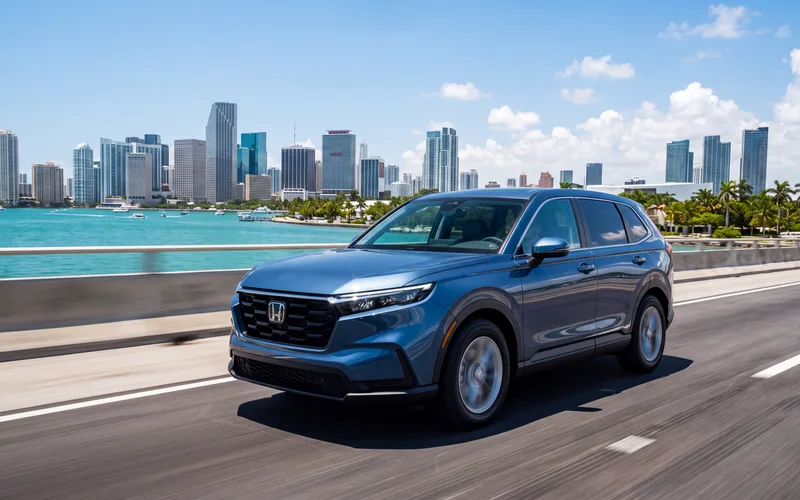 Honda CR-VCompact SUVBetter at: Cargo space
If your reason for an SUV is carrying things, the CR-V's ~39 cu ft behind the rear seat and smoother hybrid make the Forester's 27.5 cu ft hard to justify.
Compare 2.56C+
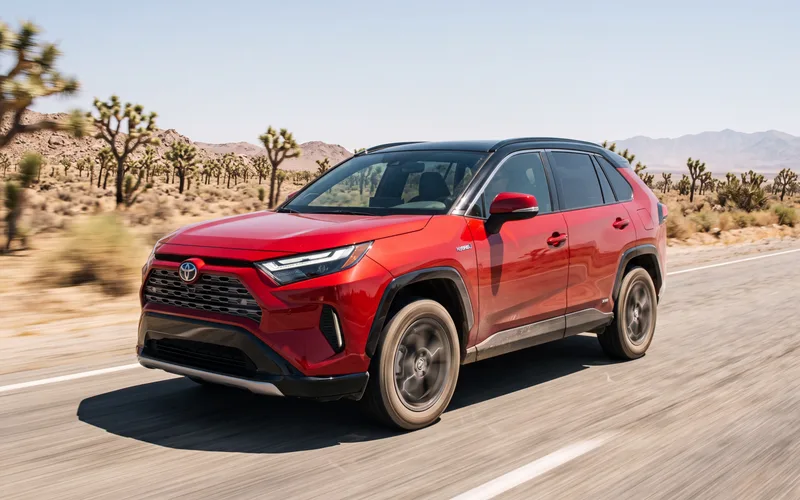 Toyota RAV4Compact SUVBetter at: Efficiency
Better fuel economy across the hybrid lineup, stronger resale value, and two years of included maintenance the Forester doesn't offer.
Compare 2.40C+
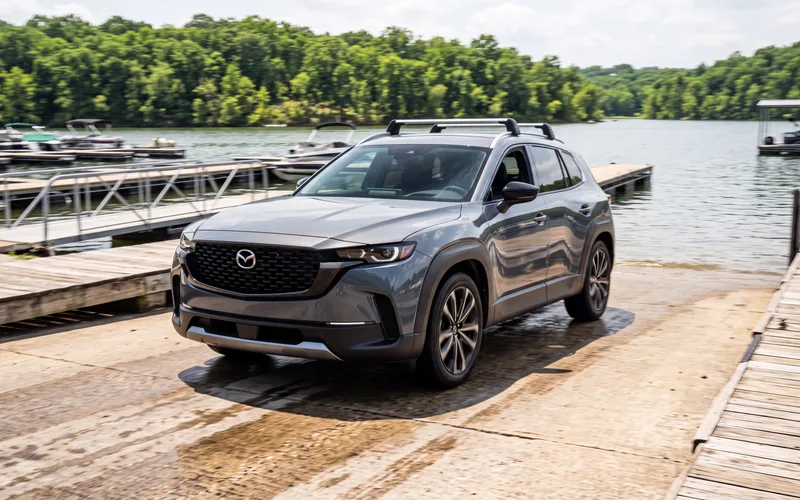 Mazda CX-50Compact SUVBetter at: Driving feel
Standard AWD like the Subaru, but with a turbo option, a 3,500-lb tow rating, and a chassis that rewards a good back road.
CompareHow it's evolved
10 scored model years · 2017–2026
Subject scores by year
Hover or tap a score to see what moved it versus the year before. A corner mark flags a big swing.
| Year | Performance | Efficiency | Safety | Space | Cost | Reliability | Tech | Use-case | Driving | Value |
|---|---|---|---|---|---|---|---|---|---|---|
| 2026 | 33 | 73 | 84 | 53 | 62 | 69 | 60 | 69 | 62 | 73 |
| 2025 | 38 | 72 | 79 | 51 | 59 | 71 | 58 | 69 | 65 | 75 |
| 2024 | 33 | 72 | 76 | 50 | 68 | 74 | 44 | 67 | 62 | 67 |
| 2023 | 33 | 72 | 76 | 50 | 69 | 74 | 44 | 67 | 62 | 69 |
| 2022 | 30 | 72 | 81 | 51 | 72 | 70 | 36 | 60 | 53 | 67 |
| 2021 | 28 | 72 | 79 | 53 | 63 | 72 | 40 | 61 | 59 | 66 |
| 2020 | 29 | 72 | 77 | 55 | 70 | 65 | 33 | 62 | 59 | 68 |
| 2019 | 28 | 72 | 72 | 55 | 70 | 56 | 35 | 62 | 57 | 72 |
| 2018 | 29 | 66 | 61 | 52 | 69 | 48 | 27 | 56 | 55 | 63 |
| 2017 | 30 | 66 | 66 | 53 | 68 | 52 | 25 | 55 | 60 | 66 |
Compare two years
Best fit & conditions
Higher scores mean a better fit for that use case. Learn more about use-case fit →
Subject profile
Trims & configurations
6 trimsScores above reflect the volume trim. Per-trim specs and scores are rolling out — the full lineup:
Academic Probation · NHTSA safety recalls
Nov 9, 2023Power train: driveline: driveshaftThe front driveshaft assemblies' outer race may develop cracks and break.
Defect
Subaru of America, Inc. (Subaru) is recalling certain 2024 Crosstrek, Impreza, 2023-2024 Forester, and 2023 WRX vehicles. The front driveshaft assemblies' outer race may develop cracks and break.
Risk
A broken driveshaft can cause a loss of drive power while driving or vehicle rollaway when the vehicle is in park without the parking brake engaged. Either of these scenarios can increase the risk of a crash.
Remedy
Dealers will inspect and replace the left and right front driveshafts as necessary, free of charge. Owner notification letters were mailed January 8, 2024. Owners may contact Subaru's customer service at 1-844-373-6614. Subaru's number for this recall is WRP-23.
NHTSA campaign 23V754000 ↗Manufacturer no. WRP-234,701 vehicles potentially affected (all models in the campaign)Owners notified Jan 8, 2024Filed by Subaru of America, Inc.Filed as FORESTEROct 26, 2023Engine and engine coolingThe engine water pipe may have loose attachment bolts, allowing the pipe to lose its seal and leak coolant.
Defect
Subaru of America, Inc. (Subaru) is recalling certain 2024 Forester vehicles. The engine water pipe may have loose attachment bolts, allowing the pipe to lose its seal and leak coolant.
Risk
Leaking coolant can contact a hot exhaust pipe, increasing the risk of a fire.
Remedy
SubaruÂs independent distributor processing facilities will tighten the water pipe attachment bolts. The affected vehicles have not been delivered to dealers or sold to owners and therefore, no owner notification letters will be sent. Owners may contact Subaru's customer service at 1-844-373-6614. Subaru's number for this recall is WRO-23.
NHTSA campaign 23V723000 ↗Manufacturer no. WRO-2349 vehicles potentially affected (all models in the campaign)Owners notified Nov 22, 2023Filed by Subaru of America, Inc.Filed as FORESTER
13 recalls on other model years of the Forester (2017–2019, 2022, 2025–2026)
Jul 7, 2026Equipment: other: labelsThese vehicles were manufactured with an incorrect Gross Axle Weight Rating (GAWR) on the certification label. As such, these vehicles fail to comply with the requirements of Federal Motor Vehicle Safety Standard (FMVSS) 110, "Tire selection and rims."
Defect
Subaru of America, Inc. (Subaru) is recalling certain 2026 Crosstrek Hybrid, 2025-2026 Forester Hybrid, Forester, and 2019-2026 Ascent vehicles. These vehicles were manufactured with an incorrect Gross Axle Weight Rating (GAWR) on the certification label. As such, these vehicles fail to comply with the requirements of Federal Motor Vehicle Safety Standard (FMVSS) 110, "Tire selection and rims."
Risk
An incorrect GAWR label may lead to an overloaded vehicle, increasing the risk of a crash.
Remedy
Subaru will mail a new certification label to owners, free of charge. Owners may also choose to have a dealer install the new label, free of charge. Letters informing owners of the safety risk were mailed August 27, 2026. Additional letters will be mailed once the remedy is available. Owners may contact Subaru customer service at 1-844-373-6614. Subaru's number for this recall is WRH-26.
NHTSA campaign 26V436000 ↗Manufacturer no. WRH-26541,237 vehicles potentially affected (all models in the campaign)Filed by Subaru of America, Inc.Filed as FORESTER, FORESTER HYBRIDMay 28, 2026Visibility: sun/moon roof assemblyThe sliding glass panel of the power moonroof assembly may have been improperly bonded to the sliding frame, allowing the glass panel to detach from the vehicle.
Defect
Subaru of America, Inc. (Subaru) is recalling certain 2026 Forester and Forester Hybrid vehicles. The sliding glass panel of the power moonroof assembly may have been improperly bonded to the sliding frame, allowing the glass panel to detach from the vehicle.
Risk
A detached glass panel may become a road hazard, increasing the risk of a crash.
Remedy
Dealers will inspect the power moonroof glass panel for proper adhesion and, if necessary, replace the glass panel assembly, free of charge. Owner notification letters were mailed July 6, 2026. Owners may contact Subaru customer service at 1-844-373-6614. Subaru's number for this recall is WRF-26. Vehicle Identification Numbers (VINs) involved in this recall became searchable on NHTSA.gov beginning May 29, 2026.
NHTSA campaign 26V346000 ↗Manufacturer no. WRF-2669,663 vehicles potentially affected (all models in the campaign)Owners notified Jul 6, 2026Filed by Subaru of America, Inc.Filed as FORESTER, FORESTER HYBRIDFeb 23, 2026Fuel system, gasoline: storage: tank assembly: filler pipe and capWhen the fuel tank is near full capacity, an increase in ambient temperature may cause the fuel to expand and spill out of the filler neck due to an insufficient seal on the fuel cap.
Defect
Subaru of America, Inc. is recalling certain 2026 Crosstrek hybrid, and 2025 Forester hybrid vehicles. When the fuel tank is near full capacity, an increase in ambient temperature may cause the fuel to expand and spill out of the filler neck due to an insufficient seal on the fuel cap.
Risk
A fuel leak in the presence of an ignition source increases the risk of a fire.
Remedy
Owners are advised to park outside and away from structures, and to limit the fuel level to 50% until the remedy is completed. Dealers will replace the fuel filler cap gasket, free of charge. Owner notification letters were mailed March 25, 2026. Owners may contact Subaru customer service at 1-844-373-6614. Subaru's number for this recall is WRD-26. Vehicle Identification Numbers (VINs) involved in this recall became searchable on NHTSA.gov on February 16, 2026.
NHTSA campaign 26V106000 ↗Manufacturer no. WRD-2669,870 vehicles potentially affected (all models in the campaign)Owners notified Mar 25, 2026Filed by Subaru of America, Inc.Filed as FORESTER HYBRIDDec 18, 2025Structure: body: hatchback/liftgate: hinge and attachmentsThese vehicles may have been manufactured with an incorrect and/or incorrectly oriented rear hatch support bracket which can detach without prior warning.
Defect
Subaru of America, Inc. (Subaru) is recalling certain 2026 Forester vehicles. These vehicles may have been manufactured with an incorrect and/or incorrectly oriented rear hatch support bracket which can detach without prior warning.
Risk
A rear hatch support bracket that detaches can allow the rear hatch to fall unexpectedly during use and increase the risk of injury.
Remedy
Dealers will inspect the rear hatch support brackets and, if necessary, replace the stay and support bracket, free of charge. Owner notification letters were mailed January 29, 2026. Owners may contact Subaru customer service at 1-844-373-6614. Subaru's number for this recall is WRG-25. Vehicle Identification Numbers (VINs) involved in this recall became searchable on NHTSA.gov on December 20, 2025.
NHTSA campaign 25V889000 ↗Manufacturer no. WRG-255,603 vehicles potentially affected (all models in the campaign)Owners notified Jan 29, 2026Filed by Subaru of America, Inc.Filed as FORESTERJun 19, 2025Child seatThe child seat anchor bolts may have been improperly tightened, allowing the bolts to come loose.
Defect
Subaru of America, Inc. (Subaru) is recalling certain 2025 Forester vehicles. The child seat anchor bolts may have been improperly tightened, allowing the bolts to come loose.
Risk
A loose child seat anchor bolt increases the risk of injury to a child during a crash.
Remedy
Dealers will inspect the child seat anchor bolts and, if necessary, tighten the bolts, free of charge. Owner notification letters are expected to be mailed August 15, 2025. Owners may contact Subaru customer service at 1-844-373-6614. Subaru's number for this recall is WRC-25.
NHTSA campaign 25V419000 ↗Manufacturer no. WRC-252,938 vehicles potentially affected (all models in the campaign)Owners notified Jul 17, 2025Filed by Subaru of America, Inc.Filed as FORESTERJan 23, 2025WheelsThe wheels may have been manufactured with an incorrectly specified lug seat surface, which can result in the wheel being improperly attached and cause a loss of vehicle stability.
Defect
Subaru of America, Inc. (Subaru) is recalling certain 2025 Forester vehicles equipped with 18" aluminum alloy wheels. The wheels may have been manufactured with an incorrectly specified lug seat surface, which can result in the wheel being improperly attached and cause a loss of vehicle stability.
Risk
A loss of vehicle stability increases the risk of a crash.
Remedy
Dealers will inspect and replace the wheels, as necessary, free of charge. Owner notification letters were mailed February 28, 2025. Owners may contact Subaru customer service at 1-844-373-6614. Subaru's number for this recall is WRB-25.
NHTSA campaign 25V033000 ↗Manufacturer no. WRB-2520,366 vehicles potentially affected (all models in the campaign)Owners notified Feb 28, 2025Filed by Subaru of America, Inc.Filed as FORESTERNov 9, 2023Power train: automatic transmission: park/neutral start interlock switchAn insufficient weld may allow water to enter the inhibitor switch, causing it to fail.
Defect
Subaru of America, Inc. is recalling certain model year 2021 Crosstrek, 2022 Forester, 2021-2023 Legacy, and Outback vehicles. An insufficient weld may allow water to enter the inhibitor switch, causing it to fail.
Risk
An inoperative inhibitor switch may prevent the reverse lights from illuminating and the rearview camera image from displaying, increasing the risk of a crash.
Remedy
Dealers will replace the inhibitor switch, free of charge. Owner notification letters were mailed January 8, 2024. Owners may contact Subaru customer service at 1-800-782-2783. Subaru's number for this recall is WRQ-23.
NHTSA campaign 23V755000 ↗Manufacturer no. WRQ-2395,830 vehicles potentially affected (all models in the campaign)Owners notified Jan 8, 2024Filed by Subaru of America, Inc.Filed as FORESTERJul 29, 2021Fuel system, gasoline: delivery: fuel pumpThe low-pressure fuel pump inside the fuel tank may fail.
Defect
Subaru of America, Inc. (Subaru) is recalling certain 2019-2020 Ascent, 2018 Forester, 2018-2020 Impreza, Legacy, Outback, 2018-2019 BRZ, WRX, and Toyota 86 vehicles. The low-pressure fuel pump inside the fuel tank may fail.
Risk
Fuel pump failure can cause an engine stall while driving, increasing the risk of a crash.
Remedy
Dealers will replace the low-pressure fuel pump, free of charge. Owner notification letters were mailed September 24, 2021. Subaru and Toyota owners may call customer service at 1-844-373-6614. Subaru's number for this recall is WRG-21.
NHTSA campaign 21V587000 ↗Manufacturer no. WRG-21175,968 vehicles potentially affected (all models in the campaign)Owners notified Sep 24, 2021Filed by Subaru of America, Inc.Filed as FORESTERApr 15, 2021Suspension: rearThe rear stabilizer bracket bolts may loosen and detach.
Defect
Subaru of America, Inc. (Subaru) is recalling certain 2018-2019 Subaru Crosstrek, 2019 Crosstrek Hybrid, and 2019 Forester vehicles. The rear stabilizer bracket bolts may loosen and detach.
Risk
Missing bolts may allow the rear stabilizer bracket to shift, increasing the risk of a crash.
Remedy
Subaru will notify owners, and dealers will retorque and replace any missing bolts, free of charge. Owner notification letters were mailed May 17, 2021. Owners may contact Subaru customer service at 1-844-373-6614. Subaru's number for this recall is WRD-21.
NHTSA campaign 21V263000 ↗Manufacturer no. WRD-21408,271 vehicles potentially affected (all models in the campaign)Owners notified May 17, 2021Filed by Subaru of America, Inc.Filed as FORESTERDec 2, 2019Engine and engine cooling: exhaust system: emission control: crankcase (pcv)The aluminum Positive Crankcase Ventilation (PCV) valve can separate, allowing the separated components to enter the engine, resulting in a loss of power while driving.
Defect
Subaru of America, Inc. (Subaru) is recalling certain 2019 Crosstrek, Forester, and Ascent vehicles. The aluminum Positive Crankcase Ventilation (PCV) valve can separate, allowing the separated components to enter the engine, resulting in a loss of power while driving.
Risk
An unexpected loss of power while driving can increase the risk of a crash.
Remedy
Subaru will notify owners, and dealers will inspect and replace the PCV valve, free of charge. If the PCV valve has separated and the components cannot be found, the short block engine will be replaced, free of charge. The recall began January 31, 2020. Owners may contact Subaru customer service at 1-844-373-6614. Subaru's number for this recall is WUW-08.
NHTSA campaign 19V856000 ↗Manufacturer no. WUW-0851,613 vehicles potentially affected (all models in the campaign)Owners notified Jan 31, 2020Filed by Subaru of America, Inc.Filed as FORESTEROct 3, 2019Air bags: sensor: occupant classificationAn electrical connection in the front passenger seat for the Occupant Detection System (ODS) may loosen.
Defect
Subaru of America, Inc. (Subaru) is recalling certain 2015-2018 Forester vehicles equipped with heated seats. An electrical connection in the front passenger seat for the Occupant Detection System (ODS) may loosen.
Risk
If the connection loosens, the front passenger airbag may deactivate even though the seat is occupied, increasing the risk of injury to the front passenger in the event of a crash.
Remedy
Subaru will notify owners, and dealers will inspect and, as necessary, replace the ODS sensor mat harness, free of charge. The recall began February 11, 2020. Owners may contact Subaru customer service at 1-844-373-6614. Subaru's number for this recall is WUM-98.
NHTSA campaign 19V701000 ↗Manufacturer no. WUM-98366,282 vehicles potentially affected (all models in the campaign)Owners notified Feb 11, 2020Filed by Subaru of America, Inc.Filed as FORESTERFeb 6, 2019Steering: electric power assist systemA connector inside the Electronic Power Steering (EPS) unit may short circuit resulting in a loss of electric power steering assistance.
Defect
Subaru of America, Inc. (Subaru) is recalling certain 2019 Forester and Crosstrek vehicles. A connector inside the Electronic Power Steering (EPS) unit may short circuit resulting in a loss of electric power steering assistance.
Risk
Loss of power steering assist would require higher steering effort, increasing the risk of a crash.
Remedy
None of the affected vehicles have been sold yet. Subaru has notified dealers and they will inspect the steering gearbox, replacing it as necessary, free of charge. The recall began February 7, 2019. Owners may contact Subaru customer service at 1-844-373-6614. Subaru's number for this recall is WUC-88.
NHTSA campaign 19V065000 ↗Manufacturer no. WUC-8810,417 vehicles potentially affected (all models in the campaign)Owners notified Feb 7, 2019Filed by Subaru of America, Inc.Filed as FORESTERJul 10, 2018Equipment: other: labels · TiresThe Certification Label may indicate the incorrect wheel size, tire size, and air pressure. As such, these vehicles fail to comply with the requirements of Federal Motor Vehicle Safety Standard (FMVSS) number 110, "Tire Selection and Rims."
Defect
Subaru of America, Inc. (Subaru) is recalling certain 2018 Subaru Forester vehicles. The Certification Label may indicate the incorrect wheel size, tire size, and air pressure. As such, these vehicles fail to comply with the requirements of Federal Motor Vehicle Safety Standard (FMVSS) number 110, "Tire Selection and Rims."
Risk
Installing incorrect tires or applying incorrect tire air pressure may increase the risk of a crash.
Remedy
Subaru will notify owners, and dealers will install a corrected label, free of charge. The recall began July 26, 2018. Owners may contact Subaru customer service at 1-844-373-6614. Subaru's number for this recall is WTS-78.
NHTSA campaign 18V455000 ↗Manufacturer no. WTS-783,654 vehicles potentially affected (all models in the campaign)Owners notified Jul 26, 2018Filed by Subaru of America, Inc.Filed as FORESTER
Source: NHTSA Office of Defects Investigation recall database, model years 2017–2026. Recalls are listed by model year as the manufacturer filed them; whether a specific car is affected depends on its VIN — check a VIN at nhtsa.gov ↗. NHTSA model names matched to this page: FORESTER, FORESTER HYBRID.
Detailed scoring by subject
1Performance & PowertrainThe Forester's lowest-graded category.0.13F
2024 is the final year of the fifth-generation (2019–2024) Forester and a carry-over year mechanically: every trim from Base to Touring uses the same naturally-aspirated 2.5L FB25 boxer-four at 182 hp. There is no turbo XT and no hybrid in the 2024 lineup, so the volume Premium trim's figure is also the model-range maximum — near the bottom of the compact SUV set.
176 lb-ft arriving at a high 4,400 rpm is well behind turbocharged compact SUV rivals (Nissan Rogue VC-Turbo 225 lb-ft, Mazda CX-50 turbo 320 lb-ft on premium), and the peaky delivery is why the Forester needs revs to move.
Two independent instrumented tests bracket the 2024 Forester at 9.2–9.3 seconds to 60 mph, one of the slowest results in the compact SUV segment and the vehicle's clearest dynamic weakness.
Being naturally aspirated, the 2.5L has no turbo lag and responds predictably off idle, and the boxer layout is smooth at cruise — but reviewers consistently flag that it gets loud and unpleasant when worked, which is often, given the output on tap.
The Lineartronic CVT is the only transmission offered and is well-calibrated for gentle around-town driving, with simulated stepped ratios and paddle shifters on Sport and above, but it holds revs and drones under sustained throttle — the standard CVT criticism, made more audible here by how much throttle the 182-hp engine needs.
The item asks for the maximum rating in any configuration, which for 2024 is the Wilderness at 3,000 lbs thanks to its shorter 4.11:1 final drive and added transmission cooling; the volume Premium trim a buyer is more likely to order tows only 1,500 lbs. Even at its best the Forester trails the CX-50 (3,500 lbs) and is a light-duty tow vehicle in mainstream form.
Symmetrical full-time AWD is standard on all six 2024 trims — no front-drive base model exists and no AWD upcharge applies, a position most compact SUV rivals only reach by optioning up. Active torque vectoring is standard, and X-MODE adds low-traction logic.
8.7 inches of ground clearance on standard trims — more than a CR-V, RAV4 or Tucson — plus standard AWD, X-MODE and Hill Descent Control give the ordinary Forester real light-trail ability, and the Wilderness is a genuine dedicated off-road trim (9.2 in clearance, all-terrain tires, shorter final drive, improved approach/departure angles). It stops short of lockers, low range or Bronco Sport Badlands-class hardware.
2024 is a single-powertrain year: the 2.5L NA boxer with a CVT is the only choice across the entire range. The turbo XT was dropped after the fourth generation and the Strong Hybrid does not arrive until the 2026 sixth generation, so a 2024 buyer has no electrified, turbocharged or manual alternative — take it or leave it, in a segment where hybrid and turbo options are routine.
2Efficiency & RangeOne of the Forester's strongest categories.2.86B-
The volume gas Premium trim returns 29 MPG combined — strong for a compact SUV carrying standard full-time symmetrical AWD, where most rivals achieve comparable numbers only in front-drive form. The Wilderness drops to 26 combined on its taller tires and shorter gearing.
26 MPG city is good for a non-hybrid AWD compact SUV — helped by standard auto stop-start — though hybrid rivals such as the RAV4 and CR-V hybrids reach the low 40s in town.
33 MPG highway is a genuine strength and the number that carries the Forester's efficiency case, since the CVT keeps revs low at cruise despite the mechanical drag of always-on AWD.
EPA lists 481 miles of total range for the 2024 Forester AWD — a 16.6-gallon tank at 29 combined MPG. Comfortably enough for long-haul use without being remarkable; larger-tank mid-size SUVs and hybrid compacts go further.
EPA's standard-assumption annual fuel cost is $2,100 for the gas AWD Forester — moderate running costs, kept down by the regular-fuel requirement, but above what a hybrid compact SUV of the same year would cost to feed.
Every 2024 Forester trim runs on regular 87-octane unleaded, with no premium recommendation, no diesel and no charging hardware to think about — the cheapest and simplest fuel situation available.
3SafetyThe Forester's best-graded category.3.19B
The 2024 Forester (final year of the 2019-2024 fifth generation) carries NHTSA's top 5-star overall rating, with 5 stars in the side test and 4 stars for rollover resistance.
Top Safety Pick, not TSP+: Good in both small overlap front tests and the original moderate overlap, but only Marginal in the updated moderate overlap front test (rear-passenger chest injury measures) and Acceptable in the side test. Structure and driver protection are strong; rear-seat protection in the tougher new test is the weak point of this outgoing generation.
EyeSight is standard on every 2024 trim — pre-collision braking and throttle management, full-speed-range adaptive cruise, lane departure/sway warning and lane keep assist with centering — which is broader than most compact SUV base trims. Blind-Spot Detection with Rear Cross-Traffic Alert is the gap: standard only from Sport upward, optional on Premium and unavailable on Base, so the two volume trims can leave the showroom without it.
EyeSight's stereo-camera AEB earns IIHS's top Good rating in both the updated vehicle-to-vehicle front crash prevention test and the pedestrian test, the latter of which includes nighttime scenarios — a clean sweep of the current, harder evaluations.
Alert-only Blind-Spot Detection with Lane Change Assist and Rear Cross-Traffic Alert, standard from Sport upward and optional on Premium — a base or lower-Premium buyer can end up without either. Automatic Emergency Steering (below 50 mph) rides along when BSD is fitted, which is more intervention than most rivals offer.
Lane departure and sway warning plus lane keep assist with lane centering are standard, and reviewers credit the system with keeping the Forester from drifting. It remains a hands-on assist that works best on clearly marked highways, with the mild ping-ponging and assertive intervention EyeSight is known for.
Advanced Adaptive Cruise Control is standard on all trims with full-speed-range stop-and-go operation and Lead Vehicle Start Alert; paired with lane centering it makes a competent highway assist. Reviewers rate it as working well without the polish of the best-integrated rival systems.
Subaru offered no hands-free highway system on the 2024 Forester at any trim — nothing comparable to BlueCruise, Super Cruise or Highway Driving Assist. EyeSight requires hands on the wheel, with DriverFocus on Touring only watching for distraction.
IIHS rates the 2024 Forester's headlights Good on every trim, and steering-responsive LED headlights with High Beam Assist are standard across the range — no trim penalty, which is unusual in the segment.
The fifth-generation Forester's upright greenhouse, slim pillars and deep side glass give it among the best natural sightlines of any modern SUV, a point reviewers return to repeatedly. It leans on glass rather than cameras — there is no 360-degree camera on the 2024 lineup — but does not need the compensation.
IIHS rates LATCH ease of use Good with extra positions — its top result — and the Forester's boxy cabin, wide-opening rear doors and flat rear bench make installing and reaching into child seats straightforward.
4Space & ComfortOne of the Forester's weakest categories.1.38D
The 2024 Forester is the final model year of the fifth generation and is a two-row, five-passenger compact SUV across every trim (Base, Premium, Sport, Wilderness, Limited, Touring) — no third row is offered at any price.
The volume Premium trim carries a standard panoramic power moonroof, which trims front headroom to 40.2 in from the moonroof-less Base trim's 41.2 in. Either figure is above average for a compact SUV, and the fifth generation's upright glasshouse and low beltline make it feel airier still.
Front legroom of 43.3 in is a genuine segment strength and is unchanged by trim, running well ahead of the CR-V (41.3 in) and RAV4 (41.0 in); reviewers note tall adults fit comfortably up front.
Second-row headroom on the moonroof-equipped volume trims is 37.6 in — mid-pack for the compact SUV class; the moonroof costs a full two inches, with the Base trim at 39.6 in.
39.4 in of second-row legroom is the Forester's strongest passenger-space number and sits comfortably above compact-SUV norms, with a reclining rear seatback standard to make use of it.
No third row exists on any 2024 Forester trim — it is a two-row-only compact SUV. Subaru buyers needing seven or eight seats step up to the Ascent.
Cargo volume behind the second row measures 26.9 cu ft on the moonroof-equipped volume Premium trim — well behind the class-leading CR-V (~39 cu ft) and Rogue (~36 cu ft) on paper. The 35.7 in of cargo-area height, 51.2 in rear gate opening and low liftover make it far more usable than the figure suggests, but the number is the Forester's weakest space measurement.
With the standard 60/40 split seatbacks folded the moonroof-equipped Premium offers 69.1 cu ft against 74.2 cu ft on the moonroof-less Base — below mid-pack on paper, though the tall roof, near-flat floor and 69.9 in of load length let it swallow bulky items reviewers expect to defeat a compact SUV.
Competitive everyday storage with no headline innovation: an illuminated front storage console tray, rear center console storage tray, large bottle-holding door bins, a passenger-side front seatback pocket and a wide flat cargo floor with underfloor storage and a cargo cover from Premium up. Connectivity is dated for a 2024 model — USB-A only, front and rear, with no USB-C and no onboard power outlet — which keeps it out of the standout band.
Front seats are consistently described as plush and roomy with good long-haul support, helped by the 10-way power driver's seat with power lumbar that is standard from Premium up. The rear bench is adult-friendly and reclines but is called out as less comfortable than the front, so it lands in the upper half of the competitive band rather than at the top.
Ride comfort is the fifth-generation Forester's standout comfort trait — testers repeatedly rate it at or near the top of the compact SUV class, absorbing broken pavement smoothly while staying controlled rather than floaty. It stops short of the very top band because body motions on 18-inch Sport/Limited wheels are firmer and the boxy body pitches more than the segment's most sophisticated setups.
Noise isolation is the acknowledged weak point of this generation: the flat-four's coarse note under load, CVT drone and road roar over coarse surfaces all intrude, and owner complaints center on exactly those three. Subaru's own answer was to add substantial sound deadening for the 2025 redesign specifically because quietness had "long been a weak point for the Forester," which places the 2024 car below segment average.
Solid mainstream equipment but clearly behind the 2025 redesign: heated front seats, heated mirrors and a wiper de-icer come standard from Premium up as part of the All-Weather Package, rear-seat climate outlets and a reclining rear bench are standard, and Touring adds heated outboard rear seats, a heated steering wheel and driver memory. What holds it to mid-band is that dual-zone automatic climate control only arrives at Limited (Base and Premium make do with a single-zone system), the heated steering wheel is a Touring standard or a Limited option, and ventilated front seats are not offered on any 2024 trim.
5Cost of OwnershipMid-pack among this car's ten categories.2.60C+
The entry 2024 Forester undercuts almost every compact SUV that charges extra for all-wheel drive, because Symmetrical AWD and the full EyeSight suite are already in that $28,190 delivered price.
Premium is the Forester's best-selling trim and is typically ordered with its single option package (blind-spot detection with rear cross-traffic alert, automatic emergency steering, power rear gate), which covers the equipment rivals bundle into their mid trims.
The naturally-aspirated 2.5-litre boxer with a timing chain and conventional service intervals keeps scheduled work ordinary, and the absence of a turbo or a hybrid system holds unscheduled repair reserves near the compact-SUV norm; the figure sits toward the upper end of the published spread because Subaru's AWD driveline and boxer packaging make some routine jobs more labour-intensive than a transverse front-drive rival's.
The Forester is one of the strongest residual performers in the mainstream compact-SUV class — standard AWD, a durable reputation and steady demand keep used prices firm — and the value is set a couple of points below the published figures because those are nameplate averages struck against an inflated new-price basis rather than a 2024 Premium specifically.
The industry floor. Subaru matches Toyota, Honda and Mazda here, but a 2024 Tucson or Sportage buyer gets 5 years/60,000 miles of the same coverage for similar money.
Also the segment floor, and half the 10-year/100,000-mile powertrain term Hyundai and Kia put behind their compact SUVs — a real gap for a CVT drivetrain buyers intend to keep past 100,000 miles.
Subaru includes no complimentary scheduled maintenance in the US, so every oil change is out of pocket from delivery — that puts the Forester squarely on the "basic roadside only" rung: 3 years/36,000 miles of 24-hour roadside assistance plus a 3-year STARLINK Safety Plus trial, against ToyotaCare's 2 years/25,000 miles of free service on a RAV4.
$32,555 volume-trim price minus its estimated resale value after 5 years (63% retained, or about $20,510) leaves about $12,045 in depreciation. Add the projected $4,300 in 5-year maintenance and repairs, and owning this vehicle for 5 years costs about $16,345 in total.
6Reliability & QualityOne of the Forester's strongest categories.3.04B
The 2024 Forester is the sixth and final model year of the fifth-generation SK platform (2019-2024), a fully mature carry-over year with no new hardware to shake out, and Consumer Reports awarded it a top 5/5 predicted-reliability rating and ranked it #1 of 21 compact SUVs. That is top-tier by any measure in this segment.
Subaru took the #1 spot outright in Consumer Reports' 2024 Annual Auto Reliability Survey — its first ever — displacing Lexus and Toyota. J.D. Power's 2024 VDS is more measured, placing Subaru at 181 PP100 against a 190 industry average: better than typical but well behind Toyota's 147 and outside the mass-market top five. Strong, with one of the two major studies short of top-tier.
Two NHTSA recalls for the 2024 model year — a modest count, but the front-driveshaft campaign is driveline-safety-relevant rather than cosmetic, covering cracked outer races that can break and cause loss of motive power or rollaway. TSB activity for this generation is ordinary but persistent around known FB25 themes (CVT shudder from insufficient fluid, valve-cover gasket and spark-plug-tube seal seepage). Typical activity, nothing systemic.
The 2.5L FB25 boxer four with the Lineartronic CVT is a high-volume, long-running combination with a broad high-mileage record, and 2024 is the most sorted iteration of it before the sixth-gen redesign. It is held back from the top band by well-documented family issues: oil consumption on the direct-injected FB variants, cam carrier and valve-cover leaks, and a history of CVT shudder complaints — none of which are fully absent from this generation.
The pre-redesign Forester cabin is built for durability rather than richness: hard plastic is used widely, particularly on the volume Premium trim, with soft-touch surfaces, Startex upholstery and leather reserved for the upper trims. Reviewers describe it as well-assembled and pleasant but plainly a step behind the CR-V and Tucson on perceived material quality for the money.
Built at Subaru of Indiana Automotive in Lafayette, a plant with a good initial-quality record, and in its sixth year of production the SK Forester's assembly is thoroughly dialed in. Panel gaps and interior assembly are consistent, with only scattered rattle complaints and no pattern of misalignment.
Subaru runs roughly 630 US dealerships — adequate nationally but materially thinner than Toyota, Honda, Ford or Chevrolet, and concentrated in the Northeast, Pacific Northwest and Colorado at the expense of the Sun Belt and Plains. Service satisfaction is respectable and Subaru places mid-pack among mass-market brands in J.D. Power's Customer Service Index.
RepairPal puts Forester average annual repair cost at $632, squarely in normal territory for a compact SUV, and the model's volume means common wear parts are widely stocked with healthy aftermarket support from Subaru's enthusiast base. Boxer-specific and AWD driveline parts run somewhat dearer than a transverse-four rival's, and RepairPal's own reliability rank for the nameplate is a middling 21st of 26 compact SUVs.
7Technology & InfotainmentOne of the Forester's weakest categories.0.96F
2024 is the final year of the fifth-generation (SK) Forester and the volume Premium trim carries the small 6.5-inch STARLINK Multimedia Plus head unit; the 8.0-inch screen is reserved for Wilderness, Limited, Touring and option packages. 6.5 in sits below the compact-SUV normalization floor of 7 in — this was the smallest center screen in the segment by 2024.
The Gen 3 STARLINK software is simple, logically laid out and backed by real physical volume and tuning knobs plus hard climate buttons — a genuine daily-use advantage — but on the volume Premium's 6.5-inch panel the display is small, the graphics are visibly dated and the tile-based menus waste what little screen there is. Functional rather than good, and clearly behind a RAV4 or CR-V by 2024.
Apple CarPlay and Android Auto are standard on every 2024 trim, which keeps this out of the bottom band, but they are wired-only across the entire range — no trim, package or head unit offers wireless projection. Wireless phone mirroring did not reach the Forester until the sixth-generation 2025 car and its 11.6-inch screen.
The volume Premium trim has neither built-in navigation nor voice-activated controls — the brochure lists voice-activated controls only for the 8.0-inch systems, and native TomTom navigation only for the 8.0-inch Multimedia Navigation System that is standard on Touring and optional on Wilderness and Limited. Premium owners are entirely dependent on wired phone projection for maps.
The Harman Kardon 576-watt-equivalent nine-speaker system is a credible premium upgrade and is standard on Touring, but it cannot be ordered on the volume Premium trim at all — it starts with the Sport option package. Premium ships with an unremarkable six-speaker setup, and the Base trim gets only four speakers.
No full-digital instrument cluster is offered on the 2024 Forester at any trim: the gauges are conventional analog dials with a small colour LCD between them. The separate 6.3-inch colour multifunction display sits atop the dash rather than in the binnacle, and it is not standard on the volume Premium — it arrives with Sport, Limited, Touring or the Premium option package.
The Gen 3 STARLINK head unit supports firmware-over-the-air updates of the multimedia software over Wi-Fi, but navigation map updates still require a USB transfer, and there is no whole-vehicle OTA programme touching powertrain, chassis or driver-assist modules. Meaningful but minimal, and narrower than the maps-included OTA the sixth-generation car offers.
STARLINK Safety and Security is standard from the volume Premium trim upward and covers the core remote set — remote engine start with climate control, remote lock/unlock, vehicle locator, collision notification and concierge — but the Base trim has no connected services at all, remote start sits behind the paid Security Plus tier once the six-month trial lapses, and there is no phone-as-key.
This is the 2024 Forester's weakest technology showing. Every port in the car is USB-A — there is no USB-C anywhere in the range — wireless phone charging is not offered on any trim, and there is no household AC outlet. The volume Premium gets only dual front USB-A ports; the dual rear USB charge ports are an option-package item, and the Base trim is down to a single USB-A plus a 3.5-mm aux jack.
Keyless Access with Push-Button Start is standard from the volume Premium trim upward, and remote start is available through the STARLINK app, but the Base trim still uses a traditional key, the power rear gate is standard only on Limited and Touring and is not hands-free, remote start requires an active subscription after the trial, and no phone-as-key exists.
The volume Premium leaves the showroom with a rear-vision camera and nothing else — no parking sensors, no front camera and no parking automation. The 180-degree Front View Monitor is a Wilderness item, reverse automatic braking with rear sonar is standard only on Wilderness and Touring, and the 2024 Forester offers no 360-degree surround-view camera at any trim; that arrived only with the sixth-generation 2025 car.
No head-up display is offered on the 2024 Forester at any trim or in any option package — Subaru fits a HUD to no vehicle in its US lineup.
8Use-Case FitMid-pack among this car's ten categories.2.52C+
Family logistics are close to segment-best: IIHS rates LATCH ease of use Good with extra positions, the upright fifth-generation body opens wide rear doors onto a boxy cabin, 39.4 in of rear legroom leaves room for a rear-facing seat without shoving the front passenger forward, and a Rear Seat Reminder is standard on every trim. It stops short of the top few points because 26.9 cu ft behind the second row on the moonroof-equipped volume trims is a real constraint for a stroller plus a week's gear, and three seats across is tight.
The core credentials land on the trims families actually buy — NHTSA 5-star overall, EyeSight with pre-collision braking, full-speed adaptive cruise and lane centering standard on the $28,190 Base rather than bundled upward, plus steering-responsive LED headlights rated Good on every trim. Two gaps hold it out of the top band: the 2024 car is a Top Safety Pick rather than TSP+, scoring only Marginal in the updated moderate overlap front test that specifically measures rear-passenger injury, and Blind-Spot Detection with Rear Cross-Traffic Alert is unavailable on Base and a $1,165 option package on the volume Premium.
Four travel comfortably on space alone — 39.4 in of rear legroom, a standard reclining rear seatback, rear-seat climate outlets and adult-friendly rear seats — but the amenity list is thin for a 2024 model and thinner than the 2025 redesign's. Dual-zone automatic climate control does not arrive until Limited, the rear dual USB-A charge ports are an option-package item on the volume Premium with no USB-C anywhere in the range, heated rear seats are Touring-only, there is no rear entertainment or sunshade, and cabin noise is this generation's acknowledged weak point on a long haul with kids aboard.
A low-stress commuter that does the fundamentals unusually well: the naturally-aspirated boxer and CVT have no turbo lag or shift hunting to manage at crawl speeds, the tall greenhouse and slim pillars give among the best sightlines of any modern SUV, ride comfort is rated at or near the top of the class, and full-speed adaptive cruise with stop-and-go plus lane centering is standard on every trim. It is not effortless because 182 hp and a 9.2-second 0-60 mean merges and gaps need planning, and the CVT drones audibly when you ask for them.
29 MPG combined and 26 city on regular 87-octane is a good return for a vehicle carrying full-time symmetrical AWD with no front-drive version flattering the number, and the EPA puts annual fuel at $2,100. It is good rather than exceptional per mile: a 2024 RAV4 or CR-V hybrid undercuts it substantially in town, RepairPal measures Forester running costs above the compact-SUV average, and Subaru includes no complimentary scheduled maintenance, so every oil change is out of pocket from delivery.
A compact 182.7 in footprint and a 35.4 ft turning circle make it easy to thread and park, and the Forester's real advantage is that it barely needs electronic help — deep side glass, slim pillars and a squared-off tail make the corners easy to place. Held below the top band because the volume Premium leaves the lot with a rear-vision camera and nothing else: no parking sensors, no front camera, no surround-view monitor at any 2024 trim, and no automated parking.
Not meaningfully a work vehicle. Base, Premium, Sport, Limited and Touring are all rated at 1,500 lbs of towing — a small utility trailer and nothing more — and only the Wilderness, with its shorter 4.11:1 final drive and added transmission cooling, reaches 3,000 lbs. There is no bed, no meaningful payload headroom, and a 182-hp naturally-aspirated boxer making 176 lb-ft at 4,400 rpm through a CVT labors with anything hitched behind it.
Should hold up with care, but it is not a work tool. 2024 is the sixth and final year of the 2019-2024 generation, so the FB25 boxer, Lineartronic CVT and chassis are fully mature rather than launch-year hardware, Subaru sits second on Consumer Reports' most-reliable-brands list, and StarTex upholstery on Wilderness wipes clean. Against that, the CVT is the recognized long-term watch item and the wrong transmission to load repeatedly, this is a unibody crossover with no commercial or fleet presence, and the 2023-2024 Forester carried a front driveshaft recall.
Basic provisions plus an outdoor — not commercial — accessory ecosystem. Ladder-style roof rails are standard from Premium up with deep Subaru, Thule and Yakima crossbar support, the cargo floor is wide and flat with tie-downs, underfloor storage and an available water-resistant tray, and StarTex seating and all-weather mats are orderable. But there is no onboard AC outlet on any 2024 trim and no USB-C anywhere, the 176-lb dynamic roof rating is ordinary, the Base trim needs a $625 package even to get rails, and nothing resembling a ladder-rack, shelving or partition upfit catalog exists for it.
A good tourer with two clear endurance limits. Roughly 481 miles of range from the 16.6-gal tank, plush and roomy front seats with a standard 10-way power driver's seat from Premium up, class-leading ride comfort and standard adaptive cruise with lane centering on every trim make for relaxed interstate miles. Cabin noise is the drag: boxer coarseness, CVT drone and road roar are this generation's acknowledged weak point — Subaru's own answer was to add substantial sound deadening for the 2025 redesign — and 182 hp means a long run-up for passes on grade.
A genuine adventure enabler and the Forester's strongest use case. Symmetrical full-time AWD is standard on all six trims with no front-drive base model to avoid, X-MODE with Hill Descent Control is standard and dual-function (Snow/Dirt and Deep Snow/Mud) from Sport up, ground clearance is 8.7 in — more than a CR-V, RAV4 or Tucson — and the Wilderness is a real off-pavement variant at 9.2 in with all-terrain Yokohamas, a front skid plate and 800-lb static roof rails for a rooftop tent. The aftermarket and Subaru accessory ecosystem around this nameplate is among the largest in the segment. It stops short of the top because 1,500 lbs of towing on the volume trims rules out most trailered toys, there is no onboard AC power for camping, and there is no low range or locking differential.
Flexible in the ways that matter for bulky gear even though the paper volume is unremarkable: 60/40 split flat-folding seatbacks open 69.1 cu ft on moonroof trims (74.2 without), a 51.2 in rear gate opening and 28.5 in liftover make loading easy, 69.9 in of load length swallows long items, and underfloor storage, a cargo cover and roof rails with wide crossbar support cover the overflow. The 26.9 cu ft behind the raised second row is the limiter — well short of a CR-V or Rogue — and the roof is where a full family's gear ends up.
9Driving ExperienceMid-pack among this car's ten categories.2.21C
2024 is the final year of the fifth generation (2019–2024) and carries the 2022 refresh's retuned front springs and dampers, which fixed the earlier car's poorly controlled ride without making it sporty. Standard Symmetrical AWD and a strut-front/double-wishbone-rear layout make it planted and neutral, and it grips as well as anything in the class, but the soft-ish tune allows more body roll than a Tiguan or CX-5 and 8.7 in. of ground clearance keeps the mass high.
The electric rack was revised at the 2022 refresh for less initial resistance and more precision, and at 2.6 turns lock-to-lock it is quick enough to make the Forester feel agile in town — but every reviewer describes it as light and feedback-free, and this pre-dual-pinion rack still transmits more kickback on broken pavement than the 2025 redesign's WRX-derived unit. Precise without being communicative.
Braking is the strongest part of the way this car drives: Consumer Reports gives the 2024 Forester a 5/5 for braking, citing short stops and a confidence-inspiring pedal, and MotorWeek recorded 112 ft from 60 mph with no fade on a Wilderness wearing all-terrain rubber — a good result given the tires, with standard-tire trims stopping shorter. It trails the 2025 redesign's 105 ft and the very best in the class, but the pedal is firm and repeatable.
The naturally aspirated 2.5L boxer has no turbo lag and is smooth at idle and light throttle, so the calibration itself is not the problem — the outputs are. 182 hp and 176 lb-ft peaking at 4,400 rpm mean 9.2–9.3 seconds to 60 mph, among the slowest in the compact SUV class, and the Lineartronic CVT answers any real throttle request by holding high revs without producing matching thrust. Two independent instrumented tests agree, and reviewers name acceleration the vehicle's one clear weak point.
At a steady cruise the boxer is inoffensive and vibration through the controls is minimal, but because the engine needs so much throttle to move the car, the CVT's rev-holding turns routine merges and grades into sustained drone — and the 2024 car lacks the extra sound deadening and hydraulic engine mounts Subaru added for the 2025 redesign. Wind noise off the upright body adds to it at highway speed.
Subaru publishes a single 35.4 ft curb-to-curb figure across the 2024 range, tight for a compact SUV and helped by the quick 2.6-turn rack — U-turns and parking-garage maneuvers are easy despite the tall body.
Outward visibility is a genuine class benchmark — the upright, boxy body gives large glass, a low beltline and thin pillars all round — and it is paired with a commanding upright seat, wide door openings for easy ingress/egress, and a control layout that keeps physical knobs and buttons rather than burying everything in the screen. The main gripe is that taller drivers sit high even at the seat's lowest setting.
The Forester's appeal is competence, not entertainment. 182 hp, a droning CVT, feedback-free steering and a 9.2-second 0–60 give an enthusiast nothing to want, and 2024 is the last year before the redesign so it offers no turbo or hybrid alternative. What character it has surfaces off pavement, where standard AWD, X-MODE and 8.7 in. of clearance let it cover rough dirt roads at a satisfying pace — capability rather than the take-the-long-way-home kind of fun.
10Value & Market PositionMid-pack among this car's ten categories.2.51C+
A $28,190 delivered Forester Base includes Symmetrical AWD, the full EyeSight suite with Advanced Adaptive Cruise Control and lane centering, steering-responsive LED headlights and seven airbags — content a RAV4 LE or CR-V LX buyer pays roughly $1,400–$1,500 extra just to get all-wheel drive alongside. It stops short of the top band because the base car still ships the small 6.5-inch STARLINK screen, blind-spot detection is a Premium-only option package, and heated seats and a power driver's seat wait for Premium.
Standard AWD and a complete driver-assist suite at the bottom of the range, one of the segment's largest cargo holds (28.9/74.2 cu ft) and 26/33 mpg make the Forester a lot of usable content per dollar, and even the loaded $38,490 Touring undercuts comparable CR-V and RAV4 hybrids. The 182-hp naturally-aspirated boxer and CVT are the offsetting weakness: rivals give more performance and, in hybrid form, far better economy for similar money.
Six trims — Base, Premium, Sport, Wilderness, Limited, Touring — spread across a $10,300 delivered span, with the Wilderness adding a genuinely different 9.2-inch-ground-clearance off-pavement variant rather than a trim sticker. The breadth is purely sideways, though: one engine, one transmission and one drivetrain, with no hybrid, no turbo and no cheaper front-drive entry point.
175,521 US sales in 2024 is a 15% jump on 2023 and within a few thousand of the nameplate's all-time 2019 peak, delivered in the generation's final year — a fast riser by trajectory and a fixture of the compact-SUV top ten. It sits below the top band only because RAV4 and CR-V outsell it roughly two-to-one.
Subaru carries one of the strongest owner-loyalty records in the mainstream US market on the back of standard AWD, an outdoor-lifestyle identity and a long safety-award streak — and the Forester is one of the two or three models that identity is actually built on, so it gets the full benefit rather than a diluted one. Short of aspirational, but well above neutral for a mainstream badge.
Subaru runs among the lowest incentive spends of any mainstream brand and offers essentially no cash-back rebates, so the Forester normally transacts near sticker — but 2024 was the outgoing generation's run-out year, with the redesigned 2025 arriving at retailers in spring 2024, and that put real dealer discount and subvented financing on the remaining SK-generation stock. Buyers rarely paid over MSRP either way.
2024 is the sixth and final model year of the fifth-generation (SK) Forester launched for 2019, and the replacement was not merely imminent — Subaru revealed the redesigned 2025 Forester in November 2023, three months after 2024 pricing was announced, and put it on sale in spring 2024. A buyer was purchasing the old car while the new one was in the showroom.
Solidly well-reviewed but not the pick of a very strong class: reviewers praise the visibility, cargo space, standard safety kit and light off-pavement ability, then consistently dock the 182-hp boxer's strained CVT acceleration and a base infotainment screen that was small by 2024. The safety record is the standout — the only model to earn a top rating in the IIHS front-crash-prevention test that year — but the 2024 car held a TOP SAFETY PICK rather than the higher TSP+, with Marginal in the updated moderate overlap front test and Acceptable in the side test.