
The verdict
A mixed-report full-size luxury sedan, strong on performance and held back by ownership.
The 2022 Model S Long Range backs up its $104,990 sticker with genuine supercar-slaying numbers — 670 hp, a 3.1-second 0-60, and a 405-mile EPA range — wrapped in a tech ecosystem (whole-car OTA updates, a 17-inch touchscreen, a 22-speaker stereo) nothing else in the segment matches. The tradeoffs are just as real: NHTSA has never crash-tested this generation, IIHS rates the headlights Poor, there's no CarPlay or HUD, and the car is projected to retain only about a third of its value after five years. It's an exhilarating, software-defined flagship for buyers who prioritize speed, range, and tech over interior fit-and-finish and resale value.
Jump to scoresStrengths
- Startling, repeatable acceleration
- The deepest tech ecosystem in the class
- Uncannily smooth and quiet powertrain
What holds it back
- Among the worst ownership economics in the class
- Below-average reliability and fit-and-finish
- No CarPlay, no Android Auto, no head-up display
Top alternatives
Cars shoppers cross-shop with the Tesla Model S 3.09B
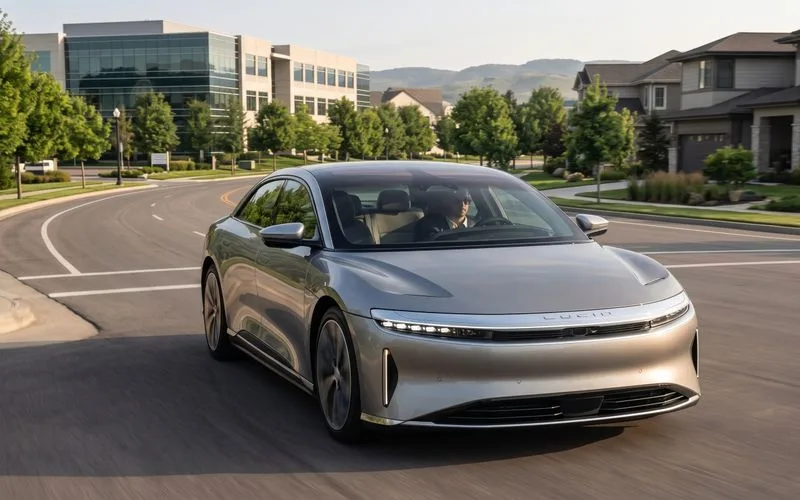 Lucid AirFull-Size Luxury SedanBetter at: Interior quality
Delivers more range and a materially nicer interior for similar money, with the rear-seat space the Model S never had.
Compare 3.30B+
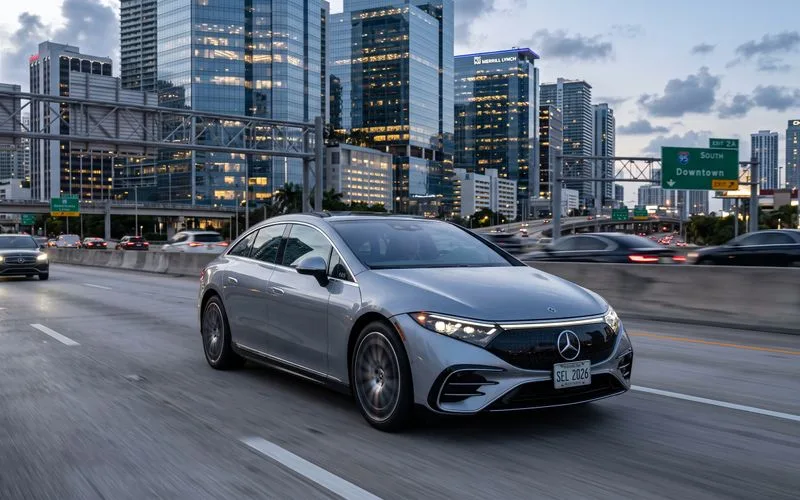 Mercedes-Benz EQS SedanFull-Size Luxury SedanBetter at: Rear-seat comfort
Buys back the limousine rear cabin, rear-axle steering and a Top Safety Pick+ crash record, and Mercedes discounts it hard.
Compare 3.00B
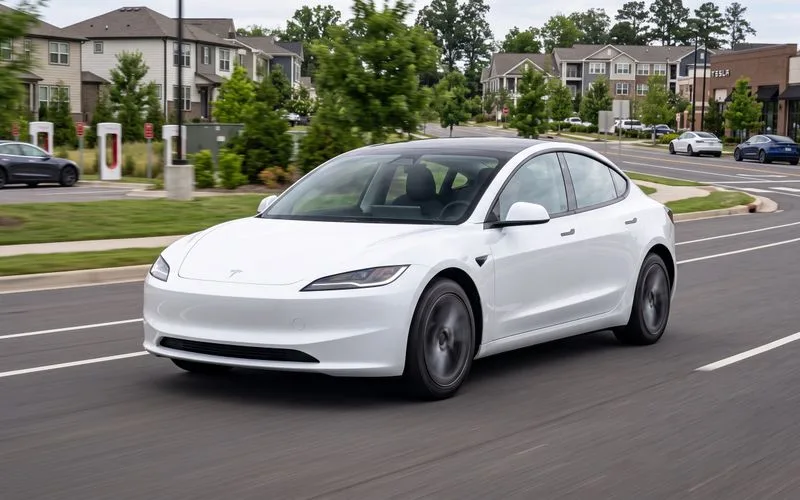 Tesla Model 3Mid-Size Luxury SedanBetter at: Value
Same software, same charging network and better predicted reliability for roughly half the price, if the speed and cargo space aren't essential.
CompareHow it's evolved
10 scored model years · 2017–2026
Subject scores by year
Hover or tap a score to see what moved it versus the year before. A corner mark flags a big swing.
| Year | Performance | Efficiency | Safety | Space | Cost | Reliability | Tech | Use-case | Driving | Value |
|---|---|---|---|---|---|---|---|---|---|---|
| 2026 | 89 | 75 | 78 | 75 | 16 | 58 | 73 | 62 | 75 | 68 |
| 2025 | 89 | 75 | 61 | 79 | 18 | 56 | 71 | 59 | 72 | 68 |
| 2024 | 89 | 75 | 57 | 78 | 15 | 53 | 70 | 57 | 71 | 66 |
| 2023 | 89 | 76 | 50 | 77 | 16 | 48 | 70 | 57 | 71 | 64 |
| 2022 | 89 | 76 | 48 | 77 | 14 | 46 | 71 | 53 | 71 | 60 |
| 2021 | 88 | 77 | 70 | 79 | 14 | 38 | 71 | 58 | 72 | 59 |
| 2020 | 86 | 73 | 70 | 73 | 13 | 47 | 70 | 58 | 76 | 62 |
| 2019 | 83 | 71 | 67 | 72 | 16 | 51 | 65 | 56 | 70 | 64 |
| 2018 | 84 | 58 | 66 | 70 | 17 | 45 | 67 | 58 | 73 | 62 |
| 2017 | 84 | 58 | 63 | 68 | 18 | 54 | 68 | 56 | 76 | 75 |
Compare two years
Best fit & conditions
Higher scores mean a better fit for that use case. Learn more about use-case fit →
Subject profile
Trims & configurations
2 trimsScores above reflect the volume trim. Per-trim specs and scores are rolling out — the full lineup:
Academic Probation · NHTSA safety recalls
May 4, 2026Back over prevention: softwareThe rearview camera image may be delayed when the vehicle is placed in reverse. As such, these vehicles fail to comply with the requirements of Federal Motor Vehicle Safety Standard number 111, "Rear Visibility."
Defect
Tesla, Inc. (Tesla) is recalling certain 2017, 2021-2023 Model 3, 2020-2023 Model Y, 2021-2023 Model S, and Model X vehicles operating software version 2026.8.6. The rearview camera image may be delayed when the vehicle is placed in reverse. As such, these vehicles fail to comply with the requirements of Federal Motor Vehicle Safety Standard number 111, "Rear Visibility."
Risk
A delayed rearview image reduces the driver's view behind the vehicle, increasing the risk of a crash.
Remedy
Tesla has released an over-the-air (OTA) software update, free of charge. Owner notification letters were mailed July 3, 2026. Owners may contact Tesla customer service at 1-877-798-3752. Tesla's number for this recall is SB-26-00-001.
NHTSA campaign 26V283000 ↗Manufacturer no. SB-26-00-001218,868 vehicles potentially affected (all models in the campaign)Owners notified Jul 3, 2026Filed by Tesla, Inc.Filed as MODEL SMar 19, 2025Air bags · Electrical system: hornAn air bag with the incorrect horn pad may have been installed, preventing the horn from sounding.
Defect
Tesla, Inc. (Tesla) is recalling certain 2021-2024 Model S and 2021-2025 Model X vehicles. An air bag with the incorrect horn pad may have been installed, preventing the horn from sounding.
Risk
An inoperative horn may prevent the driver from alerting other drivers, increasing the risk of a crash.
Remedy
Tesla service will inspect and install an air bag with the correct horn pad as necessary, free of charge. Owner notification letters were mailed May 20, 2025. Owners may contact Tesla customer service at 1-877-798-3752. Tesla's number for this recall is SB-25-20-001.
NHTSA campaign 25V172000 ↗Manufacturer no. SB-25-20-00191 vehicles potentially affected (all models in the campaign)Owners notified May 20, 2025Filed by Tesla, Inc.Filed as MODEL SDec 23, 2024Air bags: frontal: driver side: cushionThe driver's air bag could tear during deployment. As such, these vehicles fail to comply with the requirements of Federal Motor Vehicle Safety Standard (FMVSS) numbers 208, "Occupant Crash Protection" and 212, "Windshield Mounting."
Defect
Tesla, Inc. (Tesla) is recalling certain 2021-2025 Model S and Model X vehicles. The driver's air bag could tear during deployment. As such, these vehicles fail to comply with the requirements of Federal Motor Vehicle Safety Standard (FMVSS) numbers 208, "Occupant Crash Protection" and 212, "Windshield Mounting."
Risk
A torn air bag may not adequately protect an occupant in a crash, increasing the risk of injury.
Remedy
Tesla service will replace the air bag assembly, free of charge. Owner notification letters were mailed February 21, 2025. Owners may contact Tesla customer service at 1-877-798-3752. Tesla's number for this recall is SB-24-20-001.
NHTSA campaign 24V967000 ↗Manufacturer no. SB-24-20-001487 vehicles potentially affected (all models in the campaign)Owners notified Feb 21, 2025Filed by Tesla, Inc.Filed as MODEL SJul 24, 2024Electrical system: software · Latches/locks/linkages: hood: latchThe hood latch assembly may fail to detect an unlatched hood condition after the hood has been opened.
Defect
Tesla, Inc. (Tesla) is recalling certain 2021-2024 Model 3, Model S, Model X, and 2020-2024 Model Y vehicles. The hood latch assembly may fail to detect an unlatched hood condition after the hood has been opened.
Risk
An unlatched hood can fully open, obstructing the driver's view and increasing the risk of a crash.
Remedy
Tesla has released an over-the-air (OTA) software update, free of charge. Owner notification letters were mailed September 24, 2024. Owners may contact Tesla customer service at 1-877-798-3752. Tesla's number for this recall is SB-24-00-012.
NHTSA campaign 24V554000 ↗Manufacturer no. SB-24-00-0121,849,638 vehicles potentially affected (all models in the campaign)Owners notified Sep 22, 2024Filed by Tesla, Inc.Filed as MODEL SMay 28, 2024Seat belts: front: warning light/devicesIn the event of an unbelted driver, the seat belt warning light and audible chime may not activate as intended. As such, these vehicles fail to comply with the requirements of Federal Motor Vehicle Safety Standard number 208, "Occupant Crash Protection."
Defect
Tesla, Inc. (Tesla) is recalling certain 2012-2024 Model S, 2015-2024 Model X, 2017-2023 Model 3, and 2020-2023 Model Y vehicles. In the event of an unbelted driver, the seat belt warning light and audible chime may not activate as intended. As such, these vehicles fail to comply with the requirements of Federal Motor Vehicle Safety Standard number 208, "Occupant Crash Protection."
Risk
A seat belt warning system that fails to alert occupants of an unbelted seat belt can increase the risk of injury during a crash.
Remedy
Tesla will release an over-the-air (OTA) software update. Owner notification letters were mailed July 26, 2024. Owners may contact Tesla customer service at 1-877-798-3752. Tesla's number for this recall is SB-24-00-008.
NHTSA campaign 24V376000 ↗Manufacturer no. SB-24-00-008125,233 vehicles potentially affected (all models in the campaign)Owners notified Jul 26, 2024Filed by Tesla, Inc.Filed as MODEL SJan 30, 2024Electrical system: instrument cluster/panelAn incorrect font size is displayed on the instrument panel for the Brake, Park, and Antilock Brake System (ABS) warning lights. As such, these vehicles fail to comply with the requirements of Federal Motor Vehicle Safety Standard number 105, "Hydraulic and Electric Brake Systems" and 135, "Light Vehicle Brake Systems."
Defect
Tesla, Inc. (Tesla) is recalling certain 2012-2023 Model S, 2016-2024 Model X, 2017-2023 Model 3, 2019-2024 Model Y, and 2024 Cybertruck vehicles. An incorrect font size is displayed on the instrument panel for the Brake, Park, and Antilock Brake System (ABS) warning lights. As such, these vehicles fail to comply with the requirements of Federal Motor Vehicle Safety Standard number 105, "Hydraulic and Electric Brake Systems" and 135, "Light Vehicle Brake Systems."
Risk
Warning lights with a smaller font size can make critical safety information on the instrument panel difficult to read, increasing the risk of a crash.
Remedy
Tesla began releasing an over-the-air (OTA) software update, free of charge. Owners may contact Tesla customer service at 1-877-798-3752. Tesla's number for this recall is SB-24-00-003.
NHTSA campaign 24V051000 ↗Manufacturer no. SB-24-00-0032,193,869 vehicles potentially affected (all models in the campaign)Owners notified Feb 21, 2024Filed by Tesla, Inc.Filed as MODEL SDec 19, 2023Electrical system: software · Latches/locks/linkages: doors: latchThe cabin doors can be unlocked during a crash. As such, these vehicles fail to comply with the requirements of Federal Motor Vehicle Safety Standard number 214, "Side Impact Protection."
Defect
Tesla, Inc. (Tesla) is recalling certain 2021-2023 Model S and X vehicles. The cabin doors can be unlocked during a crash. As such, these vehicles fail to comply with the requirements of Federal Motor Vehicle Safety Standard number 214, "Side Impact Protection."
Risk
An unlocked door may unlatch and open during a crash, increasing the risk of injury.
Remedy
Tesla has released an over-the-air (OTA) software update, free of charge. Owner notification letters were mailed February 17, 2024. Owners may contact Tesla customer service at 1-877-798-3752. Tesla's number for this recall is SB-23-00-009.
NHTSA campaign 23V862000 ↗Manufacturer no. SB-23-00-009120,423 vehicles potentially affected (all models in the campaign)Owners notified Feb 17, 2024Filed by Tesla, Inc.Filed as MODEL SDec 12, 2023Electrical system: adas: driver monitoring: softwareTesla, Inc. (Tesla) is recalling 2012-2023 Model S, 2016-2023 Model X, 2017-2023 Model 3, and 2020-2023 Model Y vehicles equipped with all versions of Autosteer leading up to the version(s) that contains the recall remedy. In certain circumstances when Autosteer is engaged, the prominence and scope of the feature's controls may not be sufficient to prevent driver misuse of the SAE Level 2 advanced driver-assistance feature.
Defect
Tesla, Inc. (Tesla) is recalling 2012-2023 Model S, 2016-2023 Model X, 2017-2023 Model 3, and 2020-2023 Model Y vehicles equipped with all versions of Autosteer leading up to the version(s) that contains the recall remedy. In certain circumstances when Autosteer is engaged, the prominence and scope of the feature's controls may not be sufficient to prevent driver misuse of the SAE Level 2 advanced driver-assistance feature.
Risk
In certain circumstances when Autosteer is engaged, and the driver does not maintain responsibility for vehicle operation and is unprepared to intervene as necessary or fails to recognize when Autosteer is canceled or not engaged, there may be an increased risk of a crash.
Remedy
Tesla will release an over-the-air (OTA) software update, free of charge. Owner notification letters were mailed February 10, 2024. Owners may contact Tesla customer service at 1-877-798-3752. Tesla's number for this recall is SB-23-00-008.
NHTSA campaign 23V838000 ↗Manufacturer no. SB-23-00-0082,031,220 vehicles potentially affected (all models in the campaign)Owners notified Feb 10, 2024Filed by Tesla, Inc.Filed as MODEL SNov 3, 2023Air bags: frontal · Steering: steering wheel/handle barAn incorrect air bag may have been installed when the steering yoke or round steering wheel was replaced with a different style of yoke or steering wheel.
Defect
Tesla, Inc. (Tesla) is recalling certain 2021-2024 Model S and Model X vehicles. An incorrect air bag may have been installed when the steering yoke or round steering wheel was replaced with a different style of yoke or steering wheel.
Risk
An air bag that is not designed to function with the replacement steering yoke or wheel may deploy incorrectly, increasing the risk of injury during a crash.
Remedy
Tesla Service will inspect and replace the driver air bag as necessary, free of charge. Owner notification letters were mailed January 2, 2024. Owners may contact Tesla customer service at 1-877-798-3752. Tesla's number for this recall is SB-23-20-005.
NHTSA campaign 23V743000 ↗Manufacturer no. SB-23-20-005194 vehicles potentially affected (all models in the campaign)Owners notified Jan 2, 2024Filed by Tesla, Inc.Filed as MODEL SJul 14, 2023Seat belts: frontThe front-row seat belts may not be connected properly to the pretensioner anchors, which can cause the seat belts to detach.
Defect
Tesla, Inc. (Tesla) is recalling certain 2021-2023 Model S and Model X vehicles. The front-row seat belts may not be connected properly to the pretensioner anchors, which can cause the seat belts to detach.
Risk
A detached seat belt may not properly restrain an occupant during a crash, increasing the risk of injury.
Remedy
Tesla Service will inspect the front-row seat belts and connect the seat belts to pretensioner anchors, or replace the seat belt assemblies, as necessary, free of charge. Owner notification letters were mailed September 12, 2023. Owners may contact Tesla customer service at 1-877-798-3752. Tesla's number for this recall is SB-23-20-004.
NHTSA campaign 23V488000 ↗Manufacturer no. SB-23-20-00415,869 vehicles potentially affected (all models in the campaign)Owners notified Sep 12, 2023Filed by Tesla, Inc.Filed as MODEL SFeb 15, 2023Steering: automated/adaptive steeringIn addition, the system may respond insufficiently to changes in posted speed limits or not adequately account for the driver's adjustment of the vehicle's speed to exceed posted speed limits.
Defect
Tesla, Inc. (Tesla) is recalling certain 2016-2023 Model S, Model X, 2017-2023 Model 3, and 2020-2023 Model Y vehicles equipped with Full Self-Driving Beta (FSD Beta) software or pending installation. The FSD Beta system may allow the vehicle to act unsafe around intersections, such as traveling straight through an intersection while in a turn-only lane, entering a stop sign-controlled intersection without coming to a complete stop, or proceeding into an intersection during a steady yellow traffic signal without due caution. In addition, the system may respond insufficiently to changes in posted speed limits or not adequately account for the driver's adjustment of the vehicle's speed to exceed posted speed limits.
Risk
FSD Beta software that allows a vehicle to exceed speed limits or travel through intersections in an unlawful or unpredictable manner increases the risk of a crash.
Remedy
Tesla will release an over-the-air (OTA) software update, free of charge. Owner notification letters were mailed April 15, 2023. Owners may contact Tesla customer service at 1-877-798-3752. Tesla's number for this recall is SB-23-00-001.
NHTSA campaign 23V085000 ↗Manufacturer no. SB-23-00-001362,758 vehicles potentially affected (all models in the campaign)Owners notified Apr 15, 2023Filed by Tesla, Inc.Filed as MODEL SSep 19, 2022Visibility: power window devices and controlsThe window automatic reversal system may not react correctly after detecting an obstruction. As such, these vehicles fail to comply with the requirements of Federal Motor Vehicle Safety Standard number 118, "Power-Operated Window Systems."
Defect
Tesla, Inc. (Tesla) is recalling certain 2017-2022 Model 3, 2020-2022 Model Y, and 2021-2022 Model S and Model X vehicles. The window automatic reversal system may not react correctly after detecting an obstruction. As such, these vehicles fail to comply with the requirements of Federal Motor Vehicle Safety Standard number 118, "Power-Operated Window Systems."
Risk
A closing window may exert excessive force by pinching a driver or passenger before retracting, increasing the risk of injury.
Remedy
Tesla will perform an over-the-air (OTA) software update of the automatic window reversal system, free of charge. Owner notification letters were mailed March 31, 2032. Owners may contact Tesla customer service at 1-877-798-3752. Tesla's number for this recall is SB-22-00-013.
NHTSA campaign 22V702000 ↗Manufacturer no. SB-22-00-0131,096,762 vehicles potentially affected (all models in the campaign)Owners notified Mar 31, 2023Filed by Tesla, Inc.Filed as MODEL SJul 21, 2022Air bags: frontalThe front bumper carrier structure may alter the vehicle's crash detection, causing the front passenger air bag to deploy incorrectly during certain low speed crashes. As such, these vehicles fail to comply with the requirements of Federal Motor Vehicle Safety Standard number 208, "Occupant Crash Protection."
Defect
Tesla, Inc. (Tesla) is recalling certain 2022 Model S vehicles. The front bumper carrier structure may alter the vehicle's crash detection, causing the front passenger air bag to deploy incorrectly during certain low speed crashes. As such, these vehicles fail to comply with the requirements of Federal Motor Vehicle Safety Standard number 208, "Occupant Crash Protection."
Risk
A passenger air bag that does not deploy as intended increases the risk of injury.
Remedy
Tesla Service will replace the front bumper carrier structure, free of charge. Owner notification letters were mailed September 19, 2022. Owners may contact Tesla customer service at 1-877-798-3752. Tesla's number for this recall is SB-22-10-006.
NHTSA campaign 22V526000 ↗Manufacturer no. SB-22-10-0065 vehicles potentially affected (all models in the campaign)Owners notified Sep 19, 2022Filed by Tesla, Inc.Filed as MODEL SMay 3, 2022Back over prevention: display function · Equipment: electrical: infotainment: video (touch)screen/monitor/unitThe infotainment central processing unit (CPU) may overheat during the preparation or process of fast-charging, causing the CPU to lag or restart.
Defect
Tesla, Inc. (Tesla) is recalling certain 2021-2022 Model S, Model X, and 2022 Model 3 and Model Y vehicles operating certain firmware releases. The infotainment central processing unit (CPU) may overheat during the preparation or process of fast-charging, causing the CPU to lag or restart.
Risk
A lagging or restarting CPU may prevent the center screen from displaying the rearview camera image, gear selection, windshield visibility control settings, and warning lights, increasing the risk of a crash.
Remedy
Tesla will perform an over-the-air (OTA) software update that will improve CPU temperature management, free of charge. Owner notification letters were mailed July 1, 2022. Owners may contact Tesla customer service at 1-877-798-3752. Tesla's number for this recall is SB-22-00-009.
NHTSA campaign 22V296000 ↗Manufacturer no. SB-22-00-009129,960 vehicles potentially affected (all models in the campaign)Owners notified Jul 1, 2022Filed by Tesla, Inc.Filed as MODEL SApr 12, 2022Electrical system: software · Forward collision avoidance: warnings: external/pedestrian alertThe Boombox function allows sounds to be played through an external speaker while the vehicle is in motion, which may obscure the Pedestrian Warning System (PWS) sounds. As such, these vehicles fail to comply with the requirements of Federal Motor Vehicle Safety Standard number 141, "Minimum Sound Requirements for Hybrid and Electric Vehicles."
Defect
Tesla, Inc. (Tesla) is recalling certain 2020-2022 Model Y, Model X, Model S, and 2017-2022 Model 3 vehicles. The Boombox function allows sounds to be played through an external speaker while the vehicle is in motion, which may obscure the Pedestrian Warning System (PWS) sounds. As such, these vehicles fail to comply with the requirements of Federal Motor Vehicle Safety Standard number 141, "Minimum Sound Requirements for Hybrid and Electric Vehicles."
Risk
Pedestrians may be unaware of an approaching vehicle if the PWS sounds are obscured, increasing the risk of a crash.
Remedy
Tesla will perform an over-the-air (OTA) software update that will disable the Boombox functionality when the vehicle is in Drive, Neutral and Reverse modes, including Summon and Smart Summon, free of charge. Owner notification letters were mailed June 6, 2022. Owners may contact Tesla customer service at 1-877-798-3752. Tesla's number for this recall is SB-22-00-003. Note: This recall supersedes recall 22V-063. Vehicles configured with Summon or Smart Summon and already remedied under 22V-063 will need to have the new remedy software installed.
NHTSA campaign 22V235000 ↗Manufacturer no. SB-22-00-003594,894 vehicles potentially affected (all models in the campaign)Owners notified Jun 6, 2022Filed by Tesla, Inc.Filed as MODEL SFeb 23, 2022Air bags: side/window: curtain: inflatorThe right or left side curtain air bag inflators may have been assembled incorrectly.
Defect
Tesla, Inc. (Tesla) is recalling certain 2021-2022 Model S vehicles. The right or left side curtain air bag inflators may have been assembled incorrectly.
Risk
An incorrectly assembled inflator can cause a delayed or improper deployment of the side curtain air bag, increasing the risk of injury during a crash.
Remedy
Tesla Service Centers will replace the side curtain air bags, free of charge. Owner notification letters were mailed April 28, 2022. Owners may contact Tesla customer service at 1-877-798-3752. Tesla's number for this recall is SB-22-20-001.
NHTSA campaign 22V104000 ↗Manufacturer no. SB-22-20-0019 vehicles potentially affected (all models in the campaign)Owners notified Apr 24, 2022Filed by Tesla, Inc.Filed as MODEL SFeb 4, 2022Electrical system: software · Forward collision avoidance: warnings: external/pedestrian alertThe Boombox function allows sounds to be played through an external speaker while the vehicle is in motion, which may obscure the Pedestrian Warning System (PWS) sounds. As such, these vehicles fail to comply with the requirements of Federal Motor Vehicle Safety Standard number 141, "Minimum Sound Requirements for Hybrid and Electric Vehicles."
Defect
Tesla, Inc. (Tesla) is recalling certain 2020-2022 Model S, Model X, Model Y, and 2017-2022 Model 3 vehicles. The Boombox function allows sounds to be played through an external speaker while the vehicle is in motion, which may obscure the Pedestrian Warning System (PWS) sounds. As such, these vehicles fail to comply with the requirements of Federal Motor Vehicle Safety Standard number 141, "Minimum Sound Requirements for Hybrid and Electric Vehicles."
Risk
Pedestrians may be unaware of an approaching vehicle if the PWS sounds are obscured, increasing the risk of a crash.
Remedy
Tesla will perform an over-the-air (OTA) software update that will disable the Boombox functionality when the vehicle is in Drive, Neutral and Reverse modes, free of charge. Owner notification letters are expected to be mailed April 5, 2022. Owners may contact Tesla customer service at 1-877-798-3752. Tesla's number for this recall is SB-22-00-003. Note: This recall has been superseded by Recall 22V-235. Tesla's number for the new recall is SB-22-00-003.
NHTSA campaign 22V063000 ↗Manufacturer no. SB-22-00-003578,607 vehicles potentially affected (all models in the campaign)Owners notified Apr 12, 2022Filed by Tesla, Inc.Filed as MODEL SFeb 2, 2022Electrical system: software · Visibility: defroster/defogger/hvac system: air handler/chamber, ducts, and valvesA software error may cause a valve in the heat pump to open unintentionally and trap the refrigerant inside the evaporator, resulting in decreased defrosting performance. As such, these vehicles fail to comply with the requirements of Federal Motor Vehicle Safety Standard number 103, "Windshield Defrosting and Defogging Systems."
Defect
Tesla, Inc. (Tesla) is recalling certain 2021-2022 Model 3, Model S, Model X, and 2020-2022 Model Y vehicles. A software error may cause a valve in the heat pump to open unintentionally and trap the refrigerant inside the evaporator, resulting in decreased defrosting performance. As such, these vehicles fail to comply with the requirements of Federal Motor Vehicle Safety Standard number 103, "Windshield Defrosting and Defogging Systems."
Risk
Decreased defrosting performance may reduce the driver's visibility, increasing the risk of a crash.
Remedy
Tesla will perform an over-the-air (OTA) software update, free of charge. Owner notification letters were mailed April 1, 2022. Owners may contact Tesla customer service at 1-877-798-3752. Tesla's number for this recall is SB-22-18-002.
NHTSA campaign 22V050000 ↗Manufacturer no. SB-22-18-00226,681 vehicles potentially affected (all models in the campaign)Owners notified Apr 1, 2022Filed by Tesla, Inc.Filed as MODEL SFeb 1, 2022Electrical system: software · Seat belts: frontThe audible chime may not activate when the vehicle starts and the driver has not buckled their seat belt. As such, these vehicles fail to comply with the requirements of Federal Motor Vehicle Safety Standard number 208, "Occupant Crash Protection."
Defect
Tesla, Inc. (Tesla) is recalling certain 2021-2022 Model S and Model X, 2017-2022 Model 3, and 2020-2022 Model Y vehicles. The audible chime may not activate when the vehicle starts and the driver has not buckled their seat belt. As such, these vehicles fail to comply with the requirements of Federal Motor Vehicle Safety Standard number 208, "Occupant Crash Protection."
Risk
The driver may be unaware that their seat belt is not fastened, increasing the risk of injury during a crash.
Remedy
Tesla will perform an over-the-air (OTA) software update, free of charge. Owner notification letters were mailed April 1, 2022. Owners may contact Tesla customer service at 1-877-798-3752. Tesla's number for this recall is SB-22-00-002.
NHTSA campaign 22V045000 ↗Manufacturer no. SB-22-00-002817,143 vehicles potentially affected (all models in the campaign)Owners notified Apr 1, 2022Filed by Tesla, Inc.Filed as MODEL SJan 27, 2022Steering: automated/adaptive steeringThe "rolling stop" functionality available as part of the Full Self-Driving (Beta) software may allow the vehicle to travel through an all-way stop intersection without first coming to a stop.
Defect
Tesla, Inc. (Tesla) is recalling certain 2016-2022 Model S and Model X, 2017-2022 Model 3, and 2020-2022 Model Y vehicles. The "rolling stop" functionality available as part of the Full Self-Driving (Beta) software may allow the vehicle to travel through an all-way stop intersection without first coming to a stop.
Risk
Failing to stop at a stop sign can increase the risk of a crash.
Remedy
Tesla will perform an over-the-air (OTA) software update that disables the "rolling stop" functionality, free of charge. Owner notification letters were mailed March 28, 2022. Owners may contact Tesla customer service at 1-877-798-3752. Tesla's number for this recall is SB-22-00-001.
NHTSA campaign 22V037000 ↗Manufacturer no. SB-22-00-00153,822 vehicles potentially affected (all models in the campaign)Owners notified Mar 28, 2022Filed by Tesla, Inc.Filed as MODEL S
11 recalls on other model years of the Model S (2017–2021, 2023–2025)
Jan 6, 2025Back over prevention: software · Electrical systemThe computer circuit board may short, resulting in the loss of the rearview camera image. As such, these vehicles fail to comply with the requirements of Federal Motor Vehicle Safety Standard (FMVSS) number 111, "Rear Visibility."
Defect
Tesla, Inc. (Tesla) is recalling certain 2024-2025 Model 3, Model S, 2023-2025 Model X, and Model Y vehicles. The computer circuit board may short, resulting in the loss of the rearview camera image. As such, these vehicles fail to comply with the requirements of Federal Motor Vehicle Safety Standard (FMVSS) number 111, "Rear Visibility."
Risk
A rearview camera that does not display an image reduces the driver's rear view, increasing the risk of a crash.
Remedy
Tesla released an over-the-air (OTA) software update, free of charge. Tesla will also identify any vehicles that experienced a circuit board failure, or stress that may lead to a circuit board failure, and replace the affected computers, free of charge. Owner notification letters were mailed March 7, 2025. Owners may contact Tesla customer service at 1-877-798-3752. Tesla's number for this recall is SB-25-00-001.
NHTSA campaign 25V002000 ↗Manufacturer no. SB-25-00-001239,382 vehicles potentially affected (all models in the campaign)Owners notified Mar 7, 2025Filed by Tesla, Inc.Filed as MODEL SFeb 27, 2024Electrical system: software · Forward collision avoidance: warnings: external/pedestrian alertA factory reset muted the Pedestrian Warning System (PWS) sounds. As such, these vehicles fail to comply with the requirements of Federal Motor Vehicle Safety Standard number 141, "Minimum Sound Requirements for Hybrid and Electric Vehicles."
Defect
Tesla, Inc. (Tesla) is recalling certain 2013, 2018-2021 Model S, 2020-2021 Model X, 2018-2022 Model 3, and 2020-2022 Model Y vehicles. A factory reset muted the Pedestrian Warning System (PWS) sounds. As such, these vehicles fail to comply with the requirements of Federal Motor Vehicle Safety Standard number 141, "Minimum Sound Requirements for Hybrid and Electric Vehicles."
Risk
Pedestrians may be unaware of an approaching vehicle if the PWS sounds are muted, increasing the risk of a crash.
Remedy
Tesla released an over-the-air (OTA) software update, release 2023.44.30.14, free of charge. Owner notification letters were mailed April 27, 2024. Owners may contact Tesla customer service at 1-877-798-3752. Tesla's number for this recall is SB-24-00-006.
NHTSA campaign 24V153000 ↗Manufacturer no. SB-24-00-0066,557 vehicles potentially affected (all models in the campaign)Owners notified Apr 27, 2024Filed by Tesla, Inc.Filed as MODEL SJan 22, 2024Back over prevention: sensing system: cameraSoftware instability may prevent the rearview camera image from displaying.
Defect
Tesla, Inc. (Tesla) is recalling certain 2023 Model S, X, and Y vehicles equipped with full self-driving computer 4.0 and running a software release version 2023.44.30 through 2023.44.30.6 or 2023.44.100. Software instability may prevent the rearview camera image from displaying.
Risk
A rearview image that does not display while in reverse decreases the driver's visibility and increases the risk of a crash.
Remedy
Tesla has released an over-the-air (OTA) software update, free of charge. Owner notification letters were mailed March 22, 2024. Owners may contact Tesla customer service at 1-877-798-3752. Tesla's number for this recall is SB-24-00-002.
NHTSA campaign 24V035000 ↗Manufacturer no. SB-24-00-002199,575 vehicles potentially affected (all models in the campaign)Owners notified Mar 22, 2024Filed by Tesla, Inc.Filed as MODEL SJul 14, 2023Forward collision avoidance: sensing system: cameraThe forward-facing camera may be misaligned, causing some of the active safety features such as emergency braking, forward collision warning, and lane assist to become unavailable without alerting the driver.
Defect
Tesla, Inc. (Tesla) is recalling certain 2023 Model S, Model X, and Model Y vehicles. The forward-facing camera may be misaligned, causing some of the active safety features such as emergency braking, forward collision warning, and lane assist to become unavailable without alerting the driver.
Risk
Safety features that are unavailable without any warning to the driver may increase the risk of a crash.
Remedy
Tesla Service will inspect and adjust the pitch angle, as necessary, free of charge. Owner notification letters were mailed September 12, 2023. Owners may contact Tesla customer service at 1-877-798-3752. Tesla's number for this recall is SB-23-17-006.
NHTSA campaign 23V489000 ↗Manufacturer no. SB-23-17-0061,337 vehicles potentially affected (all models in the campaign)Owners notified Sep 12, 2023Filed by Tesla, Inc.Filed as MODEL SNov 1, 2022Steering: electric power assist systemThe electronic power assist steering (EPAS) system may experience a loss of power steering assist when driving on rough roads or after hitting a pothole.
Defect
Tesla, Inc. (Tesla) is recalling certain 2017-2021 Model S and Model X vehicles. The electronic power assist steering (EPAS) system may experience a loss of power steering assist when driving on rough roads or after hitting a pothole.
Risk
A loss of power steering assist can require greater steering effort, especially at low speeds, increasing the risk of a crash.
Remedy
Tesla has released an over-the-air (OTA) software update to recalibrate the EPAS system, free of charge. Owner notification letters were mailed December 31, 2022. Owners may contact Tesla customer service at 1-877-798-3752. Tesla's number for this recall is SB-22-00-014.
NHTSA campaign 22V818000 ↗Manufacturer no. SB-22-00-01440,168 vehicles potentially affected (all models in the campaign)Owners notified Dec 31, 2022Filed by Tesla, Inc.Filed as MODEL SNov 1, 2022Visibility: rearview mirrors/devices: exteriorThe driver side exterior rearview mirrors are convex (curved glass) and the passenger side mirrors do not include the "Objects in Mirror Are Closer Than They Appear" etched warning. As such, these mirrors fail to comply with the requirements of Federal Motor Vehicle Safety Standard number 111, "Rear Visibility."
Defect
Tesla, Inc. (Tesla) is recalling certain 2021 Model S exterior side rearview mirrors, part numbers: 1622232-00-B and 1622233-00-B. The driver side exterior rearview mirrors are convex (curved glass) and the passenger side mirrors do not include the "Objects in Mirror Are Closer Than They Appear" etched warning. As such, these mirrors fail to comply with the requirements of Federal Motor Vehicle Safety Standard number 111, "Rear Visibility."
Risk
When using the incorrect mirrors, the driver may misjudge the distance of other vehicles, increasing the risk of a crash.
Remedy
Tesla Service will replace the mirrors, free of charge. Owner notification letters were mailed December 31, 2022. Owners may contact Tesla customer service at 1-877-798-3752. Tesla's number for this recall is SB-22-12-002.
NHTSA campaign 22E092000 ↗Manufacturer no. SB-22-12-00253 vehicles potentially affected (all models in the campaign)Owners notified Dec 31, 2022Filed by Tesla, Inc.Filed as MODEL SMar 18, 2022Back over prevention: display functionThe rearview image may not immediately display when the vehicle begins to reverse. As such, these vehicles fail to comply with the requirements of Federal Motor Vehicle Safety Standard number 111, "Rear Visibility."
Defect
Tesla, Inc. (Tesla) is recalling certain 2018-2019 Model S, Model X, and 2017-2020 Model 3 vehicles equipped with Autopilot Computer 2.5 and operating certain firmware releases. The rearview image may not immediately display when the vehicle begins to reverse. As such, these vehicles fail to comply with the requirements of Federal Motor Vehicle Safety Standard number 111, "Rear Visibility."
Risk
A delayed rearview camera image reduces the driver's rear view, increasing the risk of a crash.
Remedy
Tesla will perform an over-the-air (OTA) software update, free of charge. Owner notification letters were mailed May 17, 2022. Owners may contact Tesla customer service at 1-877-798-3752. Tesla's number for this recall is SB-22-00-004.
NHTSA campaign 22V169000 ↗Manufacturer no. SB-22-00-004947 vehicles potentially affected (all models in the campaign)Owners notified May 17, 2022Filed by Tesla, Inc.Filed as MODEL SDec 21, 2021Latches/locks/linkages: hood: latchThe front trunk latch assembly may be misaligned, preventing the secondary hood latch from engaging. As such, these vehicles fail to comply with the requirements of Federal Motor Vehicle Safety Standard number 113, "Hood Latch System."
Defect
Tesla, Inc. (Tesla) is recalling certain 2014-2021 Model S vehicles. The front trunk latch assembly may be misaligned, preventing the secondary hood latch from engaging. As such, these vehicles fail to comply with the requirements of Federal Motor Vehicle Safety Standard number 113, "Hood Latch System."
Risk
If the primary latch is inadvertently released and the secondary latch is not engaged, the hood could open unexpectedly, obstructing the driver's view and increasing the risk of a crash.
Remedy
Tesla Service will inspect and reposition the latch assembly as necessary, free of charge. Owner notification letters were mailed February 18, 2022. Owners may contact Tesla customer service at 1-877-798-3752. Tesla's number for this recall is SB-21-11-003.
NHTSA campaign 21V00B000 ↗Manufacturer no. SB-21-11-003130,441 vehicles potentially affected (all models in the campaign)Owners notified Feb 18, 2022Filed by Tesla, Inc.Filed as MODEL SNov 9, 2021Air bags · Air bags: frontal: driver side: cushionThe driver's air bag cushion may tear during deployment.
Defect
Tesla, Inc. (Tesla) is recalling certain 2021 Model X and Model S vehicles. The driver's air bag cushion may tear during deployment.
Risk
A torn air bag may not adequately protect an occupant in a crash, increasing their risk of injury.
Remedy
Tesla Service will replace the driver's air bag, free of charge. Owner notification letters were mailed January 7, 2022. Owners may contact Tesla customer service at 1-877-798-3752. Tesla's number for this recall is SB-21-20-007.
NHTSA campaign 21V868000 ↗Manufacturer no. SB-21-20-0077,600 vehicles potentially affected (all models in the campaign)Owners notified Jan 7, 2022Filed by Tesla, Inc.Filed as MODEL SOct 29, 2021Forward collision avoidance: automatic emergency braking · Forward collision avoidance: sensing system: camera · Forward collision avoidance: warnings · Forward collision avoidance: softwareA communication error may cause false forward-collision warning (FCW) or unexpected activation of the automatic emergency brake (AEB) system.
Defect
Tesla, Inc. (Tesla) is recalling certain 2017-2021 Model S, Model 3, Model X, and 2020-2021 Model Y vehicles operating software version 2021.36.5.2. A communication error may cause false forward-collision warning (FCW) or unexpected activation of the automatic emergency brake (AEB) system.
Risk
Unexpected activation of the AEB system may cause the car to stop suddenly, increasing the risk of a crash.
Remedy
Tesla Service has released an over-the-air (OTA) software update, free of charge. The recall began October 25, 2021. Owners may contact Tesla customer service at 1-877-798-3752. Tesla's number for this recall is SB-21-00-004.
NHTSA campaign 21V846000 ↗Manufacturer no. SB-21-00-00411,728 vehicles potentially affected (all models in the campaign)Owners notified Oct 25, 2021Filed by Tesla, Inc.Filed as MODEL SJan 29, 2021Back over prevention: software · Exterior lighting: turn signal · Visibility: defroster/defogger/hvac systemWhen the 8GB eMMC NAND flash memory device for the center display reaches lifetime wear, the eMMC controller will no longer be able to maintain the integrity of the filesystem, causing a failure in some of the center display functions.
Defect
Tesla, Inc. (Tesla) is recalling certain 2012-2018 Tesla Model S and 2016-2018 Model X vehicles with a center display equipped with a NVIDIA Tegra 3 processor and an 8GB eMMC NAND flash memory device. When the 8GB eMMC NAND flash memory device for the center display reaches lifetime wear, the eMMC controller will no longer be able to maintain the integrity of the filesystem, causing a failure in some of the center display functions.
Risk
The eMMC controller wear-out condition can cause the loss of the rearview camera display, defrost/defog control settings, and exterior turn signal lighting, reducing visibility and increasing the risk of a crash.
Remedy
Owners should ensure their vehicles are operating firmware release 2020.48.48.12 or newer, which will alert owners if the eMMC is approaching lifetime wear. Tesla will notify owners, and will replace the VCM daughterboard with one containing an enhanced eMMC controller, free of charge. The recall began March 29, 2021. Owners may contact Tesla customer service at 1-877-798-3752. Tesla's number for this recall is SB-21-21-001.
NHTSA campaign 21V035000 ↗Manufacturer no. SB-21-21-001134,951 vehicles potentially affected (all models in the campaign)Owners notified Mar 29, 2021Filed by Tesla, Inc.Filed as MODEL S
Source: NHTSA Office of Defects Investigation recall database, model years 2017–2026. Recalls are listed by model year as the manufacturer filed them; whether a specific car is affected depends on its VIN — check a VIN at nhtsa.gov ↗. NHTSA model names matched to this page: MODEL S.
Detailed scoring by subject
1Performance & PowertrainThe Model S's best-graded category.4.00A+
Manufacturer-rated combined peak output for the volume Long Range dual-motor AWD trim, unchanged from the June 2021 refresh carried into MY2022.
Combined peak torque for the Long Range dual-motor powertrain, corroborated across multiple spec aggregators for the 2021-2024 unchanged drivetrain.
Manufacturer-quoted 0-60 time for the Long Range dual-motor AWD trim, consistent with independent instrumented tests in the low-3-second range.
Instant, linear single-speed electric power delivery with no turbo lag or hybrid-transition harshness; reviewers consistently cite the Model S's throttle response as among the most immediate in the class.
Single-speed reduction-gear transmission on each motor; no shifting, hunting, or drone of any kind, with smooth power modulation across the full speed range.
Dual-motor AWD is standard on the volume Long Range trim (no FWD/RWD option on the car), and the top Plaid trim adds a third rear motor with independent torque vectoring between the rear wheels.
The entire Model S lineup is battery-electric; Tesla offers no gas, hybrid, or PHEV variant of any kind, and the only choice within the EV powertrain is motor count/output (Long Range dual-motor vs. Plaid tri-motor), not a distinct propulsion type.
2Efficiency & RangeOne of the Model S's strongest categories.3.18B
EPA combined efficiency rating for the 2022 Model S Long Range on the standard 19-inch wheel/tire package (the volume configuration); 21-inch wheels reduce this slightly.
EPA city efficiency rating for the 19-inch-wheel Long Range configuration.
EPA highway efficiency rating for the 19-inch-wheel Long Range configuration; lower than city MPGe, typical of EVs due to reduced regenerative braking at speed.
EPA-rated full-charge range for the Long Range trim on its standard 19-inch wheels, the volume configuration; the optional 21-inch wheels drop range to 375 miles.
Tesla's Long Range battery pack peaks at 250 kW on a V3 Supercharger stall (V2 stalls are capped lower and shared pair-wise); this is the manufacturer-rated ceiling for the pack, not the sustained rate.
Independently measured 10-80% charge time on a V3 Supercharger stall for the Long Range pack; Tesla does not publish an official 10-80% figure, instead quoting miles added per minute, so this is a corroborated third-party measurement rather than a manufacturer spec.
EPA's standard-assumption annual energy cost estimate for the 19-inch-wheel Long Range configuration.
Runs entirely on grid electricity with no gasoline requirement of any kind; home charging is inexpensive, especially off-peak, and Tesla's own dense Supercharger network (250 kW V3 stalls) makes road-trip charging unusually convenient versus other EVs on third-party networks.
3SafetyOne of the Model S's weakest categories.1.22D
NHTSA's own SafetyRatings API returns "Not Rated" for overall, frontal and side crash categories on the current-generation (2021+) Model S that the 2022 model year belongs to — only the rollover test (5 stars, 5.7% tip risk) and ESC/FCW/LDW standard-equipment flags are populated. Tesla's low annual volume means NHTSA has not prioritized retesting the refreshed structure.
The current-generation Model S was not an IIHS 2022 Top Safety Pick/Pick+ winner (only Model 3 and Model Y made that list) and IIHS has not published small overlap, moderate overlap, side, roof-strength or head-restraint results for the 2021+ body — the only published crashworthiness-adjacent data is a Poor headlight rating, carried unchanged into the refreshed car, and a Superior vehicle-to-vehicle front crash prevention score.
Tesla's base Autopilot — automatic emergency braking, traffic-aware (adaptive) cruise control, Autosteer lane keeping, blind-spot collision warning, forward collision warning and rear cross-traffic alert — ships standard on every 2022 Model S trim (base AWD and Plaid) with no paywall; only the extra-cost FSD Capability package (Navigate on Autopilot, auto lane change, Smart Summon, auto park) sits above it.
IIHS rates the standard AEB system Superior for vehicle-to-vehicle front crash prevention, avoiding collisions in both the 12 mph and 25 mph test scenarios, but IIHS has not published a pedestrian (day/night) front crash prevention rating for this generation of Model S, so the day/night pedestrian half of the item can't be confirmed at the same level.
Blind Spot Collision Warning and rear cross-traffic alert are standard across the Model S range via the car's camera/sensor suite, and Autopilot will decline a lane change into an occupied blind spot, but the system is fundamentally alert-based rather than an actively intervening/braking blind-spot system, and owners report the side cameras leave some coverage gaps versus dedicated radar-based rivals.
Autosteer lane centering is widely reviewed as class-leading and holds the car confidently centered on most highways, but multiple 2022-era owner reports describe an intermittent "ping-pong" lateral micro-correction on very straight roads that a human driver wouldn't produce, keeping it just short of flawless.
Standard Traffic-Aware Cruise Control covers the full speed range including stop-and-go traffic and is well regarded for smoothness; Navigate on Autopilot adds highway interchange/lane-change assistance but sits behind the paid FSD Capability option rather than being bundled with the base adaptive cruise system.
In model year 2022 both Autopilot and FSD Beta require the driver's hands on the wheel (torque-sensing nag), with no eyes-off or hands-off highway mode; Tesla did not ship true hands-free driving on refreshed Model S hardware until the FSD v12.4 software update in 2024, well after this model year.
IIHS rates the Model S's headlights Poor across the board — both the standard LED reflector units and the curve-adapting matrix units earn Poor marks for low-beam glare and inadequate illumination in curve tests — on the same current-generation body sold for 2022.
A tilted-up beltline, large glass area and standard glass roof give good forward sightlines and headroom, but reviewers note a thick A-pillar-to-door junction blind spot and a narrow, shallow rear window (worsened by rear headrests) that compromises the view directly behind the car.
The Model S has two sets of lower LATCH anchors and three top-tether anchors, but the anchors sit behind tight-clearance flaps that are difficult to access, the heavily bolstered rear seat cushion complicates car-seat installation, and the small rear door opening — a consequence of frameless doors and the fastback roofline — makes loading a seated child or maneuvering a convertible seat's rigid connectors noticeably harder than in a conventional sedan.
4Space & ComfortOne of the Model S's strongest categories.3.26B+
The refreshed (2021+) Model S that the 2022 model year belongs to is a standard 5-seater; Tesla publicly confirmed a 7-seat configuration was planned but it was not an orderable option during the 2022 model year.
Front headroom figure for the refreshed-generation Model S (2021+), carried unchanged into 2022; not independently republished on Tesla's own spec sheet but consistent across multiple data aggregators for this generation.
Front legroom figure for the refreshed-generation Model S (2021+), carried unchanged into 2022.
Second-row headroom for the refreshed-generation Model S, applicable since the volume configuration seats 5 (above the minSeats 4 gate).
Second-row legroom is on the tighter side for a full-size luxury sedan — the low, battery-pack-raised seating position and sloping roofline eat into rear knee room versus rivals like the Genesis G90 or Mercedes EQS despite the car's long overall footprint.
Rear trunk volume behind the second row for the refreshed-generation liftback-trunk Model S; the front trunk is additional and not part of the sedan trunk-volume definition for this item.
The Model S pairs its rear trunk with a genuinely usable front trunk (frunk), a deep, flat-floored center console bin (no transmission tunnel to work around), and two wireless charging pads plus USB-C ports built into that console — a clear standout versus ICE full-size luxury sedans.
Owner and press reviews describe the refreshed Model S's front seats as supportive and well-adjustable (heated/ventilated, multi-way power) but somewhat firmer than class norms, with rear seat comfort hurt more by the tight legroom than by cushioning itself.
Standard adaptive air suspension gives a controlled, well-damped ride that stays composed on broken pavement; reviewers note the ride firms up noticeably on the larger optional wheel/tire packages but the base setup rides comfortably for the segment.
As an EV with no engine noise and acoustic glass carried over from the pre-refresh car, the Model S is consistently rated among the quieter cabins in its class at highway speed, with wind noise around the large side mirrors and frameless doors the main residual intrusion.
2022 Model S ships standard with heated and ventilated front seats, heated rear outboard seats, a heated steering wheel, and automatic climate control with a rear zone; the companion app adds remote pre-conditioning ("Defrost"/climate-on-the-go), a feature set that rivals or beats most of the segment as standard equipment rather than a paid option.
5Cost of OwnershipThe Model S's lowest-graded category.0.00F
Entry trim for the 2022 model year is the Long Range; the Model S Plus/Performance/Plaid+ sub-trims from 2021 were discontinued by 2022.
Long Range is the higher-volume of the two 2022 trims (vs. the $135,990 Plaid); typical equipment adds little beyond paint/wheel options since Autopilot and premium interior are standard.
Estimates vary widely by source and model year (CarEdge projects a much lower ~$1,561 at 60k miles; Edmunds' True Cost to Own shows $7,012 for the 2020 model and $4,962 for 2023), so a 2022 figure is interpolated between those; EVs skip oil/fluid services but Tesla tire wear and service-center labor rates run high.
Multiple depreciation trackers for the Model S cluster around 60–71% five-year depreciation (29–39% retention); used the midpoint, weighted toward the higher-depreciation estimates since 2022 Model S values have since been pressured by Tesla's own 2023 price cuts and a 2024 facelift making pre-refresh cars look dated.
Tesla's Basic Vehicle Limited Warranty was unchanged for the 2022 model year.
Tesla's Model S battery and drive unit warranty was 8 years/150,000 miles across trims for 2022, with a minimum 70% capacity retention guarantee.
Tesla offers no complimentary scheduled maintenance in the US — routine service (tire rotation, alignment, cabin filter) is paid out of pocket. The only included benefit is roadside assistance (lockout help, flat-tire service, towing up to 50 miles) bundled into the basic warranty term, with no multi-year maintenance plan or ongoing charging credits by 2022 (the old referral free-Supercharging perk had already been phased down).
$104,990 volume-trim price minus its estimated resale value after 5 years (33% retained, or about $34,647) leaves about $70,343 in depreciation. Add the projected $5,800 in 5-year maintenance and repairs, and owning this vehicle for 5 years costs about $76,143 in total.
6Reliability & QualityOne of the Model S's weakest categories.1.07D
Consumer Reports' own 2022-model-year verdict puts predicted reliability squarely in the below-average band, with complaints concentrated in electronics, driver-assist systems, build quality and body hardware rather than the drive unit or battery. A clearly below-average figure, not a mixed-signal one.
J.D. Power's 2022 U.S. Vehicle Dependability Study placed Tesla 28th of 35 brands at 226 problems per 100 vehicles, well above the industry average (Tesla remains ineligible for an award since it withholds owner data in opt-in states, but the measured score stands). Consumer Reports' brand rankings over the same period place Tesla in the bottom third as well, so this sits below mid-pack rather than merely average.
The 2022 model year alone carries roughly 17-19 NHTSA campaigns for Model S, several at fleet-wide scale: the FSD Beta software recall (22V-045, ~817k vehicles), the pedestrian-warning-sound recall (22V-063, ~578k), a passenger-airbag mis-deploy fix (22V-526), and a power-window pinch/FMVSS-118 non-compliance recall (22V-702, over 1M vehicles across Model S/X). Most are OTA-remedied software actions rather than physical repairs, which keeps this off the bottom of the band, but the sheer volume and the hardware-adjacent airbag/window items push it below typical.
By 2022 the Model S drive-unit and battery-pack family has a decade of volume production and well-documented high-mileage fleet data, with no conventional transmission to wear out. Held short of the best EV scores because the early-generation (2012-2016) drive-unit replacement history still colors the nameplate, and the 2022 Plaid's tri-motor unit is low-volume and less proven than the dual-motor Long Range powertrain.
The 2022 Model S carries the 2021 Palladium-refresh cabin: full-width wood-finish dash, 17-inch landscape touchscreen, a standard rear screen, ventilated seats and premium audio — a genuine step up from the pre-refresh car. Graded against Full-Size Luxury Sedan money, though, it still reads minimalist and screen-dependent next to S-Class/7 Series/LS rivals, with sparse switchgear and some hard plastic in lower touch zones.
Owner and reviewer reports on 2022-build cars describe inconsistent panel gaps, misaligned trunk/door panels, crooked interior trim, bubbled door-seal moldings and glass-roof installation issues causing wind noise. J.D. Power's Initial Quality Study has Tesla well above (worse than) the industry-average problem rate over this period. Some owners report few issues, but the complaint pattern is wide enough to sit below typical for the segment.
Tesla's company-owned service footprint and mobile-service fleet give reasonable baseline coverage, but 2022 was a documented low point for turnaround: reports of multi-month waits just to get a service appointment and certified body shops holding cars 5-7+ months for backordered parts. For a six-figure flagship competing with franchised luxury service networks, this is a real shortfall rather than merely mixed.
Parts backorders were a well-documented 2022 problem, and the Model S's air suspension and structural design make meaningful repairs expensive: air-suspension replacement runs roughly $4,000 (outlier quotes into five figures), and typical collision repairs on Model S/X run $7,000-$15,000, with corner hits involving suspension components commonly $5,000-$12,000. Partly offset by minimal routine maintenance (no oil service, regenerative-braking-extended pad life) and an emerging third-party air-suspension aftermarket.
7Technology & InfotainmentGrades above the middle of the scale.2.82B-
The refreshed-generation Model S carried into 2022 uses a single 17-inch horizontally-oriented center touchscreen, up from the pre-refresh car's vertical 17-inch unit, standard on every trim.
The refresh's AMD Ryzen-based infotainment computer (replacing the prior Intel Atom unit) gives the UI console-grade graphics performance and near-instant app switching, and the software is consistently rated among the fastest and most capable in the industry, though the near-total absence of physical controls pushes basic functions like mirror/wheel adjustment and glovebox access into the touchscreen.
Tesla does not support Apple CarPlay or Android Auto in any form, wired or wireless, on any trim — a deliberate product decision in favor of its own native infotainment stack, not a feature gap being closed over time.
Native navigation is a strength — real-time Supercharger-aware trip planning that automatically routes and times charging stops is widely praised as best-in-class for an EV — but the voice assistant is a narrower vehicle-command recognizer rather than a conversational assistant, and owner reports describe inconsistent recognition for media and contacts.
The 2022 Model S ships standard with a 22-speaker, 960-watt audio system including active noise cancellation and a dedicated subwoofer/amplifier — a genuinely premium setup standard on every trim rather than a paid upgrade.
The refreshed Model S retains a dedicated, configurable digital instrument display behind the steering control (speed, Autopilot visualization, trip data) rather than moving everything to the center screen, but the yoke's flattened top blocks part of that display in certain steering positions — a documented complaint in refresh coverage — keeping it short of the cleanest implementations in the class.
Tesla pioneered whole-vehicle over-the-air updates that add real functionality — not just maps or infotainment patches — covering performance, UI, ADAS behavior and new features, delivered on a regular cadence; this remains the clearest category leader of any item in this framework for Tesla.
The Tesla app is consistently rated the most capable companion app in the industry: phone-as-key, remote climate pre-conditioning, charge management, Sentry Mode viewing, and vehicle location, included at no subscription cost for core functions in 2022.
The 2022 refresh interior carries USB-C ports front and rear (five total) alongside two built-in wireless charging pads in the center console — ahead of most rivals still mixing in legacy USB-A in 2022.
Standard phone-as-key via Bluetooth plus a key card (and NFC) means no physical key fob is required day-to-day; proximity walk-up unlock and remote start/climate from the app round out a full keyless package standard on every trim.
A composite surround-view rendering (built from the car's camera suite) plus front/rear ultrasonic parking sensors is standard on the 2022 Model S and well-reviewed for visibility, though it stops short of a true automated self-parking feature on the volume configuration.
Tesla has never offered a head-up display on any Model S trim, including the 2022 model year — all speed and driving information is shown on the digital instrument display and/or the center touchscreen instead.
8Use-Case FitGrades below the middle of the scale.1.57D
LATCH anchors are present in the outboard rear seats and the low beltline helps visibility, but the low, battery-raised rear seating position makes lifting a child into a rear-facing seat more awkward than in a taller-riding rival, and the limited rear legroom leaves little slack once a car seat is installed.
Standard Autopilot (AEB, forward collision warning, blind-spot warning, lane keeping) ships on every 2022 trim with no paywall, and IIHS rates the car's standard front crash prevention Superior, giving family buyers a strong ADAS floor even on the base configuration — the main blemish is IIHS's Poor headlight rating carried over from the pre-refresh car.
A standard rear touchscreen with media/climate control, rear USB-C charging, heated rear seats and a quiet, smooth-riding cabin make multi-hour trips pleasant for rear occupants, offset by legroom that's merely average for the segment and only a 25 cu ft trunk once a stroller and bags compete for space (the frunk helps but doesn't fully offset it).
Single-pedal regenerative driving, instant and linear torque, and a quiet cabin make stop-and-go traffic genuinely relaxing, but the yoke steering wheel and stalk-free touch controls for turn signals/wipers impose a real learning curve that reviewers (including Consumer Reports) flagged as adding friction to everyday low-speed maneuvers.
As a long-range EV, per-mile energy cost is a fraction of any gas or hybrid rival in this segment, and there's no oil-change or spark-plug consumable schedule to budget for; home charging on off-peak electricity makes daily commuting costs very low even accounting for the car's price class.
A nearly 198-inch length and a wide ~40.3 ft turning circle (see 9.3.1) make the Model S noticeably less nimble threading through tight urban parking than compact or mid-size rivals, though the standard surround-camera visualization and parking sensors meaningfully ease the process.
The 2022 Model S has no factory tow hitch option and Tesla does not publish a towing capacity for it (unlike the Model X), and its trunk-and-frunk cargo format is sedan-style rather than work-utility-oriented — it is not meaningfully positioned for towing or hauling work loads.
The Model S is engineered and marketed as a luxury performance sedan rather than a fleet/work vehicle, with no commercial-use track record or fleet-duty reputation to draw on, and its low ride height and premium interior materials are mismatched to hard-use work contexts.
No tie-downs, no bed, no rack/upfit ecosystem, and a frunk/trunk pairing that is not designed around tools or jobsite gear — the Model S has essentially no work-oriented provisions.
The Long Range configuration's EPA-rated 412-mile range is class-leading for an EV sedan, paired with a quiet, well-damped highway ride and Autopilot's standard adaptive cruise/lane centering to reduce fatigue — the main limiter on long trips is charging-stop planning rather than cabin comfort.
Dual-motor AWD grip and standard adaptive air suspension help on gravel or wet unpaved roads, but low ground clearance, no tow rating, and no roof-rack mounting system (unlike the Model X/Y) leave it with little genuine outdoor/adventure capability beyond paved-road all-weather traction.
The combination of a 25 cu ft rear trunk, a separate 3.1 cu ft frunk, and 60/40 folding rear seats (expanding to 61.4 cu ft with seats down) gives real flexibility for luggage and mid-size gear, even without a roof rack for bulkier items like bikes or rooftop boxes.
9Driving ExperienceGrades above the middle of the scale.2.78B-
A floor-mounted battery pack gives the Model S a very low center of gravity, and the Long Range dual-motor configuration is widely reviewed as composed and grippy through corners for a nearly two-ton sedan, feeling more agile than its size suggests even if it can't match a dedicated sport sedan's playfulness.
Steering is quick and accurate but numb — a longstanding Tesla characteristic — and the yoke's unconventional geometry and lack of a consistent 12-o'clock hand reference add an extra adjustment layer on top of the already light, feedback-light tune.
Strong, fade-resistant braking performance with well-blended regenerative-to-friction transition is a consistent theme in Model S reviews, and IIHS's Superior front-crash-prevention rating corroborates confident, consistent stopping behavior at both test speeds.
A dual-motor EV powertrain with no gear changes, no engine stop/start cycling, and near-instant torque delivery gives the Long Range Model S exceptionally smooth, linear response — one of the car's most consistently praised traits regardless of trim.
Electric motor whine is present under hard acceleration but is mild and widely described as unobtrusive or even pleasant, with essentially no vibration transmitted through the controls — a clear advantage over any combustion rival in this segment.
The refreshed-generation Model S's turning diameter grew to roughly 40.3 ft versus the pre-refresh car's narrower circle, at or beyond the top of the sedan normalization band — a real tradeoff of the car's long wheelbase and full-size footprint.
Seat and wheel adjustability is generous and the low cowl gives a good forward sightline, but the yoke's flattened top/bottom and touch-sensitive stalk-replacement buttons were widely criticized (including by Consumer Reports) for requiring drivers to look down during maneuvers like three-point turns where a round wheel would normally be operated by feel.
The Long Range model's genuine quickness (3.1 sec 0-60), instant torque and low-slung handling make it enjoyable to drive briskly, but it leans toward effortless-fast rather than engaging/characterful, and the yoke/control layout works against the kind of unhurried, tactile fun that a traditional sport sedan offers.
10Value & Market PositionMid-pack among this car's ten categories.2.03C
The 2022 Model S Long Range comes standard with Autopilot, the 17-inch center touchscreen, dual-motor AWD, air suspension, HEPA cabin filtration, a glass roof and 19-inch wheels at a price well below rivals like the Mercedes EQS or BMW i7 that charge extra for comparable driver-assist and performance hardware, though Enhanced Autopilot and FSD remain costly options.
Both trims deliver outsized performance and range per dollar — the Plaid's 1,020 hp and sub-2.5s 0-60 undercut gas and EV rivals costing far more (contemporary Porsche Taycan Turbo S), and the Long Range's class-leading EPA range beat every EV sedan rival at the time.
By 2022 the lineup had been cut to just two trims (Long Range, Plaid) after Tesla discontinued the Long Range Plus, Performance and Plaid+ variants — a take-it-or-leave-it range with no body style, drivetrain-layout or value-tier choices beyond wheels/paint/interior color and FSD.
2022 was a weak sales year for the Model S — combined Model S/X US deliveries were roughly 66,700 for the year, well down from prior peaks, as Tesla prioritized Model 3/Y production and Model S/X faced line changes and softening demand ahead of the 2021 refresh settling in; multiple outlets specifically flagged poor 2022 Model S/X demand.
Tesla remained an aspirational, high-mindshare brand through 2022 with strong EV-buyer loyalty and the flagship Model S retaining prestige as the brand's original halo car, even as broader public sentiment around Tesla/Musk began to polarize later in the year.
Tesla did not meaningfully discount the Model S during 2022 — list prices held or rose through most of the year, and the Model S/X were priced well above the IRA federal EV tax credit's $55,000 sedan cap so buyers got no credit; Tesla's first real Model S price cuts didn't arrive until early-to-mid 2023.
2022 is the second model year of the late-2021 facelift (new yoke-equipped interior, horizontal touchscreen, AMD Ryzen infotainment SoC, Plaid tri-motor powertrain) within a first generation dating to 2012 — current and recently updated inside, but the underlying platform is a decade old with newer EV-native rivals (Lucid Air, Mercedes EQS) arriving on fresher architectures.
Reviewers praised class-leading range and the Plaid's extraordinary performance, but 2022 Model S coverage consistently dinged interior material quality, fit-and-finish, the yoke steering wheel, and the lack of CarPlay/Android Auto; it did not win a major 2022 award (MotorTrend's 2022 Car of the Year went to the Lucid Air), a step down from the Model S's earlier COTY wins.