
The verdict
A mixed-report compact hatchback, strong on reliability and held back by performance.
The 2020 Corolla Hatchback is a cheap, dependable car for one or two people. It cost about $22,350 delivered as an SE CVT, returns 35 MPG combined on regular gas, and J.D. Power owner surveys placed it second among compact cars for dependability. A full suite of driver aids is standard, and it handles more eagerly than the Corolla name suggests. The trade-offs are real, though: a 29.9-inch back seat that adults won't tolerate, a slow 168-hp engine, plenty of road noise, and dated tech. Buy it for low running costs and peace of mind, not for space or speed.
Jump to scoresStrengths
- Cheap to buy and cheap to own
- Proven Toyota reliability
- Top crash-test results and strong standard braking
What holds it back
- A back seat adults won't want to ride in
- Slow, buzzy engine
- Basic warranty coverage
Top alternatives
Cars shoppers cross-shop with the Toyota Corolla Hatchback 2.46C+
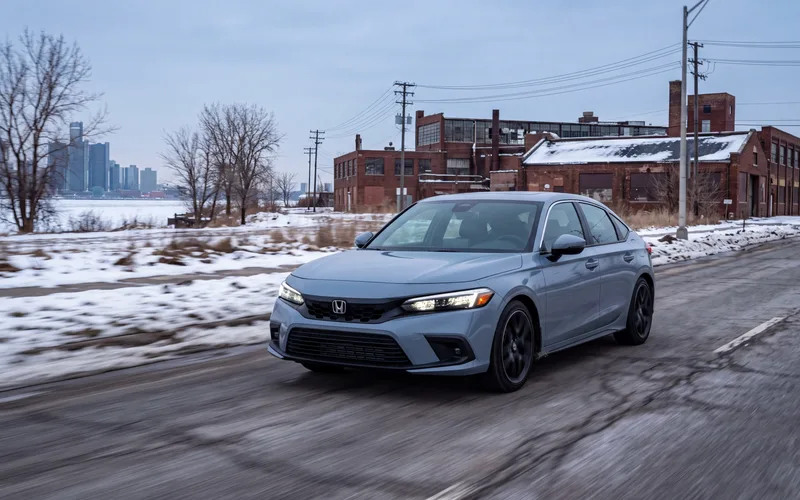 Honda Civic HatchbackCompact HatchbackBetter at: Space and hybrid
It solves the Corolla's biggest flaw outright, with 7.5 more inches of rear legroom and 24.5 cubic feet of cargo, plus a hybrid option the Toyota doesn't offer.
Compare 2.57C+
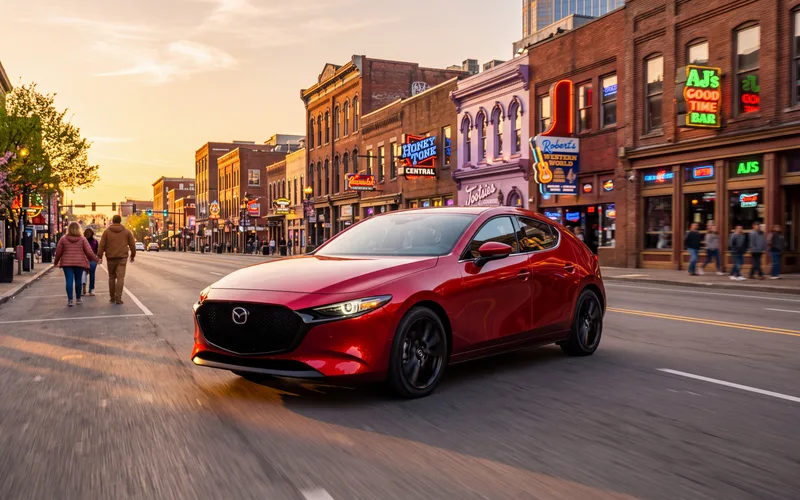 Mazda Mazda3 HatchbackCompact HatchbackBetter at: Interior quality
For similar money it delivers a far more upscale cabin, available AWD and a turbo, and 2026 IIHS Top Safety Pick+ ratings the Corolla misses.
Compare 2.56C+
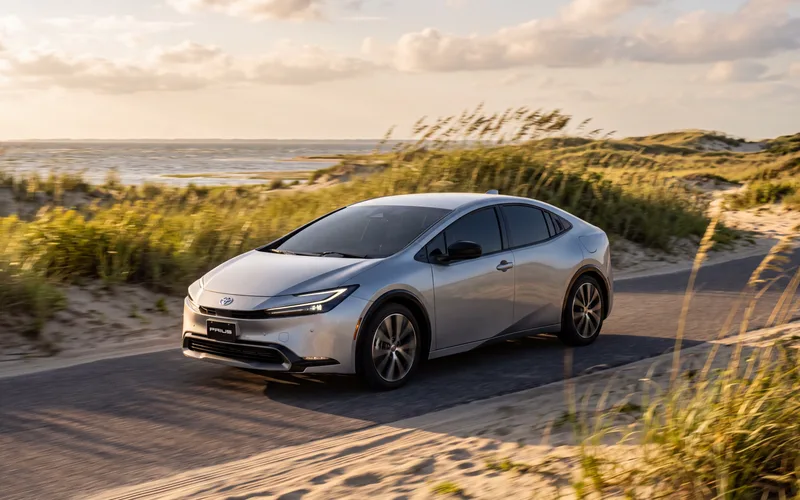 Toyota PriusCompact HatchbackBetter at: Fuel economy
The same Toyota reliability and hatchback shape but with 50-plus MPG hybrid economy and available all-wheel drive, worth the price step for high-mileage drivers.
CompareHow it's evolved
8 scored model years · 2019–2026
Subject scores by year
Hover or tap a score to see what moved it versus the year before. A corner mark flags a big swing.
| Year | Performance | Efficiency | Safety | Space | Cost | Reliability | Tech | Use-case | Driving | Value |
|---|---|---|---|---|---|---|---|---|---|---|
| 2026 | 24 | 66 | 76 | 54 | 74 | 85 | 59 | 55 | 66 | 67 |
| 2025 | 24 | 66 | 72 | 54 | 74 | 86 | 57 | 53 | 67 | 65 |
| 2024 | 24 | 66 | 73 | 54 | 75 | 85 | 57 | 52 | 67 | 67 |
| 2023 | 24 | 66 | 74 | 54 | 75 | 84 | 57 | 53 | 67 | 66 |
| 2022 | 25 | 65 | 70 | 54 | 76 | 85 | 40 | 52 | 67 | 64 |
| 2021 | 27 | 65 | 70 | 54 | 76 | 85 | 41 | 52 | 67 | 66 |
| 2020 | 26 | 65 | 67 | 53 | 77 | 82 | 43 | 50 | 69 | 67 |
| 2019 | 29 | 68 | 70 | 55 | 78 | 75 | 39 | 51 | 67 | 70 |
Compare two years
Best fit & conditions
Higher scores mean a better fit for that use case. Learn more about use-case fit →
Subject profile
Academic Probation · NHTSA safety recalls
Apr 8, 2020Exterior lighting: back up lightsA rear hatch wire harness connector may have been damaged during assembly, which may cause the back-up lights to fail.
Defect
Toyota Motor Engineering & Manufacturing (Toyota) is recalling certain 2020 Corolla Hatchback vehicles. A rear hatch wire harness connector may have been damaged during assembly, which may cause the back-up lights to fail.
Risk
If the back-up lights fail, there can be an increased risk of a crash while the vehicle is reversing.
Remedy
Toyota will notify owners, and dealers will replace the rear hatch wire harness, free of charge. The recall began June 30, 2020. Owners may contact Toyota customer service at 1-888-270-9371. Toyota's numbers for this recall are 20TB07 and 20TA07.
NHTSA campaign 20V205000 ↗Manufacturer no. See attached report960 vehicles potentially affected (all models in the campaign)Owners notified Jun 30, 2020Filed by Toyota Motor Engineering & ManufacturingFiled as COROLLA HATCHBACKMar 27, 2019Equipment: other: labelsThe text on the load capacity label may become illegible. As such, these vehicles fail to comply with the requirements of Federal Motor Vehicle Safety Standard (FMVSS) number 110, "Tire Selection and Rims."
Defect
Gulf States Toyota (GST) is recalling certain 2019 C-HR, 4Runner, Avalon, Avalon Hybrid, Camry, Camry Hybrid, Highlander, Land Cruiser, Prius, RAV4, Sequoia, Tacoma, Sienna, Tundra and Yaris vehicles. The text on the load capacity label may become illegible. As such, these vehicles fail to comply with the requirements of Federal Motor Vehicle Safety Standard (FMVSS) number 110, "Tire Selection and Rims."
Risk
If the driver cannot read the label, they may unknowingly overload the vehicle, increasing the risk of a crash.
Remedy
GST will notify owners, and dealers will provide corrected load carrying capacity modification labels, free of charge. The recall began May 24, 2019. Owners may contact GST customer service at 1-800-444-1074. GST's number for this recall is 19R1.
NHTSA campaign 19V244000 ↗Manufacturer no. 19R13,634 vehicles potentially affected (all models in the campaign)Owners notified May 24, 2019Filed by Gulf States Toyota, Inc.Filed as COROLLA HATCHBACK
1 recall on other model years of the Corolla Hatchback (2019)
Nov 4, 2020Fuel system, gasoline: delivery: fuel pumpThe low-pressure fuel pump inside the fuel tank may fail.
Defect
Toyota Motor Engineering & Manufacturing (Toyota) is recalling certain 2018-2019 4Runner, 2019-2020 Avalon, 2019 Corolla Hatchback, 2017-2019 Highlander, 2018-2020 Camry, 2020 Corolla, 2018-2019 Land Cruiser, 2017-2020 Tacoma, 2019-2020 RAV4, 2019-2020 Sequoia, 2017-2020 Sienna, 2019-2020 Tundra, 2018-2020 Lexus ES350, 2017 Lexus GS200t, 2017-2019 Lexus GS350, 2019 Lexus GS300, 2018-2020 Lexus LC500h, 2019-2020 Lexus LS500, 2018-2019 Lexus GX460, 2017 Lexus IS200t, 2019 Lexus IS300, 2019 Lexus IS350, 2018-2020 Lexus LC500, 2018 Lexus LS500, 2019 Lexus LS500h, 2018-2019 Lexus LX570, 2017 Lexus RC200t, 2019 Lexus RC300, RC350, 2017 and 2019-2020 Lexus RX350, 2018-2020 RX350L, 2019 Lexus UX200, 2018-2019 Lexus NX300 vehicles. The low-pressure fuel pump inside the fuel tank may fail.
Risk
If the fuel pump fails, the engine can stall while driving, increasing the risk of a crash.
Remedy
Toyota will notify owners, and dealers will replace the fuel pump assembly with an improved one, free of charge. Owners of specific models were notified that remedy parts were available starting January 21, 2021. Owners of other models will be notified as remedy parts become available. Remedy parts should be available for all affected vehicles by late March 2021. Owners may contact Toyota customer service at 1-888-270-9371 or Lexus customer service at 1-800-255-3987. Note: This recall is an expansion of recall 20V-012. Toyota's number for this recall is 20TA02. Lexus' number for this recall is 20LA01.
NHTSA campaign 20V682000 ↗Manufacturer no. 20TA02, 20LA011,525,742 vehicles potentially affected (all models in the campaign)Owners notified Jan 21, 2021Filed by Toyota Motor Engineering & ManufacturingFiled as COROLLA HATCHBACK
Source: NHTSA Office of Defects Investigation recall database, model years 2019–2026. Recalls are listed by model year as the manufacturer filed them; whether a specific car is affected depends on its VIN — check a VIN at nhtsa.gov ↗. NHTSA model names matched to this page: COROLLA HATCHBACK.
Detailed scoring by subject
1Performance & PowertrainThe Corolla Hatchback's lowest-graded category.0.00F
Every 2020 Corolla Hatchback (SE, Nightshade, XSE) uses the same 168-hp M20A-FKS 2.0L Dynamic Force four, carried over unchanged from the 2019 launch year of this E210 generation. Modest against the 130–520 hp compact-hatch band, though ahead of the 158-hp base Civic Hatchback.
151 lb-ft arrives only at 4,800 rpm, so the naturally aspirated engine has little low-end pull and must be revved, unlike turbocharged compact rivals that peak below 2,000 rpm.
Instrumented tests of this generation's 2.0L hatchback cluster around 8 seconds regardless of transmission — adequate for merging but slow for the compact-hatch band.
The 2.0L is quiet and smooth at cruise with predictable throttle response, but turns coarse and buzzy when worked hard and lacks passing punch. No hybrid or turbo alternative exists in the 2020 hatchback range — mid-band.
The Dynamic-Shift CVT's physical launch gear and 10 simulated steps sharpen step-off and blunt rubber-band feel, though it still drones at sustained high revs. Unlike 2023+, 2020 also offers a 6-speed iMT manual with automatic rev-matching, praised by reviewers — a better choice set than the later CVT-only years.
The 2020 Corolla Hatchback is front-wheel drive only on every grade; AWD was not offered on any Corolla in the US for 2020. Rivals like the Mazda3 Hatchback (AWD optional) and Impreza (AWD standard) outclass it here.
One engine and one drivetrain, with a choice of CVT or 6-speed iMT manual — slightly broader than the CVT-only 2023+ hatchback but still no hybrid, turbo, or electrified option in this body style.
2Efficiency & RangeMid-pack among this car's ten categories.2.38C+
The volume SE with the Dynamic-Shift CVT is rated 35 mpg combined in EPA's current record; the 18-inch-wheeled XSE drops to 33 and the 6-speed manual to 31. Toyota's launch press release quoted a 36 combined estimate, but the EPA database figure governs.
32 mpg city is solid for a non-hybrid compact; there is no hybrid hatchback to improve stop-and-go economy in this body style.
41 mpg highway is the powertrain's strongest figure, helped by the CVT's tall cruising ratios.
35 mpg combined on the 13.2-gallon tank yields about 462 miles — mid-pack for the segment given the small tank.
At EPA's 15,000 mi/yr assumption on regular gasoline the SE CVT costs about $1,900 a year — reasonable for a gas compact but well above hybrid rivals.
Regular 87-octane unleaded is all the naturally aspirated 2.0L requires on every grade and transmission — no premium, no charging needs.
3SafetyMid-pack among this car's ten categories.2.53C+
NHTSA rates the 2020 Corolla hatchback (second model year of the E210 hatchback, launched for 2019) as its own body style and gives it the maximum five stars overall, with five stars in every frontal and side test. The four-star calculated rollover rating is the normal ceiling for a front-drive compact.
The 2020 hatchback earned an IIHS Top Safety Pick, but the award applies only to cars with specific headlights — the XSE with the Preferred package — so the volume SE does not qualify, and there is no TSP+. The crash sheet is strong for its era: Good in both small overlap tests, moderate overlap, the original side test, roof strength (SWR 5.22) and head restraints. The later updated side test (run on a 2022 sedan, applied back to 2019) is only Acceptable with a Marginal driver pelvis, and the frontal ratings are assigned from Toyota-run tests. Mostly Good with a conditional award lands in the upper middle band.
Toyota Safety Sense 2.0 is standard on both 2020 hatchback trims: Pre-Collision with pedestrian detection, Dynamic Radar Cruise Control, Lane Departure Alert with Steering Assist, Road Sign Assist and Automatic High Beams — deep content for a 2020 compact. But Blind Spot Monitor with RCTA is standard only on the XSE and on the volume SE only via the CVT-only Preferred package, and six-speed manual cars lose Lane Tracing Assist and get standard-range rather than full-speed radar cruise.
The standard TSS 2.0 Pre-Collision System earns Superior in both IIHS vehicle-to-vehicle (avoided collisions at 12 and 25 mph) and daytime pedestrian evaluations, avoiding the crossing child and adult at both speeds. It sits just below the top band because the 37 mph parallel-adult test was only mitigated (impact speed cut by 26 mph, warning 1.8 s out) and no nighttime pedestrian result exists for this system — the TSS 3.0 car from 2023 later swept night testing.
Blind Spot Monitor with Rear Cross-Traffic Alert is alert-only (mirror lights and chime, no steering or braking intervention, no rear auto-brake or safe-exit alert) and is standard only on the XSE; the volume SE needs the Preferred package, which requires the CVT, so a manual SE cannot get it at all. No surround-view camera is offered. Optional on the volume trim and alert-only puts it just under the middle band.
Lane Departure Alert with Steering Assist is standard on every 2020 hatchback and CVT cars add Lane Tracing Assist centering — rare at this price in 2020. But LTA is deleted on manual cars, works only with radar cruise engaged and clear markings, and the TSS 2.0 calibration was reviewed as prone to wander and handing back on curves and faded lines, a step behind the TSS 3.0 tune of 2023.
Dynamic Radar Cruise Control is standard on every trim, and on CVT cars (the volume configuration) it is full-speed range with stop-and-go and pairs with Lane Tracing Assist for a credible highway package for a 2020 compact. Manual cars get only standard-speed-range DRCC without LTA, following gaps are conservative and resume is slow after cut-ins, and it predates TSS 3.0's Proactive Driving Assist.
No hands-free highway driving was offered on the 2020 Corolla Hatchback at any trim; Lane Tracing Assist is hands-on and warns/disengages if the driver releases the wheel. Toyota had no hands-free system on sale in the US until Advanced Drive on the 2022 Lexus LS / Mirai.
The volume SE (and the manual XSE) carry headlights IIHS rates Marginal: low beams were inadequate on the right side of the straightaway and on both left curves, with short reach. Only the XSE with the Preferred package gets curve-adaptive LED projectors rated Acceptable, and no variation is Good. Standard high-beam assist and no excessive glare keep it off the floor.
A low hoodline, slim A-pillars and generous side glass give good forward and side sightlines, and reviewers single out the hatchback's visibility as better than the sedan's. The steeply raked hatch leaves a small rear window and thick D-pillars, there is no surround-view camera at any price, and blind-spot monitoring is optional on the volume SE.
IIHS rates the LATCH hardware Good+, with two full LATCH positions plus a center seat with a tether that can borrow lower anchors. Held to the middle band by packaging: the hatchback's tight rear legroom forces the front passenger well forward with a rear-facing seat, and the top tethers sit in the seatback where they take some fishing to find.
4Space & ComfortGrades below the middle of the scale.1.53D
Five belts on every 2020 grade, the top of the 4–5 hatchback band. The practical limit is the rear legroom, not the seat count.
38.4 in sits in the upper-middle of the 36–40 in compact-hatch band, and with no moonroof on any 2020 US grade every buyer gets the full figure.
42.0 in is exactly mid-band: enough for tall drivers, but a few tenths behind the Civic Hatchback. The XSE improves the fit with an 8-way power driver's seat in place of the SE's 6-way manual seat.
Rear headroom is the hatchback body's packaging win. The roof holds its height back to the tailgate, so 37.6 in beats the Corolla sedan and the Civic Hatchback and sits upper-middle in the 35–39 in band.
At 29.9 in the second row falls below the floor of the 32–42 in hatchback band. It is the car's defining compromise and the largest drag on this category's score.
17.8 cu ft behind a wide hatch beats any compact sedan trunk, and the 60/40 rear seats fold. The bay is shallow, though, and trails the Civic Hatchback's ~24.5 cu ft.
Storage is basic. There is a covered console box, a front console tray and the glove box, but reviewers flag small door pockets and a small console bin. Device power is a 12V outlet and USB-A ports only — no USB-C, and no rear ports in 2020. The fold-flat 60/40 seats and the SE's Enhanced cargo space option are the only clever touches.
The front sport seats are wide and well bolstered, and the XSE adds heated leather-trimmed seats with an 8-way power driver's seat. The volume SE has a 6-way manual seat, and the cramped, hard-to-reach rear bench keeps the item mid-band.
Body control is good, but the ride is firm and busy, and it gets choppier on the 18-in wheels of the Nightshade and XSE. The volume SE's 205/55R16 tires soften it somewhat.
Noise is the most-cited comfort complaint. There is plenty of road noise at highway speeds, the 2.0-liter gets raspy when worked, and the open cargo bay transmits more tire noise than a sedan's trunk. No acoustic glass or active noise cancellation is offered.
Automatic climate control is standard, and the XSE adds dual-zone climate and heated front seats. The volume SE and the Nightshade get no heated seats, and no 2020 grade offers a heated steering wheel, ventilated seats or rear vents. Remote start (for pre-conditioning) needs Remote Connect, which is not on the base SE audio unit.
5Cost of OwnershipOne of the Corolla Hatchback's strongest categories.3.23B+
2020 is the second model year of the E210 Corolla Hatchback, and the range still opened with a six-speed manual SE. At about $21,200 delivered it sits below the bottom of the hatchback band, which makes it one of the cheapest new compact hatchbacks of its year.
The SE with the CVT is the volume configuration, since the manual was a small minority. About $500 of paint and accessories on top gives roughly $22,850; the new-for-2020 Nightshade (CVT-only SE) and the SE Preferred Package push a share of cars toward $23,500. Even the XSE CVT stays near the bottom of the hatchback band.
It uses the same M20A-FKS 2.0L and TNGA-C hardware as the Corolla sedan's SE/XSE, so service costs are low: plentiful parts, 10,000-mile intervals, and ToyotaCare covering scheduled work through year two. For a 2020 car the five-year window (2020–2025) is now observed, with no widespread failure pattern, so the figure sits between the 2019 and 2021 estimates.
The Corolla Hatchback holds its value near the top of compact cars, and a 2020 bought at a pre-shortage sticker reached its five-year mark in 2025 while used-car prices were still elevated. The figure discounts listing-basis numbers to the MSRP-retention basis used across this dataset.
Toyota's 36-month/36,000-mile basic warranty is the industry floor. It matches the Civic and Mazda3 but is two years short of Hyundai and Kia.
Five years/60,000 miles is Toyota's standard term and the bottom of the band, against 10 years at Hyundai and Kia. The hatchback is gas-only, so Toyota's longer hybrid-component coverage does not apply.
ToyotaCare covers factory-scheduled service for 2 years/25,000 miles plus 2 years of unlimited-mileage roadside assistance. That is real included maintenance where Honda and Mazda give none. It falls short of Hyundai/Kia's 3-year plans, and the connected-service trials (Safety Connect, Remote Connect on Preferred-package cars) are short and convert to subscriptions.
$22,850 volume-trim price minus its estimated resale value after 5 years (63% retained, or about $14,396) leaves about $8,455 in depreciation. Add the projected $3,850 in 5-year maintenance and repairs, and owning this vehicle for 5 years costs about $12,305 in total.
6Reliability & QualityThe Corolla Hatchback's best-graded category.3.60A-
For 2020 there is real owner data, and it is strong. J.D. Power's 2023 dependability study surveyed owners of 2020 model-year cars at three years and placed the Corolla second among compact cars, just behind the Kia Forte. 2020 is the second year of the E210 hatchback, and the early-production CVT torque-converter fault that hurt the 2019 car was fixed before this model year. It scores below the 2021 car because the 2020 study placed it second rather than first. Its own launch hardware also went into the 2020 model year: Toyota Safety Sense 2.0 and the newly standard Apple CarPlay/Android Auto.
Toyota sits at the top of Consumer Reports' brand reliability rankings year after year, alongside Lexus. It is better than the industry average in J.D. Power's dependability study for this model year, though some low-volume and luxury brands outrank it on raw PP100. That puts it at the top of mass-market brands without being a clean top-five on every list.
A light record. The one safety recall naming the 2020 Corolla Hatchback is a small campaign of 960 cars: a rear-hatch wire-harness connector damaged during assembly could disable the back-up lights. That is a real fault, but contained and cheap to fix. The serious campaigns on this generation stop short of 2020: the Denso fuel-pump stall recall names the 2019 hatchback (and the 2020 sedan, not this hatchback), and the CVT replacement recall covered only early 2019 cars. The score is held to 80 because the engine-mount rattle bulletin does cover the 2020 model year.
The drivetrain is unchanged from 2019, but by 2020 production its launch defect had been fixed. The M20A-FKS 2.0L has no systemic failure mode. The Direct Shift-CVT's physical launch gear takes the highest-load moment off the belt, and post-remedy owners report no recurring CVT failures. It sits slightly below the 2021 car because in 2020 this engine and transmission had only one year of field history. EGR valve and cooler wear are the known high-mileage items, and the 6-speed iMT manual draws scattered clutch complaints.
The design is attractive and modern and the main touch points feel fine, but there is plenty of hard plastic below the beltline and on the doors. The Mazda3 Hatchback is clearly richer at the same price. Competitive for the money, not class-leading. XSE SofTex seating lifts the upper trim.
Generally solid assembly, but this model year has one confirmed assembly-quality defect: the hatch harness connector damaged on the line (960 cars). The engine-mount rattle bulletin also applies. That puts it between the launch-year 2019, whose body integrity and paint/trim were flagged, and the more settled 2021. Owners broadly praise the build, and there is no pattern of panel-gap complaints.
Toyota has one of the densest dealer networks in the US, and the Corolla is the most familiar car in any Toyota service bay. New 2020 cars came with two years of ToyotaCare scheduled maintenance. Toyota's service satisfaction is good but not category-leading in J.D. Power's mass-market Customer Service Index.
Among the cheapest cars in the class to keep running. The M20A engine, CVT and TNGA-C hardware are shared with the 2020+ Corolla sedan SE/XSE and other Toyotas, so mechanical parts are plentiful and independent shops know the car well. It sits just short of the sedan because hatchback-specific body panels, hatch glass and trim are lower-volume parts.
7Technology & InfotainmentOne of the Corolla Hatchback's weakest categories.0.83F
Every 2020 head unit — Audio, Audio Plus and the JBL Premium Audio with Dynamic Navigation — uses the same 8-in touchscreen. No larger display is available, which puts the car near the bottom of the hatchback band.
Entune 3.0 has a logical layout and keeps physical volume/tune knobs and hard keys around the screen. But the graphics look dated, the system is slow to respond, and native apps are weak, so most owners default to phone projection.
Apple CarPlay and, new for 2020, Android Auto are standard on every grade, but only wired through the USB media port. Wireless projection did not arrive until the 2023 multimedia update.
Every grade gets basic voice recognition and Amazon Alexa compatibility through the phone app. Native navigation is limited to the XSE Preferred Package's cloud-based Dynamic Navigation (3-year trial), so the volume SE has no built-in maps.
The SE and Nightshade have a plain six-speaker system with no upgrade. The eight-speaker JBL system with subwoofer and amplifier is a paid option on the XSE (CVT) only — it did not become XSE-standard until 2023.
The volume SE and Nightshade use analog gauges with a 4.2-in Multi-Information Display between them. Only the XSE gets the 7-in TFT MID with customizable settings, set beside an analog gauge; no grade has a full digital panel.
The Entune 3.0-era head unit has no meaningful over-the-air software updates. Only the optional cloud-based Dynamic Navigation keeps its maps current, and the only vehicle software updates are dealer-applied. Infotainment OTA arrived with Toyota Audio Multimedia in 2023.
With Audio Plus (XSE, or the SE Preferred Package), the Toyota app offers remote lock/unlock, remote start/stop and vehicle locate on a 1-year trial, then a subscription. The base SE audio unit has no Remote Connect at all, remote start isn't available with the manual, and there is no digital key.
There is one USB media port and two USB 2.0 (USB-A) charge ports, all up front, plus a single 12V outlet. There is no USB-C, no rear-seat port and no AC outlet, and Qi wireless charging is an XSE Preferred option only.
The Smart Key system with push-button start is standard on all three 2020 grades, which is generous at this price. App remote start needs Remote Connect (not on the base SE unit, and not with the manual), and there is no phone-as-key or hands-free hatch.
Every grade parks on a basic backup camera alone. Blind Spot Monitor (no rear cross-traffic alert is listed) is optional on the SE CVT and standard on the XSE, and there are no parking sensors, no surround-view camera and no parking automation.
No head-up display is offered on any 2020 Corolla Hatchback grade or package, a gap against the Mazda3 Hatchback, which offers one.
8Use-Case FitOne of the Corolla Hatchback's weakest categories.1.35D
The LATCH hardware is excellent (IIHS Good+), and the 17.8 cu ft hatch takes a stroller that a compact sedan trunk struggles with. But the 29.9-in second row is the tightest in the class, the small rear doors and sloping roof make loading kids awkward, and a rear-facing infant seat pushes the front passenger well forward.
Toyota Safety Sense 2.0 is standard on every grade, including pedestrian-detecting AEB that IIHS rates Superior. NHTSA gives the car 5 stars overall, and IIHS made it a Top Safety Pick, but only with specific headlights. The volume SE's headlights rate Marginal, blind-spot monitoring is a CVT-only SE option (not offered on the Nightshade), and the manual loses full-speed cruise and Lane Tracing Assist.
This is the mission the car is worst at. The 29.9-in rear seat leaves adults nowhere to settle, the back has no vents, climate controls, USB ports or entertainment, and highway road noise is the most-cited complaint. The 17.8 cu ft hatch beats a compact sedan trunk, but it trails the Civic Hatchback (24.5) and Mazda3 Hatchback (20.1).
It commutes well. The volume SE CVT has a physical launch gear for crisp step-off, an Electric Parking Brake with Brake Hold, and full-speed-range radar cruise with Lane Tracing Assist standard. Fatigue comes from a stiff, busy ride, constant road noise, a raspy engine on merges, and poor sightlines past thick pillars.
It's cheap to run on regular fuel: the volume SE CVT returns 35 mpg combined, with low Corolla repair costs, ToyotaCare maintenance and strong resale. No hybrid is offered on the hatchback, so city commuters pay noticeably more than in a Corolla Hybrid sedan.
At 172 in long, the hatchback is about ten inches shorter than the Corolla sedan, and the SE's 16-in wheels give a tidy ~35.6-ft circle. Parking aids are thin, though: a backup camera only, blind-spot monitoring optional on the SE, no sensors or surround view, and chunky roof pillars that limit the rear view.
Toyota publishes no US tow rating and offers no factory hitch. There is no bed, and 168 hp with torque peaking at 4,800 rpm leaves nothing in reserve under load. The 17.8 cu ft hatch is handy for a courier's parts and tools, but this is an economy car.
The mechanicals have a strong Corolla reputation: a simple naturally aspirated 2.0-liter, a CVT whose launch gear spares the belt, cheap and plentiful parts, and low repair severity. But nothing around them is built for abuse — 5.1 in of ground clearance, cloth and leather-trimmed interiors with no washable surfaces, and no work package.
There is no AC outlet, no USB-C, no hitch and no washable surfaces. Toyota-catalogued removable cross bars, cargo trays and nets, plus the 60/40 fold-flat rear seat, provide only the most basic hauling provisions.
For one or two people it's a competent interstate car: 41 mpg highway on a 13.2-gal tank, supportive front buckets, and full-speed radar cruise with Lane Tracing Assist standard on the CVT. Persistent road noise, a stiff ride, and a raspy engine on grades wear on a long trip, the volume SE has no heated seats, and rear passengers tap out early.
It's front-wheel drive only on every grade, with just 5.1 in of ground clearance and no tow rating, so it's pavement-and-gravel-road bound. Toyota's removable cross bars and the fold-flat seats make it a fine bike or ski carrier, but nothing more.
The hatch delivers a solid but not exceptional version of the body style's promise: 17.8 cu ft behind a wide hatch, 60/40 fold-down seats, an Enhanced cargo space option on the SE, and factory cross bars. The bay is shallow and the angled tailgate costs space, and there's no hitch. The Civic Hatchback and Mazda3 Hatchback both carry more.
9Driving ExperienceOne of the Corolla Hatchback's strongest categories.2.67C+
On the TNGA-C platform, the short 103.9-in wheelbase and multi-link rear give tied-down, predictable cornering, helped by standard Active Cornering Assist. Reviewers rate it above expectations for a Corolla. The trade-off is a stiff, nervous ride and mid-pack grip, roughly level with the Civic and Mazda3 hatchbacks.
The speed-sensing electric steering is precise and consistently weighted, with no torque steer. Feedback is filtered, which keeps it below the hot-hatch tier.
Four-wheel discs (11.5-in ventilated front, 10.5-in solid rear) with an electronically controlled brake system deliver mid-pack stops of roughly 170–175 ft from 70 mph in tests of this generation, with a firm pedal and no reported fade in normal use. Competent rather than standout.
The Dynamic-Shift CVT is one of the better ones: a real launch gear gives crisp, linear step-off and simulated ratios keep revs low around town. Hard acceleration brings some rubber-band slur, and there's an occasional jolt leaving first gear. A rev-matching 6-speed manual is optional on the SE and XSE.
The engine is quiet at a steady cruise but turns loud and raspy whenever it's worked, as the CVT holds high revs for merges and grades. Vibration is well isolated; the noise is the problem.
On the volume SE's 16-in wheels the published curb-to-curb diameter is about 35.6 ft, in the better half of the 34–40 ft band. The XSE's wider 225/40R18 tires widen it to 37.4 ft.
A tilt/telescoping wheel, generous headroom, well-placed armrests and physical climate controls make the cockpit easy to live with. It's held back by a low hip point, the SE's 6-way manual seat, raked A-pillars and thick C-pillars that hurt sightlines, and small rear doors.
It has more personality than a Corolla sedan: a willing chassis, Sport mode and paddles, and, unlike 2023 and later, an available rev-matching 6-speed manual. Enthusiasts value that manual. Roughly 8-second acceleration and a raspy engine keep it well short of the hot-hatch tier.
10Value & Market PositionMid-pack among this car's ten categories.2.51C+
Every 2020 trim has Toyota Safety Sense 2.0, LED headlights and an 8-inch touchscreen, and Android Auto joined Apple CarPlay and Alexa as standard for 2020. The range starts at the sporty SE rather than a stripped base car. It stays out of the top band because blind-spot monitoring, heated seats, dual-zone climate and the power driver's seat are XSE-only.
For about $22,350 delivered the SE CVT includes Toyota reliability, a full standard ADAS suite, full smartphone integration, two years of free maintenance and strong resale; the manual SE is cheaper still. The trade-offs are a tight back seat, a small cargo hold and modest power next to the Civic and Mazda3, so it is good value rather than a standout bargain.
There are three trims (SE, the new SE Nightshade, XSE) and a six-speed manual is offered on both SE and XSE, a real stick-or-CVT choice the later CVT-only cars lose. Still, the price ladder is only about $4,000 wide, and there is one engine, FWD only and no hybrid.
The Corolla nameplate sold about 237,000 units in the US in 2020 despite the pandemic, among the top compact cars. That volume supports dealer coverage and resale, but Toyota doesn't break out hatchback sales, which are a minority of the total in a shrinking body style.
Toyota has the strongest mainstream reputation for durability and resale, and that carries straight into Corolla owner satisfaction. The appeal is trust and practicality rather than aspiration, and the GR Corolla halo had not arrived yet in 2020.
The 2020 model year sold before the chip shortage: Toyota ran Corolla APR and lease offers through 2020, including spring 2020 pandemic-era 0% financing with deferred payments. Discounts were modest rather than deep, plus Toyota's standing $500 college-grad and military rebates.
2020 is the second model year of the E210 hatchback launched for 2019, a carry-over year with Android Auto, the Nightshade edition and a black-roof option added. The TNGA-C platform was current, with the 2023 refresh (TSS 3.0, new multimedia) still three years out.
Reviewers praise the hatchback's handling, styling, standard safety tech and value, and it earned an IIHS Top Safety Pick. It rarely wins comparison tests, though: the Mazda3 and Civic hatchbacks are usually picked for their roomier, nicer cabins, and critics fault the slow engine, tight back seat and small cargo area.