
The verdict
A mixed-report compact hatchback, strong on reliability and held back by performance.
Overall 2.21 (C) across 10 graded subjects. Its strongest is reliability & quality at 3.71 (A), its weakest performance & powertrain at 0.00 (F). 7 of 10 subjects grade at C− or better.
Jump to scoresStrengths
- Reliability & Quality
- Cost of Ownership
- Safety
What holds it back
- Performance & Powertrain
- Use-Case Fit
- Space & Comfort
Top alternatives
Cars shoppers cross-shop with the Toyota Corolla Hatchback 2.46C+
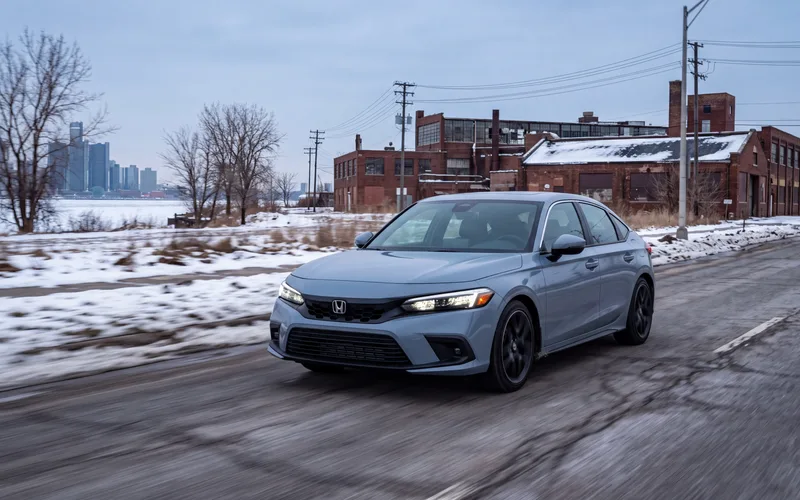 Honda Civic HatchbackCompact HatchbackBetter at: Space and hybrid
It solves the Corolla's biggest flaw outright, with 7.5 more inches of rear legroom and 24.5 cubic feet of cargo, plus a hybrid option the Toyota doesn't offer.
Compare 2.57C+
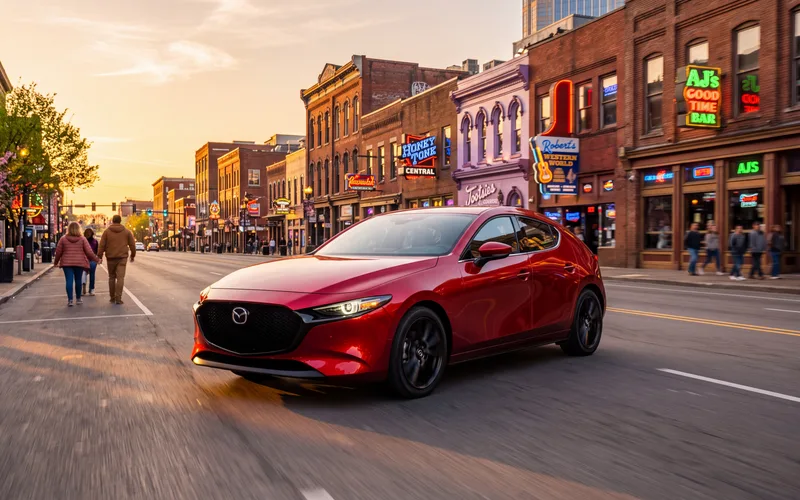 Mazda Mazda3 HatchbackCompact HatchbackBetter at: Interior quality
For similar money it delivers a far more upscale cabin, available AWD and a turbo, and 2026 IIHS Top Safety Pick+ ratings the Corolla misses.
Compare 2.56C+
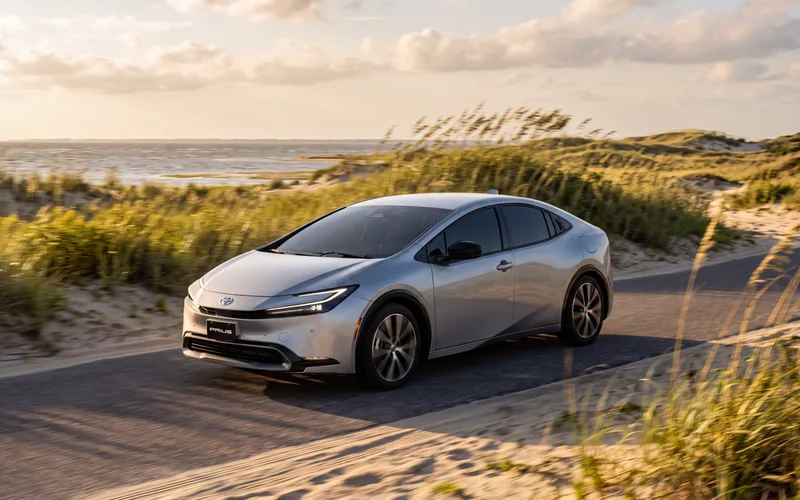 Toyota PriusCompact HatchbackBetter at: Fuel economy
The same Toyota reliability and hatchback shape but with 50-plus MPG hybrid economy and available all-wheel drive, worth the price step for high-mileage drivers.
CompareHow it's evolved
4 scored model years · 2023–2026
Subject scores by year
Hover or tap a score to see what moved it versus the year before. A corner mark flags a big swing.
| Year | Performance | Efficiency | Safety | Space | Cost | Reliability | Tech | Use-case | Driving | Value |
|---|---|---|---|---|---|---|---|---|---|---|
| 2026 | 24 | 66 | 76 | 54 | 74 | 85 | 59 | 55 | 66 | 67 |
| 2025 | 24 | 66 | 72 | 54 | 74 | 86 | 57 | 53 | 67 | 65 |
| 2024 | 24 | 66 | 73 | 54 | 75 | 85 | 57 | 52 | 67 | 67 |
| 2023 | 24 | 66 | 74 | 54 | 75 | 84 | 57 | 53 | 67 | 66 |
Compare two years
Best fit & conditions
Higher scores mean a better fit for that use case. Learn more about use-case fit →
Subject profile
Detailed scoring by subject
1Performance & PowertrainThe Corolla Hatchback's lowest-graded category.0.00F
Corrected from the prior 168 hp figure: Toyota's own 2023 Corolla Hatchback newsroom release and the KBB/TrueCar/conceptcarz spec sheets all rate the M20A-FKS 2.0L Dynamic Force four at 169 hp for 2023, shared unchanged by SE and XSE (168 hp was the pre-2023 CVT tune). Still modest against the 130–520 hp compact-hatch band, though it out-muscles the base Civic Hatchback (158 hp) and the Impreza (152 hp). The GR Corolla is a separate nameplate and does not lift this lineup.
Peak torque of 151 lb-ft does not arrive until 4,800 rpm, so there is very little low-end pull and the engine has to be wound out to feel responsive — the naturally aspirated compromise against turbocharged compact rivals that reach peak torque below 2,000 rpm. Unchanged from 2022.
Confidence raised from MEDIUM: Car and Driver's instrumented figure for the 2.0L/CVT hatchback is 8.3 s, corroborated by an independent on-ramp run of an XSE at 8.5 s with rollout. Adequate for merging but slow for the compact-hatch band, and the deletion of the 6-speed manual for 2023 removed the quicker configuration from the range.
Throttle response is predictable and the engine is genuinely quiet and near-vibration-free at light loads and cruising speeds, but the 2.0L turns thrashy and coarse the moment it is worked, and reviewers consistently flag slow throttle response and a lack of passing power. With no hybrid or turbo offered on the 2023 hatchback there is no smoother alternative in the lineup — squarely mid-band, and behind the Civic Hatchback range.
Toyota's Direct Shift-CVT (K120) pairs a physical launch gear with simulated stepped ratios, which sharpens step-off and blunts the worst rubber-band feel — genuinely better than an average CVT and unobtrusive in routine driving — though a faint stutter is reported at the handoff from the physical first gear to the belt, some whine appears under acceleration, and it still flares to sustained high revs under load. 2023 is the year the 6-speed iMT manual that made this body style interesting was dropped for low demand, leaving the CVT as the only choice; Sport mode and paddle shifters are the consolation.
The 2023 Corolla Hatchback is front-drive only on both SE and XSE — AWD is not offered at any price on this body style. The Corolla sedan at least offers Electronic On-Demand AWD on hybrid trims for 2023, the Mazda3 Hatchback offers AWD as an option and the Impreza makes Symmetrical AWD standard, so the hatchback buyer has no option at all: bottom of the 0–49 'FWD only' band.
One engine, one transmission, one drivetrain across just SE and XSE — and 2023 is the year the lineup got narrower, not wider, with the 6-speed manual deleted and the Nightshade appearance package dropped (it returned for 2024). The 2023 refresh spent its effort on styling, Toyota Safety Sense 3.0 and the new 8-inch Toyota Audio Multimedia system, not on powertrain choice: no hybrid, PHEV, EV or turbo anywhere in the 2023 hatchback range. Narrower than the Corolla sedan (gas plus hybrid, FWD or AWD), the Civic Hatchback (two engines plus a manual) and even the Impreza (two engine displacements).
2Efficiency & RangeMid-pack among this car's ten categories.2.47C+
The volume SE grade is EPA-rated 35 mpg combined for 2023, the first year the 169-hp 2.0L Dynamic Force four paired with the K120 Direct Shift-CVT was the hatchback's only powertrain after the six-speed manual was dropped; the 18-inch-wheeled XSE falls to 33. Respectable for a gas-only compact but well short of the hybrid hatchbacks that set the segment pace.
32 mpg city is solid for a non-hybrid compact, but stop-and-go driving is exactly where the hatchback's total lack of electrification costs it — the 2023 Corolla sedan's hybrid rates 53 mpg city on the same GA-C platform and simply cannot be ordered in this body style.
41 mpg highway is this powertrain's best EPA figure, and the Direct Shift-CVT's tall cruising ratios make it realistic in practice; the XSE's wider 18-inch tires cost 3 mpg.
EPA puts total range at 462 miles on the SE's 13.2-gallon tank — enough for a full day of interstate driving between stops. Mid-pack for the segment, because rivals pair similar tanks with hybrid efficiency rather than beating the Corolla on capacity.
At EPA's standard 15,000 mi/yr on regular gasoline the SE costs about $1,750 a year to fuel — cheap in absolute terms, but still several hundred dollars a year more than a Corolla Hybrid this body style cannot be ordered as.
Regular 87-octane unleaded is all the naturally aspirated 2.0L asks for on both SE and XSE — no premium requirement, no charging equipment to install, and fuel available everywhere at the cheapest pump price. Squarely in the 80–100 band.
3SafetyOne of the Corolla Hatchback's strongest categories.3.03B
NHTSA rates the 2023 Corolla Hatchback as its own body style rather than carrying the sedan's result across, and it takes the maximum five stars overall with five stars in every crash test NHTSA physically runs. Only the calculated rollover measure comes in at four stars, which is the normal ceiling for a front-drive compact and does not pull the overall figure down.
2023 is the strongest crashworthiness year of this generation on paper: the car holds a genuine 2023 Top Safety Pick and its ratings sheet is the most complete of any model year, adding roof strength Good and head restraints & seats Good — two results that vanish from the 2024 and later pages — on top of Good in both small overlap front tests and the original moderate overlap test. The single blemish keeping it out of the top band is the updated side test, which returns only Acceptable with a Marginal driver pelvis reading at 6.0 kN, and that result is borrowed from a sedan. The frontal data is also aging and second-hand: all three frontal ratings are assigned from tests Toyota itself ran on a 2019 car, and IIHS publishes no updated moderate overlap front result for this body style, so the newer rear-passenger protocol that later caught out the Corolla sedan is simply unmeasured here.
2023 is the year Toyota Safety Sense 3.0 arrived on the Corolla Hatchback, and it is standard on both trims — the base SE gets full-speed-range adaptive cruise with stop-and-go, active lane centering and the new Proactive Driving Assist, not just a departure warning, which several rivals still charge for at this price. The gap is blind-spot coverage: BSM with Rear Cross-Traffic Alert is standard only on the XSE, and the volume SE needs the SE Preferred Package to get it. That is exactly the 'key items optional on lower trims' case the middle band describes, though the package is cheap enough ($530, bundled with the moonroof) that it is a softer barrier than the 2024 car's arrangement.
Pedestrian AEB is the strongest single element of this car's safety record. The standard TSS 3.0 Pre-Collision System earns Superior — the top grade — in both the daytime and the nighttime pedestrian evaluations, and it earns them outright: the car avoided a collision in every scenario, including both night runs on low beams alone and the hardest test, the 37 mph parallel adult at night. It sits at the bottom of the top band rather than the ceiling for two reasons: 2023 is rated under IIHS's original Superior/Advanced/Basic pedestrian protocol, a less demanding bar than the updated Good-scale evaluation the identical hardware later passed, and IIHS publishes no vehicle-to-vehicle front crash prevention rating for the hatchback at all, so the car-to-car half of the picture is unverified.
This is the clear weak point of an otherwise complete 2023 suite. Blind Spot Monitor with Rear Cross-Traffic Alert is standard only on the XSE — the volume SE has to buy the SE Preferred Package to get it, so plenty of 2023 hatchbacks on the road have no blind-spot coverage at all. Even when fitted it is alert-only: mirror lights and a chime, with no steering or braking intervention, no rear automatic braking and no safe-exit assist, and no surround-view camera is offered at any price. Available on most trims but alert-only puts this squarely at the bottom of the middle band.
Lane Departure Alert with Steering Assist and Lane Tracing Assist are standard on both 2023 trims through the newly fitted TSS 3.0, and Toyota's 3.0 calibration is among the better ones in the compact class — LTA makes small, steady inputs that hold the car centered through gentle highway bends rather than ping-ponging between the lines. It caps below the top band because centering is hands-on only and tied to adaptive cruise being engaged, with no standalone mode, and it hands back on faded paint and tight bends.
Full-Speed Range Dynamic Radar Cruise Control is standard on the base SE and handles genuine stop-and-go, pairing with Lane Tracing Assist for a competent highway assist at a price where rivals still ship non-stop-and-go systems. Dropping the manual gearbox for 2023 made the hatchback CVT-only, which incidentally means every car gets the full-speed-range version with no reduced-capability variant to avoid. It loses points on calibration rather than capability — the braking and throttle lift stay conservative even on the shortest following distance, which makes it awkward in dense traffic and prompts drivers to intervene.
No hands-free highway driving is offered on the 2023 Corolla Hatchback at any trim or price. Toyota's hands-capable Teammate Advanced Drive has only ever been fielded on the Mirai and Lexus LS, so there is nothing here comparable to Ford BlueCruise or GM Super Cruise.
IIHS rates the headlights Good, and unlike the Corolla sedan there is no weaker variant to avoid — the same LED projector setup with high-beam assist is fitted to both the SE and the XSE, so every 2023 hatchback gets the rated hardware. 2023 is in fact the first year of this rating, which IIHS applies to 2023-26 models. It lands at the bottom of the top band because curve-adaptive lighting is unavailable, sharp-curve visibility measured only fair, and the low beams produced some glare.
The hatchback body is this car's clearest safety advantage over the Corolla sedan — a low hoodline and generous side glass give good sightlines in every direction, and reviewers and owners single visibility out as a strength. It falls short of the top band because no trim offers a surround-view camera and the rear-quarter blind zone is only covered if the buyer steps up to the XSE or pays for the SE Preferred Package.
The lower-anchor hardware earns IIHS's top LATCH rating — Good+ — with two full sets that are visible, shallow and need no force at all to attach, plus a third position that can borrow anchors. What holds the score to the middle band is everything around them: the top tethers sit in the seatback with confusable hardware nearby so you have to fish for them, and compact-hatchback rear legroom means a rear-facing seat pushes the front passenger uncomfortably far forward.
4Space & ComfortOne of the Corolla Hatchback's weakest categories.1.65D
The 2023 Corolla Hatchback seats five on both of its trims, the top of the 4–5 hatchback band. The belt count is not the interesting number here — how usable the outboard rear seats actually are is, and that shows up in rear legroom.
38.4 in sits in the upper-middle of the 36–40 in compact-hatch band and is a tenth better than the 2023 Corolla sedan. Toyota offers no moonroof on the 2023 US hatchback in either grade, so every buyer gets the full published figure rather than losing an inch to a glass panel.
42.0 in is exactly mid-band — enough for tall drivers, but a few tenths behind the Honda Civic Hatchback. The XSE improves the fit rather than the number, swapping the SE's manually adjusted driver's seat for an 8-way power one.
Second-row headroom is the hatchback body's clearest packaging win — 37.6 in beats both the Corolla sedan and the Civic Hatchback (each 37.1 in) because the roof holds its height back to the tailgate instead of tapering into a fastback. Upper-middle of the 35–39 in band.
At 29.9 in the second row falls below the floor of the 32–42 in hatchback band and is this car's defining compromise: roughly 5 in less than the 2023 Corolla sedan (34.8 in) and 7.5 in less than the Civic Hatchback (37.4 in). It is the price of the short rear overhang and steeply raked rear seatback, and it is the single largest drag on this category's score.
17.8 cu ft scores well against the 10–20 cu ft hatchback band and is the payoff for the cramped rear seat — roughly 4.7 cu ft more than the Corolla sedan's trunk, behind a wide tailgate with standard 60/40 folding seats. It still trails the Civic Hatchback's 24.5 cu ft, the bay is shallow, and Toyota publishes no SAE seats-folded maximum for the hatchback.
Small-item storage is the weak half of an otherwise practical body: reviewers consistently call out small door pockets and a small center console bin, and there is nothing clever — no underseat trays, no reconfigurable console, no onboard power beyond a single 12V outlet. What keeps it mid-band is device charging (four USB-C ports standard on both trims for 2023, two of them in the rear) plus the fold-flat 60/40 rear seats over a flat load floor, and the no-cost Enhanced Cargo Area option that lowers the load floor.
The front seats are a genuine highlight — well-bolstered sport buckets with enough adjustment range for most drivers, and the XSE adds an 8-way power driver's seat plus heated front seats. The rear bench is what holds the item to the middle band: the cushions are acceptable and the seatback angle is agreeable, but 29.9 in of legroom means adults cannot settle in for a long stint. Below the Corolla sedan, which shares the front seats but has a usable second row.
The TNGA-C platform gives the hatchback a supple, composed ride for a small car that looks this sporty, and the volume SE's 16-in wheels on 205/55 sidewalls ride better than the spec sheet suggests. It is tuned firmer than the Corolla sedan, and the XSE's 18-in wheels on 225/40 tires turn choppy over broken pavement — composed most of the time without reaching segment-leading plushness.
Noise is this car's most-cited comfort flaw. Road noise is ever-present and loud enough on the highway that reviewers reach for the stereo volume, the 225/40R18 tires on the XSE roar on coarse surfaces, the 2.0-liter turns coarse under hard acceleration with the CVT, and the open cargo bay behind the second row transmits more tire noise than the sedan's sealed trunk. Some outlets and owners find it acceptable, which is why it sits at the top of the low band rather than deeper in it.
Comfort equipment is thin across a two-trim lineup. Automatic climate control is at least standard on both grades, and the XSE pairs dual-zone automatic climate with heated front seats and an 8-way power driver's seat — a decent top end for the money. But the volume SE gets no heated seats at all, there are no rear-seat air vents on either trim, and no 2023 US grade offers a heated steering wheel, ventilated seats, rear climate controls or remote pre-conditioning.
5Cost of OwnershipOne of the Corolla Hatchback's strongest categories.3.11B
The SE is the entry trim for 2023 and at $24,250 delivered it sits near the bottom of the hatchback band — one of the cheapest new hatchbacks sold in the US that year. It undercuts the 2024 SE by $350 of MSRP and the 2025 car by $625, so the 2023 is the least expensive of the three most recent model years.
For 2023 the lineup narrowed to just SE and XSE — the Nightshade Edition sat out the refresh year — so the base SE carries the volume outright, and roughly $500 over sticker covers premium paint and the accessory packages most cars leave the lot with. Even the loaded XSE at $27,675 delivered stays in the cheapest quarter of the hatchback band.
The hatchback shares the 2.0-liter M20A-FKS and TNGA-C hardware with the Corolla sedan's SE/XSE trims and inherits the same class-leading service economics — high-volume parts, 10,000-mile/12-month intervals, and ToyotaCare absorbing scheduled work through year two. It sits a touch below the 2024 and 2025 cars because a 2023 five-year window is now largely observed rather than projected against rising parts and labor rates. Published estimates disagree by nearly a factor of four, so this is a consensus midpoint.
Resale is the hatchback's strongest ownership argument — iSeeCars ranks it third among all compact cars for value retention — and it holds slightly better than the Corolla sedan thanks to thin supply and enthusiast demand for the body style. The 62% figure discounts iSeeCars' optimistic listing-price methodology toward conventional MSRP-basis residual practice; the gap to the 2024 car is inside the noise of the estimate.
Toyota's 36-month/36,000-mile basic coverage is the industry floor and was unchanged for 2023, matching the Civic Hatchback and Mazda3 but two full years short of Hyundai and Kia.
Five years/60,000 miles is Toyota's standard powertrain term and the bottom of the segment band against Hyundai/Kia's 10-year coverage. Unlike the Corolla sedan, which offers a hybrid, the 2023 hatchback is gas-only, so buyers get none of the 8-year/100,000-mile hybrid-component or 10-year/150,000-mile traction-battery protection that partially offsets the short term on electrified Corollas.
ToyotaCare covers all factory-scheduled service for 2 years/25,000 miles plus 2 years of unlimited-mileage roadside assistance — real included maintenance where Honda and Mazda offer none on the Civic Hatchback and Mazda3. It falls short of top marks because the maintenance window is shorter than Hyundai/Kia's 3-year/36,000-mile plan, the connected-services trials that arrived with the 2023 car's new Toyota Audio Multimedia system are short and convert to paid subscriptions, and there are no fuel or charging credits.
$24,750 volume-trim price minus its estimated resale value after 5 years (62% retained, or about $15,345) leaves about $9,405 in depreciation. Add the projected $3,900 in 5-year maintenance and repairs, and owning this vehicle for 5 years costs about $13,305 in total.
6Reliability & QualityThe Corolla Hatchback's best-graded category.3.71A
By now this is not a prediction — the 2023 model year has three full years of owner data behind it, and the verdict is top-tier. J.D. Power's 2026 Vehicle Dependability Study surveyed original owners of 2023 model-year vehicles at the three-year mark and handed the Corolla a model-level segment award, and Consumer Reports expects the Corolla Hatchback to be much more reliable than other cars of its year. Held just under the very top of the band for two reasons specific to this car and year: CR derives its Corolla Hatchback prediction from the sedan because hatchback-specific survey volume is too thin to stand alone, and 2023 is the first model year of the new Toyota Audio Multimedia head unit and Toyota Safety Sense 3.0 — new content that shows up in CR's own owner reports as infotainment trouble.
Toyota is the benchmark the rest of the industry gets measured against, and the current data still says so: it is Consumer Reports' single most reliable brand, and it sits comfortably ahead of the industry average in J.D. Power's dependability study while Toyota Motor Corporation collects more model-level awards than any other automaker. What keeps this at 90 rather than higher is that Toyota places eighth on J.D. Power's own PP100 list rather than top-five — the brands above it are mostly low-volume or luxury nameplates, so Toyota's edge is consistency across years rather than an outright statistical lead in every survey.
Materially cleaner than the 2023 Corolla sedan's record, and cleaner largely by exclusion. The three campaigns against a 2023 Corolla — the spiral-cable weld that can deactivate the driver's airbag, the steering intermediate shaft that can fracture, and the rear seat belt locking mechanism — are all scoped to the sedan and hybrid, and recall trackers show no safety recall recorded against the 2023 Corolla Hatchback at all. What holds this in the low 80s rather than higher is that the hatchback does not get away clean: it is explicitly named in Toyota's 23TC01 special service campaign, where a forward-recognition-camera software fault could knock out Toyota Safety Sense for about four seconds before rebooting — a first-year fault in the TSS 3.0 hardware new to this model year — and it sits inside the open engine-mount rattle bulletin covering 2020-2024 2.0-liter Corollas. Campaign volume is normal and none of it is powertrain, fire or structural.
A proven, low-complexity drivetrain with nothing new in it for 2023 — the only powertrain change this year was subtractive, the deletion of the manual gearbox. The 2.0-liter M20A-FKS Dynamic Force four has been in service since 2017 with no systemic failure mode and routinely runs past 200,000 miles, and the Direct Shift-CVT behind it uses a physical launch gear that keeps the belt out of the highest-load moment, which is the standard durability objection to a CVT. Scored short of the very top because the M20A family's accumulated record, while good, is younger and shorter than the 2ZR it replaced, with EGR-valve sticking, EGR cooler leaks and gasket oil seepage the recognized high-mileage wear items, and because the hatchback has no hybrid option — it cannot claim the near-bulletproof THS II e-CVT that the Corolla sedan and Prius trade on.
The clear weak spot in an otherwise low-risk car. Reviewers land in the same place every time: the layout looks pleasing and reasonably modern and the leather-wrapped wheel feels good, but beyond a handful of touch points it is a lot of hard plastic, and the upper dashboard is a repeated specific complaint. This is par-for-price rather than genuinely bad — the surfaces are well-grained and durable and the switchgear works properly — but the Mazda3 Hatchback and Civic Hatchback are the acknowledged material benchmarks at the same money and both clear it comfortably. Scored a notch above the Corolla sedan's volume LE because the hatchback line starts at the sportier SE with fabric sport seats and the XSE adds SofTex, and a notch under the 2024 car because 2023 lost the Nightshade package's added trim content.
Structurally the car is sound — the E210 body had been in production four years by 2023, well past the point where tooling variation gets worked out, and owners name reliability and quality as the vehicle's single strongest attribute. What keeps this in the 'generally solid with scattered complaints' band is a quality thread that is worse in 2023 than in the carryover years around it: this is the debut year for the Toyota Audio Multimedia head unit, and screens going blank and needing a dealer reboot and reflash show up in the owner record, alongside the generation's familiar squeak, rattle and weatherstrip complaints, an open engine-mount rattle bulletin covering this exact model year, and exhaust-component reports. The Corolla was also not the initial-quality leader in its own model year.
Toyota runs one of the two or three densest dealer networks in the United States, and the Corolla is the most familiar car in any Toyota service bay in the country — parts, flat-rate times and diagnostic familiarity are reachable essentially anywhere, including the small markets where import rivals thin out, which is a real practical advantage over a Mazda3 or Golf owner. Every 2023 Corolla Hatchback also arrives with two years of scheduled maintenance included. Kept out of the 90s because service satisfaction is good rather than category-leading: Toyota does not take the mass-market top spots in J.D. Power's Customer Service Index, which go to lower-volume brands whose dealers handle fewer cars.
About as cheap and easy to keep running as a new car gets. The Corolla posts the lowest running costs in its class at RepairPal — roughly a third under the compact average — with low repair severity, and the hatchback shares its M20A-FKS engine, Direct Shift-CVT and TNGA-C hardware with the Corolla sedan, Corolla Cross and RAV4, so mechanical parts sit in one of the largest and best-stocked pools in the US aftermarket and independent shops already know the car. Held under the sedan's mark because hatchback-specific body panels, rear glass and hatch trim are low-volume by comparison and lean harder on dealer supply, and because the new-for-2023 multimedia head unit is a dealer-only part with no aftermarket alternative.
7Technology & InfotainmentMid-pack among this car's ten categories.1.84C-
2023 is the year the Corolla Hatchback swapped Entune for the new Toyota Audio Multimedia head unit, but the panel stayed at 8 inches on both grades — unlike the Corolla sedan family there is no 10.5-inch option at any price, which puts the car near the bottom of the hatchback normalization band.
Toyota Audio Multimedia is a clear generational jump over Entune — sharp graphics, logical menus, retained physical volume and climate knobs — but 2023 was the launch year and early software drew owner complaints about startup lag, slow screen transitions and occasional freezes/reboots, so it scores below the polished-system band.
Wireless Apple CarPlay and wireless Android Auto became standard on every 2023 Corolla Hatchback grade including the base SE — no package, no trim walk. That is best-case provisioning for the segment and a direct advantage over the 2023 Civic Hatchback, which restricts wireless projection to its upper trims.
The 'Hey Toyota' Intelligent Assistant handles natural-language climate, audio and destination requests competently, but there is no embedded map database — navigation arrives as cloud-based Drive Connect on a trial that converts to a paid subscription, so most owners default to CarPlay/Android Auto for both voice and maps.
The volume SE gets a plain six-speaker system with no upgrade path, but 2023 is the year the XSE's JBL Premium Audio — eight speakers and an 800-watt amplifier — moved from optional to standard equipment, which is better than most mainstream compacts offer.
The volume SE runs analog dials with only a 4.2-inch multi-information display between them; the 7-inch configurable TFT cluster is confined to the XSE, and no 2023 grade offers a full-width digital instrument panel.
The new-for-2023 Toyota Audio Multimedia head unit accepts over-the-air software updates and delivers OTA map refreshes through Drive Connect, but there is no whole-vehicle OTA that adds powertrain, chassis or driver-assist capability after delivery — the scope is infotainment and maps only.
The Toyota app covers the core set — remote engine start, lock/unlock, vehicle locator, guest-driver alerts — and 2023 is unusually generous on the passive services, with Safety Connect and Service Connect carrying up to a 10-year trial; but the actually useful remote functions sit behind Remote Connect, which becomes a paid subscription after its short trial, and no phone-as-digital-key is offered.
2023 added two rear USB-C ports for four total plus a 12V outlet standard from the SE up, which is generous provisioning for a sub-$25k hatch, but the Qi wireless charging pad is XSE-only and there is no household AC outlet on any grade.
The Smart Key System with push-button start is standard on both 2023 grades and covers the front doors and the hatch — better than the Corolla sedan, where proximity entry is packaged on the volume grade — but app-based remote start depends on the subscription Remote Connect service and there is no phone-as-key or hands-free liftgate.
The volume SE parks on a rear camera alone — Blind Spot Monitor with Rear Cross-Traffic Alert is XSE-standard and only reaches the SE as an option — parking sensors are at best an add-on, and no 2023 Corolla Hatchback grade offers a surround-view camera or any parking automation.
No head-up display is offered on the 2023 Corolla Hatchback at any grade, including the fully loaded XSE — a clear gap against the Mazda3 Hatchback, which offers one in this segment.
8Use-Case FitOne of the Corolla Hatchback's weakest categories.1.55D
The anchor hardware is excellent and the space around it is not. IIHS gives the 2023 hatchback its top LATCH rating (Good+) — two complete lower-anchor sets that are visible, sit shallow in the seat and need no force at all to attach, plus a third position that can borrow anchors — and the wide tailgate over a 17.8 cu ft floor with standard 60/40 fold-down seats swallows a stroller the Corolla sedan's 13.1 cu ft trunk cannot. But 29.9 in of rear legroom is the tightest second row in the mainstream compact-hatch class, the top tethers are buried in the seatback carpet with confusable hardware nearby so you have to fish for them, and Cars.com's car-seat check of this body found a rear-facing infant seat pushed the front passenger seat forward until a 5-foot-6-inch occupant's knees touched the dash. Fine for forward-facing seats and boosters, genuinely frustrating with an infant seat aboard.
2023 is the best safety year of this generation and the best value for a family buyer. Toyota Safety Sense 3.0 arrived this model year and is standard on both trims, so the $24,250-delivered base SE gets full-speed-range stop-and-go adaptive cruise, Lane Tracing Assist and the new Proactive Driving Assist rather than the warning-only kit rivals ship at this price; pedestrian AEB earns IIHS's top Superior rating day and night having avoided a collision in every scenario; headlights are Good on both trims; NHTSA gives the hatchback 5 stars overall; and unlike 2024 and later the car holds a genuine 2023 IIHS Top Safety Pick with roof strength and head restraints both rated Good. It stays out of the top band because blind-spot monitoring is standard on the XSE alone and the volume SE has to buy the $530 SE Preferred Package to get it, the updated side test returns only Acceptable with a Marginal driver pelvis reading, and there is no rear-seat reminder beyond basic door logic.
Four occupants for several hours is the mission this car is worst at. The 29.9-in second row leaves nowhere to settle, there are no rear air vents, no rear climate controls and no rear-seat entertainment on either 2023 grade, and road noise is the single most-cited complaint — Edmunds calls it loud enough on the highway that you crank the stereo to cover it. The two rear USB-C ports that arrived with the 2023 multimedia rollout are a real gain for back-seat devices and 17.8 cu ft of luggage room with the seats up beats any compact sedan trunk, but the bay is shallow and both key rivals carry far more: Civic Hatchback 24.5 cu ft, Mazda3 Hatchback 20.1.
Commuting is what this car was built for, and 2023 improved the case: light steering, a low hoodline and deep glass for good sightlines in traffic, a Direct Shift-CVT whose physical launch gear makes step-off crisp instead of rubbery, a supple ride on the volume SE's 16s, and — new for this model year and unusually at this price — TSS 3.0 with full-speed-range stop-and-go adaptive cruise, lane centering and Proactive Driving Assist standard on the base trim. It stops short of the top band because the 2.0-liter has slow throttle response and turns thrashy and droning the moment you ask for a merge, the adaptive cruise stays conservative even on its shortest following distance, and the ever-present road noise adds fatigue on any commute with highway miles.
Cheap to run on every axis except the one that matters most in stop-and-go. 35 mpg combined on the volume SE (32 city / 41 highway) on regular 87-octane is about $1,750/yr at EPA's 15,000 miles, RepairPal puts Corolla maintenance-plus-repair at $362/yr against a $526 compact average, ToyotaCare covers scheduled service for 2 years/25,000 miles, and roughly 62% MSRP retention at five years makes the depreciation half of cost-per-mile class-leading. The ceiling is the missing hybrid, and 2023 is the year that stings most: the refresh expanded the Corolla sedan's hybrid to SE and XLE grades at 53 mpg city while the hatchback got no electrification at all, so a city commuter pays several hundred dollars a year more here than in the sedan version of the same car.
The body is the asset: at 172.0 in the hatchback is more than ten inches shorter than the Corolla sedan, the curb-to-curb circle is around 35.6 ft on the SE's 16-inch wheels, and the low hood with deep side glass gives sightlines reviewers and owners single out as a strength. It edges just past the 2024 car because blind-spot coverage on the volume SE costs only the $530 SE Preferred Package rather than a pricier bundle, but it stays in the low 70s because the parking hardware is otherwise thin — the SE parks on a rear camera alone, no grade offers a surround-view camera or any parking automation, and parking sensors are at best an add-on.
Toyota publishes no towing capacity for the US-market 2023 Corolla Hatchback and offers no factory hitch, there is no bed, and 169 hp with 151 lb-ft that does not peak until 4,800 rpm leaves nothing in reserve under load — Car and Driver measured 8.3 s to 60 mph unladen. The 17.8 cu ft hold over a low, flat-loading tailgate is genuinely useful to a courier or mobile technician carrying small tools and parts and beats any compact sedan trunk, but it is nearly 7 cu ft short of the Civic Hatchback's bay and this remains an economy car with an economy powertrain.
The mechanical case is as strong as it gets in this class: the naturally aspirated M20A-FKS had been in US service since 2019 by this model year and routinely passes 200,000 miles, the Direct Shift-CVT's physical launch gear keeps the belt out of its highest-load range, Corolla parts are among the most-stocked components in the US aftermarket, and RepairPal's cost and repair-severity data is exactly the profile that makes this car a rideshare and livery staple. What caps it mid-band is that nothing around the drivetrain is built for abuse — about 5.3 in of ground clearance, no washable flooring, no work-oriented interior or upfit package on either 2023 grade, and cabin plastics reviewers already call cheap-feeling in ordinary use.
No 120V household outlet on either 2023 grade, no washable surfaces, no factory hitch and no bed-access features to speak of. Two things keep it off the floor: Toyota sells a genuine removable cross-bar kit that clamps to fixed points in the door openings and is catalogued for this exact car — factory-supported roof mounting the Civic Hatchback does not offer — and the 60/40 fold-down rear seat over a flat load floor, with a no-cost Enhanced Cargo Area option that lowers the floor further, makes a modestly useful parts-and-tools bay. Still only the most basic provisions measured against any real work vehicle.
For one or two people it is a competent interstate car: EPA puts total range at 462 miles on the SE's 13.2-gallon tank with 41 mpg highway, the front sport buckets draw praise for bolstering and adjustment range, the ride is supple on the SE's 16s, and TSS 3.0's stop-and-go radar cruise paired with a well-calibrated Lane Tracing Assist that holds center through gentle bends does real fatigue-reduction work at a price where rivals still charge for it. The drag is refinement — the road noise Edmunds calls ever-present compounds over hours, the engine drones on long grades, no 2023 grade offers a heated steering wheel or ventilated seats and heated front seats are XSE-only, and anyone in the back is done well before the driver is.
Front-wheel drive only on both SE and XSE — AWD is not orderable at any price, unlike the Mazda3 Hatchback (optional) or Impreza (standard), and pointedly unlike the 2023 Corolla sedan, whose refresh added electronic on-demand AWD to hybrid grades that same year — and roughly 5.3 in of ground clearance with no tow rating rules out anything past a maintained gravel road. It clears the bottom band because the gear-carrying half is genuinely covered: Toyota's own removable cross bars mount to fixed roof points, the 60/40 seats fold for sleeping-bag-and-cooler duty, and Thule/Yakima bike, ski and box systems are all catalogued for this body. A cyclist or skier is well served; a trailhead camper is not.
This is the body style's whole argument and it delivers a solid rather than exceptional version of it: 17.8 cu ft behind the rear seats is 4.7 more than the Corolla sedan's trunk, reached through a wide tailgate over a flat floor with standard 60/40 fold-down seats, and 2023 offers an Enhanced Cargo Area package at no cost that lowers the load floor for extra under-floor space. Factory removable cross bars add overhead capacity. It sits well below the class benchmark because the bay is shallow, owners report tall loads blocking the rear-view mirror, Toyota publishes no SAE seats-folded maximum for the hatchback at all, there is no factory hitch, and both key rivals simply carry more — the Civic Hatchback holds 24.5 cu ft seats-up and the Mazda3 Hatchback 20.1.
9Driving ExperienceMid-pack among this car's ten categories.2.54C+
The E210 hatchback's short 103.9-inch wheelbase and independent multi-link rear suspension give genuinely tied-down, predictable cornering that reviewers rate above expectations for a Corolla; the 2023 facelift changed fascias and tech, not chassis hardware. The trade-off is a stiff, choppy ride that can feel nervous, worse on the XSE's 225/40R18s, and mid-pack rather than class-leading grip — so it sits just under the Mazda3 Hatchback (74) and level with the Civic Hatchback (72.4).
Electric assist is accurate and consistently weighted off-center, and the front end stays clean under power with no torque steer despite 169 hp through the front wheels. Feedback is filtered rather than communicative, which keeps it below the 80+ band held by the GTI (78.5) and GR Corolla (80.1).
Instrumented 70–0 mph stops of roughly 175 ft are solidly mid-pack for a compact hatch, with a firm, progressive pedal and no reported fade in normal driving. Competent rather than a standout — no 2023 trim gets larger rotors or performance pads.
2023 is the first Corolla Hatchback model year without the six-speed manual, leaving the 169-hp 2.0-liter Dynamic Force four paired exclusively to the Direct-Shift CVT. That CVT is better than most — a real physical launch gear gives crisp, linear tip-in instead of rubber-band slur, with paddle-actuated simulated ratios — but there is an occasional jolt at the handoff out of launch gear and little urgency overall, at roughly 8 seconds to 60 mph.
Unobtrusive at a steady cruise, but the naturally aspirated 2.0-liter turns coarse and drones under hard acceleration as the CVT pins revs — the sustained-rpm character that turbo-plus-torque-converter rivals in this class avoid. Vibration through the controls is well isolated; it is the noise character, not roughness, that costs it here.
37.4 ft curb-to-curb across every 2023 trim — unchanged since the hatchback's 2019 launch and notably wide for a 103.9-inch-wheelbase compact, making this the weakest item in the category. It is a larger circle than several midsize sedans, so tight garage and U-turn maneuvers take an extra bite.
Wide, mildly bolstered front seats, generous headroom, well-placed door and center armrests, and retained physical climate knobs alongside the new-for-2023 8-inch touchscreen; the XSE adds a full-LCD gauge cluster this year. Held back by a low, sports-car-ish hip point that complicates ingress/egress and by sightlines — raked A-pillars pinch the forward view and thick C-pillars block the rear three-quarter, with blind-spot monitoring not standard on the SE.
More personality than the Corolla sedan — sharper facelifted shape, a willing chassis, Sport mode and paddles — and reviewers describe a car that finally looks and feels like it has hit a stride. But 2023 is the year the six-speed manual disappeared, and a droning CVT plus roughly eight-second acceleration cap the enjoyment well short of the hot-hatch tier; enthusiasts get pointed at the GR Corolla (80.1) that launched alongside it.
10Value & Market PositionMid-pack among this car's ten categories.2.44C+
The 2023 refresh made this the year the Corolla Hatchback's standard content jumped: every trim gained Toyota Safety Sense 3.0 and the new 8-inch Toyota Audio Multimedia head unit with wireless Apple CarPlay/Android Auto, over-the-air updates and natural-speech voice control, and because the hatchback range opens at the sporty SE rather than a decontented base car there is no penalty-box entry trim. Held out of the top band because heated front seats, the Qi charging pad and JBL audio are XSE or option-package items and blind-spot monitoring is not standard across the range — the Civic hatchback still bundles more at a comparable price.
At about $24,060 delivered the SE buys Toyota's reliability record, 35 mpg combined, a full standard ADAS suite, two years of included maintenance and class-best resale — genuinely sound money and roughly $500 cheaper than the equivalent 2024 car. But it asks about $1,000 more than the Corolla sedan while giving up rear-seat room, and there is no hybrid, no AWD and nothing beyond the 169-hp 2.0-liter with a CVT now that the manual is gone. Rear legroom and cargo volume trail the Civic hatchback on the two practicality numbers hatchback buyers actually shop, so this is fair value rather than the bang-for-buck pick of the class.
For 2023 the hatchback lineup was simplified to just two trims, SE and XSE, spanning roughly $24.1k to $27.5k delivered — a ladder only about $3,500 wide, all sharing one engine, one transmission and front-wheel drive. Worse for choice, 2023 is the year the six-speed manual disappeared from the ordinary hatchback and the 1.8-liter was retired, so the configurator that once offered a stick and two engines now offers neither. That is a take-it-or-leave-it lineup next to a Civic hatchback spanning Sport through Sport Touring with a manual still on the menu.
The Corolla nameplate finished 2023 as America's best-selling compact car at roughly 230,000 units, comfortably clear of the Civic's 200,381, and that volume underwrites dealer coverage, parts supply and residuals for the hatchback. But the hatchback body is a minority of that total that Toyota does not break out, the Civic actually led the Corolla through the first quarter of the year, and hatchbacks remain a niche taste in a market steadily migrating to the Corolla Cross — so this is solid mid-pack acceptance riding on a strong nameplate rather than the hatchback's own momentum.
Toyota holds the strongest mainstream reputation in the US for durability and value retention, which flows directly into Corolla owner satisfaction and resale, and for 2023 the hatchback body picked up a genuine enthusiast halo from the brand-new GR Corolla built on the same silhouette. Short of the top band because the appeal is trust and sensibility rather than aspiration — nobody cross-shops a Corolla Hatchback for image alone.
2023 was a bad year to go hunting for a deal on a Corolla. The post-chip-shortage inventory squeeze was still unwinding, industry-wide transaction prices averaged about 10% over MSRP, and affordable high-demand Toyotas in particular moved at or above sticker with thin manufacturer support — the generous subvented leases and below-invoice transaction prices that showed up on the 2024 car were not yet on the table. Kept above the bottom band because Toyota's flat $500 military and college-graduate rebates applied through Toyota Financial Services and the Corolla was never marked up to the degree the Sequoia or GR Corolla were.
2023 is the facelift year itself, which is the strongest position a buyer can occupy inside this generation: new front and rear styling, the 169-hp 2.0-liter made standard, Toyota Safety Sense 3.0 and the new 8-inch Toyota Audio Multimedia system all arrived for this model year and carry forward essentially unchanged through the rest of the E210 run. It does not reach the top band because the underlying platform still dates to 2018 and this is a mid-cycle refresh rather than a new generation — the cabin architecture and materials are of that vintage, and the hatchback still has no hybrid option while the Corolla sedan and most rivals have electrified.
Reviewers reliably credit the refreshed hatchback's value, fuel economy, easy controls, sharp shape and much-improved infotainment, owners rate it highly, and it holds a real safety award — the 2023 IIHS Top Safety Pick list names the 2023-24 Corolla 4-door hatchback — alongside a five-star NHTSA overall rating. But it wins nothing on the merits: the Civic took KBB's 2023 Best Buy for compact cars for the eighth time in nine years and a Car and Driver 10Best spot, the hatchback slipped from Top Safety Pick+ in 2022 to plain Top Safety Pick in 2023, and critics consistently flag hard cabin plastics, unhurried CVT acceleration and a back seat and cargo hold short of the class best.