
The verdict
A mixed-report compact hatchback, strong on efficiency and held back by performance.
The 2026 Prius is the cheapest car in America to live with that also looks good doing it — 52 MPG combined on the volume XLE (57 on the base LE), roughly $1,200 a year in gas, a 5-star NHTSA rating, an IIHS Top Safety Pick+ and a hybrid drivetrain that routinely runs past 200,000 miles. The fifth-generation redesign added real speed (7.2 seconds to 60 mph, down from 10.5) and a genuinely handsome shape, but the low roofline bills you for it: 34.8 inches of rear legroom and 36.4 inches of rear headroom are near the bottom of the compact-hatch class, over-the-shoulder visibility is poor, and the cabin is noisier than the mission deserves. Add an 8-inch screen on the volume trim, no head-up display at any price, and a 3-year/36,000-mile basic warranty, and the picture is clear. Buy it as a two-adult commuter and road-tripper you will barely spend money on — not as the family hauler its five seatbelts imply.
Jump to scoresStrengths
- Fuel economy nothing without a plug can match
- Top-shelf safety, standard on the cheapest trim
- The most proven powertrain in the class
What holds it back
- The back seat is the price of the styling
- Noisier than a car this gentle should be
- You cannot see out of it very well
Top alternatives
Cars shoppers cross-shop with the Toyota Prius 2.46C+
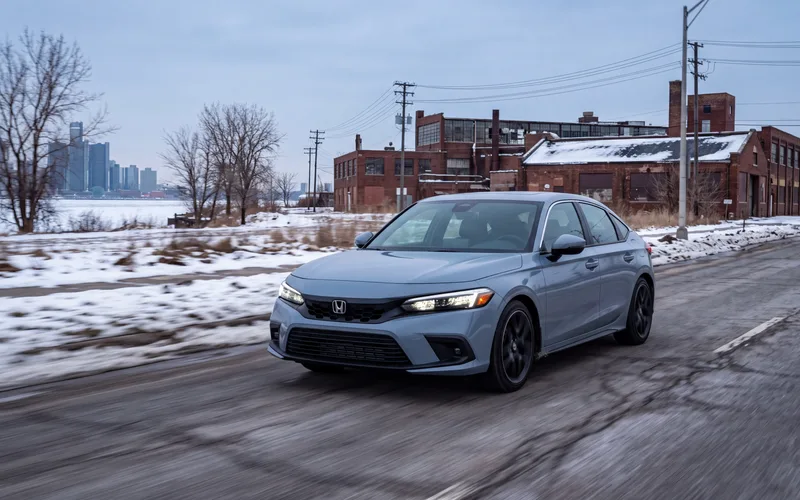 Honda Civic HatchbackCompact HatchbackBetter at: Rear-seat space
It is the same idea with a usable back seat and better visibility, at a small fuel-economy cost, and reviewers now rate the Civic Hybrid above the Prius overall.
Compare 2.25C
2.25C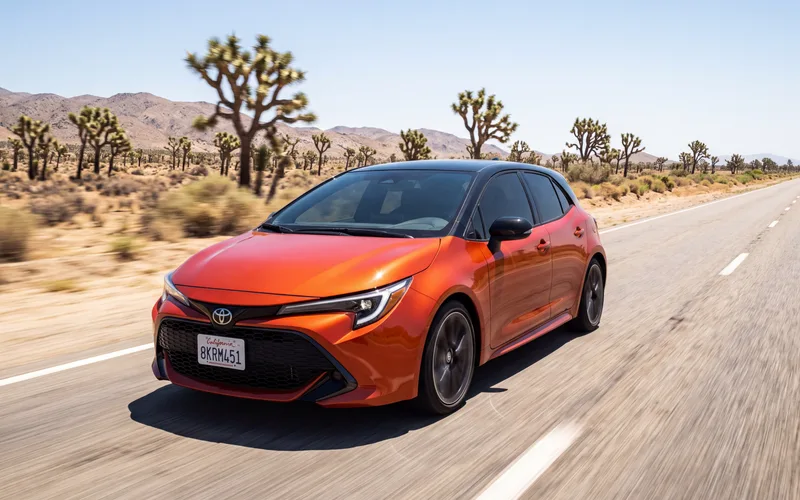 Toyota Corolla HatchbackCompact HatchbackBetter at: Purchase price
About $4,000 less up front with the same Toyota reliability and warranty, for buyers whose annual mileage never repays the hybrid premium.
Compare 2.57C+
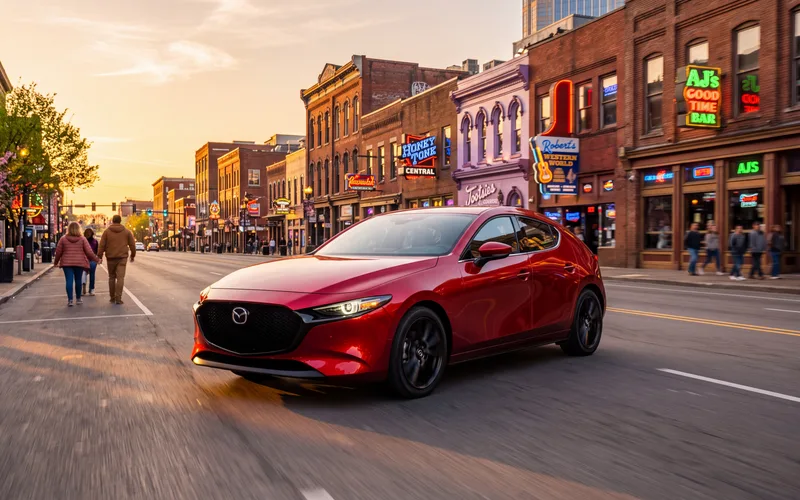 Mazda Mazda3 HatchbackCompact HatchbackBetter at: Driving feel
A far more engaging car with a genuinely premium-feeling cabin and available all-wheel drive, if you can live with roughly double the fuel bill.
CompareHow it's evolved
10 scored model years · 2017–2026
Subject scores by year
Hover or tap a score to see what moved it versus the year before. A corner mark flags a big swing.
| Year | Performance | Efficiency | Safety | Space | Cost | Reliability | Tech | Use-case | Driving | Value |
|---|---|---|---|---|---|---|---|---|---|---|
| 2026 | 40 | 93 | 79 | 59 | 67 | 82 | 63 | 59 | 69 | 71 |
| 2025 | 40 | 92 | 79 | 59 | 67 | 82 | 63 | 59 | 68 | 73 |
| 2024 | 40 | 92 | 78 | 59 | 67 | 80 | 63 | 59 | 69 | 75 |
| 2023 | 40 | 92 | 80 | 58 | 68 | 82 | 63 | 59 | 69 | 73 |
| 2022 | 23 | 92 | 68 | 66 | 71 | 85 | 44 | 57 | 56 | 56 |
| 2021 | 24 | 92 | 70 | 67 | 72 | 86 | 45 | 59 | 60 | 61 |
| 2020 | 25 | 92 | 71 | 66 | 74 | 85 | 41 | 59 | 62 | 62 |
| 2019 | 25 | 92 | 67 | 65 | 74 | 83 | 34 | 58 | 62 | 63 |
| 2018 | 18 | 92 | 68 | 64 | 70 | 81 | 35 | 56 | 60 | 66 |
| 2017 | 18 | 92 | 71 | 66 | 68 | 83 | 34 | 57 | 61 | 69 |
Compare two years
Best fit & conditions
Higher scores mean a better fit for that use case. Learn more about use-case fit →
Subject profile
Trims & configurations
4 trimsScores above reflect the volume trim. Per-trim specs and scores are rolling out — the full lineup:
Academic Probation · NHTSA safety recalls
Jan 28, 2026Electrical system: wiring: switches/knobs/buttons · Latches/locks/linkages: doors: latchWater may enter the rear door switch and cause a short circuit, allowing an unlocked rear door to open unexpectedly.
Defect
Toyota Motor Engineering & Manufacturing (Toyota) is recalling certain 2023-2024 Prius Prime, 2023-2026 Prius, and 2025-2026 Prius Plug-in Hybrid vehicles. Water may enter the rear door switch and cause a short circuit, allowing an unlocked rear door to open unexpectedly.
Risk
A door that unexpectedly opens while the vehicle is moving increases the risk of injury.
Remedy
Dealers will modify the rear door switch circuits, free of charge. Owner letters were mailed July 13, 2026. Owners may contact Toyota's customer service at 1-800-331-4331. Toyota's numbers for this recall are 26TB03 and 26TA03. This recall expands and replaces NHTSA recall number 24V274. Vehicles repaired under the previous recall will need to have the new remedy performed.
NHTSA campaign 26V049000 ↗Manufacturer no. 26TB03 / 26TA03141,286 vehicles potentially affected (all models in the campaign)Owners notified Jul 13, 2026Filed by Toyota Motor Engineering & ManufacturingFiled as PRIUS, PRIUS PLUG-IN HYBRID, PRIUS PRIME
10 recalls on other model years of the Prius (2017–2020, 2022–2025)
Oct 30, 2025Back over prevention: display functionPlease see the recall report for a complete list of models. A software error may cause the rearview camera to freeze or display a blank screen when the vehicle is in reverse. As such, these vehicles fail to comply with the requirements of Federal Motor Vehicle Safety Standard (FMVSS) number 111, "Rear Visibility."
Defect
Toyota Motor Engineering & Manufacturing (Toyota) is recalling certain 2022-2026 Toyota, Lexus, and Subaru Solterra vehicles equipped with a Panoramic View Monitor (PVM) system. Please see the recall report for a complete list of models. A software error may cause the rearview camera to freeze or display a blank screen when the vehicle is in reverse. As such, these vehicles fail to comply with the requirements of Federal Motor Vehicle Safety Standard (FMVSS) number 111, "Rear Visibility."
Risk
A rearview camera that fails to display an image can reduce the driver's view behind the vehicle, increasing the risk of a crash.
Remedy
Dealers will update the parking assist software, free of charge. Owner letters were mailed January 2, 2026. Owners may contact Toyota's customer service at 1-800-331-4331. Toyota's numbers for this recall are 25TB13 and 25LB06. Subaru's number for this recall is WRE25.
NHTSA campaign 25V744000 ↗Manufacturer no. 25TB13/25LB06/WRE251,024,407 vehicles potentially affected (all models in the campaign)Owners notified Dec 5, 2025Filed by Toyota Motor Engineering & ManufacturingFiled as PRIUS, PRIUS PLUG-IN HYBRID, PRIUS PRIMEJul 23, 2024Equipment: other: labelsThe load carrying capacity modification label may display inaccurate added weight values. As such, these vehicles fail to comply with the requirements of Federal Motor Vehicle Safety Standard number 110, "Tire Selection and Rims."
Defect
Gulf States Toyota, Inc. (GST) is recalling certain Toyota 2023 GR Supra, 2024 4 Runner, Corolla, Grand Highlander, Grand Highlander Hybrid, Land Cruiser Hybrid, Tacoma, Tacoma Hybrid, 2023-2024 BZ4X, Corolla Cross Hybrid, GR Corolla, GR86, Highlander, Highlander Hybrid, Prius, Prius Prime, Sequoia Hybrid, Tundra, Tundra Hybrid, Venza Hybrid, 2023-2025 Crown, and 2025 Camry Hybrid vehicles equipped with GST accessories. The load carrying capacity modification label may display inaccurate added weight values. As such, these vehicles fail to comply with the requirements of Federal Motor Vehicle Safety Standard number 110, "Tire Selection and Rims."
Risk
A vehicle with an incorrect maximum capacity weight value may be overloaded, which can increase the risk of a crash.
Remedy
GST will mail new labels to owners, free of charge. Owner notification letters were mailed September 16, 2024. Owners may contact GST customer service at 1-800-444-1074. GST's number for this recall is 24R2.
NHTSA campaign 24V548000 ↗Manufacturer no. 24R233,848 vehicles potentially affected (all models in the campaign)Owners notified Sep 16, 2024Filed by Gulf States Toyota, Inc.Filed as PRIUS, PRIUS PRIMEApr 17, 2024Electrical system: wiring: switches/knobs/buttons · Latches/locks/linkages: doors: latchWater may enter the rear door switch and cause a short circuit, allowing an unlocked rear door to open unexpectedly.
Defect
Toyota Motor Engineering & Manufacturing (Toyota) is recalling certain 2023-2024 Prius and Prius Prime vehicles. Water may enter the rear door switch and cause a short circuit, allowing an unlocked rear door to open unexpectedly.
Risk
A door that unexpectedly opens while the vehicle is moving or during a crash increases the risk of injury.
Remedy
Dealers will replace both right and left rear door opener switches, free of charge. Owner letters were mailed August 9, 2024. Owners may contact Toyota customer service at 1-800-331-4331. Toyota's numbers for this recall are 24TB06 and 24TA06.
NHTSA campaign 24V274000 ↗Manufacturer no. 24TB06 / 24TA0655,690 vehicles potentially affected (all models in the campaign)Owners notified Sep 9, 2024Filed by Toyota Motor Engineering & ManufacturingFiled as PRIUS, PRIUS PRIMESep 22, 2021Engine and engine cooling: engine: engine control module (ecu/ecm): software · Hybrid propulsion systemThe Engine Control Unit (ECU) software may falsely detect an error and shut down the hybrid system, causing a loss of drive power.
Defect
Toyota Motor Engineering & Manufacturing (Toyota) is recalling certain 2022 Prius and Prius Prime vehicles. The Engine Control Unit (ECU) software may falsely detect an error and shut down the hybrid system, causing a loss of drive power.
Risk
A loss of drive power increases the risk of a crash.
Remedy
Dealers will update the ECU software, free of charge. Owner notification letters were mailed November 18, 2021. Owners may contact Toyota customer service at 1-800-331-4331. Toyota's number for this recall is 21TB07/21TA07.
NHTSA campaign 21V734000 ↗Manufacturer no. 21TB07 / 21TA078,411 vehicles potentially affected (all models in the campaign)Owners notified Nov 18, 2021Filed by Toyota Motor Engineering & ManufacturingFiled as PRIUS, PRIUS PRIMEDec 11, 2019Electrical system: instrument cluster/panelAn electrical short circuit in the combination meter could occur, causing the speedometer, the odometer, and the fuel gauge to go blank. As such, these vehicles fail to comply with the requirements of Federal Motor Vehicle Safety Standard (FMVSS) number 101, "Controls and Displays."
Defect
Toyota Motor Engineering & Manufacturing (Toyota) is recalling certain 2019 Prius vehicles. An electrical short circuit in the combination meter could occur, causing the speedometer, the odometer, and the fuel gauge to go blank. As such, these vehicles fail to comply with the requirements of Federal Motor Vehicle Safety Standard (FMVSS) number 101, "Controls and Displays."
Risk
A blank main display will not show important information like vehicle speed or fuel level. Driving with an inoperative display can increase the risk of a crash.
Remedy
Toyota will notify owners, and dealers will inspect the flash memory chip (ROM) production date, and if necessary, replace it along with the combination meter circuit board, free of charge. The recall began February 7, 2020. Owners may contact Toyota customer service at 1-888-270-9371. Toyota's numbers for this recall are 19TA21 and 19TB21.
NHTSA campaign 19V876000 ↗Manufacturer no. 19TA21 / 19TB213,751 vehicles potentially affected (all models in the campaign)Owners notified Feb 7, 2020Filed by Toyota Motor Engineering & ManufacturingFiled as PRIUSJul 24, 2019Electronic stability control (esc) · Service brakesThe brake booster pump may fail causing a deactivation of the Vehicle Stability Control system and a loss of braking assist. As such, these vehicles fail to comply with the requirements of Federal Motor Vehicle Safety Standard (FMVSS) number 126, "Electronic Stability Control Systems."
Defect
Toyota Motor Engineering & Manufacturing (Toyota) is recalling certain 2019 Lexus LS500, LC500, ES300h, UX250h, LS500h, Toyota Prius, RAV4 HV, 2019-2020 Toyota Prius Prime, and 2020 Corolla HV vehicles. The brake booster pump may fail causing a deactivation of the Vehicle Stability Control system and a loss of braking assist. As such, these vehicles fail to comply with the requirements of Federal Motor Vehicle Safety Standard (FMVSS) number 126, "Electronic Stability Control Systems."
Risk
Deactivation of the vehicle stability control system or a loss of braking assist increases the risk of a crash.
Remedy
Toyota will notify owners, and dealers will inspect and, if necessary, replace the brake booster pump, free of charge. The recall began September 20, 2019. Toyota owners may contact Toyota customer service at 1-888-270-9371 and Lexus owners may contact Lexus customer service at 1-800-255-3987. Toyota's numbers for this recall are K1L/K0L. Lexus' numbers for this recall are K2F/KLF.
NHTSA campaign 19V544000 ↗Manufacturer no. K1L/K0L, K2F/KLF6,925 vehicles potentially affected (all models in the campaign)Owners notified Sep 20, 2019Filed by Toyota Motor Engineering & ManufacturingFiled as PRIUS, PRIUS PRIMEMar 27, 2019Equipment: other: labelsThe text on the load capacity label may become illegible. As such, these vehicles fail to comply with the requirements of Federal Motor Vehicle Safety Standard (FMVSS) number 110, "Tire Selection and Rims."
Defect
Gulf States Toyota (GST) is recalling certain 2019 C-HR, 4Runner, Avalon, Avalon Hybrid, Camry, Camry Hybrid, Highlander, Land Cruiser, Prius, RAV4, Sequoia, Tacoma, Sienna, Tundra and Yaris vehicles. The text on the load capacity label may become illegible. As such, these vehicles fail to comply with the requirements of Federal Motor Vehicle Safety Standard (FMVSS) number 110, "Tire Selection and Rims."
Risk
If the driver cannot read the label, they may unknowingly overload the vehicle, increasing the risk of a crash.
Remedy
GST will notify owners, and dealers will provide corrected load carrying capacity modification labels, free of charge. The recall began May 24, 2019. Owners may contact GST customer service at 1-800-444-1074. GST's number for this recall is 19R1.
NHTSA campaign 19V244000 ↗Manufacturer no. 19R13,634 vehicles potentially affected (all models in the campaign)Owners notified May 24, 2019Filed by Gulf States Toyota, Inc.Filed as PRIUSSep 5, 2018Electrical system: wiringA portion of the engine wire harness connected to the hybrid Power Control Unit (PCU), could contact the cover at this connection and wear, causing an electrical short circuit.
Defect
Toyota Motor Engineering & Manufacturing (Toyota) is recalling certain 2016-2018 Toyota Prius vehicles. A portion of the engine wire harness connected to the hybrid Power Control Unit (PCU), could contact the cover at this connection and wear, causing an electrical short circuit.
Risk
An electrical short can increase the risk of a fire.
Remedy
Toyota will notify owners, and dealers will inspect the engine wire harness assembly and replace it if damage is found. A protective sleeve or protective tape will be included to prevent any future damage. These repairs will be performed free of charge. The recall began October 30, 2018. Owners may contact Toyota customer service at 1-888-270-9371. Toyota's number for this recall is J0T.
NHTSA campaign 18V579000 ↗Manufacturer no. J0T192,347 vehicles potentially affected (all models in the campaign)Owners notified Oct 30, 2018Filed by Toyota Motor Engineering & ManufacturingFiled as PRIUSMay 2, 2017Tires: temporary/emergency spare tireThe spare tire air pressure was not adjusted to the proper pressure as stated on the Tire Pressure Label.
Defect
Gulf States Toyota, Inc. (Gulf States) is recalling certain 2017 4Runner , 86, Avalon, Camry, Camry Hybrid, Corolla, Corolla iM, Highlander, Highlander Hybrid, Prius, Prius C, RAV4, RAV4 Hybrid, Sienna and Yaris vehicles. The spare tire air pressure was not adjusted to the proper pressure as stated on the Tire Pressure Label.
Risk
A spare tire that is not inflated to the proper value may not perform as intended, increasing the risk of a crash.
Remedy
Gulf States will notify owners, and dealers will inspect the spare tires, adjusting their pressure as necessary, free of charge. The recall began June 15, 2017. Owners may contact Gulf States customer service at 1-800-444-1074. Toyota's number for this recall is 17R2.
NHTSA campaign 17V295000 ↗Manufacturer no. 17R2409 vehicles potentially affected (all models in the campaign)Owners notified Jun 15, 2017Filed by Gulf States Toyota, Inc.Filed as PRIUSOct 14, 2016Parking brakeThe affected vehicles are equipped with a foot-operated parking brake system that has a parking brake cable that may disengage.
Defect
Toyota Motor Engineering & Manufacturing (Toyota) is recalling certain model year 2016-2017 Prius vehicles manufactured August 6, 2015, to October 3, 2016. The affected vehicles are equipped with a foot-operated parking brake system that has a parking brake cable that may disengage.
Risk
If the parking brake cable disengages from the mechanism and the transmission is left in a gear other than 'Park' while the ignition is on and the driver leaves the vehicle, the vehicle may roll unexpectedly, increasing the risk of a crash.
Remedy
Toyota will notify owners, and dealers will install a clip at the parking brake cable end to prevent the cable from disengaging, free of charge. The recall began November 10, 2016. Owners may contact Toyota customer service at 1-888-270-9371. Toyota's number for this recall is G01.
NHTSA campaign 16V741000 ↗Manufacturer no. G0191,585 vehicles potentially affected (all models in the campaign)Owners notified Nov 10, 2016Filed by Toyota Motor Engineering & ManufacturingFiled as PRIUS
Source: NHTSA Office of Defects Investigation recall database, model years 2017–2026. Recalls are listed by model year as the manufacturer filed them; whether a specific car is affected depends on its VIN — check a VIN at nhtsa.gov ↗. NHTSA model names matched to this page: PRIUS, PRIUS PLUG-IN HYBRID, PRIUS PRIME.
Detailed scoring by subject
1Performance & PowertrainThe Prius's lowest-graded category.0.67F
The 2026 Prius pairs the 2.0L M20A-FXS four-cylinder with Toyota's fifth-generation hybrid system for 194 net combined hp in front-drive form, the volume configuration; the E-Four rear motor lifts it to 196 hp. Strong for a Prius (nearly double the fourth generation) but modest against the 130–520 hp hatchback band, which is set by hot hatches and performance liftbacks.
Toyota rates the Atkinson-cycle 2.0L at 139 lb-ft and, as with all its hybrids, publishes no combined system torque figure, so the engine peak is the authoritative number. Instant electric torque makes the car feel stronger off the line than 139 lb-ft suggests, but the published value sits near the bottom of the 120–450 lb-ft hatchback band.
Toyota quotes 7.2 seconds for the front-drive volume trim and 7.0 with the rear motor, and instrumented tests of this generation have landed around 7.1 seconds — roughly 3.4 seconds quicker than the fourth-generation car. That is genuinely brisk for an economy hybrid though mid-pack in a segment whose band bottoms out near 3 seconds.
Around town the hybrid system is a highlight — silent EV creep, imperceptible engine start/stop, and immediate motor-driven throttle response with no turbo lag. The demerit is noise under load: reviewers consistently describe a loud, raspy groan when the 2.0L wakes up for a freeway merge or a highway-speed grade, which is the one place the drivetrain feels strained rather than smooth.
The planetary-gear eCVT has no clutches or steps to fumble, so it never hunts, shift-shocks, or hesitates — the cleanest possible gear behavior in normal driving. It loses points for the classic Toyota hybrid trait under full throttle: revs flare and hold in a rubber-band fashion with no simulated upshifts, producing a drone reviewers call irritating on merges and mountain grades.
Electronic On-Demand AWD (E-Four) is optional on every 2026 trim — LE, XLE, Nightshade and Limited — using a dedicated rear motor with no driveshaft, and 2026 adds a new Snow Extra drive mode for the AWD models. It is a traction-and-confidence system rather than a capability one: the rear motor is small and speed-limited, and there is no low range, locker or terrain-mode suite, so it lands mid-band rather than high.
There is no gas-only or full-EV Prius, but the nameplate does offer two genuinely distinct electrified drivetrains: the 194/196-hp hybrid in FWD or E-Four AWD, and the 220-hp Prius Plug-in Hybrid with a 13.6-kWh pack good for about 45 miles of EV range. That is a real choice covering commuter and mostly-electric use cases, though narrower than rivals offering turbo gas, hybrid and EV variants.
2Efficiency & RangeThe Prius's best-graded category.4.00A+
The volume XLE FWD is EPA-rated 52 mpg combined; the base LE FWD is the lineup and near-segment champion at 57. Even the least efficient 2026 Prius (49 mpg, AWD XLE/Nightshade/Limited) beats every non-hybrid compact hatchback on sale — the prior placeholder value of 38 mpg badly understated the car.
52 mpg city on the volume XLE, and 57 on the LE FWD, is exactly what the fifth-generation hybrid system is built for — stop-and-go traffic runs largely on the motor. Only a battery-electric hatchback does meaningfully better in town.
Unusually for a hybrid, the Prius essentially holds its city figure on the highway — 52 mpg on the XLE FWD, 56 on the LE FWD — on the strength of a very low-drag body and tall gearing rather than motor assist. That makes the efficiency advantage real on road trips, not just commutes.
Toyota publishes an EPA-derived 587.6-mile total range for the FWD XLE/Nightshade/Limited grades and 644.1 miles for the LE FWD — from a small 11.3-gallon tank, which is the point. AWD models carry a 10.5-gallon tank and give up range (567 mi LE AWD, 514.5 mi on the other AWD grades).
At EPA's standard 15,000 mi/yr on regular, the 52-mpg XLE FWD costs roughly $1,200 a year to fuel and the 57-mpg LE FWD about $1,100 — among the cheapest gasoline vehicles of any body style to run, with EPA crediting the Prius with roughly $5,500 in fuel saved over five years versus an average new vehicle. Short of the top of the band only because a plug-in or EV hatchback charging at home undercuts it.
The Atkinson-cycle 2.0L asks only for 87-octane regular on every grade, FWD or AWD, with no premium recommendation anywhere in the lineup, and as a conventional hybrid it needs no charger, no home electrical work and no public-charging account. Buyers who do want to plug in can step to the Prius Plug-in Hybrid — about 4 hours on Level 2 or 11 hours on a household 120-volt outlet — but that is an option, never a requirement.
3SafetyOne of the Prius's strongest categories.3.37B+
NHTSA gives the 2026 Prius a 5-star Overall Vehicle Score, with five stars in every individual test except rollover resistance (four stars). Replaces the placeholder 4.3-star estimate.
The 2026 Prius is a 2026 IIHS Top Safety Pick+ — Good in every crashworthiness test (updated moderate overlap front, small overlap front driver and passenger, updated side), with headlights the only Acceptable result on the sheet.
Toyota Safety Sense 3.0 is standard on all four 2026 trims (LE, XLE, Nightshade, Limited) — pre-collision with pedestrian detection, full-speed-range Dynamic Radar Cruise Control, Lane Departure Alert with steering assist, Lane Tracing Assist, Road Sign Assist, automatic high beams and Proactive Driving Assist — and Blind Spot Monitor with Rear Cross-Traffic Alert is also standard lineup-wide, so the base $28,550 LE wants for nothing.
The Prius earned its TSP+ specifically on the updated (2.0) vehicle-to-vehicle front crash prevention evaluation and carries a Good pedestrian front crash prevention rating, which the plus tier requires — the top result available under the current, harder night-inclusive protocol.
Blind Spot Monitor with Rear Cross-Traffic Alert is standard on every 2026 trim, which is better than segment norm, but coverage is alert-only — no steering or braking intervention and no safe-exit assist, and the Panoramic View Monitor that would help most is limited to the top trims.
Lane Departure Alert with steering assist plus Lane Tracing Assist are standard and hold the lane competently, but reviewers report LTA occasionally picking a line the driver wouldn't through curves, resisting manual steering inputs too insistently, and getting momentarily confused by freeway on/off ramps when tracking in the right lane.
Full-Speed Range Dynamic Radar Cruise Control is standard on every trim and brings true stop-and-go capability, and it pairs with Lane Tracing Assist for a competent combined highway assist; the pairing is smooth in steady traffic but inherits LTA's ramp and curve wobbles rather than feeling fully resolved.
There is no hands-free option on the Prius at any trim. Toyota's hands-off-capable Teammate Advanced Drive is confined to the Mirai and Lexus flagships; TSS 3.0's Lane Tracing Assist is a hands-on system that nags and disengages if the wheel is released.
IIHS rates the 2026 Prius headlights Acceptable — the single non-Good line on its ratings sheet. Bi-LED projectors with automatic high beams are standard across trims, so there is no Marginal volume-trim variant, but Acceptable trails the Good that the Corolla Hatchback and Civic Hatchback post.
The fifth-gen Prius trades sightlines for its slippery shape: a very low roofline, steeply raked windshield with heavy A-pillars, thick C-pillars and a small, shallow rear window aperture. The camera hardware that fixes it — digital rear-view mirror and Panoramic View Monitor — is confined to the top of the range, so the volume LE gets none of the compensation.
The hardware is good — two full LATCH sets in the outboard rear positions with lower anchors under large, easily folded upholstery flaps, plus a center tether anchor, earning a top-tier IIHS ease-of-use rating. Space is the limiter: 36.4 in of rear headroom under the sloping roof, no realistic three-across, front passengers give up legroom ahead of a rear-facing convertible, and the top tether means digging through the seatback carpet.
4Space & ComfortOne of the Prius's weakest categories.1.96C-
The 2026 Prius is a five-passenger liftback across every trim (LE, XLE, Nightshade, Limited) and in both FWD and AWD form; the PHEV is likewise a five-seater.
Toyota publishes 38.0 in of front headroom for the 2026 Prius, mid-pack for a compact hatchback — the low fastback roofline costs less up front than it does in the second row, and the Limited's fixed glass roof does not change the published figure.
43.2 in of front legroom is generous for the compact-hatch class and one of the fifth-generation Prius's genuine packaging wins — the front cabin is stretched out even as the roof drops.
36.4 in of rear headroom sits near the bottom of the segment band, and reviewers report it plays worse than the number suggests because the fastback roofline forces heads toward the glass.
34.8 in of rear legroom is well short of compact-hatch benchmarks (Civic Hatchback ~37.4 in), and the low cushion adds a foot-room and under-thigh-support penalty on top of the raw shortfall.
Scored on the volume XLE at 20.3 cu ft behind the rear seat — top of the hatchback band, and the base LE's different underfloor packaging yields an even larger 23.8 cu ft.
Competent hatchback practicality — wide liftback opening, 60/40 folding rear seat, underfloor cargo well, and a wireless charging pad from XLE up — but console and door bins are shallow and there is no standout clever-storage feature, and the fifth-generation car's low roof measurably shrank real-world load height.
A split verdict: the front seats are a clear improvement over the previous Prius and hold up on long drives with an 8-way power driver's seat from XLE, but the rear bench is low, flat and short on under-thigh support, which pulls the front/rear average into the middle of the band.
The sportier fifth-generation tuning traded compliance for body control; testers consistently call the ride firm rather than harsh, and Consumer Reports docked the road-test score for it. Composed on good pavement, busy over broken surfaces.
The weakest element of the category: highway wind noise is above class expectations, road noise mixes with hybrid-system thrum, and the eCVT drones under hard acceleration — a below-average result for a car whose gentle-driving mission should favor quiet.
Key comfort kit arrives at the mid trim rather than the base: heated front seats and heated steering wheel from XLE, ventilated front seats and driver memory reserved for the Limited, heated rear seats a stand-alone option, plus Remote Connect app pre-conditioning. No rear climate zone or rear vents.
5Cost of OwnershipMid-pack among this car's ten categories.2.53C+
The fifth-generation Prius carries a genuine price premium over conventional compacts — at $29,745 delivered the LE lands roughly $4,000 above the Corolla Hatchback SE, which is the cost of the 194-hp hybrid powertrain and 57-MPG efficiency. Still comfortably in the lower half of the hatchback band, and AWD is a modest $1,400 adder on every trim.
The mid-grade XLE carries the volume — it is where the feature curve peaks (heated leather-trimmed seats, power driver's seat, heated wheel, wireless charging, front/rear parking assist with braking) without Nightshade or Limited money. The ~$400 over XLE base reflects premium paint and port accessories, and CarEdge's transacted 'typically equipped' average of $34,864 confirms the real mix sits at or above XLE rather than on the base LE.
Prius service economics are among the best in any segment: the eCVT has no clutches or belts to replace, the Atkinson-cycle engine has a chain, and regenerative braking routinely doubles brake-pad life, so the routine bill is essentially oil, filters, tires and cabin air. The blended figure discounts KBB's outlier Limited projection, which loads 19-inch tire replacement and dealer-rate service onto the top grade.
Resale is a real Prius strength — iSeeCars has it beating both the hatchback and hybrid-compact category averages and ranks it 25th among all vehicles for value retention, helped by gas-price sensitivity that puts a floor under used hybrid demand. The 58% figure reconciles the optimistic used-market studies, which measure against transaction prices, with KBB's forward residuals against sticker, and is set consistently with the Camry (57%) and Corolla (60%) scorecards.
Toyota's 36-month/36,000-mile basic coverage is the industry floor and unchanged for 2026 — it matches the Civic and Mazda3 hatchbacks but sits two years behind Hyundai/Kia, and it is the weakest line on an otherwise strong ownership sheet.
The headline powertrain term is Toyota's standard 5 yr/60,000 mi, which scores at the bottom of the band, but that understates the practical coverage on a hybrid-only nameplate: the parts unique to the Prius drivetrain carry 8 yr/100,000 mi and the traction battery 10 yr/150,000 mi, so the components buyers actually worry about outlast the nominal figure by years.
ToyotaCare's 2 yr/25,000 mi of factory-scheduled maintenance is a genuine multi-year plan, and the Prius is one of a handful of Toyotas singled out for enhanced 3 yr/unlimited-mile roadside assistance rather than the standard 2 yr/25,000 mi — worth a few points over the Camry and Corolla, which score 75 on identical maintenance terms. Long Safety Connect and Service Connect trials add value; the absence of any charging credit for the PHEV, and the federal clean-vehicle credit's expiry, keep it out of the top band.
$33,600 volume-trim price minus its estimated resale value after 5 years (58% retained, or about $19,488) leaves about $14,112 in depreciation. Add the projected $3,900 in 5-year maintenance and repairs, and owning this vehicle for 5 years costs about $18,012 in total.
6Reliability & QualityOne of the Prius's strongest categories.3.55A-
The fifth-generation XW60 Prius is one of the strongest predicted-reliability picks in the hatchback field — Consumer Reports scored the 2023 launch year excellent and predicts above-average reliability for 2026, and the generation carries one of the highest average CR reliability ratings the nameplate has ever posted. Held just below the Corolla Hatchback (90) because the plug-in variant is only predicted average and J.D. Power's owner-verified quality-and-reliability score of 75/100 is good rather than exceptional.
Toyota tops Consumer Reports' 2026 predicted-reliability brand rankings but slipped to 8th in J.D. Power's 2026 VDS, so the two major studies disagree at brand level. Best-in-class on the CR side with a JDP wobble keeps this high but short of the 90s; scored identically to the other 2026 Toyotas in the dataset.
This is the weak line on an otherwise strong reliability sheet. The generation has drawn a repeated, unresolved rear-door-switch campaign that now sweeps in the 2026 car — NHTSA 26V049 expands and replaces the earlier 24V274, owners have only an interim letter, and the final remedy was still pending as of Q2 2026 — on top of gen-5 rearview-camera freeze recalls and a ~13,000-unit high-voltage-battery power-loss recall on the 2023 cars. A live safety recall on the current model year with no remedy in hand pulls this well below the Corolla Hatchback's 80 despite the individual defects being electrical rather than structural.
The best-proven powertrain in the segment. The 2026 car pairs the 2.0-liter M20A-FXS Atkinson-cycle four with the fifth-generation Toyota Hybrid System for 194 hp FWD / 196 hp AWD, and the eCVT is a planetary power-split gearset with two motor-generators — no belts, clutches or shift elements to wear out — which is why Prius drivetrains routinely run past 200,000 miles. Scored above the Corolla Hatchback's conventional 2.0/CVT (88); only early-build EGR-cooler and heat-exchanger leak reports keep it out of the mid-90s.
The gen-5 cabin is a clear step up from the fourth-generation Prius in design and in the switchgear you touch most, and SofTex synthetic leather is standard on everything above the LE, but reviewers consistently flag broad expanses of hard plastic and doors that sound tinny when shut. Lands a notch below the Corolla Hatchback (70), which reviewers credit with more soft-touch and upholstered front surfaces, and well behind the class-leading Mazda3.
US-market Prius production stays at Tsutsumi in Toyota City — the plant that has built every Prius generation since 2003 and one of Toyota's most heavily automated — and assembly consistency is not a complaint theme for this generation. Held just under the Corolla Hatchback (78) by the flimsy-feeling doors reviewers single out and by the body/trim and electrical items that dominate the gen-5 NHTSA complaint file.
Toyota runs one of the densest franchised service networks in the US and posts above-average dealer service satisfaction in J.D. Power's 2026 Customer Service Index — and unlike most hybrids, Prius service is routine work at any Toyota store rather than a specialist errand, after 25 years of the nameplate passing through those bays. Strong nationwide coverage with good but not class-topping satisfaction.
Running costs are among the lowest of any car sold: $408/year in combined repair and maintenance against a $526 class average, below-average repair severity, and a deeper hybrid parts ecosystem than any other nameplate — an entire independent industry rebuilds and installs Prius traction packs for a fraction of dealer money. Scored below the Corolla Hatchback (93) because the one big-ticket item, an out-of-warranty hybrid battery, still runs into the thousands at a dealer and pack inventory can back up.
7Technology & InfotainmentMid-pack among this car's ten categories.2.28C
The volume XLE ships with the 8.0-inch Toyota Audio Multimedia head unit; the 12.3-inch screen is a paid option on XLE and Nightshade and standard only on the $35,565 Limited. An 8-inch screen is small for 2026 even in the compact class.
Toyota Audio Multimedia remains one of the quicker, more logically laid out mainstream systems, and the Prius keeps real hard controls for climate plus a volume knob rather than burying them in the screen. The volume trim's 8-inch panel leaves a lot of bezel and reviewers note that deeper audio settings take several taps.
Wireless Apple CarPlay and wireless Android Auto are standard on every 2026 Prius grade, including the base LE and both screen sizes — no trim walk or option box required.
"Hey, Toyota" Intelligent Assistant and Cloud Navigation with Google POI data are capable natural-language tools, but on the 8-inch volume XLE they are only "capable" — Drive Connect is a paid subscription with no included trial unless you buy the 12.3-inch option or the Limited.
LE, XLE and Nightshade all make do with a plain six-speaker system, and the 8-speaker JBL Premium Audio upgrade is exclusive to the Limited — an XLE buyer cannot option it at any price, which is more restrictive than the Camry or Corolla Hatchback.
Every Prius grade gets the distinctive top-mount digital cluster — a fully digital 7-inch LCD with configurable readouts, standard even on the base LE, which beats the Camry's partial-digital volume trims and the analog-gauge Corolla Hatchback. It is held back from the top band only by its small size and fixed high-mounted position.
Over-the-air updates cover the Toyota Audio Multimedia head unit and cloud map data only — there is no whole-vehicle or ADAS OTA. The Prius is not on the new Arene software platform that debuts in the 2026 RAV4, so it stays firmly in the infotainment-only band.
The Toyota app covers remote lock/unlock, remote start/stop and vehicle locate, and Digital Key lets a phone replace the fob — available on XLE/Nightshade and standard on Limited, which is more than the Camry offers. Remote Connect reverts to a paid subscription after a one-year trial, and Digital Key needs that subscription to work at all.
Six USB-C charge ports spread across the cabin — two front, two in the console, two in back — are standard on every grade, unusually generous for a compact hatchback, and Qi wireless charging is standard from the XLE up. Only the base LE misses the wireless pad, and there is no household AC outlet.
The volume XLE gets the Smart Key System on both front doors and the trunk with push-button start, and phone-as-key Digital Key is offered — a genuine convenience edge over most mainstream compacts. The base LE is limited to driver-door proximity entry, and remote start lives behind the Remote Connect subscription rather than the fob.
A backup camera is standard across the range and Front and Rear Parking Assist with Automatic Braking is standard from the XLE up, but the 360-degree Panoramic View Monitor and hands-free Advanced Park are locked to a Limited-only option package — so the volume trim cannot get surround view at all.
No windshield head-up display is offered on the 2026 Prius at any grade, including the loaded Limited — the fifth-generation car dropped the color HUD the previous-generation Prius offered, moving that information to the top-mount cluster instead. Dealer copy describing the "above the rim" display as HUD-like refers to that gauge cluster, not a projected display.
8Use-Case FitOne of the Prius's weakest categories.1.97C-
Replaces the placeholder with a real assessment: the LATCH hardware is genuinely good and the hatch swallows a stroller easily, but the fifth-gen Prius pairs a steeply raked roofline with a low seat height, so leaning a child into a rear seat means ducking under the C-pillar, and 34.8 in of rear legroom leaves little slack behind a rear-facing seat.
The safety proposition is a genuine strength and it costs nothing extra: the crash record is top-tier for 2026 and the full driver-assist suite plus blind-spot monitoring is standard all the way down to the $29,745 LE that families actually buy.
Luggage for four genuinely fits and there are rear USB-C ports, but the back seat is the weak link on a long day — tight headroom under the sloping roof, a low cushion, no rear climate vents, and a cabin reviewers fault for wind and powertrain noise.
In stop-and-go the hybrid is close to ideal — silent electric creep, light controls, and 194 hp that makes merging genuinely easy rather than the chore it was two generations ago. What holds it back is the firmer ride and the poor over-the-shoulder and rearward view, made worse by the deletion of the rear wiper.
This is the car's whole reason to exist and nothing in the segment beats it: 52 MPG combined on the volume trim (57 on LE) using regular unleaded, roughly $1,200 a year in fuel, and the cheapest routine service in the class, helped by regenerative braking sparing the friction brakes.
The footprint and turning circle are easy enough for city work, but the Prius is about nine inches longer than a Corolla Hatchback and its visibility is the real constraint — the standard camera is a plain backup view, with the 360-degree monitor and parking sensors reserved for the top of the range.
Not a work vehicle in any sense — Toyota publishes no US towing rating and explicitly advises against fitting a hitch at all, so there is no trailer or hitch-carrier option. The only work-adjacent asset is a 20.3 cu ft hatch with folding seats, fine for samples or hand tools and nothing heavier.
The powertrain itself is about as fleet-proven as anything sold — Prius taxi and rideshare fleets have demonstrated the hybrid system over enormous mileages, and Toyota tops the 2026 reliability rankings. What caps the score is the body: a low-slung passenger car with soft trim and no wear-resistant or work-oriented specification.
Provisions amount to a hatch, 60/40 folding seats, six USB-C ports and a dealer roof-rack kit. There is no onboard 120V AC power on the hybrid grades, no bed or tie-down system worth the name, and because Toyota rules out a hitch there is no receiver-mounted upfit path either.
Range is the standout — close to 600 miles between fills on the volume trim, so a driving day is limited by the driver rather than the tank — and the front seats plus standard full-range adaptive cruise with lane centering handle the fundamentals well. Wind noise and the eCVT drone under load are what keep it out of the top band.
Electronic On-Demand AWD is available across most of the range and makes a real difference on snow and wet gravel — an advantage over the FWD-only Corolla Hatchback — but everything else points to pavement: a low-slung body, no tow rating for bike or gear carriers, no factory roof rails, and no onboard AC power for camping.
A liftgate, a flat load lip and 20.3 cu ft behind the rear seat (23.8 on LE) make this one of the more useful compact hatchbacks for bulky luggage, helped by the 60/40 fold. The limits are real though: the space shrank versus the previous Prius, the steeply raked hatch caps how tall a load can be, and with no hitch permitted there is no cargo-tray or trailer fallback.
9Driving ExperienceMid-pack among this car's ten categories.2.67C+
The fifth-generation platform's low center of gravity gives the 2026 Prius genuinely composed cornering — minimal body roll, quick turn-in, and roadholding (0.90 g on the skidpad) that embarrasses most economy hybrids. It stops short of the class-leading band because the chassis is tuned for security rather than engagement and low-rolling-resistance rubber limits ultimate bite.
Accurate and quick enough to place the car precisely, but the electric rack is very light and reviewers consistently describe it as short on feedback — precise rather than communicative. Assessments range from "light but pretty accurate" to a minority calling it firmer than most small sedans, which puts it solidly mid-band.
Four-wheel discs stop the car from 70 mph in about 171 ft — a strong result on low-rolling-resistance tires — and the regen-to-friction handoff is one of Toyota's better blends, with no grab at the changeover. Held below the top band because pedal feel is the one recurring complaint: several testers call it touchy off the top.
In everyday use the 194-hp fifth-gen hybrid system is close to exemplary — silent EV creep, engine start/stop you feel only if you look for it, instant motor torque with no turbo lag, and no clutches or steps in the planetary eCVT to fumble. The deduction is the classic Toyota hybrid rubber-band flare at full throttle, where revs jump and hold without any simulated upshifts.
Near-silent in EV mode and subdued at a steady 80-mph cruise, but the 2.0L Atkinson four is the car's weakest refinement point: on a freeway merge or a sustained grade it wakes up loud and raspy and the eCVT holds it at a droning, buzzy rev plateau. That intrusion is frequent enough in normal driving to pull the item into the bottom half of the mid band.
At 34.4 ft curb-to-curb the Prius sits at the tight end of the compact-hatchback band, a real everyday asset for U-turns and parking structures. The 19-in wheel/tire package on the upper trims adds a small amount — the mechanically identical Prius Plug-in is quoted at 34.4 ft on 17s versus 35.4 ft on 19s.
This is where the coupe-like fifth-gen styling collects its bill. The high-mounted digital cluster is partially blocked by the steering wheel rim for many drivers, who end up dropping the column lower than they would like in order to read it; the low roofline makes ingress awkward and clips headroom for six-footers; and rear vision through the shallow backlight is poor, made worse by the deleted rear wiper. Credit for a low dash with a clear forward view and a low, supportive seating position.
The 2026 Prius is no longer an appliance — it looks sharp, hustles to 60 mph in about 7 seconds, and corners with real composure, so reviewers describe it as competent bordering on fun. But there is no sound worth hearing, no shifts, and no reward for pushing, so it lands as pleasant rather than something enthusiasts seek out for the long way home.
10Value & Market PositionGrades above the middle of the scale.2.81B-
The volume-selling LE covers the essentials at $28,550 — Toyota Safety Sense 3.0, 8-inch touchscreen with wireless Apple CarPlay/Android Auto, six USB-C ports, 17-inch alloys, bi-LED projector headlights, heated power-folding mirrors and push-button start — but the 12.3-inch screen, blind-spot monitor, heated seats and power driver's seat all live on XLE and above, where Hyundai and Kia hand more of that list to base buyers.
194 combined hp and a class-leading 57 mpg combined for under $30k is genuinely strong content-for-price, and AWD is only $1,400 on any trim, but at $29,745 delivered the LE lands roughly $4,300 above an Elantra Hybrid Blue ($25,450) and level with a Civic Hybrid, and the low roofline trades away rear headroom rivals keep.
Four hybrid trims (LE, XLE, Nightshade, Limited) plus four plug-in trims (SE, XSE, Nightshade, XSE Premium) span roughly $28.5k to $41.7k, with AWD optional on every hybrid trim and the Nightshade appearance package newly extended to the PHEV for 2026 — a wide, well-spaced ladder for a compact hatchback.
The fifth generation reversed a decade of decline — 56,488 US deliveries in 2025, up about 26% year over year from 44,711 in 2024 and well clear of the 2022 trough near 36,900 — a clearly rising nameplate, though still a fraction of compact-class leaders like the Civic.
Toyota carries best-in-class reliability and resale perception, and the Prius nameplate — 25 years in the US market for 2026 — went from punchline to genuinely desirable object with the gen-5 redesign, which is exactly the halo that props up residuals here.
Subvented financing is real — 4.99% APR up to 72 months on the hybrid and as low as 1.99% for 72 months on the plug-in, plus a $279/mo LE lease and $500 college-grad and military rebates — but there is no cash-back offer as of July 2026 and transaction prices sit close to MSRP, so straight discounting is thin.
2026 is the fourth year of the XW60 generation launched for 2023 and Toyota lists essentially no changes for it, while the refreshed 2027 Prius has already been revealed — a buyer signing in mid-2026 is taking the outgoing look right before the update lands.
The generation collected Car and Driver 10Best, a KBB Best Buy and an Edmunds Top Rated award at its 2024 launch and still owns the efficiency crown — U.S. News' best-gas-mileage pick for 2026 and Consumer Reports' most fuel-efficient hybrid — but it is no longer the class pick, ranking #6 among hybrid cars at 8.8/10 behind the Civic Hybrid (9.3) and Elantra Hybrid (9.2).