

The verdict
A capable mid-size wagon, strong on safety and held back by performance.
Overall 2.86 (B-) across 10 graded subjects. Its strongest is safety at 3.67 (A-), its weakest performance & powertrain at 0.93 (F). 8 of 10 subjects grade at C− or better.
Jump to scoresStrengths
- Safety
- Reliability & Quality
- Space & Comfort
What holds it back
- Performance & Powertrain
- Cost of Ownership
- Driving Experience
Top alternatives
Cars shoppers cross-shop with the Toyota Crown Signia 2.41C+
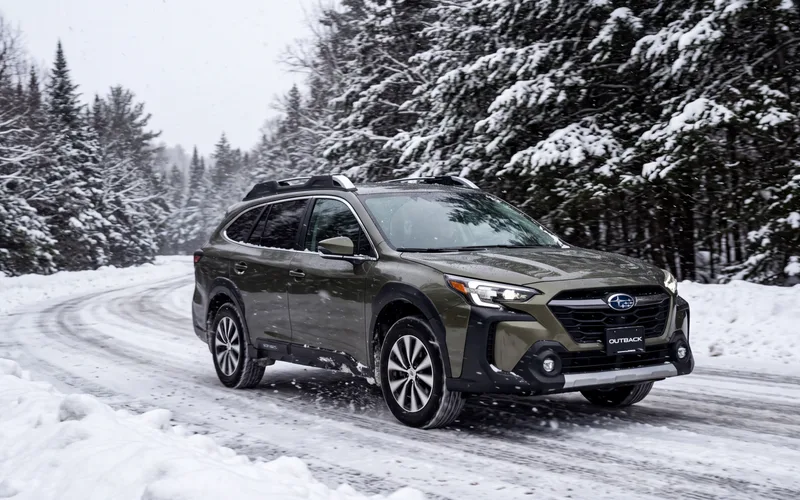 Subaru OutbackWagonBetter at: Value and capability
Starts roughly $12,000 less, holds about 34.6 cubic feet behind the rear seat and can actually handle a rough trail with 8.7 inches of clearance and X-MODE.
Compare 2.70B-
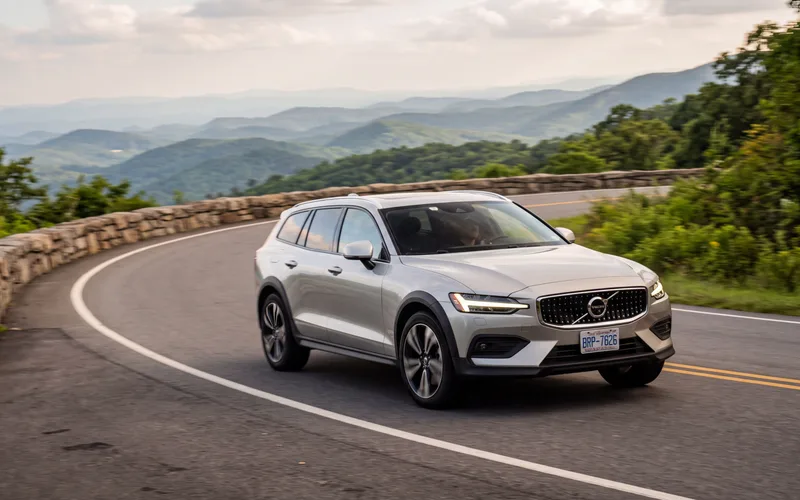 Volvo V60 Cross CountryLuxury WagonBetter at: Interior and handling
For similar money it delivers a genuinely upscale interior and real steering feel — the driving and design the Signia deliberately trades away for serenity.
Compare2.48C+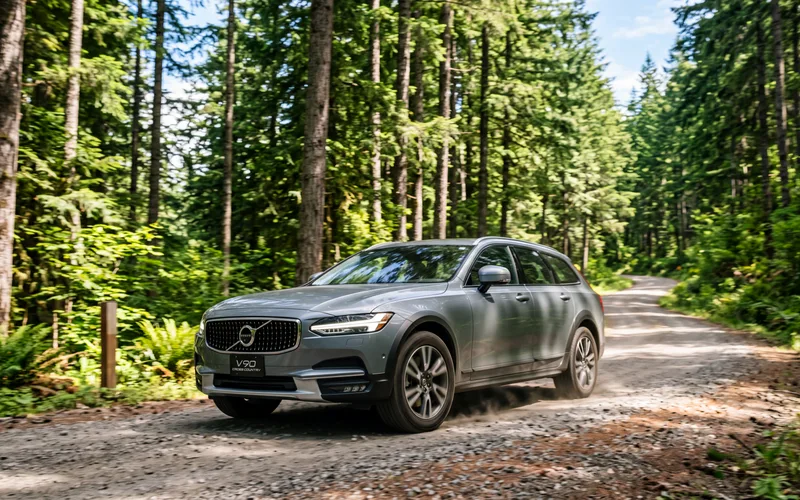 Volvo V90 Cross CountryLuxury WagonBetter at: Luxury and size
The step-up choice if the Signia's price already has you in premium territory and you'd rather have a bigger, more luxurious wagon with a badge to match.
CompareSubject scores by year
Hover or tap a score to see what moved it versus the year before. A corner mark flags a big swing.
| Year | Performance | Efficiency | Safety | Space | Cost | Reliability | Tech | Use-case | Driving | Value |
|---|---|---|---|---|---|---|---|---|---|---|
| 2026 | 45 | 81 | 76 | 76 | 48 | 87 | 75 | 68 | 63 | 68 |
| 2025 | 44 | 79 | 83 | 79 | 53 | 83 | 70 | 70 | 61 | 69 |
Compare two years
Best fit & conditions
Higher scores mean a better fit for that use case. Learn more about use-case fit →
Subject profile
Detailed scoring by subject
1Performance & PowertrainThe Crown Signia's lowest-graded category.0.93F
2025 is the Crown Signia's first model year, and it launches with one powertrain: Toyota's 2.5L Atkinson-cycle A25A-FXS four (188 hp on its own) with front traction/generator motors and a rear e-axle motor, rated at 240 combined system net horsepower. Both the XLE and Limited use it unchanged, so the volume-trim figure is also the range maximum.
Toyota publishes 178 lb-ft for the gasoline engine and, as with all its power-split hybrids, does not quote a combined system torque number; the electric motors add instant low-speed shove that the engine figure understates, but the published spec is the only defensible value.
Two independent instrumented tests of the Limited landed within a tenth of each other at just under and just over seven seconds — adequate rather than quick, and roughly a half-second behind the lifted luxury wagons the Signia is cross-shopped against at its price.
Toyota's power-split hybrid is at its best here: engine start/stop is essentially imperceptible, the electric-to-gas handoff has no step or shudder, and the car pulls away from rest on motor torque with none of the turbo lag that afflicts the four-cylinder Volvo and Subaru wagons in this class. It is held out of the top band because the Signia uses the previous-generation THS hardware rather than the fifth-generation system in the current Camry and Prius, and reviewers consistently note that it turns coarse and vocal when asked for full throttle.
The planetary power-split eCVT has no fixed ratios to hunt between, so around town it is genuinely seamless and never delivers a harsh or mistimed shift — a structural advantage over the belt-type CVTs and torque-converter automatics in the segment. The recurring complaint is the classic one: under hard acceleration engine revs flare and hold, producing an audible steady-state drone, and reviewers describe the response to a sudden throttle request as slower than they would like.
All-wheel drive is standard on every 2025 Crown Signia — there is no front-drive version at any price — delivered by Toyota's electronic on-demand system, in which a dedicated rear motor-generator drives the rear axle with no propshaft or transfer case. That universality earns a strong score, but the system stops short of the top band: it is a light-duty traction aid with no low range, no locking differentials and no terrain-mode suite, and the Signia's 6.7 inches of ground clearance is low even by lifted-wagon standards.
The Crown Signia is a one-powertrain car: the 240-hp 2.5L hybrid AWD is the only choice across both trims, with no gas-only option, no plug-in hybrid, no EV variant and — unlike the Crown sedan, which offers the 340-hp Hybrid MAX turbo alongside the 2.5L — no higher-output alternative on the same body. The score sits above the floor only because the sole powertrain is itself electrified rather than a plain gasoline engine.
2Efficiency & RangeGrades above the middle of the scale.3.34B+
2025 is the Crown Signia's first model year and it launches with a single powertrain — the 2.5L hybrid with electronic on-demand AWD — so there is no trim spread to note: EPA rates both XLE and Limited at 38 MPG combined despite the Limited's 21-inch wheels versus the XLE's 19s.
City is the Crown Signia's best EPA number, the expected signature of a power-split hybrid that can creep and crawl on electricity alone; it beats its own highway rating by 2 MPG.
37 MPG highway is strong for an AWD wagon of this mass but is the weakest of the three EPA figures — the tall body and standard all-wheel drive cost it against the 41-MPG-highway Crown sedan on the same hybrid system.
A 14.5-gallon tank at the EPA's 38 MPG combined yields about 551 miles, matching Toyota's advertised 550-mile EPA-estimated range — genuinely long-haul capability from a small tank, and a clear strength against non-hybrid wagons.
At the EPA's current pricing assumption for regular gasoline, 15,000 miles at 38 MPG combined works out to roughly $1,600 a year — about $100 more than the 41-MPG Crown sedan on the same hybrid system, and well below any comparably sized non-hybrid wagon.
Regular 87-octane is all the Crown Signia asks for, with no premium recommendation, no diesel or E85 complication and no charging infrastructure to arrange — the cheapest and simplest energy story available short of home-charging an EV.
3SafetyThe Crown Signia's best-graded category.3.67A-
NHTSA awarded the 2025 Crown Signia Hybrid SW AWD five stars in both overall frontal and overall side crash ratings; it has not run the rollover evaluation, so NHTSA lists no composite overall star rating yet. Recorded as 5 because every NHTSA test actually completed returned the maximum score.
2025 Top Safety Pick with Good ratings in every test IIHS ran — small overlap front (driver side), updated side, headlights, vehicle-to-vehicle and pedestrian front crash prevention. Falls short of TSP+ only because IIHS had not run the updated moderate overlap front test, which is a genuine unknown rather than a known weakness.
Toyota Safety Sense 3.0 is standard on both XLE and Limited — pre-collision with pedestrian detection, full-speed Dynamic Radar Cruise Control, Lane Departure Alert with Steering Assist, Lane Tracing Assist, Proactive Driving Assist, Road Sign Assist and automatic high beams — and unusually for the segment, Blind Spot Monitor, Rear Cross-Traffic Alert and Safe Exit Alert are standard on the base trim too, so nothing core is paywalled.
Earned Good — the top result — in both the IIHS vehicle-to-vehicle front crash prevention test and the updated pedestrian front crash prevention test, which includes nighttime scenarios. Not scored higher because the older Superior/Advanced tier no longer applies and there is no instrumented corroboration beyond IIHS.
Blind Spot Monitor, Rear Cross-Traffic Alert and Safe Exit Alert are standard on every trim, which beats most rivals whose base cars go without. Held below the top band because coverage is alert-only — no active braking or steering intervention — and Front Cross-Traffic Alert plus Lane Change Assist are locked inside the Limited's optional Advanced Technology Package.
Lane Departure Alert with Steering Assist and Lane Tracing Assist are standard, and reviewers found the centering held its line even on winding two-lane roads. Short of the top band because Toyota's Proactive Driving Assist layer draws mixed reviewer reaction and LTA is a lane-centering aid rather than a confidence-inspiring highway pilot.
Standard full-speed-range Dynamic Radar Cruise Control with stop-and-go, paired with Lane Tracing Assist for a competent combined highway assist that first-drive reviewers rated as working well. Not top-band: it is a conventional radar ACC without the predictive curve-speed or map-linked refinement of the best systems in this price class.
A hands-free capability exists but is minimal: Traffic Jam Assist handles steering, braking and acceleration only below 25 mph in congestion, and only on the Limited with the $1,865 Advanced Technology Package. There is no hands-free highway driving comparable to BlueCruise or Super Cruise, so it sits at the floor of the 'available but limited' band.
IIHS rates the headlights Good, and because the Crown Signia ships with the same LED projector setup on both XLE and Limited, that Good rating applies across the whole range — no trim-dependent downgrade. Auto high beams are standard via TSS 3.0. Slightly below the ceiling because low beams were only Fair on the gradual left curve and high beams Fair on the straightaway.
Average for a style-led wagon: the tapering roofline, high beltline and thick rear pillars pinch the over-shoulder and rearward view relative to a boxier Outback, but a Panoramic View Monitor 360-degree camera plus front and rear parking sensors compensate well in tight quarters. Camera coverage is a Limited feature rather than fleet-wide, which keeps it mid-band.
IIHS rates the LATCH hardware Good+ — its best grade, meaning among the easiest and most versatile in use — with two complete sets of lower anchors at the rear outboard positions plus a tether anchor for the center seat. Rear doors open wide and the flat rear bench is roomy for a wagon; short of the ceiling only because three-across seating with bulky seats is still a squeeze in a mid-size body.
4Space & ComfortOne of the Crown Signia's strongest categories.3.39B+
The Crown Signia is a strictly two-row, five-passenger wagon in both 2025 US trims (XLE and Limited) — there is no third-row option, which is the defining packaging difference versus the Grand Highlander it shares showroom space with.
37.7 in sits in the lower-middle of the 36–40 in wagon band — the Signia's low-slung, fastback-influenced roofline trades front headroom for style, matching the RAV4 exactly despite being a far longer and more expensive vehicle. Some aggregators transpose this figure with the rear measurement, so it is corroborated but not beyond doubt.
42.1 in on the 112.2 in wheelbase is squarely mid-band for a wagon — comfortable for tall drivers with an unusually high 25.8 in hip point that makes the driving position feel more crossover than car, but not a class-leading number.
39.1 in clears the top of the 35–39 in wagon band: the Signia's tall, SUV-like rear roof section is genuinely generous overhead even though reviewers still rate it a touch below a RAV4's 39.5 in. Same transposition caveat as the front figure.
37.1 in is this car's clearest packaging compromise — mid-band for a wagon and roughly a half-inch less than a compact RAV4 despite 194 in of overall length, because so much of the wheelbase is spent on the long hood and cargo bay. It does beat the V60 Cross Country's 35.2 in but trails the Outback's 39.5 in decisively.
25.8 cu ft behind the second row is far above the 10–20 cu ft wagon normalization band, so the item maxes out — this is the Signia's headline practicality argument and the reason it exists as a wagon rather than another sedan. Real-world usability is strong too: a deep, square load bay, a low liftover, a 60/40 fold and a load-floor extension that yields a 6.5 ft flat area.
Competitive everyday storage without a signature idea: four door pockets, a vertical wireless-charging slot, a removable cupholder partition and a double-hinged console lid that opens from either side are thoughtful touches, but the console bin itself is small and there is no underfloor bin or onboard-power trick to lift it into the top band. The practicality is concentrated in the load bay rather than the cabin.
Front seats draw consistent praise — large, softly cushioned, lightly bolstered, eight-way power with heating standard on XLE and ventilation on Limited, and an easy-to-find driving position aided by the elevated hip point. It stops short of the top band because the second row's 37.1 in of legroom limits how comfortable adults are back there on long stints.
The wagon body's low center of gravity plus soft-riding suspension tuning produce a composed, near-Lexus ride that reviewers repeatedly call the car's best trait — notable given the Limited rolls on 21-inch wheels. It is not quite segment-leading because there is no adaptive damping at any price, so sharp impacts on the big wheels still register.
Average-to-good rather than library-quiet, and the weakest link in an otherwise premium-feeling cabin: the 2.5-liter hybrid's eCVT drone under load is always audible and testers report more freeway road noise than the price and positioning imply, though wind noise is well suppressed.
Comfort equipment is rich and starts early: heated eight-way power front seats and a heated leather steering wheel are standard on the $43,590 XLE, with dual-zone automatic climate, rear vents, power liftgate with kick sensor and remote climate start via the Toyota app. Ventilated front seats and the fixed panoramic glass roof are locked to the Limited, which keeps it out of the top band.
5Cost of OwnershipOne of the Crown Signia's weakest categories.1.54D
The Crown Signia opens at $44,985 for the XLE, its only entry point — there is no cheaper front-drive or non-hybrid version. That is roughly $15,000 above a base RAV4 and about $16,000 above a Subaru Outback, so even the entry car sits in the top third of the wagon pricing band, exactly as its Premium price class implies. Standard AWD, the 240-hp hybrid powertrain and Toyota Safety Sense 3.0 are all included, but none of that changes where the sticker lands.
The Signia is a two-trim lineup, and the Limited is the configuration the aggregators treat as typically equipped — it adds the panoramic roof, 11-speaker JBL audio, digital rearview mirror, digital key and two-tone paint that buyers shopping a $45k Toyota tend to want. At $49,385 the volume configuration sits near the top of the wagon band, above every mainstream rival and within reach of a loaded Volvo V60 Cross Country.
Underneath the styling this is conventional Toyota hybrid hardware — a planetary e-CVT with no torque converter and regenerative braking that stretches pad life — and ToyotaCare erases the first two years of scheduled service outright. What keeps it above a RAV4 or Outback is near-luxury consumables: 20-inch tires standard on the XLE and 21s on the Limited, plus the parts pricing that follows a low-volume nameplate. Sources disagree by roughly 60%, so this is a blended figure toward the middle of the spread.
This is the Signia's strongest line item and also its least certain one — 2025 is the nameplate's first model year, so every figure here is a forecast with no used-market transactions behind it. The forecasts lean favorable because Toyota hybrids historically resell well and the Signia's SUV-adjacent packaging avoids the sedan discount that hurts the Crown four-door. The wide spread between sources is why this is LOW rather than MEDIUM.
Toyota's standard 3-year/36,000-mile basic coverage — the floor of the segment band and unchanged for 2025. Hyundai, Kia and Genesis all beat it on the basic term, and Volvo matches it, so the Signia earns nothing here.
The headline powertrain term is Toyota's standard 5 years/60,000 miles, which sits at the bottom of the band. The scored figure understates the real exposure a Signia buyer carries, though: the expensive parts of this car are the hybrid system, and those get 8 years/100,000 miles with the traction battery covered 10 years/150,000 miles from first use — a benchmark no rival at this price matches.
ToyotaCare is standard: 2 years or 25,000 miles of factory-scheduled maintenance plus 2 years of unlimited-mileage roadside assistance, layered with the usual Toyota connected-services trials (Safety Connect, Remote Connect, Drive Connect, Wi-Fi). That is a real but short benefit — a genuine two-year service holiday, not the multi-year programs some luxury brands bundle, and the trials expire into subscriptions. Solidly mid-band, a touch above average for the segment because the roadside term is unlimited-mileage.
$49,385 volume-trim price minus its estimated resale value after 5 years (60% retained, or about $29,631) leaves about $19,754 in depreciation. Add the projected $5,200 in 5-year maintenance and repairs, and owning this vehicle for 5 years costs about $24,954 in total.
6Reliability & QualityOne of the Crown Signia's strongest categories.3.64A-
Consumer Reports predicts the 2025 Crown Signia will be more reliable than the average new car, extrapolating from the related Crown sedan and Toyota's brand score. That is a prediction rather than measured owner data — the Signia launched for 2025 and J.D. Power has not yet assigned it a Quality & Reliability rating — so it lands at the low end of the top band rather than the top.
Toyota is the benchmark for mainstream dependability — first overall in Consumer Reports' 2025 brand reliability rankings and third among mass-market brands in the 2025 J.D. Power VDS, comfortably better than the 202 PP100 industry average. Multi-year, multi-source top-tier standing.
First-year recall activity is light and entirely software/display-related — a rearview-camera freeze and an instrument-panel startup software fault, both remedied by a free dealer reflash. No powertrain, structural, or fire-risk campaigns, and complaint volume is in the low teens, but the display defects are exactly the software-quality pattern J.D. Power flagged industry-wide in 2025.
The Signia uses Toyota's fifth-generation 2.5-liter four-cylinder hybrid system with a rear e-axle for electronic on-demand AWD — the same THS-II family already running in high volume in the Camry, RAV4 and Highlander hybrids, with a long high-mileage record and no eCVT or hybrid-battery red flags.
Reviewers consistently describe the cabin as Lexus-adjacent — broad soft-touch coverage, stitched surfaces, bronze accent trim and convincing switchgear, a clear step above a Camry. It is graded against a premium price class rather than a mainstream one, which keeps it below the very top of the band.
Press cars have drawn praise for tight assembly with no reported rattles or squeaks, consistent with Toyota's initial-quality record. Slight discount for first-model-year exposure and for the software-side quality slips already recalled.
Toyota fields one of the densest service networks in the US — roughly 1,240–1,280 franchised dealers, so no owner is far from warranty or hybrid-qualified service. Volume-brand service departments draw mixed satisfaction reviews individually, which keeps this just short of the ceiling.
Mechanical parts are shared with Toyota's highest-volume hybrids, so consumables and drivetrain components are cheap and abundant, and brand-level running costs sit well under the industry average. Offsetting that, the Signia is a low-volume nameplate with bespoke body panels, trim and lighting, and rear e-axle work is dealer territory — so model-specific parts are pricier than the Toyota brand average implies.
7Technology & InfotainmentGrades above the middle of the scale.2.72B-
The Crown Signia launched for 2025 with the 12.3-inch Toyota Audio Multimedia display standard on both of its two grades, so even the entry XLE buyer gets the full-size panel with no trim walk — comfortably above the wagon-class midpoint, though short of the 14-inch-plus screens in the segment's most screen-forward rivals.
Reviewers of this specific car single out the Signia's Toyota Audio Multimedia setup as fast, shallow-menued and — the important part — surrounded by real switchgear rather than buried in the screen, with Edmunds calling the controls mostly physical and logically laid out; it sits just below the top band because it shares the Crown family's screen-eating fixed climate panel and unconventional navigation-as-home-screen layout rather than offering a conventional multi-widget home view.
Wireless Apple CarPlay and wireless Android Auto are standard on both 2025 Crown Signia grades — no package, no subscription, no trim walk — which is the top band by definition for a two-trim lineup.
The Signia ships with Toyota's cloud-based native navigation with Google POI data and the conversational "Hey, Toyota" Intelligent Assistant, a genuinely modern natural-language setup — but both live inside Drive Connect, which carries only a one-year trial before a paid subscription, so a large share of owners revert to phone projection after year one.
The Limited grade gets an 11-speaker, 800-watt JBL Premium system with a subwoofer as standard equipment, which is a strong premium tier for a mainstream badge — but the volume-priced XLE is left on a plain six-speaker setup with no JBL upgrade path at all, and there is no audiophile tier (no Mark Levinson) above the JBL.
A fully digital, reconfigurable 12.3-inch gauge cluster with selectable layouts — including a hybrid system power/regeneration indicator — is standard on both Crown Signia grades rather than reserved for the Limited, which is genuinely near-luxury provision at the XLE's price and lands the item in the top band.
Toyota Audio Multimedia is over-the-air updateable for head-unit software and Cloud Navigation map data, which clears the infotainment-only band — but there is no feature-adding whole-vehicle OTA on the Crown Signia; powertrain, ADAS and body-control software still require a dealer visit.
The Toyota app covers the core set — remote start and climate precondition, lock/unlock, vehicle locate — and Safety Connect and Service Connect now run up to 10-year trials, but the remote functions themselves sit behind Remote Connect's one-year trial and a paid subscription after that, and Digital Key (phone-as-key) is Limited-only and also requires an active Remote Connect subscription to work.
Even the XLE gets a vertical Qi wireless charging deck, five USB ports split across both rows, and a 12V/120W console outlet — USB-C in both rows with wireless charging standard rather than trim-gated; the absence of a household AC outlet, which some hybrid rivals offer, keeps it out of the top band.
Smart Key proximity entry with push-button start, app-based remote start, and — unlike the Crown sedan — a height-adjustable hands-free kick-activated power liftgate are all standard on both grades, and phone-as-key Digital Key is offered on the Limited; it lands at the bottom of the top band only because Digital Key is Limited-only and needs a live Remote Connect subscription.
The Signia is weaker here than the Crown sedan it shares a platform with: the backup camera is standard and Blind Spot Monitor with Rear Cross-Traffic Alert and Safe Exit Alert come on every grade, but front and rear parking sensors AND the Panoramic View Monitor are both bundled into the Advanced Technology Package — a Limited-only option, so an XLE buyer cannot get parking sensors or a 360 camera at any price. There is no automated parking function on any trim.
No head-up display is offered on the 2025 Crown Signia on any grade or in any package — not the XLE, not the Limited, not with the Advanced Technology Package — which is squarely the "not offered" band and a notable omission on a $44k–$48k premium-positioned wagon whose Crown sedan sibling gained a 10-inch HUD for the same model year. Toyota added a HUD to the Signia only for 2026.
8Use-Case FitGrades above the middle of the scale.2.75B-
The child-seat hardware is genuinely best-in-class — IIHS rates the LATCH system Good+ with two full sets of lower anchors plus a third tether position — and the 25.8 cu ft load bay behind the rear seats swallows a stroller without folding anything. What holds it out of the top band is the 37.1 in of rear legroom, tight for a rear-facing seat behind a tall driver, and the low fastback roofline that makes lifting a toddler in a bulky seat over the sill less natural than in a taller crossover.
Safety credentials are strong on the trim families actually buy: the $43,590 XLE gets Toyota Safety Sense 3.0 (forward collision warning with pedestrian detection, AEB, full-speed adaptive cruise, lane-departure steering assist, lane centering, road-sign recognition, auto high beams) plus blind-spot monitoring, rear cross-traffic alert and eight airbags as standard, with no safety option packages to buy. It is a Top Safety Pick rather than TSP+, and only because IIHS had not run the updated moderate-overlap front test — a testing gap rather than a demonstrated weakness — which is why it sits just below Outback territory.
A capable family tourer: cushy front seats, rear air vents, rear USB-C ports, a fold-down armrest with cupholders, heated outboard rear seats on Limited, and — crucially for a road trip — 25.8 cu ft of luggage room with all five seats occupied, so nobody rides with a bag on their lap. It falls short of the top band because the second row's 37.1 in of legroom is merely adequate for adults on a multi-hour leg, there is no rear-seat entertainment or rear climate zone, and testers find more freeway road noise than the price implies.
Exactly the mission this car was built for: the hybrid pulls away on electricity in stop-and-go traffic, the brake blending is well sorted, steering is light, the elevated 25.8 in hip point gives commanding forward visibility, and the ride is repeatedly described as Lexus-adjacent. It stops short of the 80s-plus band because the 240 hp system is working hard in a 4,400 lb body — reviewers consistently flag eCVT drone and a drivetrain that 'feels taxed' when merging — and there is no one-pedal driving mode.
38 mpg combined from a 194-inch, all-wheel-drive premium wagon is an unusually cheap commute — roughly 45% better than a turbo Outback and far ahead of the V60 Cross Country — on regular unleaded, with Toyota's proven hybrid consumables and two years of included ToyotaCare maintenance. Owner-reported figures land at or above the EPA number. It is not top-band only because the Limited's 21-inch tires are expensive to replace and the premium price class raises insurance versus mainstream commuter hardware.
The weak point of an otherwise easy daily driver: at 194.1 in long and 74.0 in wide with a 39.5 ft turning circle, it is longer than an Outback and needs real estate in a city garage, and the fastback roofline plus thick rear pillars compromise the over-the-shoulder view. Cameras compensate rather than solve — a good backup camera and front/rear parking sensors with braking are standard, but the Panoramic View Monitor that would genuinely help is bundled into the Limited's Advanced Technology package.
Not a work vehicle in any meaningful sense: 2,700 lb of towing is enough for a small utility or jet-ski trailer but nothing a tradesperson would rely on, there is no bed, no payload figure marketed, and the 6.7 in of ground clearance rules out unimproved jobsites. The eCVT hybrid also has no low-range or engine braking strategy for sustained loaded grades. Credit is limited to the flat 6.5 ft load area with the seats down, which does handle lumber and ladders a sedan could not.
The mechanical package is about as durable as hybrids get — the 2.5-liter TNGA hybrid and eCVT are shared with the RAV4, Camry and Highlander and have accumulated millions of high-mileage fleet and rideshare miles — but everything wrapped around it points away from hard use: a leather-trimmed premium cabin, low-profile rubber on 19- or 21-inch wheels, minimal underbody protection and no work-grade trim option. 2025 is also the nameplate's first model year, so there is no long-term abuse record specific to this body.
Basic provisions only. Roof rails are standard with genuine Toyota crossbars available, cargo tie-down hooks, a cargo net, an all-weather liner and a hands-free power liftgate cover everyday gear duty, and a 2-inch Class III receiver is available from CURT/EcoHitch. But there is no onboard 120V household outlet, no washable interior surfaces, no bed or upfitter ecosystem, and the vehicle-side tow rating caps at 2,700 lb regardless of what the aftermarket hitch is rated for.
This is the Signia's best use case. Large, softly cushioned front seats, a composed low-center-of-gravity ride on a 112.2 in wheelbase, and Toyota Safety Sense 3.0's full-speed adaptive cruise with lane centering standard on both trims make it a low-fatigue mile-eater, and 38 mpg on a 14.5-gallon tank yields roughly 500–550 miles between fills. It misses the top band because the tank is small in absolute terms — hybrids buy range with efficiency, not capacity — and because Edmunds found more freeway road noise than the positioning suggests.
Standard all-wheel drive, roof rails and a 2,700 lb tow rating cover gravel forest roads, a bike or kayak rack and a small trailer, and the electric rear motor delivers instant traction in snow. But 6.7 inches of ground clearance is two inches shy of an Outback and well under the V60 Cross Country, there is no off-road drive mode or hill-descent control, the AWD is on-demand rather than full-time, and the Limited's 21-inch wheels wear low-profile road tires. It is a foul-weather and trailhead-parking-lot vehicle, not a trail vehicle.
The entire reason this car is a wagon: 25.8 cu ft behind the seats expanding to 68.8 cu ft, a deep square load bay with a low liftover, a 60/40 fold plus a load-floor extension panel that creates a ~6.5 ft flat surface, standard roof rails for a box or bikes, an available 2-inch hitch and a kick-sensor power liftgate. It stops short of exceptional because the fold is only 60/40 rather than 40/20/40, there is no underfloor bin, and the Limited's panoramic roof quietly costs a cubic foot of space.
9Driving ExperienceOne of the Crown Signia's weakest categories.2.12C
In its debut 2025 model year the Signia is tuned unambiguously for comfort: reviewers agree it is secure, never sloppy, and more car-like through corners than the average mid-size crossover, but the soft springing produces a floaty highway gait and body roll that arrives early once the pace rises. Composed and unthreatening rather than agile — a notch below the Crown sedan it shares a platform with (69 here), which sits lower on stiffer damping.
The electrically assisted rack is accurate and carries reasonable heft off-center, so the car is easy to place and effortless at parking speeds, but feedback is essentially absent and reviewers repeatedly describe it as disconnected from the road. Squarely in the 'precise enough but numb' band, and marginally worse than the Crown sedan (60) because the taller body and 55-series XLE tires add a layer of slack before the front end responds.
The strongest element of the Signia's dynamic package. Regen-to-friction blending is unusually well resolved for a hybrid — pedal response is linear and natural rather than grabby or dead — and Consumer Reports rated panic stops short and consistent on both dry and wet pavement. The only recurring caveat is a slightly long pedal travel in a genuine emergency stop as the regen stage hands off to the discs.
Toyota's fifth-generation THS-II hybrid — a 2.5-liter Atkinson four with three motor-generators, a 1.1 kWh NiMH pack and standard on-demand electric AWD, good for 240 hp combined — is calibrated to a high standard: EV-to-engine handoffs are seamless, there is no stop/start shudder because the engine is spun up by the motor-generator rather than a starter, and tip-in is smooth and predictable. It loses points for pace and for eCVT response rather than smoothness: 0–60 mph takes 7.0–8.0 seconds depending on the test, and the ratio-less transmission is slow to gather itself when a gap in traffic needs taking.
The Signia's clearest refinement failing and the most common complaint in 2025 reviews. Cruising quietly on electric assist the cabin is genuinely hushed and vibration through the controls is negligible, but any real throttle sends the Atkinson four to a fixed high rpm where it moans and drones without the rising-and-falling cadence of a stepped transmission — a noise reviewers judge at odds with the near-luxury positioning the Crown badge implies.
Toyota quotes 39.5 ft curb-to-curb across both trims — poor for the wagon band and a full 1.5 ft wider than the Crown sedan on the same platform, the price of the Signia's longer 112.2-in wheelbase and wider front tires. It is a genuine weak spot on paper even though reviewers report the car parks easily thanks to light steering, a tall seating position and the standard surround-view camera.
A standout. The front seats are widely called the best in any current Toyota — supportive, power-adjustable, heated and ventilated — and the wagon greenhouse plus a crossover-height hip point gives sightlines most low-slung wagons and most tall SUVs both fail to match. Crucially for 2025, Toyota kept physical switchgear for climate and the important secondary functions rather than burying them in the 12.3-inch center screen, and a surround-view camera is available to cover the thick rear pillars.
The Signia's appeal is the format and the refinement, not the drive. Numb steering, a deliberately soft chassis, a lazy e-CVT and a coarse-sounding four leave nothing for an enthusiast to engage with, and there is no performance variant in the 2025 range to change that — reviewers are near-unanimous that buyers wanting engagement should shop elsewhere. It is a pleasant, quiet, effortless way to cover ground, which is exactly the 'pleasant but forgettable' band.
10Value & Market PositionMid-pack among this car's ten categories.2.65C+
The entry XLE is close to fully equipped: electronic on-demand AWD, the full Toyota Safety Sense 3.0 suite, a 12.3-inch multimedia touchscreen with wireless CarPlay/Android Auto, LED projector headlights, 19-inch alloys, and — unusually for a base trim at any price — heated AND ventilated front seats plus heated rear seats. Scored high rather than top-band because the generosity is measured against a $44,785 entry price where rivals also arrive loaded; the panoramic fixed glass roof, JBL audio and heated steering wheel are all held back for the $49,185 Limited.
The value case cuts both ways and lands mid-pack. Against its own corporate sibling the Signia is a bargain — it undercuts the mechanically comparable Lexus RX 350h by roughly $7,000–$8,000 while matching it on power and beating it on cargo room and observed economy. Against the mainstream crossover market a ~$45,000 entry and a $50,000+ as-tested Limited is a lot to pay for a Toyota badge, and that price is the single most consistent criticism in the 2025 review corpus.
Essentially a one-configuration car. For 2025 the Signia is offered in just two grades, XLE and Limited, separated by about $4,400, with a single 2.5-liter hybrid powertrain and standard AWD — there is no FWD version, no alternative engine, no long/short or seating variant, and option activity is limited to packages and accessories. Buyers who want less content for less money, or more power for more money, have nowhere to go within the lineup.
A steady mid-pack seller that has hit — slightly exceeded — the modest target Toyota set for it, with a rising trajectory as its first full sales years complete. 20,550 US deliveries is a solid result for a wagon-shaped vehicle in a market that buys upright SUVs, but it is an order of magnitude behind the Subaru Outback and nowhere near a segment sales leader, so it cannot reach the top band.
Toyota is one of the strongest non-luxury badges in the US market — the reliability reputation and resale strength are genuine buying reasons, and hybrid credibility built over 25 years of Prius and RAV4 Hybrid transfers directly to this car. Held just below the top band because 'Crown' is an unfamiliar sub-brand to American buyers with no established halo of its own, and the Signia's near-luxury pricing leans on a badge that carries competence rather than aspiration.
Typical Toyota hybrid: it transacts close to sticker and the factory support is thin. Subvented lease programs and low-APR offers do appear regionally, but cash-on-the-hood is limited to the $500 College and $500 Military rebates that apply across the lineup. The Signia's niche status and modest volume mean some dealer negotiability exists, which keeps it out of the bottom band, but buyers should not expect meaningful discounting.
As fresh as a nameplate gets — 2025 is the Crown Signia's debut model year. It is an all-new vehicle on the current TNGA-K architecture with Toyota's fifth-generation hybrid system and the current-generation Toyota Audio Multimedia stack, launched mid-2024 as the replacement for the departed Venza. There is no redesign risk for a buyer at this point in the cycle; a point or two is withheld only because it inherits its platform and drivetrain from established Toyota product rather than introducing new hardware.
Well reviewed but never the pick of the class. Critics consistently praise the hushed, refined ride, the real-world fuel economy, the upscale cabin and the standard content, and it collected an IIHS Top Safety Pick and a top-five J.D. Power midsize-SUV placing for 2025. It has not won a comparison test or a major editorial award, and the recurring knocks — the price, the soft and uninvolving chassis, and cargo/rear-seat space that trails the crossovers it is priced against — keep it out of the upper band.