
The verdict
A capable luxury wagon, strong on technology and held back by ownership.
The 2026 V60 Cross Country is the last lifted luxury wagon you can still buy new in the US, and it plays that hand well: superb seats, a hushed cabin, 23.2 cu ft of cargo behind the rear seats, standard AWD with about 8 inches of ground clearance, and Google built-in infotainment that beats most rivals' native systems. What it doesn't do is make financial sense — roughly $59,545 to start (about $61,500 as most people order it), 25 MPG combined on recommended premium fuel, only 247 hp, and a projected 43% resale value at five years. Rear legroom is a compact-car 35.2 inches, which undercuts its family credentials against an Outback. Buy it because you want this exact shape and this exact interior, ideally on a lease or a discounted deal — not because the math works.
Jump to scoresStrengths
- The best seats and quietest cabin in the class
- Google built-in is the best native infotainment you can get here
- Safety equipment is standard, not an options walk
What holds it back
- The ownership math is brutal
- Mild-hybrid in name only — and it drinks premium
- A compact-sedan back seat behind a luxury price
Top alternatives
Cars shoppers cross-shop with the Volvo V60 Cross Country 2.41C+
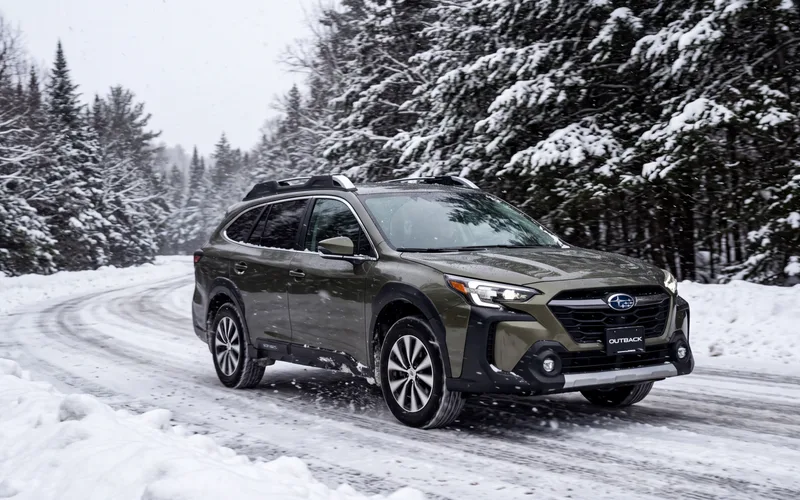 Subaru OutbackWagonBetter at: Value and space
It delivers the same lifted-wagon format with more rear legroom, roughly 75 cu ft of seats-down cargo and better off-pavement hardware for tens of thousands less.
Compare 2.82B-
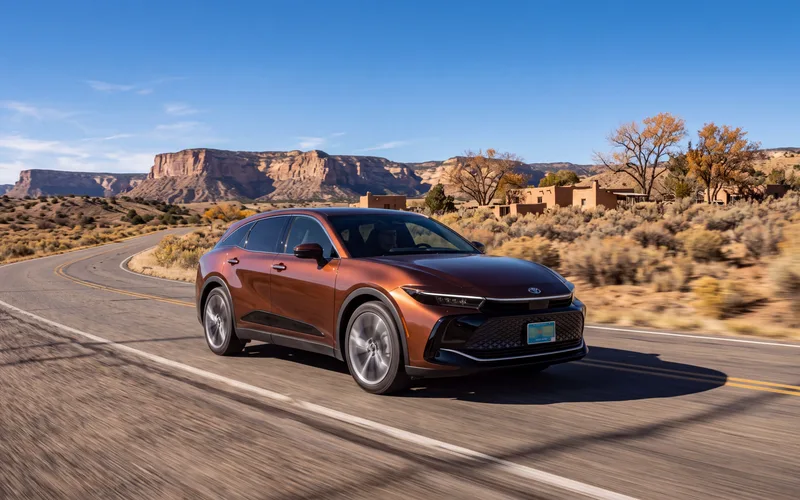 Toyota Crown SigniaMid-Size WagonBetter at: Efficiency
Its hybrid drivetrain returns 38 MPG combined on regular fuel — about $1,000 a year cheaper to run — with Toyota reliability and a longer powertrain warranty behind it.
Compare 2.48C+
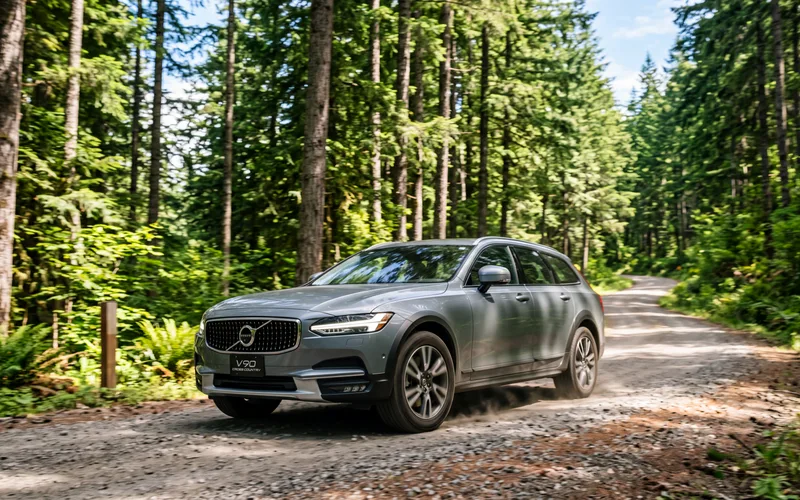 Volvo V90 Cross CountryLuxury WagonBetter at: Interior room
The larger Volvo wagon offers the same cabin and powertrain with meaningfully more rear-seat and cargo room, if you're willing to shop the used market now that it's gone from US showrooms.
CompareHow it's evolved
10 scored model years · 2017–2026
Subject scores by year
Hover or tap a score to see what moved it versus the year before. A corner mark flags a big swing.
| Year | Performance | Efficiency | Safety | Space | Cost | Reliability | Tech | Use-case | Driving | Value |
|---|---|---|---|---|---|---|---|---|---|---|
| 2026 | 50 | 32 | 78 | 78 | 24 | 69 | 79 | 67 | 69 | 62 |
| 2025 | 49 | 33 | 79 | 74 | 53 | 68 | 70 | 66 | 67 | 56 |
| 2024 | 50 | 33 | 78 | 75 | 31 | 69 | 69 | 66 | 69 | 62 |
| 2023 | 50 | 28 | 79 | 74 | 36 | 68 | 69 | 63 | 66 | 62 |
| 2022 | 48 | 26 | 76 | 73 | 45 | 70 | 60 | 61 | 65 | 60 |
| 2021 | 48 | 26 | 76 | 73 | 49 | 66 | 60 | 61 | 65 | 61 |
| 2020 | 48 | 26 | 74 | 73 | 45 | 63 | 58 | 62 | 64 | 62 |
| 2019 | 48 | 26 | 70 | 73 | 44 | 62 | 57 | 61 | 64 | 62 |
| 2018 | 46 | 35 | 41 | 61 | 57 | 65 | 32 | 52 | 61 | 50 |
| 2017 | 47 | 36 | 42 | 68 | 46 | 57 | 37 | 57 | 62 | 52 |
Compare two years
Best fit & conditions
Higher scores mean a better fit for that use case. Learn more about use-case fit →
Subject profile
Academic Probation · NHTSA safety recalls
No NHTSA safety recall is on record for the 2026 Volvo V60 Cross Country. Other model years of the V60 Cross Country have 17 — listed below.
17 recalls on other model years of the V60 Cross Country (2017–2025)
Dec 23, 2025Back over prevention: softwareThe rearview camera image may not display when the vehicle is placed in reverse. As such, these vehicles fail to comply with the requirements of Federal Motor Vehicle Safety Standard number 111, "Rear Visibility."
Defect
Volvo Car USA, LLC (Volvo Car) is recalling certain 2021-2025 XC40, 2022 V90, 2022-2024 C40BEV, 2022-2025 S90, V90CC, XC60, 2023-2025 S60, V60, V60CC, XC90, and 2025 EC40, and EX40 vehicles. The rearview camera image may not display when the vehicle is placed in reverse. As such, these vehicles fail to comply with the requirements of Federal Motor Vehicle Safety Standard number 111, "Rear Visibility."
Risk
A rearview camera image that does not display reduces the driver's view behind the vehicle, increasing the risk of a crash.
Remedy
The software will be updated by a dealer or through an over-the-air (OTA) update, free of charge. Owner notification letters were mailed February 24, 2026. Owners may contact Volvo Carâs customer service at 1-800-458-1552. Volvo Car's number for this recall is R10333. Vehicle Identification Numbers (VINs) involved in this recall will be searchable on NHTSA.gov beginning February 16, 2026. This recall replaces previous NHTSA recall number 25V282. Vehicles previously repaired under recall 25V282 will need to have the new remedy performed.
NHTSA campaign 25V908000 ↗Manufacturer no. R10333413,151 vehicles potentially affected (all models in the campaign)Owners notified Mar 2, 2026Filed by Volvo Car USA, LLCFiled as V60, V60CCMay 8, 2025Back over prevention: softwareThe rearview camera image may not display when the vehicle is placed in reverse. As such, these vehicles fail to comply with the requirements of Federal Motor Vehicle Safety Standard number 111, "Rear Visibility."
Defect
Volvo Car USA, LLC (Volvo Car) is recalling certain 2021-2025 XC40, 2022 V90, 2022-2025 S90, V90CC, C40, XC60, 2023-2025 S60, V60, V60CC, XC90, and 2025 EC40 and EX40 vehicles. The rearview camera image may not display when the vehicle is placed in reverse. As such, these vehicles fail to comply with the requirements of Federal Motor Vehicle Safety Standard number 111, "Rear Visibility."
Risk
A rearview camera image that does not display reduces the driver's view of what is behind the vehicle, increasing the risk of a crash.
Remedy
The software will be updated by a dealer or through an over-the-air (OTA) update, free of charge. Owner notification letters were mailed June 27, 2025. Owners may contact Volvo Car customer service at 1-800-458-1552. Volvo Car's number for this recall is R10320.
NHTSA campaign 25V282000 ↗Manufacturer no. R10320413,151 vehicles potentially affected (all models in the campaign)Owners notified Jun 27, 2025Filed by Volvo Car USA, LLCFiled as V60, V60CCMar 24, 2025Electrical system: propulsion system: traction battery · Electrical system: softwareThe high-voltage battery may experience a short circuit within the battery module when the battery is fully charged and the vehicle is parked.
Defect
Volvo Car USA, LLC (Volvo Car) is recalling certain 2020-2021 S90, 2020-2022 S60, V60, XC60, XC90, and 2022 V90 plug-in hybrid vehicles. The high-voltage battery may experience a short circuit within the battery module when the battery is fully charged and the vehicle is parked.
Risk
A short circuit in a high-voltage battery increases the risk of a fire.
Remedy
Owners are advised not to charge their vehicles until the remedy has been completed. Dealers will inspect and replace the high-voltage battery module as necessary. In addition, dealers will update the software to monitor the battery. All repairs will be performed free of charge. Owner notification letters were mailed May 28, 2025. Owners may contact Volvo Car's customer service at 1-800-458-1552. Volvo Car's number for this recall is R10312.
NHTSA campaign 25V179000 ↗Manufacturer no. R103127,483 vehicles potentially affected (all models in the campaign)Owners notified May 14, 2025Filed by Volvo Car USA, LLCFiled as V60Mar 22, 2023Electrical systemA diagnostic trouble code (DTC) may be falsely detected for the emergency call system (e-call) and display "e-Call Service Required" in the driver information module (DIM).
Defect
Volvo Car USA, LLC (Volvo Car) is recalling certain 2023 S60, V60CC, XC60, XC90, XC40, and C40 vehicles. A diagnostic trouble code (DTC) may be falsely detected for the emergency call system (e-call) and display "e-Call Service Required" in the driver information module (DIM).
Risk
The false warning message could prevent the detection of an actual e-call system failure, which could delay an emergency response during a crash, increasing the risk of injury.
Remedy
Dealers will update the telematics and connectivity antenna module (TCAM) software, free of charge. Owner notification letters are expected to be mailed May 16, 2023. Owners may contact Volvo Car's customer service 1-800-458-1552. Volvo Car's number for this recall is R10225.
NHTSA campaign 23V188000 ↗Manufacturer no. R10225393 vehicles potentially affected (all models in the campaign)Owners notified Apr 21, 2023Filed by Volvo Car USA, LLCFiled as V60CCJan 19, 2023Service brakes, hydraulicA diagnostic error in the Brake Control Module 2 (BCM2) may cause a loss of Antilock Brake System (ABS), Electronic Stability Control (ESC), and traction control.
Defect
Volvo Car USA, LLC (Volvo Car) is recalling certain 2023 S60, V60, V60CC, V90CC, XC60, XC90, XC40, and C40 vehicles. A diagnostic error in the Brake Control Module 2 (BCM2) may cause a loss of Antilock Brake System (ABS), Electronic Stability Control (ESC), and traction control.
Risk
A reduction in brake support functions can increase the risk of a crash.
Remedy
Volvo will release an over-the-air (OTA) BCM2 software update, free of charge. Owner notification letters are expected to be mailed March 15, 2023. Owners may contact Volvo Car customer service at 1-800-458-1552. Volvo Car's number for this recall is R10217.
NHTSA campaign 23V012000 ↗Manufacturer no. R1021727,457 vehicles potentially affected (all models in the campaign)Owners notified Feb 27, 2023Filed by Volvo Car USA, LLCFiled as V60, V60CCJan 5, 2023SteeringDuring steering gear assembly, double screws may have been assembled on top of each other, which can cause a screw to fall into the gearbox housing.
Defect
Volvo Car USA, LLC (Volvo Car) is recalling certain 2019-2022 V60CC, XC60, and XC90 vehicles. During steering gear assembly, double screws may have been assembled on top of each other, which can cause a screw to fall into the gearbox housing.
Risk
A screw inside the gearbox housing can cause the steering wheel to lock up and increase the risk of a crash.
Remedy
Dealers will replace the steering gear, free of charge. Owner notification letters are expected to be mailed March 1, 2023. Owners may contact Volvo Car's customer service at 1-800-458-1552. Volvo Car's number for this recall is R10213.
NHTSA campaign 23V001000 ↗Manufacturer no. R1021374 vehicles potentially affected (all models in the campaign)Owners notified Jan 31, 2023Filed by Volvo Car USA, LLCFiled as V60CCOct 20, 2022Engine and engine cooling: engine: engine control module (ecu/ecm)An electronic control module (ECM) software error may prevent the combustion engine from starting, causing a loss of drive power.
Defect
Volvo Car USA, LLC (Volvo Car) is recalling certain 2022-2023 S60, V60, S90L, XC60, and XC90 vehicles. An electronic control module (ECM) software error may prevent the combustion engine from starting, causing a loss of drive power.
Risk
The vehicle may lose drive power as the high voltage battery is depleted, increasing the risk of a crash.
Remedy
Dealers will update the ECM software, free of charge. Owner notification letters are expected to be mailed December 8, 2022. Owners may contact Volvo Car's customer service at 1-800-458-1552. Volvo Car's number for this recall is R10198.
NHTSA campaign 22V793000 ↗Manufacturer no. R1019815,674 vehicles potentially affected (all models in the campaign)Owners notified Dec 9, 2022Filed by Volvo Car USA, LLCFiled as V60Sep 1, 2021Seat belts · Seat belts: front: retractor · Seat belts: rear/other: retractorThe seat belt automatic locking retractors may deactivate early, which can prevent the child restraint system from securing properly. As such, these vehicles fail to comply with the requirements of Federal Motor Vehicle Safety Standard number 208, "Occupant Crash Protection."
Defect
Volvo Car USA, LLC (Volvo Car) is recalling certain 2021 XC40, XC 40 Recharge, V60CC, V90, V90CC, XC90, and 2021-2022 V60, XC60, S60 vehicles. The seat belt automatic locking retractors may deactivate early, which can prevent the child restraint system from securing properly. As such, these vehicles fail to comply with the requirements of Federal Motor Vehicle Safety Standard number 208, "Occupant Crash Protection."
Risk
An unsecured child restraint system can increase the risk of injury during a crash.
Remedy
Dealers will inspect and replace the seat belt assemblies, as necessary, free of charge. Owner notification letters were mailed October 13, 2021. Owners may contact Volvo Car customer service at 1-888-458-1552. Volvo Car's number for this recall is R10111.
NHTSA campaign 21V682000 ↗Manufacturer no. R1011119,149 vehicles potentially affected (all models in the campaign)Owners notified Oct 12, 2021Filed by Volvo Car USA, LLCFiled as V60, V60CCJun 2, 2021Electrical system: wiring: fuses and circuit breakers · Fuel system, gasoline: delivery: fuel pumpThe low-pressure fuel pump can blow a fuse and fail.
Defect
Volvo Car USA, LLC (Volvo Car) is recalling certain 2019-2020 V90, XC60, S60, V60, V60CC, S90, V90CC, S90L, and XC90 vehicles. The low-pressure fuel pump can blow a fuse and fail.
Risk
Failure of the low-pressure fuel pump can cause a stall, increasing the risk of a crash.
Remedy
Dealers will replace the fuse, free of charge. Owner notification letters were mailed July 2, 2021. Owners may contact Volvo Car customer service at 1-888-458-1552. Volvo Car's number for this recall is R10100.
NHTSA campaign 21V414000 ↗Manufacturer no. R1010085,550 vehicles potentially affected (all models in the campaign)Owners notified Jul 2, 2021Filed by Volvo Car USA, LLCFiled as V60, V60CCJan 7, 2021Air bags · Air bags: air bag/restraint control module · Seat belts: pretensionerThe Supplementary Restraint System (SRS) control unit may not have been properly attached to the car body and may detach during a crash.
Defect
Volvo Cars USA, LLC (Volvo Car) is recalling certain 2021 Volvo V60, V60 Cross Country, V90, V90 Cross Country, XC60, and XC90 vehicles. The Supplementary Restraint System (SRS) control unit may not have been properly attached to the car body and may detach during a crash.
Risk
A detached SRS control unit can decrease the performance of occupant protection systems such as air bags, seat belts, and high voltage battery disconnect, increasing the risk of injury during a crash.
Remedy
Volvo Car will notify owners, and dealers will inspect and, as necessary, tighten the SRS control unit mounting screws, free of charge. The recall began February 12, 2021. Owners may contact Volvo Car customer service at 1-888-458-1552. Volvo Car's number for this recall is R10068.
NHTSA campaign 21V001000 ↗Manufacturer no. R100682,883 vehicles potentially affected (all models in the campaign)Owners notified Feb 15, 2021Filed by Volvo Car USA, LLCFiled as V60, V60CCJun 30, 2020Seat belts: frontThe flexible steel cable that connects the seat belt to the front outboard seating positions may fatigue over time, causing the seat belt to not secure the occupant in the event of a crash.
Defect
Volvo Cars of N.A., LLC (Volvo) is recalling certain 2008-2016 V70 and XC70, 2007-2016 S80, 2011-2018 S60 and V60, 2016-2018 S60 Cross Country, 2014-2020 S60L, 2009-2015 S80L, 2009-2016 XC60 and 2015-2018 V60 Cross Country vehicles. The flexible steel cable that connects the seat belt to the front outboard seating positions may fatigue over time, causing the seat belt to not secure the occupant in the event of a crash.
Risk
An unsecured occupant has an increased risk of injury in the event of a crash.
Remedy
Volvo will notify owners, and dealers will replace the seat belt anchor cable for both front seats. The recall began December 10, 2020. Owners may contact Volvo customer service at 1-800-458-1552. Volvo's number for this recall is R10029.
NHTSA campaign 20V378000 ↗Manufacturer no. R10029308,260 vehicles potentially affected (all models in the campaign)Owners notified Dec 10, 2020Filed by Volvo Car USA LLCFiled as V60, V60CCMar 12, 2020Forward collision avoidance: automatic emergency braking · Forward collision avoidance: software: pedestrian/cyclist/object/obstacle/ recognitionDue to a software/hardware incompatibility, the Automatic Emergency Brake (AEB) system may not detect obstacles and engage as intended.
Defect
Volvo Cars USA LLC (Volvo Cars) is recalling certain 2019-2020 S60, V60, V60 Cross Country, S90L, V90, V90 Cross Country, XC40, XC60, and XC90 vehicles. Due to a software/hardware incompatibility, the Automatic Emergency Brake (AEB) system may not detect obstacles and engage as intended.
Risk
If the automatic emergency braking system does not engage as intended, it can increase the risk of a crash.
Remedy
Volvo will notify owners, and dealers will update the Active Safety Domain Master (ASDM) software, free of charge. The recall began April 9, 2020. Owners may contact Volvo customer service at 1-800-458-1552. Volvo's number for this recall is R29998.
NHTSA campaign 20V144000 ↗Manufacturer no. R29998121,605 vehicles potentially affected (all models in the campaign)Owners notified Apr 9, 2020Filed by Volvo Car USA LLCFiled as V60, V60CCNov 26, 2019Latches/locks/linkages: doors: latchA component within the door latches may break, making the doors difficult to latch and/or leading the driver or a passenger to believe a door is securely closed when, in fact, it is not.
Defect
Volvo Car of USA LLC (Volvo) is recalling certain 2011-2017 S60, S60I, V60, S60CC and V60CC vehicles. A component within the door latches may break, making the doors difficult to latch and/or leading the driver or a passenger to believe a door is securely closed when, in fact, it is not.
Risk
A door that is not securely latched could open while the vehicle is in motion, increasing the risk of injury to a vehicle occupant.
Remedy
Volvo will notify owners, and dealers will replace all four door latches, free of charge. The recall began April 9, 2020. Owners may contact Volvo customer service at 1-800-458-1552. Volvo's number for this recall is R89978.
NHTSA campaign 19V849000 ↗Manufacturer no. R89978144,937 vehicles potentially affected (all models in the campaign)Owners notified Apr 9, 2020Filed by Volvo Car USA LLCFiled as V60, V60CCNov 13, 2018Electrical system: softwareThe software installed in the Vehicle Connectivity Module (VCM) may have an error causing the Telematics and Driver Support Systems to function improperly. As a result, the GPS will not provide location information to emergency personnel in the event of an emergency.
Defect
Volvo Car USA LLC (Volvo) is recalling certain 2017-2019 Volvo XC90, S90, V60, V60 Cross Country, V90, XC40, XC60, and V90 Cross Country vehicles. The software installed in the Vehicle Connectivity Module (VCM) may have an error causing the Telematics and Driver Support Systems to function improperly. As a result, the GPS will not provide location information to emergency personnel in the event of an emergency.
Risk
If the GPS location is not provided to emergency personnel it can inhibit emergency response in the event of a crash or injury.
Remedy
Volvo will notify owners, and dealers will correct the software, free of charge. The recall began December 26, 2018. Owners may contact Volvo customer service at 1-800-458-1552. Volvo's number for this recall is R39917.
NHTSA campaign 18V800000 ↗Manufacturer no. R3991717,548 vehicles potentially affected (all models in the campaign)Owners notified Dec 26, 2018Filed by Volvo Car USA LLCFiled as V60, V60CCMar 1, 2017Air bagsThe affected vehicles have driver and front passenger seat side mounted side air bags (SAB) with inflator initiators that may fail to ignite during a crash. As such, these vehicles fail to comply with the requirements of Federal Motor Vehicle Safety Standard (FMVSS) number 208, "Occupant Crash Protection" and number 214, "Side Impact Protection."
Defect
Volvo Car USA LLC (Volvo) is recalling certain 2017 S60, S60CC, V60, V60 Cross Country, and XC60 vehicles. The affected vehicles have driver and front passenger seat side mounted side air bags (SAB) with inflator initiators that may fail to ignite during a crash. As such, these vehicles fail to comply with the requirements of Federal Motor Vehicle Safety Standard (FMVSS) number 208, "Occupant Crash Protection" and number 214, "Side Impact Protection."
Risk
If the air bag inflator initiator fails to ignite, the air bag will not deploy, increasing the risk of injury.
Remedy
Volvo will notify owners, and dealers will inspect and, if necessary, replace the front seat side air bags, free of charge. The recall began March 31, 2017. Owners may contact Volvo customer service at 1-800-458-1552. Volvo's number for this recall is R89712. Note: This recall is an expansion of recall 16V-918.
NHTSA campaign 17V127000 ↗Manufacturer no. R89712112 vehicles potentially affected (all models in the campaign)Owners notified Apr 21, 2017Filed by Volvo Car USA LLCFiled as V60, V60CCDec 21, 2016Air bagsThe affected vehicles have driver and front passenger seat side mounted side air bags (SAB) with inflator initiators that may fail to ignite during a crash. As such, these vehicles fail to comply with the requirements of Federal Motor Vehicle Safety Standard (FMVSS) number 208, "Occupant Crash Protection" and number 214, "Side Impact Protection."
Defect
Volvo Car USA LLC (Volvo) is recalling certain model year 2017 S60 and S60 Cross Country, V60 and V60 Cross Country, and XC60 vehicles manufactured August 16, 2016, through October 21, 2016. The affected vehicles have driver and front passenger seat side mounted side air bags (SAB) with inflator initiators that may fail to ignite during a crash. As such, these vehicles fail to comply with the requirements of Federal Motor Vehicle Safety Standard (FMVSS) number 208, "Occupant Crash Protection" and number 214, "Side Impact Protection."
Risk
If the air bag inflator initiator fails to ignite, the air bag will not deploy, increasing the risk of injury.
Remedy
Volvo will notify owners, and dealers will inspect and, if necessary, replace the front seat side air bags, free of charge. The recall is expected to begin on February 13, 2017. Owners may contact Volvo customer service at 1-800-458-1552. Volvo's number for this recall is R89712.
NHTSA campaign 16V918000 ↗Manufacturer no. R89712376 vehicles potentially affected (all models in the campaign)Owners notified Feb 13, 2017Filed by Volvo Car USA LLCFiled as V60Nov 2, 2016Seat belts: front: buckle assemblyOn the affected vehicles, the front passenger seat belt buckle attaching stud may loosen, allowing the buckle to separate from the seat belt bracket. As such, these vehicles fail to comply with the requirements of Federal Motor Vehicle Safety Standard (FMVSS) number 210, "Seat Belt Assembly Anchorages" and number 209, "Seat Belt Assemblies."
Defect
Volvo Car USA LLC (Volvo) is recalling certain model year 2016-2017 XC90, S90, XC60, V60 Cross Country, V60, S60 Cross Country, S60, and S60 Inscription vehicles manufactured February 16, 2015, to August 22, 2016. On the affected vehicles, the front passenger seat belt buckle attaching stud may loosen, allowing the buckle to separate from the seat belt bracket. As such, these vehicles fail to comply with the requirements of Federal Motor Vehicle Safety Standard (FMVSS) number 210, "Seat Belt Assembly Anchorages" and number 209, "Seat Belt Assemblies."
Risk
If the seat belt buckle separates from the bracket, the front seat passenger may not be adequately restrained in the event of a crash, increasing their risk of injury in the event of a crash.
Remedy
Volvo will notify owners, and dealers will inspect the front passenger seat belt buckle stud, replacing the seat belt buckle as needed, free of charge. The recall began January 2017. Owners may contact Volvo customer service at 1-800-458-1552. Volvo's number for this recall is R89708.
NHTSA campaign 16V798000 ↗Manufacturer no. R8970874,027 vehicles potentially affected (all models in the campaign)Owners notified Dec 16, 2016Filed by Volvo Car USA LLCFiled as V60
Source: NHTSA Office of Defects Investigation recall database, model years 2017–2026. Recalls are listed by model year as the manufacturer filed them; whether a specific car is affected depends on its VIN — check a VIN at nhtsa.gov ↗. NHTSA model names matched to this page: V60, V60CC.
Detailed scoring by subject
1Performance & PowertrainOne of the V60 Cross Country's weakest categories.1.35D
The US V60 Cross Country is offered with a single powertrain, the B5 AWD: a 2.0L turbocharged inline-four with a 48-volt integrated starter-generator, rated 247 hp @ 5,400 rpm. There is no higher-output or Polestar-engineered variant of the Cross Country in the US, so the volume figure is also the range maximum.
Peak torque for the B5 is 258 lb-ft, delivered across a broad 1,800–4,800 rpm plateau, with the 48-volt system contributing a brief low-rpm assist rather than a sustained torque increase.
Volvo quotes roughly 6.4 seconds to 60 mph for the B5 Cross Country, and instrumented tests of the mechanically identical earlier B5 cars have landed in the low-to-mid sixes — brisk for a lifted wagon but well short of the quick luxury-performance wagons it is priced against.
The B5 is quiet and smooth in normal driving and the 48-volt belt-driven starter-generator makes stop/start restarts far less obtrusive than the outgoing T5, but there is noticeable turbo lag from a standstill and the four-cylinder turns coarse and unluxurious when worked hard — a recurring reviewer criticism of Volvo's four-only strategy in a segment where rivals still offer sixes.
The 8-speed Aisin automatic shifts smoothly once moving and holds sensible ratios at cruise, but it is widely faulted for slow, reluctant kickdowns when power is called for and for occasional low-speed hesitation and driveline lurch, particularly in the more relaxed drive modes.
All-wheel drive is standard — the Cross Country is sold only as a B5 AWD — and it is paired with a raised ride height (roughly 8 inches of clearance), a dedicated Off Road drive mode and hill descent control. It falls short of the top band because the system is a front-biased on-demand clutch-pack setup with no low range or true torque vectoring, unlike the full-time symmetrical AWD of its most obvious rival.
The US Cross Country is a one-powertrain, effectively one-trim proposition: B5 mild hybrid only, with no plug-in hybrid Recharge, no higher-output variant and no EV alternative on the same body — a striking gap given Volvo offers T8 plug-in hybrids elsewhere in the lineup. The 48-volt system earns it a few points above a purely single-engine car, but there is no meaningful choice for the buyer.
2Efficiency & RangeOne of the V60 Cross Country's weakest categories.0.11F
Replaces placeholder with the real EPA figure for the B5 AWD mild-hybrid, the sole 2026 V60 Cross Country powertrain: 22/30/25 MPG city/hwy/combined. A 25-MPG combined rating sits near the bottom of the wagon band (22-60), well behind the hybrid Crown Signia (38) and the Outback (28).
EPA city rating for the B5 AWD. The 48V mild-hybrid system restarts the engine and recovers some braking energy but cannot drive the car on electricity, so city economy stays close to a conventional turbo-four with standard AWD.
EPA highway rating for the B5 AWD. Highway is the V60 Cross Country's strongest EPA number — the low-drag wagon body and tall 8-speed top gears help — but 30 MPG is still only modestly above the wagon band floor of 26.
Derived from the 60-liter (15.9 gal) SPA-platform fuel tank at the 25 MPG EPA combined rating. Roughly 400 miles is usable but unremarkable — about 120 miles short of the Outback and 150 short of the Crown Signia.
Derived with the EPA method: 15,000 mi / 25 MPG combined = 600 gallons, priced at premium rather than regular. The premium recommendation compounds the mediocre economy — running cost lands near the expensive end of the wagon band and roughly $1,000/yr above the Crown Signia.
Volvo specifies 91 AKI premium as recommended for the B5 engine; it will run on 87 AKI with reduced output, so this is a recommendation rather than a hard requirement — the middle band. Still a real ongoing cost penalty against the regular-fuel Outback (90) and Crown Signia (92), and there is no plug-in option to offset it with cheap home charging.
3SafetyOne of the V60 Cross Country's strongest categories.3.32B+
NHTSA has not published an overall star rating for the V60 or V60 Cross Country — Volvo's low-volume wagons are not part of NCAP's tested sample. Value inferred from the structurally identical SPA-platform S60 sedan and the V60's 5-star Euro NCAP result.
The second-generation V60 earned all-Good crashworthiness ratings and Top Safety Pick+ when IIHS tested it early in the generation, but it has not been re-run under the updated moderate-overlap (rear-passenger) or updated side protocols and does not appear on the current IIHS award list. Strong legacy structure, no current award.
Volvo makes City Safety collision avoidance, lane keeping, oncoming-lane mitigation, run-off-road mitigation, road sign information and driver alert standard on every car, and the US V60 Cross Country is sold only in upper trim(s), so BLIS with steer assist, Cross Traffic Alert with autobrake, Pilot Assist and the 360-degree camera come standard rather than as options.
Volvo City Safety earned Superior vehicle-to-vehicle and Superior daytime pedestrian front-crash-prevention ratings for this generation and covers cyclists, large animals and intersection turn-across-path conflicts. It has not been re-rated under the tougher higher-speed IIHS front crash prevention protocol, which caps the score below the top of the band.
BLIS adds active steer-assist intervention rather than alert-only warning, and Cross Traffic Alert brakes autonomously for approaching traffic when reversing — both in the intervention tier the top band asks for. Trailer-aware coverage is not relevant on a wagon with a modest tow rating.
Pilot Assist provides genuine lane centering, but reviewers consistently describe Volvo's implementation as conservative — it hands back control readily on faded markings and tighter curves, and the separate Lane Keeping Aid is criticized as abrupt when it intervenes.
Full-speed-range adaptive cruise with stop-and-go, integrated with lane centering as Pilot Assist — a coherent single-control highway assist. Marked down for the conservative, late-braking gap management and slow resume reviewers report rather than for any missing capability.
No hands-free highway system is offered on the V60 Cross Country. Pilot Assist is a hands-on system with a driver-attention nag; Volvo's unsupervised-driving work (Ride Pilot) is targeted at the EX90 and does not reach this platform.
Full-LED headlamps with Active Bending Lights and automatic high beam are standard on the single US trim, and this generation's headlights rated Good at IIHS — which is what allowed the original TSP+ award. Confidence is low because that rating is legacy data for the pre-facelift lamp.
The wagon greenhouse — tall, upright rear window and comparatively slim A-pillars — gives better natural rearward sightlines than the sedan or the SUVs it competes with; a high beltline and thick D-pillar cost it the top of the band, but the standard 360-degree camera compensates in parking.
Two outboard LATCH sets plus three top tethers in a five-seat two-row cabin, with easy tether access from the wagon's cargo area — but the lower anchors sit deep in the seat bight and the V60's rear-door aperture and rear legroom are tighter than the crossover-shaped wagons it competes with.
4Space & ComfortOne of the V60 Cross Country's strongest categories.3.27B+
The V60 Cross Country is a five-passenger, two-row wagon in every US configuration; unlike older large Volvo wagons there is no rear-facing jump seat on the SPA-generation car. Replaces a placeholder value of 4.9 seats.
Front headroom of roughly 38.0 in sits mid-band for wagons; the panoramic roof that is standard on the US Cross Country trim costs some of what a fixed-roof body would offer. Replaces a placeholder value.
Front legroom of 42.6 in is shared with the S60 sedan on the same 113.2 in wheelbase and is generous for the segment — front-seat space is not where this car is compromised. Replaces a placeholder value.
The wagon roofline buys a fraction of an inch of second-row headroom over the S60 sedan, landing near 37.6 in — adequate but not a standout, since the tapered rear glass gives some of that advantage back. Replaces a placeholder that sat well above the real figure.
Rear legroom of 35.2 in is this car's clearest packaging weakness — a compact-luxury figure carried straight over from the S60 sedan that trails the Outback (39.5 in) and Crown Signia (37.4 in) badly. The placeholder's 38.6 in materially overstated the car.
About 23.2 cu ft behind the second row clears the top of the wagon normalization band (10–20 cu ft), so the item maxes out even though the Volvo holds less than an Outback — the band is calibrated for sedan-derived wagons and hatchbacks. Replaces a placeholder value of 17.2 cu ft.
Competent and well-finished but not innovative: a modest center console and door bins up front, with the practicality concentrated in the load bay — underfloor bin, grocery-bag hooks, a folding cargo-floor divider, retractable cover and power-folding rear seat backs. Scandinavian minimalism costs it small-item space versus mainstream rivals, so the placeholder's 90 was too generous.
Volvo's front seats are a genuine class benchmark — orthopedically shaped, with extendable thigh cushions, power bolsters and available massage — and are the most consistently praised element of the car over long distances. Rear cushioning is good but hemmed in by 35.2 in of legroom, which keeps it just short of the very top.
The Cross Country's raised ride height, softer spring rates and taller-sidewall all-season tires make it noticeably more absorbent than a standard V60 over broken pavement. It stays a step behind the plushest comfort-tuned rivals because the rear suspension can still feel firm over sharp expansion joints.
A quiet, well-isolated luxury cabin with little wind noise at highway speed, helped by the mild-hybrid four loafing at cruise. The wagon body's larger glass area and open cargo bay admit more road roar than the sedan, so it is not quite library-quiet; the placeholder's 94 overstated it.
Comfort equipment is rich and largely standard on the single US Cross Country trim — heated front seats, heated steering wheel, dual-zone automatic climate with air purification, panoramic moonroof and app-based remote preconditioning. Ventilated front seats and four-zone climate need option packages, which keeps it out of the very top band.
5Cost of OwnershipThe V60 Cross Country's lowest-graded category.0.00F
The V60 Cross Country is sold in the US only as a well-equipped B5 AWD wagon, so the 'base' car is already a near-$60k luxury vehicle — far above the $22,000–$55,000 wagon normalization band, which pins this item at 0. Price walked up from the MY2022–2025 ladder plus European-import tariff pressure.
Plus is the volume configuration, and virtually every delivered car adds metallic paint, the Climate package and a wheel upgrade, putting real transaction MSRP around $61,500 — above the $24,000–$58,000 wagon band, so this item also floors at 0. There is no cheap way into this nameplate.
European luxury running costs — premium fuel, Volvo dealer labor rates, expensive 19/20-inch tire fitments and 48V mild-hybrid components — put this near the costly end of the $2,500–$9,000 wagon band. Volvo's complimentary factory scheduled maintenance and the 4-year basic warranty absorb most of the first four years, so the estimate is dominated by year-5 out-of-warranty repair exposure plus tires and brakes.
This is the single biggest cost of owning the car and the weakest line in the category. Volvo sits among the steeper-depreciating mainstream-luxury brands, and a high-MSRP European wagon compounds it: a small enthusiast following supports the used market somewhat, but not enough to offset a ~$60k starting point against a 35–65% wagon retention band.
Volvo's New Vehicle Limited Warranty runs 4 years/50,000 miles — a year longer than the mainstream 3/36 standard and exactly the German luxury norm, landing mid-band on the 3–5 year scale. The 50,000-mile cap is the real constraint for high-mileage drivers.
Volvo does not offer a longer standalone powertrain warranty in the US — the engine, 48V mild-hybrid system and transmission are covered only for the same 4 years/50,000 miles as the basic warranty. Against a 5–10 year band that scores 0, and it is a genuine disadvantage versus mainstream rivals: the Subaru Outback and Toyota Crown Signia both carry 5 yr/60,000 mi powertrain coverage.
The strongest item in the category: Volvo pairs multi-year included factory scheduled maintenance with 4 years of unlimited-mileage roadside assistance and an included connected-services period covering the Google built-in infotainment. That combination clears the 80+ 'multi-year included maintenance plus meaningful perks' bar, though it is the luxury-segment norm rather than a standout, and with no plug-in variant there are no charging credits to add.
$61,500 volume-trim price minus its estimated resale value after 5 years (43% retained, or about $26,445) leaves about $35,055 in depreciation. Add the projected $7,800 in 5-year maintenance and repairs, and owning this vehicle for 5 years costs about $42,855 in total.
6Reliability & QualityMid-pack among this car's ten categories.2.66C+
The 2026 V60 Cross Country is a late-run, essentially unchanged carryover of the SPA-platform second generation on sale since 2019, so it carries no first-year risk, and its B5 mild-hybrid gas drivetrain avoids the Recharge PHEV/EV complexity that drags Volvo's model-level predicted-reliability grades down. Consumer Reports has generally graded the V60 family around average, with the recurring complaint area being the Google-built-in infotainment and electronics rather than mechanicals.
Volvo has been a persistent bottom-third brand in Consumer Reports' annual reliability rankings across recent years and has scored below the industry average in J.D. Power's Vehicle Dependability Study, placing it behind Audi and BMW — which score 65 and 72 respectively on this item elsewhere in the dataset. Electronics and infotainment, not drivetrain failures, drive the ranking.
The 2019-onward SPA V60 generation has accumulated a moderate campaign count typical of a European luxury model, including the large multi-model front-seatbelt-cable recall covering 2019–2022 Volvos plus several driver-assist and infotainment software campaigns. Nothing systemic on the fire, powertrain-family or structural side, but the volume of electronics-related campaigns runs above what a Toyota-family wagon posts.
The B5's 2.0L turbo four comes from Volvo's VEA/Drive-E family, in continuous production since 2014 and refined repeatedly, paired with the well-proven Aisin 8-speed automatic. That is a solid but not exceptional record: early Drive-E units drew PCV-system and oil-consumption complaints, the wet timing belt is a scheduled replacement item rather than a lifetime part, and the 48V integrated starter-generator added with the B5 designation is a newer subsystem with some reported failures. Rated below the BMW B58 (87) and Audi EA888 (82) benchmarks in this dataset.
Volvo cabin materials are a consistent class-leading strength in press coverage — open-pore driftwood and metal-mesh trim, wool-blend and Nordico upholstery, and switchgear that reads richer than the price. Reviewers routinely rank the V60 interior at or above the German compact-luxury benchmark, and it is the strongest single element of this vehicle's quality case.
Physical assembly quality is strong — the V60 is European-built on a mature line with a full generation of production refinement behind it, and reviewers report tight panel fit and a solid, rattle-free structure. The score stops short of the high 80s because Volvo's J.D. Power Initial Quality standing runs below average, though those demerits concentrate in infotainment and connectivity complaints rather than build defects.
Volvo runs one of the smaller US luxury networks at roughly 280 franchised retailers, thinner than BMW or Mercedes-Benz and noticeably sparse outside metro areas — a real consideration for a low-volume wagon that needs a marque-specific technician. Service satisfaction is mid-pack rather than a differentiator, so this lands below BMW (78) and Audi (72) in the dataset.
Volvo running costs sit above the industry average but modestly below the German three, with RepairPal-type indices putting annual maintenance in the high-$700s against a roughly $650 all-brand average. The bigger constraint is model-specific: the V60 Cross Country is a low-volume wagon with a thin independent-specialist and aftermarket base, so body, glass and trim parts are largely dealer-channel with longer lead times than the XC60 it shares most mechanicals with.
7Technology & InfotainmentThe V60 Cross Country's best-graded category.3.35B+
The V60 Cross Country carries the original SPA1 9.0-inch portrait head unit, unchanged in hardware since the car launched — the 11.2-inch screen that arrived with the 2025 XC90/XC60 updates never reached the wagon, and there is no larger option on any trim.
Google built-in (Android Automotive) is clean, logically laid out and genuinely good at search and destination entry, but the small 9-inch portrait screen and aging SPA1 hardware mean small touch targets, occasional wake-up lag, and climate and defrost functions living on-screen with almost no physical switchgear.
Wireless Apple CarPlay is standard (added to Volvo's Google-built-in cars by software update) and Android Auto support followed, so both projection platforms are available on the single well-equipped trim with no paywall. It stops short of the top of the band because projection runs in a letterboxed window on the narrow portrait screen rather than filling it.
Google built-in means the native navigation IS Google Maps — live traffic, real POI search, no stale onboard map database — and Google Assistant handles natural-language destination, climate and media requests. This is the reference implementation for the category; owners have no reason to bypass it for phone projection.
The Cross Country's top-trim positioning brings the Harman Kardon premium system as standard rather than an upcharge, and Volvo's 60-series wagons have long been offered with a Bowers & Wilkins upgrade that is among the best in any wagon. Sound quality is consistently rated a strength; it misses the top of the band only because the very best B&W setup may not be orderable on this end-of-life model.
A 12.3-inch fully digital driver display is standard, with map-in-cluster fed by the native Google Maps and clean, legible Volvo graphics. It sits below the top of the band because the layout is far less configurable than newer rivals' clusters and the graphics are a generation behind Volvo's own EX-series.
Volvo pushes regular over-the-air updates to Google built-in cars that go beyond maps — infotainment software, app support and some vehicle-system fixes have all arrived that way, including the CarPlay addition. It falls short of the top band because this end-of-life SPA1 wagon is late in its update curve and feature-adding drops are far rarer than on Volvo's newer EX platform.
The Volvo Cars app is a polished, well-reviewed app covering remote lock/unlock, remote climate preconditioning, vehicle locate, send-to-car destinations and service booking, included with the car rather than sold as an add-on. It sits below the top of the band because phone-as-key/digital-key sharing is a newer-model strength that this platform only partially matches.
Volvo moved the 60-series to USB-C some years ago, so front and rear passengers get modern ports and a wireless charging pad is part of the standard equipment on this trim. It is only adequate rather than abundant: the port count is modest by 2026 standards and there is no household AC outlet in the cabin or cargo bay.
Proximity keyless entry with push-button start is standard, the power tailgate offers hands-free foot-activated opening, and remote start/preconditioning runs through the Volvo Cars app rather than a key fob. It lands mid-upper band because phone-as-key is not the mature, broadly supported feature here that it is on Volvo's newest platforms.
The Cross Country's single well-equipped trim includes the 360-degree surround-view camera plus front and rear parking sensors and Volvo's Park Assist Pilot semi-automated parking, so nothing important is trapped behind an options walk. Image resolution is the weak point — the camera hardware dates to the SPA1 launch and looks soft next to current rivals.
Volvo's windshield-projected colour head-up display is part of the top-grade equipment the V60 Cross Country is sold with, so a buyer of the volume (effectively only) configuration gets it as standard — the best-case answer for this item. It is a smaller, more conventional projection than the largest AR-style HUDs now appearing elsewhere.
8Use-Case FitMid-pack among this car's ten categories.2.51C+
Wagon packaging helps daily kid logistics: low step-in, wide-opening rear doors and a low cargo liftover that beats any comparably priced SUV for stroller loading, plus Volvo's signature integrated rear booster cushion as an option. Held back by a tight 35.2 in of second-row legroom — well short of the Outback's ~39.5 in — five-seat-only capacity, and outboard-only LATCH.
Volvo's standard suite is comprehensive on every trim — City Safety AEB with pedestrian/cyclist/large-animal detection, lane keeping aid, run-off-road mitigation, oncoming-lane mitigation and Pilot Assist — and the brand carries top-tier safety credentials. Scored below the class leaders because the V60's published crash-test record is stale: it has not been retested under IIHS's updated 2023+ side and moderate-overlap protocols, and blind-spot/360-camera content is trim- or option-dependent rather than standard across the board.
Class-benchmark front seats, a hushed cabin, standard panoramic moonroof and 23.2 cu ft of luggage space behind an occupied second row make this a genuinely pleasant four-person tourer. Rear amenities are thin for the price — dual-zone (not tri-zone) climate, no rear entertainment — and the modest rear legroom tells on teenagers over multi-hour stints.
Light steering, excellent outward visibility from the low wagon body, a compliant raised suspension and standard Pilot Assist adaptive cruise with lane centering make traffic duty low-effort. Two documented irritants keep it out of the top band: the B5 mild hybrid hesitates off boost, and the 8-speed automatic can be slow to downshift and occasionally jerky at parking speeds.
The weakest use-case axis: 25 MPG combined on recommended premium fuel works out to roughly $2,400/yr at 15,000 mi, against 29 MPG on regular for an Outback and 39 MPG for a Crown Signia hybrid. Volvo parts and scheduled-maintenance pricing sit above the mainstream norm, and no plug-in or full-hybrid V60 Cross Country is offered to soften the per-mile cost.
At ~187.9 in long it is shorter and appreciably lower than the SUVs it shops against, with a low hood and big glass area that make placing the nose easy; a 360-degree camera is available. The ~37–38 ft turning circle is unremarkable and the raised ride height plus cladding add width, so it is easy rather than genuinely nimble in tight urban garages.
Rated up to roughly 3,500 lb braked with the factory-accessory hitch, which covers a small utility or boat trailer, and the 258 lb-ft B5 pulls adequately. Beyond that there is no work headroom at all: no bed, a modest carpeted cargo bay, car-derived payload and a unibody wagon tuned for ride rather than load.
A luxury wagon with leather and carpet throughout, no wear-friendly upholstery option comparable to Subaru's StarTex, and no fleet or trade presence to establish a hard-use track record. Volvo's recent reliability standing is average-to-below in owner surveys and the 48V mild-hybrid system adds complexity, so hard work duty is unproven territory rather than a known strength.
Real but light-duty provisions: standard roof rails, cargo tie-down hooks, a folding cargo floor divider with bag hooks, a 12V outlet in the load bay and a broad Volvo accessory catalogue of racks, boxes, bike carriers and dog gates. Nothing beyond that — no onboard AC power, no washable surfaces, and no aftermarket upfit ecosystem the way a truck or work van has.
The car's strongest suit and the reason it exists. Volvo's extendable-cushion front seats are a class benchmark for multi-hour stints, the cabin is quiet at cruise, the Cross Country's taller sidewalls settle the ride over broken highway, Pilot Assist handles long slogs, and ~398 mi of range keeps stops infrequent. Only tire roar through the open cargo bay keeps it from the very top.
Standard AWD, roughly 8 in of ground clearance, an Off Road drive mode with hill descent control, standard roof rails and a ~3,500 lb tow rating make it a legitimate ski-trip and forest-road machine — comfortably more than a standard V60. It stops short of the Outback's 87 because there is no skid-plate protection or dual-mode terrain system, tires are road-biased all-seasons, and the cladding is more cosmetic than structural.
Excellent load-bay shape — long, low, flat and square — with 60/40 power-folding rear seats, underfloor storage, a folding cargo divider with bag hooks, standard roof rails and an available hitch. The limitation is sheer volume: 50.9 cu ft with the seats down is well behind the Outback's ~75 cu ft, so bulky gear is a packing exercise rather than a non-issue.
9Driving ExperienceMid-pack among this car's ten categories.2.65C+
Built on the same SPA car platform as the S60/V60 but lifted roughly 2.4 inches with softer springs and taller-sidewall all-season tires, the Cross Country trades the standard wagon's tautness for compliance: it corners securely and with well-checked body motions, staying far flatter and better damped than the crossover-style wagons it is cross-shopped against, but it leans earlier and grips less than a sport-oriented luxury wagon like the A4/A6 Allroad. Composed and confidence-inspiring rather than agile.
Volvo's electrically assisted rack is accurate, consistent off-center and offers selectable weighting through the drive modes, which makes the car easy to place on a back road and effortless in parking lots. It is also the car's most-criticized dynamic trait: feedback is essentially absent, and the added assistance in the softer settings makes it feel disconnected from the front tires.
Stopping power is a strength: instrumented 70–0 mph runs for the mechanically related B5-powered S60/V60 have landed in the mid-160-to-low-170-foot range, which is good for an all-season-shod wagon, and the brakes resist fade well on repeated stops. The pedal is the weak point — a slightly long, soft initial travel before the bite firms up, a trait of Volvo's regen-blended setup that reviewers regularly flag even while praising the outright stopping distances.
The 48-volt belt-driven starter-generator is the calibration's best feature, restarting the engine so quickly and quietly that stop/start is nearly imperceptible and smoothing the worst of the low-speed driveline shunt. Against that, there is real off-boost hesitation when pulling away from a standstill, and the 8-speed Aisin automatic is reluctant to kick down when a gap in traffic needs to be taken — the drivability calibration prioritizes smooth cruising over crisp response.
At a steady cruise the powertrain all but disappears — the engine is well isolated, idle vibration through the wheel and pedals is minimal, and the cabin is hushed. Worked hard, though, the 2.0-liter four turns coarse and buzzy in a way that reads as distinctly un-luxurious for the price, the standing complaint about Volvo's four-cylinder-only strategy in a segment where rivals still fit sixes.
Volvo's published V60 figure is 11.4 m curb-to-curb (37.4 ft), and US listings for the Cross Country on its standard 19-inch wheels run slightly higher, in the 37.7–38.1 ft range. Roughly mid-pack for a wagon — maneuverable enough for the vehicle's 187-inch length but no better than average.
The seats are the car's signature strength — orthopedically developed, broadly adjustable with power thigh extension and side bolsters, and among the best in any vehicle at any price for long-haul comfort — and the wagon greenhouse gives genuinely good over-the-shoulder and rearward sightlines that most crossovers cannot match. What holds it back from the top band is control placement: nearly every secondary function, climate included, lives in the 9-inch portrait touchscreen, forcing eyes off the road for adjustments that rivals leave on physical switches, and the shifter needs a double-nudge to select a gear.
The appeal here is the format rather than the driving: enthusiasts recommend the V60 Cross Country because it is one of the last lifted luxury wagons on sale, not because it rewards a twisty road. Numb steering, a soft-edged chassis and a coarse, laggy four-cylinder leave it pleasant, quiet and satisfying to cover ground in — a fine companion on a long drive, but not a car that tempts you to take the long way home.
10Value & Market PositionMid-pack among this car's ten categories.2.15C
The Plus/Ultra lineup is well stocked for a luxury wagon: AWD, the B5 48-volt mild-hybrid powertrain, panoramic moonroof, heated front seats and steering wheel, power tailgate, 12.3-inch driver display, Google built-in infotainment, and the full Pilot Assist / City Safety driver-assist suite are standard rather than optional — content German rivals typically bundle into four-figure packages.
At roughly $58k-$63k for 247 hp and compact-wagon packaging, it asks luxury money for modest performance and less cargo and passenger room than Volvo's own XC60, which starts materially lower — content is good but the price-to-capability ratio is only fair, propped up mainly by the near-absence of surviving lifted-wagon rivals.
Effectively a take-it-or-leave-it lineup: one powertrain (B5 mild-hybrid), AWD only, and a two-step Plus/Ultra ladder with option choice largely limited to wheels, paint, and a climate package — no entry point below the high-$50k range and no plug-in or performance variant offered on the Cross Country in the US.
A niche seller in a collapsing body style — US V60 Cross Country volume runs in the low thousands per year against six-figure sales for the crossovers buyers cross-shop, and wagon demand keeps eroding as Volvo's own XC60 and XC90 absorb it.
Volvo carries a genuinely positive premium image built on safety leadership and Scandinavian design, with a loyal if small following that skews toward exactly this wagon's buyer — but it lacks the aspirational pull and residual strength of Mercedes, BMW, or Porsche in the luxury field.
Low-volume luxury models with slow turn rates are among the most negotiable cars on a lot, and Volvo Car Financial Services habitually supports the lineup with subvented leases and low-APR offers — real buyer benefit, driven by soft demand rather than by a discount-free market.
The second-generation V60 dates to the 2019 model year on the SPA platform, making 2026 roughly its eighth year on sale; the 2022 styling update and the 2023 switch to Google built-in infotainment were mid-cycle freshening, and with the V90 Cross Country already withdrawn the practical buyer risk here is discontinuation rather than replacement.
Reviewers consistently praise the seats, ride quality, interior design, and the sheer rarity of a lifted luxury wagon, while docking merely adequate B5 power, an infotainment system that buries common functions, and a price close to roomier crossovers — a well-liked car that seldom headlines comparison tests, partly because so few direct rivals remain to test it against.