

The verdict
A capable mid-size wagon, strong on reliability and held back by performance.
The 2026 Toyota Crown Signia is a quiet, comfortable hybrid wagon built for people who want SUV cargo space without the SUV — 25.8 cubic feet behind the back seat, 38 MPG combined on regular gas, and all-wheel drive standard on both trims. Toyota's proven 2.5-liter hybrid drivetrain makes it one of the safest long-term bets in the segment, and the ride and cabin quietness are the best things about driving it. The catch is money: the volume Limited runs about $51,300 delivered, the warranty is the industry-minimum 3 years/36,000 miles, and 240 horsepower and a 7.1-second 0-60 are merely adequate at that price. Buy it for comfort, economy and reliability; look elsewhere if you want value per dollar, a driver's car, or a wagon that can leave the pavement.
Jump to scoresStrengths
- Toyota hybrid reliability, with the receipts
- Compact-SUV cargo space in a wagon body
- A genuinely restful long-distance car
What holds it back
- Industry-minimum warranty on a $50,000 car
- Slow, one-engine-only powertrain
- Premium price without a premium badge or premium content
Top alternatives
Cars shoppers cross-shop with the Toyota Crown Signia 2.41C+
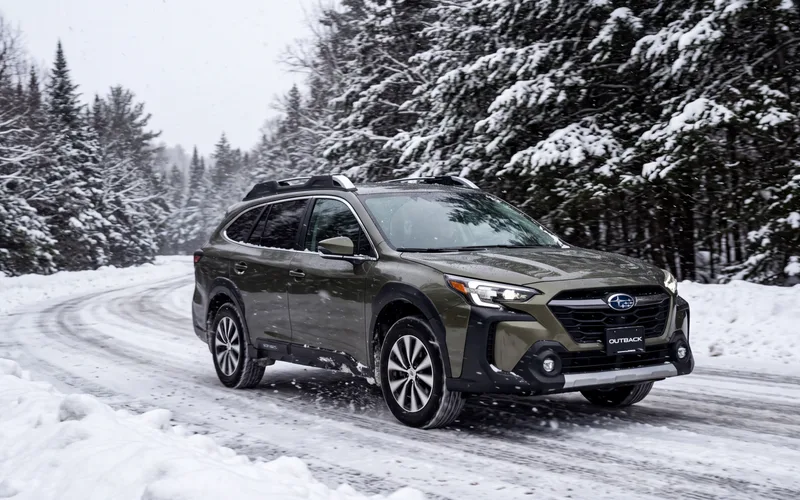 Subaru OutbackWagonBetter at: Value and capability
Starts roughly $12,000 less, holds about 34.6 cubic feet behind the rear seat and can actually handle a rough trail with 8.7 inches of clearance and X-MODE.
Compare 2.70B-
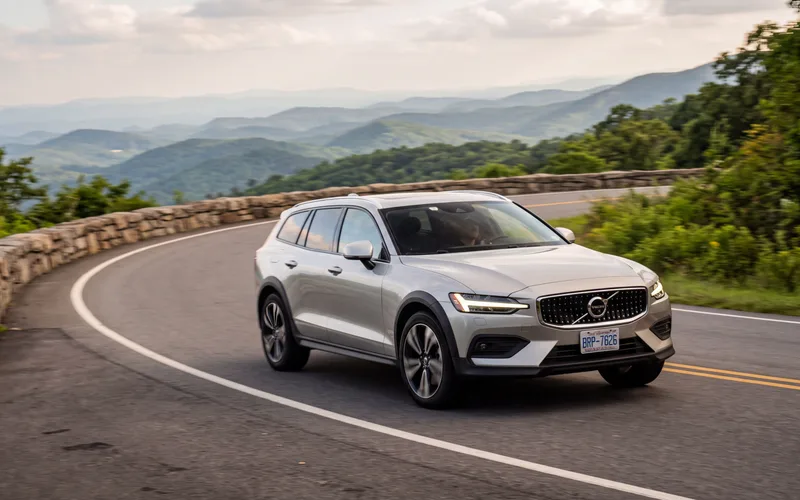 Volvo V60 Cross CountryLuxury WagonBetter at: Interior and handling
For similar money it delivers a genuinely upscale interior and real steering feel — the driving and design the Signia deliberately trades away for serenity.
Compare2.48C+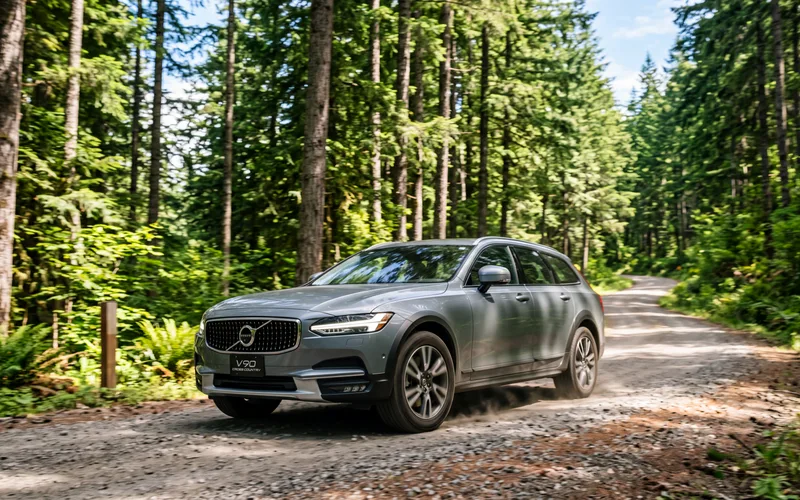 Volvo V90 Cross CountryLuxury WagonBetter at: Luxury and size
The step-up choice if the Signia's price already has you in premium territory and you'd rather have a bigger, more luxurious wagon with a badge to match.
CompareSubject scores by year
Hover or tap a score to see what moved it versus the year before. A corner mark flags a big swing.
| Year | Performance | Efficiency | Safety | Space | Cost | Reliability | Tech | Use-case | Driving | Value |
|---|---|---|---|---|---|---|---|---|---|---|
| 2026 | 45 | 81 | 76 | 76 | 48 | 87 | 75 | 68 | 63 | 68 |
| 2025 | 44 | 79 | 83 | 79 | 53 | 83 | 70 | 70 | 61 | 69 |
Compare two years
Best fit & conditions
Higher scores mean a better fit for that use case. Learn more about use-case fit →
Subject profile
Academic Probation · NHTSA safety recalls
No NHTSA safety recall is on record for the 2026 Toyota Crown Signia. Other model years of the Crown Signia have 3 — listed below.
3 recalls on other model years of the Crown Signia (2025)
Mar 24, 2026Equipment: other: labelsThe load carrying capacity modification label may display inaccurate added weight values. As such, these vehicles fail to comply with the requirements of Federal Motor Vehicle Safety Standard number 110, "Tire Selection and Rims."
Defect
Toyota Motor Engineering & Manufacturing (Toyota) is recalling certain 2024-2025 Toyota Tundra, Tacoma Hybrid, Tacoma, RAV4 Hybrid, Land Cruiser Hybrid, Lexus GX550, 2024-2026 Tundra Hybrid, 2025 Sequoia Hybrid, Crown Signia, Grand Highlander, Lexus TX500 Hybrid, Lexus NX350 Hybrid, 2025-2026 Grand Highlander Hybrid, and Lexus TX350 vehicles. The load carrying capacity modification label may display inaccurate added weight values. As such, these vehicles fail to comply with the requirements of Federal Motor Vehicle Safety Standard number 110, "Tire Selection and Rims."
Risk
A vehicle with an incorrect maximum capacity weight value may be overloaded, which can increase the risk of a crash.
Remedy
Dealers will replace the load carrying capacity modification label, free of charge. Owner letters were mailed May 26, 2026. Owners may contact Toyota's customer service at 1-800-331-4331. Toyota's numbers for this recall are 26LB04, 26LA04, 26TB07, and 26TA07.
NHTSA campaign 26V179000 ↗Manufacturer no. See attached Part5738,230 vehicles potentially affected (all models in the campaign)Owners notified May 22, 2026Filed by Toyota Motor Engineering & ManufacturingFiled as CROWN SIGNIAOct 30, 2025Back over prevention: display functionPlease see the recall report for a complete list of models. A software error may cause the rearview camera to freeze or display a blank screen when the vehicle is in reverse. As such, these vehicles fail to comply with the requirements of Federal Motor Vehicle Safety Standard (FMVSS) number 111, "Rear Visibility."
Defect
Toyota Motor Engineering & Manufacturing (Toyota) is recalling certain 2022-2026 Toyota, Lexus, and Subaru Solterra vehicles equipped with a Panoramic View Monitor (PVM) system. Please see the recall report for a complete list of models. A software error may cause the rearview camera to freeze or display a blank screen when the vehicle is in reverse. As such, these vehicles fail to comply with the requirements of Federal Motor Vehicle Safety Standard (FMVSS) number 111, "Rear Visibility."
Risk
A rearview camera that fails to display an image can reduce the driver's view behind the vehicle, increasing the risk of a crash.
Remedy
Dealers will update the parking assist software, free of charge. Owner letters were mailed January 2, 2026. Owners may contact Toyota's customer service at 1-800-331-4331. Toyota's numbers for this recall are 25TB13 and 25LB06. Subaru's number for this recall is WRE25.
NHTSA campaign 25V744000 ↗Manufacturer no. 25TB13/25LB06/WRE251,024,407 vehicles potentially affected (all models in the campaign)Owners notified Dec 5, 2025Filed by Toyota Motor Engineering & ManufacturingFiled as CROWN SIGNIASep 11, 2025Electrical system: instrument cluster/panelDue to an error in the instrument panel software at vehicle startup, the instrument panel may fail to display vehicle speed, brake system, and tire pressure warning lights.
Defect
Toyota Motor Engineering & Manufacturing (Toyota) is recalling certain 2023-2024 Toyota Venza, 2023-2025 RAV4 Prime, RAV4, Highlander, GR Corolla, Crown, 2024-2025 Lexus TX, LS, Toyota Tacoma, Grand Highlander, and 2025 Lexus RX, Toyota Crown Signia, Camry, RAV 4 Plug-in Hybrid (PHEV), and 4 Runner vehicles. Due to an error in the instrument panel software at vehicle startup, the instrument panel may fail to display vehicle speed, brake system, and tire pressure warning lights.
Risk
An instrument panel display that does not show critical information can increase the risk of a crash or injury.
Remedy
Dealers will update the instrument panel software over-the-air (OTA) for non-PHEV vehicles, free of charge. For PHEV vehicles, dealers will inspect the instrument panel assembly, and either replace it, or update the software, free of charge. Owner letters were mailed December 5, 2025. Additional letters will be sent, anticipated in May 2026. This is a phased recall. Owners may contact Toyota's customer service at 1-800-331-4331. Toyota's numbers for this recall are 25TB08 and 25TA08. Lexus' numbers for this recall are 25LB05 and 25LA05.
NHTSA campaign 25V595000 ↗Manufacturer no. See Part 573 Report591,377 vehicles potentially affected (all models in the campaign)Owners notified Dec 5, 2025Filed by Toyota Motor Engineering & ManufacturingFiled as CROWN SIGNIA
Source: NHTSA Office of Defects Investigation recall database, model years 2025–2026. Recalls are listed by model year as the manufacturer filed them; whether a specific car is affected depends on its VIN — check a VIN at nhtsa.gov ↗. NHTSA model names matched to this page: CROWN SIGNIA.
Detailed scoring by subject
1Performance & PowertrainThe Crown Signia's lowest-graded category.0.98F
The Crown Signia is hybrid-only: a 2.5L four-cylinder paired with front and rear electric motors for a combined 240 hp, identical on XLE and Limited, so the volume trim is the only configuration. That is mid-pack for a mid-size wagon and well short of turbocharged European rivals, though it comfortably clears the base Outback's 180 hp.
The A25A-series 2.5L makes 163 lb-ft, and as with all Toyota hybrids no combined system torque figure is published, so the engine peak is the comparable number. On the road the instant fill-in from the front and rear motors makes low-speed response feel stronger than 163 lb-ft suggests, but the headline figure is low for the segment.
Toyota quotes roughly 7.1 seconds to 60 mph and instrumented tests have clustered in the low sevens, helped by the rear motor adding traction off the line. Adequate and noticeably quicker than a base Outback, but the Signia is tuned for smooth cruising rather than pace and never feels fast.
Toyota's fifth-generation hybrid system is one of its strongest assets here — engine start/stop and EV-to-gas handoffs are essentially imperceptible, and the car pulls away on electric power quietly and smoothly. It loses points only under hard throttle, where the 2.5L gets vocal and the delivery turns thin relative to turbocharged rivals.
The planetary power-split eCVT has no physical gears to hunt between, so there is no shift shock, no hesitation and no gear-selection confusion in normal driving — structurally better behaved than the belt-type CVTs it competes with. The familiar penalty applies: under sustained hard acceleration engine revs decouple from road speed and drone.
All-wheel drive is standard on every Crown Signia — there is no front-drive version — which is a genuine strength and the main reason this scores in the upper band. It is Toyota's Electronic On-Demand system, though, with a rear motor and no driveshaft: fine for wet roads and light snow, but with no terrain modes, no low range and no locking hardware it is less sophisticated than the Outback's full-time symmetrical AWD with X-MODE.
There is exactly one powertrain: the 240-hp 2.5L hybrid with standard AWD, offered on both trims with no alternative. Buyers get no turbo, PHEV or EV option and no way to trade efficiency for pace — this is a take-it-or-leave-it lineup, scored below the Outback's 45 (two distinct gas engines) despite the Signia's sole offering being the electrified one.
2Efficiency & RangeOne of the Crown Signia's strongest categories.3.48B+
Crown Signia is hybrid-only, using Toyota's 2.5L four-cylinder hybrid with a rear eAxle (243 hp combined) carried over unchanged from its MY2025 launch; EPA combined for the volume XLE is 38 MPG. Far ahead of the non-hybrid wagon field, but the wagon band tops out at 60 MPG because it shares normalization with sedans and hatchbacks, so 38 lands mid-pack.
City is the hybrid's strongest figure — the eCVT and electric launch let it beat its own highway number, an inversion no conventional wagon in the segment achieves. Roughly 50% better than the Outback's 26 MPG city.
Highway is the weak leg of the hybrid's profile — at steady speed the electric assist contributes little and the AWD wagon's frontal area dominates. Still comfortably above the segment's gas wagons, but it scores low against a band calibrated to include efficient sedans and hatchbacks.
A modest 14.5-gallon tank is offset by strong combined economy to yield roughly 550 miles between fills — well above the Outback's ~518 miles despite carrying four fewer gallons of fuel.
At EPA's standard 15,000 mi/yr assumption the Signia burns about 395 gallons of regular, landing near $1,380 at recent pump prices. That is roughly $500/yr less than the Outback and among the lowest running costs in the wagon segment outside a plug-in.
Regular 87-octane unleaded is all the 2.5L hybrid asks for, with no premium recommendation, no diesel or DEF complication, and no charging infrastructure to arrange. About as simple and cheap to fuel as a Premium-class vehicle gets.
3SafetyGrades above the middle of the scale.3.13B
NHTSA has not published a 5-Star Safety Rating for the Crown Signia in either of its two model years — a common outcome for a low-volume nameplate — so the value is carried from the closely related TNGA-K vehicles it shares its structure and restraint package with, every one of which rates 5 stars overall. The estimate is well-supported but it is an expectation, not a certified result for this bodyshell.
The Crown Signia holds no current IIHS award: the 2026 Toyota Top Safety Pick winners are the Prius, Camry and Tundra, and the Signia has not been run through the updated moderate overlap front test that IIHS has made mandatory for an award since 2025. There is no evidence of poor crashworthiness — it shares its platform and structure with vehicles that rate Good in the legacy tests — but there is also no institute-verified rear-occupant result, and the Highlander's Marginal updated moderate overlap grade is a real caution for how this family of bodies protects second-row passengers.
Both 2026 Crown Signia trims get Toyota Safety Sense 3.0 as standard — pre-collision with pedestrian detection, Full-Speed Range Dynamic Radar Cruise Control, Lane Departure Alert with Steering Assist, Lane Tracing Assist, Road Sign Assist, Automatic High Beams and Proactive Driving Assist — with Blind Spot Monitor, Rear Cross-Traffic Alert and Safe Exit Assist also standard rather than trim-walk items. The entire AEB/ACC/LKA/BSM/RCTA set is therefore present on the cheapest Signia you can buy, which is the top of the band; it stops short of a higher score only because the genuinely useful extras — Panoramic View Monitor, front and rear parking assist with automatic braking — remain a reason to move up to the Limited on a car that starts in premium territory.
The standard TSS 3.0 pre-collision system is a capable current-generation implementation on paper — pedestrian detection in low light, motorcyclist detection, and intersection support for oncoming and turning vehicles — and the same hardware and software earned Superior vehicle-to-vehicle and Superior day and night pedestrian results on the Crown sedan. What the Signia lacks is any published front-crash-prevention rating of its own, including under the tougher 2025-onward IIHS protocol with its higher closing speeds and motorcycle and large-truck targets, so the score reflects a well-regarded system with no vehicle-specific verification.
Blind Spot Monitor, Rear Cross-Traffic Alert and Safe Exit Assist are standard on both trims, which is broad coverage for the segment and the right call on a long-tailed wagon whose D-pillars and high rear deck cut the over-the-shoulder view. It sits mid-to-upper band rather than at the top because the systems are alert-only — visual and audible warnings with no steering or braking intervention in the blind spot — and rear automatic braking arrives only with the Limited's parking assist package.
Lane Departure Alert with Steering Assist and Lane Tracing Assist are standard, with Proactive Driving Assist adding gentle steering support outside of cruise operation, and the system does its job predictably on well-marked highway. It lands in the middle of the band because TSS 3.0 lane tracing is a hands-on system that wants clear lane markings, reviewers of TSS 3.0 Toyotas regularly note some wander on faded lines and tighter curves, and there is no Signia-specific road-test evidence pointing either way.
Full-Speed Range Dynamic Radar Cruise Control is standard on both trims and brings stop-and-go capability down to a halt, and paired with standard Lane Tracing Assist it makes the highway package on a car built expressly for long, quiet distances a genuinely restful one. Curve-speed management via Proactive Driving Assist rounds it out; the reason it is not higher is that TSS 3.0's distance-keeping is tuned conservatively, leaving a gap to the best-integrated luxury highway assists at this price point.
No 2026 Crown Signia trim offers hands-free driving. Toyota's low-speed hands-free Traffic Jam Assist is confined to the Crown sedan's upper trims and to Lexus, and Toyota Teammate Advanced Drive is not offered on the Signia at all, so the car is a hands-on lane-centering plus adaptive cruise proposition from bottom to top of the range — a real gap at premium-wagon money against rivals with BlueCruise, Super Cruise or Pilot Assist.
LED projector low and high beams are standard across the range and Automatic High Beams come in with TSS 3.0 on every trim, so nothing in the lineup ships with the halogen or reflector units that drag a rating down. The score stays mid-band because IIHS has not published per-trim headlight grades for the Signia, and the lamps are not curve-adaptive — the Crown sedan's closely related units earn Good on upper trims but only Acceptable on the base car, which is the realistic expectation here.
The wagon body is the Signia's advantage here: a long roof with real glass behind the C-pillar, a squared-off tailgate and a raised crossover seating position give a materially better rearward view than the fastback Crown sedan on which it is based, and a rear camera plus standard Blind Spot Monitor and Safe Exit Assist cover the basics on every trim. It is held short of the top band by a high beltline, a rear roofline that still tapers, and by the Panoramic View Monitor bird's-eye system being reserved for the Limited rather than standard.
As a five-seat two-row wagon the Signia gets the packaging right for car seats — wide rear door openings, a flat floor, generous rear legroom and a tall roof that clears a high-back booster without the sloping-roof compromise the Crown sedan imposes, with two complete outboard LATCH sets and a centre tether. It is scored in the upper half rather than at the top because three seats across the bench remains a stretch at this width and because IIHS has published no LATCH ease-of-use grade for the Signia to confirm how exposed the anchors actually are.
4Space & ComfortOne of the Crown Signia's strongest categories.3.17B
The Crown Signia is a two-row, five-passenger wagon in every US configuration — there is no third-row or captain's-chair option on either XLE or Limited, so the volume trim is the only seating layout.
The Signia's 63.8-in overall height is tall for a wagon and front headroom lands comfortably mid-band, though it trails the boxier Outback's ~40.7 in. The fixed panoramic roof that is standard on Limited costs roughly an inch, so the XLE figure is the more favorable one.
Front legroom is the weakest of the Signia's passenger dimensions, sitting near the bottom of the 40–44 in wagon band and well short of the Outback's 42.8 in. Tall drivers fit, but the low-slung, sedan-derived seating position gives up real stretch-out room to the crossover-wagon set.
The wagon roofline holds its height well over the second row, so rear headroom lands in the upper half of the segment band and clears the Crown sedan's more raked rear glass. It still gives up meaningful space to the upright Outback, and the Limited's panoramic glass trims it further.
Mid-band rear legroom — genuinely usable for two adults on a long trip, but the hybrid battery and rear-motor packaging cost the Signia roughly an inch and a half versus the Crown sedan on the identical wheelbase, and about two inches versus the Outback.
Cargo capacity is the Signia's headline practicality argument and the reason it exists alongside the Crown sedan — 25.8 cu ft behind the second row is compact-SUV territory and clears the top of the 10–20 cu ft wagon band outright. It still trails the Outback's ~34.6 cu ft, but the score clamps at 100 for both.
Everyday storage is competent without being inventive: a usable center console bin, wireless charging pad, decent door pockets, 60/40 folding rear seats and an underfloor cargo bin. There is no giga-console, no onboard power export, and no fold-flat load floor trick to lift it into the standout band.
Seat comfort is a consistent strength — the Signia's front chairs are well-padded and supportive over long stints, with power adjustment and heating standard and ventilation on Limited, and the rear bench is genuinely comfortable rather than an afterthought. It reads as the premium product Toyota positioned it as.
Ride comfort is what the Signia is tuned for and what it does best — soft, absorbent damping that rounds off broken pavement, with body motions kept in check well enough that it never floats. It leads the wagon set here; the trade-off is handling that reviewers describe as soft and uninvolving.
Acoustic glass, a thorough sound package and low-speed EV running make the Signia notably hushed around town and composed at highway speed — clearly quieter than the boxer-engined Outback. It falls short of the top band only because the 2.5L drones audibly when the eCVT holds high revs under hard acceleration.
Comfort equipment is rich for the segment and starts high: dual-zone automatic climate and heated power front seats are standard on the base XLE, and Limited adds ventilated front seats, a heated steering wheel and a panoramic roof. It misses the top band for the lack of rear-seat climate controls and true remote pre-conditioning.
5Cost of OwnershipOne of the Crown Signia's weakest categories.1.24D
The Crown Signia opens around $44,400 for the XLE before an ~$1,400 destination charge — roughly $12,000 above a base Outback and well into the upper half of the wagon price band. Standard AWD and a hybrid powertrain are baked into that figure, but the entry point is still premium-brand money from a mainstream badge.
With only two trims and a roughly $5,500 gap, the loaded Limited is the mix leader — Crown-family buyers skew toward the showcase trim, the same pattern the Crown sedan shows. At ~$51,300 the volume Signia sits near the top of the wagon band, which is the single biggest drag on this category.
The 2.5L THS-II hybrid is among the most durable and cheapest-to-service powertrains sold — regenerative braking stretches pad life, there is no turbo or belt-driven starter/alternator, and ToyotaCare absorbs the first two years of scheduled service. The Limited's 21-inch wheels raise tire replacement cost enough to keep this from scoring with the cheap compact Toyotas.
Toyota hybrids lead the industry in retention and the crossover-height body helps versus a low wagon, so the Signia should hold value better than the Crown sedan. It falls short of RAV4/4Runner territory because it is a slow-selling niche nameplate carrying a high sticker — thin demand and incentive activity on a low-volume model soften residuals.
Toyota offers the industry-baseline 3-year/36,000-mile bumper-to-bumper warranty with no extension for the premium-priced Crown family — a real weakness when the Signia is cross-shopped against Genesis, Volvo and Hyundai/Kia products that cover more.
The headline powertrain term is the standard 5 years/60,000 miles, which scores at the bottom of the band. The practical picture is better than that number suggests: hybrid-specific components carry 8 yr/100,000 mi and the traction battery 10 yr/150,000 mi, and on a hybrid-only model that covers the expensive parts far longer.
ToyotaCare bundles two years / 25,000 miles of genuinely no-cost factory-scheduled maintenance with two years of unlimited-mileage roadside assistance, and the Crown family adds multi-year connected-services trials (Safety Connect, Remote Connect, Drive Connect, Wi-Fi). It is a real multi-year plan rather than a token first visit, but the 25,000-mile cap runs out fast and there are no charging credits or loaner perks of the sort luxury rivals bundle.
$51,300 volume-trim price minus its estimated resale value after 5 years (55% retained, or about $28,215) leaves about $23,085 in depreciation. Add the projected $4,700 in 5-year maintenance and repairs, and owning this vehicle for 5 years costs about $27,785 in total.
6Reliability & QualityThe Crown Signia's best-graded category.3.91A+
The Signia pairs a mechanically conservative, heavily proven Toyota hybrid drivetrain with a nameplate that is only in its second model year, so predicted-reliability calls lean on the powertrain's record rather than long owner-survey history. Consumer Reports has consistently placed Toyota hybrids at or near the top of predicted reliability, and nothing in the Signia's architecture introduces new risk.
Toyota is the reference point for mainstream dependability — it and Lexus have anchored the top of Consumer Reports brand reliability rankings and J.D. Power's Vehicle Dependability Study for years running. This is the strongest brand-level signal available in the segment.
As a nameplate launched for 2025, the Crown Signia has a short record with no systemic pattern — the exposure is limited to a handful of early-production items typical of any new model rather than powertrain, fire or safety-system campaigns. The score is capped short of the top band because two model years is too little history to call the record proven clean.
This is the Signia's single strongest reliability asset: the 2.5L A25A-FXS with a planetary power-split eCVT is one of the most widely deployed and longest-proven hybrid drivetrains on the road, with a well-documented high-mileage record in taxi and fleet service. The rear e-axle that supplies AWD is likewise a mature part, and the power-split transaxle has no clutch packs, belt or torque converter to wear.
The cabin is a clear step above Toyota's mainstream fare — the Limited's quilted leather-trimmed seating, padded upper surfaces and solid switchgear read genuinely upscale — but reviewers consistently note that at Premium-class money it stops short of the Lexus and European benchmarks, with ordinary hard plastics in lower door and console areas. Good for the price, not class-leading.
The Signia is Japan-built alongside Toyota's premium output, and assembly consistency is a strength — tight, even panel gaps and a rattle-free structure are recurring notes in reviews. It also enters 2026 as a carryover, so the first-year assembly variability that penalizes freshly redesigned rivals no longer applies.
Toyota runs roughly 1,200 US dealers — among the densest networks in the country, with genuine nationwide coverage rather than the coastal concentration that thins out rivals in the South and Plains. Hybrid service expertise is routine at every store given how much of Toyota's volume is electrified; service satisfaction is solid mainstream-average rather than a standout, which is what keeps this out of the mid-90s.
Nearly everything expensive under the skin — engine, transaxle, hybrid control hardware, e-axle — is shared with Toyota's highest-volume models, so mechanical parts are abundant and cheap and independent shops know the system well. The drags are Crown-specific body panels and trim on a low-volume nameplate, plus the Limited's 21-inch wheels and tires, which cost meaningfully more to replace than the segment norm.
7Technology & InfotainmentGrades above the middle of the scale.3.07B
The Crown Signia fits the same 12.3-inch Toyota Audio Multimedia head unit as the Crown sedan it shares a platform with, standard on every grade — there is no small-screen entry trim and no larger screen offered above it.
Toyota Audio Multimedia is one of the better mainstream systems — quick to wake, shallow menu depth, a persistent side menu, and retained physical volume/tune knobs plus hard climate controls. It falls short of the top band because the visual design is plain and navigation and the voice assistant are paywalled behind Drive Connect.
Wireless Apple CarPlay and wireless Android Auto are standard on every Crown Signia grade with no trim walk and no subscription required for phone projection, alongside dual-phone Bluetooth pairing. This is the strongest possible showing short of a system that also integrates projection into the native UI.
The 'Hey, Toyota' Intelligent Assistant is a genuine natural-language system and Cloud Navigation carries Google POI data with live traffic and automatic map updates. Both ride on the Drive Connect subscription with only a trial period included, so many owners revert to CarPlay maps once it lapses — which caps this below the top band.
The Limited grade gets an 11-speaker JBL Premium Audio system with rear subwoofer and 8-channel amplifier that reviews well for the money, but the entry XLE makes do with a plain 6-speaker setup, and JBL sits a clear step below the Bowers & Wilkins system offered in the Volvo V60 Cross Country this car is cross-shopped against.
Every grade gets a full 12.3-inch color digital gauge cluster with selectable gauge layouts, matching the center screen — standard-across-the-line full digital is top-band territory, held short of the 90s by less layout customization than the German and Volvo rivals offer.
Toyota Audio Multimedia takes over-the-air updates to the head unit software and cloud maps over Wi-Fi or the embedded data link, but powertrain, hybrid battery-management and most ADAS/ECU software still require a dealer visit. That is squarely the 'infotainment/maps OTA only' band.
The Toyota app covers the core set — remote start and climate precondition, lock/unlock, vehicle locate, status — plus an app-based Digital Key shareable with several users. It is held to the middle band because all of it sits behind Remote Connect: a trial period, then a recurring monthly charge, which is a persistent owner complaint.
USB-C ports in both rows plus a Qi wireless charging pad give the Signia a strong port loadout for the segment. What keeps it out of the top band is the absence of a household 120V AC outlet — a real omission in a wagon sold on cargo utility and road-trip duty, where the Outback offers one.
Smart Key proximity entry with push-button start is standard across the line, app-based Digital Key phone-as-key is offered, and the hands-free power liftgate on the upper grade is a genuine convenience the Crown sedan cannot offer. Short of the top band because the phone key and app remote start revert to a paid subscription after the trial.
Rear camera is standard and the Limited adds front and rear parking assist with automatic braking, a digital rearview mirror, and a 360-degree Panoramic View Monitor with Advanced Park automated parking bundled into its Advanced Technology Package. Surround view being package-and-top-trim-gated rather than broadly available holds this to the middle band.
A 10-inch color head-up display is offered on the Limited grade rather than being locked to a range-topping halo trim as it is on the Crown sedan (Platinum-exclusive there), so a mainstream Signia buyer can actually reach it. Still an options-package item rather than volume-trim standard equipment, which keeps it in the 'limited to top trims' band but near the top of it.
8Use-Case FitMid-pack among this car's ten categories.2.60C+
The two-row wagon body gets the fundamentals right for family logistics — wide rear door apertures, a flat floor, a roofline that holds its height over the second row so a rear-facing seat or high-back booster clears without the Crown sedan's raked-glass compromise, and 25.8 cu ft behind the bench that swallows a full-size stroller without folding anything. It sits in the upper-middle band rather than at the top because hybrid battery and rear-motor packaging cost about an inch and a half of rear legroom versus the Crown sedan on the same wheelbase, three car seats across the bench is a genuine stretch at this width, and the hands-free power liftgate that makes loading easiest is Limited equipment.
Standard equipment is the strong half of the story: Toyota Safety Sense 3.0 is fitted to both trims — pre-collision with pedestrian detection, full-speed-range adaptive cruise, lane departure alert with steering assist, lane tracing and Proactive Driving Assist — with Blind Spot Monitor, Rear Cross-Traffic Alert, Safe Exit Assist and rear-seat reminder standard rather than trim-walk items, so the whole suite is on the cheapest Signia. What holds it below the Outback is verification and price: the Signia holds no IIHS award and is absent from the 2026 Top Safety Pick list, NHTSA has published no rating for the bodyshell, the related Highlander's Marginal updated moderate overlap grade is a real caution for second-row protection, and 'the trims families actually buy' here start near $46,000.
This is close to the Signia's purpose-built mission: a plush, absorbent ride, a hushed cabin with acoustic glass and near-silent electric running, well-cushioned front and rear seating, and 25.8 cu ft of luggage space still available with all five seats occupied — so a family of four travels loaded without folding a thing. It stops short of the top band because rear-row amenities are thin for a Premium-class car: there are no rear-seat climate controls, no rear entertainment provision and no household outlet, and rear legroom is merely adequate rather than generous.
Stop-and-go traffic is where the hybrid wagon is at its most convincing — the planetary power-split eCVT has no gears to hunt and no shift shock, the car pulls away silently on electric power, full-speed-range adaptive cruise with stop-and-go is standard on both trims rather than optional, and the comfort-first damping rounds off broken city pavement. It is a genuinely low-fatigue commuter with 240 hp and roughly 7.1 s to 60 mph on tap when a gap opens. Two things keep it out of the 90s: the 2.5L drones audibly when the eCVT holds revs under hard throttle, and being a conventional hybrid there is no one-pedal driving.
Per-mile running cost is a clear strength: 39 MPG in the city is the commuter-relevant figure and it is the hybrid's best number, it drinks regular 87-octane with no premium recommendation and no charging to arrange, regenerative braking stretches pad life, and ToyotaCare covers the first two years of scheduled service. Roughly $1,380 a year in fuel is about $500 less than an Outback covering the same 15,000 miles. It is held out of the top band by the ownership costs that sit alongside fuel — around $2,650 a year to insure a $50,000 car, and the volume Limited's 21-inch tires cost meaningfully more to replace than the segment norm.
At roughly 194 inches long on a 112.2-inch wheelbase the Signia is longer and wider than the Outback and needs real care in a tight structure or a parallel space. The wagon greenhouse gives it a better rearward view than the fastback Crown sedan, and a rear camera is standard, but the tools that actually make a car this size easy to park — the Panoramic View Monitor bird's-eye system, front and rear parking sensors with automatic braking, and Advanced Park — are all bundled into the Limited's technology package rather than being broadly available, so the volume-priced XLE parks on a single rear camera.
There is no bed, no low range and no high-capacity variant — the 2,700 lb tow rating covers a small utility trailer, a pair of dirt bikes or a light boat and nothing beyond that, and the comfort-tuned suspension and low-profile 21-inch rubber on the volume Limited signal how little of this car's design brief was work. The e-axle AWD has no mechanical driveshaft to the rear wheels, which is fine on wet pavement but is not load-hauling hardware, and Toyota does not market a meaningful payload figure. Scored just below the Outback, which matches the tow rating but at least offers a 3,500 lb Wilderness variant.
Mechanically this is about as tough as a non-truck gets: the A25A-FXS 2.5L and planetary power-split transaxle are among the most widely deployed and longest-proven hybrid drivetrains on the road, with no clutch packs, belt or torque converter to wear and a documented high-mileage record in taxi and fleet service, backed by Toyota's brand dependability record. What pulls the score down is everything outside the powertrain: this is a leather-trimmed premium cabin with no wipe-clean upholstery option in the range, the volume trim rides on damage-prone 21-inch wheels, and no one buys a $50,000 wagon as a fleet workhorse, so there is no real-world abuse record to point at.
Work-oriented provisions are thin. There is no household 120V AC outlet anywhere in the car — a pointed omission on a wagon sold on cargo utility, and one the Outback does not share — no bed or bed-access features, a carpeted cargo floor rather than a washable one, and no commercial upfit ecosystem behind a low-volume premium nameplate. What is there is the basic set: cargo tie-downs, an underfloor bin, an accessory hitch rated to 2,700 lb, and roof rails, which are an availability item rather than the Outback's standard integrated crossbars.
This is the mission the Signia was built for and its best score in the category. The ride is soft and absorbent without floating, the cabin is genuinely hushed thanks to acoustic glass and a thorough sound package, the front seats are well-padded for long stints with ventilation and a heated wheel on Limited, and roughly 550 miles of range on regular unleaded means fuel stops are rare despite a small tank. Standard full-speed-range radar cruise with lane tracing and Proactive Driving Assist takes real effort out of a long highway day. It is denied the very top of the band by the absence of any hands-free driving mode at premium-wagon money, where BlueCruise, Super Cruise and Pilot Assist rivals compete, and by lane tracing that wants clear markings.
All-wheel drive standard on every trim is a real credential and the reason this is not scored lower, and the 60/40 bench folding to roughly 68.6 cu ft of near-flat floor makes it a capable gravel-road gear hauler or a workable place to sleep. But the adventure hardware simply is not there: the e-axle AWD has no terrain modes, no low range and no locking differential, ground clearance is car-like rather than the Outback's 8.7 inches, there are no skid plates, the volume Limited runs low-profile 21-inch tires, towing stops at 2,700 lb and there is no 120V outlet to run a camp setup. This is a paved-road and light-gravel wagon.
Cargo capability is the Signia's whole reason for existing alongside the Crown sedan, and 25.8 cu ft behind the second row is compact-SUV territory — a long, low, flat load floor with 60/40 folding to roughly 68.6 cu ft, an underfloor bin, tie-downs and a hands-free power liftgate on Limited. It lands in the middle-upper band rather than the top because the Outback's hold is meaningfully bigger at both measurements, roof rails are an availability item rather than standard integrated crossbars, the hitch tops out at 2,700 lb, and there is no fold-flat front passenger seat for long items.
9Driving ExperienceOne of the Crown Signia's weakest categories.2.23C
The Signia's wagon proportions give it a meaningfully lower center of gravity than the tall crossovers it shares the TNGA-K platform with, so it corners flatter and feels more settled than an Outback, with the hybrid battery low in the floor helping composure. It is still tuned squarely for comfort — grip is modest on the efficiency-biased tires, body motions are soft, and it washes into understeer well before anything interesting happens.
Toyota's electric rack is accurate and consistently weighted, making the car easy to place and relaxing on a highway, but it is isolated to the point of numbness with no meaningful feedback about grip. Slightly better on-center definition than Subaru's setup, nowhere near the Volvo's.
Toyota's fifth-generation hybrid blends regenerative and friction braking far better than its older systems — the handoff is largely undetectable in normal driving — and stopping power is adequate for the car's modest pace. The pedal remains the weak point: soft and long in initial travel with less linearity under hard braking than a conventional setup, and there are no published instrumented 70-0 results to lean on.
This is the Signia's strongest dynamic trait: the 240-hp hybrid pulls away silently on electric power, engine starts and EV-to-gas handoffs are essentially imperceptible, and there is no stop/start shudder because there is no conventional starter event. It gives up points only for response — at full throttle the 2.5L delivery goes thin and the car feels merely adequate rather than eager.
At town speeds and steady highway cruise the Signia is genuinely hushed — frequently cited as one of the quietest non-luxury Toyotas — with the engine off entirely much of the time and no vibration through the wheel or pedals. The eCVT's full-throttle behavior is the ceiling here: revs decouple from road speed and the 2.5L drones, which keeps it out of the top band.
Toyota publishes a 37.4 ft curb-to-curb turning diameter for the Crown Signia, consistent with its 112.2 in wheelbase on the TNGA-K platform and matching the Crown sedan's figure. Mid-pack for a wagon and a little wide for tight parking structures; the Limited's 21-inch wheels may add marginally over the XLE's 19s.
The seating position splits the difference well — high enough for a commanding forward view, low enough that step-in is easier than a Highlander's — and the cabin keeps physical climate knobs and volume control alongside the 12.3-inch screen, with a wide range of power seat and wheel adjustment. The fastback roofline is the cost: the rear window is shallow and the thick rear pillars pinch over-the-shoulder visibility, which is why it lands just under the Outback despite a nicer control layout.
The Signia is engineered to be serene, and it succeeds — quiet, smooth and effortless in a way that makes long drives genuinely pleasant. But there is no character to seek out: the steering tells you nothing, the powertrain sounds strained when hurried, and no enthusiast would call it engaging. Pleasant but forgettable, a shade above the Outback for its greater polish.
10Value & Market PositionMid-pack among this car's ten categories.2.59C+
Every Crown Signia is a hybrid with electronic on-demand AWD, and even the volume XLE includes the fixed panoramic glass roof, 12.3-inch touchscreen and 12.3-inch digital cluster, Toyota Safety Sense 3.0, heated front seats, power liftgate, wireless CarPlay/Android Auto and 21-inch wheels — content mainstream rivals put behind option packages. It stops short of the top band because the genuinely premium items (JBL audio, ventilated leather-trimmed seats, head-up display) require the Limited.
At roughly $45k delivered for the XLE and near $51k for the Limited, the Signia asks a clear premium over a similarly equipped RAV4 or Highlander Hybrid without delivering more usable space or performance — 243 combined hp and a roughly 7-second 0-60 are adequate, not quick — and reviewers have consistently flagged price as its weakest point. It reads better against premium wagons and hybrid crossovers in the high-$40k/low-$50k band, which is why it lands mid-pack rather than low.
The lineup is essentially take-it-or-leave-it: two core trims (XLE and Limited), one powertrain, AWD only, no engine or drivetrain choice and only a thin option-package layer on top. Any MY2026 appearance-package addition would broaden the look of the range without changing the underlying single-powertrain, two-tier structure.
The Signia is a deliberately niche nameplate selling in the low tens of thousands annually — respectable for a US wagon and healthier than the Crown sedan, but an order of magnitude behind the Subaru Outback, which effectively owns this segment. It reads as a stable niche seller rather than a riser or a failure.
Toyota carries one of the strongest mainstream brand positions in the US on reliability perception and resale value, and its hybrid expertise is a direct credibility asset for this car. It falls short of the aspirational band because the Crown sub-brand has little established equity and the wagon body style carries limited image pull with US buyers.
A low-volume model that is not supply-constrained tends to sit on lots, so Crown Signia buyers generally get real negotiating room plus Toyota's usual regional lease and APR support — a buyer benefit rather than desperation pricing. This is not a nameplate where transactions routinely run over MSRP.
The Crown Signia is a brand-new nameplate introduced for MY2025, so the 2026 car is only in its second model year on the current TNGA-K platform with Toyota's fifth-generation hybrid system, Toyota Audio Multimedia and Safety Sense 3.0. Redesign risk for a 2026 buyer is effectively nil.
Reviews are broadly positive on ride comfort, real-world fuel economy, cargo room and standard AWD, but recurring criticism of the price, unremarkable acceleration and the firm ride on 21-inch wheels keeps it out of comparison-test wins. Strong IIHS crash-test recognition helps its standing, but no major outlet award (10Best, NACTOY, class-win Top Pick) is attached to the nameplate.