
The verdict
A capable full-size sedan, strong on efficiency and held back by performance.
Overall 2.70 (B-) across 10 graded subjects. Its strongest is efficiency & range at 4.00 (A+), its weakest performance & powertrain at 0.87 (F). 8 of 10 subjects grade at C− or better.
Jump to scoresStrengths
- Efficiency & Range
- Safety
- Reliability & Quality
What holds it back
- Performance & Powertrain
- Cost of Ownership
- Use-Case Fit
Top alternatives
Cars shoppers cross-shop with the Toyota Crown 2.84B-
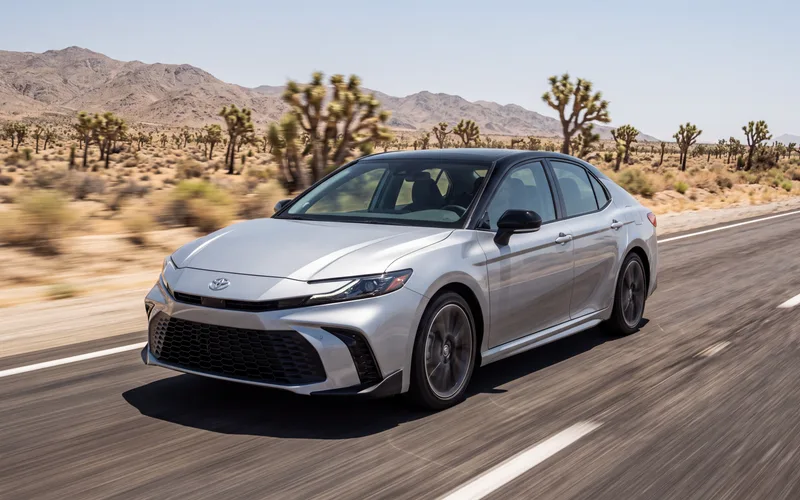 Toyota CamryMid-Size SedanBetter at: Value
Nearly identical hybrid AWD performance with better fuel economy for about $5,000 less, from the same dealer.
Compare 3.11B
3.11B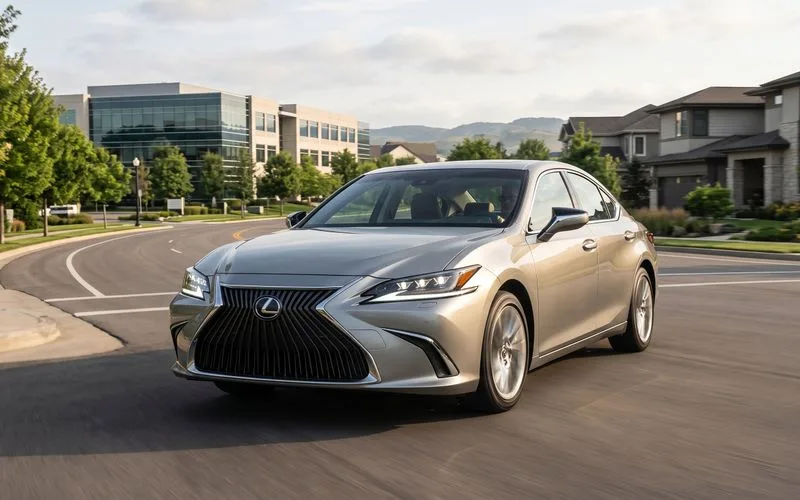 Lexus ESMid-Size Luxury SedanBetter at: Ride refinement
The genuinely plush, quiet luxury ride the Crown's price hints at but does not fully deliver.
Compare 2.89B-
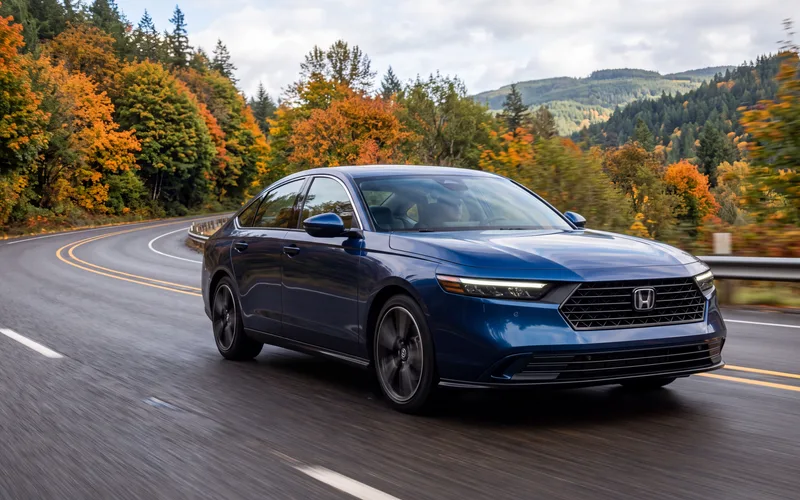 Honda AccordMid-Size SedanBetter at: Space and handling
More rear-seat and trunk space plus sharper steering and handling, for less money — if you can live without AWD.
CompareSubject scores by year
Hover or tap a score to see what moved it versus the year before. A corner mark flags a big swing.
| Year | Performance | Efficiency | Safety | Space | Cost | Reliability | Tech | Use-case | Driving | Value |
|---|---|---|---|---|---|---|---|---|---|---|
| 2026 | 47 | 88 | 81 | 72 | 49 | 81 | 74 | 60 | 67 | 65 |
| 2025 | 44 | 88 | 82 | 71 | 50 | 79 | 72 | 59 | 63 | 63 |
| 2024 | 44 | 88 | 83 | 70 | 50 | 79 | 69 | 57 | 63 | 63 |
| 2023 | 43 | 89 | 81 | 70 | 54 | 80 | 71 | 57 | 62 | 67 |
Compare two years
Best fit & conditions
Higher scores mean a better fit for that use case. Learn more about use-case fit →
Subject profile
Detailed scoring by subject
1Performance & PowertrainThe Crown's lowest-graded category.0.87F
2023 was the S235 Crown's US debut year — the nameplate's first American sale since 1972 — launching with three AWD trims. The volume XLE and Limited grades use Toyota's 2.5L Atkinson-cycle four with front and rear motor-generators for 236 hp net combined; only the range-topping Platinum swaps in the 2.4L turbocharged Hybrid MAX system at 340 hp.
The 2.5L Atkinson four peaks at 163 lb-ft, and that is the only torque figure Toyota quotes for the volume 2023 Crown hybrid — the electric motors add instant low-speed shove the engine number understates. Torque remains the volume powertrain's weakest dimension against full-size sedan rivals.
Two independent instrumented tests of the 236-hp Crown bracket Toyota's own 7.6 s estimate — Car and Driver recorded 7.2 s, Consumer Reports 8.0 s flat — so 7.6 s is the defensible central figure rather than the single quickest run. Revised down from the previously recorded 7.2 s now that a second instrumented result is in hand; the Platinum's Hybrid MAX is far quicker at 5.7 s, but that is a top-trim-only configuration and not the volume car.
In its launch year the 2.5L hybrid drew consistent praise for pulling away smoothly and blending electric and engine power imperceptibly around town, but reviewers just as consistently flagged a droning, rubber-band character once asked to move roughly 4,300 lb of full-size sedan onto a freeway or up a grade — solidly mid-band delivery that the optional Hybrid MAX fixes only for Platinum buyers.
The volume trims' planetary eCVT never hunts and is unobtrusive at light throttle, but it performs no simulated upshifts, so revs pile up and hold at a monotonous drone whenever real acceleration is asked for — the most-cited dynamic complaint at the car's 2023 launch. The Platinum's genuine Direct Shift six-speed automatic shifts quickly and smoothly, but it is not the configuration scored here.
All-wheel drive was standard on every 2023 Crown — XLE, Limited and Platinum — with no FWD variant offered at all, which is unusually comprehensive for a sedan and was a core part of the car's US relaunch pitch. It stays out of the top band because the hardware is an on-demand driveshaft-less electric rear axle (E-Four, or E-Four Advanced on the Platinum) with no low range, locking differentials or terrain modes.
The 2023 Crown launched with two genuinely distinct electrified drivetrains — the 236-hp 2.5L hybrid with an eCVT and the 340-hp 2.4L turbo Hybrid MAX with a six-speed automatic — a wider spread than most mainstream sedans. It falls short of the top band because there is no gas-only, PHEV or EV option anywhere in the range, and the strong powertrain is locked to the single most expensive trim.
2Efficiency & RangeThe Crown's best-graded category.4.00A+
2023 is the US launch year of the revived Crown, the car Toyota put in the Avalon's place, and the powertrain story is the headline: there is no gas-only engine, so the lineup splits between the 236-hp 2.5L Atkinson hybrid in the volume XLE and Limited at 41 MPG combined and the 340-hp 2.4L turbo Hybrid MAX in the Platinum at 30. Scored on the 2.5L, which carries the bulk of sales.
The 2.5L hybrid's 42 MPG city beats its own highway figure — the classic full-hybrid signature — and it does so as an all-wheel-drive car of near-full-size footprint, because the rear axle is driven by a separate electric motor rather than a mechanical driveshaft that would otherwise cost economy.
At a steady cruise the hybrid system has little regenerative braking to harvest and the Crown's tall, lifted-sedan body works against it — 41 MPG highway is strong in absolute terms but is the measure where the Crown falls furthest behind a conventional low-slung hybrid sedan of similar output.
All 2023 Crowns share a 14.5-gallon tank, so range tracks the powertrain directly: 14.5 gal x 41 MPG combined = 594.5 miles on the volume XLE/Limited, near the top of the sedan band and enough for a full day of interstate driving on one stop. The Platinum's Hybrid MAX gives back roughly 160 miles of that.
At EPA's standard 15,000 mi/yr and 55/45 city-highway split the 41-MPG Crown burns about 366 gallons of regular a year. Revised down from the $1,500 carried in the prior scorecard because EPA reprices its reference fuel and restates prior model years against the current price — this is a change in EPA's gas-price assumption, not a change in the car. Real money saved for a premium-badged AWD car, but it lands only mid-pack in the sedan band because the field it normalizes against includes 50-plus-MPG compact hybrids and EVs charging at home.
The volume 2.5L hybrid takes 87-octane regular unleaded with no caveat — no plug, no charging to arrange, no octane penalty, and roughly a dollar a gallon saved against the German sedans the Crown gets cross-shopped with. The 340-hp turbocharged Hybrid MAX also lists 87 as its minimum, with 91 octane offered only to realize peak output; that is a performance option rather than a running cost the owner must accept, so the score stays at the top of the band for the trim being scored.
3SafetyOne of the Crown's strongest categories.3.54A-
NHTSA rates the 2023 Crown Hybrid 5 stars overall, with 5 stars in the combined frontal and side evaluations and no dynamic tip in the rollover run. It is not a clean sweep, though — the driver-side frontal barrier result is 4 stars and rollover is 4 stars at an 11.3% rollover risk, slightly worse on both counts than a conventional Camry, reflecting the Crown's taller, crossover-influenced ride height.
The 2023 Crown is an IIHS Top Safety Pick+ and takes Good in every crashworthiness test it was given — driver- and passenger-side small overlap front, the original moderate overlap front, and the updated side test — with no Marginal or Poor anywhere and ratings that carry forward to 2026 models. Two things hold it just below the top of the band. The updated moderate overlap front test, the one that exposes rear-seat restraint weaknesses and that the contemporary Camry rates Marginal on, was never run on the Crown, so the car's biggest unknown is simply untested rather than passed. And several sub-measures sit at Acceptable inside Good overall results: side structure and safety cage A with driver torso and pelvis A, and passenger lower leg/foot A in the small overlap test. Note too that the passenger small overlap, moderate overlap and side results are Institute-assigned from tests Toyota conducted itself; only the driver-side small overlap (CEN2302) was run by IIHS.
Every 2023 Crown — including the base XLE — gets the full Toyota Safety Sense 3.0 suite plus Blind Spot Monitor with Rear Cross-Traffic Alert and Safe Exit Assist as standard equipment, so the whole AEB / ACC / LKA / BSM / RCTA checklist is covered on the cheapest car in the range. Crucially the adaptive cruise is the Full-Speed Range version on all three trims, not the trim-split arrangement that hobbles the contemporary Camry, and TSS 3.0 adds Proactive Driving Assist on top. The suite also brings eight airbags, Star Safety System, a backup camera with dynamic gridlines and Rear-Seat Reminder across the board. It falls short of a perfect score only because two genuinely useful items stay behind a paywall: Front and Rear Parking Assist with Automatic Braking is standard on Limited and Platinum but unavailable on the XLE, and the Panoramic View Monitor is standard on Platinum, a package option on Limited and absent on XLE.
The standard TSS 3.0 Pre-Collision System is the rare setup that avoids a collision in every single IIHS pedestrian run — Superior in both the daytime and the nighttime evaluation, with no contact in the crossing-child, crossing-adult or parallel-adult scenarios at any tested speed, and no contact even in the hardest 37 mph parallel-adult night test on low beams. That is a step beyond the contemporary Camry, which still struck the 37 mph night target. Held just short of the ceiling because IIHS never published a vehicle-to-vehicle front crash prevention rating for this generation (the old track test was retired before the Crown launched and the tougher 2024 protocol came after), so the front-to-rear side of the system is unverified by an independent test.
Blind Spot Monitor, Rear Cross-Traffic Alert and Safe Exit Assist are all standard on every trim including the base XLE — IIHS logs it as 'standard blind spot detection' — and Safe Exit Assist reusing the BSM radar to hold occupants back from opening a door into traffic is meaningful extra coverage that most mainstream sedans of this year charge for or omit. What keeps it out of the top band is that the coverage is alert-only: BSM and RCTA issue visual and audible warnings without steering or braking intervention, and the only automatic braking in the rear quadrant comes from Front and Rear Parking Assist with Automatic Braking, which the XLE cannot have at any price.
Lane Departure Alert with Steering Assist and Lane Tracing Assist are standard on all three trims, and the Crown launched with the newer TSS 3.0 sensor set whose improved lane recognition Toyota credits with refining both — a real generation ahead of the TSS 2.5+ tuning in the same year's Camry, and reviewers describe the freeway centering as working well once set. Two structural limits keep it mid-band rather than top: Lane Tracing Assist is only operational when Dynamic Radar Cruise Control is engaged, so there is no standalone centering in ordinary driving, and the system is unambiguously hands-on, nagging with a red cluster warning after roughly ten seconds without a steering input and a chime by fifteen.
Full-Speed Range Dynamic Radar Cruise Control — the stop-and-go capable version — is standard on the XLE, Limited and Platinum alike, with no trim-split down to plain radar cruise the way the contemporary Camry splits it, and it combines with Lane Tracing Assist into a competent hands-on highway assist that reviewers report works well once engaged. TSS 3.0 also layers on Proactive Driving Assist, which applies gentle braking or steering support when following a car, cyclist or pedestrian, and around curves, outside of cruise operation. It sits at the bottom of the top band rather than higher because the package is a conventional radar-and-camera assist with no mapped-road or navigation-linked speed adaptation and no lane-change assistance.
There is no hands-free highway driving option on the 2023 Crown at any trim or price. Toyota's hands-off Teammate Advanced Drive was restricted to the Lexus LS and Toyota Mirai in the US, and TSS 3.0 as fitted here is explicitly a hands-on system that warns and disengages if the driver goes without a steering input for roughly ten seconds. Not a zero only because the standard Full-Speed Range DRCC plus Lane Tracing Assist does deliver genuine hands-on Level 2 longitudinal and lateral support, which is the functional floor for this item.
Every Crown gets LED projector low and high beams with high-beam assist, and the Limited and Platinum units rate Good with 90 m of useful low-beam throw on the straightaway right edge and no glare anywhere. But the volume XLE — the trim IIHS actually tested for the nighttime pedestrian rating — carries a different, weaker unit rated only Acceptable, with inadequate visibility on the gradual left curve and merely fair high-beam reach on the straightaway. Good on the upper trims and Acceptable on the entry car is the textbook middle band. Neither variation is curve-adaptive.
The Crown's whole premise — a sedan lifted to near-crossover ride height — pays off here, giving a more commanding forward view than a normal full-size sedan, and Edmunds credits it with a wide rear window and small blind spots. Working against that are a high beltline and thick rear pillars that reviewers note limit over-the-shoulder sightlines, and the camera compensation is trim-gated: the standard backup camera has dynamic gridlines, but the 360-degree Panoramic View Monitor with Curb View is standard only on Platinum, a package extra on Limited and unavailable on the XLE. Above-average natural sightlines with incomplete camera backup lands this mid-band.
IIHS rates the Crown's child seat anchors Good with a plus for extra LATCH positions — the top result available. Both outboard positions have full hardware with lower anchors that are visible rather than buried, take essentially zero force to attach and leave a clearance angle near 90 degrees, and all three rear positions have easy-to-find tether anchors on the rear deck with nothing that could be mistaken for one. The centre seat can borrow lower anchors from either side. The Crown's raised ride height and tall door openings also make lifting a seat in easier than in a low-slung full-size sedan. Short of the ceiling only because the centre position depends on borrowed anchors, which then take the outboard positions out of service, so a true three-across LATCH install is not available.
4Space & ComfortGrades above the middle of the scale.2.73B-
The 2023 Crown — the S235 nameplate's first US model year, launched as the Avalon's replacement — is a five-passenger four-door sedan across all three launch grades (XLE, Limited, Platinum), with two front buckets and a three-place rear bench that splits 60/40.
Toyota published 38.2 in of front headroom at the S235 Crown's 2023 launch — mid-pack against the 36–40 in sedan band, with the crossover-tall roofline offsetting the fixed panoramic glass roof fitted to Limited and Platinum.
42.1 in of front legroom is merely average for a sedan and unremarkable against the 2023 Crown's $41K-and-up launch pricing, short of the 44-in-plus front stretch-out room in the full-size sedans it was positioned against — and short of the departed Avalon it replaced.
37.5 in reads well on paper for a sedan, but the fastback roof taper means the published figure flatters the experience — launch-year testers repeatedly flagged tight head space for taller rear passengers despite the tall body.
38.9 in of second-row legroom seats two adults comfortably and beats the contemporary Camry, but the 112.2 in wheelbase stops short of the 40-in-plus rear space of an Accord or a genuine full-size sedan — a real gap for a car sold as the Avalon's successor.
15.2 cu ft is mid-pack for a sedan trunk and modest for the money; the hybrid battery packaging under the rear seat caps depth, and although the 60/40 seatback folds, the pass-through opening is small enough that reviewers flag it as a versatility limit. 2023 has no power trunk lid — that arrived later in the run.
Raised on corroborated launch-year equipment the earlier pass had understated: the fan-cooled vertical wireless charger is standard on every 2023 grade, not a top-trim item, and four USB-C ports (two front, two rear) plus a dual-hinged armrest bin and a both-sides-opening soft center glovebox make the everyday storage set genuinely competitive. Still held mid-band by a small main glovebox and no overhead sunglasses bin.
Power-adjustable heated front seats are standard on every 2023 grade and the front buckets draw consistent praise for shape and bolstering, but the volume XLE wears SofTex synthetic leather rather than hide and the rear seat is the clear weak point — the fastback roof squeezes head space and the backrest angle sits awkwardly upright.
Well-damped and composed at cruising speed, and genuinely good on the Platinum's adaptive dampers — but that AVS setup is Platinum-only for 2023, the volume XLE and Limited make do with passive shocks, and sharp low-speed impacts punch through more than a car pitched above the Camry should allow.
Wind and road noise are very well suppressed at highway speed, and the entire deduction is powertrain-related: the 236-hp 2.5-liter hybrid fitted to the volume XLE and Limited grades gets coarse and vibrates noticeably under hard throttle, where the Platinum's 340-hp Hybrid MAX stays composed.
Solid but distinctly trim-gated in the launch year — the XLE gets heated power front seats and dual-zone automatic climate control with rear vents, but ventilated front seats and heated rear seats require the Limited and the heated steering wheel is a Platinum-exclusive item. Confidence raised from MEDIUM: multiple independent 2023 sources now agree the heated wheel is Platinum-only, resolving the earlier ambiguity against Limited.
5Cost of OwnershipOne of the Crown's weakest categories.1.59D
The 2023 Crown launched with a single base trim, the AWD-standard XLE hybrid at $39,950 plus $1,095 destination. That is roughly $13k above a base 2023 Camry hybrid and lands in the upper half of the mainstream sedan band.
The mid Limited trim is the volume seller for 2023: $45,550 MSRP plus $1,095 destination. Every 2023 Crown is AWD hybrid, so the price walk buys equipment rather than powertrain until the $53,445 Platinum's 340-hp Hybrid MAX.
Sources bracket this widely — CarEdge puts scheduled maintenance at about $332/yr (~$1,660 over five years, roughly $870 below the popular-sedan average) while KBB's cost-to-own model runs far higher; a blended maintenance-plus-repair figure near $3,600 is well under the sedan norm. Toyota's hybrid drivetrain has no belt-driven starter/alternator and uses regen braking that spares pads, and ToyotaCare covers the first two years.
Estimates split: iSeeCars credits the Crown with the best resale value among hybrid large cars, while CarEdge models steeper depreciation typical of a slow-selling, high-MSRP nameplate. A mid-50s retention figure reflects strong Toyota hybrid demand tempered by the Crown's niche positioning and thin 2023 launch-year volume.
Toyota's standard 36-month/36,000-mile basic coverage, the industry floor — no premium extension despite the Crown's near-luxury price, and well short of Genesis (5 yr) or Hyundai/Kia in the same price bracket.
The headline powertrain term is Toyota's baseline 60-month/60,000-mile coverage, but the hybrid-specific layers are the meaningful protection here: 8 yr/100,000 mi on hybrid components and a transferable 10 yr/150,000 mi hybrid battery warranty.
ToyotaCare covers factory-scheduled maintenance for 2 years/25,000 miles plus 2 years of unlimited-mileage roadside assistance, and the Crown ships with connected-services trials (Safety Connect, Remote Connect, Drive Connect). That is a real multi-year package but a short and mileage-capped one — behind Genesis and BMW-tier included maintenance at this transaction price.
$46,645 volume-trim price minus its estimated resale value after 5 years (55% retained, or about $25,655) leaves about $20,990 in depreciation. Add the projected $3,600 in 5-year maintenance and repairs, and owning this vehicle for 5 years costs about $24,590 in total.
6Reliability & QualityOne of the Crown's strongest categories.3.44B+
Consumer Reports predicts the Crown will be more reliable than the average new car, and J.D. Power's Crown reliability score sits in the low 80s out of 100 — strong, but 2023 was the nameplate's US launch year, so predictions rested on Toyota's platform history rather than Crown field data.
Toyota is consistently a top-tier dependability brand: second only to Lexus in Consumer Reports' 2023 brand reliability rankings, and seventh in the 2023 J.D. Power VDS while Toyota Motor Corporation took the most model-level awards of any automaker.
Two NHTSA recalls apply to the 2023 Crown — rearview/frontview camera housings that can admit water through insufficient laser welds, and an incorrect maximum-capacity-weight label — both non-systemic and unrelated to powertrain or structure.
The volume XLE/Limited trims use the 2.5L four with fourth-generation Toyota Hybrid System and eCVT — the same 236 hp AWD hybrid family proven over high mileage in the Camry, RAV4 and Highlander. The Platinum's 340 hp Hybrid MAX 2.4T with Direct Shift-6AT was new for 2023 and lacks a long-mileage record.
Reviewers consistently flagged the plastic-heavy cabin as below the Crown's premium price positioning — parts-bin switchgear, black plastic dominating the lower cabin, and upholstery that feels unpadded.
Japanese-built assembly is tight and consistent with no pattern of misalignment, but first-year owners reported scattered NVH faults — wind noise and air leakage at the driver's door and a booming resonance when the rear wheels hit bumps.
Toyota fields one of the densest US service networks — roughly 1,500 dealers in 2023, all hybrid-trained — and led the industry in owner satisfaction that year.
Routine maintenance is cheap and Toyota hybrid service parts are abundant, but the Crown is a low-volume nameplate with model-specific body, trim and Hybrid MAX components and essentially no aftermarket, so out-of-warranty collision and hybrid-specific repairs lean dealer-only.
7Technology & InfotainmentGrades above the middle of the scale.2.83B-
The 2023 Crown launched with a 12.3-inch Toyota Audio Multimedia touchscreen standard across the entire three-trim lineup — no smaller base screen and no larger optional unit.
The Crown carries Toyota's then-new Audio Multimedia system, which reviewers repeatedly called a step-change from Entune — quick, clean tile layout, retained physical volume/tuning and climate controls. Only knock is occasional slow CarPlay pairing.
Wireless Apple CarPlay and wireless Android Auto are standard on every 2023 Crown trim including the base XLE — no wired-only entry point and no upper-trim gate.
The "Hey Toyota" Intelligent Assistant is a genuine natural-language system well regarded at launch, and Cloud Navigation pulls Google POI data. It loses points because nav and the assistant sit behind the Drive Connect subscription once the trial lapses.
Base XLE makes do with a plain six-speaker system, while Limited and Platinum get an 11-speaker JBL setup that is solid but a tier below the Mark Levinson/Burmester-class systems in premium-priced rivals.
A full 12.3-inch configurable digital gauge cluster is standard on every trim — unusual at the XLE's price — and mirrors navigation and driver-assist data cleanly.
The Crown supports over-the-air multimedia software and Cloud Navigation map updates, but Toyota does not ship the regular feature-adding whole-vehicle OTA updates that EV-native brands do.
The Toyota app covers remote start, climate, lock/unlock and vehicle locate competently, and Digital Key is offered on the upper trims — but Remote Connect reverts to a paid subscription after the trial, which is the main deduction.
Both rows get a pair of USB-C ports plus a front USB-A data port, and Qi wireless charging is standard even on the XLE — but there is no household AC outlet or onboard power provision.
Smart Key proximity entry and push-button start are standard fleet-wide, app-based remote start is included, and phone-as-key Digital Key is available — though only from Limited upward, and the sedan-style trunk has no hands-free open.
Rear camera plus front/rear parking assist with automatic braking is standard, and a Panoramic View Monitor surround camera is available — but it is restricted to the Platinum trim and the Advanced Technology package rather than the volume trims.
No head-up display was offered on any 2023 Crown trim at any price — a notable omission for a premium-positioned car. Toyota only added a HUD to the Crown lineup with the 2025 model year.
8Use-Case FitOne of the Crown's weakest categories.1.83C-
The S235 Crown's raised, crossover-tall body is a genuine family asset — the hip point sits high enough that buckling a toddler is a step-in rather than a squat, and the rear doors open wide onto three LATCH-equipped positions. Held mid-band by the 15.2 cu ft trunk and the narrow trunk opening owners repeatedly flag as too small for a full-size stroller plus a grocery run.
This is the Crown's strongest family argument: the $41K entry XLE — the trim a family actually buys — already carries a 5-star NHTSA overall rating plus the full Toyota Safety Sense 3.0 suite, Blind Spot Monitor, Rear Cross-Traffic Alert and Rear Seat Reminder as standard, with nothing safety-critical held behind a package. Short of the 90s only because the 360-degree camera and front parking sensors are locked to upper grades and the headlights test merely acceptable.
Fine for four on a medium haul — rear vents and two rear USB-C ports are standard, and the bench seats two six-footers — but the fastback taper pinches rear head space, testers found the rear backrest angle awkward enough to need adjusting before it's comfortable, and heated rear seats start at Limited. The real trip limit is luggage: 15.2 cu ft with four aboard is thin for a car sold as the Avalon's successor, and there is no rear entertainment provision.
Commuting is where the Crown is most convincing — the hybrid's electric launch gives a smooth shove from rest, low-speed running is near-silent, and full-speed-range adaptive cruise with lane tracing is standard on every 2023 grade for stop-and-go slogs. The deduction is the 2.5-liter's coarseness: ask for a freeway merge or a hill and the four-cylinder gets loud and sends vibration into the cabin.
41 MPG combined from a 196-inch all-wheel-drive sedan on regular unleaded is an outstanding per-mile result, and hybrid regenerative braking stretches friction-brake service intervals well past a conventional car's. Not a 90-plus score only because the volume-grade purchase price is premium and the Platinum's Hybrid MAX drops to 30 MPG combined.
A 196-inch, 72.4-inch-wide body is a real footprint in a city garage, and the fastback tail plus thick rear pillars make judging the corners harder than the tall seating position suggests. The 38.8-ft turning circle is respectable and a backup camera is standard, but the 360-degree camera and front parking sensors are absent from the volume XLE entirely — you park the cheap Crown on mirrors and a single rear view.
Toyota publishes no US tow rating for the 2023 Crown at all, so towing is off the table as a rated capability, and there is no bed, no payload figure and no load floor beyond a 15.2 cu ft trunk. The 236-hp hybrid is tuned for economy, not for pulling under load. Scored low-band because the vehicle simply lacks what this item measures.
The mechanical substance is honest — Toyota's fourth-generation hybrid system and the K-platform underpinnings are among the most fleet-proven in the world, and the XLE's SofTex synthetic upholstery wipes clean better than the leather above it. But a $41K premium sedan with 5.8 in of ground clearance, standard 19-inch wheels and no tow or payload rating is not equipment anyone specs for hard-use duty, so the ceiling here is the vehicle's mission, not its build.
Essentially no work provisions: no bed, no factory roof rails on the bare-roof body, no onboard 120V AC outlet, no cargo tie-down system beyond a trunk with a small opening, and no manufacturer upfit ecosystem — the Crown's accessory catalog runs to floor mats, cargo trays and splash guards. Scored low-band because the item's subject matter is absent, not because the fittings are poor.
A properly good mile-eater: roughly 595 miles between fills from the 2.5-liter hybrid, wind and road noise very well suppressed at cruise, wide well-bolstered front seats, and standard full-speed adaptive cruise with lane tracing to take the edge off a long interstate day. Kept out of the 90s by the engine's coarseness on grades, the ventilated front seats being a Limited-and-up item, and a ride that punches through on sharp bumps without the Platinum's adaptive dampers.
Standard e-Four all-wheel drive — which can send up to 80% of drive to the rear axle when traction demands it — makes the Crown genuinely useful on a snowy trailhead road or wet gravel, and that is the whole of its adventure case. Against it: 5.8 in of ground clearance is ordinary sedan height, there is no US tow rating for a small trailer or bike hitch, no factory roof rails for a rooftop box, and no AC outlet for camp gear.
A standard 60/40-folding rear bench that roughly doubles usable length is the one flexible element, but everything around it is restrictive: a mid-pack 15.2 cu ft trunk, a narrow trunk aperture owners single out as the car's worst practical flaw, hybrid battery packaging that kills underfloor storage, no factory roof rails and no hitch rating for a cargo tray. Bulky gear is a real problem in this car.
9Driving ExperienceMid-pack among this car's ten categories.2.19C
The 2023 Crown's TNGA-K chassis with new multi-link rear suspension is secure and composed, but the SUV-adjacent ride height (a defining 2023 launch-year design choice replacing the Avalon) produces noticeable understeer and body roll; only the Platinum Hybrid MAX gets thicker anti-roll bars and adaptive dampers, and the volume XLE/Limited does not.
Accurate and easy to place, but the electric rack is very light in normal driving and gives little feedback; Sport+ (Platinum) adds artificial heft rather than information.
Instrumented stops are genuinely short for a ~4,300 lb hybrid sedan on 12.9-in front / 12.5-in rear discs, but the regen-blended pedal reads soft to several reviewers, costing confidence points despite the numbers.
The volume XLE/Limited 2.5L THS hybrid (236 hp, eCVT, standard AWD) transitions between electric and engine power without shudder and has no stop/start harshness, and 0-60 in roughly 7.2-7.6 sec is adequate; the eCVT's rubber-band response under hard throttle is the main demerit.
The 2.5L eCVT powertrain in the volume trims drones under load and at highway speed — the single most consistently criticized dynamic trait of the 2023 Crown. Only the Platinum's turbo/6AT combination escapes it.
Toyota's 2023 Crown spec sheet lists a 19.0 ft minimum turning radius on XLE/Limited (19.4 ft on the Platinum's 21-in wheels), i.e. a 38.0 ft curb-to-curb diameter — mid-pack for a full-size sedan on a 112.2-in wheelbase.
The Crown's raised hip point — the whole premise of the 2023 nameplate — gives a more commanding forward view and an easier stand-up exit than a low sedan, and the cabin keeps physical climate controls; the tall seat mounting does eat some of the added headroom for taller drivers.
In its volume 2.5L hybrid form the Crown is a quiet-riding, comfortable appliance — reviewers praise its comfort and oddball presence but nobody calls it engaging. The 340-hp Platinum Hybrid MAX is meaningfully more entertaining, but it is not the volume configuration.
10Value & Market PositionMid-pack among this car's ten categories.2.56C+
The base 2023 Crown XLE at $39,950 includes the hybrid powertrain with standard electronic on-demand AWD, a 12.3-inch touchscreen with wireless Apple CarPlay/Android Auto, Toyota Safety Sense 3.0, heated 8-way power front seats with lumbar, and 19-inch alloys — a genuinely loaded base spec by mainstream full-size sedan standards, where AWD and a hybrid are usually extra-cost or unavailable.
The XLE is defensible value — 41 mpg combined with standard AWD for under $41k — but the Crown launched roughly $3,675 above the Avalon it replaced and the upper trims are where reviewers balked: a Limited with the panoramic roof package lands near $50,000, which buys a better-finished Lexus ES, and the $52,350 Platinum asks luxury money for a Toyota-badged interior.
Three well-spaced trims (XLE / Limited / Platinum) covering a $12,400 spread and two distinct hybrid powertrains, but configuration flexibility is otherwise nil for 2023 — one body, AWD only, no FWD or RWD choice, no engine choice within a trim (the 340-hp Hybrid MAX is locked to Platinum), and only a short options list such as the Limited's panoramic-roof package.
19,063 US units in calendar 2023 from a mid-February on-sale date is a niche result — roughly Avalon-replacement volume rather than the growth Toyota wanted, and a rounding error against the Camry. Through July the Crown trailed the 2022 Avalon's pace over the same months, so market acceptance of the lifted-sedan concept was lukewarm from the start.
Toyota is one of the strongest, most trusted mainstream badges in the US and the Crown inherits that halo along with best-in-class retention among large hybrids, but the nameplate itself carried no US equity after a 50-year absence and the Avalon loyalists it was aimed at largely rejected it — brand strength is carrying the car, not the model's own image.
Unlike Toyota's over-MSRP RAV4/Highlander stock of the same era, slow-turning Crown inventory made the car negotiable, with subvented regional leases and dealer discounts on lot-aged units — a real buyer benefit — but manufacturer cash rebates were thin to absent in many regions during 2023, so the deals were opportunistic rather than headline.
2023 is the launch year of an all-new nameplate for the US market — a brand-new TNGA-K-based sixteenth-generation Crown replacing the Avalon, with Toyota's newest Safety Sense 3.0, newest multimedia system, and the debut of the Hybrid MAX powertrain. There is no redesign risk for a 2023 buyer.
Reception was unusually polarized: the buyer-guide outlets recommended it and it took the IIHS's top safety honor, but the enthusiast press hammered the concept, the eCVT drone and the price, and the Crown won no major car-of-the-year award and never emerged as a comparison-test pick. Well-reviewed on paper, rarely anyone's first choice.