
The verdict
A capable full-size sedan, strong on efficiency and held back by performance.
Overall 2.70 (B-) across 10 graded subjects. Its strongest is efficiency & range at 4.00 (A+), its weakest performance & powertrain at 0.96 (F). 8 of 10 subjects grade at C− or better.
Jump to scoresStrengths
- Efficiency & Range
- Safety
- Reliability & Quality
What holds it back
- Performance & Powertrain
- Cost of Ownership
- Use-Case Fit
Top alternatives
Cars shoppers cross-shop with the Toyota Crown 2.84B-
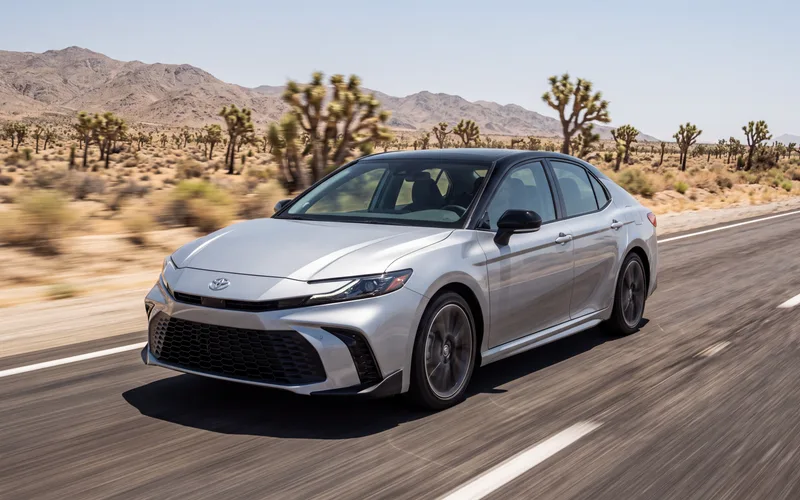 Toyota CamryMid-Size SedanBetter at: Value
Nearly identical hybrid AWD performance with better fuel economy for about $5,000 less, from the same dealer.
Compare 3.11B
3.11B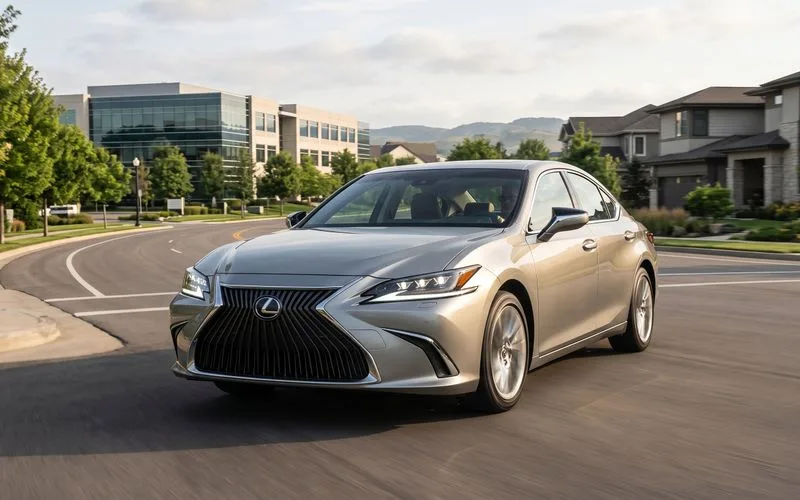 Lexus ESMid-Size Luxury SedanBetter at: Ride refinement
The genuinely plush, quiet luxury ride the Crown's price hints at but does not fully deliver.
Compare 2.89B-
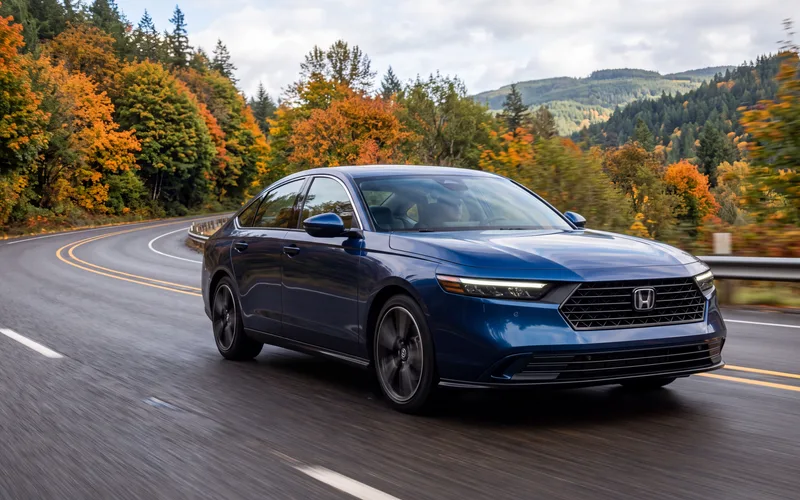 Honda AccordMid-Size SedanBetter at: Space and handling
More rear-seat and trunk space plus sharper steering and handling, for less money — if you can live without AWD.
CompareSubject scores by year
Hover or tap a score to see what moved it versus the year before. A corner mark flags a big swing.
| Year | Performance | Efficiency | Safety | Space | Cost | Reliability | Tech | Use-case | Driving | Value |
|---|---|---|---|---|---|---|---|---|---|---|
| 2026 | 47 | 88 | 81 | 72 | 49 | 81 | 74 | 60 | 67 | 65 |
| 2025 | 44 | 88 | 82 | 71 | 50 | 79 | 72 | 59 | 63 | 63 |
| 2024 | 44 | 88 | 83 | 70 | 50 | 79 | 69 | 57 | 63 | 63 |
| 2023 | 43 | 89 | 81 | 70 | 54 | 80 | 71 | 57 | 62 | 67 |
Compare two years
Best fit & conditions
Higher scores mean a better fit for that use case. Learn more about use-case fit →
Subject profile
Detailed scoring by subject
1Performance & PowertrainThe Crown's lowest-graded category.0.96F
The volume XLE and Limited grades (and the Limited-based Nightshade Edition new for 2025) use Toyota's 2.5L Atkinson-cycle four with front and rear motor-generators for 236 hp net combined; only the range-topping Platinum swaps in the 2.4L turbocharged Hybrid MAX system at 340 hp. The 2025 model year carried the S235 Crown's powertrains over unchanged.
The A25A-FXS 2.5L Atkinson four peaks at 163 lb-ft, and that is the only torque figure Toyota quotes for the volume Crown hybrid — the electric motors add instant low-speed shove the engine number understates. Torque is the volume powertrain's weakest dimension against full-size sedan rivals.
Instrumented testing of the S235 Crown Limited with the 236-hp hybrid — the powertrain and curb weight carried into 2025 without change — returned 7.2 s to 60 mph, against Toyota's own 7.1 s estimate. The Platinum's Hybrid MAX is far quicker at 5.6 s, but that is a top-trim-only configuration.
The 2.5L hybrid pulls away smoothly and blends electric and engine power imperceptibly in town, but reviewers consistently call it buzzy and wheezy once asked to move roughly 4,300 lb of full-size sedan up a grade or onto a freeway, with vibration reaching the steering wheel — solidly mid-band delivery that the optional Hybrid MAX fixes only for Platinum buyers.
The volume trims' planetary eCVT never hunts and is unobtrusive at light throttle, but it performs no simulated upshifts, so revs pile up and hold at a monotonous drone whenever real acceleration is asked for — a well-documented complaint on this car. The Platinum's genuine six-speed automatic shifts quickly and smoothly, but it is not the configuration scored here.
All-wheel drive is standard on every 2025 Crown — XLE, Limited, Nightshade and Platinum — which is unusually comprehensive for a sedan and a core part of the car's pitch. It stays out of the top band because the hardware is an on-demand electric rear axle (E-Four, or E-Four Advanced on the Platinum) with no low range, locking differentials or terrain modes.
The 2025 Crown offers two genuinely distinct electrified drivetrains — the 236-hp 2.5L hybrid with an eCVT and the 340-hp 2.4L turbo Hybrid MAX with a six-speed automatic — a wider spread than most mainstream sedans and far more than the hybrid-only Camry. It falls short of the top band because there is no gas-only, PHEV or EV option, and the strong powertrain is locked to the single most expensive trim.
2Efficiency & RangeThe Crown's best-graded category.4.00A+
Every 2025 Crown is a hybrid and every 2025 Crown is AWD, but the lineup splits in two: the volume XLE/Limited/Nightshade run the 236-hp 2.5L Atkinson hybrid at 41 MPG combined, while the 340-hp 2.4L turbo Hybrid MAX in the Platinum trades a third of that away for performance. Scored on the 2.5L, which carries the bulk of sales.
The 2.5L hybrid's 42 MPG city beats its own highway number — the classic full-hybrid signature, and impressive for an AWD car of this size, since the rear axle is driven by a separate electric motor rather than a driveshaft.
At steady speed the hybrid's advantage narrows and the Crown's tall, heavy crossover-sedan body costs it against a conventional sedan of the same economy class — 41 MPG highway is strong in absolute terms but is where the 2.5L Crown falls furthest behind a Camry hybrid.
All 2025 Crowns share a 14.5-gallon tank, so range follows the powertrain directly: 14.5 × 41 = 594.5 miles on the volume 2.5L — near the top of the sedan band and enough for a full day of interstate driving on one stop. The Platinum's Hybrid MAX gives back roughly 160 miles of that.
EPA publishes $1,500/yr for the 2.5L Crown at its standard 15,000 mi/yr assumption and a five-year saving of $3,500 against the average new vehicle. Real money for a premium-badged AWD car, though it lands mid-pack in the sedan band because the field it is normalized against includes 47–50 MPG hybrids and EVs charging at home.
Both Crown powertrains are certified on regular 87-octane unleaded — including the 340-hp turbocharged Hybrid MAX, which is unusual for a premium-positioned car making that much power and saves roughly a dollar a gallon against the German sedans it is cross-shopped with. No plug, no charging arrangements, no octane penalty.
3SafetyOne of the Crown's strongest categories.3.61A-
The 2025 Crown holds NHTSA's top 5-star overall rating with five stars in both the frontal and the side evaluations; only the rollover sub-score comes in at four stars, normal for a tall AWD sedan on 19- or 21-inch wheels, and it does not pull the composite down.
Every IIHS crash test the Crown has taken comes back Good — driver- and passenger-side small overlap front, original moderate overlap front, and the updated side test — and unlike the later 2026 car, the 2025 model year is covered by a live award: the 2024 Top Safety Pick was assigned to the "2024-25 Toyota Crown." It sits at the floor of the top band rather than higher because the award is a plain TSP, not TSP+, and the reason is a real gap: the Crown has never been run in the updated moderate overlap front test that measures rear-occupant protection, so there is no evidence of how a back-seat passenger fares. Several ratings also trace to a 2023 car tested by Toyota rather than by the institute.
Every 2025 Crown trim — XLE, Limited, the new-for-2025 Nightshade, and Platinum — gets Toyota Safety Sense 3.0: pre-collision with pedestrian detection, Full-Speed Range Dynamic Radar Cruise Control, Lane Departure Alert with Steering Assist, Lane Tracing Assist, Road Sign Assist, Automatic High Beams and Proactive Driving Assist, plus Blind Spot Monitor with Rear Cross-Traffic Alert and Safe Exit Assist as standard rather than trim-walk items. The whole AEB/ACC/LKA/BSM/RCTA set is therefore on the cheapest car. It lands short of the top of the band only because at Crown money the genuinely useful extras — Front Cross-Traffic Alert, Lane Change Assist, Traffic Jam Assist, Panoramic View Monitor — still sit behind the Limited's Advanced Technology Package or the Platinum.
The Crown's standard pre-collision system earned Superior ratings in both the daytime and the nighttime IIHS vehicle-to-pedestrian evaluations — the nighttime result put it in a small minority of cars at launch — along with Superior vehicle-to-vehicle. Those are real Superior results, but they come from protocols IIHS has since retired; the Crown has not been re-run under the tougher 2024-onward front crash prevention test, so there is no evidence of how it handles the higher closing speeds and motorcycle/large-truck targets that test added.
Blind Spot Monitor, Rear Cross-Traffic Alert and Safe Exit Assist are standard on every 2025 trim — broad coverage that matters on a car whose fastback roofline and thick rear pillars restrict the over-the-shoulder view — but the blind-spot side of the system is alert-only, with no steering or braking intervention. Rear automatic braking comes with the parking assist fitted to the upper trims, and Front Cross-Traffic Alert plus Lane Change Assist are Platinum-standard or part of the Limited's Advanced Technology Package.
Lane Departure Alert with Steering Assist and Lane Tracing Assist are standard, and Crown reviewers report the centering working with the adaptive cruise to give a genuinely semi-autonomous feel on the highway rather than the ping-ponging often flagged on cheaper TSS 3.0 Toyotas, helped by Proactive Driving Assist's gentle steering support. It stays mid-band because the assessment rests on subjective road-test commentary about a system that still expects hands on the wheel and clear lane markings.
Full-Speed Range Dynamic Radar Cruise Control is standard and reviewers describe it handling acceleration and braking smoothly and holding a sensible gap without jerky starts and stops, which combined with standard Lane Tracing Assist makes for a restful highway package on a car built for exactly that. The gap is at the bottom of the speed range — crawling stop-and-go traffic is really the domain of the optional Traffic Jam Assist rather than DRCC itself.
Traffic Jam Assist is true hands-free driving — steering, braking and acceleration — but only below roughly 25 mph in stop-and-go traffic on controlled-access highways, only with an active Drive Connect trial or subscription, and only on the Platinum or a Limited ordered with the Advanced Technology Package. That is a fraction of what BlueCruise, Super Cruise or Lexus Teammate do at highway speed across a mapped road network, and most 2025 Crowns on dealer lots cannot do it at all.
IIHS rates the LED projectors on the Limited and Platinum — which with the Limited-based Nightshade make up the bulk of 2025 sales — Good, with high-beam assist standard and no glare violations on low beam; the XLE's units are Acceptable. The volume car therefore gets the better rating and nothing in the range is Marginal or Poor, but the lamps are not curve-adaptive and low-beam reach is only fair on the right side of the straightaway.
The Crown's raised, crossover-height seating position gives a better forward view than a conventional sedan and the door-mounted mirrors help, but the fastback roofline, high beltline and thick rear pillars cut into the rearward and over-the-shoulder view. Camera compensation is uneven: a backup camera plus standard BSM and Safe Exit Assist cover the basics, while the Panoramic View Monitor bird's-eye system is limited to the Platinum or a Limited with the Advanced Technology Package.
IIHS rates the Crown's LATCH ease of use Good+ — a step above the plain Good most mainstream sedans manage — with two outboard positions carrying complete lower-anchor and tether hardware and a centre position that has a tether and can borrow lower anchors. The limits are packaging rather than hardware: three seats will not fit across the bench, and the sloping roofline trims the headroom available above a tall high-back booster.
4Space & ComfortGrades above the middle of the scale.2.82B-
The 2025 Crown is a five-passenger four-door sedan across all four grades — XLE, Limited, the new-for-2025 Nightshade and Platinum — with two front buckets and a three-place rear bench whose backrest splits 60/40.
Toyota publishes 38.2 in of front headroom for the 2025 Crown, unchanged for the S235 generation — mid-pack against the 36–40 in sedan band, with the crossover-tall 60.6 in roofline offsetting the fixed panoramic glass roof fitted to Nightshade and Platinum.
42.1 in of front legroom is average for a sedan and unremarkable for the Crown's $42.5K-and-up price bracket, well short of the 44-in-plus front stretch-out room in the full-size sedans it is positioned against.
37.5 in reads well for a sedan, but the fastback roof taper means the published figure flatters the experience — testers consistently report the back seat runs short on headroom for taller adults despite the tall body.
38.9 in of second-row legroom seats two adults comfortably and beats the Camry by nearly an inch, but the 112.2 in wheelbase stops short of the 40-in-plus rear space of an Accord or a genuine full-size sedan.
15.2 cu ft is mid-pack for a sedan trunk and modest for the money; the hybrid battery under the rear seat caps depth, and while the opening is wide, the pass-through to the folded rear seat is narrow enough that reviewers flag it as a versatility limit.
Serviceable but thin: door pockets, a covered center console bin, a glove box and a wireless charging cubby ahead of the shifter cover the basics, and reviewers explicitly call out the shortage of small-item stowage — the high console layout gives up the deep pass-through bins several rivals offer.
Front seats are supportive, power-adjustable and leather-trimmed on every 2025 grade, and are cited as a big part of why the Crown is easy to live with — but the cushioning itself is judged unremarkable rather than plush, and the rear backrest sits slightly too upright to settle into on long hauls.
Composed and well-damped at cruising speed on the TNGA-K platform, but not the plush flagship ride the price implies — sharp low-speed impacts punch through, and the 21-inch wheels on Limited, Nightshade and Platinum trade compliance away against the XLE's 19s.
Wind and road noise at highway speed are very well suppressed — J.D. Power reports virtually none of either — and the deduction is entirely powertrain: the 236-hp 2.5-liter hybrid in XLE/Limited/Nightshade drones coarsely under hard acceleration, while the Platinum's 340-hp Hybrid MAX stays composed.
2025 is the year the Crown's comfort kit went universal: Toyota made a heated steering wheel and heated-and-ventilated power leather front seats standard across every grade, and the $42.5K base XLE also includes heated rear seats and dual-zone automatic climate control — a level of standard comfort equipment most rivals reserve for option packages.
5Cost of OwnershipOne of the Crown's weakest categories.1.35D
The Crown opens at $42,535 for the XLE with destination — roughly $13,000 above a Camry and squarely in near-luxury territory, which is what its Premium price class implies. Standard AWD and the hybrid powertrain come with the base car, but the entry point still lands in the upper third of the sedan pricing band.
The Limited is the Crown's content sweet spot and the trim most buyers land on — it adds the panoramic roof, JBL audio and leather over the XLE without the Platinum's $56k Hybrid MAX premium, and the new-for-2025 Nightshade is simply an appearance package layered on it. At $47,045 the volume configuration sits deep in the upper quarter of the sedan band, well above every mainstream mid-size rival.
Mechanically the Crown is ordinary Toyota hybrid hardware — an e-CVT with no torque converter and regenerative braking that stretches pad life — and ToyotaCare removes the first two years of scheduled service outright. What pushes it above a Camry is consumables priced like a near-luxury car: 19-inch tires on the XLE and 21s on Limited/Nightshade/Platinum, plus premium-grade service intervals. Sources disagree by more than 2x, so this is a blended figure toward the low-middle of the spread.
This is the Crown's weakest ownership number and the reason it grades below a Camry despite the badge. The lifted-sedan format never found a mainstream US audience, so demand on the used market is thin and depreciation runs closer to the sedan average than to Toyota's usual class-leading retention — a real penalty when the depreciating base is a $42k–$47k sticker rather than a $30k one.
Toyota's standard 3-year/36,000-mile basic coverage, unchanged for 2025 and the floor of the segment band — Hyundai/Genesis (5 yr/60k) and Kia (5 yr/60k) all beat it, and at Crown money buyers are cross-shopping brands that offer more.
The headline powertrain term is Toyota's standard 5 years/60,000 miles — bottom of the band — but that understates the real coverage on a hybrid-only car: the hybrid-specific components carry 8 years/100,000 miles and the traction battery 10 years/150,000 miles, which insulates buyers from the single most expensive potential failure.
ToyotaCare is genuinely multi-year but short on mileage — 2 years/25,000 miles of scheduled service covers oil changes, rotations and inspections, which for an average 13,000-mile-a-year driver runs out around the second service. The 2-year unlimited-mileage roadside assistance and the standard connected-services trials add real value, but there is no charging credit or extended-perk package to lift this into the top band, and rivals at this price routinely match or beat it.
$47,045 volume-trim price minus its estimated resale value after 5 years (54% retained, or about $25,404) leaves about $21,641 in depreciation. Add the projected $5,000 in 5-year maintenance and repairs, and owning this vehicle for 5 years costs about $26,641 in total.
6Reliability & QualityOne of the Crown's strongest categories.3.39B+
Both major predictors land in the same place: J.D. Power gives the 2025 Crown 82/100 for Quality & Reliability — inside its 81-90 "Great" band — and Consumer Reports predicts the 2025 Crown will be more reliable than the average new car, drawing on real 2023 and 2024 owner survey data rather than a first-year guess. The S3 Crown is now in its third model year with no redesign for 2025, so the predictions rest on an established data set.
Toyota is a top-tier dependability brand by any measure. It finished third of all brands in the 2025 J.D. Power Vehicle Dependability Study at 162 PP100 — second among mass-market brands and 40 problems per 100 vehicles better than the industry average of 202 — behind only Lexus and Mazda, and Consumer Reports has repeatedly ranked Toyota at or near the top of its brand reliability table.
The S3 Crown has attracted more recall activity than a Toyota sedan typically does, but none of it is systemic or powertrain-threatening. The largest is the September 2025 instrument-panel campaign — roughly 591,000 Toyota and Lexus vehicles including the 2025 Crown, where a software fault can leave the 12.3-inch cluster blank at startup or shut it off in motion, hiding speed, brake and tire-pressure warnings; the remedy is a dealer software update. The 2025 car also drew a much smaller recall for an incorrect maximum-capacity-weight label, and the generation carries an earlier 2023 camera-housing weld defect that allowed water intrusion. TSB volume is meaningful — 38 bulletins logged against the 2024 car — but they skew toward calibration reflashes and infotainment fixes.
The volume XLE/Limited/Nightshade trims run the 236-hp 2.5L Toyota Hybrid System with a planetary-gear transaxle and a rear e-axle for AWD — the single best-documented electrified drivetrain in the US market, with no belts, clutch packs or conventional automatic to wear out and a long record of high-mileage service in the Camry and RAV4 families. Points come off for the range-topping Platinum's 340-hp T24A-FTS 2.4L turbo Hybrid MAX paired to a six-speed automatic: a much newer, more complex design that has drawn owner reports of cold-start shudder and hesitation and a cold-start camshaft-timing DTC addressed by reflash.
Judged against its price this is the Crown's weakest quality dimension. The content is genuinely good for a Toyota — real leather upholstery standard even on the XLE, soft primary touchpoints, a cabin reviewers compare to an entry-level Lexus — but at a full-size, premium-priced sedan's asking figure the reviews consistently land on "well built, not premium": expanses of hard piano-black on the dash and console, brittle plastics low on the doors and dashboard, and an ambience close to a Camry's rather than anything flagship.
Assembly is solid — the Crown is built in Japan and reviewers describe it as well screwed together, with consistent panel work and no initial-quality red flags in J.D. Power's ratings. The deduction is for a recurring thread of cabin noise complaints across the generation: interior rattles over rough pavement and squeaky window seals that dealers have struggled to resolve permanently.
Toyota runs one of the two densest franchised service networks in the United States — roughly 1,200 dealers, present in essentially every metro and most rural counties — and its hybrid drivetrains have been serviced in volume at those stores for over two decades, so Crown-specific hybrid work is routine rather than specialist. Service satisfaction is good but not class-leading; Toyota sits mid-pack rather than top in dealer-experience surveys, which keeps this out of the 90s.
Running costs are low — Toyota's brand-wide repair and maintenance average is well under the industry norm, Crown-specific estimates land around $318 a year, and the first two years of scheduled maintenance are covered by ToyotaCare. What holds this below the top band is that the Crown is a low-volume, Japan-built nameplate: body panels, the 21-inch wheel/tire package, and Hybrid MAX-specific hardware are effectively dealer-only, with almost no aftermarket behind them, and RepairPal has too little data on the model to publish a cost estimate at all.
7Technology & InfotainmentGrades above the middle of the scale.2.89B-
Unlike the Camry, which puts an 8-inch panel in its volume grades, every 2025 Crown ships with the 12.3-inch Toyota Audio Multimedia display, so the volume Limited buyer gets the full-size screen with no trim walk — solidly above the sedan-class midpoint but short of the 14-plus-inch panels in Tesla and the German flagships.
Toyota Audio Multimedia here is quick, logically laid out and — critically — keeps climate, heated/ventilated seat and volume functions on real physical switchgear below the screen, which reviewers of this car single out as the right call; it loses points for having no conventional multi-panel home screen (navigation is the home view) and for a fixed lower panel that eats roughly a third of the 12.3-inch display, a recurring owner complaint.
Wireless Apple CarPlay and wireless Android Auto are standard on all four 2025 Crown grades including the base XLE — no package, no subscription and no trim walk, which is the top band by definition.
The "Hey Toyota" Intelligent Assistant and Cloud Navigation ride on the big-screen hardware that every Crown grade gets, and this is the rare Toyota where a reviewer calls the voice interface a reason to buy the car — but both live inside Drive Connect, which carries only a 1-year trial before a paid subscription, so long-term owners fall back on phone projection.
The volume Limited grade — and the new Nightshade and the Platinum — get an 11-speaker JBL system with a rear subwoofer and 8-channel amplifier as standard equipment, tuned specifically for this car; only the base XLE is left on a plain six-speaker setup, and there is no true audiophile tier (no Mark Levinson) above the JBL.
A fully digital, configurable 12.3-inch cluster is standard on every 2025 Crown grade, which is genuinely near-luxury provision — but the deduction is a real one for this model year: Toyota recalled the 2023–2025 Crown as part of a ~591,000-vehicle campaign because this exact 12.3-inch combination meter can come up blank at startup, and the fix requires a dealer reflash or meter replacement.
Toyota Audio Multimedia supports over-the-air updates to the multimedia software and Cloud Navigation map data, but nothing beyond the head unit — the Crown gets no feature-adding whole-vehicle OTA, and the clearest proof is that the 2025 blank-cluster defect had to be remedied by a dealer visit rather than pushed out remotely.
The Toyota app covers the core set — remote start and climate precondition, lock/unlock, vehicle locate, guest driver monitoring — and Safety Connect plus Service Connect now run 10-year trials, but the remote-control functions sit behind Remote Connect, which lapses after one year and then costs $8/month or $80/year, and Digital Key (phone-as-key) is not standard on the volume Limited.
Every Crown gets a vertical Qi wireless charging pad, a console USB-C plus 12V socket, a dual USB-C terminal on the passenger side and two more USB-C ports for rear passengers — USB-C throughout both rows with wireless charging standard rather than optional; there is no household AC outlet, which keeps it out of the top band.
Smart Key proximity entry on all doors and the trunk with push-button start is standard on every 2025 Crown, and remote start is available through the Toyota app; phone-as-key Digital Key exists but only as Advanced Technology Package content on the Limited or standard on Platinum, and as a sedan there is no hands-free liftgate to earn top-band credit.
Front and Rear Parking Assist with Automatic Braking is standard on all grades alongside the projected-path backup camera — better than the class norm of sensors-on-upper-trims — but the Panoramic View Monitor is an extra-cost Advanced Technology Package item on the volume Limited and standard only on Platinum, and the Crown offers no automated parking function at all.
For 2025 Toyota made the 10-inch head-up display standard on the Platinum but restricted it to that grade, so a Limited or XLE buyer cannot get one at any price — squarely the "HUD limited to top trims" band, and worse than rivals where it is at least a package on mid trims.
8Use-Case FitOne of the Crown's weakest categories.2.00C
The child-seat hardware is a genuine strength — IIHS rates the Crown's LATCH ease of use Good+, a notch above the plain Good most mainstream sedans earn, and the crossover-height 60.6 in body means you lower a toddler into the seat rather than stooping under a low roofline. What holds it to the middle band is packaging that stays stubbornly sedan: three seats will not fit across the bench, the fastback roof taper eats the headroom a tall rear-facing seat needs, and every stroller has to go through a conventional trunk lid into 15.2 cu ft with a pass-through reviewers single out as too narrow. The hands-free power trunk that would fix the arms-full problem is Platinum-only.
There is no safety trim-walk on this car: NHTSA 5 stars overall, an IIHS Top Safety Pick covering the 2024–25 Crown, and Toyota Safety Sense 3.0, Blind Spot Monitor with Rear Cross-Traffic Alert, Safe Exit Alert, a rear-seat reminder and — unusually — Front and Rear Parking Assist with Automatic Braking all standard on the $42,535 base XLE. The volume Limited also gets the Good-rated headlights. It stays out of the high 80s because the award is a plain Top Safety Pick rather than a Plus, the base XLE's headlights are only Acceptable, and "the trims families actually buy" starts at $42.5K here, so the standard-equipment generosity is partly a function of a premium entry price.
Better equipped for a four-up haul than most sedans at any price: heated rear seats are standard on every 2025 grade, dual-zone automatic climate feeds rear-seat vents, two of the five USB-C ports live in the back, the rear bench has a center armrest with cupholders, and Limited upward adds a panoramic glass roof with a power sunshade. The cabin is also genuinely hushed at cruising speed. Two things keep it mid-band: rear headroom of 37.5 in is compromised in practice by the fastback taper — Consumer Reports flags the back seat as tight for taller passengers — and 15.2 cu ft is a real constraint once four or five people pack for a week. There is no separate rear climate zone, no rear side sunshades and no rear-seat entertainment on any grade.
A relaxing commuter by design. The 2.5L hybrid pulls away on electric torque and blends the engine in imperceptibly at town speeds, Full-Speed Range Dynamic Radar Cruise Control with stop-and-go and Proactive Driving Assist are standard on every grade, Toyota kept physical climate and seat switchgear below the 12.3-in screen, the raised seating position gives a better forward view than a conventional sedan, and standard E-Four AWD removes the weather anxiety. Docked for two well-documented irritants: the 2.5L turns coarse and droning whenever it has to move 4,000 lb up a grade or onto a freeway, and the 21-inch wheels fitted to Limited, Nightshade and Platinum let sharp low-speed impacts punch through.
Cheap to feed for an AWD car of this size and price — 41 MPG combined, 42 MPG city, on 87-octane regular, which EPA turns into about $1,500 a year at 15,000 miles, and the planetary hybrid transaxle plus regenerative braking keep the wear items cheap while ToyotaCare covers the first two years of service. It sits well short of the Camry's band, though, because the premium positioning shows up in the running costs that are not fuel: the volume Limited rides on 21-inch tires that cost near-luxury money to replace, and insurance runs roughly $2,600 a year against a mid-size sedan's typical figure. Buyers choosing the Platinum's Hybrid MAX give up a third of the economy outright.
Manageable rather than easy. At 196.1 in long and 72.4 in wide on a 112.2 in wheelbase the Crown carries a full-size footprint with a roughly 38 ft curb-to-curb turning circle, and the fastback roofline, high beltline and thick rear pillars restrict the over-the-shoulder and rearward view — the raised seating position only helps looking forward. Sensor coverage is better than the class norm, since Front and Rear Parking Assist with Automatic Braking is standard on every grade rather than packaged, but the useful hardware is still gated: the Panoramic View Monitor with Curb View is an Advanced Tech Package extra on the volume Limited, and Advanced Park — the system that actually parks the car — is Platinum-only, as is the Dynamic Rear Steering that tightens the turning circle.
Not meaningfully work-capable. Toyota publishes no US towing capacity for the 2025 Crown sedan — the 2,700 lb rating that turns up in searches belongs to the Crown Signia wagon, a different vehicle — and there is no factory tow package on any grade. There is no bed, no payload headroom beyond five occupants and their luggage, and the only cargo hold is a 15.2 cu ft trunk reached through a sedan lid. The 236-hp 2.5L hybrid is calibrated for economy and its eCVT lets revs flare rather than holding torque under sustained load, which is exactly the wrong behavior on a grade with weight aboard.
The hardware underneath is about as durable as mainstream hybrid drivetrains get — the A25A-FXS 2.5L and Toyota's planetary hybrid transaxle carry no belt, torque converter or step-gear wear items and are shared with the Camry, RAV4 and Highlander hybrids, and the Japan-built Crown draws an 82/100 J.D. Power quality-and-reliability score with a Consumer Reports above-average prediction. But work duty means abuse tolerance, and there the Crown has none of a fleet sedan's advantages: leather is the only upholstery offered, there is no wipe-clean work trim, ground clearance is 5.8 in, the volume trims ride on 21-inch wheels that are expensive to curb, and it is a low-volume nameplate whose body panels and Hybrid MAX-specific parts are slower to source than a Camry's. The 2023–25 blank-instrument-cluster recall is a further mark against unattended service use.
Almost nothing here is aimed at work. There is no bed, no onboard household AC outlet on any grade, no roof rails or factory crossbar provision, no factory hitch or wiring harness, no tie-down track and no washable interior surface — every 2025 Crown has leather seats over carpeted floors and a carpeted trunk. The accessory catalog for work-adjacent duty amounts to an all-weather trunk mat, floor liners and a cargo net. The five USB-C ports and the Qi pad will charge a phone or a tablet, which is the extent of the onboard power story; an upfitter's only real option is an aftermarket concealed receiver.
This is what the Crown is genuinely for. EPA range on the volume 2.5L works out to about 595 miles on a 14.5-gallon tank, so an interstate day needs one stop; the cabin is among the quietest in the class at speed; heated and ventilated power leather front seats and a heated steering wheel became standard on every grade for 2025; and Full-Speed Range Dynamic Radar Cruise Control with Lane Tracing Assist is standard, which reviewers describe as making the car essentially steer itself on divided highways. Standard AWD adds all-weather confidence on a long haul. It is held just inside the top band rather than at the ceiling by the rear seatback's slightly upright angle, the 2.5L's drone on long climbs, and the absence of any true highway hands-free mode — Traffic Jam Assist works only below 25 mph, and only on Platinum or a Limited with the Advanced Tech Package.
Standard E-Four all-wheel drive on every grade is the real asset — it makes the Crown a credible snow-and-gravel car in a class where AWD is usually an upcharge — and 5.8 in of ground clearance is a shade more than a Camry's. Everything past that is missing: no roof rails or factory crossbar mounts, no factory hitch or tow rating for a bike rack or small trailer, no 120V outlet for camping gear, no terrain or off-road drive modes (the Platinum's five modes are road-biased), and the 21-inch low-profile tires on the volume trims are exactly wrong for a rutted forest road. It gets to a trailhead on a graded road and no further.
Normal suitcases are fine; anything awkward is not. The 15.2 cu ft trunk is mid-pack by volume and small for the money — the hybrid battery under the rear seat caps its depth — and while the rear seatbacks split 60/40, U.S. News specifically flags the pass-through as too small to make that fold genuinely useful, which is the difference between a hatch and a sedan lid for skis, flat-pack furniture or a bike wheel. There is no roof rail, no underfloor bin, no hatchback opening and no factory hitch, and the hands-free power trunk that at least eases loading is restricted to the Platinum. In-cabin small-item storage is likewise thin.
9Driving ExperienceMid-pack among this car's ten categories.2.22C
The Crown is a lifted sedan riding 60.6 in tall on a TNGA-K platform, and it handles that height better than expected — body movements are well controlled, it stays composed on a curvy road and it posted a commendable 53 mph through Consumer Reports' avoidance maneuver. But grip from the all-season tires is modest and reviewers still note visible lean once the pace rises, so it lands as secure rather than engaging, a step behind the lower, tauter Camry.
The rack is accurate and free of slop — response is tight and there is no play at center — but the assist is calibrated light and reviewers consistently call out the absence of real feedback. Sport+ adds weight without adding information, which is the definition of the precise-but-numb band.
Toyota's brake-by-wire setup blends regeneration to friction transparently, and reviewers single the Crown out for feeling 'normal' rather than grabby — a genuine win among hybrids. It still gives up points for a somewhat spongy pedal that needs finesse for a smooth final stop, and there is no standout instrumented distance for the sedan to lift it higher.
The volume XLE/Limited 2.5L THS hybrid (236 hp combined, standard electronic on-demand AWD) transitions between EV and engine imperceptibly and has no conventional stop/start shudder, but 8.0 sec to 60 mph is merely par and the eCVT dilutes throttle response, letting revs pile up and hold under load. Smooth in traffic, uninspiring when asked for more; the 340-hp Hybrid MAX Platinum with its 6-speed automatic is a markedly sharper car at 5.7 sec.
Near-silent under electric power and quiet at a steady cruise, but any real throttle brings a buzzy four-cylinder held at high revs by the eCVT with a monotonous drone — a recurring criticism and a poor match for a Premium-priced car. It fades once you lift, which keeps it out of the bottom band.
The volume 2.5L hybrid grades turn a 38.0 ft curb-to-curb circle — poor for a sedan, a consequence of the Crown's 112.2 in wheelbase and large wheels. Dynamic Rear Steering, new for 2025 and exclusive to the Platinum grade, cuts that to 35.4 ft, but it is unavailable on the trims most buyers take.
The Crown's whole premise is a raised hip point, and it pays off here: an elevated crossover-like seating position with a commanding forward view, easy step-in ingress and egress, and comfortable well-bolstered front seats with heated and ventilated function standard across every grade for 2025. Minor demerits for small secondary controls and headroom that tightens for tall drivers because of that high perch.
On the volume 2.5L hybrid the Crown is a pleasant, plush, quiet long-distance cruiser with nothing to say to an enthusiast — light steering, a droning eCVT and 8-second acceleration make it a car you drive rather than enjoy. Reviewers say so almost in those words, and only the Hybrid MAX Platinum escapes the verdict.
10Value & Market PositionMid-pack among this car's ten categories.2.23C
The base 2025 XLE at $41,440 is genuinely well equipped for the money: electronic on-demand AWD is standard on every Crown, and 2025 made heated AND ventilated front seats plus a heated steering wheel standard across the whole lineup — content most rivals reserve for mid or top trims. Add the 12.3-inch Toyota Audio Multimedia touchscreen with wireless CarPlay/Android Auto and Toyota Safety Sense 3.0 on the base car and there are few obvious holes. It stops short of the top band because the strongest content — panoramic roof, 11-speaker JBL, head-up display, Adaptive Variable Suspension, Hybrid MAX — is walled off in trims $5,000–$14,000 above base.
This is the Crown's weakest argument. U.S. News calls it 'by far the highest-priced sedan in the hybrid car segment' and Edmunds gives it a below-average value rating for the class, and the reason is internal: a Camry costing roughly $20,000 less matches the Crown's interior and trunk measurements to within fractions of an inch while being quicker to 60 mph and considerably more efficient. Standard AWD, a quieter cabin and near-Lexus material quality are real content for the premium, but resale offers no rescue — 39.4% depreciation over five years is slightly worse than the 38.9% sedan average, unusually ordinary for a Toyota.
Four grades in roughly $4,000–$5,000 steps — XLE $41,440, Limited $45,950, the new-for-2025 Nightshade $49,860 and Platinum $54,990 — give a coherent ladder from value-hybrid to 340-hp flagship, and two genuinely different powertrains (2.5L THS and Hybrid MAX) sit within it. What caps it is rigidity: AWD is mandatory with no FWD or gas-only option, no PHEV exists, and the Hybrid MAX is locked to the single most expensive trim, so a buyer who wants the performance powertrain has no cheaper path to it.
The Crown sedan is a low-volume niche play that shrank hard around this model year: after a record 19,648 US sales in calendar 2024, volume fell 37.4% to 12,309 in 2025 — a fraction of the 317,000 Camrys Toyota moved — while buyers migrated to the Crown Signia wagon/SUV, which more than doubled to 20,550 and now outsells the sedan it spun off from. That is the low band by definition: a slow seller declining sharply. A modest 1.9% first-half-2026 uptick suggests the floor rather than a recovery.
The Toyota badge is among the most trusted in the US and the Crown trades directly on it — owner sentiment is strong, with 75% of KBB reviewers recommending the car and comfort and reliability cited as its best traits. But the halo transfers less completely than usual here: the Crown nameplate has no US equity of its own, its lifted-sedan shape divides opinion, and the ordinary resale performance shows the market is not paying a Toyota premium for it the way it does for a Camry or RAV4.
Slow sales work in the buyer's favor on the lot — Crowns sit long enough that discounting off MSRP is realistic, the opposite of the launch-era Camry situation. What holds this to the middle band is thin factory support: Toyota never put 0% APR on the Crown, advertised financing sat at roughly 4.99% for 60 months to 6.99% for 72, national cash was limited to $500 college-grad and $500 military rebates, and the lease program is bad enough that shoppers are steered away from it.
2025 is the third model year of the S235 generation launched for 2023, placing it squarely mid-cycle: no redesign, but a real content year that added the Nightshade grade, standardized heated and ventilated front seats and a heated steering wheel across the range, and gave Platinum a head-up display and Dynamic Rear Steering. The tech underneath is still current — 12.3-inch Toyota Audio Multimedia, TSS 3.0, TNGA-K platform — so there is no aging-out feel, but a buyer is roughly halfway to the next redesign rather than at the start of a cycle.
Reviewers consistently like the Crown without ever picking it: Edmunds 7.1/10, U.S. News 7.8/10 but only 8th among hybrid cars, The Car Connection 6.8/10. Praise lands on ride comfort, cabin quietness and fuel economy; the recurring knocks are the base powertrain's flat performance and the price, and it has no 10Best, NACTOY or Best Buy hardware to its name. Its one clean win is safety — an IIHS Top Safety Pick and a five-star NHTSA overall rating — which lifts it into the middle of the well-reviewed-but-rarely-the-pick band.