
The verdict
A capable full-size sedan, strong on efficiency and held back by performance.
The 2026 Toyota Crown is a lifted, hybrid-only full-size sedan that does its best work as a quiet, frugal long-haul cruiser: 41 MPG combined on regular gas, standard all-wheel drive on every trim, roughly 595 miles between fill-ups, and heated-and-ventilated leather front seats standard on the $42,575 base XLE. Reliability is its other trump card — J.D. Power ranks it #1 in the Large Car segment and it carries a 5-star NHTSA overall rating. What it does not deliver is the driving or the value story its price implies: the volume 236-hp hybrid needs 7.1 seconds to 60 mph with a droning eCVT, the 15.2 cu ft trunk is ordinary, and a loaded Camry costs about $5,000 less. Buy it for the comfort, economy and standard AWD; skip it if you want either performance or a bargain.
Jump to scoresStrengths
- Real hybrid economy in a big, all-wheel-drive sedan
- Toyota-grade reliability with a dealer on every corner
- Five-star safety with the full driver-assist kit on the cheapest trim
What holds it back
- Slow and coarse for the money
- Costly to own, with a bare-minimum warranty
- It is a sedan trunk, and not a big one
Top alternatives
Cars shoppers cross-shop with the Toyota Crown 2.84B-
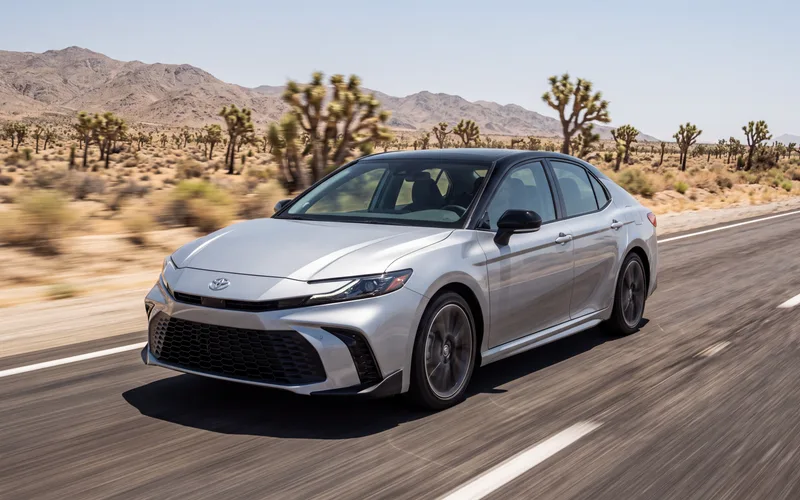 Toyota CamryMid-Size SedanBetter at: Value
Nearly identical hybrid AWD performance with better fuel economy for about $5,000 less, from the same dealer.
Compare 3.11B
3.11B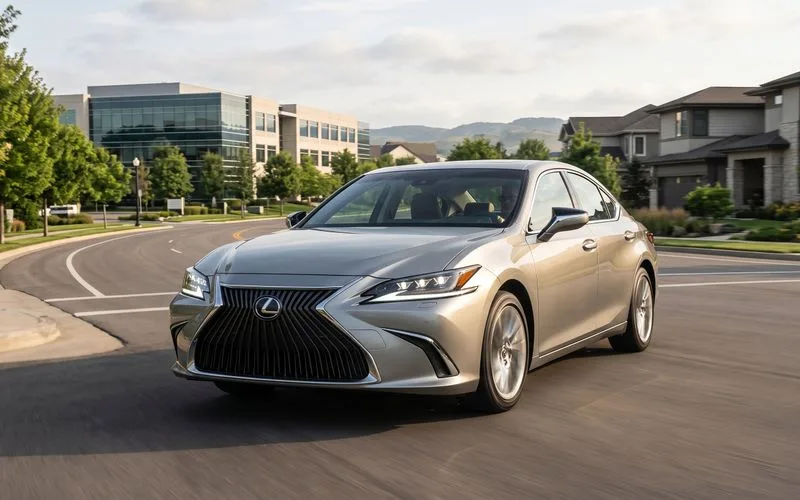 Lexus ESMid-Size Luxury SedanBetter at: Ride refinement
The genuinely plush, quiet luxury ride the Crown's price hints at but does not fully deliver.
Compare 2.89B-
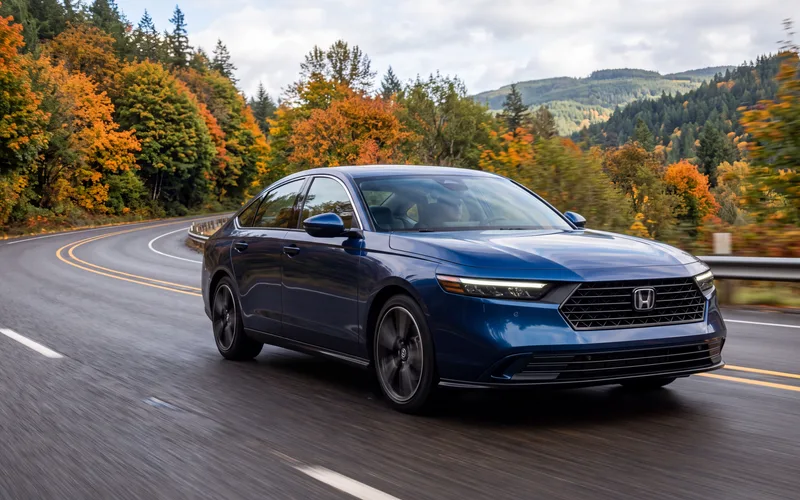 Honda AccordMid-Size SedanBetter at: Space and handling
More rear-seat and trunk space plus sharper steering and handling, for less money — if you can live without AWD.
CompareSubject scores by year
Hover or tap a score to see what moved it versus the year before. A corner mark flags a big swing.
| Year | Performance | Efficiency | Safety | Space | Cost | Reliability | Tech | Use-case | Driving | Value |
|---|---|---|---|---|---|---|---|---|---|---|
| 2026 | 47 | 88 | 81 | 72 | 49 | 81 | 74 | 60 | 67 | 65 |
| 2025 | 44 | 88 | 82 | 71 | 50 | 79 | 72 | 59 | 63 | 63 |
| 2024 | 44 | 88 | 83 | 70 | 50 | 79 | 69 | 57 | 63 | 63 |
| 2023 | 43 | 89 | 81 | 70 | 54 | 80 | 71 | 57 | 62 | 67 |
Compare two years
Best fit & conditions
Higher scores mean a better fit for that use case. Learn more about use-case fit →
Subject profile
Academic Probation · NHTSA safety recalls
Oct 30, 2025Back over prevention: display functionPlease see the recall report for a complete list of models. A software error may cause the rearview camera to freeze or display a blank screen when the vehicle is in reverse. As such, these vehicles fail to comply with the requirements of Federal Motor Vehicle Safety Standard (FMVSS) number 111, "Rear Visibility."
Defect
Toyota Motor Engineering & Manufacturing (Toyota) is recalling certain 2022-2026 Toyota, Lexus, and Subaru Solterra vehicles equipped with a Panoramic View Monitor (PVM) system. Please see the recall report for a complete list of models. A software error may cause the rearview camera to freeze or display a blank screen when the vehicle is in reverse. As such, these vehicles fail to comply with the requirements of Federal Motor Vehicle Safety Standard (FMVSS) number 111, "Rear Visibility."
Risk
A rearview camera that fails to display an image can reduce the driver's view behind the vehicle, increasing the risk of a crash.
Remedy
Dealers will update the parking assist software, free of charge. Owner letters were mailed January 2, 2026. Owners may contact Toyota's customer service at 1-800-331-4331. Toyota's numbers for this recall are 25TB13 and 25LB06. Subaru's number for this recall is WRE25.
NHTSA campaign 25V744000 ↗Manufacturer no. 25TB13/25LB06/WRE251,024,407 vehicles potentially affected (all models in the campaign)Owners notified Dec 5, 2025Filed by Toyota Motor Engineering & ManufacturingFiled as CROWN
3 recalls on other model years of the Crown (2023–2025)
Sep 11, 2025Electrical system: instrument cluster/panelDue to an error in the instrument panel software at vehicle startup, the instrument panel may fail to display vehicle speed, brake system, and tire pressure warning lights.
Defect
Toyota Motor Engineering & Manufacturing (Toyota) is recalling certain 2023-2024 Toyota Venza, 2023-2025 RAV4 Prime, RAV4, Highlander, GR Corolla, Crown, 2024-2025 Lexus TX, LS, Toyota Tacoma, Grand Highlander, and 2025 Lexus RX, Toyota Crown Signia, Camry, RAV 4 Plug-in Hybrid (PHEV), and 4 Runner vehicles. Due to an error in the instrument panel software at vehicle startup, the instrument panel may fail to display vehicle speed, brake system, and tire pressure warning lights.
Risk
An instrument panel display that does not show critical information can increase the risk of a crash or injury.
Remedy
Dealers will update the instrument panel software over-the-air (OTA) for non-PHEV vehicles, free of charge. For PHEV vehicles, dealers will inspect the instrument panel assembly, and either replace it, or update the software, free of charge. Owner letters were mailed December 5, 2025. Additional letters will be sent, anticipated in May 2026. This is a phased recall. Owners may contact Toyota's customer service at 1-800-331-4331. Toyota's numbers for this recall are 25TB08 and 25TA08. Lexus' numbers for this recall are 25LB05 and 25LA05.
NHTSA campaign 25V595000 ↗Manufacturer no. See Part 573 Report591,377 vehicles potentially affected (all models in the campaign)Owners notified Dec 5, 2025Filed by Toyota Motor Engineering & ManufacturingFiled as CROWNJul 23, 2024Equipment: other: labelsThe load carrying capacity modification label may display inaccurate added weight values. As such, these vehicles fail to comply with the requirements of Federal Motor Vehicle Safety Standard number 110, "Tire Selection and Rims."
Defect
Gulf States Toyota, Inc. (GST) is recalling certain Toyota 2023 GR Supra, 2024 4 Runner, Corolla, Grand Highlander, Grand Highlander Hybrid, Land Cruiser Hybrid, Tacoma, Tacoma Hybrid, 2023-2024 BZ4X, Corolla Cross Hybrid, GR Corolla, GR86, Highlander, Highlander Hybrid, Prius, Prius Prime, Sequoia Hybrid, Tundra, Tundra Hybrid, Venza Hybrid, 2023-2025 Crown, and 2025 Camry Hybrid vehicles equipped with GST accessories. The load carrying capacity modification label may display inaccurate added weight values. As such, these vehicles fail to comply with the requirements of Federal Motor Vehicle Safety Standard number 110, "Tire Selection and Rims."
Risk
A vehicle with an incorrect maximum capacity weight value may be overloaded, which can increase the risk of a crash.
Remedy
GST will mail new labels to owners, free of charge. Owner notification letters were mailed September 16, 2024. Owners may contact GST customer service at 1-800-444-1074. GST's number for this recall is 24R2.
NHTSA campaign 24V548000 ↗Manufacturer no. 24R233,848 vehicles potentially affected (all models in the campaign)Owners notified Sep 16, 2024Filed by Gulf States Toyota, Inc.Filed as CROWNJun 14, 2024Back over prevention: sensing system: cameraDue to insufficient laser welding, the camera cases may separate, allowing water to leak into the cameras and short circuit. The rearview and front view camera images may not appear on the displays or display a distorted image.
Defect
Toyota Motor Engineering & Manufacturing (Toyota) is recalling certain 2023 Toyota Crown vehicles equipped with rearview and/or frontview cameras. Due to insufficient laser welding, the camera cases may separate, allowing water to leak into the cameras and short circuit. The rearview and front view camera images may not appear on the displays or display a distorted image.
Risk
A rearview camera that does not display an image can reduce the driver's view, increasing the risk of a crash.
Remedy
Dealers will inspect and replace the rearview and frontview cameras as necessary, free of charge. Owner letters were mailed August 9, 2024. Owners may contact Toyota customer service at 1-800-331-4331. Toyota's numbers for this recall are 24TB08 and 24TA08.
NHTSA campaign 24V442000 ↗Manufacturer no. 24TB08, 24TA0813,077 vehicles potentially affected (all models in the campaign)Owners notified Aug 9, 2024Filed by Toyota Motor Engineering & ManufacturingFiled as CROWN
Source: NHTSA Office of Defects Investigation recall database, model years 2023–2026. Recalls are listed by model year as the manufacturer filed them; whether a specific car is affected depends on its VIN — check a VIN at nhtsa.gov ↗. NHTSA model names matched to this page: CROWN.
Detailed scoring by subject
1Performance & PowertrainThe Crown's lowest-graded category.1.13D
The volume Limited grade uses the 2.5L Atkinson THS hybrid rated 236 hp net combined; only the top Platinum grade gets the 340 hp Hybrid MAX. 2026 is a carryover year with no powertrain changes.
Toyota quotes net combined horsepower but not net combined torque for the THS Crown, so the 2.5L Dynamic Force engine's 163 lb-ft peak is the published figure; the electric motors add instant low-speed torque that number does not capture.
Car and Driver instrumented the mechanically identical HEV Limited at 7.1 seconds; published estimates for the base powertrain run as slow as 7.6 s, while the Hybrid MAX Platinum is roughly 1.4 s quicker.
Around town the THS system is quiet and responsive off the line with well-masked EV-to-engine handoffs, but reviewers consistently flag a coarse, buzzy four-cylinder under full throttle — better isolated than the Camry's, yet short of what the premium positioning implies. The optional Hybrid MAX is notably smoother and more torque-rich.
The eCVT on the volume grades is seamless in normal driving but pins revs at a fixed high note under hard acceleration — the classic rubber-band effect; the Platinum's Hybrid MAX six-speed automatic with wet start clutch delivers conventional step shifts smoothed by motor torque fill.
All-wheel drive is standard on every 2026 Crown grade — there is no FWD version — via a rear eAxle (E-Four on THS grades, Full-Time Electronic AWD with five drive modes on the Hybrid MAX Platinum). Marked down only for the absence of low range, lockers, or terrain hardware.
Two genuinely distinct electrified powertrains — the 236 hp 2.5L THS for efficiency and the 340 hp 2.4L turbo Hybrid MAX for performance — but no gas-only, PHEV, or EV option, and Hybrid MAX is locked to the top Platinum grade.
2Efficiency & RangeThe Crown's best-graded category.3.98A+
Volume XLE/Limited trims use the 2.5L series-parallel hybrid (THS) with standard AWD and are EPA-rated 41 MPG combined; the 340-hp Hybrid MAX Platinum drops to 30 MPG combined. Strong for a full-size sedan, though the smaller Camry hybrid beats it.
The THS hybrid's electric-first city operation yields 42 MPG city, its best figure — good, but short of the 47–53 MPG city posted by Toyota's lighter Camry and Corolla hybrids.
41 MPG highway is respectable for a tall, standard-AWD full-size sedan, but the raised ride height and crossover-like frontal area cost it against low-slung mid-size hybrids that hold 45–49 MPG highway.
A 14.5-gallon tank and 41 MPG combined give roughly 595 miles between fills on the volume trims, matching Toyota's own published figure. The Hybrid MAX Platinum gives up about 160 miles of that.
EPA puts annual fuel cost at $1,500 for the volume hybrid at 15,000 mi/yr on regular gas — low for a premium full-size sedan, though the Platinum's $2,050 is a meaningful penalty for the extra power.
Every Crown, including the turbocharged Hybrid MAX Platinum, is certified on 87-octane regular — unusual for a premium-priced sedan with a turbo engine — and no charging hardware is needed since there is no plug-in variant.
3SafetyOne of the Crown's strongest categories.3.52A-
The 2026 Crown holds NHTSA's top 5-star overall rating with five stars in both the frontal and side evaluations; only the rollover sub-score comes in at four stars, which is normal for an AWD sedan on 21-inch wheels and does not pull the composite down.
Every IIHS crash test the Crown has taken comes back Good — driver- and passenger-side small overlap front, original moderate overlap front, and the updated side test — but it carries no current award: IIHS made the updated moderate overlap front (rear-occupant) test mandatory for 2025 awards and the Crown has never been run in it, so its 2023 TSP+ and 2024 TSP have lapsed with no 2025 or 2026 award to replace them. Several of the ratings also date to a 2023 car tested by Toyota rather than by the institute.
Every 2026 Crown trim gets Toyota Safety Sense 3.0 — pre-collision with pedestrian detection, Full-Speed Range Dynamic Radar Cruise Control, Lane Departure Alert with Steering Assist, Lane Tracing Assist, Road Sign Assist, Automatic High Beams and Proactive Driving Assist — plus Blind Spot Monitor with Rear Cross-Traffic Alert and Safe Exit Assist as standard rather than trim-walk items, so the full AEB/ACC/LKA/BSM/RCTA set is present on the cheapest car. It lands short of the top of the band only because at Crown money the genuinely useful extras (Front Cross-Traffic Alert, Lane Change Assist, Traffic Jam Assist, Panoramic View Monitor) still sit behind the Limited's Advanced Technology Package or the Platinum.
The Crown's standard pre-collision system earned Superior ratings in both the daytime and the nighttime vehicle-to-pedestrian IIHS evaluations — the nighttime result put it in a small minority of cars at launch — and Superior vehicle-to-vehicle. Those are real Superior results, but they come from protocols IIHS has since retired; the Crown has not been re-run under the tougher 2025-onward front crash prevention test, so there is no evidence of how it handles the higher closing speeds and motorcycle/large-truck targets that test added.
Blind Spot Monitor, Rear Cross-Traffic Alert and Safe Exit Assist are standard on every trim — broad coverage that matters on a car whose sloping roofline and thick rear pillars restrict the over-the-shoulder view — but the systems are alert-only, with no steering or braking intervention in the blind spot. Rear automatic braking arrives with the Front and Rear Parking Assist fitted to Limited, Nightshade and Platinum, and Front Cross-Traffic Alert plus Lane Change Assist are Platinum-standard or part of the Limited's Advanced Technology Package.
Lane Departure Alert with Steering Assist and Lane Tracing Assist are standard, and reviewers of the Crown specifically report the centering holding the car in its lane and steering through curves without fuss rather than the ping-ponging that gets flagged on cheaper TSS 3.0 Toyotas — helped by Proactive Driving Assist's gentle steering support. It stays mid-band because the assessment rests on subjective road-test commentary about a system that still expects hands on the wheel and clear lane markings.
Full-Speed Range Dynamic Radar Cruise Control is standard and reviewers describe it smoothly matching the speed of slower traffic and resuming its set speed cleanly once the lane clears, which combined with standard Lane Tracing Assist makes for a genuinely restful highway package on a car built for exactly that. The gap is at the bottom of the speed range — crawling stop-and-go traffic is really the domain of the optional Traffic Jam Assist rather than DRCC itself.
Traffic Jam Assist is true hands-free driving, but only below roughly 25 mph in stop-and-go traffic on divided limited-access highways, only with an active Drive Connect subscription, and only on the Platinum or a Limited ordered with the Advanced Technology Package. That is a fraction of what BlueCruise, Super Cruise or even Lexus Teammate do at highway speed across a mapped road network, and most Crowns on dealer lots cannot do it at all.
IIHS rates the LED projectors on the Limited and Platinum — which with the Limited-based Nightshade make up the bulk of 2026 sales — Good, with high-beam assist standard and no glare violations on low beam; the XLE's units are Acceptable. So the volume car gets the better rating and nothing in the range is Marginal or Poor, but the lamps are not curve-adaptive and right-side low-beam reach on the straightaway is only fair.
The Crown's raised, crossover-height seating position gives a better forward view than a conventional sedan and the door-mounted mirrors help, but the fastback roofline, high beltline and thick rear pillars cut into the rearward and over-the-shoulder view, and the front pillars are chunky. Camera compensation is uneven: a backup camera plus standard BSM and Safe Exit Assist cover the basics, while the Panoramic View Monitor bird's-eye system is limited to the Platinum or a Limited with the Advanced Technology Package.
IIHS rates the Crown's LATCH ease of use Good+ — a step above the plain Good most mainstream sedans manage — with two outboard positions carrying complete lower-anchor and tether hardware and a centre position that has a tether and can borrow lower anchors. The limits are packaging rather than hardware: three seats will not fit across the bench, and the sloping roofline trims the headroom available above a tall high-back booster.
4Space & ComfortGrades above the middle of the scale.2.89B-
The 2026 Crown is a five-passenger four-door sedan across all four trims (XLE, Limited, Nightshade, Platinum) — two front buckets plus a three-place rear bench with a 60/40 split-folding backrest.
Toyota publishes 38.2 in of front headroom for the 2026 Crown — mid-pack for a sedan, helped by the crossover-tall 60.6 in roofline offsetting the fixed panoramic roof on upper trims.
42.1 in of front legroom is average for the class — more than a Camry's 41.0 in but well short of the 44-in-plus full-size sedans the Crown is priced against.
37.5 in is a good published figure for a sedan, but the fastback roof taper means the number flatters the reality — tall rear passengers report a closed-in feel despite the tall body.
38.9 in of rear legroom is genuinely roomy for two adults and nearly an inch better than a Camry, but the 112.2 in wheelbase does not deliver the 40-in-plus rear space of an Accord or a true full-size sedan.
15.2 cu ft is mid-pack for a sedan trunk and modest for the Crown's price bracket; the hybrid battery pack under the rear seat keeps trunk depth in check, though the 60/40 split-folding seatback and available hands-free power trunk lid help with long loads.
Competent but conventional: padded covered center console, door bins, front and rear cupholders with a rear center armrest, wireless charging pad and USB-C ports — nothing clever or class-leading, and the high console layout gives up the deep pass-through bins some rivals offer.
Front seats are a consistent highlight — wide, well-shaped, generously bolstered, 8-way power for both occupants with driver lumbar and memory, heated and ventilated as standard; the rear bench is comfortable but fixed-back with no recline, and the tapered roof makes it less inviting for tall adults on long hauls.
Composed and well-damped at speed on the TNGA-K platform, but not the plush flagship ride the price implies — sharp low-speed impacts get through, and the 21-inch wheels standard on Limited, Nightshade and Platinum trade away compliance versus the XLE's 19s.
Acoustic glass and thorough insulation are standard and wind/road noise at highway cruise is well suppressed; the deduction is powertrain noise — the 2.5-liter hybrid four drones and buzzes under hard acceleration, the Crown's most-cited refinement flaw.
One of the Crown's strongest cards: heated AND ventilated power front seats, heated steering wheel, heated rear outboard seats, dual-zone automatic climate control and leather-trimmed seating are all standard on the ~$41.4K base XLE, with remote pre-conditioning via the Toyota app.
5Cost of OwnershipOne of the Crown's weakest categories.1.29D
Entry XLE AWD lists at $41,440 plus Toyota's $1,135 destination charge for a $42,575 sticker; the Crown is priced as a near-luxury full-size hybrid, roughly $12,000 above a base Camry. Real value replaces the placeholder.
The mid Limited is the Crown's sales sweet spot (heated/ventilated front seats, JBL audio, panoramic roof availability) at $45,950 + $1,135 destination = $47,085, landing in the upper third of the sedan price band well before the Hybrid MAX Platinum's $56,125.
Published estimates bracket widely, so this centers them: the volume powertrain is the proven TNGA-K 2.5 hybrid shared with the Camry, but standard AWD, 19-inch tires and premium-sedan parts/labor push the Crown above the Camry's Edmunds figure.
The Toyota badge and hybrid demand keep the Crown at the top of its own niche, but full-size sedans depreciate harder than mid-size and the two major residual models disagree by seven points, so this sits at their midpoint — decent for a $47K car, well short of a Camry or Corolla. Placeholder value confirmed against real data; recomputed score unchanged.
Toyota's standard 36-month/36,000-mile basic coverage sits at the floor of the industry band and is a real weakness against the Hyundai/Genesis family at 5 yr / 60,000 mi — the placeholder's 4.5 yr was far too generous.
The 60-month/60,000-mile powertrain term is the band minimum, though as a hybrid-only model the Crown effectively carries much longer coverage on the parts that matter most: 8 yr/100,000 mi on hybrid components and a transferable 10 yr/150,000 mi hybrid battery.
ToyotaCare covers factory-scheduled maintenance for 2 years/25,000 miles with 2 years of unlimited-mileage roadside assistance, and the Crown adds a long Safety Connect trial — solid, but short of the multi-year included maintenance needed for the top band.
$47,085 volume-trim price minus its estimated resale value after 5 years (53% retained, or about $24,955) leaves about $22,130 in depreciation. Add the projected $5,200 in 5-year maintenance and repairs, and owning this vehicle for 5 years costs about $27,330 in total.
6Reliability & QualityOne of the Crown's strongest categories.3.53A-
Every major predictor puts the Crown above average: J.D. Power ranks it #1 in the Large Car segment for 2026, Consumer Reports expects it to be more reliable than the average new car, and U.S. News scores predicted reliability 82/100 ("Great"). Held below the Camry's 88 because the S235 Crown is a low-volume nameplate only in its fourth model year, so the owner-survey base behind those predictions is thin and no model-level dependability award has followed.
Toyota is the #1 brand in Consumer Reports' 2026 reliability survey at 66 points, ahead of Subaru (63) and Lexus (60). The offsetting caveat is J.D. Power's 2026 VDS, where Toyota sits 8th at 185 PP100 — still better than the industry average, and Toyota Motor Corp. collected the most model-level awards of any automaker (8).
Recall activity on this generation is routine in count and mild in severity — the campaigns are software and label fixes (instrument-panel warning-light software, rearview-camera software, load-carrying-capacity labels), not structural or powertrain defects, and complaint volume is low at 41 NHTSA complaints across three model years. Crucially the Crown was NOT swept into the inverter recall that hit the 2025–2026 Camry Hybrid, though the 2026 car does carry the multi-brand panoramic-view-monitor camera recall and a hybrid-transaxle shudder TSB.
The volume XLE/Limited/Nightshade powertrain is the 2.5L A25A-FXS Atkinson four with Toyota's planetary hybrid transaxle — the most proven high-mileage hybrid family on sale, shared with the Camry, RAV4 and Highlander since 2018, with no belt, torque converter or step-gear wear items. A point comes off for the Platinum's Hybrid MAX (2.4L T24A-FTS turbo, rear e-motor, direct-shift 6-speed automatic, bipolar NiMH pack), a much newer combination with a shorter field record than the THS hardware buyers actually get on the volume trims.
This item measures richness relative to price, and that is where the Crown is exposed: leather-trimmed seating is standard and reviewers credit the soft-touch surfaces and stitching as a clear step above a Camry, but Consumer Reports found cheap plastic trim not appropriate for a car approaching $48,000. Against genuine near-luxury money the cabin reads as a well-trimmed mainstream Toyota rather than a Lexus ES rival.
Japanese assembly at Tsutsumi and a low complaint count point to consistent build, and owner sentiment is strongly positive on reliability and comfort — but the most rigorous test source specifically flagged rough edges and run-of-the-mill finish, and the gear selector's vague detents draw repeat criticism. Solid rather than tight and special.
Toyota runs one of the two densest mainstream service networks in the US — roughly 1,245 franchised dealers in all 50 states, every one hybrid-qualified — so a hybrid-only premium sedan is serviceable almost anywhere, unlike its import-luxury rivals. Two points below the Camry's mark because J.D. Power's model-level dealership-experience rating for the Crown is only 76/100 ("Average") against a brand service score that is good rather than exceptional.
Running costs are genuinely low because the mechanical core — TNGA-K platform, 2.5L hybrid, brakes, filters — is shared with the highest-volume hybrids in America, so consumables are cheap and any independent shop can work on it. What keeps this out of the Camry's low-90s is that Crown-specific body panels, lighting and 19/21-inch wheels are low-volume Japanese imports with essentially no aftermarket, and high-side estimates for premium-sedan parts and labor are steep.
7Technology & InfotainmentGrades above the middle of the scale.3.03B
The 2026 Crown fits a 12.3-inch Toyota Audio Multimedia touchscreen as standard equipment on every grade — there is no small-screen base trim as on the Camry, and no larger screen offered above it.
Toyota Audio Multimedia is quick and logically laid out, with a persistent side menu, shallow menu depth and retained physical volume/tune knobs and hard climate controls — but it stops short of the best luxury systems and paywalls navigation and assistant features behind Drive Connect.
Wireless Apple CarPlay and wireless Android Auto are standard on all four 2026 Crown grades, with dual-phone Bluetooth pairing alongside — no trim walk and no subscription required for phone projection.
The 'Hey, Toyota' Intelligent Assistant is a genuine natural-language system and Cloud Navigation carries Google POI data with live traffic and automatic map updates — but both ride on the Drive Connect subscription, which is only a 1-year trial before it becomes a recurring charge, so many owners fall back to CarPlay maps.
Limited, Nightshade and Platinum get an 11-speaker JBL Premium Audio system with rear subwoofer and 8-channel amplifier that reviews well for the price, but the XLE entry grade makes do with a plain 6-speaker setup and JBL sits a step below the Burmester/Bowers & Wilkins systems in the premium full-size class.
Every 2026 Crown grade including the base XLE gets a full 12.3-inch color digital gauge cluster with selectable gauge layouts, matching the center screen — standard-across-the-line full digital is the top band, held just short of the 90s by less layout customization than German rivals.
The Crown supports over-the-air updates to the Audio Multimedia head unit and cloud maps over Wi-Fi or the embedded data link, but powertrain, battery-management and most ADAS/ECU software still require a dealer visit — squarely the 'infotainment/maps OTA only' band, without the broader ADAS OTA scope of the new-generation head unit in the 2026 RAV4.
The Toyota app covers the core set — remote start/climate, lock/unlock, vehicle locate, status — plus an app-based Digital Key shareable with up to seven users, but everything sits behind Remote Connect: a 1-year trial, then roughly $15/month, and the Crown does not get the Apple Wallet Car Key that debuted on the 2026 RAV4.
USB-C throughout both rows plus a standard vertical Qi wireless charger on every grade is a strong showing for the segment; the absence of a household 120V AC outlet is what keeps it out of the top of the band.
Smart Key proximity entry with push-button start is standard across the line and app-based Digital Key phone-as-key is offered, but the phone key and app remote start are subscription-gated after the first year and there is no Apple Wallet car key on this model.
A clear trim walk: XLE is rear-camera-only without front/rear sonar, Limited and Nightshade add front and rear park assist with automatic braking, and the 360-degree Panoramic View Monitor plus Advanced Park automated parking are Platinum-standard (PVM optional on Limited via the Advanced Tech Package) — surround view on top trims only is the middle of the band.
A head-up display is offered but is exclusive to the $56,085 Platinum grade — buyers of the XLE, Limited or Nightshade volume trims cannot get one at any price, which places this in the 'HUD limited to top trims' band.
8Use-Case FitOne of the Crown's weakest categories.2.01C
The Crown's raised ride height and large door openings make buckling kids easier than in a conventional low-slung sedan, and IIHS rates its LATCH hardware among the best in class; the sealed 15.2 cu ft trunk and tapered roofline are the limits versus an SUV or hatchback. Re-scored from placeholder against real IIHS LATCH and packaging data.
Top-tier crash and crash-avoidance credentials with Toyota Safety Sense 3.0, blind-spot monitoring with rear cross-traffic alert and Safe Exit Assist standard on every grade including the entry XLE — the only real gaps are XLE headlights rated merely Acceptable and the 360-degree camera being reserved for upper trims. Re-scored from placeholder using NHTSA/IIHS results.
Unusually well equipped for rear occupants on a mainstream badge — heated rear outboard seats and rear vents on every grade, two rear USB-C ports, a hushed cabin and nearly 600 miles of range — but 37.5 in of rear headroom under the sloping roof and a 15.2 cu ft trunk cap what four or five people can carry and how tall they can be. Re-scored from placeholder.
The hybrid pulls away on electric drive with a smooth, quiet shove and full-speed adaptive cruise with lane centering is standard on every grade, making stop-and-go undemanding; the coarse engine note and eCVT droning under harder throttle, plus sharp low-speed impacts, keep it short of segment benchmark. Re-scored from placeholder.
42 mpg city on regular fuel in a full-size all-wheel-drive sedan is an exceptional per-mile result, backed by cheap scheduled maintenance and two years of included service; above-average insurance premiums for a premium-priced sedan and the Platinum's drop to 30 mpg combined are the offsets. Re-scored from placeholder using EPA and ownership-cost data.
A 196-inch body with a 38-foot turning circle and a high, tapering tail makes tight urban work a camera-assisted exercise, and the 360-degree view is locked to the Platinum or a Limited option package; the tall seating position at least gives a good forward view. Re-scored from placeholder against published dimensions.
This is a premium hybrid sedan with no bed, no published US towing rating and a sealed 15.2 cu ft trunk — it is not a work vehicle in any meaningful sense, and the item is scored in the low band accordingly. Re-scored from an implausible placeholder score of 91.
The mechanical package is about as proven as anything on sale — Toyota's Hybrid System and TNGA-K platform, with the brand ranked first for reliability — but the Crown is a leather-trimmed premium sedan with no wear-friendly trim options and no fleet or work presence, so it sits at the top of the low band for this use case. Re-scored from placeholder.
No 120V onboard power, no bed or tie-down system beyond trunk hooks, a bare roof with no factory rails, and no manufacturer upfit ecosystem — work-oriented provisions are essentially absent. Re-scored from an implausible placeholder score of 90.
A genuine strength: nearly 600 miles between fill-ups, a cabin Consumer Reports measures as quieter at highway speed than a 5 Series or A6, front seats praised on very long stints, and standard full-speed adaptive cruise with lane centering; the ride's lack of plushness over sharp impacts and tight rear headroom keep it out of the top few points. Re-scored from placeholder.
Standard all-wheel drive on every grade is real all-weather capability, but the crossover styling is a costume — at 5.8 inches of ground clearance the Crown is a sedan underneath, with no tow rating, no factory roof rails, no 120V power and no terrain modes. Re-scored from placeholder.
15.2 cu ft is modest even by hybrid-sedan standards and it is reached through a conventional trunk lid, so bulky gear is the Crown's weakest use case; the 60/40 folding seatback and available hands-free power trunk help at the margins but there are no factory rails, hitch or underfloor bins. Re-scored from placeholder.
9Driving ExperienceMid-pack among this car's ten categories.2.52C+
Volume 2.5L hybrid Crown (XLE/Limited, 236 hp, standard AWD) is secure and predictable but tuned as a lifted cruiser: reviewers consistently report noticeable body roll once the pace rises, and the raised H-point/ride height blunts agility versus a conventional sedan. Grip is respectable on the Limited/Nightshade 21-inch tires, and objective avoidance-maneuver results are good, but nothing here is engaging.
The electric rack is accurate and easy to place with no slop on center, but weighting is light and feedback is essentially absent — the same criticism leveled at the Camry and Crown Signia. Platinum's Sport+ mode adds artificial weight without adding information.
A relative strength for this powertrain: the regen-to-friction handoff is well blended and pedal travel is progressive rather than the grabby, wooden feel common to hybrids. Stops are consistent if not short — this is a roughly 4,200 lb AWD sedan on efficiency-biased rubber, so it earns confidence rather than outright stopping power.
In normal driving the 2.5L multi-motor hybrid is seamless — EV-to-engine transitions are imperceptible, there is no stop/start shudder, and tip-in is smooth. It loses points on response: the e-CVT's rubber-band behavior decouples throttle from thrust under load, and 8.0 sec to 60 mph is merely adequate for a $46k premium sedan. Platinum's Hybrid MAX (340 hp/400 lb-ft, 6-speed automatic, ~5.7 sec) is far crisper but is not the volume configuration.
Cruising refinement is genuinely good — acoustic glass and thorough isolation make highway running quiet, and there is no vibration through the wheel or pedals. But at full throttle the Atkinson four sounds coarse and the e-CVT pins it at a droning single note, the most-cited flaw against the Crown's premium positioning.
Toyota publishes a 38.0 ft curb-to-curb turning circle across XLE, Limited, Nightshade and Platinum — the 112.2 in wheelbase plus standard AWD hardware make it noticeably less maneuverable than a Camry, and the 19- vs 21-inch wheel choice does not change the figure.
The Crown's central idea works: a high H-point gives an upright, crossover-like view down the road without the climb-up of an SUV, and ingress/egress is the easiest in the sedan class. Power seat plus tilt/telescope range suits a wide range of sizes, and Toyota retains physical climate knobs and volume control alongside the 12.3-in screen. The chopped coupe-like roofline and thick rear pillars are the one real demerit, costing over-the-shoulder visibility.
In volume form the Crown is a competent appliance — quiet, efficient, utterly neutral, with no soundtrack or steering feedback to reward a detour. Enthusiast press is openly dismissive of the concept. The Platinum Hybrid MAX injects real pace and is the version worth driving, but it is a low-volume, $55k outlier rather than the car most buyers get.
10Value & Market PositionMid-pack among this car's ten categories.2.36C+
The volume XLE at $41,440 ($42,635 delivered) includes standard AWD, leather-trimmed seating, heated AND ventilated 8-way power front seats, heated rear outboard seats, a heated leather steering wheel, a 12.3-inch touchscreen with wireless CarPlay/Android Auto, dual-zone auto climate and Toyota Safety Sense 3.0 — content a Genesis G80 ($59,945) or a base Lexus ES asks more money or option packages for, since both standardize synthetic leather. It stops short of the top of the band only because the panoramic roof and head-up display remain extra-cost on XLE.
The Crown's problem is its own showroom: roughly $5,000 separates a loaded Camry XSE AWD from a Crown XLE, and the XLE's 236-hp THS hybrid is barely stronger than the Camry's 232-hp AWD setup while returning fewer mpg, so most of the premium buys height, hatch-like styling and trim rather than capability. The 340-hp Hybrid MAX is real content but it is locked to the $54,990 Platinum, and the usual Toyota resale offset does not apply here — the Crown depreciates 39.4% over five years against a 38.9% sedan-class average.
Four grades — XLE $41,440, Limited $45,950, Nightshade $48,765, Platinum $54,990 — span $13,550 in sensible steps and offer both a chrome-and-comfort path and a blacked-out one, with two-tone paint newly available on Limited for 2026. The gaps are structural rather than cosmetic: AWD is the only drivetrain, there is one body style, and the Hybrid MAX powertrain cannot be had below the $54,990 range-topper, so a buyer who wants the power must also buy every other option.
US Crown sedan sales fell 37.4% in 2025 to 12,309 units from 19,648 in 2024 — a sharp decline in the model's third full year, and fewer cars than the Camry sells in a typical month. It avoids the bottom of the band only because it still moves five figures a year in a full-size sedan class most rivals have abandoned entirely, and because the Crown Signia keeps the nameplate commercially alive.
The Toyota badge is a genuine asset — top-tier resale reputation and one of the most loyal repeat-buyer bases in the US — but little of that halo attaches to this particular car. The Crown nameplate has no modern US equity, the lifted four-door-coupe shape is openly polarizing, and above roughly $50,000 shoppers who want this driving experience tend to buy the Lexus ES instead, which is why the model's own resale lands merely class-average despite the brand.
Slow sales work in the buyer's favor here: subvented financing is broadly posted at 3.99% for 60 months (4.99% and 5.49% for 72 in some regions), college-grad and military rebates each add $500, and KBB's Fair Purchase Price data says Crowns transact $1,735–$2,960 below MSRP depending on trim. That is real, dependable negotiating room without collapsing into desperation pricing, though the cash on the hood is modest and lease support is unremarkable at $456/month with $4,558 down.
2026 is the fourth model year of the XS30 Crown launched for 2023 and contributes essentially nothing — two-tone paint on Limited, no mechanical change — while Toyota has already publicly detailed the 2027 refresh bringing restyled bodywork, the fifth-generation THS hybrid on XLE/Limited/Nightshade, and Panoramic View Monitor, Traffic Jam Assist and Digital Key as standard on Limited. Buying a 2026 in mid-2026 means knowingly taking the superseded car.
Aggregate verdicts are respectable but never enthusiastic — U.S. News 7.8/10, Edmunds 7.1/10, KBB 4.4/5 expert — and safety credentials are strong, with a five-star NHTSA overall rating for 2026 and Top Safety Pick for the closely related 2025 car. What holds it in the middle band is the absence of comparison-test wins or major hardware: no NACTOY, no Car and Driver 10Best, no KBB Best Buy, and repeated reviewer framing that the Crown is a well-built answer to a question nobody asked next to the Camry and Lexus ES.