

The verdict
A mixed-report sports car, strong on driving and held back by efficiency.
The 2023 GR Supra is the best year of this generation for driving enthusiasts. It's the first year with a six-speed manual, the chassis got retuned, and the 382-hp turbo six is as strong as ever, so the car feels special on any road and earned a Car and Driver 10Best. It also holds its value unusually well for a sports car, at about 70% after five years. The trade-offs are big ones: it seats two, carries only 10.2 cu ft of luggage, has never been crash-tested, makes you pay extra for blind-spot monitoring, and offers no adaptive cruise at all if you choose the manual.
Jump to scoresStrengths
- One of the most fun cars at its price
- A strong, smooth turbo six
- Manual or automatic, at the same price
What holds it back
- Two seats and a small trunk
- Expensive premium fuel and a small tank
- Never crash-tested
Top alternatives
Cars shoppers cross-shop with the Toyota GR Supra 2.81B-
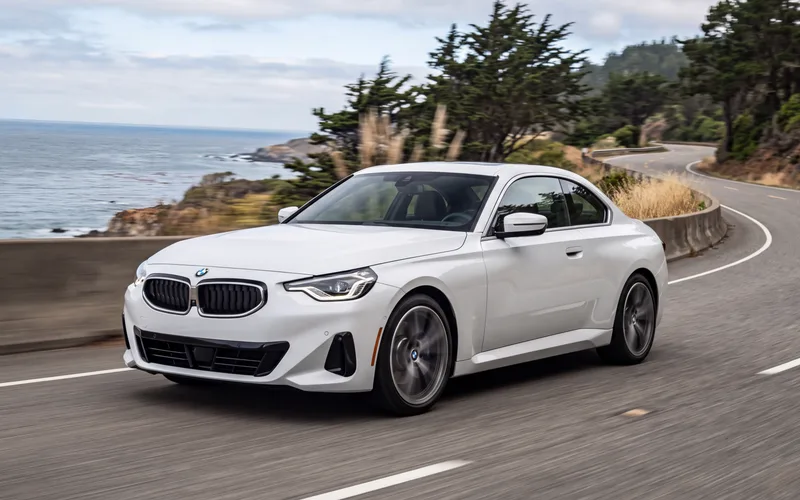 BMW 2 SeriesLuxury CoupeBetter at: Everyday usability
The M240i gives you the same 382 hp inline-six and ZF eight-speed in a car with back seats, a real trunk, optional all-wheel drive and newer infotainment, usually for less money.
Compare 1.92C-
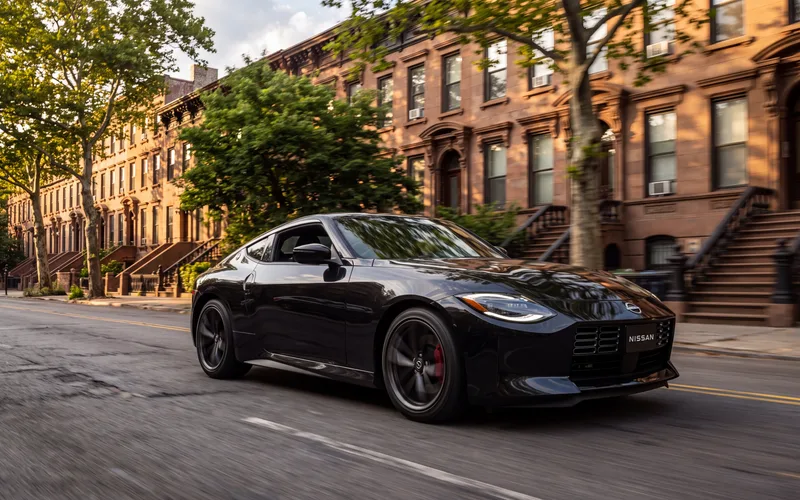 Nissan ZSports CarBetter at: Price
A 400 hp twin-turbo rear-drive coupe with a standard manual for roughly $14,000 less, if you can accept slower acceleration and much steeper depreciation.
Compare 2.01C
2.01C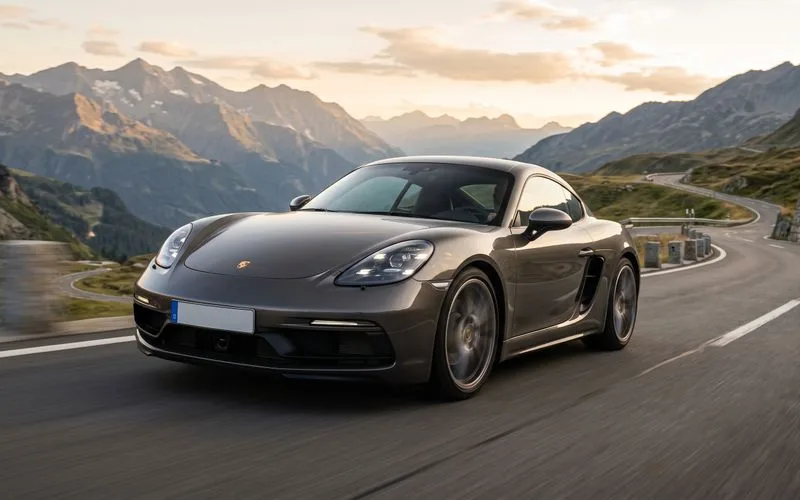 Porsche 718 CaymanSports CarBetter at: Steering feel
Step up in budget and the mid-engine Cayman delivers the steering feel and balance that reviewers say the Supra still lacks, plus more total luggage space.
CompareHow it's evolved
7 scored model years · 2020–2026
Subject scores by year
Hover or tap a score to see what moved it versus the year before. A corner mark flags a big swing.
| Year | Performance | Efficiency | Safety | Space | Cost | Reliability | Tech | Use-case | Driving | Value |
|---|---|---|---|---|---|---|---|---|---|---|
| 2026 | 66 | 23 | 52 | 45 | 61 | 80 | 60 | 31 | 85 | 61 |
| 2025 | 66 | 27 | 52 | 46 | 51 | 79 | 60 | 31 | 85 | 62 |
| 2024 | 70 | 27 | 50 | 46 | 57 | 77 | 59 | 31 | 84 | 65 |
| 2023 | 70 | 27 | 51 | 46 | 58 | 75 | 59 | 31 | 84 | 66 |
| 2022 | 69 | 23 | 51 | 43 | 61 | 75 | 58 | 31 | 83 | 63 |
| 2021 | 69 | 23 | 51 | 44 | 61 | 75 | 57 | 30 | 84 | 68 |
| 2020 | 62 | 28 | 49 | 44 | 62 | 72 | 56 | 30 | 83 | 69 |
Compare two years
Best fit & conditions
Higher scores mean a better fit for that use case. Learn more about use-case fit →
Subject profile
Academic Probation · NHTSA safety recalls
Jan 30, 2026Electrical system: starter assemblyPlease see the recall report for a complete list of all models. The engine starter may overheat and catch fire due to wear on an internal component.
Defect
BMW of North America, LLC (BMW) is recalling certain 2021-2023 Toyota Supra, 2022-2023 2 Series Coupe, 2021-2024 5 Series (xDrive), 2021-2022 Z4, 2022-2024 4 Series (Gran Coupe), 2021-2024 4 Series (Convertible and xDrive Convertible), 2021-2023 4 Series (Coupe), 2021-2024 3 Series, 2021-2023 X4, 2021-2024 X3 vehicles. Please see the recall report for a complete list of all models. The engine starter may overheat and catch fire due to wear on an internal component.
Risk
Fire increases the risk of injury.
Remedy
Dealers will replace the engine starter, free of charge. Owner notification letters were mailed July 21, 2026. Owners may contact BMW customer service at 1-800-525-7417 or Toyota's customer service at 1-800-331-4331. Vehicle Identification Numbers (VINs) involved in this recall will be searchable on NHTSA.gov beginning March 24, 2026.
NHTSA campaign 26V056000 ↗87,394 vehicles potentially affected (all models in the campaign)Owners notified Mar 27, 2026Filed by BMW of North America, LLCFiled as SUPRAJul 23, 2024Equipment: other: labelsThe load carrying capacity modification label may display inaccurate added weight values. As such, these vehicles fail to comply with the requirements of Federal Motor Vehicle Safety Standard number 110, "Tire Selection and Rims."
Defect
Gulf States Toyota, Inc. (GST) is recalling certain Toyota 2023 GR Supra, 2024 4 Runner, Corolla, Grand Highlander, Grand Highlander Hybrid, Land Cruiser Hybrid, Tacoma, Tacoma Hybrid, 2023-2024 BZ4X, Corolla Cross Hybrid, GR Corolla, GR86, Highlander, Highlander Hybrid, Prius, Prius Prime, Sequoia Hybrid, Tundra, Tundra Hybrid, Venza Hybrid, 2023-2025 Crown, and 2025 Camry Hybrid vehicles equipped with GST accessories. The load carrying capacity modification label may display inaccurate added weight values. As such, these vehicles fail to comply with the requirements of Federal Motor Vehicle Safety Standard number 110, "Tire Selection and Rims."
Risk
A vehicle with an incorrect maximum capacity weight value may be overloaded, which can increase the risk of a crash.
Remedy
GST will mail new labels to owners, free of charge. Owner notification letters were mailed September 16, 2024. Owners may contact GST customer service at 1-800-444-1074. GST's number for this recall is 24R2.
NHTSA campaign 24V548000 ↗Manufacturer no. 24R233,848 vehicles potentially affected (all models in the campaign)Owners notified Sep 16, 2024Filed by Gulf States Toyota, Inc.Filed as GR SUPRADec 6, 2023Power train: automatic transmission: control module (tcm/pcm/tecm)The weld seam of the integrated transmission control unit's cover may not have been manufactured properly, which could allow automatic transmission oil to leak into the transmission control unit.
Defect
BMW of North America, LLC (BMW) is recalling certain 2023 Toyota GR Supra, 3 Series Sedan (330i xDrive, M340i xDrive, M3), 5 Series Sedan (530i, 530i xDrive, M5), 4 Series Gran Coupe (430i, 430i xDrive), 4 Series Coupe (430i, 430i xDrive, M440i xDrive), 4 Series Convertible (430i, 430i xDrive, M440i xDrive), 8 Series Coupe (840i, M850i xDrive, M8), 8 Series Convertible (840i, M850i xDrive, M8), 8 Series Gran Coupe (850i xDrive, M8), X3 SAV (X3 xDrive30i, X3M), X4 SAV (X4 xDrive30i), X5 SAV (X5 xDrive40i, X5 M50i, X5M), X6 SAV (X6 xDrive40i, X6 M50i, X6M), and Z4 sDrive30i, Z4 M40i vehicles. The weld seam of the integrated transmission control unit's cover may not have been manufactured properly, which could allow automatic transmission oil to leak into the transmission control unit.
Risk
Transmission oil that leaks into the control unit can lead to a seizure of the transmission gears, causing a sudden loss of drive power and increasing the risk of a crash.
Remedy
Dealers will replace the transmission mechatronics module and the automatic transmission fluid, as necessary, free of charge. Owner notification letters were mailed January 26, 2024. Owners may contact BMW customer service at 1-800-525-7417.
NHTSA campaign 23V821000 ↗Manufacturer no. Toyota - 23TA14552 vehicles potentially affected (all models in the campaign)Owners notified Jan 26, 2024Filed by BMW of North America, LLCFiled as SUPRA
9 recalls on other model years of the GR Supra (2020–2022)
Sep 23, 2025Electrical system: starter assembly: relayThe engine starter relay may corrode, causing the relay to overheat and short circuit.
Defect
BMW of North America, LLC (BMW) is recalling certain 2019-2021 BMW 330i, 2019-2022 BMW Z4, 2020-2022 BMW 530i, X3, X4, Toyota Supra, 2021-2022 BMW 430i, 430i Convertible, and 2022 BMW 230i vehicles. The engine starter relay may corrode, causing the relay to overheat and short circuit.
Risk
A short circuit in the starter relay may increase the risk of a fire.
Remedy
Owners are advised to park their vehicles outside and away from structures until the remedy is complete. Dealers will replace the engine starter, free of charge. Owner notification letters were mailed February 6, 2026. Owners may contact BMW customer service at 1-800-525-7417. Vehicle Identification Numbers (VINs) involved in this recall became searchable on NHTSA.gov November 14, 2025.
NHTSA campaign 25V636000 ↗199,674 vehicles potentially affected (all models in the campaign)Owners notified Feb 6, 2026Filed by BMW of North America, LLCFiled as SUPRAAug 2, 2021EngineDuring engine start, the engine management software may cause loss of braking assist. Full mechanical braking (without assist) remains available.
Defect
BMW of North America, LLC (BMW) is recalling certain 2020 M340i, M340i xDrive, 540i, 540i xDrive, X3 M40i, 2020-2021 X4 M40i, 745Le xDrive, 2019-2021 Z4 M40i, and 2020-2021 Toyota Supra vehicles. During engine start, the engine management software may cause loss of braking assist. Full mechanical braking (without assist) remains available.
Risk
Loss of braking assist can increase the risk of a crash.
Remedy
Dealers will update the engine management software, free of charge. Owner notification letters were mailed on September 17, 2021. Owners may contact BMW customer service at 1-800-525-7417.
NHTSA campaign 21V598000 ↗50,024 vehicles potentially affected (all models in the campaign)Owners notified Sep 17, 2021Filed by BMW of North America, LLCFiled as SUPRAJul 21, 2021Seat beltsThe passenger seat belt Automatic Locking Retractor (ALR) may deactivate early, before the webbing fully retracts. As such, these assemblies fail to comply with the requirements of Federal Motor Vehicle Safety Standard number 208, "Occupant Crash Protection."
Defect
BMW of North America, LLC (BMW) is recalling certain 2021 2 Series (230i, 230i xDrive, M240i, M240i xDrive), 330e, 330e Xdrive, 4 Series Coupe (430i, 430i xDrive, M440i xDrive) M4 Coupe, M4 Competition Coupe, BMW 4 Series Convertible (430i, M440i), BMW X1 sDrive28i, xDrive28i, 2 Series Gran Coupe (228i, 228i xDrive, M235i xDrive), M2 Competition Coupe, 330i, 330i xDrive, M340i, M340i xDrive, M3, M3 Competition, 530i, 530i xDrive, 540i, 540i xDrive, MINI Hardtop 2 Door (Cooper, CooperS, JCW), X2 sDrive28i, X2 xDrive28i, X2 M35i, Z4 sDrive30i, Z4 M40i, MINI Hardtop 2 Door (Cooper SE), MINI Convertible (Cooper, Cooper S, JCW), MINI Clubman (Cooper S, Cooper S All4, JCW), MINI Countryman (Cooper, Cooper All4, Cooper S, Cooper S All4, JCW All4), Rolls Royce Ghost, MINI Countryman (Cooper S E All4), Rolls Royce Phantom, Rolls Royce Cullinan, and Toyota Supra vehicles. The passenger seat belt Automatic Locking Retractor (ALR) may deactivate early, before the webbing fully retracts. As such, these assemblies fail to comply with the requirements of Federal Motor Vehicle Safety Standard number 208, "Occupant Crash Protection."
Risk
During a crash, a seat belt retractor that does not function as intended increases the risk of injury.
Remedy
Dealers will inspect the seat belt retractors (including the seat belts) and, if necessary, replace the retractors, free of charge. Owner notification letters were mailed on September 3, 2021. Owners may contact BMW customer service at 1-800-525-7417; 1-866-825-1525 (MINI); 1-877-877-3735 (Rolls Royce); and 1-888-270-9371 (Toyota).
NHTSA campaign 21V554000 ↗21,537 vehicles potentially affected (all models in the campaign)Owners notified Sep 3, 2021Filed by BMW of North America, LLCFiled as SUPRANov 12, 2020Fuel system, gasoline: storage: tank assemblyThe weld between the fuel tank halves may have been insufficiently welded, causing the weld to fail.
Defect
BMW of North America, LLC (BMW) is recalling certain 2020-2021 Z4 and 2020-2021 Toyota Supra vehicles. The weld between the fuel tank halves may have been insufficiently welded, causing the weld to fail.
Risk
The failed weld may allow fuel to leak, increasing the risk of a fire in the presence of an ignition source.
Remedy
BMW will notify owners, and dealers will replace the fuel tank, free of charge. The recall began December 18, 2020. Owners may contact BMW customer service at 1-800-525-7417 or Toyota customer service at 1-888-270-9371.
NHTSA campaign 20V700000 ↗Manufacturer no. Toyota: 20TB1649 vehicles potentially affected (all models in the campaign)Owners notified Dec 18, 2020Filed by BMW of North America, LLCFiled as SUPRAAug 27, 2020Exterior lighting: headlightsThe headlamps are able to be adjusted horizontally. As such, these vehicles fail to comply with the requirements of Federal Motor Vehicle Safety Standard number 108, "Lamps, Reflective Devices and Associated Equipment."
Defect
BMW of North America, LLC (BMW) is recalling certain 2019-2020 Z4 sDrive30i, Z4 M40i and 2020 Toyota Supra vehicles. The headlamps are able to be adjusted horizontally. As such, these vehicles fail to comply with the requirements of Federal Motor Vehicle Safety Standard number 108, "Lamps, Reflective Devices and Associated Equipment."
Risk
Should the headlamps be adjusted horizontally, there could be increased glare and reduced visibility for oncoming drivers, or reduced visibility for the vehicle operator, thereby increasing the risk of a crash.
Remedy
BMW will notify owners, and dealers will inspect the headlamp vertical and horizontal adjustment plugs, correcting them as necessary, free of charge. The recall began December 23, 2020. BMW owners may contact BMW customer service at 1-800-525-7417 or Toyota owners may contact Toyota customer service at 1-888-270-9371.
NHTSA campaign 20V516000 ↗4,265 vehicles potentially affected (all models in the campaign)Owners notified Dec 23, 2020Filed by BMW of North America, LLCFiled as SUPRAJun 15, 2020Steering: linkages: tie rod assemblyIn certain driving conditions, such as high temperatures and rough road surfaces, a steering gear tie rod may become damaged, possibly resulting in a fractured tie rod.
Defect
BMW of North America, LLC (BMW) is recalling certain 2019 Z4 sDrive30i, 2019-2020 330i xDrive, M340i and M340i xDrive, 2020 X3M and X4M, and Toyota Supra vehicles. In certain driving conditions, such as high temperatures and rough road surfaces, a steering gear tie rod may become damaged, possibly resulting in a fractured tie rod.
Risk
A damaged or fractured tie rod may affect vehicle handling and control, increasing the risk of a crash.
Remedy
BMW and Toyota will notify owners, and dealers will replace the steering gear tie rods, free of charge. The recall began August 14, 2020. Owners may contact BMW customer service at 1-800-525-7417 or Toyota customer service at 1-888-270-9371.
NHTSA campaign 20V355000 ↗Manufacturer no. Toyota: 20TA092,779 vehicles potentially affected (all models in the campaign)Owners notified Aug 14, 2020Filed by BMW of North America, LLCFiled as SUPRANov 27, 2019Exterior lighting: headlightsThe headlight control units may fail causing a loss of one or both of the headlights.
Defect
BMW of North America, LLC (BMW) is recalling certain 2020 Z4 M40i, Z4 sDrive30i, 330i and 330i xDrive vehicles as well as 2020 Toyota Supra vehicles. The headlight control units may fail causing a loss of one or both of the headlights.
Risk
Headlight failure can reduce the driver's visibility, increasing the risk of a crash.
Remedy
BMW will notify owners, and dealers will replace the headlight control units, free of charge. The recall is expected to begin January 17, 2020. Owners may contact BMW customer service at 1-800-525-7417 or Toyota customer service at 1-888-270-9371.
NHTSA campaign 19V850000 ↗Manufacturer no. Toyota - 19TA20245 vehicles potentially affected (all models in the campaign)Owners notified Jan 24, 2020Filed by BMW of North America, LLCFiled as SUPRASep 27, 2019Back over prevention: sensing system: cameraThe back-up camera and display settings can be adjusted such that the rear view image is no longer visible and the system will retain that setting the next time the vehicle is placed in reverse. As such, these vehicles fail to comply with the requirements of Federal Motor Vehicle Safety Standard (FMVSS) number 111, "Rearview Mirrors."
Defect
BMW of North America, LLC (BMW) is recalling certain 2018 540d, 2018-2020 530i, 530i xDrive, 540i, 540i xDrive, M550i xDrive, M5, 530e, 530e xDrive, X3 sDrive, X3 xDrive, X3 M40i, X3 M, and 2019-2020 X4 xDrive, X4 M40i, X4 M, X7 xDrive, X7 M50i, 740Li, 740Li xDrive, 750Li, 750Li xDrive, 8 Series Convertible and Coupe 840i, 840i xDrive, M850i xDrive, X5 sDrive, X5 xDrive, X5 M50i, X6 xDrive, X6 M50i, 330i, 330i xDrive, M340i, M340i xDrive, Z4 sDrive, Z4 M40i, 740Le xDrive and 745Le xDrive, 2018-2019 640i xDrive Gran Turismo and Rolls-Royce Phantom, 2019 M850i xDrive Gran Coupe and Rolls-Royce Cullinan and 2020 Toyota Supra vehicles. The back-up camera and display settings can be adjusted such that the rear view image is no longer visible and the system will retain that setting the next time the vehicle is placed in reverse. As such, these vehicles fail to comply with the requirements of Federal Motor Vehicle Safety Standard (FMVSS) number 111, "Rearview Mirrors."
Risk
The lack of an image in the back-up camera display increases the risk of a crash.
Remedy
BMW will notify owners, and dealers will update the back-up camera software, free of charge. The recall began November 8, 2019. Owners may contact BMW customer service at 1-800-525-7417 or Rolls-Royce at 1-877-877-3735. Toyota owners may contact Toyota customer service at 1-888-270-9371.
NHTSA campaign 19V684000 ↗257,473 vehicles potentially affected (all models in the campaign)Owners notified Nov 8, 2019Filed by BMW of North America, LLCFiled as SUPRASep 12, 2019Seat belts: frontThe driver's seat belt guide loop mount may have been improperly welded.
Defect
BMW of North America, LLC (BMW) is recalling certain 2020 Toyota Supra vehicles. The driver's seat belt guide loop mount may have been improperly welded.
Risk
In the event of a crash, the mount could become damaged and the seat belt may not properly restrain the driver, increasing their risk of injury.
Remedy
Owners have been notified, and Toyota dealers will inspect the seat belt guide loop mount. If the mount is defective, the vehicle will be replaced, free of charge. The recall began October 16, 2019. Owners may contact the Toyota Customer Experience Center at 1-888-270-9371. Toyota's number for this recall is K0R.
NHTSA campaign 19V653000 ↗Manufacturer no. K0R7 vehicles potentially affected (all models in the campaign)Owners notified Sep 13, 2019Filed by BMW of North America, LLCFiled as SUPRA
Source: NHTSA Office of Defects Investigation recall database, model years 2020–2026. Recalls are listed by model year as the manufacturer filed them; whether a specific car is affected depends on its VIN — check a VIN at nhtsa.gov ↗. NHTSA model names matched to this page: GR SUPRA, SUPRA.
Detailed scoring by subject
1Performance & PowertrainOne of the GR Supra's strongest categories.2.72B-
Scored on the 3.0 as the volume configuration: the BMW-sourced B58 3.0L twin-scroll turbo inline-six makes 382 hp, unchanged for 2023 and shared across the 3.0, 3.0 Premium and the 500-unit A91-MT Edition. The range still opened with the 255 hp 2.0L turbo four (automatic only). Strong for a coupe, but below the Corvette, AMG GT and 911 variants that anchor the top of this segment.
368 lb-ft available from 1,800 rpm and held to 5,000 rpm is a deep, flat curve for a sports coupe — more than the Nissan Z (350 lb-ft) or a base 911 Carrera (331 lb-ft) — and is why the car pulls hard in any gear rather than only near redline. Identical figure with the new-for-2023 six-speed manual or the ZF eight-speed automatic.
Toyota rates the 2023 3.0 at 3.9 seconds to 60 mph with the ZF eight-speed automatic and 4.2 seconds with the newly offered six-speed manual; scored on the automatic as the volume configuration. The manual's shorter 3.46 final drive (vs 3.15 for the automatic) claws back some of the gap, and Car and Driver's instrumented runs put the stick only about 0.2 s behind the auto. Comfortably quicker than a Nissan Z (~4.5 s) or a Mustang GT and within a few tenths of a base 911 Carrera, though the Corvette and AMG GT stay ahead.
The B58 is one of the benchmark turbocharged sixes on sale: twin-scroll turbocharging, Valvetronic variable lift and direct injection give it near-zero lag off boost, a linearity unusual for a forced-induction engine, and a hard mid-range surge that carries to redline with inherent inline-six smoothness. 2023 sharpens how that power reaches the road rather than the engine itself — new Hairpin+ programming adds low-speed torque and permits more managed wheelspin at high steering angles, and traction control was re-profiled to cut unintended wheelspin off the line and out of corners. That places it at the top of this coupe field alongside the AMG GT and BMW 8 Series; the criticisms are piped cabin sound and an exhaust note less charismatic than a naturally aspirated V8 or flat-six.
2023 is the year the Supra finally got a choice: the ZF 8HP eight-speed automatic remains the class reference — fast, decisive, never hunting, with well-judged paddle response and launch control — and the new ZF/Toyota six-speed manual is a no-cost option on the 3.0 and 3.0 Premium, with iMT rev-matching (defeatable), a short throw and a deliberately weighted knob. Reviewers rate the rev-match flawless and the shift action satisfying, if a half-step behind the very best units from Honda or Porsche, and note a long BMW-style clutch stroke. The 2.0 grade stays automatic-only.
Rear-wheel drive only — no AWD has ever been offered on the MkV Supra in any market or trim, and 2023 is no exception. That is a deliberate sports-car choice rather than a defect, but on this item it is a bottom-band result: rivals like the Porsche 911 (Carrera 4/4S) and Corvette do offer all-wheel drive, and all-weather traction here is limited to the Active Rear Sport Differential on the 3.0 grades and stability control.
2023 is the broadest the Supra ever got: two distinct engines — the 255 hp 2.0L turbo four from $43,540 and the 382 hp 3.0L turbo six from $52,500 — and, new this year, a choice of six-speed manual or eight-speed automatic on the six. Two engines spanning different price points is a middle-band result; there is no hybrid, PHEV or EV variant and never was in this generation, which caps it well short of the top band. For context, the four was dropped for 2025, collapsing the lineup to a single engine.
2Efficiency & RangeThe GR Supra's lowest-graded category.0.00F
The volume 2023 GR Supra is the 382-hp BMW-sourced B58 3.0L turbo inline-six with the ZF eight-speed, EPA-rated 26 mpg combined; 2023 was the first year of the six-speed iMT manual (3.0, 3.0 Premium and the 500-unit A91-MT Edition), whose shorter final drive drops it to 21 mpg, while the 255-hp 2.0L four is the lineup's efficiency leader at 27 mpg. Even the best of those sits near the floor of the 22–60 mpg coupe band, which is anchored by hybrid GTs.
23 mpg city is respectable for a ~3,400-lb rear-drive coupe making 382 hp, helped by the eight-speed's coasting function and stop-start; the new-for-2023 manual gives up four mpg here, having neither aid and a shorter final drive. Against a 20–60 mpg coupe band set by hybrids it still lands in the bottom tenth.
31 mpg highway is the 2023 Supra's strongest efficiency number — tall top gears in the ZF eight-speed plus a slippery body make it a genuinely usable interstate car, and the six matches the four-cylinder here. It still lands low in the 26–58 mpg coupe band because that band is anchored by hybrid grand tourers.
The 13.7-gallon tank is small even by sports-car standards, so a decent 26 mpg combined still yields only about 356 miles between fills — roughly 288 for the new manual, and far less if the car is driven the way it invites. Weak against the 280–650 mi coupe band.
At EPA label assumptions — 15,000 mi/yr on the 55/45 city/highway split — 26 mpg combined burns about 577 gallons a year, and the mandatory premium grade pushes the bill to roughly $2,500. That is toward the expensive end of the $600–$2,800 coupe band, and the newly available manual's 21 mpg makes the enthusiast's choice about $590/yr costlier.
Premium is required, not merely recommended, and the volume 3.0 asks for 93 octane — the costliest grade at the pump — putting this near the bottom of the 0–49 band and well below the Mustang's 45, where premium is only recommended. There is no E85, diesel, or plug-in alternative, and the 13.7-gallon tank means the surcharge is paid often. Two things keep it off the floor: Toyota permits 89 AKI as a limp-along substitute with reduced performance, and the 2.0 was still offered in 2023 (dropped after 2024), giving buyers a trim that asks only 91.
3SafetyGrades below the middle of the scale.1.41D
NHTSA has never run NCAP testing on the A90/J29 GR Supra, and the 2023 model year — the car's biggest change year, with the new six-speed manual — was not tested either, which is routine for a low-volume two-seat sports car. Estimated at 4 stars from the shared BMW G29 structure and the standard front/side/curtain/knee airbag complement, with no measured result to lean on.
IIHS has never crash-tested any A90-generation GR Supra, so the 2023 car holds no Top Safety Pick award and not one individual Good crashworthiness result. Untested with no known structural concerns and a modern BMW-engineered body earns the low end of the mid band rather than the untested-with-concerns floor.
Standard on all four 2023 trims (2.0, 3.0, 3.0 Premium, A91-MT Edition): Pre-Collision System with Pedestrian Detection, Lane Departure Warning with Steering Assist, Automatic High Beams, Speed Limit Information and a rearview camera. Adaptive cruise, blind-spot monitoring and rear cross-traffic alert are standard on no trim — 2.0 and 3.0 buyers must take the $2,815 Safety & Technology Package, while 3.0 Premium and A91-MT buyers can add the far cheaper $1,195 Driver Assist Package, a less punitive upgrade path than the single $3,485 bundle the 2024 car later used.
The Pre-Collision System with Pedestrian Detection is standard on every 2023 trim and runs BMW-derived camera/radar hardware that earns Acceptable-to-Good vehicle-to-vehicle results elsewhere in that lineup, but the Supra has no IIHS front crash prevention result in any model year. Competent-modern-system credit without measured avoidance data or any confirmation of nighttime pedestrian performance; low-speed parking-sensor emergency braking remains optional rather than standard.
Blind Spot Monitor and Rear Cross-Traffic Alert are standard on no 2023 trim, though 2023 at least offers a cheap route to them — $1,195 for the Driver Assist Package on the 3.0 Premium and A91-MT, versus $2,815 for the bundled Safety & Technology Package on the volume 2.0 and 3.0. Coverage is alert-only with no steering or braking intervention, and no surround-view camera is offered at any price, which matters on a car this blind over the shoulder.
Lane Departure Warning with Steering Assist is standard on all four 2023 trims and gives a corrective nudge where markings are detected, but there is no lane-centering function at any trim or option level — the Supra offers neither BMW's Active Lane Keeping nor Toyota's Lane Tracing Assist, so nothing holds the car mid-lane on a highway.
Full-Speed Range Dynamic Radar Cruise Control is smooth and stop-and-go capable behind the ZF eight-speed, but it is optional and automatic-only: 2023's new six-speed manual cars — including the manual-exclusive A91-MT Edition — get plain fixed-speed cruise control even when a driver-assist package is fitted. Scored slightly above the 2024 car because manuals were 43% of 2023 US Supra sales rather than the majority, so most 2023 buyers could still option adaptive cruise. No highway-assist mode pairs it with lane centering.
No hands-free highway driving is offered on the 2023 GR Supra in any trim or package. Toyota's hands-off capability was confined to Lexus flagships at the time, and neither the Supra nor its BMW Z4 twin carries the driver-monitoring camera or HD-mapping hardware such a system requires.
Auto-leveling LED headlights with a six-lens cluster (three low-beam, three high-beam), LED daytime running lamps and standard Automatic High Beams are fitted across the whole 2023 range, so there is no trim-based lighting penalty on the volume car. Held to the middle of the band because IIHS has never evaluated Supra headlights and no steering-responsive adaptive function is offered at any price.
Forward sightlines over the low cowl are workable but hampered by massive A-pillars, and side and rearward visibility is among the worst in the segment — the roofline drops hard into shallow side glass and the rear window is a slot, leaving a large over-the-shoulder blind zone. Compensation is thin: the rearview camera is the only standard aid, blind-spot monitoring and parking sensors sit behind a package on every trim, and no surround-view camera is available.
4Space & ComfortOne of the GR Supra's weakest categories.1.03D
The J29/A90 GR Supra is a strict two-seater — behind the seats is a parcel shelf and a small bin, with no rear bench in any configuration. The 2023 model year added a six-speed manual and the 500-unit A91-MT Edition, but neither changes the two-place cabin.
38.3 in sits above the coupe-band midpoint and is genuinely good for a low double-bubble-roof sports car, helped by Toyota offering no sunroof on any 2023 trim so there is no headroom penalty. Tall drivers still sit with the roof close to the helmet line.
42.2 in lands mid-pack in the 40–44 in coupe band — enough for six-footers to stretch out on a long drive, which supports the Supra's grand-touring bandwidth. Deep seat bolsters and a tall centre console make the cabin feel narrower than the legroom figure suggests.
10.2 cu ft sits at the very bottom of the 10–20 cu ft coupe band, which is calibrated against four-seat coupes whose rear seats fold. Judged against actual sports cars the Supra is the practical one — the liftback opening swallows two carry-ons and it beats the Nissan Z and MX-5 — but with no rear seats there is no way to expand it.
Small-item storage is the Supra's weakest practical trait and 2023 changed nothing about it: a compact glovebox, shallow door pockets, a token bin behind the seats, and cupholders set within the padded centre armrest where reviewers of shorter stature find them awkwardly far back. No clever packaging solutions offset any of it.
The sport seats draw repeated praise for support over long stints, and on the volume 3.0 Premium they are 14-way power-adjustable, heated and leather-trimmed with driver memory. Points come off because the bolsters feel confining across the shoulders for broader occupants, the entry 2.0 gets manual Alcantara/leather seats with no heating at all, and there are no rear seats to comfort.
2023 is a genuine change year for ride: alongside the new six-speed manual Toyota re-tuned the adaptive dampers for roll balance and ride comfort and recalibrated the electric power steering, giving this short-wheelbase sports car unusually wide bandwidth and pleasant around-town pliancy. It stays firm by mainstream standards, the dampers can be caught out by broken pavement, and because occupants sit almost over the rear axle big vertical inputs land hard.
Windows up, the fixed roof and BMW-sourced structure keep road and wind noise moderate — subdued on asphalt, noisier on concrete — and induction and exhaust sound are deliberately piped in rather than isolated. The car's well-documented Helmholtz-resonance buffeting with both side windows lowered, acknowledged by Toyota engineers but never remedied, is a real demerit that keeps this from average-plus.
Dual-zone automatic climate control is standard on every 2023 trim including the base 2.0, and the 3.0 adds heated 14-way power sport seats, with full leather trim, a colour head-up display, navigation and wireless charging on the volume 3.0 Premium and the A91-MT Edition. The list stops there — no ventilated seats, no heated steering wheel, no rear climate (no rear seats) and no remote pre-conditioning — and the 2.0 goes without heated seats entirely.
5Cost of OwnershipMid-pack among this car's ten categories.1.93C-
For 2023 the four-cylinder 2.0 remained the entry point at $45,135 with destination, roughly $1,500 below the equivalent 2024 car and well under the $57k base price that arrived in 2025 once Toyota deleted the 2.0. That lands mid-band for a coupe.
The inline-six cars carry the great majority of US GR Supra sales, and the 3.0 Premium — leather, 8.8-inch touchscreen with navigation, 12-speaker JBL audio, head-up display, wireless charging — is the volume configuration at $56,745 with destination, with the new manual a no-cost swap. That sits just under the coupe volume-trim band ceiling of $58,000, so the item scores near the floor.
Published estimates diverge sharply — CarEdge models about $1,814 in maintenance and repair across the first five years, while KBB's cost-to-own tool runs several times that once repairs and wear items are loaded in. Settling near $4,000 accounts for BMW B58 parts and staggered performance tires while crediting Toyota service pricing and ToyotaCare's first two years, and still lands well better than the coupe-segment midpoint.
The MkV GR Supra is among the strongest value-holders in the sports-car class, and 2023 is the strongest year of the run for residuals — it is the first model year with the 6-speed manual, which used-market demand rewards, on top of low volume, enthusiast interest, and a Toyota badge. Retention sits above the coupe band ceiling of 65%, so the item maxes out.
Standard Toyota new-vehicle limited warranty of 36 months/36,000 miles — the industry floor and the bottom of the coupe band, with no sports-car-specific extension despite the premium price.
Toyota's standard 60-month/60,000-mile powertrain coverage sits at the very bottom of the 5–10 year coupe band — notably short given the BMW-sourced B58 turbocharged inline-six and the newly introduced ZF 6-speed manual.
ToyotaCare covers 2 years/25,000 miles of scheduled maintenance plus 2 years of 24/7 roadside assistance — real but short, running out before the first big-ticket service on a turbo six. The complimentary one-year NASA membership, including a free High Performance Driving Event, is a genuine enthusiast perk rather than a cost offset. Mid-band: better than the German rivals that include nothing, well short of a multi-year maintenance plan.
$56,745 volume-trim price minus its estimated resale value after 5 years (70% retained, or about $39,722) leaves about $17,024 in depreciation. Add the projected $4,000 in 5-year maintenance and repairs, and owning this vehicle for 5 years costs about $21,024 in total.
6Reliability & QualityOne of the GR Supra's strongest categories.3.06B
Signals are mixed for the 2023 model year: J.D. Power gives the 2023 GR Supra a predicted Quality & Reliability score of 63/100, which falls in its 0-69 'Fair' (below-average) band, while Consumer Reports has no statistically usable model-specific sample for a car this low-volume and leans on Toyota-brand data instead. The underlying BMW hardware is well-proven, but the model-level ownership evidence that does exist is not flattering, and 2023 is the first year of the new six-speed manual.
Toyota's standing at the 2023 model year is very strong but not quite the clean sweep of later years — Consumer Reports' 2023 survey put Lexus first and Toyota second among all brands, while the J.D. Power 2023 U.S. Vehicle Dependability Study had Lexus highest overall at 133 PP100 with Kia, not Toyota, as the top mass-market brand for a third straight year. Scored a notch under the brand's raw standing because the GR Supra is engineered and assembled outside Toyota's own system: BMW supplies the powertrain, electronics and switchgear, and BMW sits only at industry average in the same study.
2023 is the weakest recall year of the A90 generation to date, and unlike 2024 the defect reaches the volume car. NHTSA campaign 23V821000 covers an improperly welded cover seam on the ZF 8HP's integrated transmission control unit that can let automatic transmission fluid into the control unit and seize the gears, causing sudden loss of drive power — a loss-of-motive-power defect on the eight-speed automatic most 2023 Supras were sold with. The model year was then swept into two separate starter-motor fire campaigns, though both are confined to the low-volume 2.0-liter four, and there is a minor label campaign on top.
The volume 2023 configuration is BMW's B58 turbocharged 3.0-liter inline-six — one of the best-documented modern performance engines, with a closed-deck block and a broad owner record of 150,000-200,000 miles on routine service — behind the ZF 8HP eight-speed that Toyota chose over a dual-clutch specifically for its reliability. Trimmed below the 2024 score because 2023 is the year that transmission drew the 23V821000 mechatronic-seal recall, and because the newly introduced ZF S6-53 six-speed manual has no service history at all yet; the B58's known cooling-system weak points cap it further.
The cabin is essentially the BMW Z4's — the 8.8-inch screen, iDrive rotary controller, steering wheel and switchgear all come across, with only the badges and the manual shift mechanism specific to the Supra. Reviewers of the 2023 car call it a pleasant near-luxury space with good BMW-sourced materials, heated leather sport seats and carbon-fiber console trim on the Premium, but it still sits behind the Lexus LC and Porsche 911 cabins in this segment.
Assembly is a genuine strength — the Supra is built alongside the BMW Z4 at Magna Steyr in Graz, and 2023 reviewers consistently describe a solidly screwed-together car with no rattle or panel-gap complaints. Held below the segment's best because J.D. Power's below-average 63/100 quality score for the year is the only hard owner data available, and US volume is far too low for a formal initial-quality award to corroborate the review-level impressions.
Toyota operates one of the densest dealer and service networks in the US with strong customer-satisfaction standing, so routine maintenance access is never the constraint on a Supra. The deduction is GR-specific: the drivetrain, electronics and diagnostics are BMW, Toyota service departments have limited depth on that hardware, and Toyota stores cannot cross-order parts from BMW dealers despite the joint program — a gap that mattered in 2023 when the 23V821000 transmission remedy had to flow through the Toyota network.
Running cost is the good half of this item — routing BMW hardware through Toyota's parts pricing makes the Supra dramatically cheaper to keep than its mechanical twin the Z4, and the B58 enjoys a large tuning and hard-parts aftermarket. Availability is the bad half: BMW-sourced components ordered through the Toyota system draw documented multi-month backorders, and US volume is small enough that dealer stocking is thin — which is what holds this below a mid-pack score.
7Technology & InfotainmentMid-pack among this car's ten categories.2.00C
By 2023 the horizontal 8.8-inch center display is standard across the whole US GR Supra range, including the 2.0 — the 6.5-inch screen of the earliest A90 cars is gone — and no larger screen is offered anywhere in the lineup. On the volume 3.0 Premium it works as a touchscreen and can also be driven by the BMW-style rotary controller on the console.
The system is BMW iDrive 6 wearing Toyota graphics, and that is mostly a compliment — the rotary controller with its ring of shortcut buttons is one of the better ways to work a menu at speed, responses are quick, and the physical climate controls are left alone. It loses ground for being several BMW generations behind by 2023: modest 8.8-inch real estate, dated menu styling, and no touch input at all unless you buy up to Premium/A91-MT or option the package.
Half the equation is handled well and half is missing outright: wireless Apple CarPlay is standard on the volume 3.0 Premium and the A91-MT (and available on 2.0/3.0 through Supra Connect Extended Services), but Android Auto is not offered on any 2023 GR Supra at any price — a gap the mechanically identical BMW Z4 does not have. That single omission caps this item near the bottom of the middle band.
The volume trim gets real embedded navigation with real-time traffic plus BMW-derived voice command with cloud-side online speech processing, so both boxes are ticked — but it is the pre-natural-language BMW assistant working from a dated map interface, and most owners default to CarPlay for routing. Lower grades have no native nav at all until Supra Connect is added.
New for 2023, the 12-speaker JBL HiFi surround system became standard equipment on the 3.0 Premium and the A91-MT rather than an add-on — a genuinely strong setup for a small two-seat cabin — and the plain 3.0's 10-speaker unit is respectable. The score is held out of the 80s by the 2.0's four-speaker base system, thin for a $45,000-plus car, and by the absence of any audio option above the JBL.
Unlike most of the cabin this piece is bespoke to the Supra rather than lifted from BMW: an 8.8-inch full-digital cluster standard on every 2023 grade with a center-mounted tachometer, digital speed readout and flanking bar-graph gauges, and it reads cleanly at speed. It stops short of the top band because the layout is essentially fixed — none of the multi-view reconfigurability BMW's own Live Cockpit offers.
Over-the-air capability exists but stops at the multimedia layer — Supra Connect pushes map and infotainment software to the head unit over the cellular network, with an in-car prompt when an update is available. There is no whole-vehicle OTA that adds features or updates powertrain, chassis or driver-assist modules; anything beyond the screen is a dealer flash.
The Supra Connect app covers the basics — vehicle locate, remote lock/unlock, lights and horn, cabin ventilation and send-destination-to-car — but it is a separate BMW-derived app rather than the mainstream Toyota app, there is no remote engine start and no phone-as-key, and the services lapse to a paid subscription after the included trial term.
A strict two-seat cabin needs less, and the volume 3.0 Premium does get the Qi wireless charging pad, but the wired provision is thin and dated for 2023: a single console USB port plus a 12-volt outlet, USB-A rather than USB-C, and no household or auxiliary power anywhere. Nothing here is fast-charge capable.
Proximity smart key with hands-free entry and push-button start is standard across the 2023 lineup, so the everyday convenience is present even on the cheapest car in the range. It sits mid-pack rather than high because the Supra offers no phone-as-key or digital key, no remote engine start from the app, and — being a coupe with a manual hatch — no hands-free power tailgate.
A rearview camera with parking guide lines is standard on every 2023 trim, and front and rear parking sensors come with the Safety & Technology content that is standard on the volume 3.0 Premium. But no surround-view camera is offered at any price and there is no automated parking, which matters more than usual in a car with famously poor over-the-shoulder and rear-three-quarter visibility.
A full-color head-up display is standard on the volume 3.0 Premium — and on the 2023-only A91-MT Edition — and it is a good BMW-sourced unit with clear speed, tach and navigation prompts. It scores upper-middle rather than top band because it is genuinely unavailable further down the range: the 2.0 and base 3.0 cannot be optioned with it.
8Use-Case FitOne of the GR Supra's weakest categories.0.04F
The 2023 GR Supra is a strict two-seat coupe (J29/DB, co-developed with the BMW Z4 and built at Magna Steyr) with no rear bench, no LATCH anchors, and nowhere to put a child seat except the front passenger seat with the airbag switched off. Long frameless doors demand wide parking spaces, and the hatch has no exterior release, so stroller and diaper-bag duty means fishing out the fob every time.
Standard content is respectable for a sports car — pre-collision system with pedestrian detection, lane departure alert with steering assist, automatic high beams and road sign assist — but blind spot monitor, rear cross-traffic alert, parking sensors with emergency braking and full-speed adaptive cruise are all bundled into extra-cost packages, and adaptive cruise and parking sensors are not even orderable with the new-for-2023 six-speed manual. Neither IIHS nor NHTSA has crash-tested the GR Supra, so a family has no third-party ratings to lean on, and rear-occupant alert is moot with no rear seat.
Two seats caps the party at two people, and the 10.2 cu ft hatch is the entire luggage allowance — no rear amenities, no second-row climate, no entertainment screens. It works as a couple's weekend car, not a family tourer.
Far easier to live with daily than most sports cars: the ZF 8HP automatic is smooth and unobtrusive in traffic, the B58 inline-six makes 368 lb-ft from 1,800 rpm so it never needs revving, and the BMW-sourced switchgear and supportive seats keep fatigue low. Working against it are a firm ride amplified by sitting almost over the rear axle, poor over-shoulder visibility, a low seating position for curbside entry/exit, and the well-documented Helmholtz wind buffeting with both windows cracked. The 2023 manual adds rev-matching and a shorter final drive but trades away the automatic's traffic-crawling ease.
26 mpg combined from a 382-hp inline-six is genuinely good for the class, and 2023 still offers the four-cylinder 2.0 at 27 mpg combined as a cheaper commuting entry point — an option deleted after 2024. Against that, every gallon is premium unleaded, the 3.0's staggered 255/35 front and 275/35 rear summer Michelins are expensive and short-lived, the new manual drops to 21 mpg combined, and servicing a BMW-engineered drivetrain is mid-pack on cost rather than cheap.
The footprint helps — 172.5 in long on a 34.1 ft turning circle is compact by 2023 standards and threads through city streets easily. The problem is seeing out: shallow glass, thick rear pillars and a large over-shoulder blind spot mean leaning on the standard backup camera, while parking sensors and blind spot monitor cost extra and the parking sensors cannot be had at all on the manual.
No tow rating of any kind, no payload headroom worth quoting, and a 10.2 cu ft hatch as the only cargo hold. Aftermarket hitches exist for bike and cargo carriers only and are explicitly not trailer-rated.
The underlying hardware is sound — the BMW B58 inline-six and ZF 8HP automatic are long-run, high-volume units with strong service records, and Magna Steyr build quality is good. But roughly 4.5 in of ground clearance, summer rubber, leather/Alcantara trim and BMW-priced consumables make it the wrong tool for anything abusive, and there is no fleet track record because no fleet buys one.
There is nothing here: no bed, no tie-downs of consequence, no onboard AC power, no upfit ecosystem, no washable surfaces. The only work-adjacent accessory is the GR Parts data-logging recorder, which is a track toy.
The Supra was benchmarked as a GT as much as a track car and it shows on the interstate — adaptive variable sport suspension on the 3.0 grades, seats that hold up over hours, and 31 mpg highway on a 13.7-gal tank for roughly 380–420 highway miles between stops. It loses ground to a real grand tourer on road and wind noise and on the firm secondary ride, and full-speed adaptive cruise is an option box that manual buyers cannot tick at all.
Rear-wheel drive with no AWD option in any market, roughly 4.5 in of ground clearance, staggered summer tires and a low front fascia make anything past a paved trailhead a bad idea. No trailer tow rating, no factory roof rails, and no camping-friendly AC outlets or flat-folding surfaces.
For a two-seat sports car the 10.2 cu ft hatch is above average — it clears the Nissan Z's 6.9 and the MX-5's 4.6, and a pass-through to the cabin takes longer items resting on the rear strut brace. But nothing folds, cabin small-item storage is genuinely poor, there are no factory roof rails, and the missing external hatch release makes repeated loading tedious.
9Driving ExperienceThe GR Supra's best-graded category.3.75A
2023 is the year the J29/DB chassis got its most substantive revision: re-tuned shock absorbers for better roll balance, vulcanised (harder) front and rear anti-roll bar bushings, a standard active rear sport differential, and a new anti-roll control system that intervenes earlier via VSC specifically to head off the snap oversteer the early cars were known for. On a 97.2-in wheelbase with 50:50 weight distribution and staggered Michelin summer rubber it measures 1.04-1.07 g of lateral grip. It gives up outright capability to a 911 but rotates more willingly than almost anything at the price.
Toyota re-tuned both the electric power steering hardware and its operating parameters for 2023, and the result is quick and accurate enough to place the nose with confidence — reviewers generally rate it above BMW's own calibration of the same components. It stops short of the class best on feedback and weighting: multiple 2023 reviews call the rack light and short on genuine feel, though the thin rim itself is widely preferred to BMW's thicker wheel.
Four-piston fixed front calipers on 13.7-in rotors under roughly 3,400 lb of curb weight with staggered Michelin summer tires produce short, repeatable stops — 101 ft from 60 mph in instrumented testing. Pedal feel is firm and linear with no regen blending to muddy it, and the car withstands repeated hard stops. Short of carbon-ceramic fade resistance, but nothing in the price bracket stops meaningfully better.
The BMW B58 turbo inline-six delivers all 368 lb-ft from 1,800 rpm, so tip-in is immediate with essentially no turbo lag, and the inline-six's inherent balance makes stop/start restarts near-imperceptible. The ZF 8HP automatic, recalibrated by Toyota with its own software, shifts quickly and unobtrusively. 2023 adds a purpose-built six-speed manual with standard rev-matching that keeps the car settled on downshifts without heel-and-toe; its action is notchier than the otherwise seamless drivetrain, which is the only real deduction.
An inline-six is free of the secondary imbalance that makes flat-fours and V6s buzz, so there is essentially no vibration through the controls and the cabin is well isolated for a sports car — it cruises quietly. The deduction is character rather than harshness: much of what is audible under load is DSP-synthesized and played through the speakers rather than real intake or exhaust noise, and owner opinion is split on whether it enhances or cheapens the experience. The real tailpipe note is muted for the displacement.
A 97.2-in wheelbase and 172.5-in overall length give the Supra a 34.1-ft curb-to-curb turning diameter — at the tight end of the coupe class and a genuine asset in parking structures and on tight switchbacks.
The seat itself is excellent — low, snug and impressively supportive, with a good relationship to a reach-and-rake wheel and BMW-sourced switchgear that falls to hand, plus a well-sized screen that is not overbearing. What drags it down is everything outside the glass: small side windows, a low roofline, thick C-pillars and a shallow rear window leave large blind spots front and rear, and a 4.5-in ride height with long frameless doors makes ingress and egress a production in tight spaces. Blind spot monitoring, rear cross-traffic alert and parking sensors are a $1,195 option rather than standard.
2023 is the GR Supra at its most enthusiast-satisfying: a short-wheelbase rear-drive coupe with 382 hp, a standard active rear differential, re-tuned chassis and — for the first time — a purpose-built six-speed manual, which the press received with near-unanimous enthusiasm. It made Car and Driver's 10Best for 2023 and took a fourth consecutive Editors' Choice in the sports car category. The only marks against pure joy are the synthesized soundtrack and the absence of the theatre a naturally aspirated rival brings.
10Value & Market PositionMid-pack among this car's ten categories.2.49C+
Every 2023 GR Supra 3.0 carries the hardware that decides how a rear-drive coupe drives — an active rear sport differential standard on all 3.0 models, adaptive variable suspension, Brembo four-piston front brakes, 19-inch forged wheels, plus retuned shock absorbers new for 2023 — and the volume 3.0 Premium adds a newly-standard 12-speaker JBL system, the 8.8-inch touchscreen with navigation and wireless CarPlay, a color head-up display, wireless charging and heated leather. It falls short of the top band because that Premium content is a $3,150 step over the 3.0 and, worse for 2023 specifically, blind-spot monitoring, rear cross-traffic alert and adaptive cruise sit in an extra-cost package that is automatic-only — order the year's headline manual and you cannot have adaptive cruise at all.
Dollar for capability, 2023 is a strong showing: 382 hp, an active differential, adaptive dampers and a no-cost six-speed manual for $52,500 in the 3.0, against a $63,400 Porsche 718 Cayman and a $66,295 BMW Z4 M40i built on the same platform in the same Graz plant — roughly $11K–$14K of the same engineering. The offsets are equally real: two seats, a small hatch, iDrive-7-era BMW infotainment, and a $39,990 Nissan Z or $38,345 Mustang GT delivering most of the thrill for twelve to fourteen thousand dollars less.
2023 offers the fullest choice the US GR Supra ever had: four trims spanning nearly $15,000 (2.0, 3.0, 3.0 Premium and the 500-unit A91-MT Edition), two engines, and for the first time a free pick between the six-speed manual and the eight-speed automatic on any six-cylinder car. It is still one body style, rear-drive only, two seats and a thin option sheet, but the budget and character choices here are genuine — and more than the 2025 car's single engine and two trims would offer.
Calendar 2023 was the generation's worst collapse: 2,652 US units, down about 46% from 4,952 in 2022 and under 40% of the 6,830-unit 2021 peak — and it happened in the very year the long-demanded manual arrived, which is the clearest possible signal that the gearbox was not the constraint. The cheaper Nissan Z was outselling it. This is a slow seller on a sharply declining trajectory.
The Supra badge carries real legend status, Gazoo Racing has earned enthusiast credibility, and Toyota's reliability reputation converts into resale strength — the 2023 GR Supra won a J.D. Power ALG Residual Value Award in the Premium Compact Sports Car segment, a hard buyer benefit rather than a marketing line. The standing drag is the enthusiast objection that the A90 is a rebodied BMW Z4 with a B58 engine and BMW switchgear.
2023 is the first year a Supra buyer got meaningful help: with volume halving, the launch-era market adjustments largely evaporated and Edmunds' suggested transaction price for the volume 3.0 Premium sat several thousand dollars under its $55,650 sticker, so cars became genuinely negotiable. Factory support is still thin, though — the dependable offers are the perennial $500 college-graduate and $500 military rebates through Toyota Financial Services with only intermittent lease programs on top, and the 500-unit A91-MT and other manual cars still transacted at or near MSRP.
2023 is the fourth US model year of the A90 with no redesign, so the platform, the styling and the BMW iDrive-7-era cabin all still date to the January 2019 Detroit debut. But it is by far the most substantive mid-cycle update the generation received — a purpose-engineered six-speed manual with rev-matching and a shorter 3.15 final drive, retuned shock absorbers and roll balance across all 3.0 models, and the active rear differential made standard — which is a real reason to buy this year rather than wait, and lifts it above the pure carry-over years that follow.
2023 is the high-water mark for the A90's critical standing: the manual gearbox rehabilitated the car with the enthusiast press and it took a Car and Driver 10Best — its third — alongside Editor's Choice, an ALG Residual Value Award and Autocar's "Miles of Smiles" award, with MotorWeek calling it a leader among current sporting coupes. It stops short of the very top band because it still rarely wins a comparison test outright: reviewers who liked the manual also judged the Cayman's and even the Z's shifters crisper than the Supra's notchy, narrow-catch-point six-speed, and the fake hood vents and dated BMW infotainment remain standing complaints.