
The verdict
A struggling full-size suv, strong on reliability and held back by efficiency.
The 2020 Sequoia is a large, very durable Toyota with a V8. It seats up to eight, holds 120.1 cu ft of cargo, tows up to 7,400 lbs and has full-time 4WD with low range, and it keeps about 63% of its value after five years. The trade-offs are big: it gets 14 MPG combined (about $4,800 a year in fuel), its 2008-era cabin has a small 7-inch screen, and neither NHTSA nor IIHS ever fully crash-tested it. This model year is gas-only. The hybrid Sequoia didn't arrive until the 2023 redesign. Buy one for longevity and hauling, not for efficiency or modern features.
Jump to scoresStrengths
- Built to run for a very long time
- Huge cargo hold and room for eight
- Real towing and 4WD hardware
What holds it back
- Very thirsty
- Crash protection is unverified, and driver aids are basic
- Dated tech
Top alternatives
Cars shoppers cross-shop with the Toyota Sequoia 2.79B-
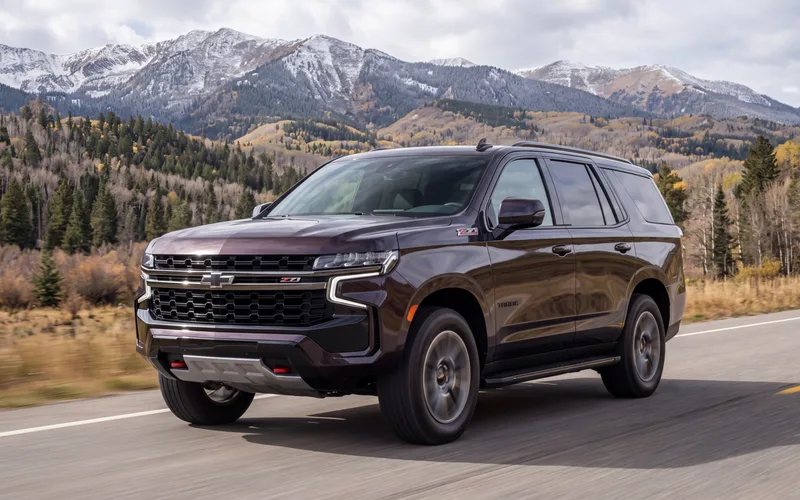 Chevrolet TahoeFull-Size SUVBetter at: Cargo space
Costs less to buy, carries 36 cu ft more gear, rides on an independent rear end and offers Super Cruise hands-free driving — the default choice unless you specifically want the hybrid or the tow rating.
Compare 2.92B-
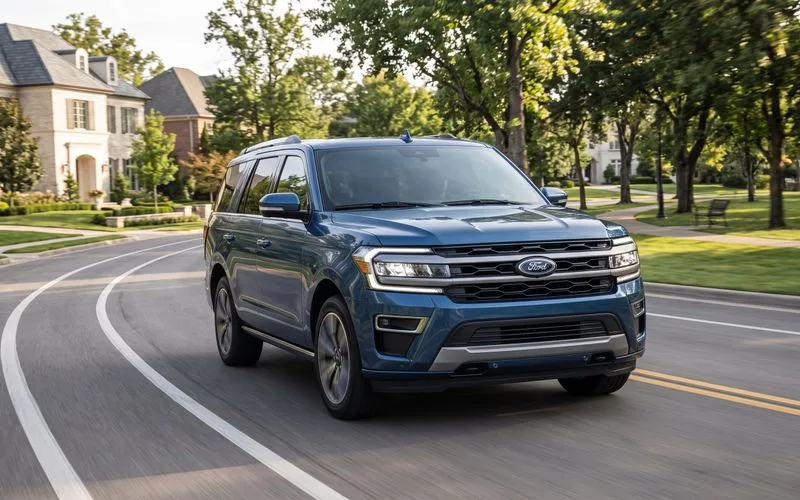 Ford ExpeditionFull-Size SUVBetter at: Family room
The freshest full-size SUV in the class, with a third row adults can actually use, 108.5 cu ft of max cargo and BlueCruise, at the cost of worse fuel economy and weaker resale.
Compare 2.88B-
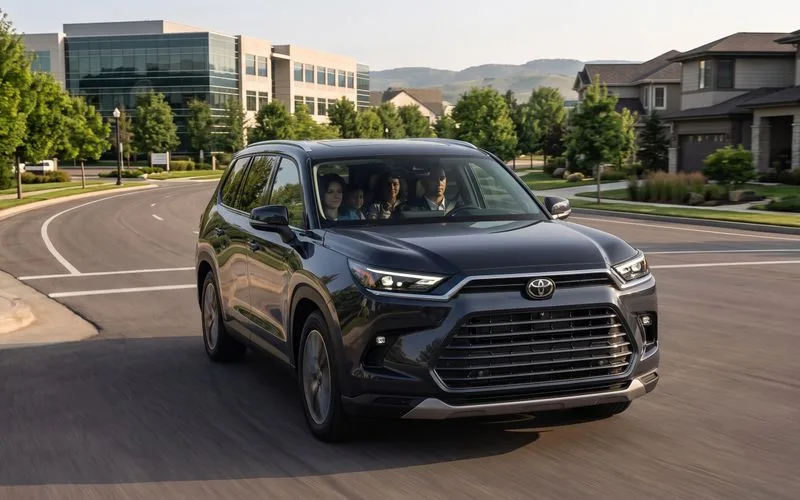 Toyota Grand HighlanderMid-Size SUVBetter at: Value
Same Toyota reliability and hybrid efficiency for far less money, with a better ride and a more usable third row — the right call for anyone who doesn't truly need 9,520 lbs of towing.
CompareHow it's evolved
10 scored model years · 2017–2026
Subject scores by year
Hover or tap a score to see what moved it versus the year before. A corner mark flags a big swing.
| Year | Performance | Efficiency | Safety | Space | Cost | Reliability | Tech | Use-case | Driving | Value |
|---|---|---|---|---|---|---|---|---|---|---|
| 2026 | 76 | 40 | 65 | 71 | 38 | 69 | 75 | 69 | 57 | 66 |
| 2025 | 76 | 35 | 57 | 64 | 37 | 72 | 73 | 67 | 56 | 62 |
| 2024 | 76 | 35 | 53 | 65 | 43 | 68 | 74 | 67 | 56 | 66 |
| 2023 | 78 | 35 | 55 | 65 | 47 | 69 | 74 | 67 | 58 | 66 |
| 2022 | 63 | 15 | 38 | 66 | 47 | 81 | 35 | 61 | 55 | 43 |
| 2021 | 63 | 16 | 41 | 68 | 37 | 82 | 39 | 61 | 55 | 49 |
| 2020 | 64 | 16 | 41 | 67 | 52 | 81 | 42 | 61 | 56 | 47 |
| 2019 | 64 | 15 | 44 | 67 | 39 | 79 | 25 | 61 | 58 | 47 |
| 2018 | 62 | 16 | 42 | 67 | 50 | 79 | 25 | 61 | 56 | 52 |
| 2017 | 62 | 15 | 18 | 67 | 60 | 82 | 24 | 56 | 55 | 50 |
Compare two years
Best fit & conditions
Higher scores mean a better fit for that use case. Learn more about use-case fit →
Subject profile
Academic Probation · NHTSA safety recalls
Dec 23, 2021Steering: hydraulic power assist system · Steering: rack and pinionThe power steering gear assembly may have been manufactured incorrectly, which can result in an oil leak.
Defect
Toyota Motor Engineering & Manufacturing (Toyota) is recalling certain JTEKT power steering gear assembly service parts for 2007-2021 Tundra and 2008-2022 Sequoia, part numbers 44250-0C160, 44250-0C131, 44250-0C170, and 11250-0C121. The power steering gear assembly may have been manufactured incorrectly, which can result in an oil leak.
Risk
An oil leak may cause a sudden loss of power steering assist, increasing the risk of a crash.
Remedy
Dealers will inspect and replace the power steering gear assembly, free of charge. Owner notification letters were mailed on February 17, 2022. Owners may contact Toyota customer service at 1-800-331-4331. Toyota's number for this recall is 21TH01.
NHTSA campaign 21E103000 ↗Manufacturer no. 21TH01151 vehicles potentially affected (all models in the campaign)Owners notified Feb 17, 2022Filed by Toyota Motor Engineering & ManufacturingFiled as SEQUOIANov 4, 2020Fuel system, gasoline: delivery: fuel pumpThe low-pressure fuel pump inside the fuel tank may fail.
Defect
Toyota Motor Engineering & Manufacturing (Toyota) is recalling certain 2018-2019 4Runner, 2019-2020 Avalon, 2019 Corolla Hatchback, 2017-2019 Highlander, 2018-2020 Camry, 2020 Corolla, 2018-2019 Land Cruiser, 2017-2020 Tacoma, 2019-2020 RAV4, 2019-2020 Sequoia, 2017-2020 Sienna, 2019-2020 Tundra, 2018-2020 Lexus ES350, 2017 Lexus GS200t, 2017-2019 Lexus GS350, 2019 Lexus GS300, 2018-2020 Lexus LC500h, 2019-2020 Lexus LS500, 2018-2019 Lexus GX460, 2017 Lexus IS200t, 2019 Lexus IS300, 2019 Lexus IS350, 2018-2020 Lexus LC500, 2018 Lexus LS500, 2019 Lexus LS500h, 2018-2019 Lexus LX570, 2017 Lexus RC200t, 2019 Lexus RC300, RC350, 2017 and 2019-2020 Lexus RX350, 2018-2020 RX350L, 2019 Lexus UX200, 2018-2019 Lexus NX300 vehicles. The low-pressure fuel pump inside the fuel tank may fail.
Risk
If the fuel pump fails, the engine can stall while driving, increasing the risk of a crash.
Remedy
Toyota will notify owners, and dealers will replace the fuel pump assembly with an improved one, free of charge. Owners of specific models were notified that remedy parts were available starting January 21, 2021. Owners of other models will be notified as remedy parts become available. Remedy parts should be available for all affected vehicles by late March 2021. Owners may contact Toyota customer service at 1-888-270-9371 or Lexus customer service at 1-800-255-3987. Note: This recall is an expansion of recall 20V-012. Toyota's number for this recall is 20TA02. Lexus' number for this recall is 20LA01.
NHTSA campaign 20V682000 ↗Manufacturer no. 20TA02, 20LA011,525,742 vehicles potentially affected (all models in the campaign)Owners notified Jan 21, 2021Filed by Toyota Motor Engineering & ManufacturingFiled as SEQUOIA
13 recalls on other model years of the Sequoia (2017–2019, 2021–2025)
Mar 24, 2026Equipment: other: labelsThe load carrying capacity modification label may display inaccurate added weight values. As such, these vehicles fail to comply with the requirements of Federal Motor Vehicle Safety Standard number 110, "Tire Selection and Rims."
Defect
Toyota Motor Engineering & Manufacturing (Toyota) is recalling certain 2024-2025 Toyota Tundra, Tacoma Hybrid, Tacoma, RAV4 Hybrid, Land Cruiser Hybrid, Lexus GX550, 2024-2026 Tundra Hybrid, 2025 Sequoia Hybrid, Crown Signia, Grand Highlander, Lexus TX500 Hybrid, Lexus NX350 Hybrid, 2025-2026 Grand Highlander Hybrid, and Lexus TX350 vehicles. The load carrying capacity modification label may display inaccurate added weight values. As such, these vehicles fail to comply with the requirements of Federal Motor Vehicle Safety Standard number 110, "Tire Selection and Rims."
Risk
A vehicle with an incorrect maximum capacity weight value may be overloaded, which can increase the risk of a crash.
Remedy
Dealers will replace the load carrying capacity modification label, free of charge. Owner letters were mailed May 26, 2026. Owners may contact Toyota's customer service at 1-800-331-4331. Toyota's numbers for this recall are 26LB04, 26LA04, 26TB07, and 26TA07.
NHTSA campaign 26V179000 ↗Manufacturer no. See attached Part5738,230 vehicles potentially affected (all models in the campaign)Owners notified May 22, 2026Filed by Toyota Motor Engineering & ManufacturingFiled as SEQUOIA HYBRIDOct 1, 2025Back over prevention: softwareA software error may cause the rearview image not to display when the vehicle is placed in reverse. As such, these vehicles fail to comply with the requirements of Federal Motor Vehicle Safety Standard (FMVSS) number 111, "Rear Visibility."
Defect
Toyota Motor Engineering & Manufacturing (Toyota) is recalling certain 2022-2025 Tundra, Tundra Hybrid, and 2023-2025 Sequoia Hybrid vehicles. A software error may cause the rearview image not to display when the vehicle is placed in reverse. As such, these vehicles fail to comply with the requirements of Federal Motor Vehicle Safety Standard (FMVSS) number 111, "Rear Visibility."
Risk
A rearview image that does not display reduces the driver's view behind the vehicle, increasing the risk of a crash.
Remedy
Dealers will update the multimedia display software, free of charge. Owner notification letters were mailed November 19, 2025. Owners may contact Toyota's customer service at 1-800-331-4331. Toyota's numbers for this recall are 25TB10 and 25TA10.
NHTSA campaign 25V657000 ↗Manufacturer no. 25TB10 / 25TA10393,838 vehicles potentially affected (all models in the campaign)Owners notified Nov 19, 2025Filed by Toyota Motor Engineering & ManufacturingFiled as SEQUOIA HYBRIDOct 15, 2024Tires: sidewallThe passenger-side front and rear tires may have inner sidewall damage, which can cause a sudden loss of tire pressure.
Defect
Toyota Motor Engineering & Manufacturing (Toyota) is recalling certain 2024 Sequoia Hybrid, Tundra and Tundra Hybrid vehicles. The passenger-side front and rear tires may have inner sidewall damage, which can cause a sudden loss of tire pressure.
Risk
A sudden loss of tire pressure can result in a loss of vehicle control, increasing the risk of a crash.
Remedy
Dealers will inspect and replace the tires as necessary, free of charge. Owner notification letters were mailed December 5, 2024. Owners may contact Toyota customer service at 1-800-331-4331. Toyota's number for this recall is 24TA12.
NHTSA campaign 24V767000 ↗Manufacturer no. 24TA1211,890 vehicles potentially affected (all models in the campaign)Owners notified Dec 5, 2024Filed by Toyota Motor Engineering & ManufacturingFiled as SEQUOIA HYBRIDAug 26, 2024Structure: body: bumpers · Trailer hitchesThe tow hitch cover may come loose from the bumper and detach from the vehicle.
Defect
Toyota Motor Engineering & Manufacturing (Toyota) is recalling certain 2023-2024 Sequoia Hybrid vehicles equipped with a tow hitch cover attached to the rear bumper. The tow hitch cover may come loose from the bumper and detach from the vehicle.
Risk
A tow hitch cover that detaches can become a road hazard and increase the risk of a crash.
Remedy
Dealers will replace the tow hitch cover and modify the rear bumper, free of charge. Owner letters were mailed April 7, 2025. Owners may contact Toyota customer service at 1-800-331-4331. Toyota's numbers for this recall are 24TB10 and 24TA10.
NHTSA campaign 24V640000 ↗Manufacturer no. 24TB10 / 24TA1043,395 vehicles potentially affected (all models in the campaign)Owners notified Apr 7, 2025Filed by Toyota Motor Engineering & ManufacturingFiled as SEQUOIA HYBRIDJul 23, 2024Equipment: other: labelsThe load carrying capacity modification label may display inaccurate added weight values. As such, these vehicles fail to comply with the requirements of Federal Motor Vehicle Safety Standard number 110, "Tire Selection and Rims."
Defect
Gulf States Toyota, Inc. (GST) is recalling certain Toyota 2023 GR Supra, 2024 4 Runner, Corolla, Grand Highlander, Grand Highlander Hybrid, Land Cruiser Hybrid, Tacoma, Tacoma Hybrid, 2023-2024 BZ4X, Corolla Cross Hybrid, GR Corolla, GR86, Highlander, Highlander Hybrid, Prius, Prius Prime, Sequoia Hybrid, Tundra, Tundra Hybrid, Venza Hybrid, 2023-2025 Crown, and 2025 Camry Hybrid vehicles equipped with GST accessories. The load carrying capacity modification label may display inaccurate added weight values. As such, these vehicles fail to comply with the requirements of Federal Motor Vehicle Safety Standard number 110, "Tire Selection and Rims."
Risk
A vehicle with an incorrect maximum capacity weight value may be overloaded, which can increase the risk of a crash.
Remedy
GST will mail new labels to owners, free of charge. Owner notification letters were mailed September 16, 2024. Owners may contact GST customer service at 1-800-444-1074. GST's number for this recall is 24R2.
NHTSA campaign 24V548000 ↗Manufacturer no. 24R233,848 vehicles potentially affected (all models in the campaign)Owners notified Sep 16, 2024Filed by Gulf States Toyota, Inc.Filed as SEQUOIA HYBRIDFeb 21, 2024Power train: automatic transmissionUnexpected vehicle movement may occur when the vehicle is in neutral and the brakes are not applied.
Defect
Toyota Motor Engineering & Manufacturing (Toyota) is recalling certain 2022-2024 Tundra, Tundra Hybrid, Lexus LX600, and 2023-2024 Sequoia Hybrid vehicles. Unexpected vehicle movement may occur when the vehicle is in neutral and the brakes are not applied.
Risk
Unexpected vehicle movement can increase the risk of a crash.
Remedy
Dealers will update the transmission control ECU software, free of charge. Owner notification letters were mailed April 8, 2024. Owners may contact Toyota customer service at 1-800-331-4331. Toyota's numbers for this recall are 24TA02 and 24LA02.
NHTSA campaign 24V125000 ↗Manufacturer no. 24TA02, 24LA02280,663 vehicles potentially affected (all models in the campaign)Owners notified Apr 8, 2024Filed by Toyota Motor Engineering & ManufacturingFiled as SEQUOIA HYBRIDJul 7, 2023Tires: temporary/emergency spare tireThe steel chain used to secure the spare tire to the underside of the vehicle may have been insufficiently welded.
Defect
Toyota Motor Engineering & Manufacturing (Toyota) is recalling certain 2023 Tundra, Tundra Hybrid, and Sequoia Hybrid vehicles. The steel chain used to secure the spare tire to the underside of the vehicle may have been insufficiently welded.
Risk
Chains that are not welded sufficiently can break and allow the spare tire to detach, increasing the risk of a crash.
Remedy
Dealers will replace the spare tire carrier assembly, free of charge. Owner notification letters are expected to be mailed August 14, 2023. Owners may contact Toyota's customer service at 1-800-331-4331. Toyota's number for this recall is 23TB06/23TA06.
NHTSA campaign 23V468000 ↗Manufacturer no. 23TB06/23TA061,398 vehicles potentially affected (all models in the campaign)Owners notified Sep 5, 2023Filed by Toyota Motor Engineering & ManufacturingFiled as SEQUOIA HYBRIDNov 23, 2021Steering: hydraulic power assist system · Steering: rack and pinionThe power steering gear assembly may have been manufactured incorrectly, which can result in an oil leak.
Defect
Toyota Motor Engineering & Manufacturing (Toyota) is recalling certain 2008-2022 Sequoia and 2007-2021 Tundra vehicles. The power steering gear assembly may have been manufactured incorrectly, which can result in an oil leak.
Risk
An oil leak may cause a sudden loss of power steering assist, increasing the risk of a crash.
Remedy
Dealers will inspect and replace the power steering gear assembly as necessary, free of charge. Owner notification letters were mailed on January 21, 2022. Owners may contact Toyota customer service at 1-800-331-4331. Toyota's numbers for this recall are 21TB10 and 21TA10.
NHTSA campaign 21V920000 ↗Manufacturer no. 21TB10 / 21TA1022,462 vehicles potentially affected (all models in the campaign)Owners notified Jan 21, 2022Filed by Toyota Motor Engineering & ManufacturingFiled as SEQUOIAJan 13, 2020Fuel system, gasoline: delivery: fuel pumpToyota Motor Engineering & Manufacturing (Toyota) recalled certain 2018-2019 4Runner, Highlander, Camry, Land Cruiser, Sequoia, Sienna, Tacoma and Tundra, and Lexus RC 300, RC 350, GS 350, GX 460, IS 300, LC 500, LS 500, LX 570, RX 350L, and 2019 Toyota Avalon and Corolla, and certain Lexus NX 300, and ES 350 vehicles on January 13, 2020. On March 4, 2020, Toyota expanded the recall to include certain 2014-2015 Toyota 4Runner and Land Cruiser, 2018 Avalon, Corolla, 2014 FJ Cruiser, 2017 Sienna and Lexus 2018 ES 350, 2018-2019 GS 300, 2013-2014 GS350, 2014-2015 GX 460, IS 350 and LX 570, 2014 IS F, 2018-2019 IS 350, LC 500H and LS 500H, 2013-2015 LS 460, 2015 NX 200T and RC350, 2017 RC 200T and RX 350. Toyota also removed the 2018-2019 Toyota 4Runner and Land Cruiser and 2018-2019 Lexus GX 460 and LX 570 and 2019 NX300 from inclusion in this recall. On March 19, 2020, Toyota expanded the recall to include 2015 Lexus GS350 vehicles. The low-pressure fuel pump inside the fuel tank may fail.
Defect
Toyota Motor Engineering & Manufacturing (Toyota) recalled certain 2018-2019 4Runner, Highlander, Camry, Land Cruiser, Sequoia, Sienna, Tacoma and Tundra, and Lexus RC 300, RC 350, GS 350, GX 460, IS 300, LC 500, LS 500, LX 570, RX 350L, and 2019 Toyota Avalon and Corolla, and certain Lexus NX 300, and ES 350 vehicles on January 13, 2020. On March 4, 2020, Toyota expanded the recall to include certain 2014-2015 Toyota 4Runner and Land Cruiser, 2018 Avalon, Corolla, 2014 FJ Cruiser, 2017 Sienna and Lexus 2018 ES 350, 2018-2019 GS 300, 2013-2014 GS350, 2014-2015 GX 460, IS 350 and LX 570, 2014 IS F, 2018-2019 IS 350, LC 500H and LS 500H, 2013-2015 LS 460, 2015 NX 200T and RC350, 2017 RC 200T and RX 350. Toyota also removed the 2018-2019 Toyota 4Runner and Land Cruiser and 2018-2019 Lexus GX 460 and LX 570 and 2019 NX300 from inclusion in this recall. On March 19, 2020, Toyota expanded the recall to include 2015 Lexus GS350 vehicles. The low-pressure fuel pump inside the fuel tank may fail.
Risk
If the fuel pump fails, the engine can stall while driving, increasing the risk of a crash.
Remedy
Toyota will notify owners, and dealers will replace the fuel pump, free of charge. The recall began May 4, 2020. Owners may contact Toyota customer service at 1-888-270-9371 or Lexus customer service at 1-800-255-3987. Toyota's numbers for this recall are 20TB02 and 20TA02 for Toyota vehicles and 20LB01 and 20LA01 for Lexus vehicles.
NHTSA campaign 20V012000 ↗Manufacturer no. 20TB02/20TA02/20LB011,830,752 vehicles potentially affected (all models in the campaign)Owners notified May 1, 2020Filed by Toyota Motor Engineering & ManufacturingFiled as SEQUOIAMar 27, 2019Equipment: other: labelsThe text on the load capacity label may become illegible. As such, these vehicles fail to comply with the requirements of Federal Motor Vehicle Safety Standard (FMVSS) number 110, "Tire Selection and Rims."
Defect
Gulf States Toyota (GST) is recalling certain 2019 C-HR, 4Runner, Avalon, Avalon Hybrid, Camry, Camry Hybrid, Highlander, Land Cruiser, Prius, RAV4, Sequoia, Tacoma, Sienna, Tundra and Yaris vehicles. The text on the load capacity label may become illegible. As such, these vehicles fail to comply with the requirements of Federal Motor Vehicle Safety Standard (FMVSS) number 110, "Tire Selection and Rims."
Risk
If the driver cannot read the label, they may unknowingly overload the vehicle, increasing the risk of a crash.
Remedy
GST will notify owners, and dealers will provide corrected load carrying capacity modification labels, free of charge. The recall began May 24, 2019. Owners may contact GST customer service at 1-800-444-1074. GST's number for this recall is 19R1.
NHTSA campaign 19V244000 ↗Manufacturer no. 19R13,634 vehicles potentially affected (all models in the campaign)Owners notified May 24, 2019Filed by Gulf States Toyota, Inc.Filed as SEQUOIAOct 4, 2018Air bags · Electrical system: softwareThe air bag electronic control unit (ECU) may erroneously detect a fault during the vehicle start-up self check. If this occurs, the ECU may not deploy the airbags as intended, in the event of a crash. As such, these vehicles fail to comply with the requirements of Federal Motor Vehicle Safety Standard (FMVSS) number 208, "Occupant Crash Protection," and 214, "Side Impact Protection."
Defect
Toyota Motor Engineering & Manufacturing (Toyota) is recalling certain 2018-2019 Toyota Tundra and Sequoia vehicles and 2019 Toyota Avalon and Avalon Hybrid vehicles. The air bag electronic control unit (ECU) may erroneously detect a fault during the vehicle start-up self check. If this occurs, the ECU may not deploy the airbags as intended, in the event of a crash. As such, these vehicles fail to comply with the requirements of Federal Motor Vehicle Safety Standard (FMVSS) number 208, "Occupant Crash Protection," and 214, "Side Impact Protection."
Risk
If the air bags do not deploy as intended, it can increase the risk of injury in a crash.
Remedy
Toyota will notify owners, and dealers will update the software for the air bag ECU, free of charge. The recall began October 26, 2018. Owners may contact Toyota customer service at 1-888-270-9371. Toyota's number for this recall is J0X. Note: 18V-122 was superseded by this recall. The software remedy also includes the updates to the software for 18V-122.
NHTSA campaign 18V685000 ↗Manufacturer no. J0X168,187 vehicles potentially affected (all models in the campaign)Owners notified Oct 26, 2018Filed by Toyota Motor Engineering & ManufacturingFiled as SEQUOIAFeb 20, 2018Electronic stability control (esc)Electrical interference within the power supply circuit may cause the vehicle's electronic stability control system to be deactivated. As such, these vehicles fail to comply with the requirements of Federal Motor Vehicle Safety Standard (FMVSS) number 126, "Electronic Stability Control Systems."
Defect
Toyota Motor Engineering & Manufacturing (Toyota) is recalling certain 2018 Toyota Tundra and Sequoia vehicles. Electrical interference within the power supply circuit may cause the vehicle's electronic stability control system to be deactivated. As such, these vehicles fail to comply with the requirements of Federal Motor Vehicle Safety Standard (FMVSS) number 126, "Electronic Stability Control Systems."
Risk
Deactivation of the vehicle stability control system can increase the risk of a crash in certain conditions.
Remedy
Toyota will notify owners, and dealers will update the vehicle's software, free of charge. The recall began March 14, 2018. Owners may contact Toyota customer service at 1-888-270-9371. Toyota's number for this recall is J0H. Note: This recall has been superseded by 18V-685. The software remedy for 18V-685 includes the updates to the software for this recall.
NHTSA campaign 18V122000 ↗Manufacturer no. J0H64,901 vehicles potentially affected (all models in the campaign)Owners notified Mar 14, 2018Filed by Toyota Motor Engineering & ManufacturingFiled as SEQUOIAMay 11, 2017Wheels: lugs/nuts/bolts/studsThe Rockstar wheels were installed with lugnuts that may crack and detach.
Defect
Southeast Toyota Distributors, LLC (SET) is recalling certain model year 2013-2017 Toyota Tundra and Sequoia vehicles accessorized with Southeast Toyota accessory 20-inch Rockstar wheels installed by Southeast Toyota or a Southeast Toyota dealer. The Rockstar wheels were installed with lugnuts that may crack and detach.
Risk
Lugnuts that crack and detach may cause the wheels to separate from the vehicle, increasing the risk of a crash.
Remedy
SET will notify owners, and dealers will install new replacement lugnuts, free of charge. The recall began June 23, 2017. Owners may contact SET customer service at 1-866-405-4226. SET's number for this recall is SET17A.
NHTSA campaign 17V311000 ↗Manufacturer no. SET17A1,325 vehicles potentially affected (all models in the campaign)Owners notified Jun 23, 2017Filed by Southeast Toyota Distributors, LLCFiled as SEQUOIA
Source: NHTSA Office of Defects Investigation recall database, model years 2017–2026. Recalls are listed by model year as the manufacturer filed them; whether a specific car is affected depends on its VIN — check a VIN at nhtsa.gov ↗. NHTSA model names matched to this page: SEQUOIA, SEQUOIA HYBRID.
Detailed scoring by subject
1Performance & PowertrainOne of the Sequoia's strongest categories.2.32C+
Every 2020 Sequoia uses the 5.7L 3UR-FE V8; there was no hybrid in the second generation (i-FORCE MAX arrived with the 2023 redesign).
Strong V8 torque for the segment, though below the turbo/hybrid full-size rivals that followed.
Quick for a ~5,700-lb body-on-frame SUV; multiple instrumented tests fall in the 6.6–7.4 s range.
The naturally aspirated V8 is smooth, sounds good and pulls strongly, but it is thirsty and needs revs compared with newer turbo V6/V8 rivals.
The 6-speed automatic shifts smoothly and is proven, but it is several gears behind the 10-speed Tahoe/Expedition units of the time and feels dated.
Tow package standard; competitive with body-on-frame full-size rivals, below the 8,000+ lb Expedition/Tahoe maxima.
Full-time 4WD with Torsen limited-slip center differential, two-speed transfer case with low range and lockable center diff, available on every trim.
2020 introduced the first Sequoia TRD Pro with Fox internal-bypass shocks, TRD front skid plate and upgraded wheels; low range throughout, but sheer size and no locking axle differentials limit trail credibility.
Single 5.7L V8 / 6-speed powertrain across the range with only 2WD/4WD choice; no hybrid or alternative engine in 2020.
2Efficiency & RangeThe Sequoia's lowest-graded category.0.00F
The 2020 Sequoia is a gas-only 5.7L V8 (no hybrid existed until the 2023 redesign) and among the thirstiest vehicles in its class.
EPA city figure for the volume 4WD configuration.
EPA highway figure for the volume 4WD configuration.
Computed from the EPA combined figure and the 26.4-gallon fuel tank; EPA does not publish a range figure for gasoline vehicles.
EPA annual fuel cost at 15,000 mi/yr and current regular-fuel prices.
Runs on regular unleaded; no premium requirement, though volume consumed is very high.
3SafetyOne of the Sequoia's weakest categories.0.71F
NHTSA never crash-tested the second-generation Sequoia for an overall, frontal or side rating; only the calculated rollover rating exists, so the overall value is 0 (never rated).
IIHS never evaluated the 2008–2022 Sequoia, so there is no small-overlap, side or roof-strength result and no award — an untested design dating to 2008 that predates the small-overlap test, which is a known concern for its crash structure.
Every grade gets Toyota Safety Sense P (AEB with pedestrian detection, adaptive cruise, lane departure alert, auto high beams) plus Blind Spot Monitor and Rear Cross Traffic Alert, which is broad for 2020. It falls short of the top band because the lane system only warns and does not steer.
Standard first-generation TSS-P Pre-Collision System with daytime pedestrian detection. IIHS never ran front crash prevention tests on this vehicle, and this early camera/radar system has no cyclist or night pedestrian capability.
Blind Spot Monitor and Rear Cross Traffic Alert are standard on every grade, but they only warn: there is no rear cross-traffic braking, safe-exit alert or trailer-length blind-spot coverage on a body-on-frame vehicle rated to tow 7,000+ lbs.
Only Lane Departure Alert with Sway Warning is fitted. It warns the driver but has no steering assist and no lane centering on any trim.
Dynamic Radar Cruise Control is standard, but on the Sequoia it works only at high speed: no stop-and-go, no full-speed range and no paired lane centering, so it is basic adaptive cruise.
No hands-free or even hands-on lane-centering highway assist is offered on any 2020 Sequoia trim.
IIHS never rated these headlights. Automatic High Beams are standard on every grade, but the volume SR5 uses older halogen projector lamps carried over from the 2008 design.
The upright, boxy greenhouse and tall seating give good forward and side sightlines, and a backup camera is standard. However, its length and height leave large close-in blind zones, and no 360-degree camera is offered on the volume trim.
Large rear doors and a wide second row make room for multiple car seats, and the third row adds space for more. IIHS never published a LATCH rating for this generation, so anchor ease is unverified.
4Space & ComfortOne of the Sequoia's strongest categories.2.55C+
Three rows; the volume SR5 seats eight with a 2nd-row 40/20/40 bench, and captain's chairs drop it to seven.
Toyota's published front headroom is unusually low on paper, partly because a power moonroof is standard on every 2020 grade. Reviewers don't find the cabin cramped, but we score the published figure.
Generous front legroom, typical of a full-size body-on-frame SUV.
Published second-row headroom is low on paper because of the standard moonroof and Toyota's measuring convention; in practice the second row feels airy.
The second row is very roomy, and the third row's 35.1 in is strong for a pre-2021 full-size SUV.
Independent rear suspension allows a lower floor, so the third row seats adults better than the solid-axle 2020 Tahoe/Yukon, and it reclines. Access past the 2nd-row bench takes a climb, and the power-folding third row is Platinum-only.
Lots of space behind the second row with the third row folded, though only 18.9 cu ft with all three rows up.
Maximum cargo space is among the largest of any SUV and it takes objects up to 11 ft long.
A big center console, fold-flat 2nd and 3rd rows, and a power-down rear liftgate window are practical. Otherwise storage is conventional, the cargo floor is high and there's no household outlet on most trims.
The front seats are broad and comfortable, and the second row slides and reclines. Cushions are flat with little side support, and the SR5 has fewer adjustments.
Four-wheel independent suspension soaks up bumps, but the body floats and bobs over undulations. The Platinum's rear air suspension and adaptive dampers help; the new TRD Pro's Fox shocks are firmer.
Reasonably hushed at a cruise, but wind noise off the upright body and V8 roar under load stand out against quieter newer rivals.
Tri-zone automatic climate with rear controls is standard. Heated front seats start at the Limited, and ventilated fronts are Platinum-only. There's no heated steering wheel.
5Cost of OwnershipGrades below the middle of the scale.1.46D
The 2020 Sequoia is a late-run second-generation (2008-2022) carry-over with only a V8; entry pricing already sits past the top of the SUV band and above a base Tahoe of the era.
Full-size SUV buyers skew to 4x4 mid/upper trims; the Limited 4x4 matches CarEdge's ~$63,800 typical new price for the 2020 model year. SR5 4x4 ($54,530) is the cheaper alternative volume configuration.
The 3UR-FE 5.7L V8 and 6-speed automatic are a long-proven, low-failure Toyota drivetrain and ToyotaCare covers the first two years, but full-size mass, large tires and big fluid capacities push consumables above a mid-size SUV. Sources diverge widely, so a midpoint consistent with other 2020 Toyota SUVs in this dataset is used.
Sequoias are a residual-value benchmark among full-size SUVs thanks to Toyota durability and low supply; the 2020 model specifically sat near 63% retained at roughly five years.
Toyota's standard basic coverage, at the bottom of the band and level with the domestic full-size rivals.
Standard Toyota powertrain term; the 2020 Sequoia is V8-only, so no extended hybrid-component coverage applies.
ToyotaCare gives two years / 25,000 miles of no-cost scheduled maintenance plus two years of unlimited-mileage roadside assistance - a genuine multi-year program, though the mileage cap is thin for a family hauler and connected-service trials were limited on this aging platform.
$63,540 volume-trim price minus its estimated resale value after 5 years (63% retained, or about $40,030) leaves about $23,510 in depreciation. Add the projected $4,500 in 5-year maintenance and repairs, and owning this vehicle for 5 years costs about $28,010 in total.
6Reliability & QualityThe Sequoia's best-graded category.3.48B+
2020 is the thirteenth year of the second-generation (2008–2022) Sequoia, a carry-over year mechanically (the main change was a standard 8-inch touchscreen with Apple CarPlay/Android Auto) on a thoroughly debugged Tundra-based platform, and it carried above-average predicted reliability. Note: the registry marks this nameplate as hybrid, but the 2020 Sequoia was offered only with the 5.7L i-FORCE V8 (the i-FORCE MAX hybrid arrived with the 2023 third generation), so this scores the real 2020 configuration (SR5 5.7L V8, 6-speed automatic).
Around 2020 Toyota was one of the most dependable mainstream brands, ranking in the top three of Consumer Reports' brand reliability survey and near the top of J.D. Power's Vehicle Dependability Study.
MY2020 has a light recall record: the expanded Denso low-pressure fuel pump campaign (engine-stall risk, pump replaced) and the JTEKT replacement power-steering-gear service-parts campaign; neither was a Do-Not-Drive. The fuel-pump stall recall and the generation's known secondary air injection pump TSB issue keep it below the cleaner 2021 record.
The 3UR-FE 5.7L V8 and Aisin AB60 6-speed automatic, shared with the Tundra, are among the most proven high-mileage powertrains of their era, with 250,000+ mile examples common; the secondary air injection pump is the known expensive but non-catastrophic weak point, and MY2020 cars additionally needed the recalled fuel pump replaced.
By 2020 the cabin design was 13 years old and reviewers criticized hard plastics and dated design against a ~$50k–$69k price, behind the 2018+ Expedition and contemporary Tahoe; the new standard 8-inch touchscreen modernized connectivity but not materials. Durable but not rich.
Late in a long production run at TMMI the assembly is consistent with few build-quality complaints, though the body-on-frame cabin has a truck-like character rather than tight luxury-grade assembly.
Toyota's roughly 1,200+ US dealers make service available nearly everywhere, with service satisfaction around or above the mass-market average.
Heavy mechanical commonality with the high-volume Tundra keeps parts plentiful and the aftermarket deep, though V8/4WD full-size repairs (e.g. secondary air injection components) cost more than a typical crossover's.
7Technology & InfotainmentOne of the Sequoia's weakest categories.0.77F
A small 7-inch screen in a full-size SUV, while the 2020 Expedition offered 8 in and the 2021 Tahoe 10.2 in.
The 2020 Entune 3.0-era head unit is simpler and quicker than the old system and keeps physical knobs, but the small screen, dated graphics and sluggish native menus draw criticism.
New for 2020, Apple CarPlay and Android Auto are standard on every trim, but wired only; wireless was not offered.
Dynamic Navigation (cloud-updated maps) is standard on Limited and up and Alexa integration is available, but basic Toyota voice control means most owners use phone projection.
The SR5's 8-speaker system is ordinary; the 14-speaker JBL with Clari-Fi on Platinum and TRD Pro is a solid upgrade without being class-leading.
Analog Optitron gauges with a small multi-information display on every trim; no digital cluster was offered.
No vehicle-software OTA updates; only the cloud-based Dynamic Navigation map data updates over the air on Limited and up.
Toyota's app offers Service Connect and Safety Connect trials, and Remote Connect functions were limited on the Sequoia; there was no digital key.
A few USB-A charge ports and a 12V/120V outlet, but no USB-C and no wireless phone charging.
New for 2020, Smart Key with push-button start is standard on all grades. The power liftgate is on Limited and up, and there's no phone-as-key or hands-free liftgate.
A backup camera is standard, with front and rear parking sonar on upper trims, but no 360-degree camera is offered and the image quality is dated.
No head-up display was offered on any 2020 Sequoia.
8Use-Case FitMid-pack among this car's ten categories.2.10C
There are three rows with eight seats, wide rear doors and a roomy second row, so families have plenty of space. The high step-in and tall load floor make loading small kids and strollers more work.
TSS-P, blind spot monitor and rear cross-traffic alert are standard on every trim, which is good. But the Sequoia was never fully crash-tested by IIHS, NHTSA gave it limited ratings, and there was no rear-seat reminder.
Roomy rows, tri-zone climate and an available Blu-ray rear entertainment screen suit long trips, but cargo behind the third row is only 18.9 cu ft and the ride floats.
The V8 is smooth in traffic and the controls are simple, but the bulk, slow steering and floaty body make it tiring in town.
At 13–14 MPG combined, the 5.7L V8 is among the thirstiest vehicles of its class, so every commuting mile is expensive.
At roughly 205 in long and nearly 80 in wide with only a rear camera and no 360 view, it's hard to park in town, though its 38.1-ft turning circle is reasonable for the size.
It tows up to 7,400 lb with a standard tow package and has huge cargo volume, but it trails the 8,000+ lb maxima of the Expedition and Tahoe.
This Tundra-based body-on-frame chassis and proven 5.7L V8 have a reputation for running past 200,000 miles.
A standard hitch, roof rails and a big flat load floor help, but there's no meaningful onboard power and cargo-area surfaces are carpeted, not washable.
Comfortable seats and standard radar cruise help on the highway, but the thirsty V8 and 26.4-gal tank give only about 370 miles of range, and wind noise is audible.
Full-time 4WD with low range on every trim, 7,000+ lb towing for campers, and a new 2020 TRD Pro with Fox shocks and a skid plate make it a real adventure hauler; its sheer size limits tight trails.
120.1 cu ft maximum, fold-flat 2nd and 3rd rows, 11-ft object length, roof rails and a standard hitch swallow almost any gear; the high floor is the main drawback.
9Driving ExperienceMid-pack among this car's ten categories.1.74C-
It feels secure but heavy, with pronounced body roll and float. The independent suspension doesn't make up for nearly 6,000 lb of mass.
The steering is slow, light and vague on center, with little feedback.
The brakes are adequate, but the soft pedal and long stops reflect the heavy body, so it brakes like a typical old-school body-on-frame SUV.
The 381-hp V8 is smooth and responsive and the 6-speed shifts cleanly, though it needs revs and the gearing is dated next to 10-speed rivals.
The V8 sounds pleasant and well isolated at a cruise but gets loud under hard throttle.
Reasonable for a full-size body-on-frame SUV.
It has a commanding view and big, simple controls, but there's no telescoping wheel adjustment on lower trims, it's a stretch to reach some center-stack controls, and it's a high climb in.
The V8 rumble and the new TRD Pro's off-road character add some charm, but on the road it is a big, soft appliance.
10Value & Market PositionGrades below the middle of the scale.1.17D
Every 2020 Sequoia gets the 381-hp V8, Toyota Safety Sense-P, three rows, and (new for 2020) Apple CarPlay/Android Auto and push-button start, but features like a power liftgate, heated seats and LED lighting were reserved for higher trims while rivals offered more modern cabins.
At $51k-$71k the Sequoia charged Tahoe/Expedition money for a 2008-era platform with 13/17 mpg and a dated interior; strong resale and durability offset some of that, but per dollar it trailed the newer domestic rivals.
Five trims (SR5, TRD Sport, Limited, Platinum, new TRD Pro) with 4x2 or 4x4 on most, spanning roughly $50k-$69k MSRP - a well-spaced range, though one engine and no long-wheelbase body.
A niche seller at under a tenth of the segment leaders' volume, with sales sliding as the generation aged.
Toyota's durability reputation and loyal truck/SUV following support satisfaction and resale; owners rate it highly even as critics call it dated.
As a slow-selling, end-of-generation model in a pre-shortage market, the 2020 Sequoia commonly carried modest cash-back or low-APR offers and negotiable transaction prices.
The 2020 model is the 13th year of a generation launched for 2008, with only incremental updates, and it was replaced by the all-new hybrid third generation for 2023.
Reviewers praised the V8, space and durability but consistently ranked it at or near the bottom of the class for its dated cabin, poor fuel economy and driving dynamics; no major awards.